Tiger-like Rabbit - K-ARTIST

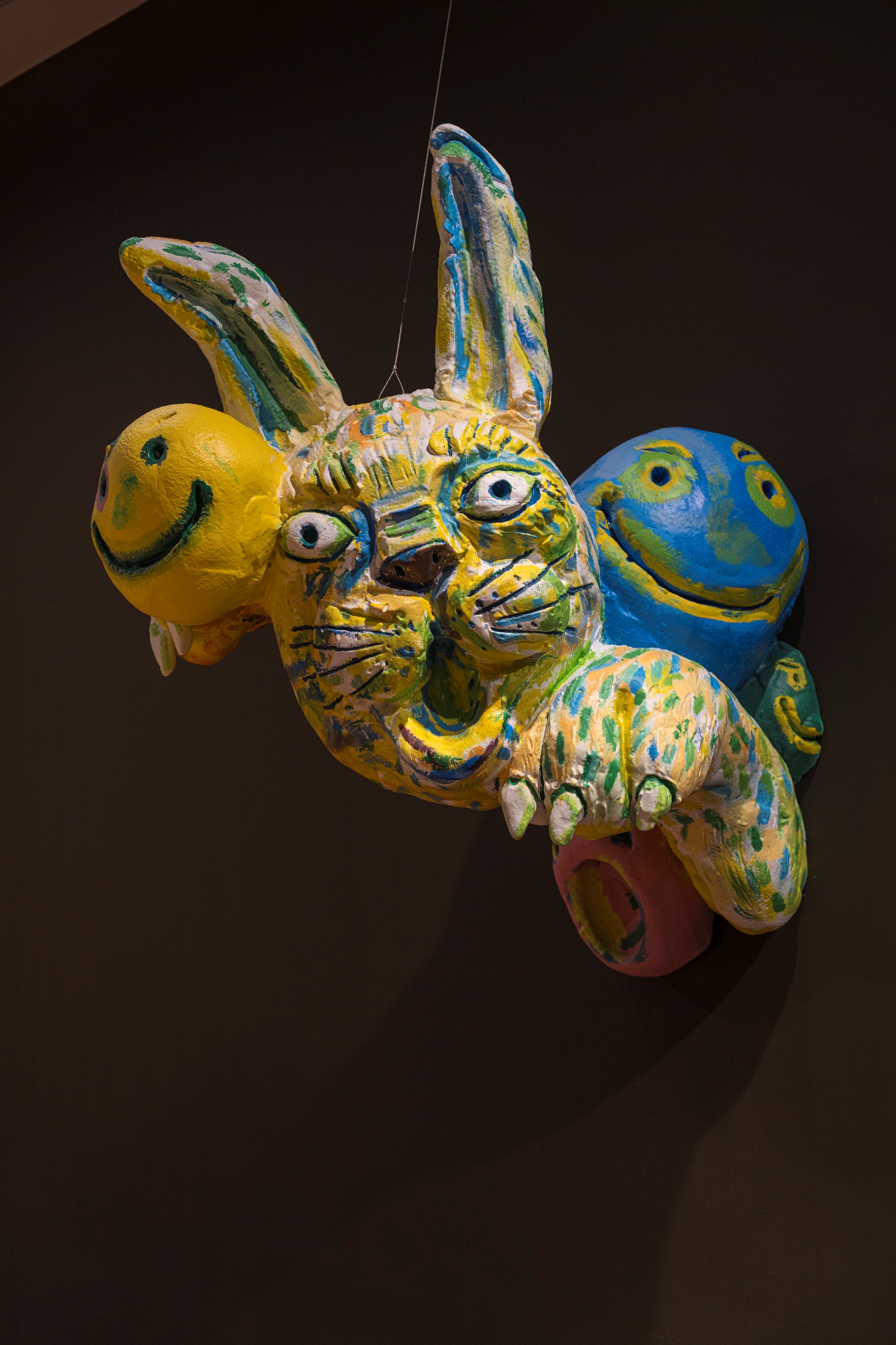
Tiger-like Rabbit

2025
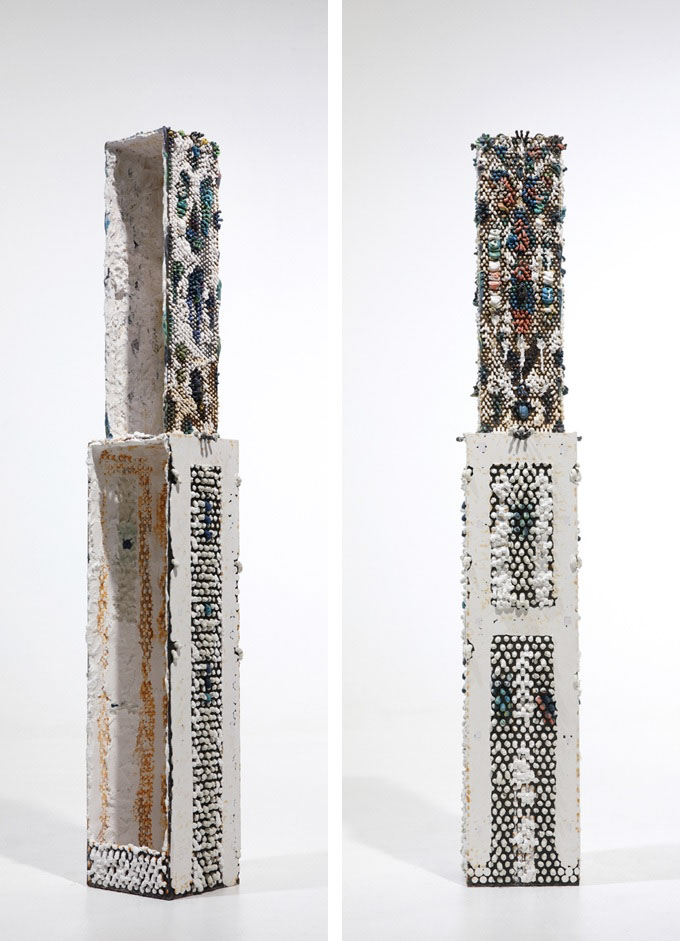
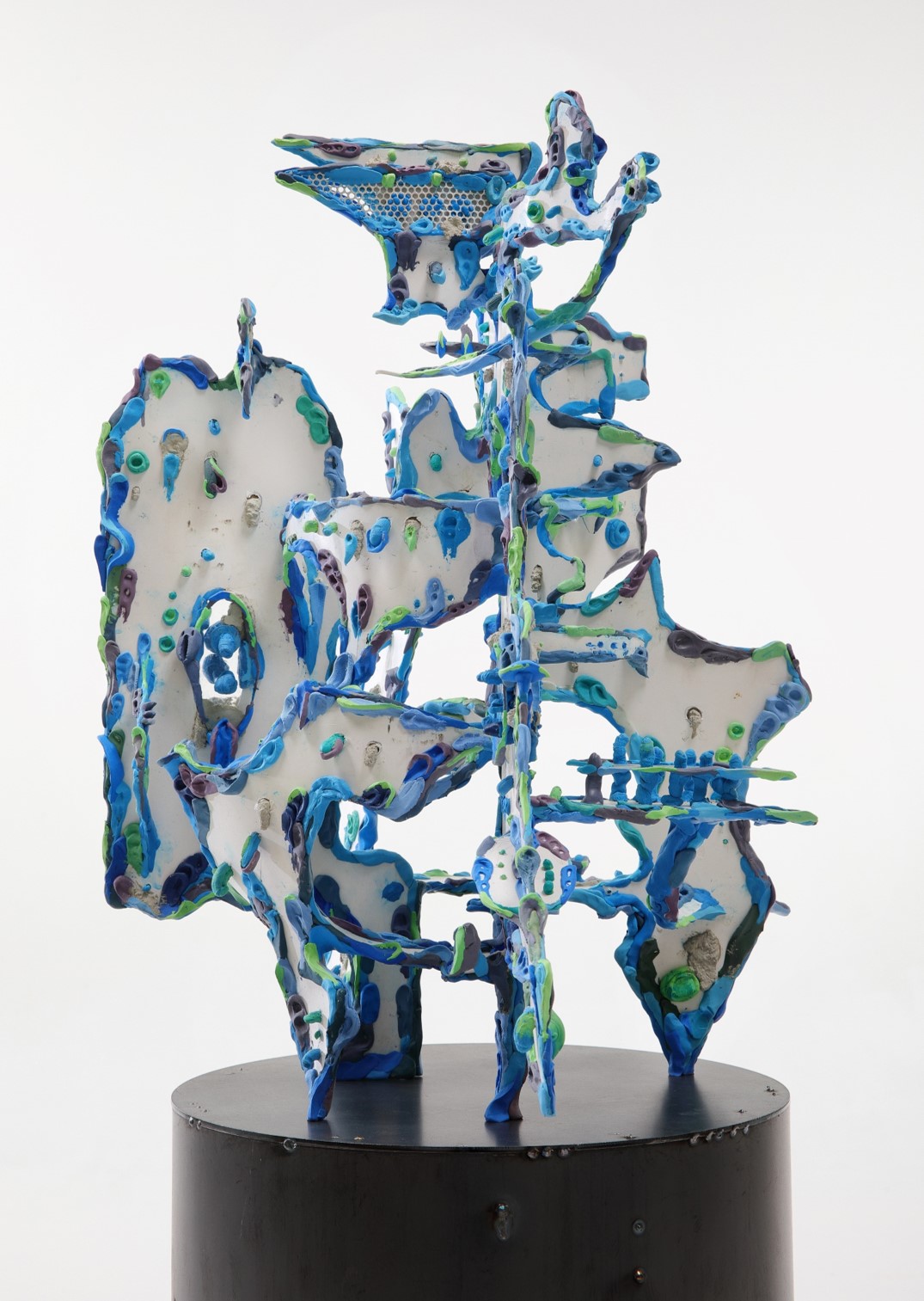
PLA, urethane paint
147 x 130 x 87 cm
About The Work

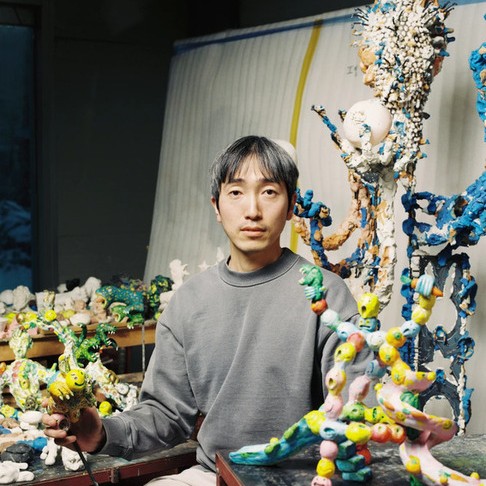
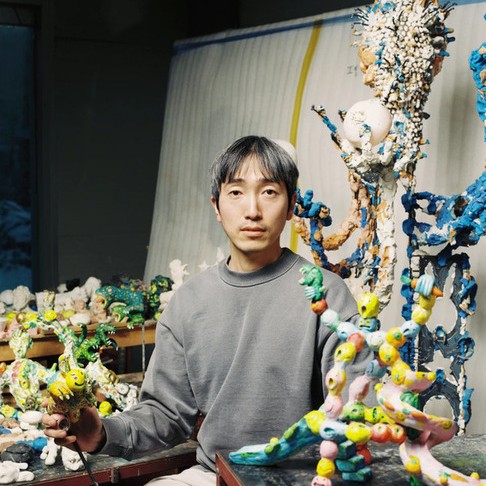
Kwak Intan reconstructs remnants of the past to document and express them as sculptures in the present. Drawing inspiration from the paintings and sculptures of great masters in art history, he transforms lingering afterimages from his mind into entirely new sculptural creations of his own.
 
He describes sculpture as “space, or a landscape.” Through the medium of sculpture, he mixes and reconstructs various times and landscapes from his mind, creating a third, new landscape. He treats this creative process as a playful arena, infusing his works with the pure playfulness of art.

Kwak Intan’s practice redefines the meaning of sculpture through the ways he records time and landscapes, his organic and experimental forms, and his sculptural approach that embodies emotion and symbolism. Recently, he has expanded his focus to audience interaction, demonstrating that sculpture need not be a fixed form but can function as a space that mediates experience and sensation, a dynamic presence.

Solo Exhibitions (Brief)

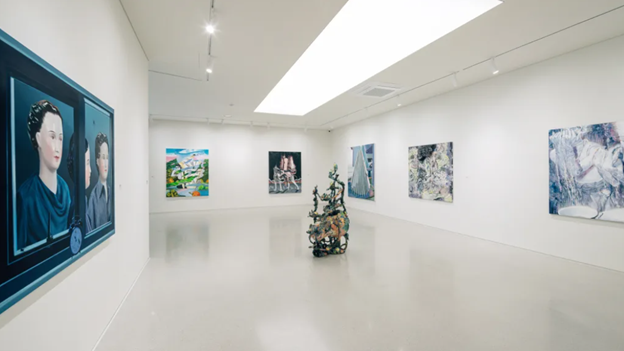
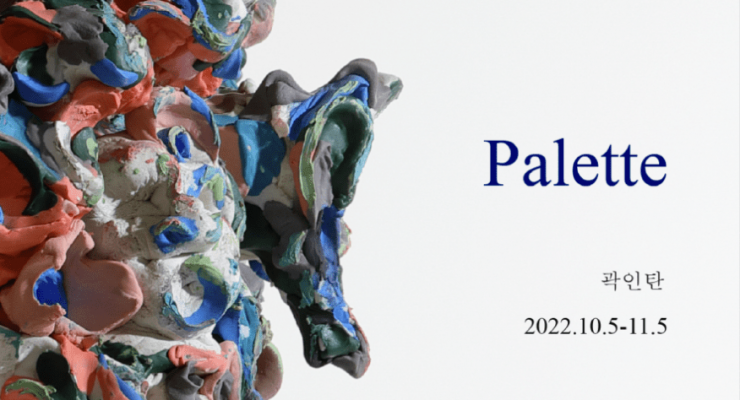
Kwak’s recent solo exhibitions include 《Shape and Shape》 (Ulsan Art Museum, Ulsan, 2025), 《Palette》 (K.O.N.G GALLERY, Seoul, 2022), 《Sculpture Gate》 (space 9, Seoul, 2020), 《Unique Form》 (studio 148, Seoul, 2019), among others

Group Exhibitions (Brief)

Kwak has also participated in numerous group exhibitions, including the 7th Changwon Sculpture Biennale 《silent apple》 (Changwon, 2024), 《Circus Effect》 (Nakwon Sangga, d/p, Seoul, 2024), 《Shine That Eternal Silence Upon Us》 (GCS, Seoul, 2023), 《Sculptural Impulse》 (Seoul Museum of Art, Seoul, 2022), 《Injury Time 1》 (WESS, Seoul, 2022), 《Injury Time》 (Museumhead, Seoul, 2021), and 《Against》 (Kimsechoong Museum, Seoul, 2021).

Awards (Selected)

Kwak Intan was selected as a ‘Public Art New Hero’ in 2021.

Works of Art

Passage through which Countless Thoughts Travel

Originality & Identity

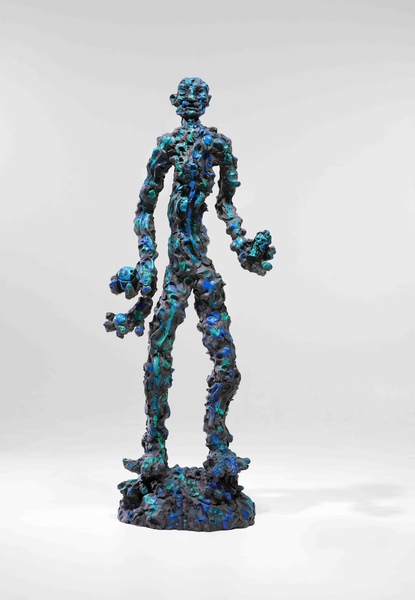
Kwak Intan’s practice began with the externalization of obsession and anxiety. In his first solo exhibition 《The Realm of Three》(Oh!zemidong Gallery, 2016), distorted busts and human figures with their faces buried in chains revealed early examples of translating inner pressure into sculptural language. These works demonstrated that sculpture could function not merely as representation, but as a psychological medium that records existential tension.

Since 2019, the artist’s perspective has broadened. In his solo exhibition 《Unique Form》(studio 148, 2019), he referenced not only his own earlier sculptures but also the works of Vladimir Tatlin, Auguste Rodin, Ha Chong-Hyun, and Lee Ungno. In the process, historical iconography and personal experience intertwined, producing “a sculptural time-space in which history and the self cannot be clearly distinguished.” For Kwak, sculpture came to occupy a hybrid field where traces of past and present, self and other, are interwoven.

In his solo exhibition 《Sculpture Gate》(space 9, 2020), the work The Out of Control of Compulsion(2020) presented fragments of past paintings sealed within a cement cube, in a structure reminiscent of Rodin’s The Gates of Hell. Here, sculpture extended beyond being a tool for carving subjects, becoming instead a device for condensing historical strata and generating new landscapes.

Subsequently, in his ‘Movement’ series (2021–), he investigated the visual energy latent within the surfaces of static sculptures. Movement 21-1(2021) began with the imagination of liberating and setting into motion figures from his earlier works, transforming his sculptural inquiry into one yearning for movement and collision beyond the fixed temporality of sculpture. More recently, in his solo exhibition 《Palette》(K.O.N.G GALLERY, 2022), the work Intersection of Sculptures 1(2023), and Child Sculptor(2024), themes of childhood innocence, playful imagination, and the intersection of reality and the virtual have emerged as new central concerns.

Style & Contents

Kwak Intan’s formal approach has consistently unfolded by dismantling the boundaries between media. In his early works, he used traditional materials such as plaster and resin to embody psychological states, but soon expanded to steel, cement, stainless steel, and acrylic, layering material strata. In 《Unique Form》, he dismantled and reconstructed earlier busts and juxtaposed them with historically referenced works, resulting in a formal hybridity where sculpture and painting, fragments and completions, past and present were intermingled.

In works such as Sculpture Gate: Development of the Head(2020), the boundaries between pedestal and sculpture themselves are blurred. Sculpture is no longer a fixed object placed on a base, but a fluid presence in which fragments and structures exchange positions. This strategy dismantles the hierarchical order of sculpture and repositions even peripheral elements as integral to the work.

In the ‘Movement’ series, the illusion of motion becomes central. Movement 21-1(2021), composed of resin, acrylic, and steel, transforms the otherwise static medium into a dynamic event through its tactile surfaces of vigorous flow. Rather than smoothing material surfaces, Kwak reconfigures fragmentation and reassembly to sculpturally embody traces of movement.

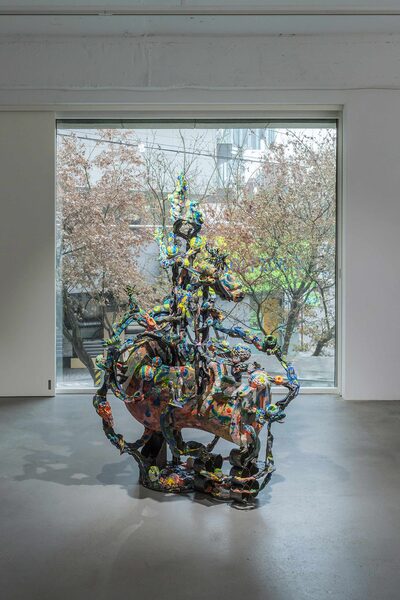
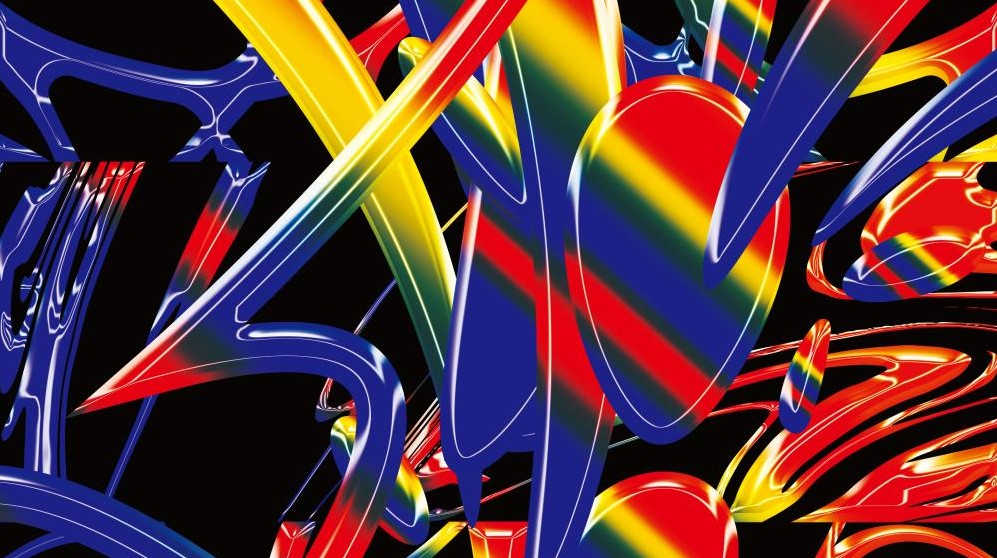
Since 2022, painterly elements and digital techniques have been added. The ‘Palette’ series layers clay, resin, and acrylic to create painterly surfaces; in particular, Palette 2(2022) merges references to Kim Whanki’s blue stars, Rodin’s busts, and emoticons. In Intersection of Sculptures 1(2023), hand-formed fragments intermingle with 3D-printed elements, positioned atop the lines of a traffic intersection. Here, the real and virtual intersect to form an organic space. His formal language no longer remains within traditional sculpture, but expands into an experimental arena where painting, digital media, and playful signs collide.

Topography & Continuity

Kwak Intan’s practice consistently revolves around the tension between obsession and freedom, past and present. From the anxious busts of 《The Realm of Three》 to the historical hybridity of 《Unique Form》, the kinetic experiments of the ‘Movement’ series, and the playful expansion of Child Sculptor, he is an artist who persistently redefines the boundaries and meaning of sculpture.

A recurring characteristic is his strategy of reference and appropriation. The remnants of art history, his own earlier works, and elements of contemporary visual culture intersect, so that sculpture is not simply the reproduction of subjects but a repeated inquiry into “what sculpture is.” Each repetition transforms into a different experiment, ultimately reconstituting sculpture as a playful device.

Within the landscape of contemporary Korean art, Kwak Intan has established himself as an experimenter who explores new possibilities beyond the traditional frameworks of sculpture. In major institutional exhibitions such as 《Sculptural Impulse》(Seoul Museum of Art, 2022) and 《Shape and Shape》(Ulsan Art Museum, 2025), his work has demonstrated fresh vitality even within institutional contexts. Moving forward, his practice is expected to remain focused on creating imaginative and playful spaces through sculpture.

Works of Art

Passage through which Countless Thoughts Travel

Exhibitions

Activities