Seo
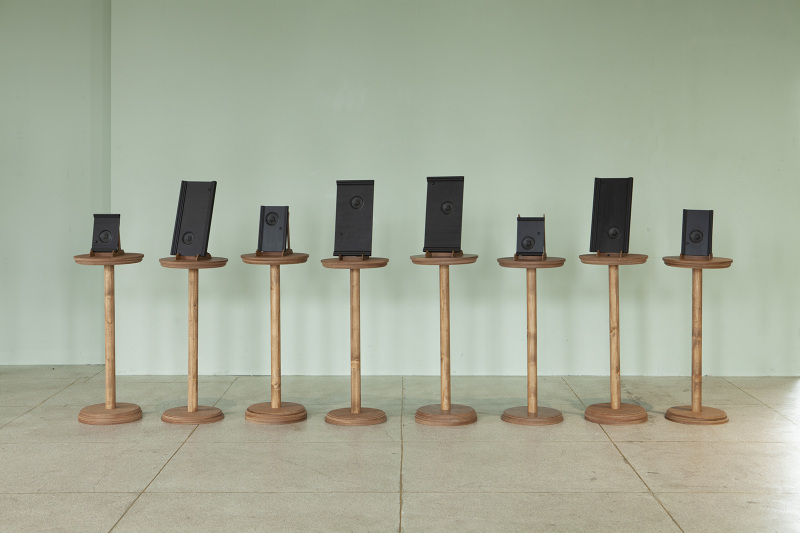
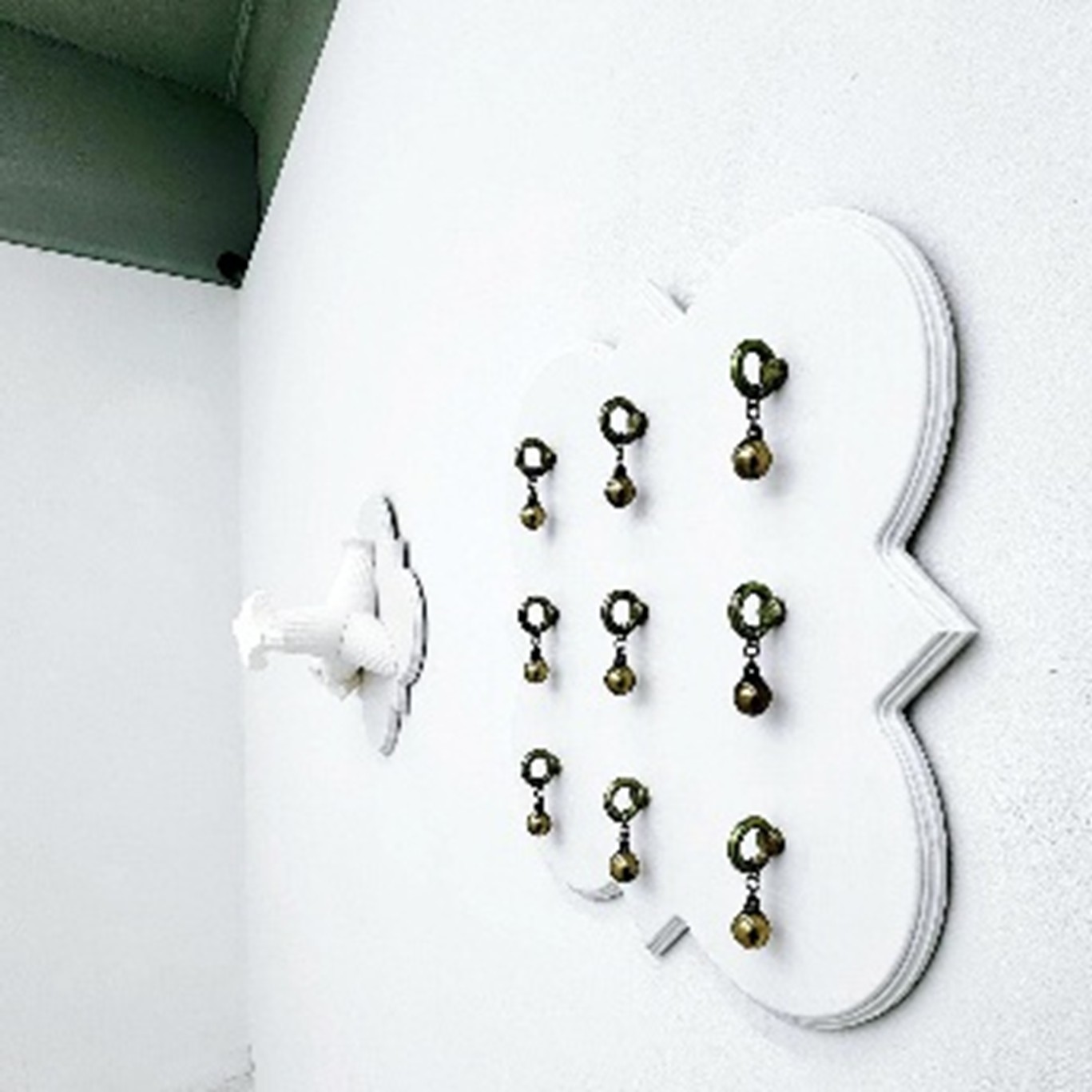
Sunghyeop’s early works concentrated on the convergence of sound and objects.
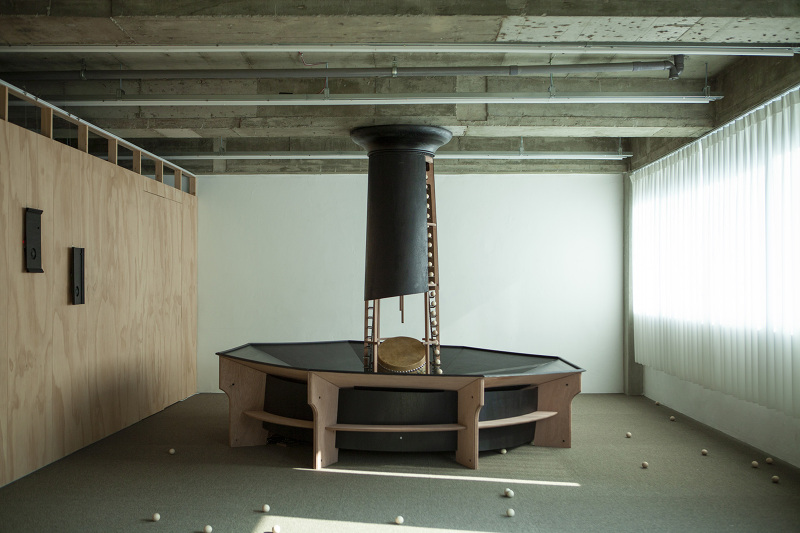
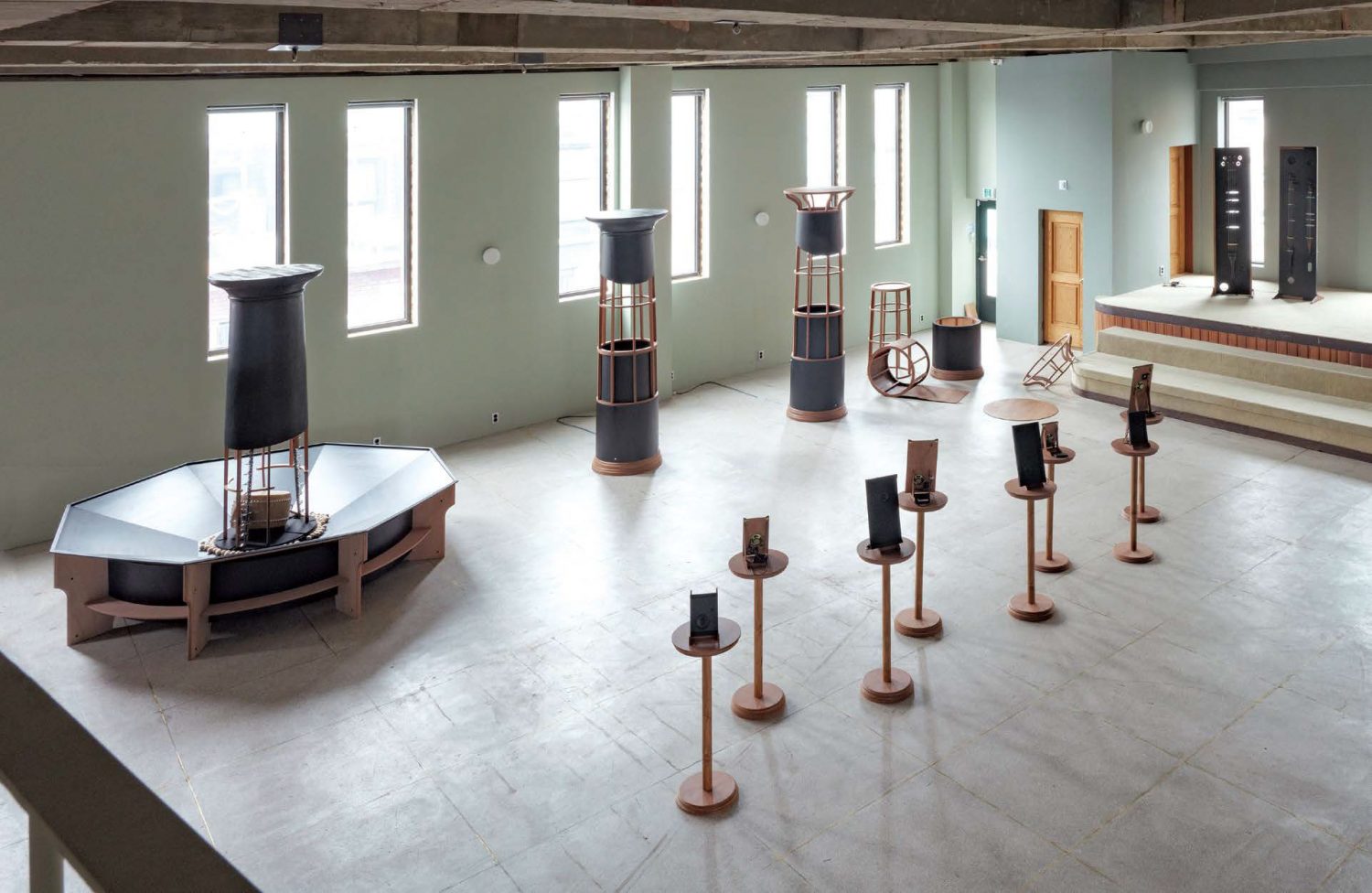
In 《Topological Sense》
(2020), pieces such as Topological Sense
ver.1 (2020) and Sound Frame (2020)
deployed mechanical devices that repetitively produced sounds, revealing a
topology that oscillated between sculpture, architecture, and musical
instrument. As viewers pursued these sounds, they became performers as well as
observers, entering into a relational dynamic with the works. This method
enacted a topological shift, where visual objects transformed into auditory
experience, and sound once again into visuality.
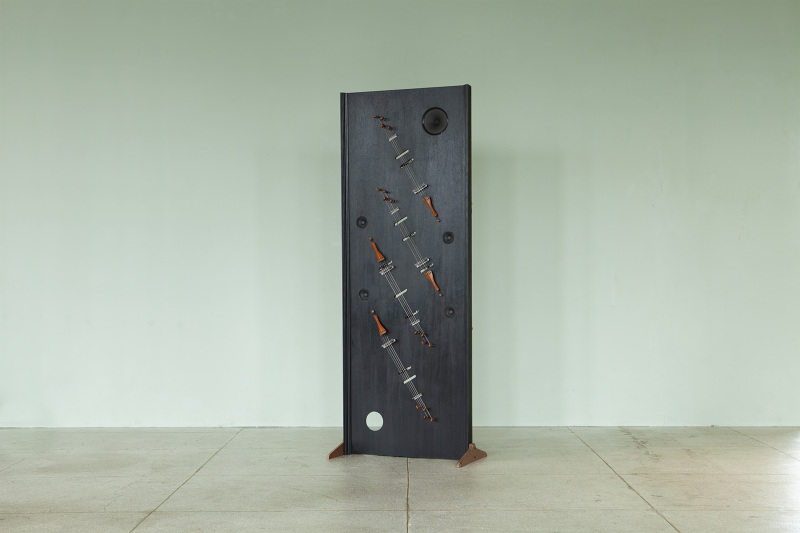
The ‘Sound
Paravan’ series of 2021 appeared as hybrid objects combining the structure of
traditional Korean instruments with the form of Western instruments. For
example, Sound Paravan 01 (2021) produced the
sound of the gayageum, yet its external form incorporated structural and
decorative features from violins, cellos, and Western furniture. In this way,
the paravan—traditionally a background object—was transformed into a
sound-producing protagonist, acquiring a new status within its relational exchange
with the audience.
Works
following his more recent solo exhibition 《Praise of Crossbred》 (KimHeeSoo Art Center,
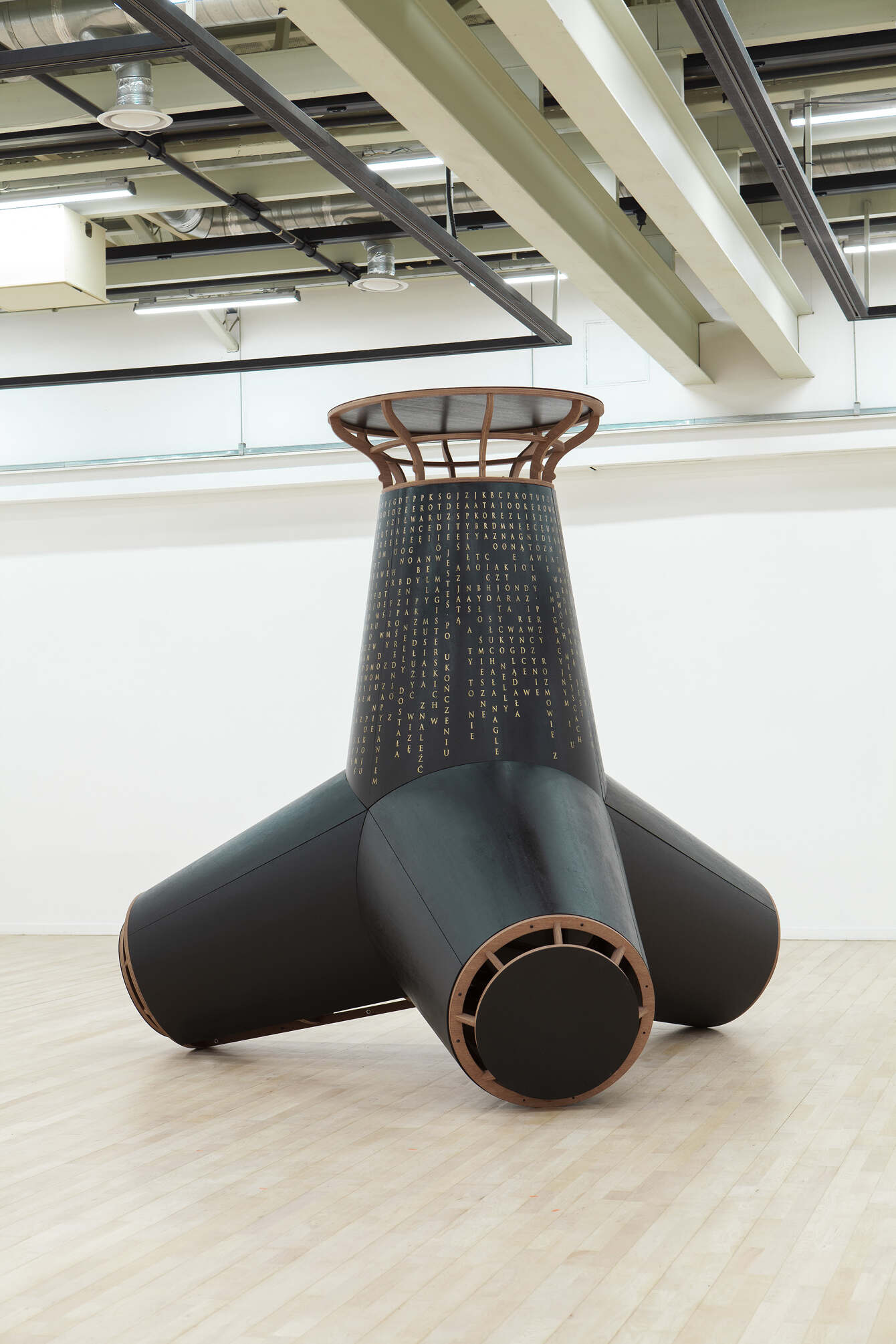
2023) shifted focus from sound to visual narrative. Monument
#01 juxtaposed historical symbolism with personal experience by
combining a Doric capital with a tetrapod, and further inscribed its surface
with Polish text to visualize cultural hybridity.
Subsequently, Allusive Sequence (2023) arranged a
series of tetrapods to materialize the notion of “solidarity” in physical form.
In his
latest works, the artist turns to experiments with materials. The
‘Exo-Monument’ series reproduced tetrapods with boundary-oriented materials
such as rattan and leather, exploring the status of shells and
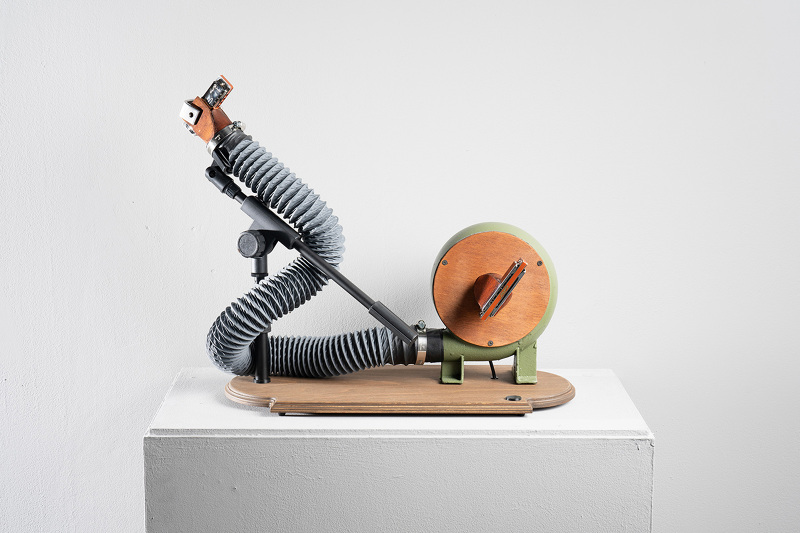
surfaces. Intake, Exhaust (2024) combined an air
blower and harmonica, intersecting human breath and mechanical force to expose
a topology of generation. Seo’s practice has thus evolved from a sound-centered
beginning to a visual and material expansion of topological inquiry.



.jpg)
.jpg)