Hayne Park
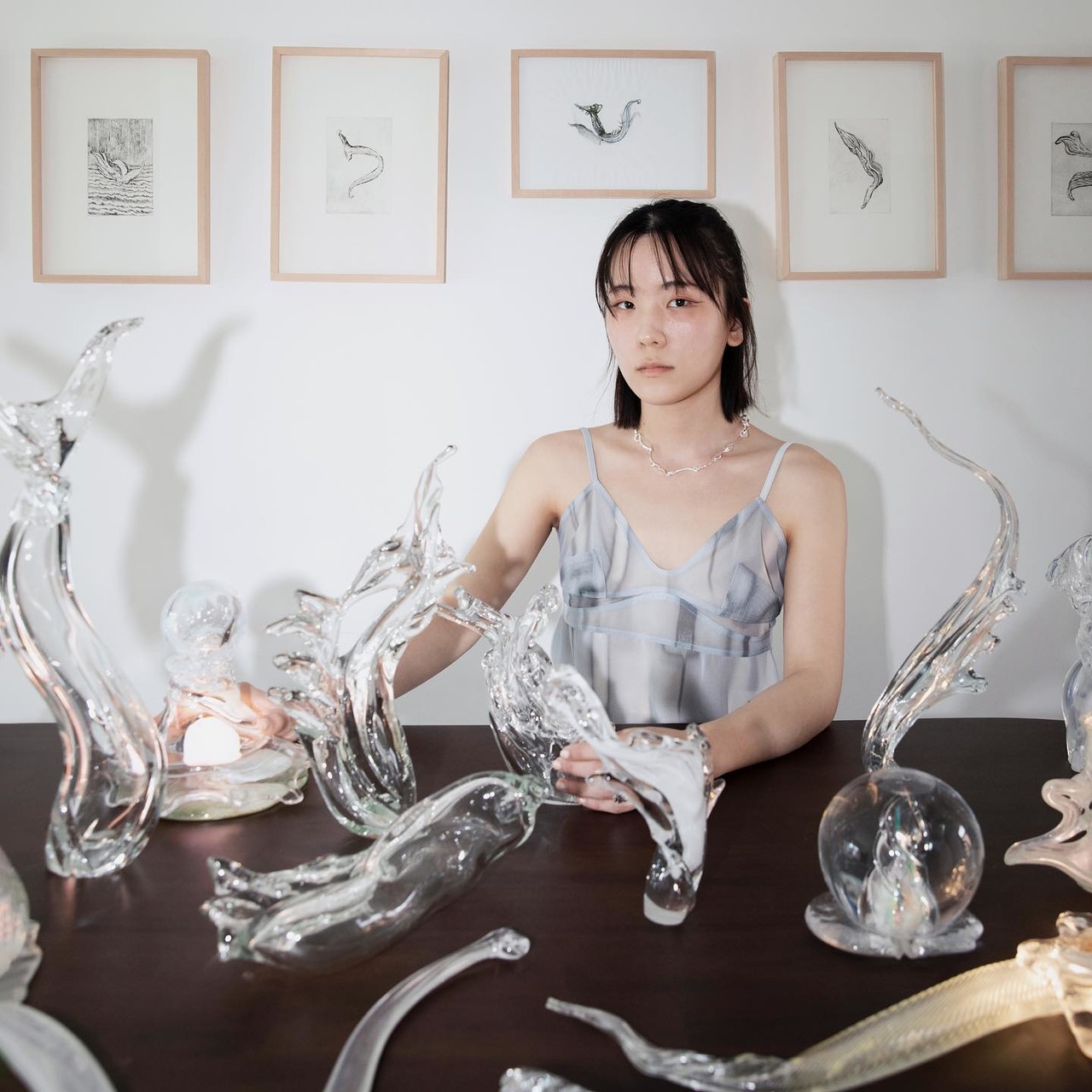
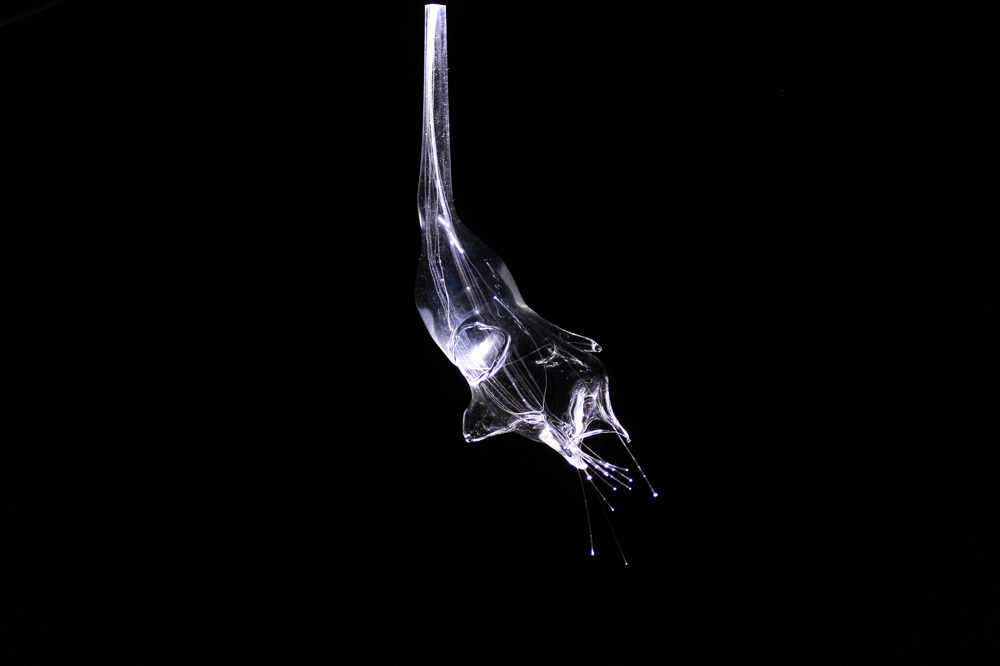
has long focused on the fluidity and vitality of glass, exploring it as a
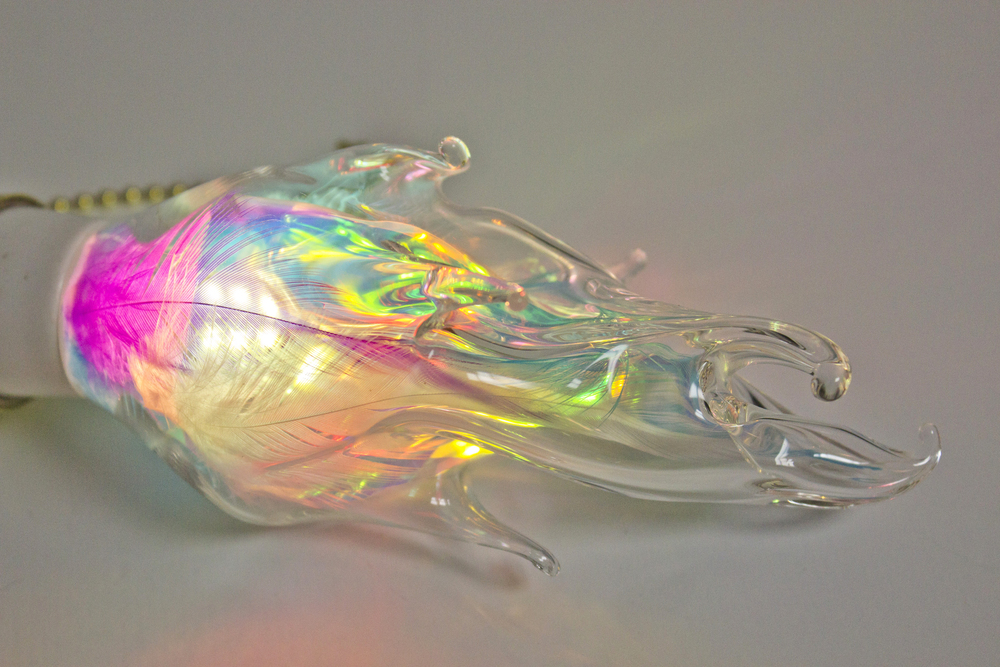
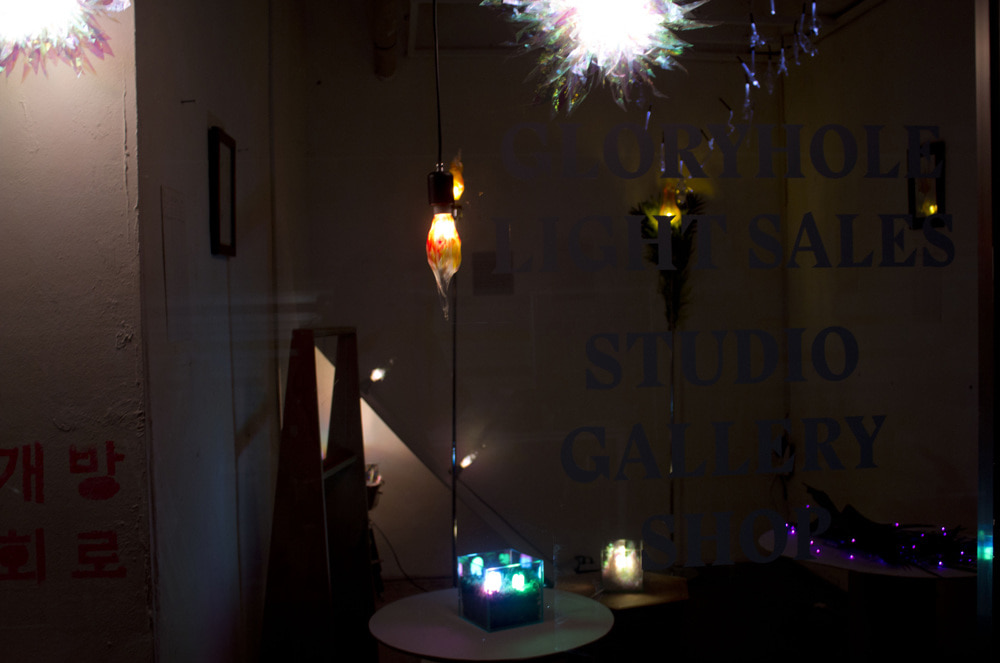
material that remains still yet feels alive. In her early solo exhibition 《Gloryhole Light Sales》(OPEN CIRCUIT, Seoul,
2015), she presented lighting pieces that embody the encounter of glass and
light, drawing from the term “gloryhole” used in glassblowing. Through this,
she questioned the boundaries between art and commerce, artwork and function—an
experiment that explored how art might be integrated into everyday life.
Later, in
the two-person exhibition 《Ghost Shotgun》(Audio Visual Pavilion, Seoul, 2019), Park collaborated with Ram Han
to experiment with the potential of glass functioning as a screen for images.
Here, glass no longer served merely as a medium for shaping light, but evolved
into a transparent interface that interacted with digital images to generate
new narratives. This marked a turning point where glass became a narrative
device connected to external contexts.
In the
group exhibition 《Scale, Scanning》(Seongbuk Young Art Space, 2020), works such
as Phosphene Fishtank(2020) and Breathe
and Wave(2020) further emphasized her interest in the fusion of
light, glass, and organic life forms. These pieces visualized how human
physiological responses could be transformed into light through interaction
with other organisms, redefining glass not simply as a metaphor for life, but
as a responsive and mediating entity of life itself.
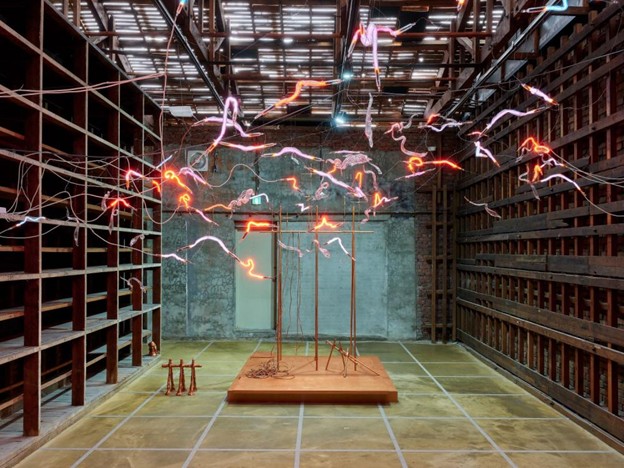
Her solo
exhibition 《Diluvial》(Seoul Art Space Mullae, Seoul, 2022) used mythological narratives
to intertwine glass and fossils, envisioning a space where traces of life and
evidence of death coexist. In this context, glass becomes a vessel that not
only preserves a post-catastrophe landscape but also harbors the potential for
rebirth. This thematic exploration continues in recent works such
as Liquid Veil(2024), where the concept of transparency
is further investigated as a threshold of perception and meaning-making.