Gloryhole Bulb - K-ARTIST

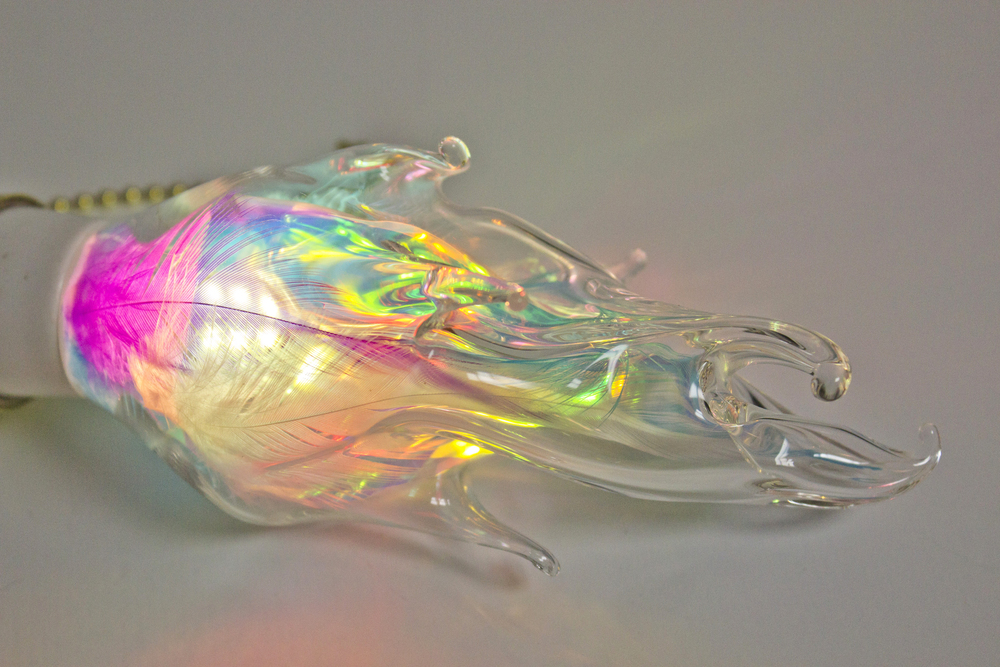
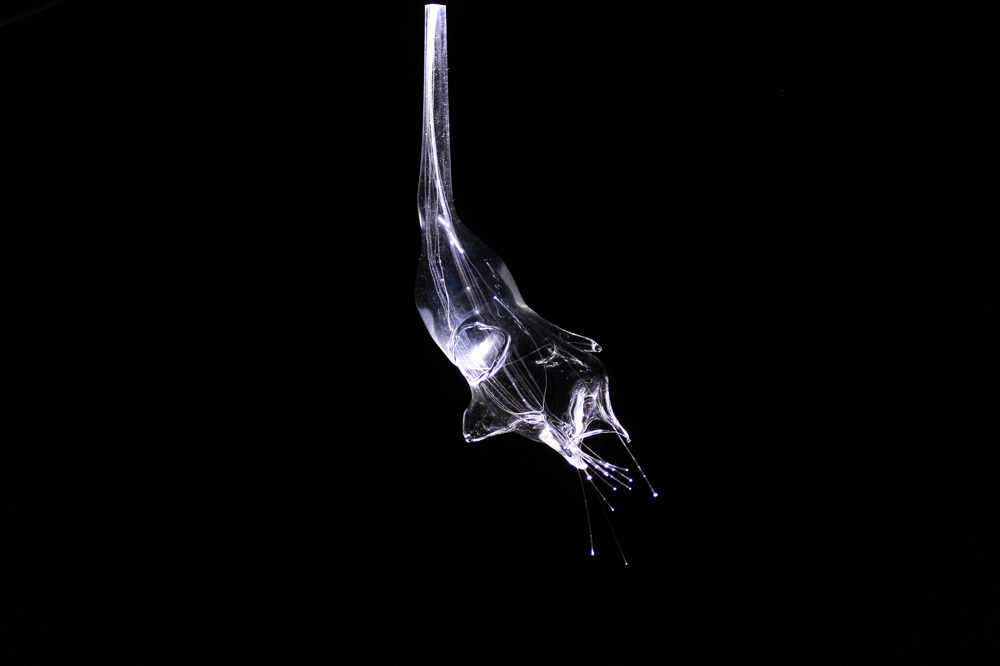
Gloryhole Bulb

2015
Lampworked glass, LED, feather, plastic film, 220V/3W
About The Work

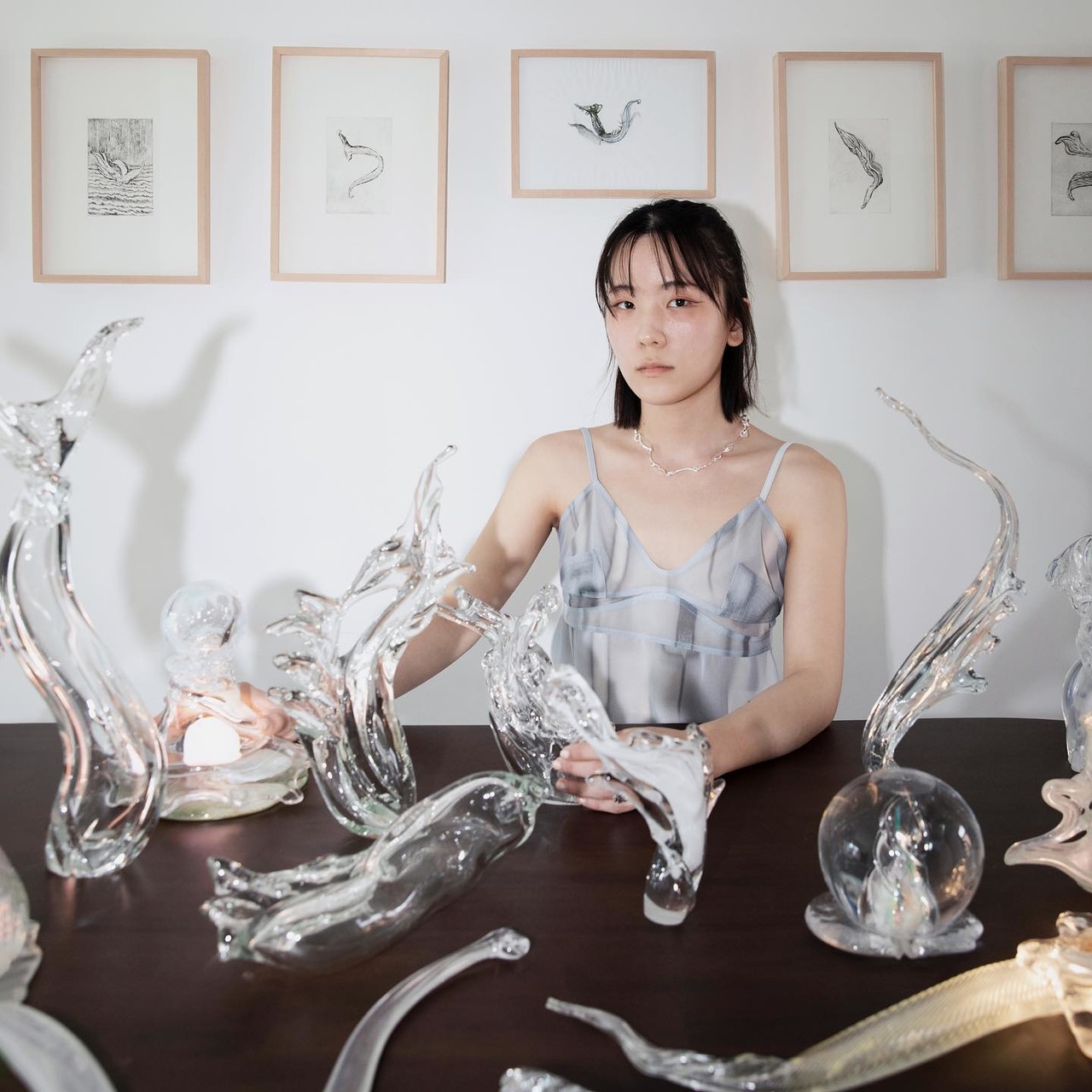
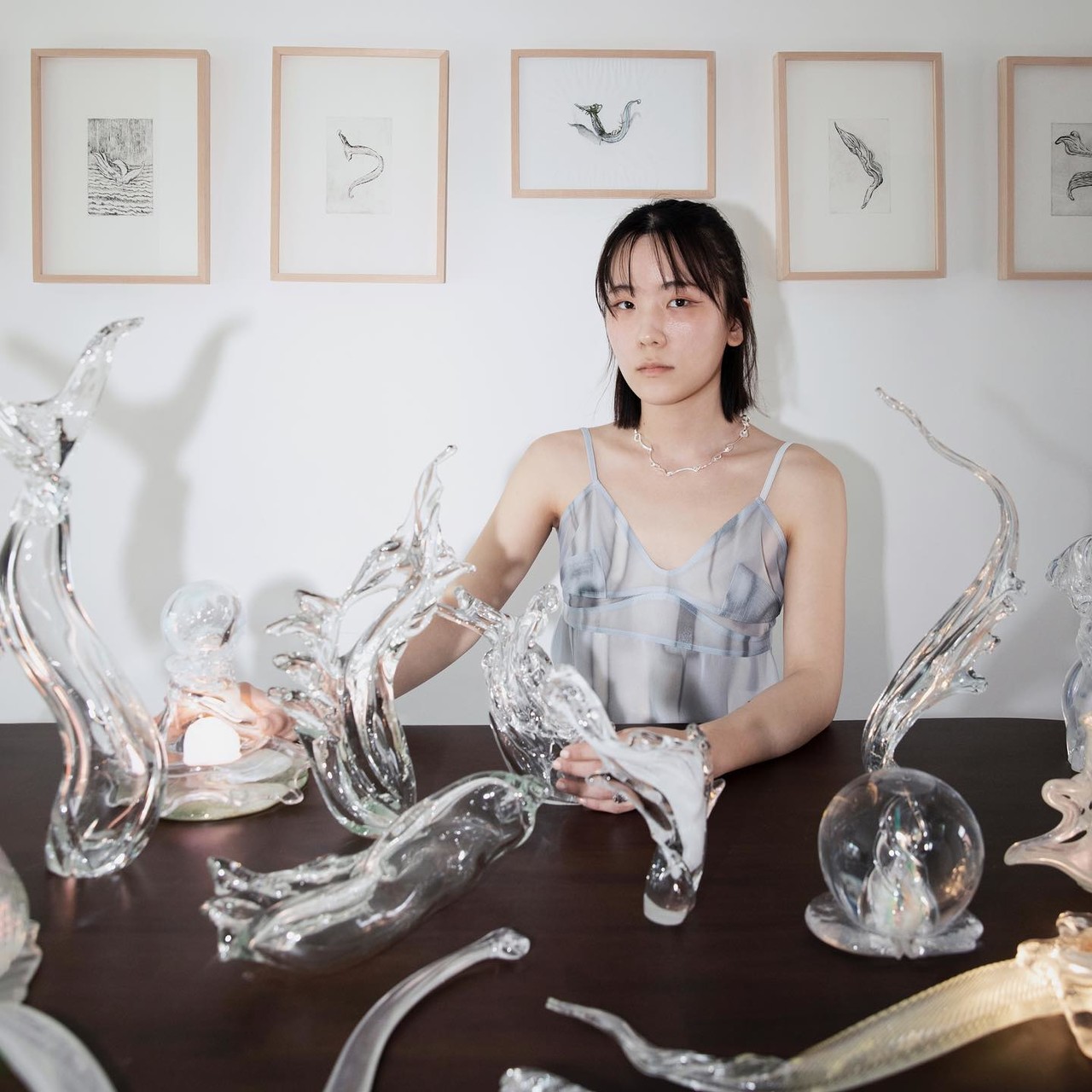
Hayne Park, also known under the name Gloryhole, explores the sculptural forms created by the encounter between glass—a material that is simultaneously still and alive—and light. She transforms these into objects that can be used in everyday life.
 
For Park, the defining condition of her work is light that can be “kept close and looked at”—that is, lighting as it relates to human life. She questions the ambiguous identity that lies between art and lighting (between creation and production, art and function), and considers how seemingly opposing values—art and commerce, functionality and artistic value—can coexist in a single work. Through this, she explores how art objects can approach and integrate into daily life.
 
Her light-glass sculptures do not merely leave an impression of beauty; rather, they invite us to reexamine the narratives and contexts they transmit and contain today, or they evoke a sense of vitality from a materiality that is still yet retains movement, offering warm comfort to people.

Solo Exhibitions (Brief)

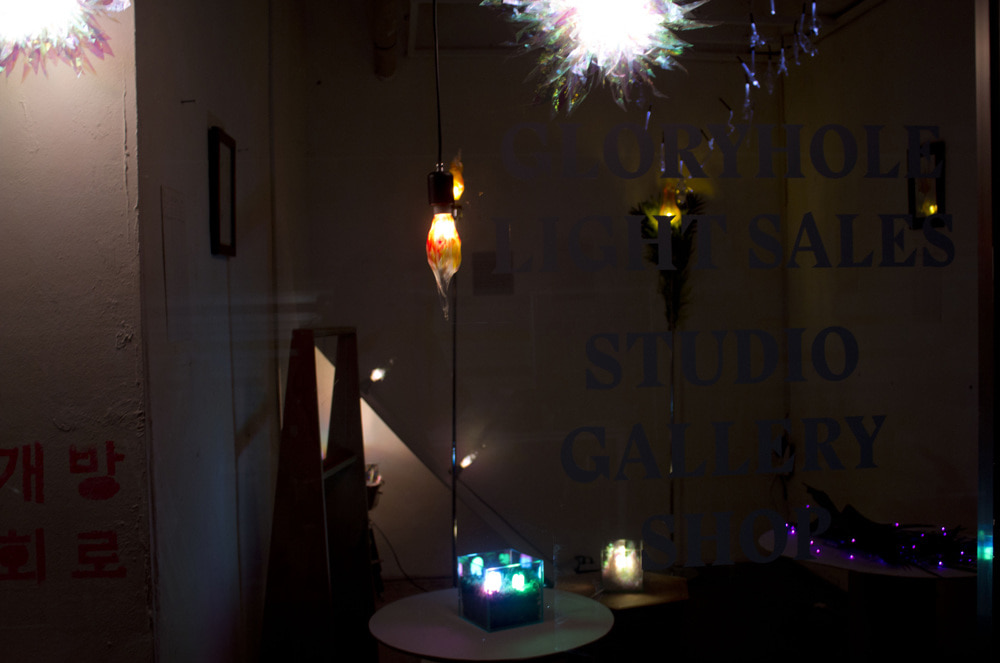
Park’s solo exhibitions include 《Diluvial》 (Seoul Art Space Mullae, Seoul, 2022), 《Gloryhole: Splash-Flash》 (Daelim University Art Hall, Anyang, 2018), and 《Gloryhole Light Sales》 (OPEN CRICUIT, Seoul, 2015).

Group Exhibitions (Brief)

Park has also participated in numerous group exhibitions such as 《Mirae/Building》 (Mirae Building, Seoul, 2024), 《Stocker》 (SeMA Bunker, Seoul, 2023), 《The Raw》 (Incheon Art Platform, Incheon, 2022), 《2021 ARTIENCE Daejeon》 (Daejeon Artist House, Daejeon, 2021), 《Ghost Shotgun》 (Audio Visual Pavilion, Seoul, 2019), and the 《Gwangju Design Biennale》 (Gwangju, 2017).

Awards (Selected)

Park was selected as a pre-matched designer for the 《DDP Design Fair》 in 2019.

Works of Art

Glass as a still and living substance at the same time

Originality & Identity

Hayne Park has long focused on the fluidity and vitality of glass, exploring it as a material that remains still yet feels alive. In her early solo exhibition 《Gloryhole Light Sales》(OPEN CIRCUIT, Seoul, 2015), she presented lighting pieces that embody the encounter of glass and light, drawing from the term “gloryhole” used in glassblowing. Through this, she questioned the boundaries between art and commerce, artwork and function—an experiment that explored how art might be integrated into everyday life.

Later, in the two-person exhibition 《Ghost Shotgun》(Audio Visual Pavilion, Seoul, 2019), Park collaborated with Ram Han to experiment with the potential of glass functioning as a screen for images. Here, glass no longer served merely as a medium for shaping light, but evolved into a transparent interface that interacted with digital images to generate new narratives. This marked a turning point where glass became a narrative device connected to external contexts.

In the group exhibition 《Scale, Scanning》(Seongbuk Young Art Space, 2020), works such as Phosphene Fishtank(2020) and Breathe and Wave(2020) further emphasized her interest in the fusion of light, glass, and organic life forms. These pieces visualized how human physiological responses could be transformed into light through interaction with other organisms, redefining glass not simply as a metaphor for life, but as a responsive and mediating entity of life itself.

Her solo exhibition 《Diluvial》(Seoul Art Space Mullae, Seoul, 2022) used mythological narratives to intertwine glass and fossils, envisioning a space where traces of life and evidence of death coexist. In this context, glass becomes a vessel that not only preserves a post-catastrophe landscape but also harbors the potential for rebirth. This thematic exploration continues in recent works such as Liquid Veil(2024), where the concept of transparency is further investigated as a threshold of perception and meaning-making.

Style & Contents

Park’s practice is grounded in traditional glassmaking techniques such as glassblowing and lampworking. In early works like Gloryhole Bulb(2015), she used these analog methods to craft functional lighting objects, transforming intangible light into material form. These pieces exemplify the hybrid nature of her early work—operating at the intersection of form and function, art and commerce.

Following 《Ghost Shotgun》, she began to shift away from functional lighting, using glass as a screen in collaboration with digital imagery. In works like Ending scene 1(2019) and Expectancy(2019), glass operates as a transparent filter that changes in response to viewers’ movement and perspective, forming an interactive visual field.

After 2020, biological elements began to play a more active role in her work as she explored organic sources of light. Phosphene Fishtank(2020) uses a viewer’s breath and oxygen saturation to gradually illuminate a jellyfish, while Breathe and Wave(2020) harnesses the bioluminescence of dinoflagellates and transforms it into a form of light activated by human interaction. In this way, Park integrates biological responsiveness, environmental conditions, and sculptural form to construct intricate ecosystems.

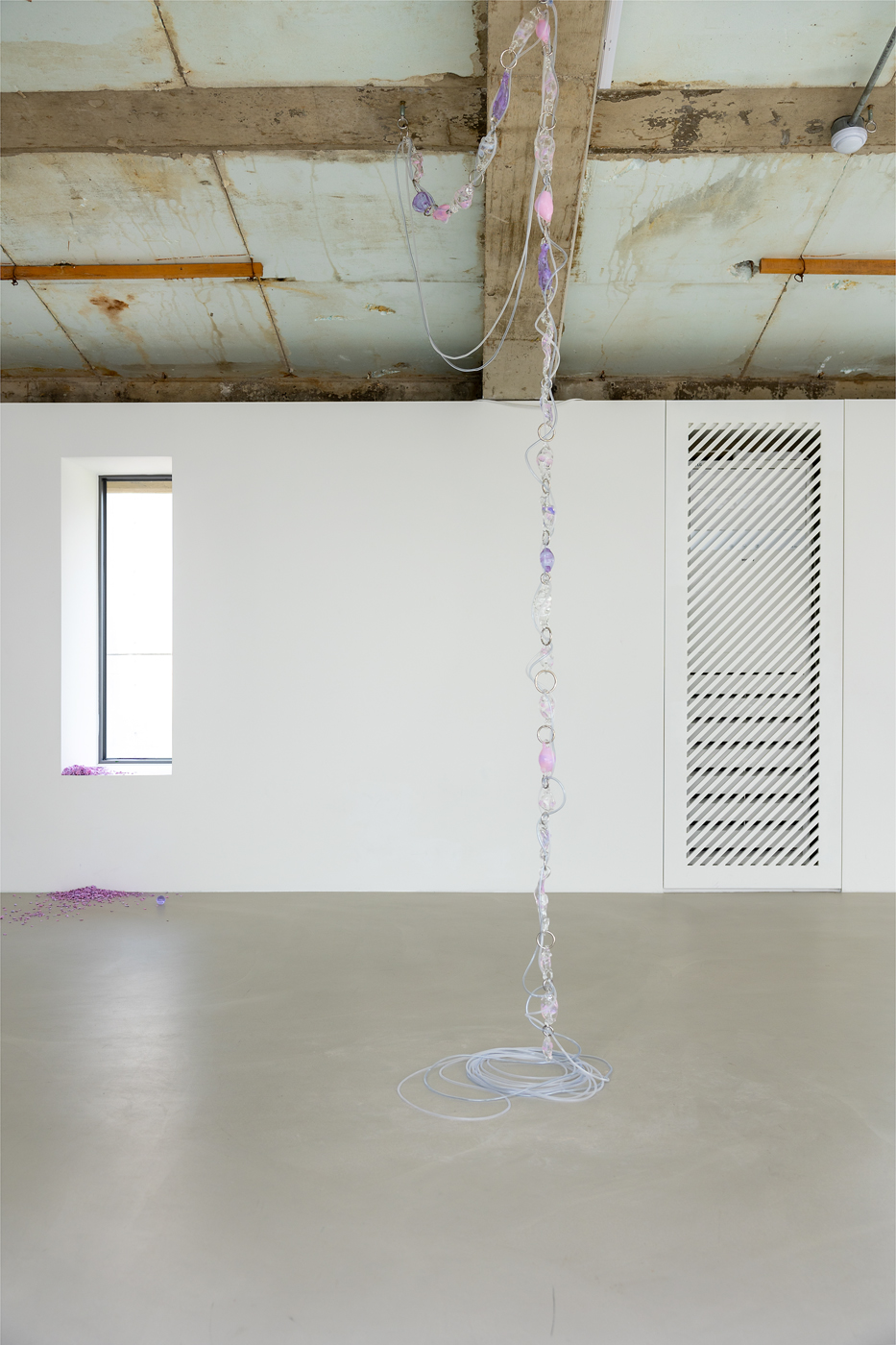
My Warm Little Pond(2021–2022) presents an imaginative experiment on the origins of life, integrating DNA, glass, and digital graphics. The work combines DNA-shaped glass forms, transparent slime, and a real DNA sample from the artist, expanding glass into a symbol of life and a reservoir of memory. Her subsequent work, Liquid Veil(2024), connects the transparency of glass with flowing water to explore the origins of language, vision, and perception—evolving into a meditative sculpture that contemplates 

Topography & Continuity

Hayne Park’s work begins by dismantling traditional dichotomies—between lighting and glass, art and commerce, function and form—while exploring the ambiguous spaces that lie between them. Over time, she has incorporated digital imagery, biological responses, and physical environments, positioning glass as a “living medium” that generates narratives and interacts with its surroundings on multiple levels.

Within the contemporary Korean art scene, Park occupies a distinctive position as a hybrid artist navigating the boundaries of craft, design, and fine art. Her work is marked by an experimental expansion of glass as a medium, moving beyond formal aesthetics to engage deeply with philosophical concerns such as life, digitality, language, and perception.

Her artistic trajectory has evolved from functional lighting objects to digitally driven narrative sculptures, and further into works that address genetics, biology, mythology, and linguistics. This progression reflects her sustained inquiry into the interconnectedness of matter and immateriality, organism and inorganism, reality and virtuality—constructing new sensibilities and meanings at their thresholds.

Works of Art

Glass as a still and living substance at the same time

Articles

Exhibitions

Activities