柬擇_回 Chosen_revert - K-ARTIST

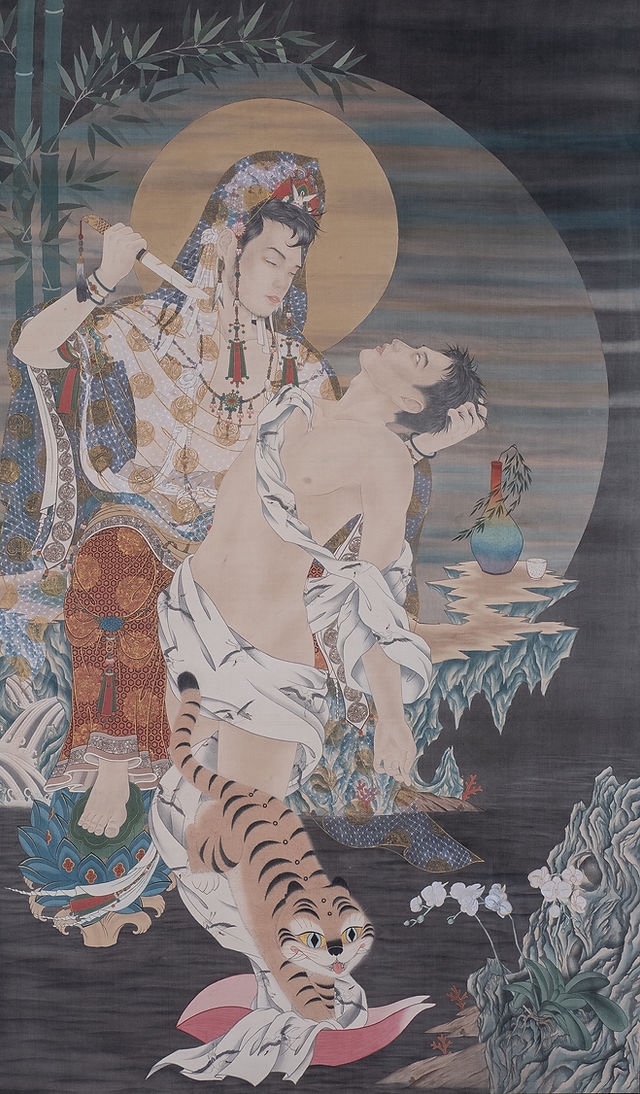
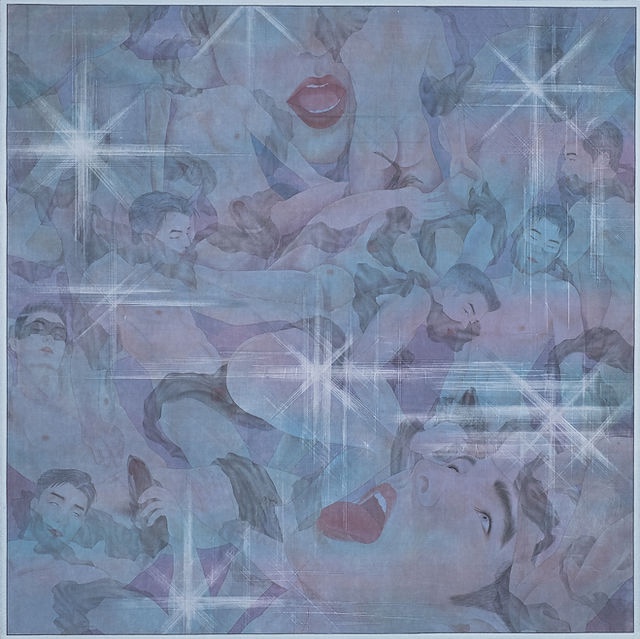
柬擇_回 Chosen_revert

2023
Korean traditional paint on silk
170 × 230 cm
About The Work

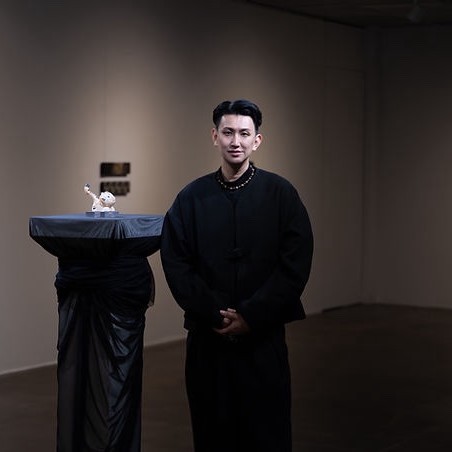
Grim Park explores a range of contemporary narratives—including queer perspectives—through the traditional techniques of Buddhist art. His practice involves constructing new contemporary narratives by merging, deconstructing, and recombining Buddhist iconography with personal and social stories. Through the contradictory questions that emerge from this process, Park fundamentally challenges the binary concepts of majority and minority that shape contemporary society.
 
Park’s work comprehensively embodies the artist’s journey confronting Buddhist art traditions, queer identity, human relationships, and past experiences and events. Rather than unconditionally following tradition, he explores and reinterprets prior precedents and rules in his own unique way. His work, seen as a process of adaptation and renewal, invites reconsideration and “confrontation” of contemporary contradictions through traditional materials and concepts.

Solo Exhibitions (Brief)

Park’s solo exhibitions include 《44》 (THEO, Seoul, 2024), 《虎路, Becoming a Tiger 》 (Studio Concrete, Seoul, 2022), 《CHAM; The Masquerade》 (UARTSPACE, Seoul, 2021), and 《花郞徒 - a Crowd of beautiful men》 (Bul-il Museum, Seoul, 2018).

Group Exhibitions (Brief)

Grim Park has also participated in various group exhibitions, including Minhwa and K-Pop Art Special Exhibition 《Worlds Beyond Extraodrinary》 (Gyeonggi Museum of Modern Art, Ansan, 2024), 《It makes me a sinner who is doing well》 (OCI Museum of Art, Seoul, 2024), 《PANORAMA》 (SONGEUN, Seoul, 2023), 《The 22nd SONGEUN Art Award Exhibition》 (SONGEUN, Seoul, 2022), 《Korean Traditional Painting in Alter-age》 (Ilmin Museum of Art, Seoul, 2022), 《BONY》 (Museumhead, Seoul, 2021), 《flags》 (DOOSAN Gallery, New York, 2019), among others.

Awards (Selected)

Park was selected as a finalist for the 22nd SONGEUN Art Award in 2022 and won the Absolute Vodka Artist Award in 2018.

Collections (Selected)

Park’s works are included in the collection of the Sunpride Foundation.

Works of Art

Queer Narratives Through Traditional Buddhist Painting

Originality & Identity

Grim Park’s work has evolved as an experimental reinterpretation of queer identity and contemporary social power structures through the formal language of Buddhist painting, starting from autobiographical narratives. In his early solo exhibition 《Hwarangdo》(Bul-il Museum, 2018), he visualized the narcissism, self-love, and desire for social visibility expressed within the gay community in the style of Goryeo Buddhist painting, attempting a metaphorical exploration of the formation of queer subjectivity and the potential for enlightenment.

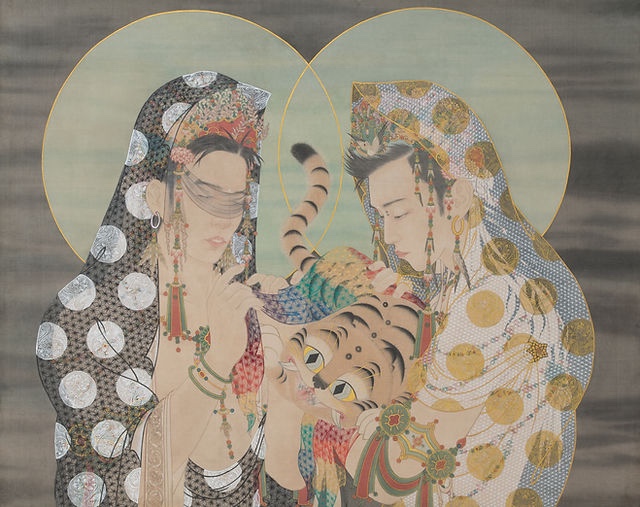
In particular, the ‘Shimhodo’ series, which began during this period, transforms the Buddhist narrative of Shimwudo into a queer allegory, redirecting the work’s focus toward inner exploration. In Shimhodo - Chosen(2018), beautiful gay men are recast as bodhisattvas, and at the center, a tiger emerges as the artist’s persona—rising as the subject of identity exploration by overcoming self-hatred and longing for others. From this point onward, Park’s work develops around philosophical reflections on the relationship between self and other, and on the incompleteness and complexity of existence.

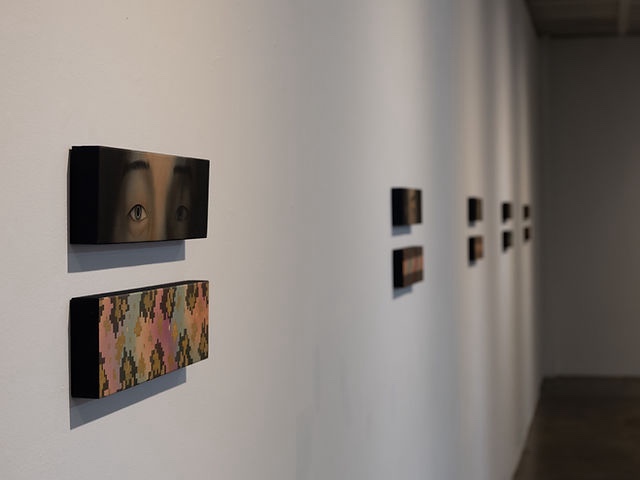
Park internalizes the gaze that was previously projected onto others, unraveling the queer subject’s journey of suffering and self-recovery through mythical allegory. In his solo exhibition 《CHAM; The Masquerade》(UARTSPACE, 2021), he used the Tibetan Buddhist masked dance-drama “Cham” as a motif, juxtaposing symbolic patterns with close-up portraits of “Gay Facebook Stars’” eyes, thereby examining the power structures of self-object projection and the confrontation with illusion. His works from this period combine internalized narratives of spiritual practice with sanctified representations of identity, substituting the spiritual dimension of traditional Buddhist painting with queer narratives.

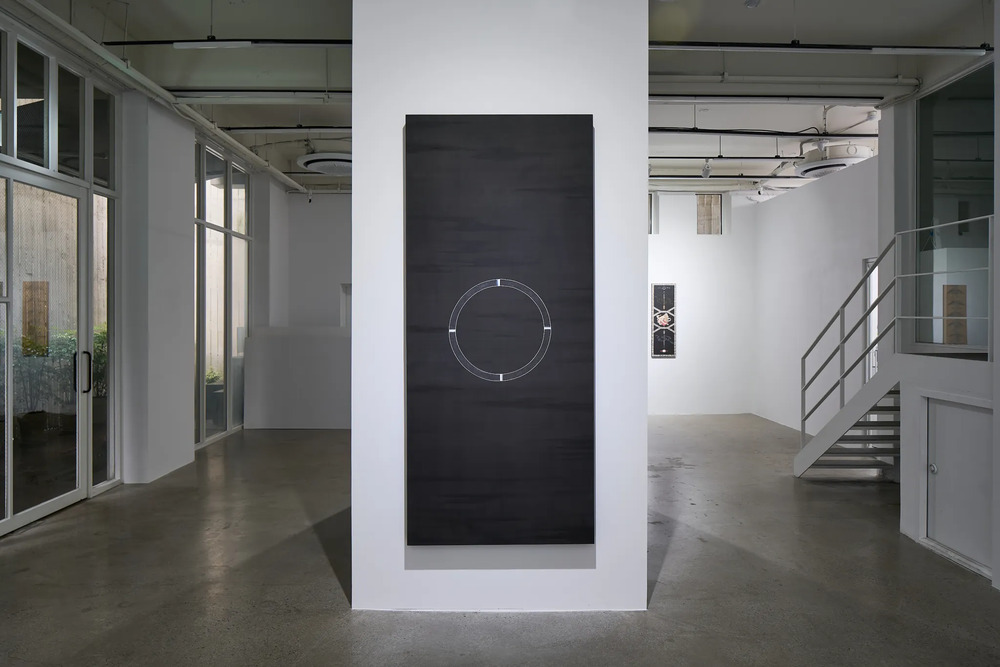
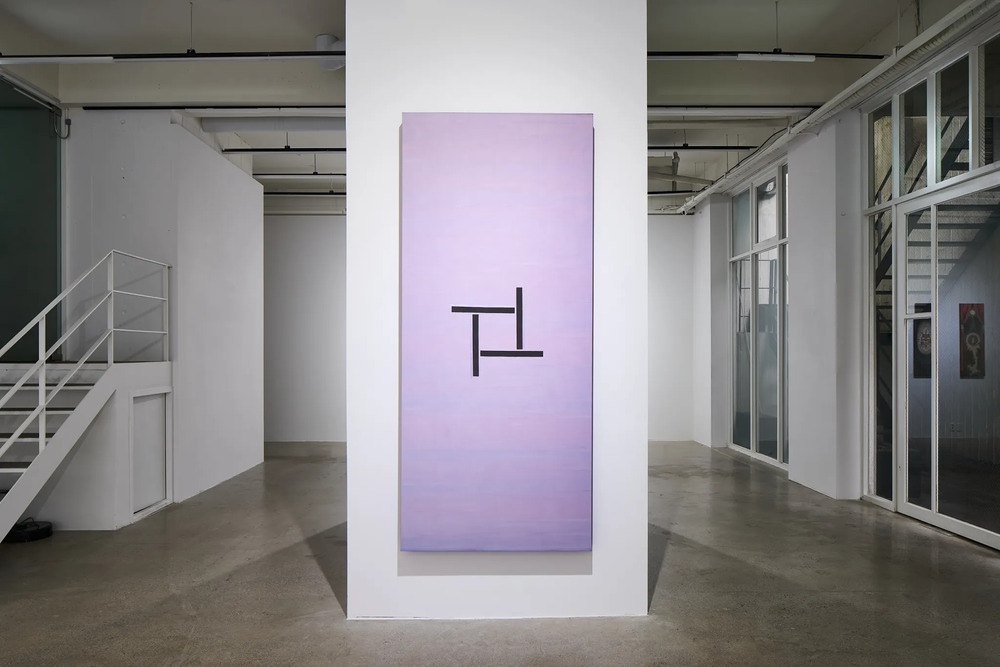
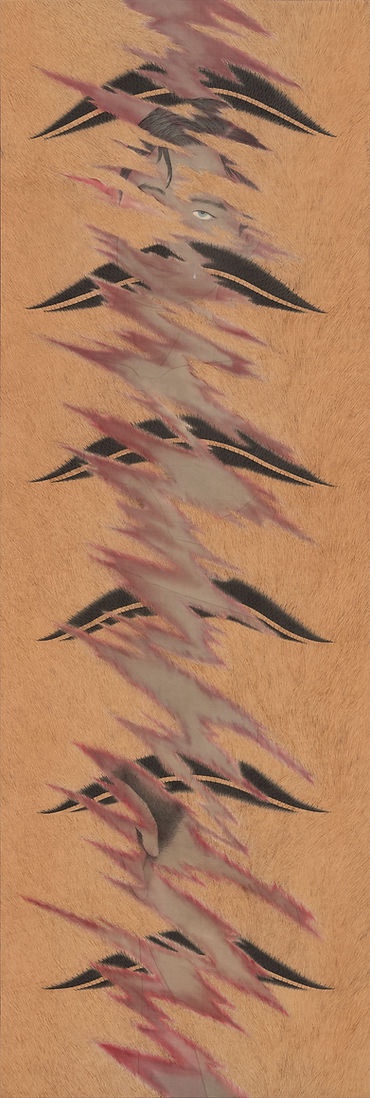
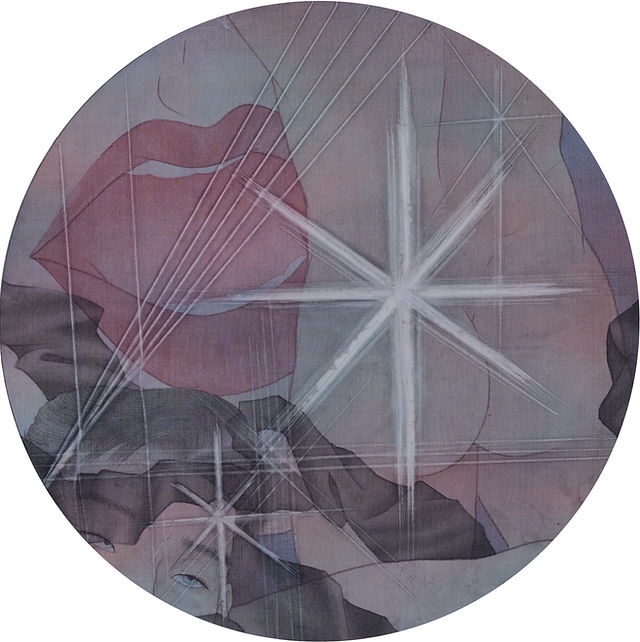
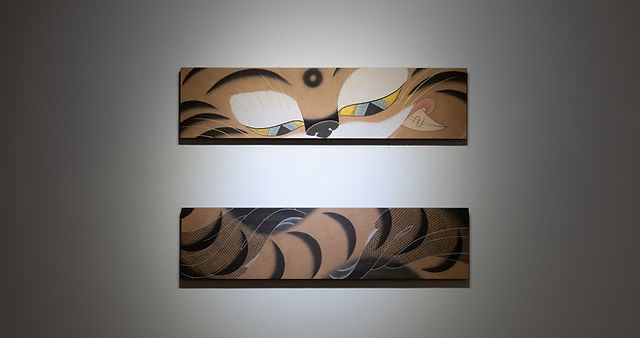
In his recent solo exhibition 《44》(2024, Studio Concrete), Park emphasized a critique of binary thinking. In particular, Return(2024) and Wheel(2024) eliminate all relationships and iconography, leaving only radically condensed traces that suggest a meditation on the essence of existence and enlightenment. The artist reflects on past selves and their visual symbols, adding greater depth to his self-awareness. In Enigma 我尾(2024), he breaks away from past idolization and dependence on others, appearing within a torn gap—signaling a shift from relationship-centeredness to a self-centered focus. This development in his narratives enables a profound reading of queer identity in contemporary contexts.

Style & Contents

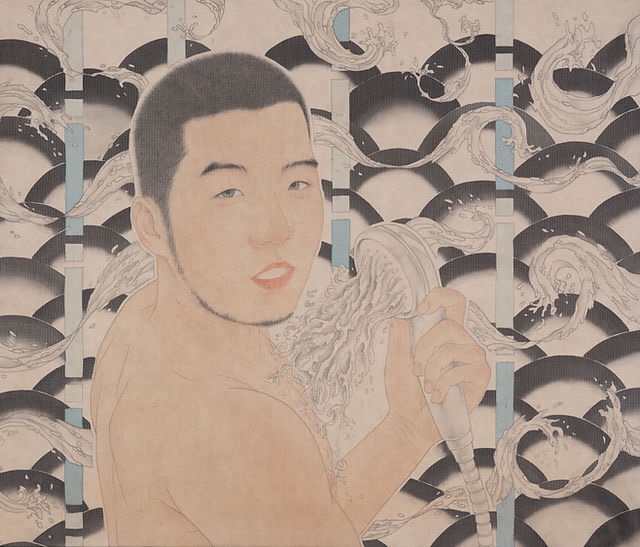
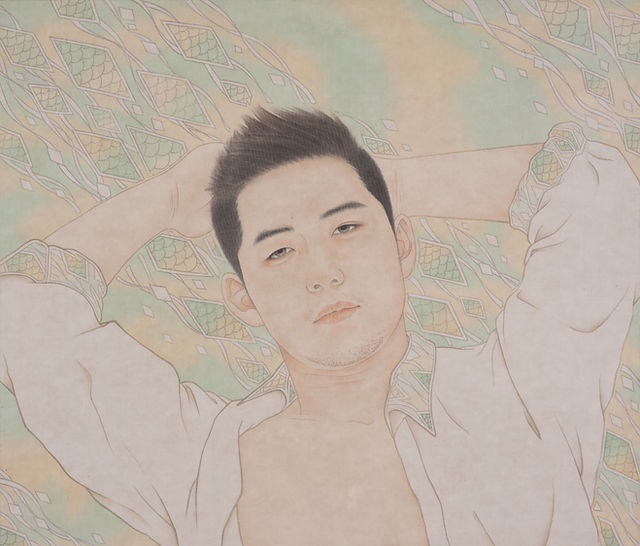
Grim Park’s work begins by combining the refined techniques of Korean Buddhist painting with contemporary narratives. In his early ‘Hwarangdo’ series, he visualized queer desire through idealized nude portraits of men painted on silk using Goryeo Buddhist techniques such as Yukrimunbeop. The labor-intensive method of layering pigment dozens of times on silk served as a metaphor for the painful effort required to attain beauty.

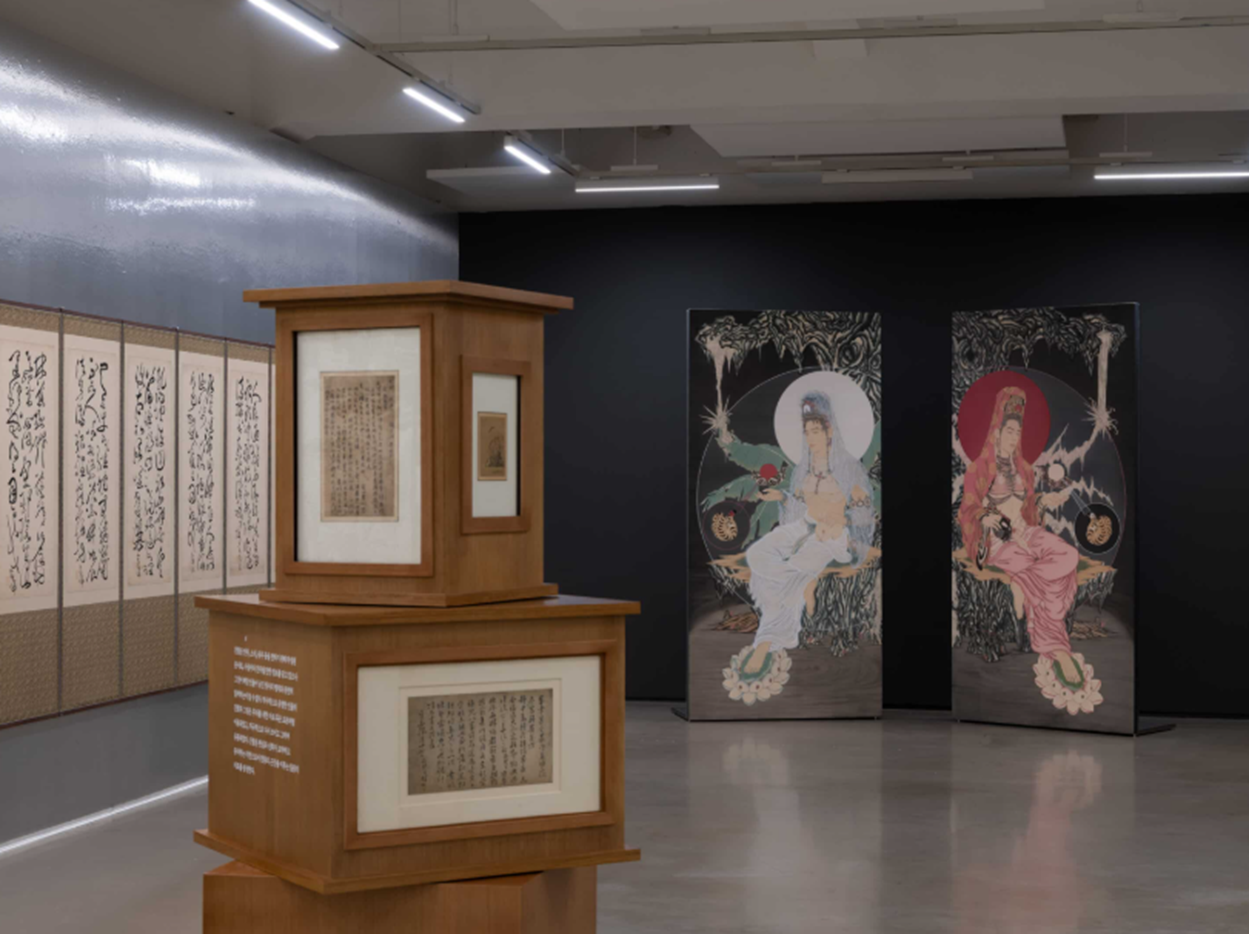
The tiger motif that emerged after 2018 functions as the artist’s persona, while the bodhisattvas surrounding it symbolize various relational networks. In Shimhodo - Chosen(2018), a scene where a rainbow-colored sara is draped over the tiger visually overlays queer identity, marginality, and Buddhist iconography. These Buddhist symbols serve not as static references but as media renewed for contemporary storytelling. Park reinterprets tradition not as a tool but as a platform for expansion.

His shift into sculpture is evident in ceramic tiger works such as Hogu(2021). These works expand two-dimensional icons into physical space, materializing the icon and marking an ontological transition. In Bihu(2021), his use of Yukrimun patterns to depict tiger skin adds vitality and sensuality while transforming the decorative surface of traditional painting into a symbol of existence.

In exhibitions such as 《CHAM; The Masquerade》(2021), 《虎路》(2022), and 《44》(2024), works like Sad TigerZero–Cogitation–Samadhi, and Enigma 我尾 visualize Buddhist symbols such as halos, Indra’s net, and reflected light, organically embodying conceptual thought within figurative painting. Through expansions and reductions of iconography, shifts in perspective, and recursive arrangements, Park elicits ever-new and complex interpretations.

In the group exhibition 《Flowers in the Flower Garden: Flowers》(Gallery THEO, 2023), the focus shifted from visual form to conceptual placement and textual juxtaposition. By placing message cards throughout the exhibition, symbolic connections between the artworks and the language of flowers were invited, leaving interpretive space open for the viewer. In this way, Park increasingly transitions from painterly representation to conceptual arrangement, presenting a multidimensional practice that embraces the linguistic layers and complexity of contemporary art.

Topography & Continuity

Grim Park has uniquely combined the style of traditional Buddhist painting with queer narratives—a rare convergence in contemporary Korean art. Initially borrowing the language of Buddhist painting to express the idealization of queer desire, he later introduced the tiger as a symbol of the self, initiating a journey of autobiographical narrative and introspective spiritual inquiry. His approach transforms tradition from a rigid system into a narrative framework, setting his work apart from classical Eastern painting conventions.

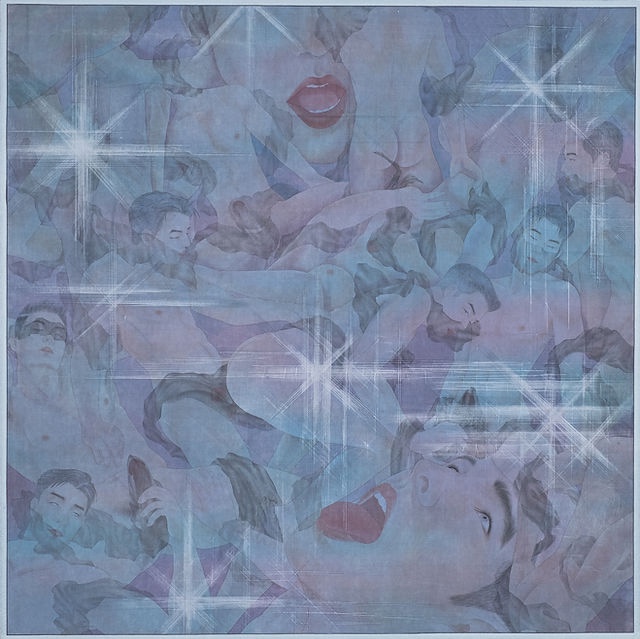
The development of his practice follows a trajectory from objectification of the self (〈Hwarangdo〉), to persona formation (〈Shimhodo〉), to sanctified eroticism (Bel Ami), to symbolic abstraction (〈Return〉, 〈Wheel〉), and finally to the fractured and emptied self-portrait (〈Enigma 我尾〉). The density of his icons and the layers of symbolic meaning have become increasingly distilled and compressed over time, while also deepening into a more existential dimension.

Today, Park occupies a distinctive position in Korean contemporary art by precisely intersecting the axes of tradition and queerness, achieving both ethical and philosophical resonance in his visual language. The coexistence of Buddhist grandeur and queer desire in his work holds significant potential in the intersection of identity and image discourse on an international scale.

In the global context of contemporary queer art, Park’s practice stands as a singular example of combining traditional East Asian iconography with non-Western narratives. Particularly through philosophical Buddhist symbols like Indra’s net and Inugumang, his work opens up the possibility of redefining ontology and relationality in contemporary thought. His artistic practice gestures toward not only an aesthetic of translation and hybridization but also toward an ethical imaginary for future global visual cultures.

Works of Art

Queer Narratives Through Traditional Buddhist Painting

Exhibitions