Peeled Skin - K-ARTIST

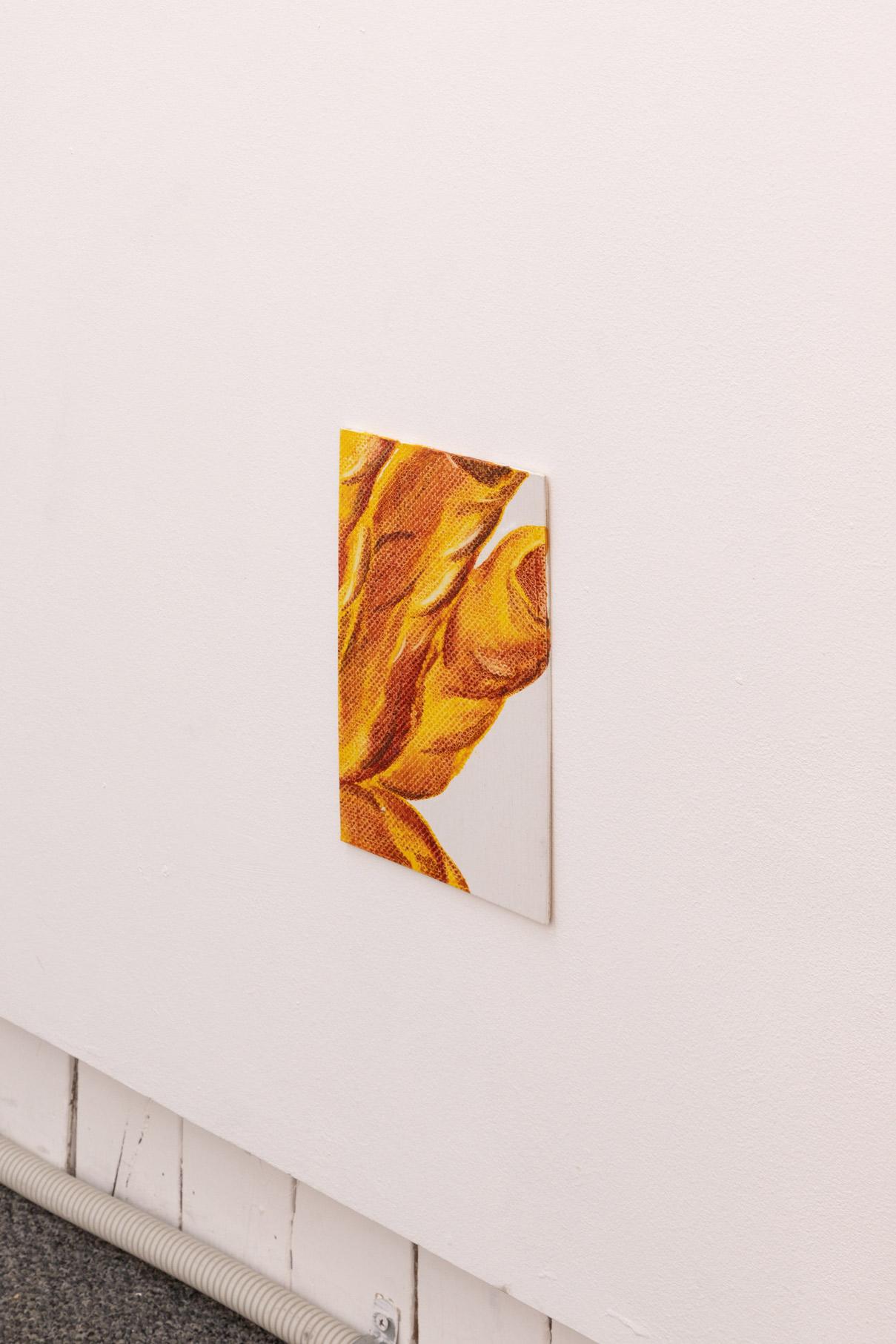
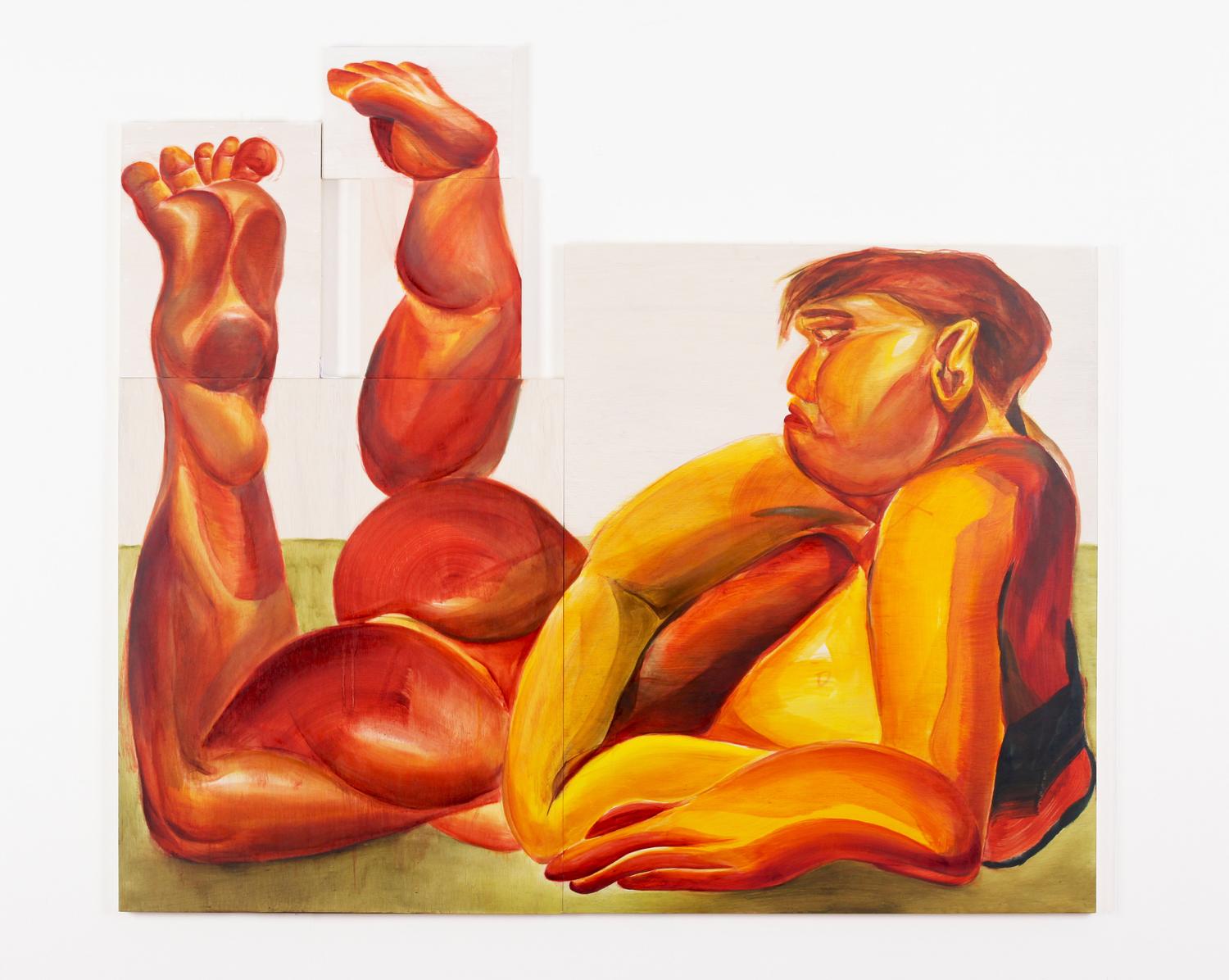
Peeled Skin

2020
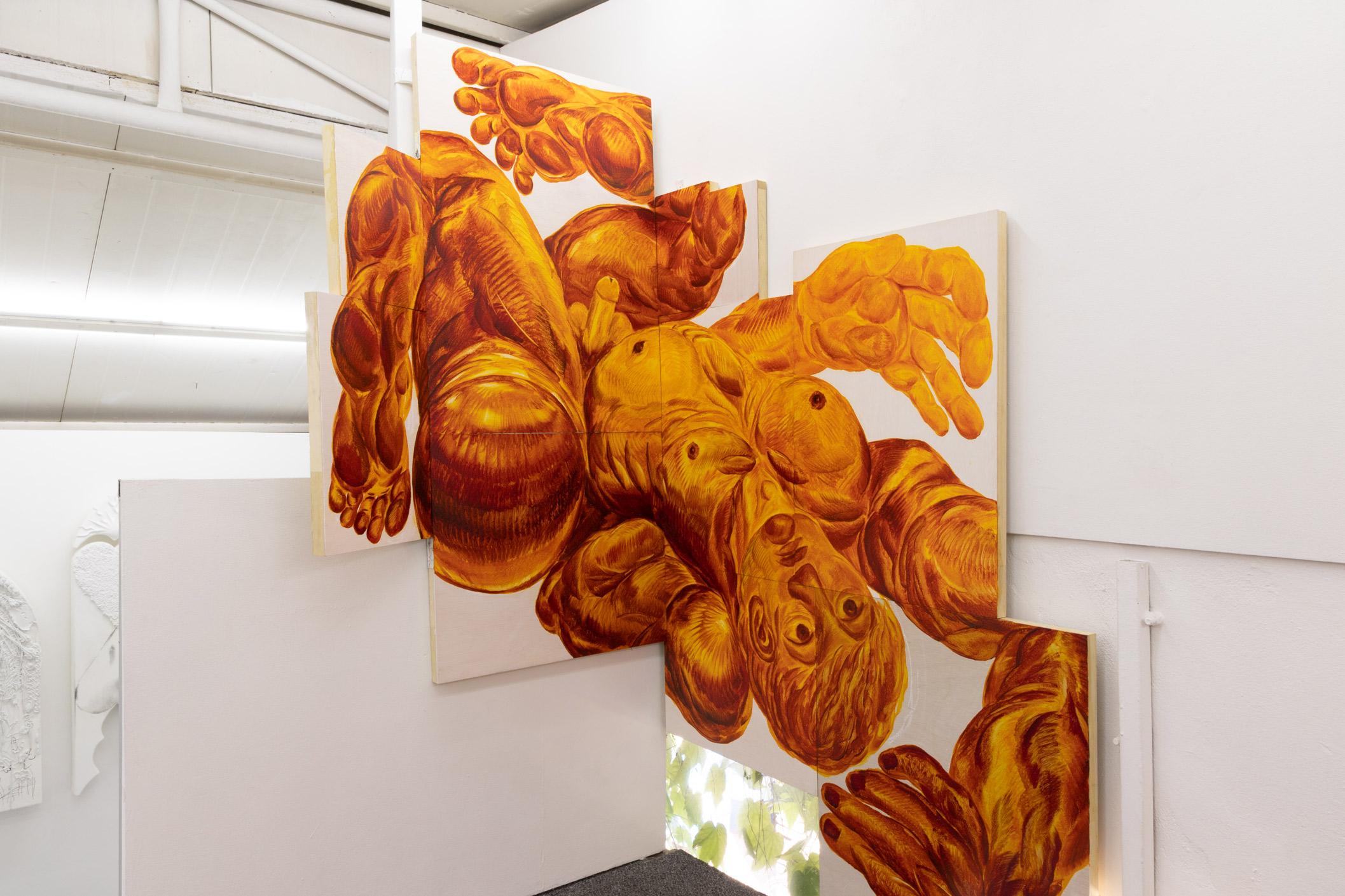
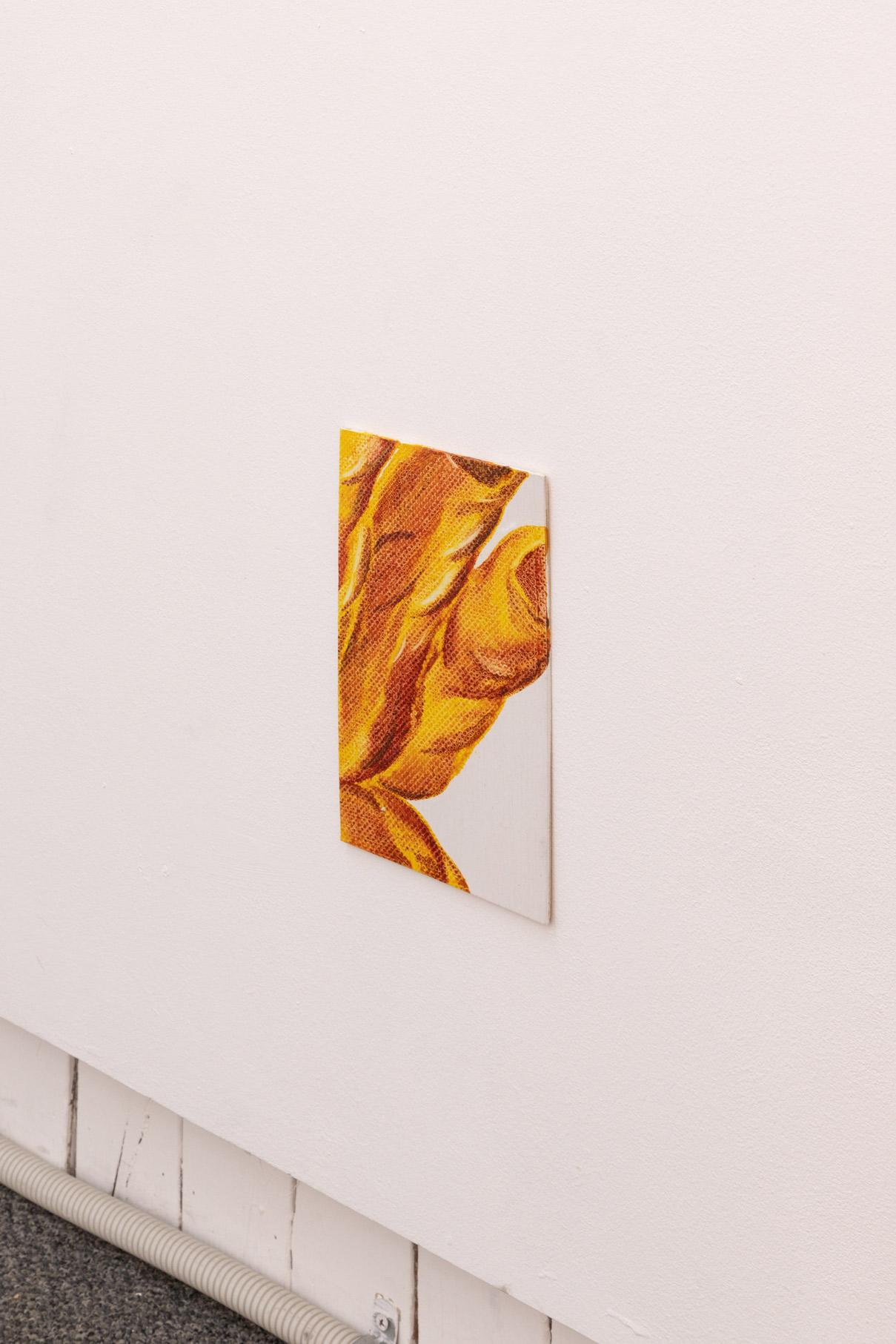
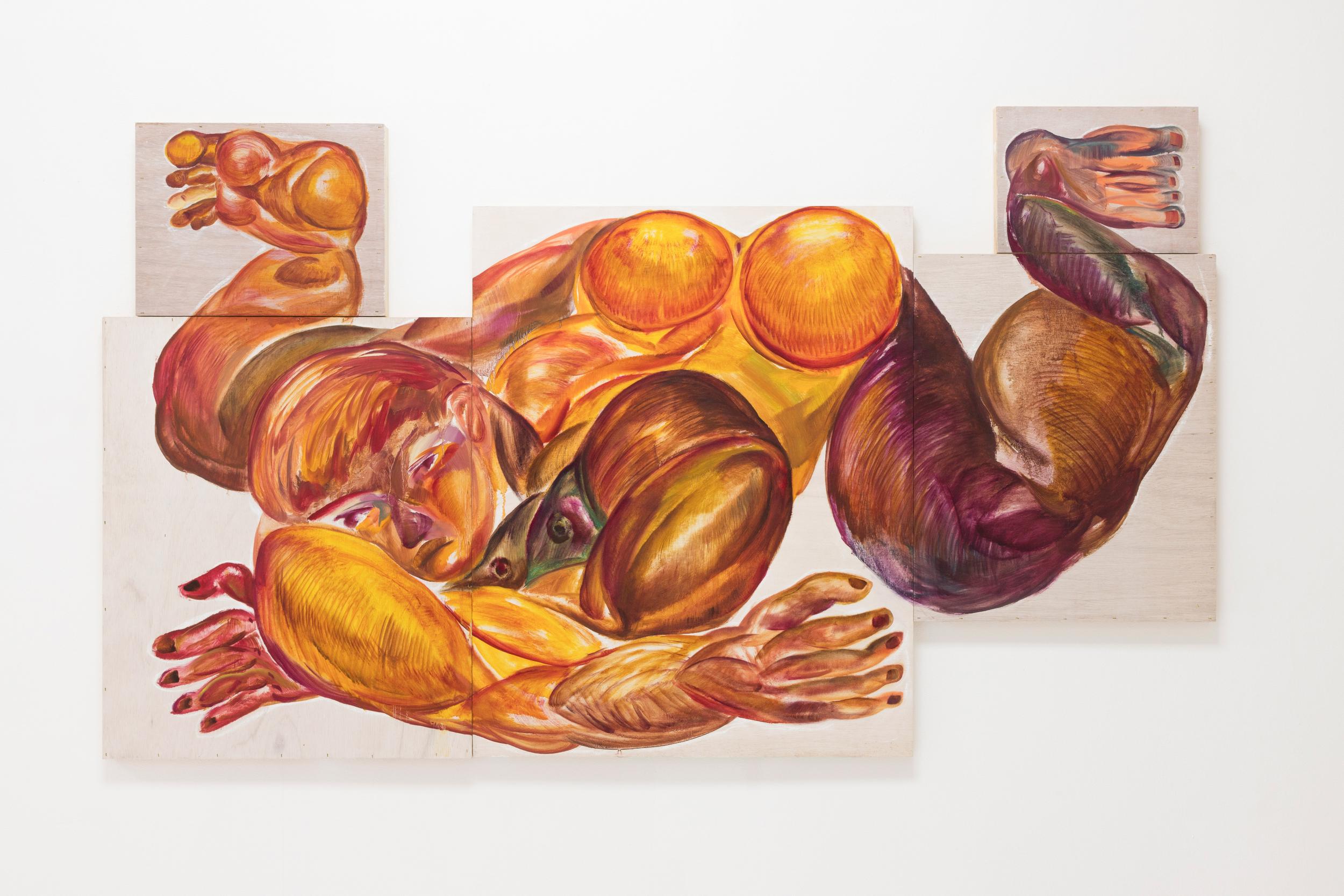
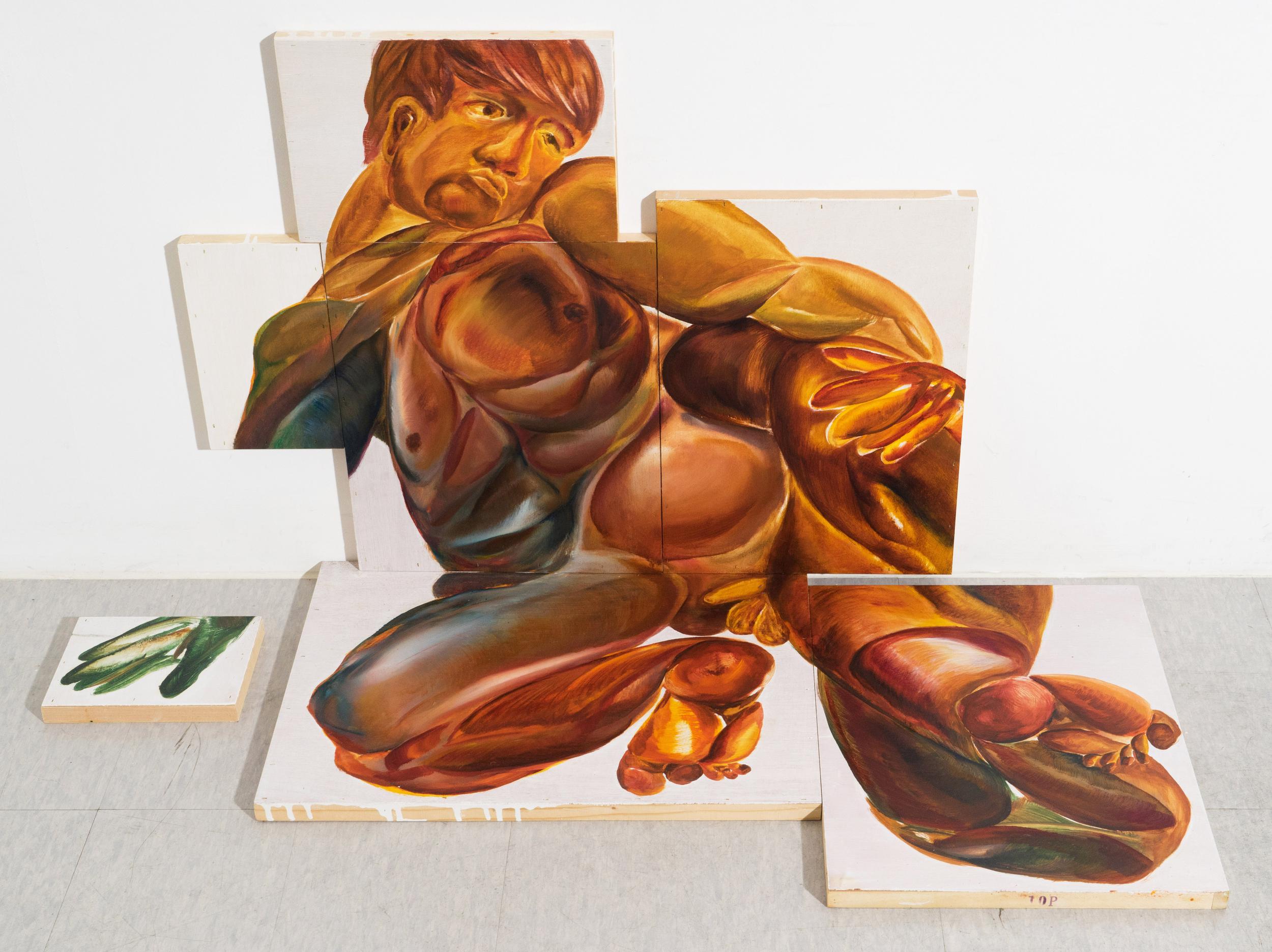
Oil on wooden panel
23 x 13.3 cm
About The Work

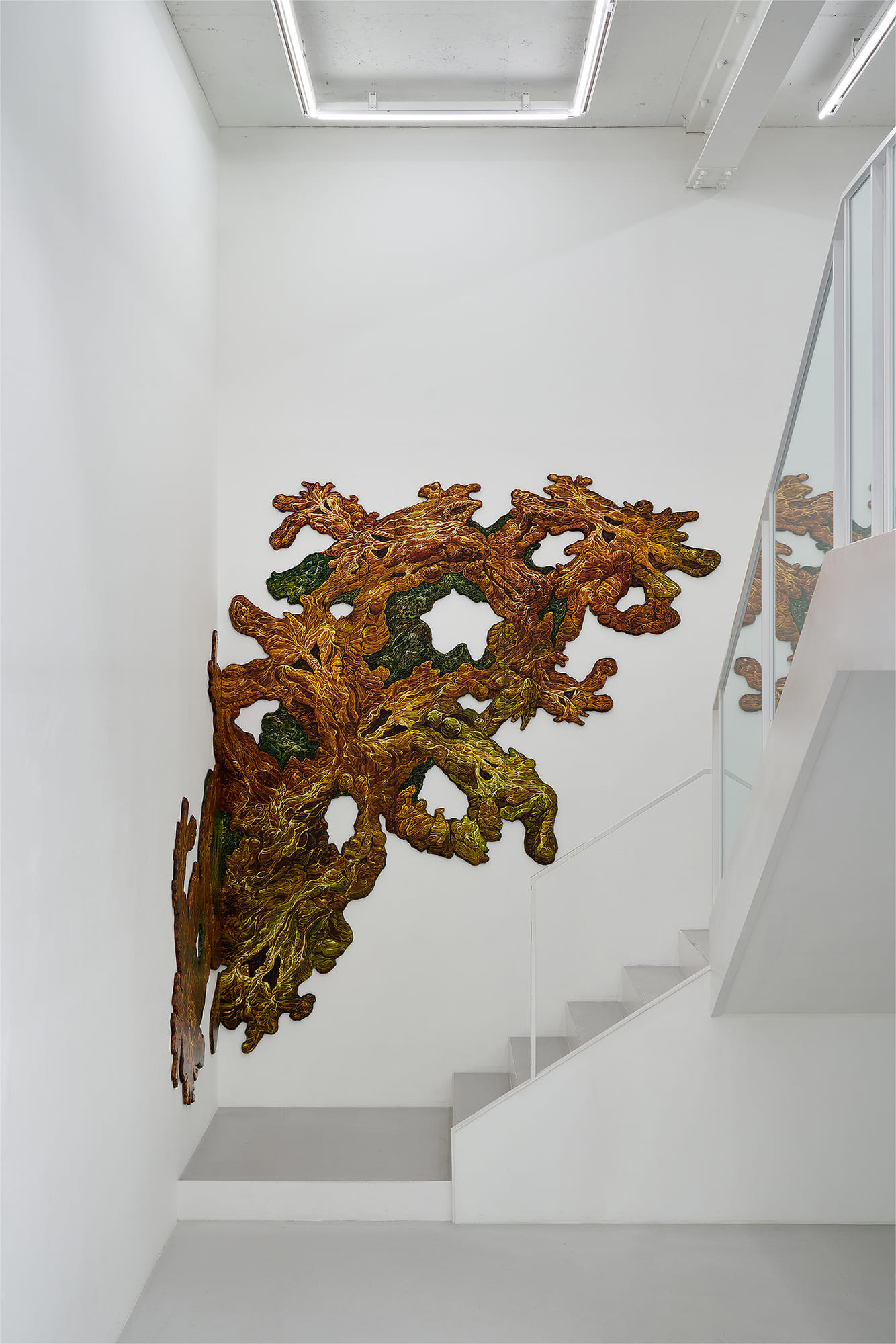
Chang Kon Lim begins his work with an imaginative exploration of the invisible interior of the human body. While our bodies are tangible and intrinsically connected to the self, their inner world remains an unknowable realm—almost like a foreign land.
 
The artist delves into the body as a site of condensed mystery, tracing the sensations that arise within it. In doing so, he blends the physical characteristics and forms he discovers with elements of real-world landscapes, blurring the boundary between reality and the unreal, and evoking something that feels vividly alive and in motion.
 
He constantly engages in a dialogue with his own body and the outside world, sensing and tactilely manifesting the living movements within the body as spatial forms. Chang Kon Lim’s work is thus a journey to discover the sensory realities of the body that cannot be seen, inviting not only the artist himself but also the viewer to continuously perceive and imagine the ever-changing, moving body.

Solo Exhibitions (Brief)

Chang Kon Lim has held solo exhibitions including 《48!: Morphing Gesture》(Space Catalog, Seoul, 2022) and 《Bulging Scenery》(Artspace Hyeong, Seoul, 2019). In 2025, he is scheduled to present a new solo exhibition at jungganjijeom ll.

Group Exhibitions (Brief)

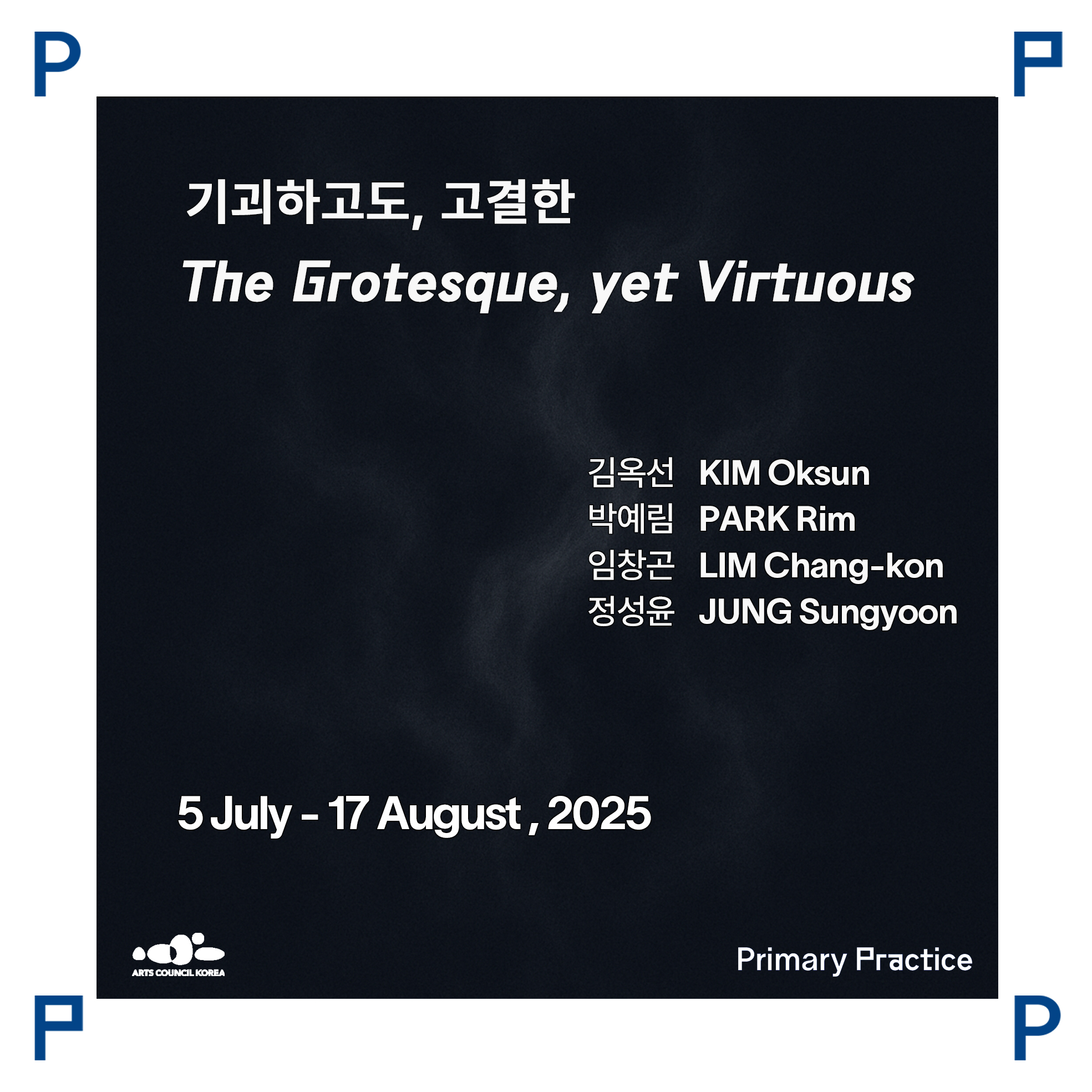
Lim has also participated in various group exhibitions, including 《Crush Zone》 (Gallery SP, Seoul, 2025), 《Talking Heads》 (Seoul Museum of Art, Seoul, 2025), 《Exoskeleton》 (P21, Seoul, 2024), 《DOOSAN Art Lab 2023》 (DOOSAN Gallery, Seoul, 2023), 《21st Century Paintings》 (HITE Collection, Seoul, 2021), 《Gaze》 (Space 413, Seoul, 2020), 《Station!》 (Post Territory Ujeongguk, Seoul, 2019), and more.

Awards (Selected)

Chang Kon Lim was selected for the ‘DOOSAN Art Lab’ at DOOSAN Art Center in 2022.

Residencies (Selected)

Lim was selected for an artist-in-residence at the SeMA Nanji Residency in 2024.

Works of Art

Moving and Transforming Paintings

Originality & Identity

Chang Kon Lim has continuously explored the body within the framework of social perception, subjecting it to critical deconstruction. His first solo exhibition, 《Bulging Scenery》(Artspace Hyeong, 2019), presented works such as A Vacant Man(2018), responding to the violence of objectification and othering experienced by queer male bodies and directly confronting gender power structures through the body. These works delve persistently into politically charged experiences of the body, including sexual hierarchies, social stigmas, and gender performativity.

In his solo exhibition 《48!: Morphing Gesture》(Space Cadalogs, 2022), Lim focused on the keywords of “movement” and “transformation,” exploring the ways in which the body traverses and is reconfigured within space. Here, the body is imagined as a fluid entity unbound by fixed identity. The work moves toward the imaginative realm of the body’s internal sensations, expanding into a visual representation of emotions, intestines, and circulatory flows—things that lie beneath the visible surface.

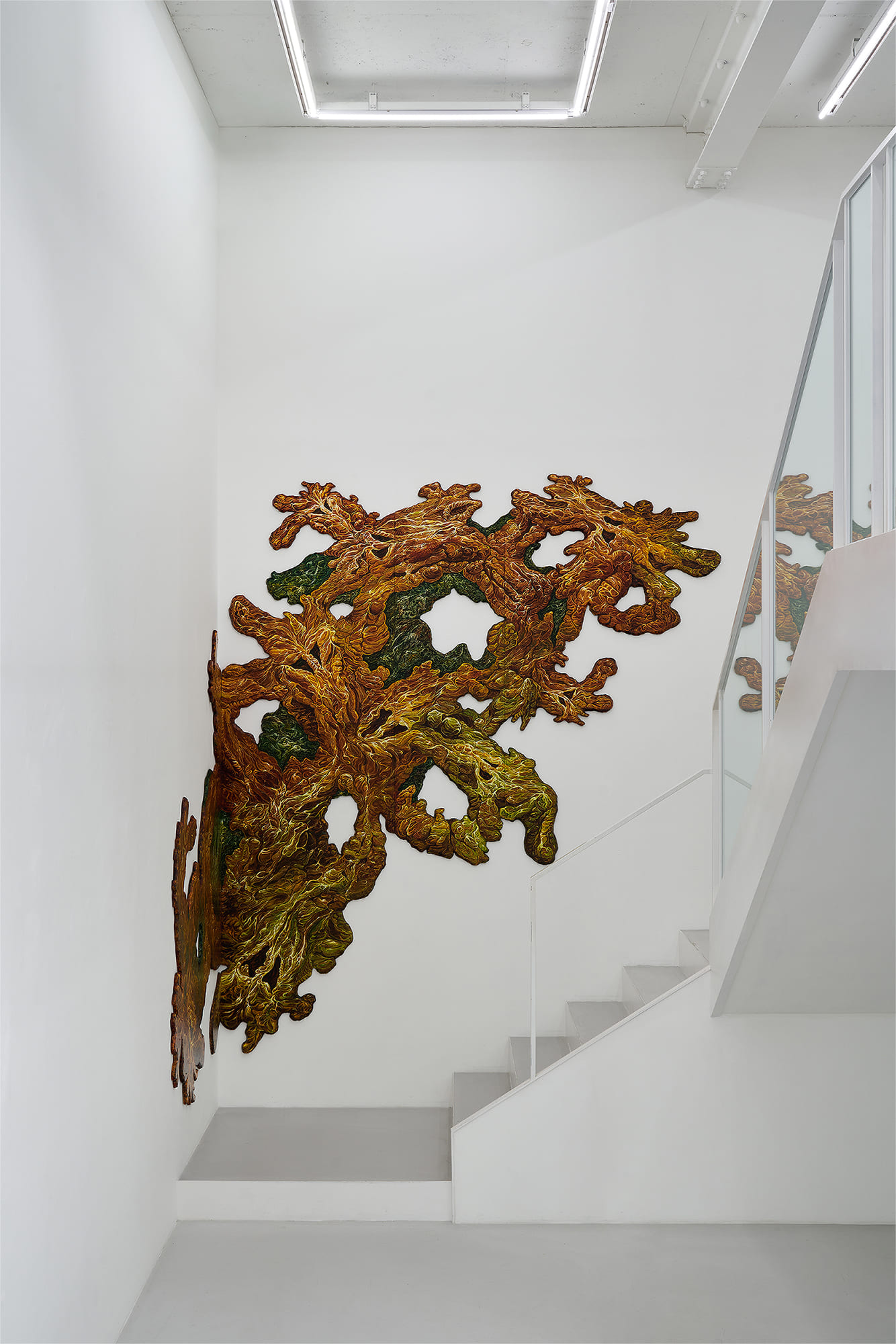
In more recent group exhibitions, such as 《Exoskeleton》(P21, 2024) and 《Crush Zone》(Gallery SP, 2025), the artist visualizes the interior of the body through metaphors of caves, tunnels, and conduits, engaging with the density of biological and material sensation. Works like Visceral Space(2023), Flowing Light(2023), and The Multiplying Breath(2024) investigate the complex vitality and rhythms of transformation that constitute the human body.

In this way, Chang Kon Lim’s conceptual framework begins with resistance to the social oppression of queer identity and evolves into a visual exploration of the body’s interior sensations. For Lim, the body is not merely a visual object but a site of living sensation and movement—a physical channel and poetic space through which the individual’s internalized emotions and repressions are expressed.

Style & Contents

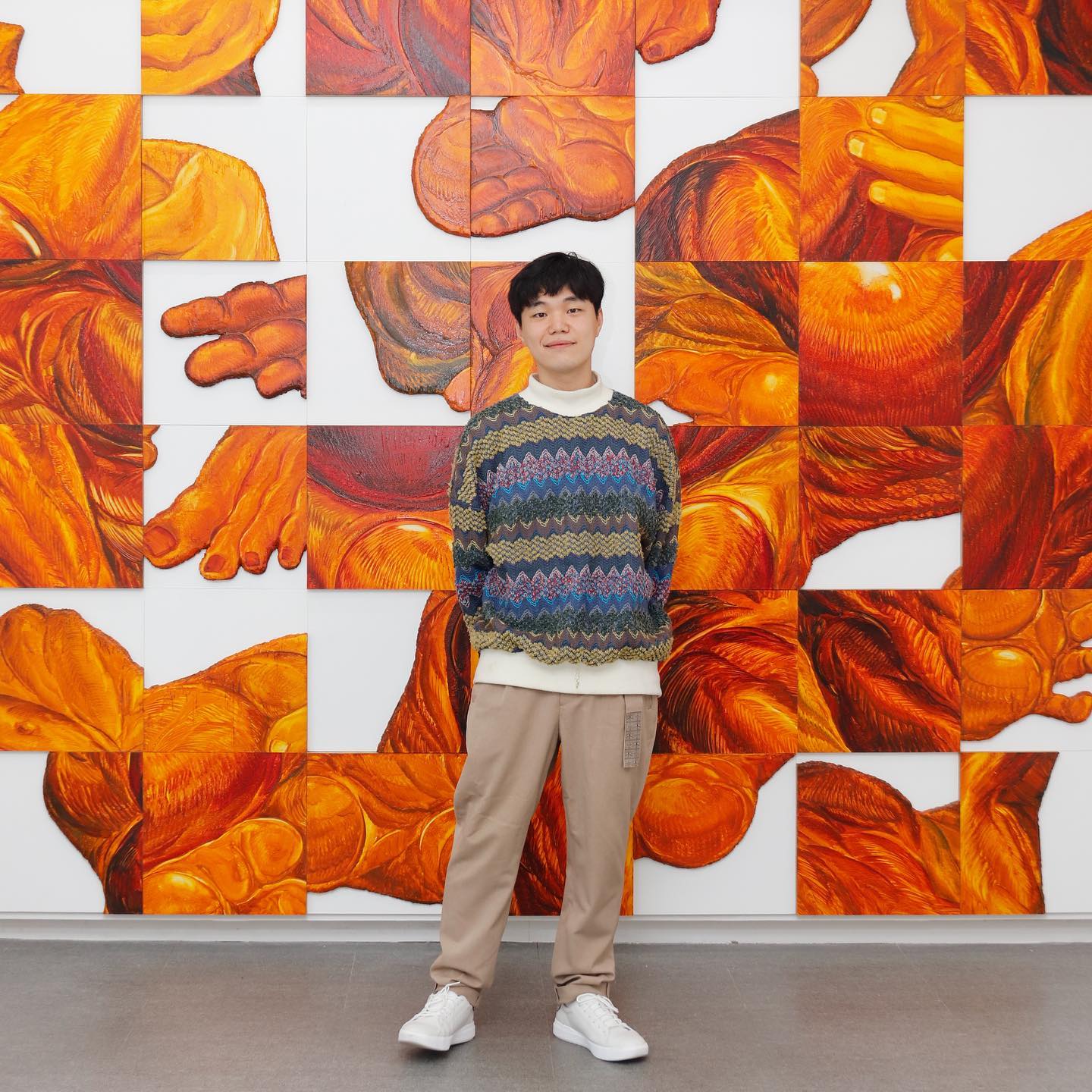
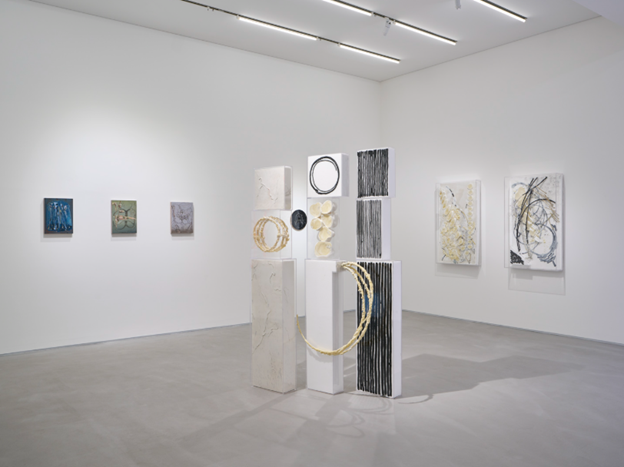
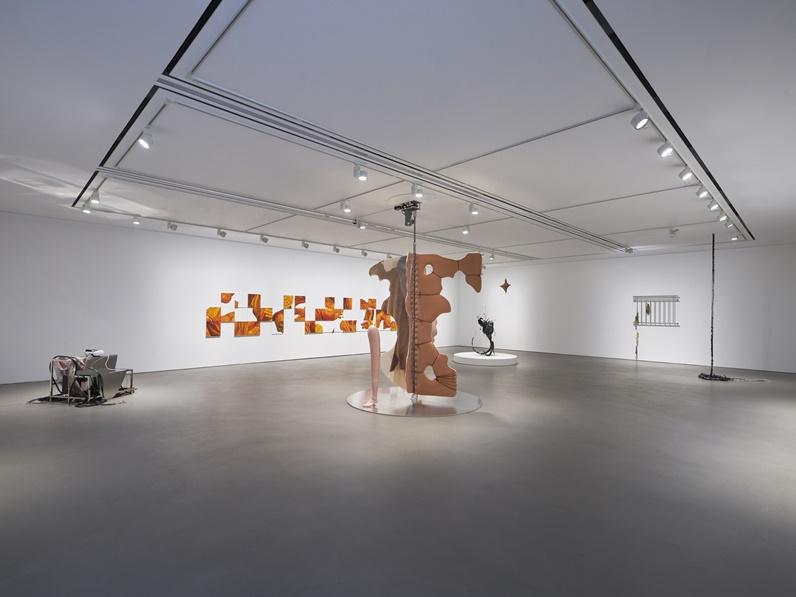
Lim primarily uses wooden panels as his support, traversing the boundaries of painting, sculpture, and installation through physical acts such as brushwork, cutting, assembling, and fragmenting. In 《Bulging Scenery》, he physically materialized structures of social oppression by segmenting and recombining bodies across conjoined panels. These panels function as “traps,” as seen in works like A Vacant Man and An Intrusive Man(2020), where unstable postures and emotions of bodies caught within such traps are made visible on the surface.

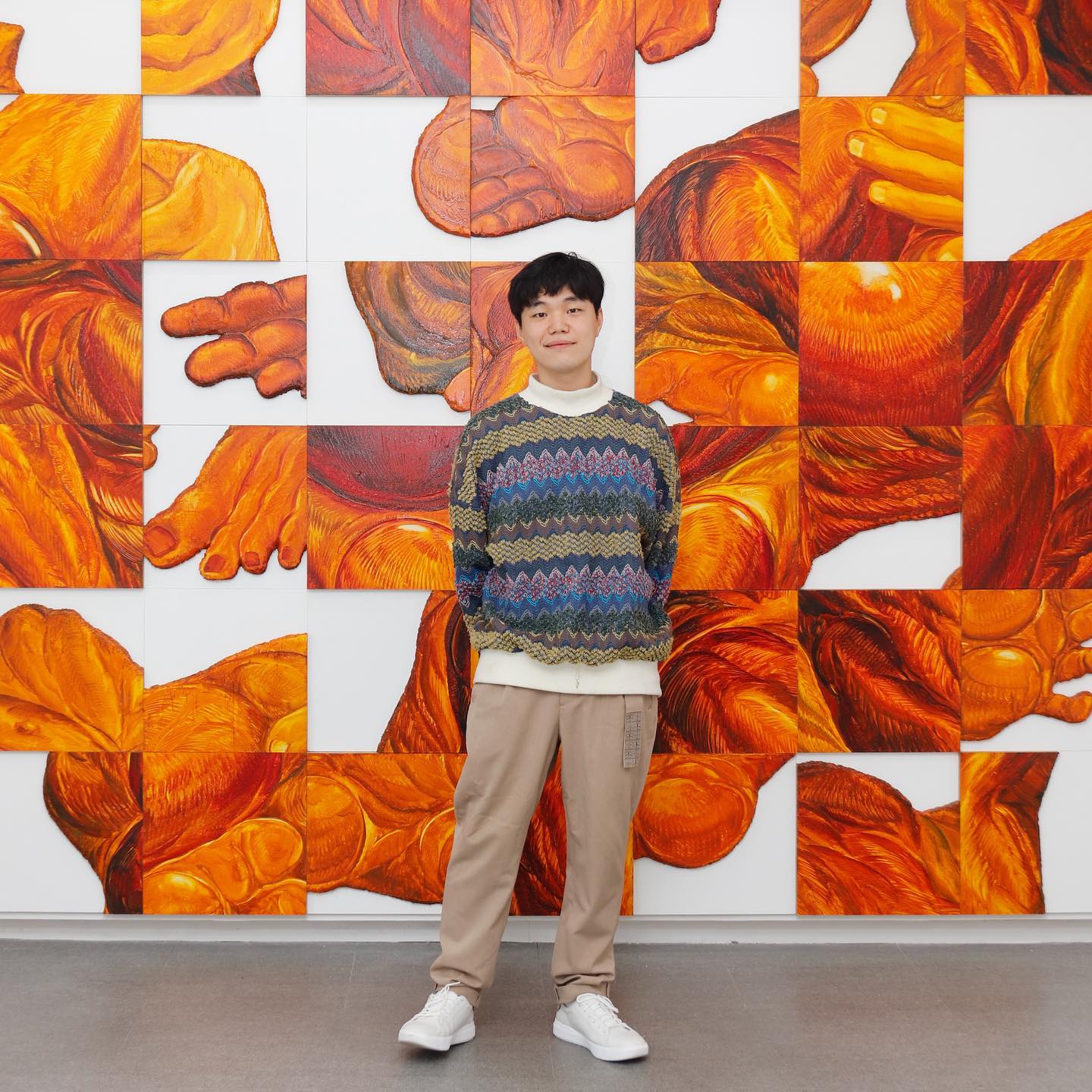
Rearranging fragmented body parts also serves to emphasize the kinetic nature of his work. His paintings give the impression of bodies bursting outward from the panels, transforming the act of visual representation into a sculptural engagement with space. Works such as Crystals, column(2022) expand residual fragments of painting into reconfigurable sculptural objects, presenting a new sculptural language in their own right.
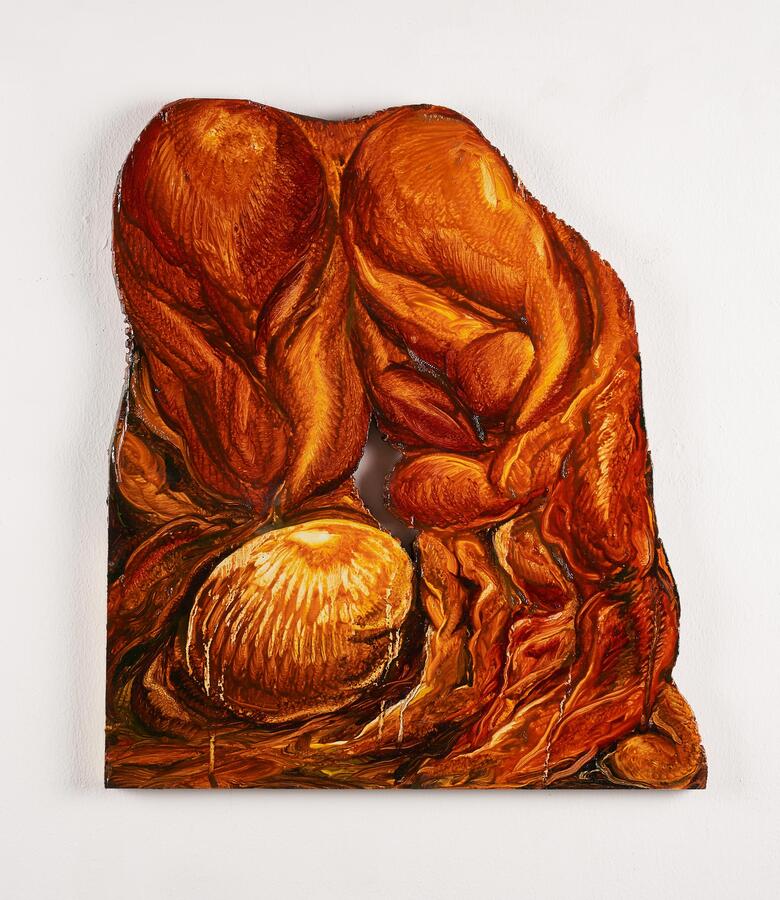
In works like A Path of Air(2022) and A Pool of Water(2022), brushstrokes alone are used to convey the inner sensations of the body. Here, the body is no longer a subject of external representation but becomes a site of imaginative landscape and sensory experience. The pictorial space is filled with hybrid forms—hands, intestines, stones, roots—where abstraction and figuration intermingle, pulsating like a living organism.

Through his unique sculptural vocabulary, the artist breathes with his materials, transforming the entire process into a kinetic experience. The gravity, pressure, and vibration applied to the physical material are not merely means of generating form but essential to constituting sensation and being itself.

Topography & Continuity

Chang Kon Lim is a painting-based installation artist who simultaneously explores the social context of the body and the materiality of sensation. He is one of the few artists in the Korean contemporary art scene to seriously engage with male nudity and queer bodies. The body of direct resistance first revealed in his solo debut 《Bulging Scenery》 has continued to develop through subsequent exhibitions, evolving into a more sensory and formal investigation. This trajectory reflects two parallel strands: a critique of the norms and gazes surrounding the body, and a deep engagement with its interior sensations and their visualizations.

He continues to experiment with format by moving between the surface of painting and the dimensionality of installation. He does not treat the canvas as a flat plane but as a “fragment of the body” or a “topography of sensation.” This working method actively embraces the expanded potential of contemporary painting and the transitions between media, contributing to the reconfiguration of boundaries among painting, sculpture, installation, and performance.

Lim’s practice has developed through dual keywords: fragmentation and reassembly, entrapment and expansion, sensation and form. His work increasingly addresses fluid structures, such as expanded affects of queer bodies and spatialized painting. In particular, his approach to mapping the body’s internal topography of sensation signals the emergence of a new lineage in material-centric sensory painting.

Looking ahead, Lim is likely to continue developing his practice toward fluid, experimental forms that further explore the intersection of internal corporeal sensation and external spatial expression. These explorations may unfold in public spaces, immersive installations, or large-scale paintings, contributing to a vital new trajectory in contemporary Korean painting rooted in materiality, affect, and the reimagination of the body.

Works of Art

Moving and Transforming Paintings

Exhibitions

Activities