


I'M ASHAMED TO HAVE GRADUATED HERE - K-ARTIST

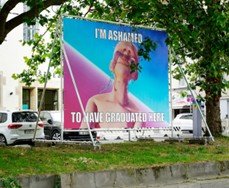
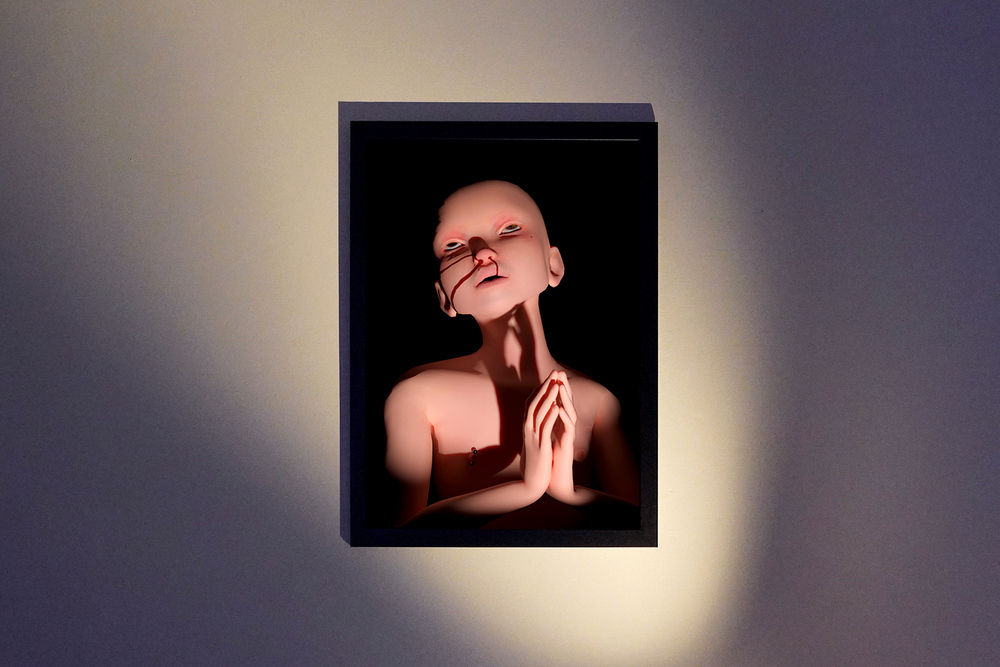
I'M ASHAMED TO HAVE GRADUATED HERE

2022
Installation
430 x 300 x 350 cm
About The Work

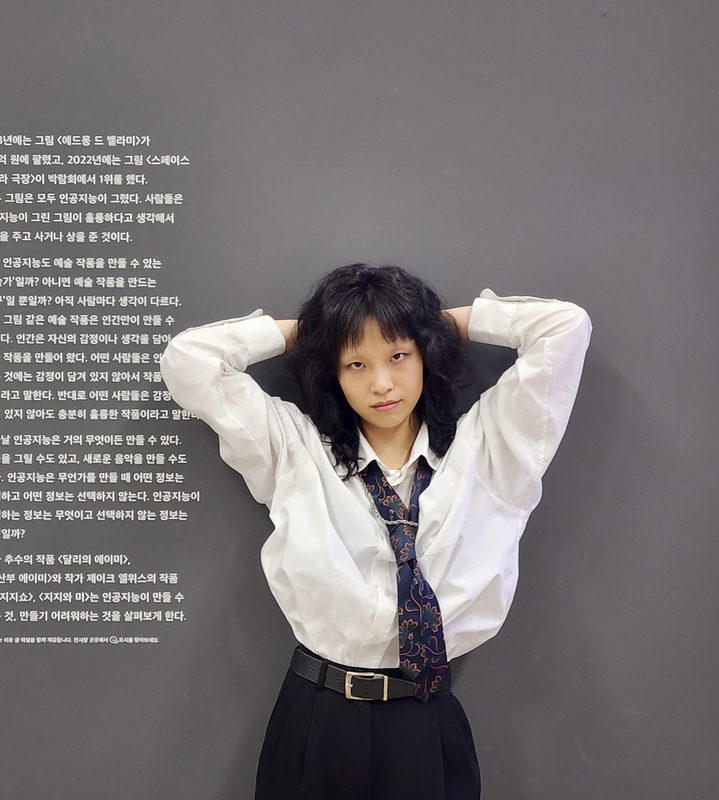
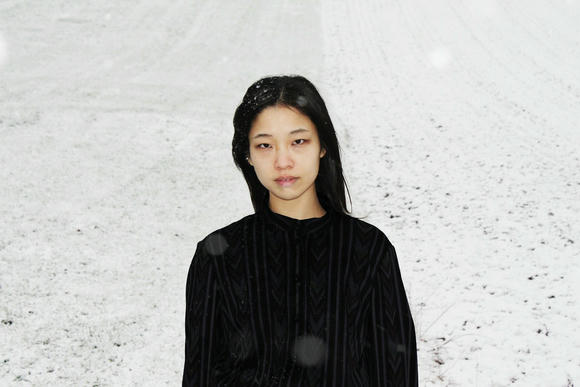
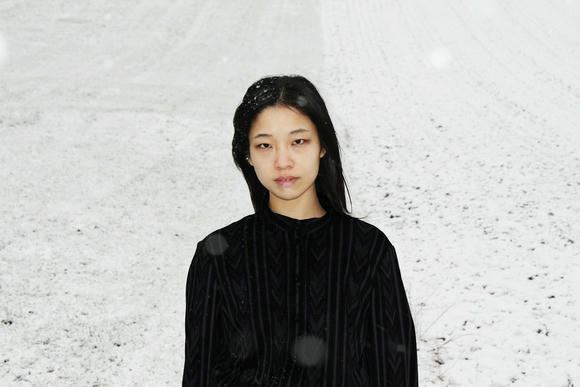
TZUSOO, a digital native, has been developing a unique artistic language rooted in new identities formed at the intersection of the cyber ecology and the real world. Her work evolves across various media, including video, installation, sculpture, and painting. With her characteristically sharp perspective and wit, TZUSOO explores the essence of existence, weaving personal narratives into issues of discrimination, gender, human rights, and emerging blind spots in the digital age.
 
Her practice symbolically highlights the fundamental differences between the cyber ecosystem and the material world while dynamically unfolding the organic tension shared by the processes of “creation” and “birth.”
 
Her work carries her personal narrative of fulfilling her desire to become a mother through artistic creation, while also reflecting contemporaries who dwell mentally in the digital world yet physically in the material body. This offers a critical space to reconsider today’s relationship between technology and reality.

Solo Exhibitions (Brief)

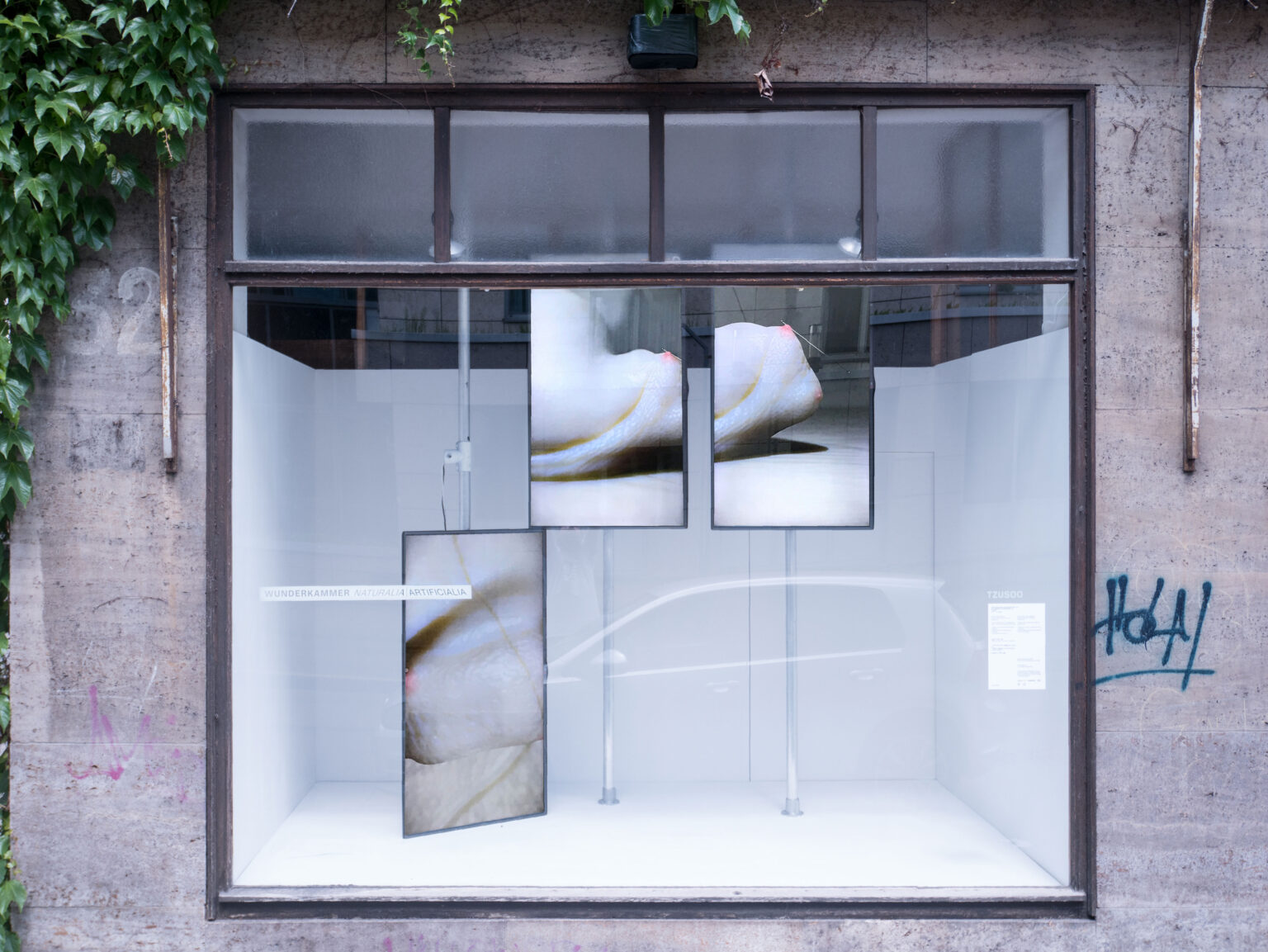
TZUSOO has held solo exhibitions including 《Alma Redemptoris Mater: Our Material Our Redeemer》 (sangheeut, Seoul, 2023), 《The Most Faithful Blasphemy》 ((together)(together), Seoul, 2022), 《I Feel Uncanny When You Touch Me There》 (Wunderkammer, Stuttgart, Germany, 2022), 《Schrödinger’s Baby》 (Schaufenster Junge Kunst, City Gallery of Sindelfingen, Sindelfingen, Germany, 2021), and more.

Group Exhibitions (Brief)

The artist has participated in numerous group exhibitions at international institutions, including the National Museum of Modern and Contemporary Art, Korea (Cheongju, 2024), Calm and Punk Gallery (Tokyo, 2024), Hessel Museum of Art (New York, 2023), HITE Collection (Seoul, 2022), Gyeonggi Museum of Modern Art (Ansan, 2022), Culture Station Seoul 284 (Seoul, 2021), and Kunstmuseum Stuttgart (Stuttgart, 2021).

Awards (Selected)

Ayoung Kim has received several prestigious awards, including the 2nd Prize, 30th Joong-Ang Fine Arts Prize (2008, Korea), Young Artist of the Year Award, Ministry of Culture, Sports and Tourism (2015, Korea), Best Film Award, 7th Chuncheon SF Film Festival (2020, Korea), Golden Nica Award, Prix Ars Electronica (2021, Linz, Austria, New Animation Art Category), and the ACC Future Prize, National Asian Culture Center (2024, Gwangju, Korea).

She was also selected as a Finalist for the Korea Artist Prize (2019, MMCA, Korea) and as a Finalist for Best Experimental Film at the Berlin Sci-fi Filmfest (2021, Germany).

Residencies (Selected)

TZUSOO was selected as a guest artist for the 2020 residency at Electro Putere Gallery in Craiova, Romania. In 2019, she participated in the V2_Lab for the Unstable Media X Art Centre Nabi Residency in Rotterdam, Netherlands.

Collections (Selected)

TZUSOO’s works are housed in (together)(together)(Seoul) and City Gallery of Sindelfingen(Sindelfingen, Germany).
Works of Art

Where Cyber Ecology Meets Reality

Originality & Identity

TZUSOO’s practice contemplates a new ontological identity grounded in the tension and collision between the cyber ecology and the material world. Schrödinger's Baby (2019) is a representative work in which she imagines herself becoming pregnant in digital reality, thereby dissolving the boundary between physical and virtual existence. The work transposes the quantum paradox—where existence and non-existence coexist until observation—into artistic language, offering a philosophical framework for digital identity.

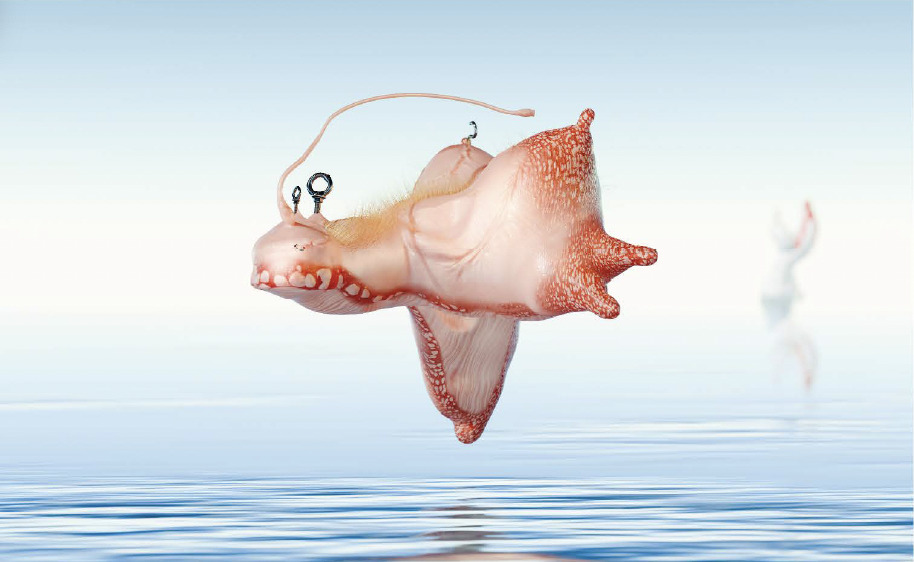
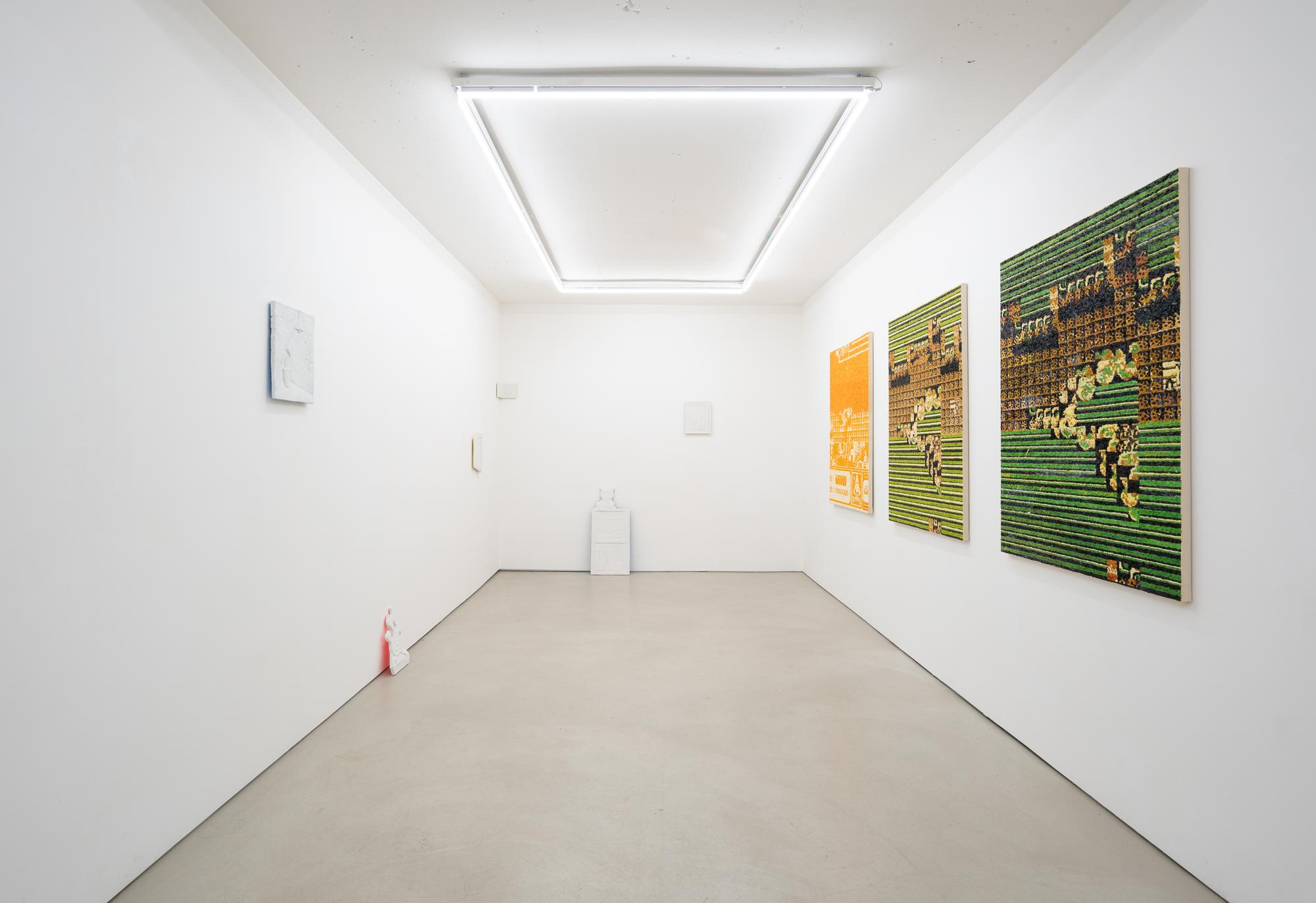
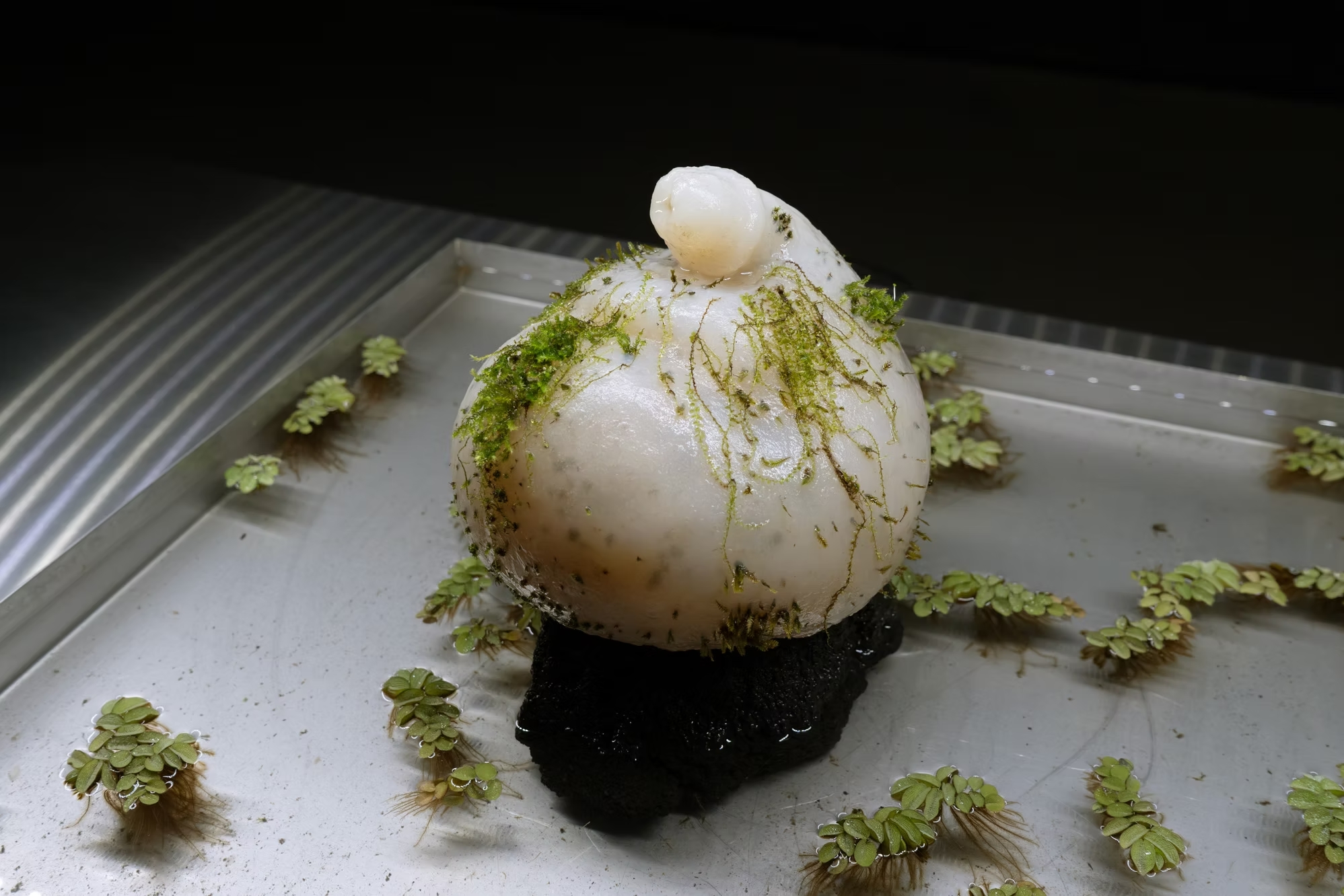
The artist experiments with new imaginaries of artistic motherhood and hybrid life by translating digital beings into material form. The ‘Agarmon’ series (2023~) introduces life forms composed of agar, moss, volcanic stone, and other substances, testing the convergence of technology, biology, art, and flesh. This framework implicitly critiques religious ideologies concerning childbirth and femininity. In particular, Agarmon 3 (2023) poses a sculptural challenge to sacred norms and taboos.

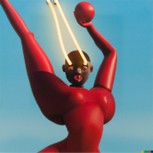
Through the virtual figure of Aimy Moon, TZUSOO dismantles gender fixity and capitalist norms perpetuated in digital society. In works such as The Cyborg Manifesto(2021) and Aimy’s Betrayal(2021), she sharply critiques the Madonna–whore binary, the objectification of femininity, and the power structures that persist in virtual environments. These works can be seen as cultural remixes that reconfigure Donna Haraway’s theories through the artist’s own sensibility.

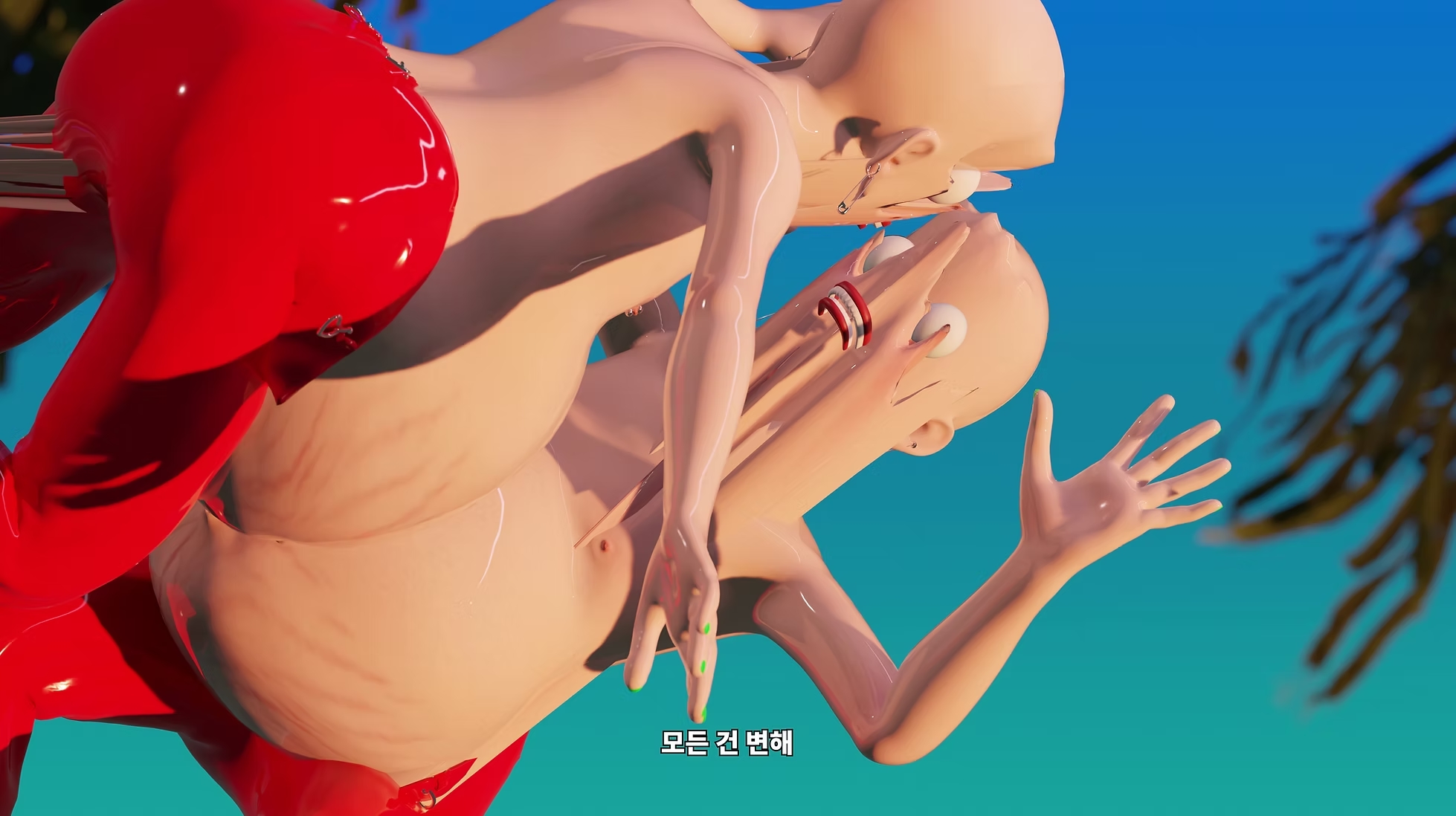
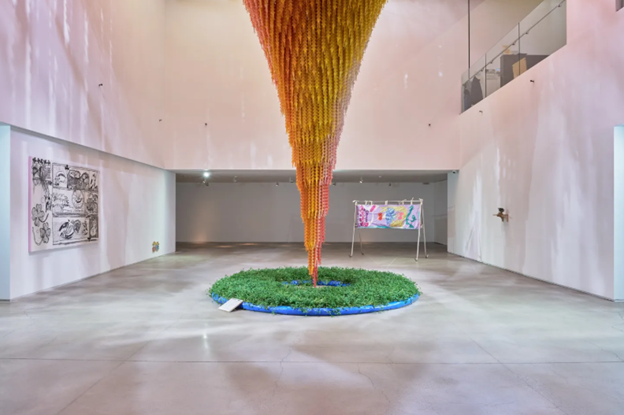
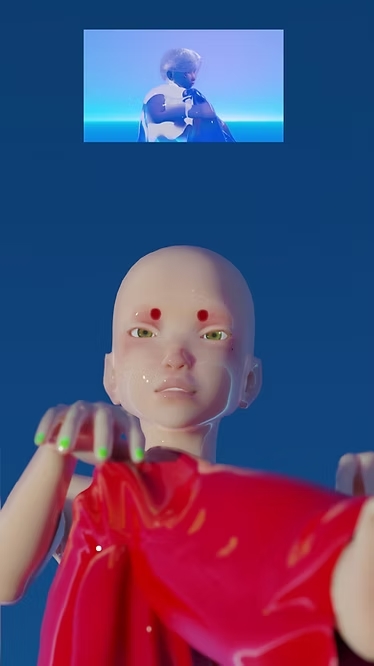
I Am Ashamed to Graduate from Here(2022), presented in a group exhibition at Museumhead, was created as a response to the artist’s real-life experience of institutional inequality. It was her graduation piece and a statement of resistance against discriminatory tuition hikes imposed on non-EU international students at the Stuttgart State Academy of Art. While directly addressing structural oppression, the work also proposes a composite model of subjecthood by featuring Aimy—her virtual alter ego—crying profusely. Through this image, the artist suggests an entangled duality where “TZUSOO exists here” and “Aimy exists there,” and questions whether an avatar turning back toward reality might transform exaggerated virtuality into material consequence.

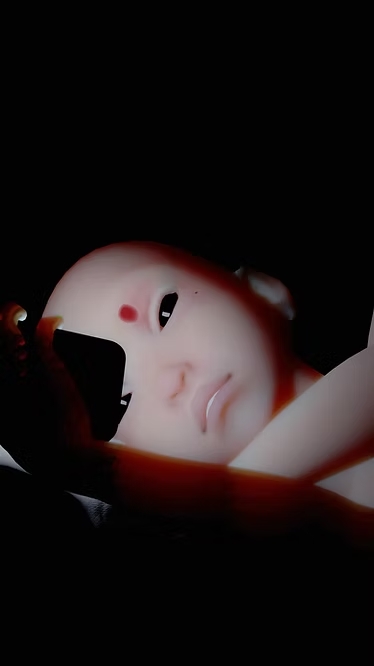
Aimy The Pregnant(2024), one of TZUSOO’s most recent works, redefines “pregnancy” as a form of technology, drawing attention to the generative power of the human body in an era dominated by artificial intelligence. The work reframes pregnancy—long neglected in the history of technology—as a functional and technological capacity, thereby presenting a radical reconfiguration of male-centric narratives in tech history.

Style & Contents

TZUSOO constructs complex narrative structures through diverse media, including video, installation, sculpture, and painting. Schrödinger’s Baby(2019) is composed as a three-channel video installation that visualizes fetal development at 4, 8, and 16 weeks. The piece incorporates audio directly recorded from the artist’s uterus, stomach, heart, and esophagus, infusing digital imagery with somatic presence.

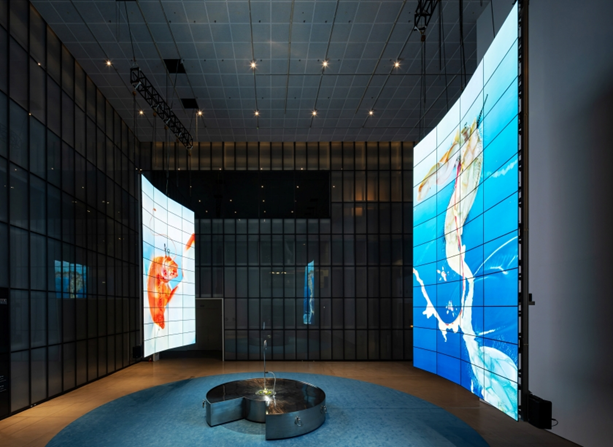
In the ‘Agarmon’ series (2023), her exploration of material media intensifies. Agarmon 1(2023) projects traces of digital imagination onto traditional sculpture, while Agarmon 3(2023) realizes a living sculpture through industrial components such as fog machines, water pumps, and rubber hoses. These works experiment with the transference of digital life into matter, proposing a new typology: sculpture as a living organism.

Her video works featuring Aimy—Tinder(2021), The Review(2021), and The Eden(2021)—explore themes of digital identity, affect, and ethical ambiguity through formats such as short-form video, animation, and avatar-based interfaces. Notably, The Eden digitally reinterprets the surreal iconography of Hieronymus Bosch’s Eden, functioning as a cybernetic painting that emphasizes the hallucinated multiplicity of digital images.

Aimy The Pregnant(2024) adopts the popular short-form video format to visualize the unfamiliarity of pregnancy. By appropriating viewing habits optimized for platforms like YouTube Shorts, the work subverts the relationship between image and existence, enacting a strategic approach to reframe bodily creation in a technological age.

Topography & Continuity

TZUSOO has consistently centered her practice on the essence of the digital world and the hybrid beings that emerge within it. Her approach transcends mere technical experimentation, visualizing layered discourses that traverse motherhood, corporeality, gender, ontology, and the history of technology. This has positioned her as one of the most radical and experimental practitioners of digital aesthetics in the Korean contemporary art scene.

Formally, her work unfolds across a fluid spectrum of media—including video, installation, digital image, and bio-materials. Since the mid-2020s, her shift from immaterial narratives to material-based sculpture has marked a pivotal evolution in her practice. This transition is most clearly observed in the move from early works like 〈Schrödinger’s Baby〉 to the organic sculptural figures of the ‘Agarmon’ series.

She continually introduces virtual beings that strive for autonomy and identity within the cyber ecology. These entities reflect the artist’s creative impulse and maternal desire while prompting reflection on the conditions of human existence and ethics in the digital age. The Aimy Moon project in particular has formed a critical axis through which to interrogate gender, identity, subjecthood, and power in contemporary media environments.

Looking ahead, TZUSOO is expected to expand her exploration of the relationship between technology and generative force through intersections of digital media and material sculpture. Her upcoming solo exhibition at Seoul Box in the National Museum of Modern and Contemporary Art, Korea, will serve as a culmination of her narrative of digital motherhood. She is poised to exert lasting influence on the global art scene as a practitioner of post-human ontological experimentation in contemporary art.

Works of Art

Where Cyber Ecology Meets Reality

Articles

Exhibitions