Chained - K-ARTIST

Chained

2020
Resin, paper, glue
400cm in diameter
About The Work

Young-jun Tak explores the dissonant intersections of queer identity, religious belief, and specific spatial contexts through video and sculpture that visualize these complex structures.
 
His practice responds to the political, sociocultural, and religious polarization he has experienced as an Asian and a queer individual in both Korea and Europe. Tak focuses on the diverse contexts surrounding physical spaces and how these influence perception, forms of belief, and bodily attitudes.
 
The Artist has discovered the hybridity embedded in the long, solid history of humanity, intricately weaving together the polarized stories and meanings within it into a fusion. His work confronts the massive structures that have emphasized exclusive uniformity for the sake of collective interest and efficiency, creating fractures and proposing the possibility of an alternative reality—a pluralistic world where diversity coexists.

Solo Exhibitions (Brief)

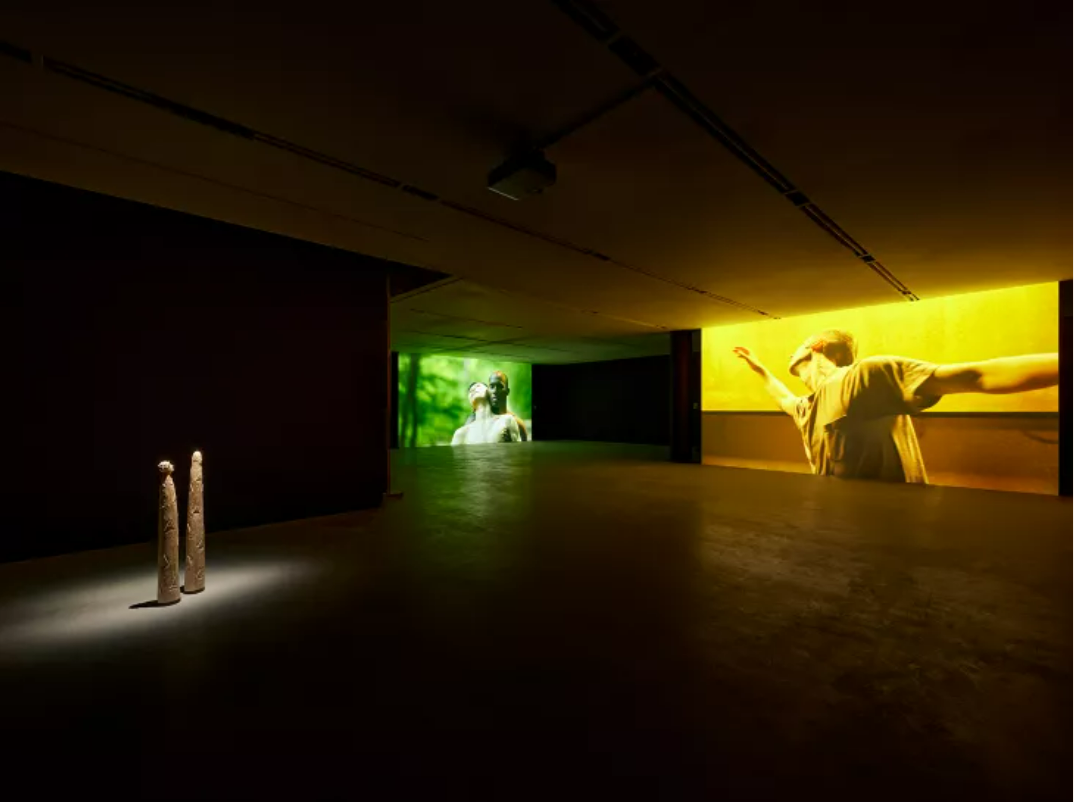
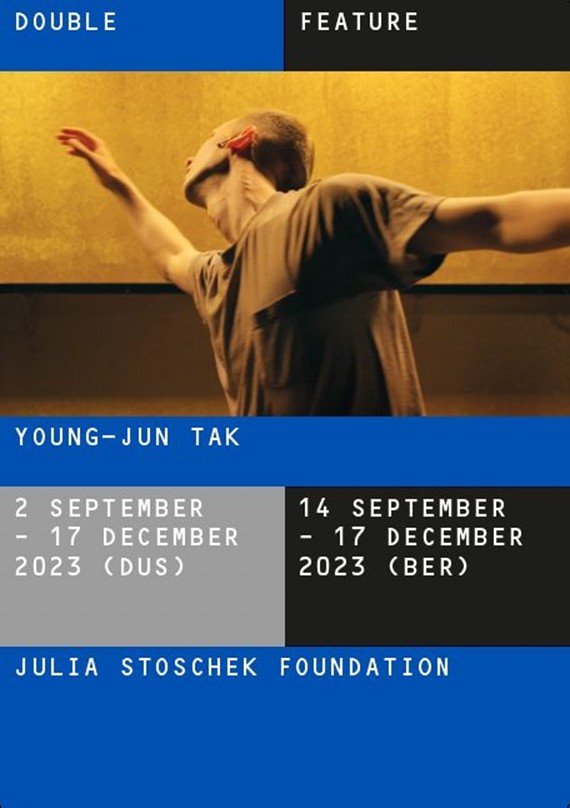
Tak has held approximately 13 solo exhibitions across various countries, including Korea, Germany, Denmark, Spain, Australia, Switzerland, and Russia. Notable solo exhibitions include 《Pain Is Left After the Bite》(PHILIPPZOLLINGER, Zurich, 2024), 《Love Your Clean Feet on Thursday》(Atelier Hermès, Seoul, 2023), and 《Double Feature: Young-jun Tak》(Julia Stoschek Foundation, Düsseldorf/Berlin, 2023).

Group Exhibitions (Brief)

Tak’s works have also been featured in numerous group exhibitions such as the 《24th SONGEUN Art Award Exhibition》 (SONGEUN, Seoul, 2024), the 4th Bangkok Art Biennale (BACC, Bangkok, 2024), 《Unsentimental Education》 (BB&M, Seoul, 2024), the 16th Lyon Biennale (Guimet Museum, Lyon, 2022), the 11th Berlin Biennale (KW Institute for Contemporary Art, Berlin, 2020), and the 15th Istanbul Biennale (Istanbul Modern, Istanbul, 2017).

Awards (Selected)

Tak received the ‘TOY Berlin Masters Award’ for young artists at the 9th Berlin Masters (2021), and was also selected as the winner of the 24th SONGEUN Art Award last year.

Works of Art

Queer Identity, Religious Belief, and Site-Specificity Intersect

Originality & Identity

Young-jun Tak has consistently explored the tensions and dissonances created by the intersection of queer identity, religious belief, and site-specificity. His early works stemmed from a response to queerphobia rooted in South Korea’s conservative Christian environment, and later expanded to a critical examination of the physical and symbolic structures of Christian culture based on his experience in Europe. For example, in his sculpture Salvation(2016), presented in the group exhibition "The Others" at König Galerie in Berlin, the artist collaged anti-queer leaflets over a resin-cast Madonna figure to expose the contradictions between religious worship and moralistic ideology.

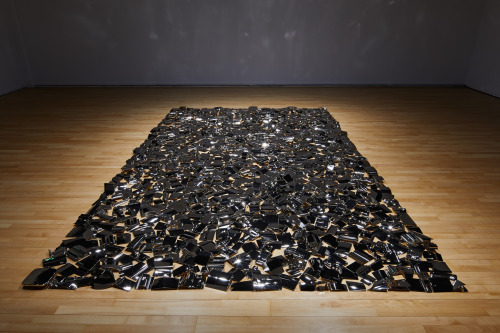
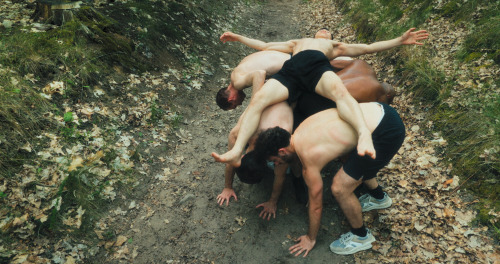
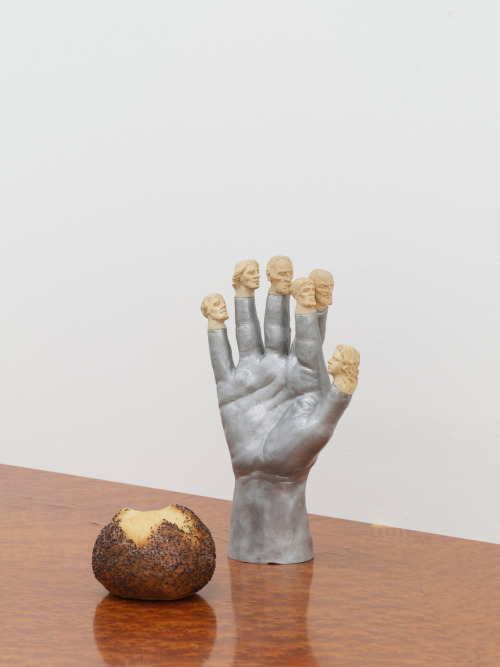
Tak’s subsequent works broaden his critical lens to address the mechanisms of duality and oppression embedded in social systems. A Scattered Past(2019) deconstructs a Hyundai car into 1,242 nickel-plated metal shards, using the car as a metaphor for the complex intersection of nationhood, industry, and familial memory. Chained (2020), exhibited at the 11th Berlin Biennale, features ten crucifixes of Jesus arranged in a large circle, their outstretched arms interlocked to resemble the human barricades formed by Korean Protestant groups opposing queer parades. The work denounces the structures of exclusion embedded in conservative faith.

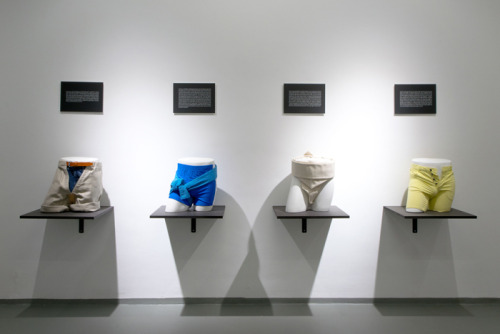
In more recent works, Tak delves into gender binaries and the performativity of gender identity. Wish You a Lovely Sunday(2021) connects a Berlin church and a queer club through choreography, experimenting with the sensory and spatial overlap between the two sites. Love Your Clean Feet on Thursday (2023), premiered at the artist's first solo exhibition in Korea at Atelier Hermès, juxtaposes hypermasculine and hyperfeminine symbolic performances to explore the fluidity and performability of gender.

Rather than simply reversing binaries, Tak’s conceptual focus lies in revealing the co-constructive relationship between spaces of belief and queer bodies. In Love at First Sight on Monday(2024), shown in the 《24th SONGEUN Art Award》 Exhibition, Tak reinterprets orally transmitted love stories through choreography, intricately weaving collective and personal narratives.

Style & Contents

Tak creates narrative structures that invite sensory engagement by experimenting across media including sculpture, installation, video, and performance. In his early work, he subverted traditional religious iconography and incorporated anti-social propaganda materials into sculptural surfaces. Works such as Salvation (2016) and Chained (2020) use collage-based production techniques and tactile handcraftsmanship to disrupt the authority of sculptural form.

Installation works like A Scattered Past(2019) emphasize structural fragility and reflective surfaces through processes of dismantling and recomposition. By cutting apart the car’s frame and presenting the nickel-plated fragments as an installation, Tak highlights the disjointed textures of memory and sensory experience over smooth, coherent narratives.

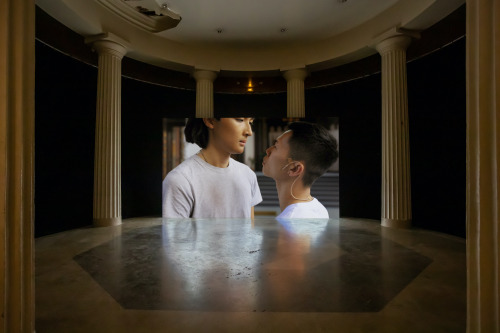
He later developed a series of video works centered on dance, using bodily movement to visualize the interaction between social norms and spatial environments. Wish You a Lovely Sunday(2021) features a location swap between a church and a queer club, prompting reinterpretation of choreographic gestures; Love Your Clean Feet on Thursday (2023) pairs military ritual with ballet to expand the narrative of queer embodiment.

Love at First Sight on Monday(2024) layers choreography with an orally transmitted love story, positioning dance as a medium for memory and narrative. These approaches increase narrative density through layered structures, repetition, response, and temporal-spatial transition, offering visual and emotional richness without relying on physical installations.

Topography & Continuity

Tak’s work persistently examines the tensions and hypocrisies that arise at the intersection of religion, gender, site, and identity. From his debut as an artist abroad to his current practice, he has consistently aimed to reveal the invisible frameworks that produce oppression and exclusion, using material deconstruction and sensorial video to build layered narratives.

This methodological consistency situates him not merely within queer art, but as a contemporary practitioner who interrogates and subverts institutional systems and belief structures. Since 2020, his dance-based video works have expanded his practice into performative narratives, translating the interactions between space, body, memory, and social norms into a tactile language.

Drawing from the polarized environments of South Korean religious conservatism and European Christian heritage, Tak weaves dissonance and hybridity into a dialectical structure. By deliberately embedding self-contradiction within each work, he raises questions about the universal condition of humanity. His exploration of how queer bodies respond to and reconstruct architecture and systems positions him as a vital aesthetic experimenter of contemporary perspectives on gender, embodiment, and belief.

Looking forward, Tak is expected to further refine his political and conceptual practice by intricately weaving queer identity with multilayered belief systems through spatial structures, community memory, and archival approaches—advancing the choreography of embodied narratives across time and space.

Works of Art

Queer Identity, Religious Belief, and Site-Specificity Intersect

Articles

Exhibitions

Activities