
A Drill - K-ARTIST

A Drill

2020
Banner installation
Each 1,500 × 700 cm (2 pieces)
About The Work

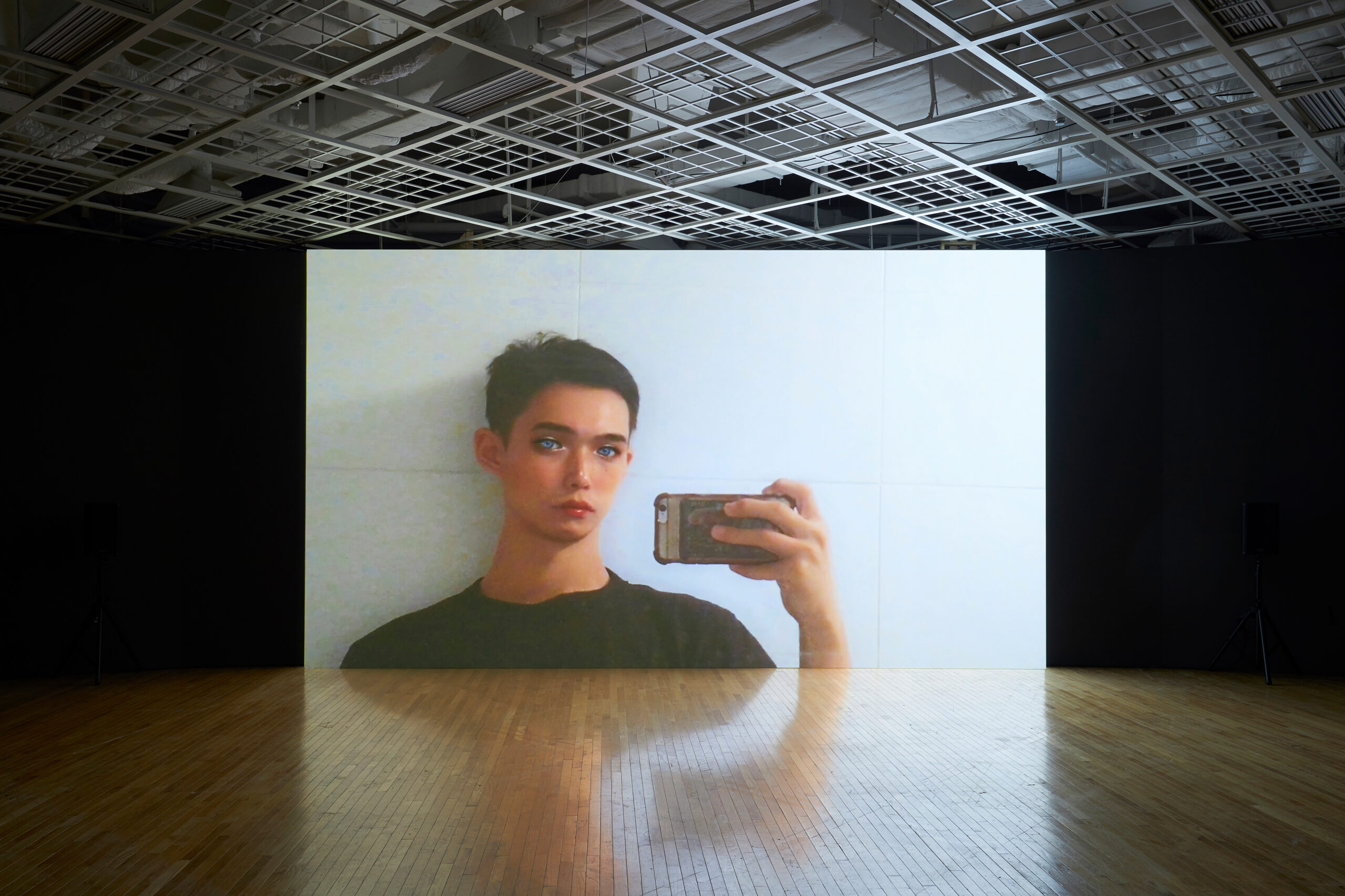
Kim Heecheon explores how digital technology influences our visual and perceptual experiences in everyday life, as well as our altered sense of reality as a result. His work often engages with digital interfaces that translate physical time and space into data, such as face-swapping mobile apps, virtual reality, and Google Earth. While dealing with volatile, virtual images generated by these technologies, he blurs the boundary between the virtual and the real by interweaving autobiographical narratives documented through documentary footage.
 
Kim Heecheon has continuously posed existential questions about the self situated within a world where the virtual and the real converge, beginning with his inquiry into the relationship between the physical world and the virtual space of the screen. By employing the technological interfaces that permeate our daily lives, his work prompts reflection on how our existence and way of life are reshaped and repositioned within these mediated environments

Solo Exhibitions (Brief)

Kim’s recent solo exhibitions include 《Studies》 (Atelier Hermès, Seoul, 2024), 《Double Poser》 (Hayward Gallery HENI project space, London, 2023), 《Deep in the Forking Tanks》 (Art Sonje Center, Seoul, 2019), 《Lifting Barbells》 (Asian Art Museum, San Francisco, 2018), 《Kim Heecheon》 (DOOSAN Gallery, New York, 2018), and more.

Group Exhibitions (Brief)

In addition, Kim has participated in group exhibitions at major institutions both in Korea and abroad, including the Leeum Museum of Art (Seoul, 2024, 2021), the MNAC (Bucharest, 2023), Centre Pompidou-Metz (Metz, 2023), the National Museum of Modern and Contemporary Art, Korea (Seoul, 2023), the Nam June Paik Art Center (Yongin, 2023), Gyeonggi Museum of Modern Art (Ansan, 2022), Atelier Hermès (Seoul, 2020), and ZKM | Center for Art and Media (Karlsruhe, 2019). He has also been invited to major biennials such as the Busan Biennale (2020), Gwangju Biennale (2018), and Seoul Mediacity Biennale (2016).

Awards (Selected)

Kim Heecheon is the recipient of several prestigious awards, including the Hermès Foundation Misulsang (2023), the Biennale Prize at the 13th Cairo Biennale (2019), and the Doosan Yonkang Art Awards (2016).

Residencies (Selected)

Kim Heecheon participated as a resident artist at the Doosan Residency in New York, USA, in 2018.

Collections (Selected)

Kim’s works are included in the collections of numerous institutions, such as the National Museum of Modern and Contemporary Art, Korea; Seoul Museum of Art; Nam June Paik Art Center; Leeum Museum of Art; the Han Nefkens Foundation (Spain); and KADIST (USA).
Works of Art

Existence and Life Mediated by Digital Data

Originality & Identity

Kim Heecheon’s artistic practice examines the impact of digital technology on modern life and perception, focusing on the phenomenon where the boundary between the physical and virtual worlds becomes increasingly ambiguous. His works, based on technologies that convert reality into data—such as face-swapping apps, VR, and Google Earth—explore the boundaries between reality and the virtual, the individual and society. In particular, he raises questions about how technology distorts and reconstructs reality, focusing on how digital technology transforms human existence, memory, and the sense of reality.

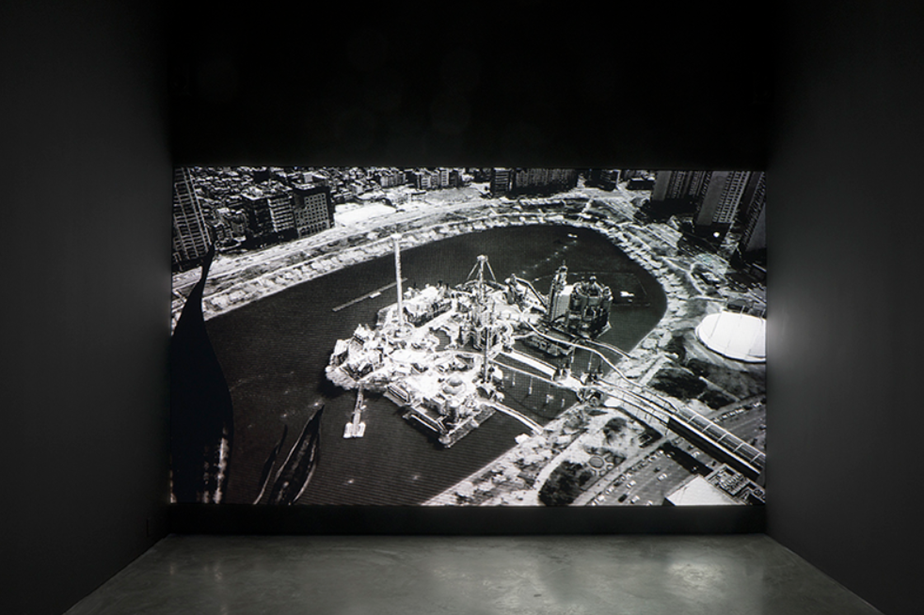
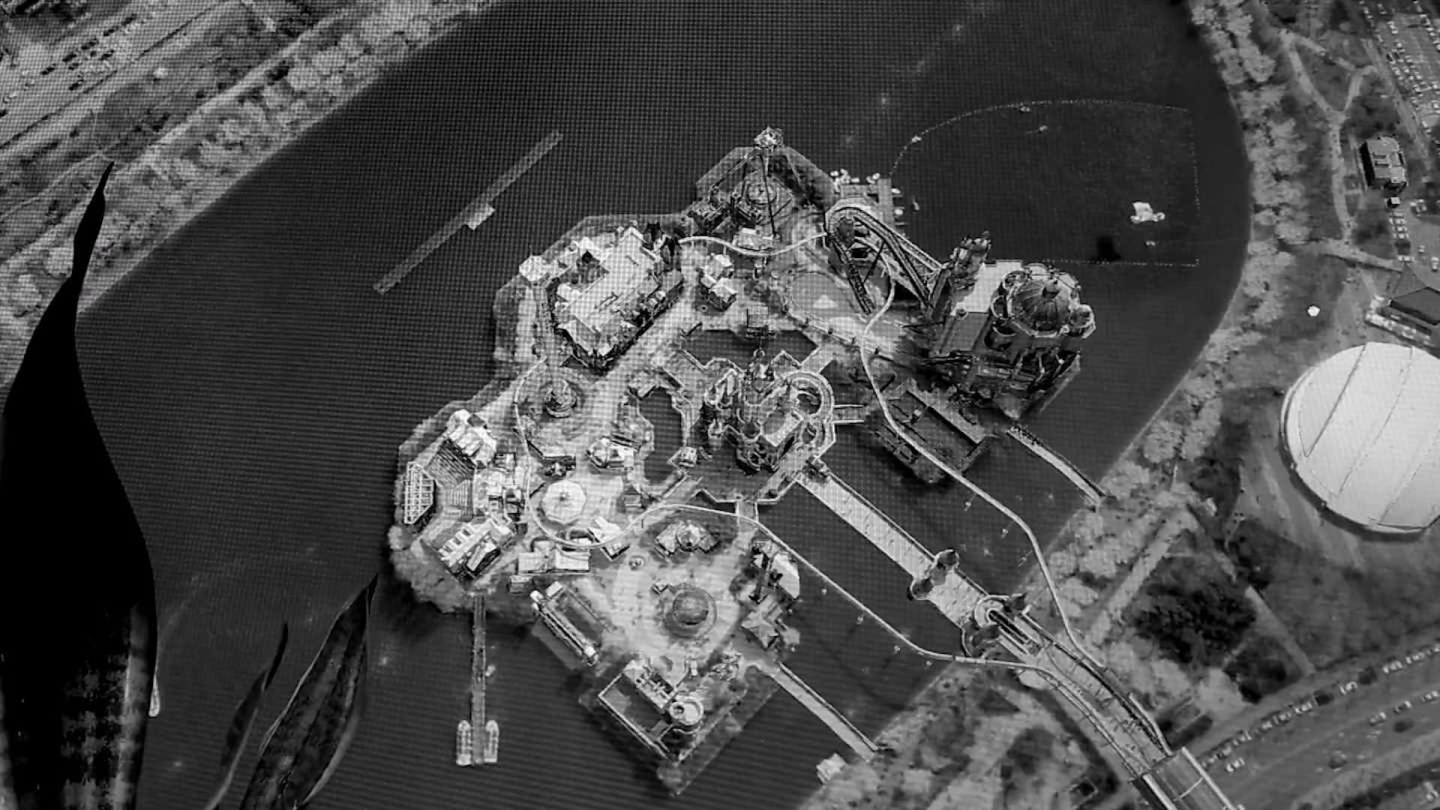
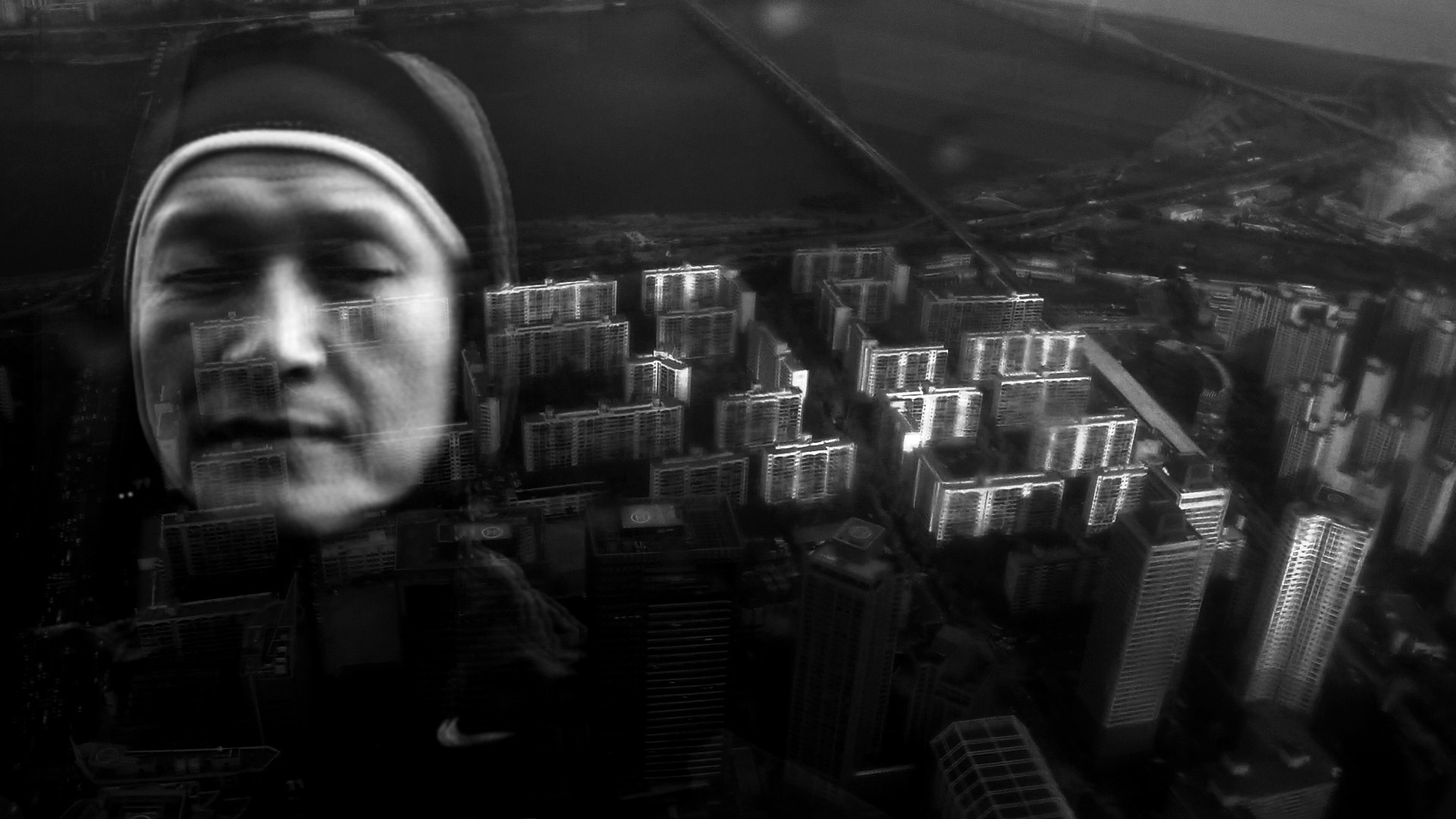
Kim’s early work Lifting Barbells(2015) deals with the memory and loss of his father, who passed away suddenly. The work reconstructs the cityscape of Seoul through the traces left behind as digital data, demonstrating how physical reality and data-based virtuality intersect to explore personal emotions. As one of the collections of the National Museum of Modern and Contemporary Art (MMCA), Lifting Barbells suggests that technology can replace memories and distort the traces of life.

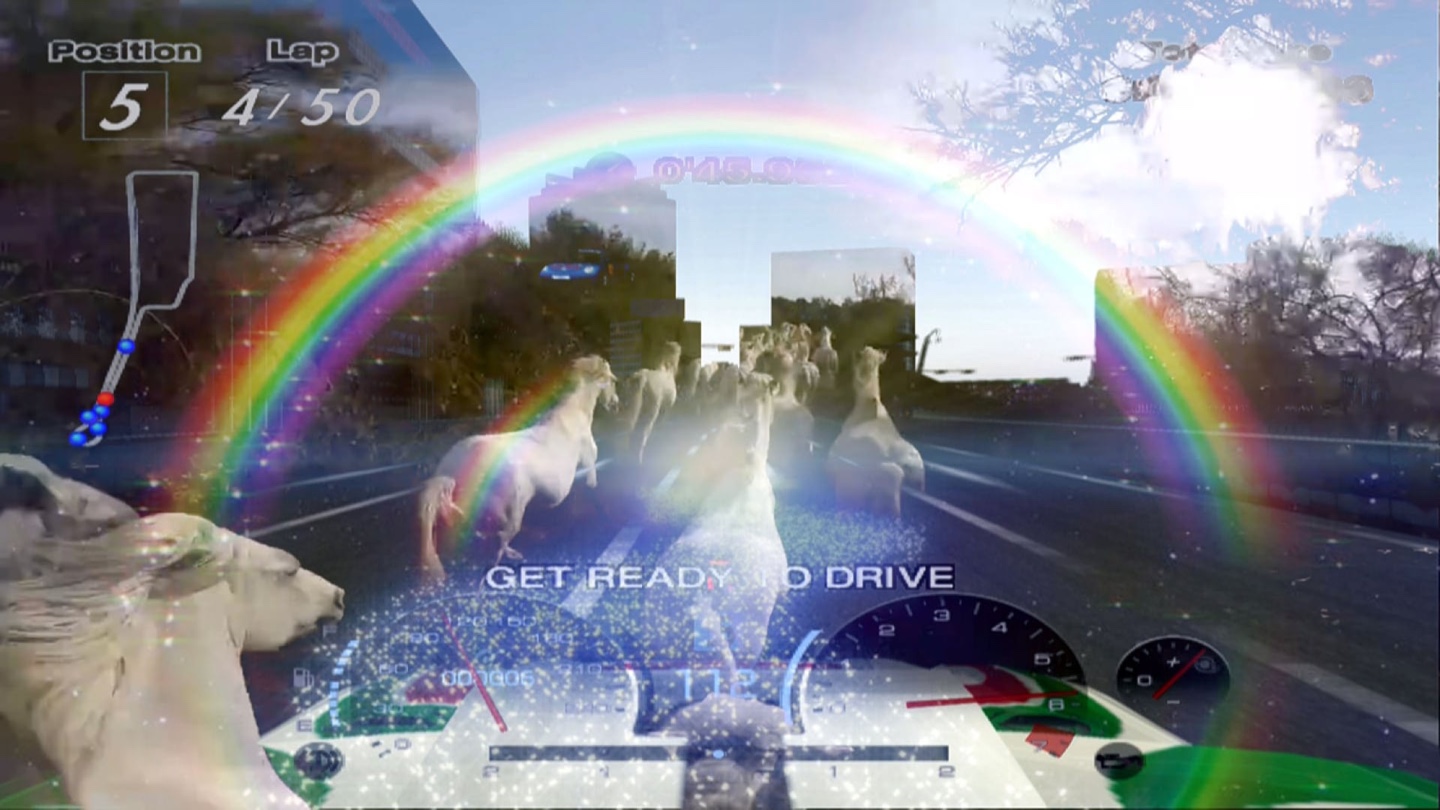
Subsequently, works like Soulseek/Pegging/Air-twerking(2015) and Rally (2015) navigate the interplay between online and offline urban spaces, examining how digital media shape reality.

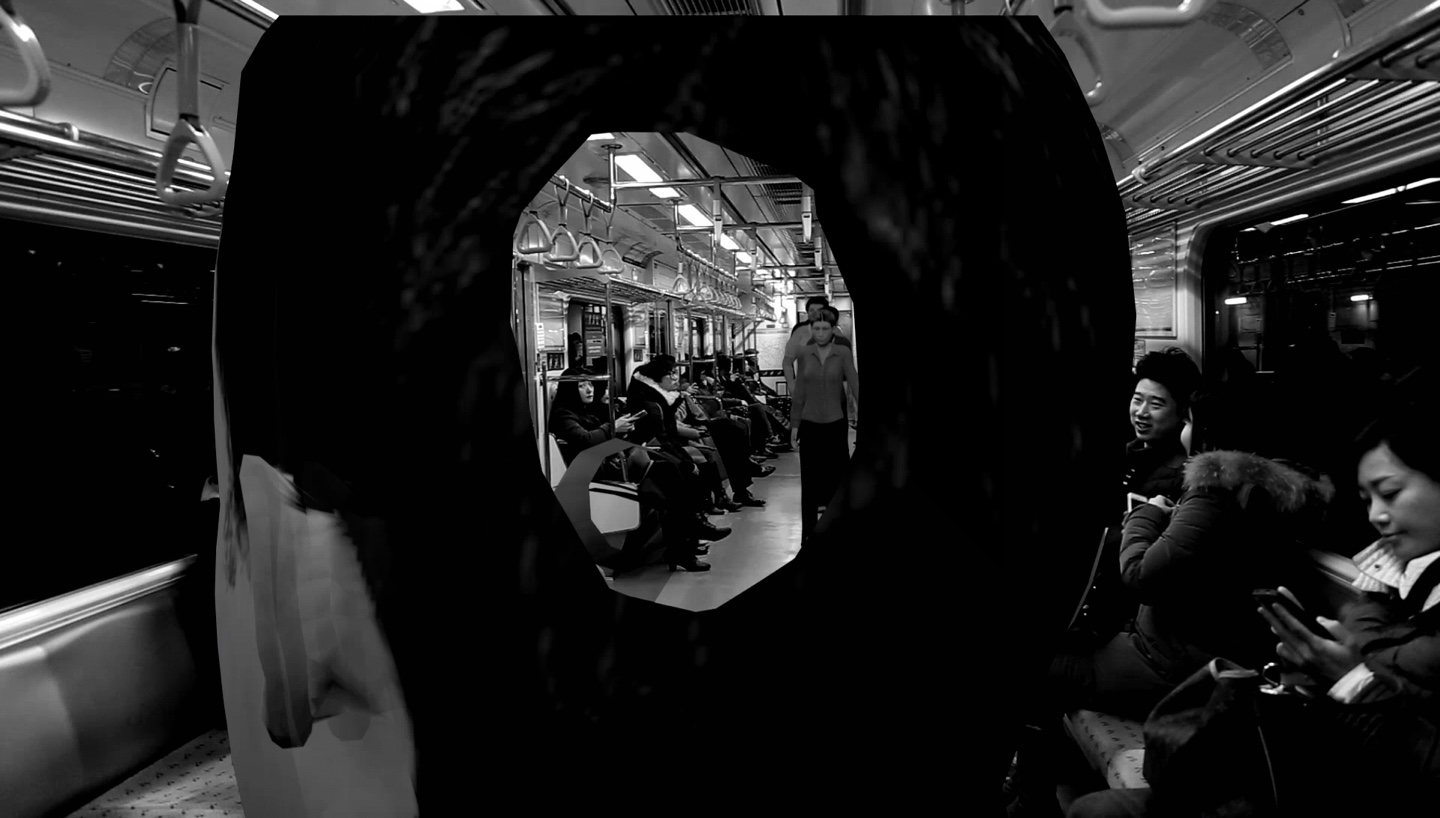
In particular, Rally symbolizes the transformation of perception in modern individuals by depicting the flat, reflected images of Seoul on building windows, merging reality with screens. These works critically address the loss of spatiality and reality perception brought about by digital technologies.

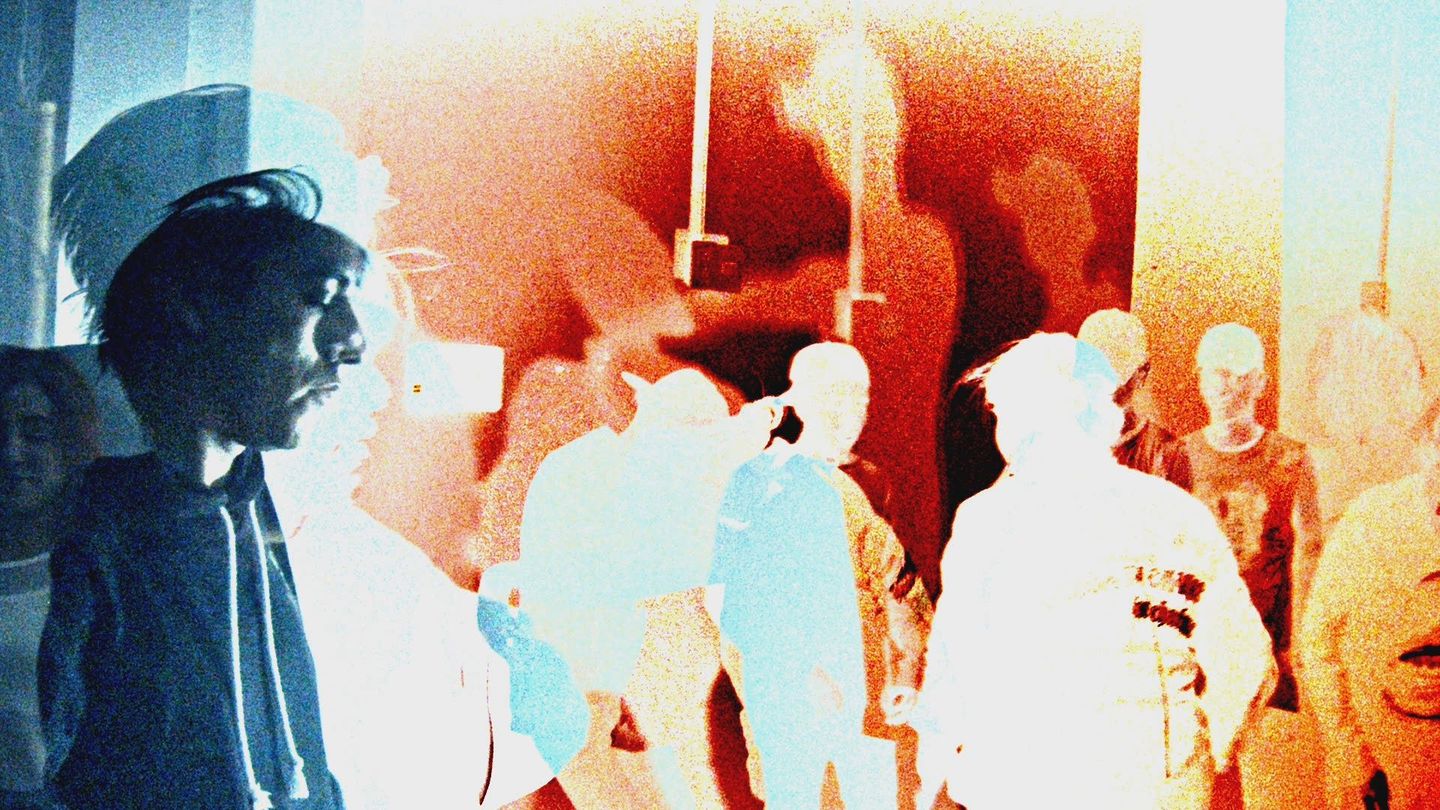
The 2016 work Sleigh Ride Chill(MMCA collection) reflects on the fear of personal data dissemination and the impossibility of deletion, triggered by the artist’s personal experience of losing his laptop and smartphone. A scene where people’s faces on the street morph into his own visualizes the horror of data infringing on the physical world, emphasizing the negative impact of technology on human identity. This work metaphorically represents the fear faced in an era where the boundaries between reality and data become increasingly blurred.

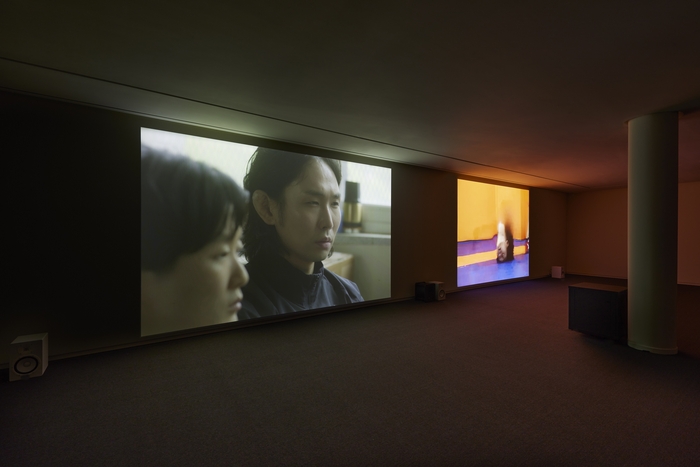
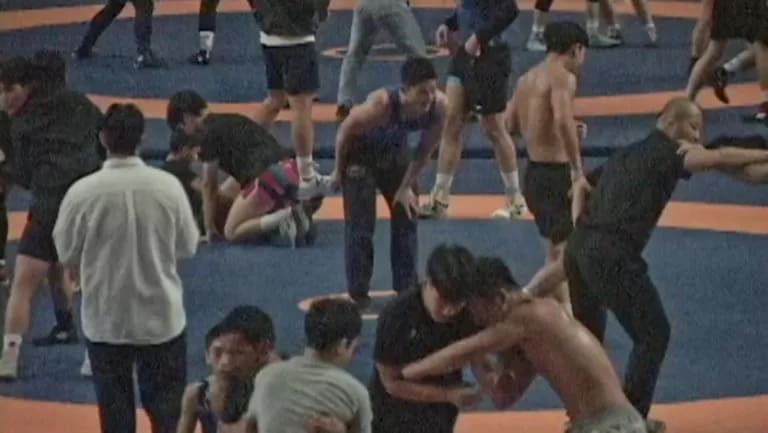
In his recent solo exhibition 《Studies》(Atelier Hermès, 2024), Kim introduced Studies (2024), employing the horror genre to address the anxiety and identity disruption caused by digital data. By using the motif of the mysterious disappearance of a high school wrestling team, the work amplifies the threat posed by technological errors and data distortion to individual existence. The portrayal of unstable digital images and distorted figures vividly demonstrates how modern technological society warps human existence.

Style & Contents

Kim Heecheon’s works employ digital technology to depict situations where reality and virtuality overlap. His early pieces often juxtapose real experiences with data-based virtuality, exploring the technical characteristics of converting reality into data. This approach visualizes the phenomenon where the physical existence and digital replicas interact, breaking down boundaries.

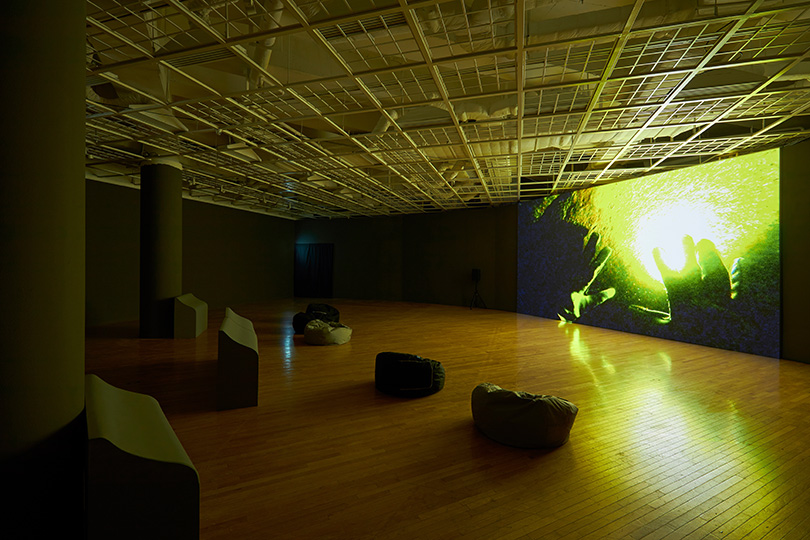
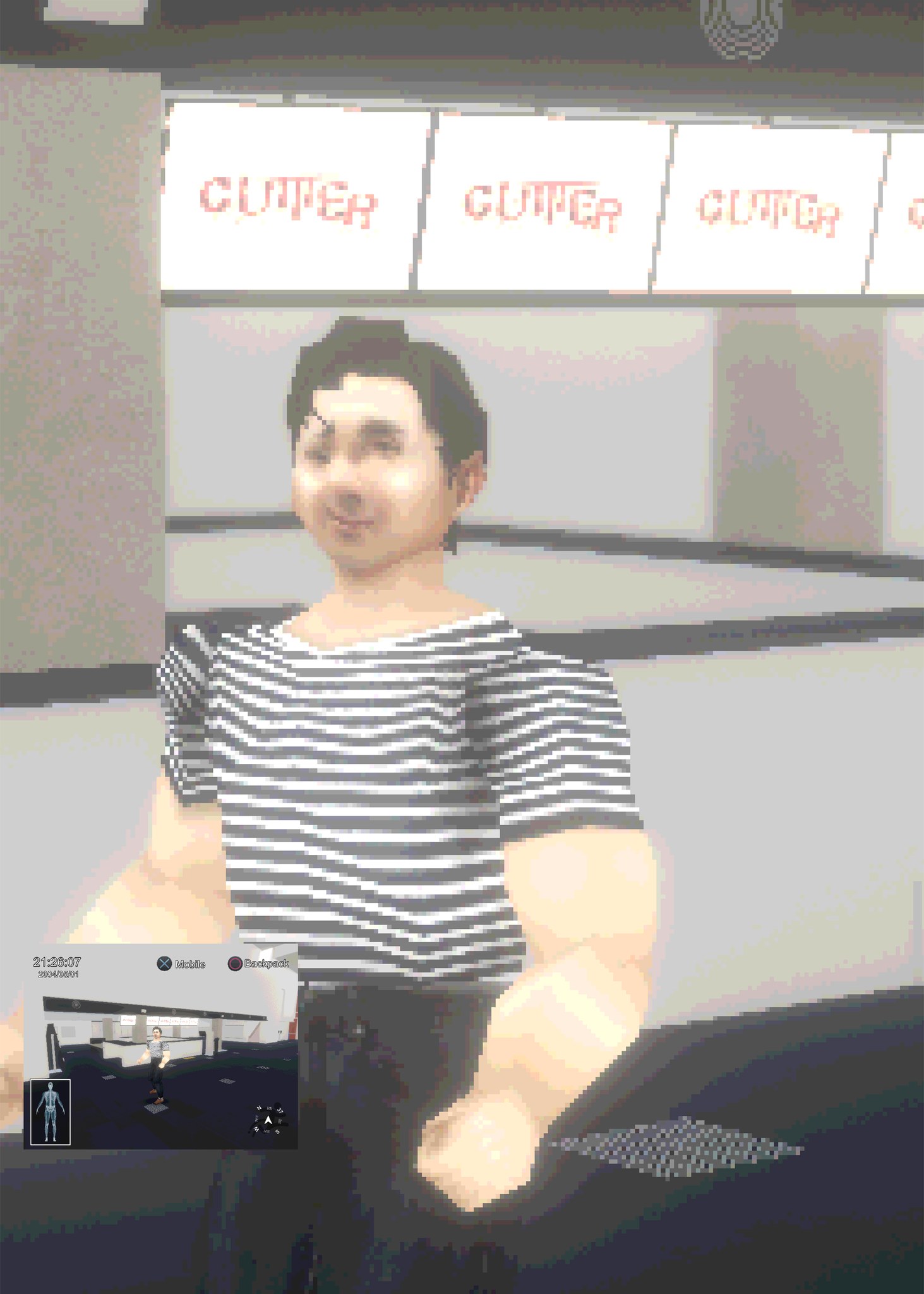
The work Deep in the Forking Tanks(2019, Art Sonje Center) visualizes the experience of reality and virtuality reversing through a sensory deprivation tank. Within the tank, the sense of reality fades, and the moment when technological immersion replaces reality critiques modern society’s dependence on technology. In the commissioned piece Cutter 3(2023), presented at the MMCA’s 《Game Society》 exhibition, Kim parodies modern society, where game environments and real-time data transformation blur the boundaries between reality and game images, raising questions about technological existence.

A representative work that traverses the boundaries between online and offline urban environments is Soulseek/Pegging/Air-twerking. In this piece, the artist utilizes the 3D modeling software 3D MAX to ‘import’ elements of reality into a virtual space, subsequently piecing them together to form a newly constructed virtual world. This process presents a cyclical relationship between reality and the virtual, examining how physical reality can become meaningless within the digital world.

Studies(2024) uses the horror genre to accentuate the instability of digital data. The distorted images of individuals caused by digital errors challenge the illusion of technological perfection, hinting at how personal identity becomes increasingly vague in a data-centric society. These works critically illuminate the modern society reconstructed through technology, exploring how human existence is distorted by technological intervention.

Topography & Continuity

Kim Heecheon’s practice delves into the existential anxiety and identity confusion resulting from technological dependence and digitization in modern society. While his early works explore the distortion of reality and the reconfiguration of memory where personal experience intersects with technology, his recent pieces critically address how technology itself replaces and distorts reality. In particular, his works analyze the structural impact of technology on human life and perception, focusing on visually articulating these effects.

Kim’s artistic approach persistently interrogates the phenomenon where the boundary between physical existence and data presence becomes blurred in a society deeply immersed in digital technology. His exploration of how technological advancements transform human identity suggests that his future works will continue to visualize the intersection of technological progress and human existence.

Works of Art

Existence and Life Mediated by Digital Data

Articles

Exhibitions