

Rainbow - K-ARTIST

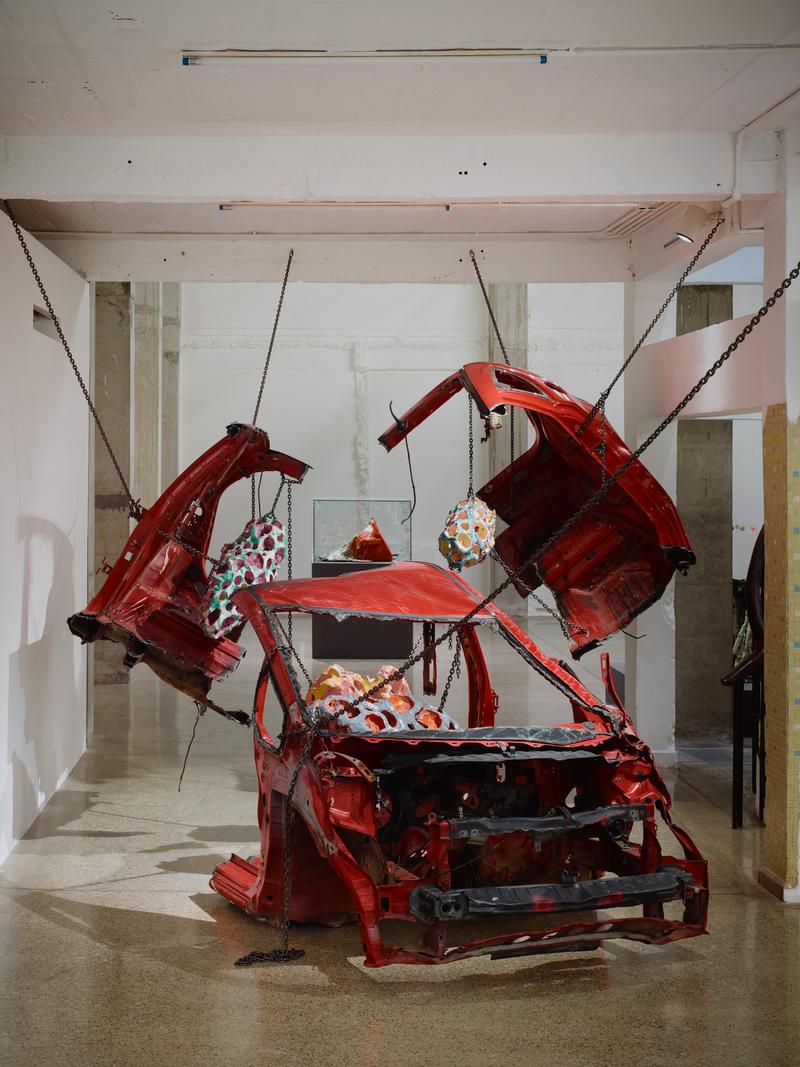
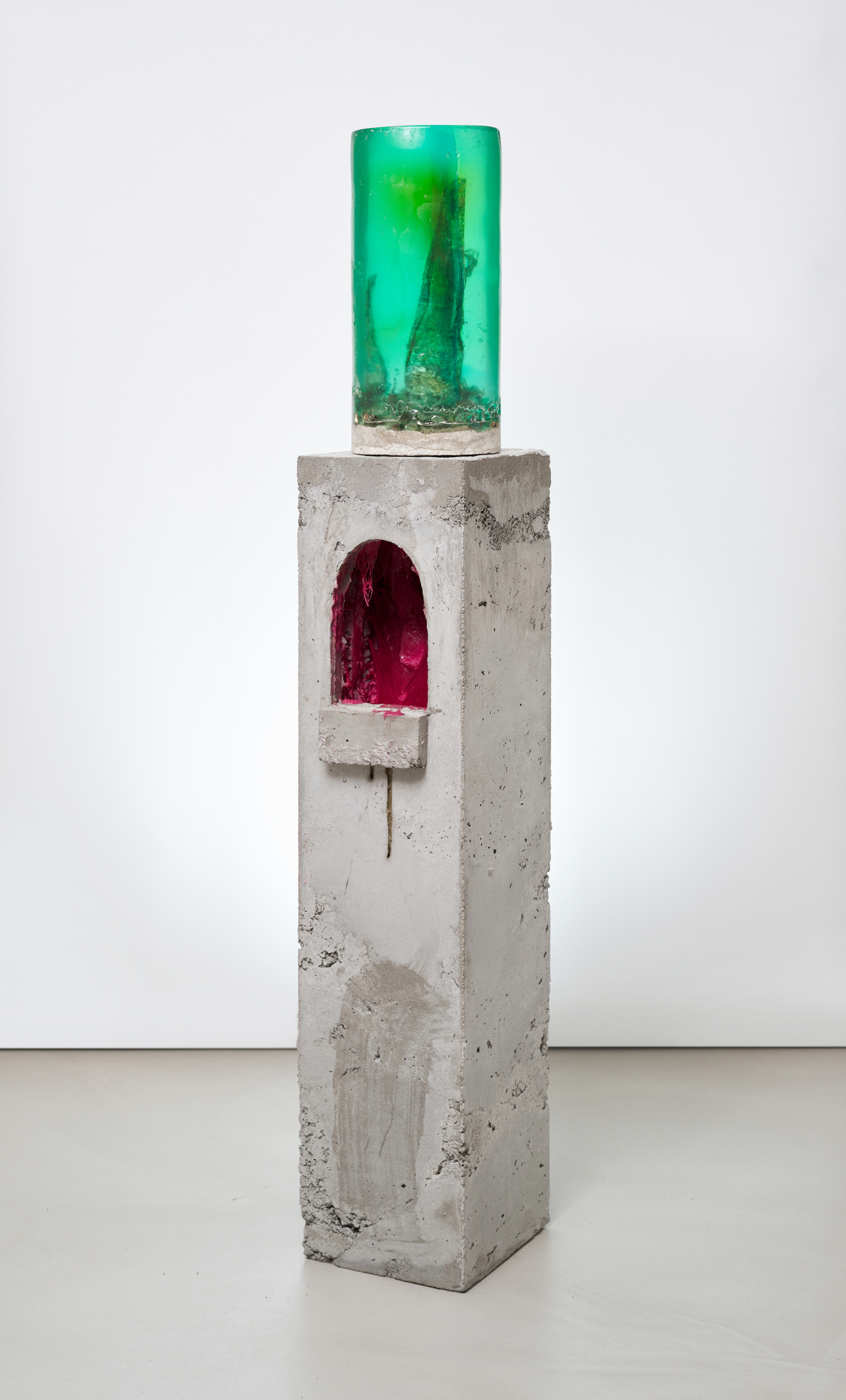
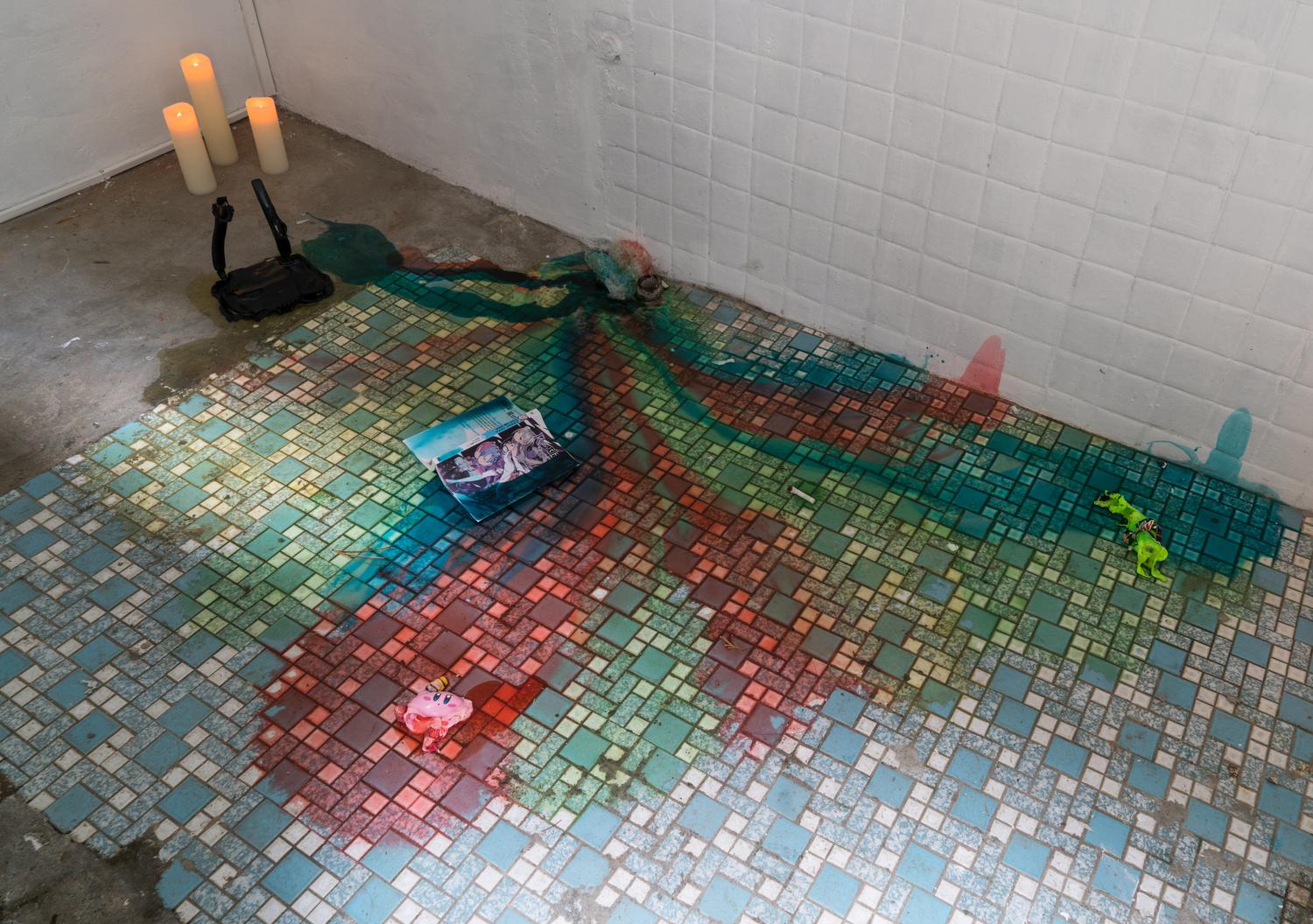
Rainbow

2018
latex, pigment and mixed media 
Dimensions variable
About The Work

Hyun Nahm translates contemporary landscapes and social phenomena into the language of sculpture. His work navigates the concept of Miniascape (縮景), a method of compressing vast natural landscapes into miniature forms. Originating from traditional East Asian horticultural practices—such as suseok (scholar's rocks), bonsai, and seokgasan (artificial rock mountains)—miniascape is not merely a reproduction of scenic imagery. Rather, it involves discovering a landscape within an object shaped by natural forces, and presenting it as a self-contained, miniature world.

Following this approach, Nahm compresses the expansive and complex realities of the contemporary world into small sculptural forms, encapsulating both the present and the imagined future of urban landscapes.

Solo Exhibitions (Brief)

Nahm has held solo exhibitions 《Kawah Ojol》 (ROH Projects, Jakarta, 2024), 《Burrowing at the Bottom of a Rainbow》 (Atelier Hermès, Seoul, 2021), 《My Early Adulthood Pilgrimage Is Wrong, As I Expected》 (Instant Roof, Seoul, 2021), and 《Miniascape Theory》 (Art Space Hyeong & Shift, Seoul, 2020).

Group Exhibitions (Brief)

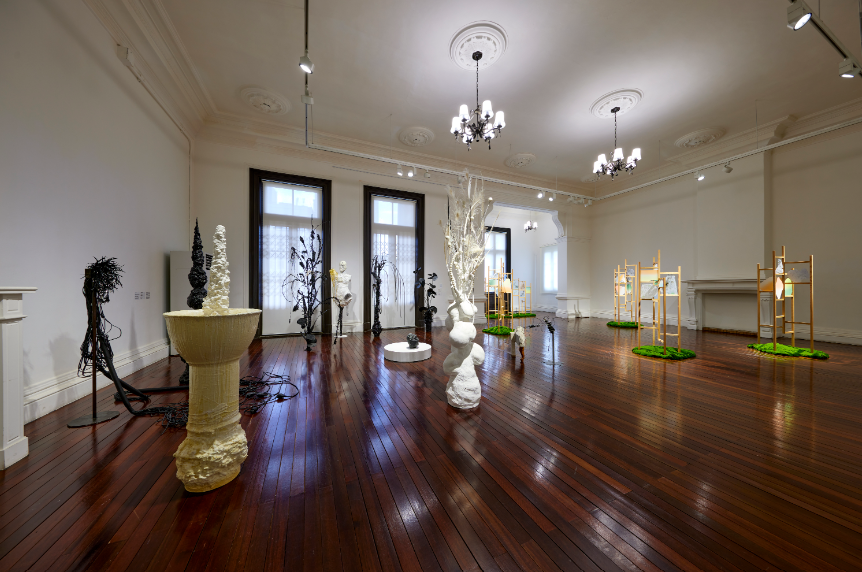
Nahm has participated in various group exhibitions, including 《Wonderland》 (Lehmann Maupin, Seoul, 2024), 《The Hanging Gardens of Babylon》 (Nam-Seoul Museum of Art, Seoul, 2023), 《off-site》 (Art Sonje Center, Seoul, 2023), Busan Biennale 2022, 《Cloud Walkers》 (Leeum Museum of Art, Seoul, 2022), 《OPENING CEREMONY》 (YPC Space, Seoul, 2022), and more. 

Residencies (Selected)

Hyun Nahm participated in the 2023-2024 RHO Projects residency program in Indonesia, and his work is part of the collection at the Seoul Museum of Art.

Collections (Selected)

Nahm’s work is part of the collection at the Seoul Museum of Art.
Works of Art

Constructing Today’s World through the Lens of Miniascape

Originality & Identity

Hyun Nahm's practice begins with the East Asian sculptural concept of "miniascape (縮景)," through which he attempts to compress the vastness of the world into miniature sculptural forms. Miniascape is not a technique for reproducing scenes from nature, but rather a way of discerning landscapes within objects shaped by material processes.

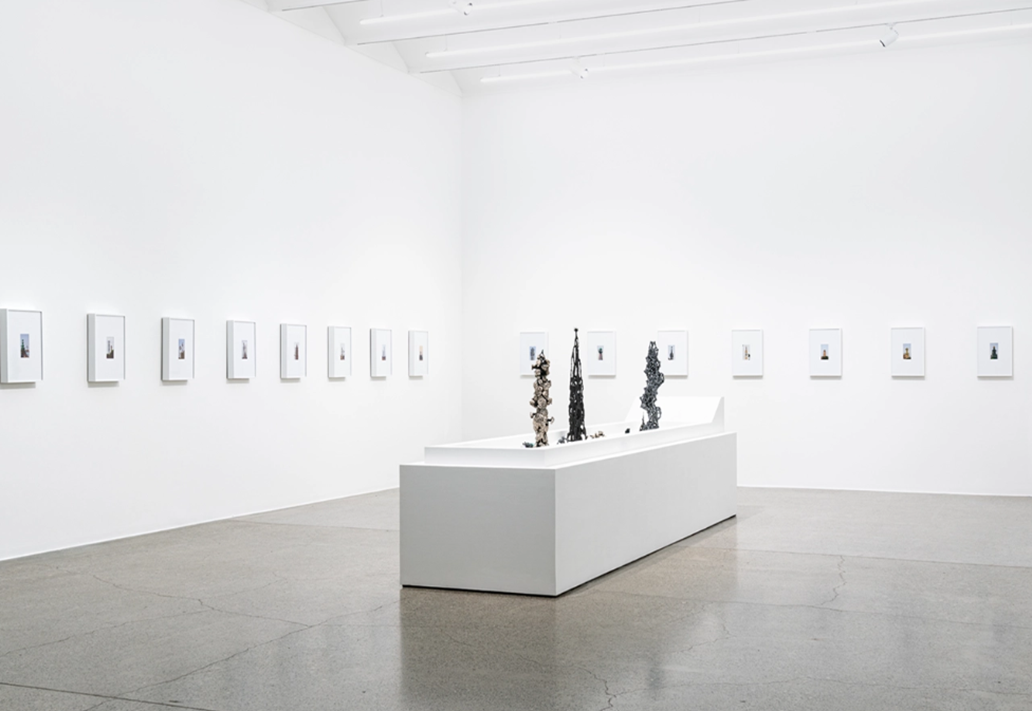
In his 2020 solo exhibition 《Miniascape Theory》(Art Space Hyeong, Shift), Nahm borrows the visual language of traditional landscape painting, only to reconfigure it as "landscape-sculpture" composed of accumulated and decayed urban materials.

Building on this miniascape sensibility, Nahm explores the structural operations of contemporary society, technology, and power through a sculptural vocabulary. Works like Chain Link Strategy (2022, 2024) evoke the networked infrastructures of undersea communication cables, probing how intangible systems of control can be materialized as sculptural forms. This approach goes beyond metaphoric landscape representation to offer materialized schematics of invisible global structures.

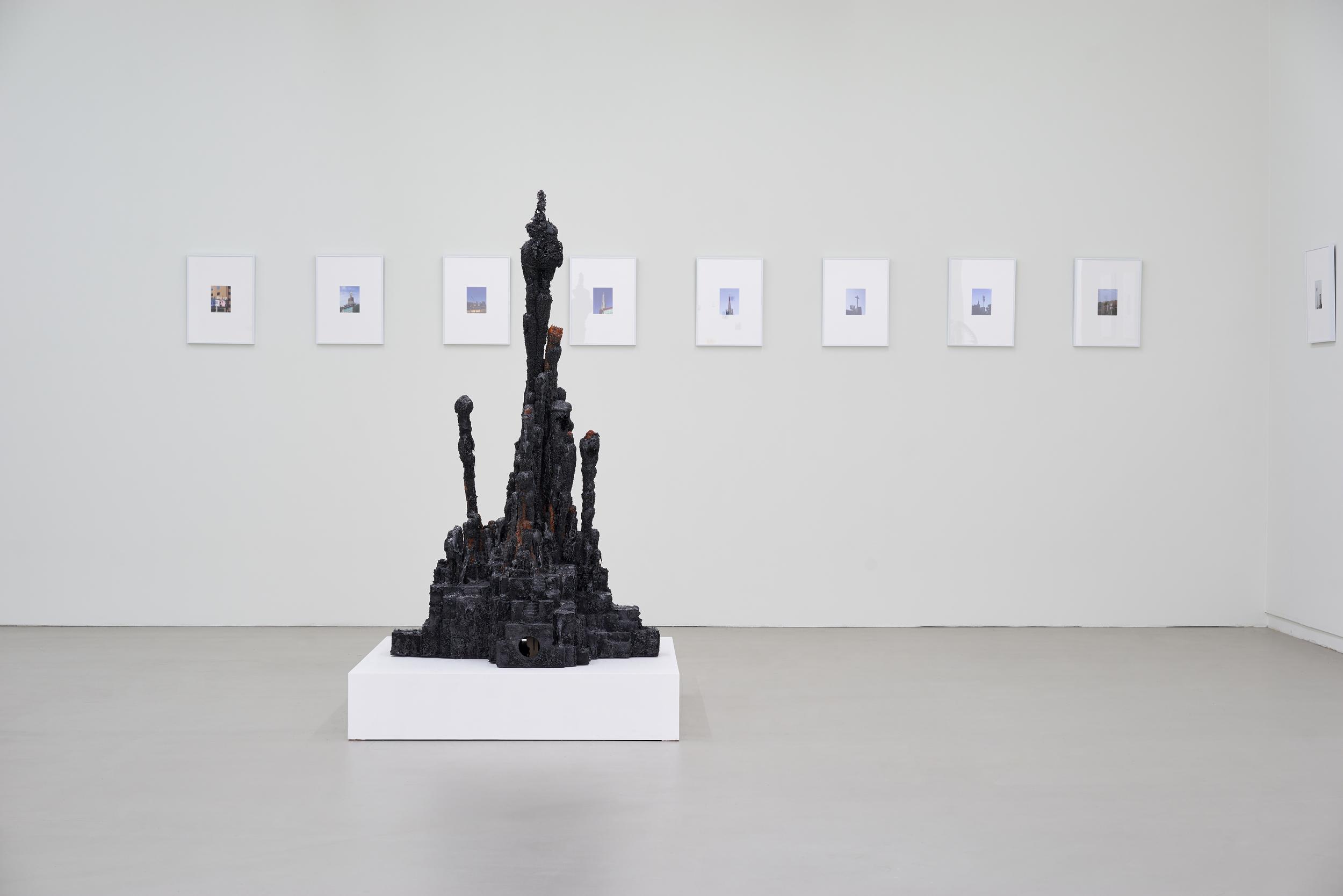
His interest expands into historical motifs and speculative imaginaries. In the solo exhibition 《Burrowing at the Bottom of a Rainbow》(2021, Atelier Hermès), the work Atog (2021) reinterprets Kazimir Malevich’s 1923 'Architekton Gota' series as a dystopian city-sculpture. It reverses the utopian modernist vision through a logic of inversion and decay. In this way, Nahm’s subject matter weaves together aesthetic, social, and theoretical layers into a multidimensional framework.

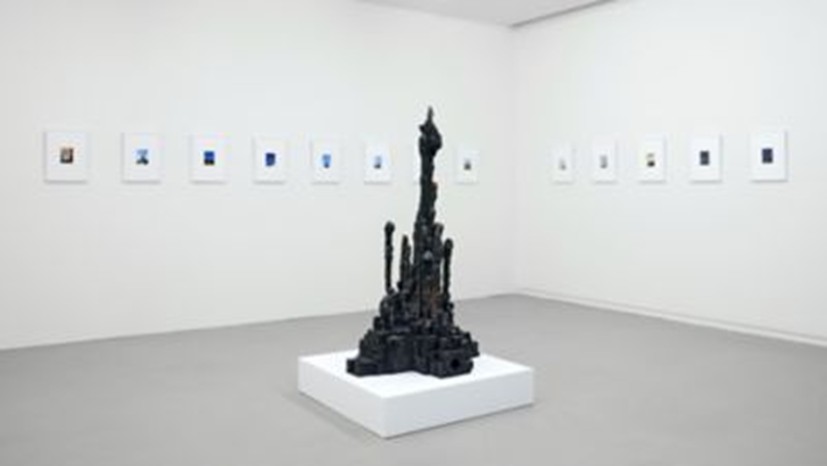
Nahm’s sculptures often arise from processes of failure or breakdown. This is not just a structural choice but also reflects the fragility and opacity of contemporary civilization. In Cell Tower(2020), a telecommunications structure often overlooked in daily life is reframed as a modern-day spire—a sculptural element rather than a utilitarian one. In Nahm’s hands, miniascape becomes not a mere miniature of space, but a philosophical device that compresses and reconfigures the present-day world.

Style & Contents

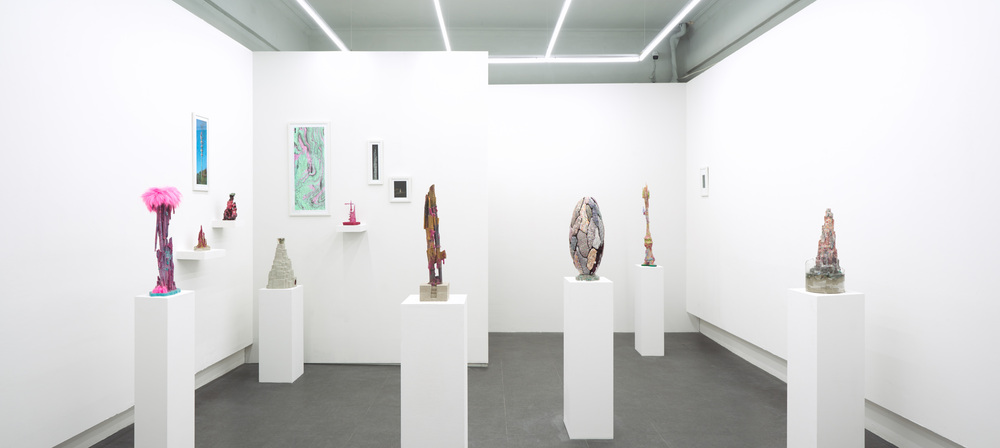
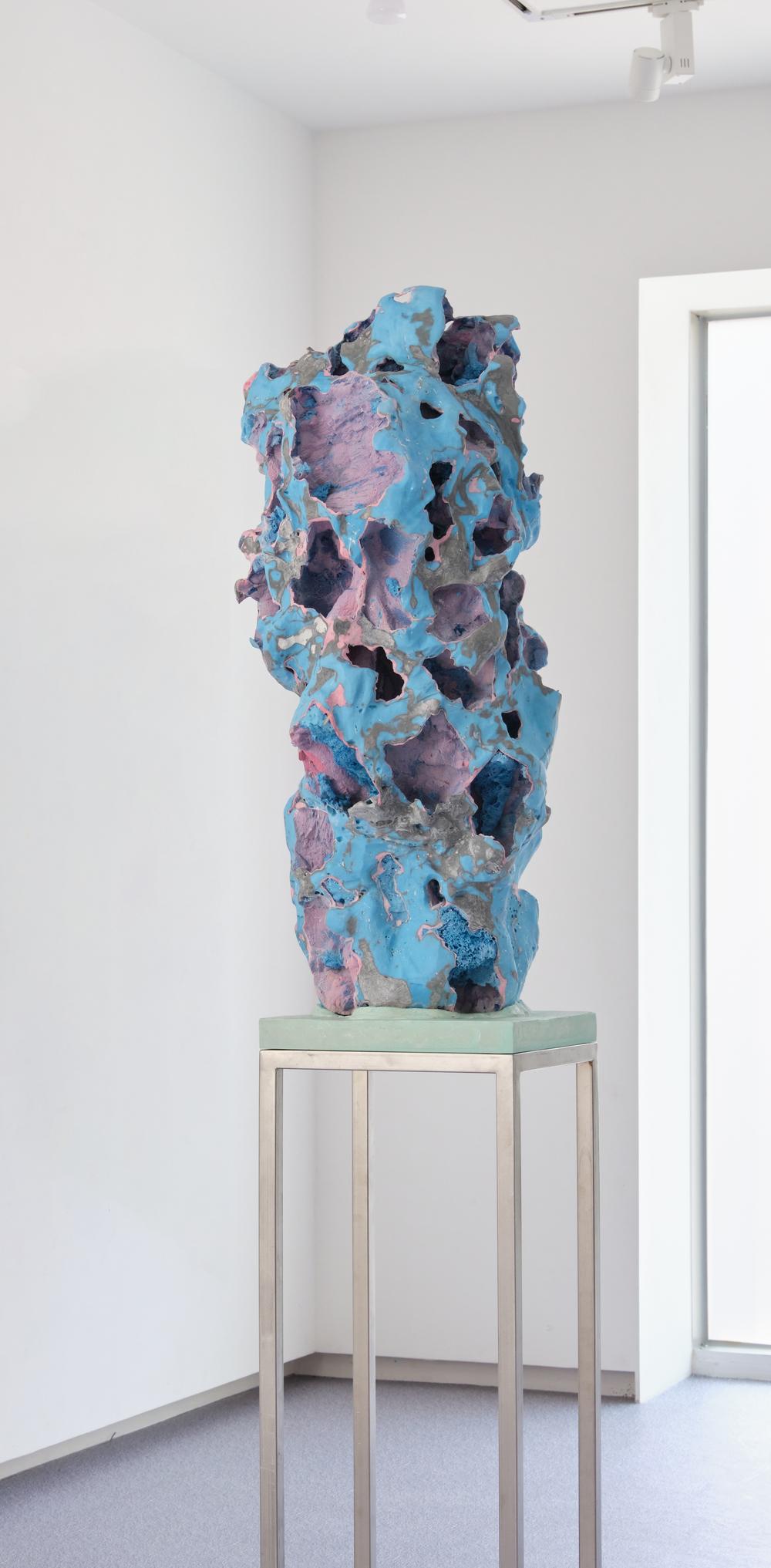
Nahm deconstructs and reassembles traditional sculptural media and techniques in order to explore the formative potential of materials themselves. His primary materials—epoxy, polystyrene, cement—are remnants and surfaces of urban architecture, functioning as proxies for the substrate of contemporary industrial society.

In works like Reverse City(2019) and Void Cliff(2020), featured in 《Miniascape Theory》, he emphasizes processes of material flow, chemical reaction, and collapse, privileging generative logic over visual mimesis.

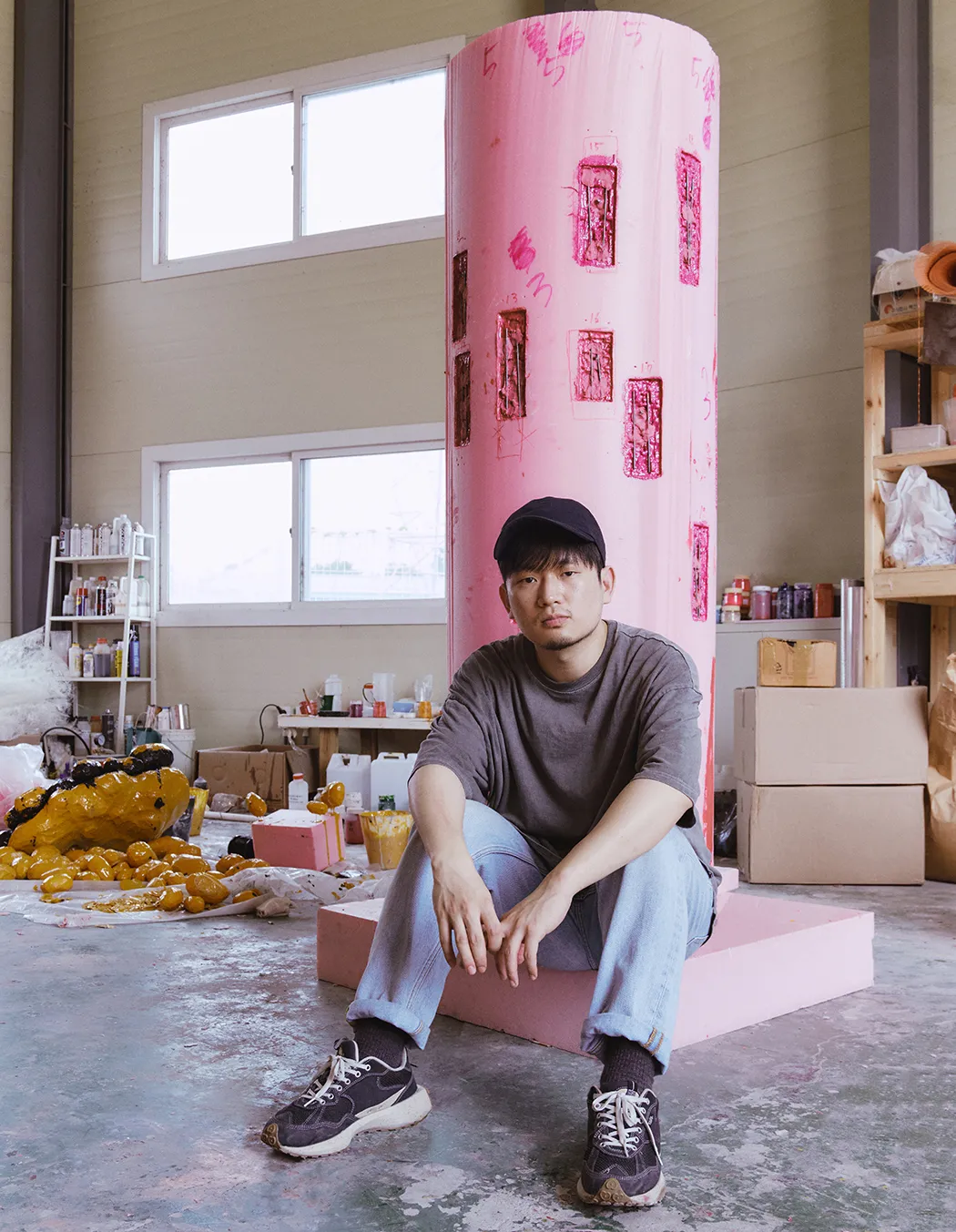
He approaches the physical construction of sculpture through "excavation" or "negative casting" methodologies. By pouring material into carved voids within polystyrene blocks and later dissolving the mold, Nahm embraces contingency and invisibility as core sculptural principles.

This method is heightened in the 'Void Extruction' (2022–) series, where the removal of internal spheres gives way to new material insertions, visualizing an inversion of emptiness and solidity.

His approach to color and texture embraces extremes, yielding a jarring visual experience from urban residue. In the 'Extructed Mountain' (2020–) series, he draws from the hyper-saturated palettes of video games and anime, deploying fluorescent and synthetic colors alongside discoloration, rot, and corrosion.

These aesthetic juxtapositions mirror the simultaneous immediacy and ephemerality of industrialized visual culture, embedding his sculpture in the paradoxes of contemporary temporality.

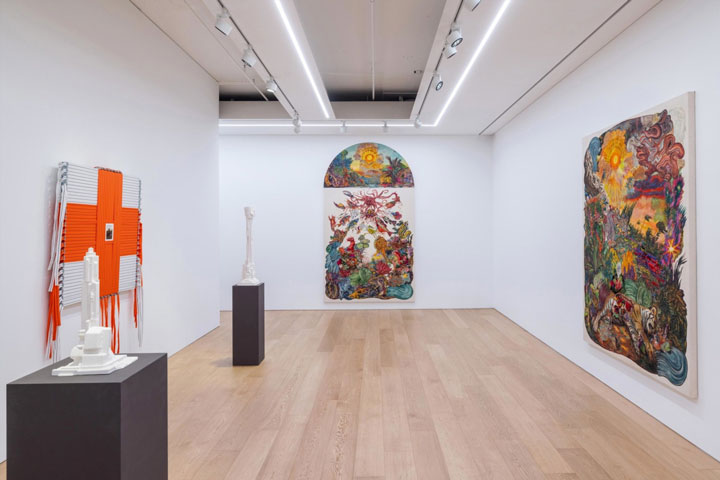
In the recent solo exhibition 《Kawah Ojol》(2024, ROH Projects, Jakarta), Nahm’s material experimentation further responds to the intersections of climate, culture, and industry across Asia. His work thus becomes not only an exercise in material abstraction but a proposal for reconstructing contemporary life—an articulation of the sculptural as both critique and compression of the present.

Topography & Continuity

Since the beginning of his career, Hyun Nahm has consistently pursued a miniascape-based perspective—one that seeks to compress entire worlds into small sculptural objects. First introduced in 《Miniascape Theory》(2020, Art Space Hyeong & Shift), this visual language has evolved into a critical strategy for articulating contemporary "landscapes" shaped by artificial structures, communication technologies, and political-economic systems, as seen in later exhibitions like 《Burrowing at the Bottom of a Rainbow》(2021, Atelier Hermès) and the 2022 Busan Biennale.

Although rooted in the traditional aesthetics of East Asia—such as suseok and bonsai—Nahm appropriates and transforms these forms into contemporary, techno-critical sculptures of telecommunications towers, urban ruins, and infrastructural debris. This synthesis of tradition and contemporaneity positions his work as a compelling case study of how sculpture can mediate between inherited forms and the demands of the present, establishing him as a distinctive voice in the field of contemporary art.

Nahm’s recent participation in the ROH Projects residency in Indonesia, as well as his inclusion in international exhibitions like 《Wonderland》(2024, Lehmann Maupin Seoul), signals the global resonance of his practice. His ability to draw connections between regional materialities, embodied memory, and structural power lends his work broad cultural reach.

Looking ahead, Nahm is expected to continue developing "sculptable worlds" across diverse geographies, interpreting local conditions through the philosophical and material lens of miniascape.

Works of Art

Constructing Today’s World through the Lens of Miniascape

Articles

Exhibitions

Activities