Earthmovers-lifting - K-ARTIST

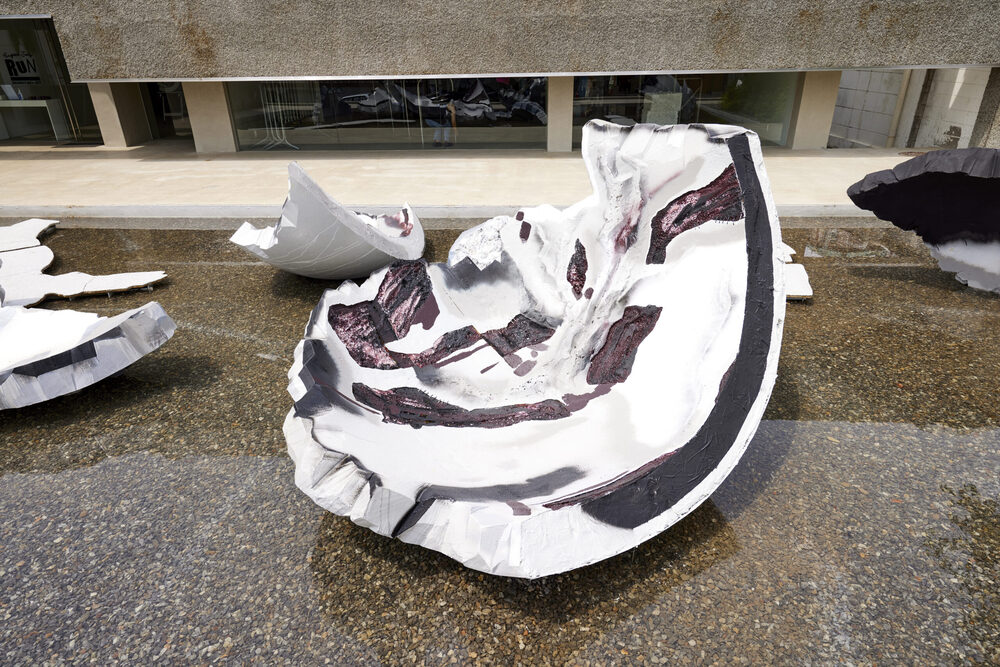
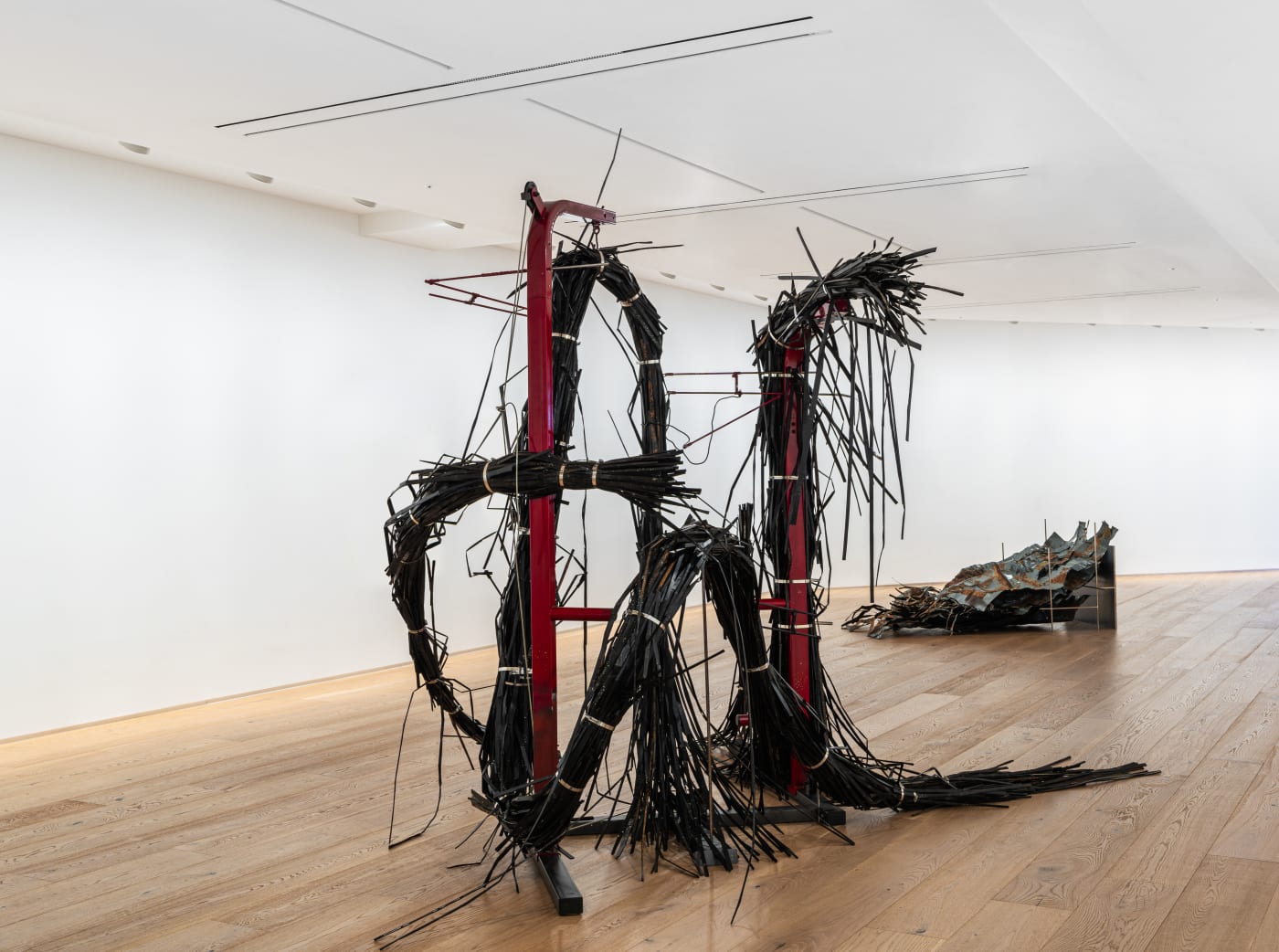
Earthmovers-lifting

2024
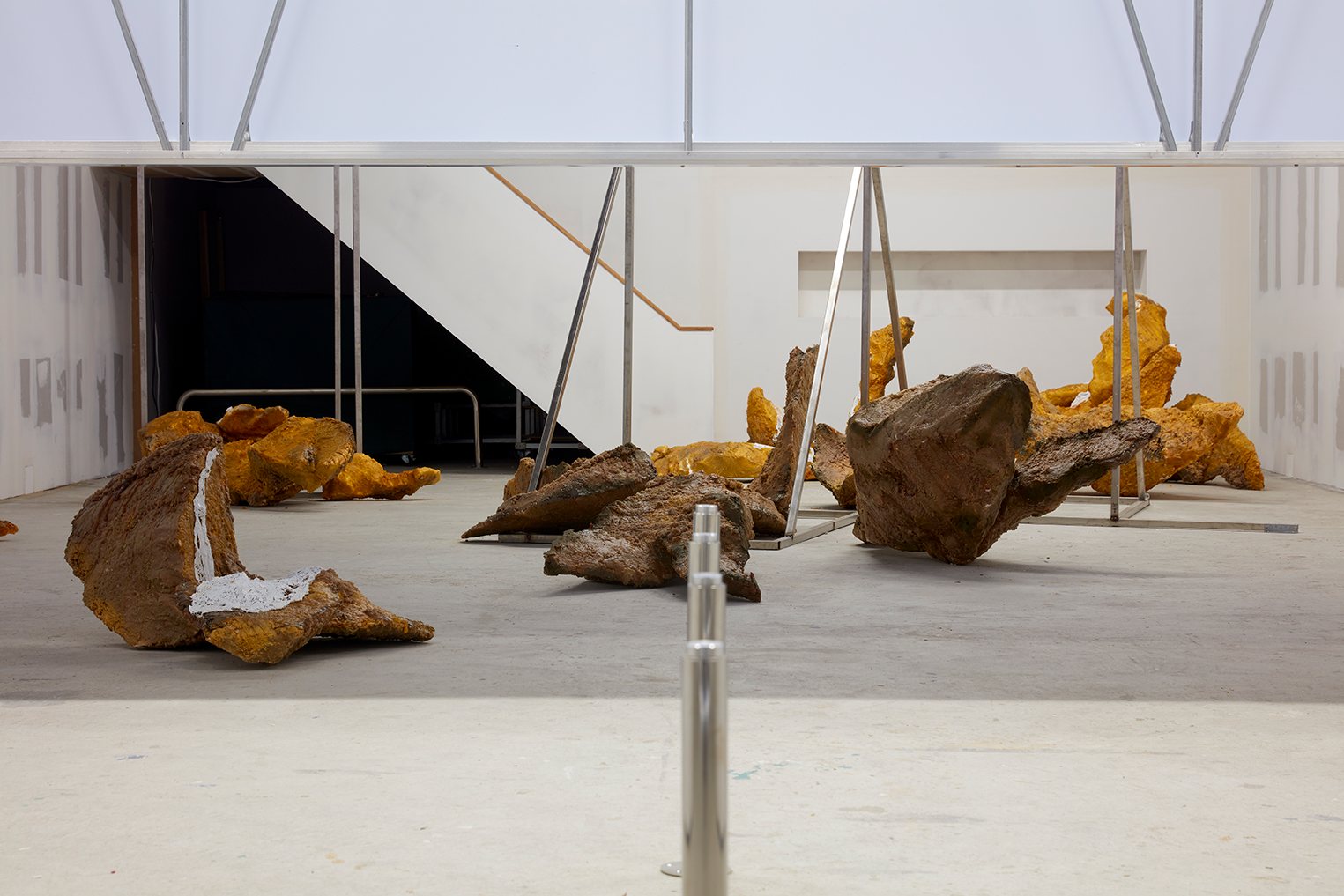
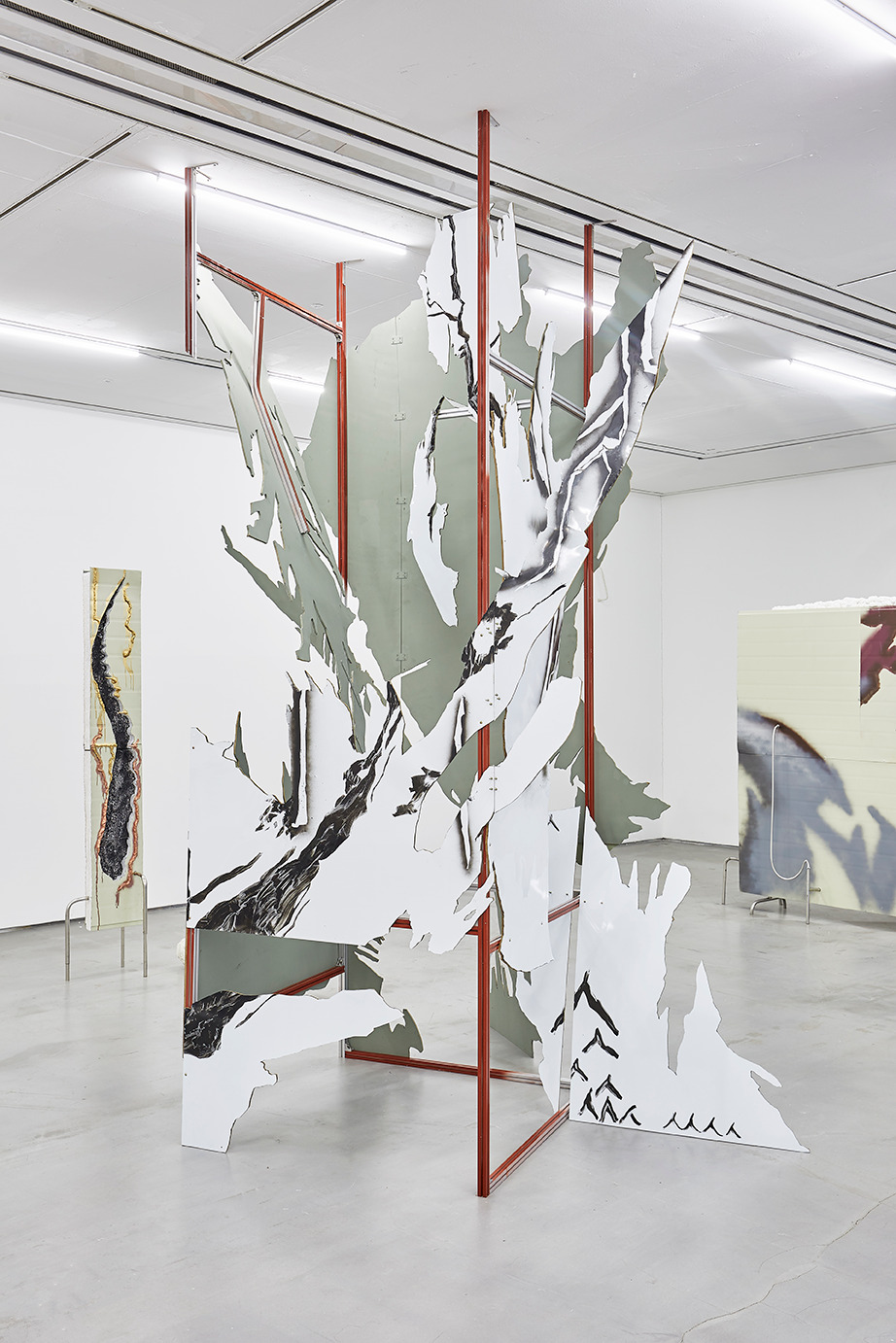
Plastic sheet, stainless steel, stainless steel hose bands, rust activator
273 x 270 x 360 cm
About The Work

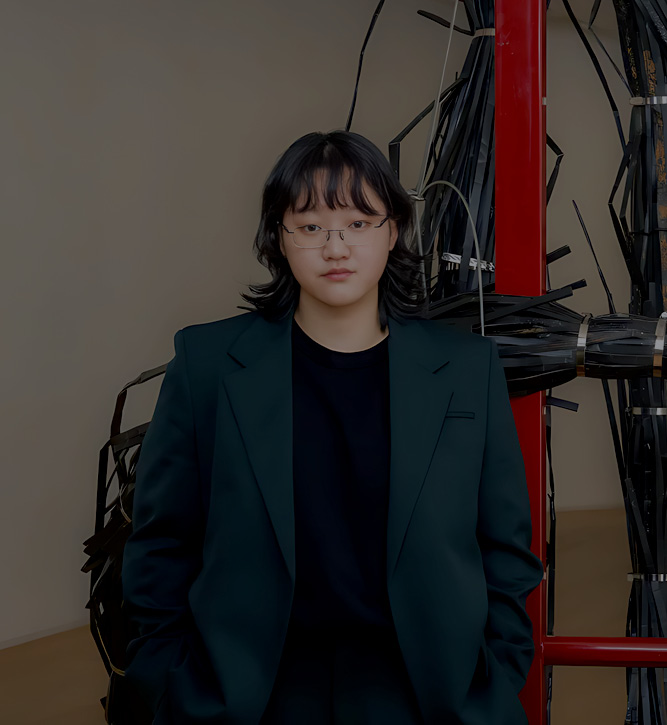
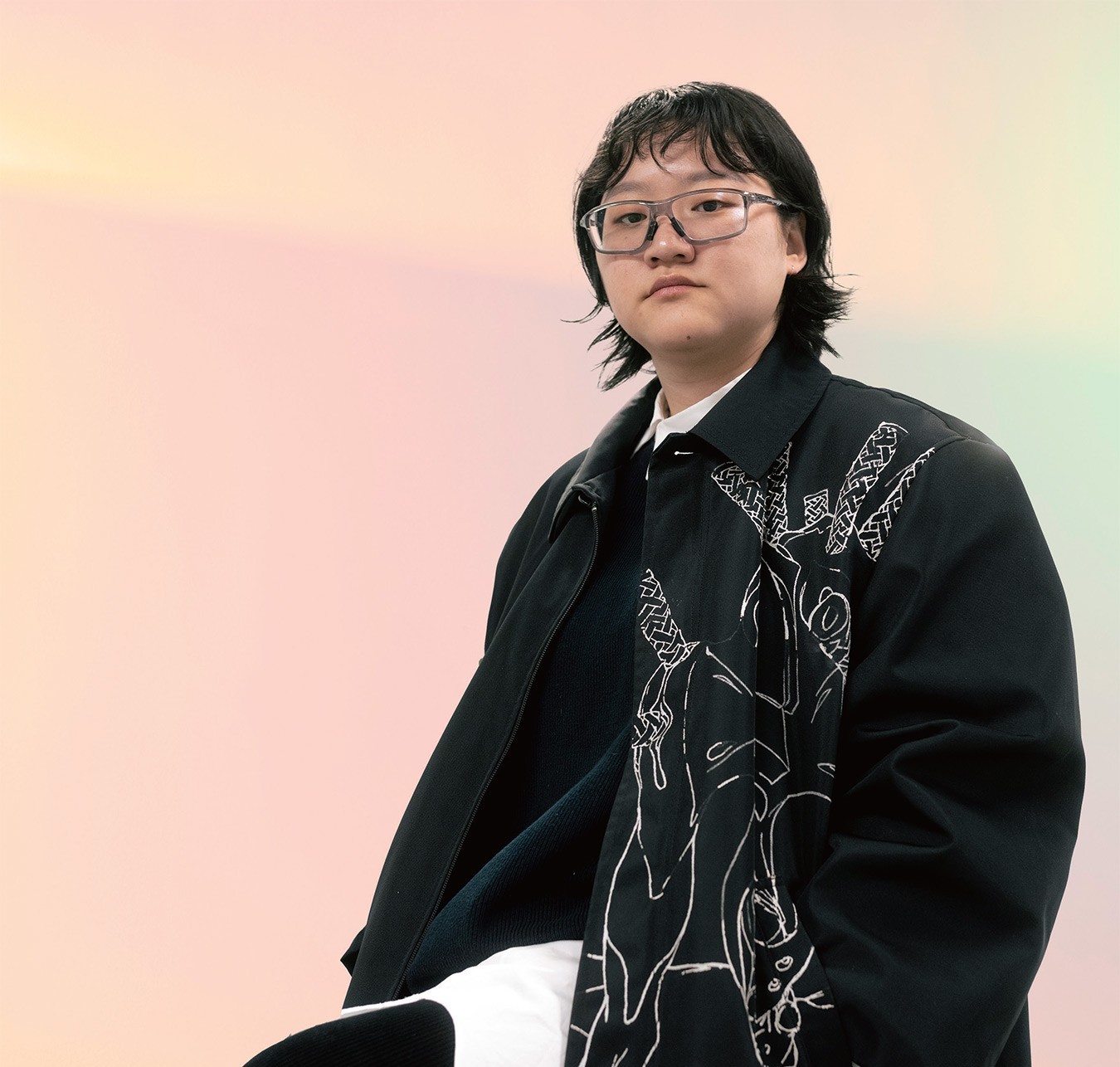
Eugene Jung creates post-apocalyptic environments through sculpture and installation that respond to contemporary catastrophes. The desolate landscapes crafted by the artist are at times infused with a cartoon-like worldview. Through this, Jung contemplates how disasters today are visualized, consumed, and perceived through media and popular culture.

Jung reveals the superficial experiences of disaster mediated through today’s media and popular culture, as well as the living traces that stir beneath the surface, materializing and contemporizing disaster imagery within the here-and-now. Eugene Jung's quasi-reality landscapes allow us to re-sense and properly gaze at the reality we are currently living in.

Solo Exhibitions (Brief)

Her recent solo exhibitions include 《Boxing Sketch》 (Shimjae Boxing Studio, Seoul, 2024), 《Run》 (Museumhead, Seoul, 2022), and 《Pirated Future+Doomsday Garden》 (Art Sonje Center Art Hall, Seoul, 2019).

Group Exhibitions (Brief)

Jung has also participated in numerous group exhibitions, such as 《PLAY》 (LeRoy Neiman Gallery, New York, 2025), the 2024 Busan Biennale 《Seeing in the Dark》 (Busan, 2024), 《Nostalgics on realities》 (Thaddaeus Ropac, Seoul, 2024), 《To You: Move Toward There You Are》 (ARKO Art Center, Seoul, 2022), 《Short Circuit》 (Taste house, Seoul, 2021), and 《Your Search, On-demand Research Service》 (Doosan Gallery, Seoul, 2019).

Residencies (Selected)

In addition, Eugene Jung participated in the Friend of a Friend residency program (Poconos, Pennsylvania, USA, 2023), White Letters (Barim & Sapporo Tenjinyama Art Studio, Korea and Japan, 2021), and the Site of Chuohonsen Gallery Residency Program (2019).

Works of Art

Post-Apocalyptic Landscapes Reflecting Reality

Originality & Identity

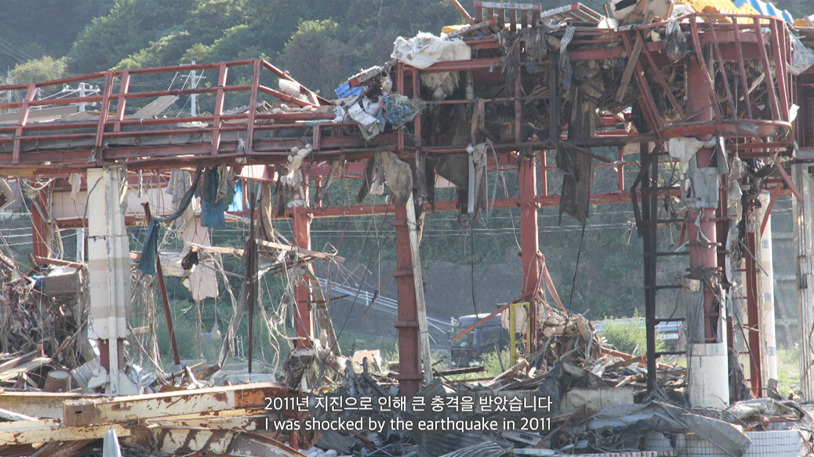
Eugene Jung has explored ways of reflecting reality by navigating disaster images and virtual imagery circulated through mass media. In her first solo exhibition, 《At least, Realistic》 (Site of Chuohonsen Gallery, Tokyo, 2019), she reconstructed the ruins of the Great East Japan Earthquake using fragile materials such as plastic boxes and paper in works like Dustwall(2017), blurring the boundaries between real disaster images and fictional scenes. Through this, she critically examined the disturbances between reality and its reproductions when disasters are consumed through media.

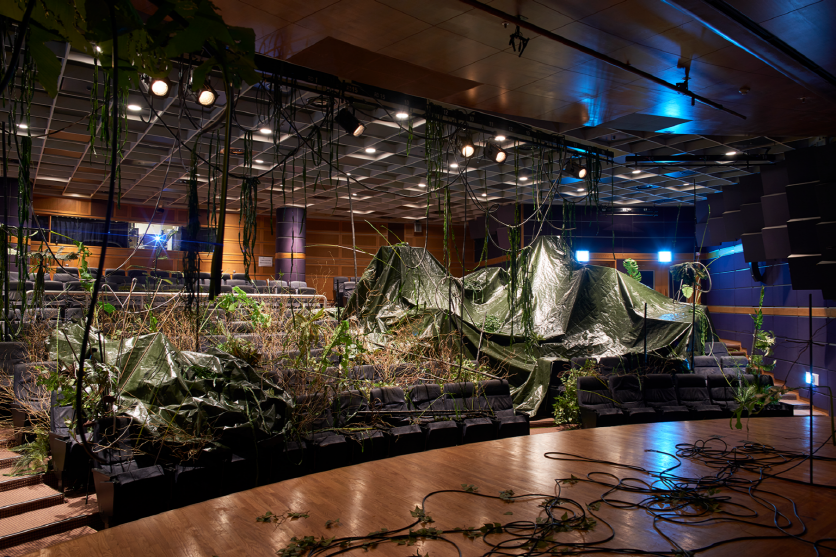
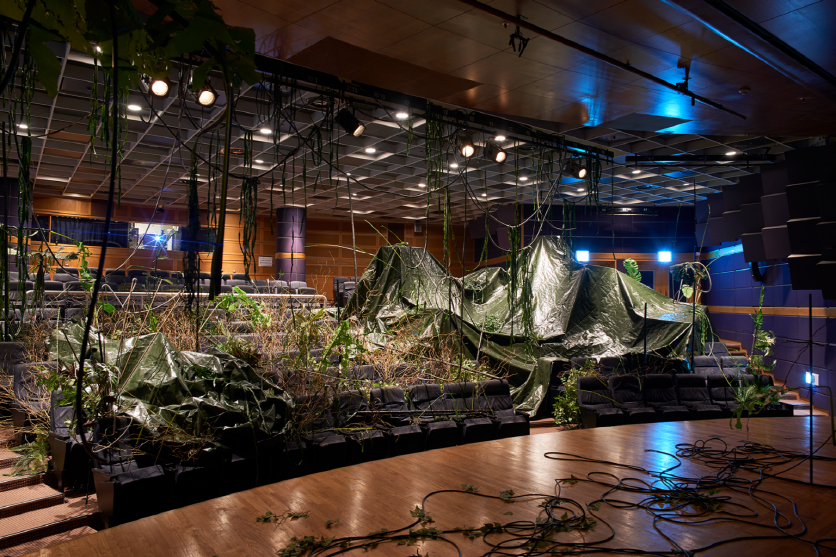
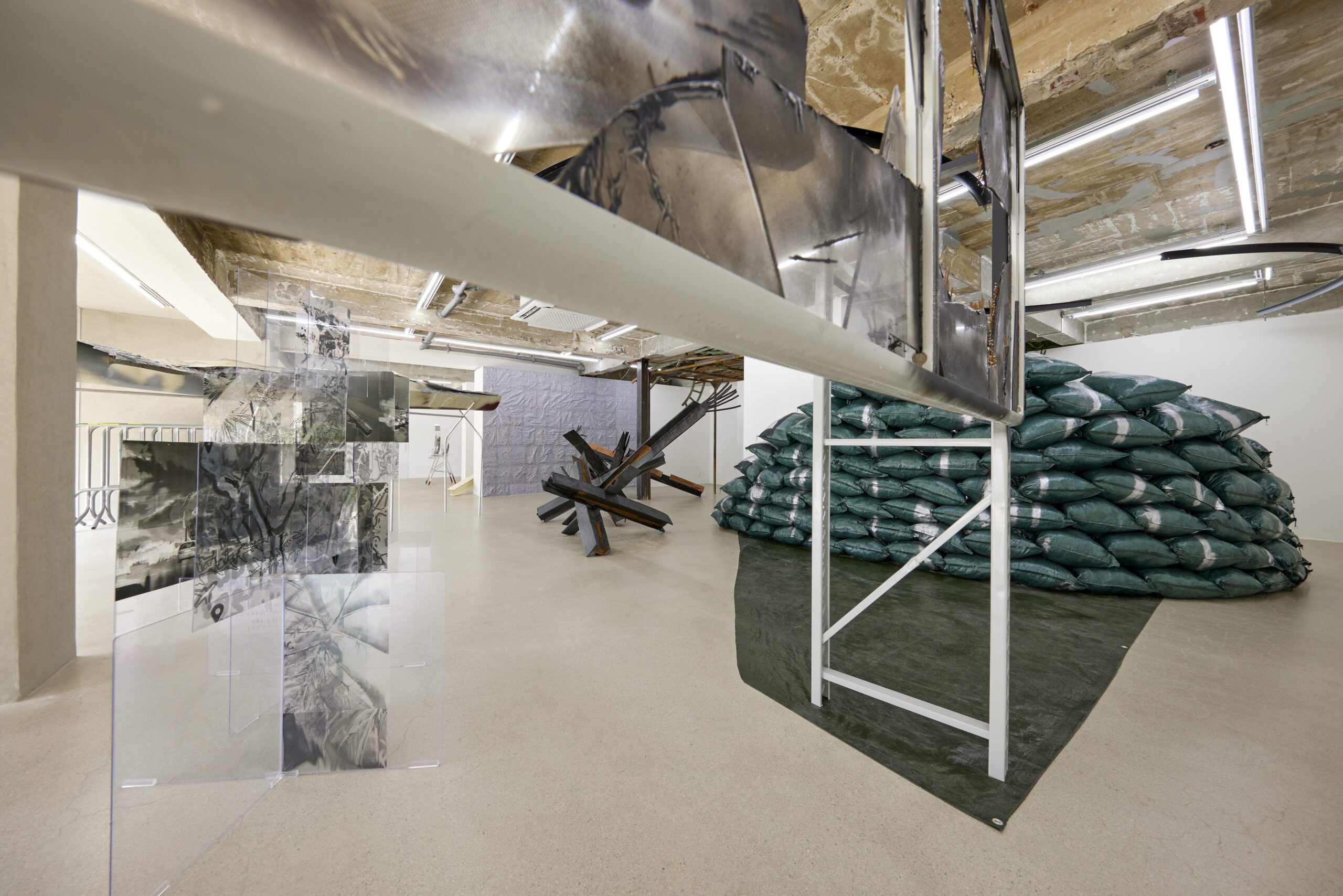
In 《Pirated Future+Doomsday Garden》 (Art Sonje Center, 2019), Jung documented visits to disaster sites like Chernobyl and Fukushima, capturing the process by which images of devastation are replicated and consumed through an artificial jungle installation and documentary video. Pirated Future presents the rift between the chain of media images and real landscapes, while the artificial plant forest of Doomsday Garden immerses the audience into an indeterminate post-apocalyptic space.

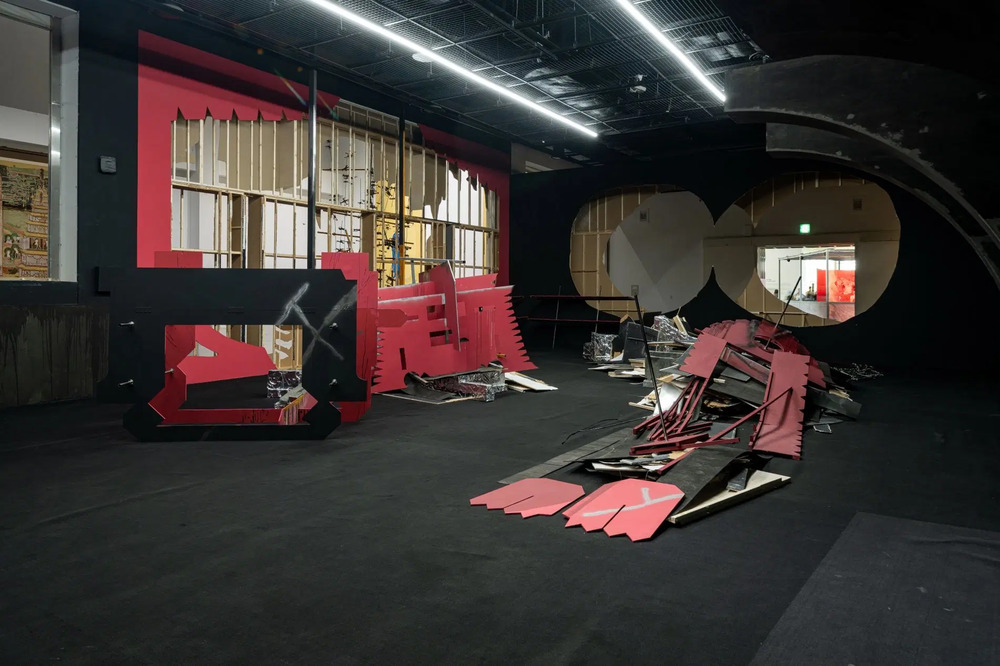
This approach expanded during the pandemic in her solo exhibition 《Run》 (Museumhead, 2022), which dealt with a world where disaster had become part of daily life. Her work Waves of Wreckage (2024), exhibited at the Busan Biennale, metaphorically reconstructs a world where even spaces of liberation, like a pirate ship facing unfavorable winds and currents, ultimately wreck under the unstable forces of contemporary capitalism.

In the recent group exhibition 《Nostalgics on realities》 (Thaddaeus Ropac, 2024), her ‘Earthmovers’ (2024) series addressed the duality of collapse and reconstruction, closely observing the uncertain world following disaster. From the beginning, Jung has consistently combined narratives and images of real disasters with variations of virtuality and reality, reflecting a deep engagement with the structures of contemporary media perception. Her recent work has shifted from criticizing disaster imagery to actively constructing narratives of survival and reconstruction through sculptural language.

Style & Contents

Jung initially used fragile materials like thin paper and plastic to construct lightweight representations of fictionalized disasters. In works like Dustwall, showcased in 《At least, Realistic》, she metaphorically conveyed how disaster becomes "lightened" through media.

From Mercilesspillar (2019) onward, she transitioned to using more industrial materials such as aluminum, MDF, cement, and stainless steel, physically constructing remnants of disaster. Resurrection of Paul the Psychic Octopus (2019) employed EPS panels and spray paint to sculpturally expose the fictional nature of disaster prophecy consumed by mass media.

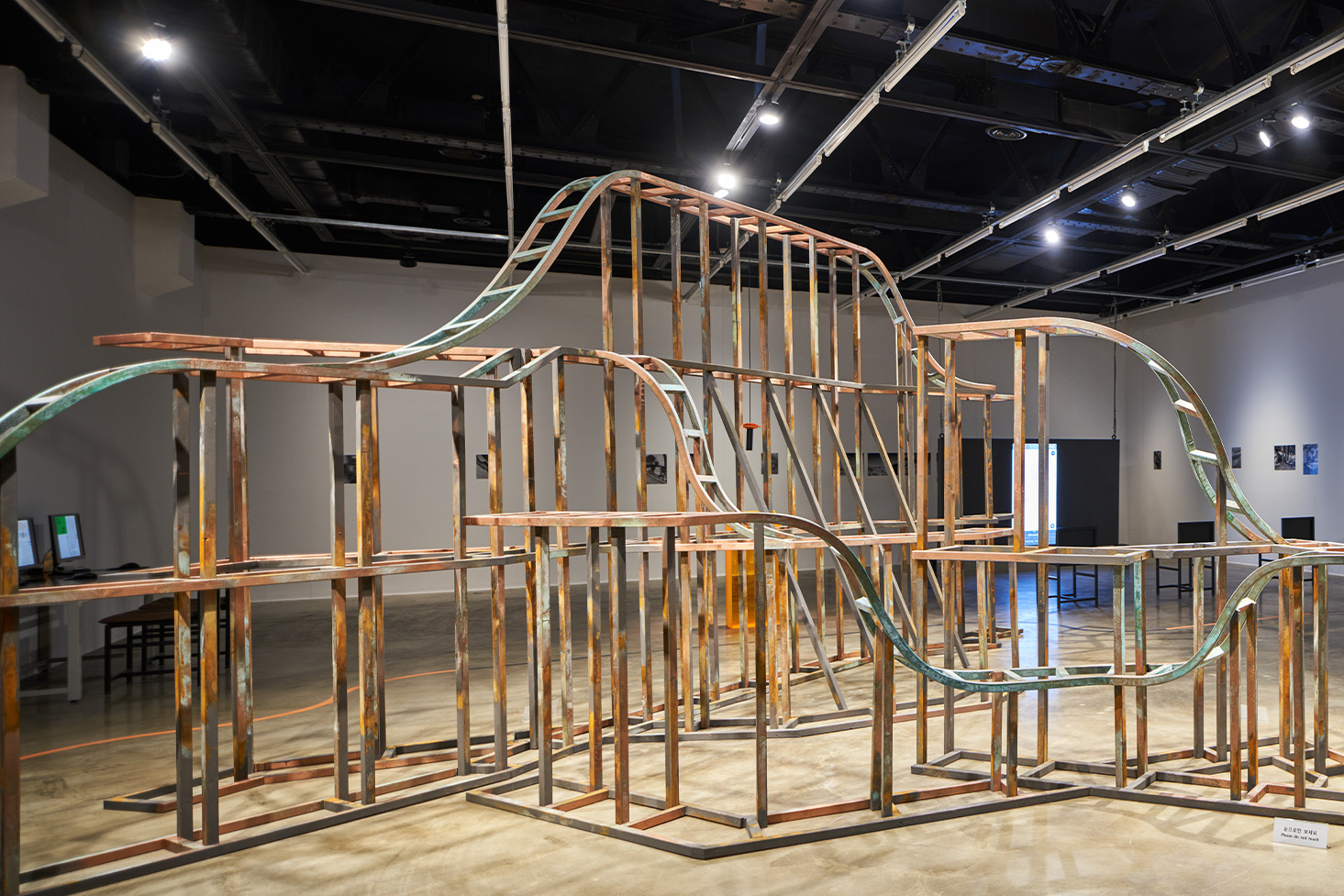
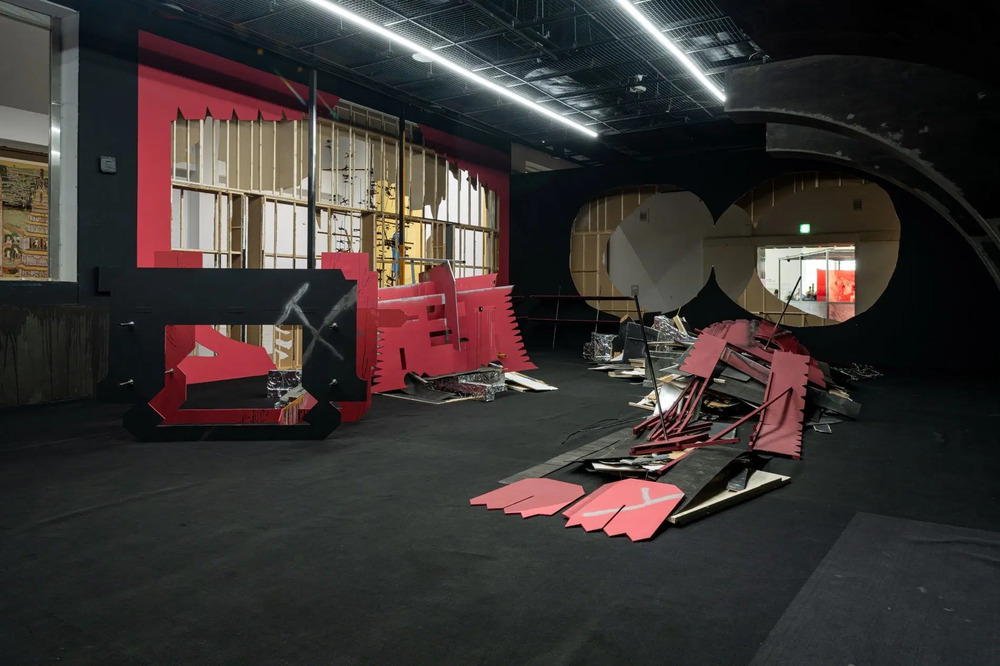
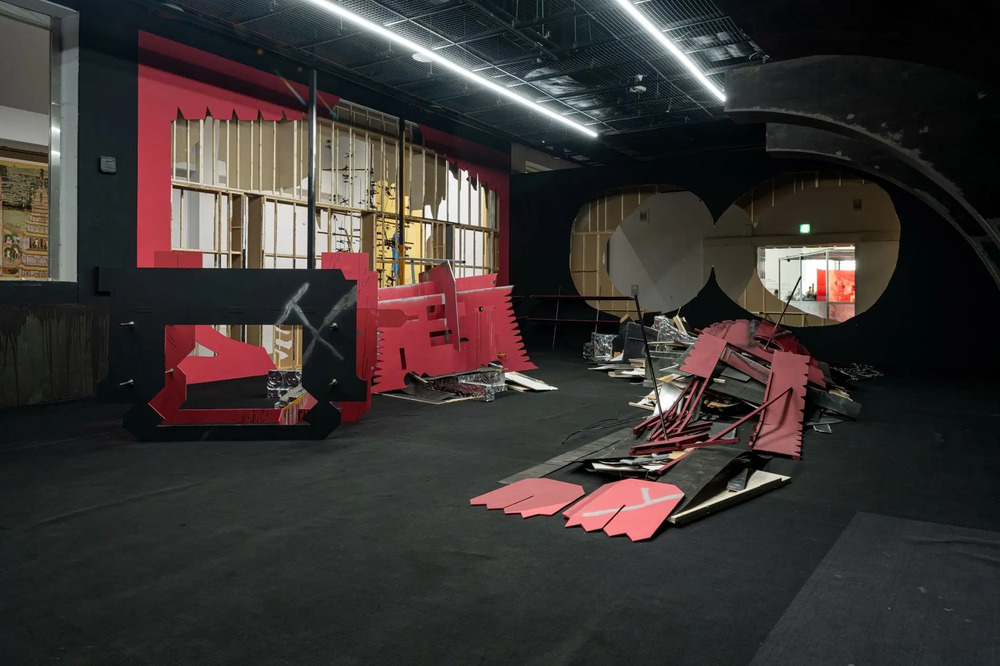
In her solo exhibition 《Run》, Jung created a faux theme park using mass-produced and flimsy materials like styrofoam and metallic sheet film, directly confronting the virtualized experience of disaster. Ruins, checkpoints, and rollercoasters assembled within the gallery space symbolized the infiltration of disaster into everyday life. Psychic Octopus Roll (2022), an extension of her earlier octopus work, embodied a post-pandemic collective bodily sensation. Her material choices evolved to become rougher and more structural.

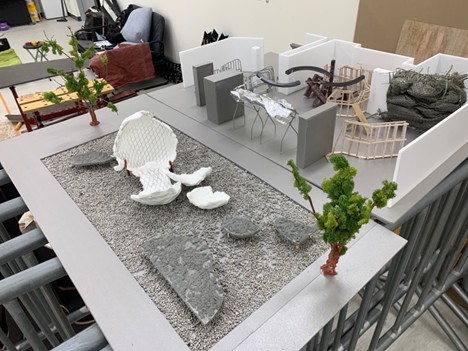
In the recent 《Nostalgics on realities》 exhibition, the ‘Earthmovers’ series constructed rusted heavy machinery forms using corrosion agents, plastics, and metal plates. These sculptures emphasized not only destruction but also the new movements generated in the wake of disaster, weaving together collapse and regeneration as sculptural narratives.

Topography & Continuity

Eugene Jung began by critically addressing the virtualization and consumption mechanisms of disaster imagery, gradually expanding to encompass the narratives of recovery and reconstruction that follow disaster. Initially, her work focused on exposing the lightness of disaster images consumed through screens via fragile sculptural forms. Over time, she moved into the disaster sites themselves, exploring the gaps between real and virtual experiences.

During the pandemic, her work deepened to address the everyday landscapes internalized with disaster and bodily experiences. More recently, she has materialized the flow from ruin to recovery, embodying it in industrial and decomposing materials.

Jung has gained significant attention for her unique practice of critically appropriating and deconstructing virtualized disaster imagery, participating in major international exhibitions such as the 2024 Busan Biennale and the group exhibition at Thaddaeus Ropac.

Today, she is recognized as a contemporary artist who sensitively handles the fractures between reality and virtuality experienced by the post-digital generation, articulating them through the lens of post-disaster themes and distinctive sculptural language.

Works of Art

Post-Apocalyptic Landscapes Reflecting Reality

Exhibitions

Activities