
Horizontal Forms - K-ARTIST

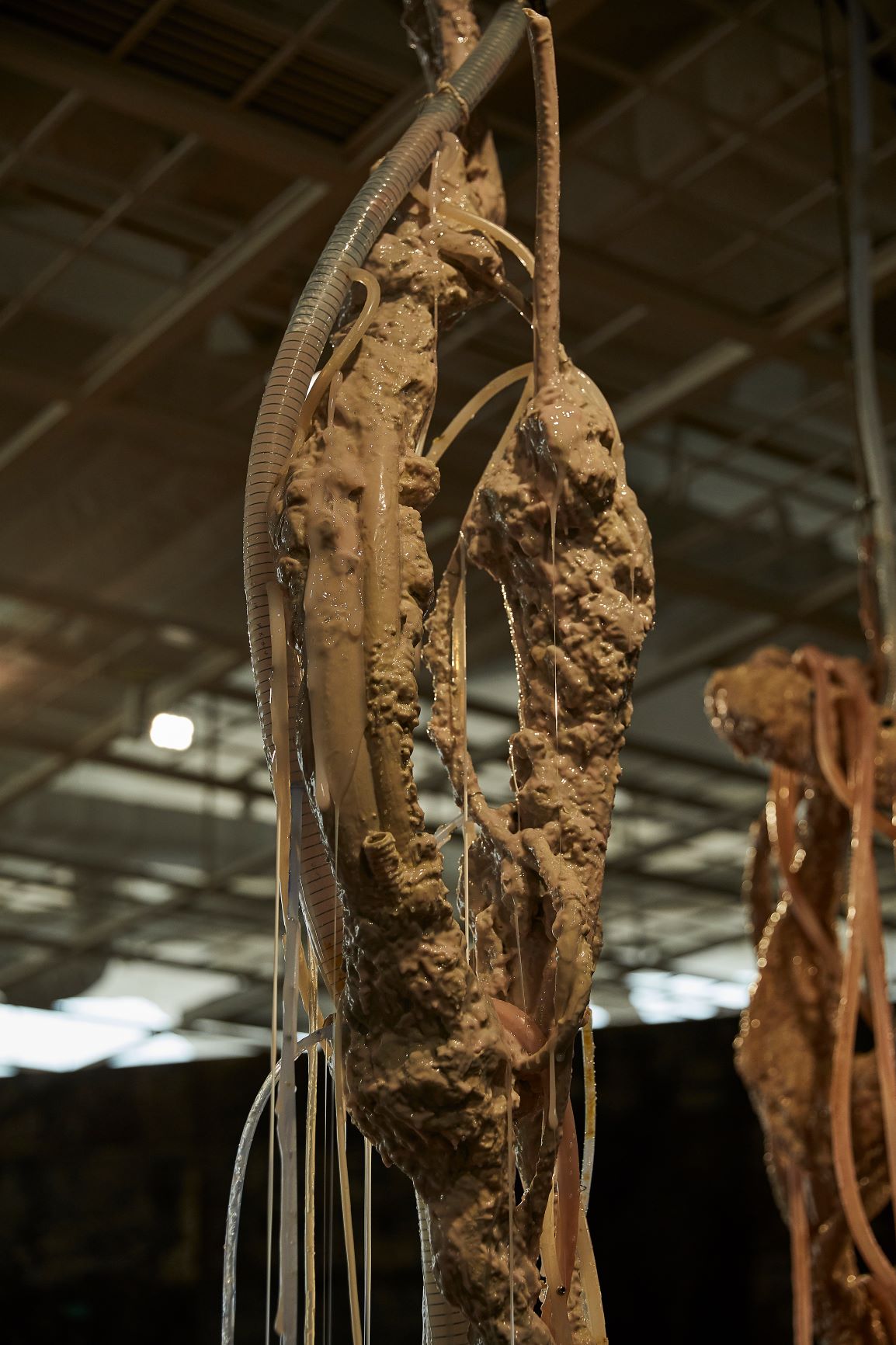
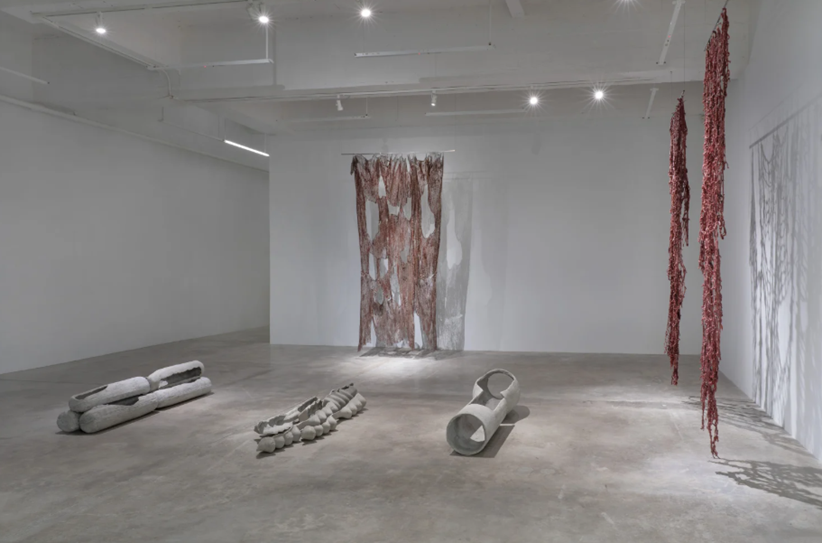
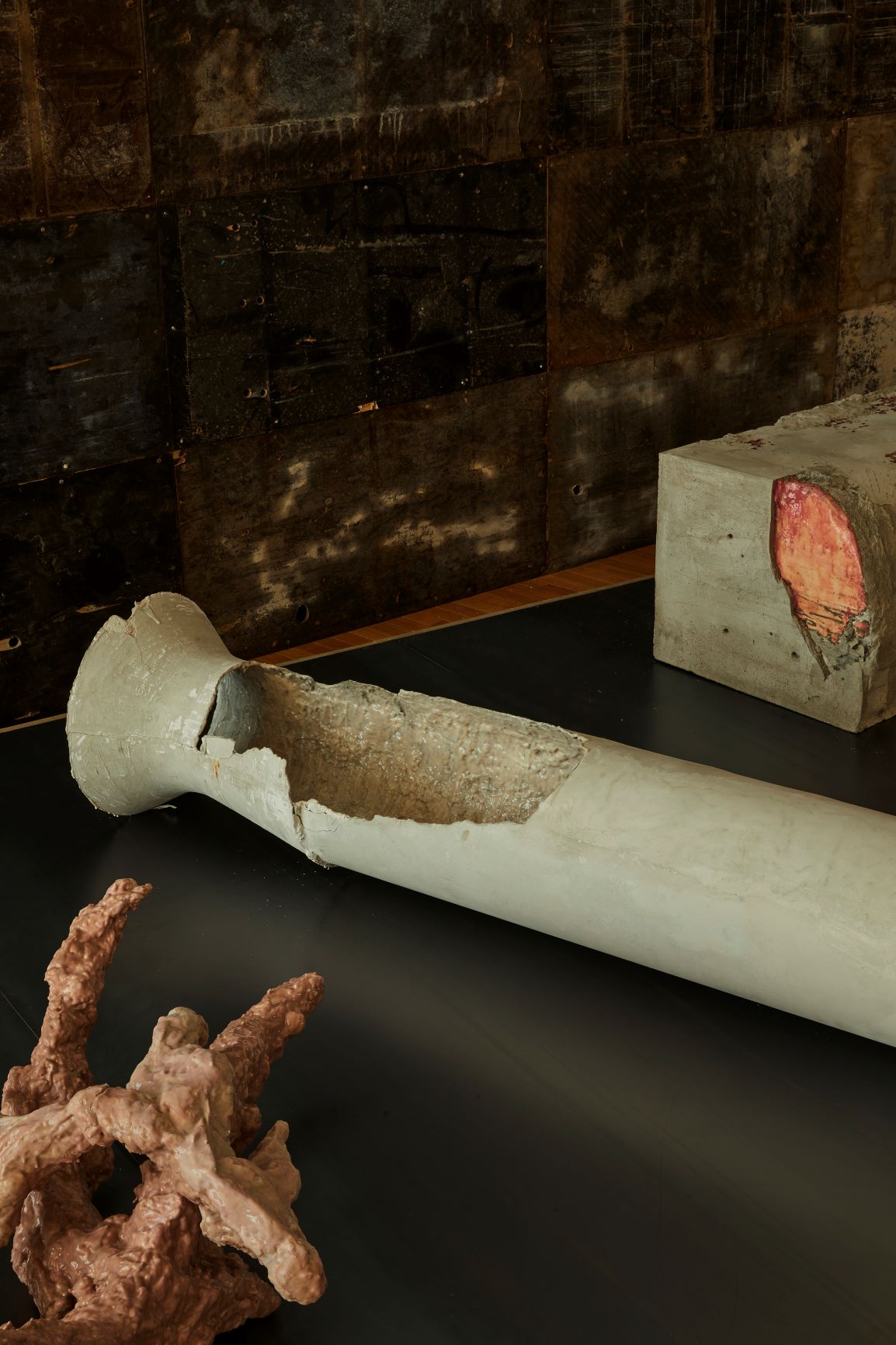
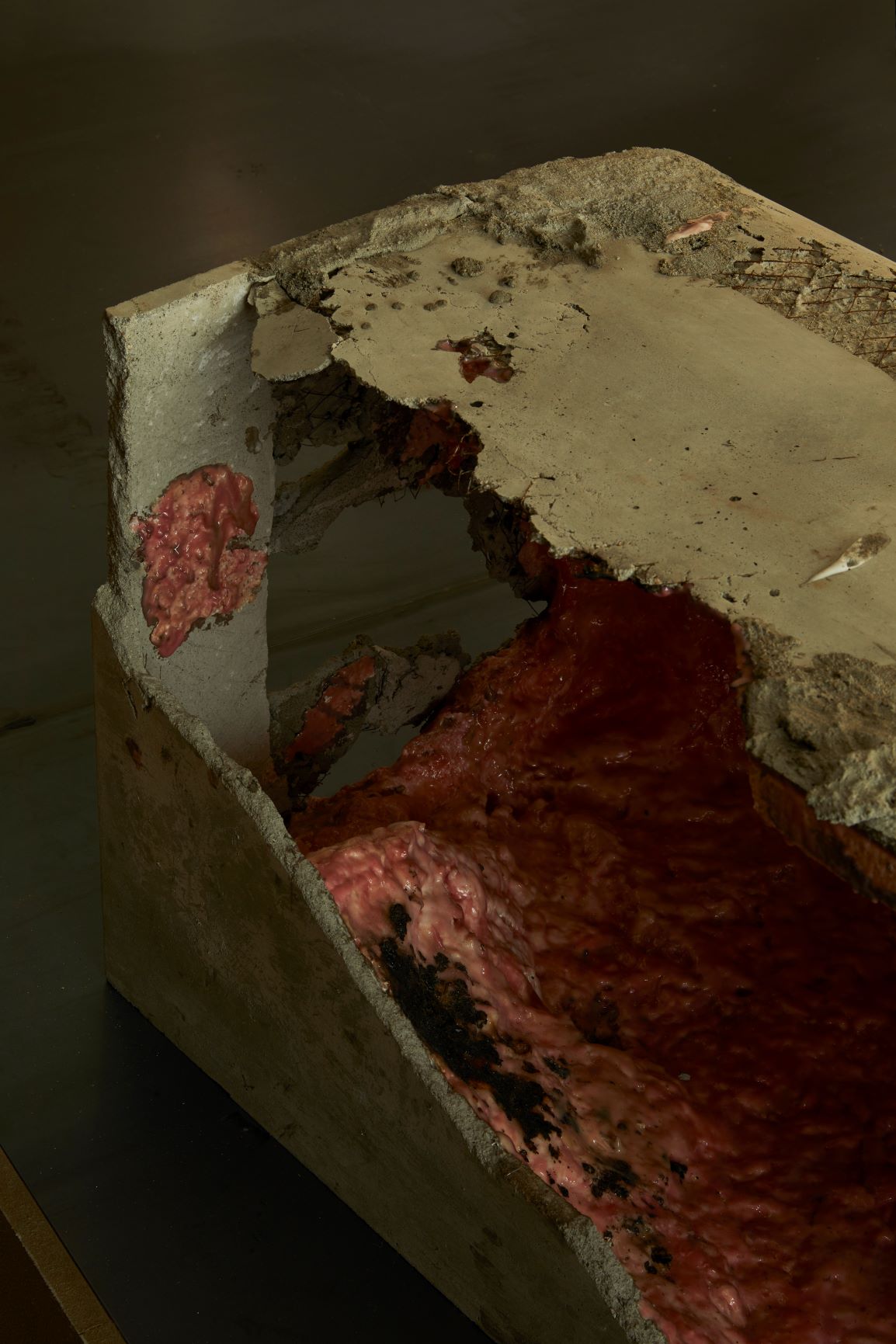
Horizontal Forms

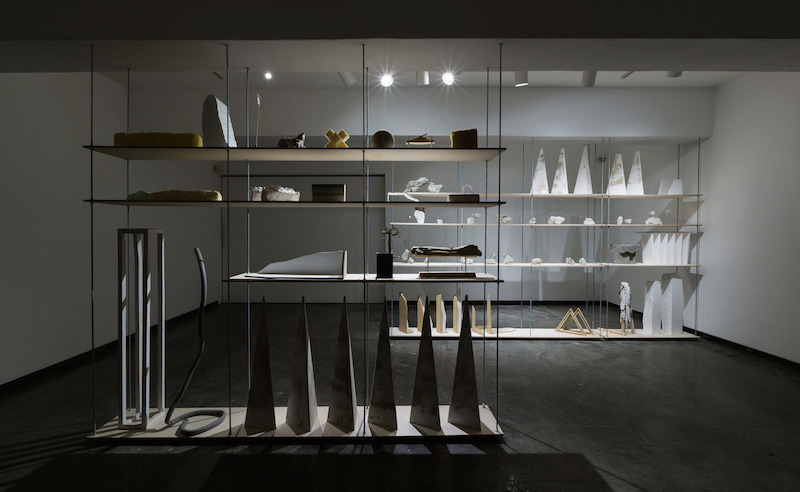
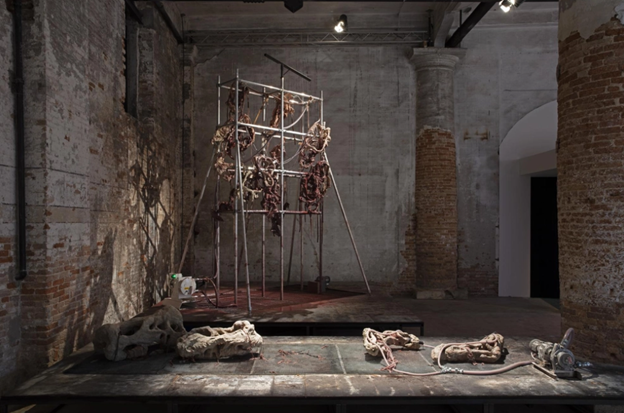
2020 (Four different sculptures)
Mixed media
Dimensions variable
(Left to Right. Approx.) 
50 x 60 x 230 cm
40 x 40 x 50 cm
40 x 40 x 164 cm
45 x 50 x 180 cm
About The Work

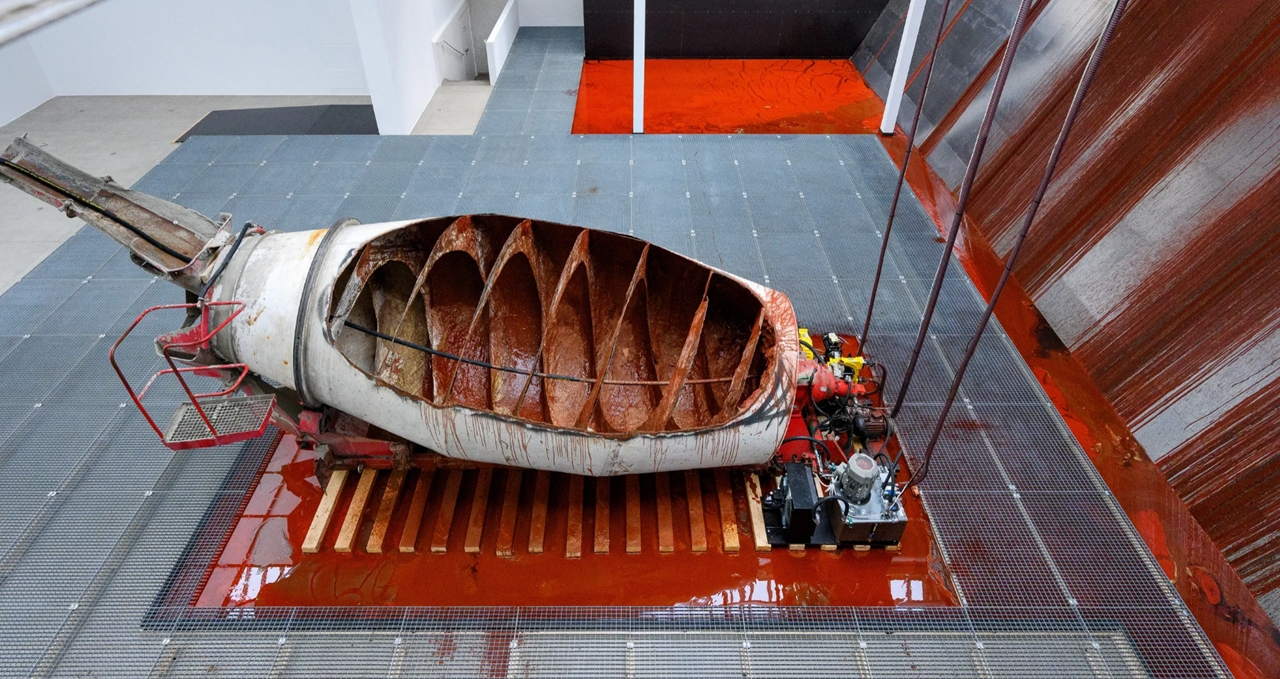
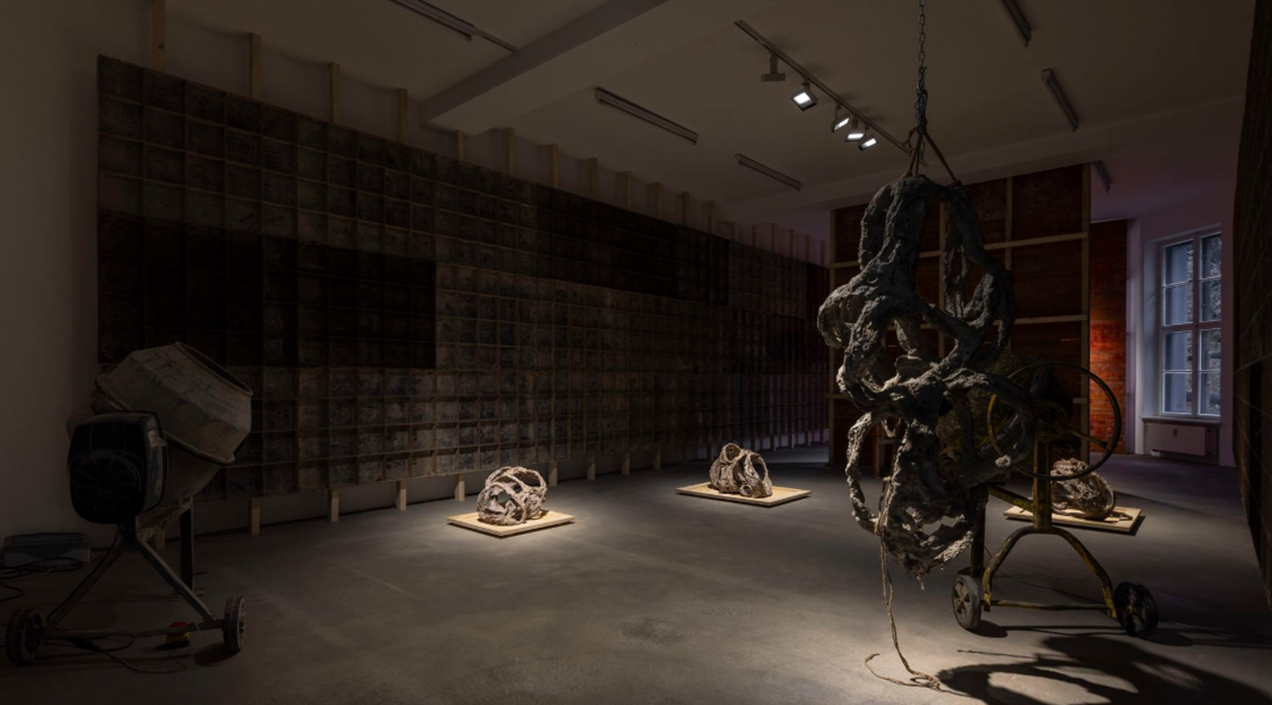
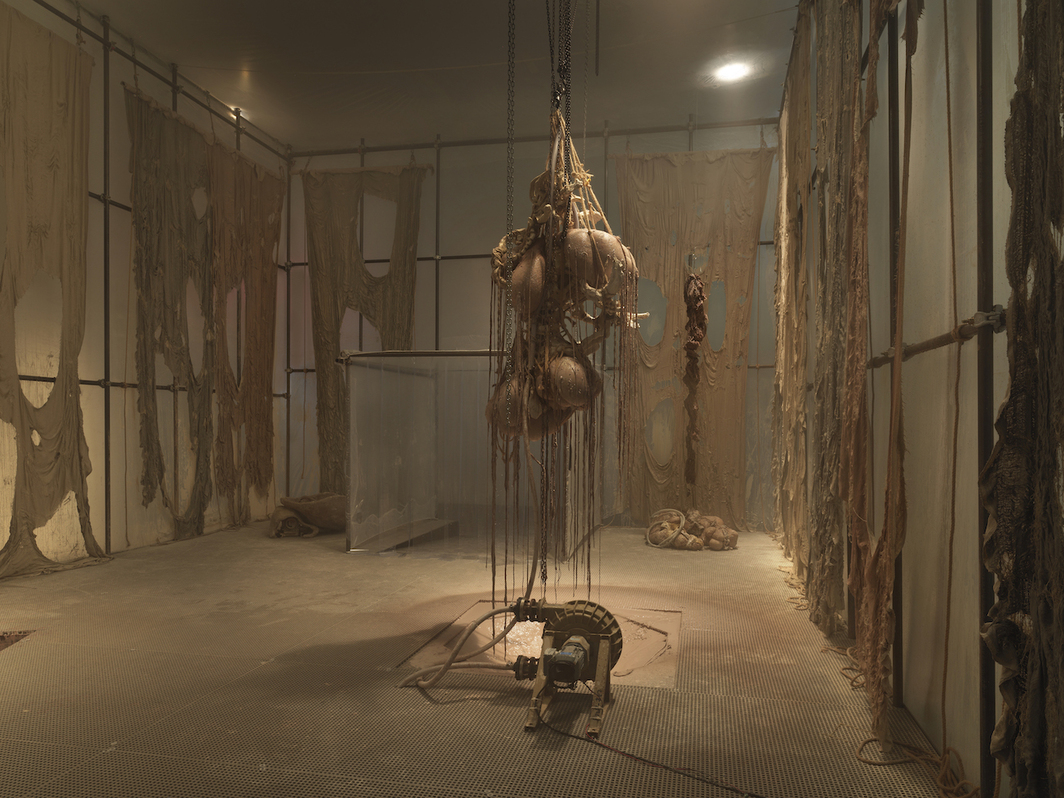
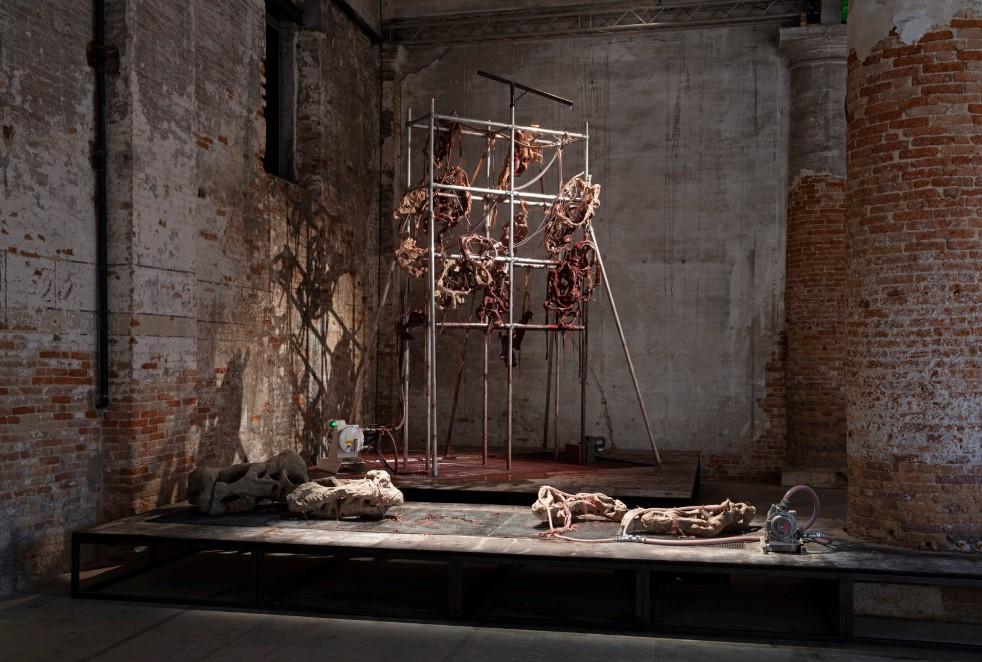
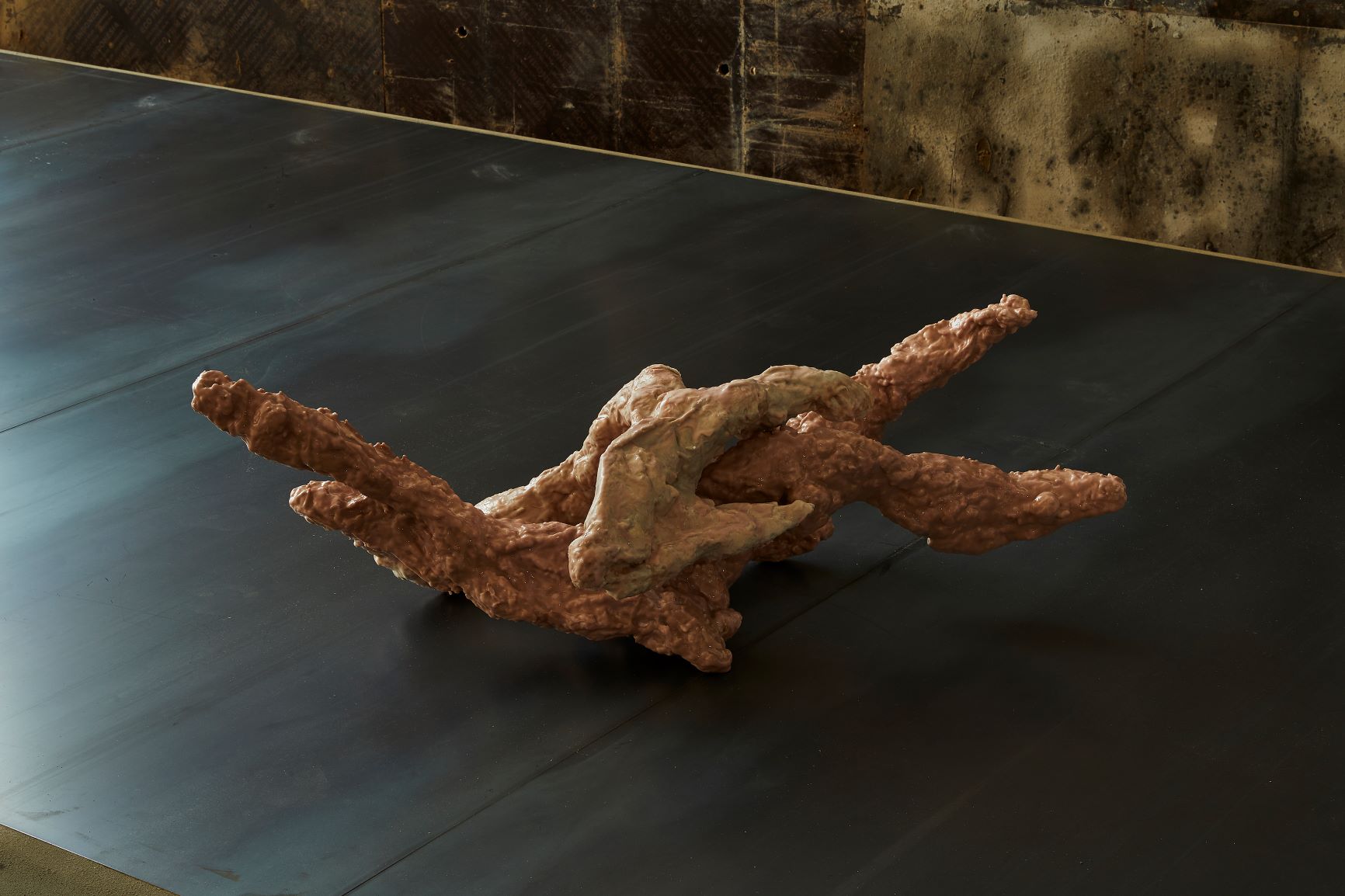
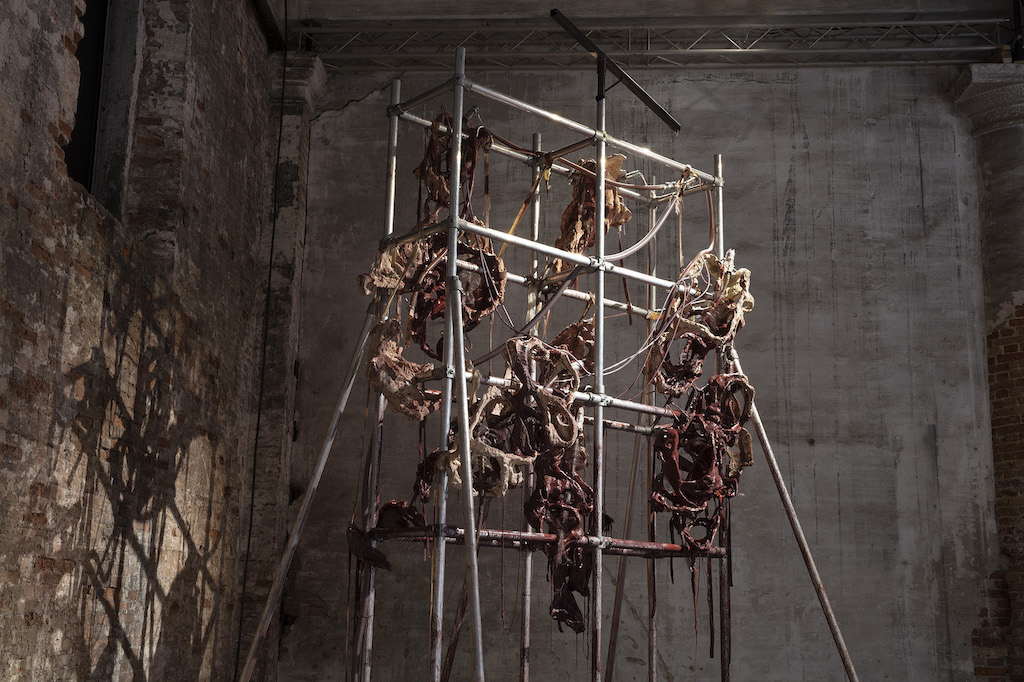
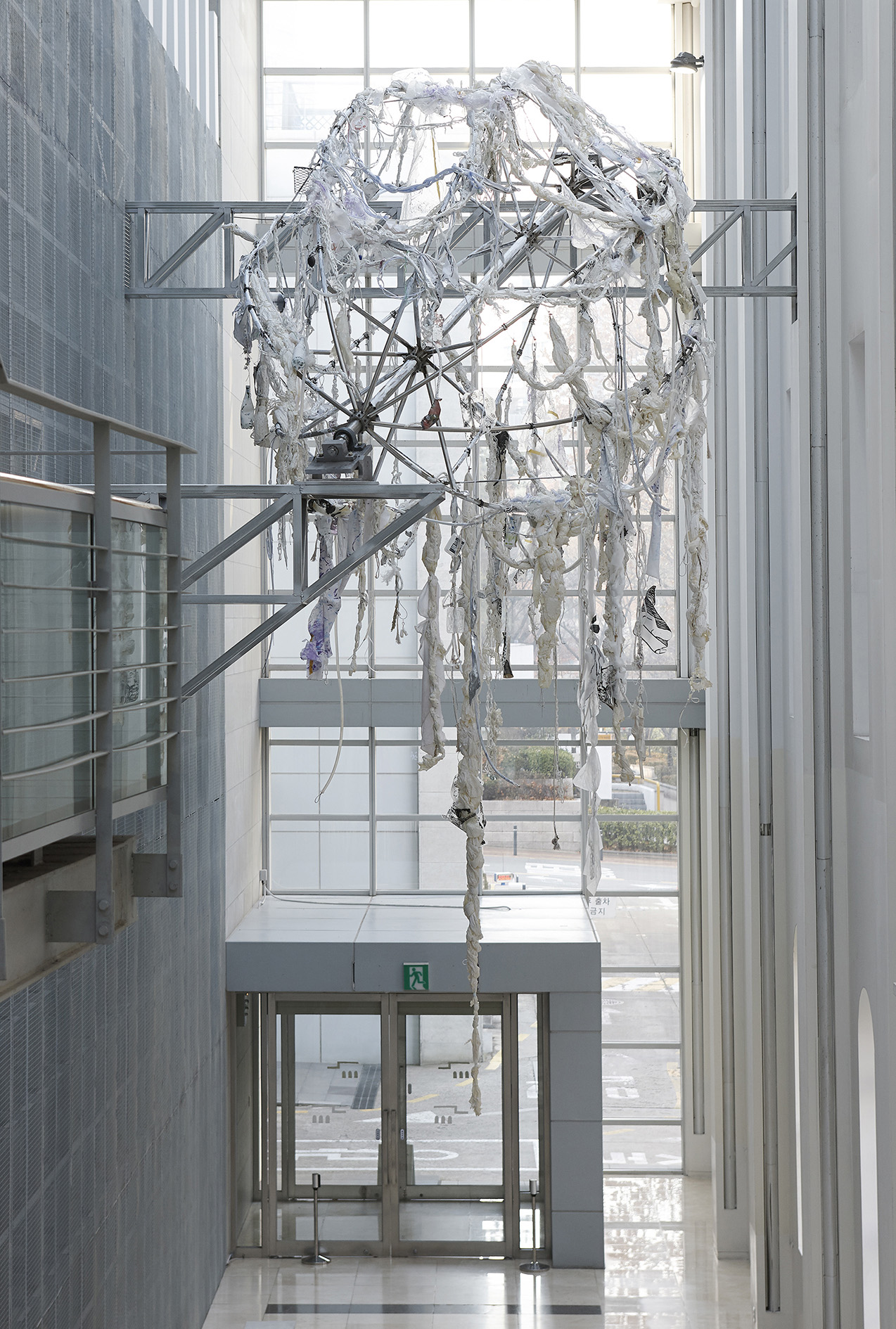
Mire Lee creates sculptures using industrial and mechanical materials such as cement, resin, steel, scaffolding, motors, and pumps. Her works foreground materiality, texture, and mechanical movement. Emitting sticky, viscous substances and moving like living organisms, her large-scale kinetic sculptures evoke primal human desires and sensations that lie beyond the realms of intellect or language.

Mire Lee's sculptures, which blur the boundary between outer and inner layers, skin and internal organs, evoke both the primitive and the highly sophisticated mechanisms of machinery. The grotesque figures of her sculptures, slowly crawling along the floor or continuously sucking and expelling through hoses, transcend the categorization of sculpture, leaning into a pathos-filled violence, the pleasure of repetitive movement, and an aesthetic of sensitivity where the finiteness of life, pathos-driven desire, and frustration coexist.

Solo Exhibitions (Brief)

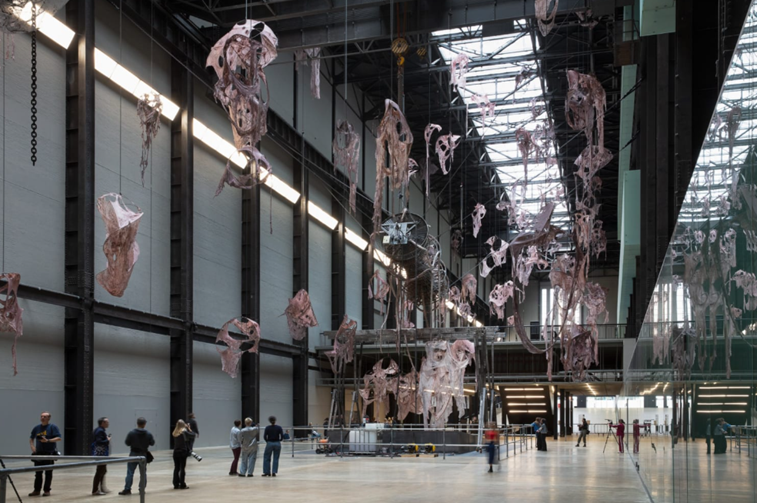
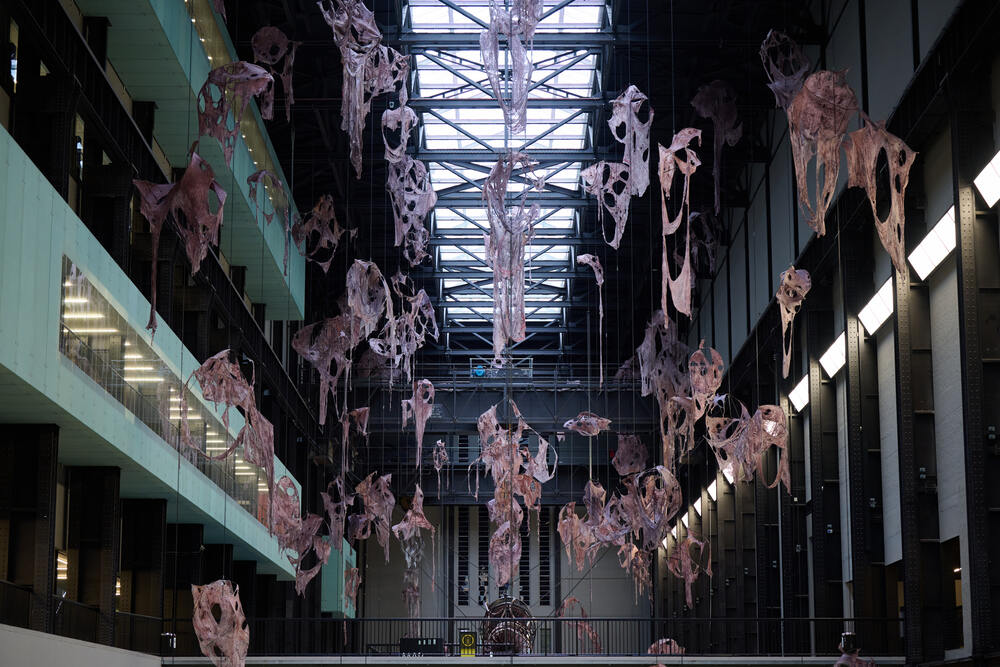
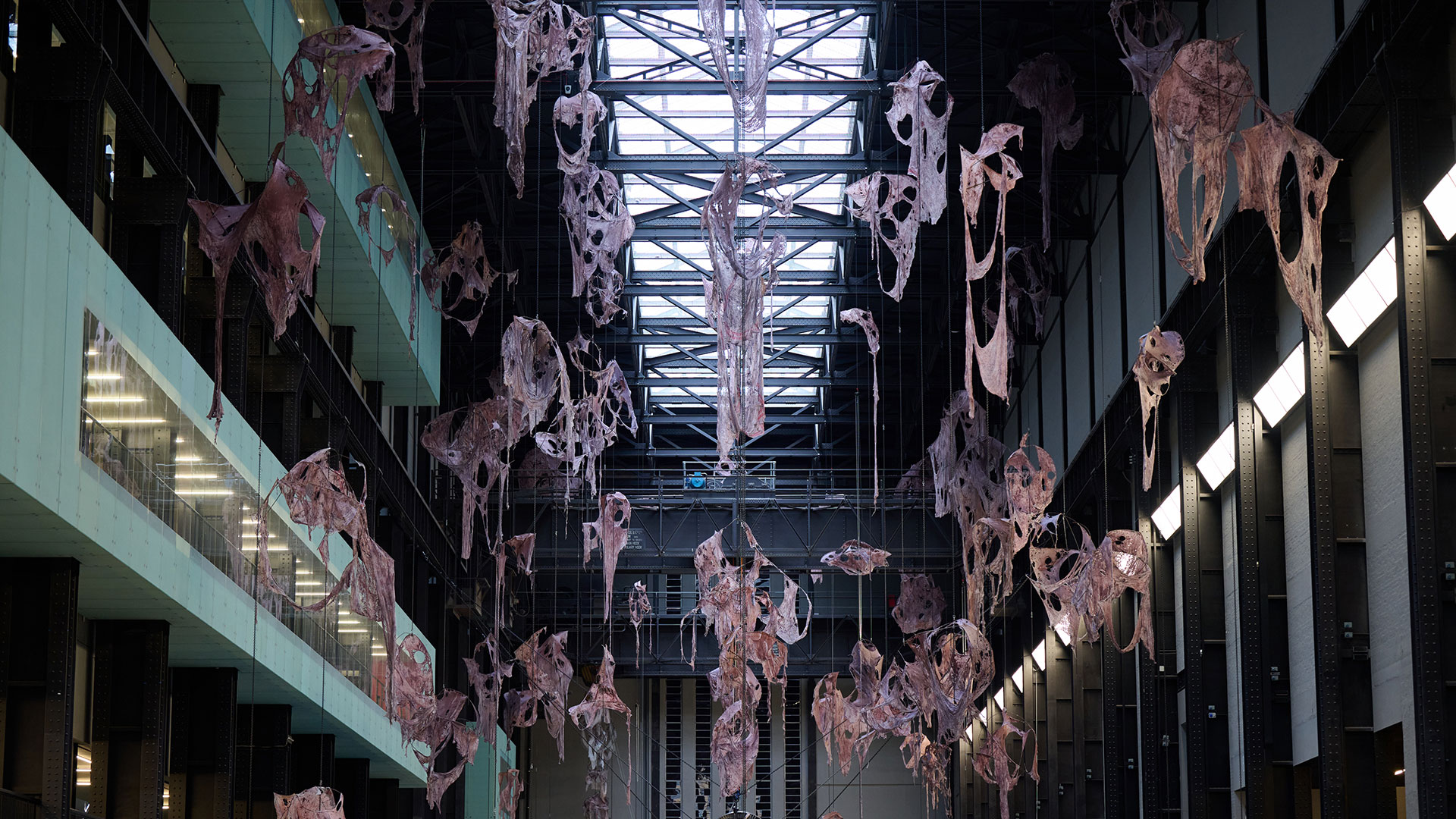
Her recent solo exhibitions include 《Mire Lee: Open Wound》 (2024) the Hyundai Turbine Hall Commission at Tate Modern, London; 《Black Sun》 (2023) at the New Museum, New York; 《Look, I’m a fountain of filth raving mad with love》 (2022) at ZOLLAMTMMK, MMK Frankfurt; 《As we laydying》 (2022) at Kunstmuseum Den Haag, Den Haag; 《Carriers》 (2020) at Art Sonje Center, Seoul, amongst others.

Group Exhibitions (Brief)

Lee’s work was also featured in several group exhibitions including the 11th Busan Biennale (2022), 59th International Venice Biennale (2022), 58th Carnegie International (2022), Schinkel Pavilion, Berlin (2021), Antenna Space, Shanghai (2020), the 15th Biennale de Lyon, Lyon (2019), and the 12th Gwangju Biennale Pavilion Project (2018).

Awards (Selected)

She was the recipient of the PONTOPREIS MMK 2022 prize, and was shortlisted for the Special Prize at the 2021 Future Generation Art Prize.

Residencies (Selected)

Lee has participated in notable residencies, including the SeMA Nanji Residency and Cité Internationale des Arts in Paris.

Collections (Selected)

Her works are held in prestigious collections such as the Centre Pompidou in Paris, LACMA, M+, Leeum Museum of Art, and the National Museum of Modern and Contemporary Art, Korea.
Works of Art

Living Machine Sculptures

Originality & Identity

In her early works such as A Cabinet for Chinese Scholar’s Stones(2014) and Tears(2014), Mire Lee collected and assembled fragments of discarded materials and everyday sensations to explore the fragility of human existence and the subtle textures of emotion. Her early pieces rejected the frameworks of easy aesthetic appreciation, instead carefully capturing the points where material and emotion intertwine. From the beginning of her practice, Lee has consistently cultivated a sensibility attuned to the blurred boundaries between objects and feelings, and a sense of compassion toward the world.

Beginning with A Hysteria, Elegance, Catharsis; the islands(2017), presented at 《READ MY LIPS》(Hapjungjigu), she expanded her thematic focus by introducing quasi-corporeal sculptures made of soft, organic materials such as oil clay and silicone.

Later, in 《Carriers》(2020, Art Sonje Center), Lee began to explicitly address the dissolution of boundaries between self and other by introducing the extreme desire for integration explored in the notion of “vore.” During this period, her exploration of personal desire, corporeality, and incompleteness became even more visceral and biologically embodied.

In her recent solo exhibitions 《Black Sun》(2023, New Museum) and 《Open Wound》(2024, Tate Modern), emotions such as fear, melancholy, and annihilation are materialized on a monumental and physical scale. Through structures that continuously drip, spit, and harden, crossing the boundaries between life and death, Lee presents a sculptural narrative of endless transformation and failure. Over time, she has varied and deepened her exploration of emotion, the body, materiality, and existential crisis.

Style & Contents

Lee has developed her sculptural language through a deep engagement with the material properties and movement dynamics of her chosen mediums. In A Cabinet for Chinese Scholar’s Stones, she subverted traditional standards of sculptural value by arranging fragments of waste and discarded objects selected for their texture and elasticity. In 《READ MY LIPS》, she emphasized tactility and temporality through sculptures made of clay, silicone, lubricants, and rotating motors.

At the 2018 Gwangju Biennale, her monumental 10-meter-height kinetic sculpture Hysteria, Elegance, Catharsis: Words Were Never Enough(2018) emphasized the process of autonomous movement and structural collapse.

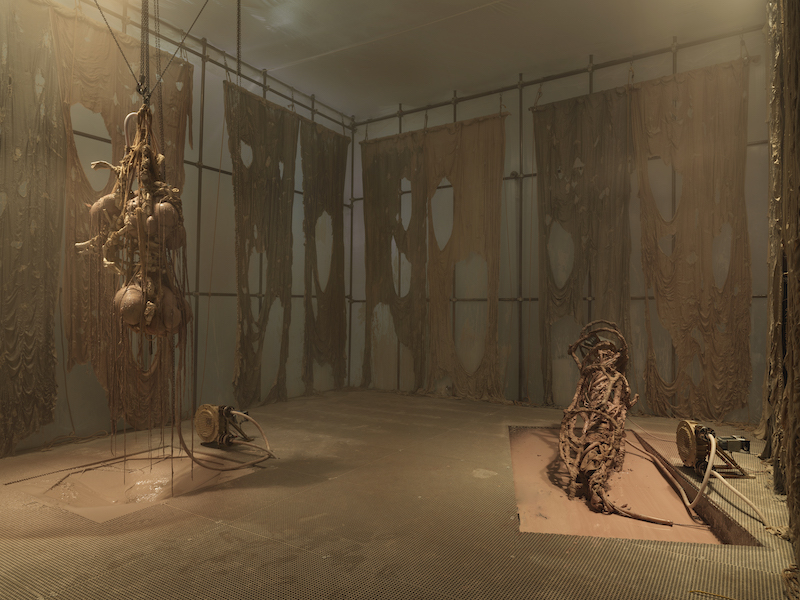
The following year, in Saboteurs(2019) presented at the Biennale de Lyon, Lee effectively visualized the process of material erosion by using resin, wire, and glycerin, allowing the sculpture’s skin-like surfaces to gradually detach from the body through the continued operation of motors and pumps.

From this period onward, she actively incorporated lowly, unstable materials such as slime and waste, materially embodying the vulnerability of the human body and emotions.

In 《Carriers》(2020) and 《Black Sun》(2023), she further advanced her hybrid bodily-mechanical forms by employing circulatory motion systems of hoses and motors, and processes of growth and decay in soft materials.
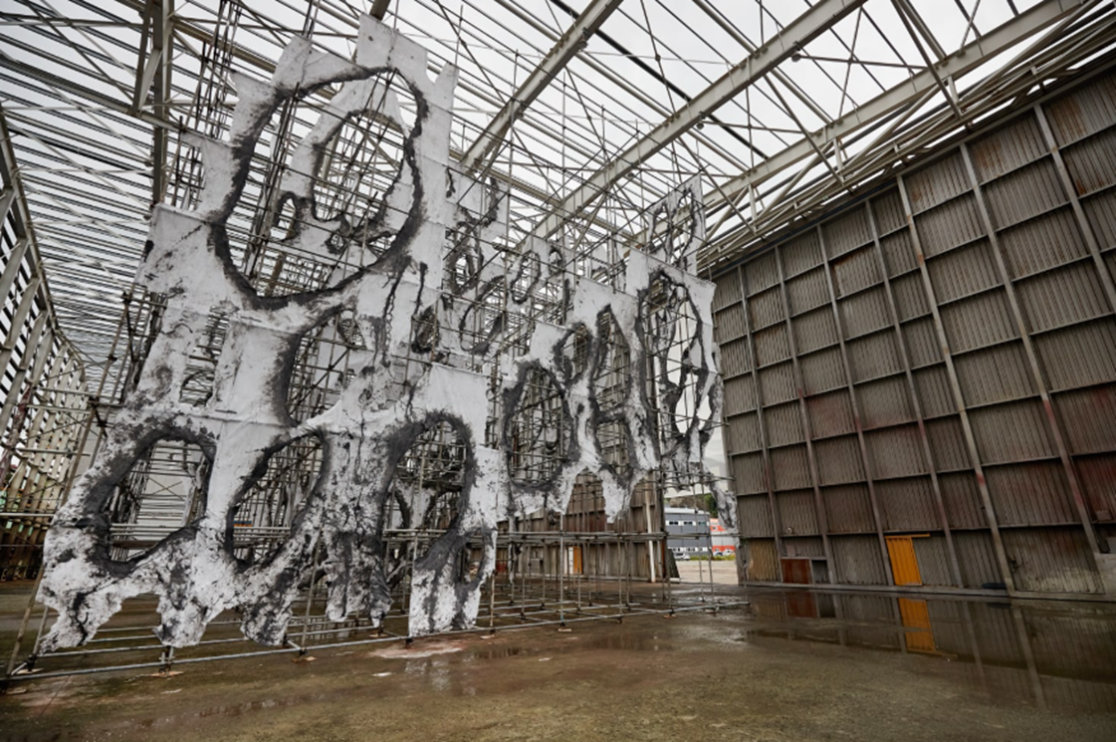
At 《Open Wound》(2024, Tate Modern), she expanded her practice to an architectural scale, integrating historical memory and biological movement into a single fluid continuum through her turbine installation that filled the Turbine Hall. Through the ceaseless motion and mutation of materials, Lee continues to forge a sculptural language that transcends the boundaries between sculpture and installation.

Topography & Continuity

Mire Lee began her practice with installations that engaged with everyday sensations and fragmentary materiality, gradually evolving into a complex language of bodily-mechanical sculpture. Since the inception of the 'Hysteria, Elegance, Catharsis' (2017–) series, she has persistently developed works that materialize vulnerability and instability through kinetic systems and viscous substances.

She has distinguished herself internationally, participating in major global exhibitions such as the Venice Biennale (2022), Carnegie International (2022), Biennale de Lyon (2019), and Gwangju Biennale (2018). Notably, her commission for the prestigious Hyundai Commission at Tate Modern’s Turbine Hall, 《Open Wound》, affirmed her position as one of the key representatives of contemporary sculpture on the global stage.

Through her sculptural language that weaves together life and machinery, emotion and materiality, softness and violence, Lee has emerged as a leading figure driving the most radical, materiality-focused tendencies in contemporary art. Her work has firmly established a new terrain within the field of sculpture, embodying the intertwined extremes of bodily existence, technological mediation, and existential sensitivity.

Works of Art

Living Machine Sculptures

Exhibitions