

Abdomen-Grapes - K-ARTIST

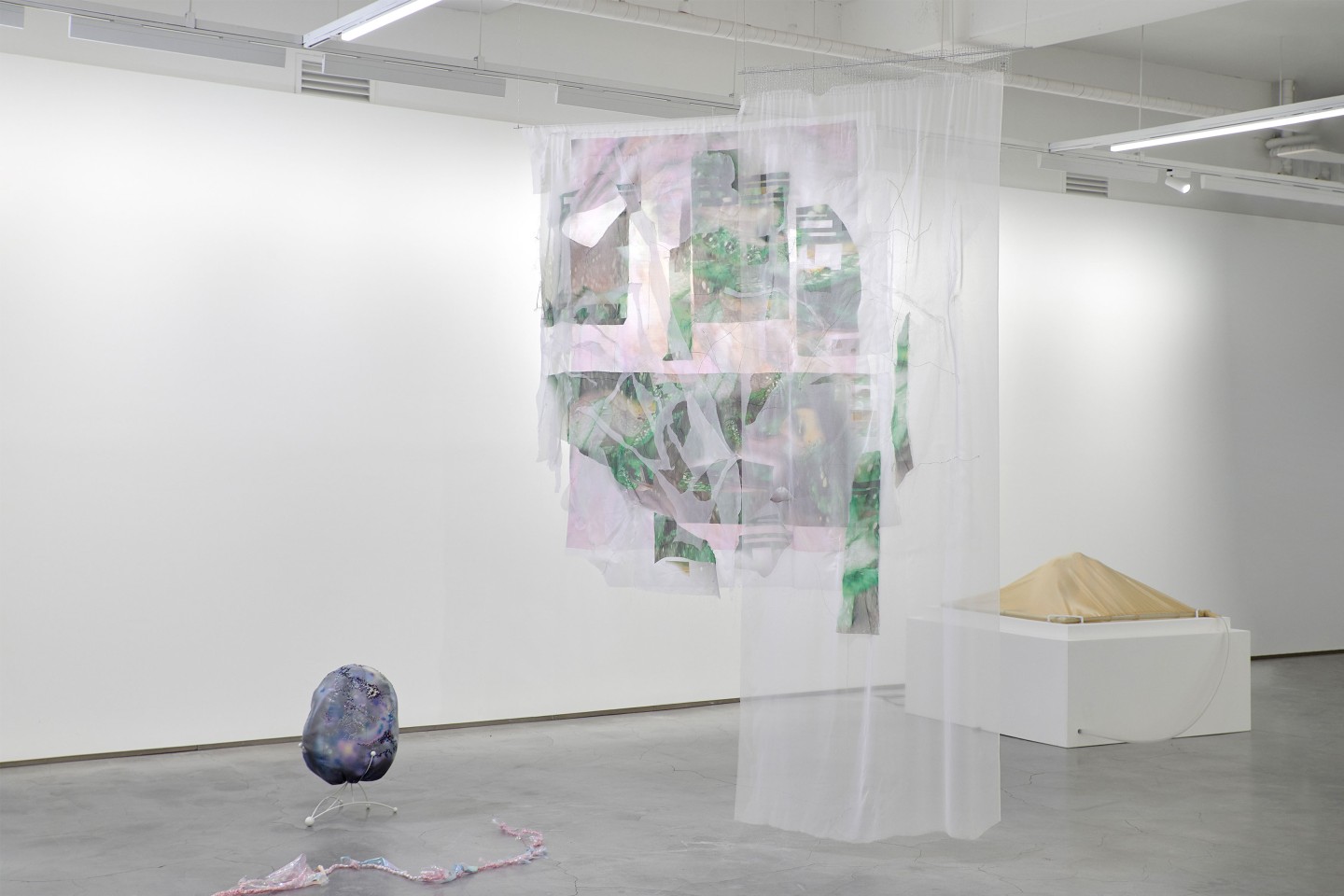
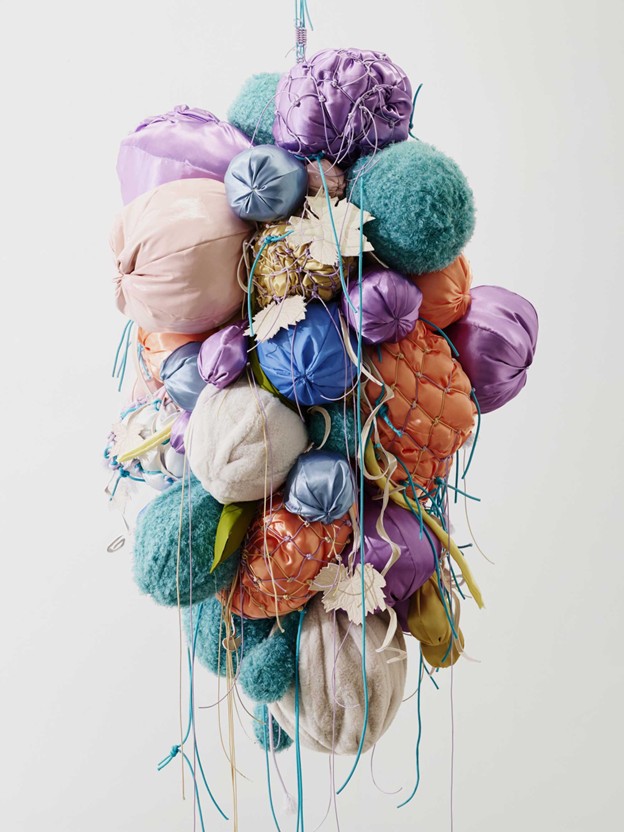
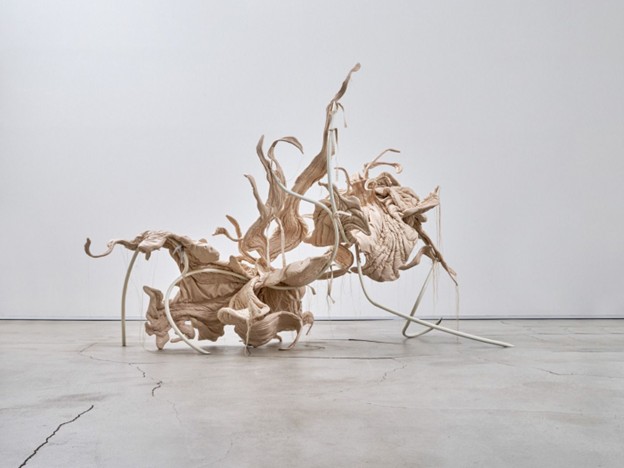
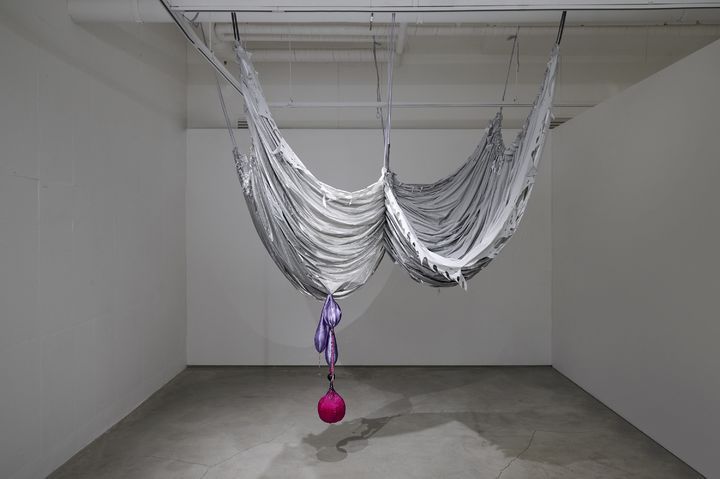
Abdomen-Grapes

2023
fabric, string, cotton, bouncy balls
120 x 73 x 74 cm
About The Work

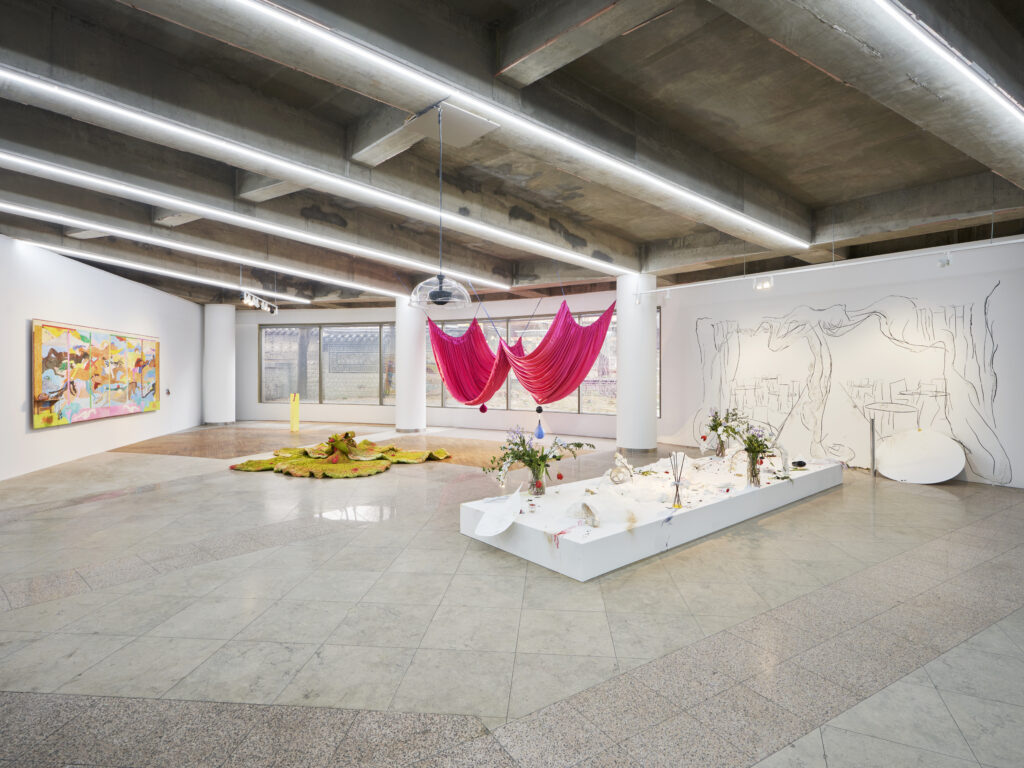
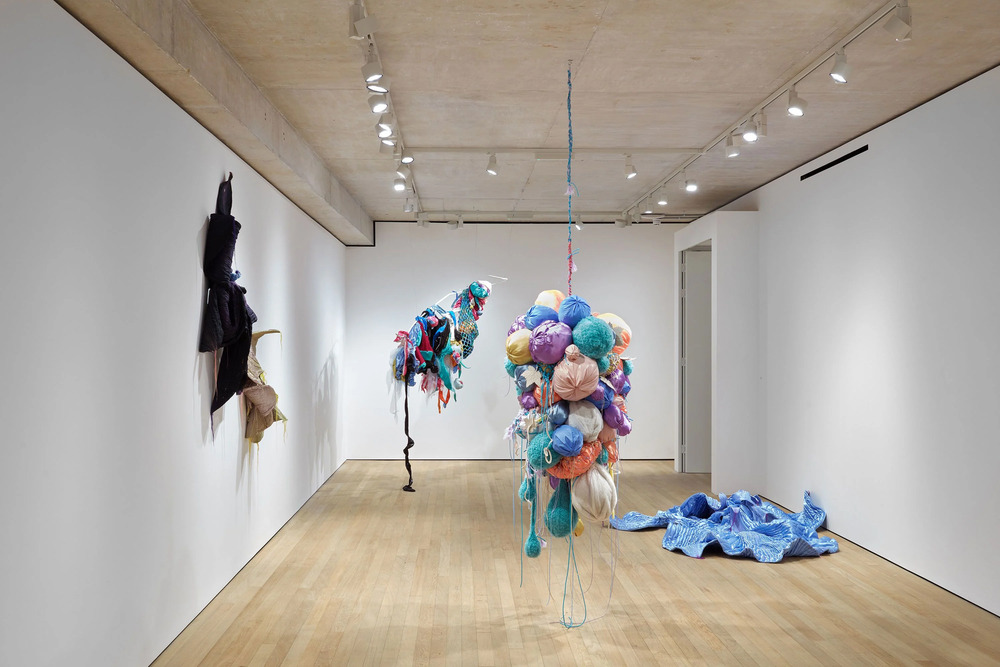
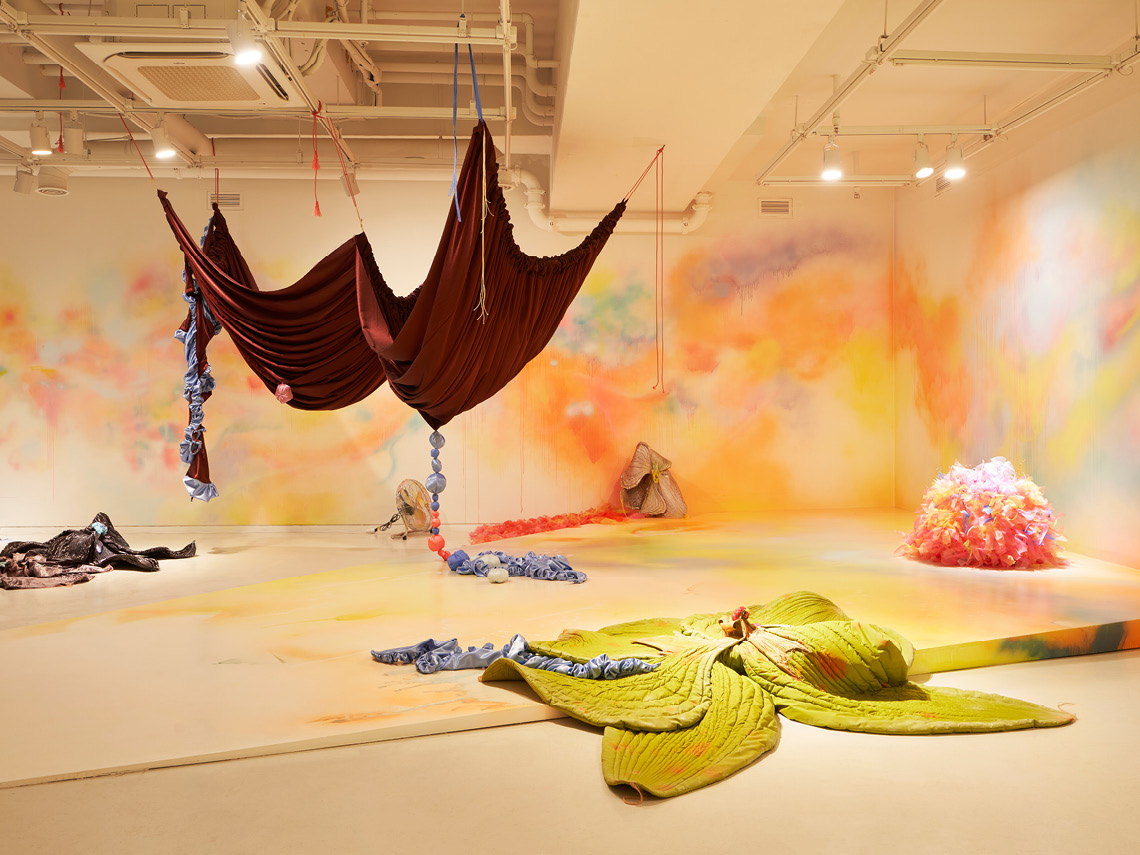
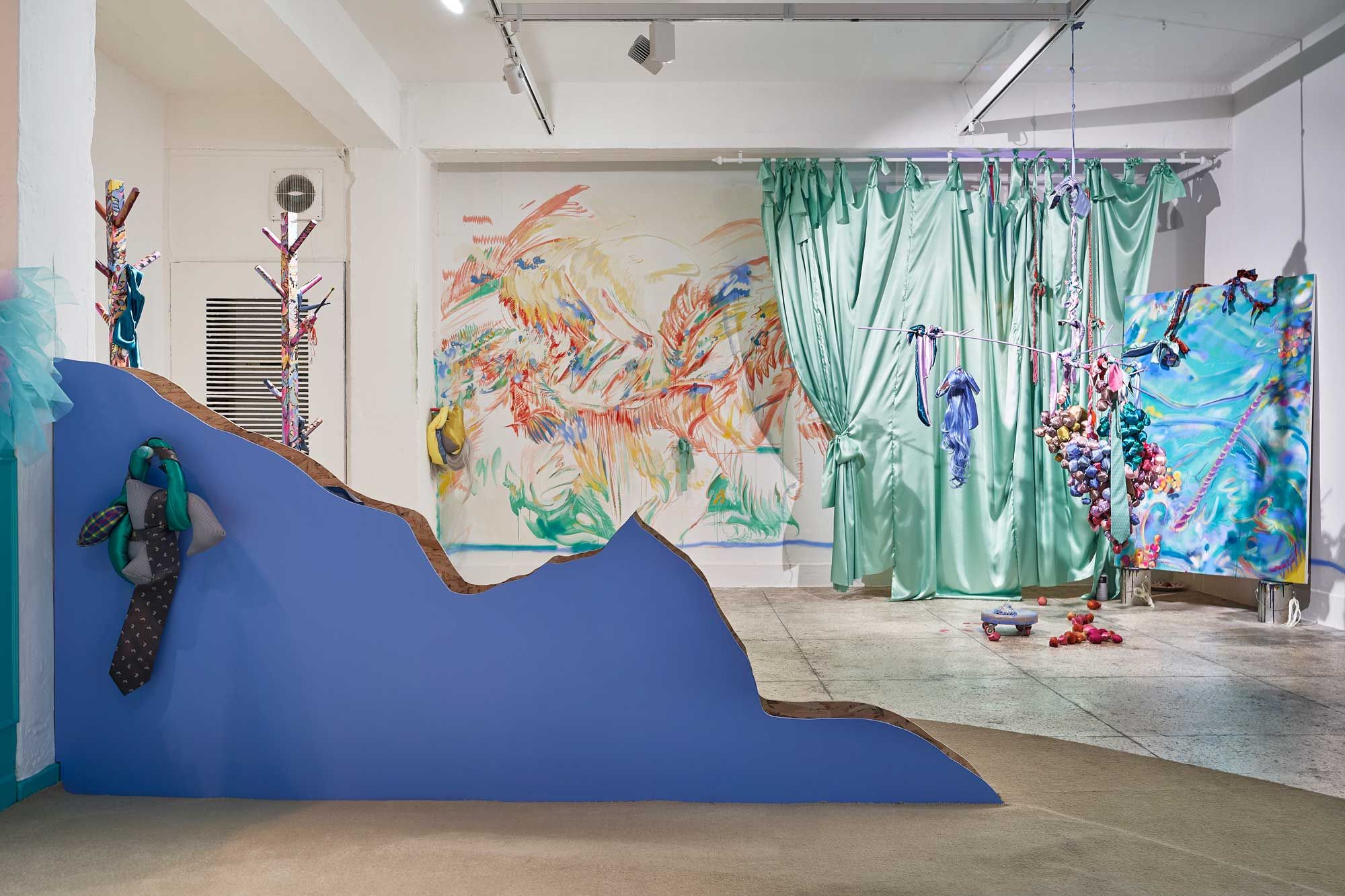
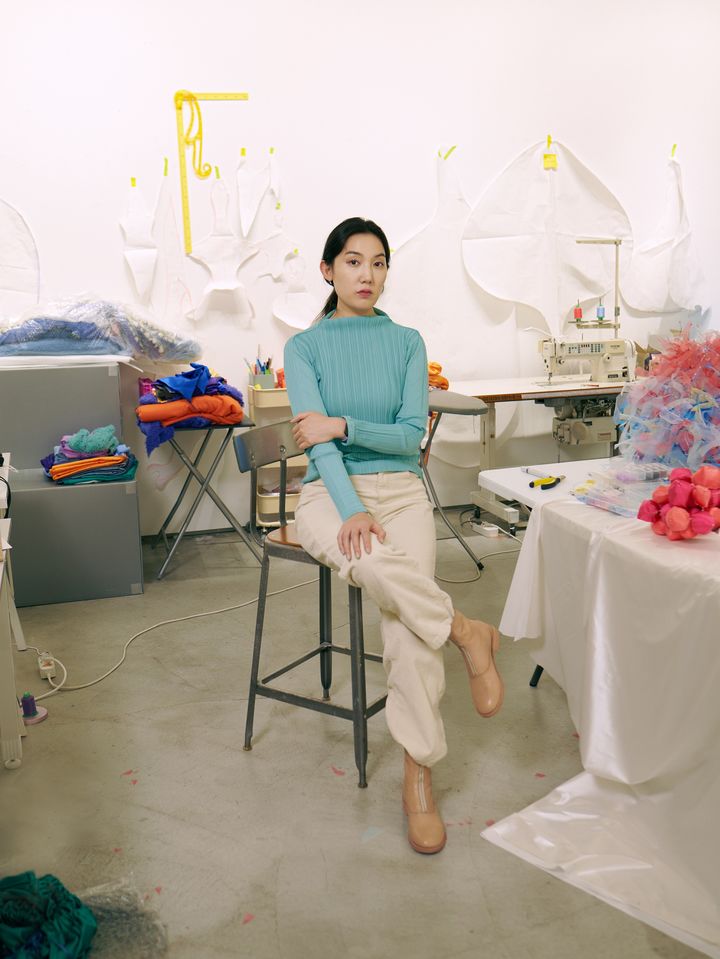
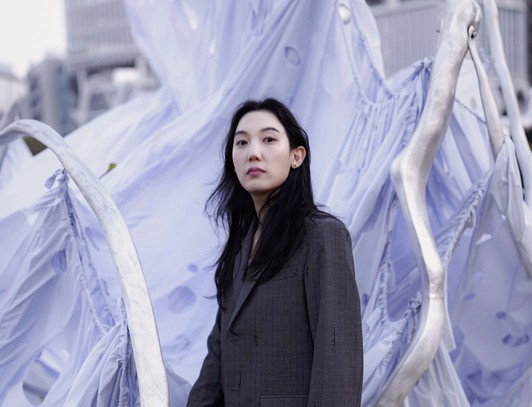
Hannah Woo presents works that transcend genre boundaries—from two-dimensional pieces to sculptures and installations—using fabric as her primary medium to explore situations where opposing forces and entities such as the living and the inanimate, the protector and the protected, aging and youth, pain and ecstasy, merge and complement one another.

Her labor-intensive, handcrafted fabric sculptures propose a state that transcends fixed notions of the body, departing from binary distinctions between the human and non-human to envision a world where all beings exist in horizontal, egalitarian relationships.

Solo Exhibitions (Brief)

Hannah Woo has held solo exhibitions at Frieze No.9 Cork Street (London, 2023), G Gallery (2023), Art Space Boan 2 (2023), Song Eun Art Cube (2020), and Project Space Sarubia (2019).

Group Exhibitions (Brief)

Her recent group exhibitions include 《SeMA Omnibus: At the End of the World Split Endlessly》 (Seoul Museum of Art Seosomun Main Branch, Seoul, 2024), 《Living in Joy》 (Art Sonje Center, Seoul, 2023), 《Summer Love》 (SONGEUN, Seoul, 2022), 《Sculptural Impulse》 (Buk-Seoul Museum of Art, Seoul, 2022), 《2020 Next Code》 (Daejeon Museum of Art, Daejeon, 2020), and many others, in addition to participating in the Art Plant Asia 2020 exhibition 《Hare Way Object》.

Awards (Selected)

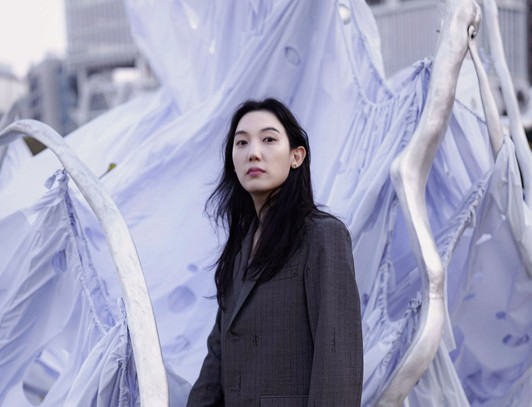
Woo received the Frieze Artist Award in 2023.

Residencies (Selected)

As part of the DOOSAN International Residency program, she is attending the ISCP Residency in New York in 2025.

Collections (Selected)

Her work is in the collections of KADIST, Art Sonje Center, DOOSAN ART CENTER, and the Seoul Museum of Art.
Works of Art

Hybrid and Horizontal World Woven in Fabric

Originality & Identity

Hannah Woo’s artistic practice consistently centers on the dissolution of boundaries and the envisioning of new relational modes. Her work dismantles binary oppositions—such as the living and the inanimate, human and non-human, the protector and the protected, aging and youth, pain and ecstasy—while focusing on imagining and materializing hybrid and complementary connections between them.

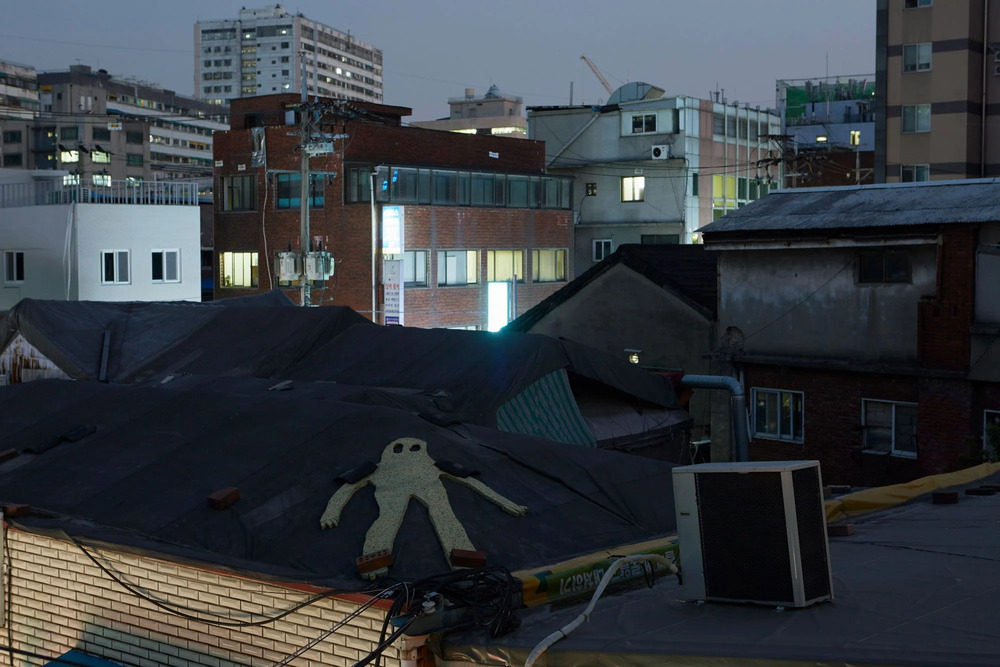
This tendency is already evident in her debut solo exhibition, 《City Units》(2016, Choc2gak), where she visualized ghost-like presences using materials such as fabric, Styrofoam, sponge, rabbit fur, and discarded clothing—objects cast aside by the consumer culture of the city. Through these works, Woo reclaims suppressed and marginalized gazes, marking her first attempt at coexisting with invisible beings within an urban context.

The concept is expanded in her second solo exhibition, 《Swinging》(2018, Samyuk Building), where she focused on the latent motion within everyday objects like mops and brooms, frequently found in alleyways. By reimagining these objects as autonomous character-sculptures, Woo emphasized their potential for change and agency, disrupting the consumption-oriented human-object hierarchy. This shift laid the conceptual groundwork for her later, more explicit engagement with the theme of the body in her work.

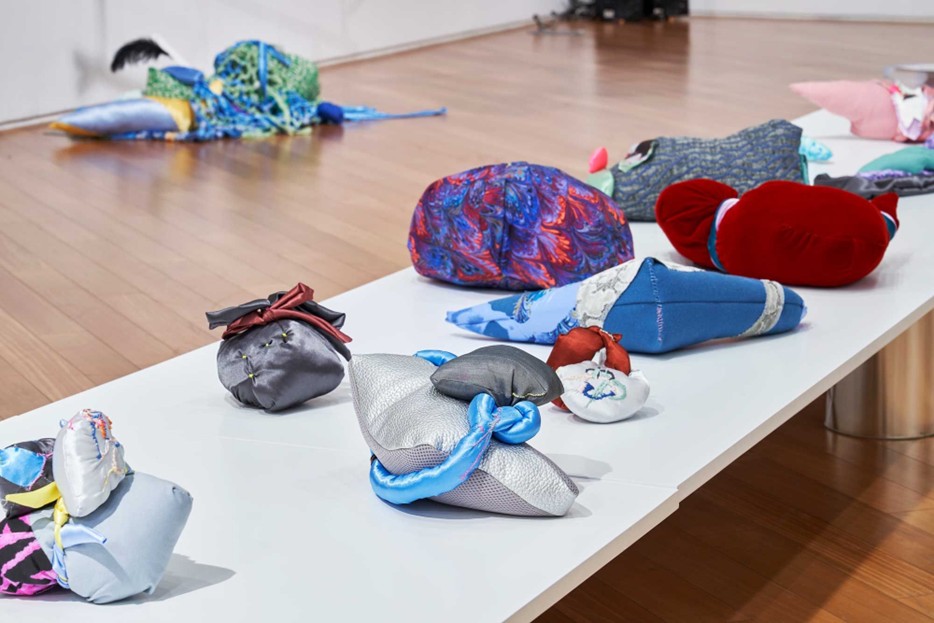
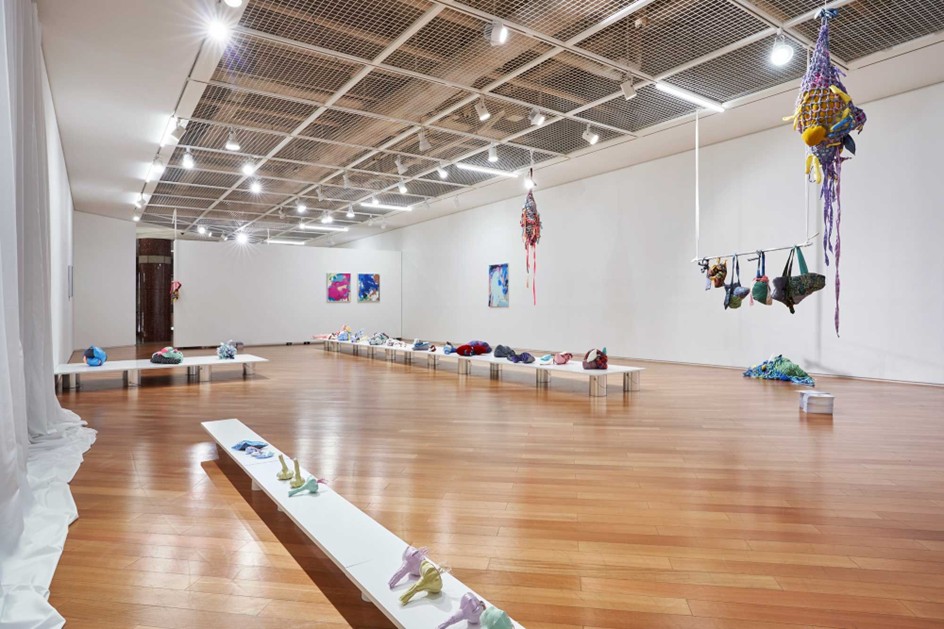
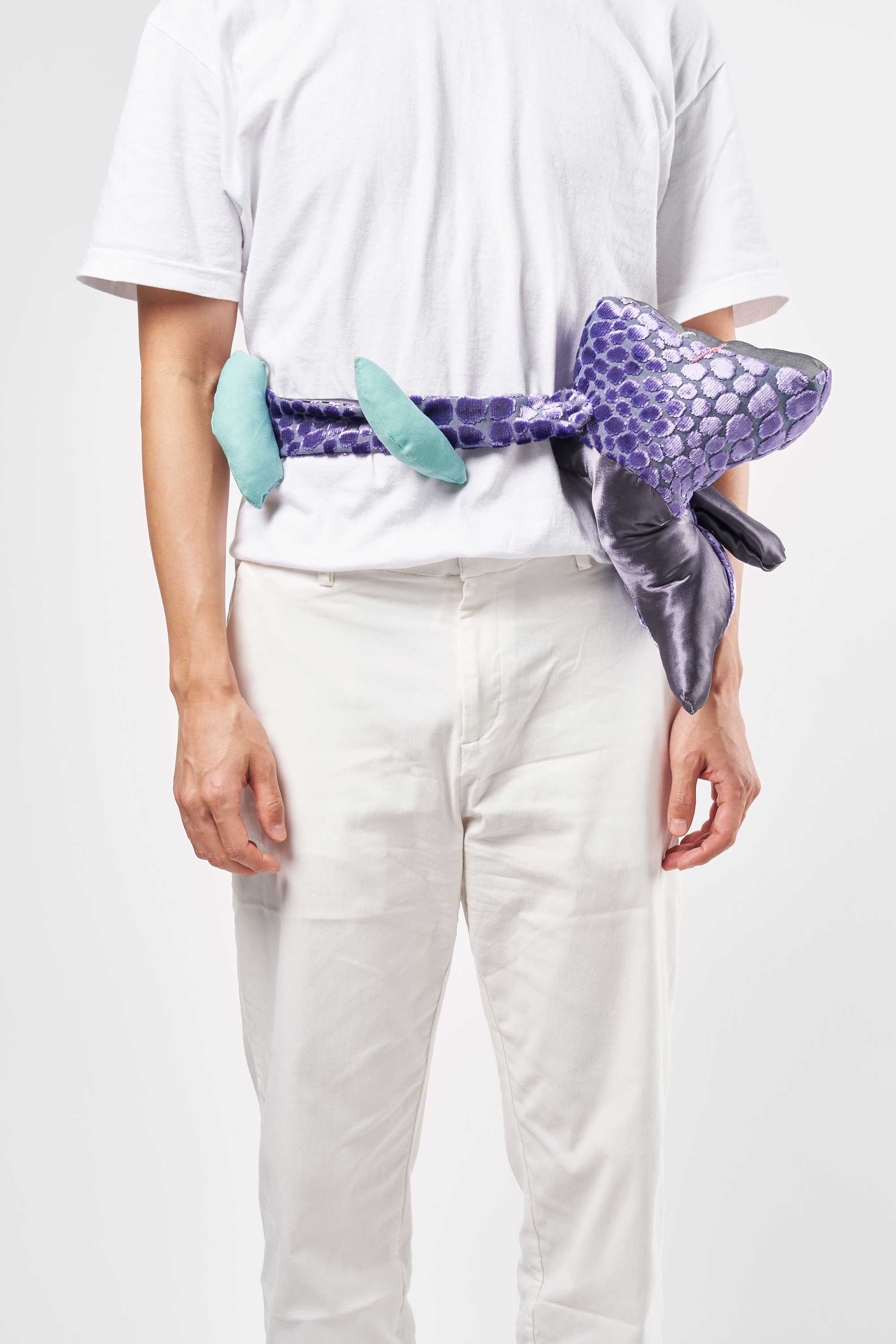
In the 'Organ' (2020) and 'Bag with you' (2022) series, Woo’s exploration becomes increasingly corporeal as she turns inward toward the human body. She externalizes internal organs—such as kidneys, hearts, and intestines—through fabric sculptures, blending interior and exterior, human and non-human, reality and imagination. These works suggest alternative bodily identities, proposing new forms of coexistence that transcend normative ideas of anatomy and subjectivity.

Style & Contents

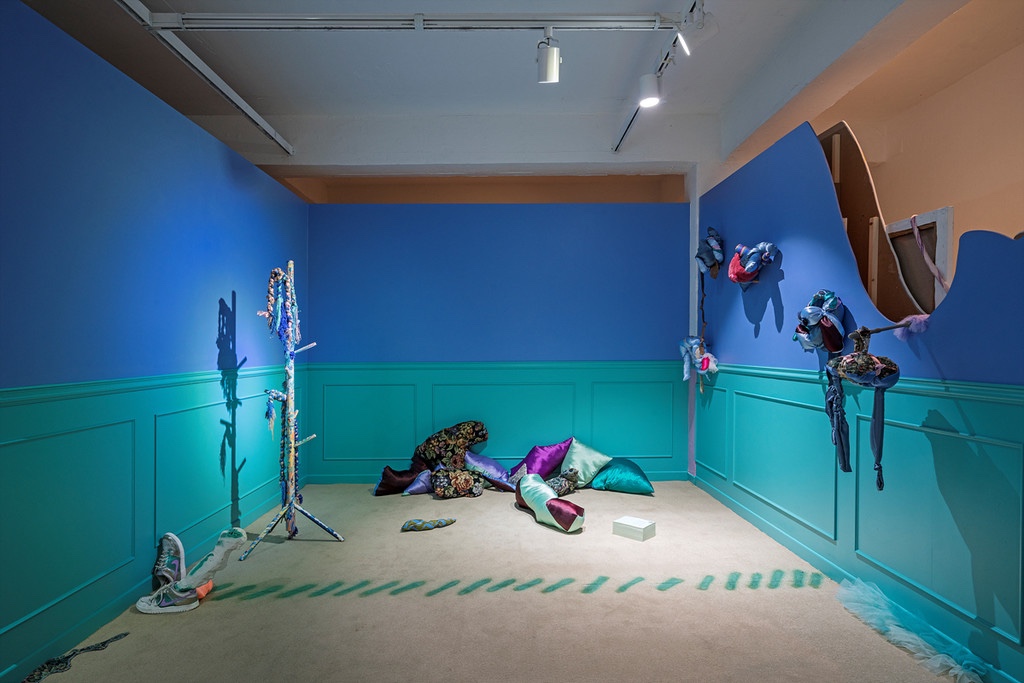
Woo has developed a distinct sculptural language by employing fabric as her primary material, traversing mediums such as sculpture, installation, and painting. In 《City Units》(2016), she combined fabric with materials like Styrofoam, sponge, rabbit fur, and discarded clothing to create object-sculptures that restructured the exhibition space into a network of interrelationships. Rather than focusing solely on formal concerns, she emphasized the site-specific context and the spatial relationships between objects, viewer, and environment.

In 《Swinging》(2018), Woo crafted elongated, character-like sculptures inspired by stick-shaped urban tools such as brooms and mops. Incorporating sewing, braiding, and knotting, she applied labor-intensive handcraft techniques to imbue these objects with vitality. Adorned with flowers and ribbons, these works subvert conventional associations of femininity and craft through their free-spirited use of color and form. By elevating functional objects into expressive sculptural forms, Woo demonstrated how material and meaning could be radically recontextualized.

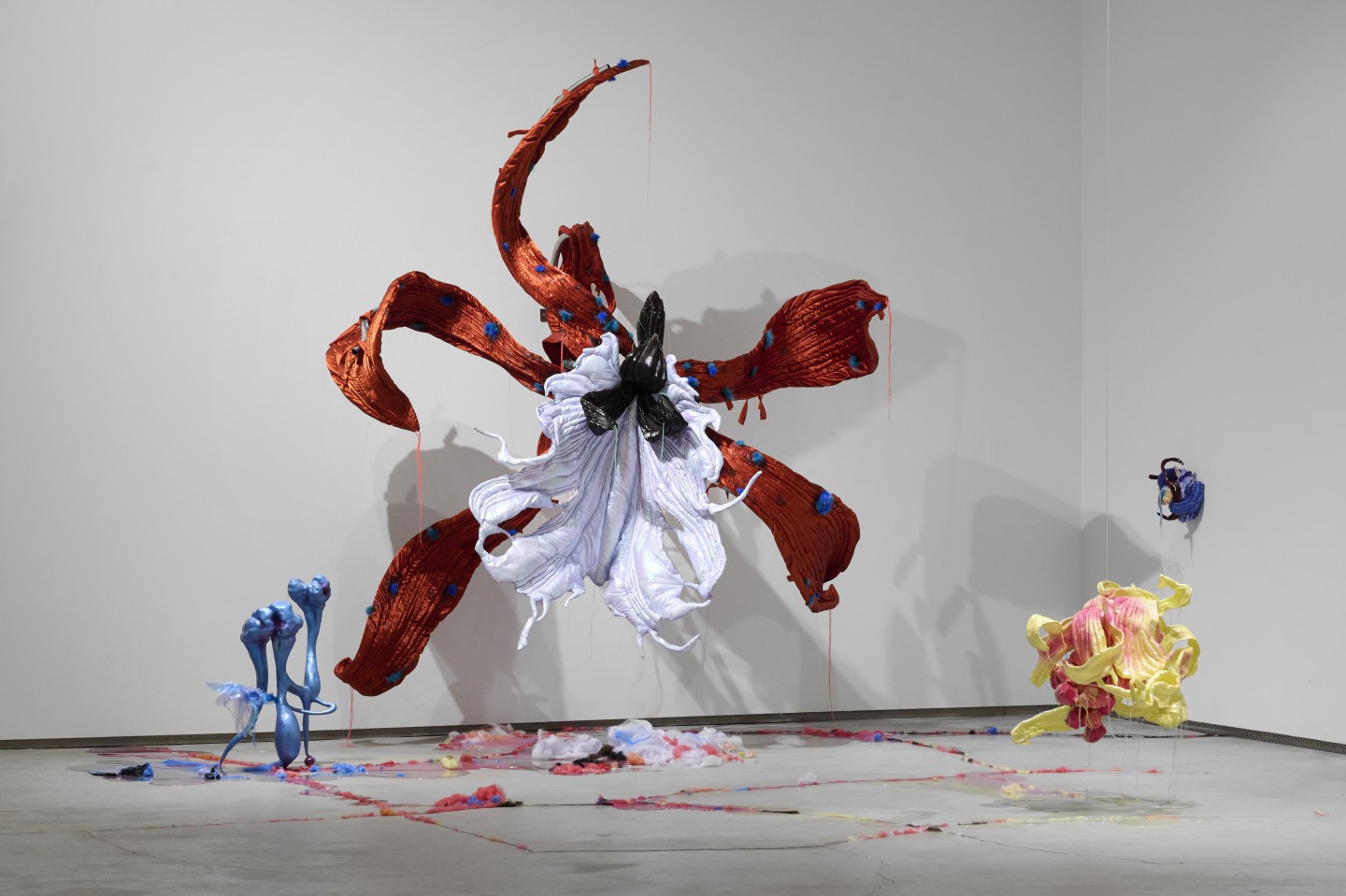
Since the 2020s, her focus has shifted toward wearable fabric sculptures modeled after internal organs. In works such as Detachable Kidney(2020), presented in 《Ma Moitié》(2020, SongEun Artcube), she visualizes personal loss and healing through the externalization of absent organs. These intentionally doubled sculptures express both deficiency and restoration. The series has since evolved to include organs from non-human animals, inviting viewers to wear and embody unfamiliar bodily forms. More recently, works like The Great Ballroom(2023) and Grand Coolly(2023) have expanded her material language, combining fabric with aluminum to examine the thresholds between body and nature, life and death, fiction and reality.

Topography & Continuity

From the outset, Woo has maintained a deep interest in invisible presences, internal anatomy, and the thresholds between the human and non-human. Her sculptural language—rooted in the flexible and mutable properties of fabric—has evolved across her practice to encompass object-sculptures, wearable organs, and spatial installations. From reanimating discarded urban materials in 《City Units》(2016), to crafting corporeal hybrids in the 'Organ' series, and visualizing interstitial states of life and death in her more recent works, Woo’s conceptual inquiries have expanded in tandem with her formal innovations.

Recently, she has explored hybridization and horizontality—key themes in contemporary art—by combining contrasting materials such as fabric and aluminum. In doing so, she continues to break down categorical boundaries and forge new imaginative vocabularies. Her work not only destabilizes anthropocentric norms but also proposes radically inclusive modes of existence.

Following her receipt of the 2023 Frieze Artist Award, Woo has gained international recognition and is currently preparing for her upcoming residency at ISCP in New York in 2025, as part of the DOOSAN International Residency Program. Going forward, she is expected to expand her sculptural imagination into even more speculative realms—encompassing non-human life forms, mythical entities, and fictional organs—cementing her position as an artist whose practice challenges, hybridizes, and transforms the boundaries of contemporary sculpture.

Works of Art

Hybrid and Horizontal World Woven in Fabric

Articles

Exhibitions

Activities