
Ultima Mudfox (big) - K-ARTIST

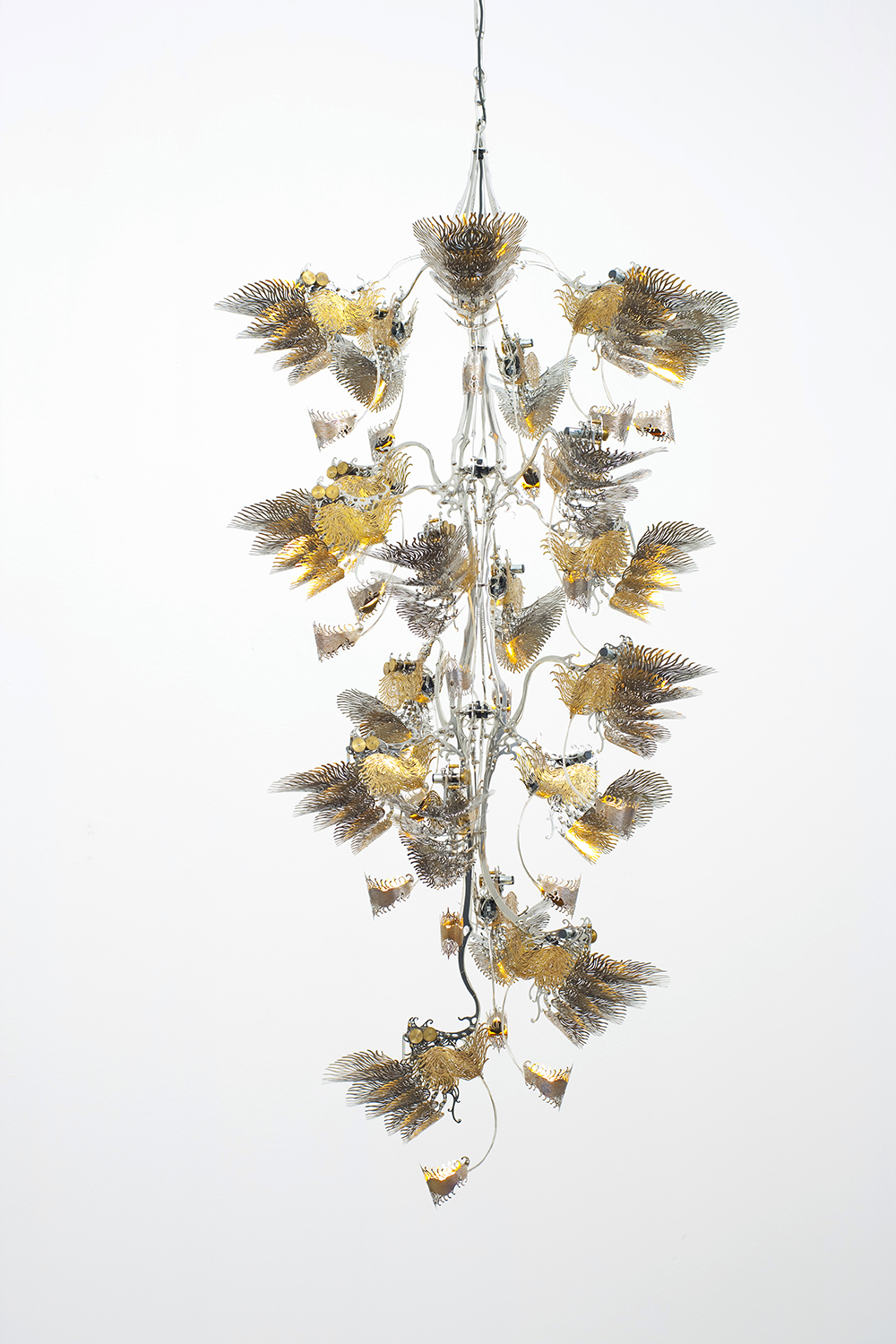
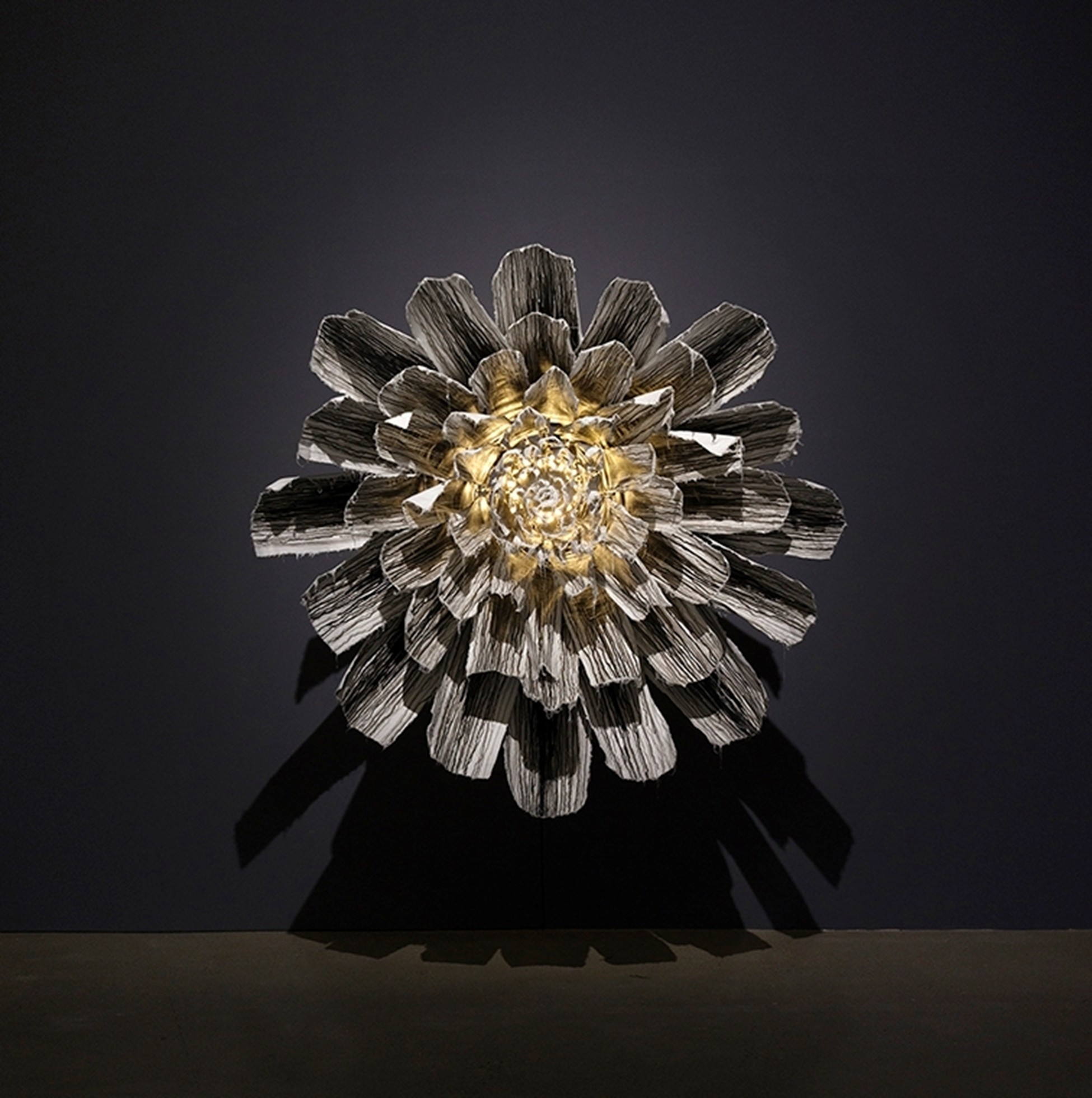
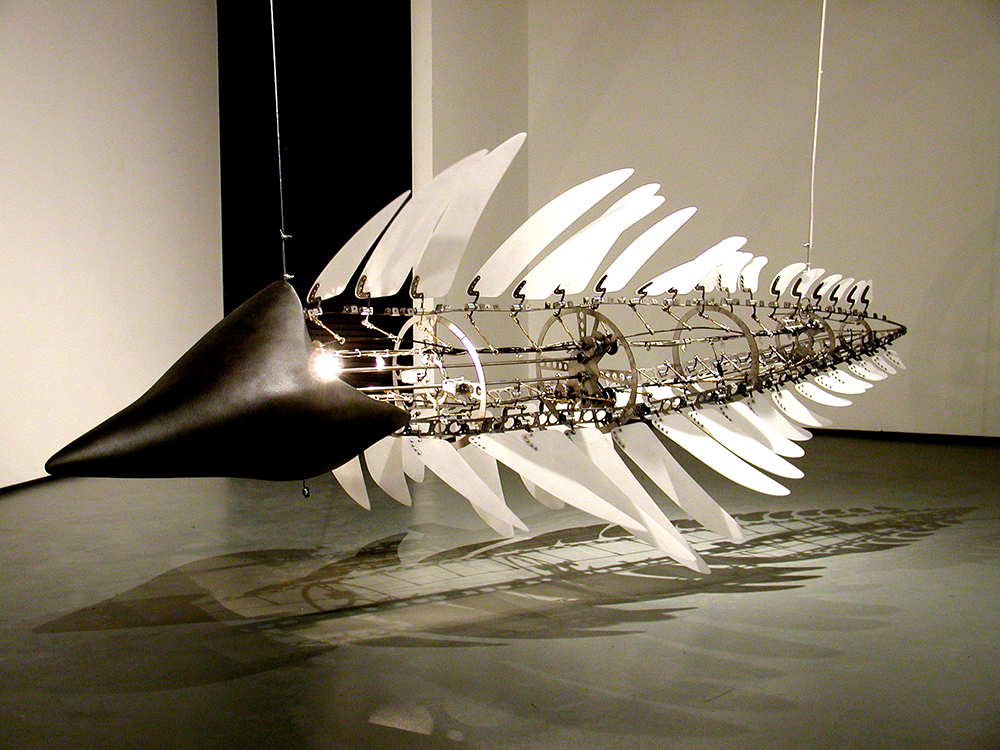
Ultima Mudfox (big)

2002
Metallic material, machinery, acrylic, electronic device(CPU board, sensor, motor, halogen bulb)
160 x 350 x 160 cm
About The Work

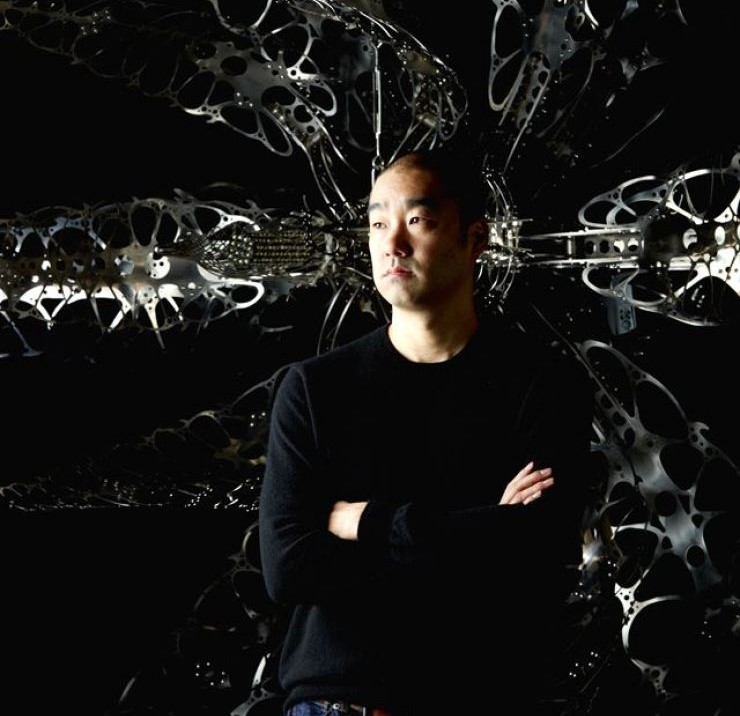
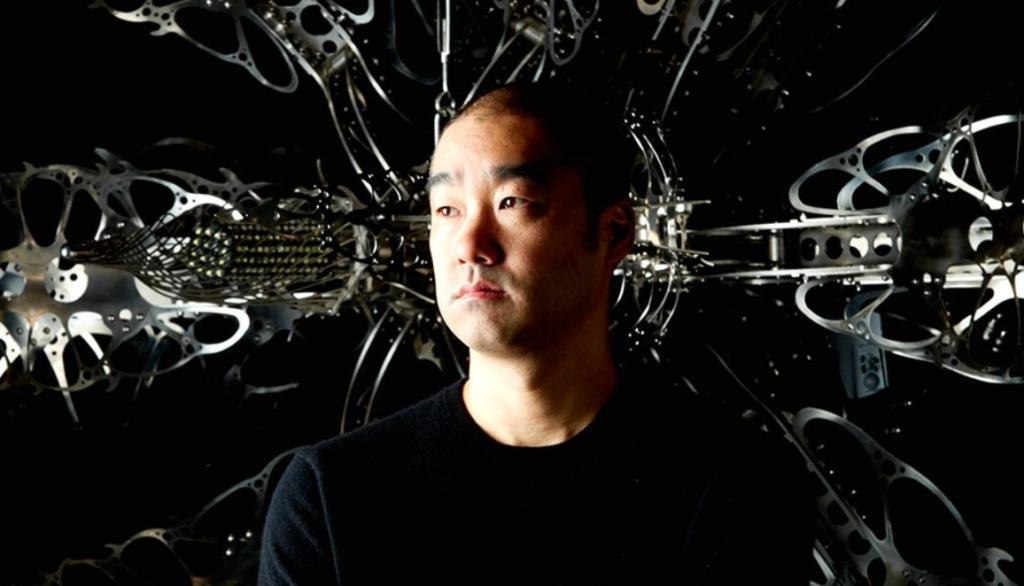
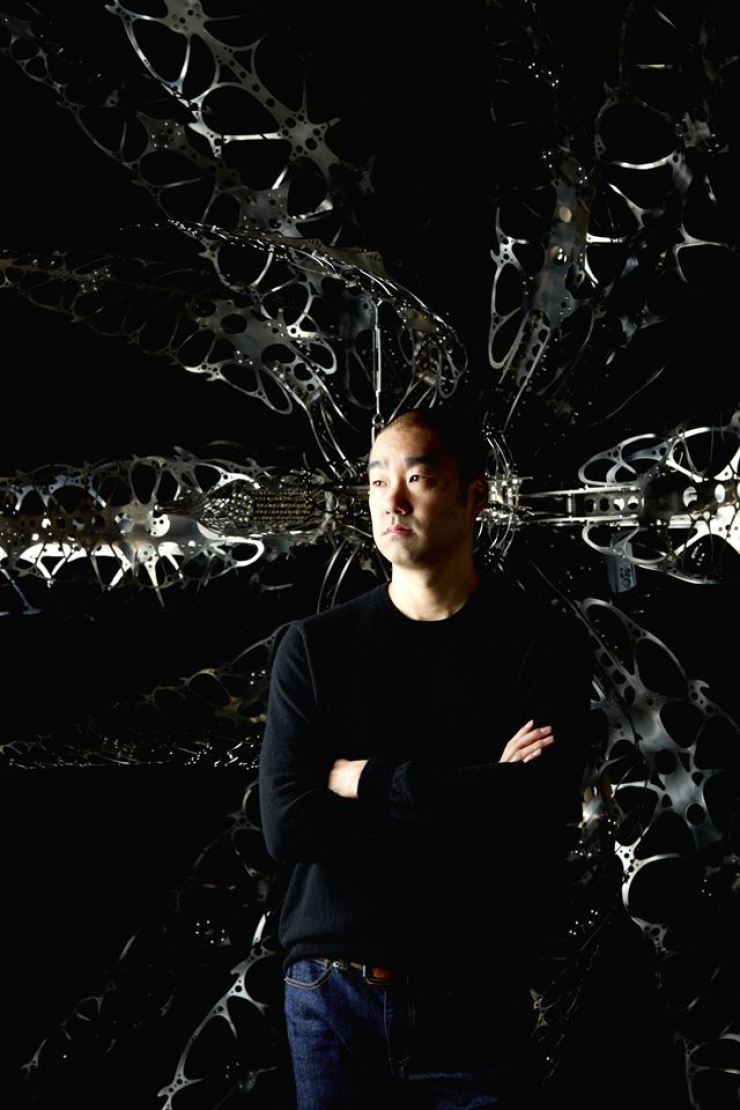
Choe U-Ram has been creating intricate "Anima-Machine" based on fictional theories derived from archaeology, biology, and robotics. His work originates from the idea that movement is the essence of all living things, and it reflects the desires of human society within a civilization driven by technological advancement.
 
Choe's work is based on the premise that this artificial mechanical mechanism can exist as living beings. By showcasing the beauty of vitality through machines, his art prompts contemplation on the meaning of life and what it means to be alive.
 
Choe's focus on human desires as reflected in technological advancement and evolution has evolved over the past 30 years, expanding to encompass social, philosophical, and religious contexts. His exploration of anima-machines and their environments prompts us to reflect on society and ourselves.

Solo Exhibitions (Brief)

Following his first solo exhibition in 1998, Choe became the first Korean artist to hold a solo exhibition at the Mori Art Museum in 2006. He has held numerous solo exhibitions around the globe including Korea, the United States, Turkey, and Taiwan. In 2022, he was selected as the exhibiting artist for the MMCA Hyundai Motor Series and held his solo exhibition at the National Museum of Modern and Contemporary Art, Korea (MMCA).

Group Exhibitions (Brief)

Since 1997 Choe participated in various group exhibitions at the 2nd Gwangju Biennale, Seoul Museum of Art, Busan Museum of Art, Kumho Museum of Art, Manchester Art Gallery, Amorepacific Museum of Art, Leeum Museum of Art, MMCA, and so on.

Awards (Selected)

Choe U-Ram has received several major awards, including the Grand Prize at the 1st POSCO Steel Art Award in 2006, the Young Artist of Today Award in the Fine Arts category from the Ministry of Culture and Tourism, the Kim Sejoong Young Sculptor Award in 2009, and the Grand Prize in the Artist category at the 2024 Monthly Art Awards.

Residencies (Selected)

Choe was selected to participate in the Doosan Residency New York in 2009 and Autodesk Artists in Residence Program in 2014.

Collections (Selected)

Choe U-Ram’s works are included in the collections of the National Museum of Modern and Contemporary Art, Gwacheon; the Seoul Olympic Museum of Art; Leeum Museum of Art; and the Amorepacific Museum of Art.

Works of Art

The Desires of Human Society in a Machine Civilization

Originality & Identity

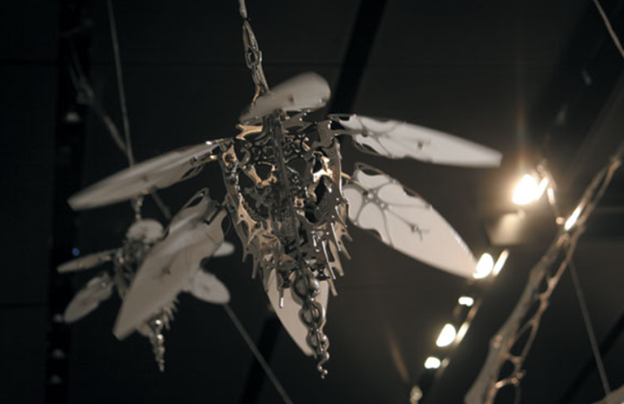
Choe U-Ram’s practice begins from the premise that “movement is life.” In early works such as Ultima Mudfox(2002) and Echo Navigo(2004), he unfolds an imagination in which artificial machines can exist autonomously and organically like living beings. Works from this period use the concept of the anima-machine to explore how human desire is shaped through technology, combining fictional narratives with sci-fi settings that prompt viewers to reconsider the boundaries between machine and life, reality and fiction.

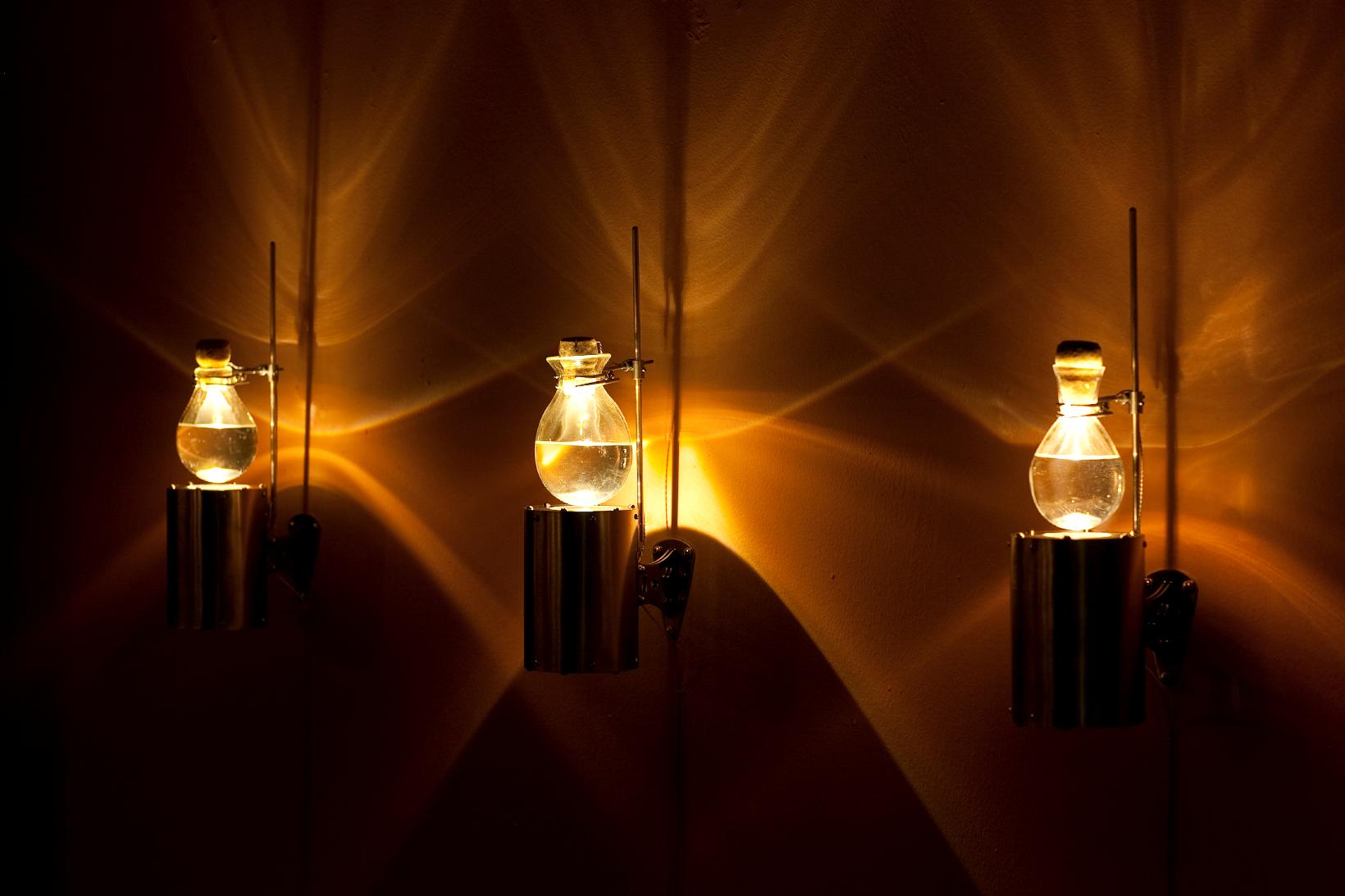
Opertus Lunula Umbra(2008), presented at the Liverpool Biennial in 2008, is a case where this worldview expands further. The artist posits a fictional institution, the United Research of Anima Machine (URAM), to endow the work with scientific and archaeological narratives and to transform the exhibition space into a record room of the institute. From this point, Choe’s work functions not merely as imagined life-forms but as devices that allegorize the ontological issues produced by human civilization and technological development.

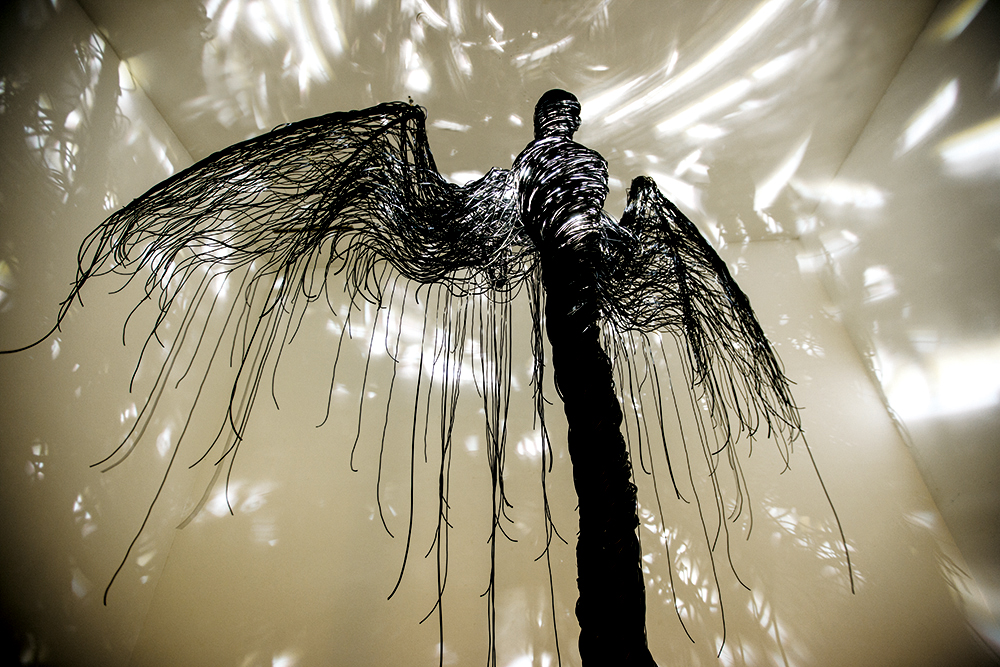
After 2010 he introduces mythic narrative to reflect on human greed and the fate of civilization. Arbor Deus(2010) presents a myth of ruin brought about by excessive desire for a machine civilization, staging tensions among technology, faith, and salvation. Custos Cavum(2011) posits guardians who protect passages connecting two worlds, symbolizing communication with the Other and balance between worlds.

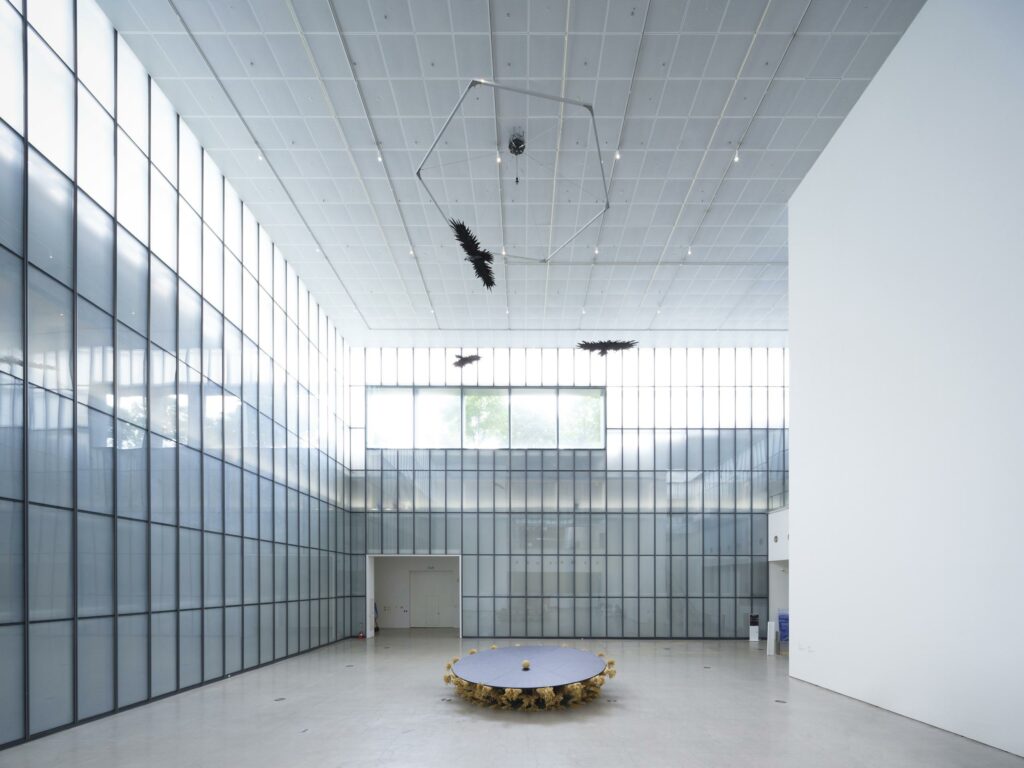
In the National Museum of Modern and Contemporary Art exhibition 《MMCA Hyundai Motor Series 2022: Choe U-Ram – Little Ark》(National Museum of Modern and Contemporary Art, 2022), recent works Little Ark(2022) and Round Table(2022) use the post-pandemic climate of anxiety as a backdrop to metaphorize a humanity that has lost its bearings and a polarized social structure. By casting contemporaneous conflict and coexistence in the figures of the “ark” and “headless bodies,” the artist makes the anima-machine a mirror for human society. In this way, his themes expand progressively—from early simulations of life to human desire within technological civilization, mythic reflection, and social allegory.

Style & Contents

Choe’s works adopt the form of kinetic art that fuses sculptural structures with mechanical engineering, electronics, and programming. In Ultima Mudfox and Echo Navigo, he uses metal, nanomachines, motors, and lighting to realize mechanical structures that move like actual organisms, assigning distinct fictional eco-narratives that present each work as a “species.” The content of this period focuses on exploring the life-quality of mechanical movement itself.

Starting with Opertus Lunula Umbra(2008), he expands the entire exhibition space as part of the narrative. The URAM research-institute conceit structures the work as a scientific archive, in which sculpture, text, diagrams, and lighting cohere into a single installation environment, collapsing the boundaries between fiction and documentary.

In the 2010s, mythic narrative and visual grandeur intensify. Works such as Arbor Deus and Custos Cavum use monumental structures, repetitive breathing, and subtle vibration to evoke a sense akin to ritual, embedding religious contemplation on technological civilization and human existence.

In the 2020s, he actively incorporates everyday materials. In Little Ark, common materials—discarded cardboard boxes, straw, automobile parts—are combined with technology and transformed into a monumental structure. This material shift moves from high-end metal apparatuses to “materials bearing traces of life,” functioning as symbolic devices that hold both the contradictions and hopes of human society. The works grow in scale, while their content deepens toward reflections on humanity, community, and ethics.

Topography & Continuity

Since the late 1990s, Choe U-Ram has continually developed the distinctive concept of the anima-machine and is regarded as a representative Korean kinetic artist who fuses technology, sculpture, and narrative. In the early production of Ultima Mudfox and Echo Navigo, he structured viewing experiences through setups that read mechanical motion as life and through species-like narratives; with Opertus Lunula Umbra, he organized the exhibition space itself as evidence (an archive) by staging a fictional research institute.

This trajectory extends through the mythic frame of Arbor Deus and Custos Cavum, settling into an approach that treats causal relations between technological civilization and human behavioral patterns through narrative structures. Core motifs remain consistent in his oeuvre: (1) translating conditions of life into physical algorithms such as breathing, repetitive motion, and autonomy; (2) installing fictional narratives in the gallery as manuals, records, and research reports; and (3) embedding social allegory within large-scale devices.

More recent works address specific social structures—competition, leadership, collective behavior—more directly, as in Round Table, heightening symbolic clarity through choices of material and composition. This reads as an attempt to maintain narrative plausibility while restraining excessive ornament or technological display.

Within contemporary Korean art, he occupies a position as an artist who presents an original narrative linking machine civilization and human existence. His works are held by major institutions such as Leeum Museum of Art, the National Museum of Modern and Contemporary Art, and the Amorepacific Museum of Art, and large-scale projects like 《MMCA Hyundai Motor Series 2022: Choe U-Ram – Little Ark》(National Museum of Modern and Contemporary Art, 2022) have demonstrated a sculptural language of international caliber. Looking ahead, his practice is likely to continue expanding as a key axis in future eco-discourses that probe the boundaries between technology and art, fiction and reality, human and non-human. Through an artistic language that asks about the ethics of coexistence and the meaning of life amid global crises and change, he is expected to sustain an ongoing influence on the world stage beyond Korea.

Works of Art

The Desires of Human Society in a Machine Civilization

Exhibitions