
Amorph - K-ARTIST

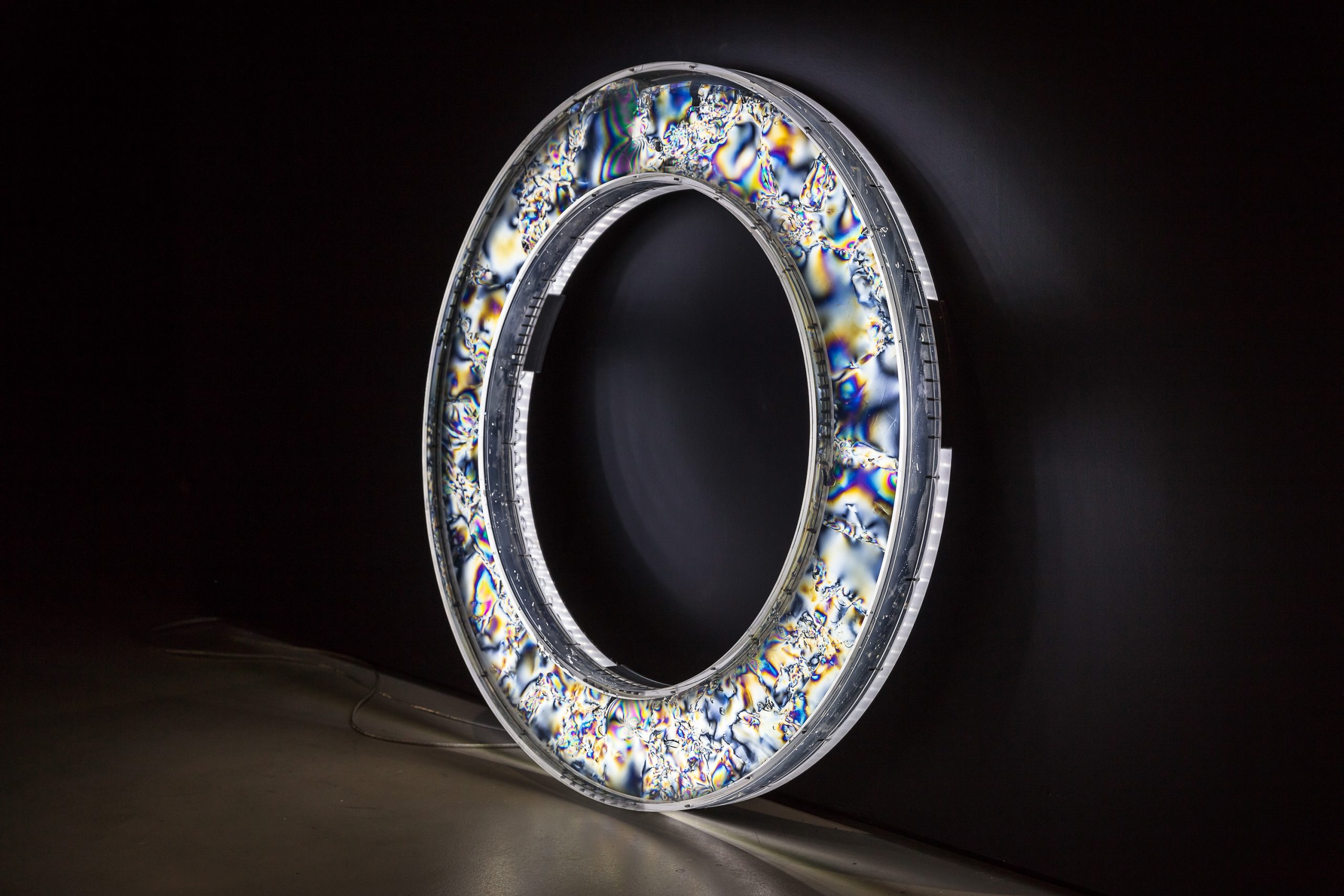
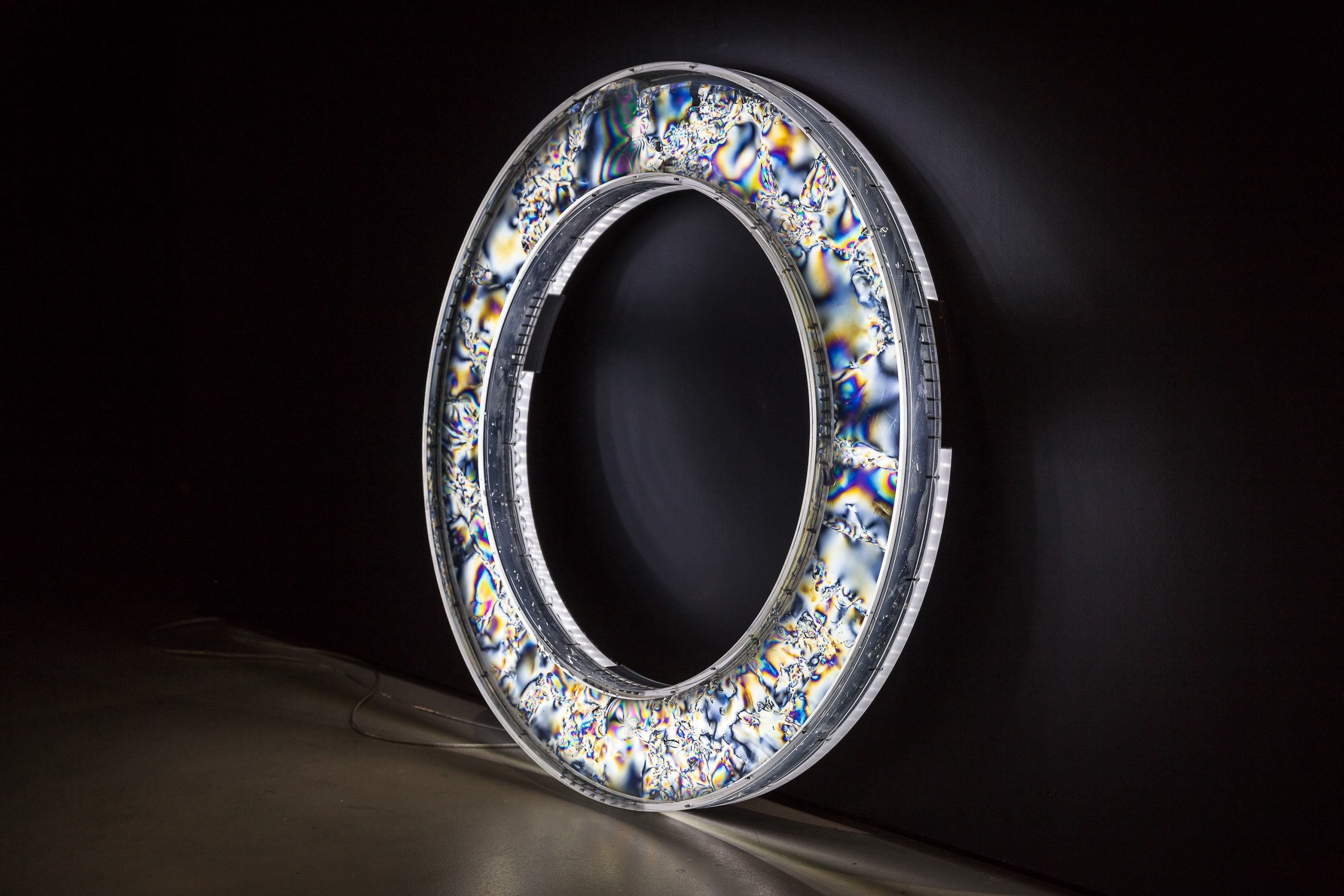
Amorph

2018
Acrylic, hydrogel, LED
100 x 100 cm
About The Work

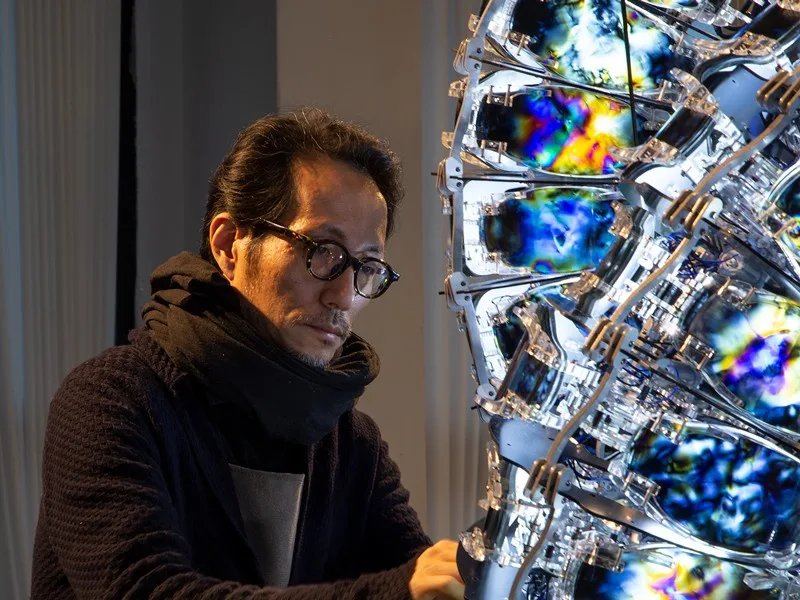
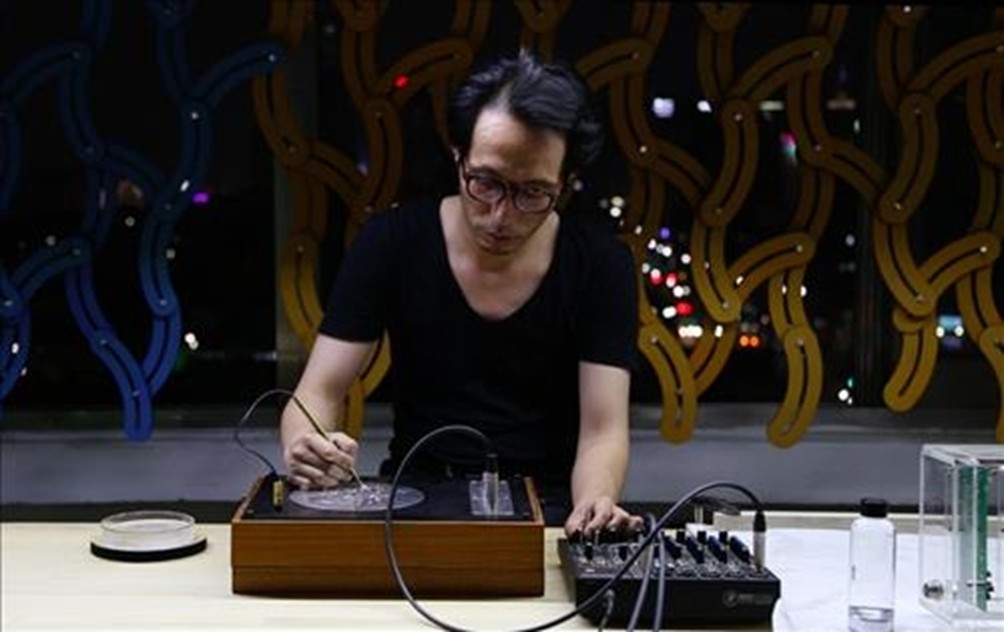
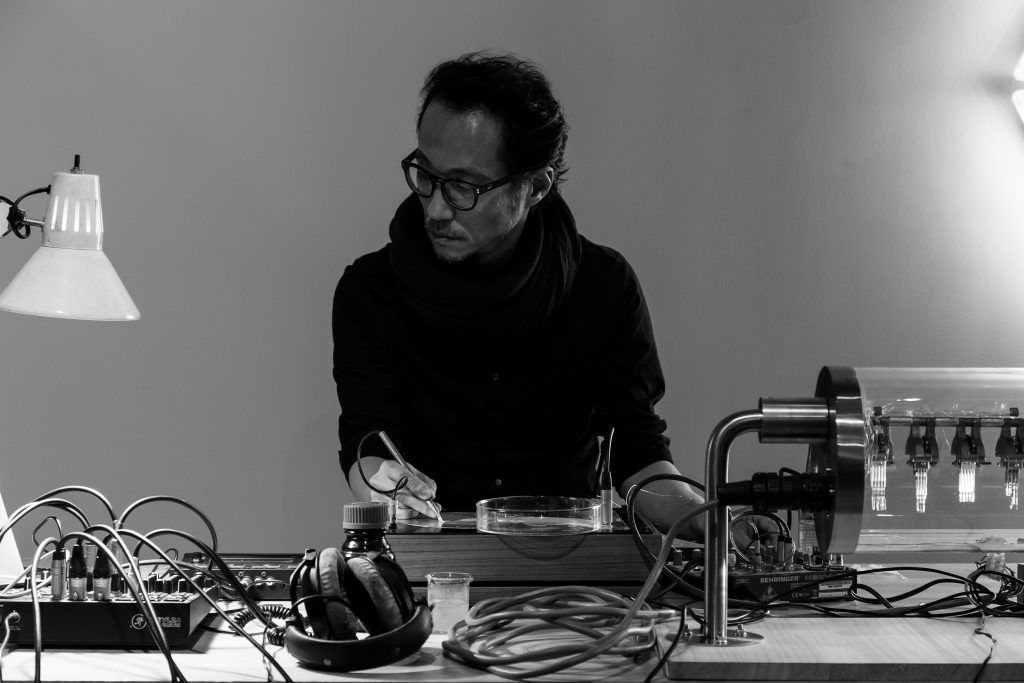
Yunchul Kim is an electronic music composer and visual artist who has worked with installation, drawing, sound, text, and various media. Kim, who has asked fundamental questions about “material” since studying abroad in Germany, has explored the possibilities of imagination and the creation of another reality that goes beyond the realm of human experience, paying attention to its potential tendencies.
 
He integrates diverse references such as mathematics, science, technology, music, philosophy, literature, and cosmology into his work, capturing and exposing the fluid encounters between objects, including non-human materials. Through this, he transforms the material entanglements of the universe into artistic form.
 
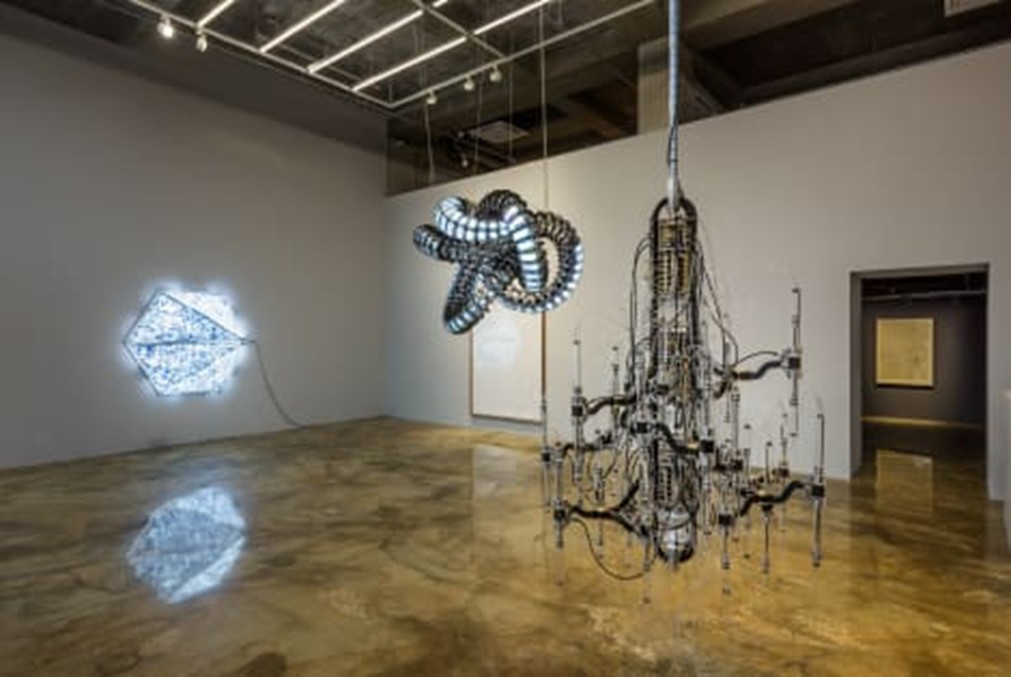
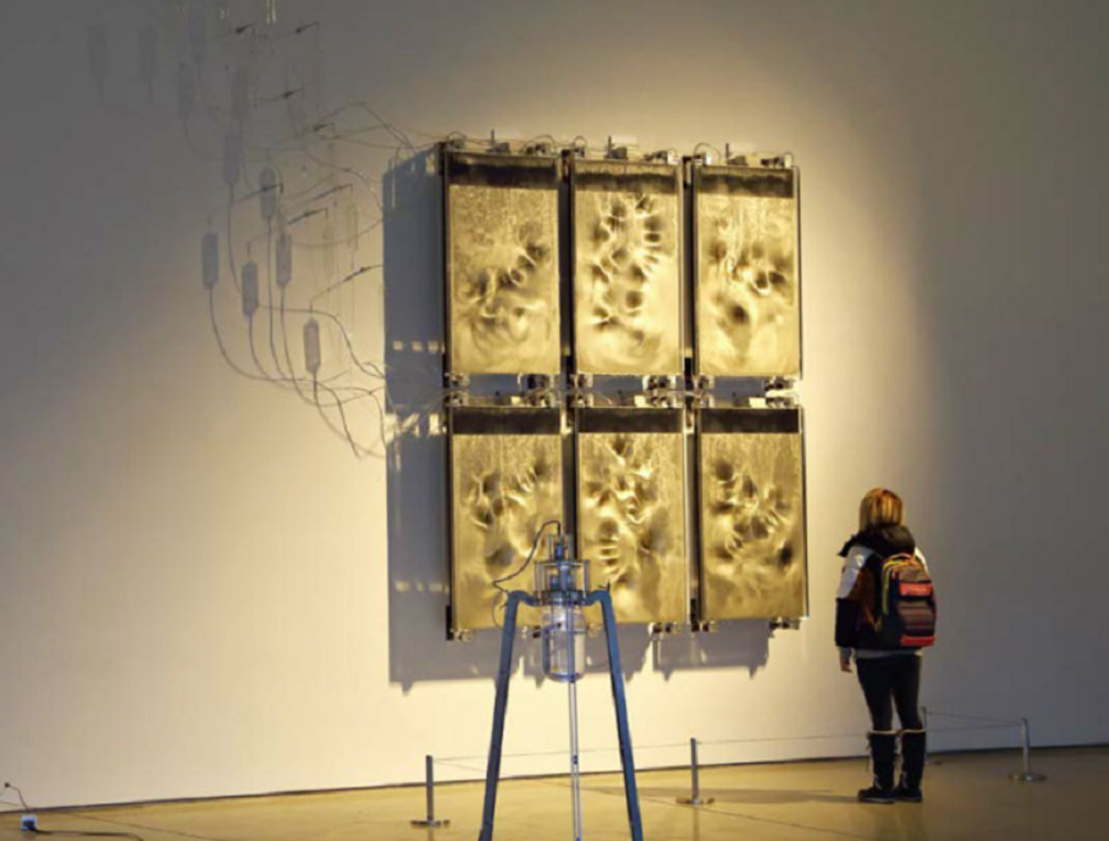
Yunchul Kim’s works transcend being mere mechanical devices or fixed forms of matter. Instead, they exist as non-human agents that interact with other works, humans, and the world, forming organic relationships. Within the exhibition space, these agents create a vast sensory network. The audience, through bodily engagement, experiences the light or sound emitted by the machines as an "affective experience," becoming intertwined within this relational web.

Solo Exhibitions (Brief)

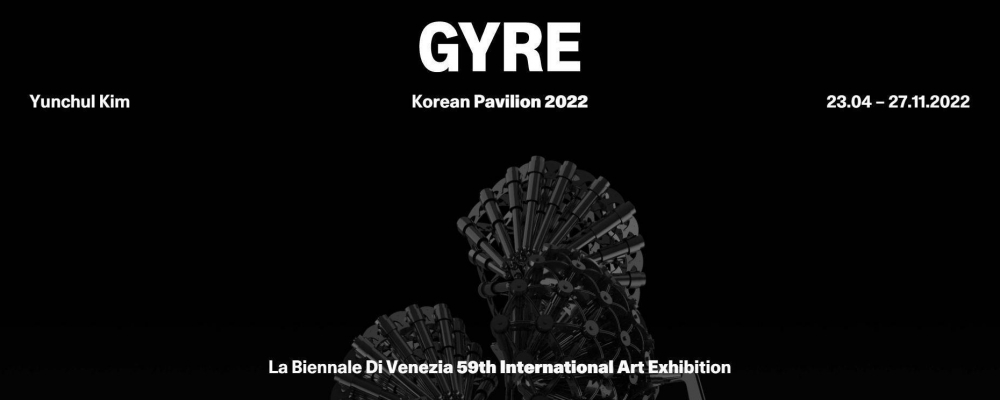
Kim’s recent solo exhibitions are 《Gyre》 (Korean Pavilion, 59 th La Biennale di Venezia, Venice, 2022), 《Glare》 (Barakat Contemporary, Seoul, 2022), 《Dawns, Mine, Crystal》 (Korean Cultural Centre, London, 2018), 《Gyre》 (Gallery Baton, Seoul, 2017), 《Evanescent》 (SongEun ArtSpace, Seoul, 2016) and 《Whiteout》 (Alternative Space Loop, Seoul, 2014).

Group Exhibitions (Brief)

Kim have recently participated in various group exhibitions, including 《Soft Robot》 (Copenhagen Contemporary, Denmark, 2025), 《Liquid Politan》 (Art bunker B39, Bucheon, 2024), 《Exploring Unknown, Science Gateway》 (CERN, Geneva, 2023), 《Future Collection》 (Ulsan Art Museum, Ulsan, 2022), and 《Nothing Makes Itself》 (Arco Art Center Gallery, Seoul, 2021).

His works have been also presented by a number of renowned international organizations, including CCCB (Centre de Cultura Contemporània de Barcelona), Spain; FACT (Foundation for Art and Creative Technology), Liverpool, UK; Ars Electronica, Linz, Austria; Frankfurt Museum of Art, Germany; International Triennial of New Media Art, Beijing, China; VIDA15.0, Spain; Schering Stiftung, Berlin; Transmediale, Berlin; and the 6th Electrohype, Ystad Sweden.

Awards (Selected)

Kim has been the recipient of a number of international awards, including the 2016 Collide Award from CERN, the world’s largest particle physics research institute, the VIDA 15.0 Third Prize, along with awards at Ars Electronica and Transmediale.

Collections (Selected)

Yunchul Kim’s works are included in the collections of the National Museum of Modern and Contemporary Art (MMCA, Seoul and Cheongju), the Seoul Museum of Art (SeMA), the Daejeon Museum of Art, the Museum of Contemporary Art Busan, and the Ulsan Art Museum.

Works of Art

The Possibilities of Imagination and Creation

Originality & Identity

Yunchul Kim’s artistic practice begins with a fundamental inquiry into “matter.” His early work, Self_portrait.jpg(2003), presents materiality reduced from digital information to the labor and duration of the hand through the repetitive act of transcribing coded data from an immaterial digital image onto paper. This marked a pivotal moment when the artist shifted from virtual media toward material reality, initiating his exploration into the “latent tendencies” of matter.

In Epiphora(2009), Kim turned his attention to liquid as a living material. The circulation system of fluid and machinery expands into a biological mechanism that operates autonomously, revealing traces of a non-human world beyond human control. For Kim, matter is not a mere material but an active agent possessing an ontological status equal to that of humans.

This sense of “agency” becomes more concrete in works such as Effulge(2012–2014), Argos(2018), and Impulse(2018). The flows of light, particles, and energy interact through mechanical devices, gradually dissolving the boundary between the human and the non-human. In particular, Argos and Impulse—commissioned by CERN, the world’s largest particle physics laboratory—reveal the very process by which cosmic particles are translated into artistic events, situating Kim’s practice at the threshold of art and science, human and object, the real and the non-real.

His recent works, including La Poussière de soleils(2022) and CHROMA V(2022), presented at the Korean Pavilion of the Venice Biennale, extend this worldview aesthetically. Matter is no longer a passive object but an autonomous entity that generates its own color and form. Ultimately, Kim’s conceptual framework culminates in a radical perspective: “matter thinks the world.”

Style & Contents

Kim’s artistic language has expanded from early digital code-based work to encompass fluid mechanics, optics, electromagnetism, and mathematical topology. While Self_portrait.jpg explored the boundary between text and matter, Epiphora visualized a biological rhythm through the circulation and pulsation of fluid. Later, Effulge employed golden photonic crystals—engineered by the artist—to move under pressure, revealing light itself as a material event.

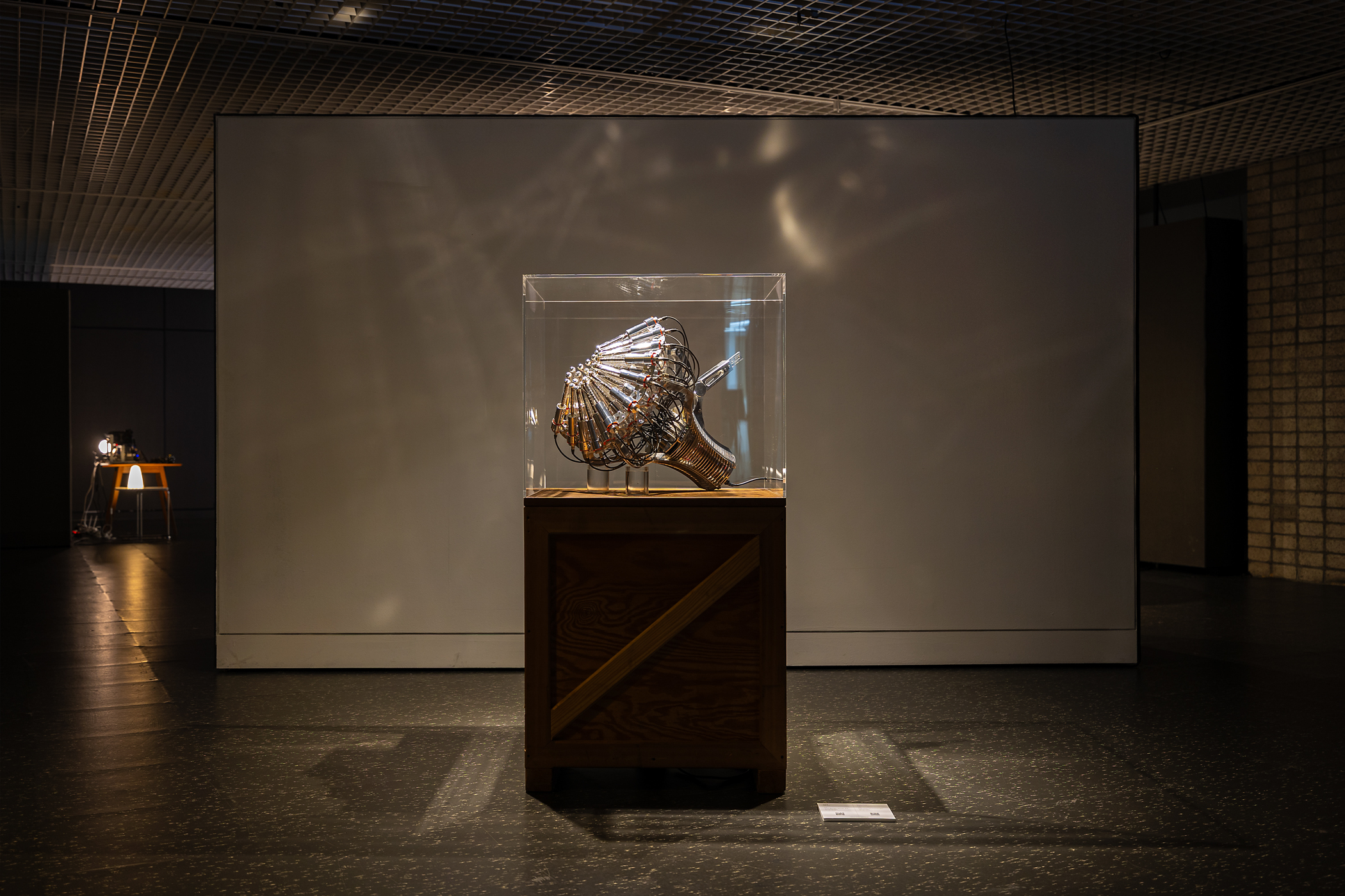
Through commissions from CERN, Kim developed complex installations integrating technological and scientific systems. In particular, Argos, a particle detector, and Impulse, a fluid apparatus connected to it, operate in tandem as a self-regulating “relational system” within the work. Here, the viewer becomes not a passive observer but an active participant within the phenomena triggered by the machine’s reactions.

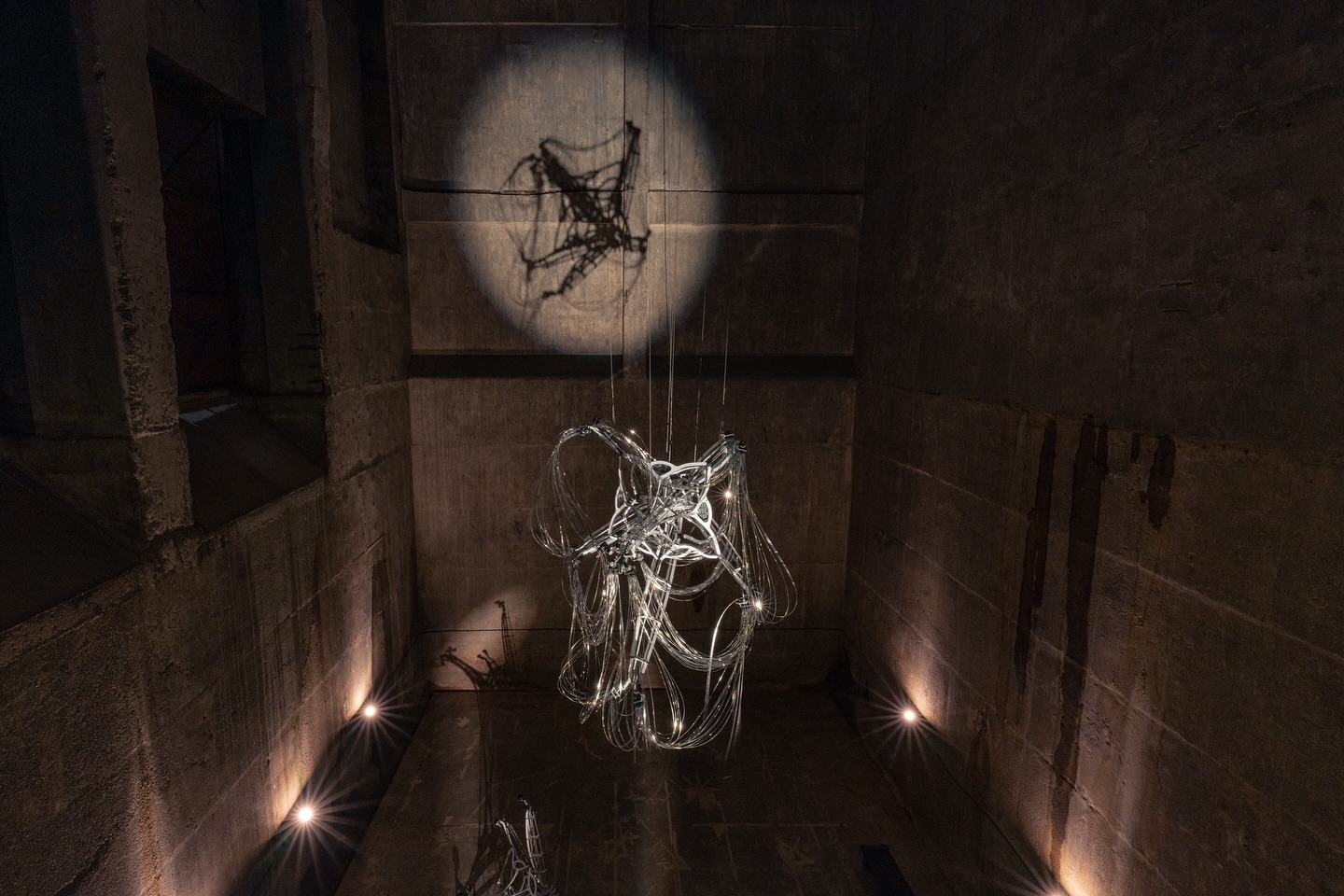
At Barakat Contemporary, Kim presented Coptic Light(2019), which focuses on the structural potential of matter. By transforming the molecular structure of hydrogel and refracting light through it, the work demonstrates that matter can autonomously generate color without human intervention. Similarly, in La Poussière de soleils(2022), the artist pulverized stones into nano-particles to produce “structural color,” proving matter’s self-generating capacity through both scientific precision and artistic sensibility.

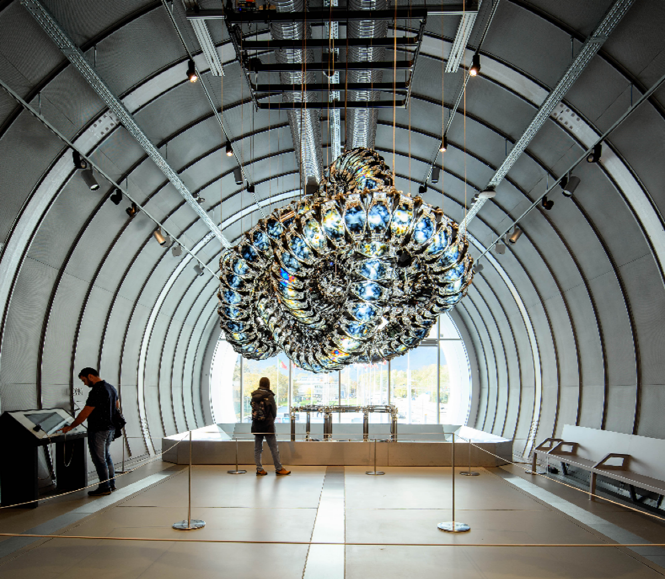
His representative CHROMA series (2012–) encapsulates these explorations in sculptural form. Works such as CHROMA V(2022) and CHROMA IX(2024) combine mathematical knot structures with fluid motion, visualizing the nonlinear order of material flow. Kim’s formal language achieves an aesthetic balance—both sensory and logical—at the intersection of technological structures, physical substances, and natural phenomena.

Topography & Continuity

Emerging from Korea’s early-2000s electronic music and media art scene, Kim’s artistic trajectory has evolved into a transdisciplinary practice uniting art, science, and technology. He has moved from immaterial sound to material form, from digital simulation to the autonomous movement of matter, establishing a “material-centered ontology.”

Kim’s practice stands as a leading example of boundary-crossing between art and science, continuously presented at international platforms such as Ars Electronica (Austria), Transmediale (Germany), VIDA 15.0 (Spain), and ZKM (Germany). The sequence of works including Effulge, Argos, and CHROMA illustrates a unique synthesis of technological precision and poetic sensibility, proposing a new form of “post-media sculpture.”

His works sensorially embody a “universe of non-human relations,” where matter, machine, and human intertwine—positioning Kim at the forefront of contemporary media art. His experiments transcend mere technological fusion, functioning instead as philosophical acts that challenge the human-centered order of the world.

Looking forward, Kim’s artistic inquiry will continue to expand through international research networks such as Fluid Skies and Liquid Things, traversing the boundaries of matter, technology, and perception. By persistently translating the sensory potential of matter and the order of the cosmos into the language of art, Kim opens new horizons for thinking—and feeling—the world in contemporary art.

Works of Art

The Possibilities of Imagination and Creation

Articles

Exhibitions

Activities