Jataka Mirrors (Mirrors of Previous Birth) - K-ARTIST

Jataka Mirrors (Mirrors of Previous Birth)

2011
About The Work

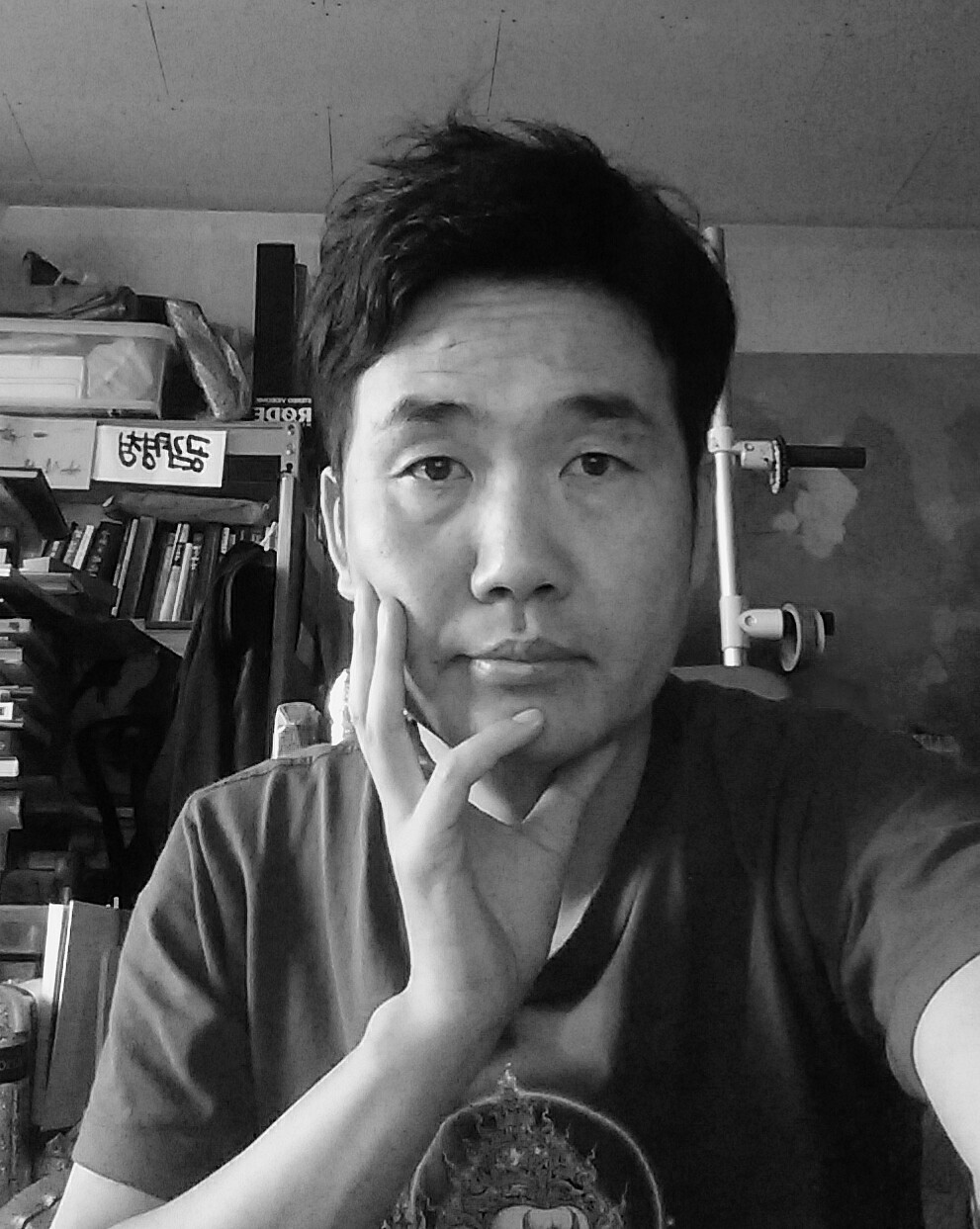
Pioneering Korean web art artist, Rho Jae Oon reflects on the conditions of image production and reception shaped by changes in the digital media environment, where films are replicated and distributed at high speeds through the internet. He has established his own website, where he collects and re-edits various images circulating online, uploading his creations as a form of "web-movie."

Rho Jae Oon has showcased web art as "film" and installation works as "interfaces," reflecting on how various visual information in today’s media environment influences our perceptual systems. By linking these works to concrete issues in reality, he disrupts traditional ways of perceiving visual information, enabling a new sensory engagement with reality and the imagination of the future.

Solo Exhibitions (Brief)

Rho began his solo exhibitions with 《Skins of S_Kr》 at Insa Art Space in 2004, followed by 《Black Gold in Switzerland》 (Art Space Pool, 2006), 《Mulian Mulian》 (Atelier Hermès, 2011), and 《Cosmic Joke》 (Art Space Pool, 2018).

Group Exhibitions (Brief)

Rho has also participated in numerous group exhibitions, including the Gwangju Biennale (2006), 《Museum as HUB》 (New Museum, New York, 2008), the 10th Hermès Foundation Art Award Finalists Exhibition (Atelier Hermès, 2009), 《Space Study》 (PLATEAU, Samsung Museum of Art, 2011), Busan Biennale (2012), 《No Comment》 (Seoul National University Museum of Art, 2013), Media_City Seoul (2014), and 《WEB-RETRO》 (Buk-Seoul Museum of Art, 2019).

Collections (Selected)

Rho Jae Oon’s works are housed in National Musuem of Modern and Contemporary Art, Korea.

Works of Art

Reflections on Reality Through Images in the Digital Age

Originality & Identity

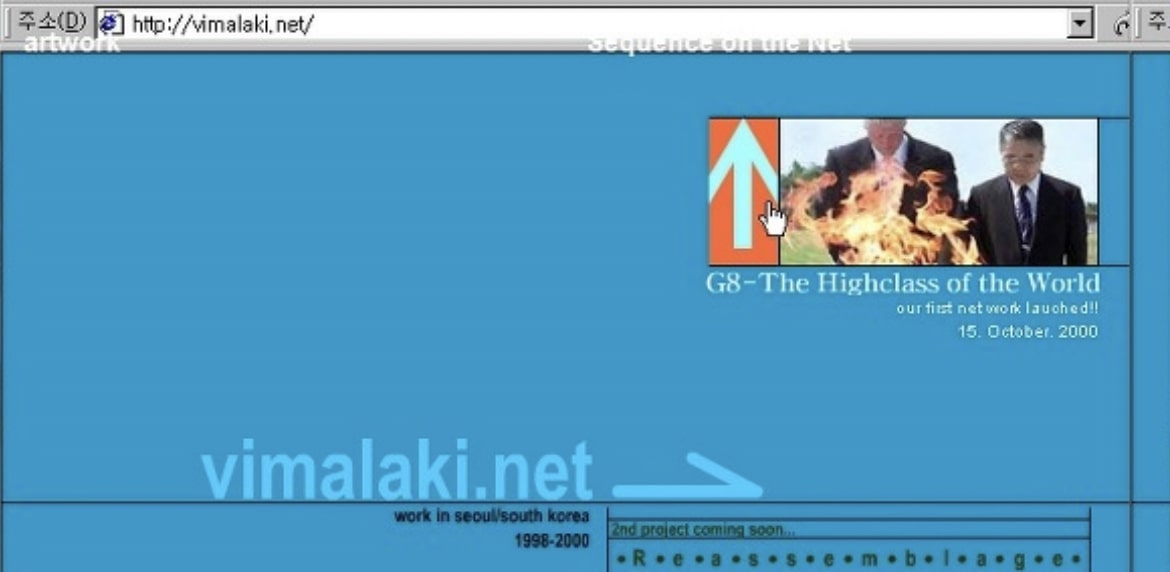
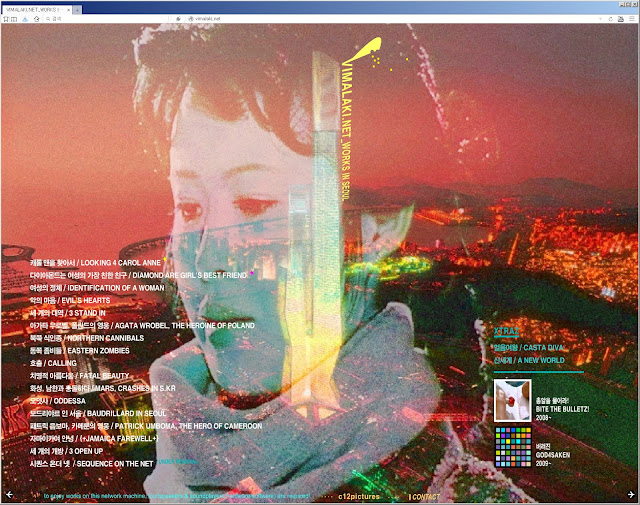
Rho Jae Oon has long collected and recombined images distributed in digital environments, engaging in philosophical reflections on contemporary audiovisual civilization. From his early works, he has questioned the image's capacity to "reflect reality," instead exploring layers of "alternate realities" reconstituted by the production, consumption, and dissemination of images. This approach is clearly demonstrated in a series of web-based screenings through his cinematic platform Vimalaki.net(2001–), including works such as Sequence on the Net(2000) and New World (2000).

His primary focus lies in dismantling conventional cinematic language and image grammar to introduce new modes of perception. In 3 Open Up (2001), held in the collection of the National Museum of Modern and Contemporary Art, Korea, he recombines imagery of the DMZ, military symbols, and news footage to reexamine the hidden realities of the Korean division, seeking to overturn the power structure of audiovisual information and the position of its receivers. This implies that digital images are not tools for reproducing reality but rather devices that actively structure it.

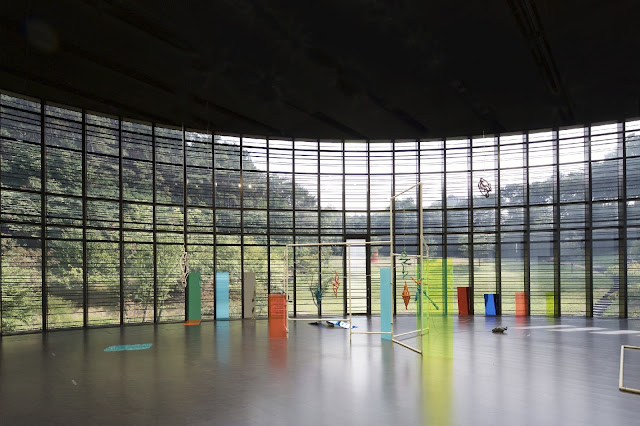
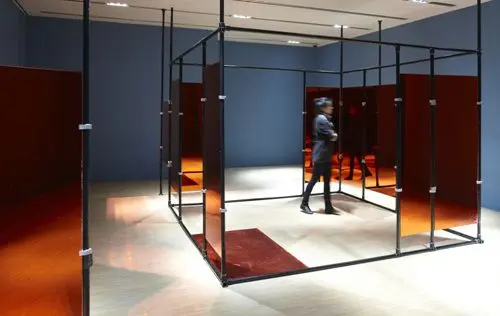
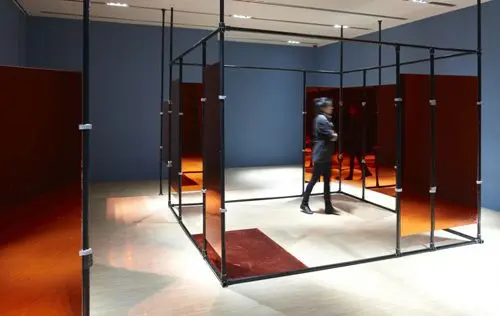
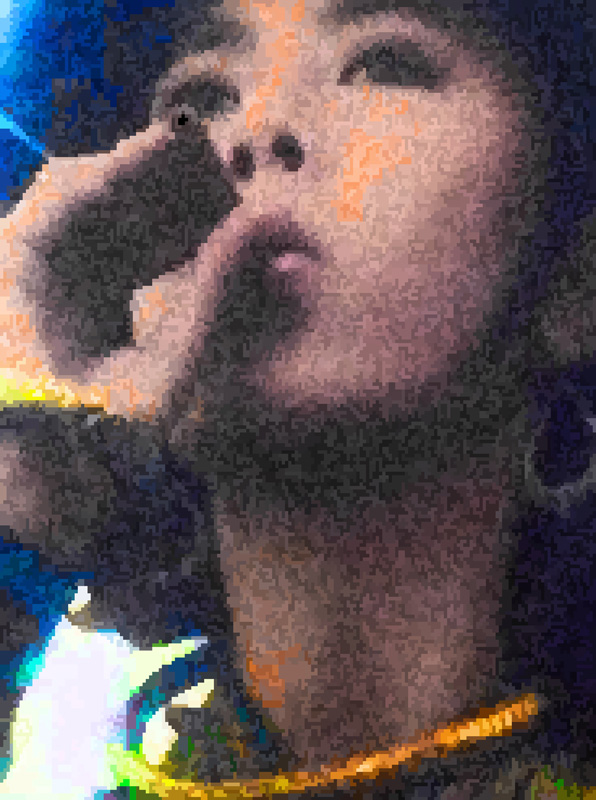
In subsequent works, Rho extends this concern with image perception into broader philosophical dimensions. In Bite the Bullet! (2008), he dismantles cinematic structures and experiments with the relationship between image, text, and sound, exposing the cracks through which viewer perception operates. In Jataka Mirrors (Mirrors of Previous Birth) (2011), presented at Atelier Hermès, he reconfigures the structure of a Buddhist scripture to link the universal themes of reincarnation and salvation with today’s hellish realities, redefining the narrative structures that images can convey.

More recent works like Universal Movie 2019 (2019) inquire into how images mediate sensory experience in an environment where their production and consumption are conducted via smart devices and platforms. Based on the premise that images function not just as visual stimuli but as structuring conditions of reality, Rho has developed a conceptual framework where the image itself becomes an interface.

Style & Contents

Rho’s work spans web art, video, installation, and text, with each format reflecting the conditions of its platform and technical environment. His representative project ‘Vimalaki.net’ (2001–) functions as an online cinema, pioneering the format of web-based film. Key features such as HTML-driven sequences, hyperlinked navigation, disjunctive montage, and spatial-temporal deconstruction contributed to establishing a new format of "web-film."

In God For Saken (2009), viewers interact with brightly colored geometrical interface elements to select and view videos, proposing an "active cinematic experience" where content and interface function on the same level. This disrupts the linear temporality and reception structure traditionally associated with cinema, drawing attention to the integration of media technology and user experience.

In Skins of S_Kr (2004), Rho prints and installs digital images gathered from the web as "generic display images," aiming to expand his practice into offline space. This is not a recovery of image materiality but a strategic reconfiguration of spatiality and form. The printed images adopt a hybrid structure distinct from traditional painting, photography, or video installation, transforming the exhibition space into a network.

In later works such as Universal Movie 2019 (2019), he further expands the scope of media to include objects, video, and the viewer's smartphone, incorporating audience movement and recording behavior as part of the work. These works evolve into immersive installations where image, media, space, and human perception interact, no longer offering images to be passively viewed but providing simultaneous experiences of moving through and recording within images.

Topography & Continuity

Rho Jae Oon is one of the central figures in Korean media art who has reflected on the relationship between "image-platform-reality" through the framework of web art. Since the late 1990s, he has perceptively addressed how digital technology demands a structural shift in personal creativity and collective imagination. He has consistently pursued genre experimentation in web-based cinema, expansions into offline installations, and the construction of sensory-philosophical interfaces.

In his early works, the website itself functioned as a screening room and platform, where viewers re-edited the flow of time through mouse clicks. Later works such as Bite the Bullet! (2008) and Jataka Mirrors (Mirrors of Previous Birth) (2011) introduced media-publishing formats that dismantled and reassembled image narratives. In Universal Movie 2019 (2019), the platform expands into real space, representing both a formal evolution and a spatialization of philosophical inquiry.

His practice offers a practical response to the "task of sensory transformation" that contemporary art faces in the wake of digital transition. Through exploring the gap between concrete realities—such as Korean society, media environments, religious narratives, and international geopolitics—and technological imagery, Rho continuously redefines the intersections of media, politics, and perception.

Works of Art

Reflections on Reality Through Images in the Digital Age

Articles

Exhibitions

Activities