Daybreak - K-ARTIST

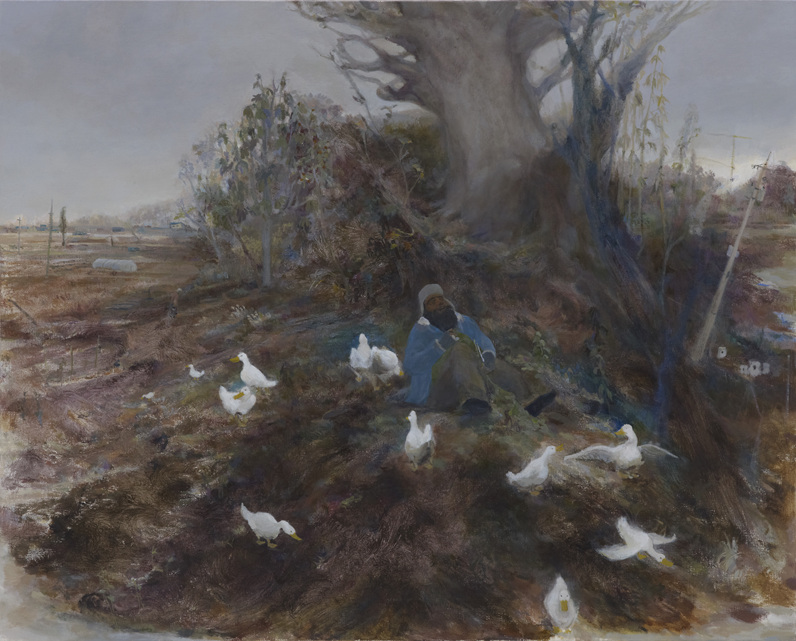
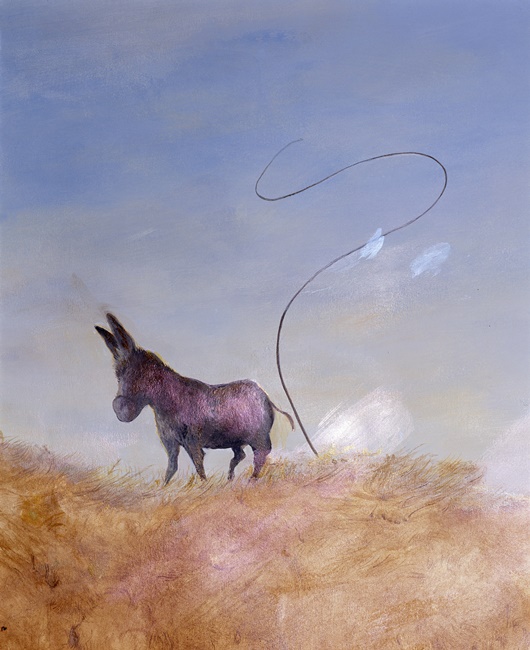
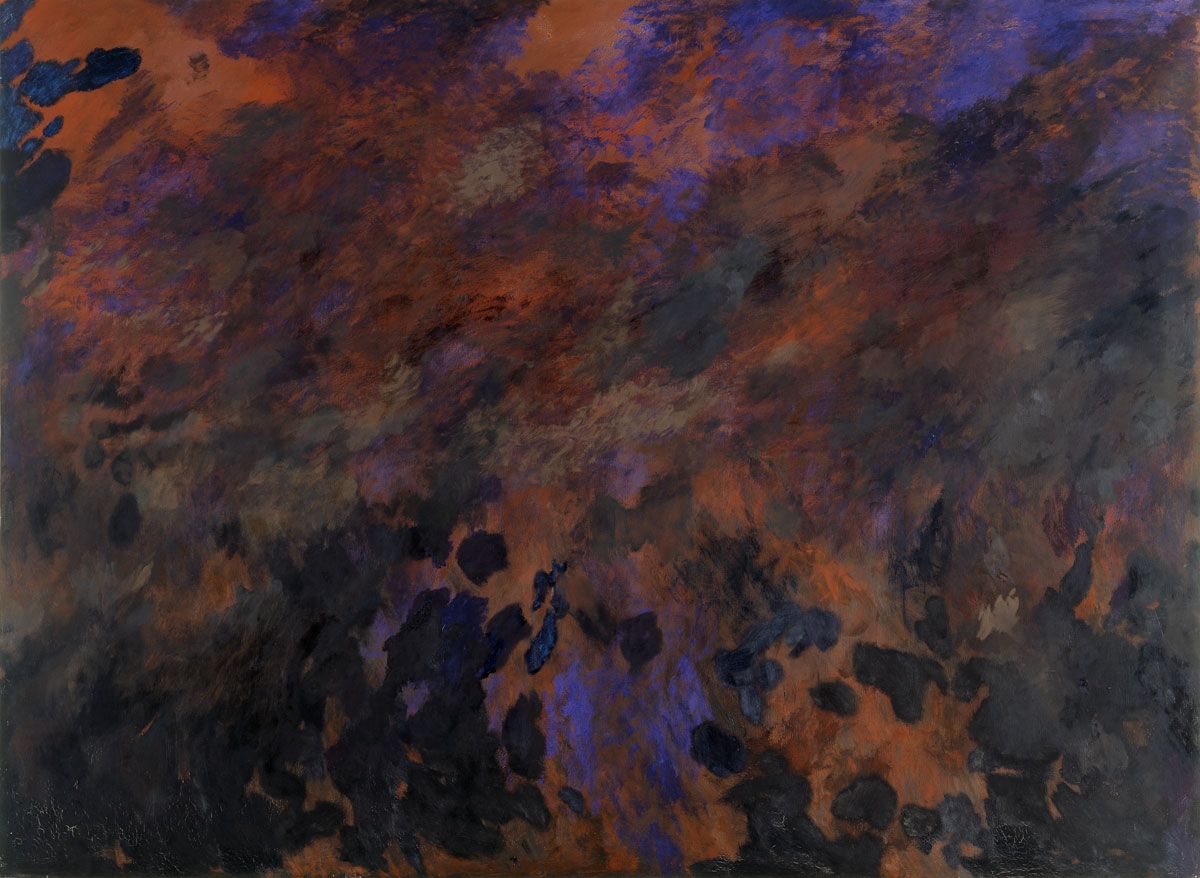
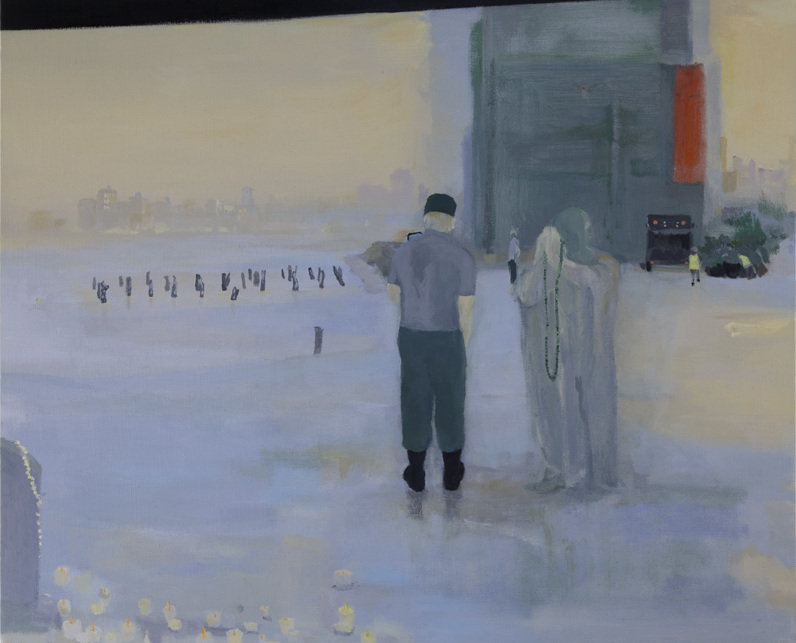
Daybreak

2006
Acrylic on Canvas
61.5 × 73.5 cm
About The Work

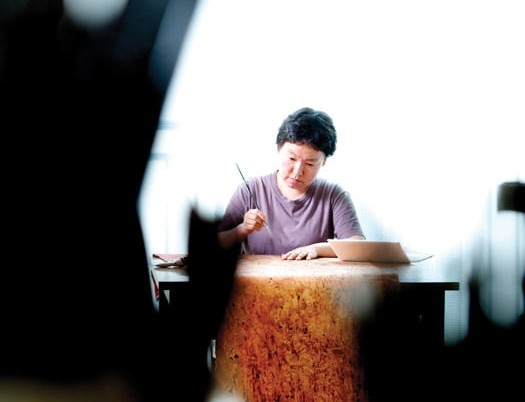
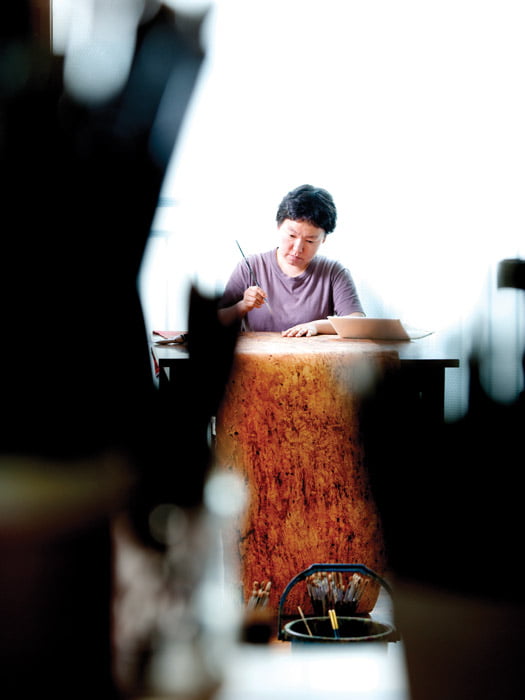
Sejin Park has been capturing ordinary landscapes around us with a keen perspective. Her landscape paintings go beyond the physical surfaces of the visible world, reflecting deeper layers. Starting from looking within herself through past experiences and memories, the artist expresses the hidden sides of various landscapes that are easily overlooked or cannot be seen with the naked eye.
 
Sejin Park’s landscapes are the stories of the beings that live and exist within them, as well as the way she engages with the world and perceives herself. She reveals the traces of lives left behind by unnamed beings that exist behind the visible world within her landscapes. These traces are shown either directly or subtly, leaving behind only small clues that demonstrate how our lives are continuously connected with others, beyond the canvas.

Solo Exhibitions (Brief)

Park has had solo exhibitions at nook gallery (2018, Soeul), DOOSAN Gallery (2012, New York, USA), Arario Gallery (2007, Cheonan, Korea), and Project Space Sarubia (2006, Seoul).

Group Exhibitions (Brief)

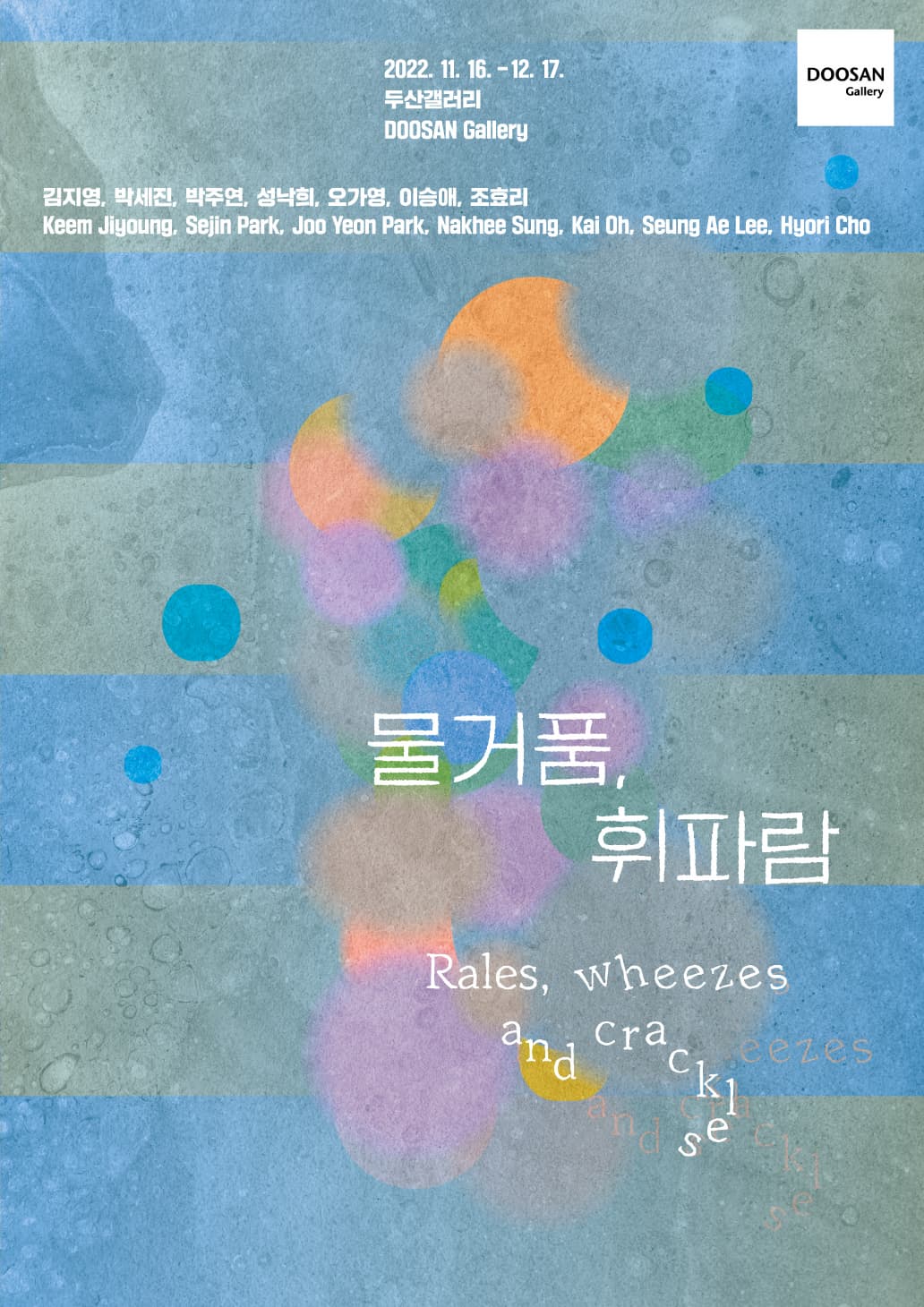
Park’s works has also been included in group exhibitions at Castello di Rivoli Museum of Contemporary Art (2005, Torino, Italy), The Korean Pavilion The 51st Venice Biennale (2005, Venice, Italy), Samsung Museum of Modern Art (2003, Seoul, Korea), East Link Gallery (2003, Shanghai, China), Netherlands Media Art Institute (2003, Amsterdam, Netherland), Alternative space Pool (2000, Seoul) and Seoul Art center (1999, Seoul).

Residencies (Selected)

Park Sejin has participated in residency programs at Doosan Residency New York (2013) and Toji Cultural Foundation Creative Studio (2019).

Works of Art

The Hidden Sides of Various Landscapes

Originality & Identity

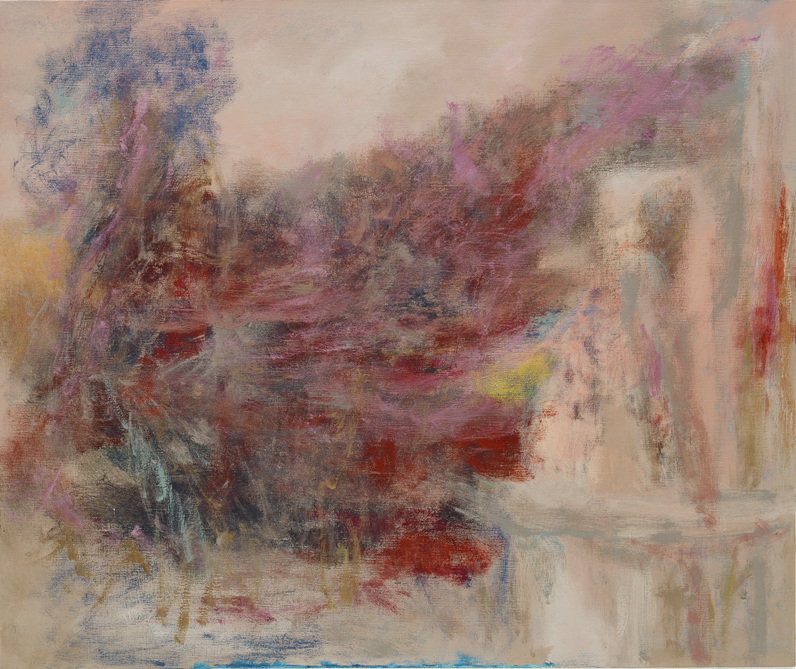
Sejin Park’s painting explores “landscapes beyond boundaries,” that is, landscapes that transcend the physical surface of the visible world. Starting from ‘real scenery’ (silgyeong), she expands the concept of landscape by allowing layers of experience, memory, and consciousness to coexist within a single picture plane. Her early work Landscape 1993-2002(2002) originates from her 1993 visit to Panmunjom, depicting the imagination of an unreachable world while facing the “Bridge of No Return.” From this point on, Park’s landscapes ceased to be mere representations of places; they became intersections of memory, imagination, and sensory experience.

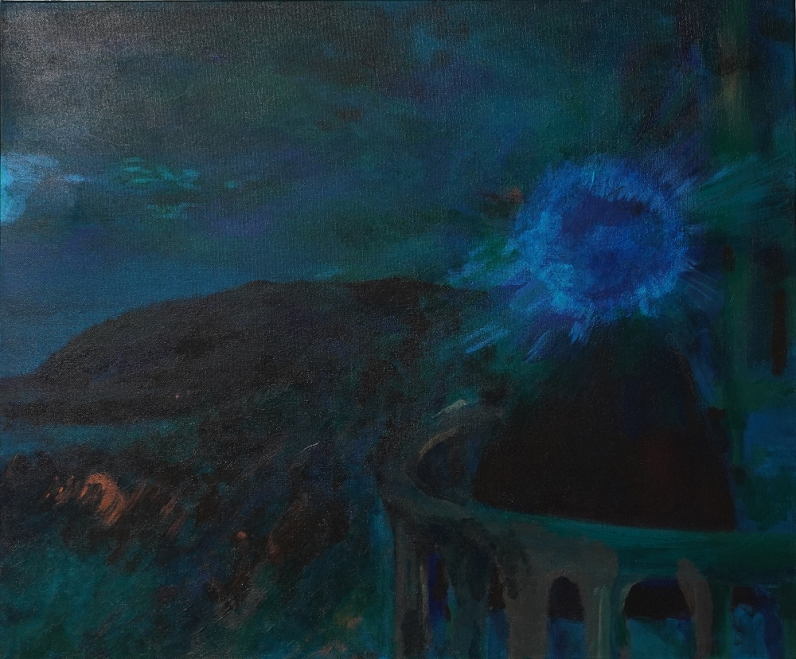
In the ‘Le Manteau’ (2000–2007) series and in Night(2005), the artist’s reflection on the boundary between the visible and the invisible becomes clearer. In the moment when perception transforms within the darkness of night, the boundary disappears materially, allowing emotion and consciousness to permeate the landscape itself. Park’s remark that “the night has no inherent color—it is an interpretation of boundaries chosen by the viewer” encapsulates her worldview.

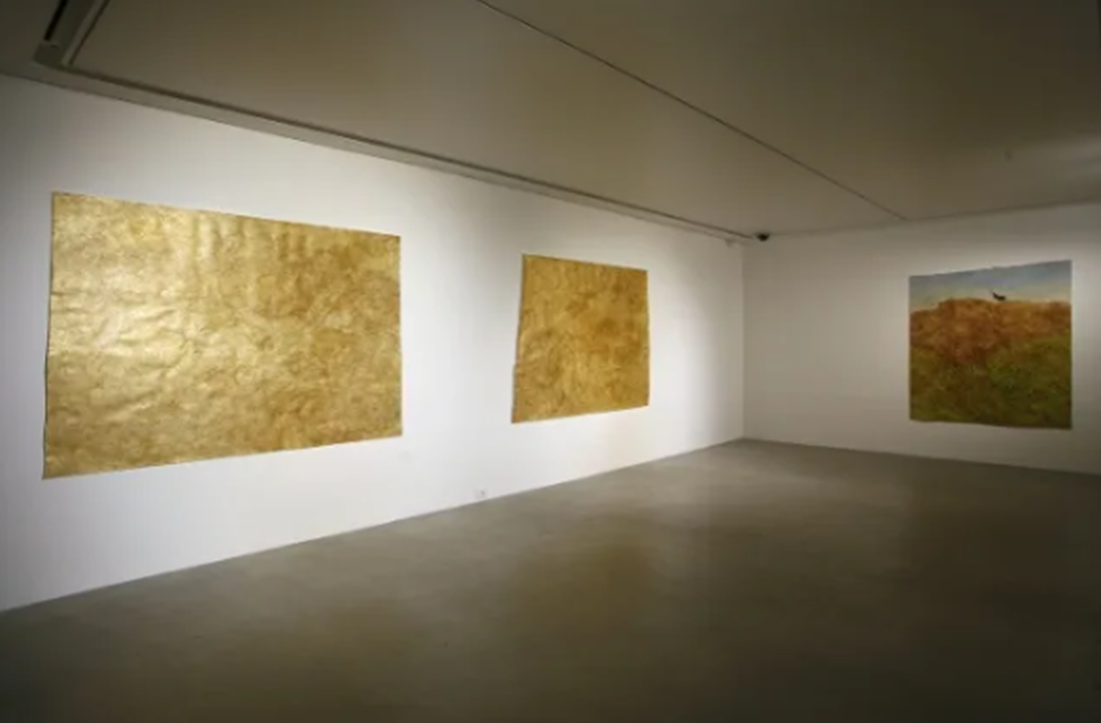
Her solo exhibition 《Golden Age》(Arario Gallery, Cheonan, 2007) crystallized the artist’s thematic concerns. Here, “Golden Age” does not signify the peak of life but rather a continuous world in which all existences are interconnected without distinction. This realm—where the foreground and background, reality and imagination flow into one another—represents an integrated perception derived from her prolonged observation of real landscapes.

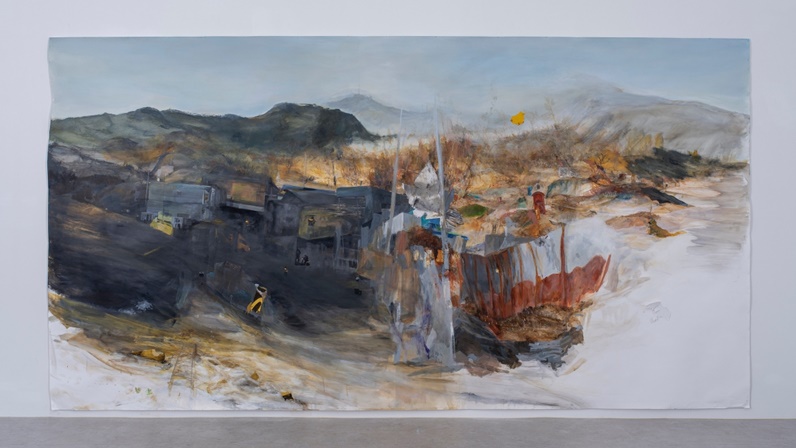
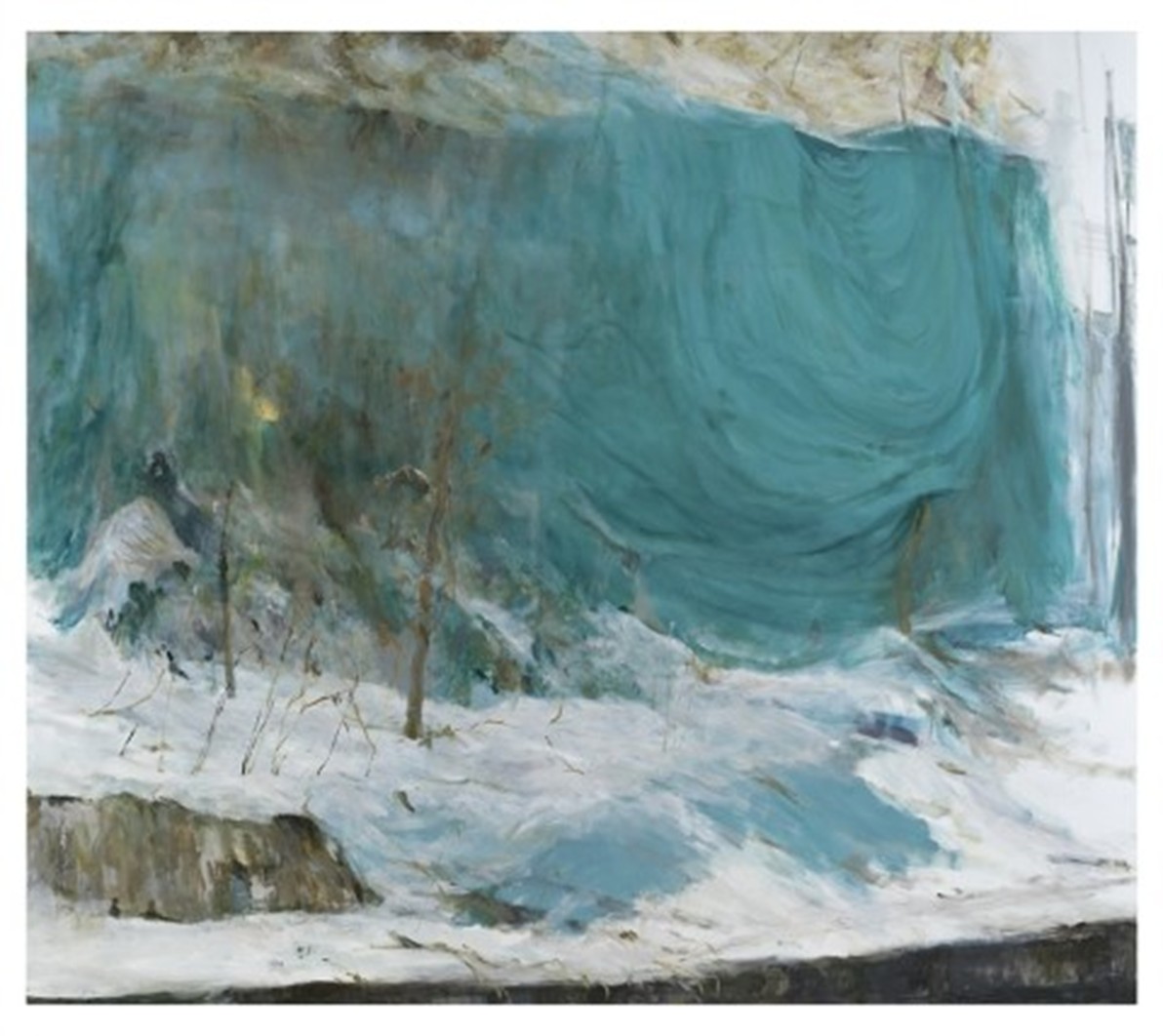
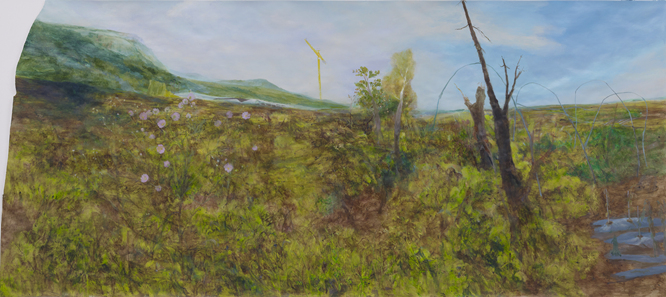
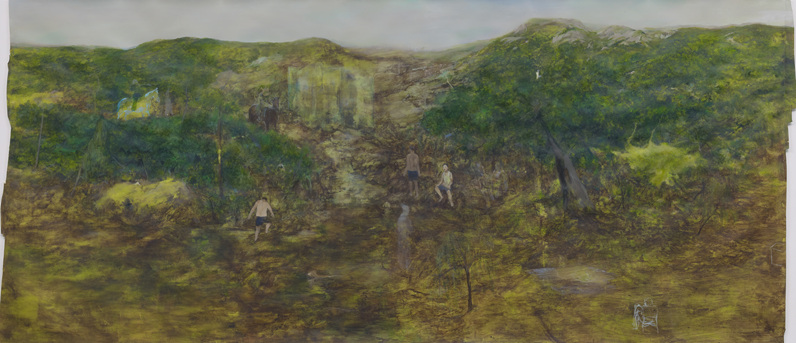
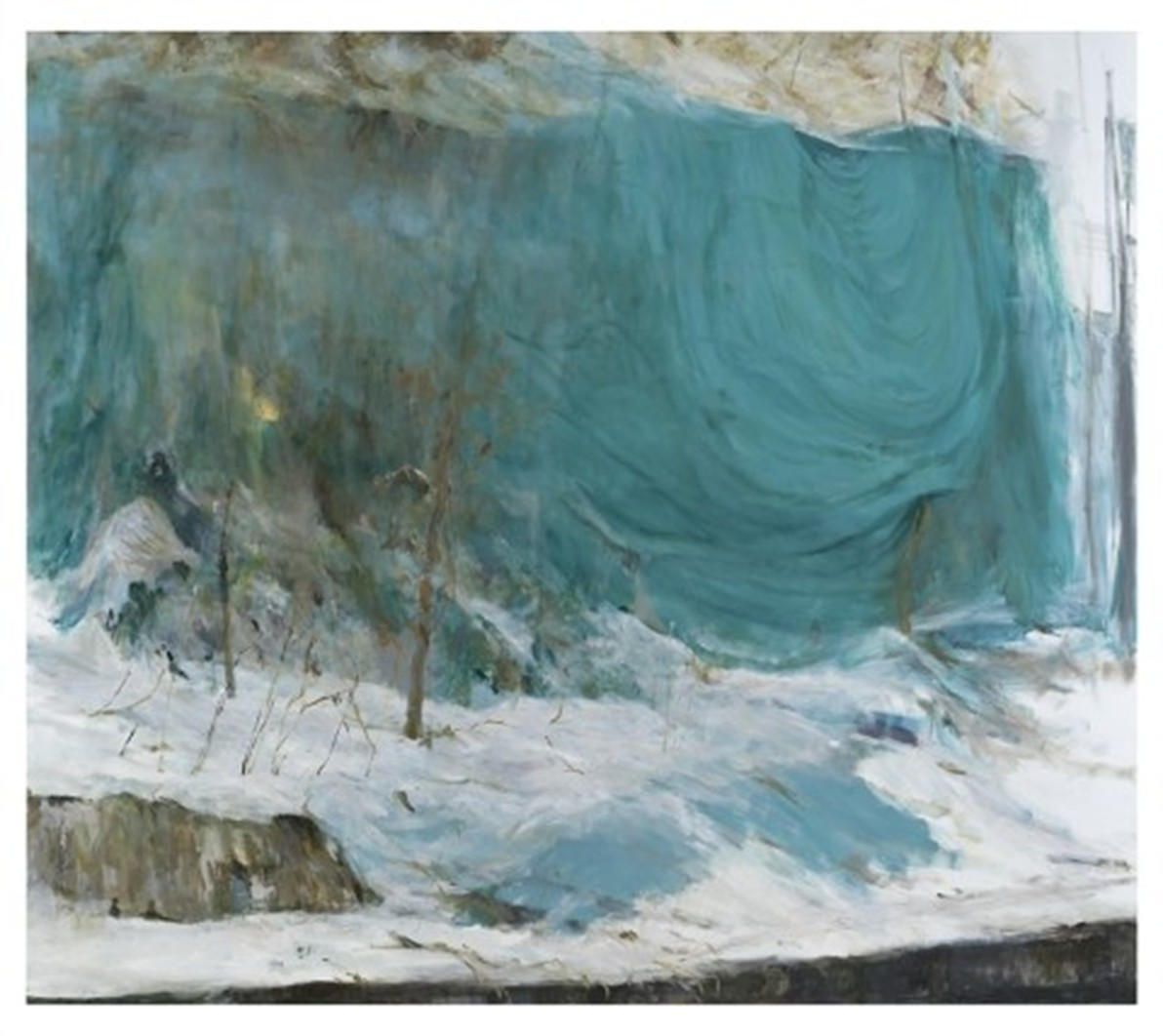
Since the 2010s, her thematic scope has expanded to landscapes marked by traces of life. In Run and Run Again!(2012), Wall(2018), and My Four Trees(2018), everyday spaces—retaining walls, hills, and trees—appear as scenes that reflect and connect with one another through traces. These works reveal Park’s consistent attitude of exploring the relationality of existence through external landscapes.

Style & Contents

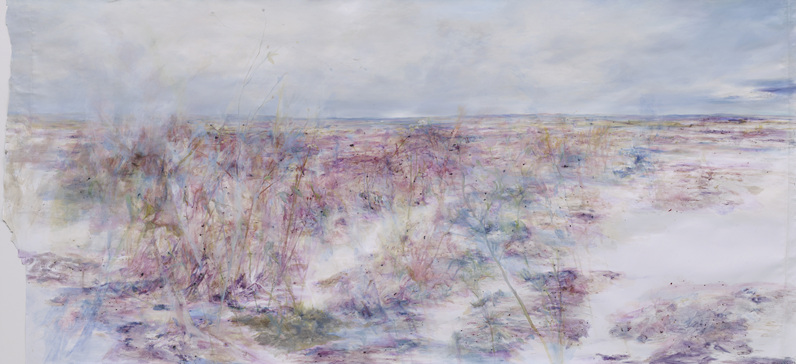
Sejin Park is an artist who closely links the material properties of her media to the content of her painting. Employing oil, acrylic, fabric, paper, glue, and even natural substances such as cherry or rose juice, her practice can be read as an experiment that revives the vitality of color and texture. Run and Run Again! infuses paper with pigment made by mixing cherry juice and glue, transforming the organic hues of nature into the breathing rhythm of a landscape.

In her compositions, the continuity between the foreground and the background forms an essential structure. In works such as Old Morning(2007) and Crying Soldier(2007), the precisely rendered foreground and the faint, dissolving background reflect one another, erasing boundaries. This “painting of overlap” is an attempt to layer traces of time upon the material surface, visualizing what the artist calls “the traces left by the absence of time.”

In works such as Night, the most notable feature is the materiality of the brushstroke and impasto. Outlines disappear, the texture of brush marks becomes prominent, and the surface changes color according to light conditions—devices that visually articulate the uncertainty of perception within darkness. Conversely, in later works such as Wall, stains, mold, and marks of rainwater on concrete surfaces are reinterpreted as painterly expressions of nature itself.

Since the 2000s, her work has been marked by a persistent observation of the colors and textures of local Korean nature—its skies, stones, and mountains. From the 2010s onward, the resonance between memory, consciousness, and emotion became stronger, signaling a shift from “visible landscapes” to “invisible relations.” While the memory of Panmunjom in Landscape 1993-2002 invited an imagination of the unreachable other, the recent hillside series depicts landscapes where the lives of self and other are reflected and connected. Ultimately, Park’s landscapes are not records of the external world but projections of inner perception—painting as the geography of emotion.

Topography & Continuity

Within the realm of Korean landscape painting, Sejin Park is regarded as an artist who has consistently explored real scenery, the stratification of memory and consciousness, and the continuity of time—thereby suggesting a new direction. Her paintings are not mere reproductions but expansions of real landscape painting that transform her lived experiences and states of mind into painterly language. Beginning with realistic observation, she has evolved toward a juxtaposition of emotional and mnemonic layers, and further toward an ontological inquiry into landscape through the intersection of material and sensation.

Her originality lies in her persistent observation of “real scenery” and her painterly attitude of “absorption and permeation.” This core has continued to develop since 《Golden Age》, forming a continuous pictorial language in which paper and canvas, light and darkness, foreground and background absorb and traverse one another.

Today, Park’s work occupies a significant position in contemporary Korean art as a painterly reality that integrates sensation, time, and memory. Her recent activities—including her solo exhibition at nook gallery (2018) and the two-person exhibition at Space ISU (2022)—demonstrate an expansion of landscape from a visual dimension toward sensory and psychological depth.

Grounded in real scenery, her paintings—where nature and humanity, sensation and memory intersect—embody a language that embraces both universal sentiment and contemporary perception. She is expected to continue occupying a distinct position within the terrain of Korean painting in the years ahead.

Works of Art

The Hidden Sides of Various Landscapes

Articles

Exhibitions

Activities