Step by Step Plant - K-ARTIST

Step by Step Plant

2011
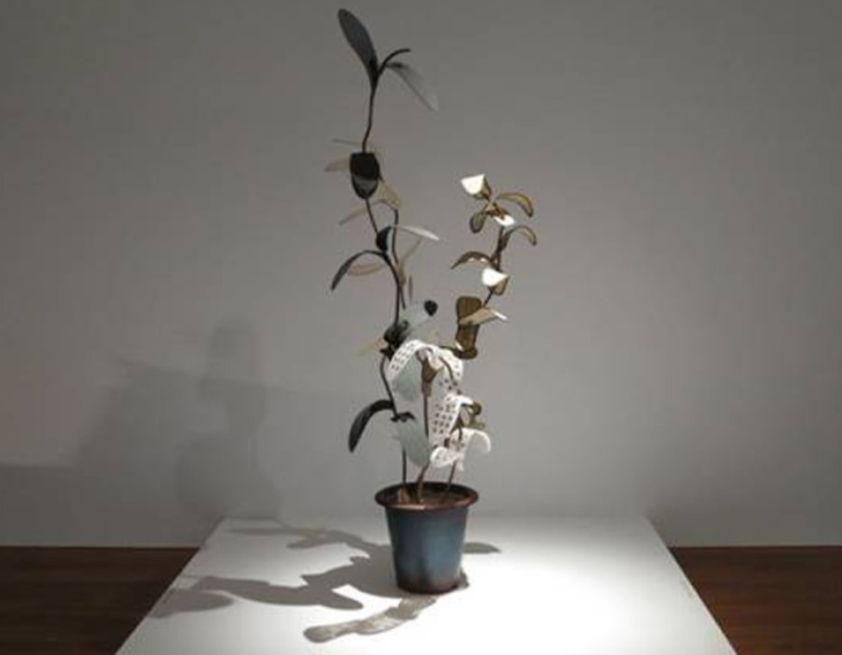
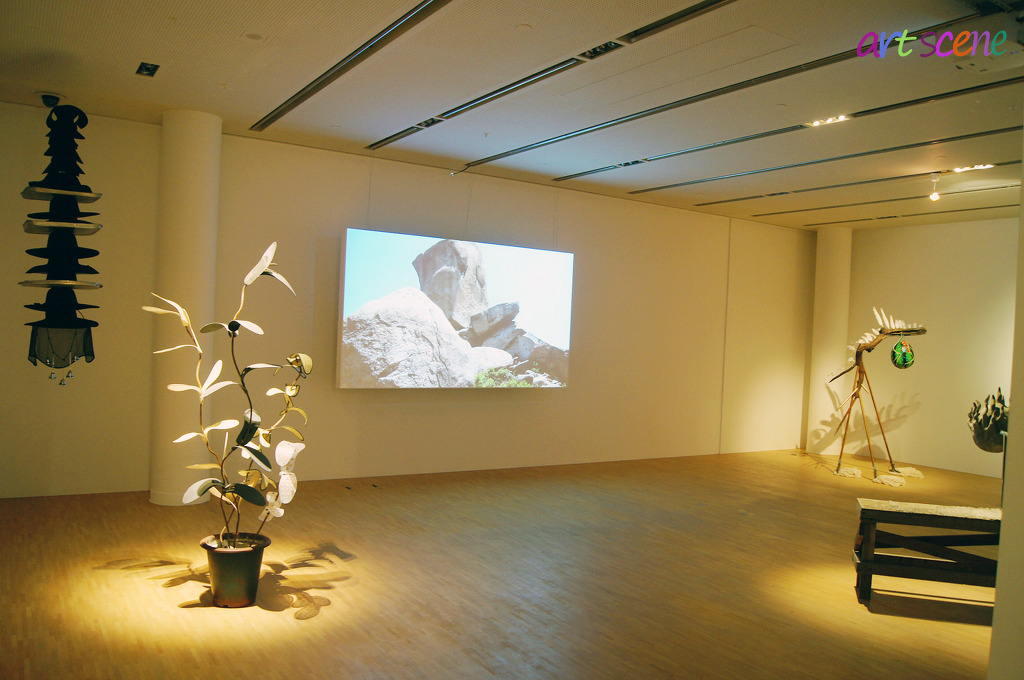
Rebar, shoe insole, flower pot, cement, oyster shell
189 × 100 × 80 cm
About The Work

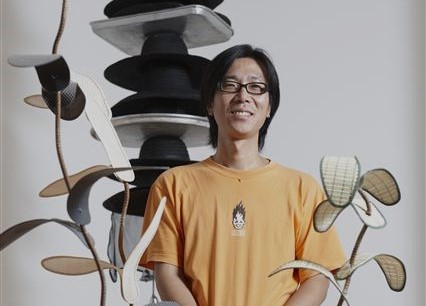
Sangdon Kim works across diverse mediums such as photography, installation, video, sculpture, and performance to visually uncover the underlying roots of the society we live in. He incorporates folkloric spiritual cultures, such as shamanism, as key elements in understanding the world.
 
The artist seeks to confront contemporary society anew by rediscovering lost narratives within Westernized systems and reconnecting them through a fusion of traditional and modern elements.
 
His art is not merely about linking the past with the present; it delves into the human condition, life, and the foundational elements of existence. By reconnecting the broken and forgotten, his work seeks to heal and mourn social wounds.

Solo Exhibitions (Brief)

Sangdon Kim has had solo exhibitions at Project Space Mium (Seoul, 2022), DOOSAN Gallery (New York, 2014), Art Sonje Center (Seoul, 2012), Bielefelder Kunstverein (Bielefeld, Germany, 2011), and art space pool (Seoul, 2004).

Group Exhibitions (Brief)

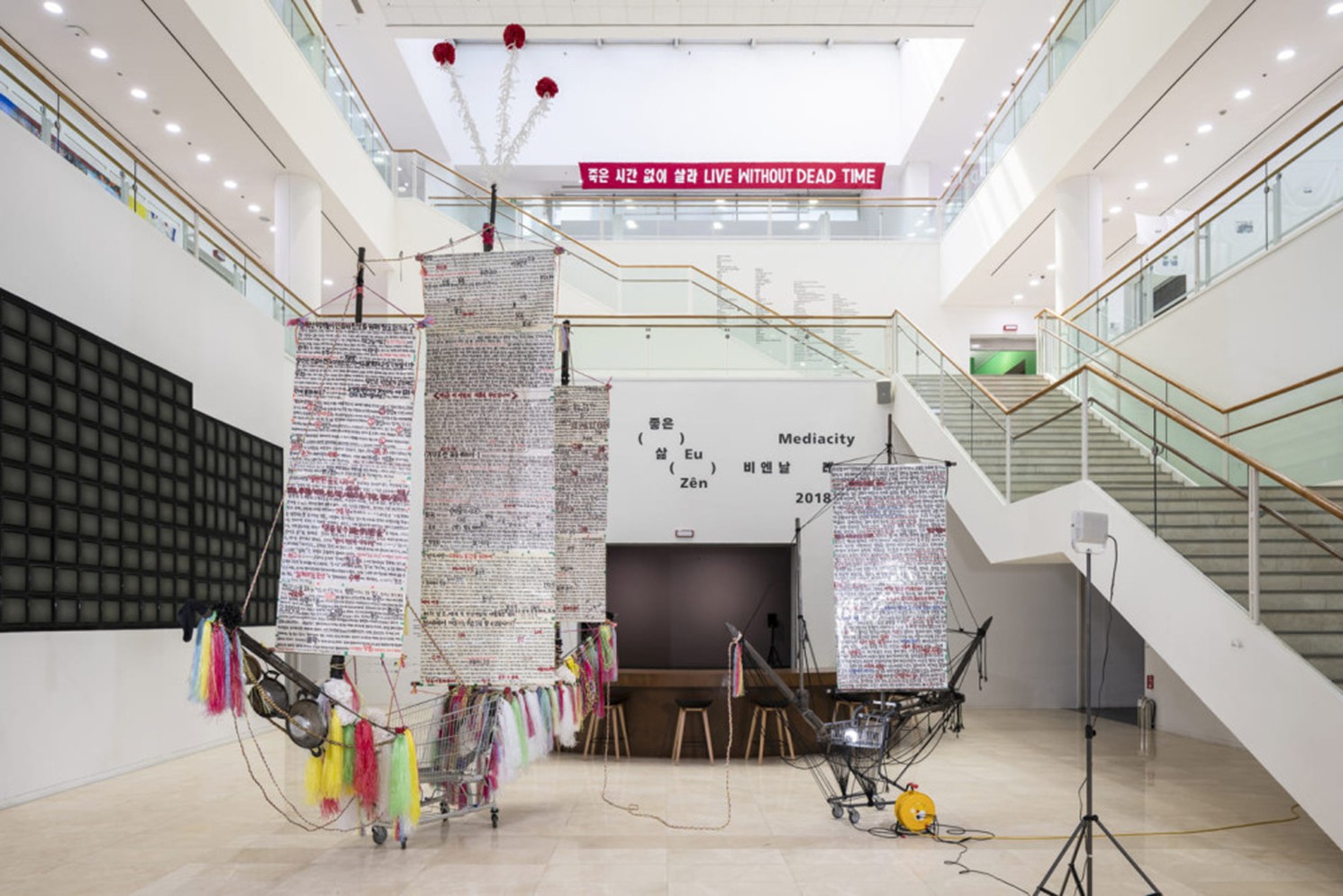
Kim has participated in domestic and international group exhibitions and biennales, including at Gwangju Biennale (2021), Seoul Mediacity Biennale (2018), Asia Pacific Triennale, Australia (2012), Busan Biennale (2006, 2012), Tamayo Museum of Contemporary Art, Mexico (2009), New Museum, New York (2008), etc.

Awards (Selected)

Kim won the 1st Anguk Art Award (2021), 3rd Doosan Yonkang Foundation Art Award (2012), 12th Hermes Korea Art Award (2011), and the 10th Daum Artist Award (2011). 

Residencies (Selected)

Kim has been selected as DOOSAN residency New York Artist.

Collections (Selected)

Kim’s works are housed in Seoul Museum of Art, Gyeonggi Museum of Modern Art, The Museum of Photography, Daelim Co. Ltd.

Works of Art

The Underlying Roots of Society

Originality & Identity

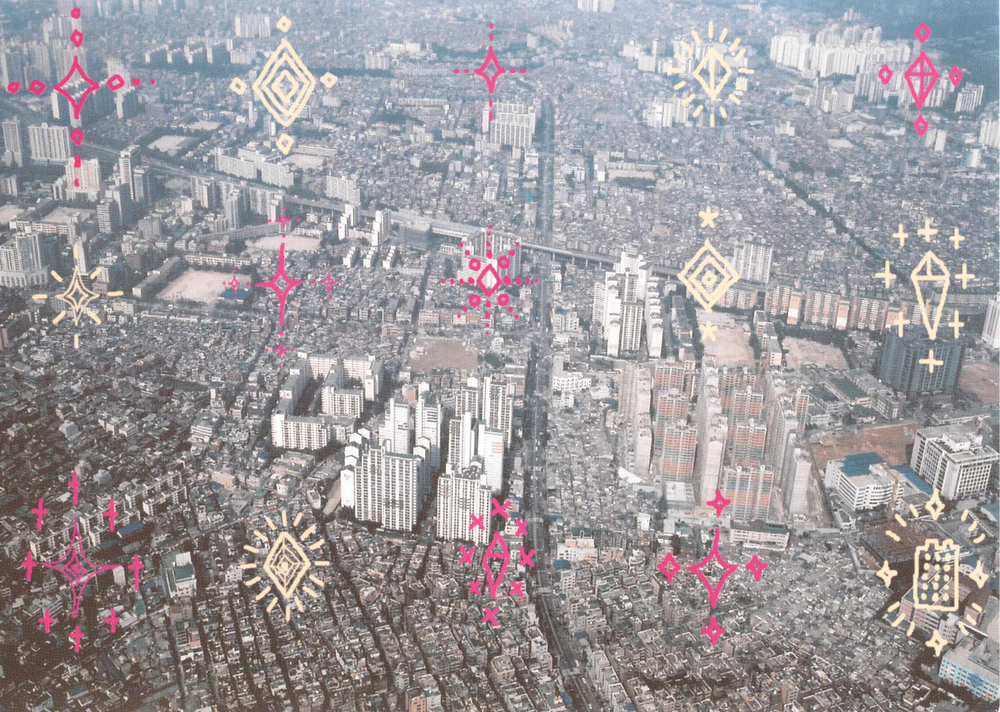
Sangdon Kim’s artistic practice begins with recalling narratives that have been forgotten or fragmented within social structures. In his early work Congratulations on Moving In(2004), he viewed the rapidly urbanizing landscape with unfamiliarity, using metaphors such as comparing apartment complexes and high-rise buildings to “jewelry rings” to reveal the invisible elements—nature, emotion, culture, history—that had been erased through urban development. This approach formed his fundamental interest in capturing the unseen layers beneath the surface of social reality.

In Hello(2005), the artist explored the impact of external power on local communities through conversations with residents, documenting the social, psychological, and cultural landscape by “listening with his ears rather than seeing with his eyes.” This expanded into questioning how individual voices or peripheral narratives become erased within social systems. His perspective gradually shifted toward spaces where “small and personal memories” coexist, rather than grand narratives.

In Bulgwang-dong Totem(2010), Kim reconstructed “formless narratives” such as the spirit of a place, personal and communal memories, and traces of everyday life into assemblages of objects, thereby summoning a primordial belief system in the midst of vanished neighborhood shrines destroyed by urban development. This can be understood not as a simple folkloric motif but as a process of restoring archetypes embedded in the collective unconscious.

This trajectory reaches a climax in works such as Monument Zero(2014) and March(2021). Through social contexts such as the Sewol Ferry tragedy or the Gwangju Biennale, Kim combines collective experiences of loss, mourning, and resistance with shamanistic worldviews, consistently emphasizing the importance of recovering lost narratives in order to understand the present world.

Style & Contents

Formally, Kim’s work spans photography, installation, sculpture, video, and performance. Early works such as Congratulations on Moving In and Hello are grounded in a documentary photographic format, yet they move beyond simple documentation toward metaphorical image construction that condenses structural realities. Rather than explaining social, economic, or political conditions directly, he visually juxtaposes upper and lower layers of reality through aerial-view compositions, metaphorical objects, and the reordering of symbols.

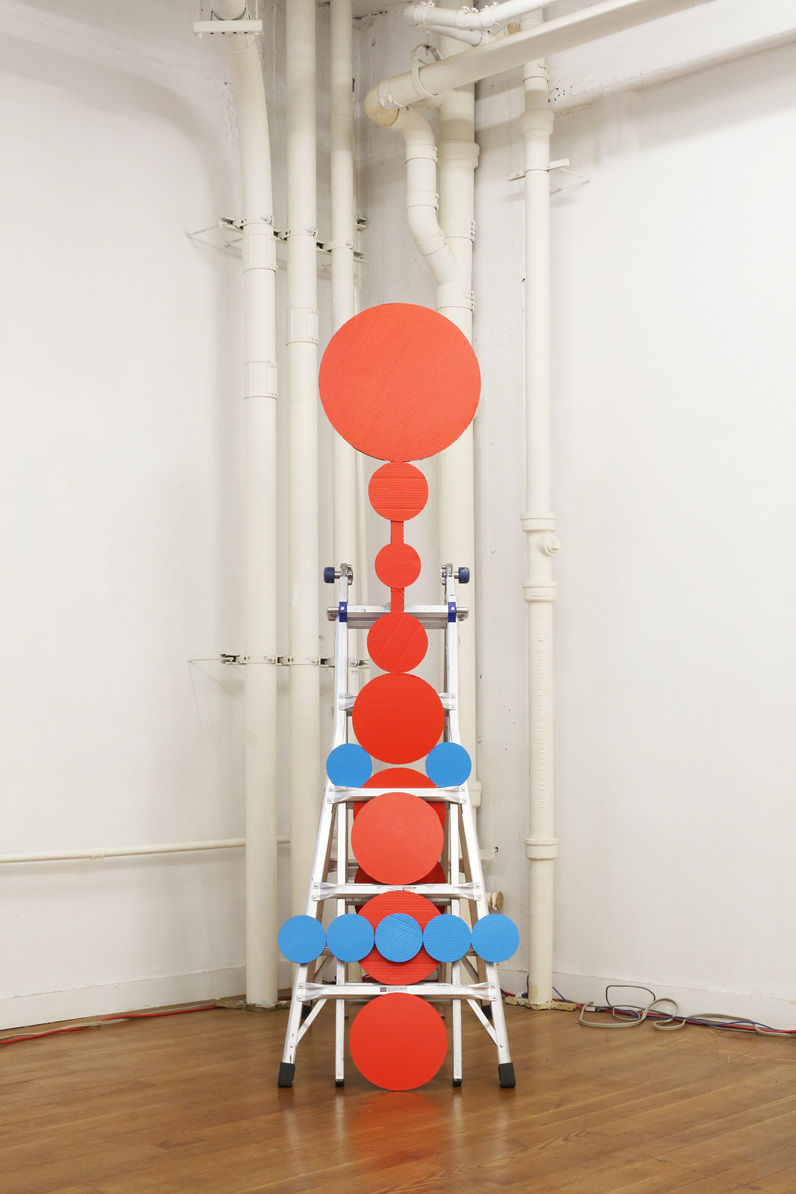
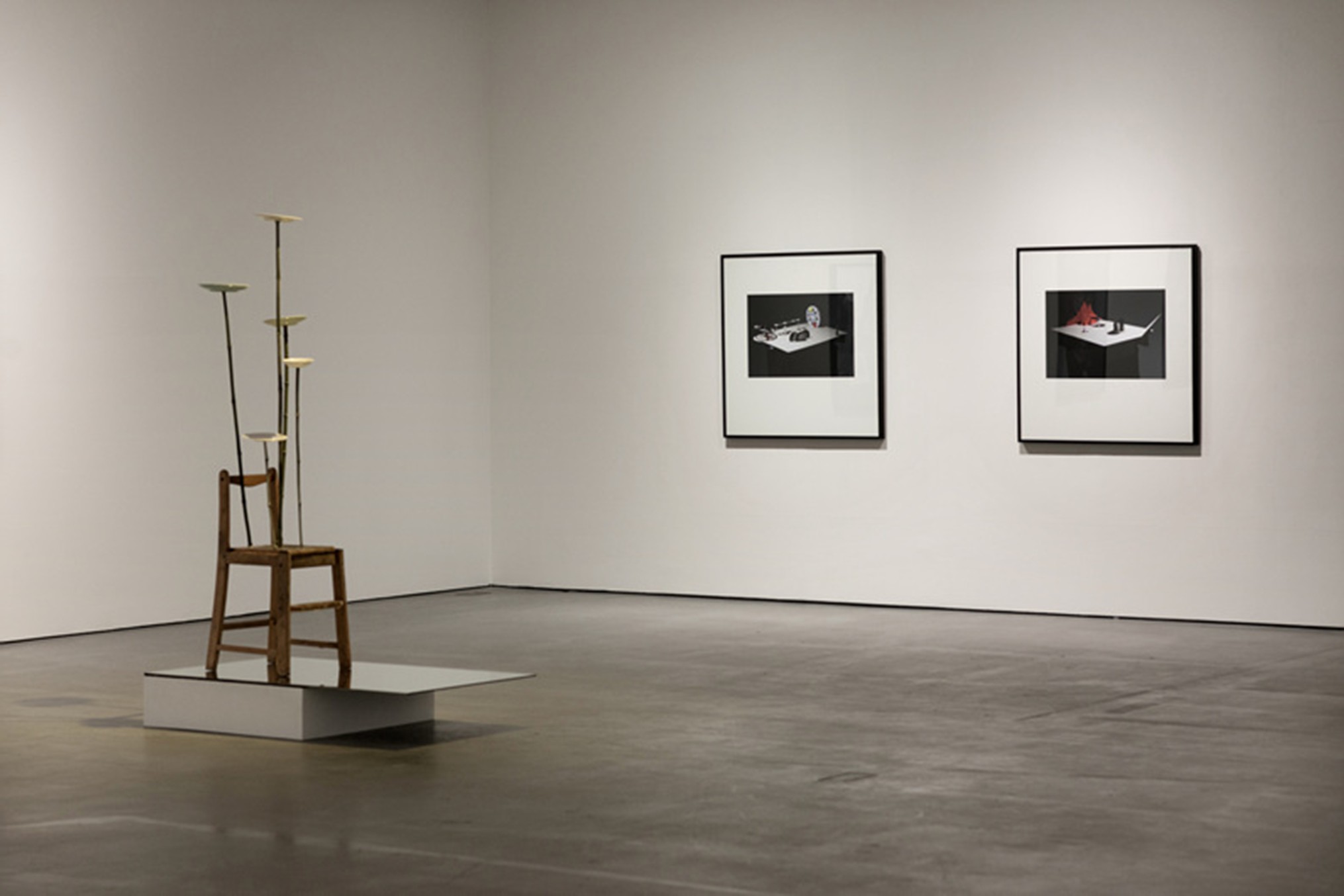
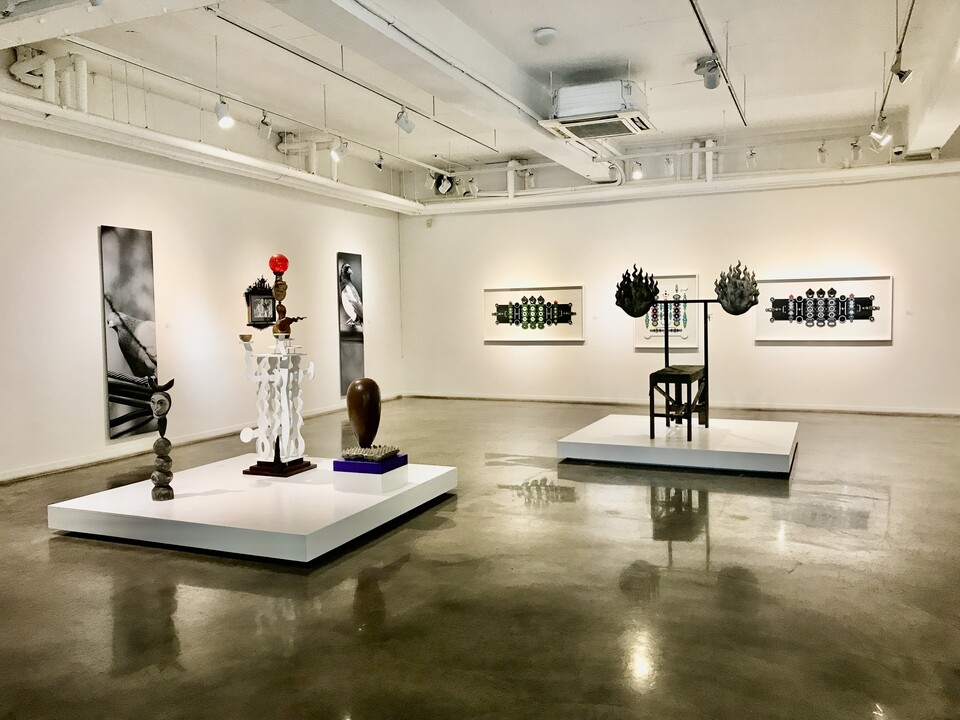
In Bulgwang-dong Totem and Step by Step Plant (2011), everyday objects such as shoe soles, plastic chairs, garlic, ginseng, and shells become central mediators. The artist assembled these objects—associated with regeneration, protection, and invocation—into totemic structures and rephotographed them. This process creates a point where the materiality of objects overlaps with the symbolic resonance of images, allowing commonplace materials to function as carriers of social and historical narratives.

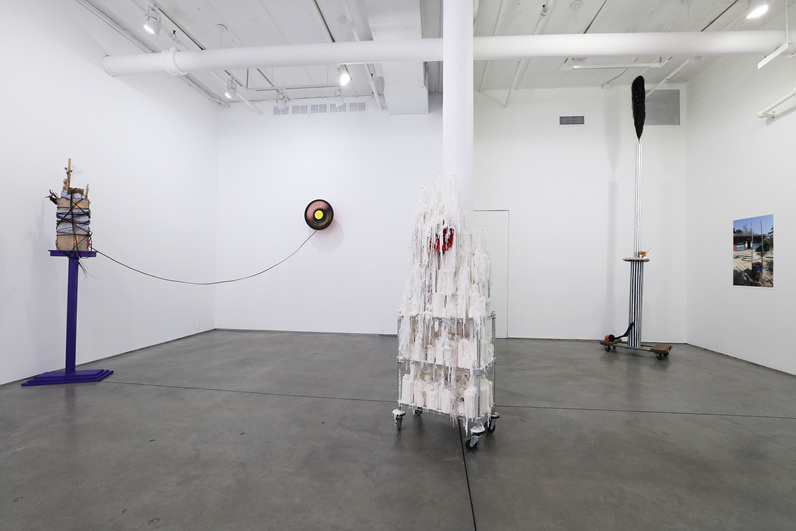
In his 2014 New York solo exhibition 《Antenna》(DOOSAN Gallery New York, 2014), discarded materials such as trash, bean pods, candles, and Styrofoam stood upright as “antennas.” Though they cannot receive any signal, these objects metaphorically reference the mythic fragments abandoned or neglected by Asia itself. A representative work, Torma Antenna(2014), incorporates the structure of Tibetan torma towers, visually articulating processes of cultural crossing and symbolic transmission.

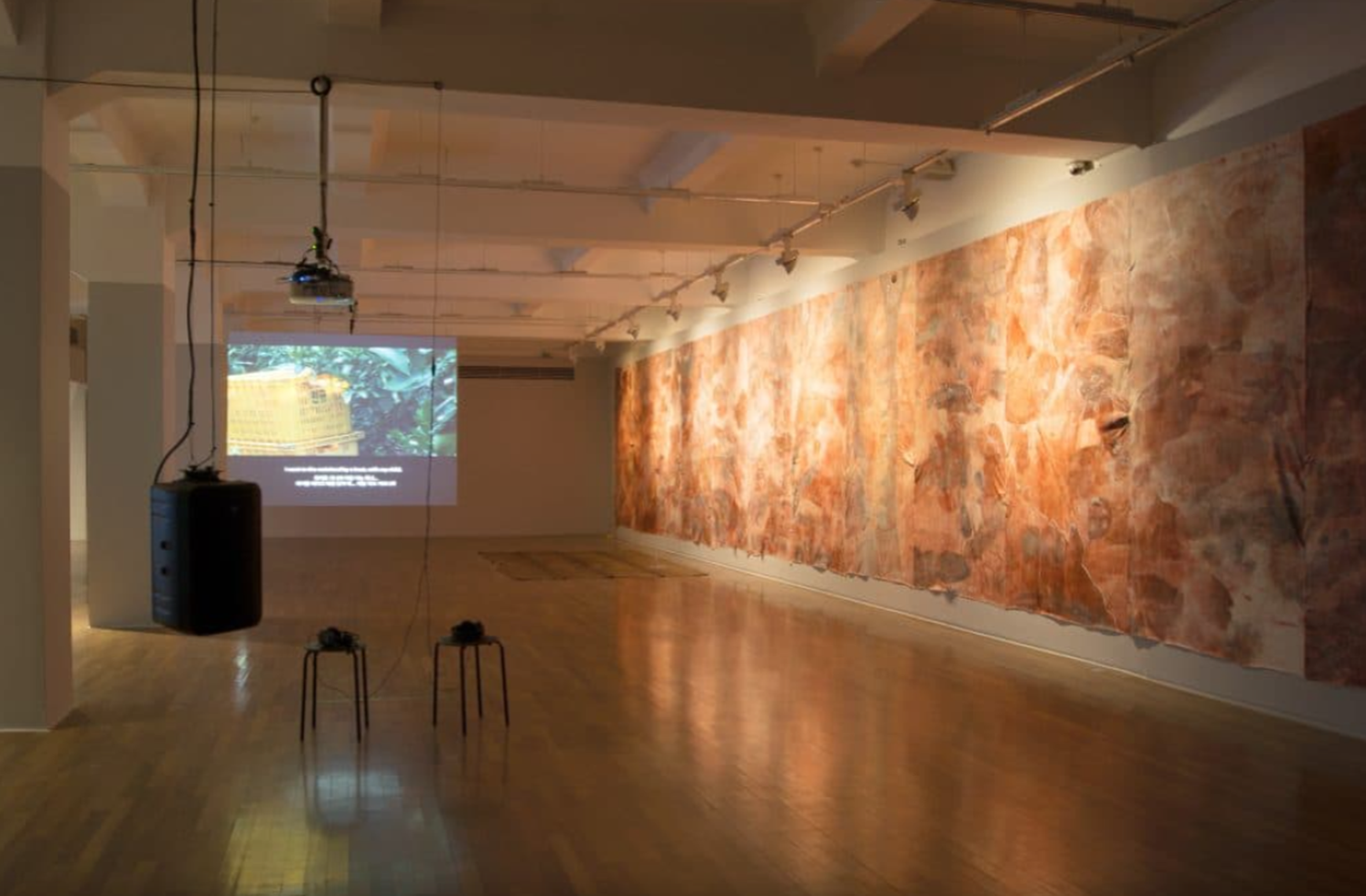
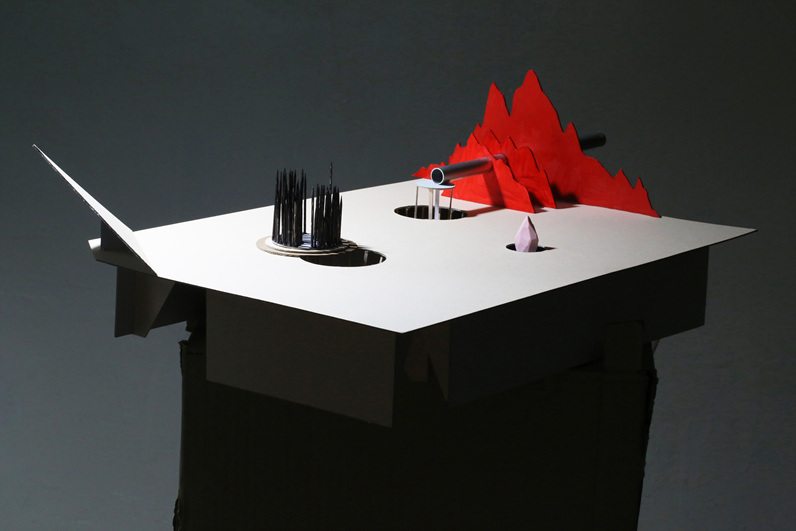
In works from the 2020s such as Monument Zero and March, Kim further expands his formal language. He combines paper and clay to construct structures oscillating between presence and absence, re-mediating them through photography; or merges objects with differing temporal and symbolic systems—shopping carts, masks, bier structures—to reinterpret collective funerals and mourning practices. This method juxtaposes material fragility, spiritual worldviews, and social realities, configuring material, image, and memory into a continuous layered field.

Topography & Continuity

Kim’s work maintains a consistent focus on “recovering narratives that have disappeared between social structures and individual perception.” Beginning in the early 2000s with photographic works examining urban development and local power structures, his practice expanded in the 2010s into object-based sculptures invoking personal memory, local belief systems, and indigenous mythologies. Since the 2020s, it has evolved into narrative installations that integrate social tragedy, collective unconsciousness, and shamanistic structures. His work has thus shifted from observing external reality to engaging with spiritual, internal, and communal layers of experience.

His originality lies in the ability to restore vanished narratives—belief systems lost through urbanization, fragmented Asian mythologies, collective memories of communities—through assemblage and visual metaphor. Alongside a medium-based expansion from photography to installation, sculpture, and video, his work operates as an aesthetic mechanism that reinterprets “our origins” overlooked within the structure of Western modernity.

Additionally, his practice interweaves historical events (the Sewol Ferry tragedy), regional histories (Bulgwang-dong shrines), macro-level structures (Western-centered urbanization), and archetypal beliefs (shamanism) into a single narrative, continually exploring the layers of social reality and collective unconsciousness. As a mode of translating Korean epistemological structures into contemporary visual language, his work is considered a significant aesthetic resource with strong potential in the international art world.

His approach—addressing fragments of Asian myth, shamanistic structures, material vulnerability, social wounds, and the restoration of lost narratives—will likely continue expanding through new spatial, material, and temporal configurations. Kim is expected to further strengthen his unique position connecting contemporary artistic sensibilities with social realities, while extending his practice onto the global stage.

Works of Art

The Underlying Roots of Society

Exhibitions