Signalling II - K-ARTIST

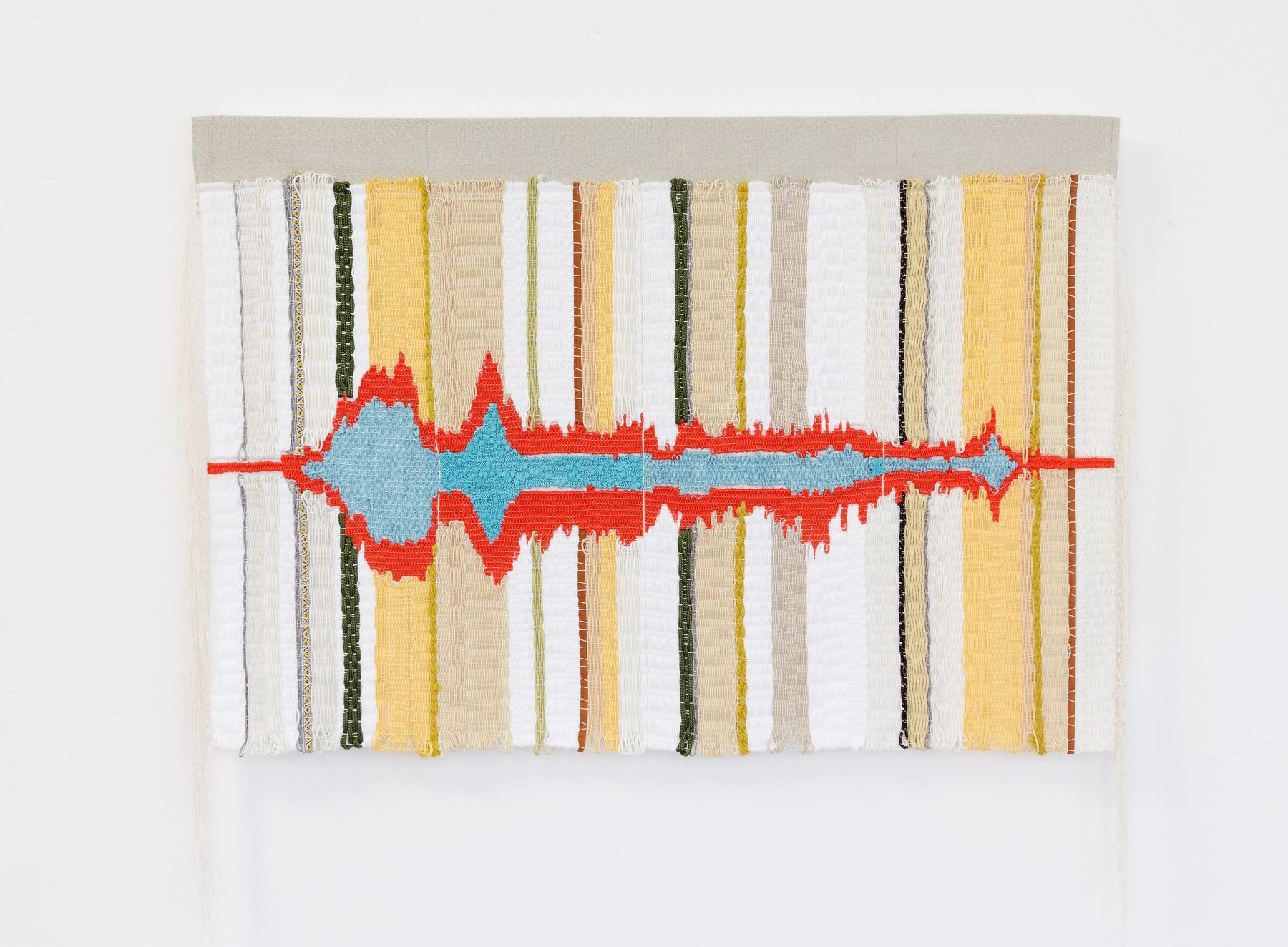
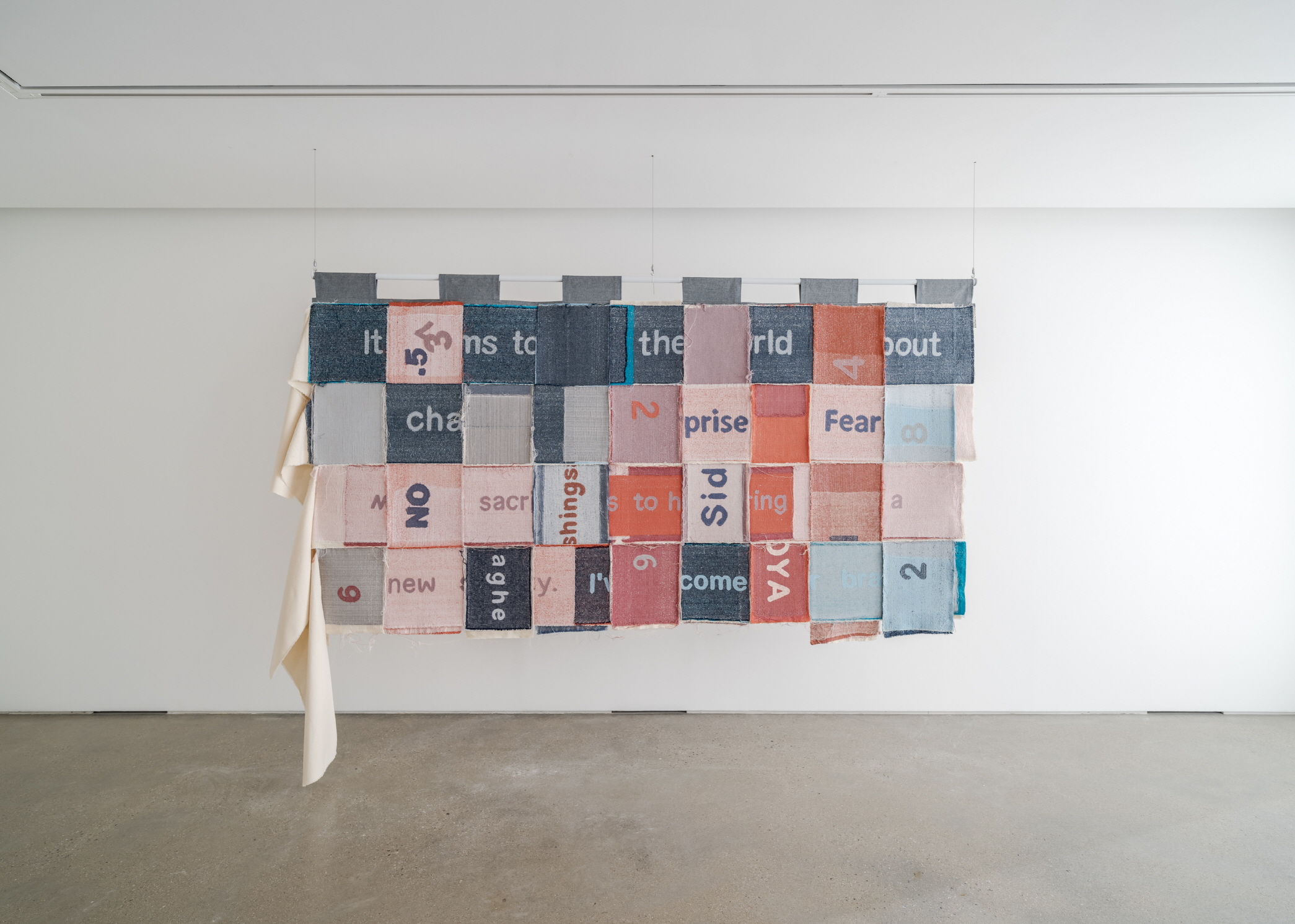
Signalling II

2023
Yarn, various strings, upholstery fabric, wooden frame
72 x 100 x 5 cm
About The Work

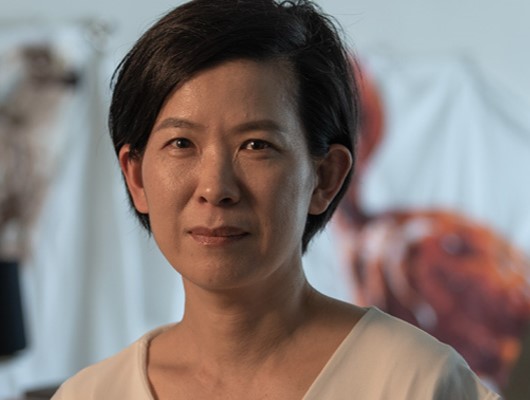
Young In Hong through her diverse artistic practices, has consistently explored the theme of "equality," working to flexibly dismantle various hierarchical structures in reality. The artist has persistently pursued works across a range of media—including drawing, painting, installation, sound, embroidery, performance, and text—seeking to investigate the "boundary" as a place where equality can be tested.
 
Rather than dismantling the lines separating art and society, humans and non-humans, center and periphery, she expands the intervals between them, creating spaces of suspension and encounter. Although her work has grown from site-specific installations into expansive narrative structures combining embroidery and performance, the direction of her inquiry has remained consistent.
 
Young In Hong pays careful and respectful attention to the disappearing spaces or marginalized voices under the pressure of metanarratives through her flexible methodology of art, while integrating them into an exhibition like weaving weft and warp, thereby inviting us to that horizontal community.

Solo Exhibitions (Brief)

Young In Hong has held solo exhibitions at a wide range of institutions in Korea and abroad, including PKM Gallery, Art Sonje Center, Alternative Space LOOP, Kunsthal Extra City (Belgium), Exeter Phoenix (UK), Cecilia Hillström Gallery (Sweden), and Taipei Artist Village (Taiwan).

Group Exhibitions (Brief)

Young In Hong has also participated in numerous group exhibitions at institutions such as the National Museum of Modern and Contemporary Art, Korea; Seoul Museum of Art; Busan Museum of Contemporary Art; Gyeonggi Museum of Modern Art; Asia Culture Center; Samsung Museum of Art PLATEAU; Kukje Gallery; Culture Station Seoul 284; the Delfina Foundation (UK); the Saatchi Gallery (UK); and the State Hermitage Museum (Russia).

Awards (Selected)

In 2019, Hong was shortlisted for the Korea Artist Prize at the National Museum of Modern and Contemporary Art and received the Kimsechoong Art Prize in 2011 and the Suk-Nam Art Prize in 2003. 

Residencies (Selected)

Young In Hong has participated in residency programs at Hauser & Wirth Somerset (2024, UK) and the Delfina Foundation (2014, UK).

Works of Art

Sustained Investigation of Boundaries

Originality & Identity

Young In Hong’s practice begins with an understanding of “equality” not as an ethical declaration, but as a question of relationships that are sensorially tested and continually rearranged. Rather than presenting the hierarchies operating across society—between art and non-art, humans and non-humans, center and periphery, men and women, recorded history and excluded memory—as fixed structures, she focuses on states of boundary where these hierarchies are unsettled and intersect. This attitude runs consistently from her early site-specific works such as The Pillars(2002) and Open Theater(2004) to her more recent large-scale installations and performances.

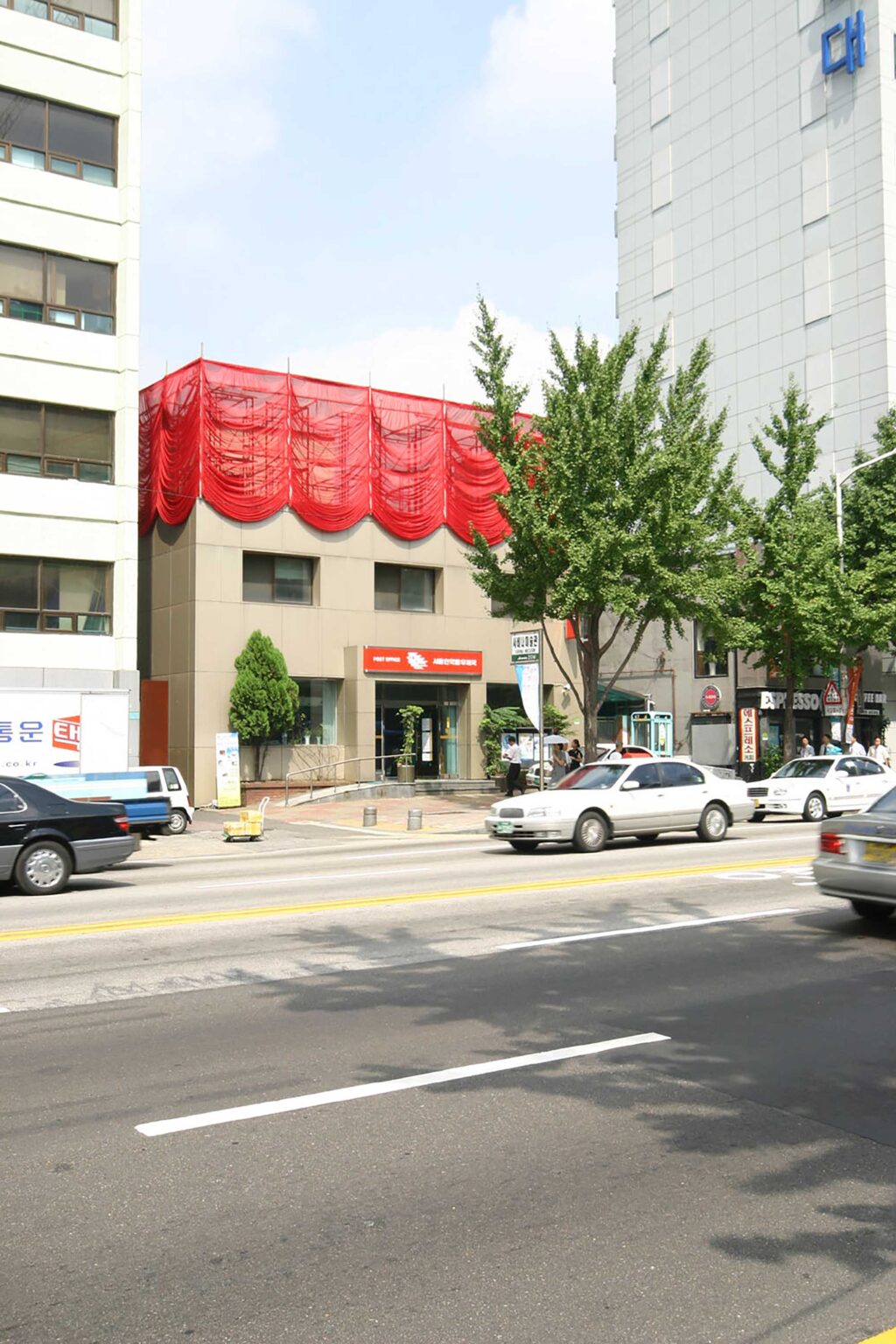
In her early works, Hong raised questions of equality by disrupting the symbolic authority embedded in institutional spaces. The Pillars replaces architectural pillars—structures meant to bear physical load—with hollow curtain forms, exposing a separation between function and symbol. Subsequently, works staged at Anguk Post Office and the Samcheong-dong police substation, Open Theater and I Will Commit Crime Forever and a Day(2004), temporarily inserted art into controlled public institutions, paradoxically reconfiguring notions of publicness and normativity, transgression and safety.

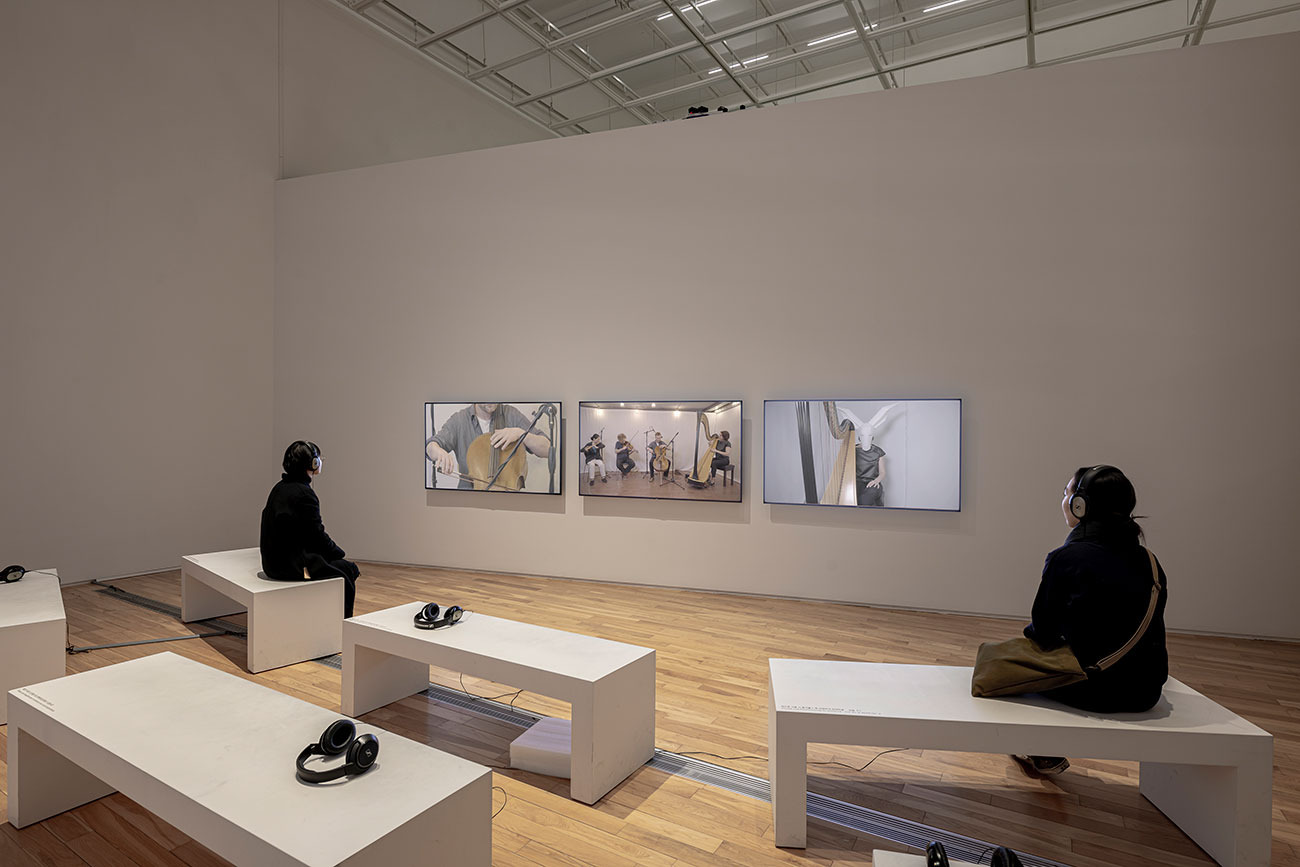
Over time, the artist’s focus expanded toward the histories and labor of excluded subjects. Using embroidery and sewing—forms of labor historically undervalued and feminized—as her primary medium, Under the Sky of Happiness(2013) recalls portraits and traces of women marginalized during Korea’s modernization. Here, equality shifts from a matter of rights to a deeper question of who is remembered and who is recorded. This line of inquiry continues in Looking Down from the Sky(2017), where silhouettes of collective protests are transformed into musical scores, translating suppressed voices into another sensory language.

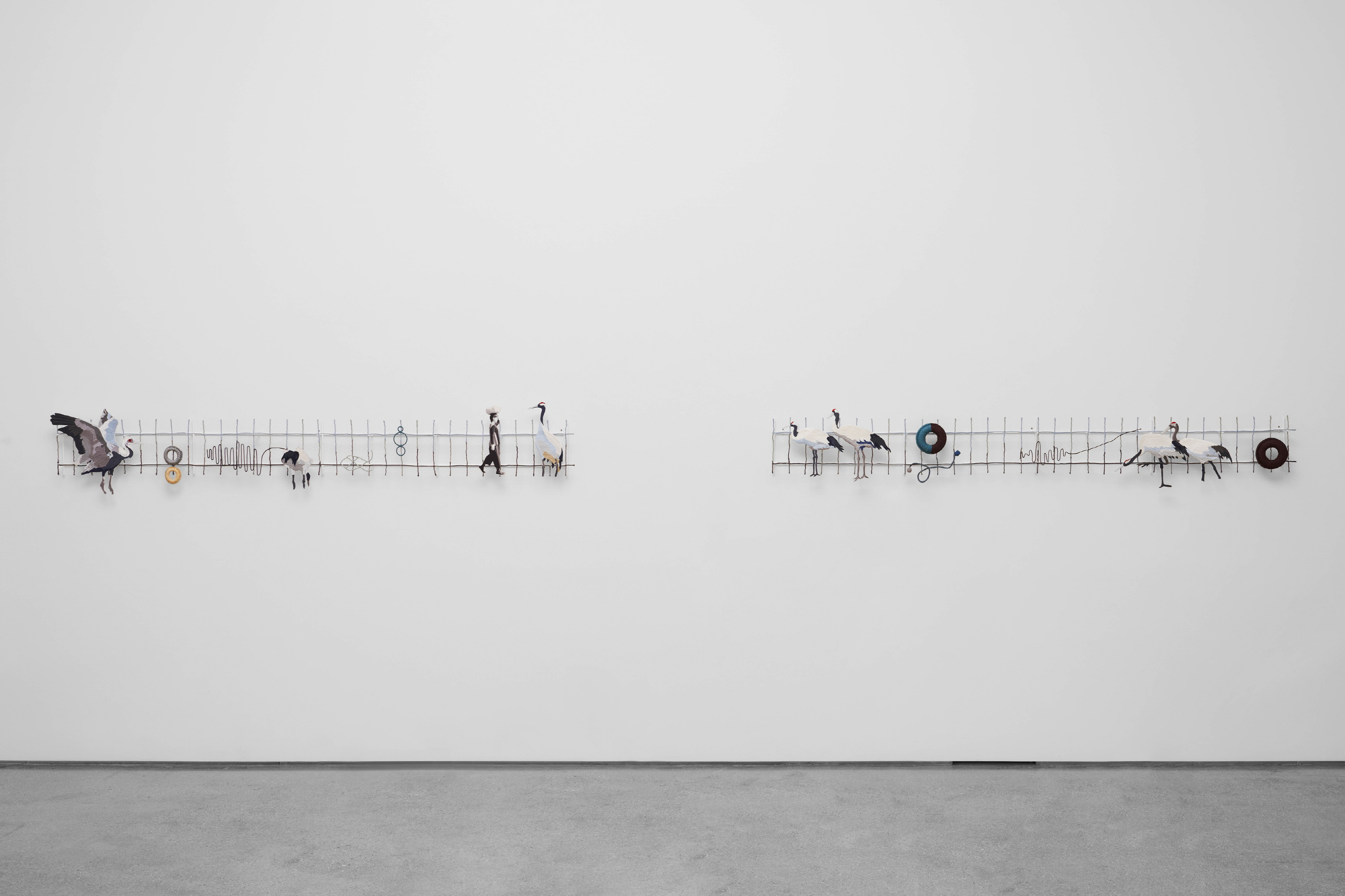
Since 2019, Hong’s work has moved further toward reexamining the anthropocentric order itself. Works presented in 《Korea Artist Prize 2019》—To Paint the Portrait of a Bird(2019), The White Mask(2019), and Un-Splitting(2019)—indirectly expose social exclusivity and structures of division through animal perception, collective bodies, and improvised sound. These explorations have expanded into more complex narratives in recent solo exhibitions such as 《Five Acts & A Monologue》(Art Sonje Center, 2025) and 《Five Acts》(Spike Island, 2024), where women’s labor histories are juxtaposed with relationships between humans and animals.

Style & Contents

Young In Hong’s practice is characterized by its fluid movement across media, with form itself functioning as an integral part of concept. While her early works emphasized installation and staging to overturn spatial contexts, her practice has gradually developed into complex structures that combine embroidery, sound, performance, and video. This expansion of media is less a linear evolution of form than a set of choices shaped by the subjects and narratives she seeks to address.

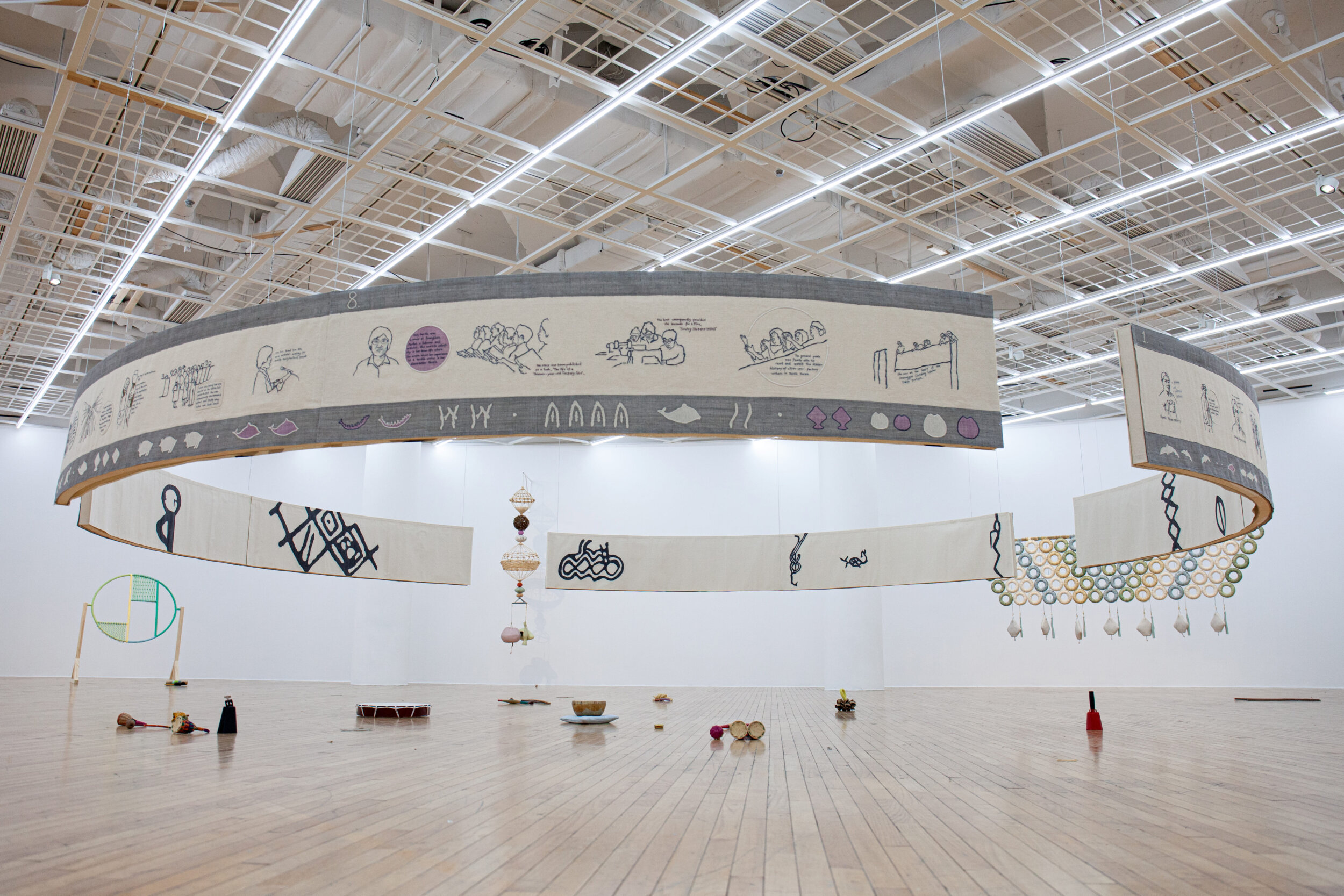
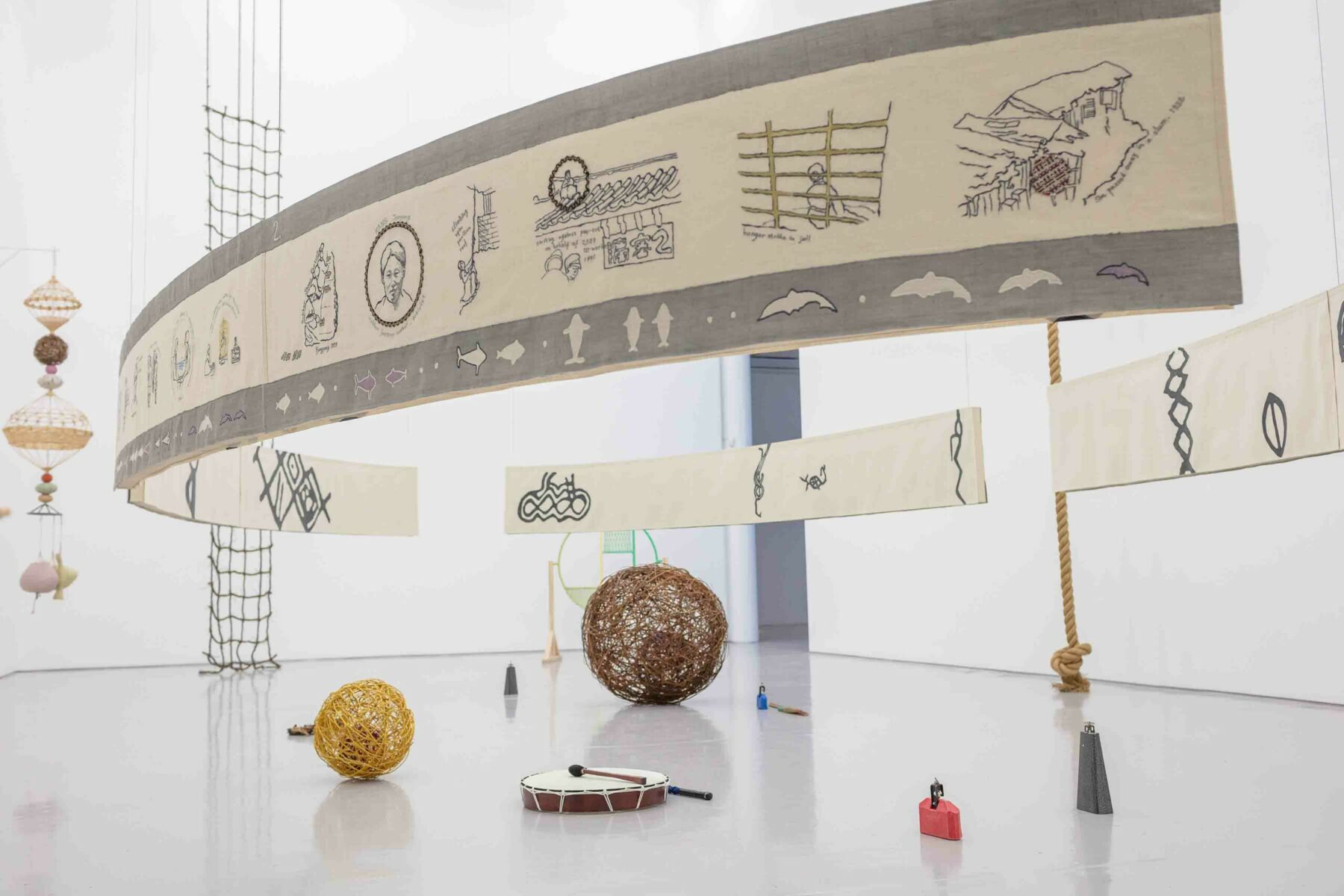
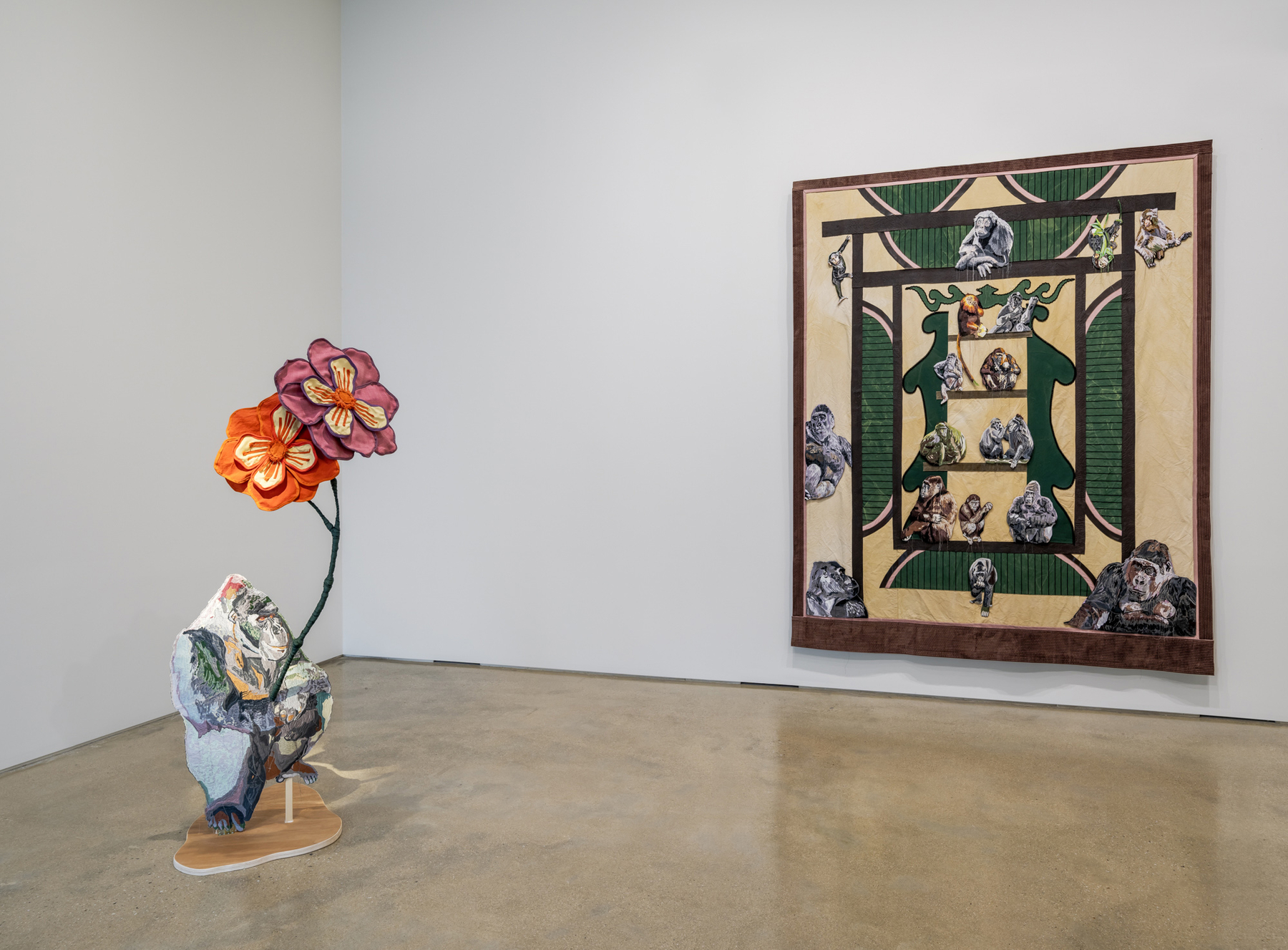
Embroidery and sewing occupy a central position in her work. In Under the Sky of Happiness, embroidery is not decorative imagery but a material record that directly invokes the temporality and physicality of women’s labor. Female figures reconstructed through photomontage embroidery—spanning different generations, social classes, and professions—are woven into a single visual field, later expanding into large-scale tapestries. Manual for Five Acts Performance – Outer Wall of the Circular Frame(2024) extends this approach into a roughly forty-meter-long embroidered tapestry that narratively connects key moments in Korean women’s labor history from the 1920s to the 1980s.

Sound and performance function as devices that activate these visual records in the present. Looking Down from the Sky converts embroidered images into musical scores that resonate through live performance, while Un-Splitting constructs a collective body through choreography that intersects movements of female workers with the erratic motions of birds. Here, performance does not operate as representation, but as an act of re-enactment that brings past gestures into the present moment.

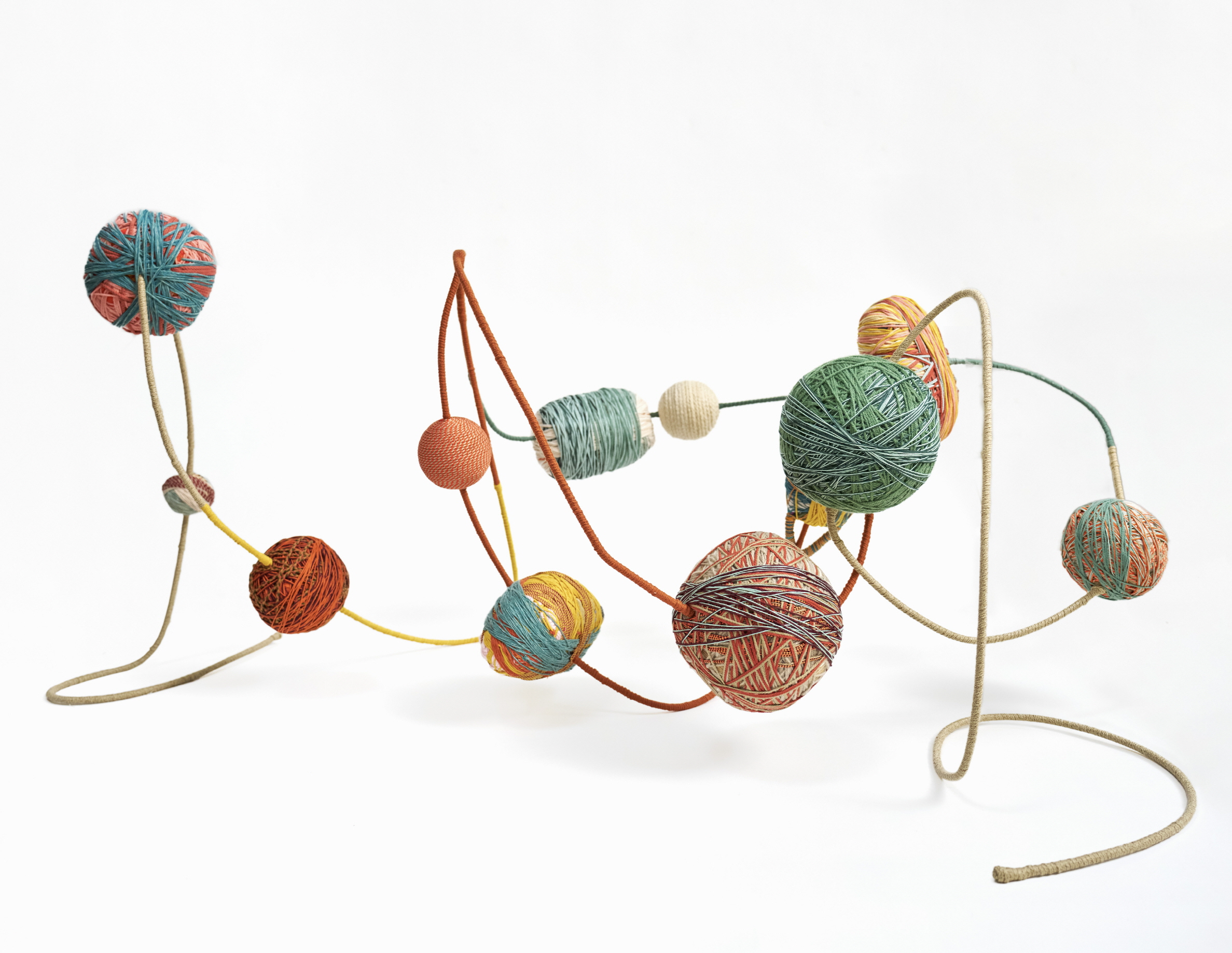
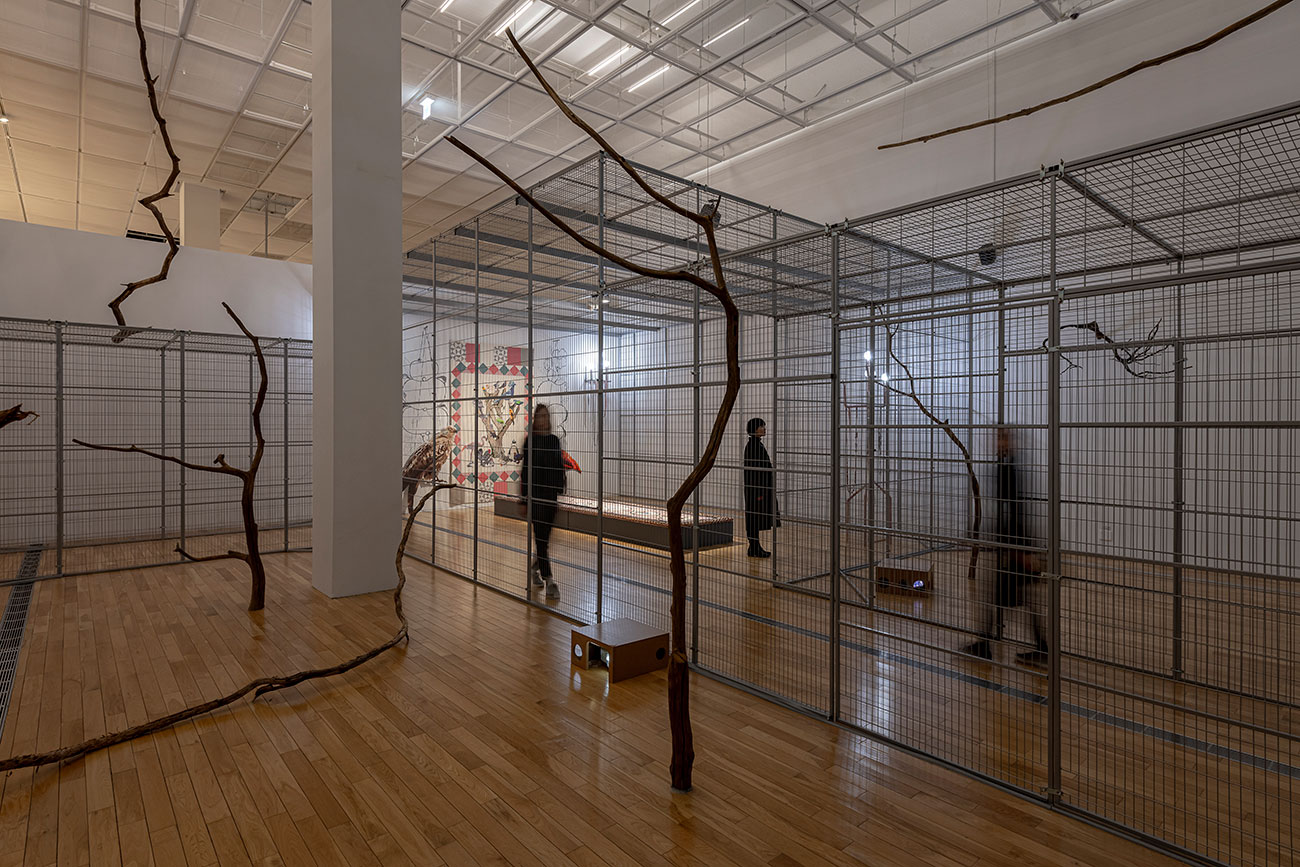
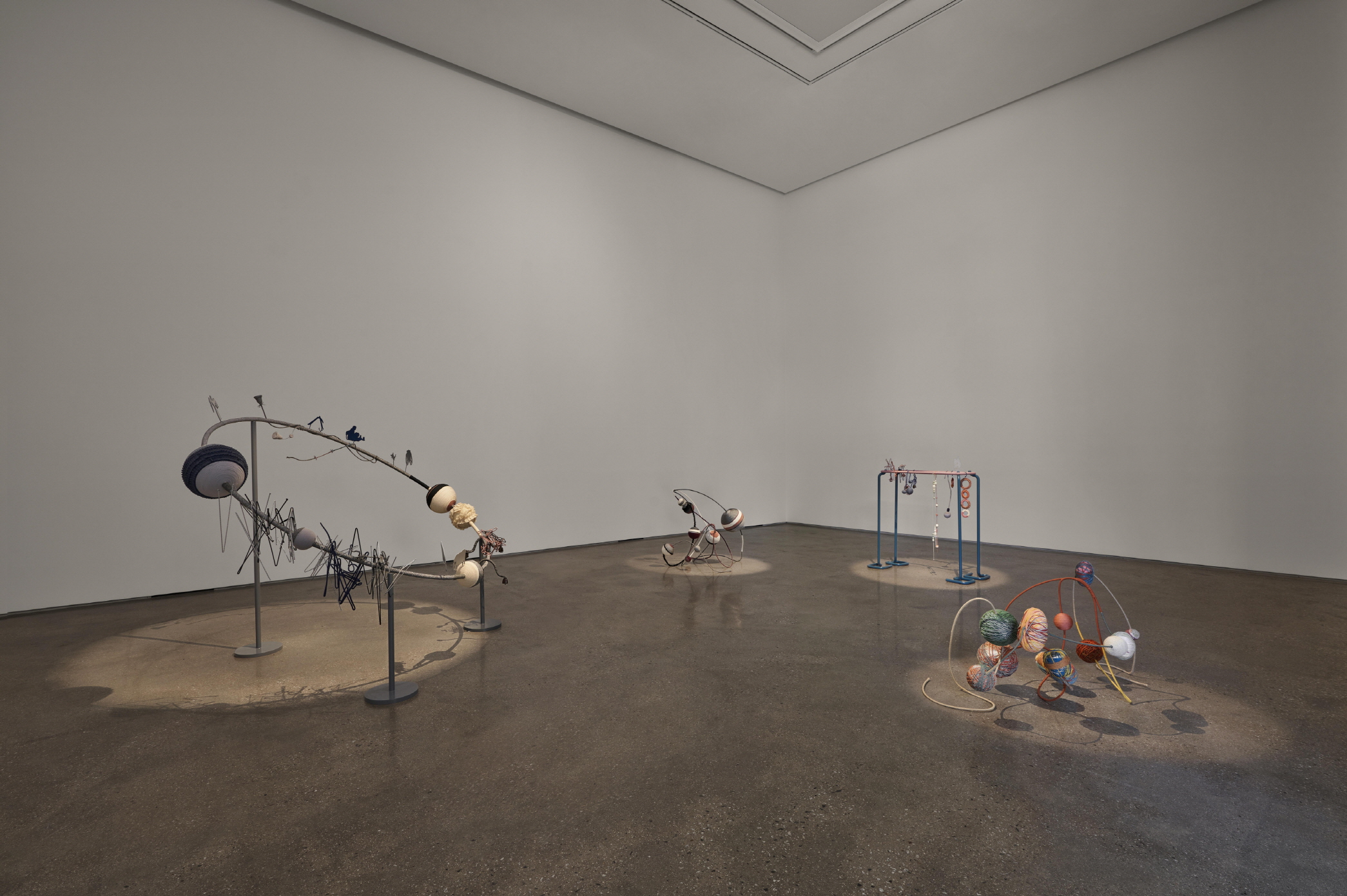
Works engaging non-human beings further extend these formal strategies. To Paint the Portrait of a Bird invites viewers into a monumental birdcage, prompting a reversal of perspective, while Thi and Anjan(2021) creates a sensory environment of coexistence between humans and animals through straw sandals made for elephants and an immersive sound installation. In more recent works such as Woven and Echoed(2021) and 《Five Acts》, embroidery, sculpture, sound, and performance operate as an interdependent structure, presenting the artwork not as a fixed object but as a scene unfolding in time.

Topography & Continuity

At the core of Young In Hong’s practice lies a sustained and persistent investigation of boundaries. Rather than dismantling the lines separating art and society, humans and non-humans, center and periphery, she expands the intervals between them, creating spaces of suspension and encounter. Although her work has grown from site-specific installations into expansive narrative structures combining embroidery and performance, the direction of her inquiry has remained consistent.

Within the landscape of contemporary art, Hong occupies a position that engages social issues without resorting to direct declaration or didactic representation. Instead, she reconstructs relationships through sensory experience and embodied action. While her work intersects with feminism, posthumanism, and labor history, it does not submit to any single discourse; rather, it establishes an independent language through deliberate choices of media and form. This trajectory becomes increasingly evident in major exhibitions such as 《Korea Artist Prize》, 《Five Acts》, and 《Five Acts & A Monologue》, where her practice unfolds as a layered and long-term narrative.

If her early works focused on disrupting the symbolic authority of institutional spaces, her recent projects have shifted toward engaging historical time and collective memory. This transition, however, represents not a rupture but an expansion of the sites where equality can be tested. Moving from space to body, from body to history, and from humans to non-humans, Hong’s work continues to invite an ever-widening range of subjects into a shared field of relation.

Works of Art

Sustained Investigation of Boundaries

Exhibitions