

Toilet Project (TPS-004) - K-ARTIST

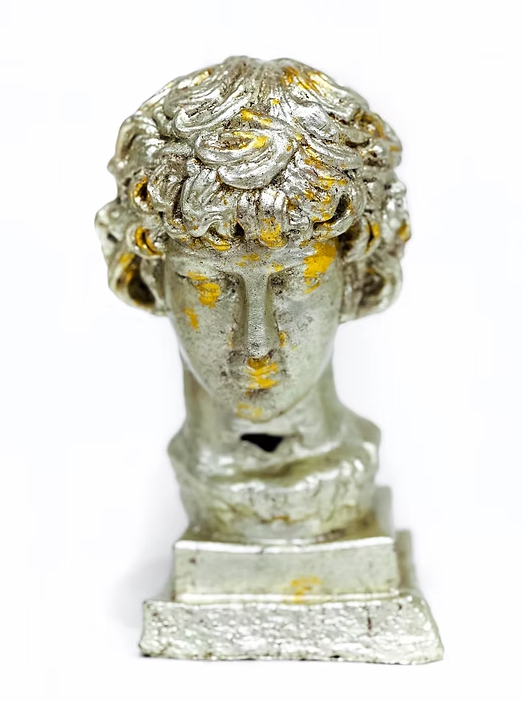
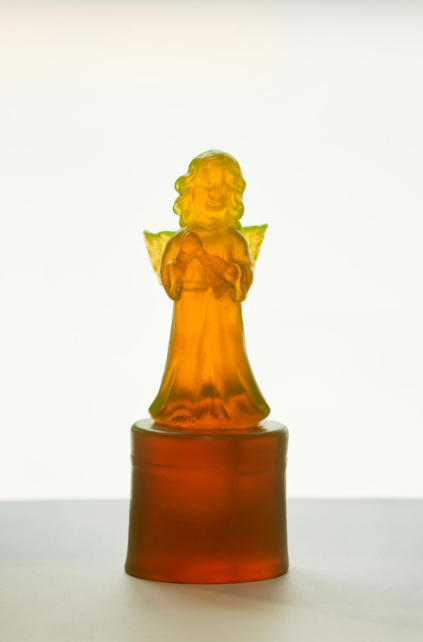
Toilet Project (TPS-004)

2013
Soap, fragrance
39 × 17 × 24.5 cm, 5㎏
About The Work

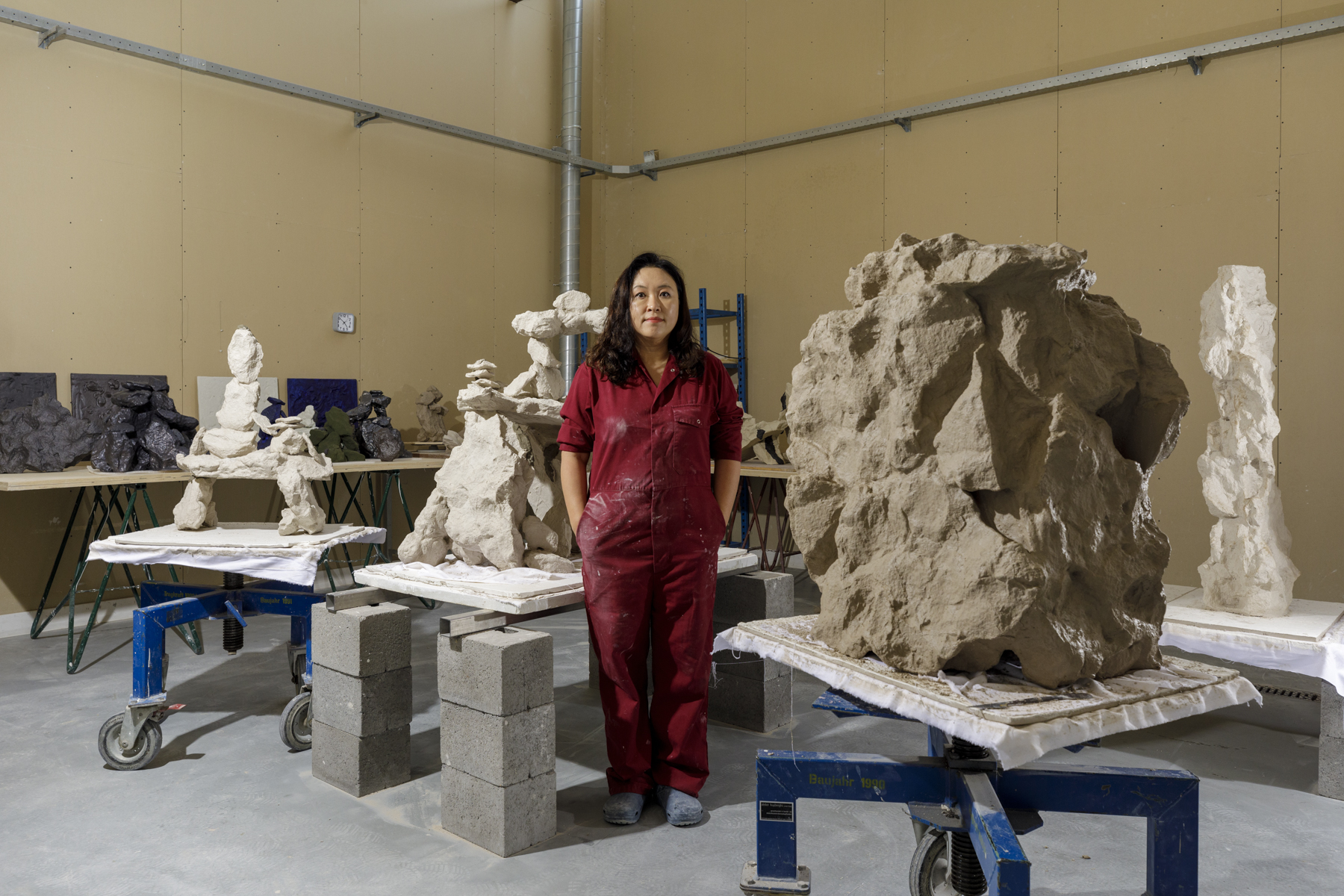
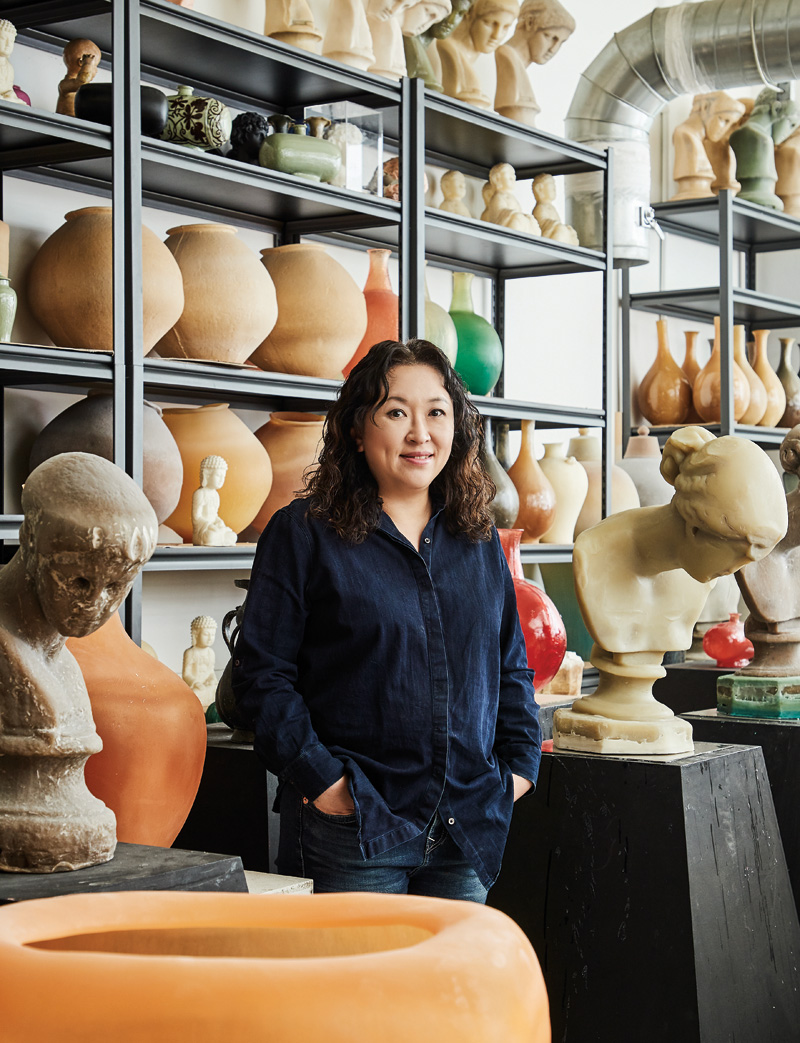
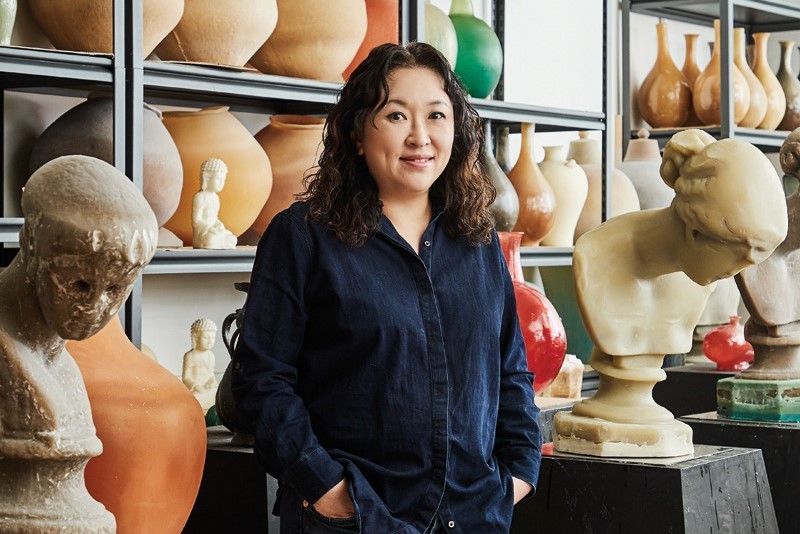
Meekyoung Shin uses "soap" instead of traditional sculptural materials to recreate historical artifacts and artworks that represent specific cultures from a contemporary perspective. Through the physical nature of soap, which loses its form over time and under environmental conditions, Shin visualizes the "temporality" of culture and history by paralleling the weathering of artifacts and artworks over time.
 
Although many contemporary artists address replication and institutions, Shin uniquely sustains a balance between meticulous craftsmanship and process-driven critique. Elements such as scent, audience touch, and weathering are not illustrative devices but conditions through which meaning emerges. Her practice expands sculpture beyond visuality into a field where sensory experience, institutional critique, and historical consciousness intersect across Korean and British cultural terrains.
 
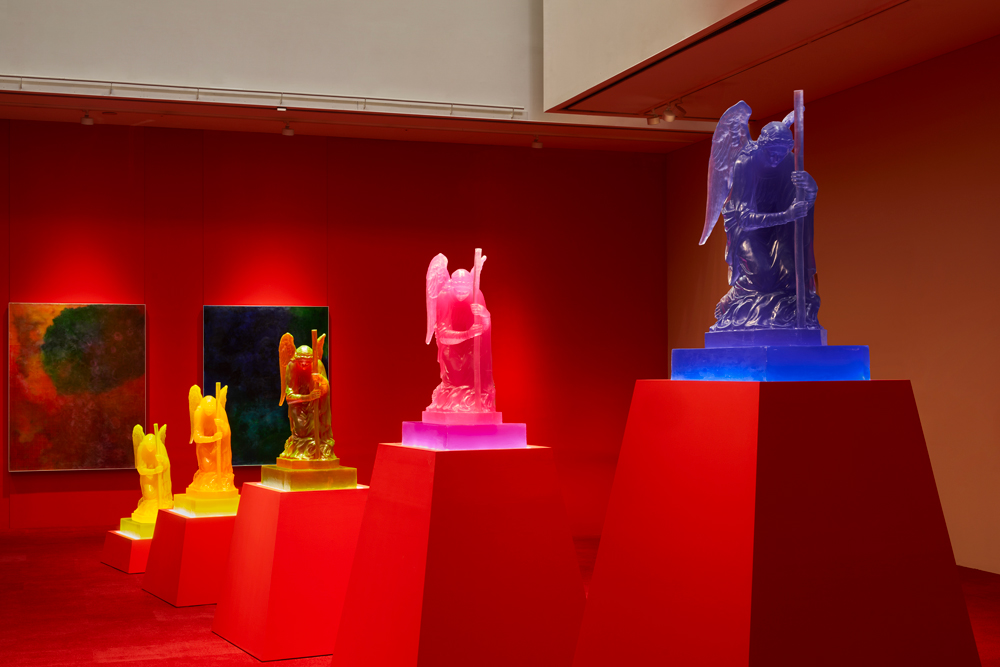
In recent years, she has broadened her material investigations to ceramics, Jesmonite, bronze, and resin. This expansion transfers the temporal logic once embodied by soap—erosion, transition, transformation—into new material frameworks. Having already navigated museums, toilets, and public plinths across global contexts, Shin continues to test how artifacts, monuments, and cultural symbols are translated and mistranslated across geographies. Rather than projecting a future trajectory, her sustained international presence demonstrates an ongoing rearticulation of cultural translation as a sculptural methodology grounded equally in material precision and conceptual clarity.

Solo Exhibitions (Brief)

In South Korea, Meekyoung Shin has held solo exhibitions at institutions such as ARKO Art Center, Space K, the National Museum of Modern and Contemporary Art Korea, Seoul National University Museum of Art, and Sungkok Art Museum. Internationally, she has exhibited at Hakgojae Gallery in Shanghai, China, and in the UK at Haunch of Venison, London, Belton House, and Bristol Museum.

Group Exhibitions (Brief)

During her graduate studies, Shin gained attention for her soap sculpture performances, leading to her invitation to the exhibition at the Hayward Gallery in London in 1998, where she recreated Greek sculptures from the British Museum in soap. In 2004, she continued her soap sculpture performances in the lobby of the British Museum. 

Since then, she has participated in major exhibitions in various countries, including at the Saatchi Gallery in London. In Korea, she has presented her work at institutions such as the National Museum of Modern and Contemporary Art, the Seoul Museum of Art, Sungkok Art Museum, and Leeum Museum of Art.

Awards (Selected)

Meekyoung Shin was selected as one of the four finalists for the Korea Artist Prize hosted by the National Museum of Modern and Contemporary Art in 2013. In 2015, she received the Best Emerging Artist Award (Sculpture) at the Prudential Eye Awards in Singapore.

Residencies (Selected)

Shin has participated in residency programs at Ssamzie Space (2002–2003) and Gyeonggi Museum of Modern Art (2009), among others.

Collections (Selected)

Shin’s works are included in the collections of the National Museum of Modern and Contemporary Art (Korea), Leeum Museum of Art, Seoul Museum of Art, Museum of Fine Arts, Houston (USA), Arts Council England (UK), and Bristol Museum & Art Gallery (UK).
Works of Art

The Reproduction of Historical Artifacts and Art Works

Originality & Identity

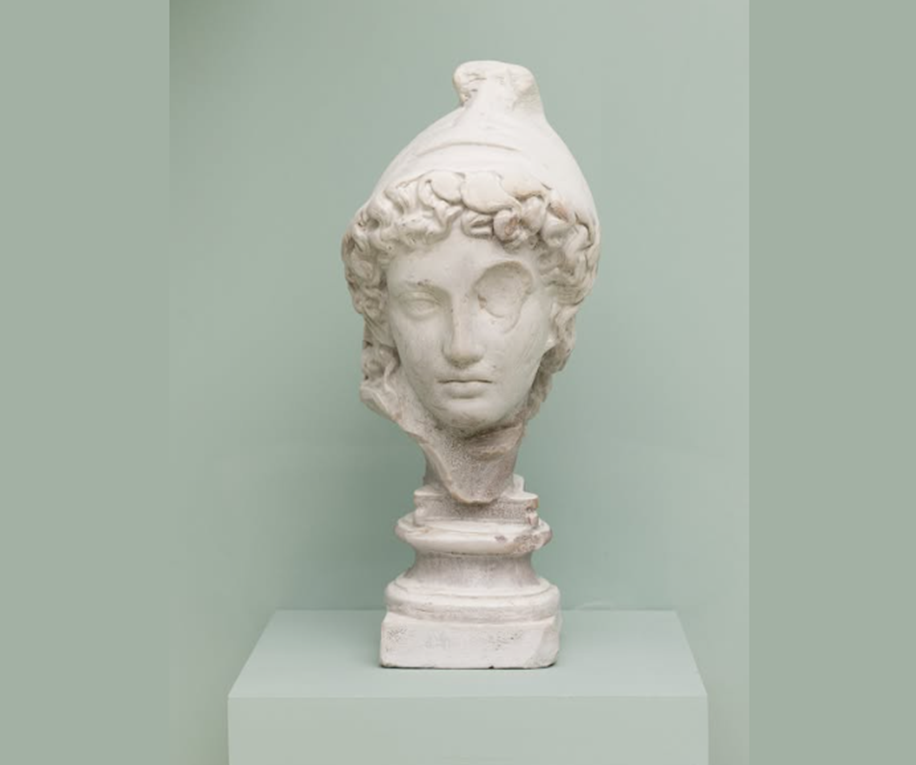
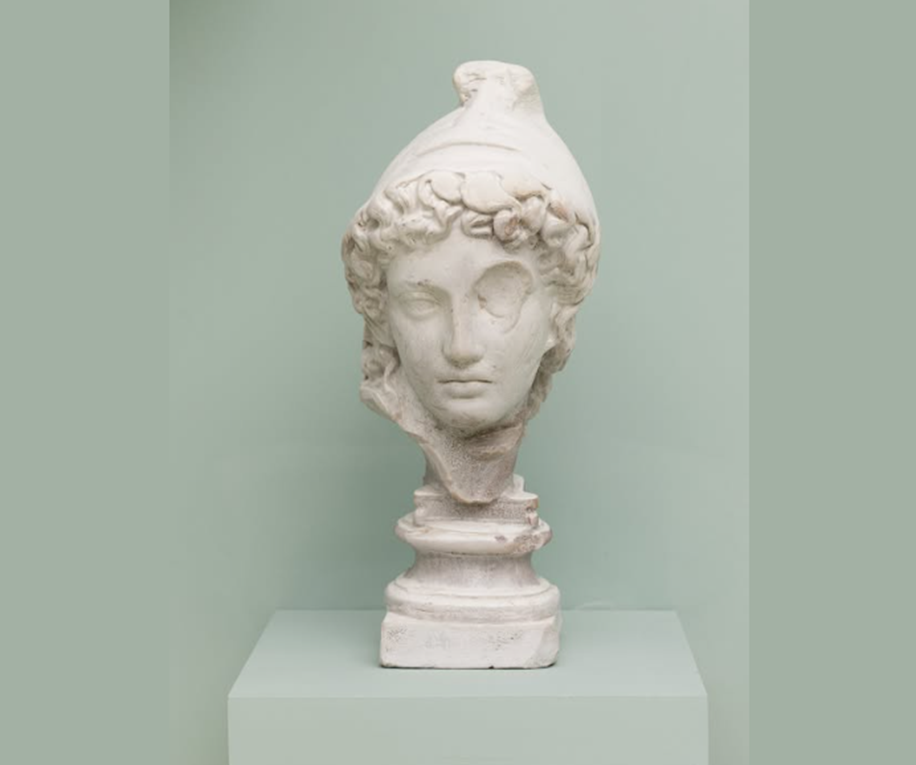
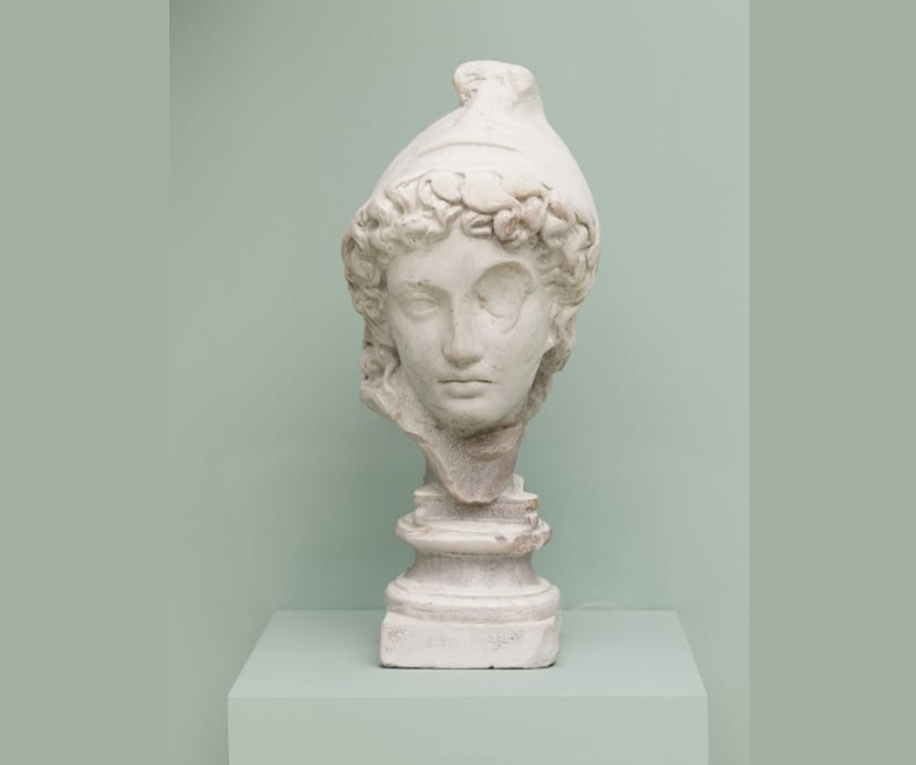
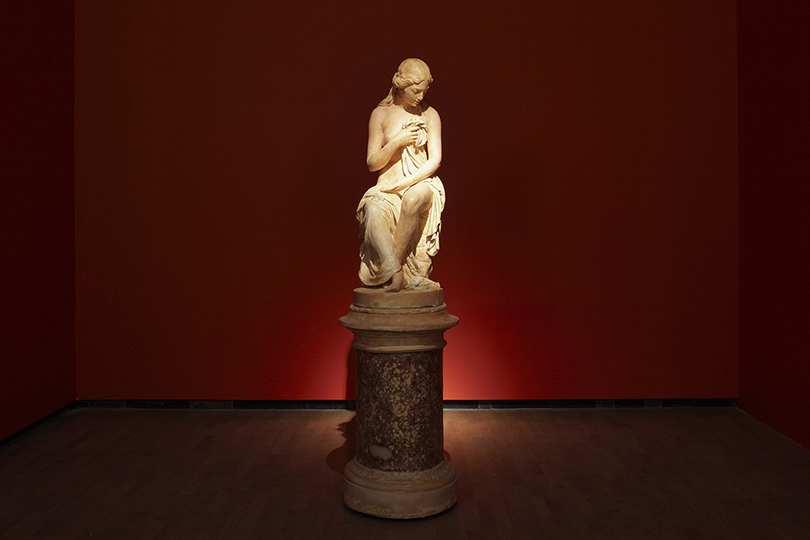
Meekyoung Shin’s practice begins with the concept of “translation,” not as a linguistic act but as a process through which culture is displaced and reconfigured. During her studies in the UK, she became acutely aware of how Western classics—once assumed to be universal—functioned within institutional frameworks that felt culturally estranged. From this experience, she foregrounded the gap and mistranslation produced by cultural difference as the core logic of her work. Starting with Translation–Venus Project(1998, restored 2009), the ‘Translation’ series reenacts what she calls the “artifactification” of classical sculpture—the moment when an object becomes detached from its original context and elevated to museum status—by reconstructing it in soap and questioning the conditions under which authority is formed.

For Shin, what matters is not accurate translation but the productive friction of mistranslation. By intentionally exposing differences between original and replica, marble and soap, sight and scent, she destabilizes hierarchies of authenticity. In works such as Translation–Crouching Venus, she borrows canonical forms from classical sculpture yet inserts her own cast body, collapsing the binary between original and copy. This gesture extends beyond appropriation toward a critical distancing from Western art historical centrality and a reflection on hybrid identity formed at cultural borders.

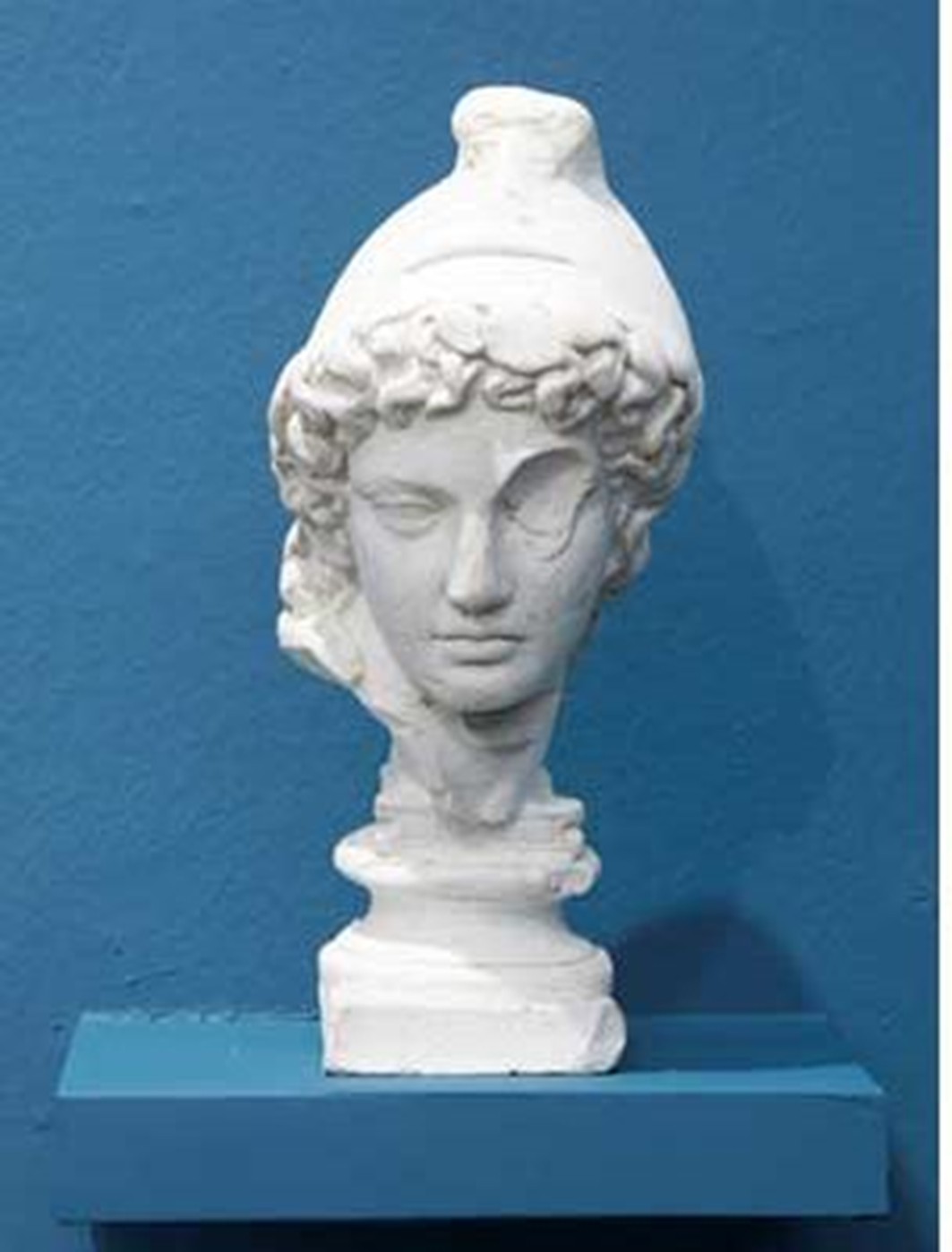
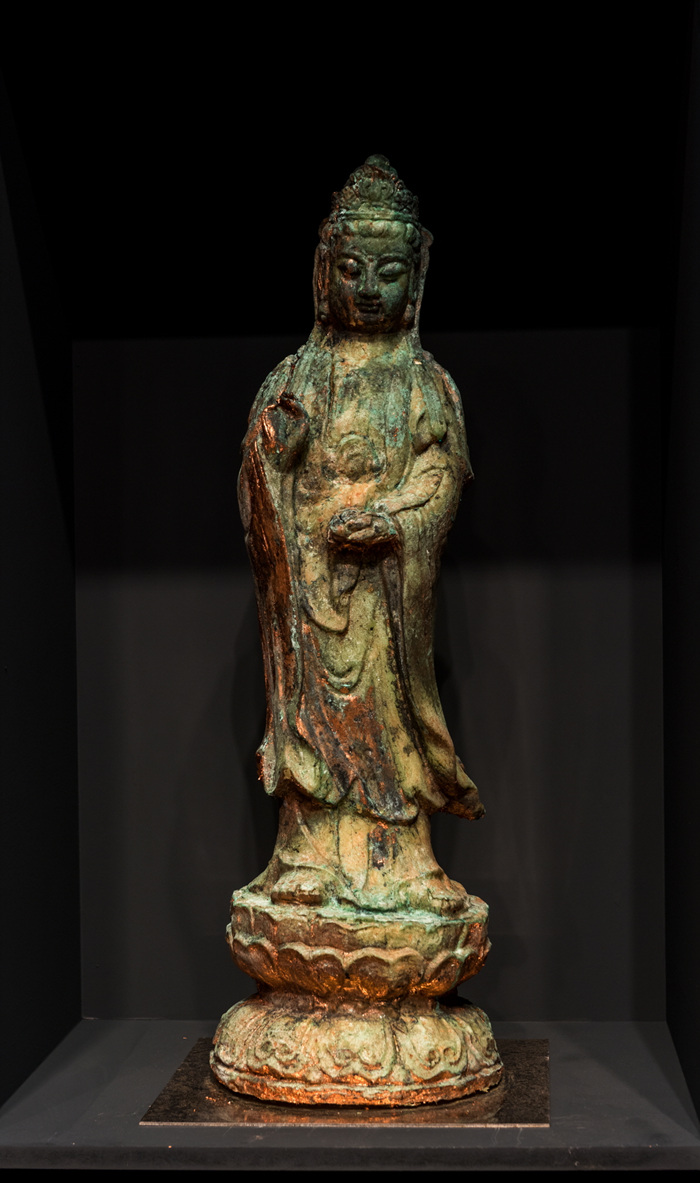
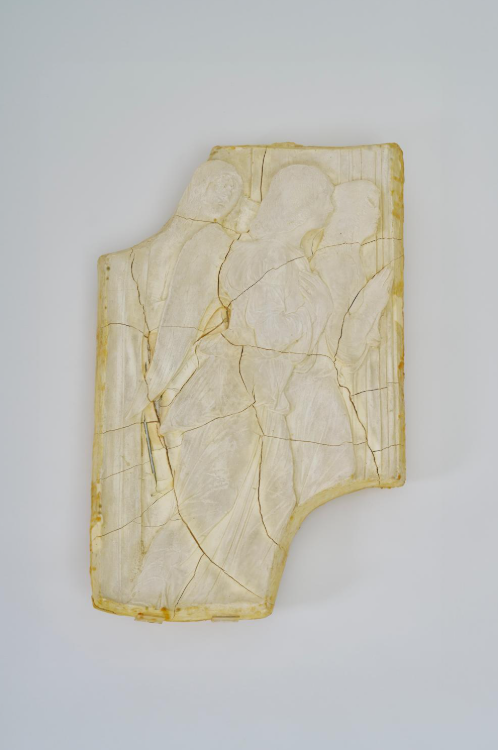
From the 2000s onward, this inquiry expanded beyond the opposition of original and copy toward the shifting role of context. Toilet Project(2004–) returns soap sculptures to the space where soap originally belongs—the toilet—allowing viewers’ touch and erosion to accumulate over time. Soap Buddhas or Venuses are worn down through use, then reinstalled in exhibition spaces, where they acquire the aura of artifacts. Even sculptures cast from the same mold assume different cultural and historical meanings depending on where they are placed, underscoring how history itself is constructed through repeated translation and reinterpretation.

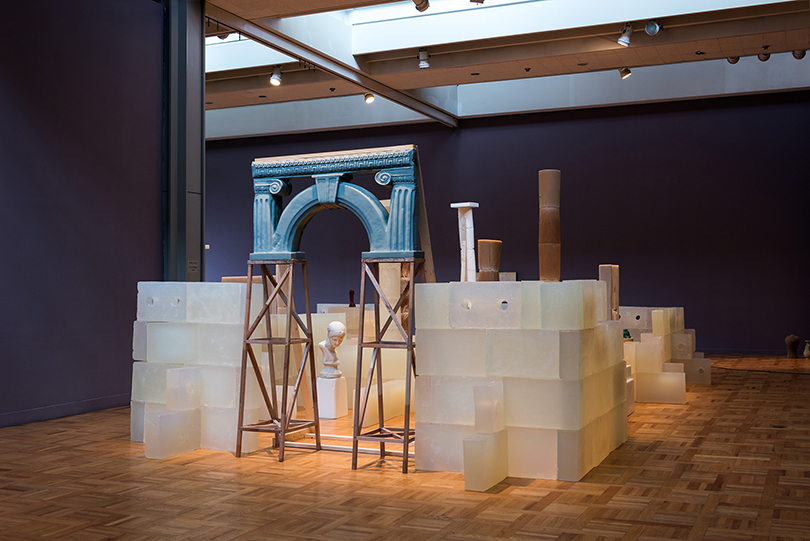
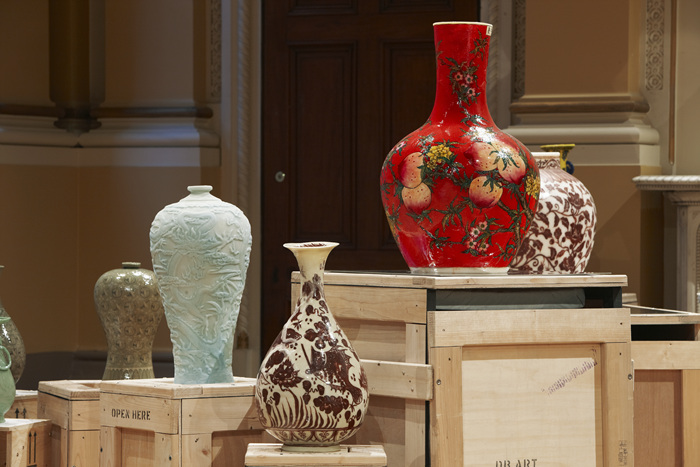
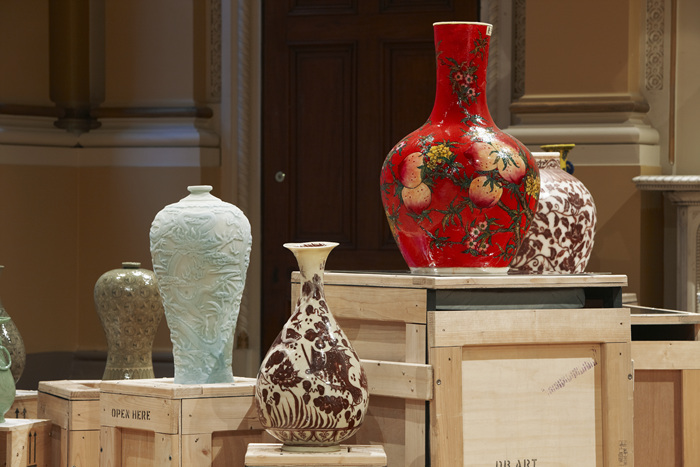
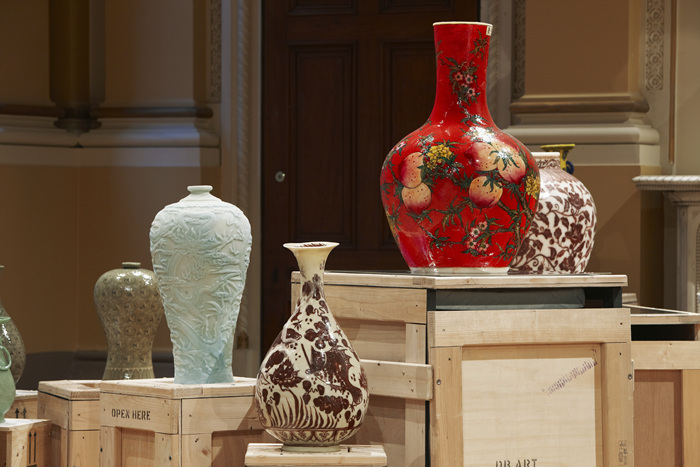
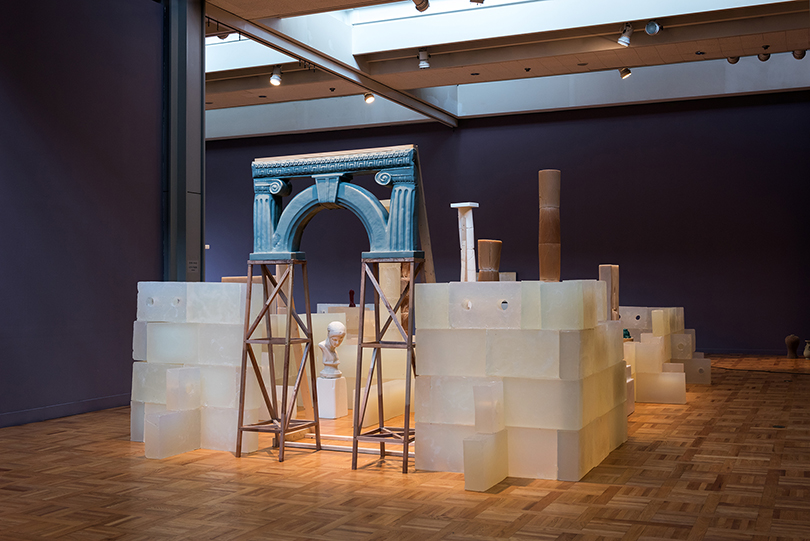
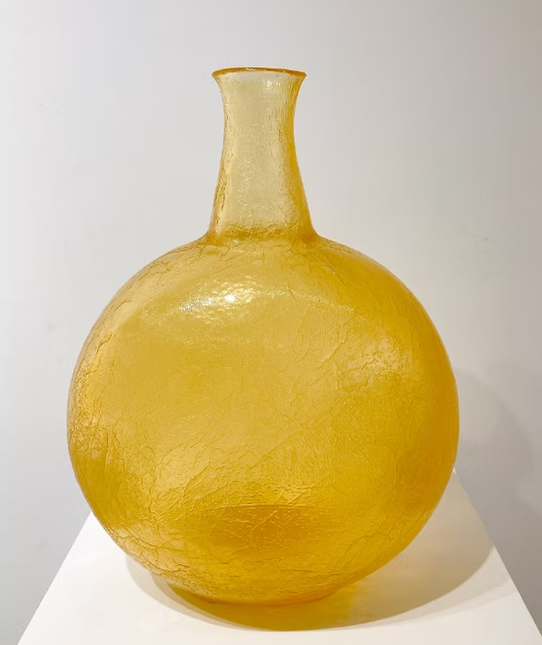
Later ceramic works and the notion of the “ghost” further extend this logic. Translation–Vase(2006–2013) reproduces export-oriented Chinese ceramics—objects made to appear “more Chinese” for Western tastes—and presents them atop transport crates, highlighting mobility and distortion. Ghost Series(2007–2013) removes surface detail, leaving only translucent forms, suggesting artifacts stripped of material and cultural context. Here, the ghost is not merely a symbol of disappearance but a presence that lingers within institutional and historical gaps.

Style & Contents

Shin’s formal language originates in the materiality of soap. Soap appears solid yet gradually erodes under environmental conditions; she parallels this vulnerability with the weathering of historical artifacts, transforming temporality into a sculptural condition. Early ‘Translation’ works placed soap replicas beside original sculptures or were produced in situ as performative acts, compressing centuries of artifact formation into months of labor. Fragrance was deliberately embedded in the soap, preventing visual misrecognition and marking the sensory difference between original and copy.

After 2000, she manipulated the “distance” of replication more assertively. By reenacting classical poses with her own body, casting it in plaster, and re-modeling it in soap, she revealed copying as an embodied reinterpretation rather than duplication. The subject thus shifted from the classical form itself to the systems—education, display, canon formation—through which it operates as a model. In this way, the exhibition space and institutional framework become inseparable from the work’s meaning.

Toilet Project expanded sculpture into a structure combining exhibition and use. Icons such as Buddhas and Greek statues, rendered in soap, are gradually worn away by viewers. When these eroded forms reenter museum space, they resemble ancient relics. Shin does not merely produce objects; she designs the trajectory by which objects become artifacts, incorporating audience action into that trajectory.

In ceramic works, display strategy becomes central. Translation–Vase presents ornate reproductions not on pedestals but on rough wooden crates, disrupting the polished rhetoric of museum display. Ghost Series goes further by hollowing interiors and eliminating surface information, allowing refined craftsmanship to shift toward a meditation on absence and residue.

Process remains crucial. Performances at the British Museum publicly staged the act of replication itself. In Julian Project(2002), high-school art students sculpted soap models of the academic plaster cast “Julian,” revealing how Western classical sculpture operates as a canonical standard within art education. The work emphasizes process over product, turning replication into a critical lens on institutional aesthetics.

Topography & Continuity

Shin’s originality lies not merely in using soap but in structuring her practice around the condition of becoming—how artifacts emerge through decontextualization, display, use, erosion, and re-display. While ‘Translation’ questioned museum authority, Toilet Project relocated that authority into the viewer’s hands and into culturally coded spaces. Translation–Vase and Ghost Series moved beyond East/West or original/copy binaries to examine how culture exaggerates, empties, and reconfigures itself through mobility and distortion.

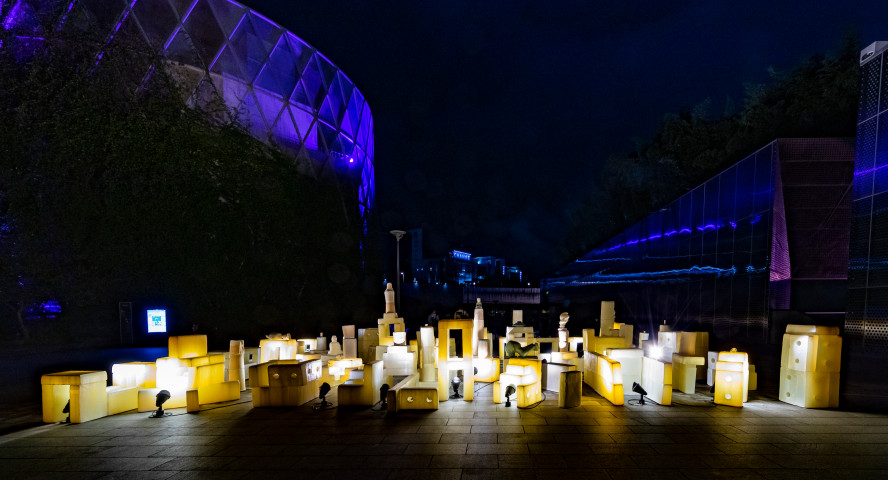
Her practice has also extended into public space. Written in Soap: A Plinth Project (Cavendish Square, London)(2012–) reoccupied the empty pedestal of a removed monument with a soap equestrian statue of the Duke of Cumberland. By reinstalling a contested historical figure in fragile material, Shin revealed the instability of monumental permanence. As the same form is replicated and relocated across sites, historical “fact” is shown to operate like an artifact—subject to repeated mistranslation and reinterpretation. The work’s meaning lies not in a single sculpture but in the chain of contextual shifts it generates.

Although many contemporary artists address replication and institutions, Shin uniquely sustains a balance between meticulous craftsmanship and process-driven critique. Elements such as scent, audience touch, and weathering are not illustrative devices but conditions through which meaning emerges. Her practice expands sculpture beyond visuality into a field where sensory experience, institutional critique, and historical consciousness intersect across Korean and British cultural terrains.

In recent years, she has broadened her material investigations to ceramics, Jesmonite, bronze, and resin. This expansion transfers the temporal logic once embodied by soap—erosion, transition, transformation—into new material frameworks. Having already navigated museums, toilets, and public plinths across global contexts, Shin continues to test how artifacts, monuments, and cultural symbols are translated and mistranslated across geographies. Rather than projecting a future trajectory, her sustained international presence demonstrates an ongoing rearticulation of cultural translation as a sculptural methodology grounded equally in material precision and conceptual clarity.

Works of Art

The Reproduction of Historical Artifacts and Art Works

Exhibitions

Activities