

You Were There: DMZ Project 2017 - K-ARTIST

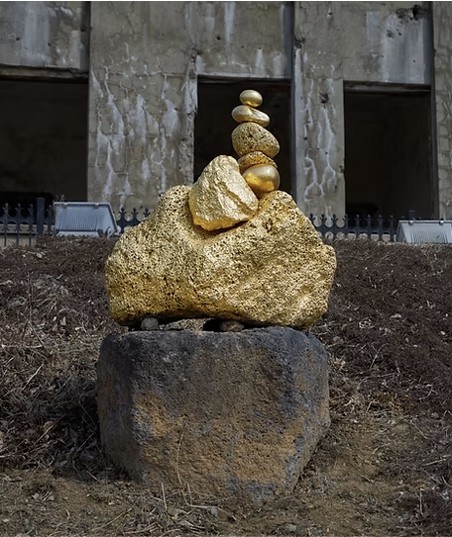
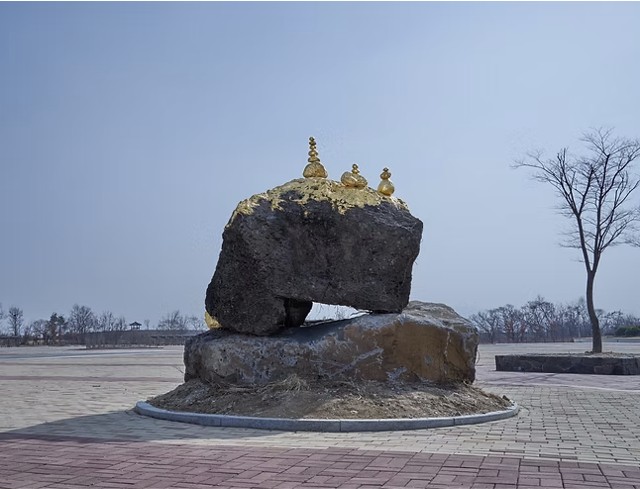
You Were There: DMZ Project 2017

2017 
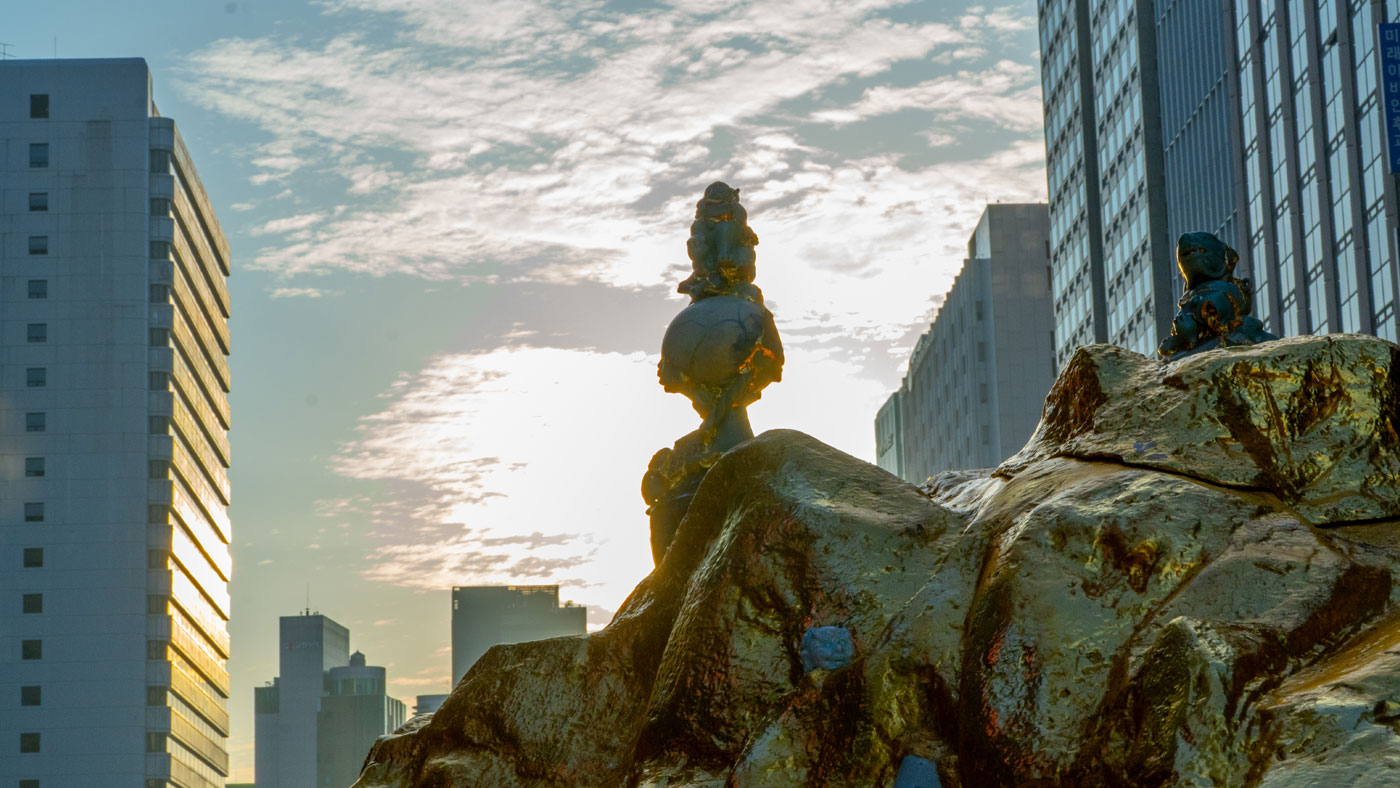
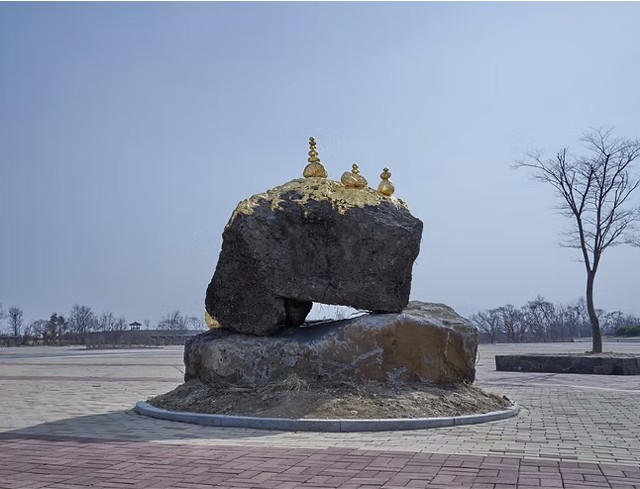
Rocks, 24K gold leaf, urethane paint
320 x 300 x 170 cm
About The Work

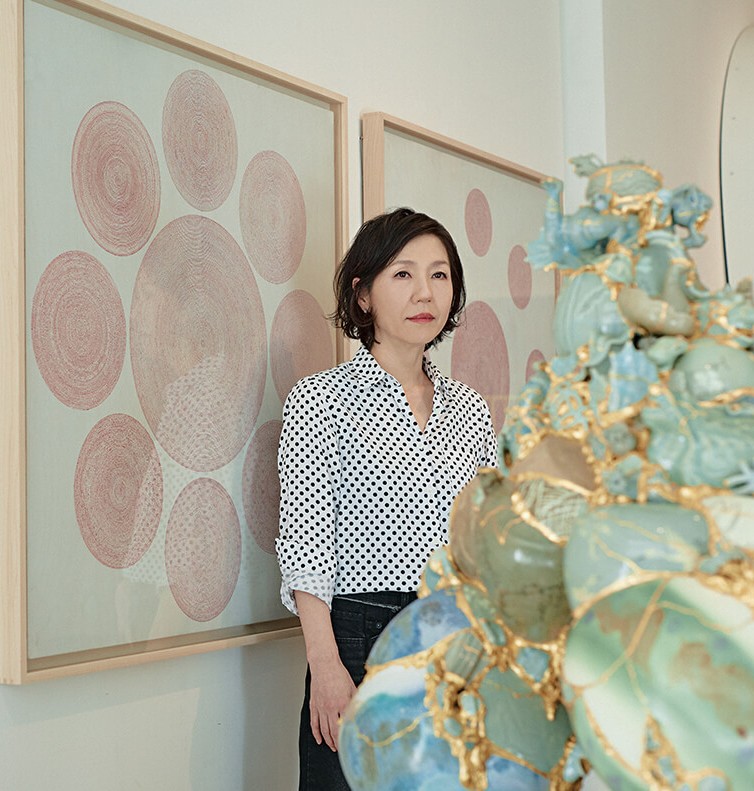
Yeesookyung’s artistic world consistently revolves around the core concepts of "assembling fragments," "connecting severance," and "healing wounds." (such as the past and present; life and death; reality and unreality; secular or sacred things; individuals and others; society and systems, and cultures of different countries)
 
Her early critical stance toward institutional systems evolved into introspective self-exploration and further into a broader discourse of "cultural healing" that traverses tradition and modernity, as well as past and present. The trajectory of Yeesookyung’s work, spanning from early socially critical performances and installations to the 'Flame' series, 'Past Life Regression Painting', 'Translated Vase', and 'Moonlight Crowns', reveals this consistent flow.
 
Through her work, the artist has translated the fundamental differences that have existed throughout human history across various mediums, creating a broad spectrum of expression. Additionally, she has engaged with audiences by presenting works that emphasize the curing and regenerative functions of art.

Solo Exhibitions (Brief)

Yeesookyung has held her solo exhibitions at prominent institutions both in Korea and internationally, including The Page Gallery in Seoul (2022), Massimo De Carlo Gallery in London (2020), Museo di Capodimonte in Naples (2019), Asia Society Texas Center in Houston (2015), Atelier Hermès in Seoul (2015), Daegu Art Museum in Daegu (2015), Museum of Contemporary Art Taipei in Taiwan (2015), and ARKO Art Center in Seoul (2010).

Group Exhibitions (Brief)

Yee has also participated in numerous major international exhibitions, including those at the Bristol Museum & Art Gallery in UK (2019), Casa Cavazzini in Udine, Italy (2018), the 57th Venice Biennale (2017), and Maraya Art Center in Sharjah, United Arab Emirates (2015), among others.

Awards (Selected)

Yeesookyung has received numerous awards both in Korea and abroad, including the Women in Culture and Arts Award, the Minister’s Award from the Ministry of Trade, Industry and Energy (formerly the Ministry of Commerce, Industry and Energy), the Millennium Award from the Ministry of Culture, Sports and Tourism (formerly the Ministry of Culture and Tourism), and the French Honorary Exhibition Award, in recognition of the originality and artistry of her cloisonné-based art.

Residencies (Selected)

Yeesookyung has participated in major international residency programs including the Villa Arson Residency in Nice(2003), the International Studio Program at Apexart in New York(1998), and the Grass Mountain Art Residency in Taipei(2015).

Collections (Selected)

Yeesookyung’s works are in the permanent collections of National Museum of Contemporary Art in Korea, Leeum Samsung Museum of Art in Seoul, Los Angeles County Museum of Art, in USA, Museum of Fine Arts Boston in USA, IFEMA ARCO Collection in Madrid, Echigo-Tsumari City Collection in Japan, British Museum in London, and Spencer Museum of Art at University of Kansas in USA, M+ Museum in Hong Kong, among others.
Works of Art

The Art of Curing

Originality & Identity

Since the early 1990s, Yeesookyung has developed her artistic practice based on a critical inquiry into social institutions, authority, and identity. Artist Uniform 2000 (2000) visualized the hierarchy of identity defined by external forces by deconstructing and recombining the attitudes and roles imposed on individuals within institutionalized social regulations.

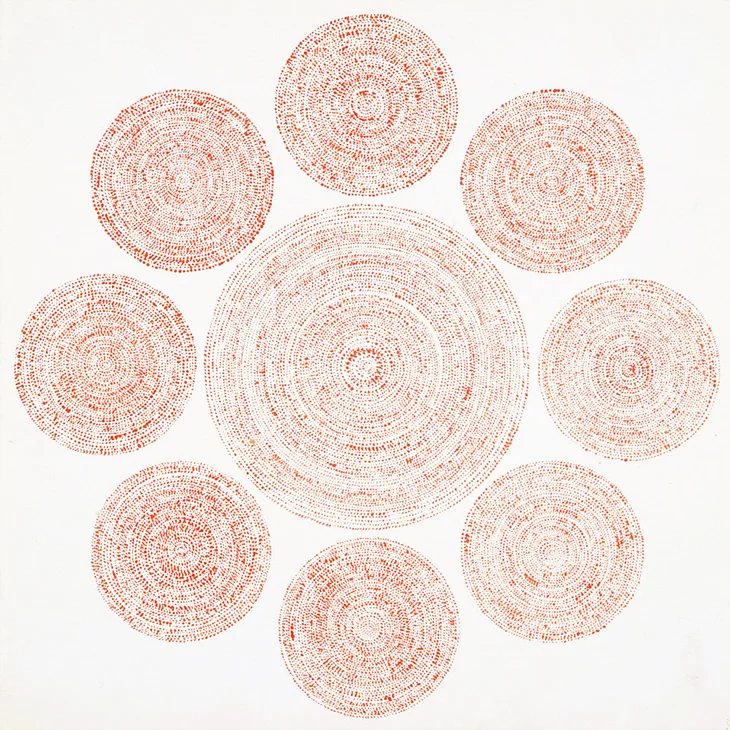
From the mid-2000s onward, Yeesookyung’s thematic focus expanded to embrace notions of "wounds" and "healing." The 'Flame' (2005–) series merges Buddhist practice and introspective exploration, evolving into a healing art that embraces fragility and fracture. The recurring flame motif symbolizes the process of transforming personal suffering through artistic discipline.

Since the 2010s, the artist has deepened her investigation of identity by introducing themes of "past lives" and "reincarnation," which transcend the boundaries of time and human existence. The 'Past Life Regression Painting' (2014–) series visualizes memories experienced through hypnosis, exploring the intersection between East Asian reincarnation philosophy and the unconscious realm of the individual.

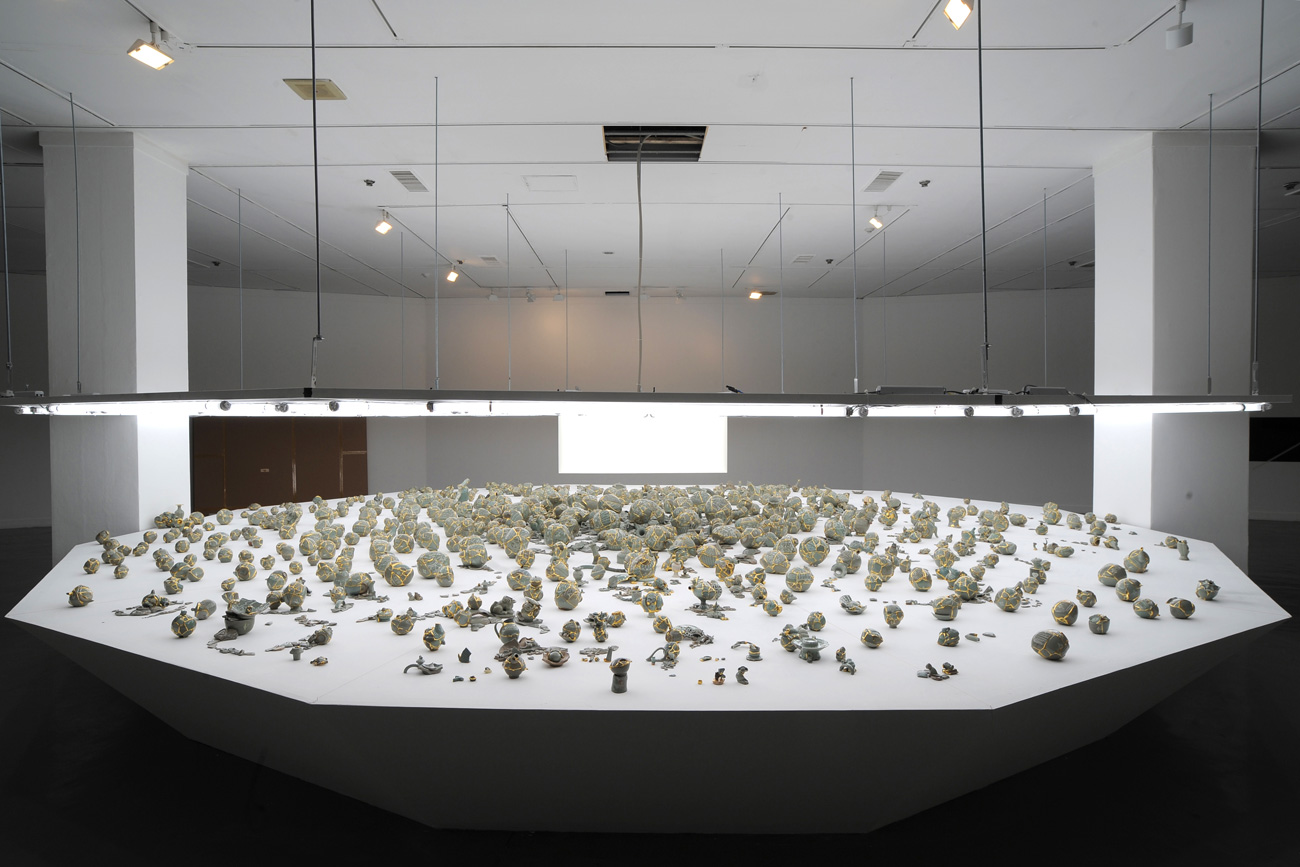
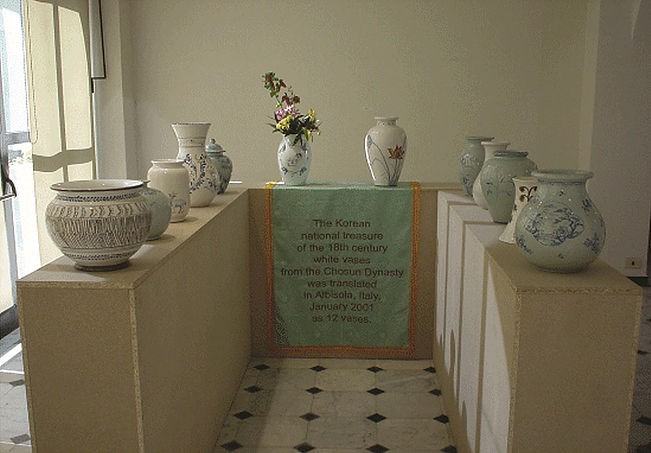
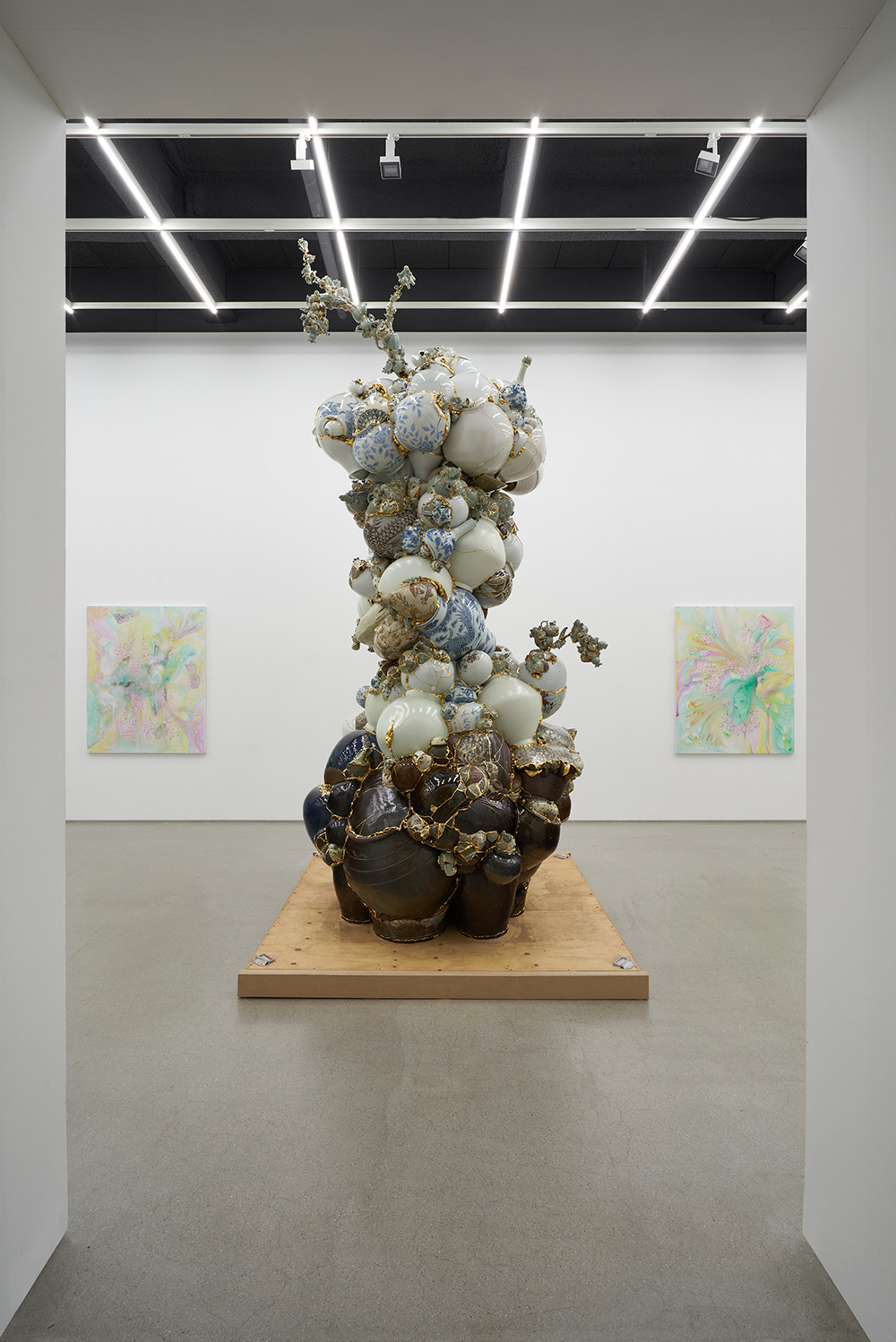
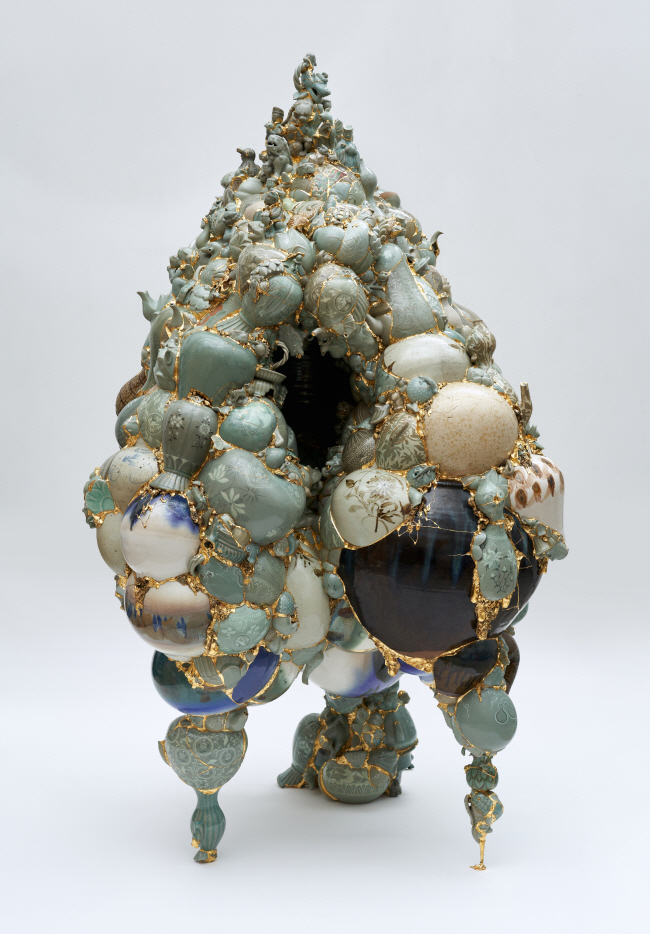
From her representative 'Translated Vase' (2001–) series to the more recent 'Moonlight Crowns' (2017–) series, Yeesookyung’s ceramic-based works reinterpret fragmented history as narratives of healing. Through this process, she transcends boundaries of nation, era, and culture, combining fragments to regenerate new entities, thereby realizing an art form that "connects the severed links."

Style & Contents

Yeesookyung’s formal experimentation has expanded over time. Her early works primarily employed ready-mades and kitsch aesthetics to deconstruct and critically subvert mass media imagery and the norms of social institutions. Notably, Artist Uniform 2000 transformed and recombined institutional symbols such as police and medical uniforms through performance, offering a critical perspective on the relationship between individuals and society.

The 'Flame' series, initiated in 2005, originated from mandala art therapy and centers on meditative drawings using cinnabar—a material traditionally employed in Korea, Japan, and China—on hanji (Korean traditional paper). The work extends personal psychological healing into a daily practice, reinterpreting repetition and meditation through a contemporary lens.

Flame Variation 1-1 (2012), presented at the National Museum of Modern and Contemporary Art’s “2012 Korea Artist Prize” exhibition, incorporated digital technology to transform and expand pictorial patterns through symmetrical compositions. This hybrid approach, merging the strict methods of Buddhist altar painting with contemporary digital media, exemplifies Yeesookyung’s formal evolution that fuses tradition with modernity.

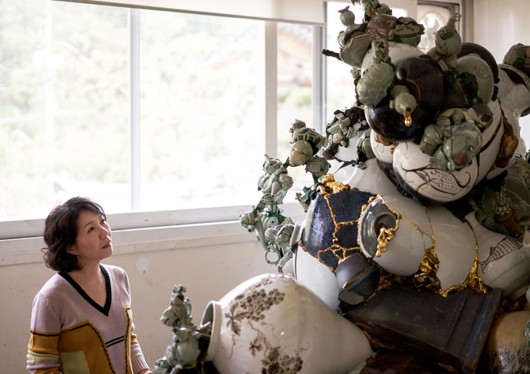
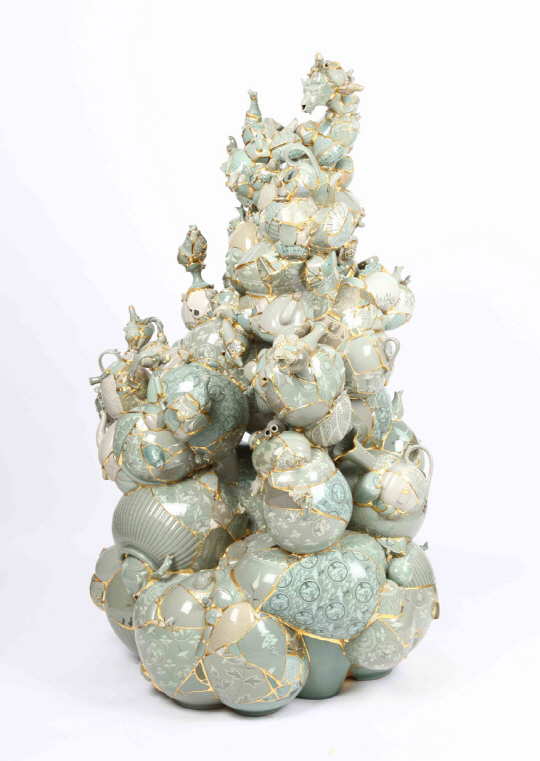
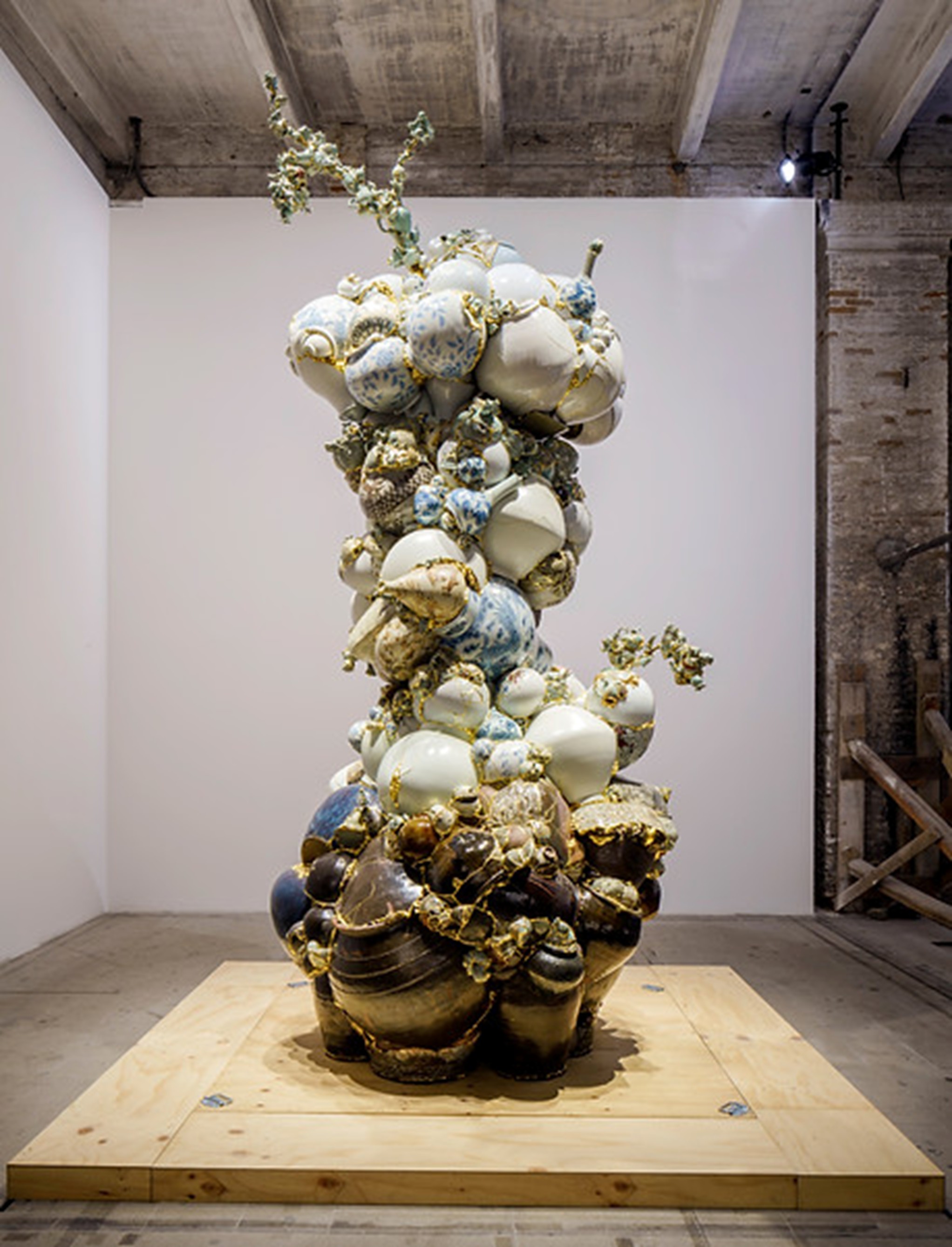
The 'Translated Vase' (2001–) series is based on a handcraft approach of assembling disparate ceramic fragments and gilding the cracks. At the 57th Venice Biennale, followed by her solo exhibition at The Page Gallery, Yeesookyung presented Nine Dragons in Wonderland (2017), a monumental sculpture expanding the scale of her practice. The work reinterprets Chinese mythology to construct symbolic narratives.

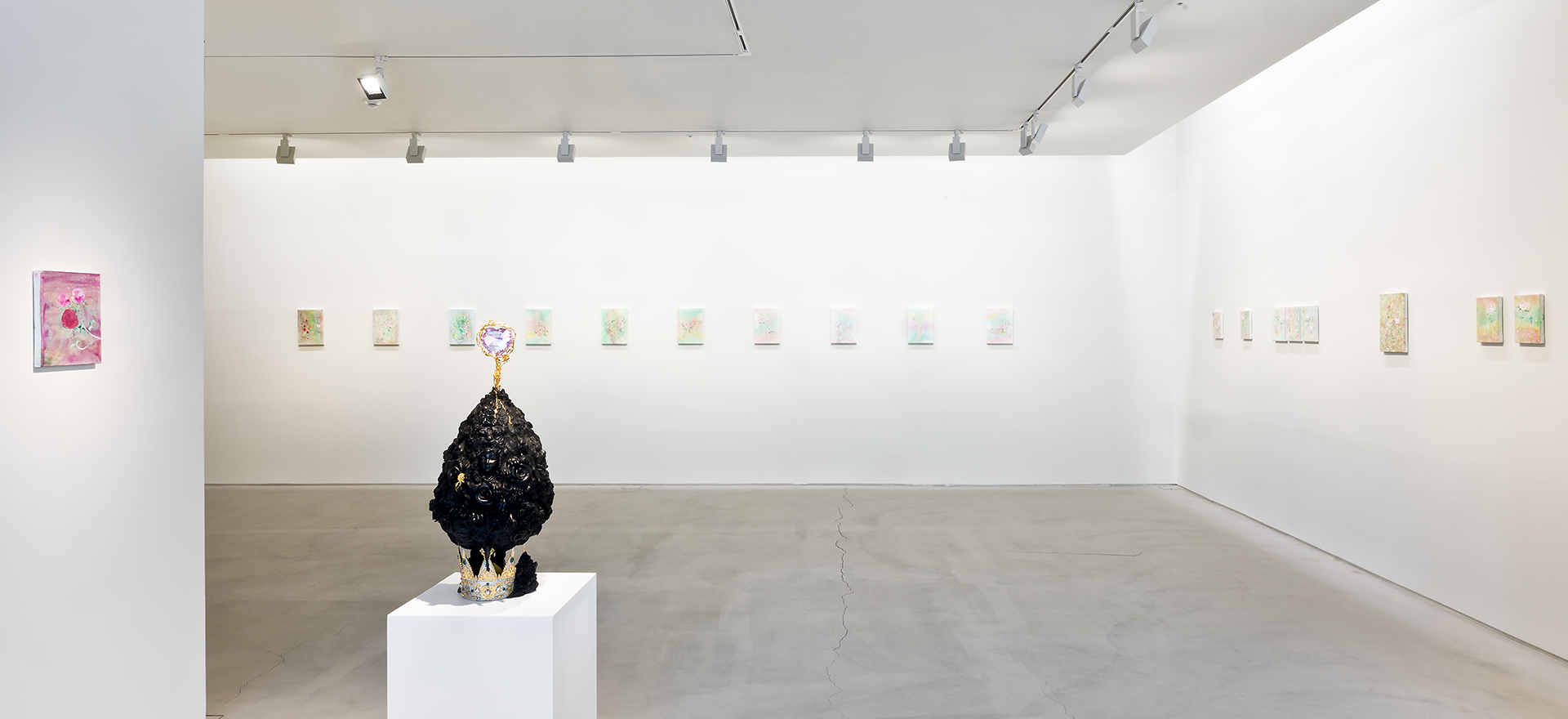
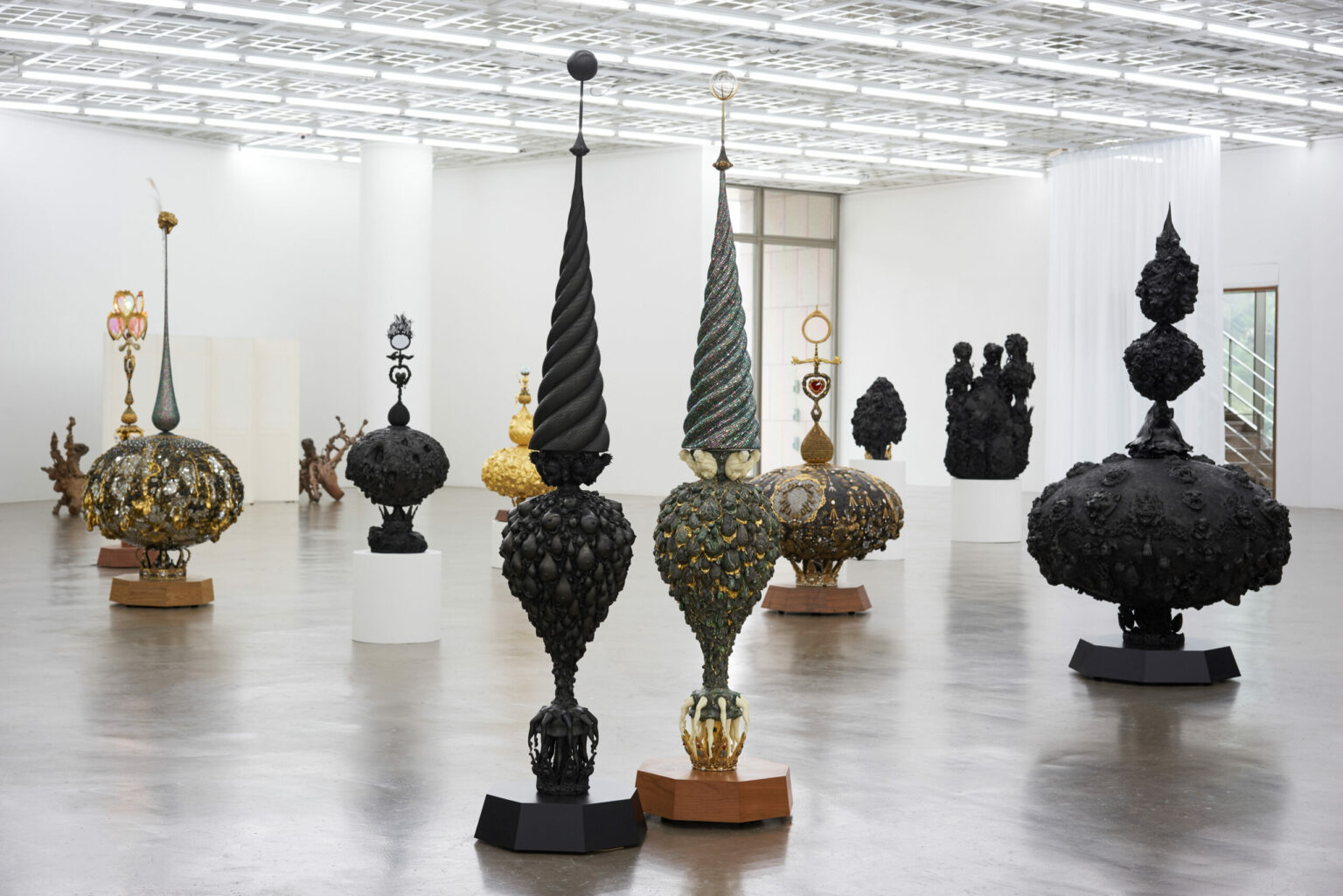
Subsequently, her 'Moonlight Crowns' (2017–) series, exhibited at Art Sonje Center, assembles fragments of iron, brass, glass, pearls, mother-of-pearl, and other materials into towering structures. These works evolve into installations that integrate symbolism and metaphor, signaling a progression in her sculptural language.

Topography & Continuity

Yeesookyung’s artistic world consistently revolves around the core concepts of "assembling fragments," "connecting severance," and "healing wounds." Her early critical stance toward institutional systems evolved into introspective self-exploration and further into a broader discourse of "cultural healing" that traverses tradition and modernity, as well as past and present. This transition encompasses hybrid formal languages that incorporate Korean tradition, Buddhist philosophy, and cross-cultural aesthetics.

The trajectory of Yeesookyung’s work, spanning from early socially critical performances and installations to the 'Flame' series, 'Past Life Regression Painting', 'Translated Vase', and 'Moonlight Crowns', reveals this consistent flow. Her hybrid aesthetics have crystallized into works that position her as a "transboundary sculptor of healing" within the global contemporary art scene.

Yeesookyung actively operates on the global stage, presenting her works not only in Korea but also in the UK, Italy, the US, and beyond. Her approach of connecting trivial fragments to construct "new narratives" continues to define her identity as an artist, allowing her to consolidate her presence in the global art world by fusing East Asian aesthetics with contemporary discourses of healing.

Works of Art

The Art of Curing

Exhibitions