Switched Stole Object - K-ARTIST

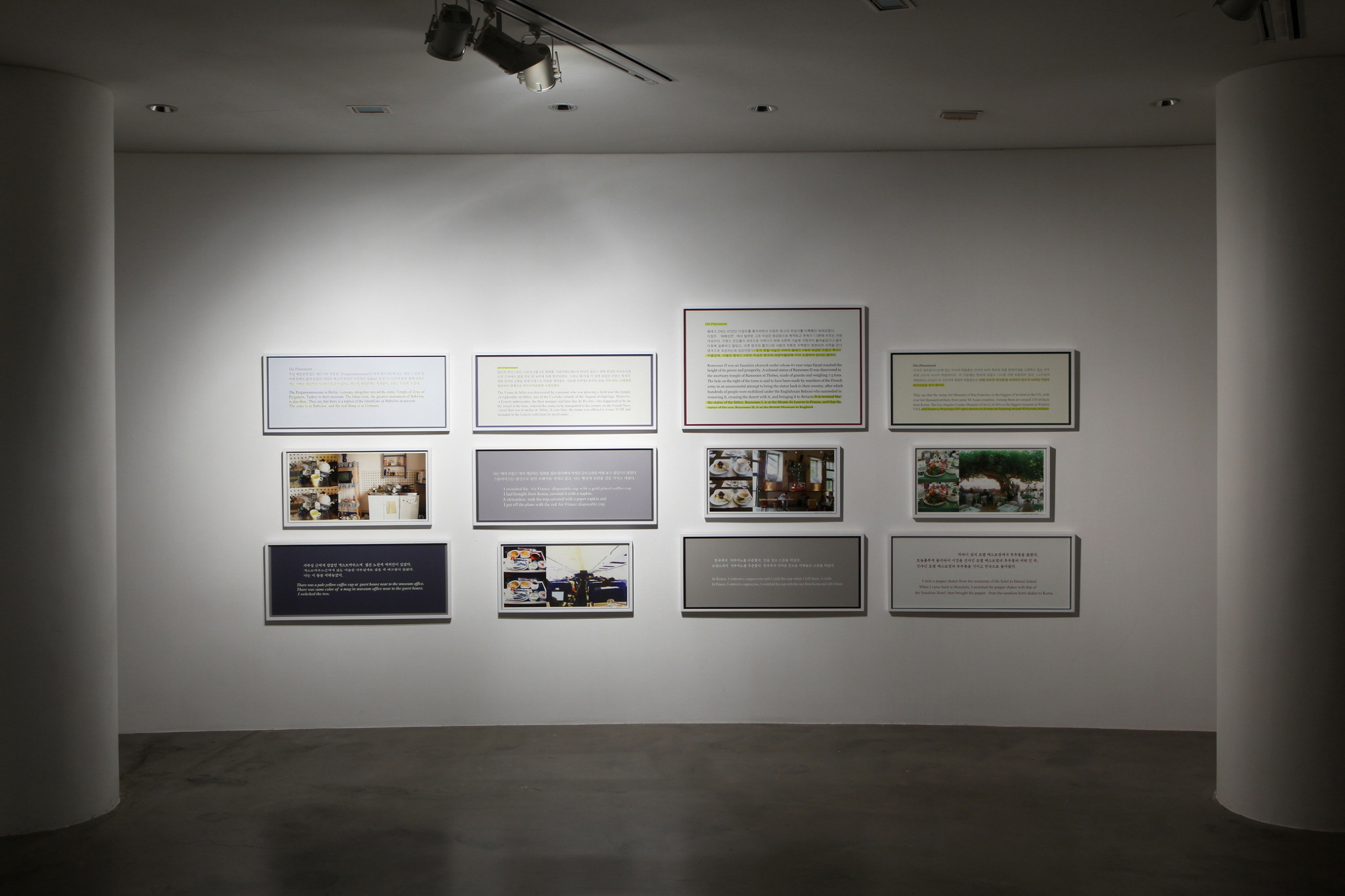
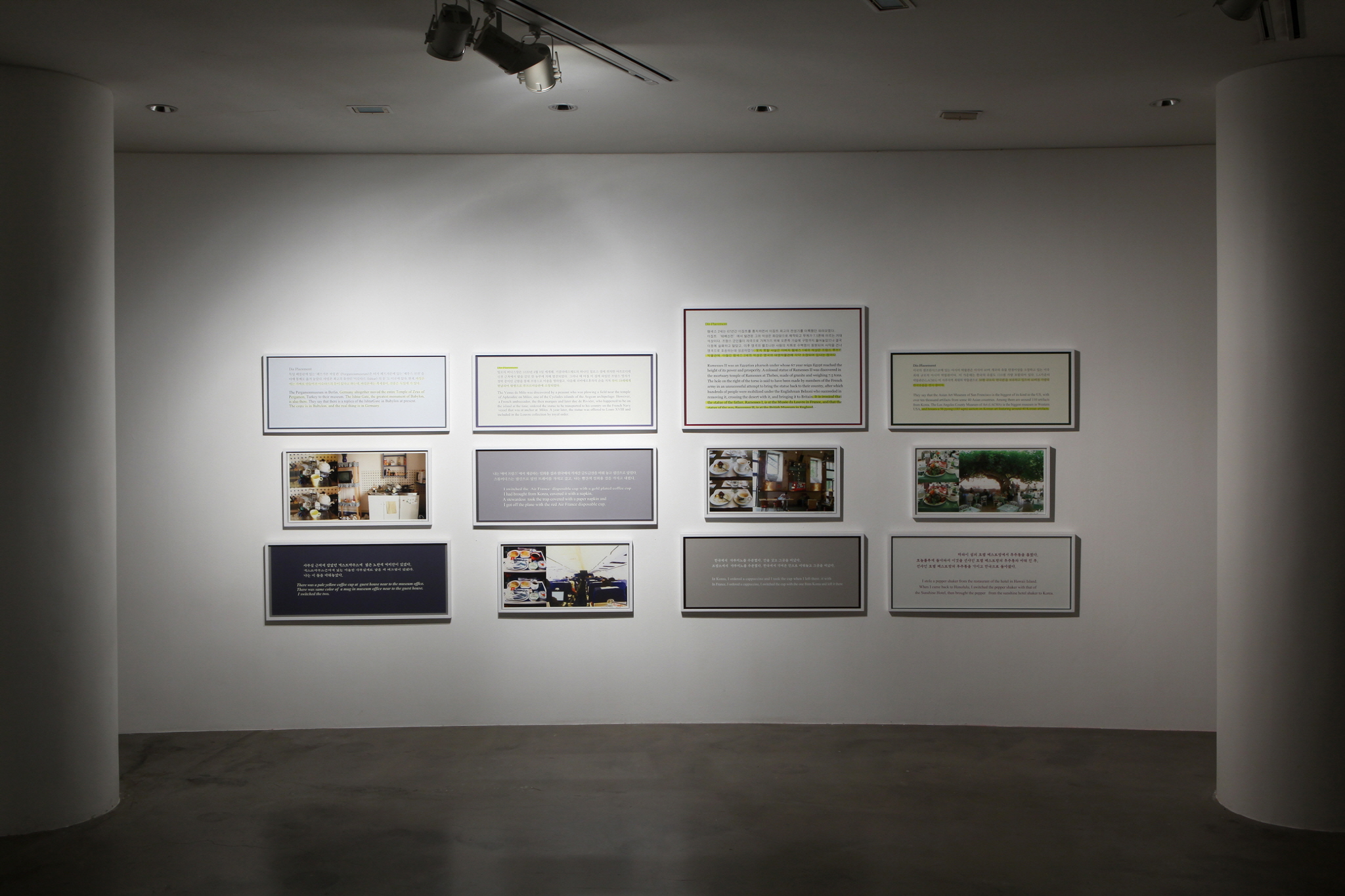
Switched Stole Object

2009
C-print and text
Dimensions variable
About The Work

Kyungah Ham is an artist who persistently delves into the gaps of contradictions and absurdities, challenging the rules and taboos of hidden systems behind reality. Ham's work traverses both within and beyond the realm of art, actively communicating with others across unreachable borders or by traveling around the world. Her work manifests as a condensed form of such labor-intensive expressions and the uncontrollable variables of the process.
 
Ham’s work addresses one of the most sensitive issues in modern Korean history—division and ideology—without reducing it to direct representation. North Korea does not simply “appear” on her surface. Instead, she incorporates collaboration with North Korean embroidery workers into the very structure of production. Division thus becomes a process rather than an image. The completed embroidered surfaces are decorative and lavish, yet behind them lie unpredictable delivery routes, delays, risks, and tensions. Ham’s work incorporates this entire invisible process as part of the artwork itself.
 
Kyungah Ham stated, ”Art and the artist's role are to reveal what exists but do not exist.” According to the artist, this act is a journey of chasing 'phantom footsteps.' Under the shadow of immense power, all beings, such as North Korean laborers and defectors, exist like invisible ghosts, and the artist's work involves following their footsteps, finding them, and communicating with them.

Solo Exhibitions (Brief)

Ham’s major solo exhibitions are 《Desire & Anesthesia》(Art Sonje Center, Seoul, 2009), 《Such Game》 (Ssamzie Space, Seoul, 2008), 《Room with a View》 (Alternative Space LOOP, Seoul, 1999), 《Phantom Footsteps》(Kukje Gallery, 2015) and 《Ham Kyungah》(Pace Gallery, HK, 2018).

Group Exhibitions (Brief)

Recently, Ham participated in exhibitions such as 《The Shape of Time: Korean Art after 1989》 (Philadelphia Museum of Art, 2023, Minneapolis Institute of Art, 2024); 《Hallyu! The Korean Wave》 (Victoria and Albert Museum, London, 2023, The Museum of Fine Art, Boston, 2024, The San Francisco Asian Art Museum, 2025); and 《Active Threads》 (KAI10/ Arthena Foundation, Düsseldorf, 2021).

Awards (Selected)

Kyungah Ham was selected as a finalist for the Asia Pacific Breweries Signature Art Prize at the Singapore Art Museum (2011).

Residencies (Selected)

Kyungah Ham has participated in various international residency programs, including the Transfer Korea-NRW Residency at the Osthaus Museum (Hagen, Germany, 2013), the Couvent des Récollets Residency (Paris, France, 2004), and the Art Initiative Tokyo Residency (Tokyo, Japan, 2004).

Collections (Selected)

Kyungah Ham’s works are held in the collections of Leeum Samsung Museum of Art, the National Museum of Modern and Contemporary Art, Korea (MMCA), the Seoul Museum of Art (SeMA), Gyeonggi Museum of Modern Art, the Victoria and Albert Museum (London), and the Uli Sigg Collection (Switzerland), among others.

Works of Art

The Rules and Taboos of Hidden Systems Behind Reality

Originality & Identity

Kyungah Ham (b. 1966) is an artist who has traced the social systems and structures of power operating beneath everyday life. Her work consistently unfolds by passing through individual experience in order to reveal underlying structures. In Chasing Yellow(2000–2001), she traveled across several Asian countries interviewing people wearing yellow clothing, establishing “yellow” as a sign of initiating connection. Different personal lives became linked through a single color, exposing the cultural, religious, and institutional contexts embedded within it. From early on, she adopted a strategy of visualizing invisible social structures through personal narratives.
 
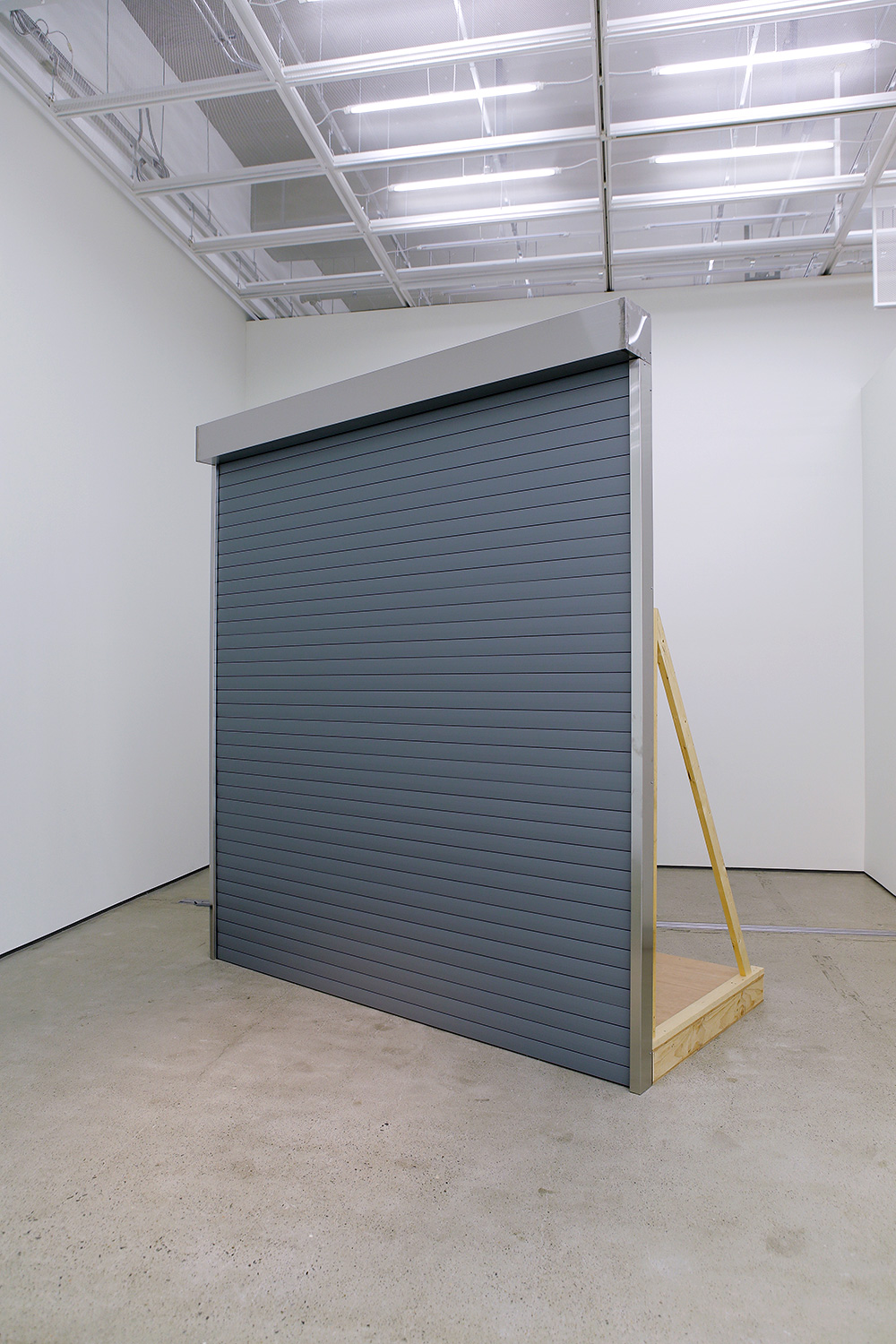
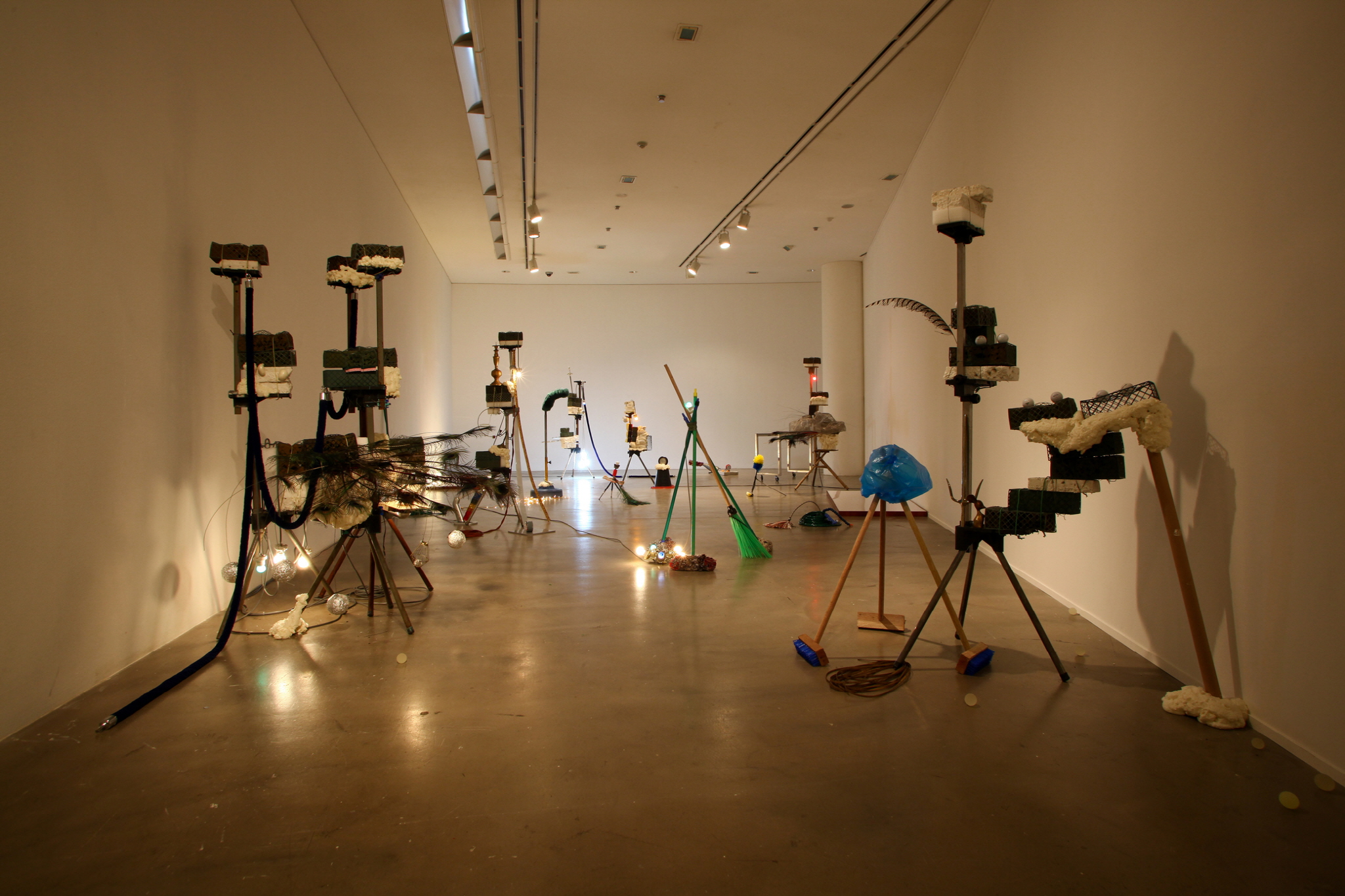
Odessa’s Steps(2008) is an installation composed of discarded materials from the home of a former president during the military dictatorship period. The title references the massacre scene in Sergei M. Eisenstein’s film Battleship Potemkin(1925). Doors, toilets, golf shoes, surveillance cameras, pistols, and shopping carts placed on a large wooden staircase juxtapose private space with the history of state violence. Through a montage-like composition, the work re-edits the tragedy of Korean political history through the assembly of private objects. Historical events and personal domains are not separated but placed in tension, reflecting one another.
 
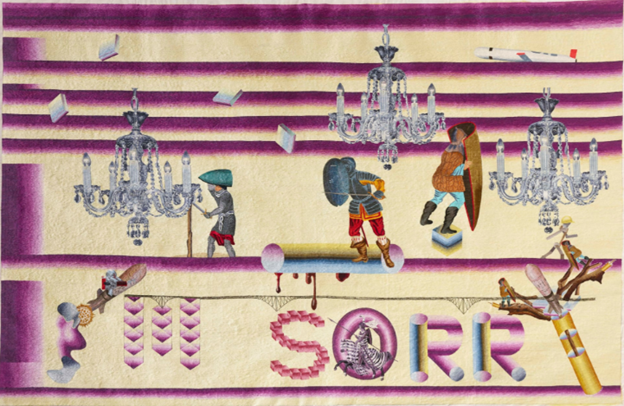
The subsequent “Embroidery Project” marked a decisive turning point in her practice. Beginning with Flyer/Byongpoong Bill 01(2008), followed by the ‘Such Game’(2009) series translating images of the Hiroshima and Nagasaki atomic bombings into embroidery, and continuing with ‘Some Diorama’ and ‘Some Sunday Morning,’ she addressed war, ideology, and the memory of division. These works are premised on indirect collaboration with North Korean embroidery workers. Designs created by the artist are delivered through intermediaries and returned as embroidered works after an unpredictable period of time. This uncertainty and delay are not merely aspects of production but structures that mirror the reality of division itself.
 
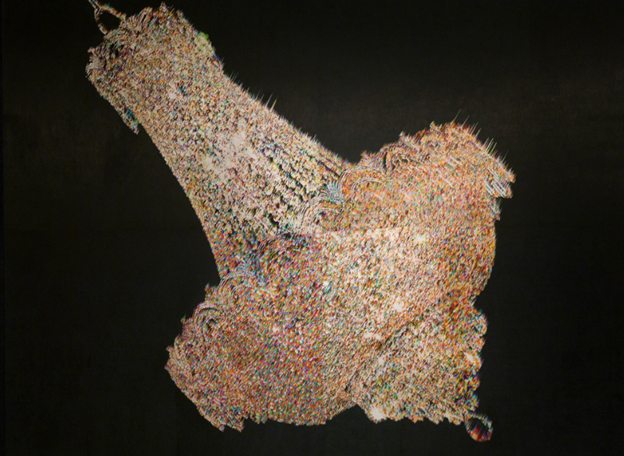
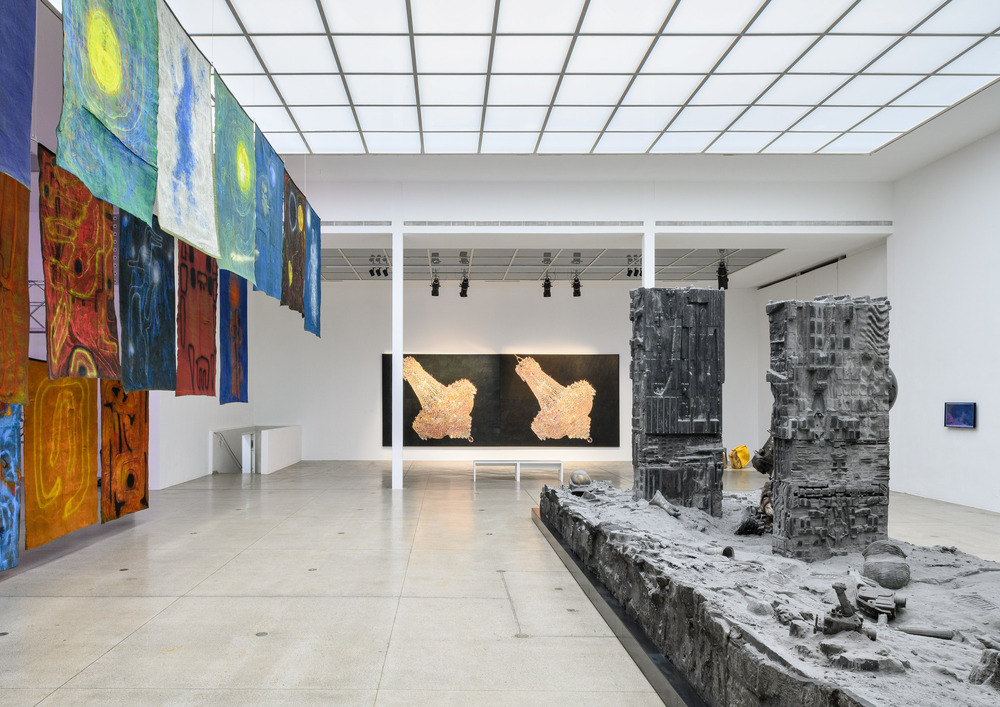
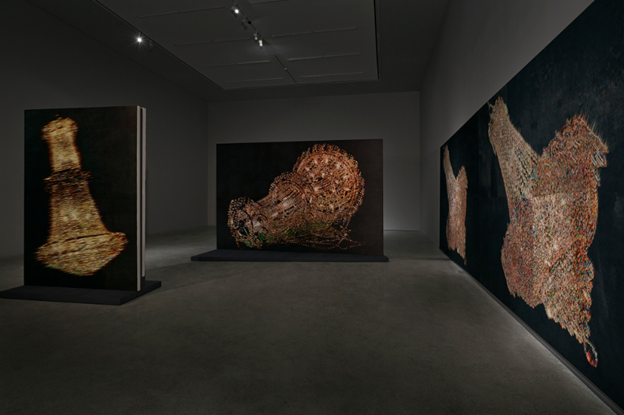
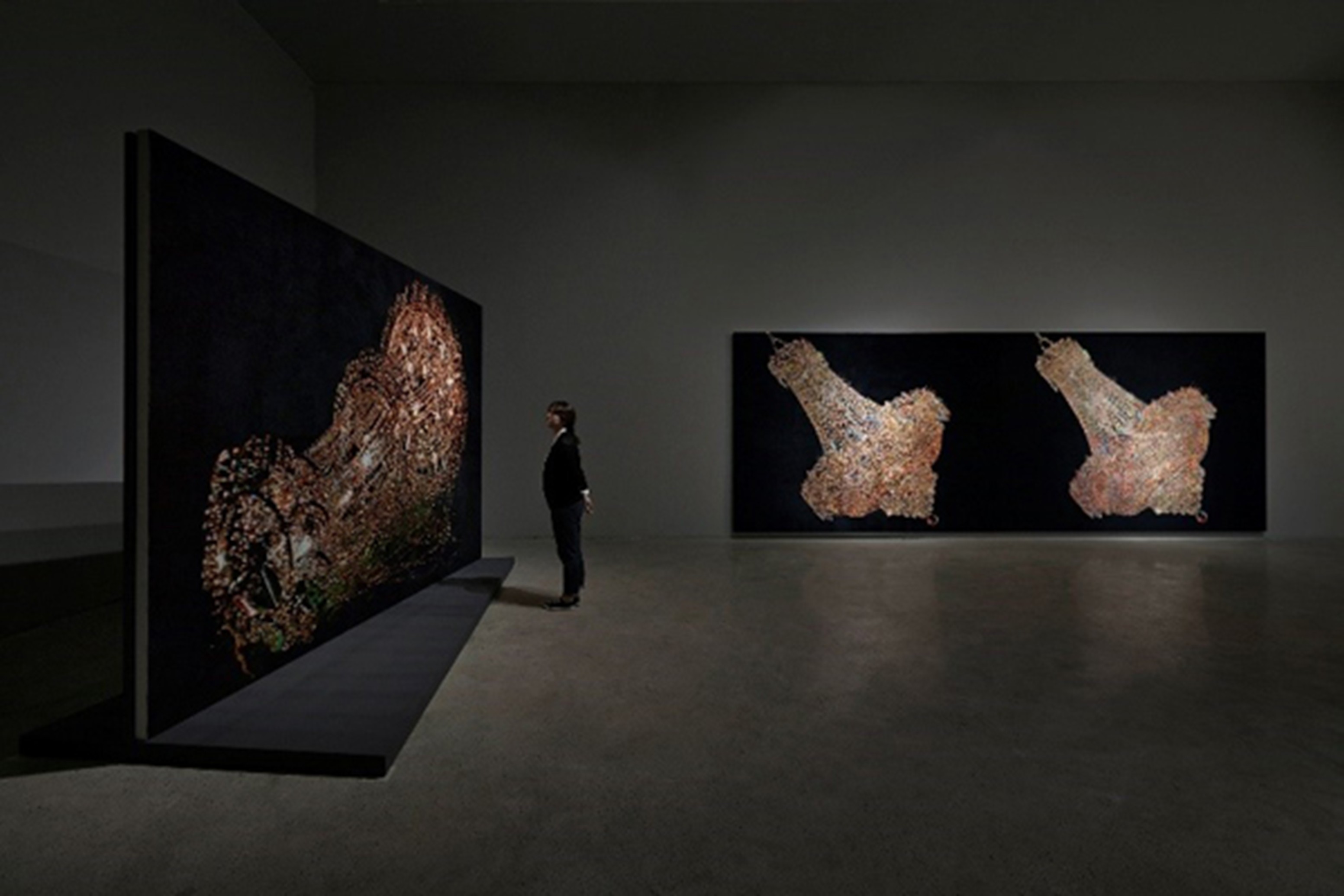
In ‘What you see is the unseen / Chandeliers for Five Cities’(2014–2015), she metaphorically addresses division and imperial power through the image of a chandelier. Inspired by a moment in a North Korean mass game performance in which a boy briefly revealed his face before becoming a single pixel in a pistol image, the work calls attention to individual existence concealed within grand images. Although the chandelier appears decorative and lavish, it condenses within it invisible labor, control, and the history of division. The concept of the “phantom” thus emerges as a key term pointing to structures and beings that are real yet unseen.

Style & Contents

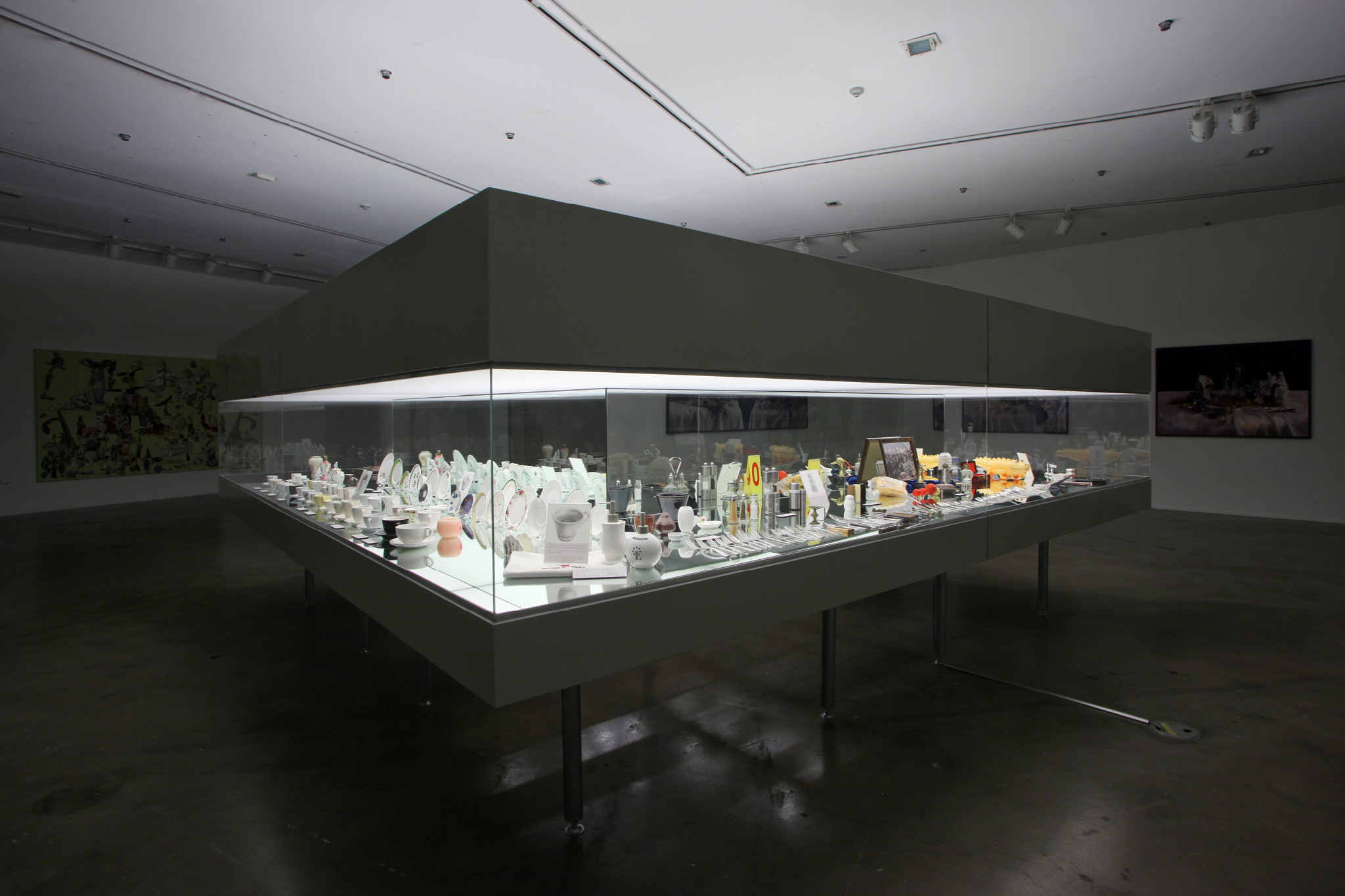
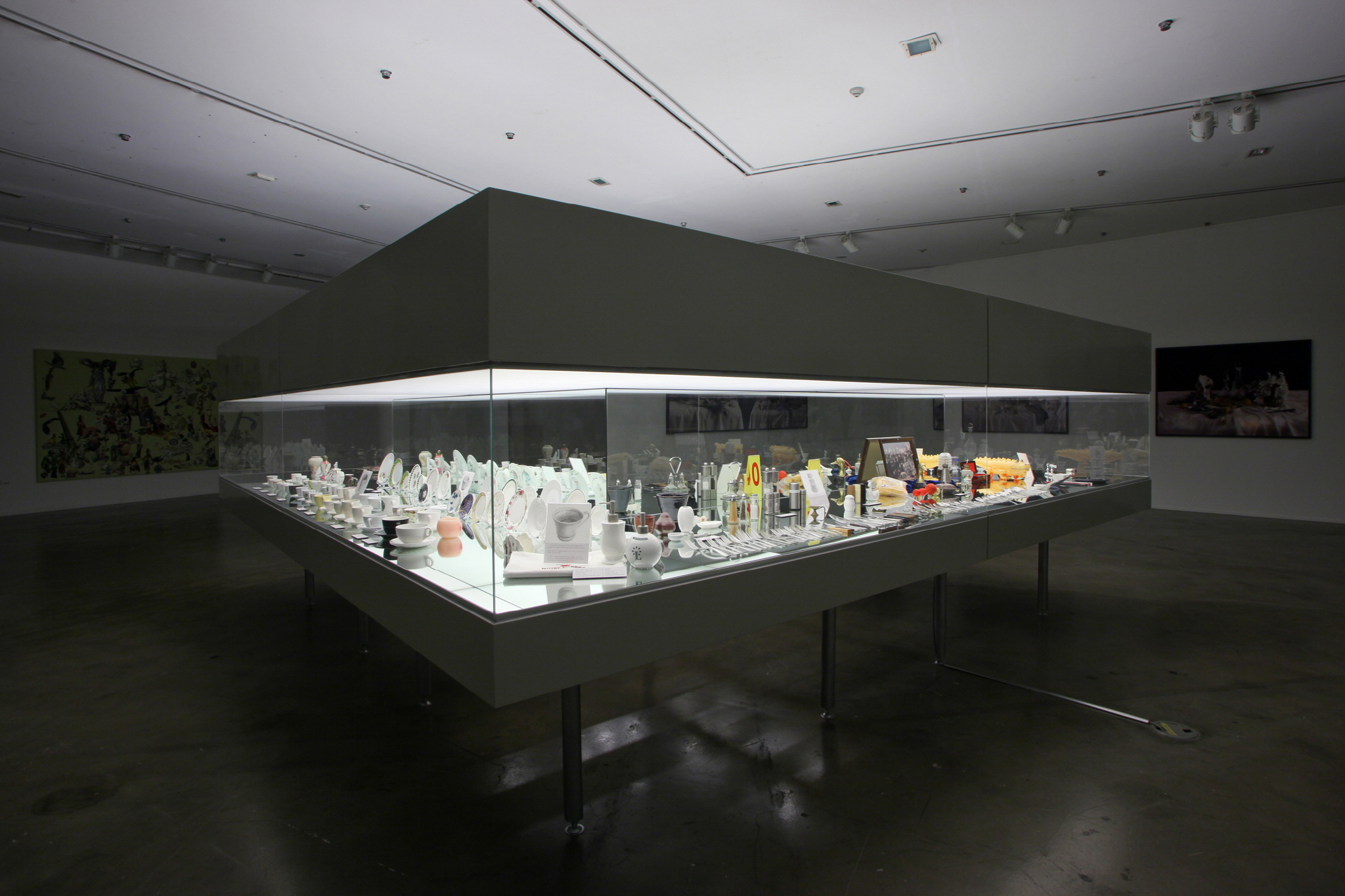
Ham’s formal language is inseparable from her conceptual concerns. She moves across video, installation, performance, painting, and embroidery, linking each medium to social conditions. In Museum Display(2000–2010), she exhibited items stolen from museum cafés and shops, publicly confessing the act of theft in order to recall the structure of imperial plunder in the present. While borrowing the format of museum display, she subverted institutional authority and desire through the choice of objects.
 
The embroidery works are the most concentrated site of her formal experimentation. Though they resemble painting, they are textile works accumulating thousands of hours of labor. Each caption specifies the labor time and number of participants involved. This functions as a device revealing the physical labor concealed behind aesthetic completion. In particular, in ‘What you see is the unseen / Chandeliers for Five Cities,’ the exposure of the reverse side of embroidery and the enlargement of the image to the level of thread and pixel visualize the dynamics between what is seen and unseen.
 
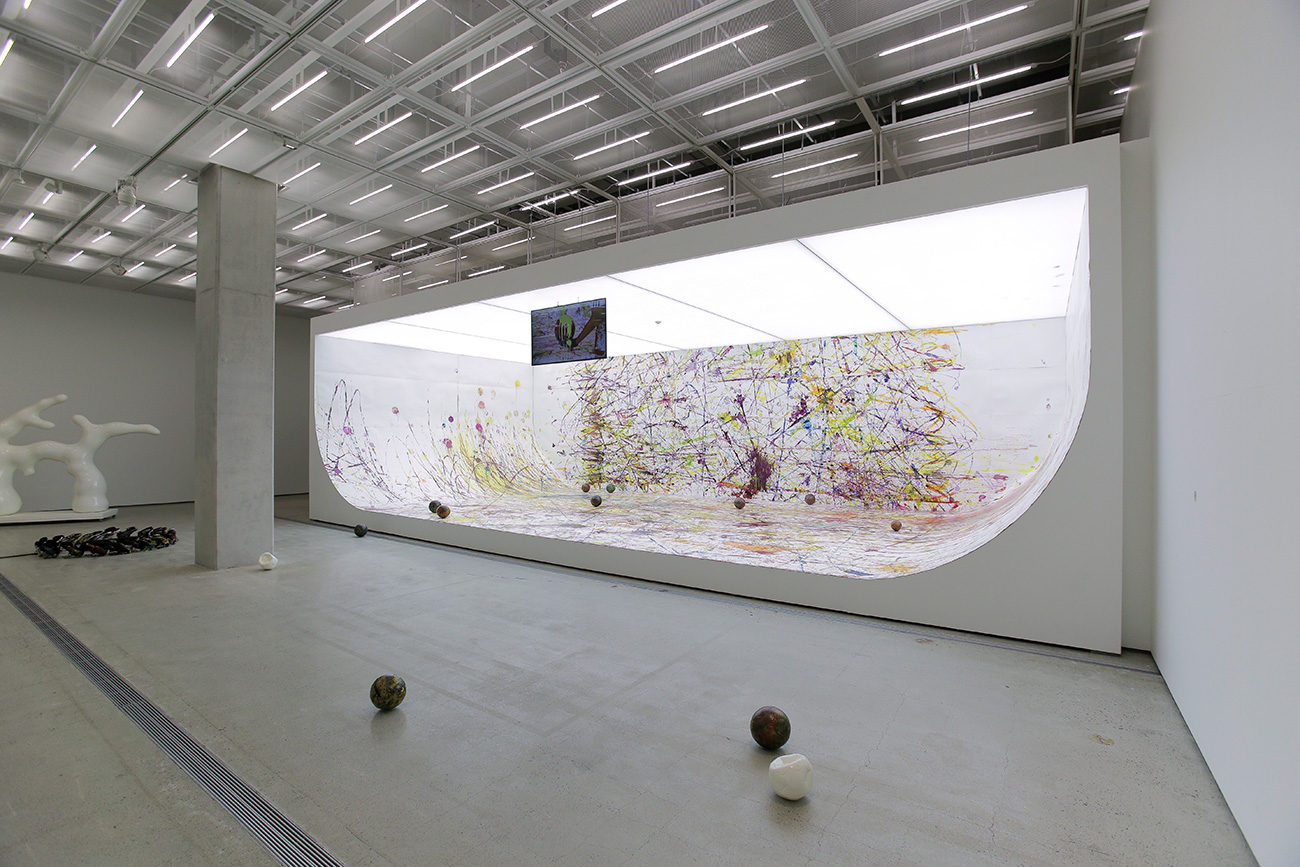
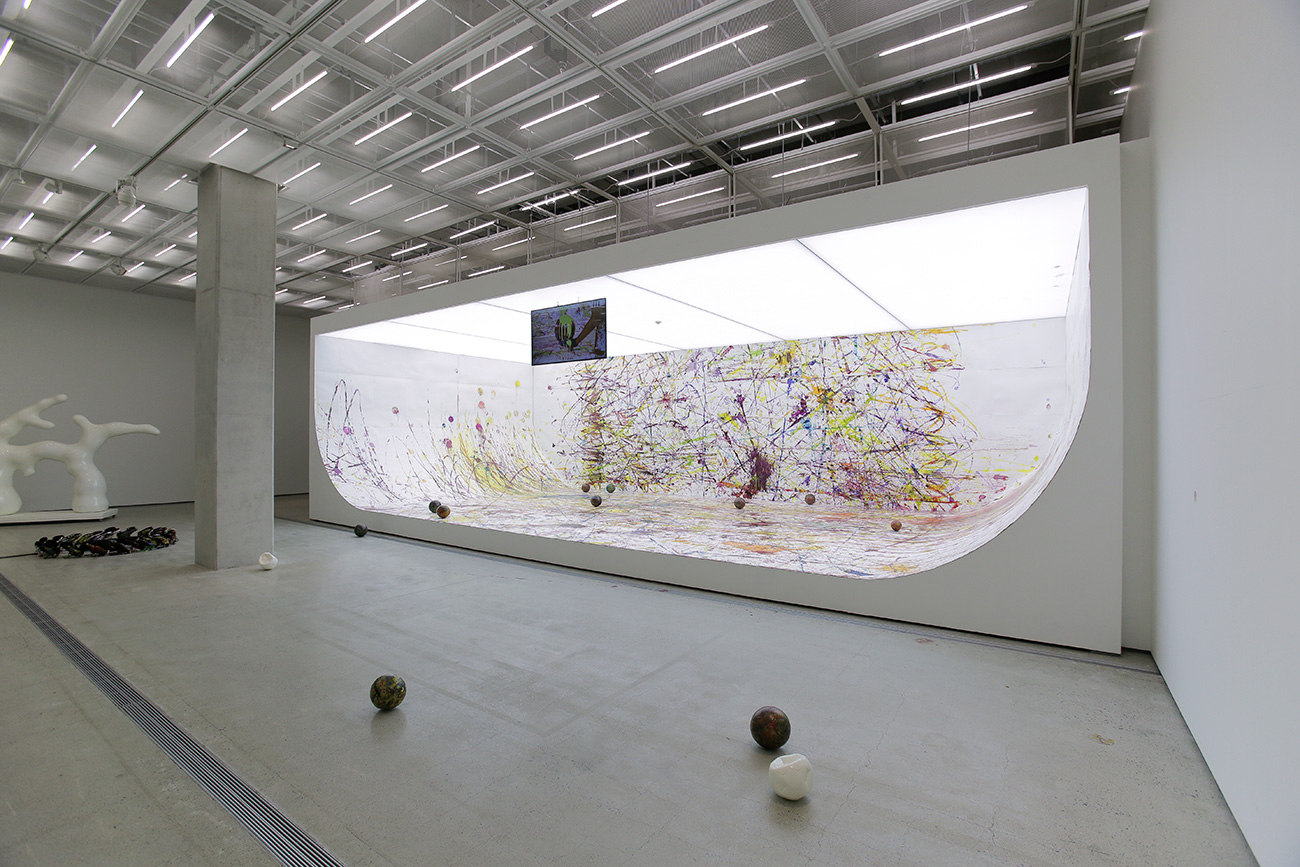
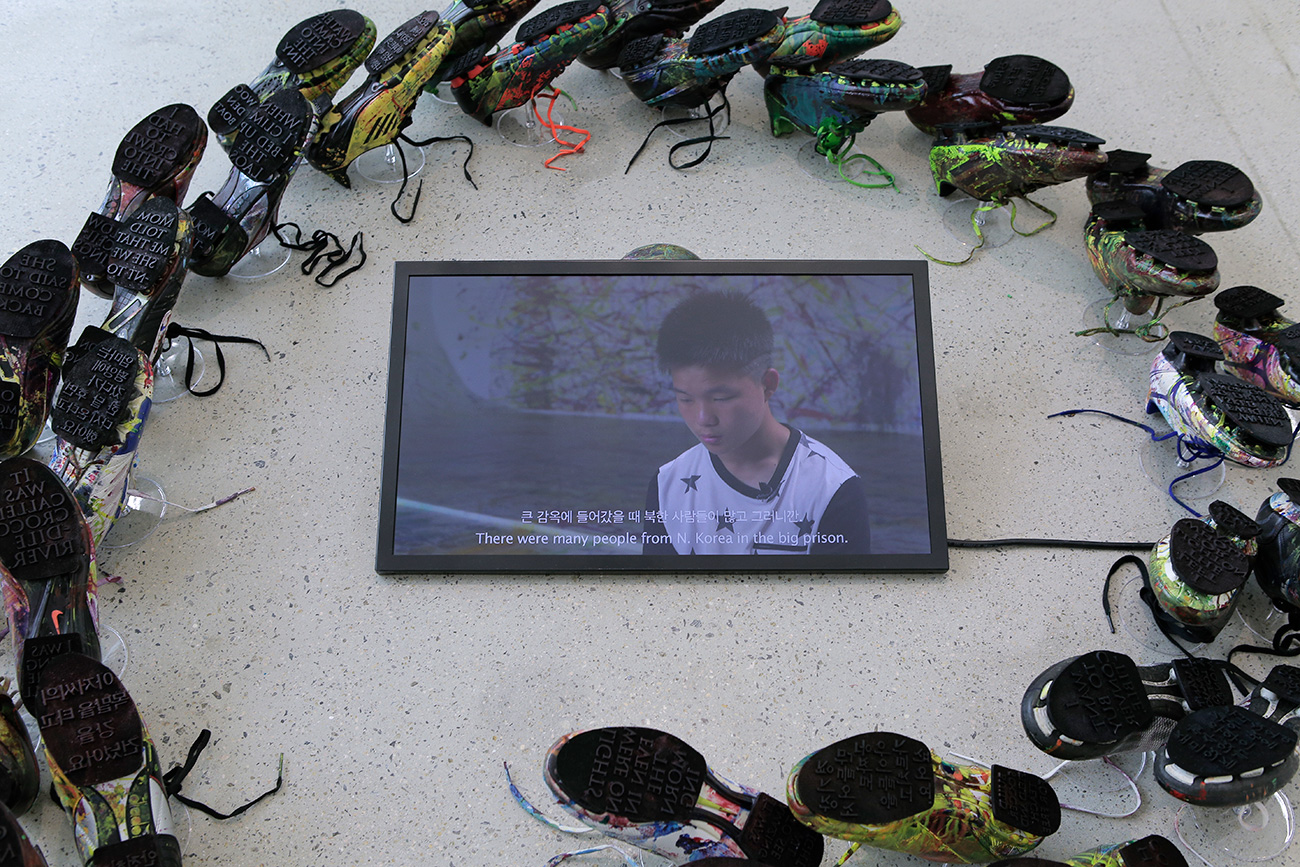
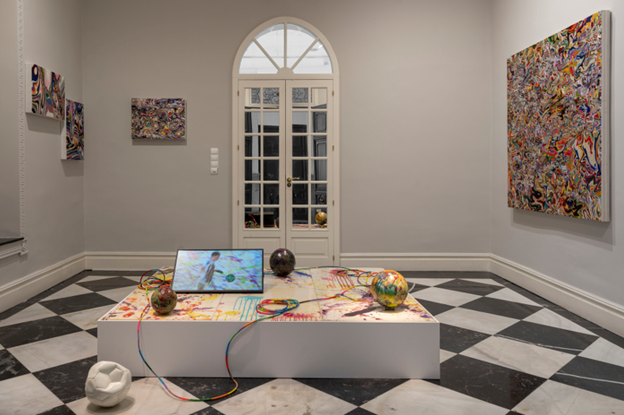
The Drawing of a Soccer Ball Bouncing over Crocodile River(2016), presented at 《Korea Artist Prize 2016》(National Museum of Modern and Contemporary Art, Seoul), was a performance-based multimedia work created in collaboration with a North Korean defector. The traces left by a paint-covered soccer ball moving across the exhibition floor resemble abstract painting, yet behind them lies a narrative of life-threatening escape. Interview footage and the installation of soccer shoes intersect image and reality. In this work, the abstract surface cannot be separated from the trajectory of lived experience.
 
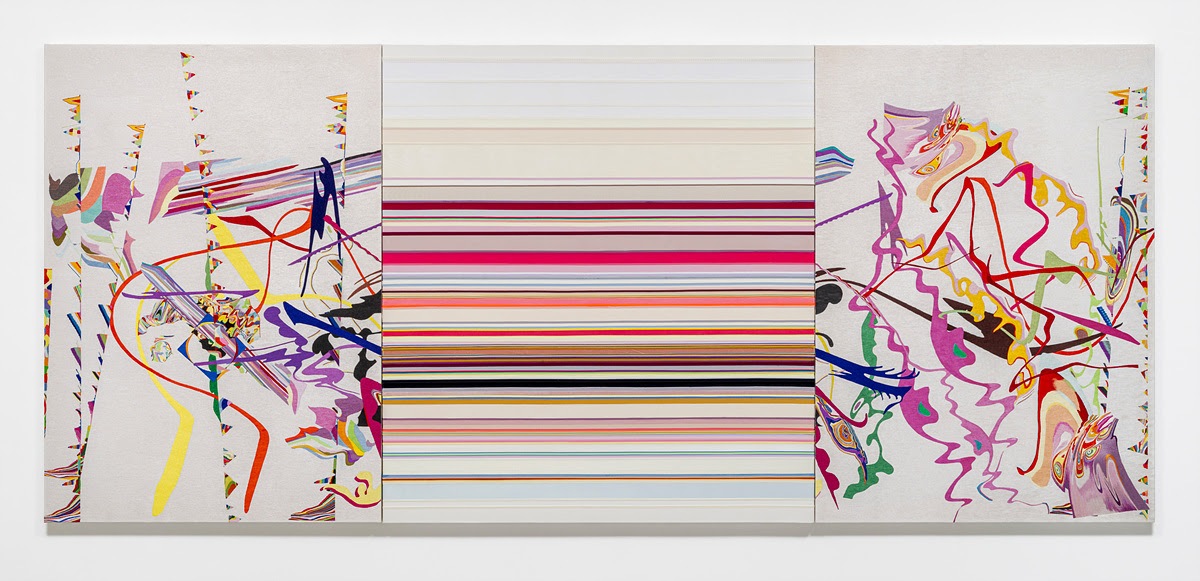
More recently, in her solo exhibition 《Phantom and A Map》(Kukje Gallery, 2024), she employed ribbon tapes and woven grid structures to explore tensions between digital and analog realms. The series Phantom and A Map / “Did you come by photograph or train?” questions the gap between virtual and physical worlds. In the context of intensified digital communication after the pandemic, she observes the primitive and analog amplification of emotion. Embroidery, tapestry, and ribbon weaving may resemble digital images, yet they remain thoroughly material.

Topography & Continuity

Ham’s work addresses one of the most sensitive issues in modern Korean history—division and ideology—without reducing it to direct representation. North Korea does not simply “appear” on her surface. Instead, she incorporates collaboration with North Korean embroidery workers into the very structure of production. Division thus becomes a process rather than an image. The completed embroidered surfaces are decorative and lavish, yet behind them lie unpredictable delivery routes, delays, risks, and tensions. Ham’s work incorporates this entire invisible process as part of the artwork itself.
 
This is also what distinguishes her embroidery from other contemporary fiber-based practices. While many textile works focus on tactility or the recovery of labor, in Ham’s case labor operates as a political structure rather than merely a material quality. The questions of who makes the image, where, and under what conditions sustain the work. The uncertainty and uncontrollability embedded in production are not background circumstances but foundational conditions shaping its form.
 
In her recent works, this tension shifts direction. In 《Phantom and A Map》, ribbon tapes and woven grids evoke digital screens while remaining materially grounded. The experience of communicating through digital networks during the pandemic prompted renewed reflection on the gap between virtual and physical realms. Notably, as digital environments expand, she observes that emotions intensify in increasingly primitive and analog ways. These recent works present abstract surfaces where these two dimensions collide.
 
Ham has consistently pursued what is unseen: North Korean laborers, defectors, histories of plunder, and emotional states within digital networks—entities that are real yet difficult to grasp. Rather than revealing them directly, she approaches them through traces, structures, delays, and absences. Though her practice begins from the historical context of Korean division, it is actively discussed within international art institutions. She has participated in major exhibitions including 《The Shape of Time: Korean Art after 1989》(Philadelphia Museum of Art, 2022), 《Hallyu! The Korean Wave》(Victoria and Albert Museum, London, 2023; Museum of Fine Arts, Boston, 2024), as well as the 1st Asia Society Triennial(New York, 2020), the 10th Taipei Biennale(2016), and the 4th Guangzhou Triennial(2012). These participations demonstrate that her work is read beyond regional issues within the broader context of global power structures and image politics.
 
Thus, Ham’s practice should not be reduced to “division art,” but understood as a contemporary methodology that structurally embeds collaboration, production processes, and invisible labor within the artwork itself. Rather than speculative predictions, her future trajectory can be anticipated on the basis of the international exhibitions and institutional networks she has already accumulated. Her pursuit of the phantom remains constant, while the contexts in which it is articulated continue to diversify within international platforms.

Works of Art

The Rules and Taboos of Hidden Systems Behind Reality

Articles

Exhibitions