
Plastic Fish - K-ARTIST

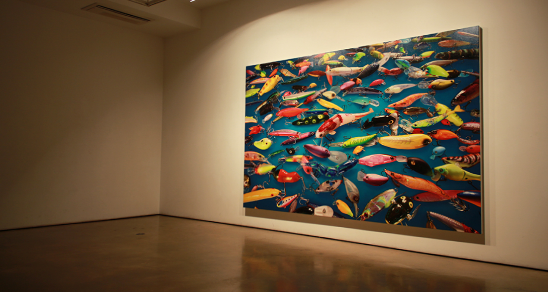
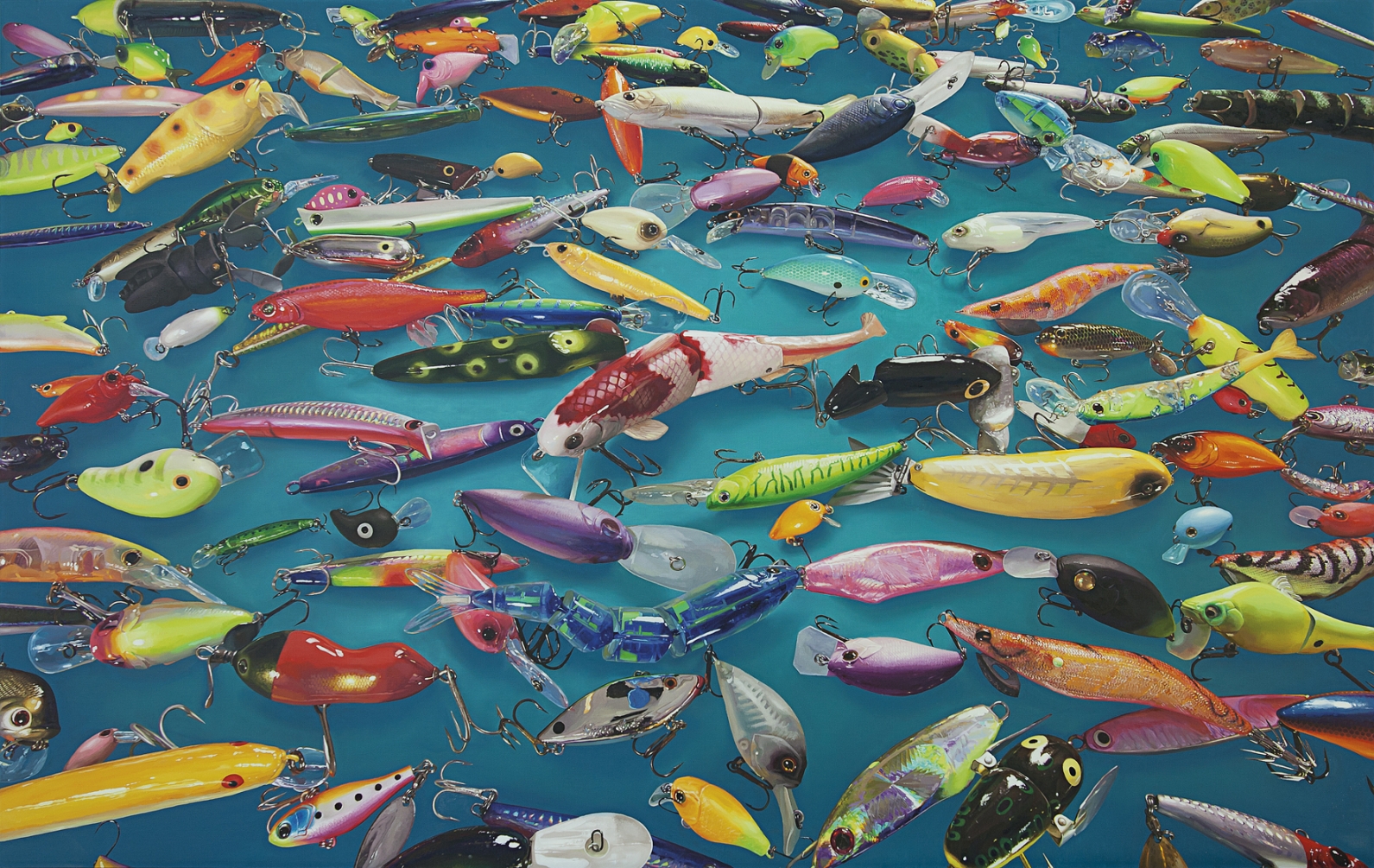
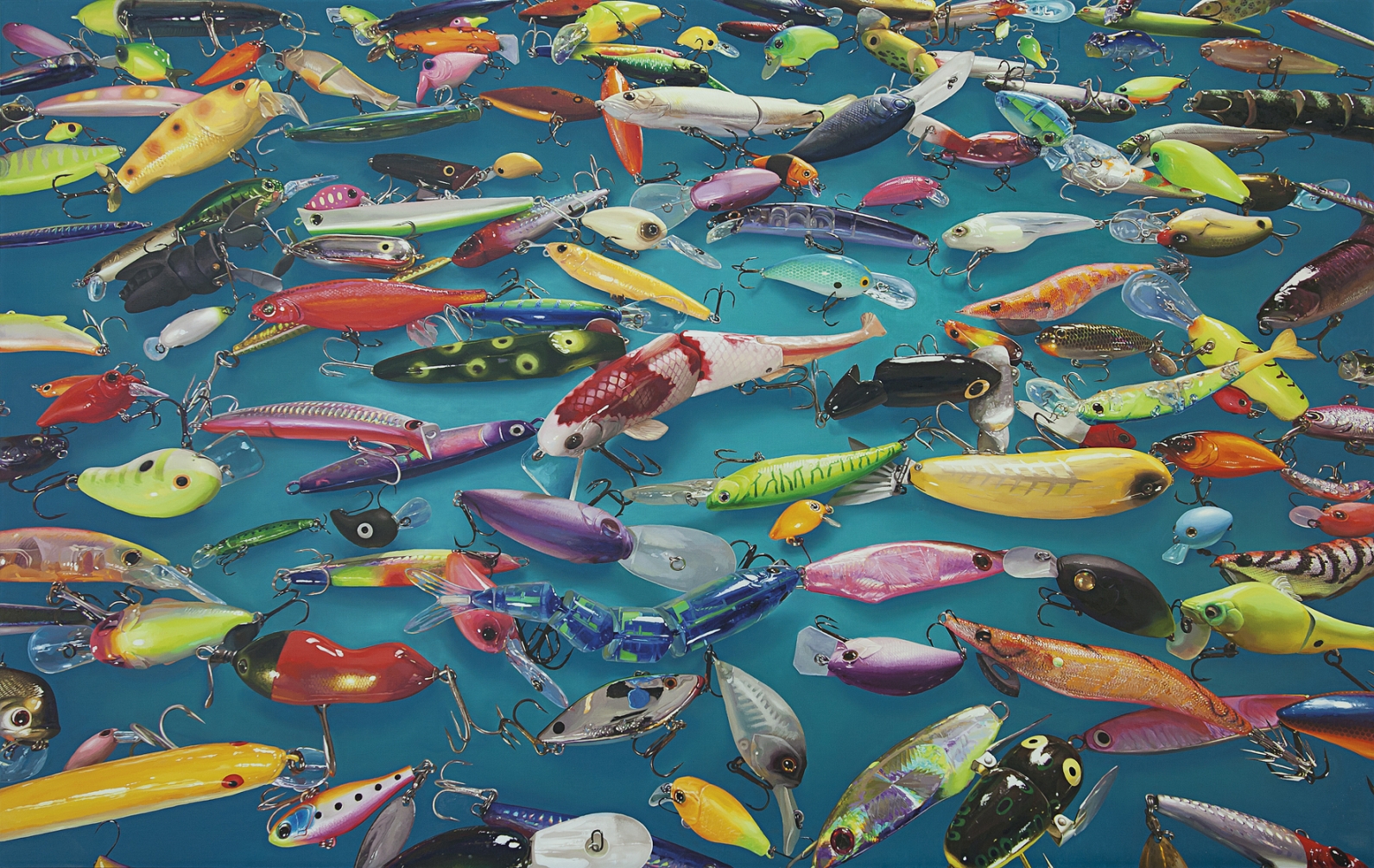
Plastic Fish

2011
Acrylic on canvas
230 x 360 cm
About The Work

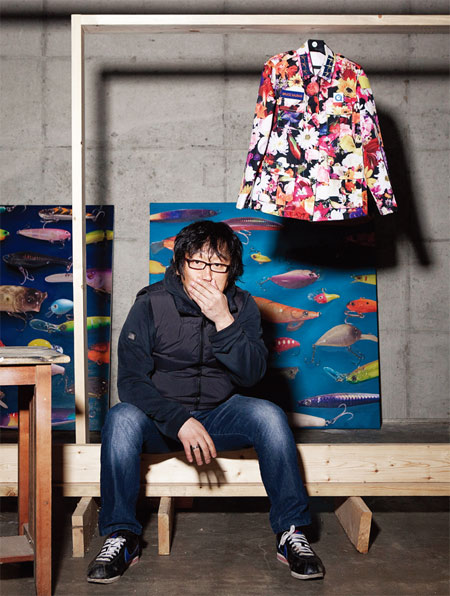
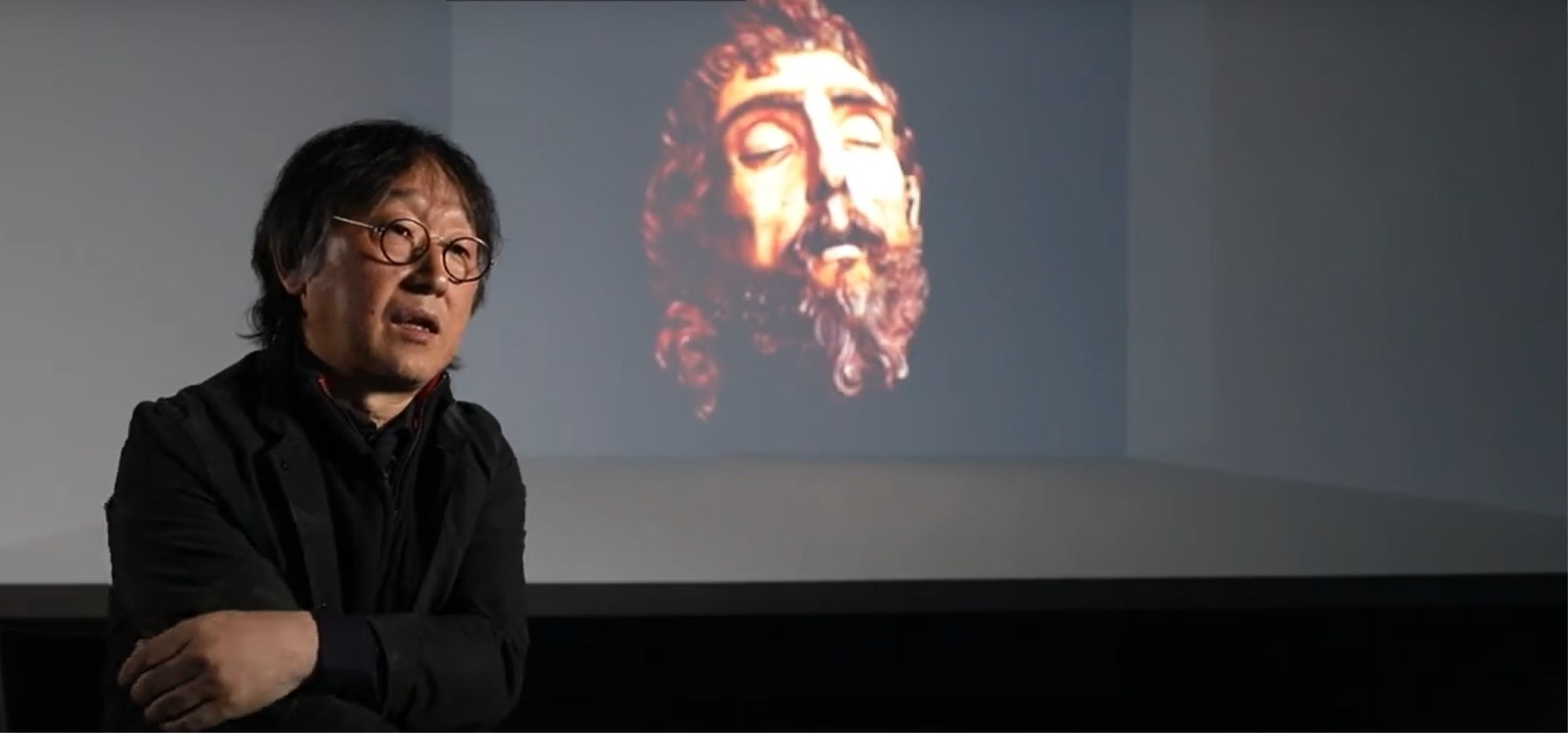
Lee Yongbaek has established his own framework by visualizing stories about human existence and inner life, along with political and cultural issues unique to Korea, through media art, sculpture, installation, photography, and painting.
 
Since the early 90s, the artist has been experimenting with various technologies, from single-channel video to interactive art, sound art, and kinetic art, and has been regarded as a representative of Korean media art. However, the high praise for his work comes not from these technological experiments, but from his ability to express the socio-cultural issues and artistic imagination of the time in these technological forms.
 
Contradictory pairings recur throughout his practice: angel and soldier, mirror and bullet, mold and doll, real fish and artificial lure. These juxtapositions function not merely as visual devices but as structures that expose the tensions and contradictions experienced by individuals in contemporary society. The viewer, while observing these scenes, simultaneously becomes implicated within them.
 
While many contemporary artists working with digital media focus primarily on virtual environments or network systems, Yongbaek Lee consistently foregrounds the human position within such conditions. Even when interactive systems or digital imagery occupy the center of a work, the structure ultimately calls upon the viewer’s body, sensory perception, and lived memory. This shows an attitude that uses media as the subject but is not buried in media.

Solo Exhibitions (Brief)

Lee has held solo exhibitions at domestic and international institutions such as Sungkok Museum of Art (Seoul, 1999), Alternative Space Loop (Seoul, 2005), +Gallery (Nagoya, Japan, 2005), and Spinnerei WERKSCHAU (Leipzig, Germany, 2014).

Group Exhibitions (Brief)

Lee Yongbaek has participated in numerous group exhibitions at institutions including K Museum of Contemporary Art (2016), Seattle Art Museum (2014, 2015, among others), Seoul Museum of Art (2015), Choi & Lager Gallery (Cologne, 2015), Gyeongnam Art Museum (2014), National Museum of Modern and Contemporary Art, Korea (2009), and Alternative Space LOOP (2008).
 
In addition, he was selected as the artist representing the Korean Pavilion at the 2011 Venice Biennale. He has also participated in the 2009 Moscow Biennale, the 2008 Busan Biennale, and the 2002 International Media Art Biennale – Mediacity Seoul, as well as the Gwangju Biennale.

Collections (Selected)

Lee’s works are held in major institutional collections around the world, including the National Museum of Modern and Contemporary Art, Korea; Seoul Museum of Art; Busan Museum of Art; Daejeon Museum of Art; ARKEN Museum of Modern Art (Denmark); the Deutsche Bank Collection (Germany); Hamburger Bahnhof – Museum für Gegenwart (Germany); the Rubell Family Collection (USA); the Orsi Foundation (Italy); the Tiroche DeLeon Collection (Israel); and the Hao Art Museum (China).
Works of Art

The Socio-Cultural Issues and Artistic Imagination

Originality & Identity

Since the early 1990s, Yongbaek Lee has juxtaposed the political and cultural context of Korean society with fundamental questions about human existence. At a time when the Korean art scene of the 1980s was divided between minimalism and Minjung art, he chose not to align himself with a specific camp. Instead, through his involvement with the “Golden Apple” group, he pursued experiments across various media while sharing a broader social context. From the beginning, his interest lay less in formal avant-garde gestures than in how technology and images reflect and transform contemporary reality.
 
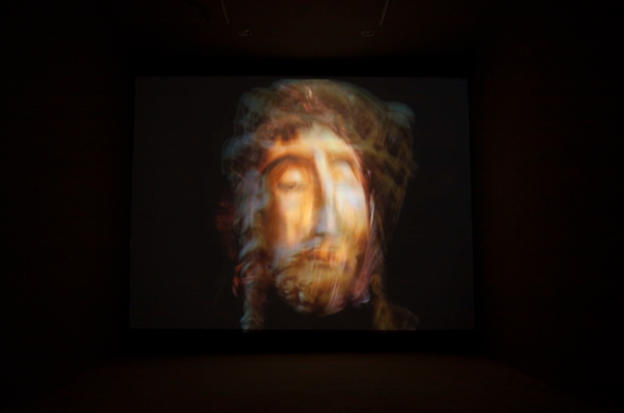
Inbetween Buddha and Jesus(1999–2002) clearly demonstrates this line of inquiry. Using a morphing technique to connect religious iconography and removing the original source images in favor of computer-simulated visuals, the work addresses a perceptual structure in which traditional centers and authorities have been dismantled. The figures of Buddha and Jesus no longer function as fixed embodiments of truth but appear as fluid entities reconstructed through digital technology. Rather than delivering a message of religious reconciliation, the work poses a question about ontology in the digital age.
 
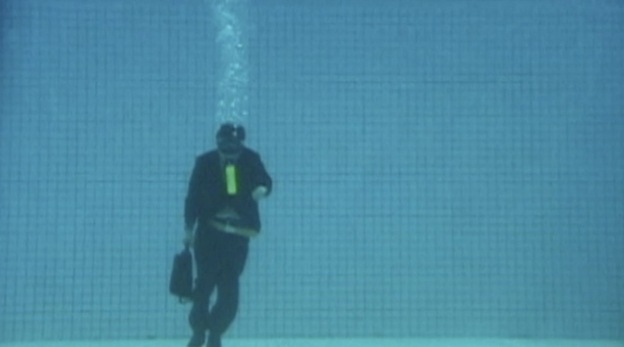
Created shortly after his return to Korea following his studies in Germany, Vaporized Things (Post IMF)(1999–2000) reflects social reality more directly. The image of an office worker walking underwater while wearing an oxygen respirator metaphorically expresses the anxiety and pressure of survival in Korean society after the IMF financial crisis. Its screening in a market greenhouse at the 5th Gwangju Biennale, rather than in a conventional exhibition space, can be read as an attempt to narrow the gap between art institutions and everyday reality. His social perspective unfolds not through overt declaration but by revealing structural tension within specific situations.
 
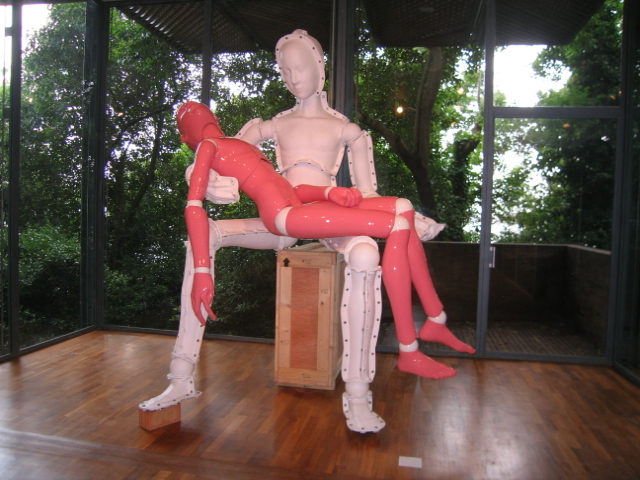
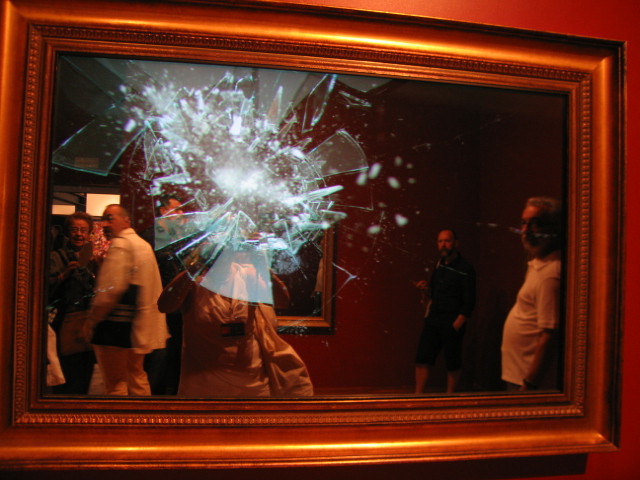
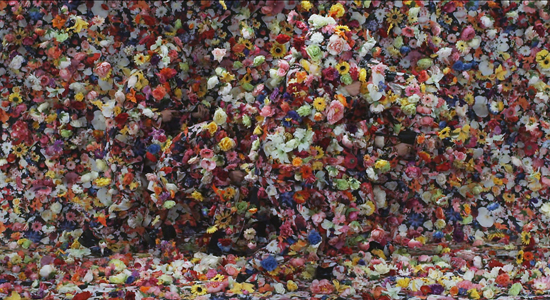
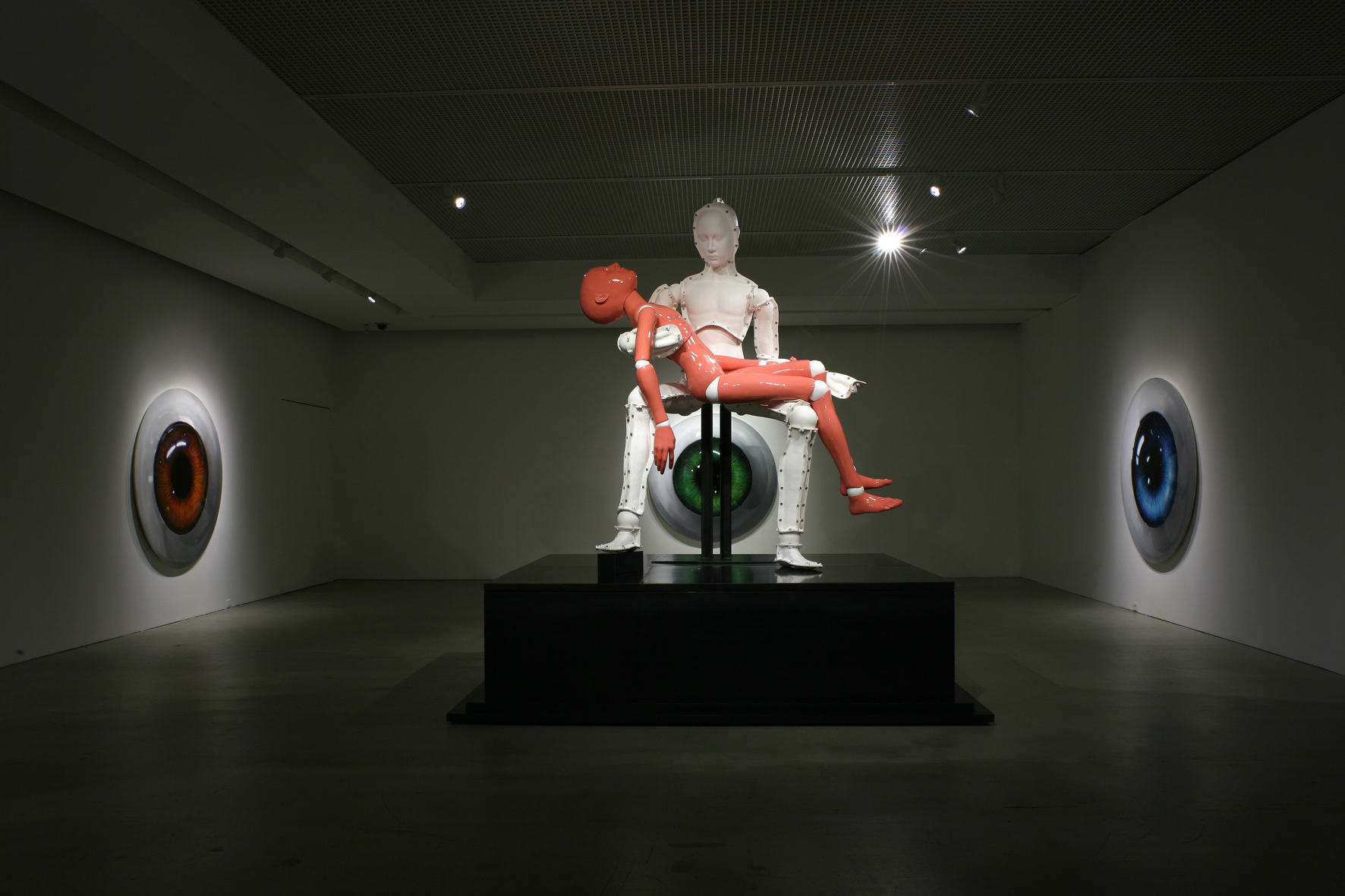
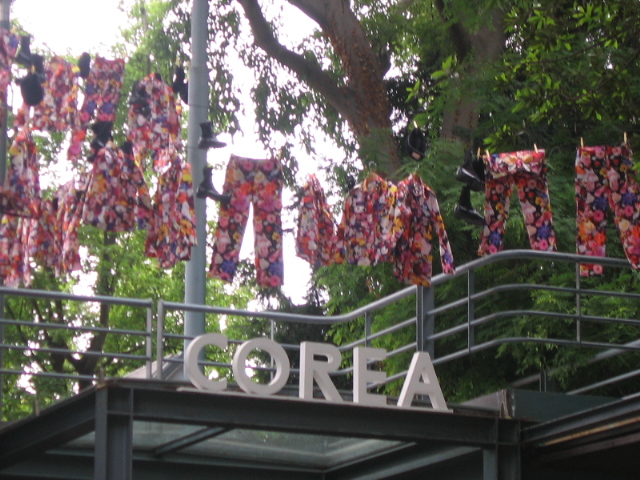
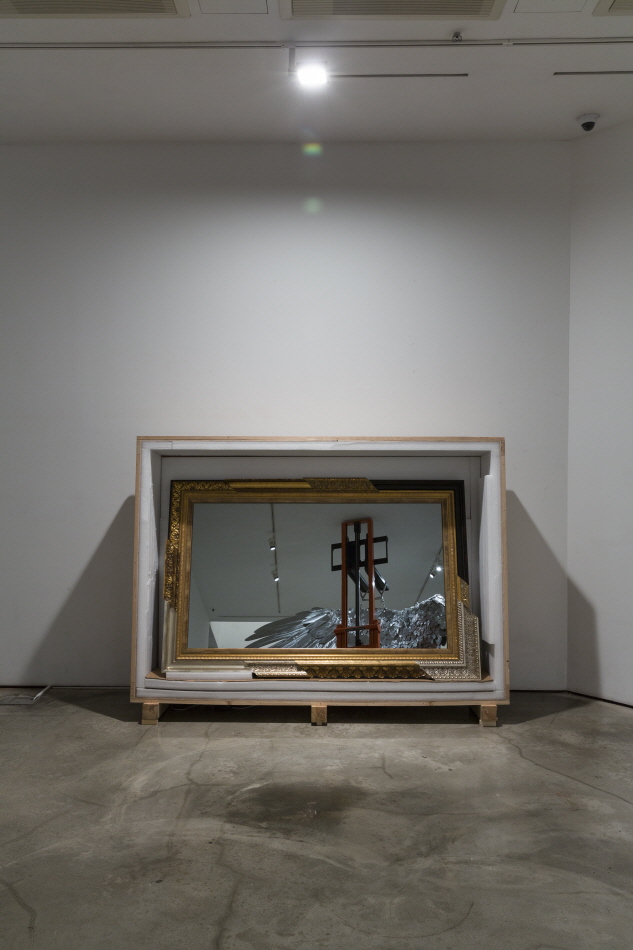
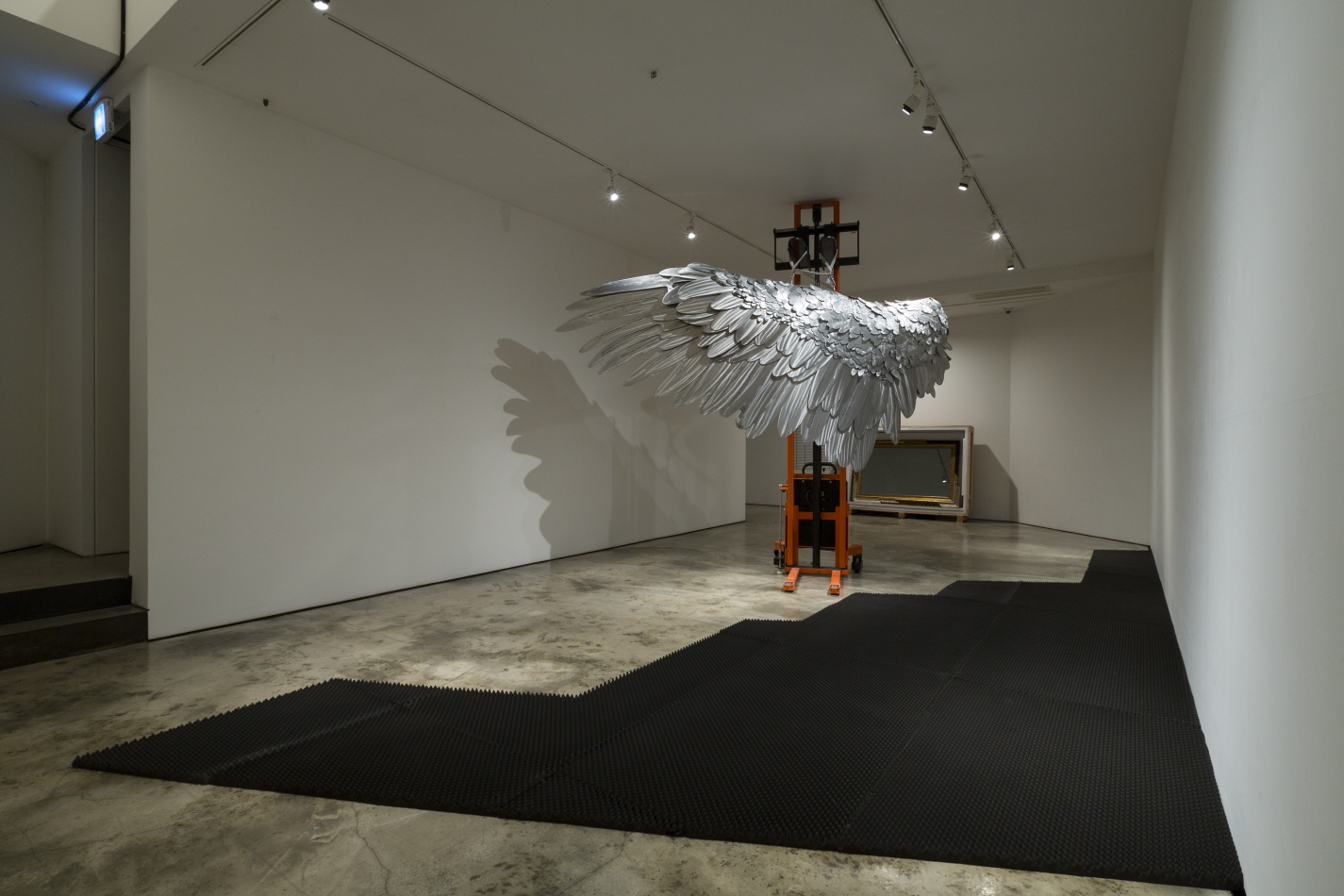
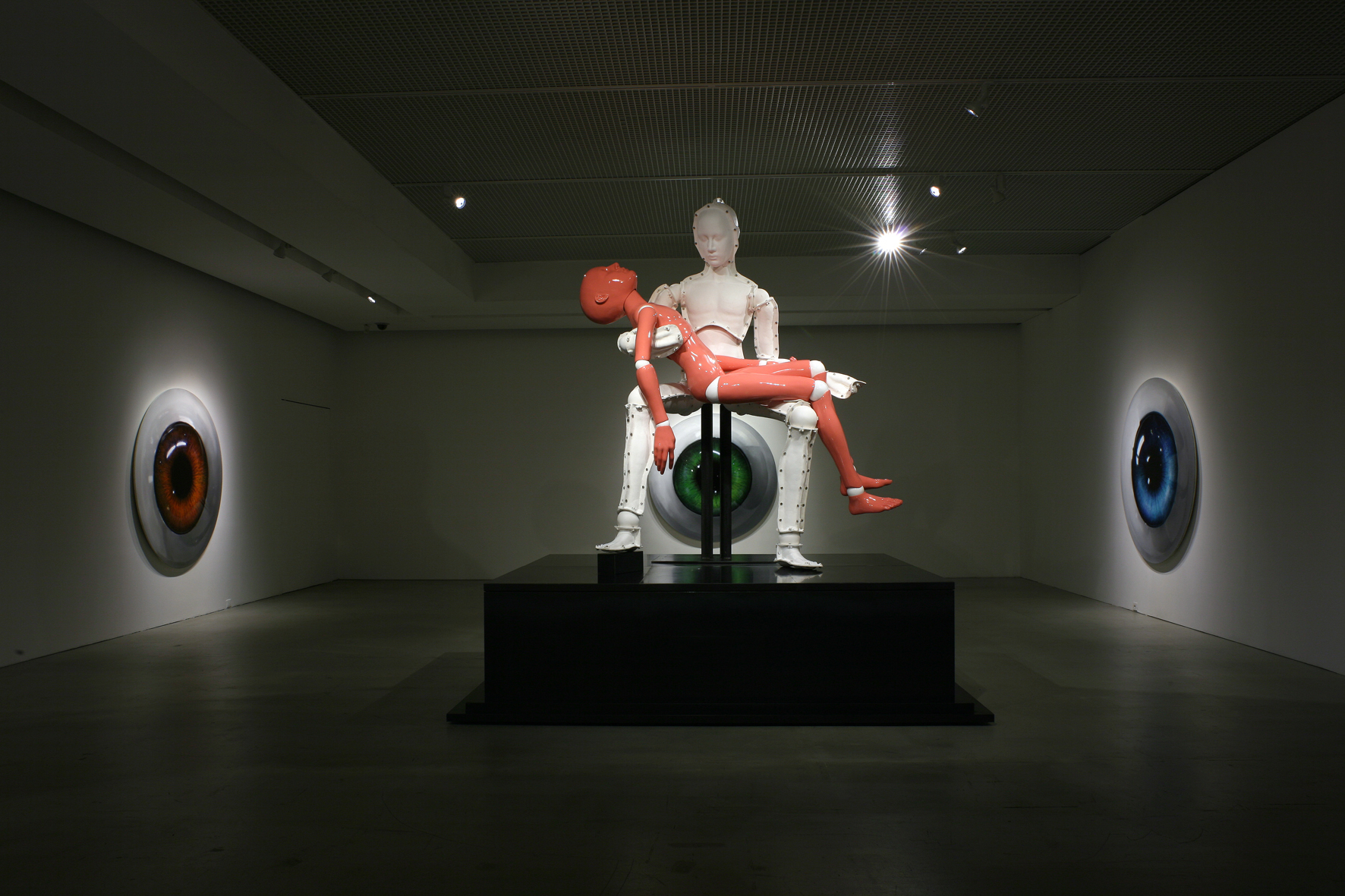
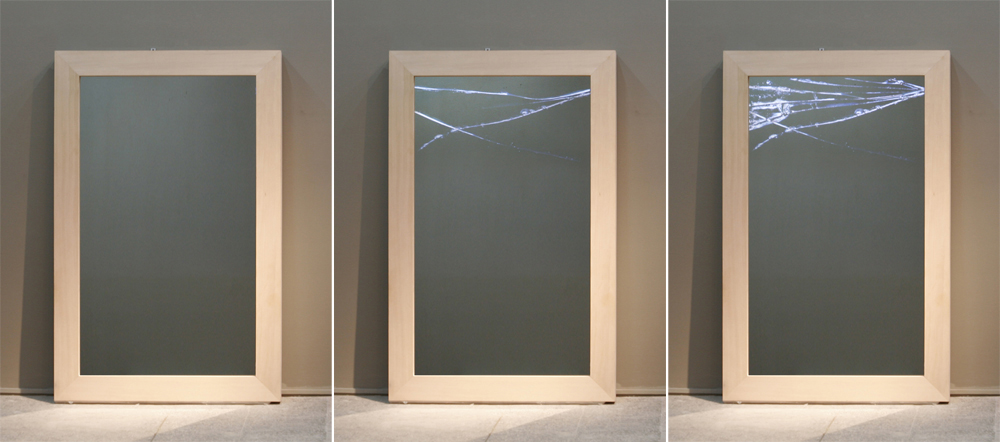
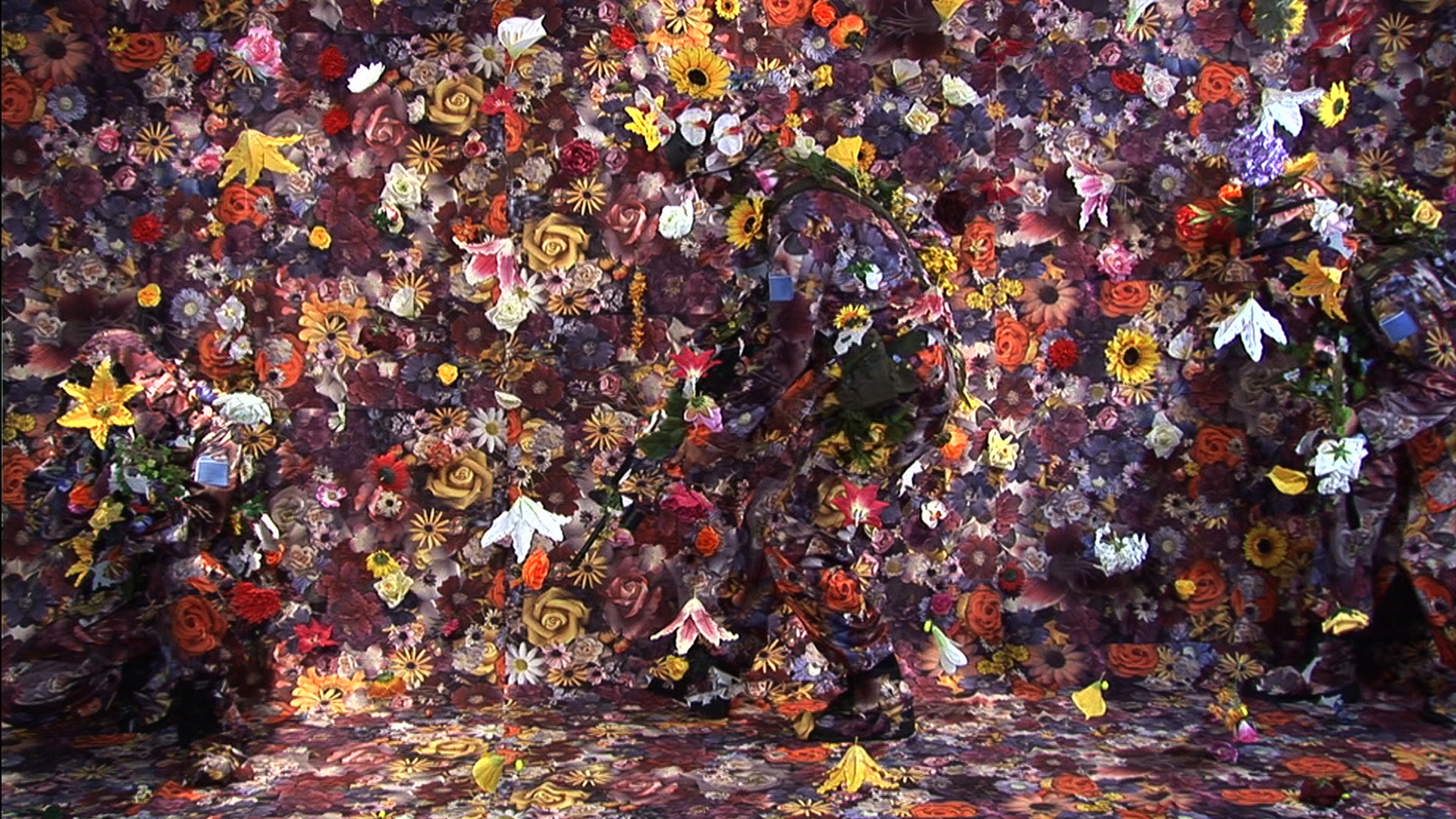
From the mid-2000s onward, works such as Angel-Soldier(2005–), Broken Mirror(2011), and Pieta – Self-death(2008) expand toward themes of fractured subjectivity and the boundary between reality and the virtual. Soldiers in floral camouflage, mirrors shattered by bullets, and the confrontation between mold and doll in the Pieta form all expose the divided subject of contemporary humanity through contradictory structures. While grounded in the Korean context of division and technological transformation, these works extend toward more universal questions of existence.

Style & Contents

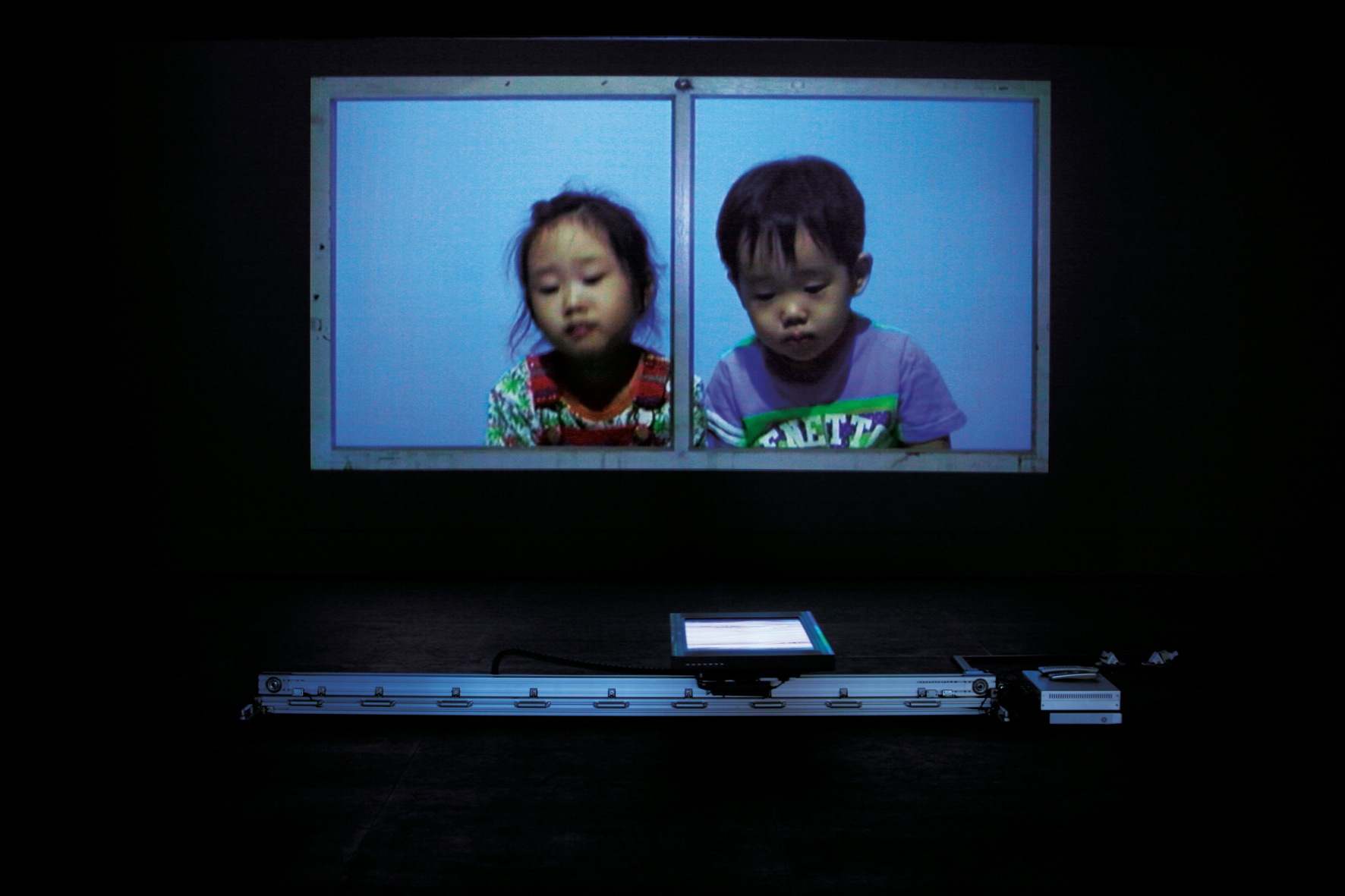
Yongbaek Lee’s practice is not confined to a single medium. Single-channel video, interactive art, sound, kinetic devices, sculpture, and painting are selected according to context. Yet this expansion of media is less about technological experimentation for its own sake than about strategic choices made to realize specific concepts. Rather than treating technology as a subject, he employs it as a tool to reveal the human condition within a technological environment.
 
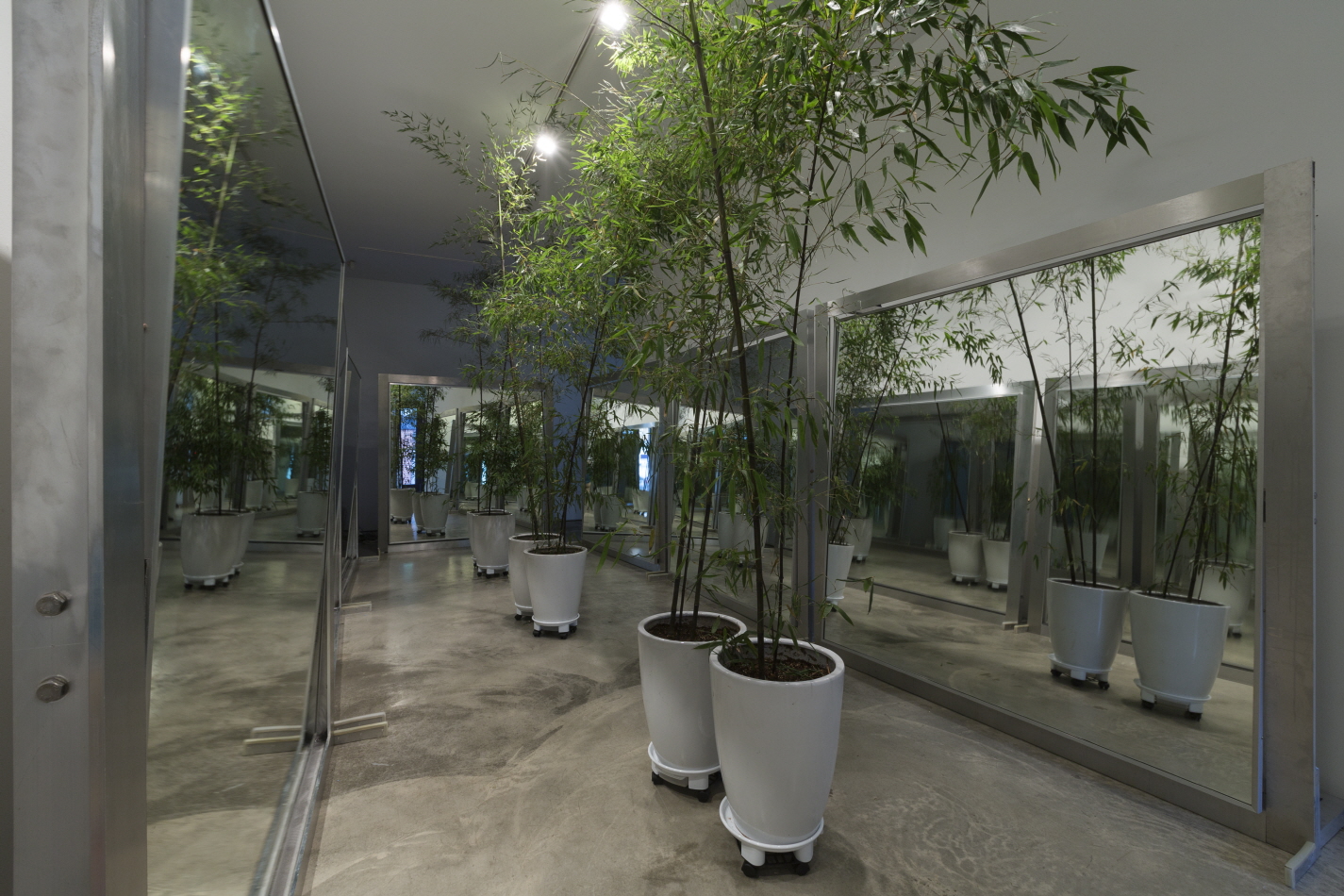
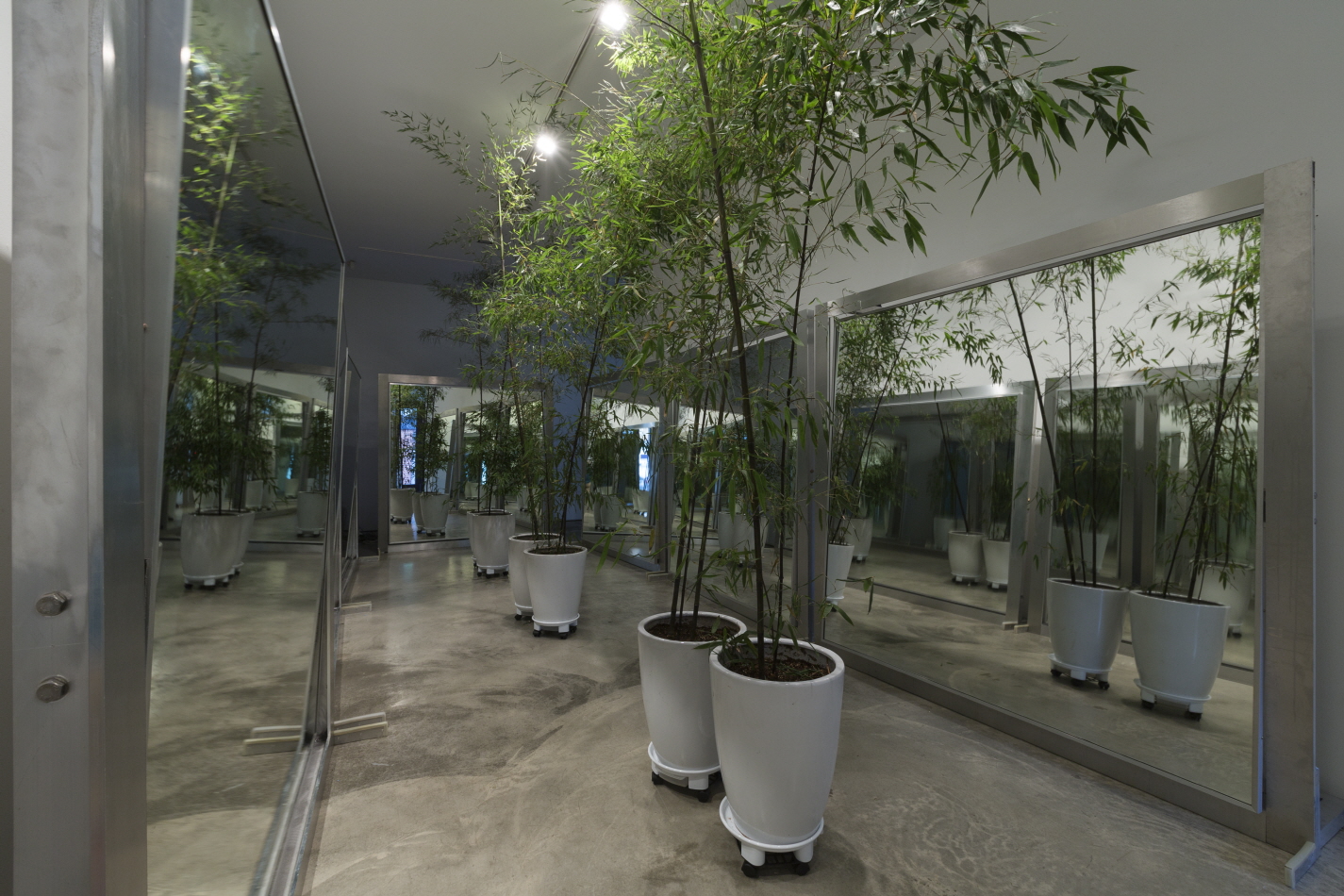
The digital morphing in Inbetween Buddha and Jesus, the underwater performance filming of Vaporized Things (Post IMF), and the LCD monitors and sound effects in Broken Mirror all engage the viewer’s physical senses. In particular, Broken Mirror combines the material presence of an actual mirror with virtual imagery. At the moment the viewer recognizes their reflected image, the intervention of bullets and shattering visuals occurs. The viewer becomes positioned between reality and fiction through their own presence.
 
Angel-Soldier adopts a composite structure combining performance, installation, and video. The floral camouflage uniforms, artificial flower backdrop, and advancing soldiers are visually vibrant, yet the staged situation itself generates unease and tension. Its expansion into a large-scale performance involving 100 performers in the 2009 exhibition “Beginning of New Era” made its collective and militaristic symbolism more explicit. The insertion of computer program logos and the names of art historical masters onto the uniforms points to the strategic and reproducible nature of contemporary artistic production.
 
The Pieta series materializes existential contradictions through sculpture. The relationship between mold and doll, original and replica, addresses issues of life and technology, authenticity and reproduction. In the painting series Plastic Fish, the relationship between real fish and artificial bait, along with human intervention, presents survival as paradox. Even beyond video and installation, similar structural contradictions persist in painting and sculpture, revealing continuity across media.

Topography & Continuity

Yongbaek Lee’s work is not defined simply by technological development but by his sustained attention to the social environment in which technology operates and the condition of individuals living within it. In Vaporized Things (Post IMF), economic crisis is translated into the suffocating image of an individual underwater. In Angel-Soldier, militaristic symbols are transformed into floral surfaces, indirectly revealing the reality of national division. In Broken Mirror, the viewer’s body becomes the site where the boundary between image and reality is unsettled. Though formally distinct, these works share a consistent line of inquiry.
 
Contradictory pairings recur throughout his practice: angel and soldier, mirror and bullet, mold and doll, real fish and artificial lure. These juxtapositions function not merely as visual devices but as structures that expose the tensions and contradictions experienced by individuals in contemporary society. The viewer, while observing these scenes, simultaneously becomes implicated within them.
 
While many contemporary artists working with digital media focus primarily on virtual environments or network systems, Yongbaek Lee consistently foregrounds the human position within such conditions. Even when interactive systems or digital imagery occupy the center of a work, the structure ultimately calls upon the viewer’s body, sensory perception, and lived memory. In this sense, media remains a condition rather than a destination.
 
Over time, media and form have shifted and expanded, yet the structural strategy of juxtaposing opposing elements to generate tension has persisted. Soldiers and angels, mold and doll, real fish and artificial lure, mirror and bullet reappear throughout his work. While tools may evolve, the questions he continues to pursue—the position of the individual within society, fractured subjectivity, and the boundary between original and replica—remain present and ongoing.

Works of Art

The Socio-Cultural Issues and Artistic Imagination

Articles

Exhibitions

Activities