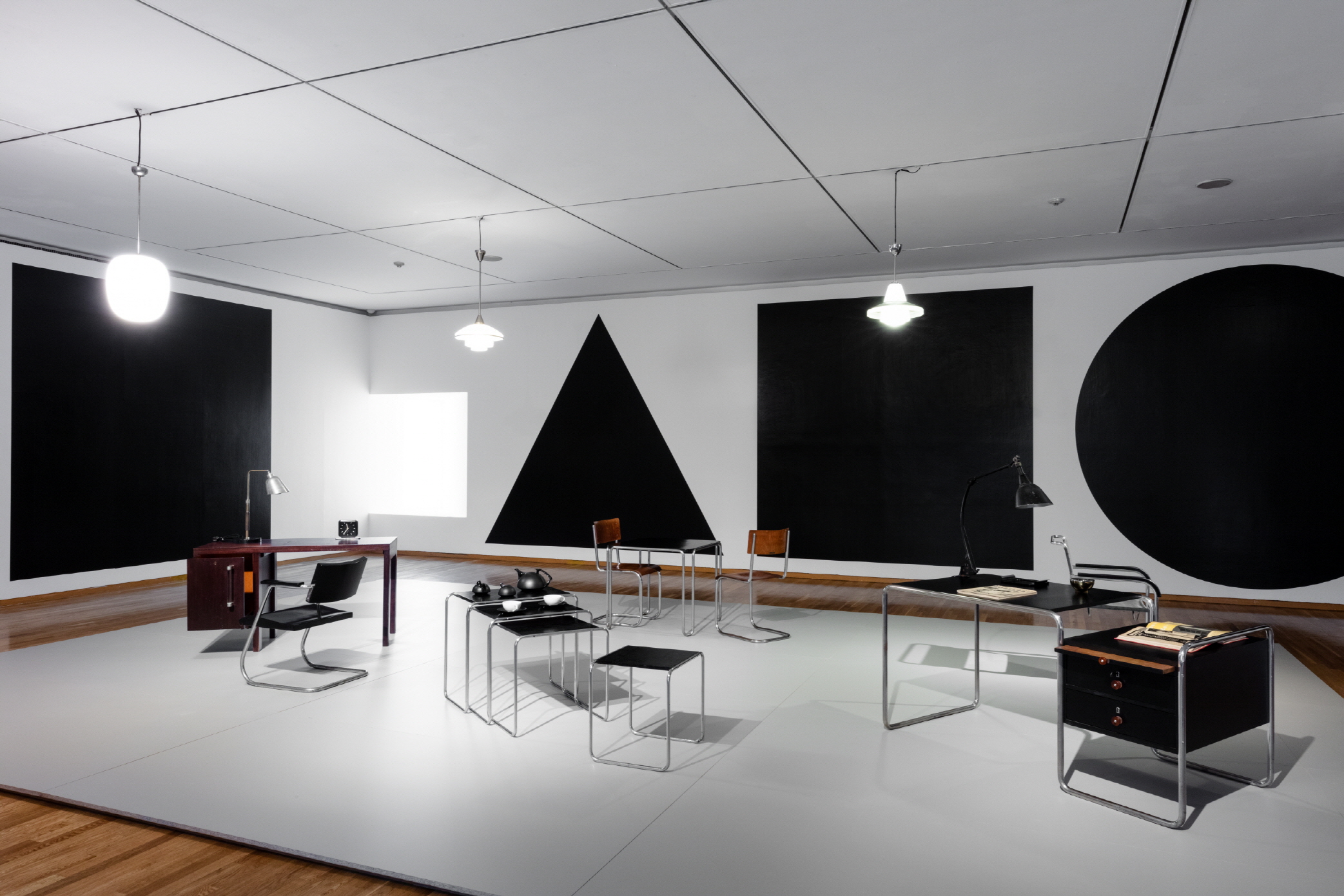
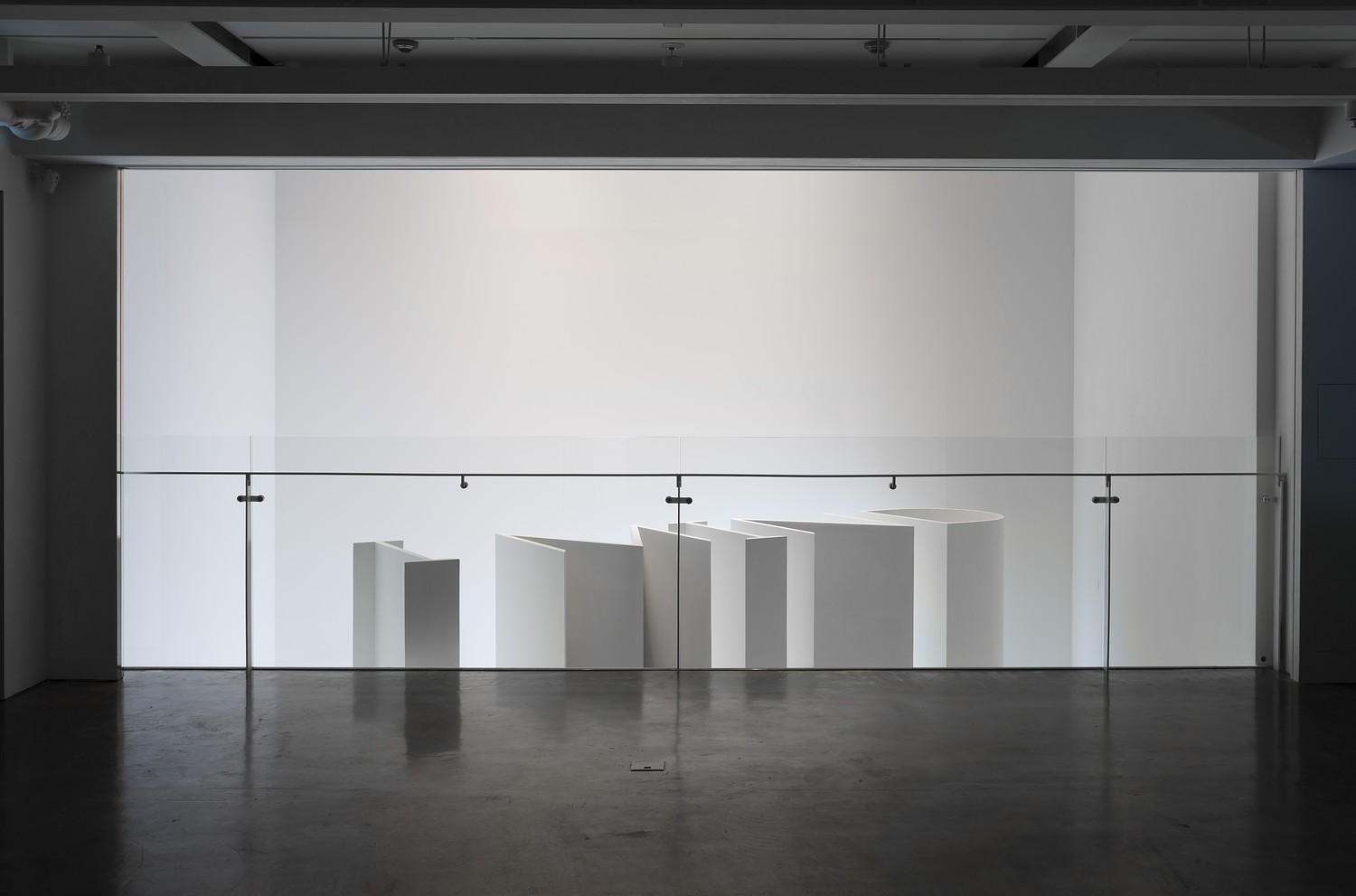
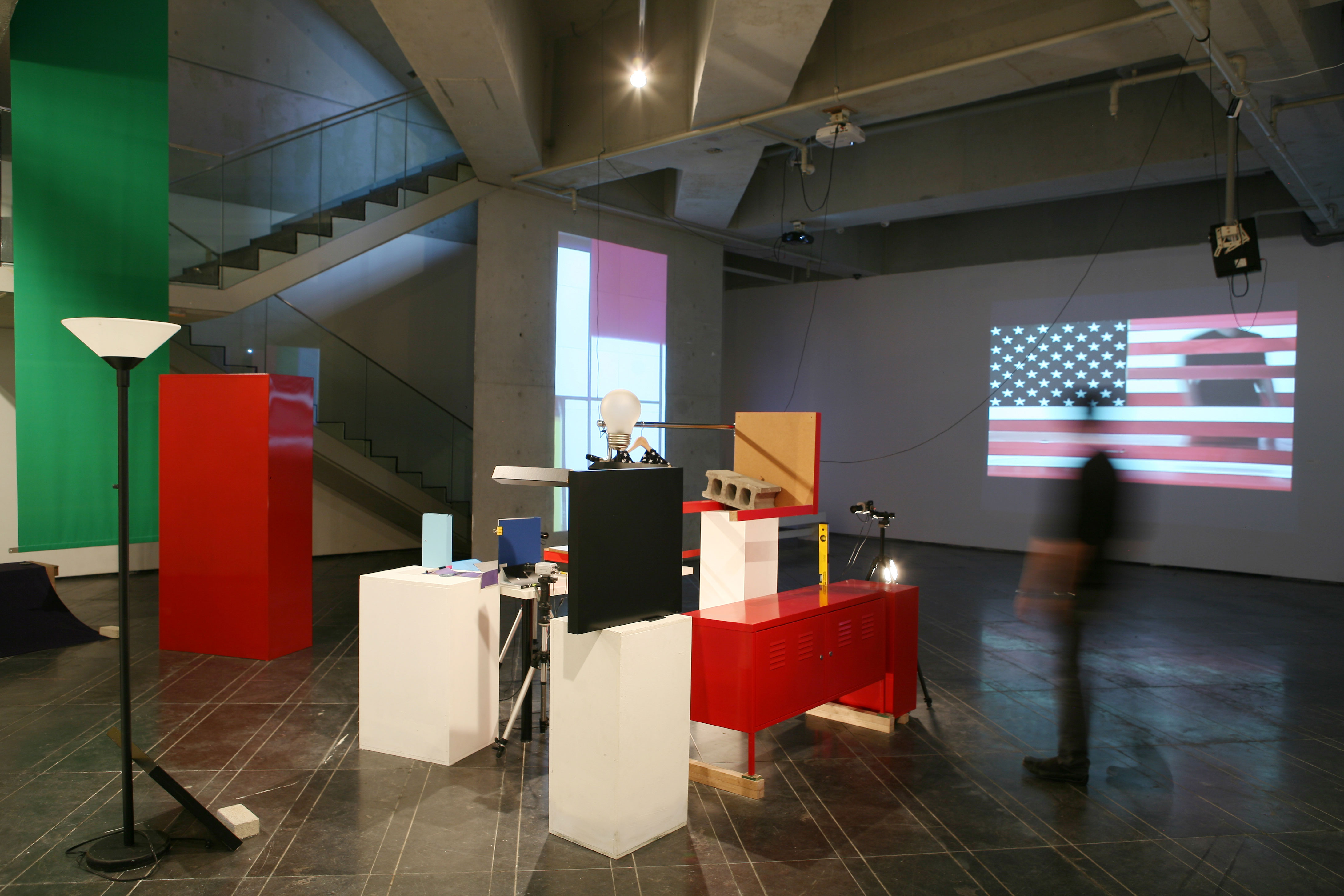
In this exhibition, “remote (control)” refers not only to a way of circumventing the constraints and limitations that arise when exhibition preparations must be carried out from afar because one cannot be physically present, but also to a device that reexamines the meanings of loss of control and error generated in that process, thereby eliciting a range of positions on “unpredictability.”
The exhibition reveals the reverse side of this device, which we tend to believe can take us exactly where we want to go as intended, and explores the processes of intervention and adjustment through which we encounter unexpected obstacles in the here and now, overcome difficult challenges, and leap over blocked exits.
This process is by no means linear; rather, it forms a distinctive topography entangled with departures and changes of route. 《Remote (Control)》 is not a mechanism for seeking a utopia outside reality. Instead, it consists of processes of intervention and adjustment undertaken in order to move closer to reality and to view reality differently—nonlinear, exceptional, and modest attempts.
The exhibition brings together eight artists who have explored the diverse possibilities of contemporary art through a wide range of media, including painting, sculpture, and video installation.
Hwang Yong Jin, Hong Seung-hye, Keryoon Han, Kyungwoo Han, Jackson Hong, Kang Seok Ho, Gwangsoo Park, and Kim Se-il each articulate their own positions on the unpredictability of reality, responding implicitly and obliquely to the anxiety and turbulence of the pandemic era. They do not evade reality in pursuit of a utopia. Rather, they overturn reality, break down boundaries, leap over barriers, and propose alternative ways of reading the real.
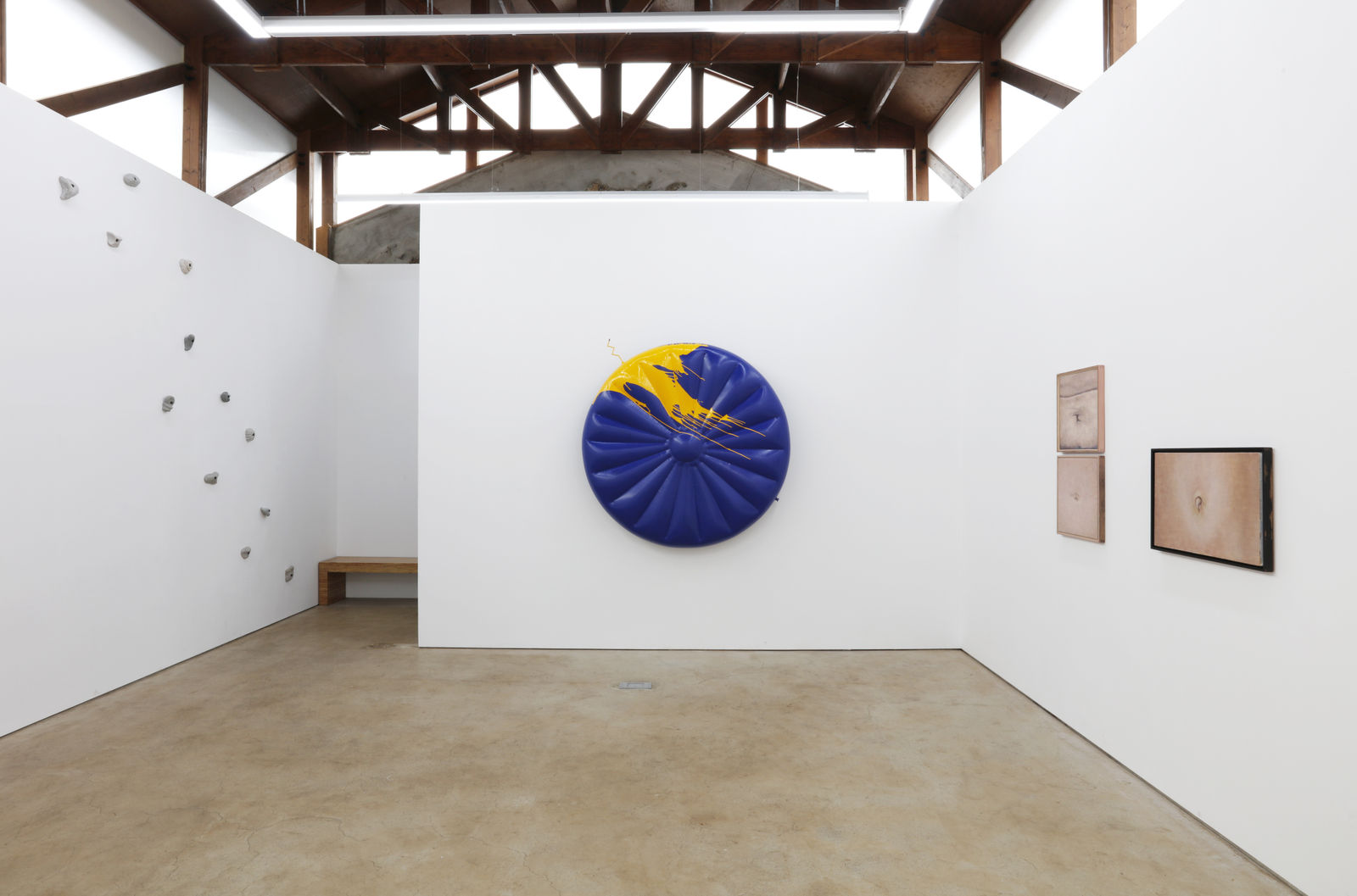
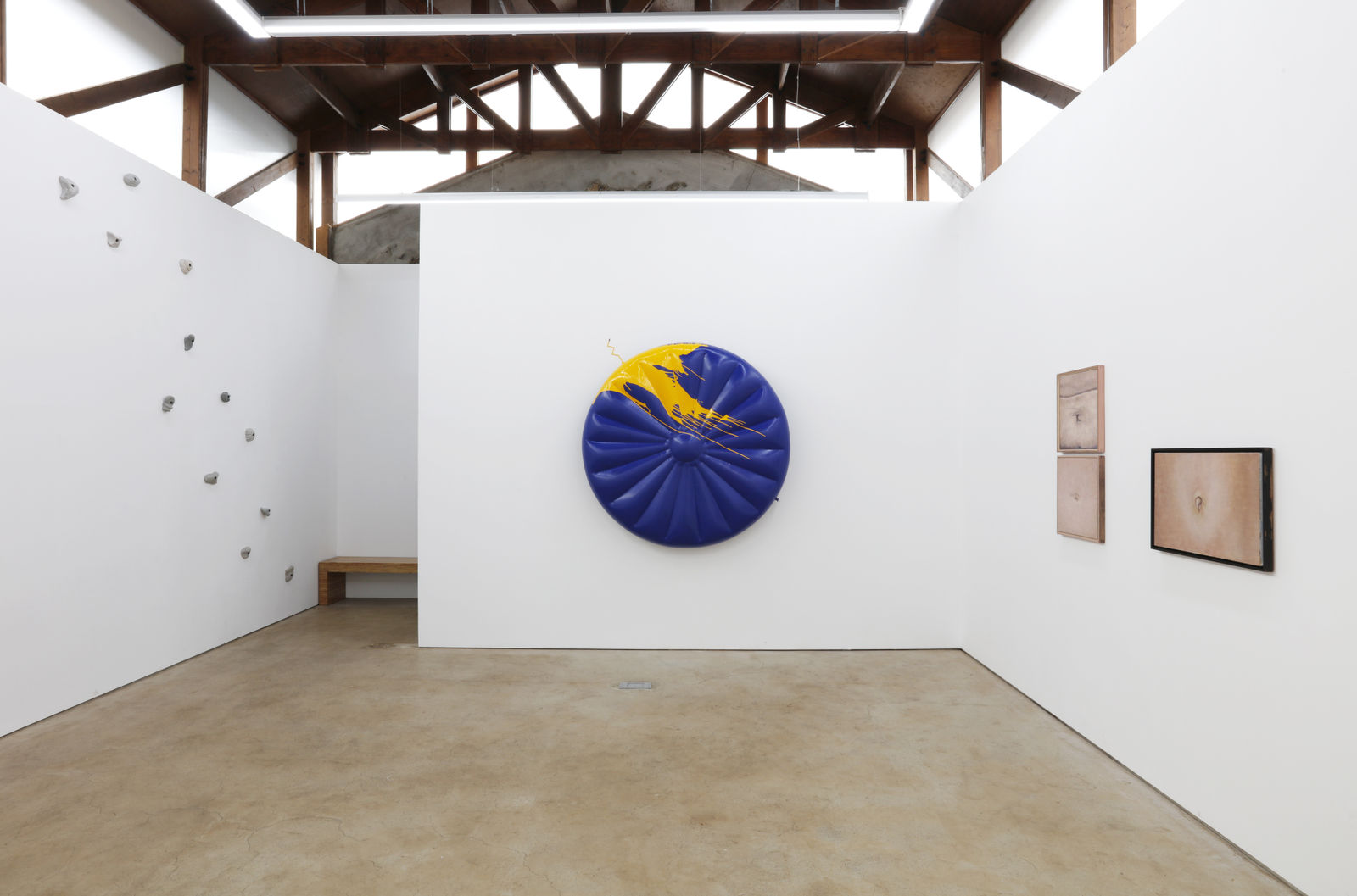
Kang Seok Ho’s three navel paintings, Untitled (2021), which traverse past and present to orchestrate unexpected encounters, connect the history of the Pacific War in the twentieth century, the present, and the life of an individual, making possible a different perspective on reality.
Gwangsoo Park’s three color drawings, Untitled (2020), which continuously reflect upon his own appearance and question his position within obstructed real space, address human identity as it splits and mutates across time and space. They may be understood as attempts to perceive the outward human form as sensed in multiple ways through the process of colors flowing and blending, the identity concealed within it, and the boundaries that define it.
Hwang Yong Jin, who has long explored landscapes of the mind, presents ML17213 (2017), a previously unexhibited work from his 'My Landscape' series. Set against twilight, the single tree standing tall at the center approaches us as an inner landscape in which layers of time and countless stories are intermingled.
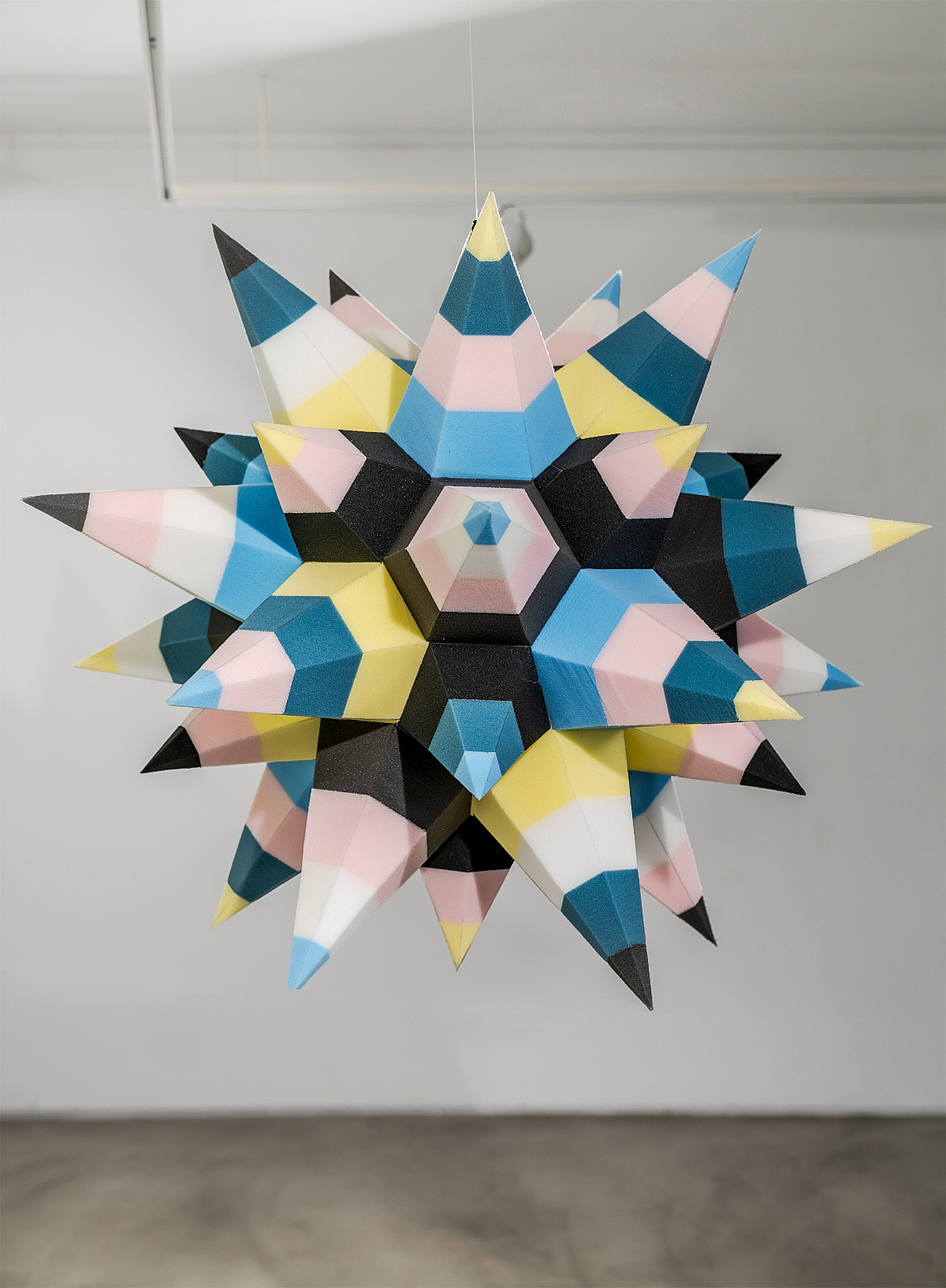
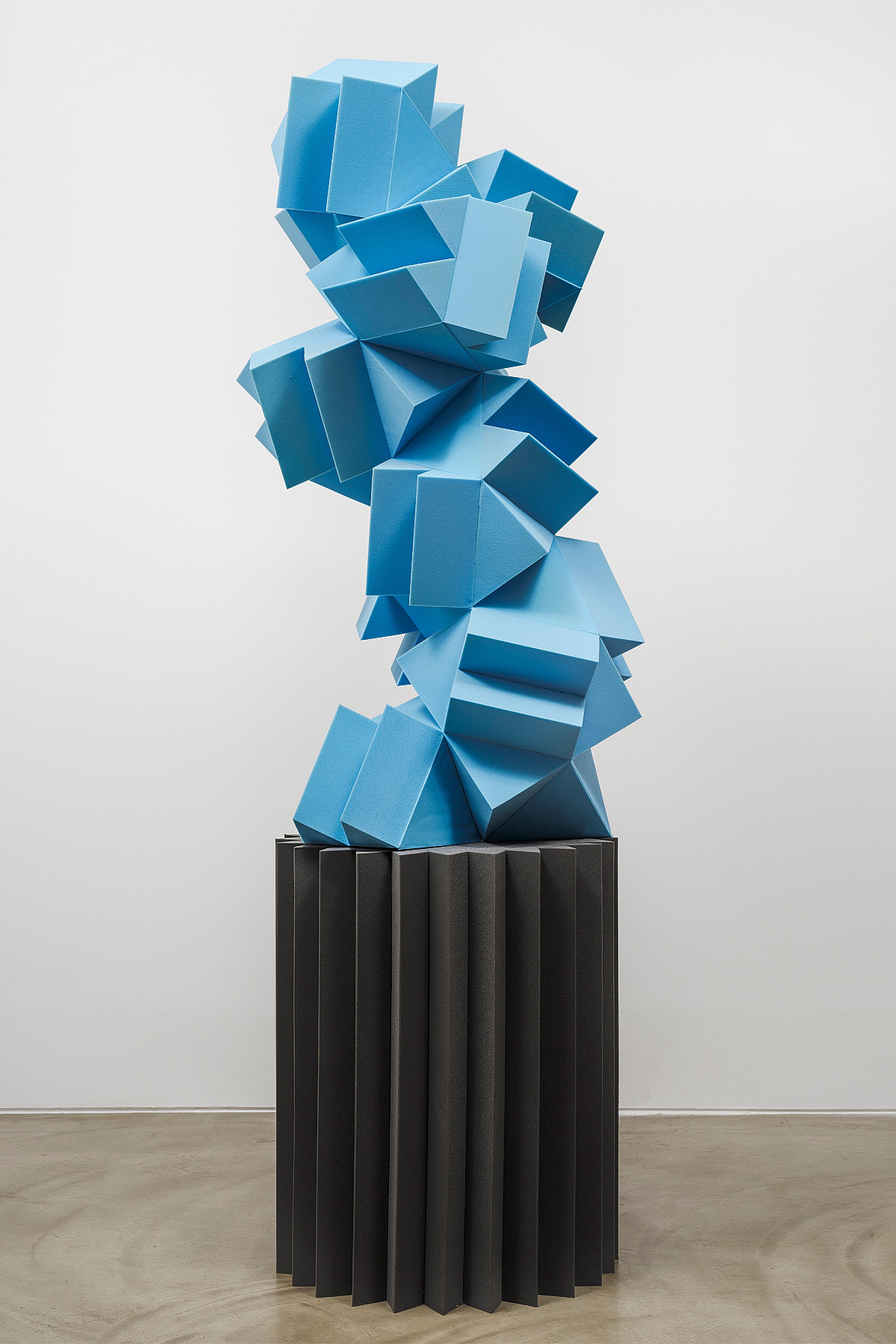
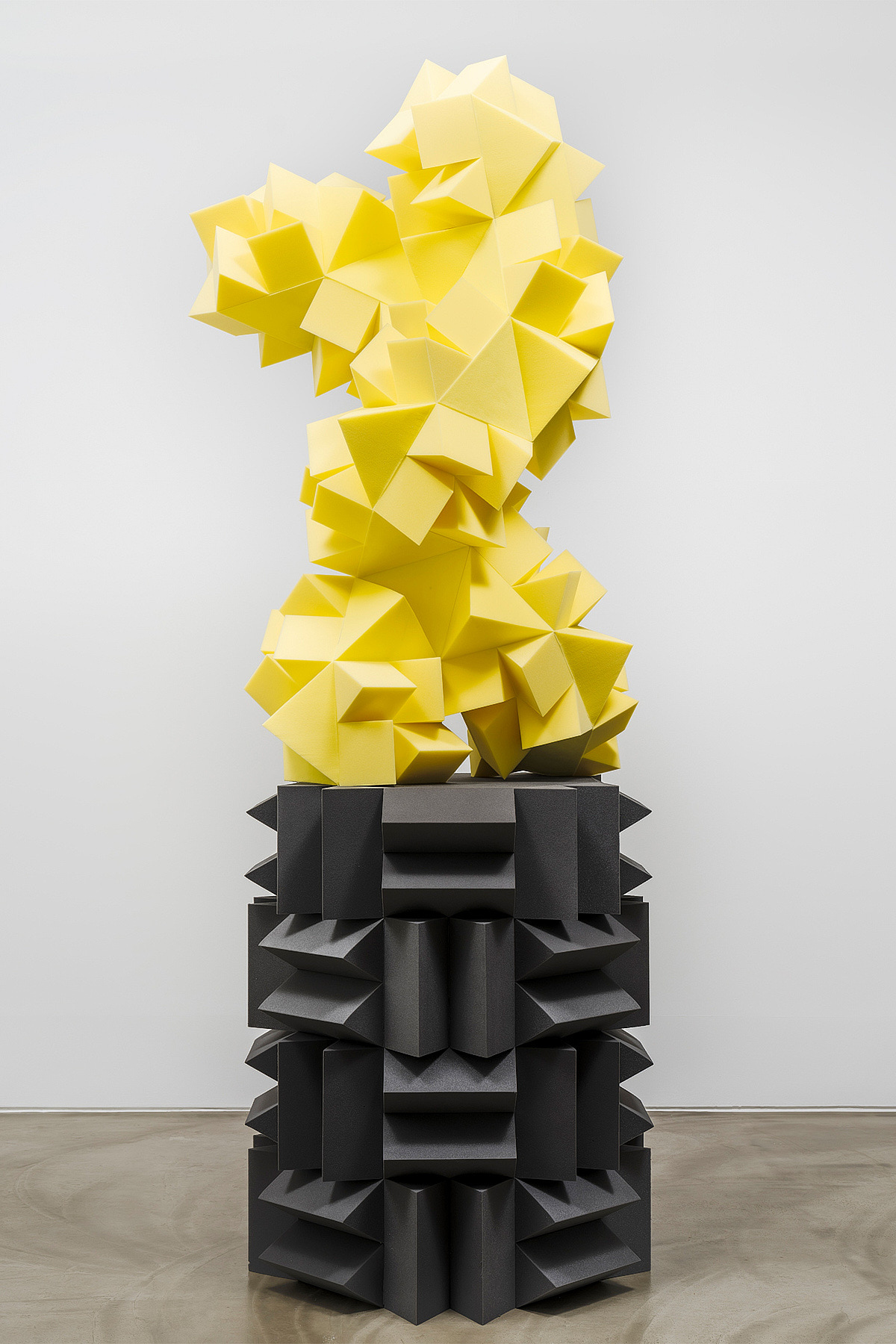
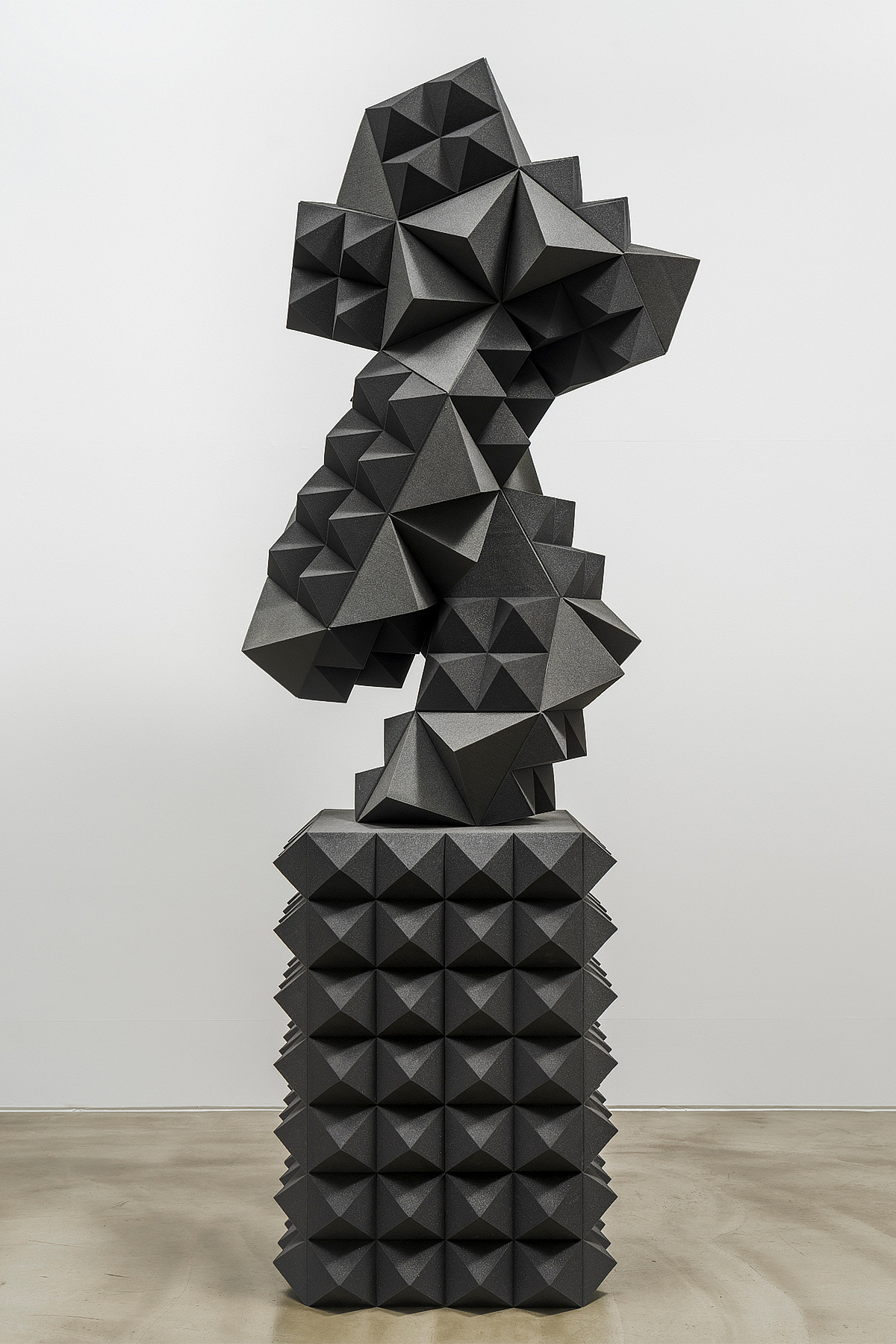
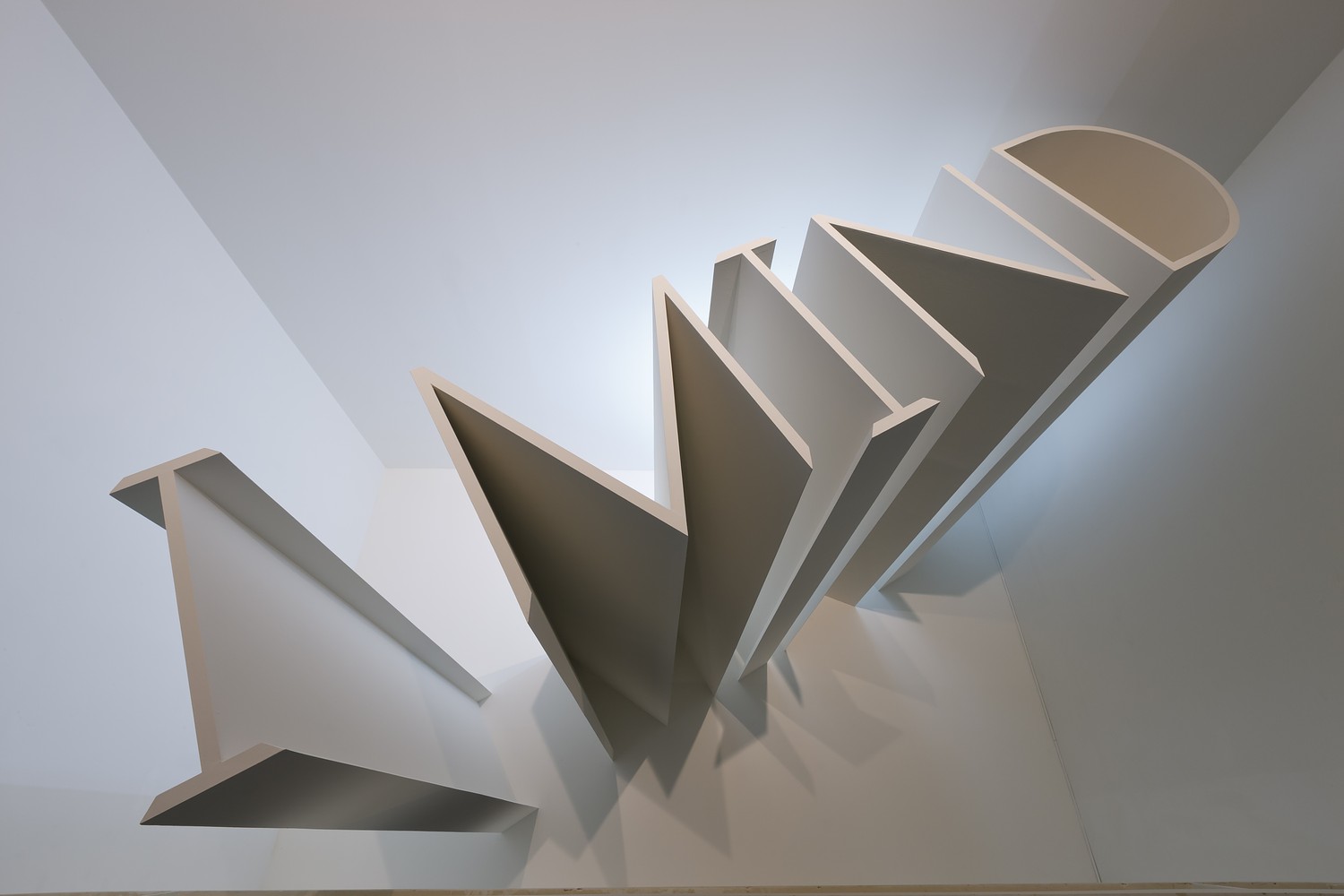
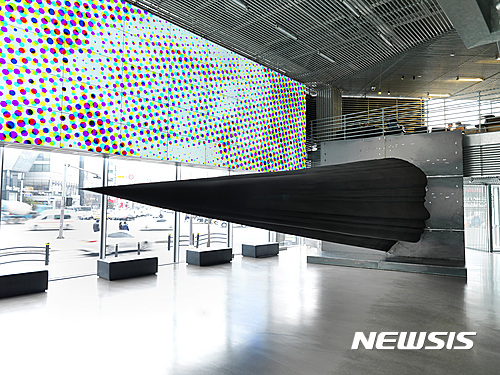
Keryoon Han’s Landing of Yellow (2021) extends the ‘Eris Project’ that the artist has pursued over many years. Realized as a tubular sculptural form, Landing of Yellow reenacts the scene in which the spaceship Staedtler makes a splendid landing on Eris, the blue dwarf planet long forgotten in our memory. This absurd encounter between the pencil brand Staedtler and the dwarf planet Eris wittily detours around questions of representation and reality while traversing present and future.
Jackson Hong’s Plunger (2010) is a sculptural work that reprocesses into a cartoon-like image a machine that compresses fluid through piston motion. The artist stages a scene at once delicate and comic, making viewers feel even the slightest vibration as a pure white plastic plunger appears to fly into the exhibition space and lodge itself in the wall.
Meanwhile, Kyungwoo Han’s Reversed relation (2019) reveals the contradictory relationship between original and copy. In Reversed relation, natural stone is recreated in the form of an artificial climbing hold; taking as his point of departure the fact that artificial holds used in indoor rock climbing are themselves objects modeled after natural rock, the artist challenges fixed ideas about original and copy, originality and imitation, thereby enabling a different mode of reading.
Kim Se-il’s X25 (2020) unfolds a story about irreversible life by rethinking sculpture in an inverted manner. The small white plaster sculpture X25 begins when the artist draws a human figure onto a thick slab of clay, hollows out the interior in reverse, pours plaster into it, lets it harden, and then removes the clay, leaving a small graspable “mass”—a being born of chance and error, yet also “that something X” that had always drifted beside the artist. In this small and fragile plaster sculpture, the artist sees his confiscated desire accidentally captured in an X-ray image.
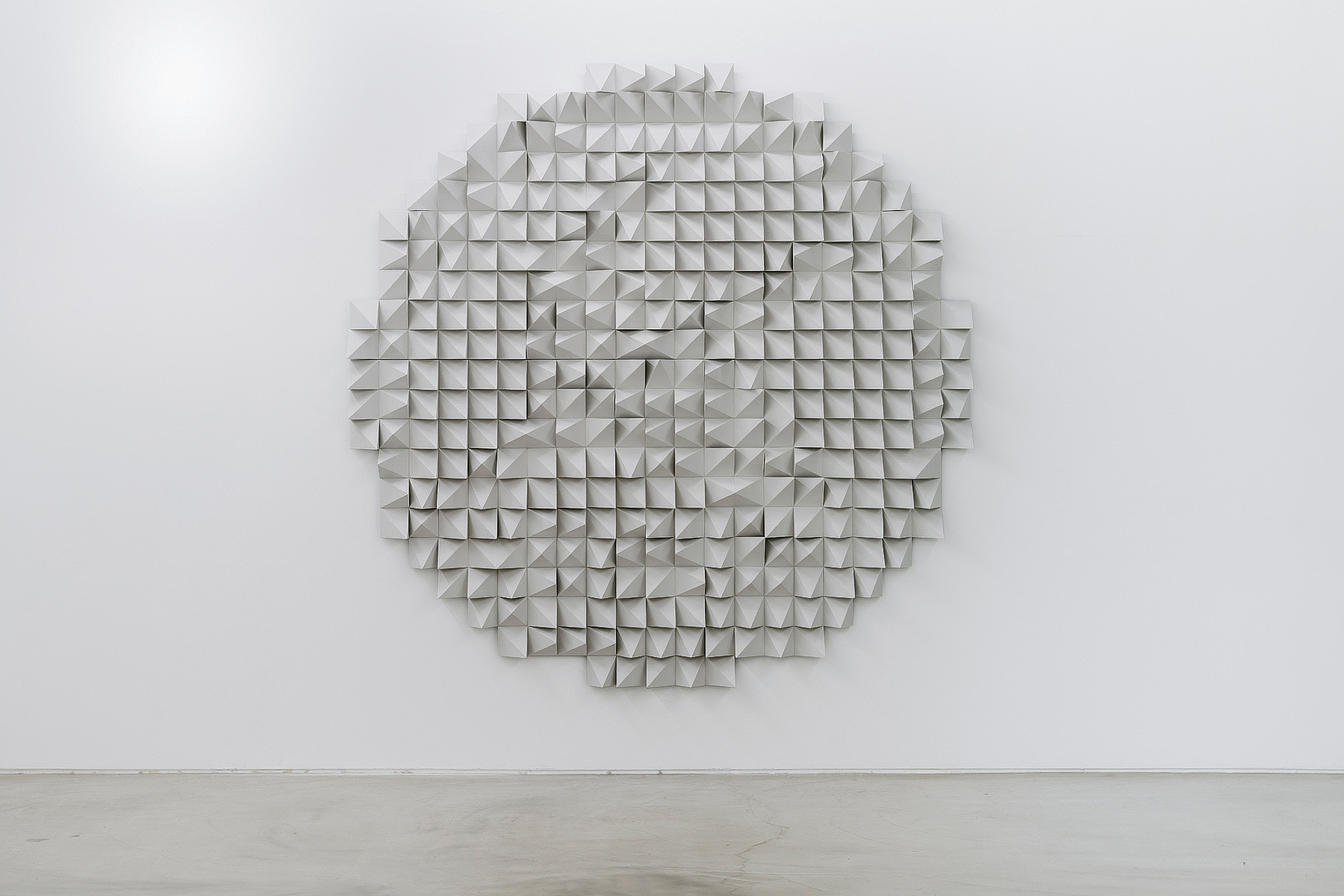
Hong Seung-hye’s Box (2020) expresses, through “pixel abstraction,” an imaginable volumetric image upon a low-resolution Photoshop grid, resembling a process of sprouting and growth from blankness or nothingness. This process of growth is organic and also suggests our lives, which inherently contain unpredictability.