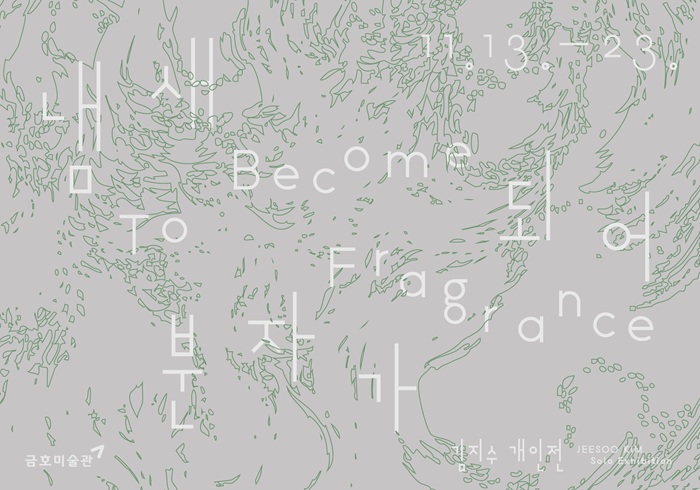
The Wisdom of the Nose, or the Mysterious Trajectory of Being
Painting is not created through sight alone.
It is connected to every aspect of life.
1
Fragrance has no grammar. Molecules collide with one another. Beings come into contact and collide. They negotiate and interfere with one another. Neither beginnings nor endings are clearly defined. In revealing the very fact that something exists, smell is more expressive than any other sense. The sensation of encountering the world through smell is also a kind of pain.
It traces the mysterious trajectory of existence formed where chance and necessity intersect. In any case, amid the countless works dealing with scent and olfaction, we often find ourselves longing for the primal senses we have lost. For some, flowers delight the eyes; for others, they delight the nose. Just as every flower has its own symbolic meaning, every object in the world possesses its own distinctive smell.
If someone were capable of perceiving and distinguishing every single one of these smells, they might go mad or become unhappy, like Ireneo Funes in Jorge Luis Borges's Funes the Memorious. In a world where one senses what others cannot, new ways of seeing and thinking inevitably emerge. Countless particles swirl, flow, and move freely until they happen to come into contact with sensory receptors.
It is almost impossible for people endowed with such extraordinary perception and awareness to lead ordinary lives. If one can smell not only grass, flowers, and trees, but also fire, water, and air, and if every person has a different scent, how can one maintain a balance between the senses and the mind amid the countless odor molecules released by everything around them? Sensations that are too intense, too numerous, or too complex escape recognition. How can sensations beyond the limits of perception be perceived?
A feast of fragrances so overwhelming that one can no longer distinguish one from another. In an age of severe environmental pollution, everyday life becomes nearly impossible for those born with an unusually large number of olfactory receptors or with exceptionally sensitive ones. We have long since forgotten the celebration of matter and sensation that unfolds through sight, hearing, touch, and smell together. In a world where nothing remains in its natural state, dreaming of a new world through smell is like indulging in a reverie. How can we sense what no longer exists?
Einstein's famous discussion of Brownian motion is fascinating. Brownian motion refers to the random movement of particles in the air, which can explain how fragrance particles disperse through the atmosphere. Such random movements can be understood through mathematical probability. Ultimately, however, they cannot be predicted with complete mathematical precision.
In other words, the phenomenon of random motion in nature lies at the furthest reaches of mathematics and science. Yet when it enters the realm of human sensibility and aesthetics, randomness and chance in both existence and movement become entirely natural and self-evident. What is most ambiguous in scientific representation becomes most clearly expressed through aesthetic representation.
The material and immaterial worlds intersect, while the conscious and unconscious worlds enter into a mysterious union. It is a mystery encountered by the mind at its furthest limits. To someone who has gone hungry for days, the smell of cooking rice or baking bread means everything in the world. In films that explore the psychology of their characters, such as Attila Marcel, the protagonist recovers long-lost memories through the aromas of herbal tea and madeleines as he drinks and eats.
In The Hundred-Year-Old Man Who Climbed Out of the Window and Disappeared, the protagonist Allan is obsessed with explosives, spending his life making bombs and reveling in the pleasure of blowing up anything and everything. While the smell of gunpowder evokes fear and anxiety in some people, Allan finds peace in its intense odor. The characters in The Lord of the Rings also fall into ecstasy as they smell the Ring. In the film Van Gogh, the painter calms his mind and body by inhaling the strong scent of turpentine.
Meanwhile, works such as Sherlock translate the human senses of smell and touch into astonishing graphics through a hyperrealist visual language. Through the translation or transformation of sensory perception, the detective solves complex mysteries by navigating a microscopic world of molecular differences imperceptible to ordinary senses.
2
For the artist, the significant events and relationships in life are repeatedly experienced through smell, gradually accumulating and organizing the countless delicate and intricate textures of existence. Smell becomes a mysterious encyclopedia containing the entirety of a person's life. The scents of a study, a garden, walking paths, and various objects summon the artist's mind back into the past.
As heartrending experiences and memories of the past are revisited again and again, they become independent myths in their own right. The breadth and depth of life grow both more joyful and more sorrowful. The world becomes a celebration of countless beings, while at the same time one comes to recognize the complexity and depth of one's own existence.
Each person possesses a unique scent, and that scent is a sensory manifestation of existence itself. Just as someone cast into the world or held captive like a hostage might experience a heightened sense of smell when their hands and feet are bound, their eyes closed, and their hearing lost, olfactory perception becomes increasingly acute when other senses are restricted.
The artist seeks to recognize every smell. This is also an act of naming. Compared to the other senses, smell has been less altered by human intervention. Despite the development of perfumery, this remains true. Retaining its most primordial form, smell may be the only sense capable of remembering both the moment humans acquired their identity as human beings and the state of existence that preceded humanity.
The precise process through which we perceive smell remains a mystery. It is difficult to distinguish whether we are actually smelling something or merely recalling experiences from long ago.
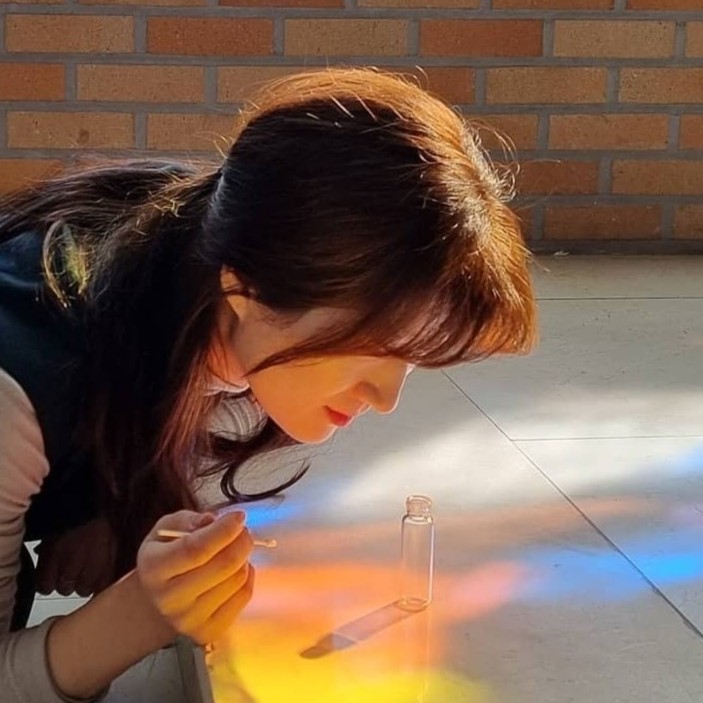
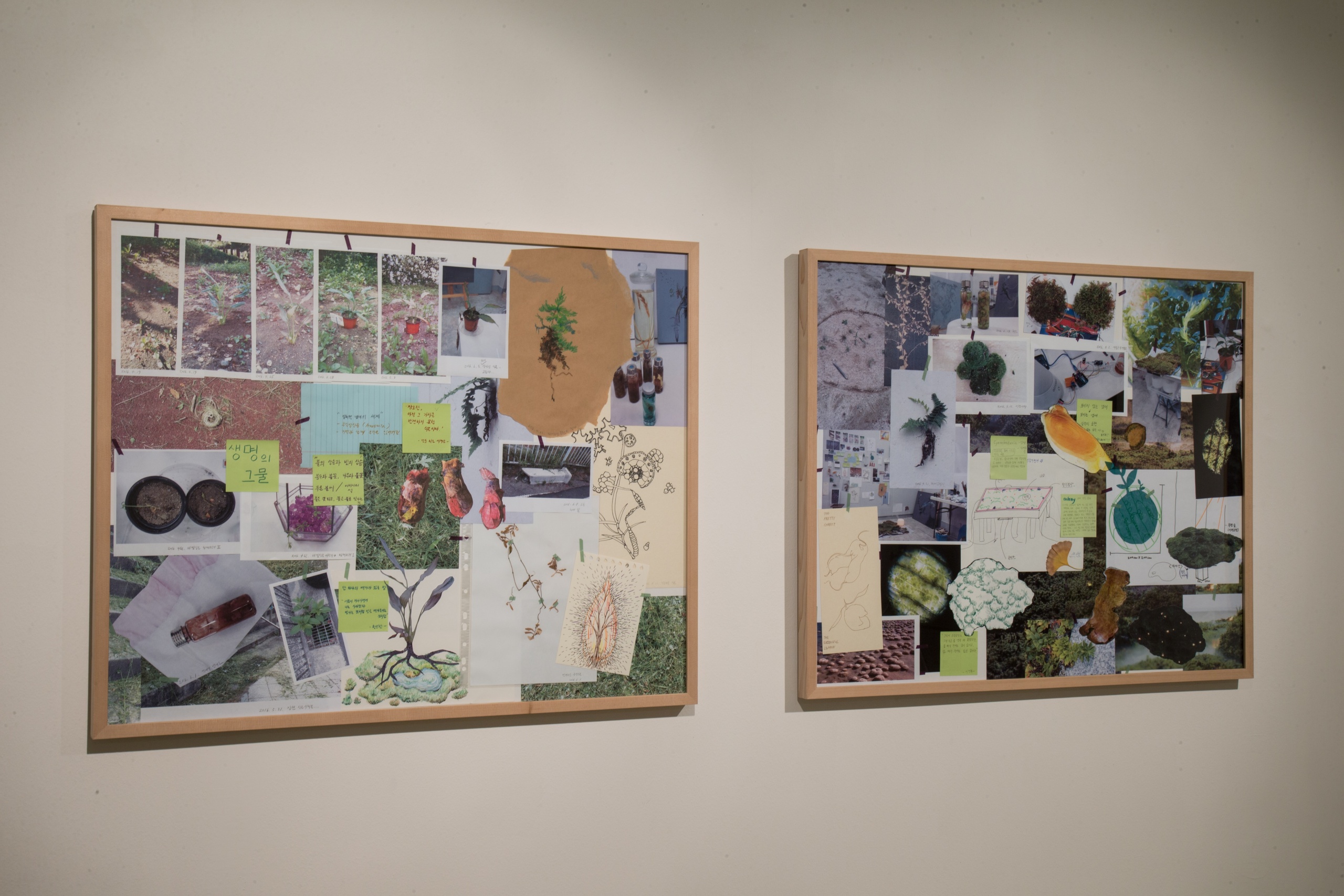
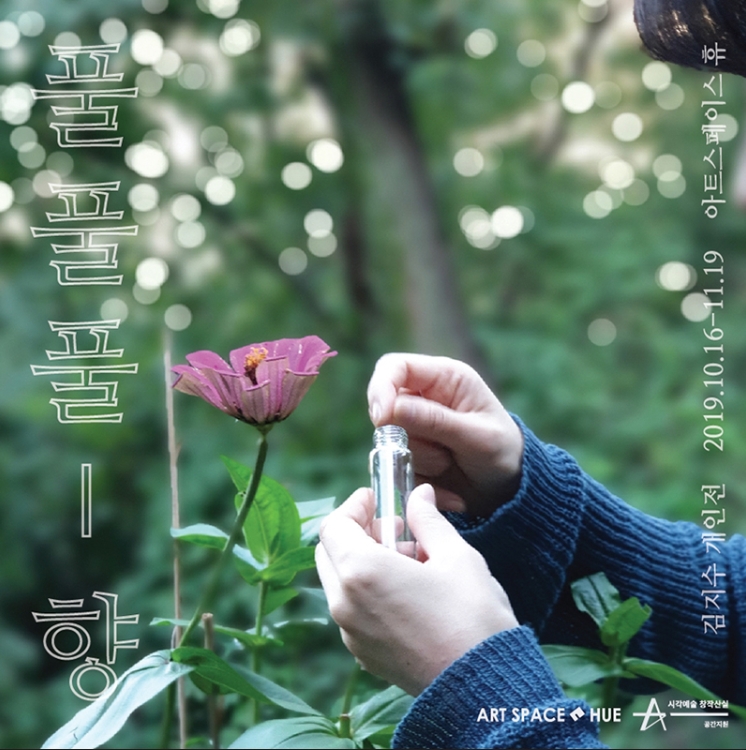
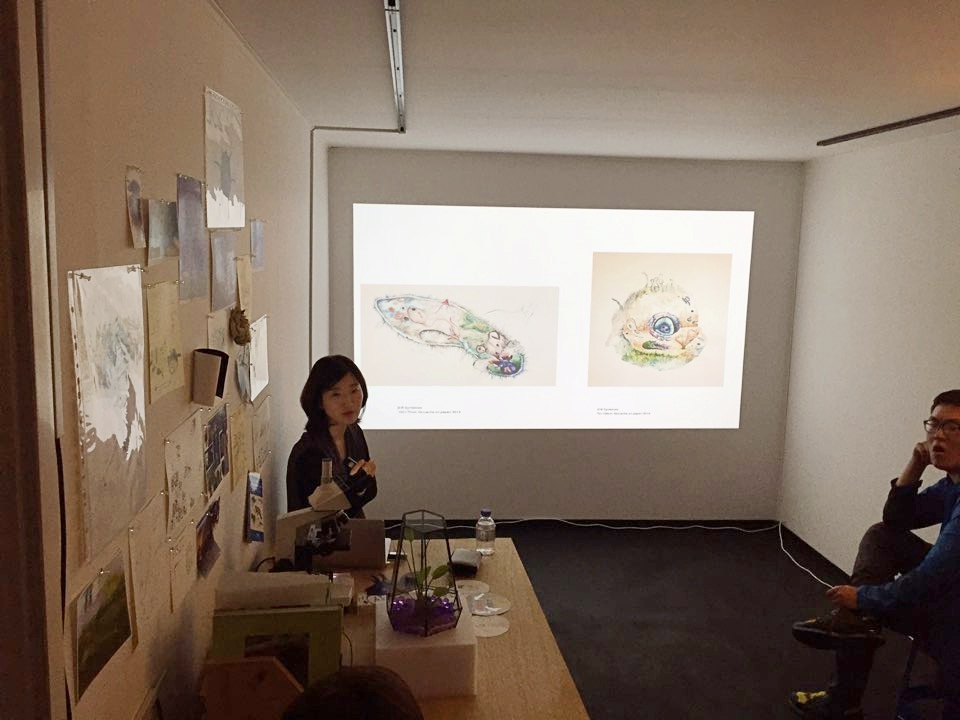
Artist Kim Jee Soo recalls the smell of books in her father's study during her childhood, an experience that opened her eyes to everything around her in a new way. Colonies of moss grow on her father's old, worn briefcase, evoking the atmosphere of a forest where moisture and warmth mingle. Kim understands the movement of odor molecules in terms of entropy. Traces of animals, humans, and plants form a forest of fragrances.
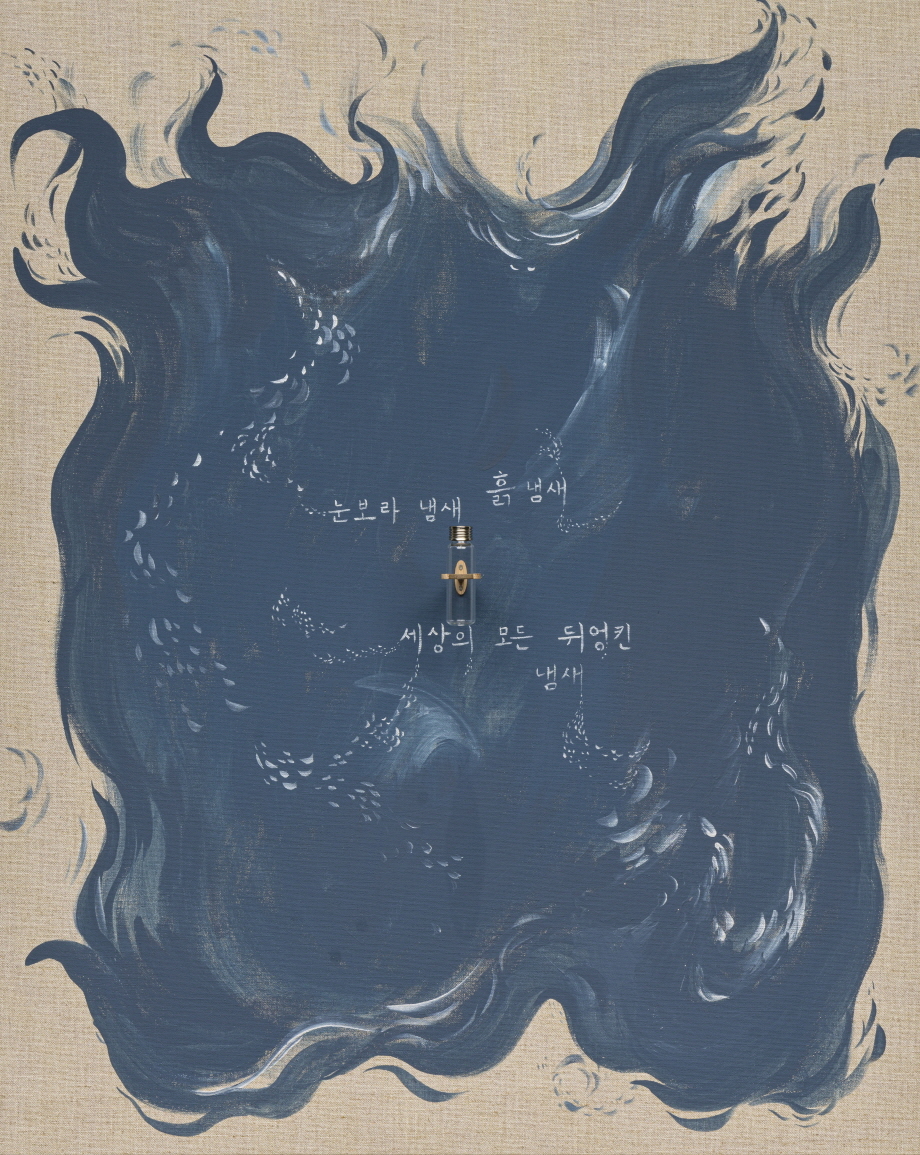
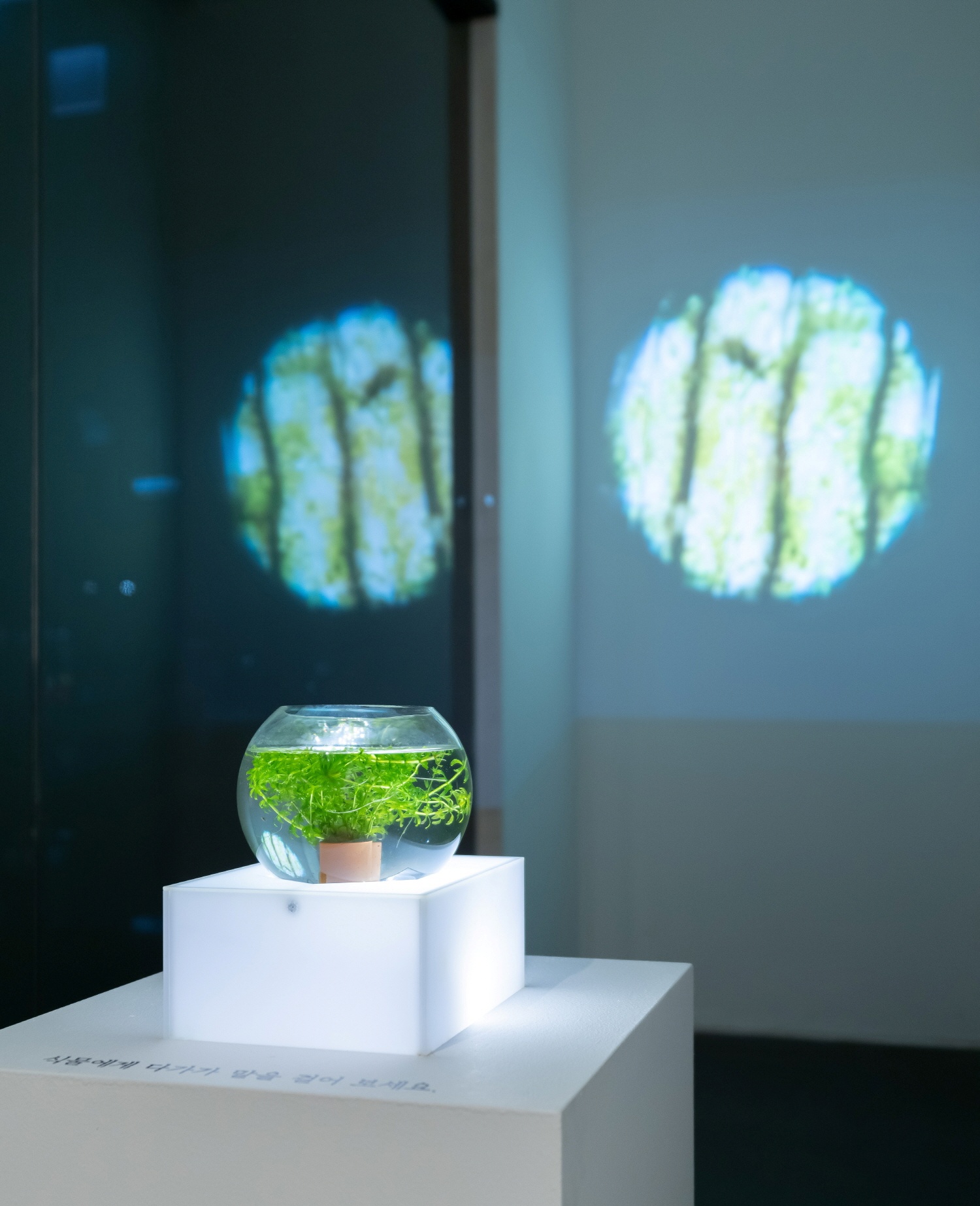
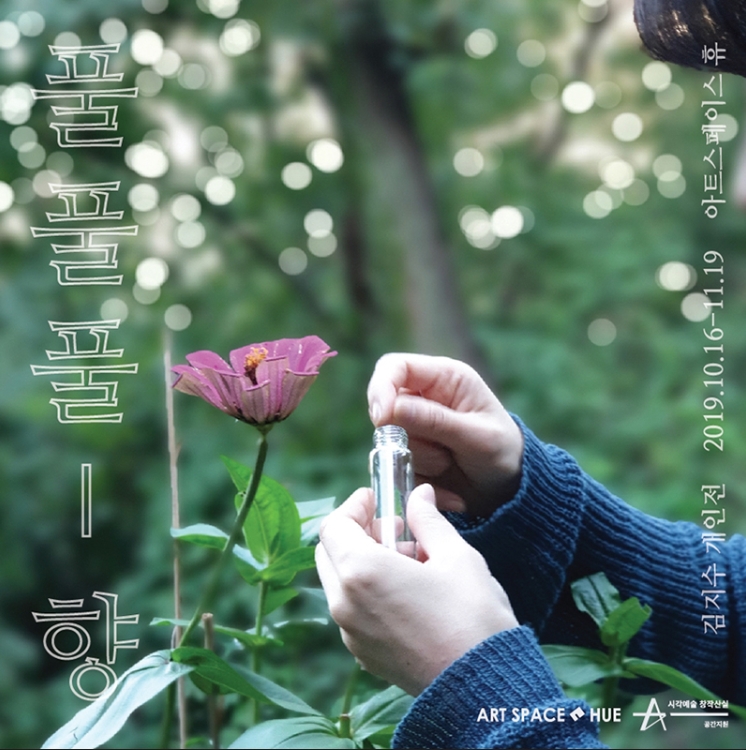
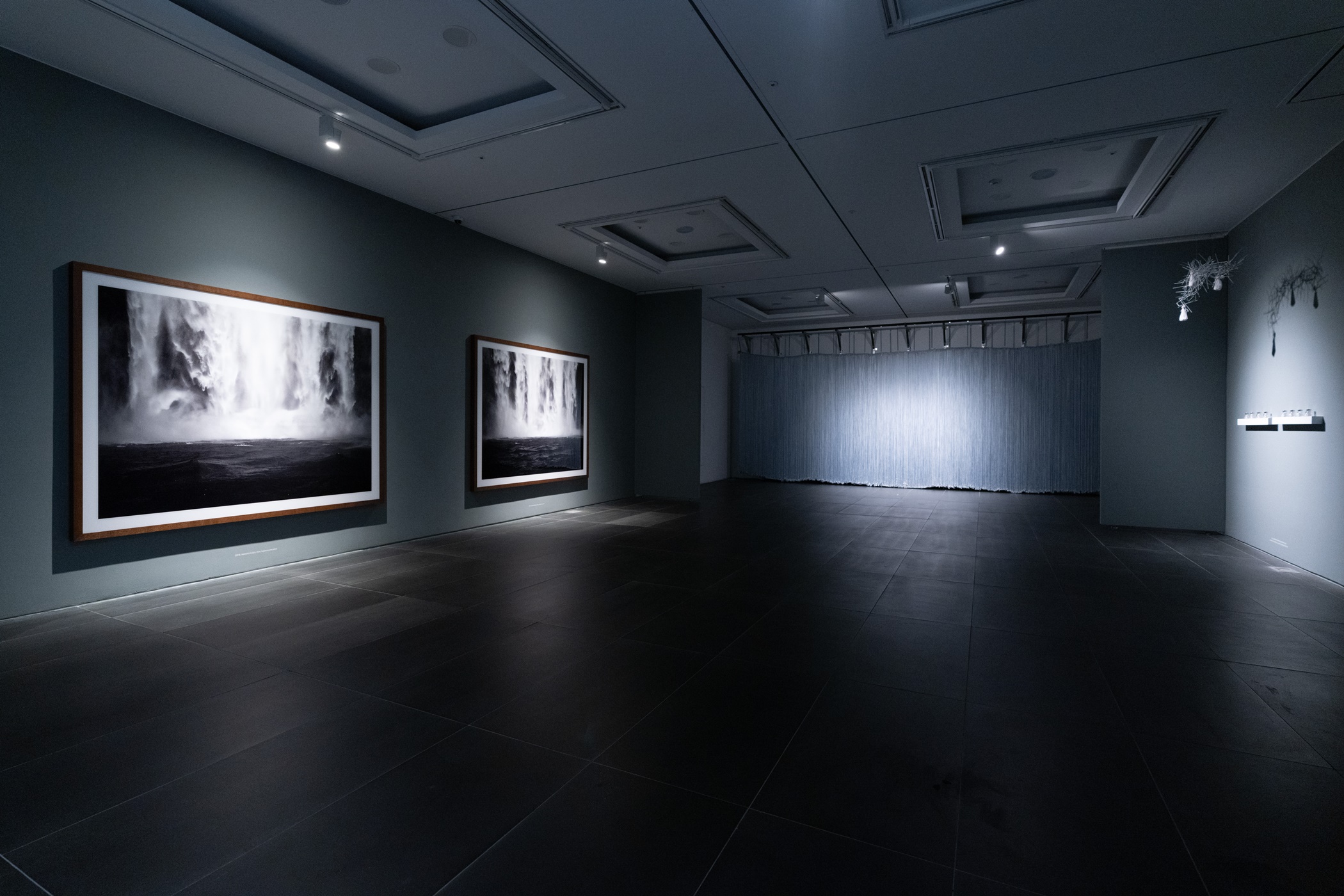
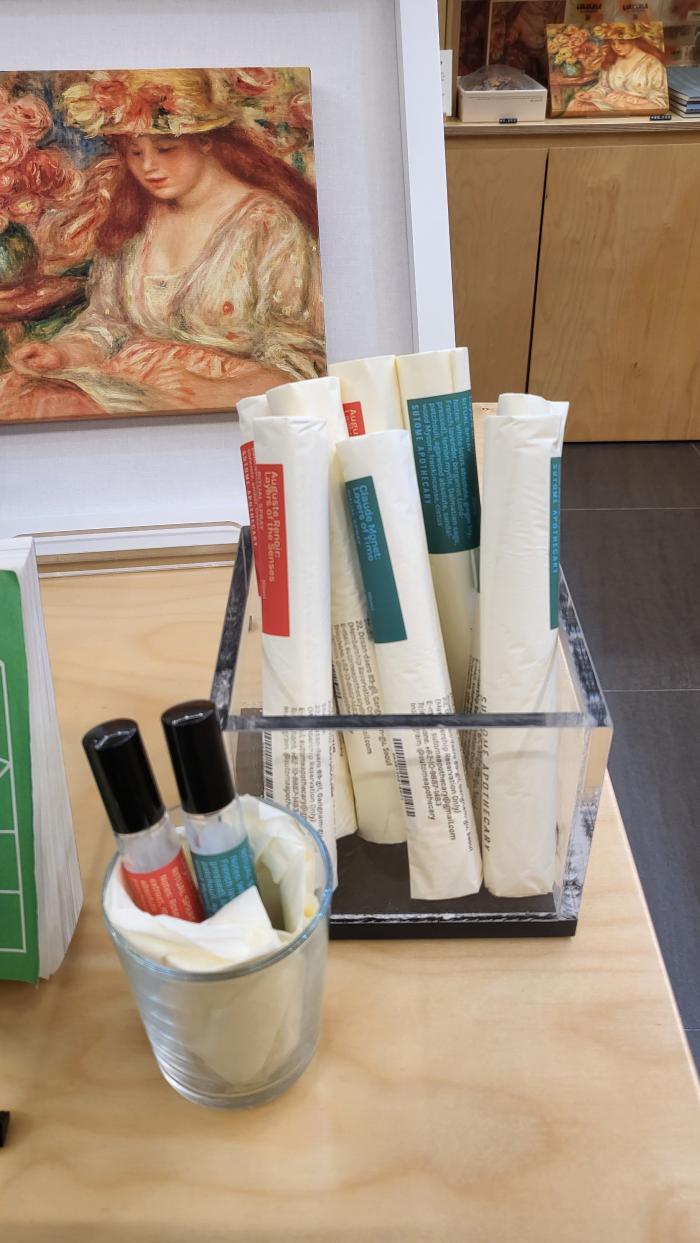
Through the human sense of smell, she records and expresses the intersections of nature and society, history, forests, and human life. She captures the moments when the senses to which she is particularly attuned reach their greatest intensity. In this exhibition, the artist presents scents she has created herself, alongside bodily scents collected from people she has encountered.
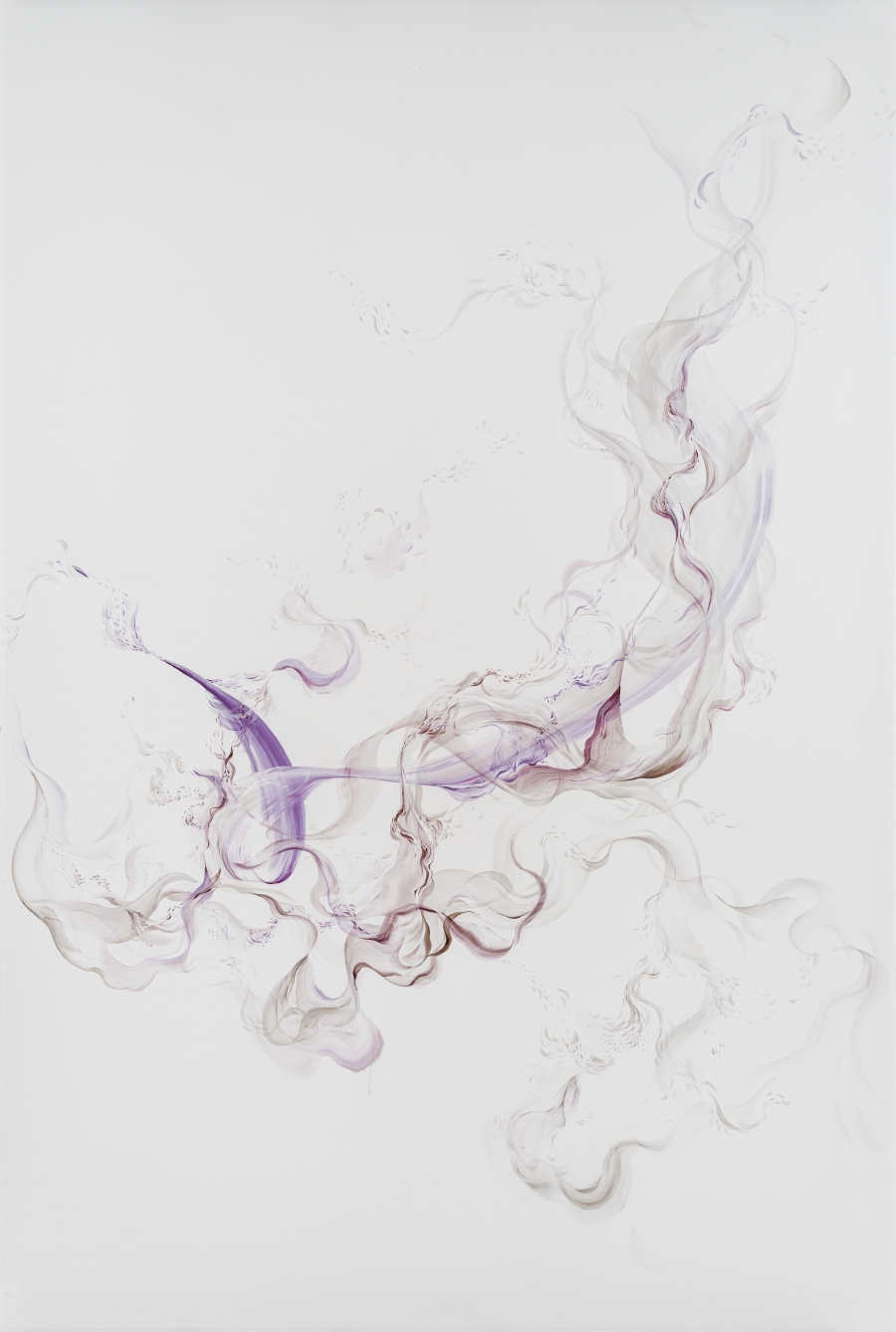
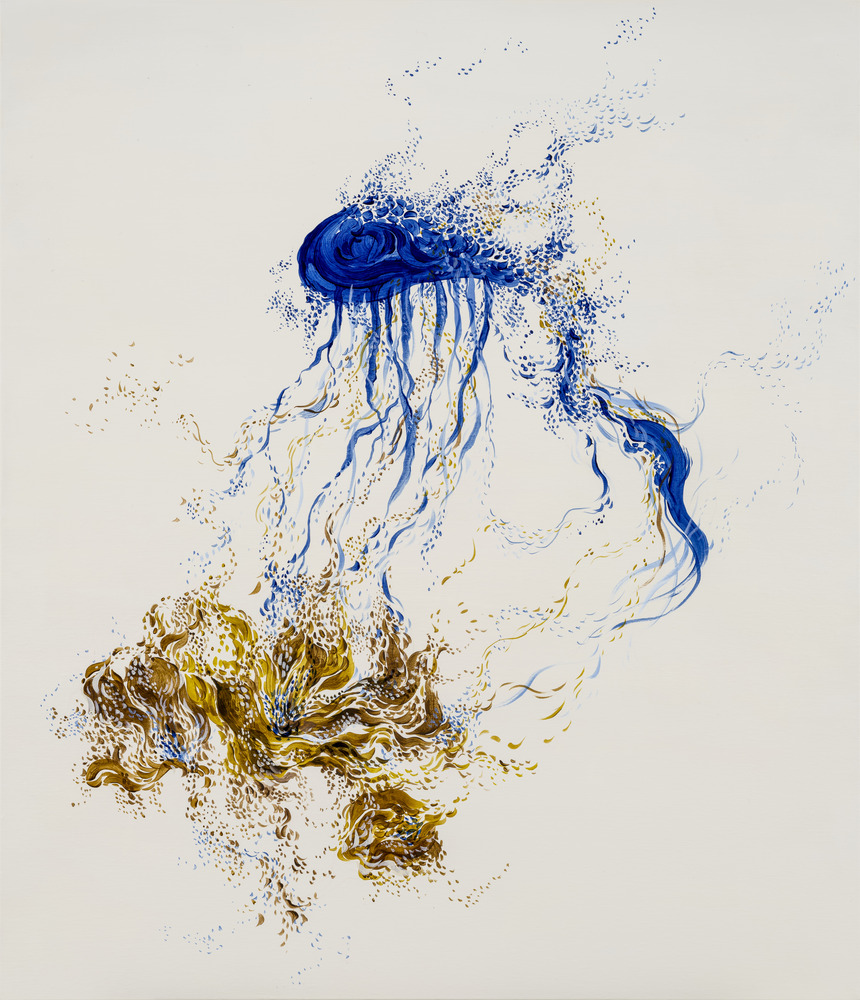
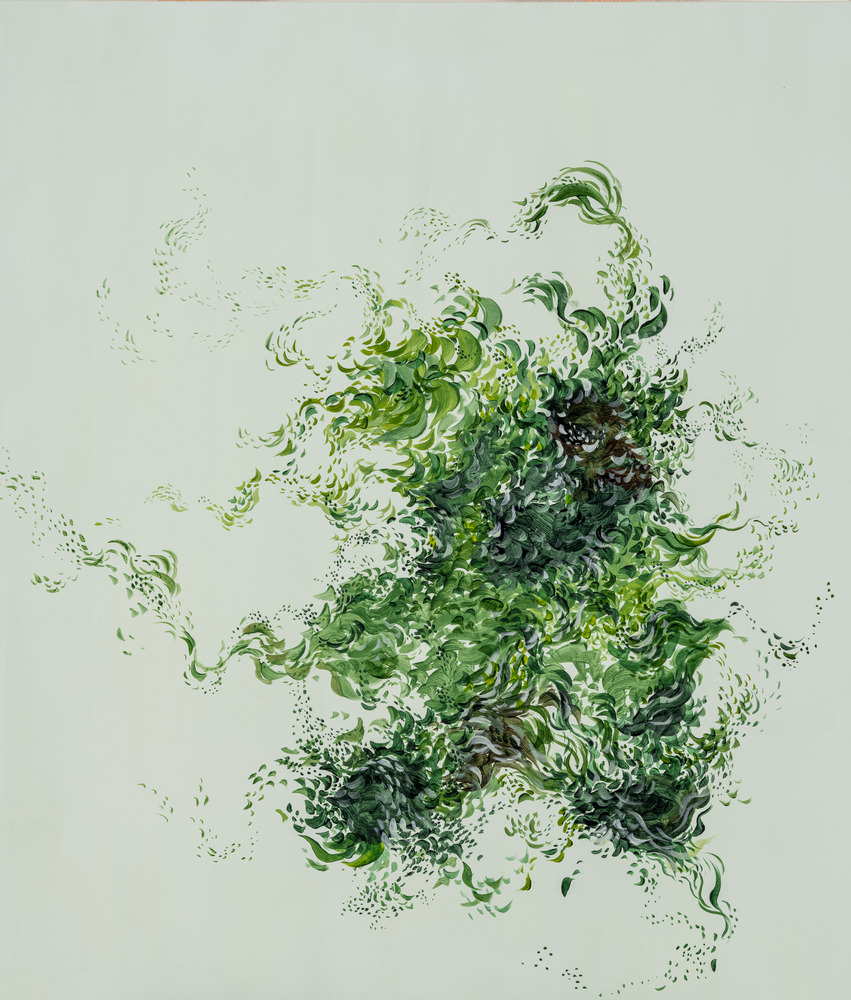
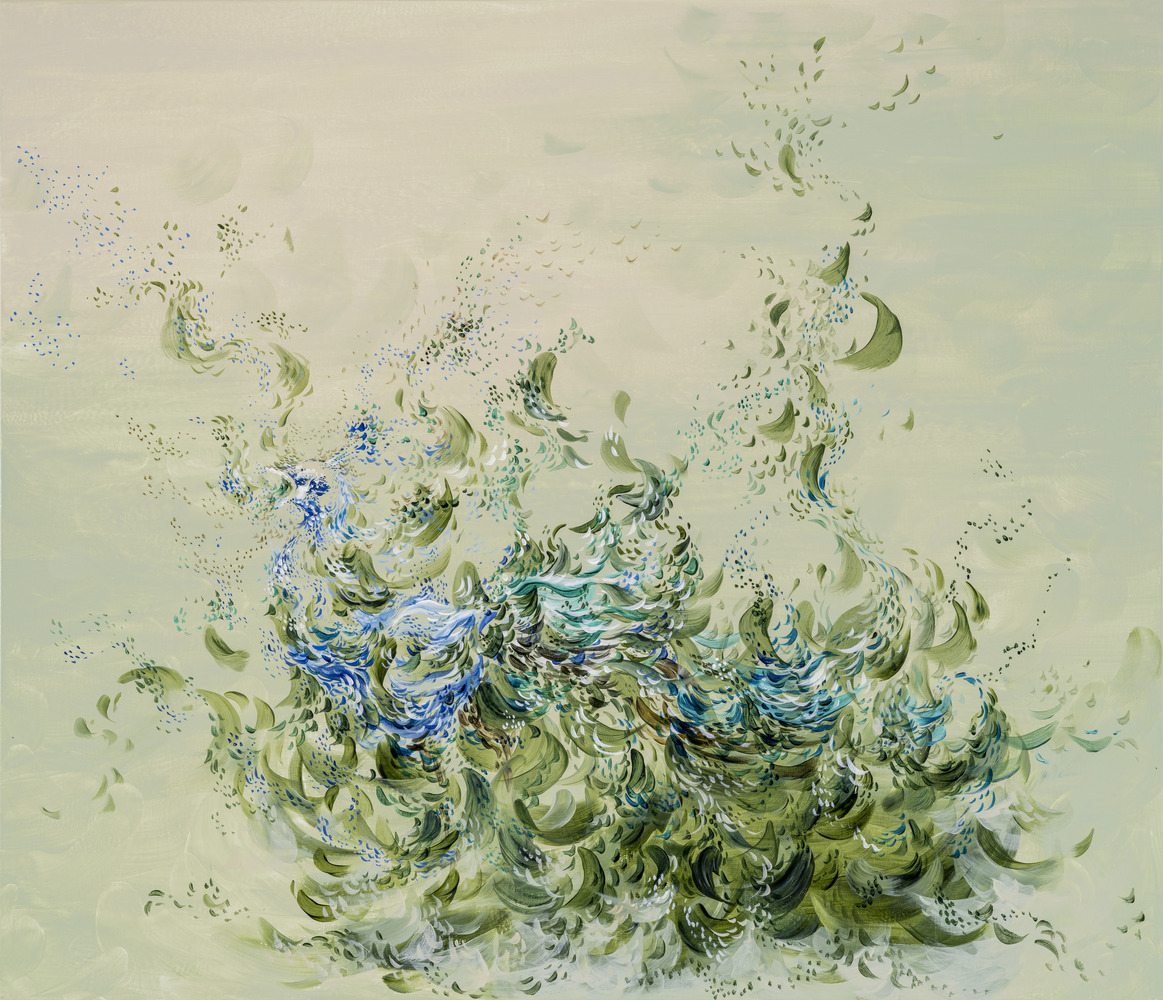
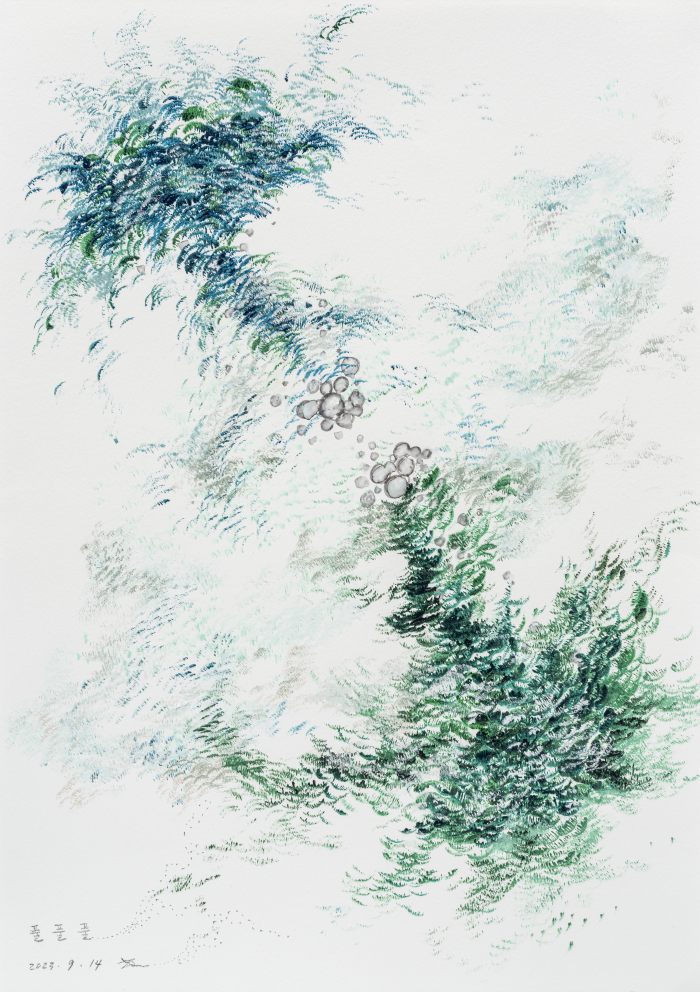
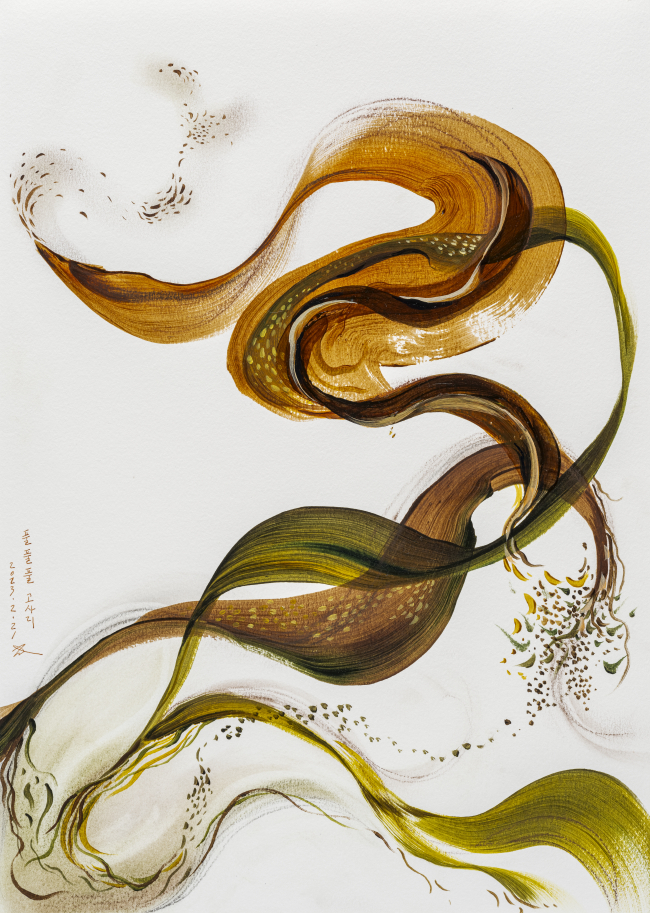
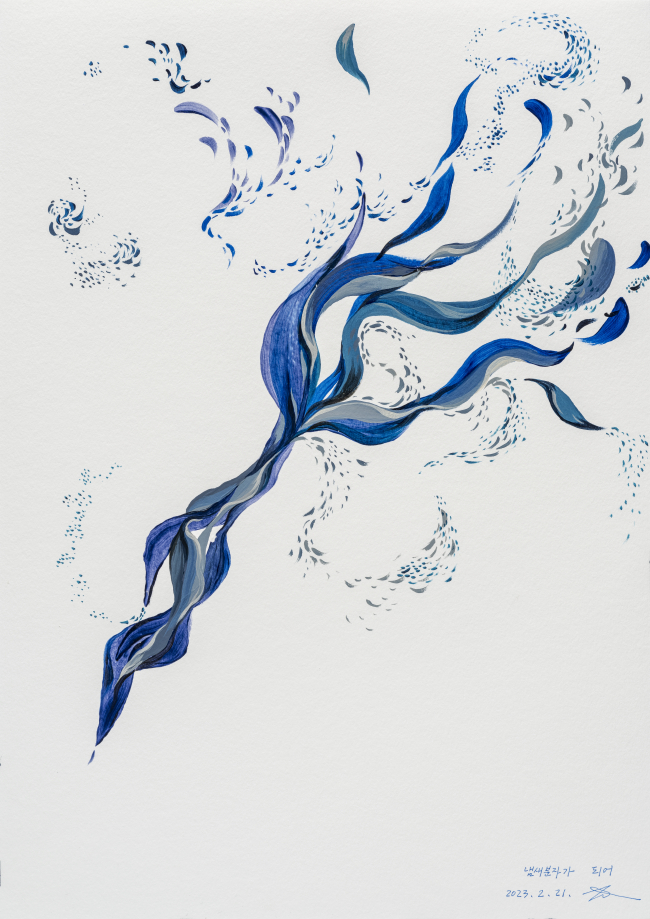
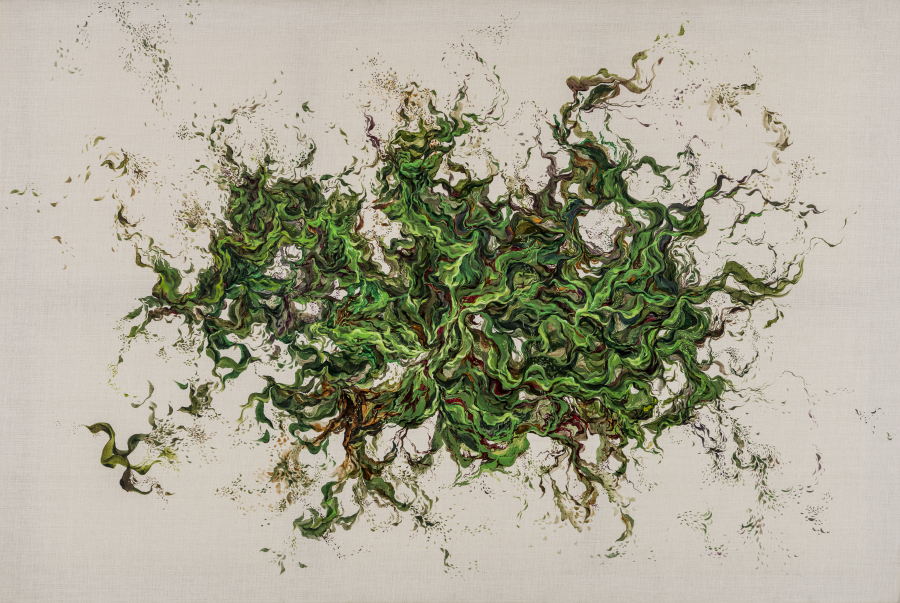
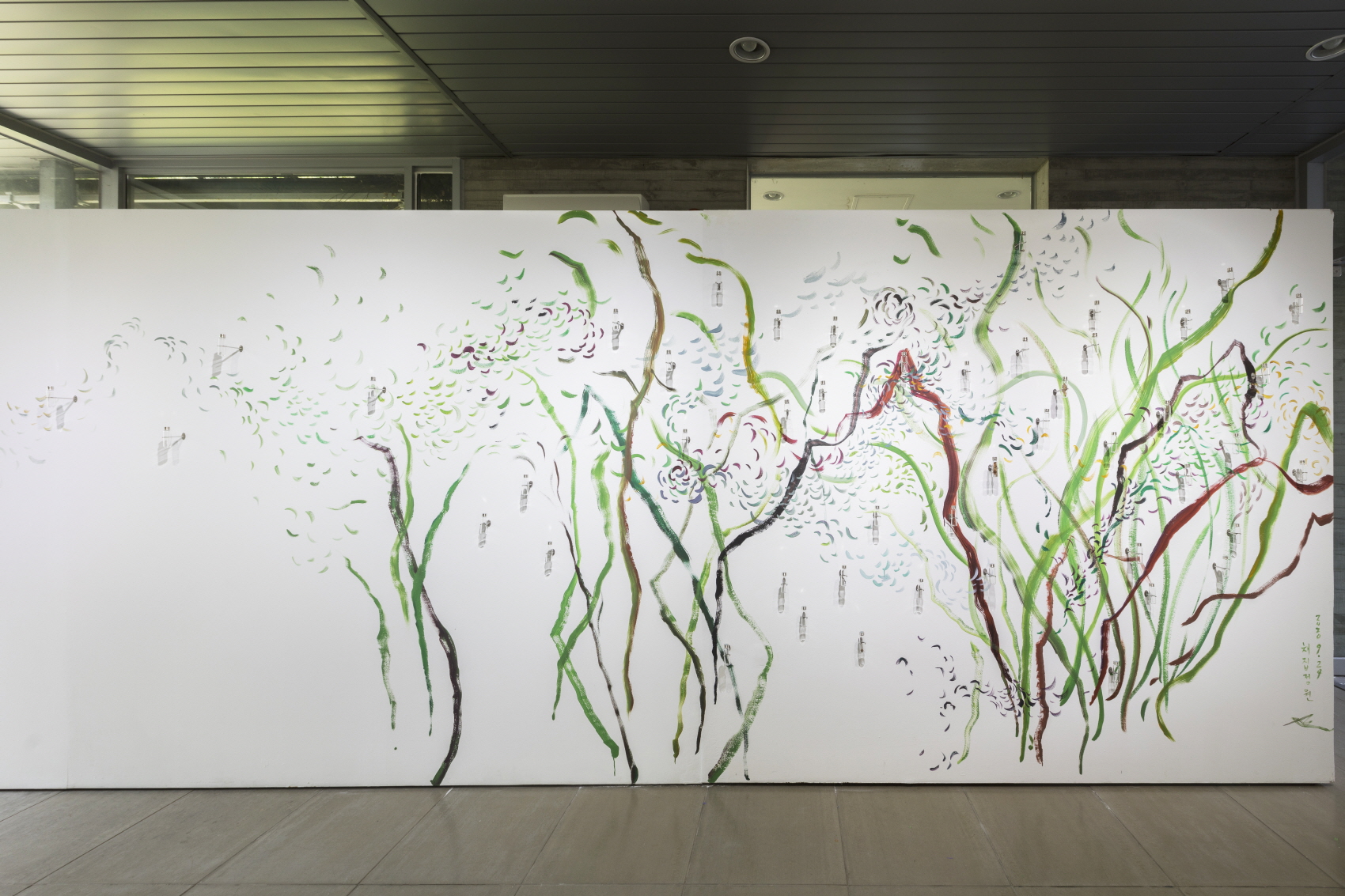
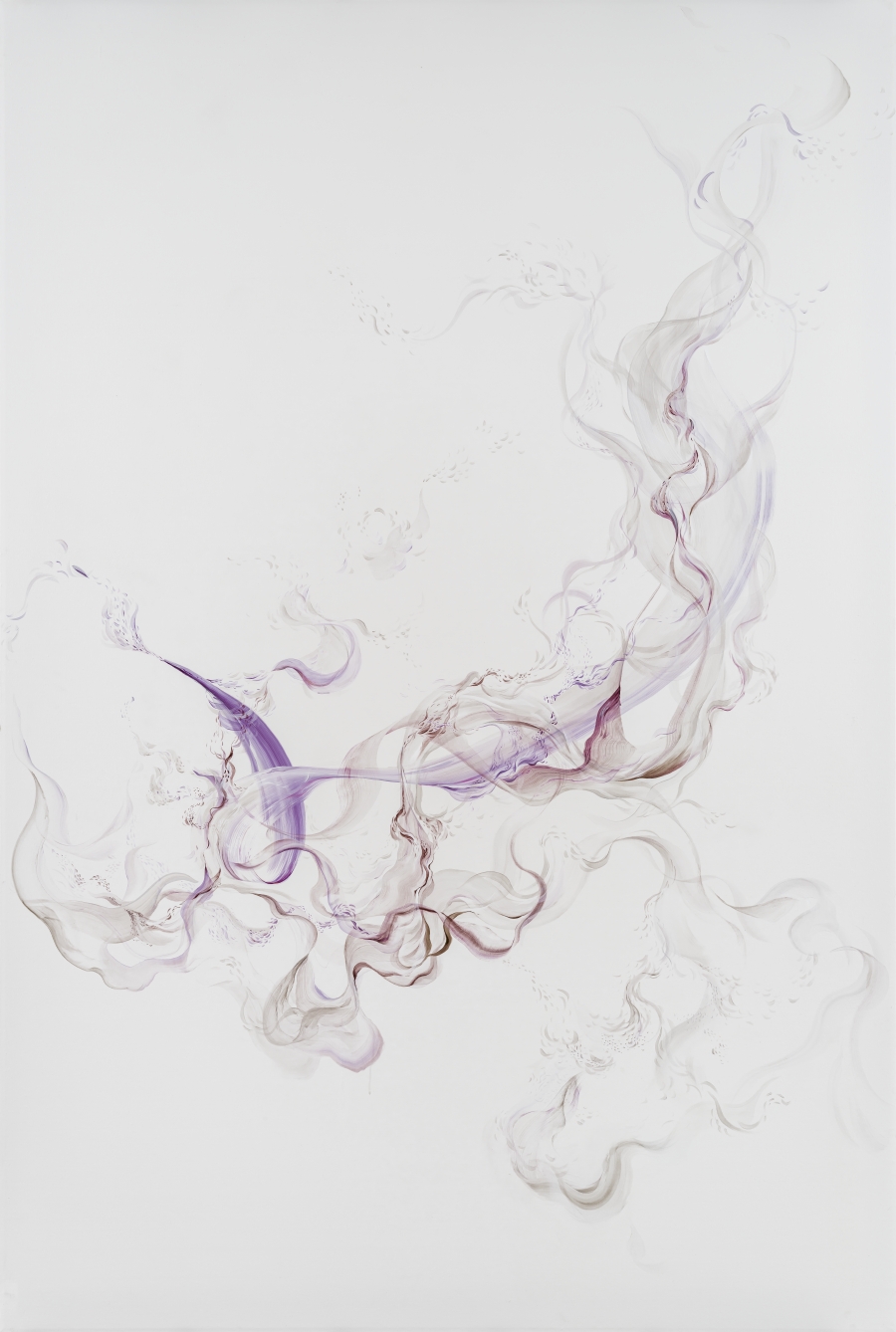
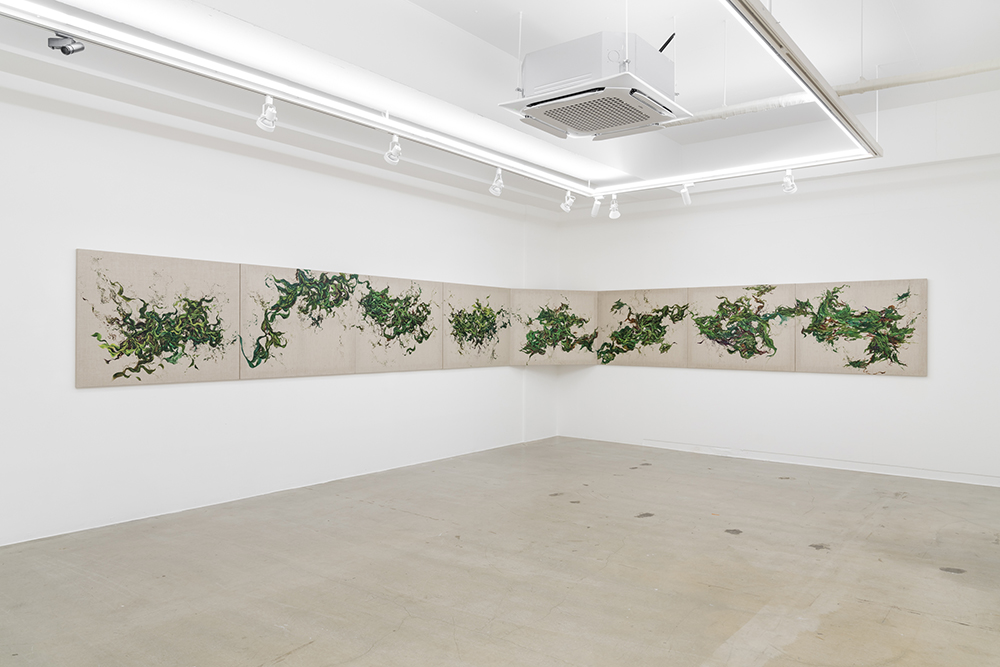
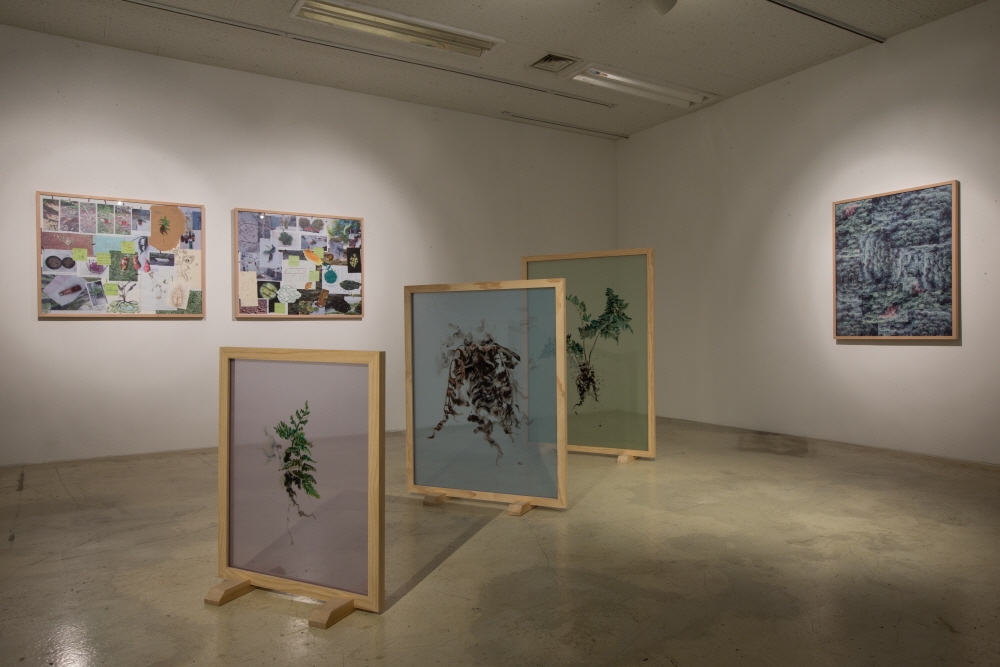
She also presents numerous drawings from the 'The Smell Tree' series, which metaphorically evoke the unpredictable movements of existence. They resemble scenes brimming with vitality, where sunlight, water, and air converge. The drawings evoke movements that rise, swirl, and flow irregularly in every direction. They are at once plants, animals, and the human mind. They are, of course, also deeply sensory.
The world of bodily sensation and the metaphysical world of the mind are organically integrated. It is much like the artist sensing the molecules released by old wood and books in her father's study, or the metallic particles of garden shears. These are sensations and perceptions that defy explanation.
The artist records a vision in which the movements of everything surrounding her converge into a single existence. Artistic practice unfolds at the intersection of the visible and invisible realms. Moment by moment, fragments of a previously unseen world flicker into awareness. Artists increasingly come to resemble shamans.