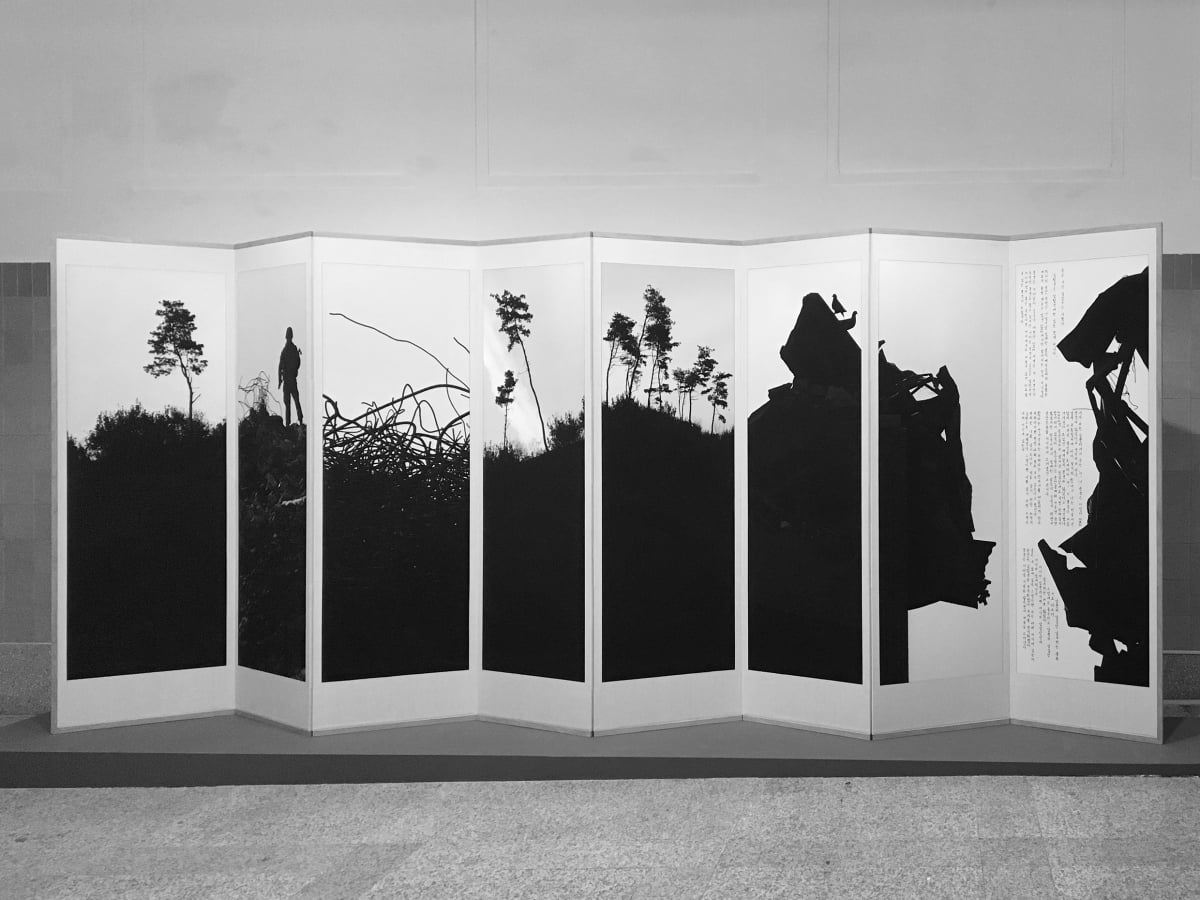
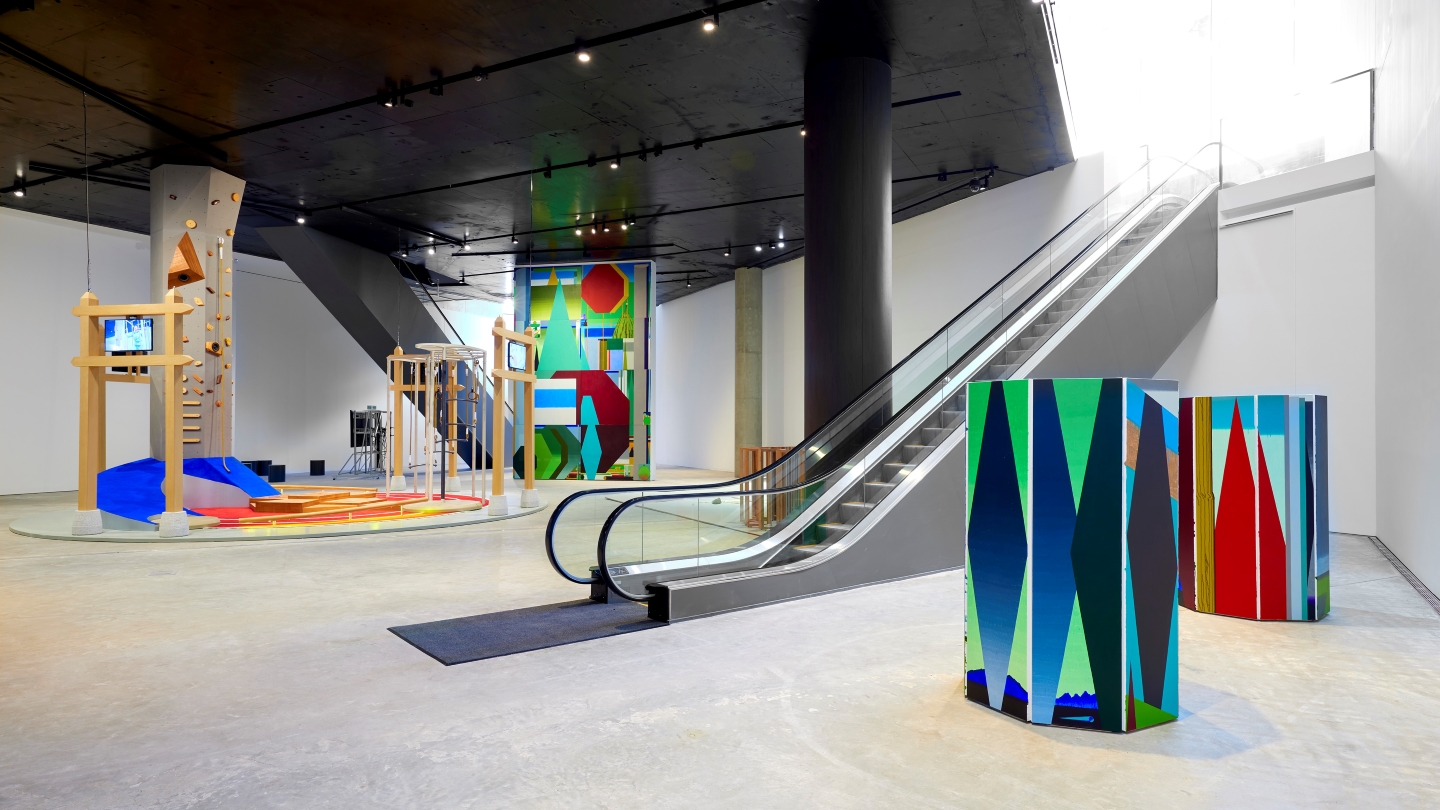
Yuri An (b. 1983)’s practice examines how individual lives are constituted and transformed through relations of community and nation within specific historical and political conditions.
 
She attends to words, voices, and narratives that have been lost, marginalized, or rendered absent, tracing how past events intersect with and reverberate in the present. Her works invoke the trajectories of the past in the present, visualized through text, video, and sound.


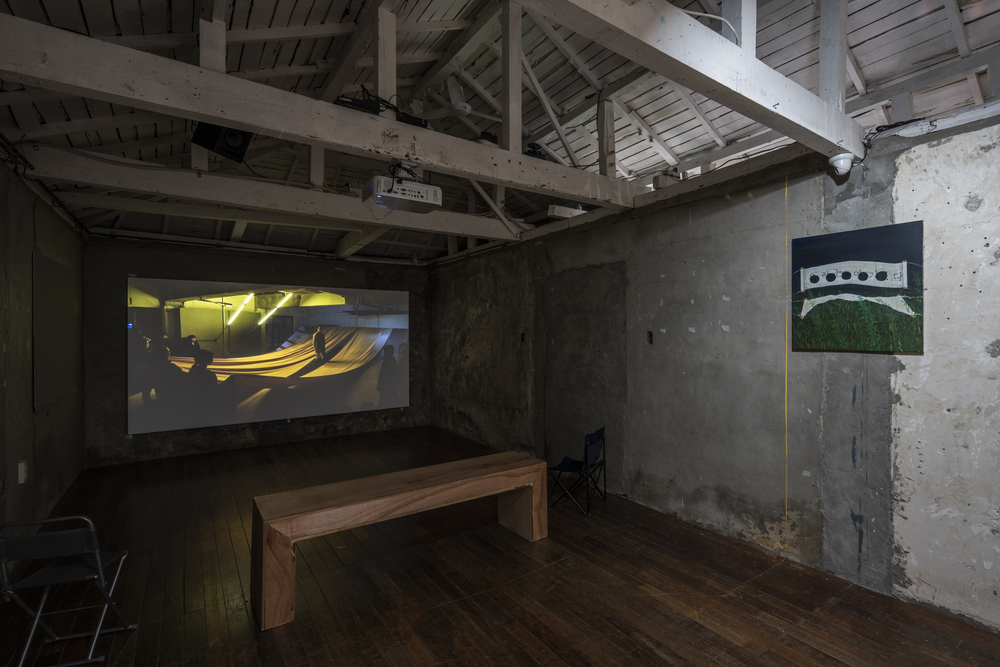
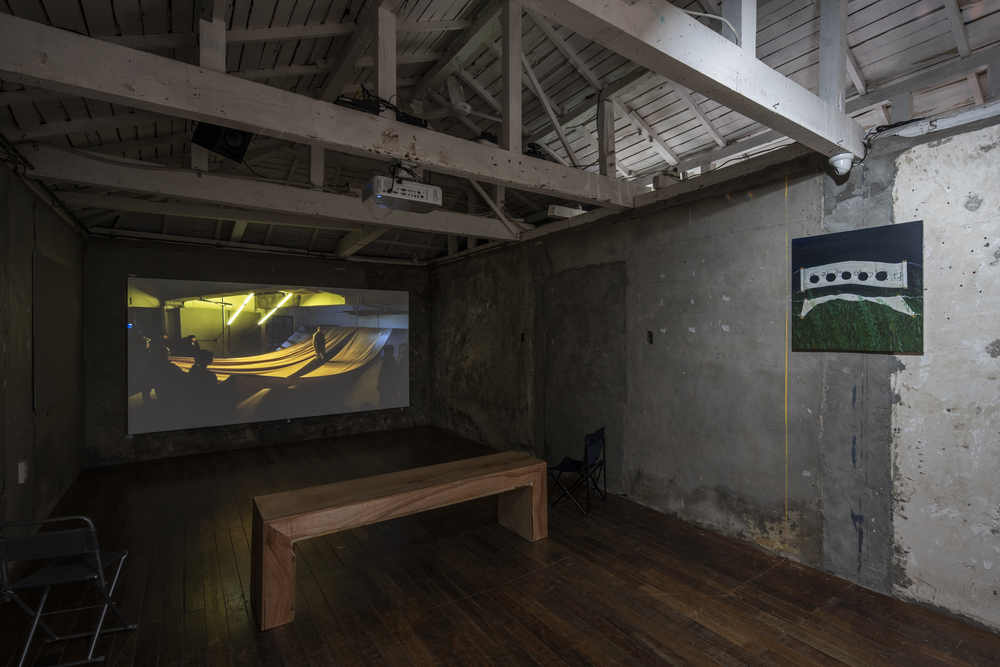
Installation view of 《The Unharvested Sea》 (Art Space Pool, 2015) © Art Space Pool

Yuri An’s practice begins with research into the scars left by wars and state violence, particularly those that occurred throughout the twentieth century. Her early project ‘Floating Land Drifting Heart’ (2014–2015) draws on her experience of living as a foreigner in the unfamiliar country of the Netherlands to address contemporary national tragedies she witnessed at the time.
 
The video work Floating Land Drifting Heart; From Texel to Jeju (2014) originated from an accidental visit to Texel, an island in the North Sea, while An was living in the Netherlands. Texel was the departure point for the Dutch trader Hendrick Hamel, who was stranded in Jeju(Korea) nearly 400 years ago.
 
Before moving to the Netherlands, Yuri An wrote a book about Jeju as her last project in Korea. Someone’s point of departure may become another's point of arrival. It is in this process that the artist begins her imaginary journey. This story is composed from the artist's own experience of being an outsider in a foreign country, focusing on the realization of oneself amid the absence of the mother tongue.
 
It is believed that the hiccup is the evolutionary remnant of our amphibian past, caused by the need to adapt to a new habitat. Yuri An's story is told anew, with the breathing technique she acquired through her adaptation to a new language, and a new place.


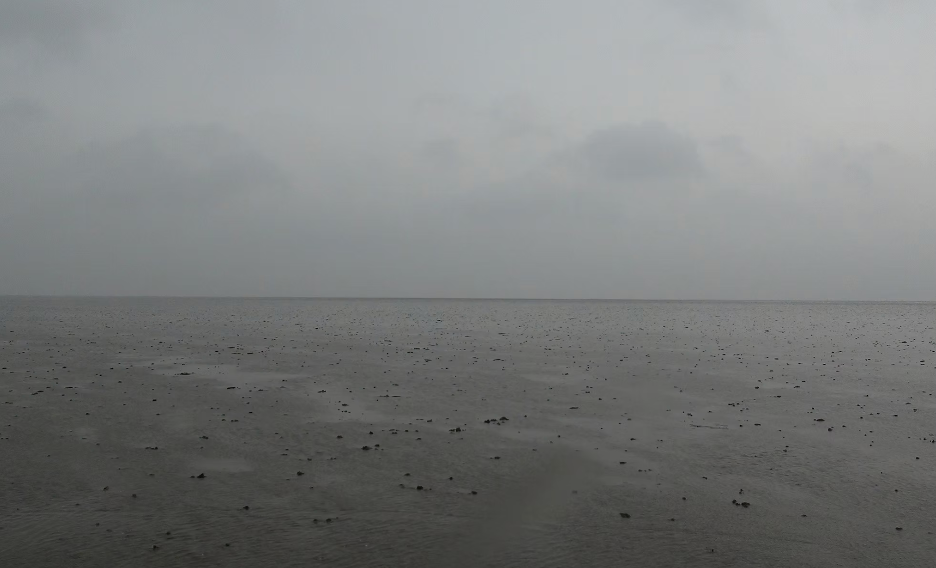
Yuri An, The Unharvested Sea, 2015, Single-channel video, 9min. © Yuri An

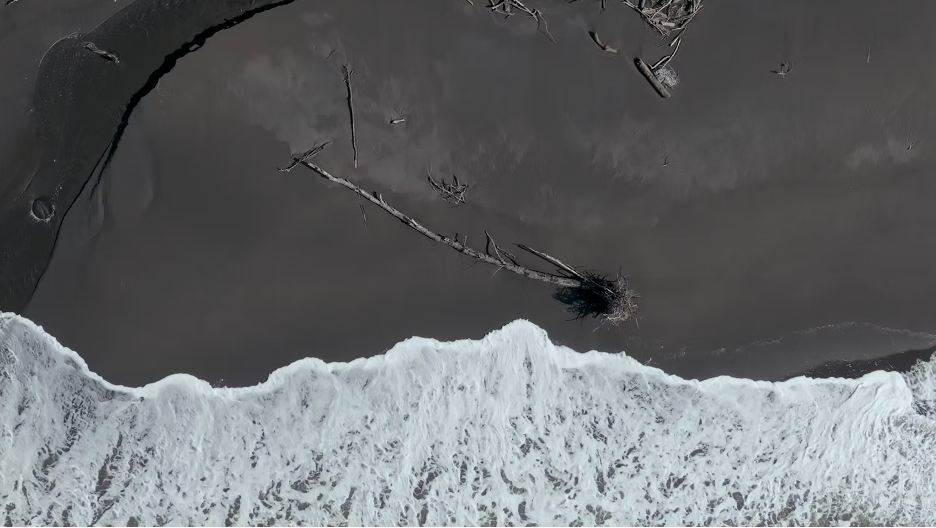
The following year, An presented The Unharvested Sea (2015), a video work that continues her Floating Land Drifting Heart project. The work expands the journey from Texel to Jeju by incorporating Jindo Island into the narrative.
 
When the artist decided to return to Korea, she encountered several accidents - the Sewol Ferry Tragedy and the Malaysia Airlines plane disaster - which prompted her to continue the project about 'beings beyond return' and the 'heart that cannot cast anchor'.
 
This work is a reinterpretation of the present through myths and legends, which feature two different characters: the wanderer who returns home after a long time (Odysseus, Hendrick Hamel) and the one that prays for the disappeared people (Grandmother Bbong, Grandmother Yeongdeung).


Yuri An, Cross a River, 2016, Single-channel video, 1min 8sec. © Yuri An

Furthermore, in 2016, An began developing the ‘Korean Diaspora’ project, which focuses on diasporic experiences centered on the Korean Peninsula. In this project, she turned her attention to the languages of diaspora communities, whose existence challenges and resists the notions of national and ethnic purity and authenticity.
 
Across various regions of Asia, long histories of colonialism have created circumstances in which people must navigate between the languages of former colonial powers and their mother tongues, as well as between different forms of linguistic inheritance.
 
Through this body of work, An has sought to listen to voices that extend beyond the rigid frameworks of nation and ethnicity, capturing the breath of those whose stories have been excluded from the grand narratives of History.


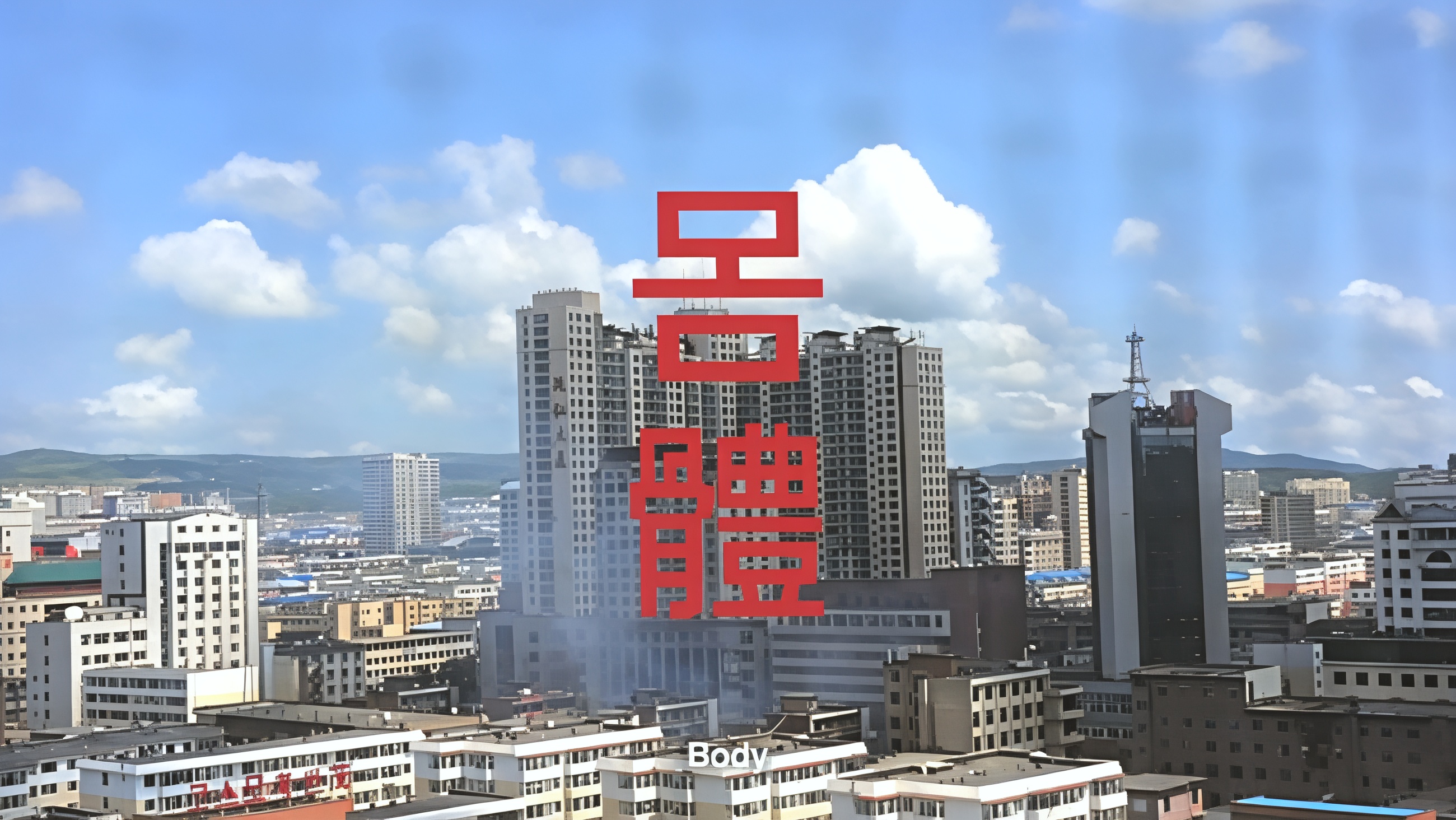
Yuri An, Body, 2016, Single-channel video, 4min 17sec. © Yuri An

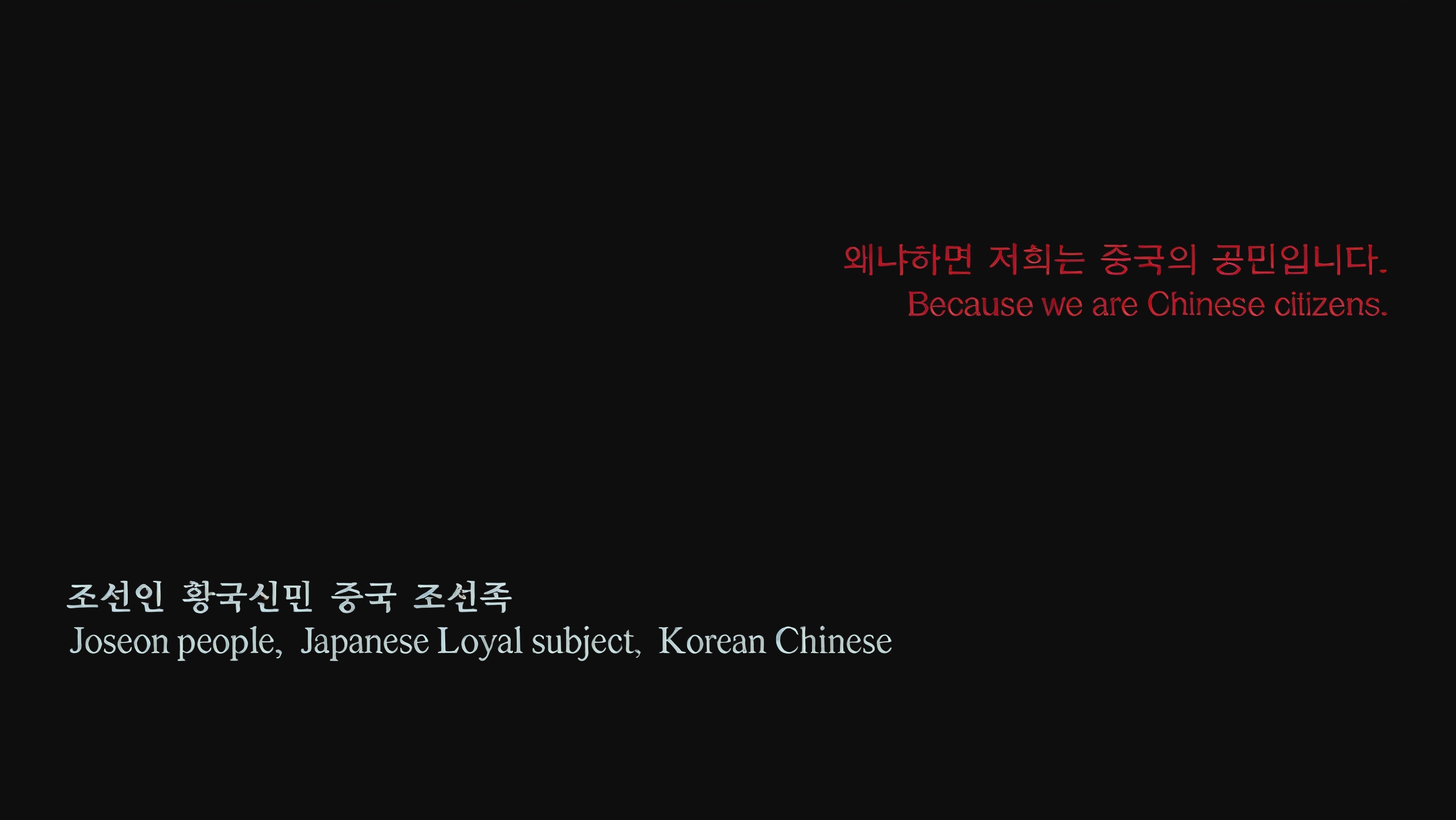
As she began the project, An examined migration records of Koreans who left the Korean Peninsula from the late nineteenth century onward and dispersed across various parts of the world. In the process, she encountered Joseon-jok (ethnic Koreans in China) living in Yanbian, China. Unlike many other Korean diaspora communities, they continue to use the same language and writing system as Koreans in South Korea, yet their language and culture have undergone changes over time due to historical and political circumstances.
 
Focusing on the paradox that their bodies had crossed a river while their language remained rooted in the place they had left behind, An explored how their voices—and, by extension, their identities—inevitably change over time. This inquiry led to the creation of four video works: Across a River, Body, Words, and Sound.


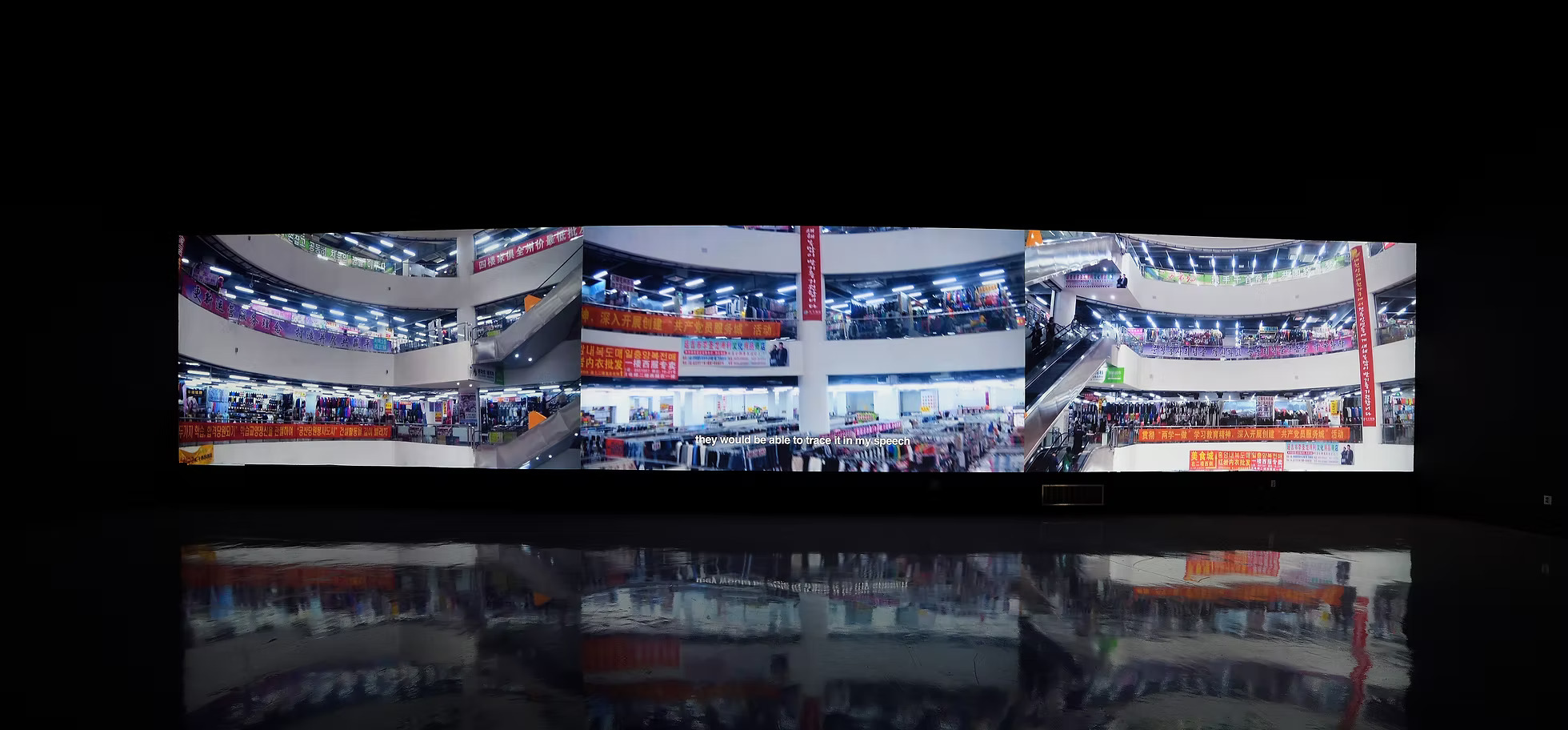
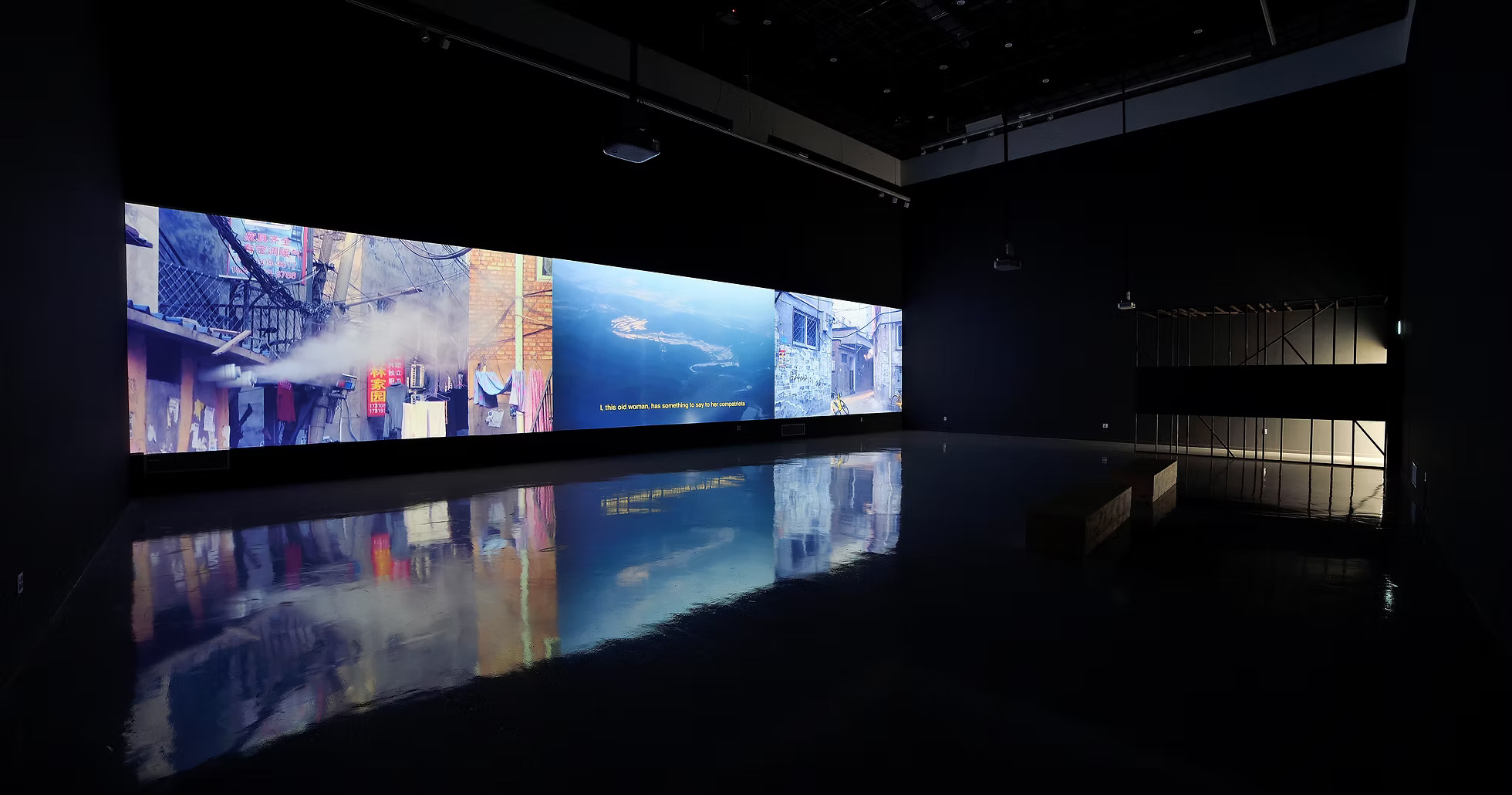
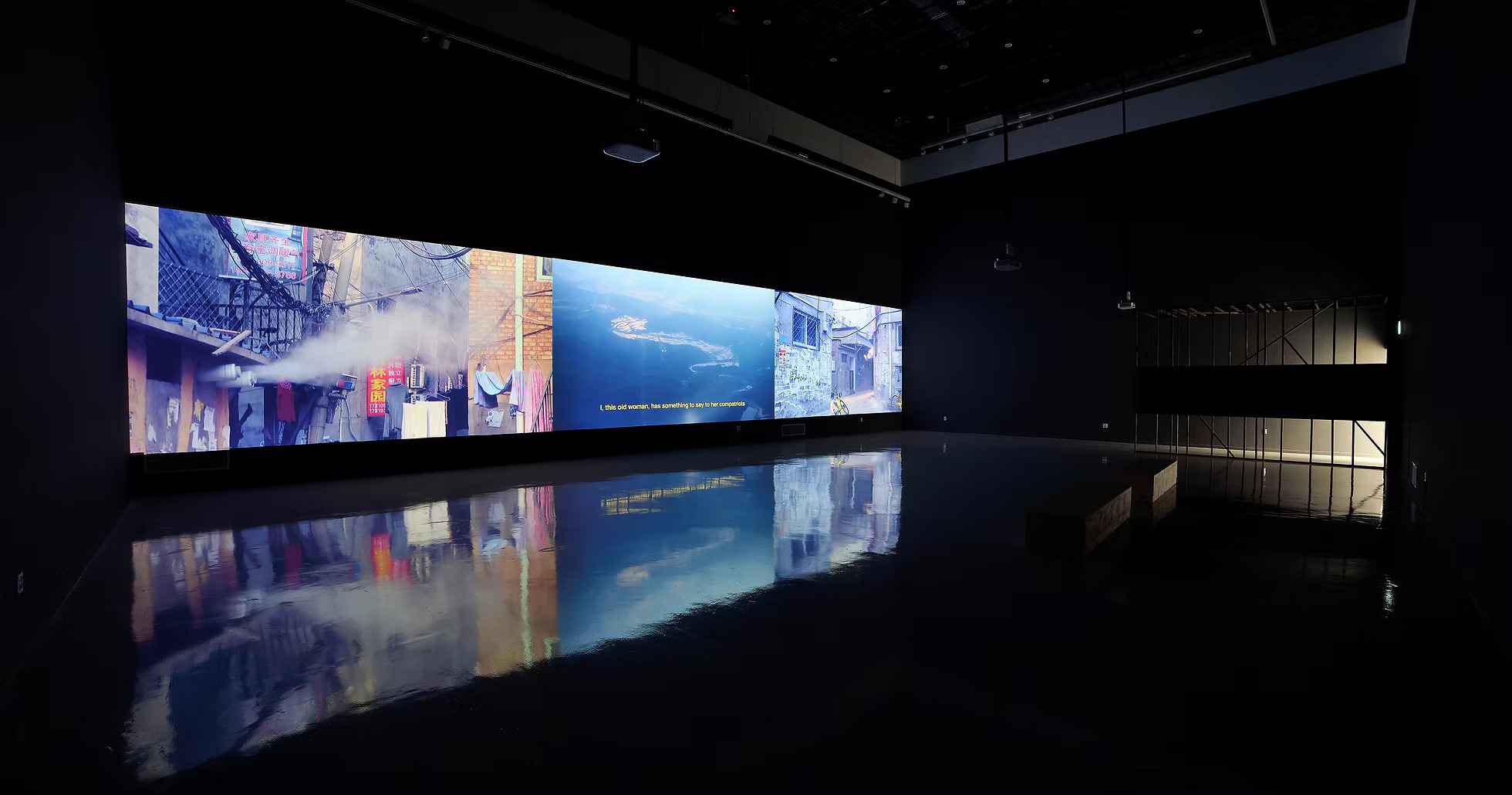
Yuri An, Rogue Stars, 2018, 3-channel video, 16min 16sec. Installation view of 《Still Alive》 (Cheongju Museum of Art, 2018) © Cheongju Museum of Art

Following the migration route of Joseon-jok, the film is set primarily in the Yanbian Korean Autonomous Prefecture, where stories of ‘discrepancy between homeland and motherland’, ‘coming to terms with the self-identity between the brother/sister and the foreigner’, and other consequences shared by diasporic communities are told.
 
While the initial works primarily explored identity by moving between the temporal and spatial dimensions of the past and present, An’s subsequent work, Rogue Stars (2018), offers a more multilayered portrayal of the experiences of diaspora communities through three interrelated spatial configurations: Korea and Yanbian, Yanbian and China, and Korea and China.


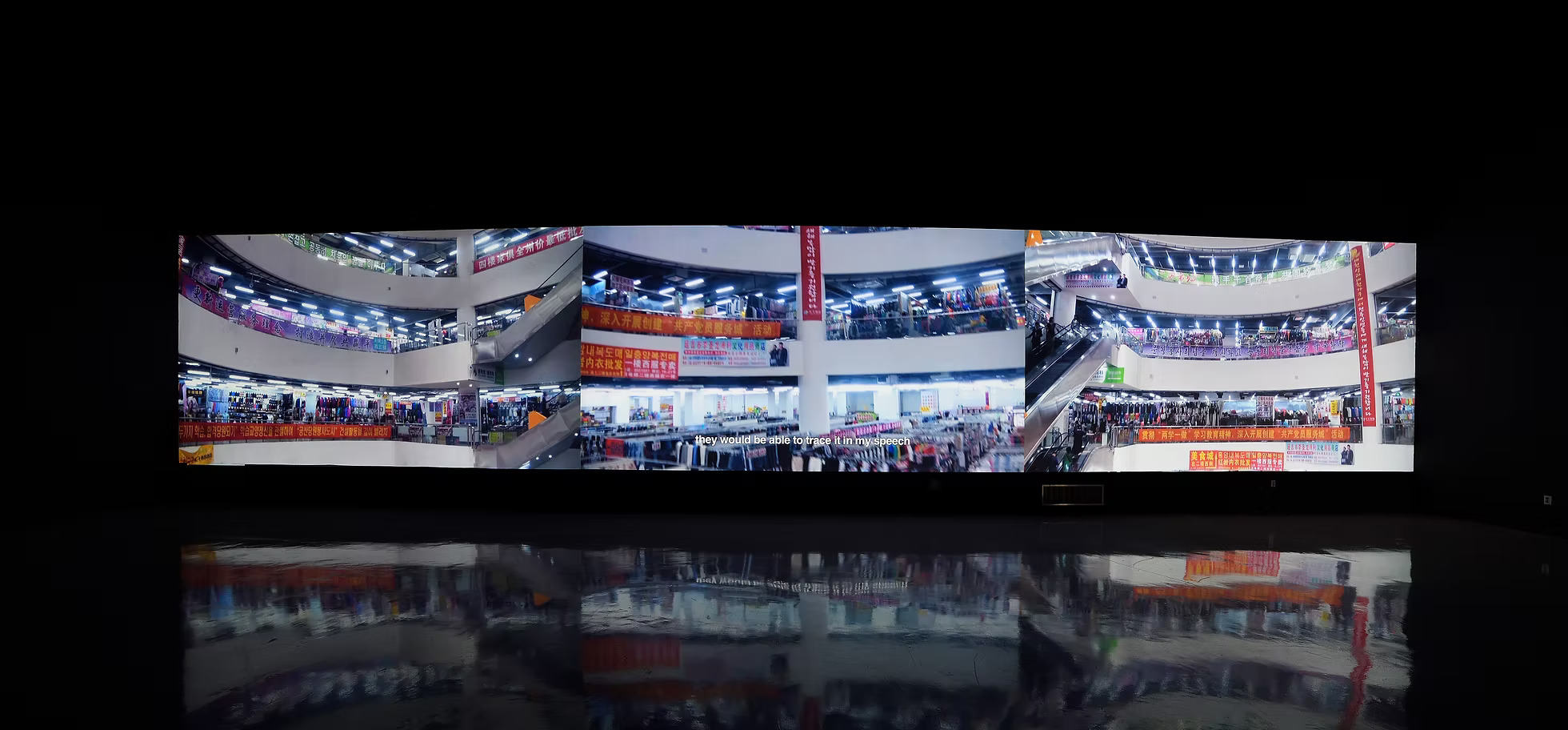
Yuri An, Rogue Stars, 2018, 3-channel video, 16min 16sec. Installation view of 《Still Alive》 (Cheongju Museum of Art, 2018) © Cheongju Museum of Art

Rogue Stars expands on the first video series of An’s Korean Diaspora project—Across a River, Body, Words, and Sound—by incorporating additional footage shot in Beijing and Seoul and re-editing the material into a three-channel video installation.
 
Moving across three temporal and spatial contexts, the work invites viewers to consider the position and perspective of ethnic Koreans in Yanbian as members of the larger Chinese nation. Ultimately, the project raises the question of the meaning of nation and ethnicity for us in the 21st century.


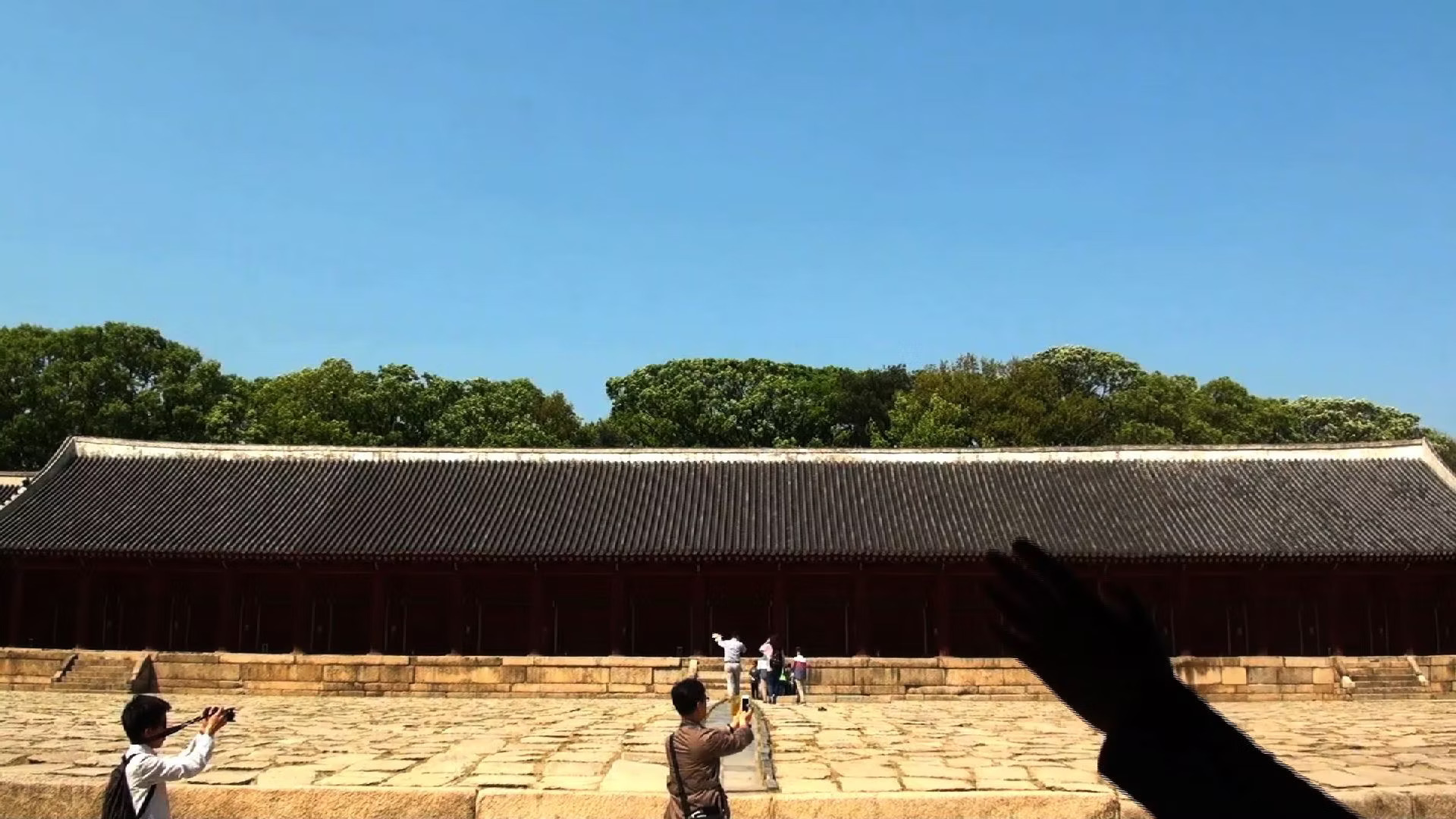
Yuri An, Potemkin Study 1. Seoul: Tower of Silence, Fire Temple, 2017, Single-channel video, 7min 35sec. © Yuri An

The ‘Potemkin Study’ series, which An began in 2017, originated from her curiosity about two stories associated with the same name, “Potemkin.”
 
In the middle of the 18th century, when Catherine the Great who was an empress of Russia planed a tour of Crimea, a Russian minister Potemkin, in order to gain her favor, he hid the actual village landscape by the large screen which was drawn the fake, but plausible scenery. Later, the ‘Potemkin facade’ used to be known as a satirical architectural term, it signifies the selected landscape by covering the original one.
 
There is another story of Potemkin. Early 20th century, a Russian filmmaker, Sergei Eisenstein did study actively “montage” that is the grammar of a film, it promoted him to present a new style. In his film, Battleship Potemkin, montage was used for a purpose that educes the new concept by assembling contrasting two scenes, instead of accumulating the meaning of narrative structure by just combining each shot. It is the way of an intentional collision against the natural narrative flow.


Yuri An, Potemkin Study 1. Seoul: Tower of Silence, Fire Temple, 2017, Single-channel video, 7min 35sec. © Yuri An

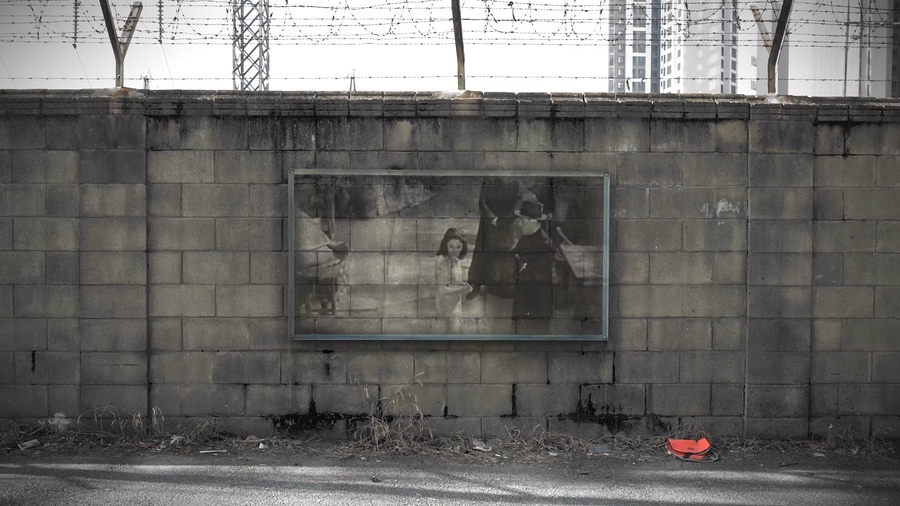
In this work, An tried to explore and read two different places in Seoul through two aspects: Selected landscape (Potemkin facade) and the Third Time and Place that is comprised of reassembled images by montage (Battleship Potemkin).
 
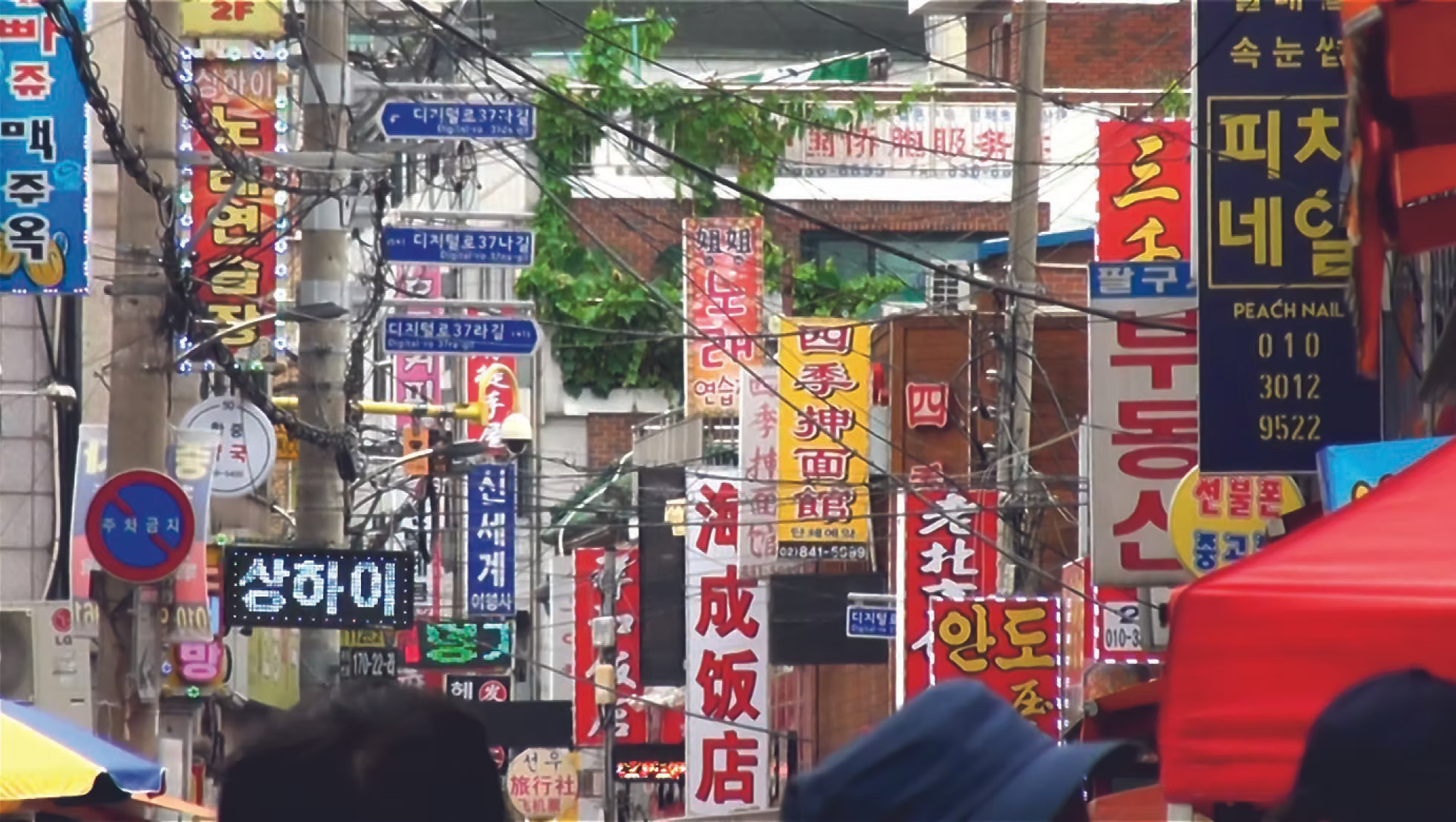
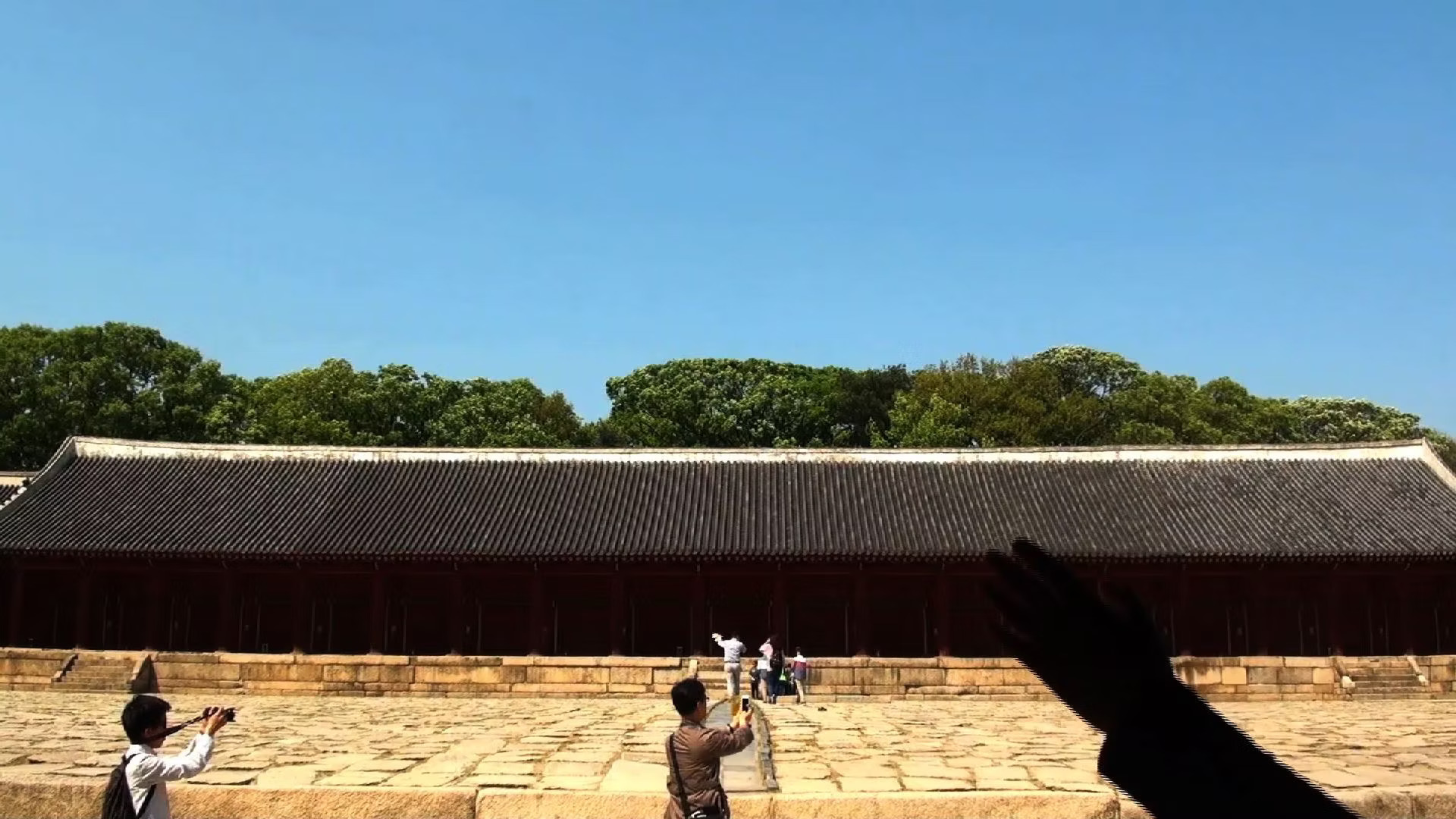
The first work of this project, Potemkin Study 1. Seoul: Tower of Silence, Fire Temple (2017), An tried to study Jongmyo and Daerim-dong in Seoul.
 
Jongmyo is a shrine and a symbolic place of the Joseon Dynasty that was ruled by only people with the family name Lee for 500 years, at the one place. In contrast, Daerim-dong forms the new landscape by ceaselessly moving supplies and people due to industrialization and the dominance of neoliberalism. In Seoul, there is a home that is never changed the house owner also people who never got their own place.


Yuri An, Potemkin Study 1. Seoul: Tower of Silence, Fire Temple, 2017, Single-channel video, 7min 35sec. © Yuri An

Recalling the words of French philosopher Gabriel Marcel, “An individual is not distinct from his place. He is his place,” An envisioned the homes of those who had left and those yet to leave, the lives of settled residents and migrants, and the urban landscape shaped by their coexistence.
 
Guided by the questions of whether these are merely constructed, selected landscapes or a deliberate choice by the existential outsiderness which alienates from all the places, An attempts to reread Seoul with a measured gaze, portraying it as an uncanny space-time in which settlement and migration coexist.


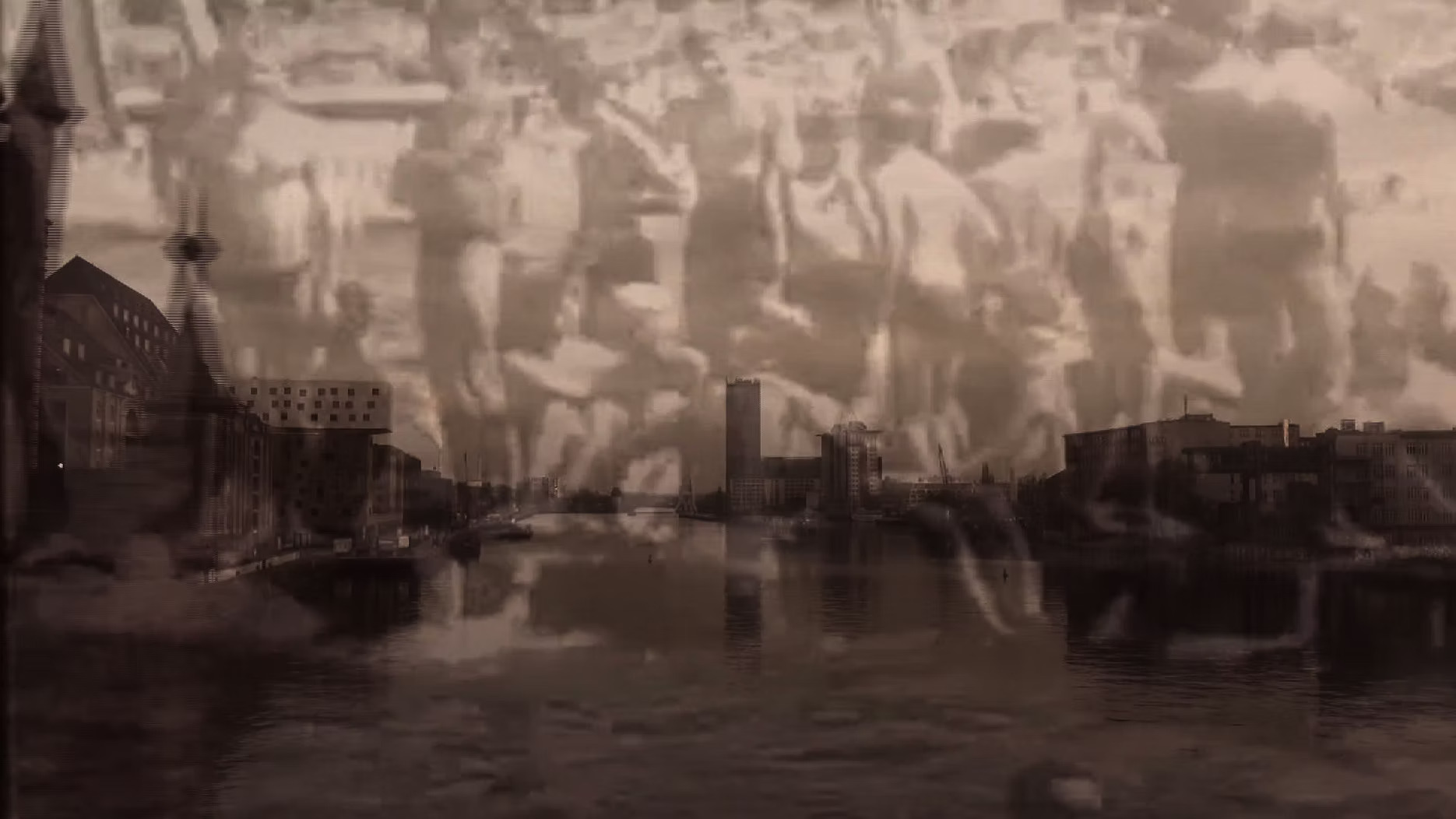
Yuri An, Potemkin Study 2. From Berlin to Tumen : The Way to The Origin of a Million Rivers, 2019, Single-channel video, 11min 35sec. © Yuri An

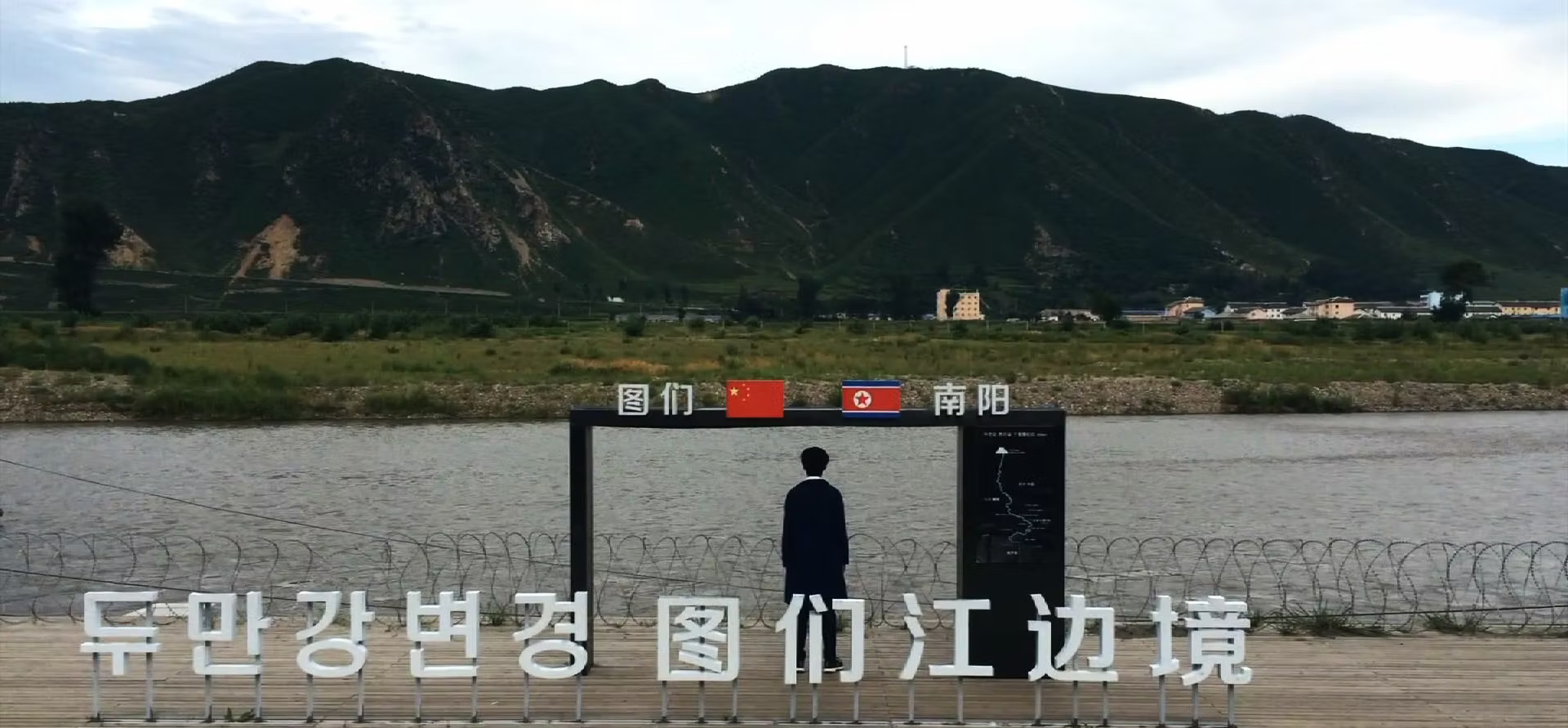
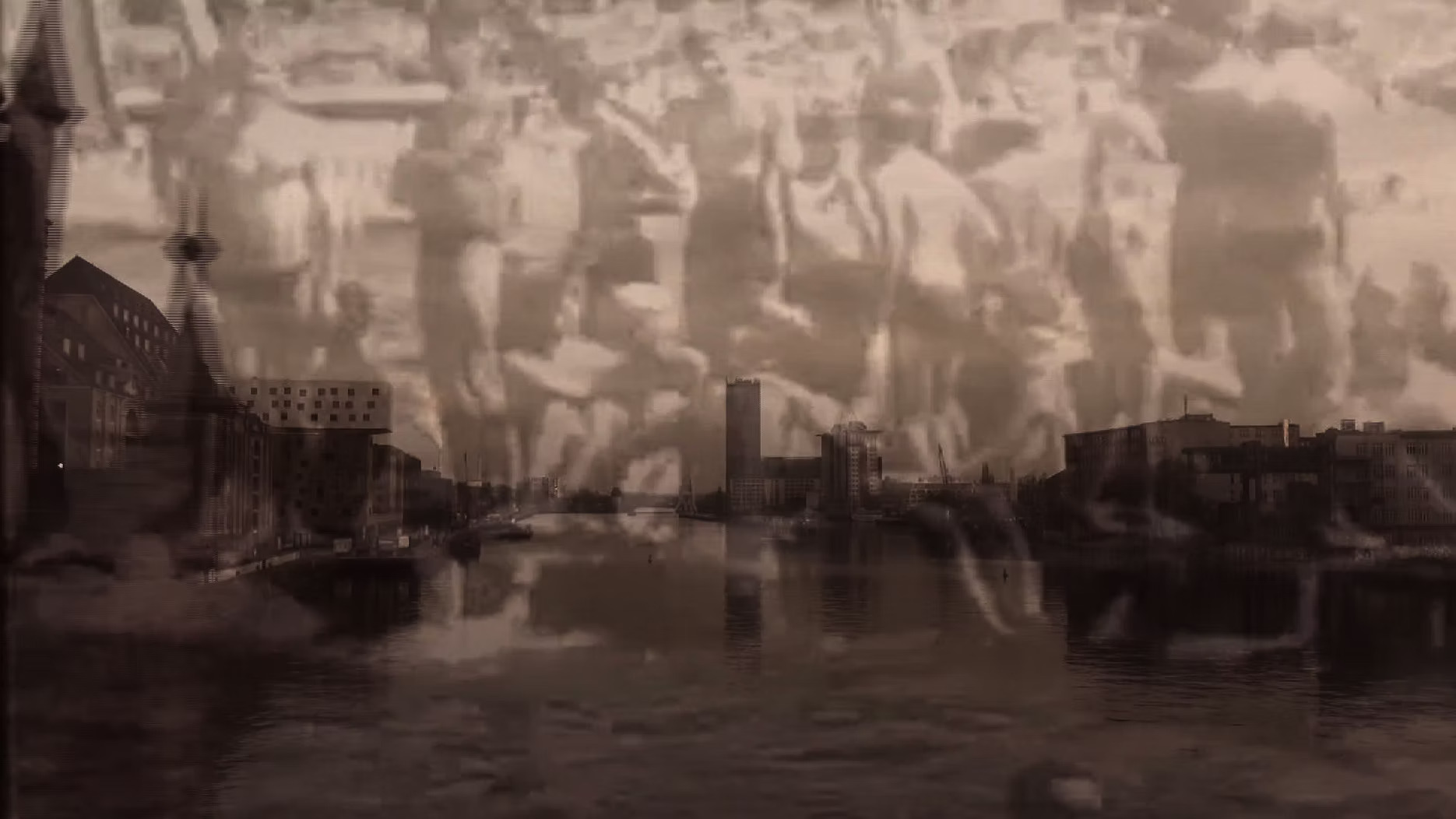
In the first video, An attempted to reinterpret Seoul through two different places: ‘Jongmyo Shrine and Daerim-dong’. The second video, Potemkin Study 2. From Berlin to Tumen : The Way to The Origin of a Million Rivers (2019), is about two different cities that have memories of division and the cold war in common.
 
These two cities are Berlin in Germany and Tumen in China. After the second world war, several countries divided territory by ideology, and the new countries were established as a result. Berlin is often referred to as the symbol city of division, Tumen has a much more complicated history. Tumen River flows the most northern part of the Korean peninsula, where is the border between North Korea and China.


Yuri An, Potemkin Study 2. From Berlin to Tumen : The Way to The Origin of a Million Rivers, 2019, Single-channel video, 11min 35sec. © Yuri An

In recent years, tension is increasing around the Tumen River like Berlin before the unification and DMZ in Korea. As the number of people who escape from North Korea is rapidly increasing, Tumen river becomes a starting point of changing the origin of life.
 
Although 30 years ago, the Berlin wall already fell, the military demarcation line in the Korean peninsula still exists. There is no way of confining a stream of water in one place, ideological conflict and fear take a hold on the river between.
 
This work is not the story about two cities as the place of sorrow and wounds of division. As if someone’s past still can be like the present of another person, this video is a tale of two cities that lost its way in the linear time base.


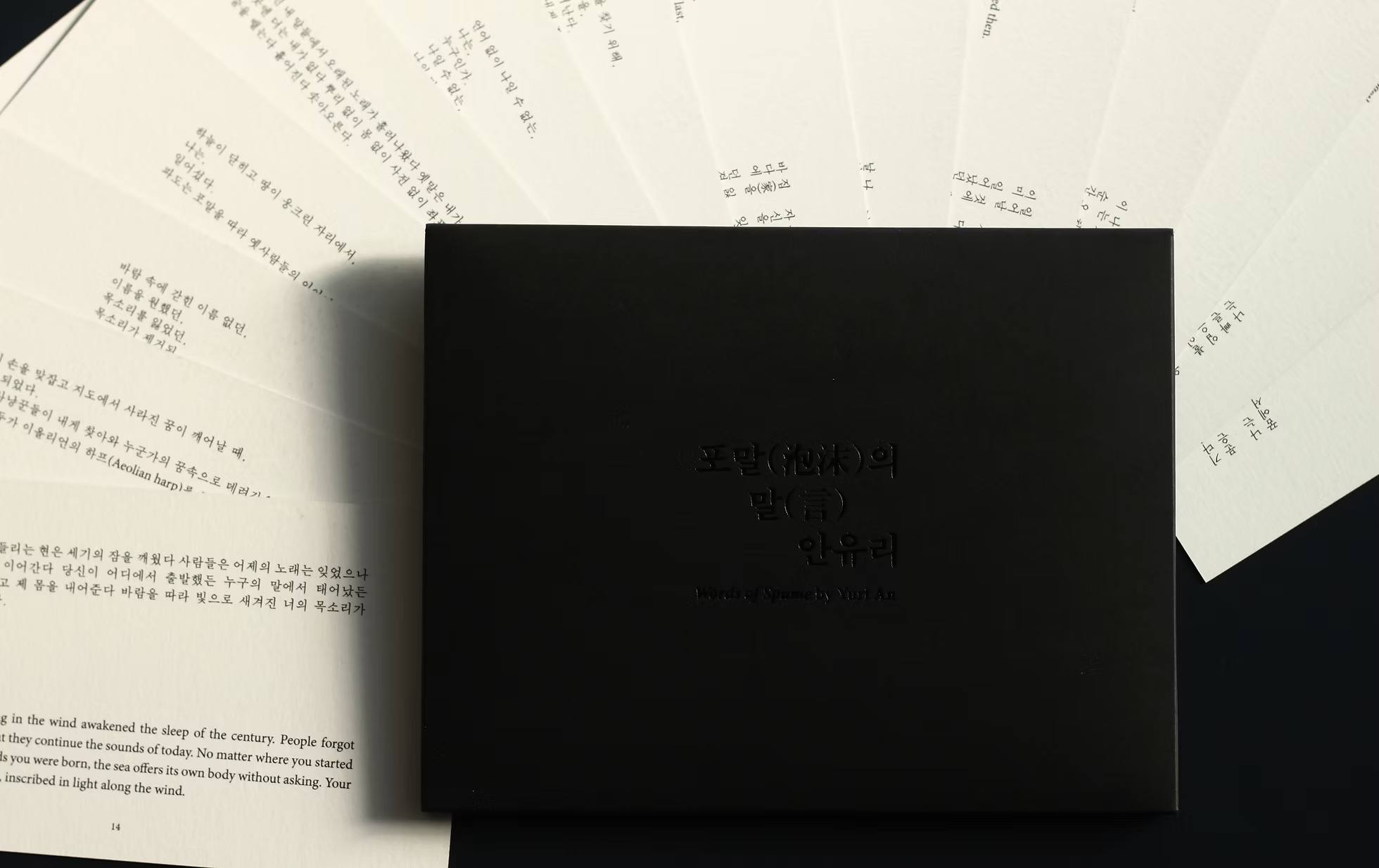
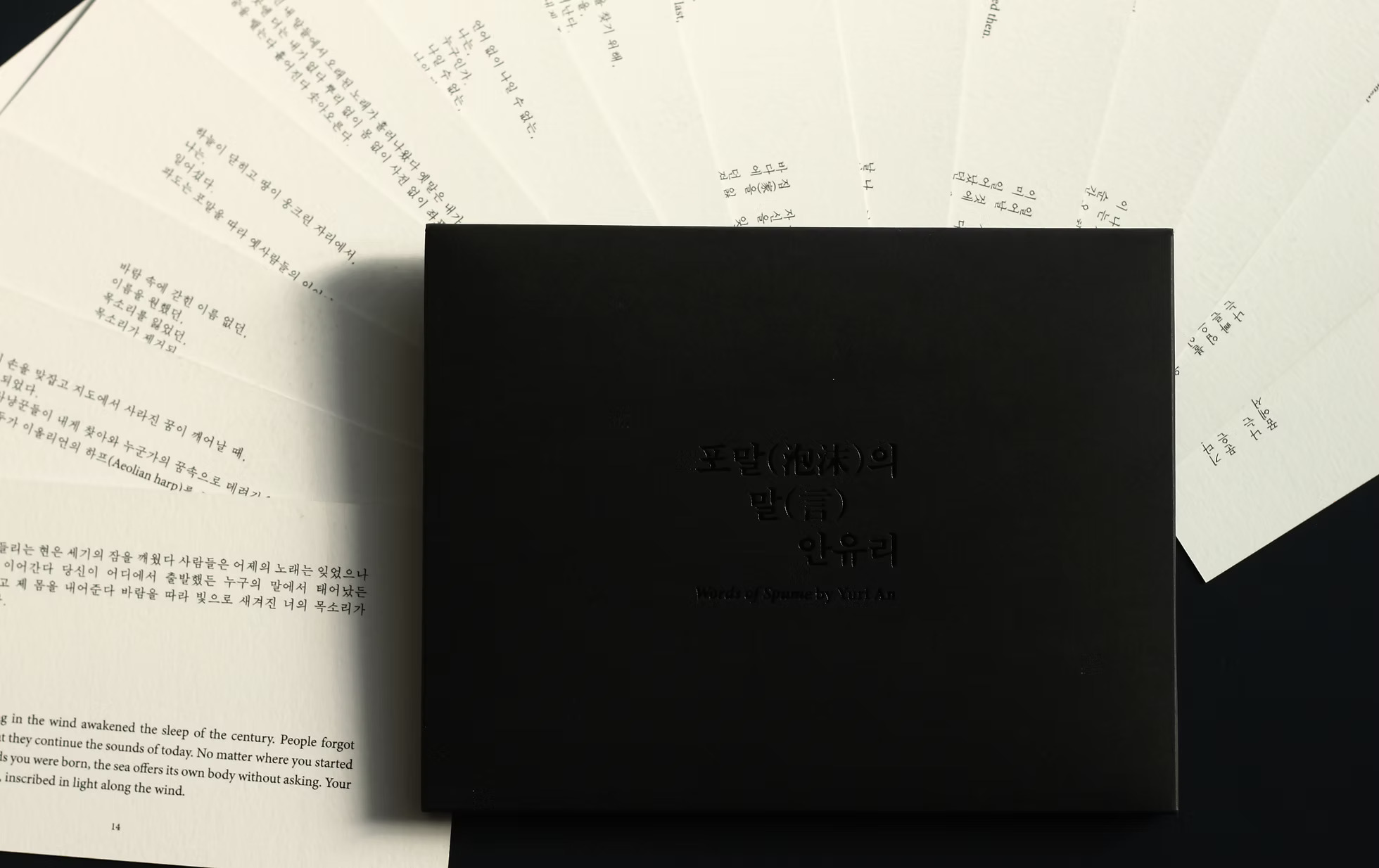
Yuri An, Words of Spume, 2021, 14 Art postcards, 160x90mm © Yuri An

Meanwhile, ‘We are from the Sea’, a project An began in 2021, takes the high seas as its central motif, referring to maritime areas that do not belong to any particular country.
 
In this project, An positions the Ogasawara Islands (小笠原諸島), which are now part of Japanese territory but existed as high seas until the nineteenth century, as both a point of departure for a voyage and a space for the imagination.
 
In Words of Spume (2021), a text-based work created as part of the project, An evokes the many dreams and frustrations, histories, and personal stories that unfold across the sea, bringing together the voices of two narrators who lived in different eras.
 
The work begins with the life of Kim Ok-kyun who attempted to flee to Japan after the failure of the Gapsin Revolution and was exiled to Ogasawara in the 19th century. From there, An adds a story in which his voice resonates across time and space, continuing in another temporal and spatial context.
 
Through a structure in which one person's story is answered by another, An imagines how revolution transforms into exile and banishment into wandering.


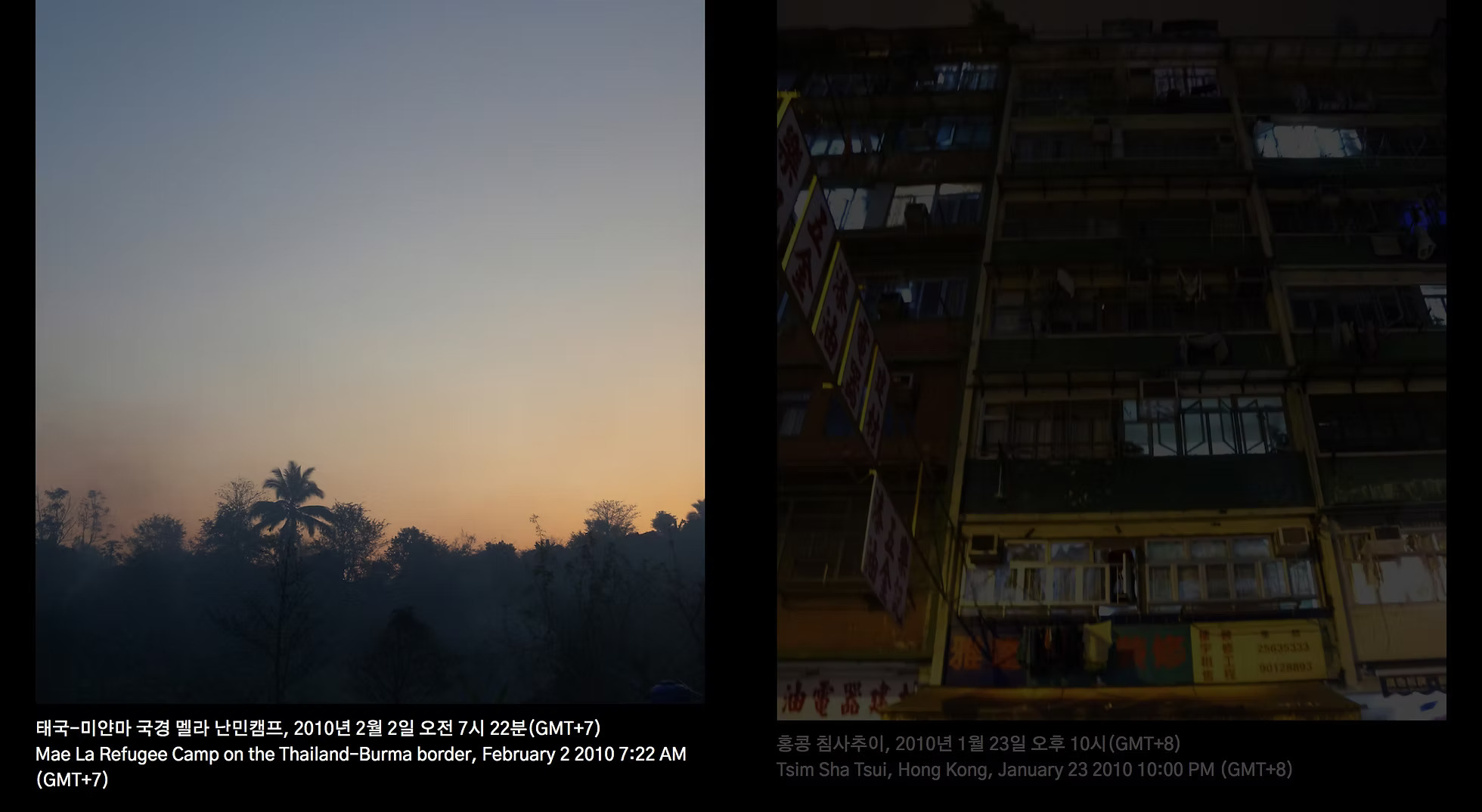
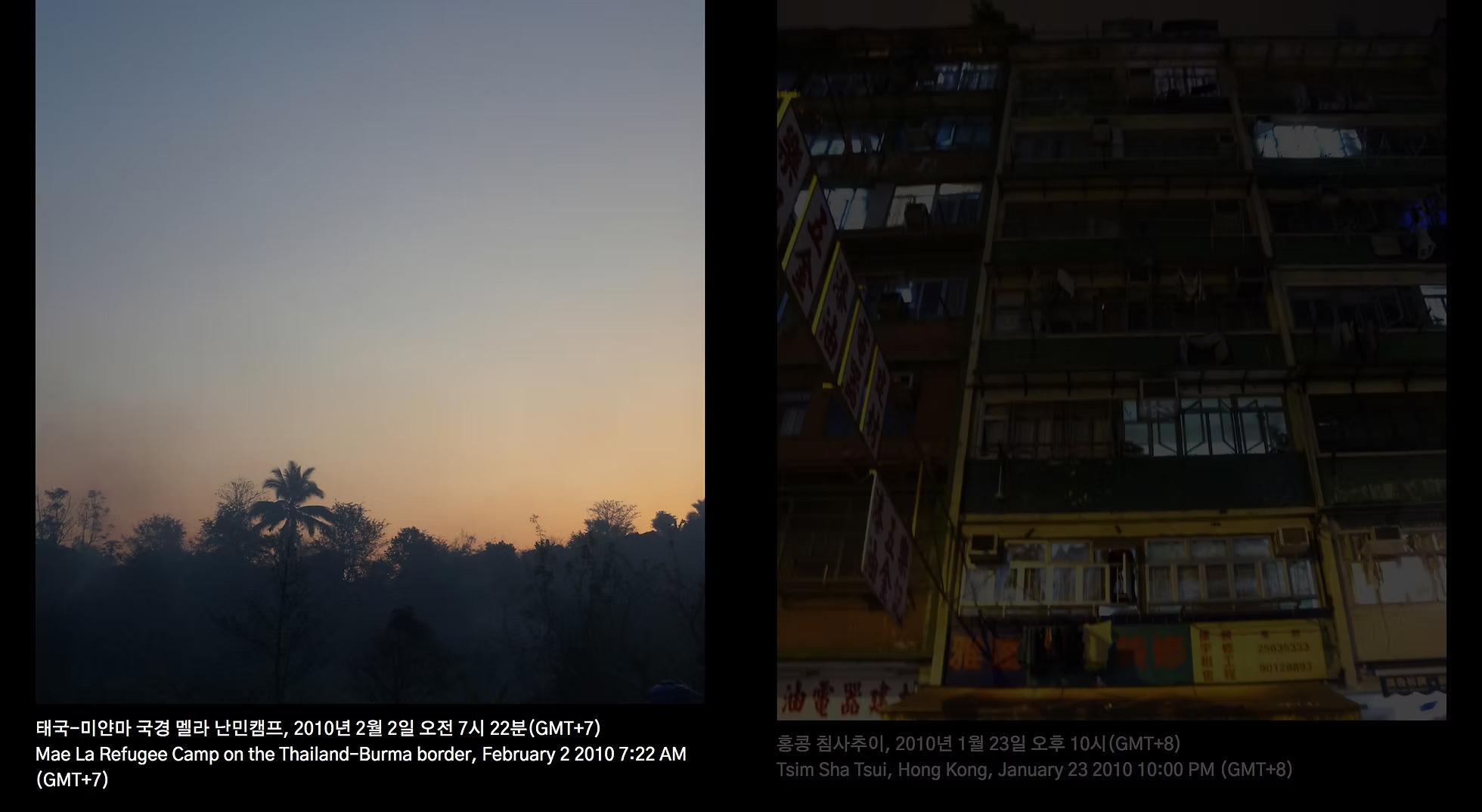
Yuri An, Promised Place, Displaced Memory, 2021, Image & Text, Website © Yuri An

While the first project presents an imagined journey around the Ogasawara Islands through dialogue, Promised Place, Displaced Memory (2021) reinterprets actual events that unfolded across different historical periods, weaving them into a narrative through text and images.
 
The two locations are Mae La refugee camp along the Thai–Myanmar border and Hong Kong, with photographs An took during her visits to both places in 2010 serving as the starting point.
 
The stories surrounding these two sites share common themes: periods of political upheaval that prompted increased mobility while simultaneously imposing restrictions on movement, and questions of identity arising from the relationship between the state and the individual.
 
Witnessing how the 1988 uprising in Myanmar and the 1997 handover of Hong Kong led to the 2019 Hong Kong pro-democracy protests and the 2021 Myanmar anti-coup protests, An established connections between these events and the situations and stories she had encountered in the two places in 2010.
 
The work connects the two distinct locations through selected temporal trajectories, portraying how each shares a past and a future with the other. At a time when the pandemic and political tensions had made physical movement and connection increasingly difficult, the work suggests the possibility of solidarity through the power of storytelling.


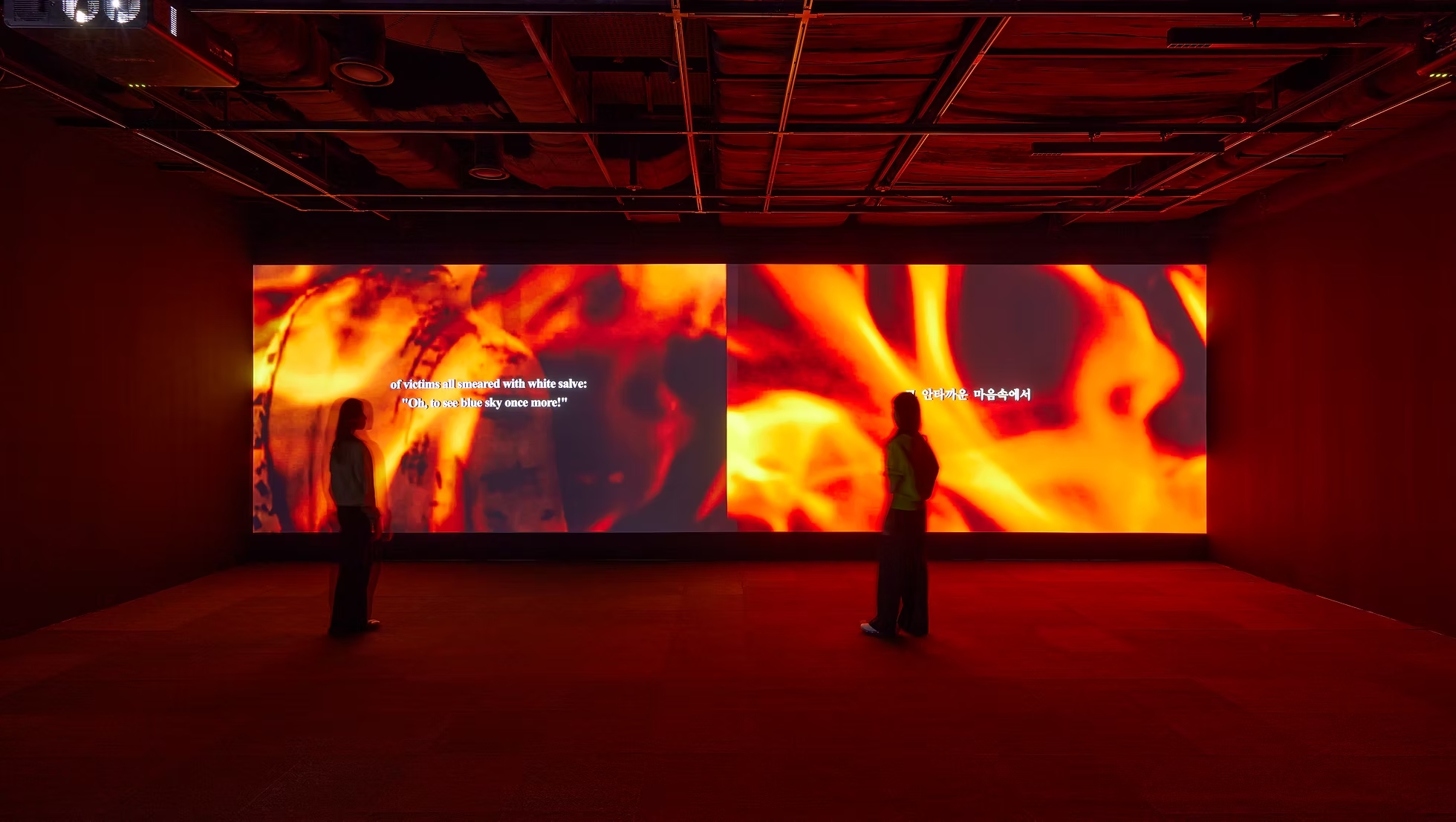
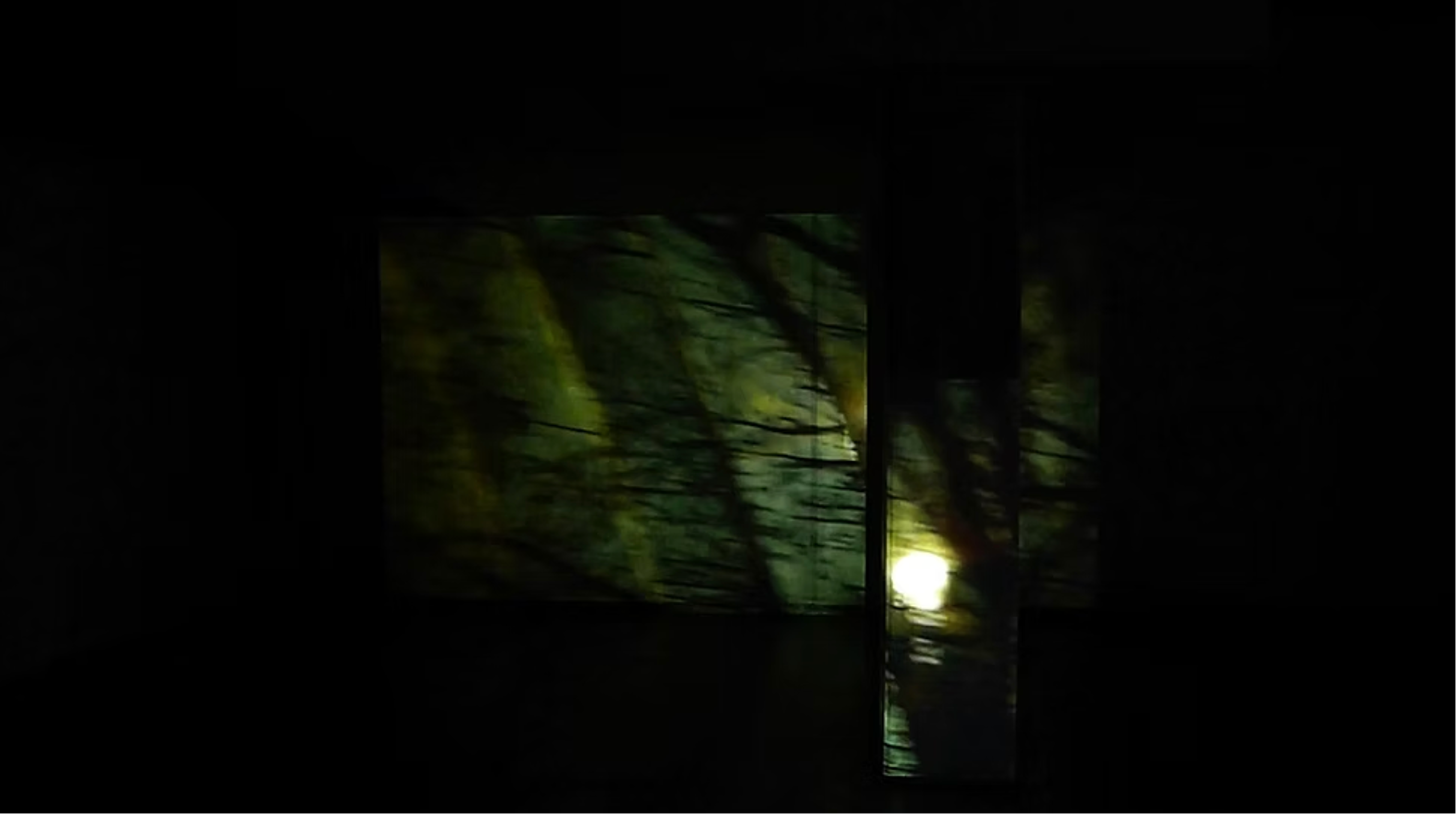
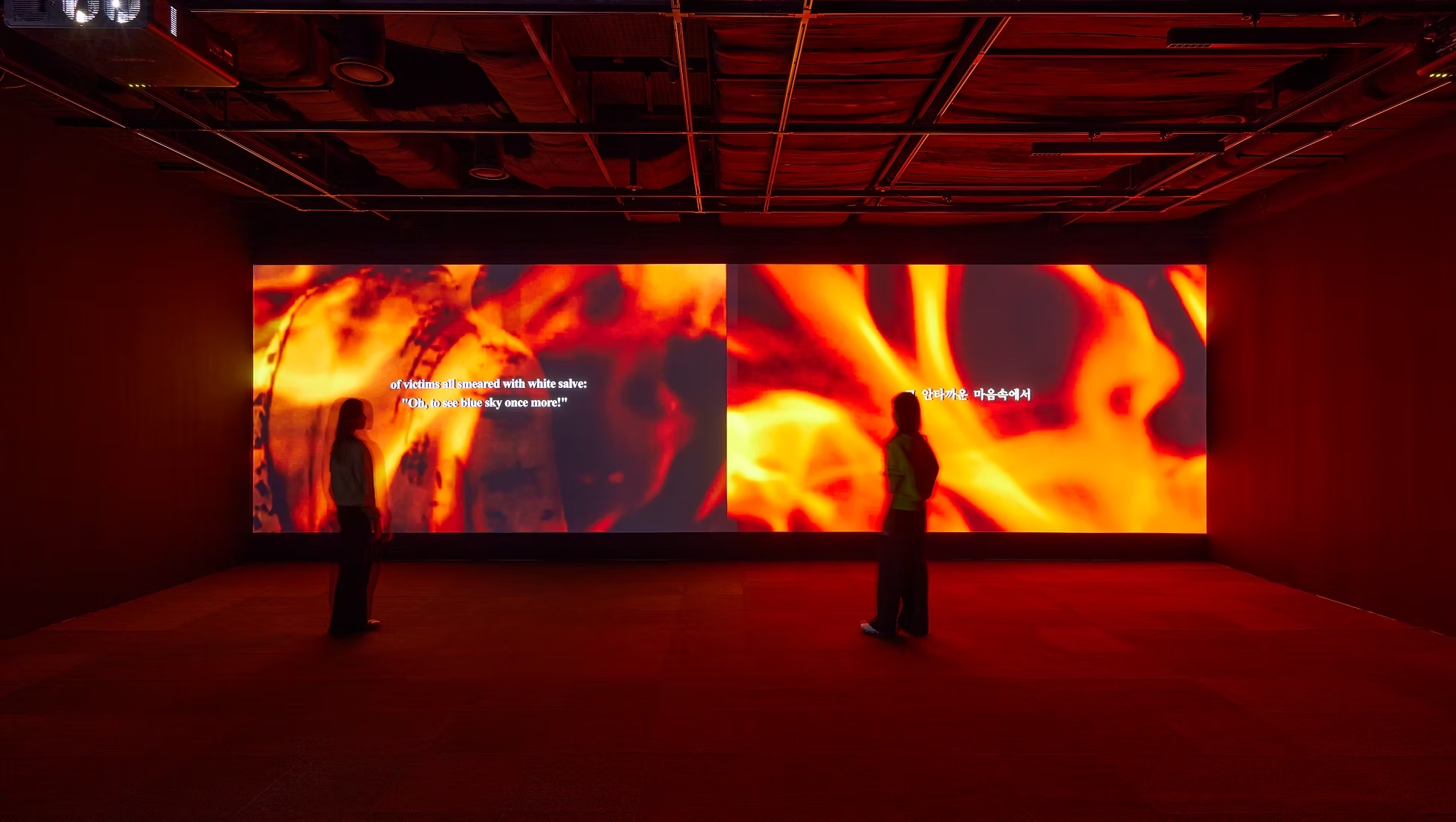
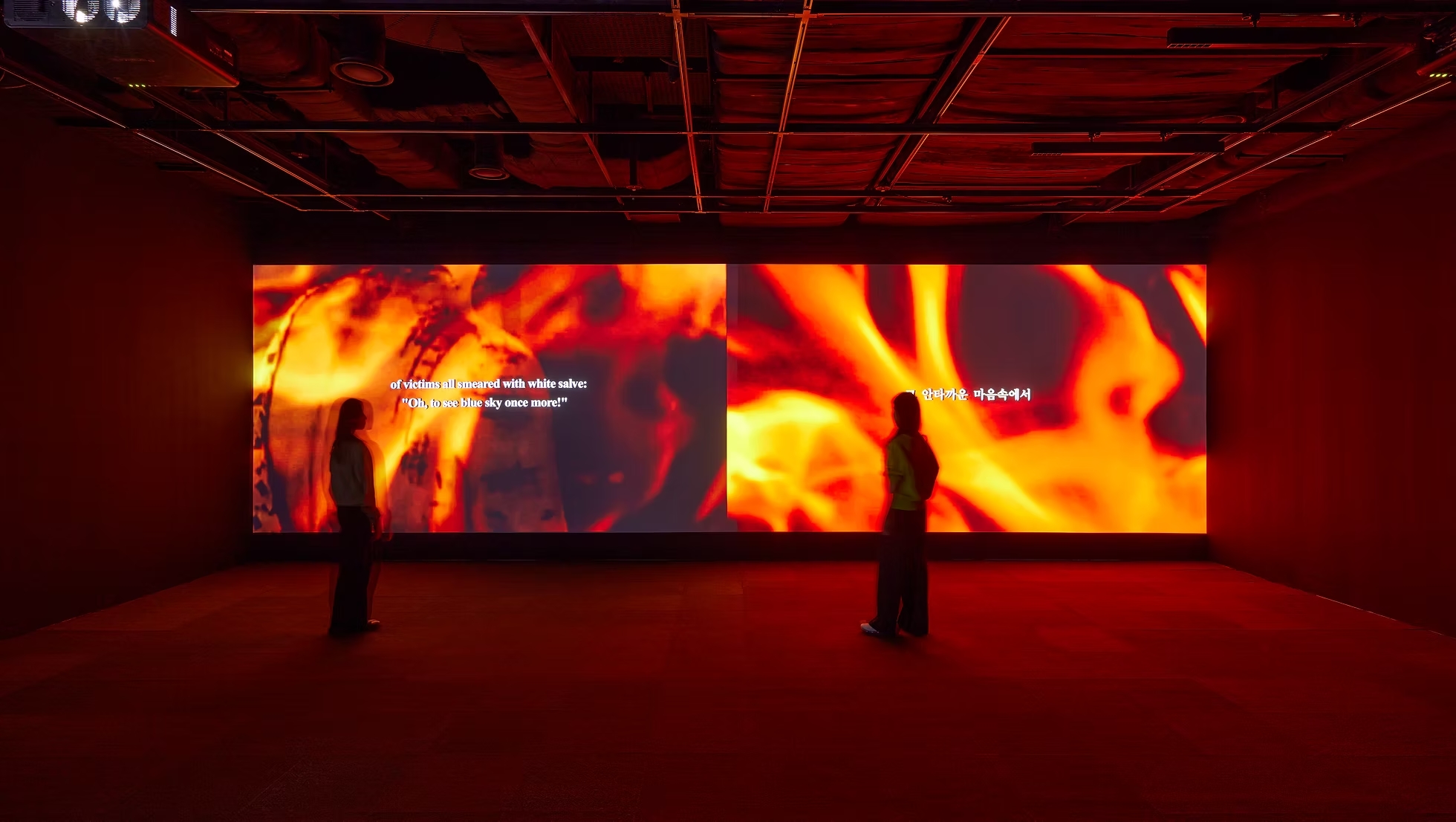
Yuri An, Styx Symphony, 2022, 2-channel video installation, 15min 51sec. Installation view of 《ARTSPECTRUM 2022》 (Leeum Museum of Art, 2022) © Leeum Museum of Art

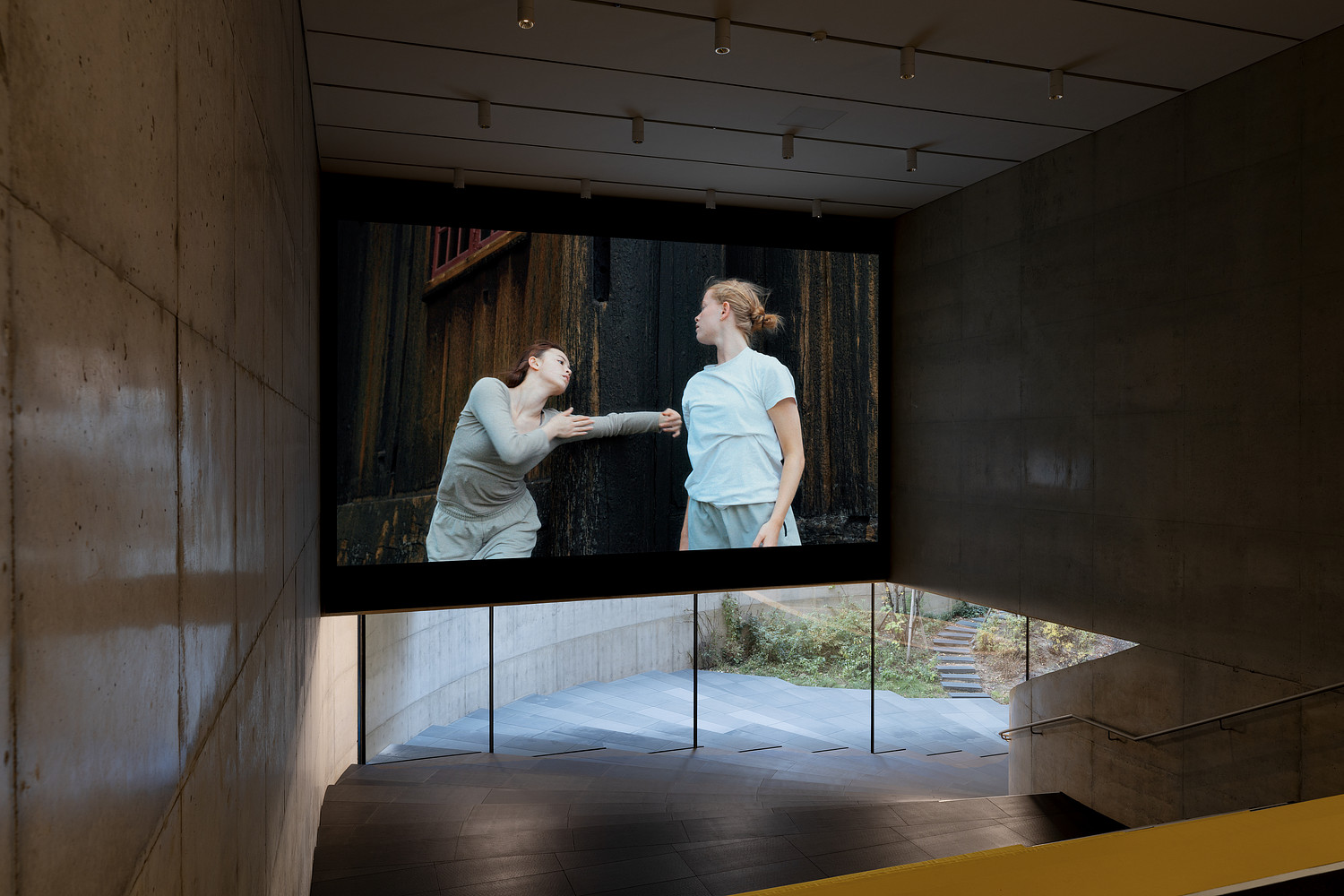
Meanwhile, An’s 2022 video work Styx Symphony takes its motif from Styx in ancient Greek mythology, the river that marks the boundary between the world of the living and the underworld, as well as the goddess who personifies it. The work tells the stories of people who lived through the histories of war and violence that unfolded during the twentieth century.
 
In Styx Symphony, An breathes new life into the poetic words of four women poets from Japan, Poland, the United States, and Korea—Sadako Kurihara, Wisława Szymborska, Maya Angelou, and Goh Jung Hee—through the voices of women living today.
 
She explores how the historical events these poets experienced or witnessed—the atomic bombing of Hiroshima, Nazi and Soviet oppression, the American civil rights movement, and the Gwangju Democratization Movement—can connect and resonate with us in the present.
 
In Styx Symphony, the four poets and eight women become Styx, summoning into the present the voices of those who vanished from history like smoke, without a name or trace. These voices become gestures of solidarity and courage, resisting the violence, discrimination, and hatred that persist today.


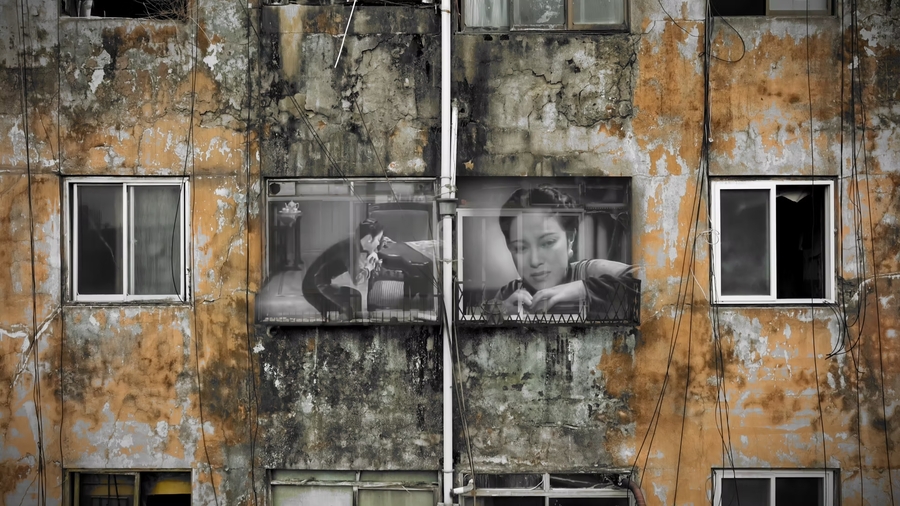
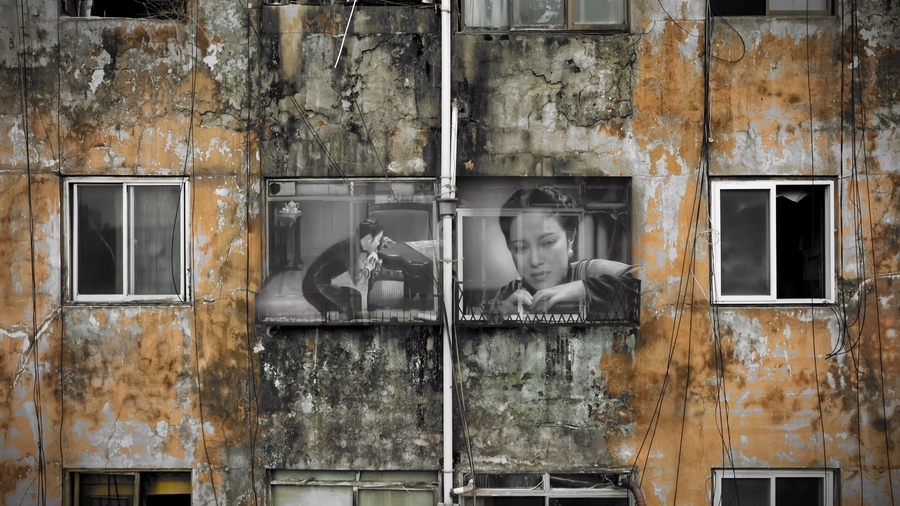
Yuri An, Wandering Star along the Silver Screen, 2024, Single-channel video, 9min 27sec. © Yuri An

Meanwhile, the single-channel video Wandering Star along the Silver Screen (2024) intertwines the lives of two historical figures: Yoshiko Yamaguchi, who lived as “Li Xianglan” as a singer and actress, and Yoshiko Kawashima, a Qing Dynasty princess turned Japanese spy.
 
Drawing parallels between these individuals and Venus—once perceived as distinct celestial bodies due to its orbital positions and known in ancient Greece as “Hesperus” in the evening and “Phosphorus” in the morning—the artist explores their contrasting personas shaped by national and historical forces.
 
An’s video reimagines their lives as a fleeting phantasmagoria, tracing inflection points where personal narratives refract through history’s turbulence.


Yuri An, Wandering Star along the Silver Screen, 2024, Single-channel video, 9min 27sec. © Yuri An

In this way, Yuri An’s practice has evolved from her autobiographical experiences as a stranger in unfamiliar places to encompass diasporic narratives centered on the Korean Peninsula and, more broadly, Asia, a region shaped by the conflicts of colonialism, imperialism, the Cold War, and ideology. Throughout this trajectory, she has continued to listen to the stories of marginalized individuals and communities.
 
Through video, sound, and text, An weaves together their voices and stories, bringing dispersed and fading presences back into the present and forging connections between them. In doing so, she gives voice to solidarity and resistance amid the conflicts, divisions, discrimination, and violence that persist today.

”Dying words, words that wanted to be remembered, were floating and coming apart. People were living with the weathered words in their mouths. Sometimes, their words would leave a trail. I listen to the song that the path sings for me. (Yuri An, Artist’s Note)


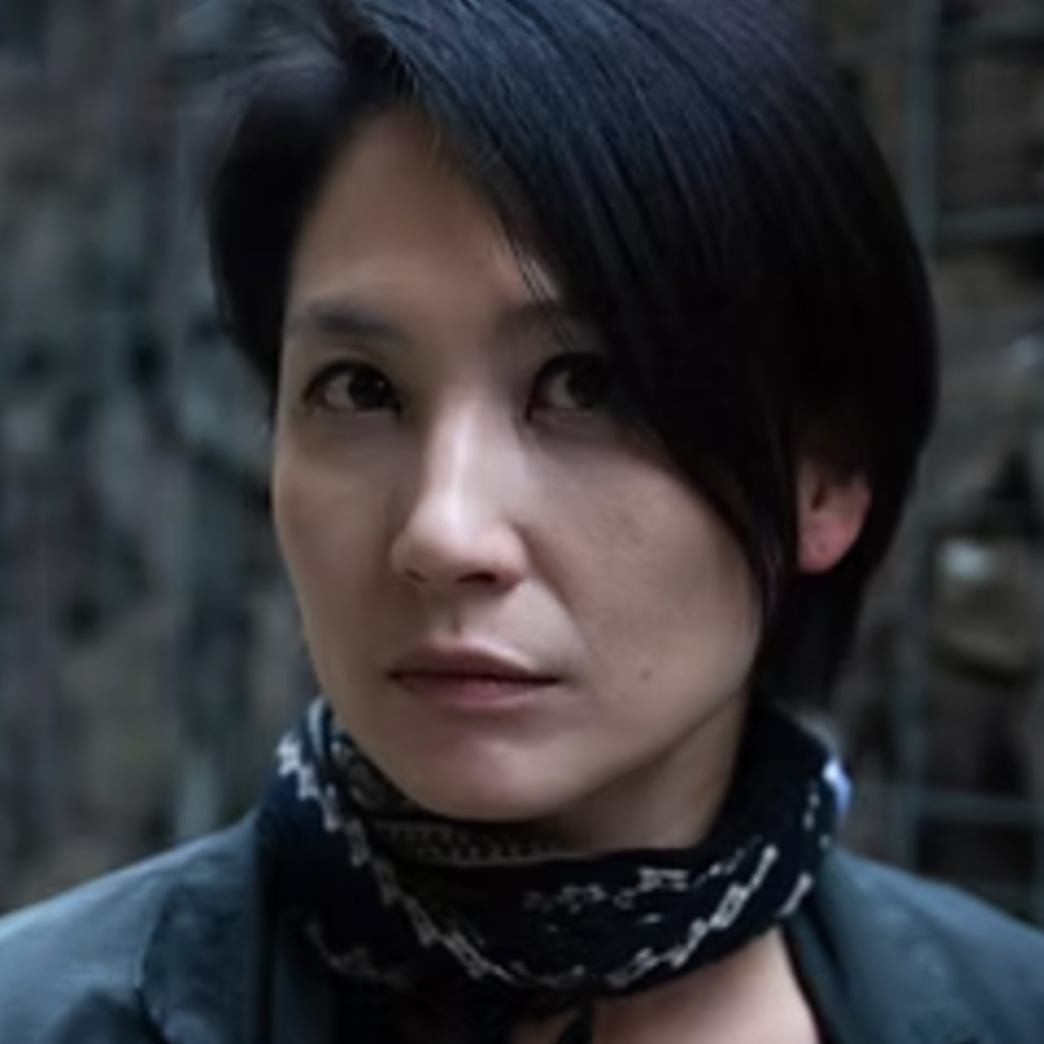
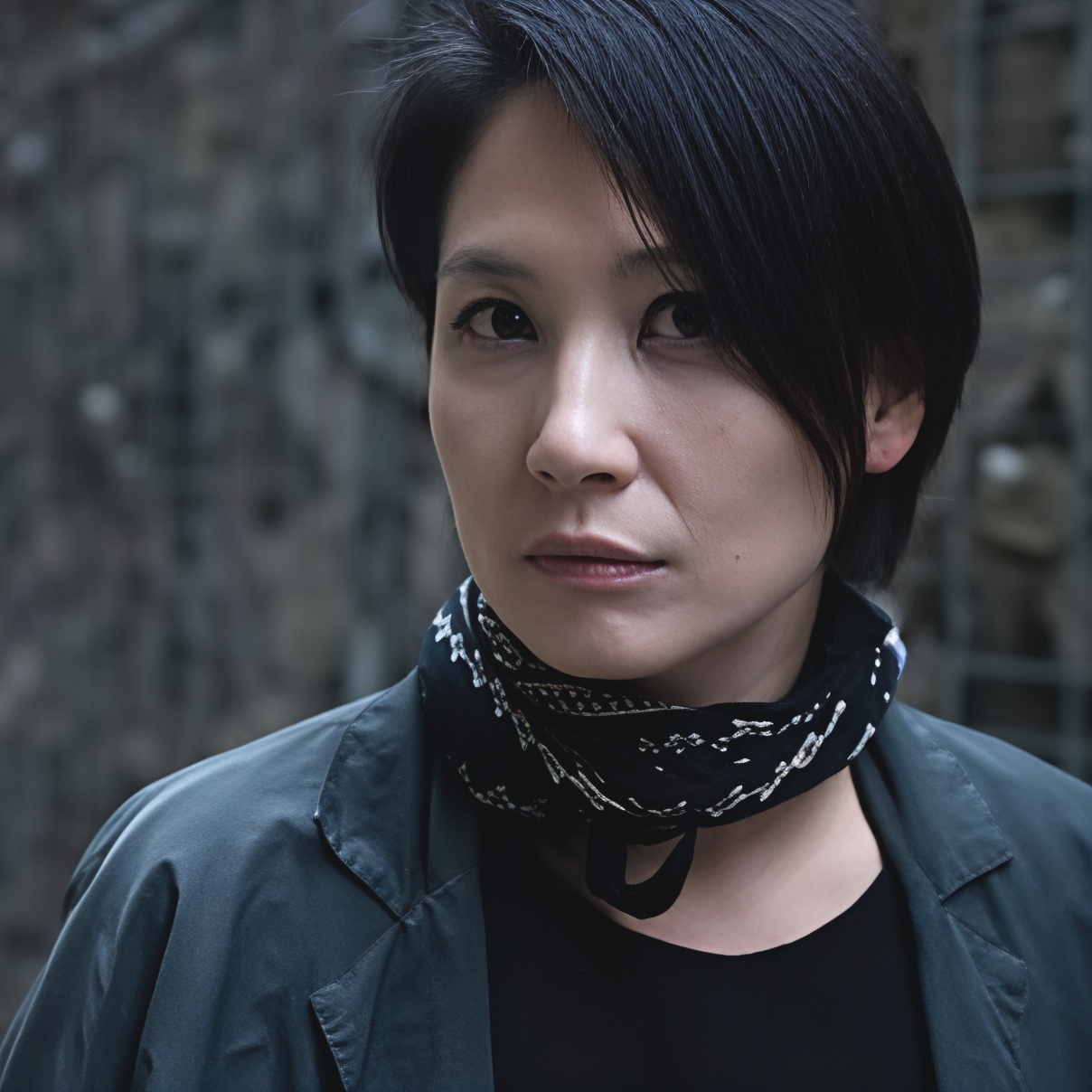
Artist Yuri An. Photo: Sung Jaeyun. © Yuri An

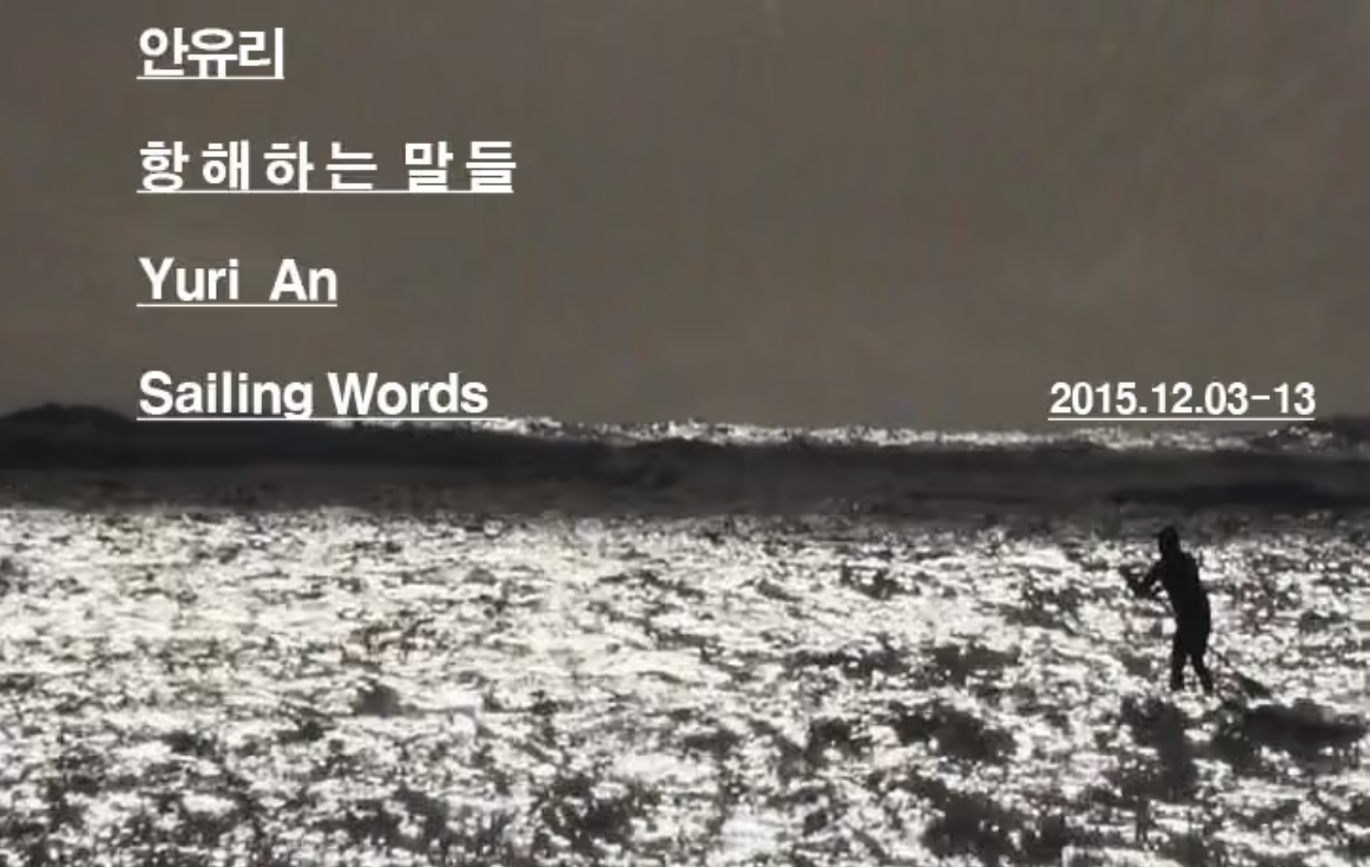
Yuri An graduated from the Gerrit Rietveld Academie in the Netherlands in 2014 and returned to Korea, where she continues to work. Her solo exhibitions include 《River of No Return》 (Seogyo Art Space, Seoul, 2016), 《Sailing Wokrds》 (Cheongju Art Studio, Cheongju, 2015), and 《The Unharvested Sea》 (Art Space Pool, Seoul, 2015).
 
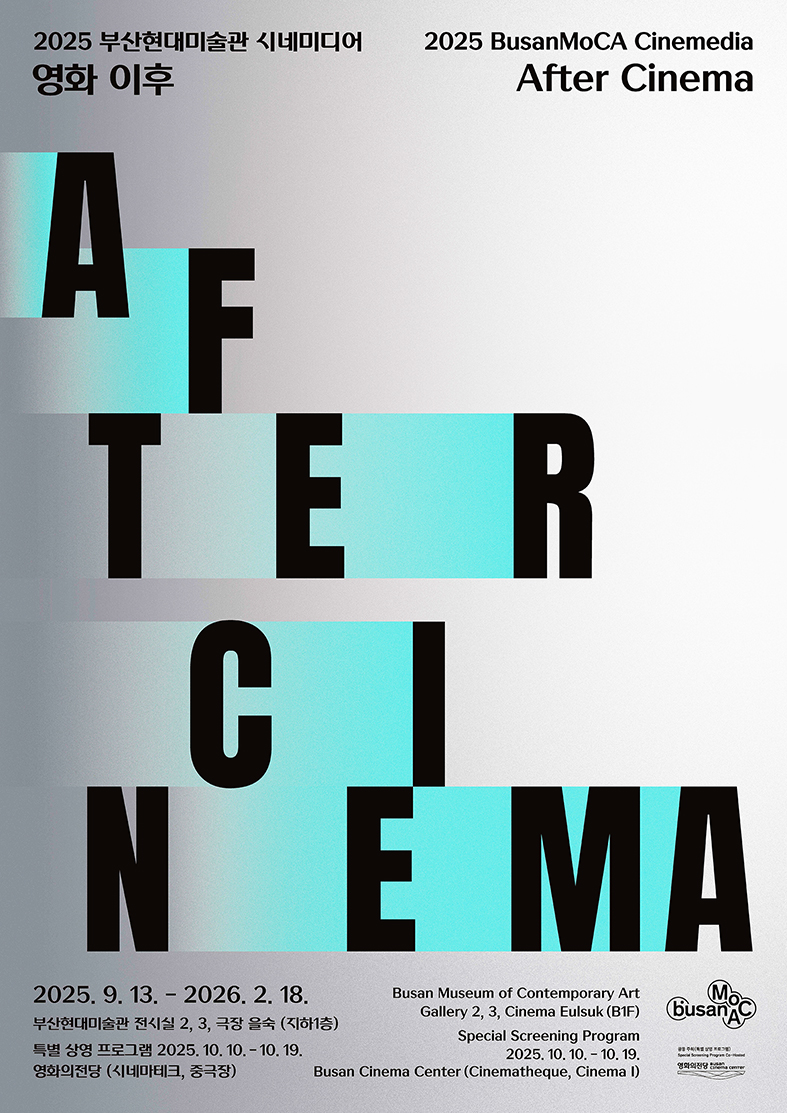
She has also participated in numerous group exhibitions, including 《Borderless Cinema》 (Incheon Art Platform, Incheon, 2026), 《Women on the Boundary》 (Jeju Museum of Art, Jeju, 2026), 《2025 BusanMoCA Cinemedia_ After Cinema》 (Busan Museum of Contemporary Art, Busan, 2025), 《Loop Lab Busan 2025》 (Museum 1, Busan, 2025), 《The 24th SONGEUN Art Award Exhibition》 (SONGEUN, Seoul, 2024), 《Snake Oil Salesmen and Promised Land》 (Art Space Boan, Seoul, 2023), and 《ARTSPECTRUM 2022》 (Leeum Museum of Art, Seoul, 2022).
 
An was named a finalist for the Loop Barcelona Video Art Production Award 2021. Her works are held in the collections of several institutions, including the Gyeonggi Museum of Modern Art, the National Museum of Modern and Contemporary Art, Korea, the Busan Museum of Art, the Busan Museum of Contemporary Art, and the Seoul Museum of Art.

References