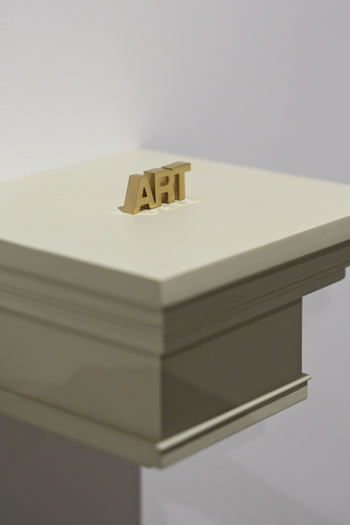
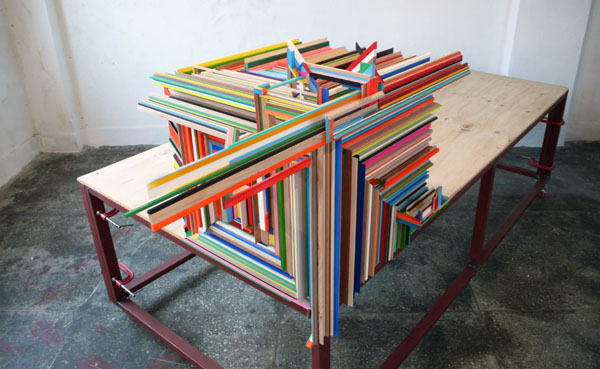
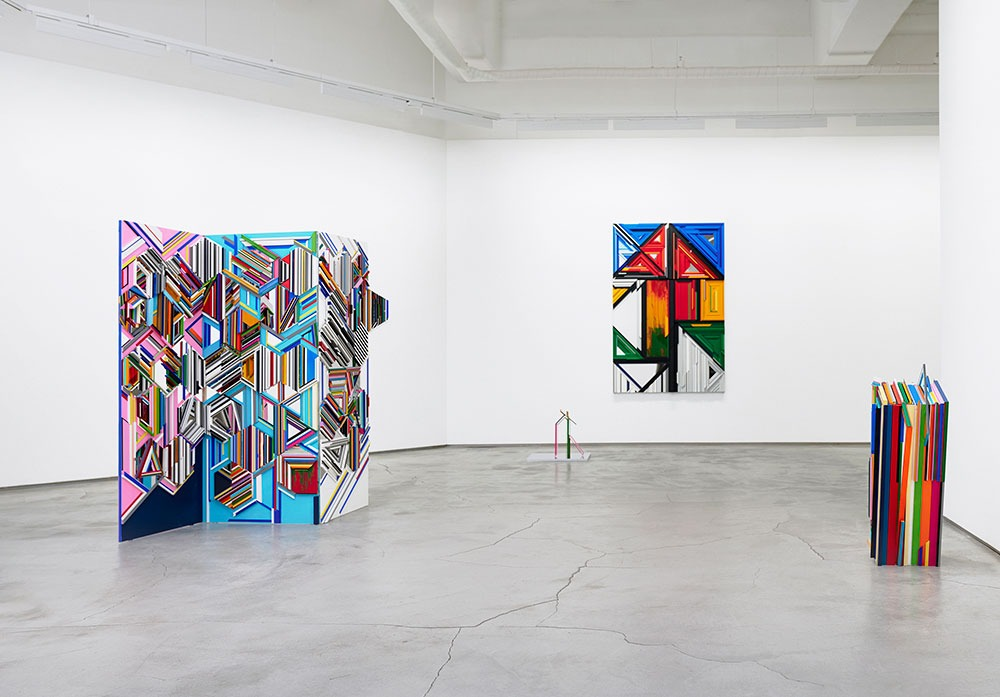
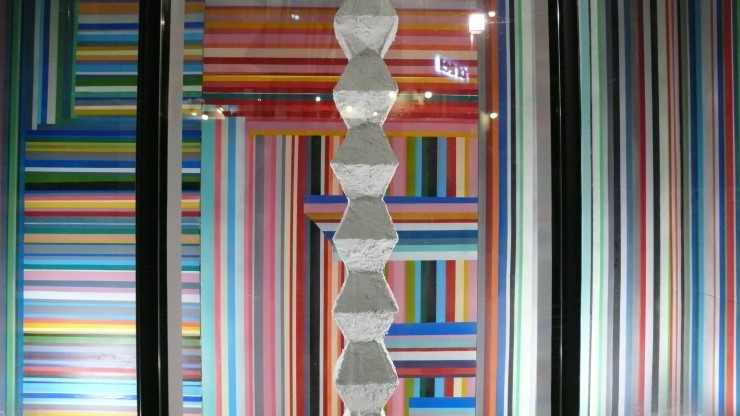
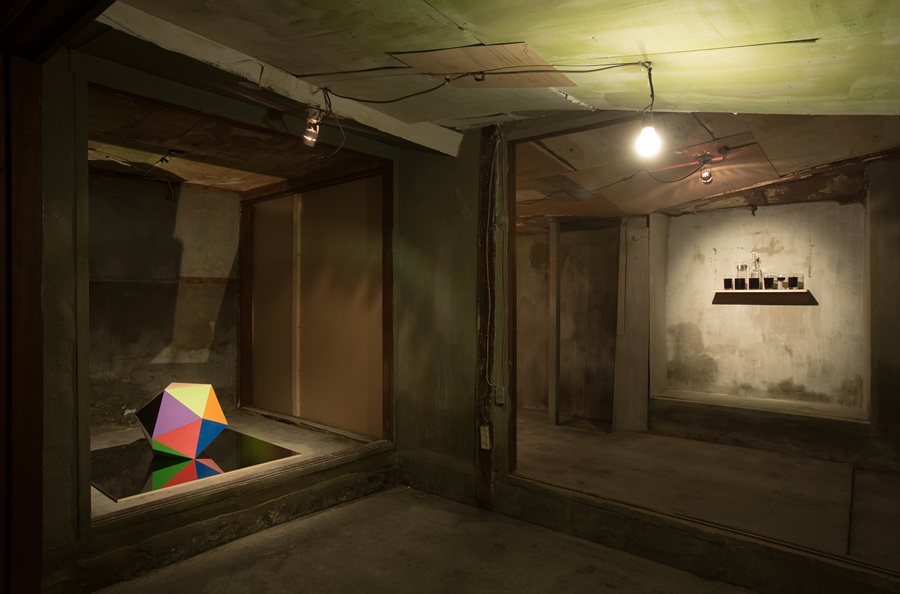
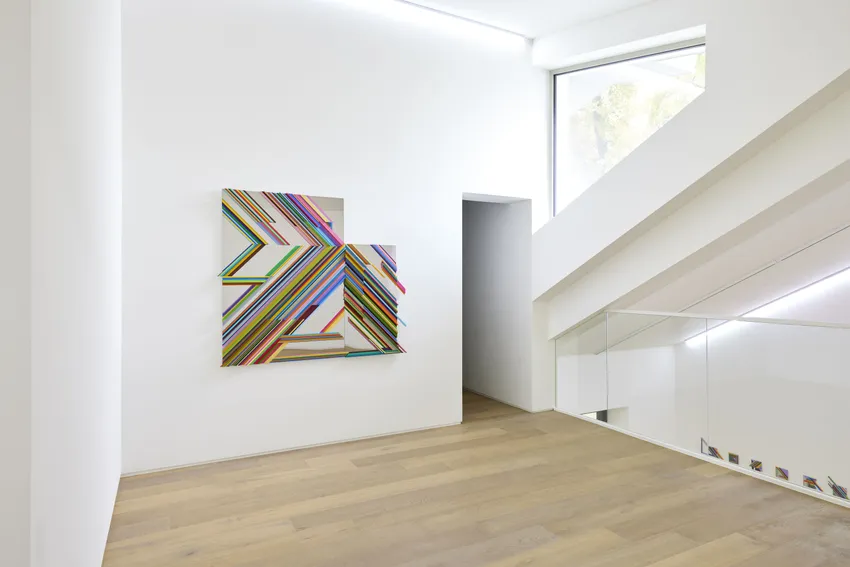
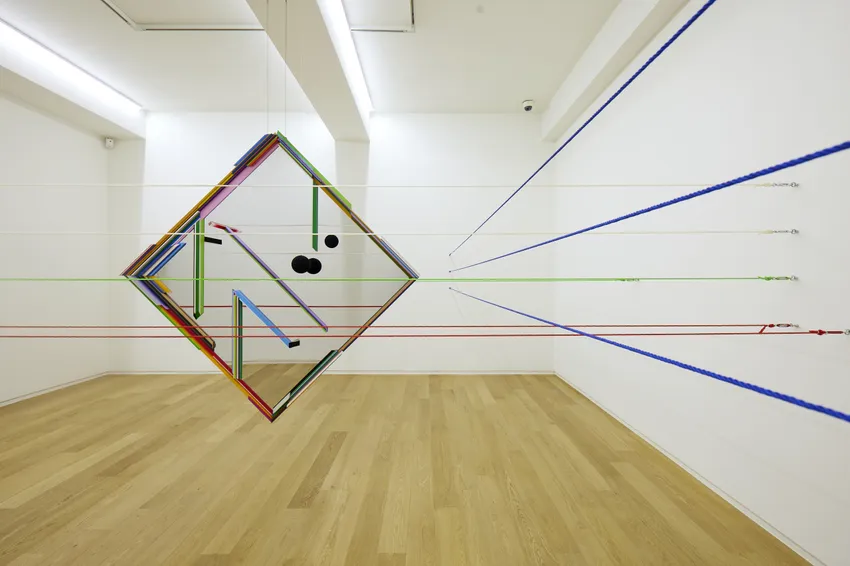
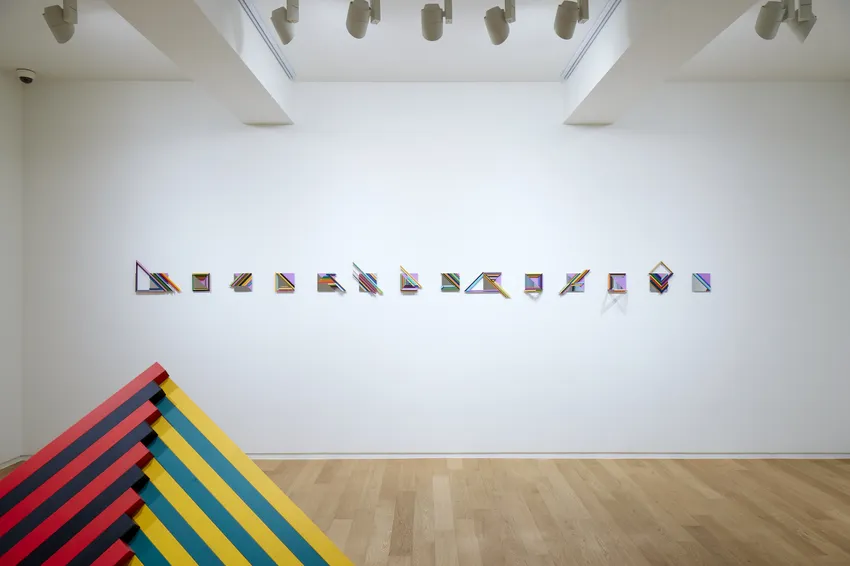
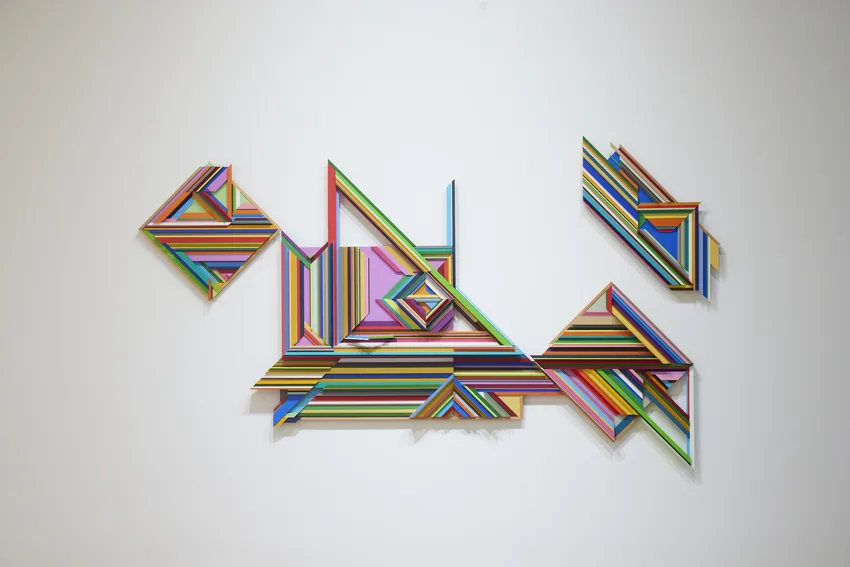
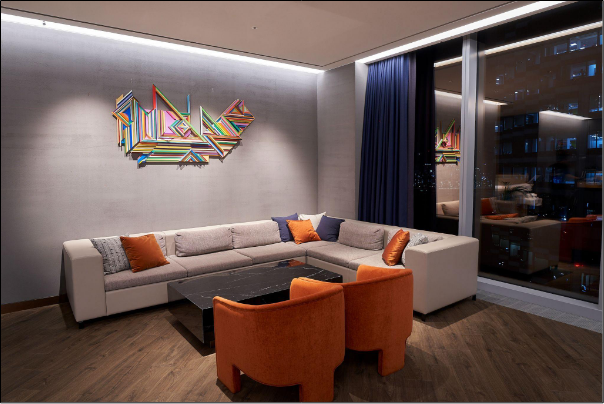
Installation view of 《Untitled Title》 © 313 ART PROJECT

Edges and Surfaces of Protruded Sculptures
Text by art critic Ahn Soyeon

1.

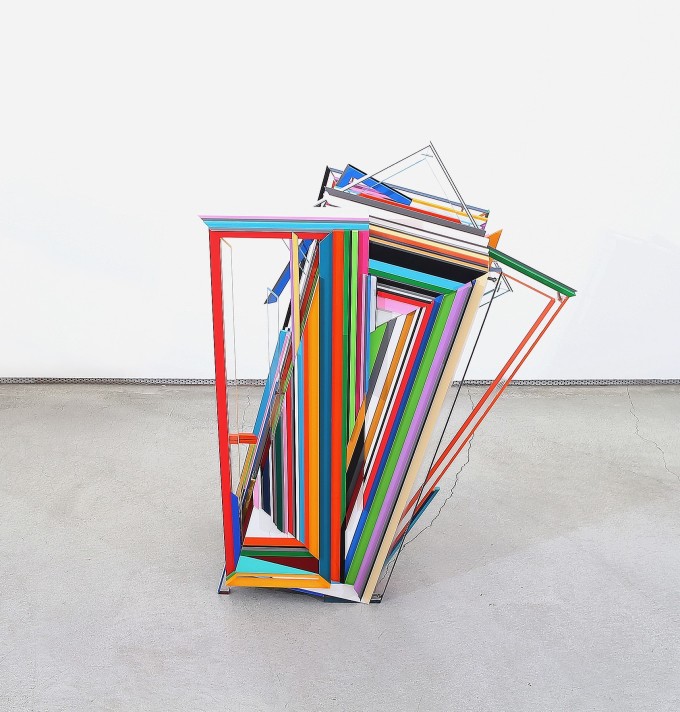
Hong Jungpyo’s three-dimensional works harbor a certain “doubt” about their own forms. When encountering one of his works for the first time, viewers find their gaze moving rapidly from side to side, unable to settle on a single point, as the form prominently displays surfaces covered in various primary colors and edges protruding in every direction.

Rather than recognizing the form itself, their attention is drawn to the arbitrary effects added to its surface. Although the works possess a distinctly neat and polished appearance, they also evoke the impression of fragments detached from something else, or unfinished forms abruptly suspended in an accidental state. Perhaps these two qualities—a meticulous appearance and a sense of contingency—coexist in tension, not so much as “differences” but as two sides of the same thing.

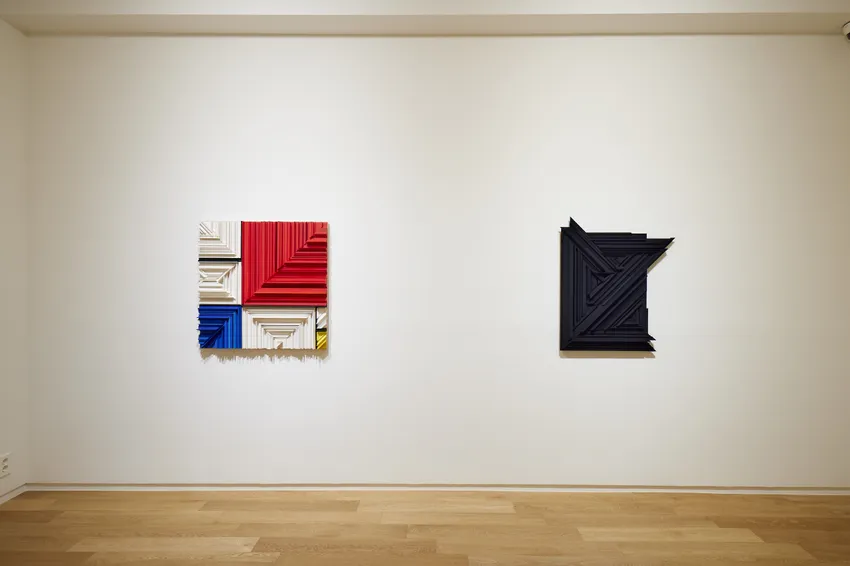
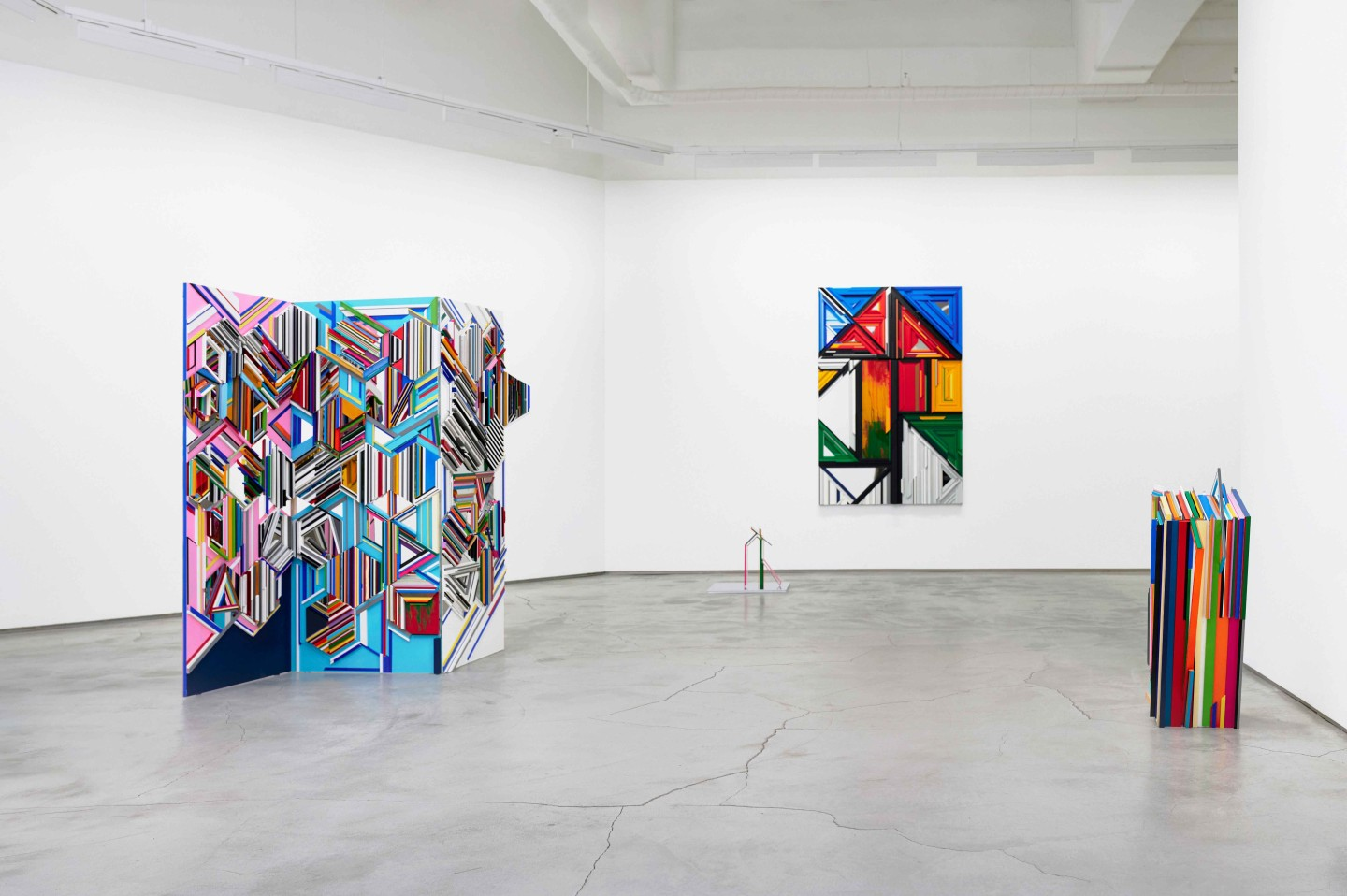
‘Hidden Edge’ is a series that Hong Jungpyo began in 2013, through which he has continually explored and demonstrated this underlying premise, moving between his visual obsession with form, conceptual reflection, and tactile playfulness. In this exhibition, he presents sculptural experiments through relief-like structures, including Hidden Edge #101 (Concealing the Cross-section #101) (2021), alongside Loading in 13 Times (2021), Chil-kyo-do (2021), and No Decision #001 ver. HE (2021), which extend the same sculptural principles.

It seems that Hong has sought to explore the responsibilities of a sculptor, holding a (grand) vision in one hand and (self-deprecating) humor in the other, whether by renewing our perception of sculptural space through his longstanding interest in the surfaces and edges of sculpture or by recontextualizing the relationship between sculptural acts and sculptural forms.

This can be inferred from the attitude he has maintained throughout his practice: placing “art” or “sculpture” at the forefront, endlessly deferring any definitive understanding of them, and ultimately attempting to remain (only) at their boundaries—like edges and surfaces.

While posing grand questions to himself, such as “What is art?” or “Who is a good sculptor?”, he has persistently exposed and worked over the unremarkable edges of ungainly forms or failed surfaces, as though wrestling with the answers to those questions. Such is the paradox suggested by the title No Decision.

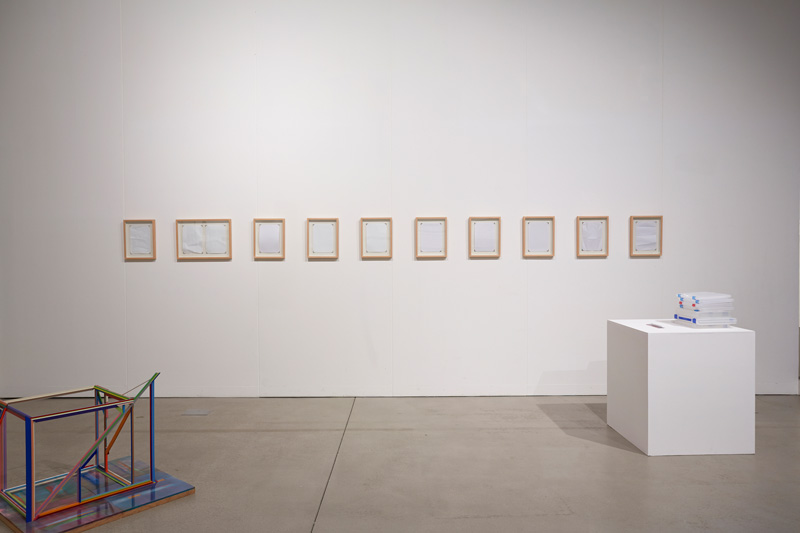
Installation view of 《Untitled Title》 © 313 ART PROJECT

2

No decision #001 ver.HE combines five light bulbs within the architectonic structure of the ‘Hidden edge’ series, suggesting a specific situation. By borrowing the baseball term “no decision” as the title of the work, Hong Jungpyo reveals the fate of “objects” held hostage to an action without victory or defeat, like five baseballs that were never thrown—a condition that bears a striking resemblance to his longstanding reflections on art and sculpture.

In the ‘Hidden edge’ series, Hong discovered an arbitrary justification for constructing the possibilities of sculptural space at the edges where lines meet within pictorial space. When two lines meet to form an angle, the three-dimensional cross-section of one of the materials inevitably becomes exposed. To conceal this cross-section, he temporarily assumes the role of a modern-day Sisyphus, condemned to repeat the same action.

Rather than revealing the three-dimensional spatial qualities of sculpture through the self-contained volume of a form, Hong draws upon sculptural experiments of the previous century to explore the relationships through which materials are assembled and the formal principles governing the arrangement of objects as “primary structures,” to borrow the rhetoric of Minimalism. In doing so, he allows us to perceive the presence of the interior and exterior spaces with which sculpture “engages”—spaces that are typically empty, yet physically real.

For Hong Jungpyo, the absence of a three-dimensional phenomenon (that must be concealed) can be understood in terms of the material properties that emerge through the form itself. By drawing upon and dialectically renewing sculptural methodologies that have responded to such “real effects,” he explains the justification for his forms through an ongoing exchange of questions and answers.

The ‘Hidden edge’ series adopts an architectonic principle as a strategy for concealing the cross-sections of materials that inevitably reveal their own physical properties at the edges of surfaces defining the contours of a form, even though these properties have little to do with the form being constructed.

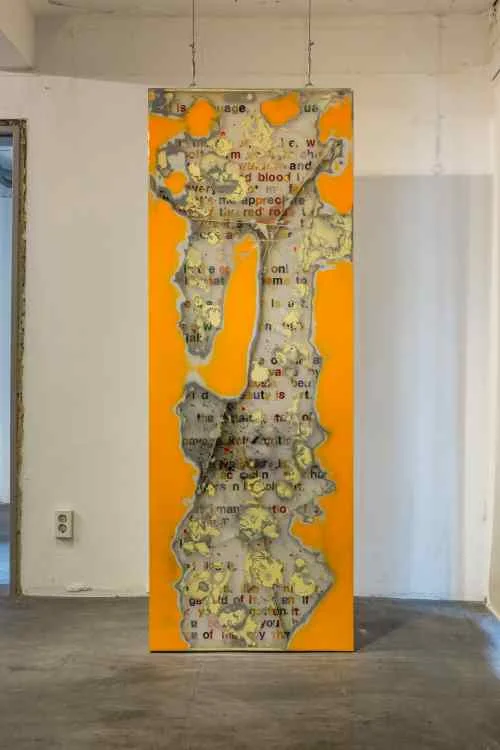
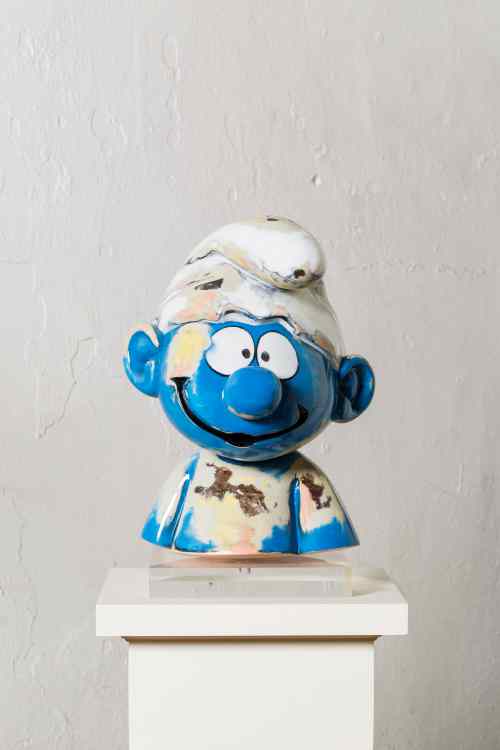
In another strand of his practice, Hong partially employs sculptural modeling techniques involving the casting of objects in series such as ‘Artactually’ and ‘Art is’, transforming the inevitable traces of material mistakes and errors that arise during the process into referential characteristics of the modeled surface.

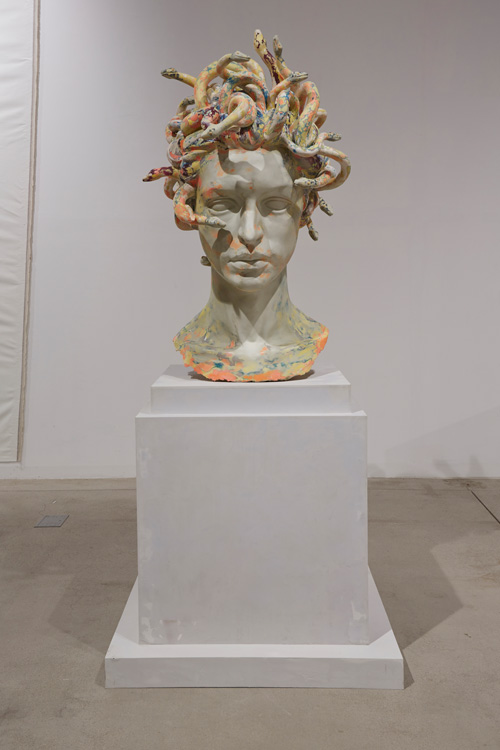
For instance, his reconsideration of sculptural modeling methodologies, which he began exploring in the early 2000s, emerged through a process of casting familiar objects—recognizable entities associated with specific forms, such as fish or doughnuts—or familiar figures, such as characters from cartoons or mythology, in molds to reproduce them as sculptural forms.

He then repeatedly engaged in weaving and sanding to correct the traces of errors that inevitably appeared on their surfaces. In other words, throughout these series, Hong has sought to explore the concept of sculpture anew through artistic acts of concealing and compensating for the imperfections and deficiencies of the three-dimensionality mediated by sculpture.

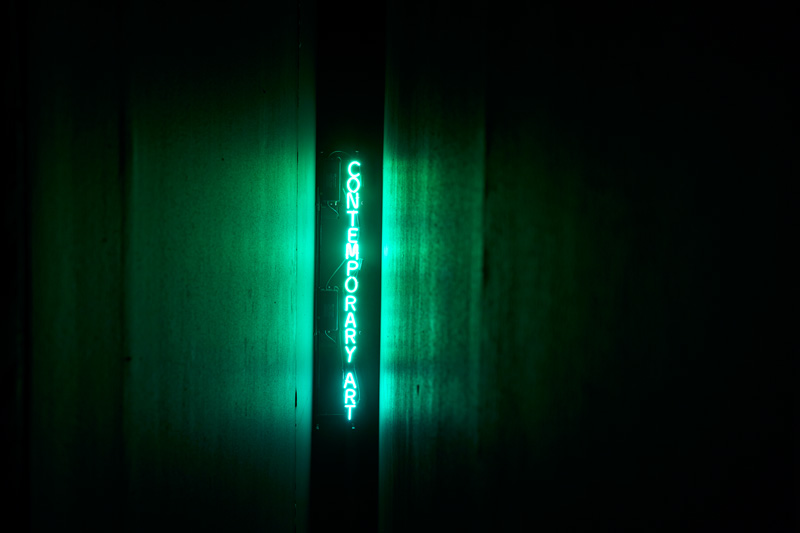
Installation view of 《Untitled Title》 © 313 ART PROJECT

He maintains a certain attitude of suspension toward his own artistic practice and actions, highlighting the ambivalent existence of sculptural forms onto which he projects himself as a sculptor. In other words, recalling the paradox of a “no decision” in baseball, where a pitcher's own efforts do not determine the outcome of a game, he draws attention to the relationship between the sculptor (and his actions) and sculpture (and its form).

The “sculptural conditions” he initially experimented with, while questioning what art is and what artistic practice ought to be, involved the (non-)monumental imitation and reproduction of forms, along with the methodologies of sculptural modeling employed to achieve them.

For instance, revisiting Artactually (2005), a life-size casting of a mackerel, and the ‘Artactually-krispykreme’ (2005) series, once widely recognized as Hong's signature work, and continuing through Artactually–anti fly waterbag (2017), it becomes clear that his consistent focus has been on a series of sculptural actions through which ordinary, real-world objects are replicated as they are and transformed into sculptural forms.

In ‘Artactually-krispykreme’, in particular, he cast an actual ring-shaped doughnut—a form approaching an iconic image—in transparent fiberglass-reinforced plastic (FRP). Due to the texture and firmness of the actual doughnut, the casting inevitably bore visible traces of failure. However, by repeatedly sanding its surface and weaving in colored FRP to fill the imperfections, he was able to sculpturally recreate a Krispy Kreme doughnut adorned with colorful toppings, without resorting to meticulous imitation.

Hong generally employed casting techniques that accentuated the clearly recognizable contours of objects functioning as visual signs, such as streamlined fish, tools whose forms directly correspond to their functions, and pop-inspired objects and images. In doing so, he not only emphasized the technical achievements of sculptural methods but also revealed the paradox inherent in the sculptor's actions, which either complete the sculptural surface or defer its completion.

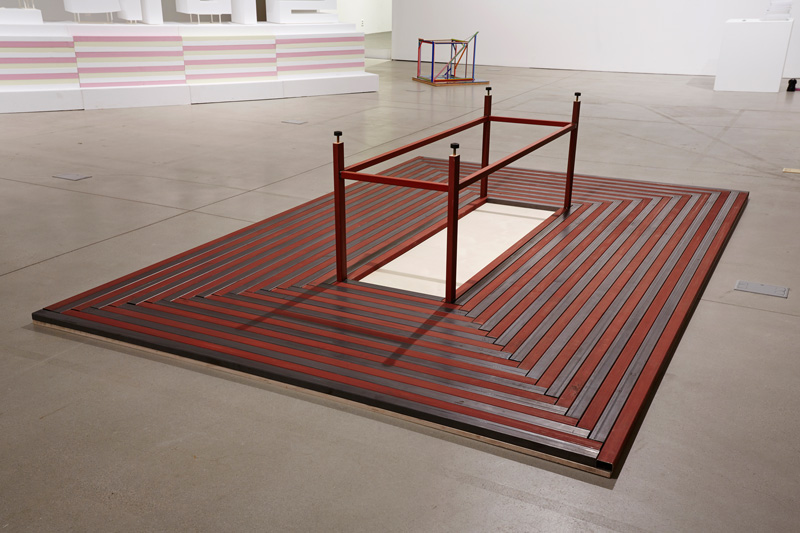
His practice pursues perfection while simultaneously embracing imperfection, a strategy that recurs in the ‘Hidden edge’ series. First presented in his 2013 solo exhibition 《A Neat House》, Hidden edge (2013) took the form of an approximately hexahedral framework, strongly emphasizing the three-dimensional effect of its constructed structure. Subsequently, Hidden edge #2 (2014) emphasized the three interior planes and edges of a hexahedron, while Hidden edge #3 (2015) displayed a pronounced linear construction that allowed the cube's interior to be seen transparently from all directions.

Hidden edge #4
(2016) took the form of a classical sculptural pedestal, with the formal rules of ‘Hidden edge’ explicitly layered along its contours. Beginning with Hidden edge #6 (2018), the series expanded to include the context of “wall-mounted, planar works,” which the artist specifically defines as “reliefs.”

When Hong first created Hidden edge, he described the unnecessarily enlarged hexahedral construction as an arbitrary “something” produced by his obsessive habits. As the logic of construction endlessly accumulated, with “one thing after another” added to conceal the cross-sections of the edges, his obsessive actions were leading him toward a sculptural form understood as a “specific object”—the hexahedron.
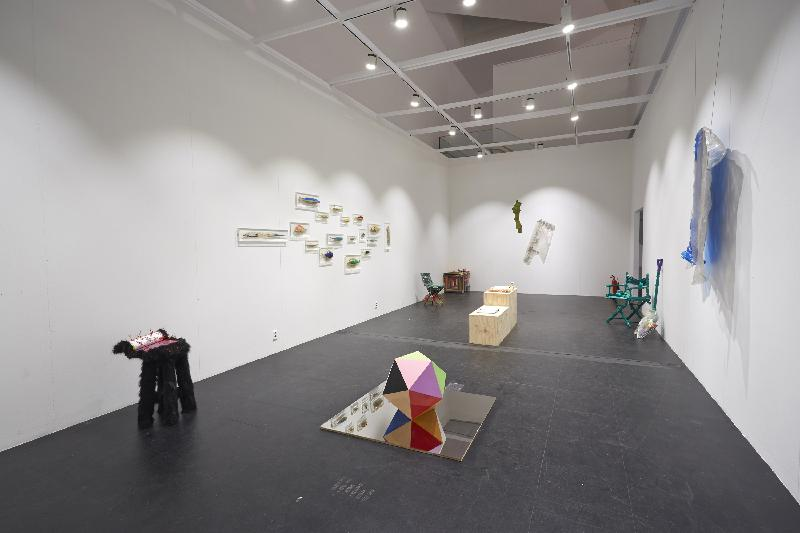
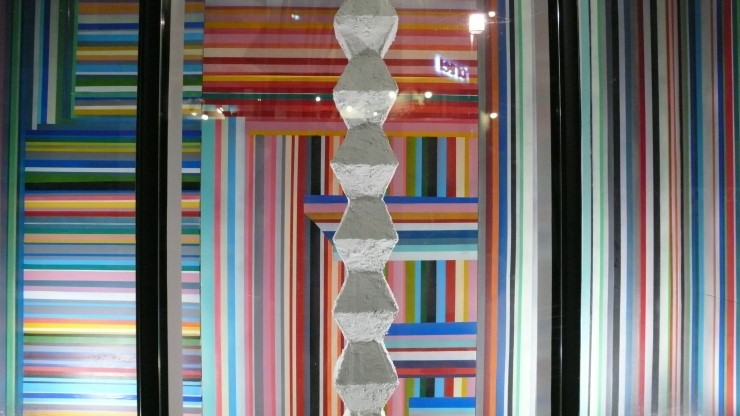
Installation view of 《Untitled Title》 © 313 ART PROJECT

3

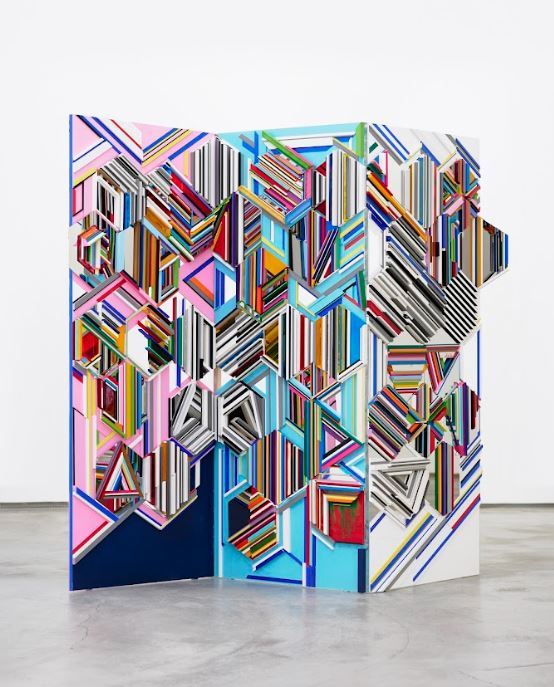
The ‘Hidden edge’ series, including Hidden edge #101 (Concealing the Cross-section #101) and other works bearing the same title with individual serial numbers, takes the form of reliefs throughout this exhibition.

However, considering the various developments in Hong Jungpyo's practice, it seems more likely that what he sought to experiment with through the obsessive act of concealing the cross-sections of edges in the ‘Hidden edge’ series was not the formal completion of three-dimensional forms, but rather an exploration of “sculptural space.” By concealing the cross-sections of the edges, a sculptural space is created between the object and himself as the sculptor.

When viewed with one's gaze fixed within a certain frame, Hidden edge #101 (Concealing the Cross-section #101) might resemble an abstract painting composed geometrically within the grid of a flat canvas. Such forms have frequently appeared throughout the history of twentieth-century painting, and their distinctive frontality readily encourages a pictorial perspective. However, the principle of construction embedded in the ‘Hidden edge’ series does not involve pictorially rendering an organic and analytical composition within a given framework.
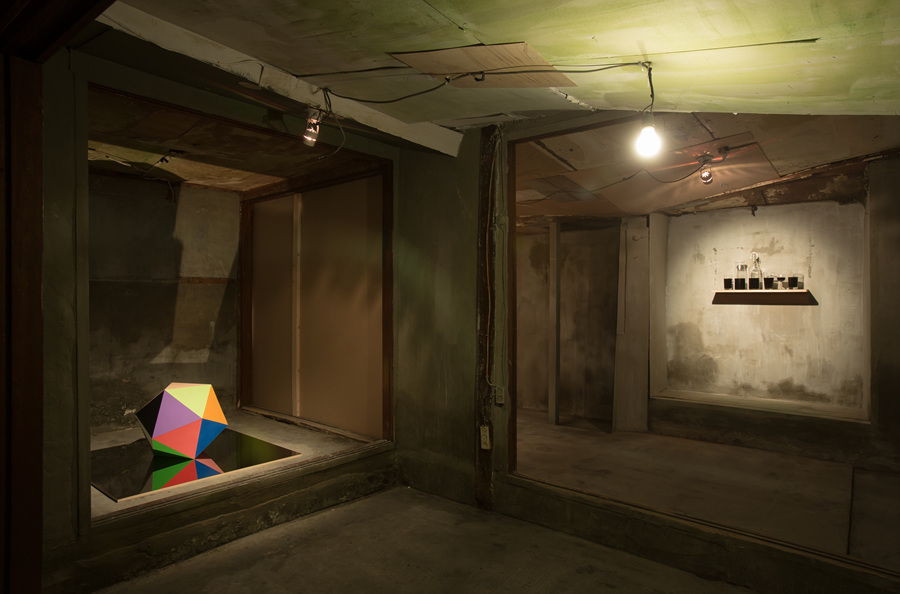
Rather, it begins precisely with an edge that serves as a central axis—an incomplete condition in which two lines meet and expose an actual cross-section—and develops into a process of constructing the (same) material in order to “conceal its cross-section.”

Instead of recalling the process of drawing, in which lines are connected on a canvas to form a unified composition, this approach evokes the methodology of sculptural modeling: wooden beams are joined into a grid and bound together with rope to form an armature, onto which clay is applied three-dimensionally as the structure is rotated in all directions.

Just as the sculptor Vladimir Tatlin established experimental and historically significant examples of Constructivist sculpture through abstract relief constructions devoid of narrative in the previous century, Hong Jungpyo seems to propose a new principle of construction in the ‘Hidden edge’ series, referencing and renewing Tatlin's approach.

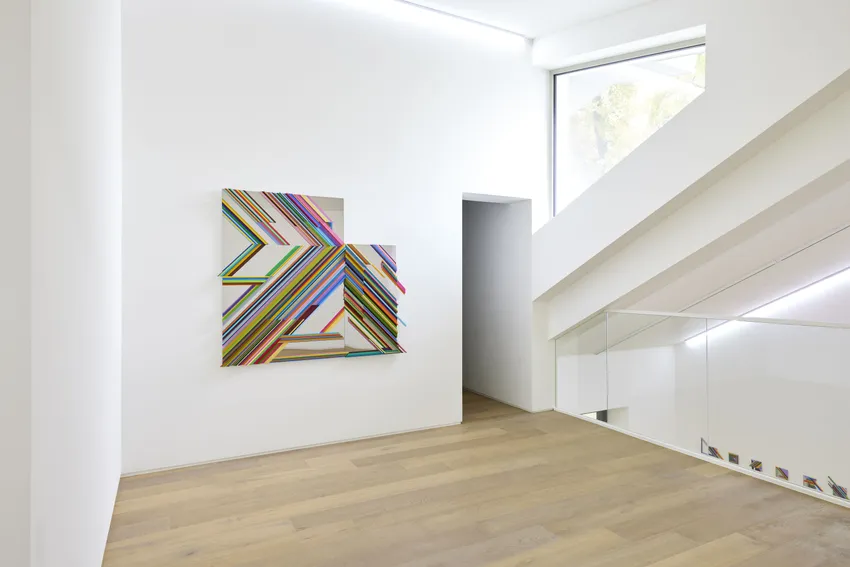
Like his other works, Hong Jungpyo's ‘Hidden edge’ relief series emphasizes the mutual awareness of sculptural action, sculptural form, and the sculptural space that exists between them. In Hidden edge #14 (Concealing the Cross-section #14) (2021), he maximizes the formal qualities of relief to reveal a tangible sense of space.

Somewhere within the form lies a central axis supporting an armature—whether there is one or several is largely irrelevant. As with the spatial awareness of this central axis, the scale of the constructed space expanding outward from the center or interior, and the tangible presence of the distance between the form and myself that allows this space to be perceived, continually emerge as experiences of three-dimensional construction, replacing the narrative traditionally associated with relief in sculpture.

As anyone can see, the edges where lines meet protrude in every direction. Interestingly, when adjacent lines form a grid, Hong does not become absorbed in the illusionistic or entirely flat space within it. Instead, he directs his attention outward, toward the seemingly inconsequential cross-sections beyond pictorial space.

Through this three-dimensional way of thinking, he moves beyond the act of gazing and enters an incomplete sculptural space. (This is a manifestation of the double consciousness he repeatedly experiences as a sculptor, caught between his sense of inferiority and the fulfillment of his efforts toward sculptural completion.)

Installation view of 《Untitled Title》 © 313 ART PROJECT

There is little difference in the spatial qualities of Hidden edge #14 (Concealing the Cross-section #14) and Hidden edge #16 (Concealing the Cross-section #16) (2021), as both effectively constitute sculptural spaces. In other words, the ‘Hidden edge’ series transforms the trajectory of an action (and its agent), originating from a single edge, into sculptural form.

The sculptural forms presented by Hong Jungpyo generally originate from the (corrected and refined) surfaces of sculpture and edges protruding from pictorial space, ultimately returning to a sculptural experience that enables the perception of three-dimensional space. In Chil-kyo-do and Loading in 13 times, Hong intricately overlaps sculptural action and sculptural experience.

Drawing upon the rules of the traditional tangram puzzle, he establishes relationships between arbitrary forms constructed through his own actions, evoking a sculptural experience of mutual awareness between action and form, form and space, and action and space. Sculpture, in this sense, can be understood as the recognition of the space or distance between myself as the actor and sculpture as form.

No decision #002 ver.HE (2021) brings this experience of perceiving sculptural space back to the surface. By applying a special pigment over a completed form constructed according to the principles of ‘Hidden edge’, Hong seals the action-based logic of construction beneath the surface, once again emphasizing a conventional sculptural surface through a homogeneous material.

However, by directing the viewer's attention to the conventionality of this sculptural surface, he prompts a perceptual reversal, allowing the work to be reconsidered as though the dynamism of this nearly flat construction had been confined within a mold.

Meanwhile, Hong has often employed super mirrors to emphasize the three-dimensionality of sculpture or to achieve spatial expansion, and Hidden edge #18 (Concealing the Cross-section #18) incorporates such a mirror into its relief structure. Perhaps forming a kind of counterpart to No decision #002 ver.HE, this work can be understood as a formal embodiment of a classical interpretation of relief.

Whereas the narrative space of classical relief represented the three-dimensional imagination of an unseen space behind the work through a pictorial panoramic structure, Hong uses the super mirror as a medium to expose the reversal of the negative, as though producing a cast, thereby structurally realizing the incompleteness or contradictions of three-dimensionality. This, in turn, perpetuates a certain “doubt” concerning his sculptural forms.

References