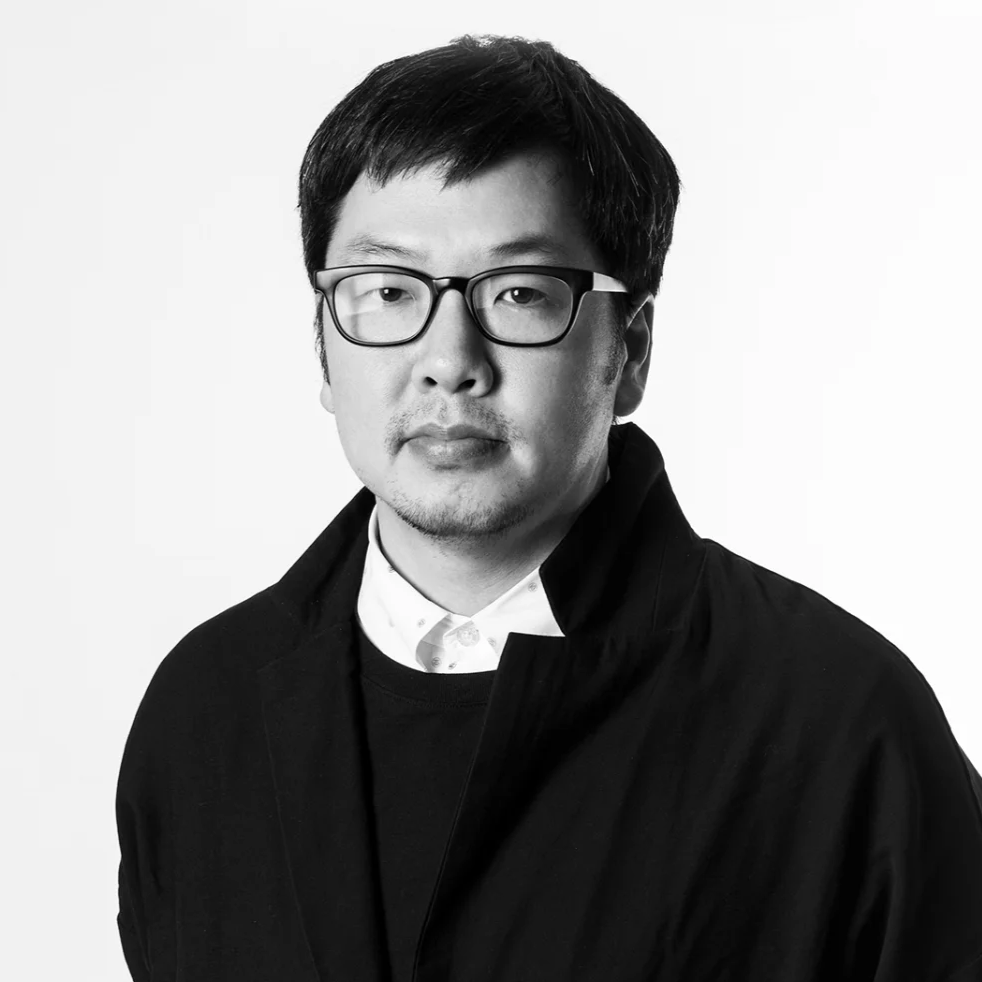
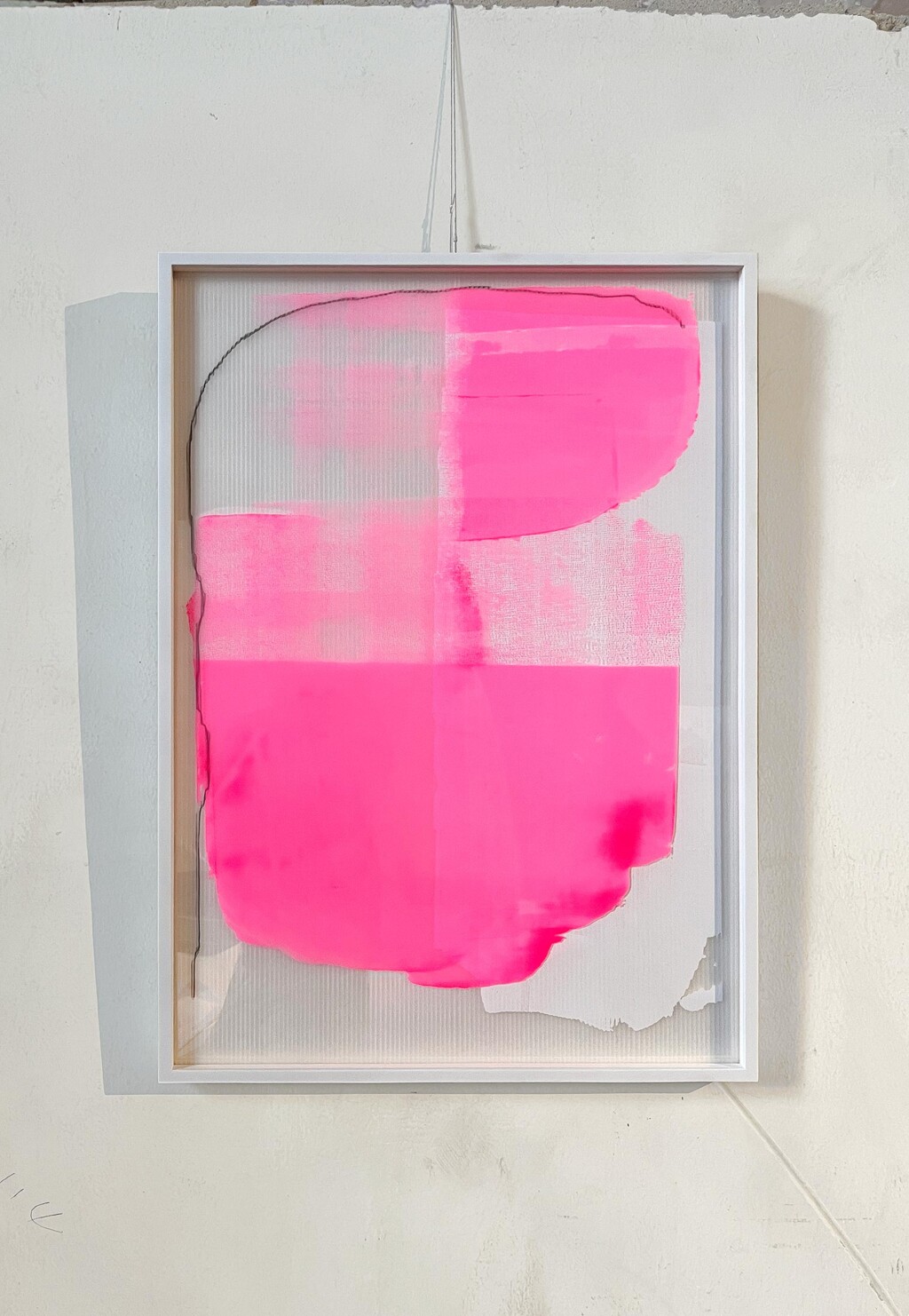
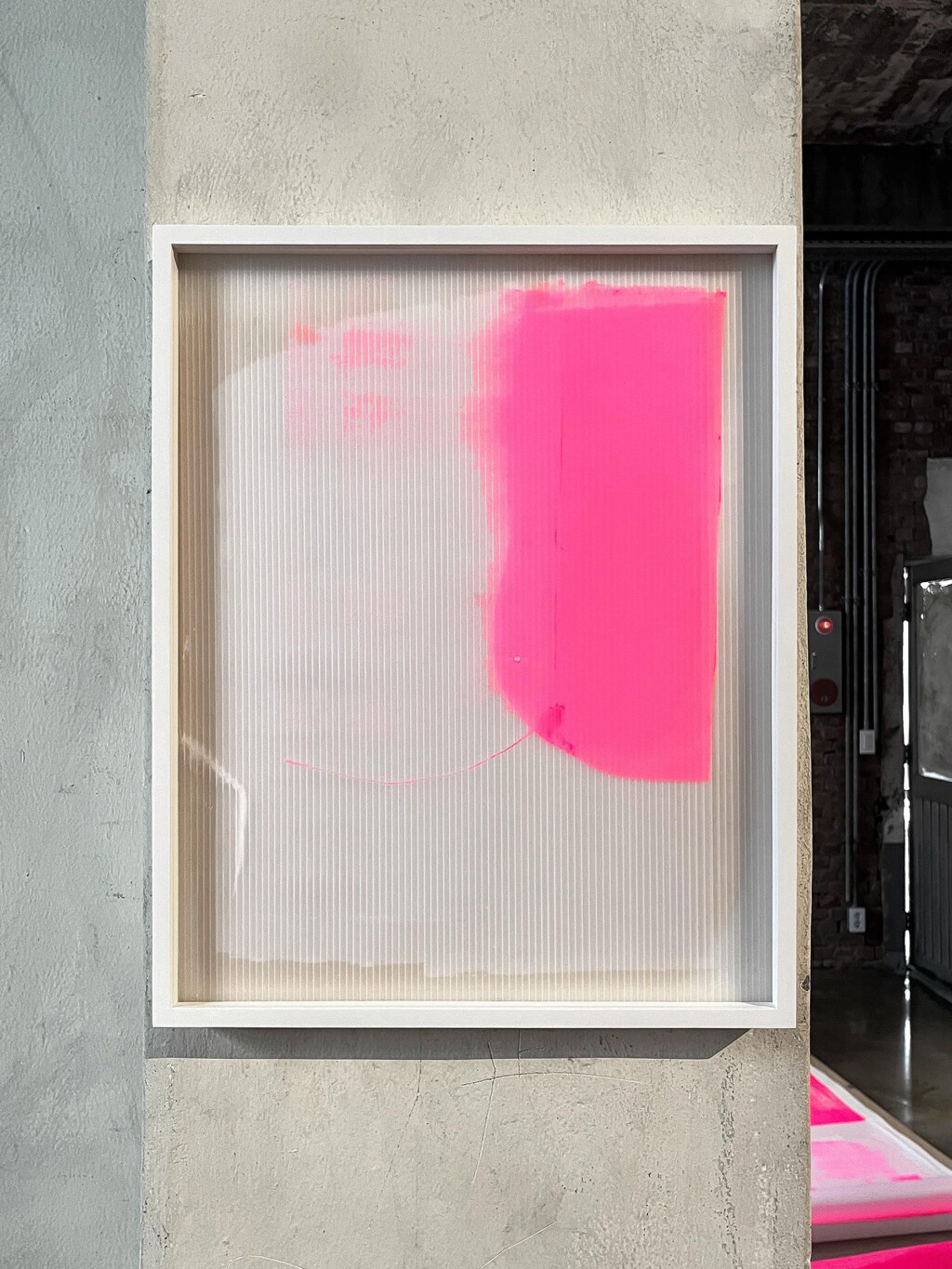
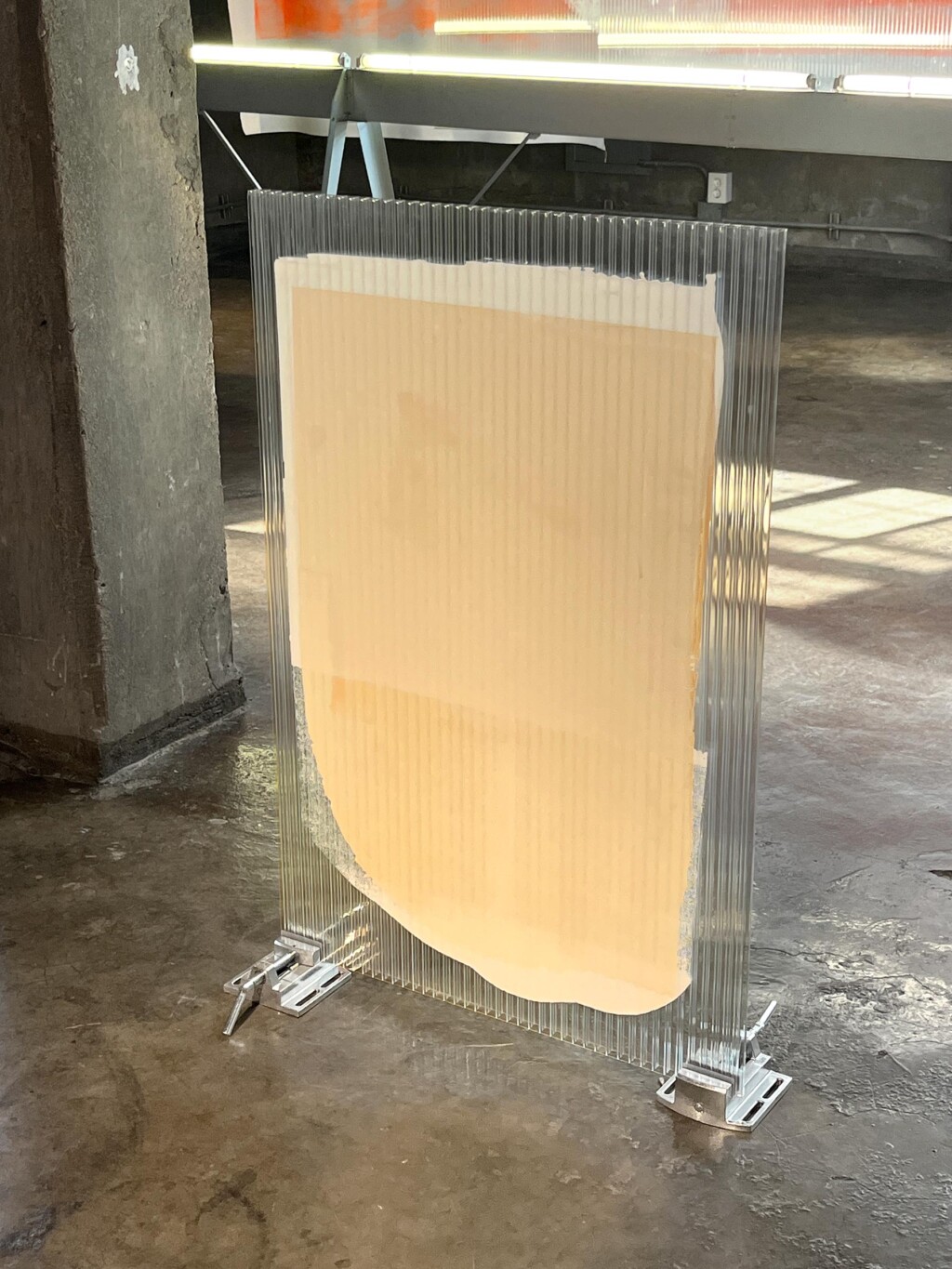
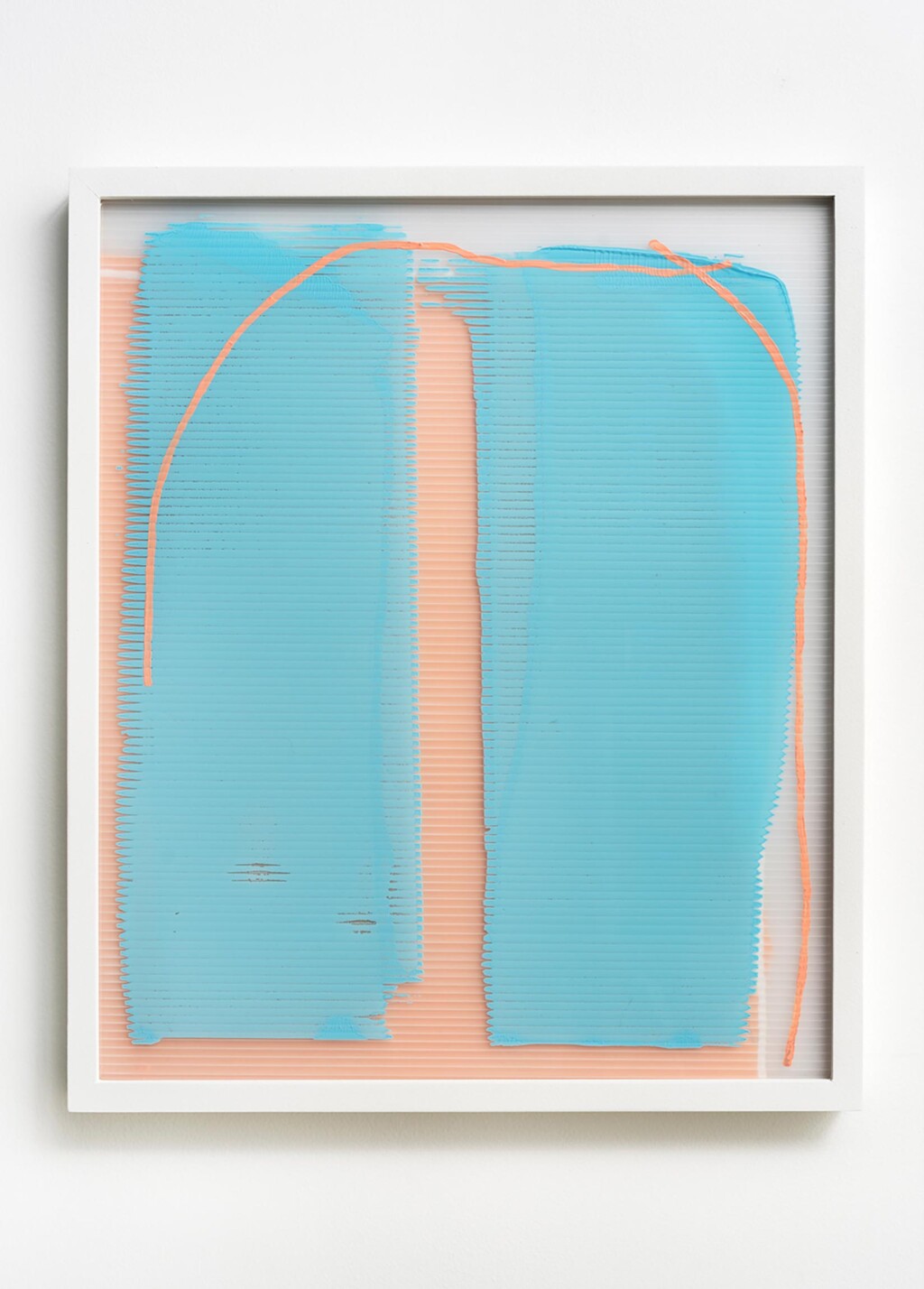
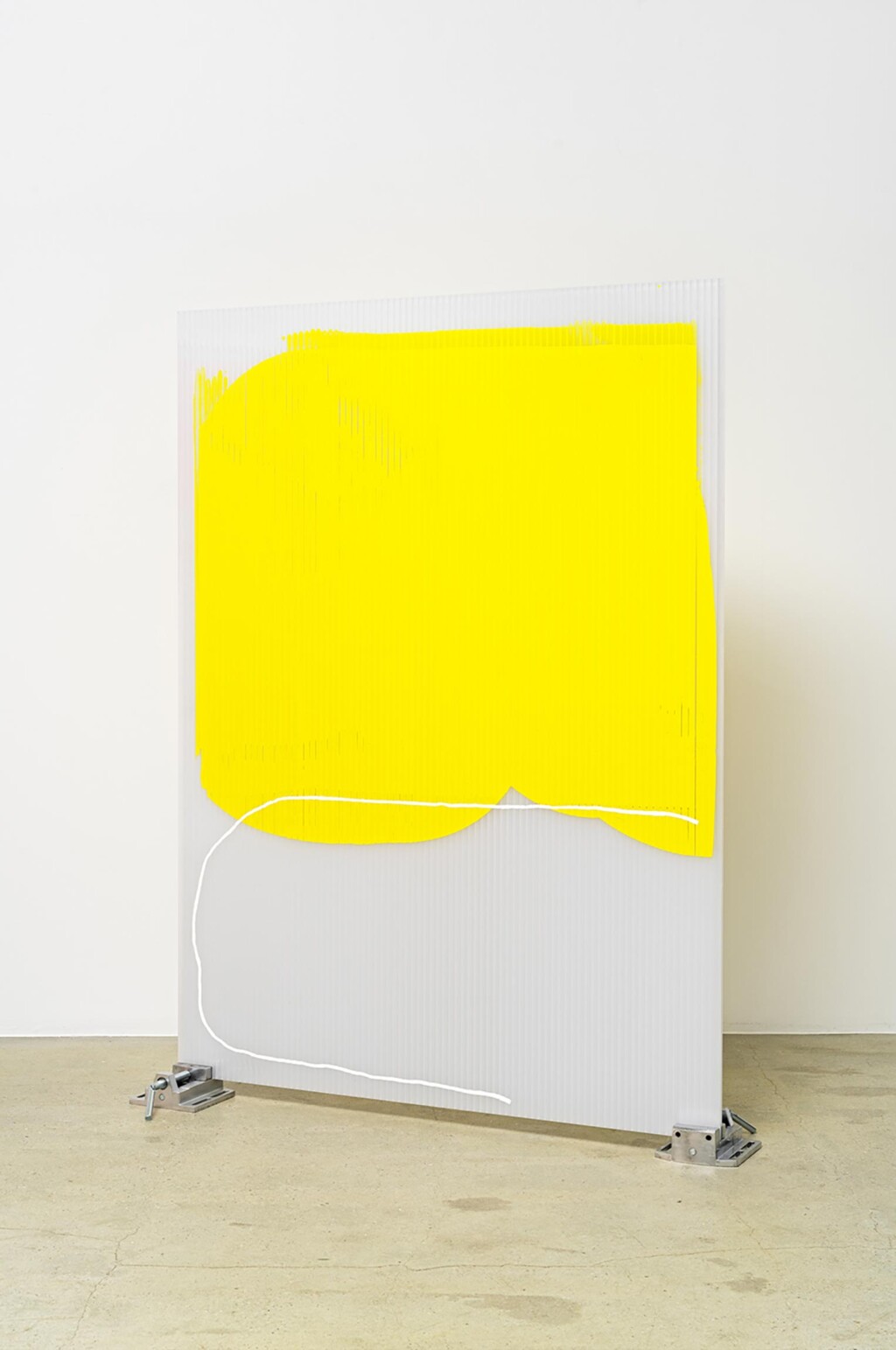
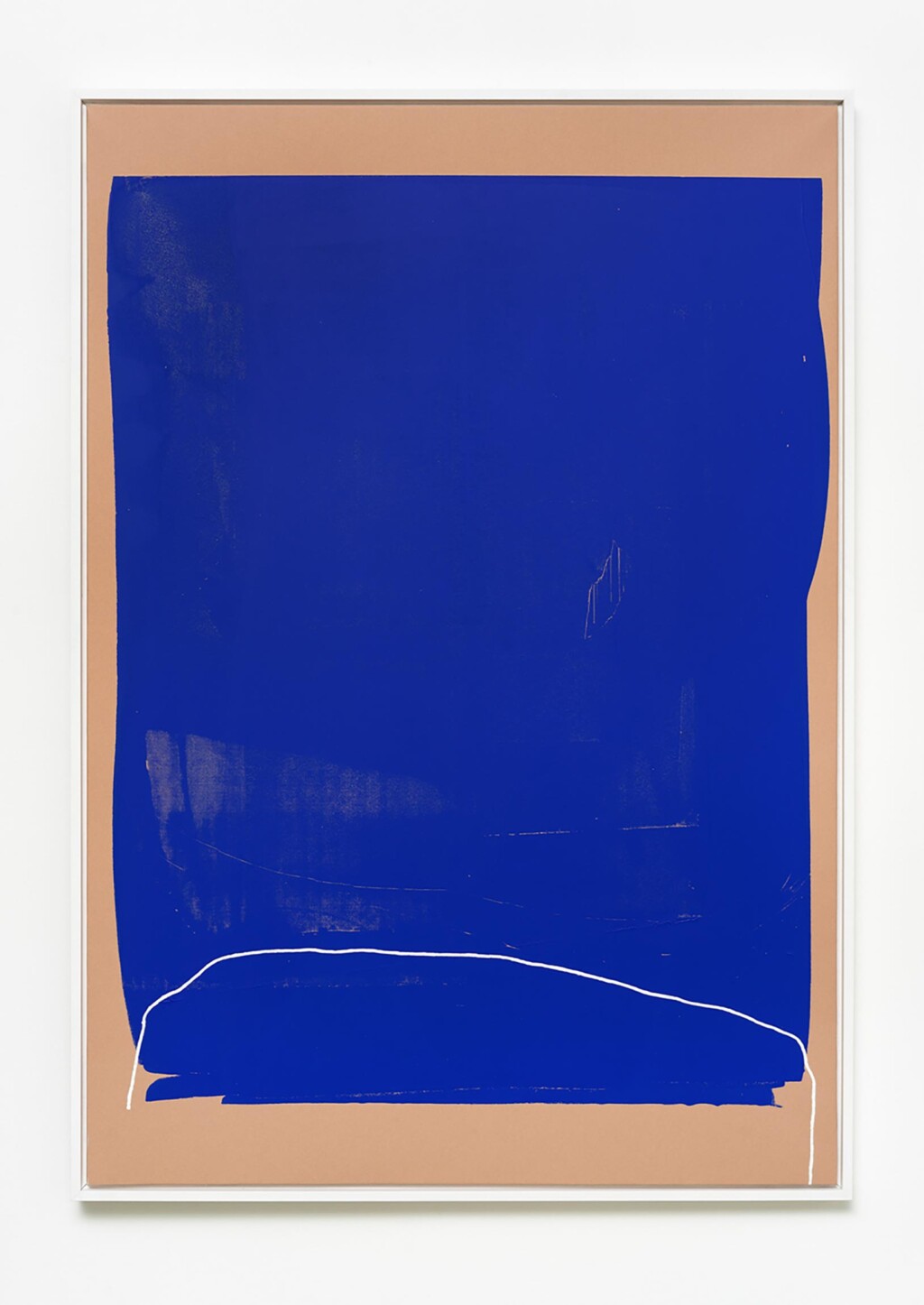
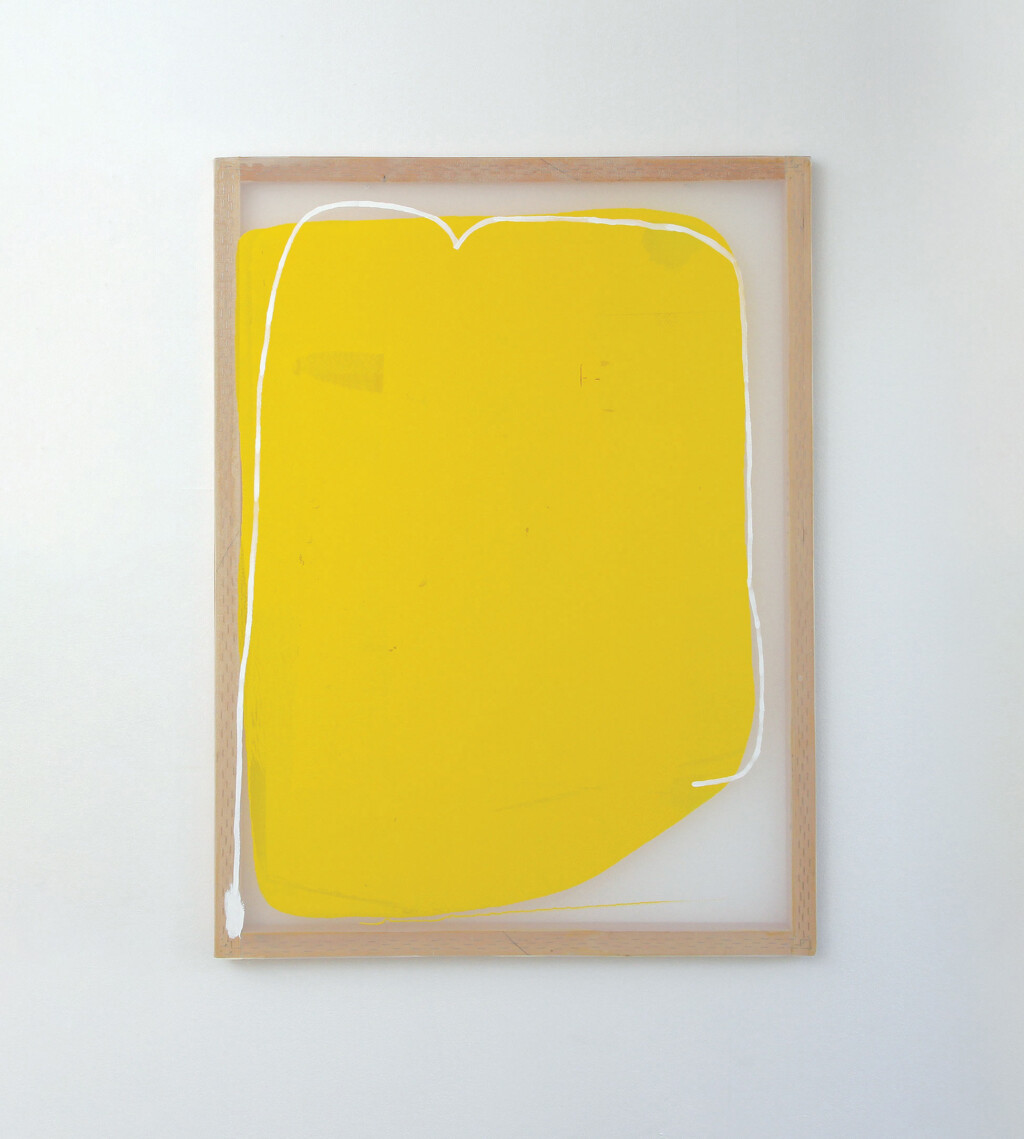
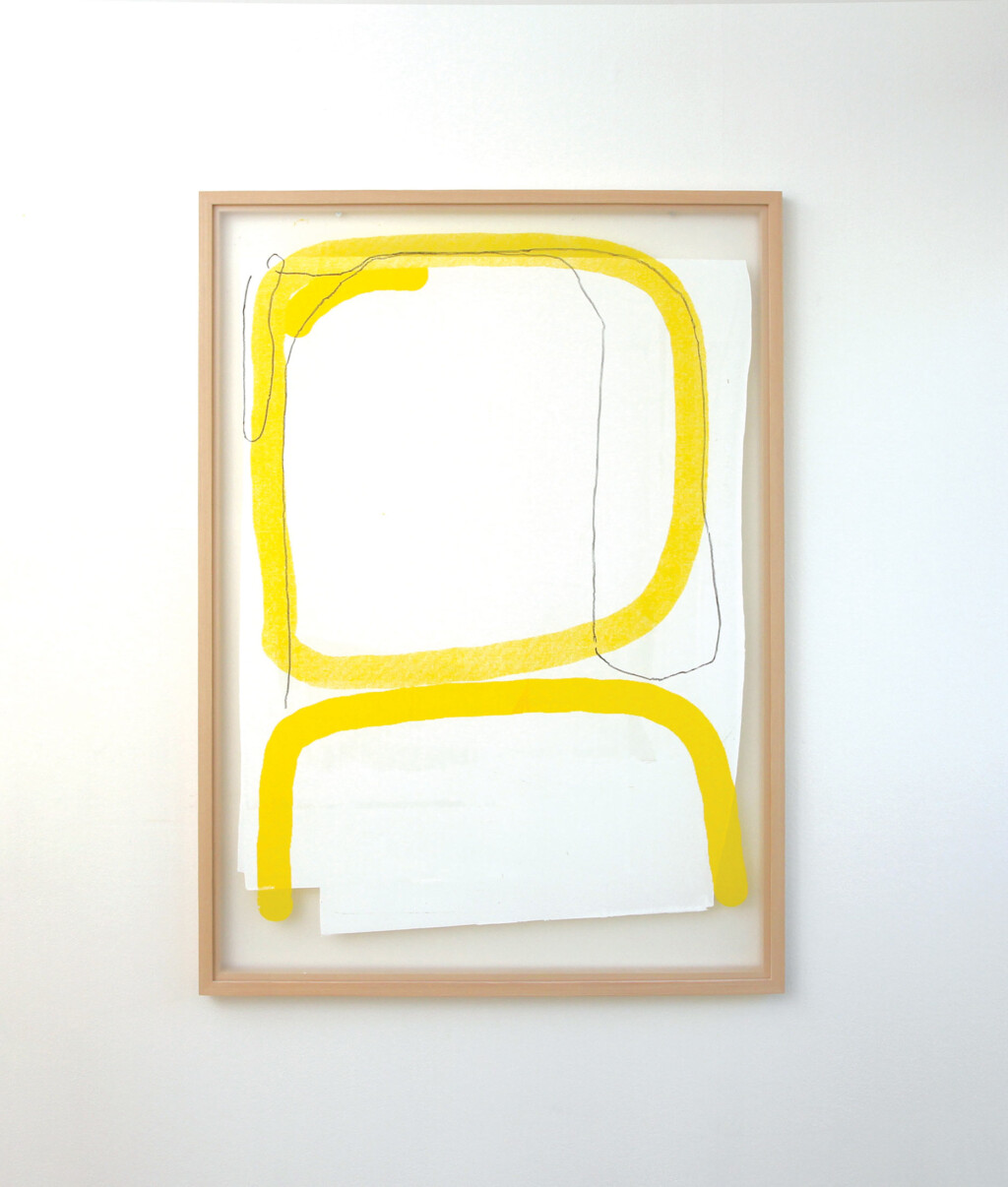
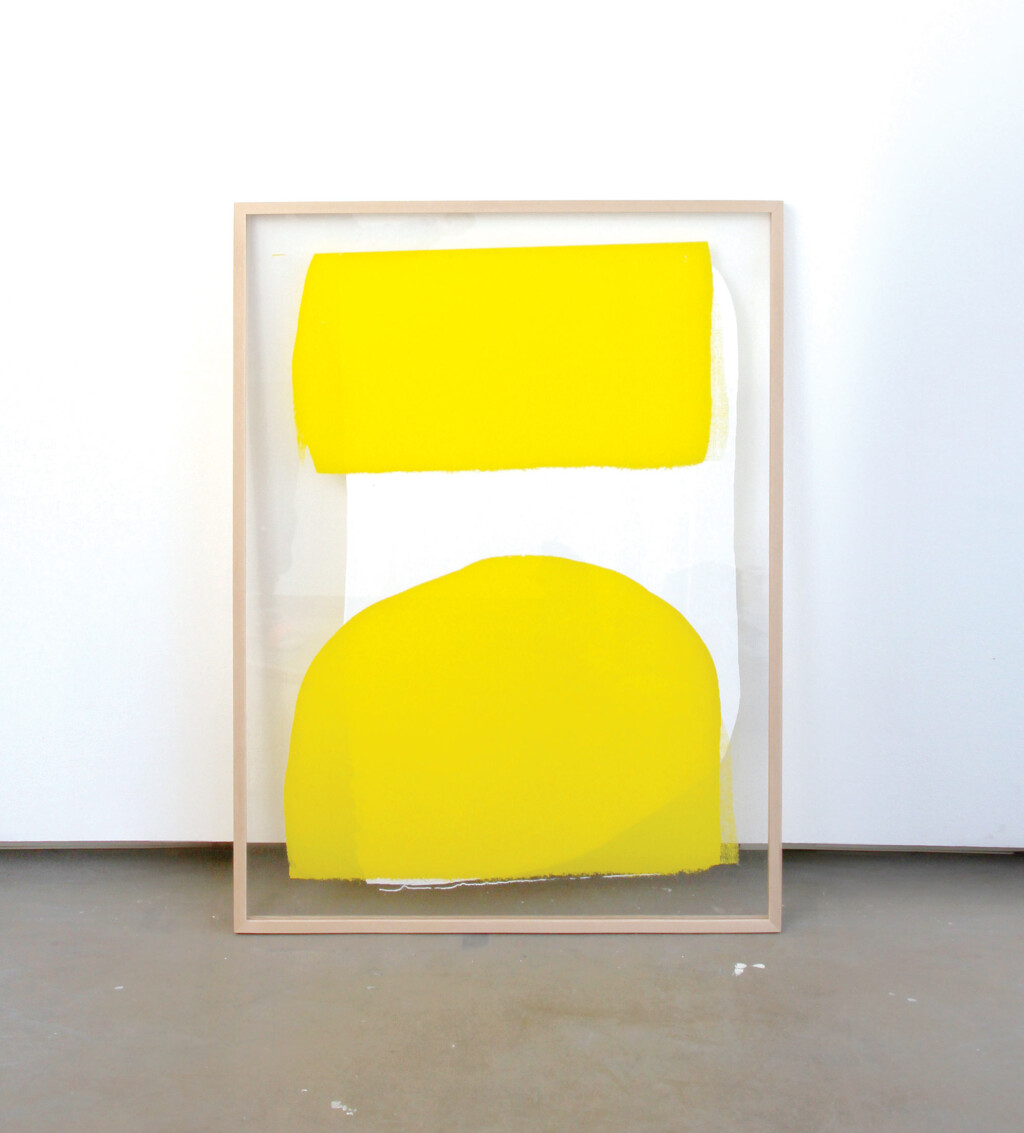
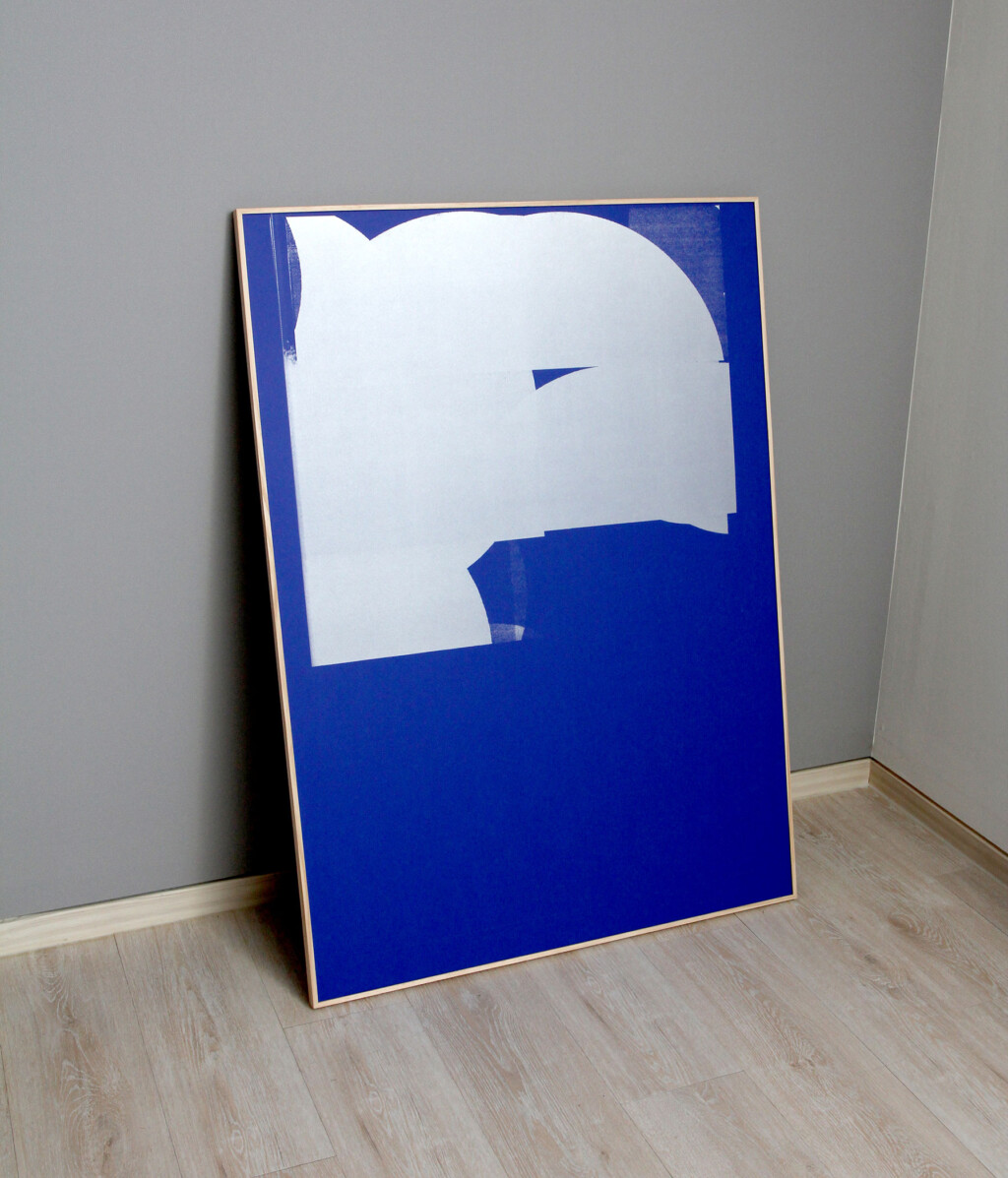
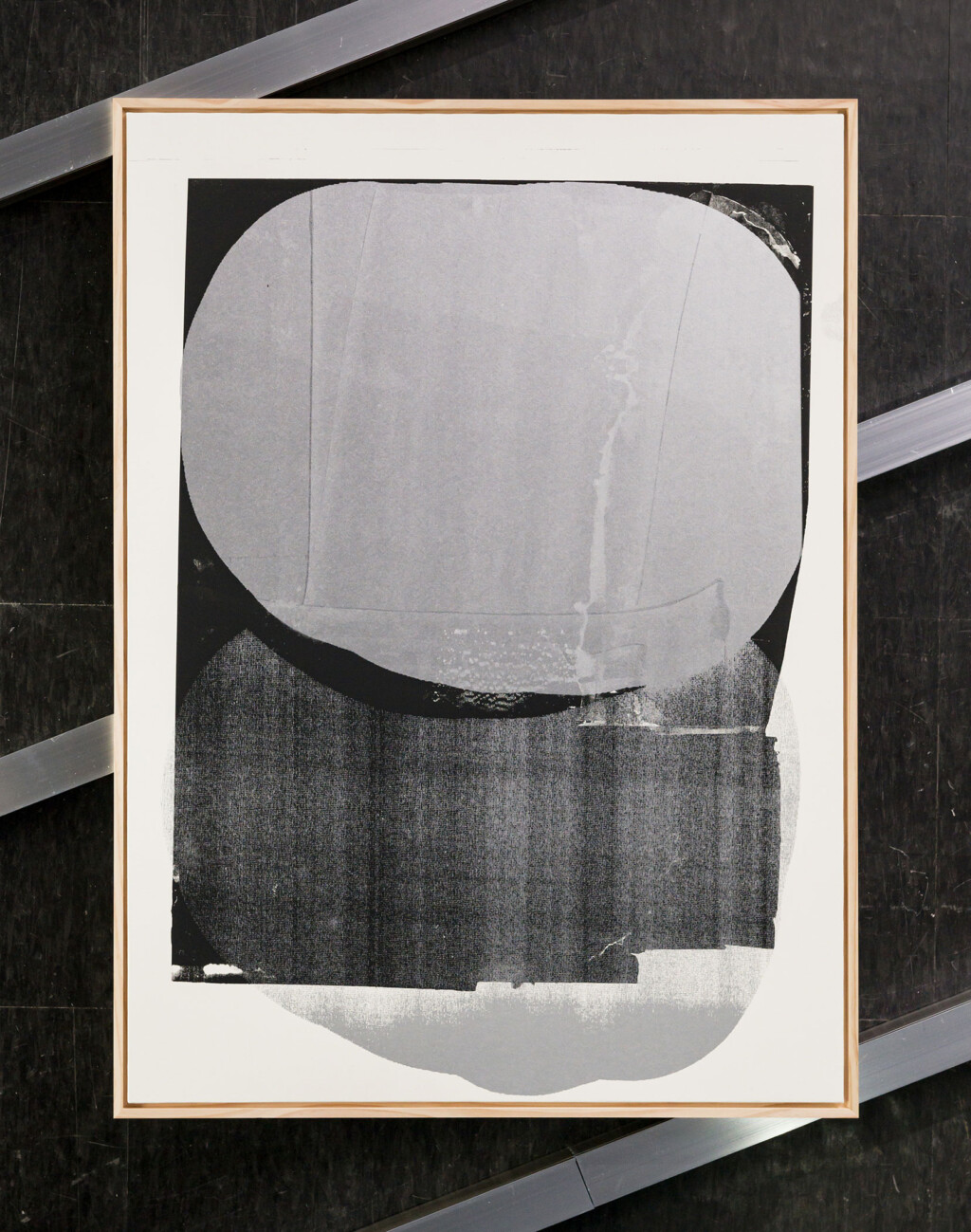
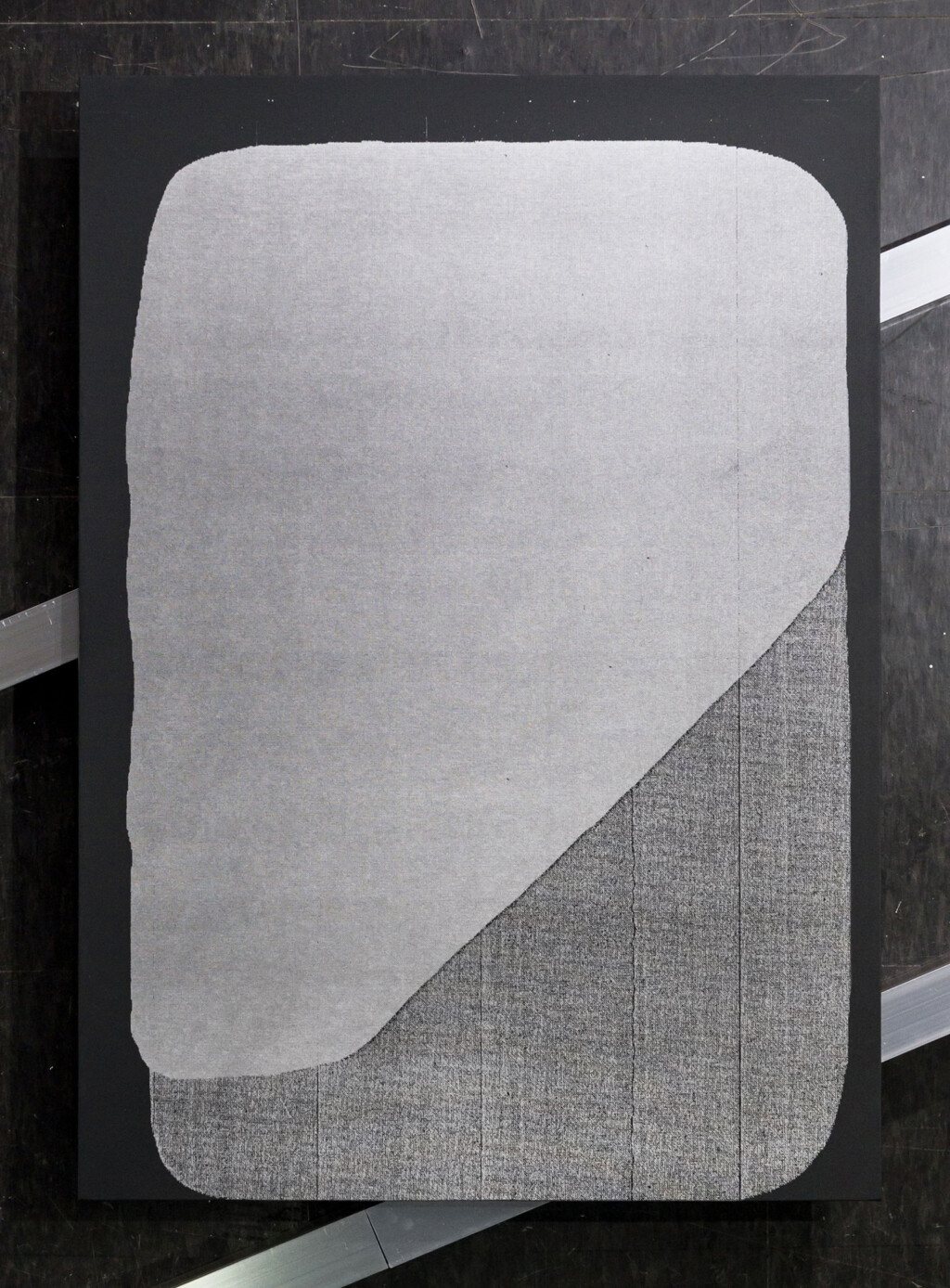
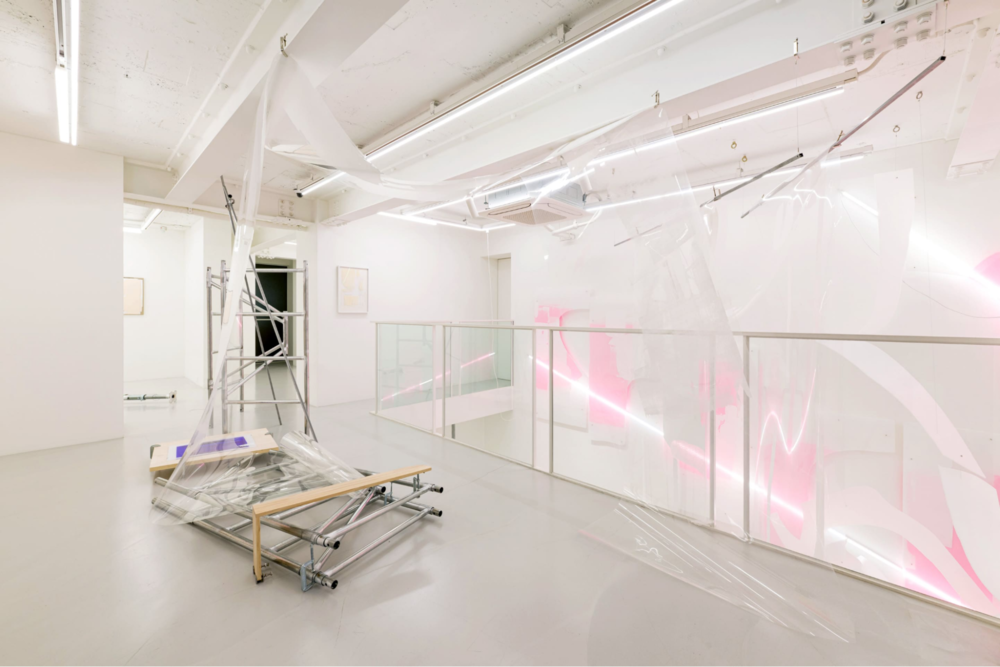
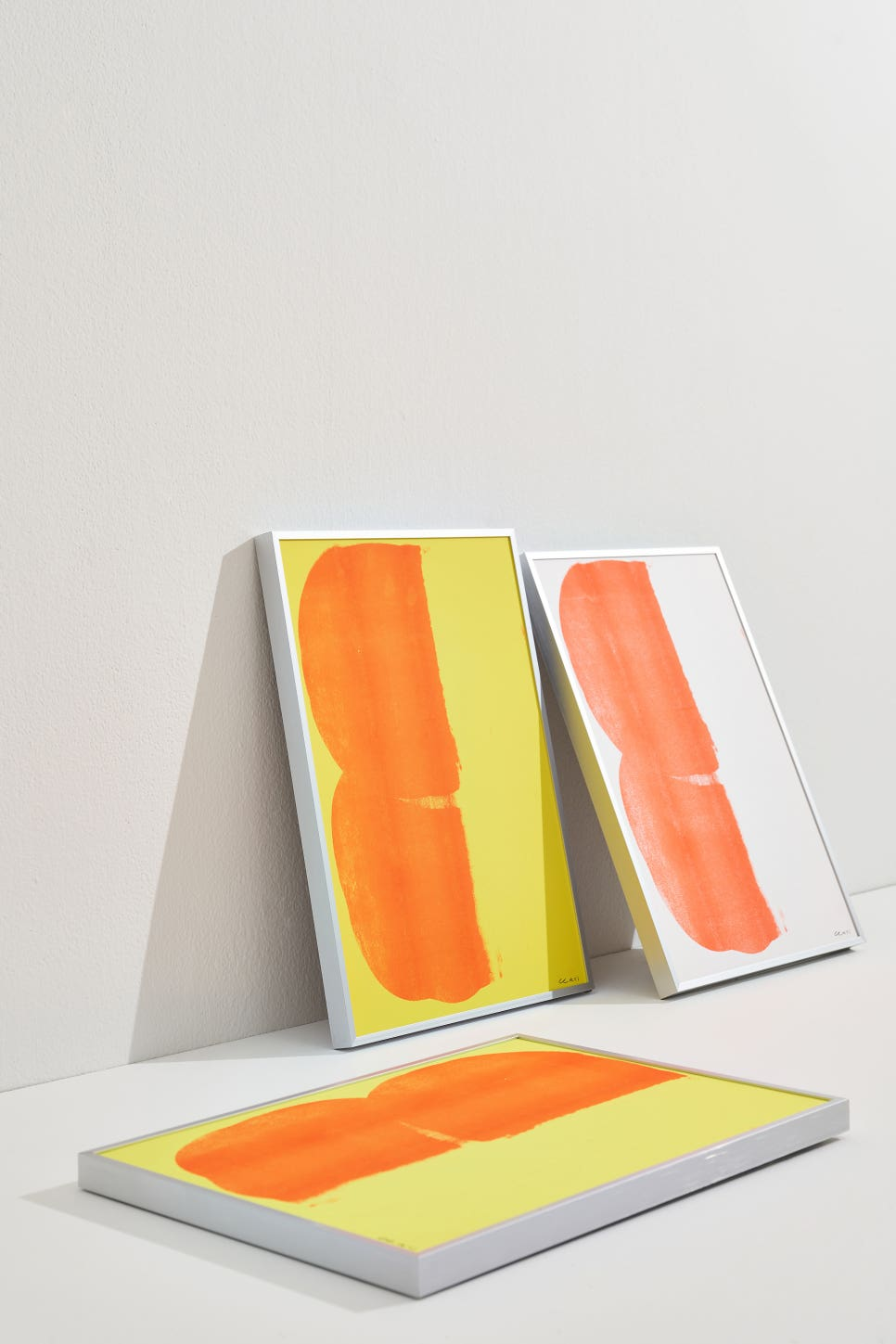
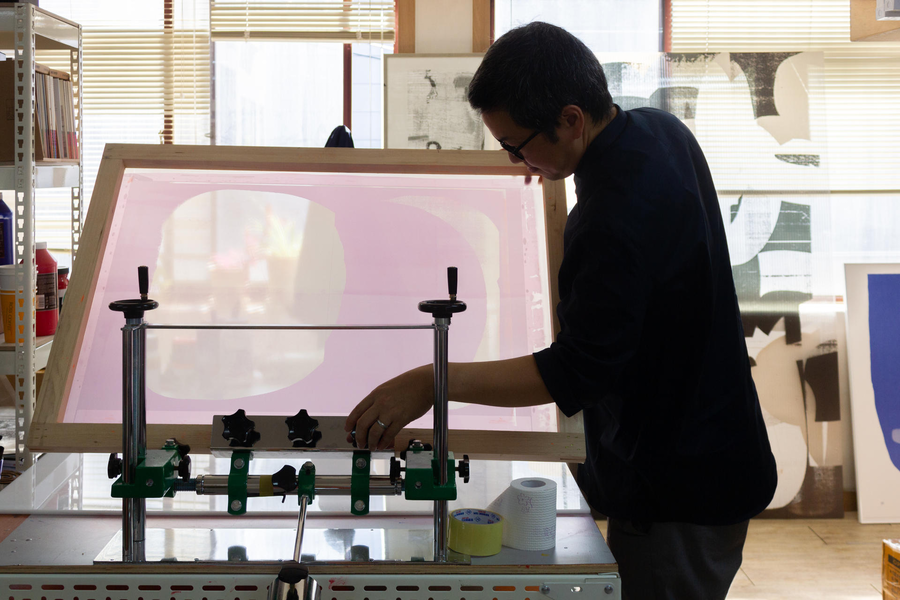
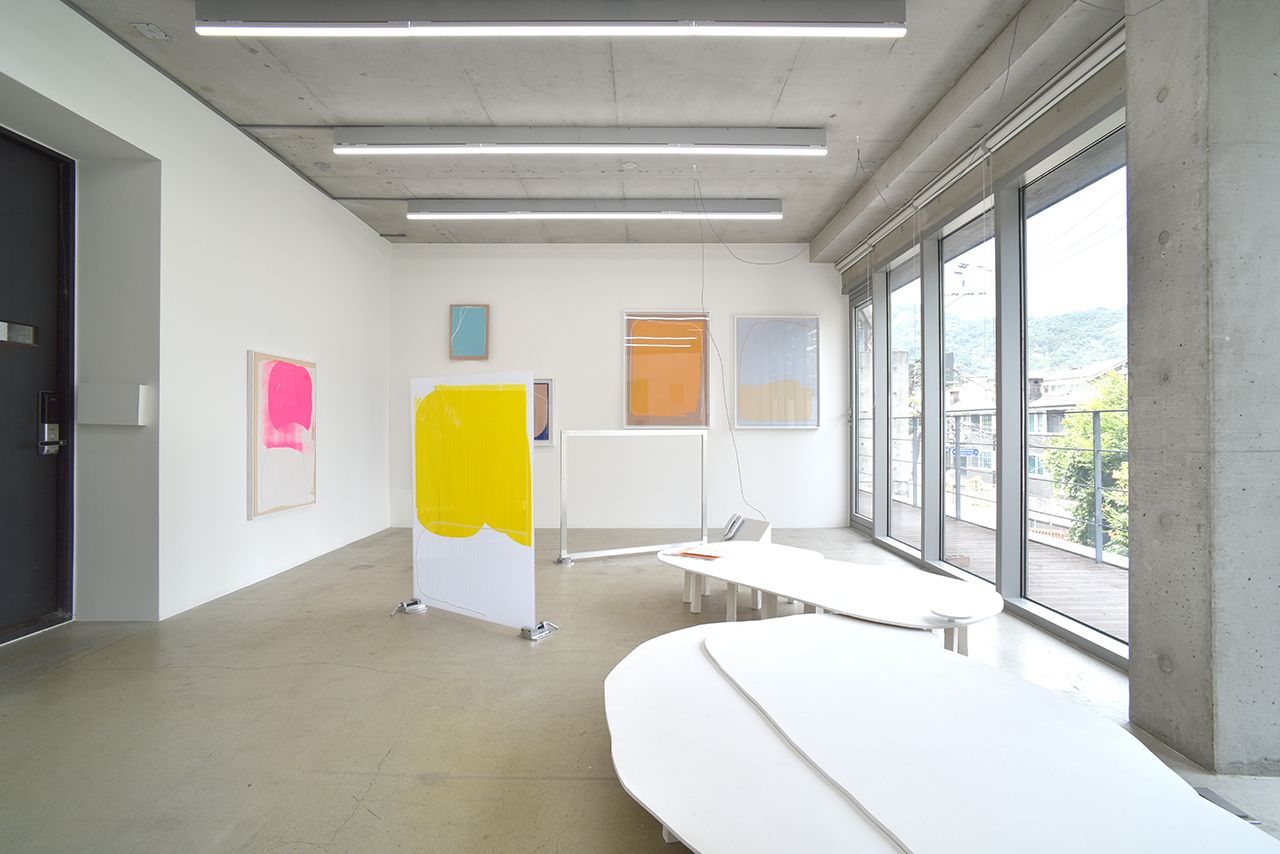
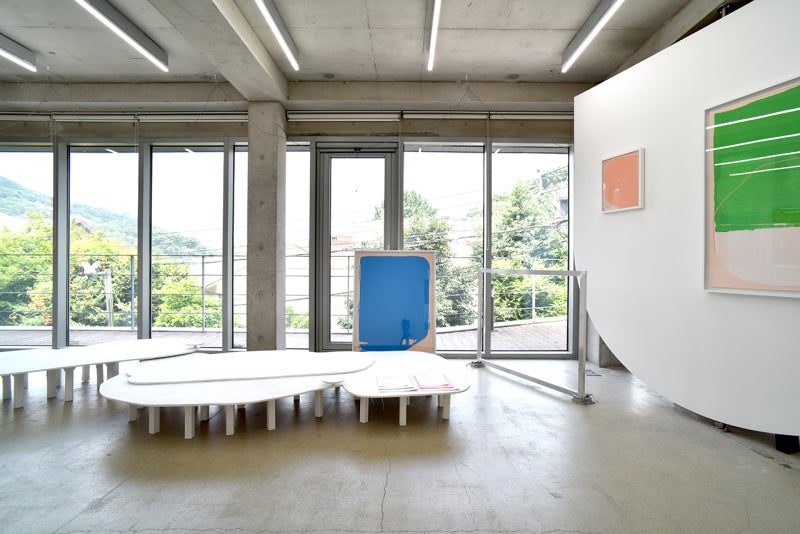
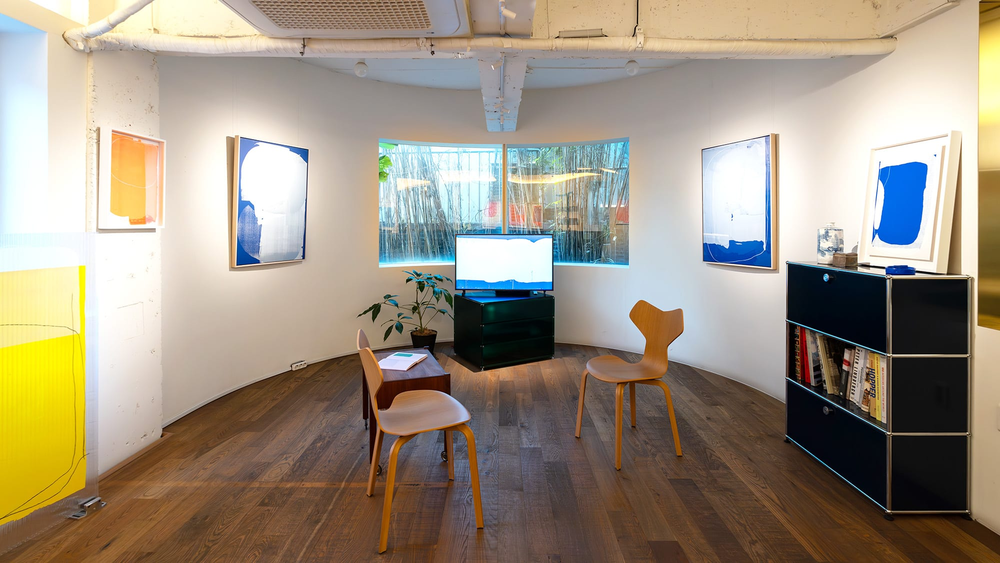
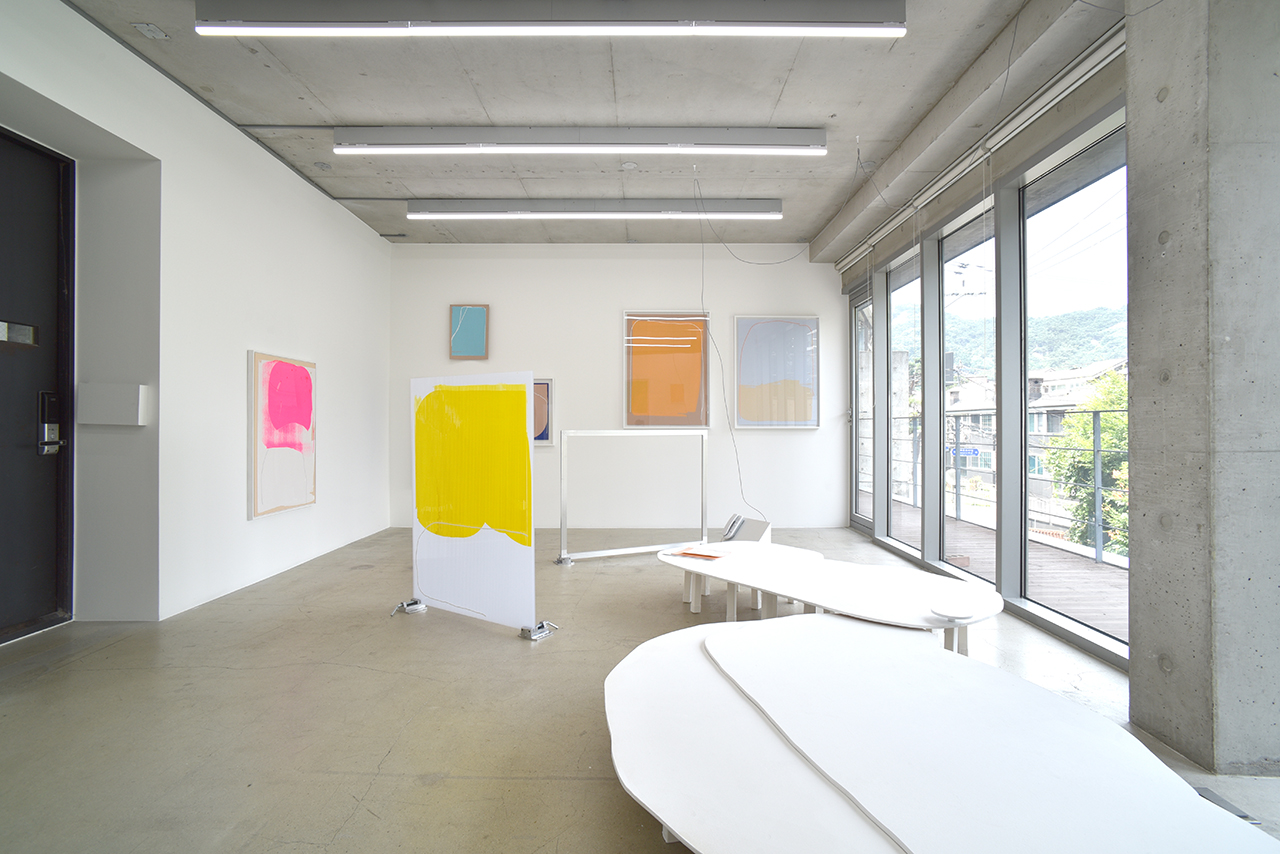
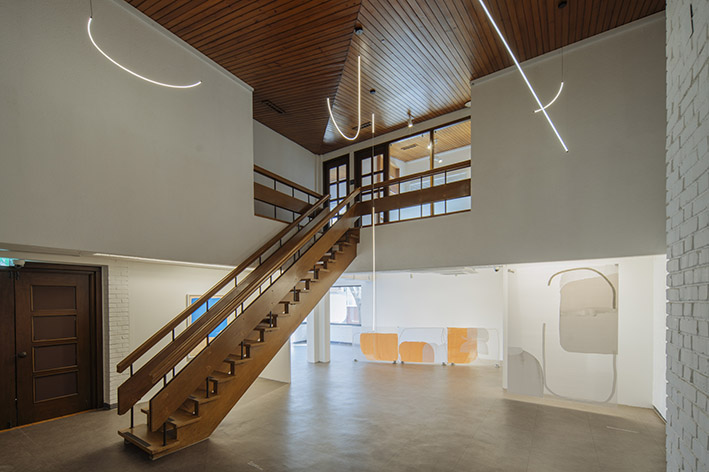
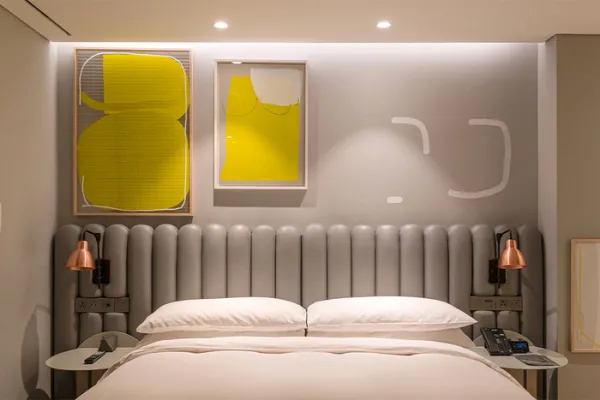
In his solo exhibition 《Silent Laughter》 (2023), Chris Ro presents a more vibrant array of colors and forms with a playful sense of rhythm. Upon entering A-Lounge, visitors are greeted by works positioned throughout the walls and floor, each possessing its own distinctive expression and rhythm. The exhibition display generally allows viewers to encounter the works frontally and carefully observe their individual expressions.
Although the way the works actively inhabit the space is not significantly different from Ro's previous solo exhibitions, the works hanging on the walls greet visitors with their own distinct expressions. At the center of the exhibition space, where their gazes seem to converge, two large white platforms supported by numerous short legs occupy a substantial portion of the floor, inviting visitors to sit and read the artist's writings.
Telephones connected by a somewhat intricate network of lines running from the floor to the ceiling and back down again are also installed throughout the exhibition, allowing visitors to make calls within the space. All these works are presented in a way that allows repetitions and variations of planes and lines to unfold and overlap rhythmically throughout the entire space. In other words, the arrangement and interrelationships of the works in three-dimensional space resemble the ways in which images are repeated, transformed, and varied on a two-dimensional plane.
Meanwhile, Chris Ro has expressed a desire for the works he presents as an artist to allow him greater freedom and the opportunity to pour more of himself into them than the design projects commissioned by clients. Above all, he seeks to free himself from the pressure that art must convey profound messages. Yet he has recently become deeply absorbed in writing and has been actively presenting his texts through exhibitions.
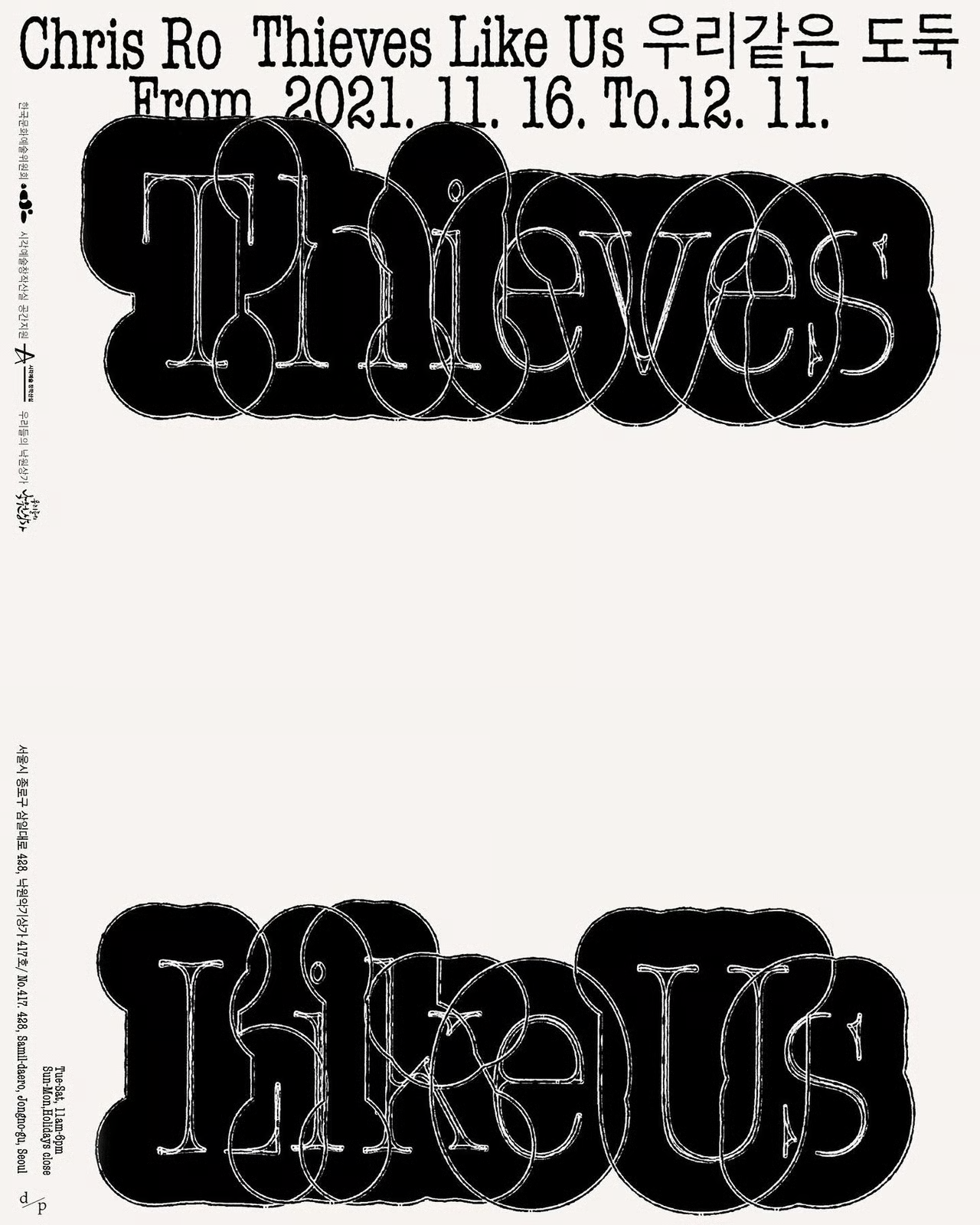
Even if his intention is not necessarily to communicate a particular message, it is worth examining how he connects images and narratives. Beginning with his solo exhibition 《Thieves Like Us》 (2021), Ro presented several autobiographical episodes in the form of stories about thieves, openly acknowledging his enjoyment of writing. He also suggested that if his previous works could be compared to sounds, his writing might be understood as lyrics.
In fact, he has frequently compared his graphic works to sounds or made remarks that reflect an awareness of their relationship with text. In a recent interview, he even referred to his previous graphic works as the 'Sounds Series'. According to Ro, he initially immersed himself in the creative process without any particular message or intention in mind. However, after a friend remarked, “When I look at your work, I can hear sounds,” he was inspired to call them the 'Sounds Series'.
In other words, Ro's graphic works are surfaces that also contain sounds. He once described text as a collection of silent signs, suggesting that both the presence and absence of sound are important to his fundamental understanding of language as a means of communication. Thus, soundlessness or silence also becomes a significant subject running through his practice, giving rise to the title of this solo exhibition, 《Silent Laughter》, which encapsulates his personal experiences and reflections on the subject.
So far, Ro's writings have consisted primarily of autobiographical narratives. The narrators or protagonists of these stories naturally overlap with Chris Ro himself, allowing even readers unfamiliar with the artist to approach them as works of autofiction. Ro has suggested that it would be interesting to turn his writings into films, and indeed, their humorous yet bittersweet episodes could lend themselves to an omnibus format. However, his solo exhibitions already possess considerable potential to be viewed as theatrical scripts or performances in their own right.
Consider the exhibition floor maps, which document the placement of artworks and their caption information. Interestingly, Ro has included floor maps in each of his solo exhibition catalogs. Although these maps serve as information and records of the spatial arrangement of the works, with a little imagination, they might also be read as diagrams indicating the positions and movements of actors on a theatrical stage, their characters and personalities, or even their dialogue and stage directions.
This is because each numbered artwork title implicitly contains a character situated in a particular circumstance—with the artist himself being the first figure that comes to mind—along with that character's experiences and thoughts. For example, the titles of certain works in this exhibition can be understood more readily in relation to the exhibition title 《Silent Laughter》 than to the images of the individual works themselves.
Consequently, visitors who consult the floor map while viewing the works may find it difficult to identify a direct relationship between the images and their accompanying texts. While the correspondence between image and text may be important to the artist, viewers are more likely to perceive the texts as expressions of the thoughts underlying the exhibited images as a whole.
This is also what happens when images that do not depict recognizable subjects in concrete terms—commonly described as abstract—are combined with narratives, or language that contains descriptions. Nevertheless, this does not mean that Ro's images and narratives are disconnected from one another. Imagine if his solo exhibition 《Silent Laughter》 had presented only images, with all of his texts removed. Could there be a more powerful expression of silence?
Yet Ro wants his images to contain sounds, whether they are the sounds of silence or audible sounds, and these are sounds imbued with narratives. The air on the other end of the telephone, which appears as an episode in his writing, and the silence that fills it constitute a sound of soundlessness, yet one that carries a narrative. Humor plays an essential role in these narratives.
In his text for the solo exhibition, Ro recounts an episode involving a research report on the platypus and explains that he wanted to explore the combination of beauty and humor by imagining a being that embodies both qualities, as represented by the platypus. For Ro, beauty and humor seem to constitute a kind of ideal whose two elements are difficult to reconcile.
Nevertheless, this exhibition is directed toward challenging that apparent impossibility and confronting the difficulties it presents. Although the artist suggests that his attempt may be as faint as “laughter that cannot even be heard,” this remark seems to reveal a sense of playfulness beneath his discouragement. Humor that sometimes appears subdued and at other times overflows with mischief—this dynamic sense of humor permeates the exhibition space like the air itself. And the sounds beneath his surfaces likewise fill the gallery, much like the air on the other end of a telephone.