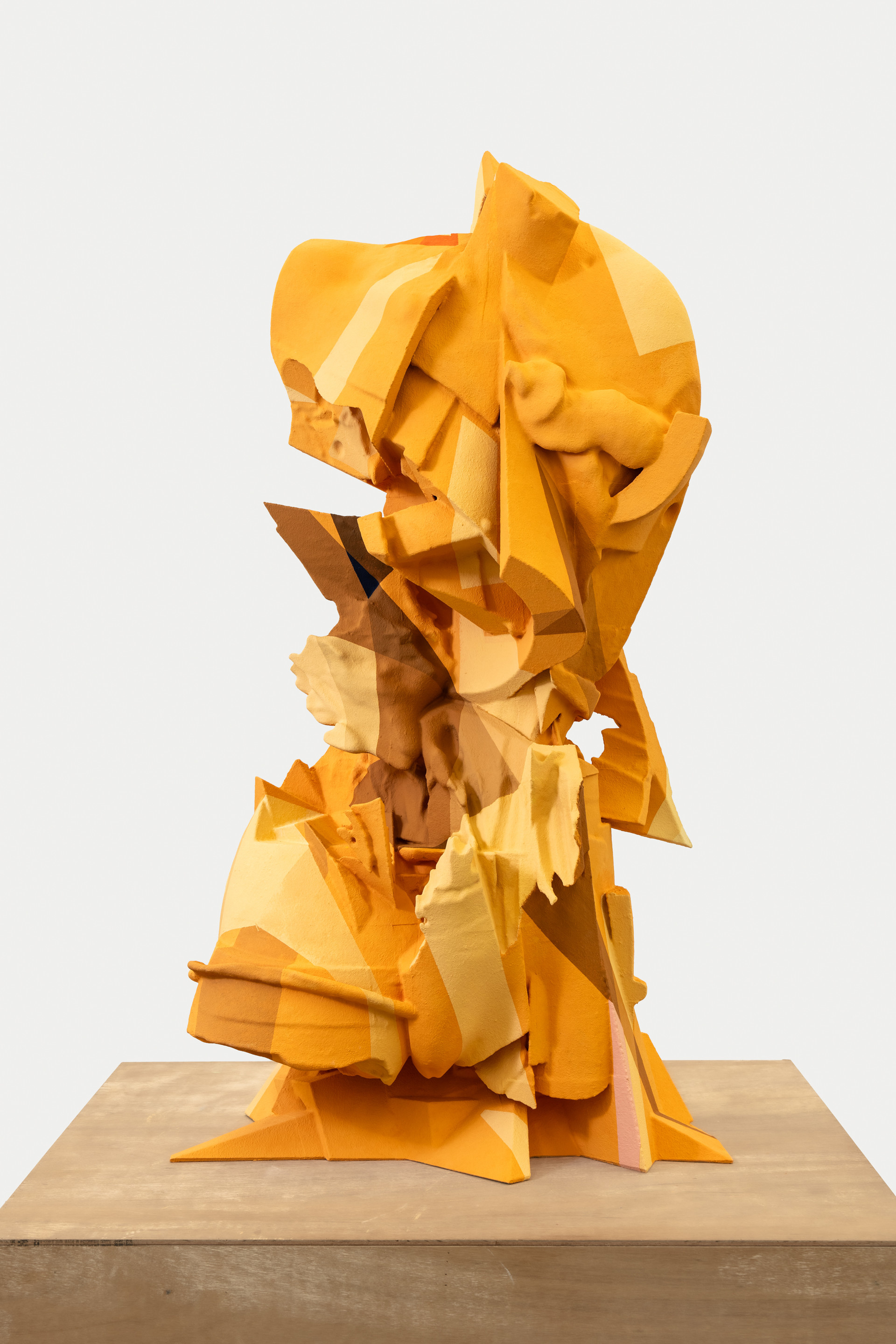
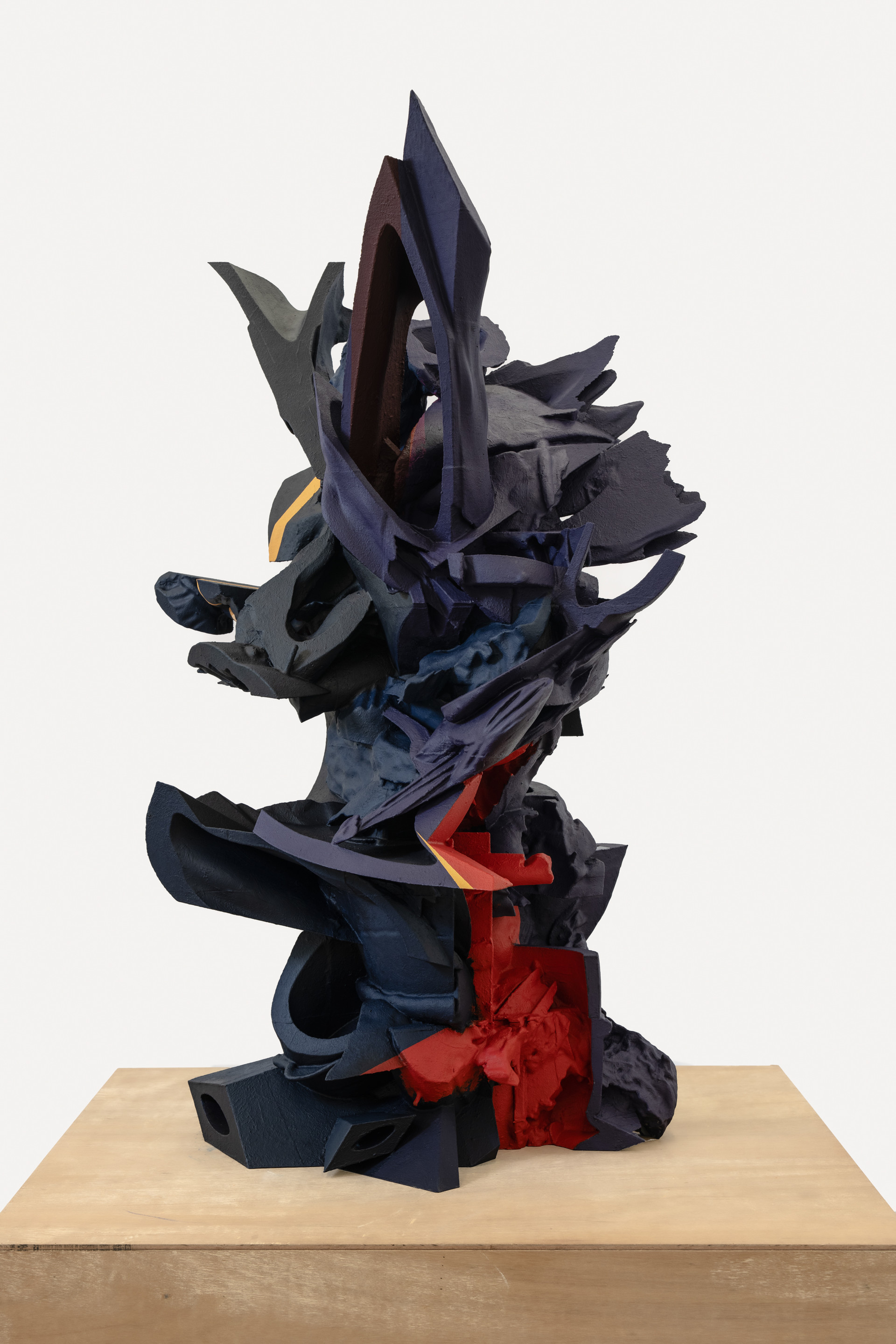
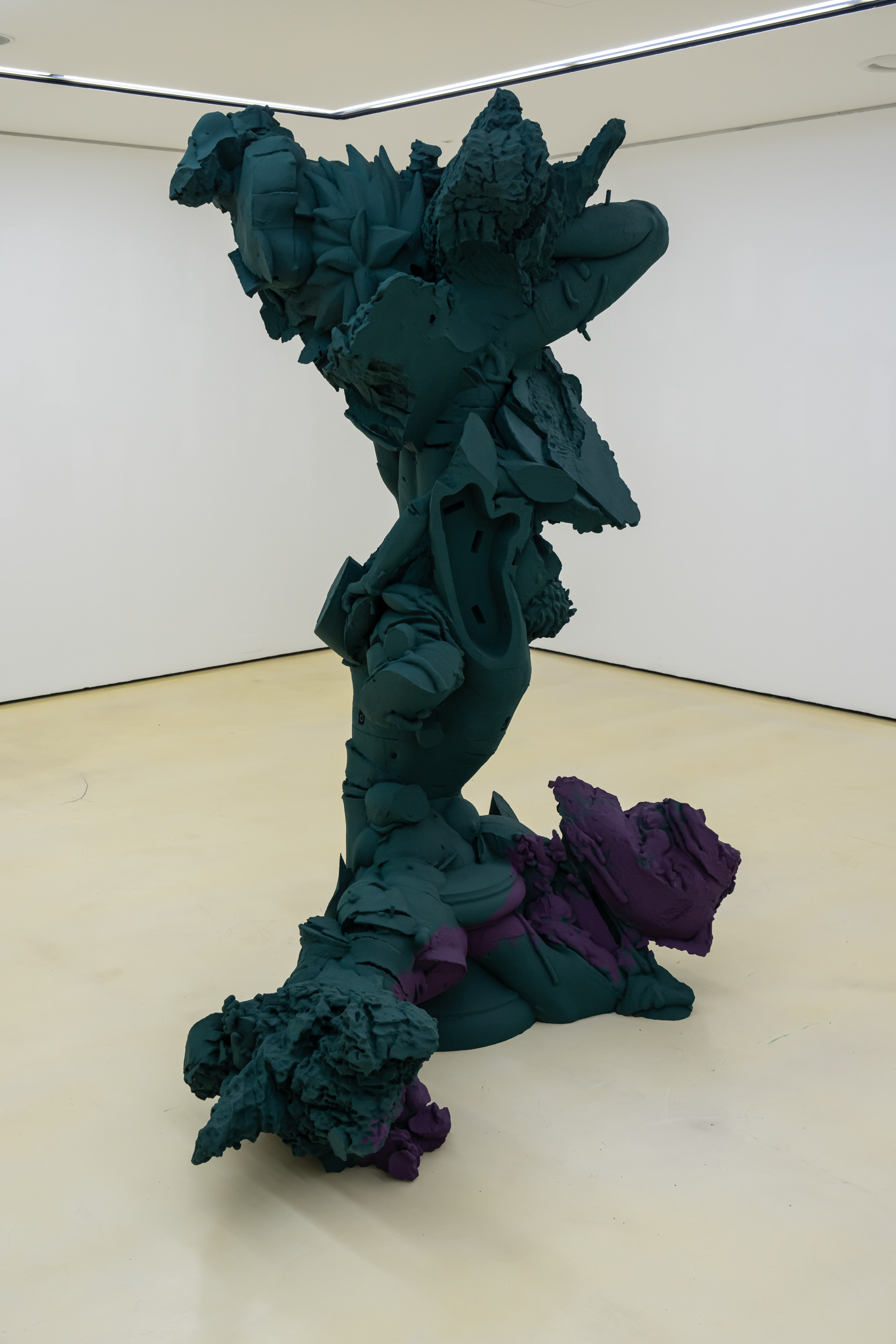
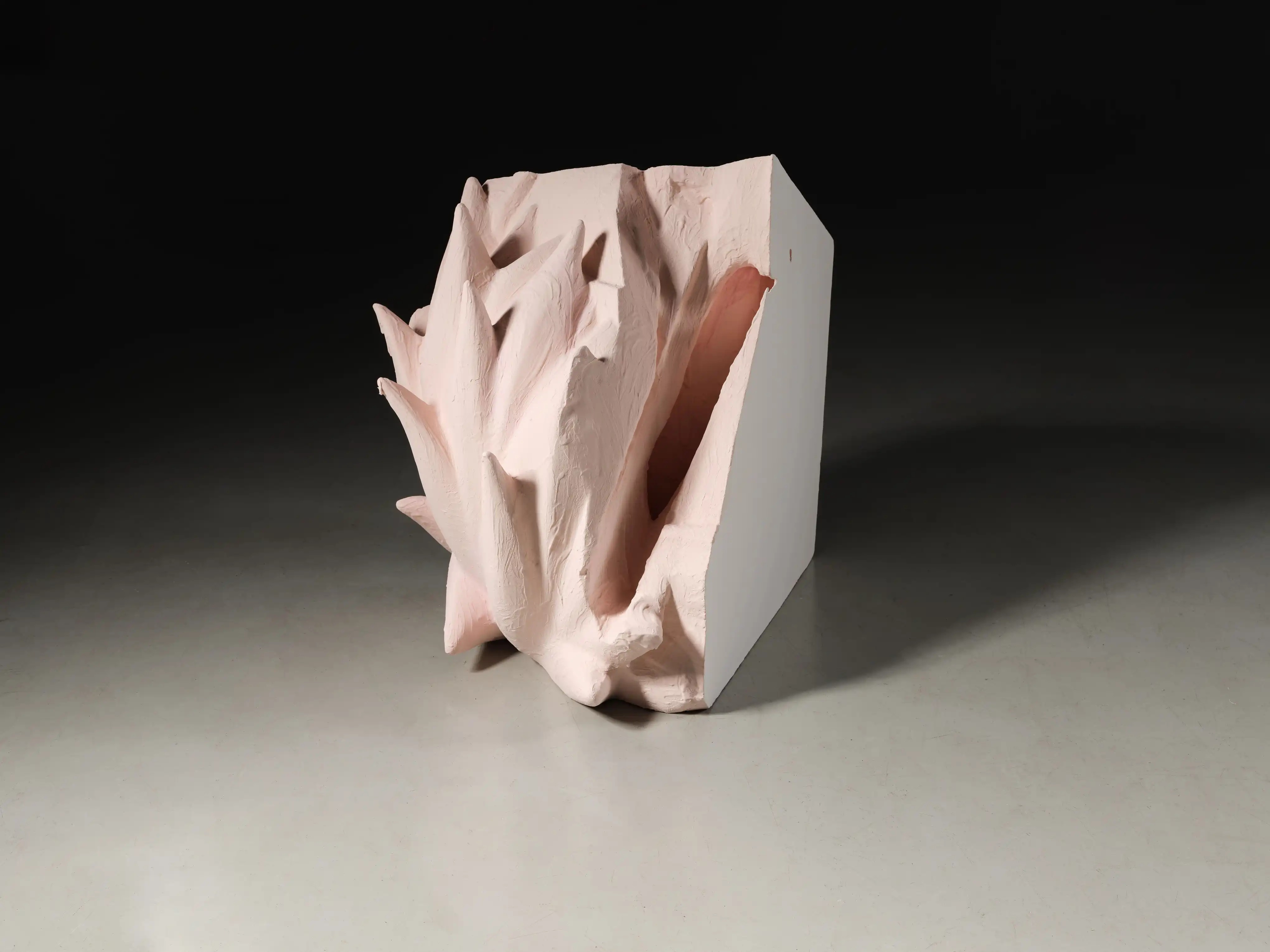
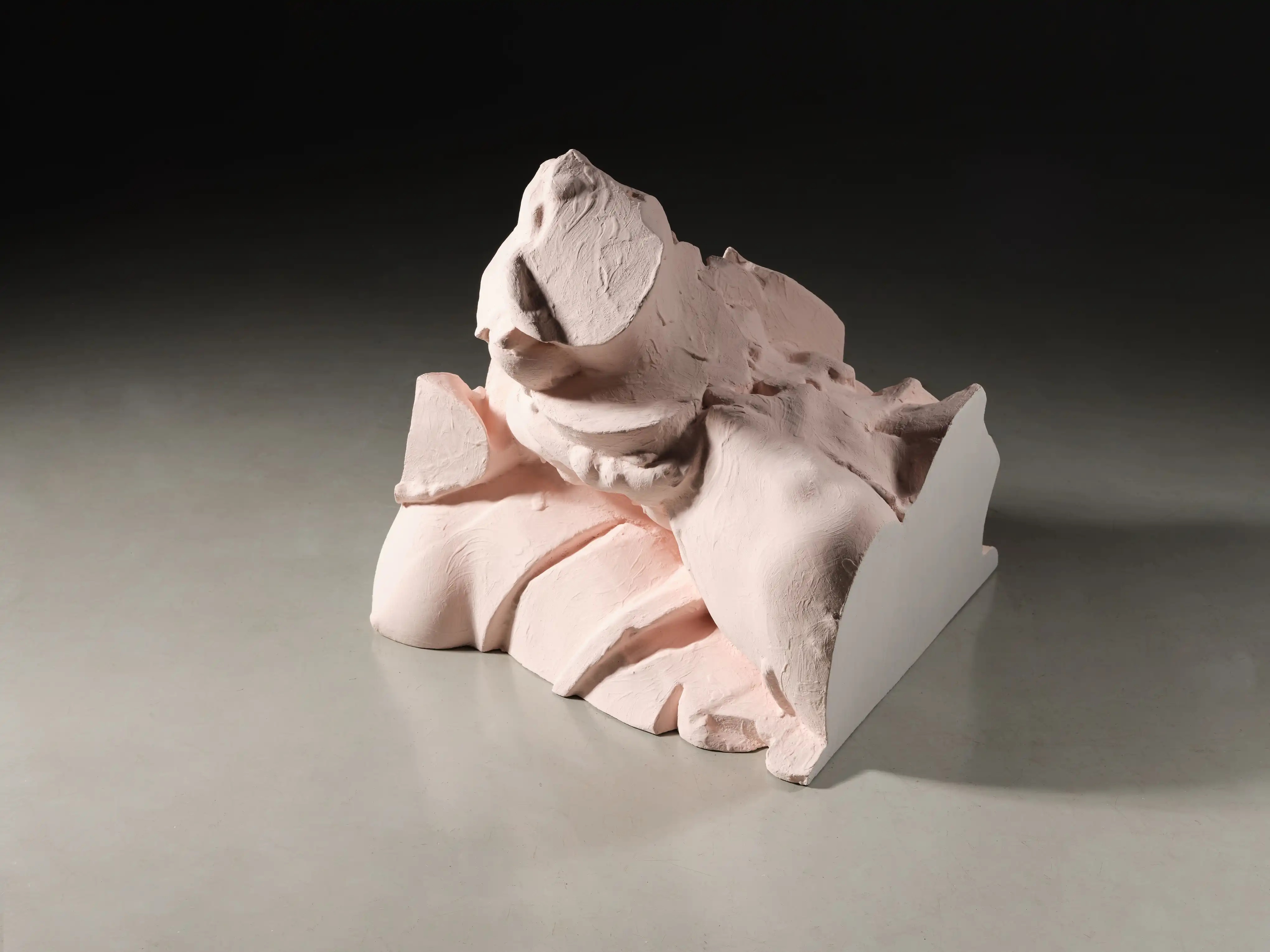
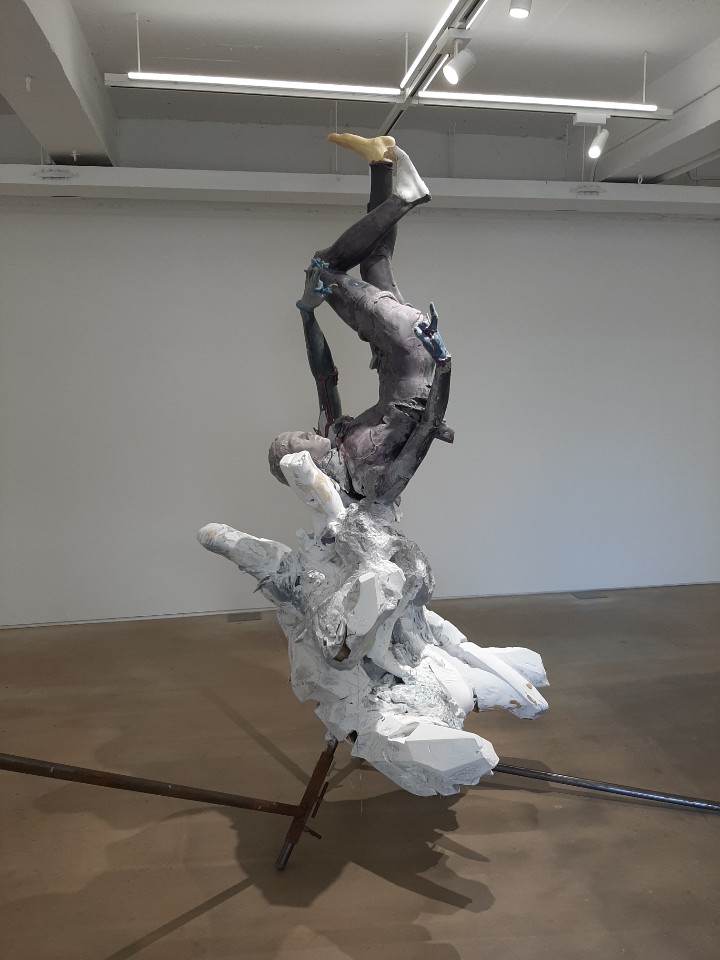
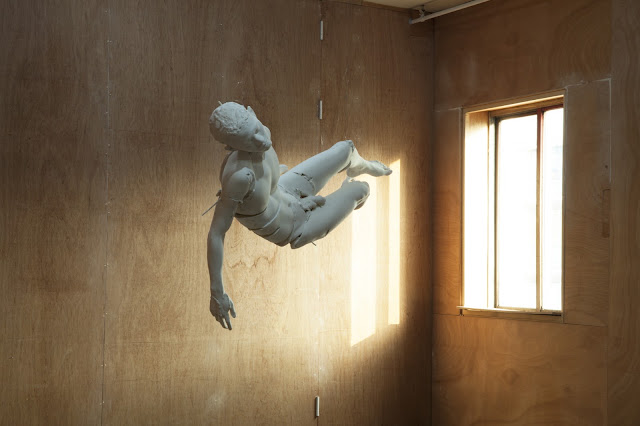
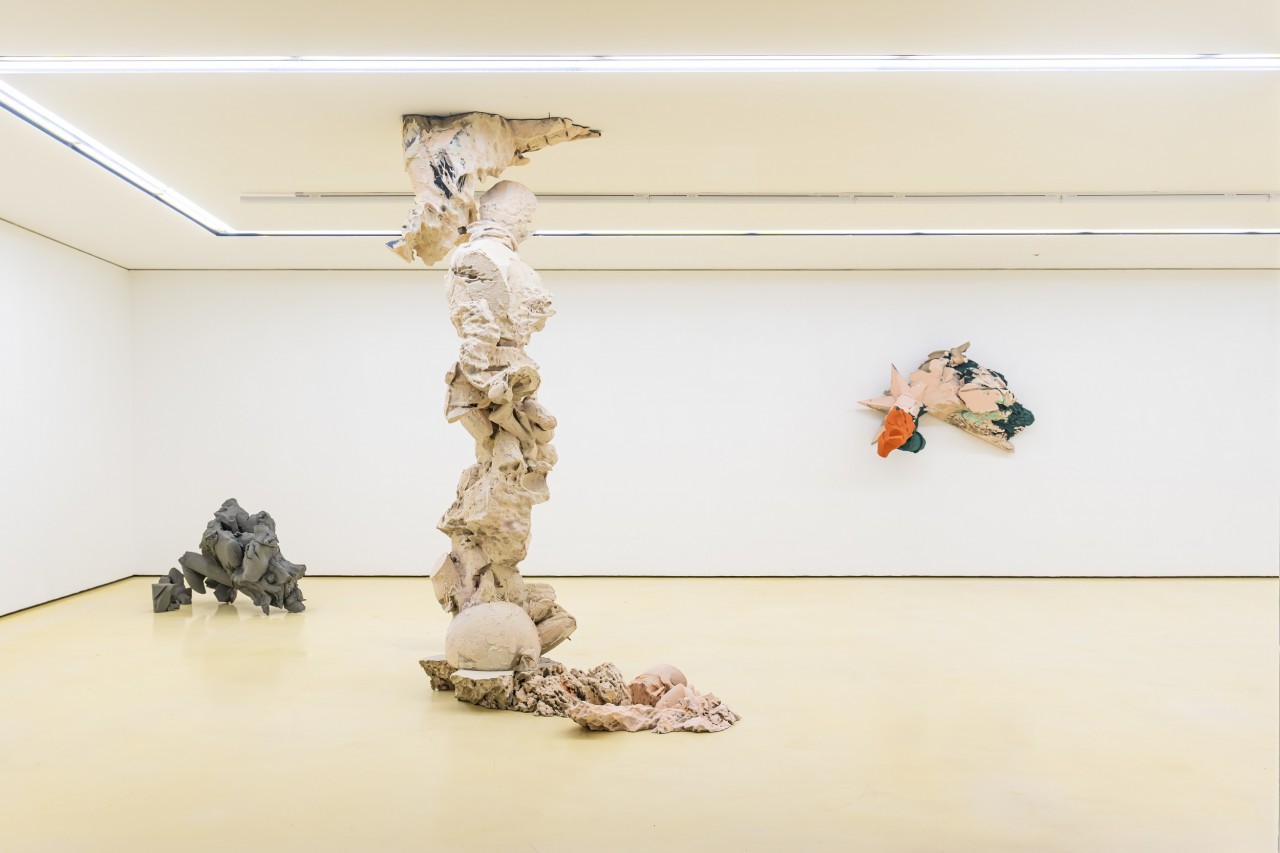
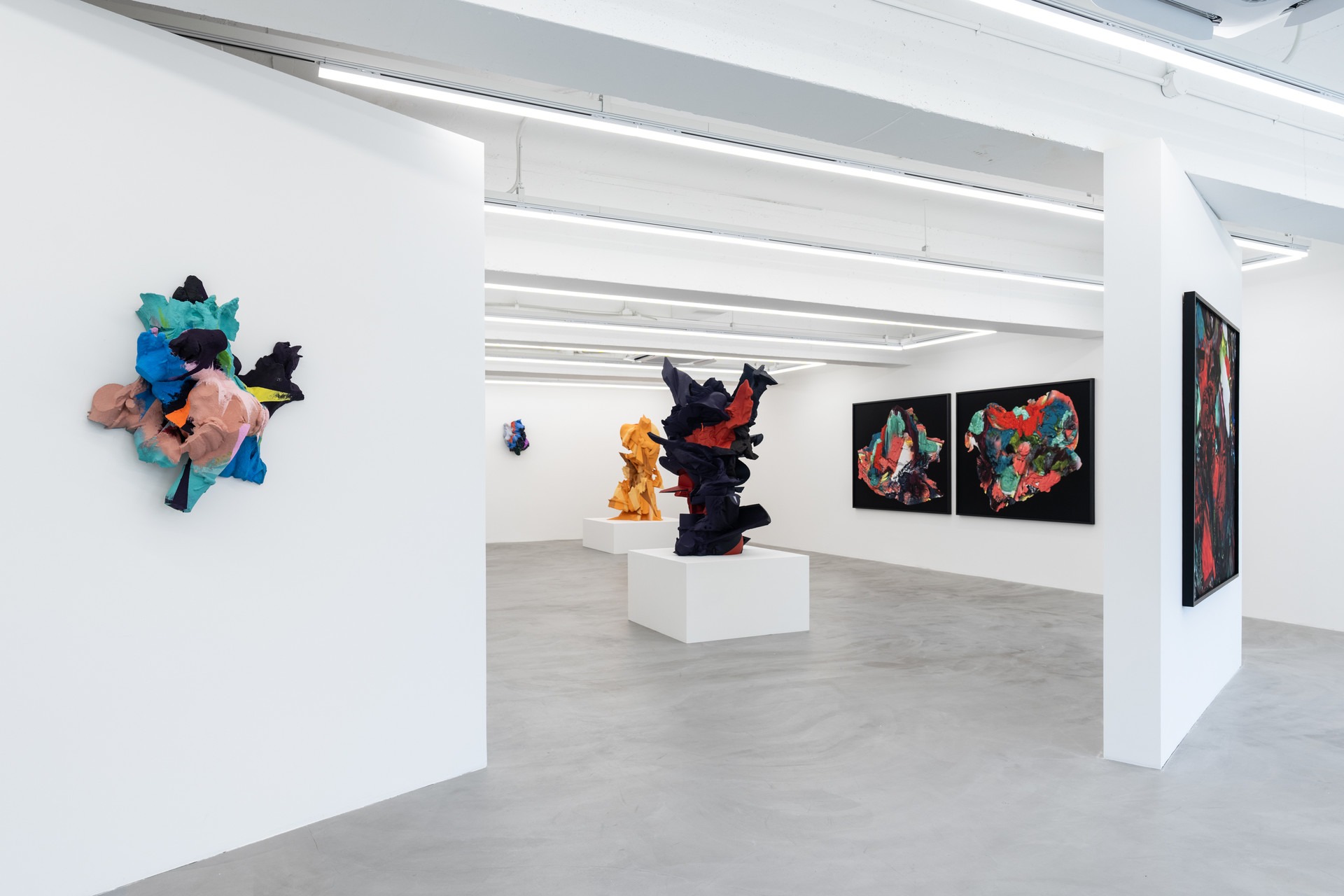
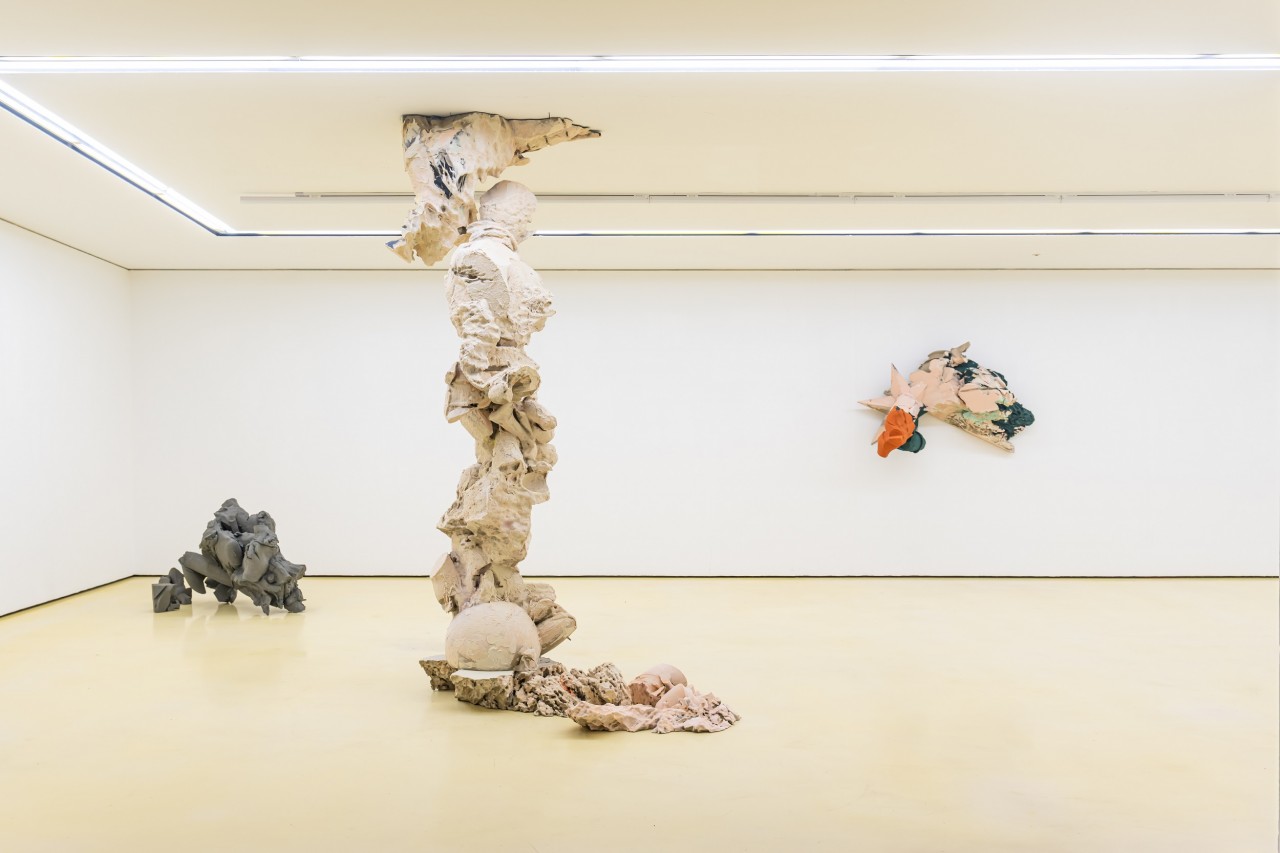
Installation view of 《P I E C E》 © Perigee Gallery

A Piece

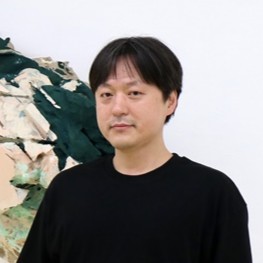
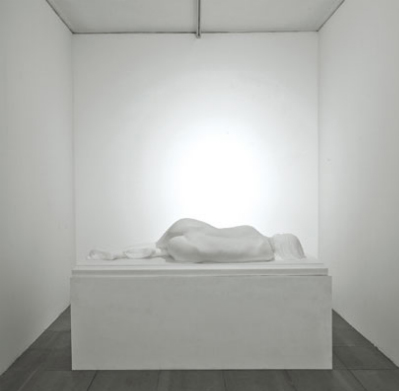
ByungHo Lee has been employing the human body as the subject matter of his pieces since his early career and pursuing constantly changing fluid sculptures, breaking away from firmly fixed sculptures. The subject he has thoroughly delved into begins with analyzing and observing forms of the human body in diverse sculptural methodologies.

More precisely, he contemplates the separation of the head, arms, and legs alongside a voluminous torso. With the question, “How should I view these separated parts” he has turned his attention to the matter of connection and separation as well as dependence and independence. Let’s find some clues in “Eccentric Abattis”, which he keeps adopting as the title of his work.

Abattis is a French term referring to leftover pieces of poultry such as wings, feet, and giblets, especially unchosen parts in cooking. All the same, he does not regard it as a fragmentary thing separated without meaning but sees it as a formative object with the possibility of being recombined and as something intact. Thus, the connection of parts is one of the seminal themes in his work. In addition to this, Lee is also interested in the matter of reproduction. These are important elements that forge the basis of his process.

Let’s review his reproduction first. What he takes note of in reproduction are the original that is the starting point of something and some flow of continuity that repeats itself infinitely. Additionally, he uses forms he created in his previous works as objects for reproduction. As such, he brings about new meanings through changes in fixed forms that occur by placing already created forms in a completely different context.

What makes this possible is the process of recombining forms. For example, the forms of the human body are repeatedly made like a standardized product. The human body created in this way is not used as it is but is used as a material to become something else through some transformation and connection. As a result, it becomes an object with a human form.

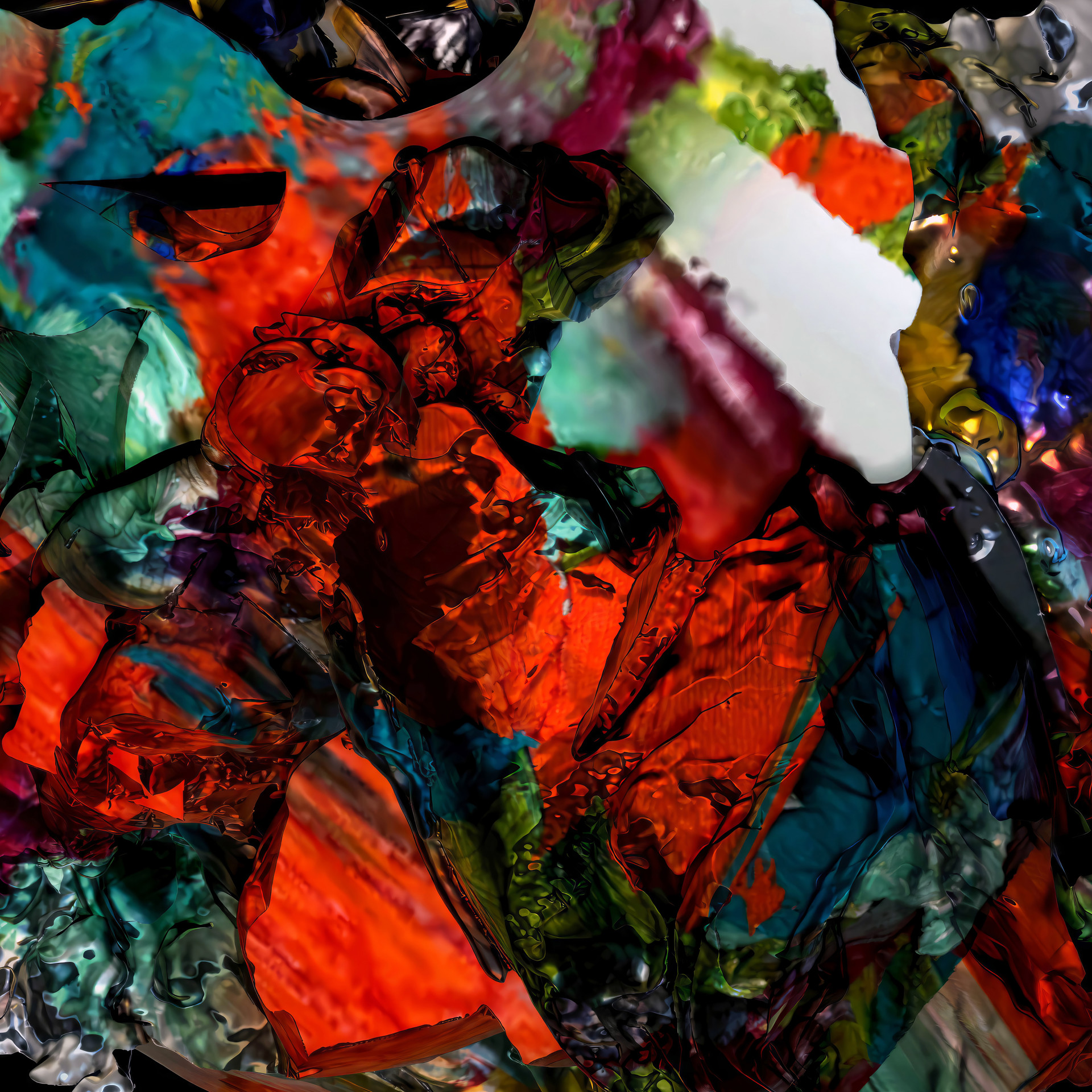
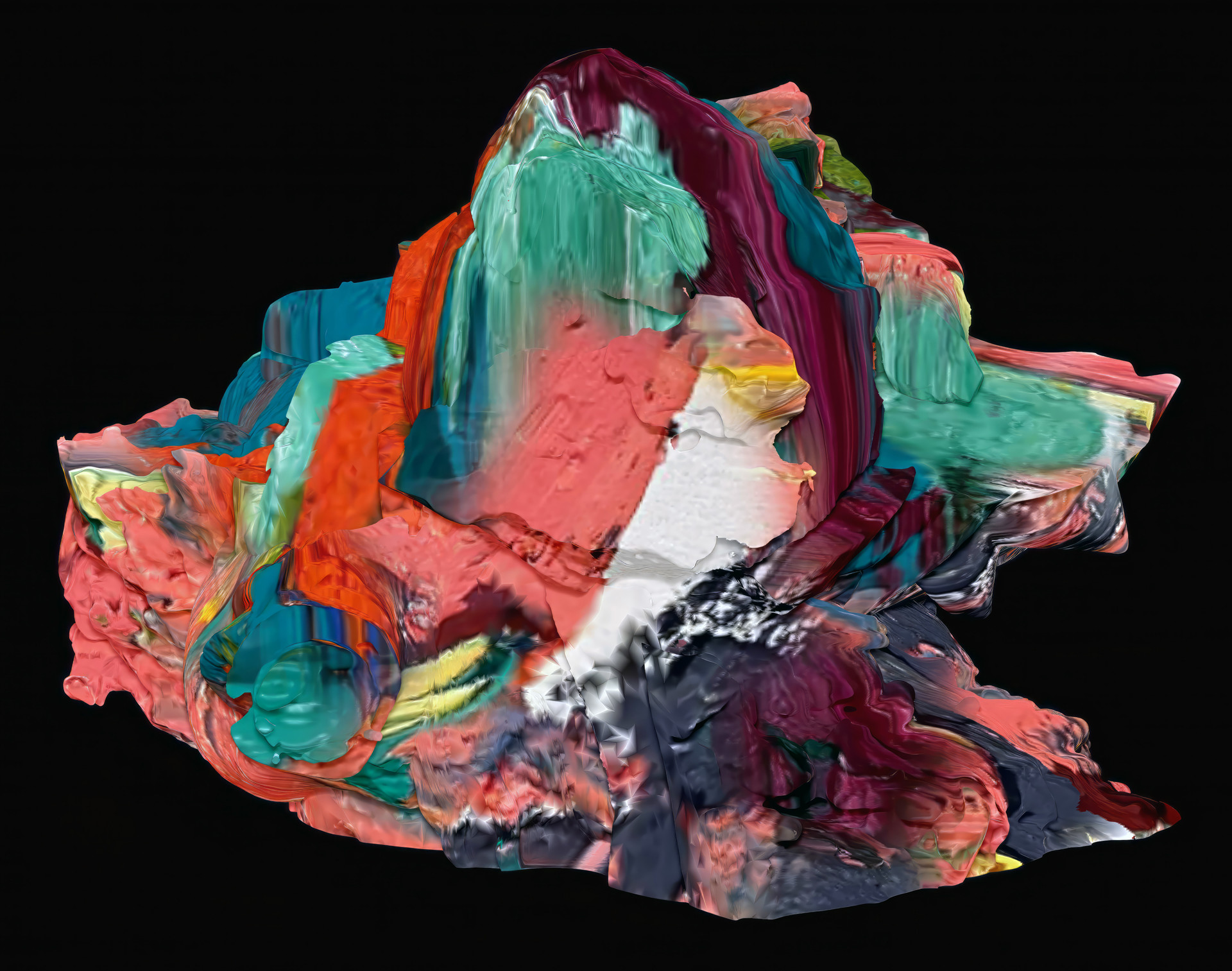
In addition to this, he has recently converted these human bodies into computer-programmed images, thereby amassing a diversity of forms. These are intertwined as the material to bring about diverse combinations after being converted into digital images. Although originals were damaged or deleted unintentionally in this process, Lee embraces all of these phenomena.

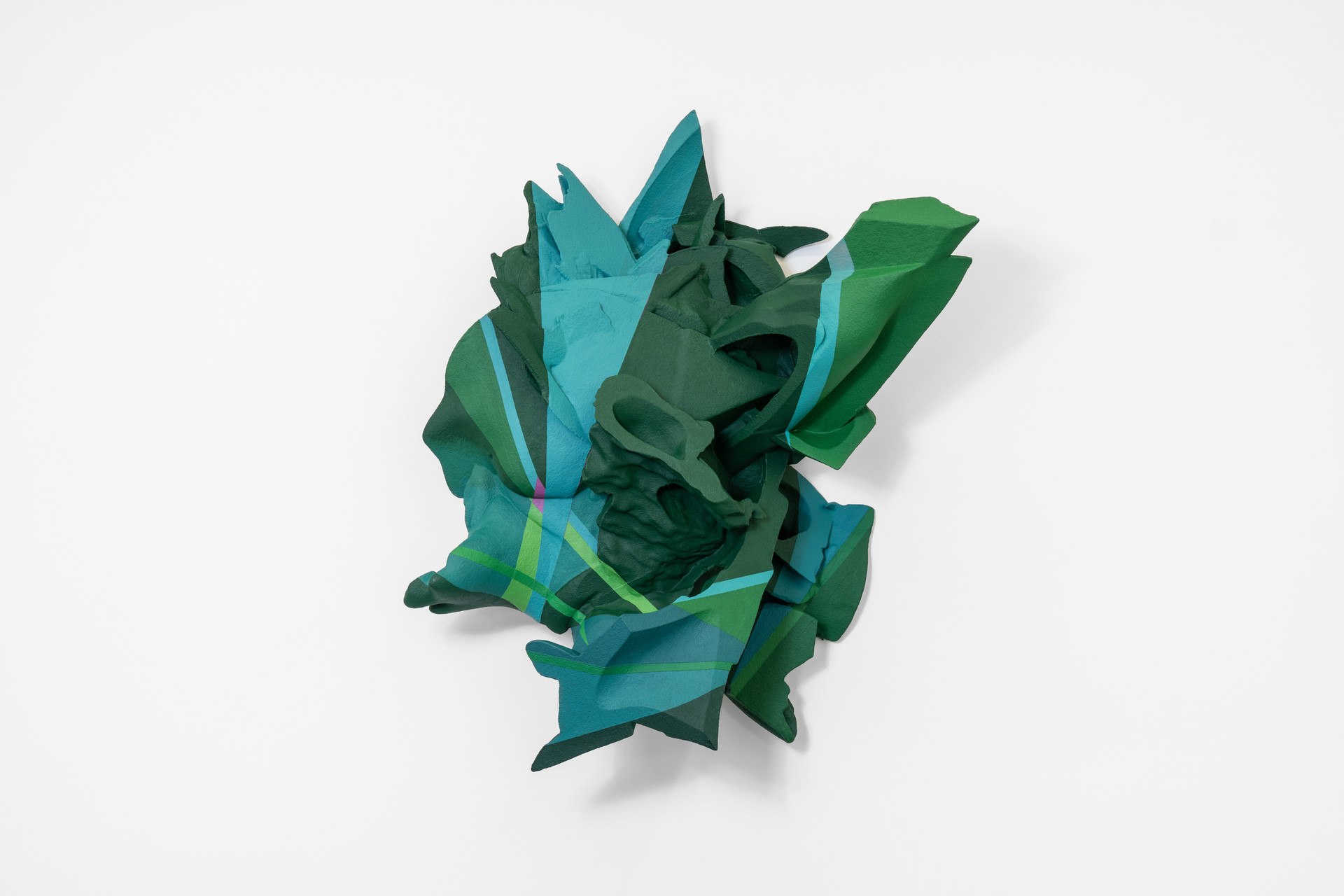
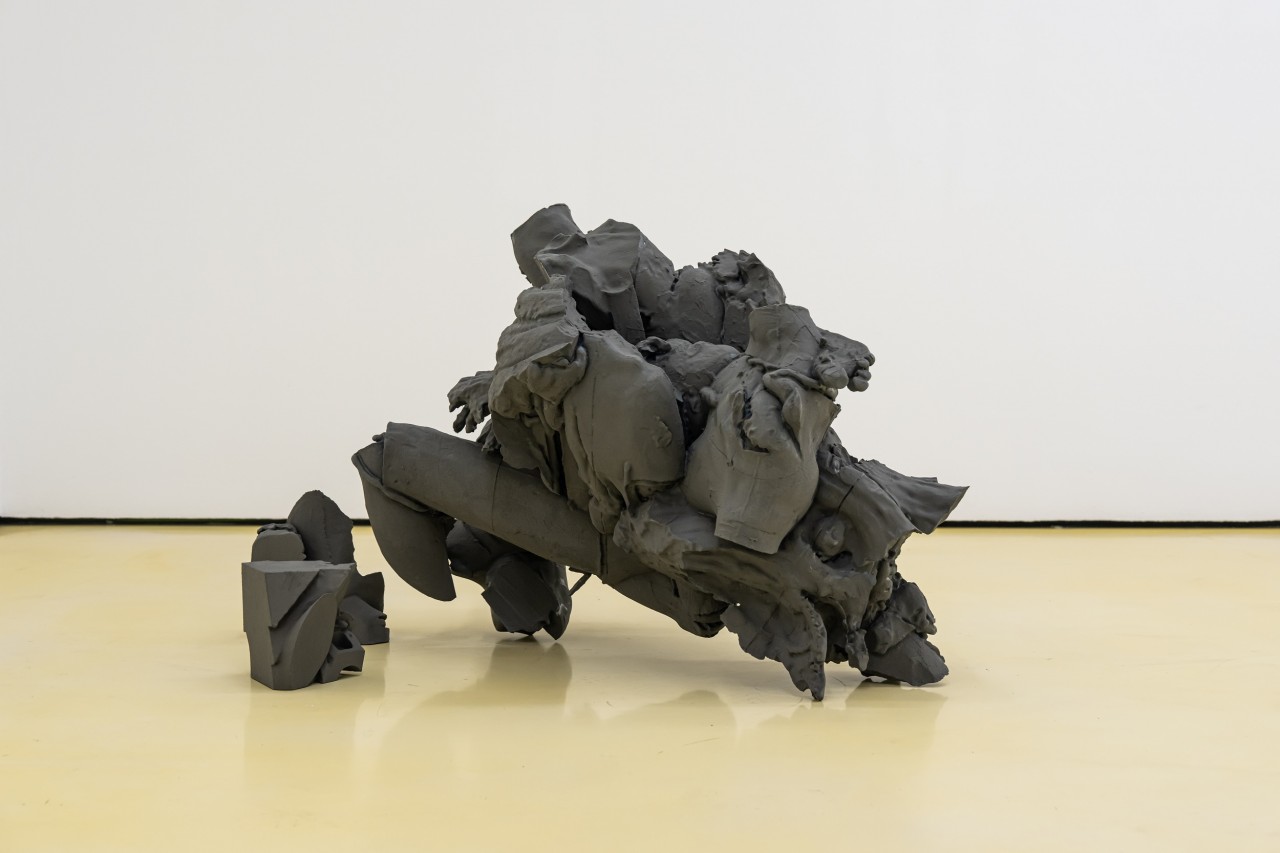
In this way, the original object in his work further loses its morphological characteristics. As the combination completed in this way is made substantial using a 3D printer, previous referentiality vanishes and a hard-to-name structure is newly created. Thus, the modeling images he accumulates through the act of continuously transforming something work as a basic material that makes his sculptures look fluid.

Therefore, the pieces selected and connected according to his intention are uncanny and bizarre. Such works capture the sensation of detecting and reacting to something that has temporarily fluctuated for some reason. Through this, the linear space-time we commonly perceive is naturally revealed in a distorted form.

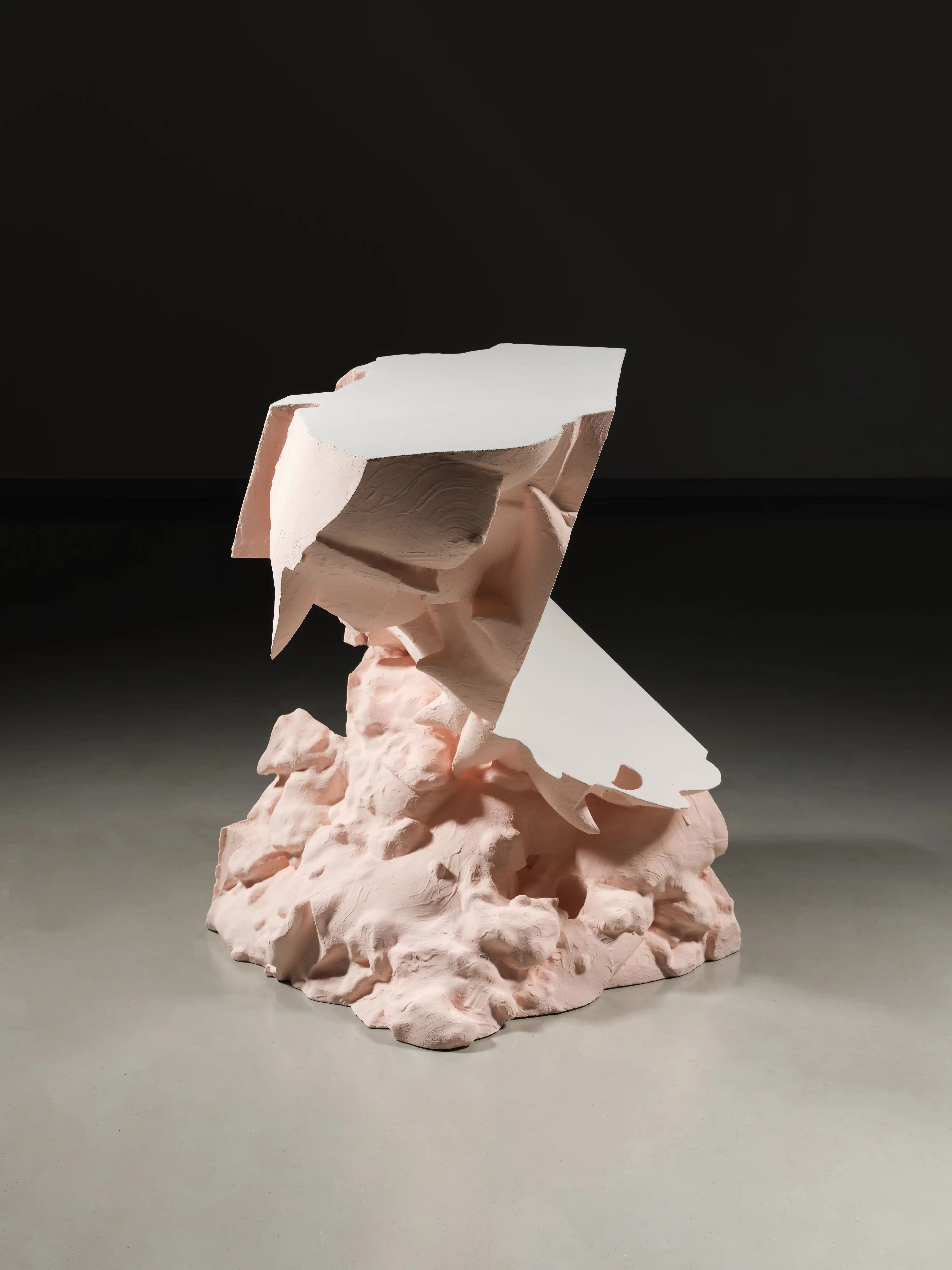
Installation view of 《P I E C E》 © Perigee Gallery

Now, let’s examine the meaning of the part through the title of the exhibition 《PIECE》. The reason why he uses this word meaning piece or part as his exhibit’s title is to simultaneously show that the part and whole exist in a cycle. Thus, to Lee who concentrates primarily on the part, a human body sculpture is not an object to express the body itself.
He tries to attain sculptures replete with lightness and variability, departing from notions defining the basic features of sculpture such as mass, weight, constancy, and completeness. To this end, he transforms one part into a complete object with a free form through repetitive accumulation rather than leaving it as a part of fixed space-time. He does not approach any part in terms of formative beauty with a distinct form but makes it to disclose the nature of the unknown.
With this, he proposes a temporary form suggestive of a new invisible existence by partly dismantling and recombining familiar human bodies without any restrictions. Although they are separated from the whole by definite rules, such parts are atypical and have the freedom to be linked to anything because his work is conducted in a somewhat improvisatory and theatrical manner. Thus, as independently existing forms are extracted randomly, what matters is the connection that makes it possible to combine new parts.

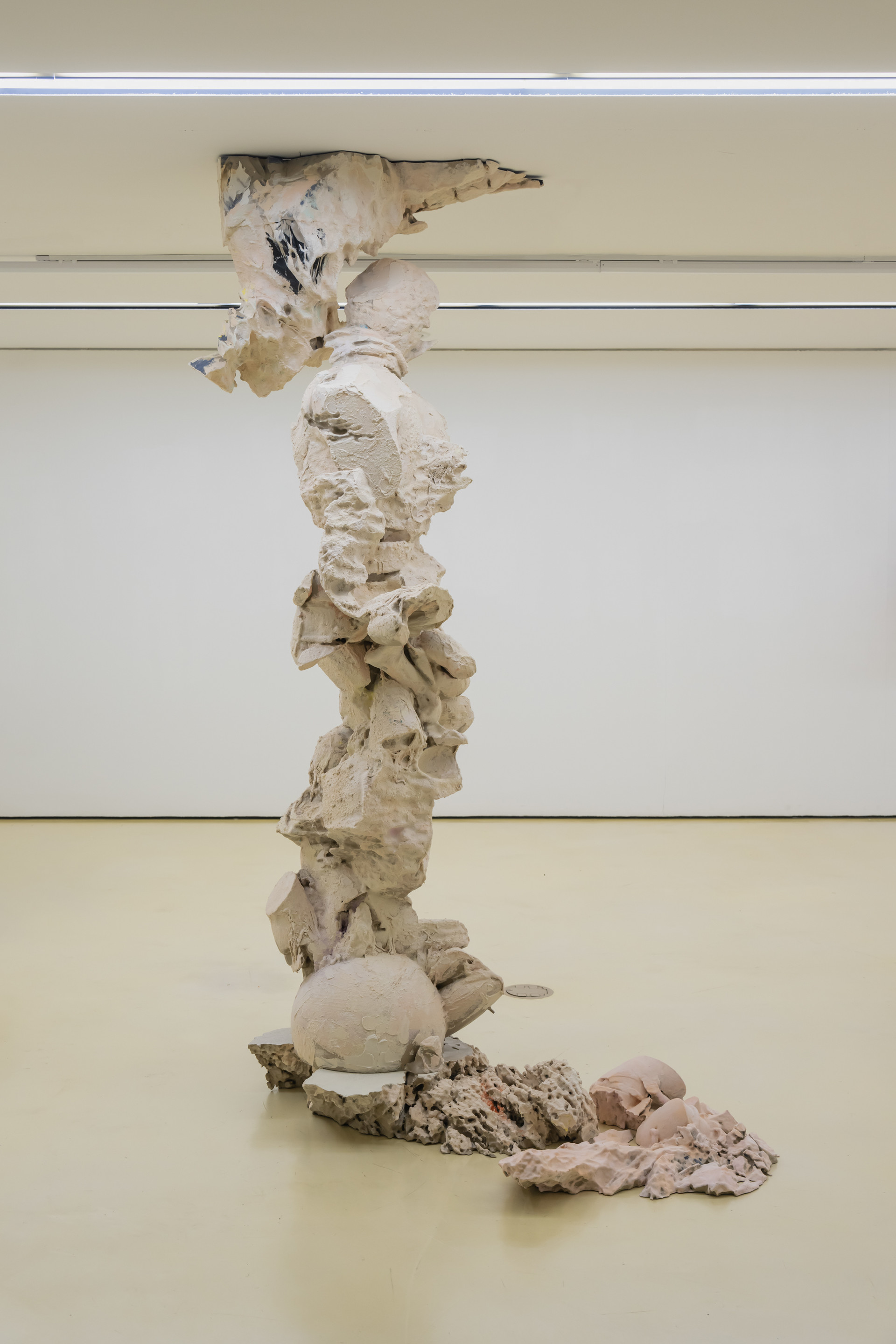
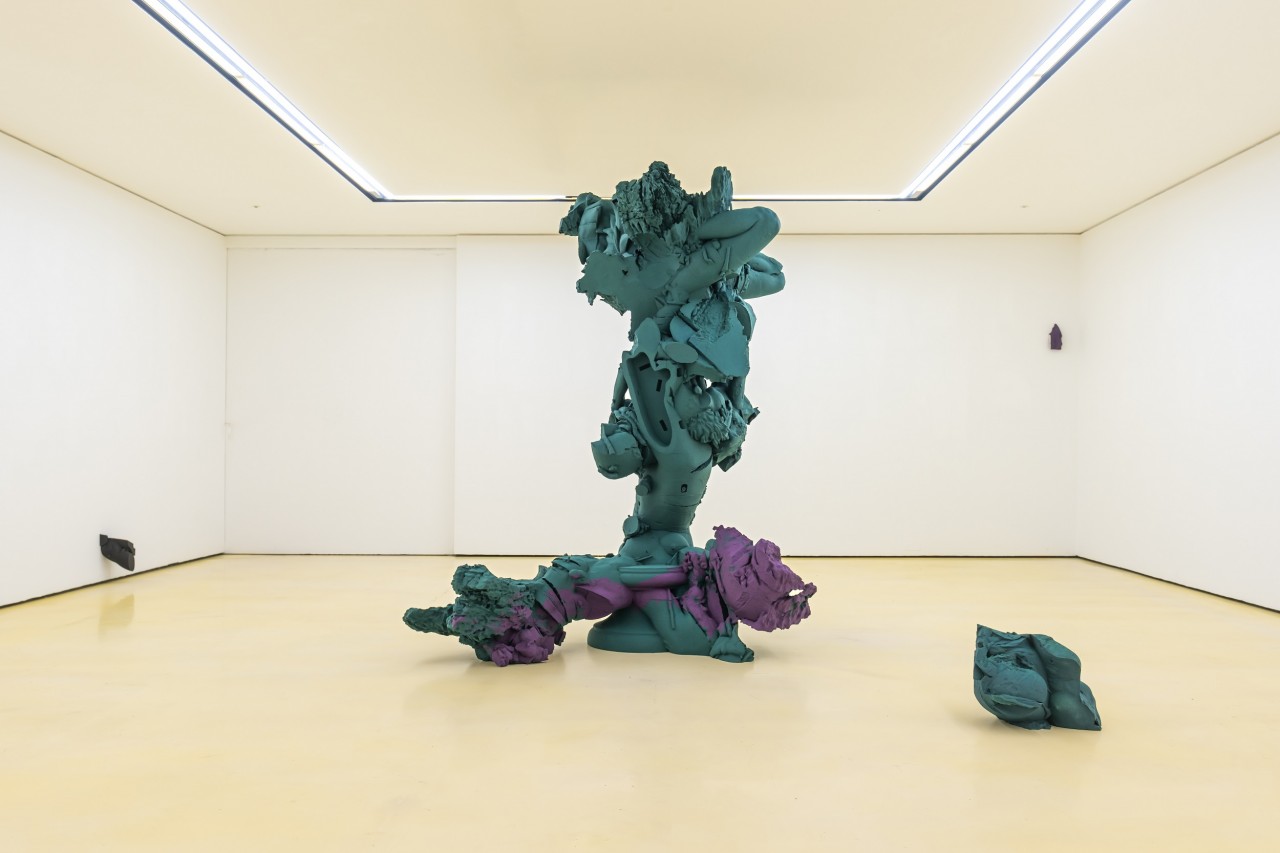
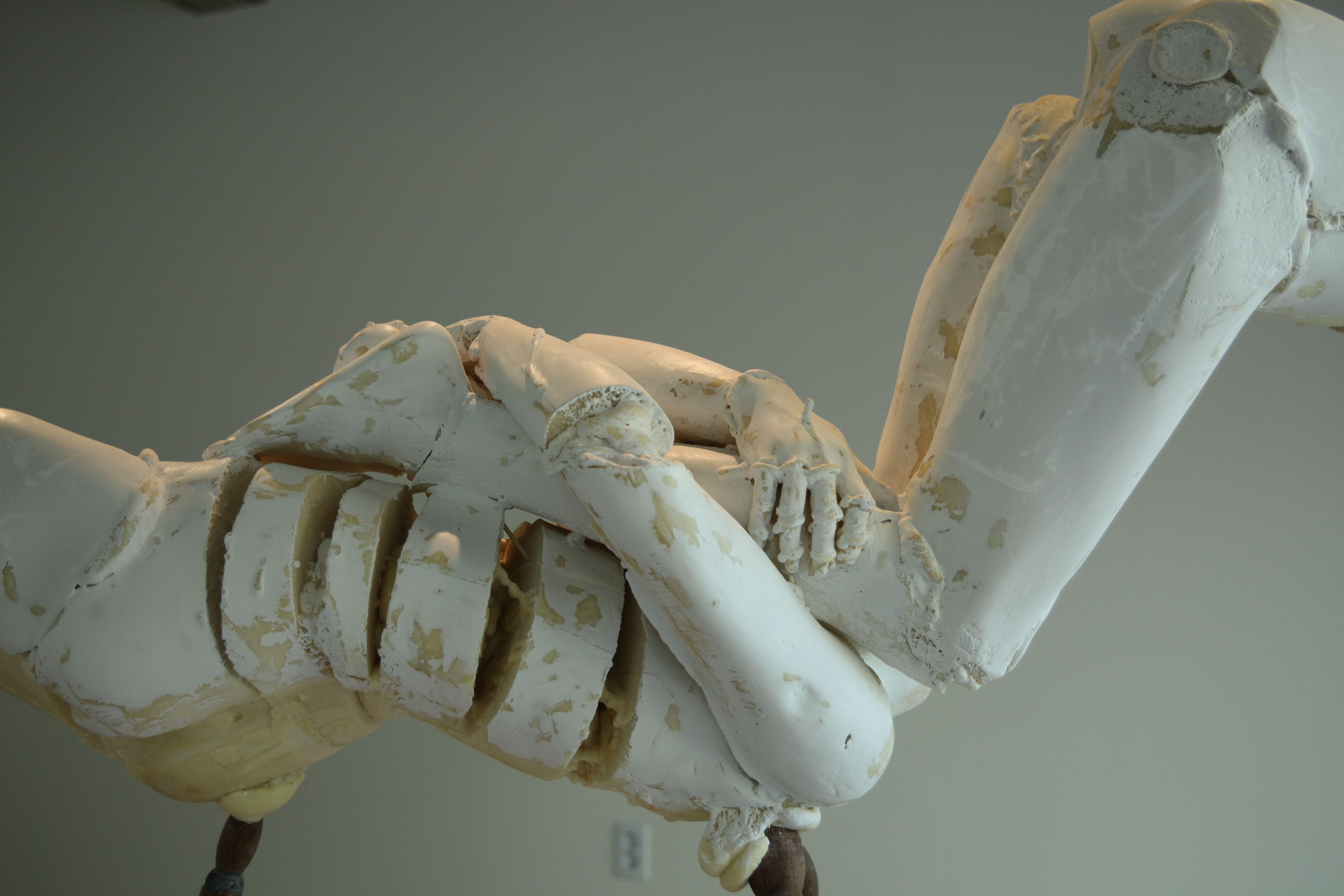
How do these connections manifest in the artist's work? Eccentric Abattis stands as an individual piece within the gallery, and looks like one single work, while its abstract shapes appear transformed by the movements of the viewer. These works, comprising multiple parts, are sometimes unified or positioned separately based on the artist's intention. The relationships between their components appear casual or even nonexistent.

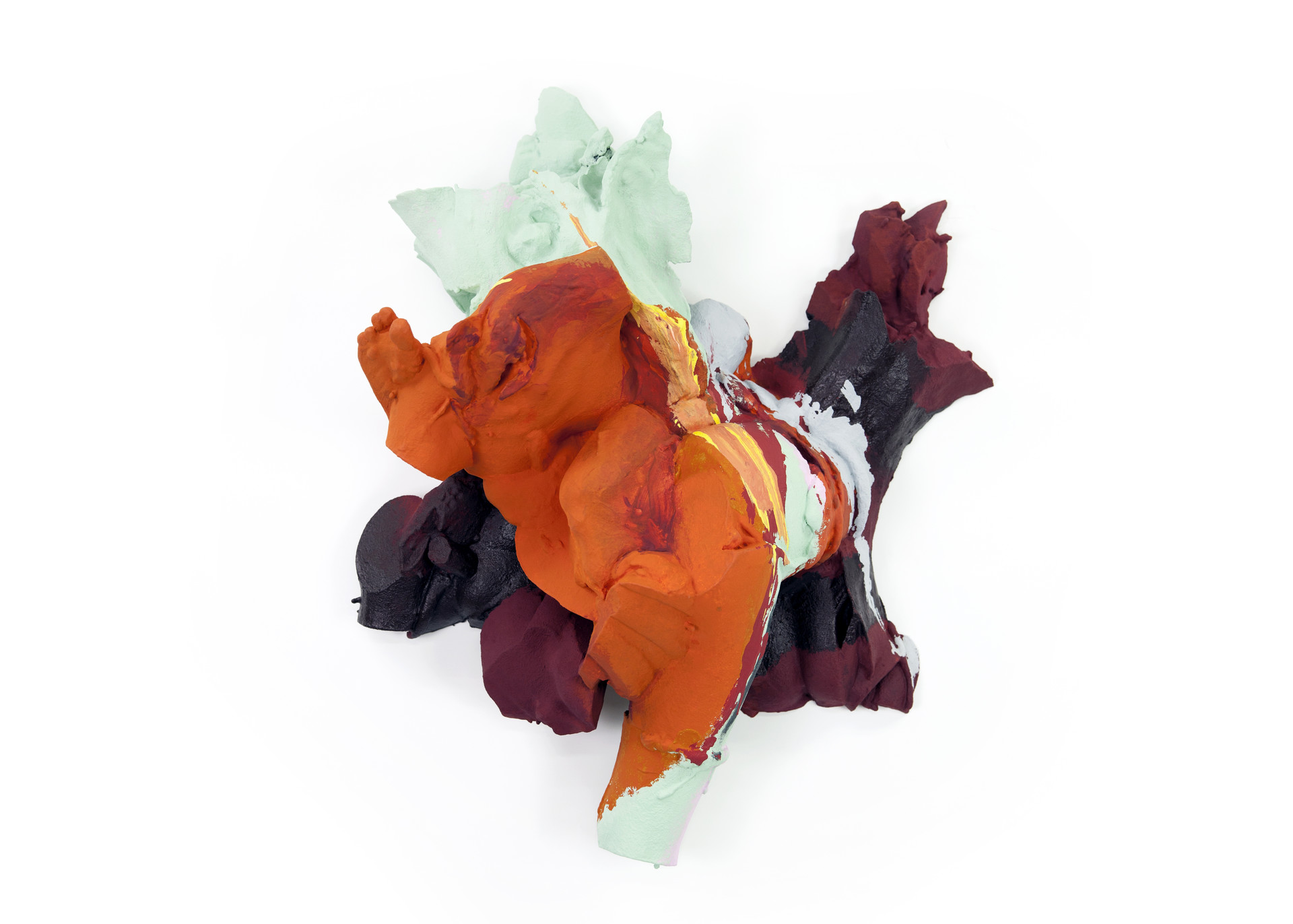
In terms of form, connection marks or visible linking elements are disclosed and seem to be amassed precariously, but are not be in a balanced form. Furthermore, various colors are used on the surface of the work, making a new surface by attaching gauze or mixing color pigments with plaster. This expression of colors creates a sense of external hues seeping into the interior or internal colors radiating outward.

Regarding his approach, the artist views the brush as a sculptural tool, utilizing scraping, carving, addition, and subtraction techniques during the painting process. Lee says that he did such surface work like modeling work. In doing so, he either adheres to or disregards predefined forms, liberating himself from established patterns.

This unrestricted methodology allows the viewer to experience a compressed sense of time, akin to layers of sediment. Rather than aiming to define predetermined forms based on his intentions, the artist seeks to reveal various sensuous essences, including the form of an object, as surface phenomena. Consequently, this approach gives rise to accidental surfaces and inevitable ruptures that emerge from the interplay between endless pushing and pulling, and finite and infinite elements.

Ultimately, Lee's intention lies in creating a situation where conflicts and contradictions are simultaneously exposed, rather than forcing a harmonization of each form's inherent nature. Guided by the question "What constitutes a part and what constitutes a whole?", he traces the surface of his work, unveiling the process of circulation pertaining to what we leave behind, what we relinquish, and how we navigate these choices.

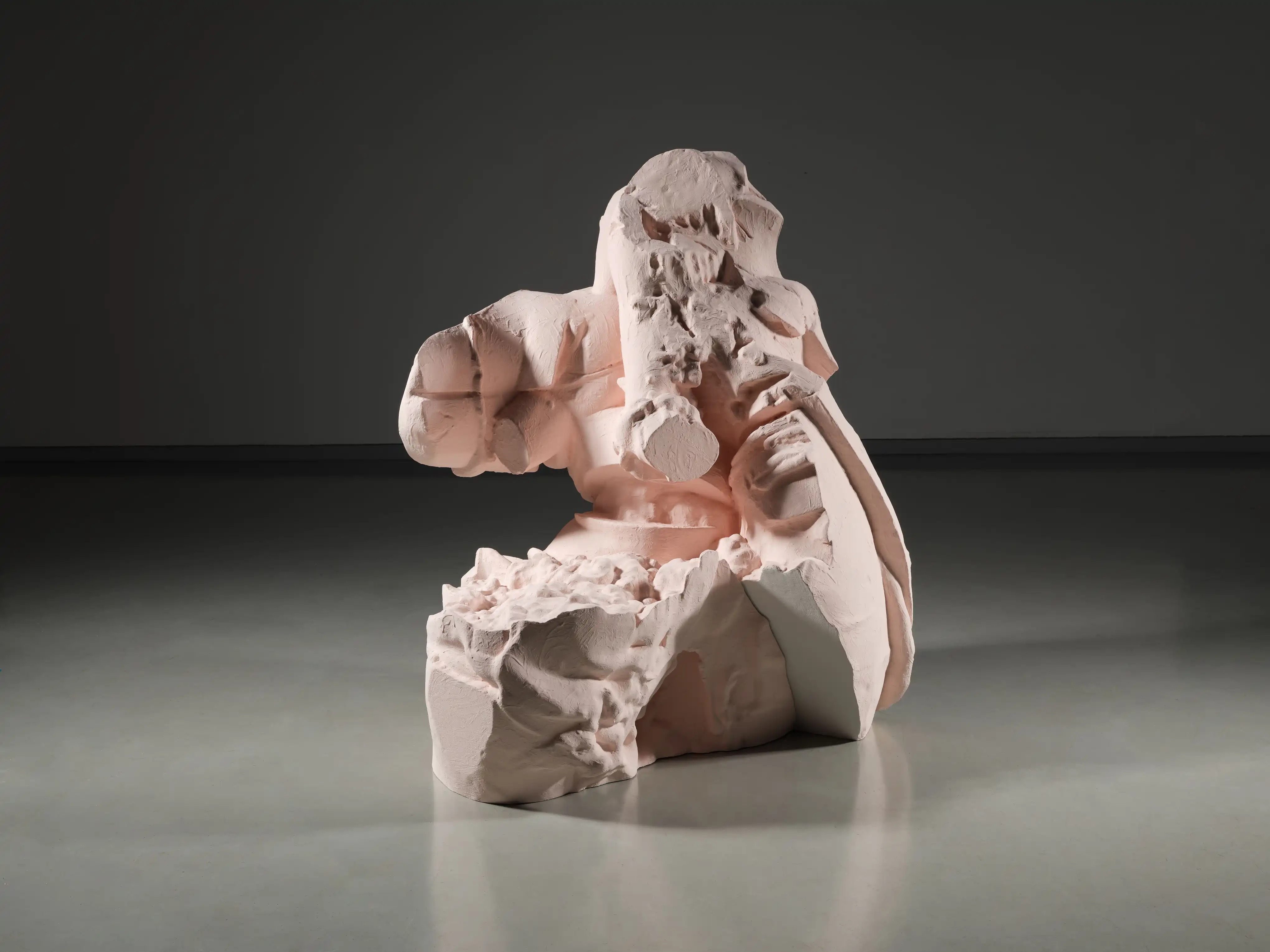
Installation view of 《P I E C E》 © Perigee Gallery

Let's delve back into the human body, the foundation of his work. Each component of the human body possesses its own designated name, distinguished by its internal and external forms and functions—hands, feet, bones, muscles, and organs. However, Lee approaches them from his unique perspective, fragmenting them and transforming them into objects with distinct shapes, thereby breaking free from conventional nomenclature.

While they belong to the overarching category of the human body, they cannot be assigned specific names. They may be connected by each individual part, yet ultimately, they exist as autonomous entities. In that case, what can we call the overall form that emerges from the amalgamation of these altered parts? Lee labels them "eccentric parts."

As he embarks from the human body, new forms materialize unexpectedly and inevitably, driven by the new possibilities presented through deliberate choices. In fact, the exhibited works offer no trace of their original form, indicating that knowledge of their origins is no longer necessary. Even the term "human body" merely serves as a general descriptor, referring to a classification category that reflects a particular understanding or a set of defined attributes.

Thus, it can be said that the act of observing and comprehending the human body is merely a superficial representation that either seeks or challenges its morphological framework. Consequently, what holds significance is how we perceive an object before us, surpassing a universally sensory interpretation. This is precisely why Lee's work guides us towards an unstable and indistinct realm, rather than a conclusive outcome. And his body is transformed into a place that is nothing and makes something possible perfectly.

What kind of sculpture does Lee pursue? To answer this question, we must first examine our understanding of sculpture. Given our familiarity with two-dimensional imagery, sculptures often appear intangible, imaginary, or even flat, lacking the weight and physicality we associate with substantial objects. Simultaneously, we recognize that if something possesses a genuine source and essence, it exists as an invisible entity rather than a visual substance.

Hence, we find ourselves suspended between existence and perception. Similarly, Lee's work explores the intersection, collision, division, and recombination of sculptural realities and sensory qualities. His sculptures manifest in unconventional atypical forms, often with specific parts removed. Despite their imposing size and substantiality, they lack defined interiors or exteriors, tops or bottoms, and established rules.

The journey we have examined thus far leads his sculptures into an elusive realm where a definite destination can never be reached. For the artist, sculpture resides in a transient space and time, defying clear definition and capture. Therefore, the essence of his work lies in the unrestricted movement to connect and combine disparate elements, making choices among various directions.

Ultimately, to Lee, sculpture represents the act of constructing a framework that defies criteria and standards. It embodies a fleeting afterimage resulting from a particular choice. Consequently, even the artist himself becomes an integral part of the sculpture. In this manner, his sculptures gradually evolve into fluid entities, imbued with a vital energy propelling them toward an unknown future destination. And this is the story of a PIECE that he tells us.

References