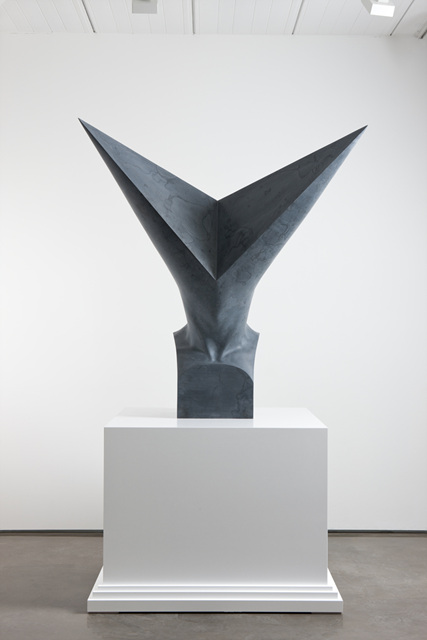
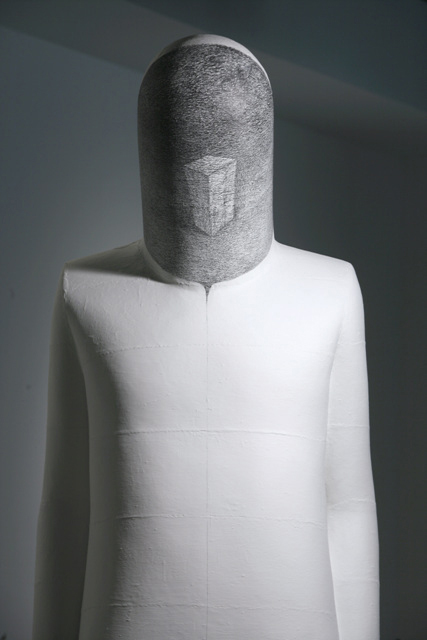
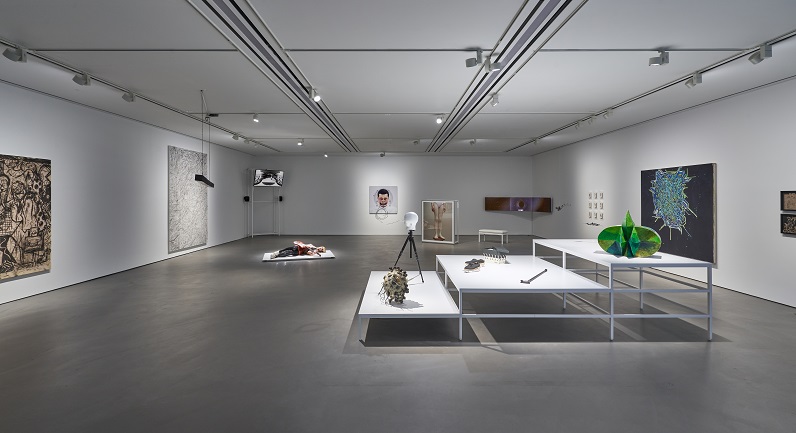
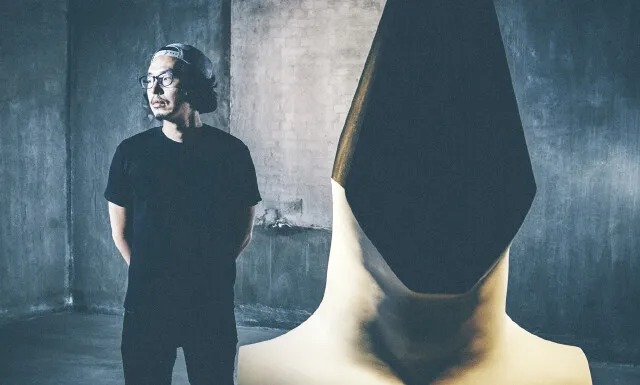
Inbai Kim’s sculpture began with the human body, yet he has consistently avoided treating it as a stable object of representation. In his early works, faces and bodies are stretched, compressed, severed, or combined with disparate organs, disrupting familiar proportions. The colossal body of I Love You, the flattened and erased faces of Deller hon Dainy, and the fish-like head of Shamoralta Shamoratha retain the outlines of the human figure while unsettling the criteria through which we recognize it.
These transformations are closely connected to the materiality of sculpture. Solid masses constructed from plaster or resin and smoothly or roughly finished surfaces clearly articulate their forms, while unfamiliar angles and proportions inserted within them cause the viewer’s gaze to hesitate. The arrangement of works within the exhibition is as important as the individual sculptural forms themselves.
Kim places works at specific intervals and orientations, setting them in correspondence or opposition to one another and treating the distances between them as sculptural elements. The latent movement and displaced order embedded within the static arrangement of human figures in 《Eliminate Points, Lines and Planes》 (2014) exemplify this approach to installation.
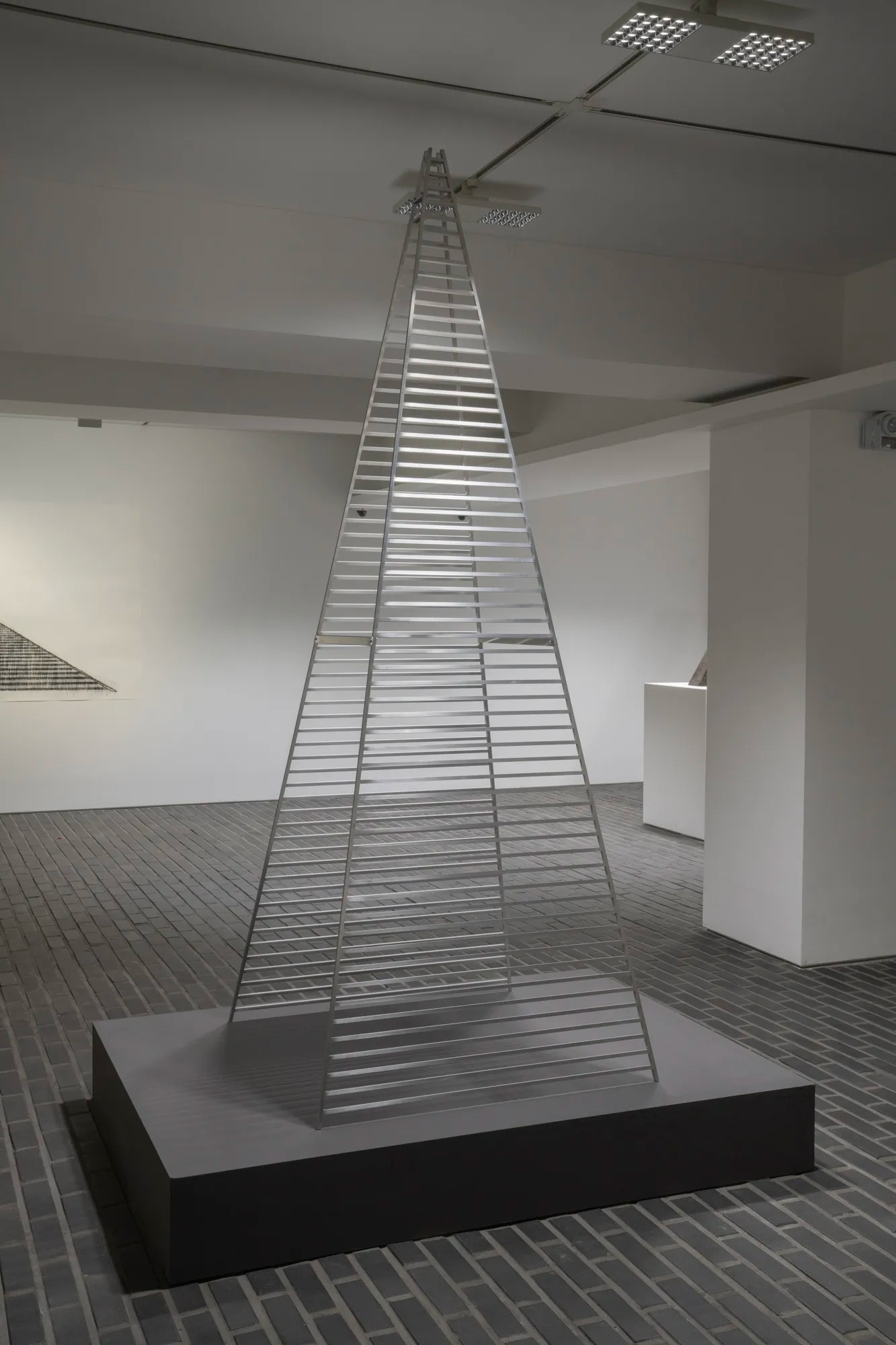
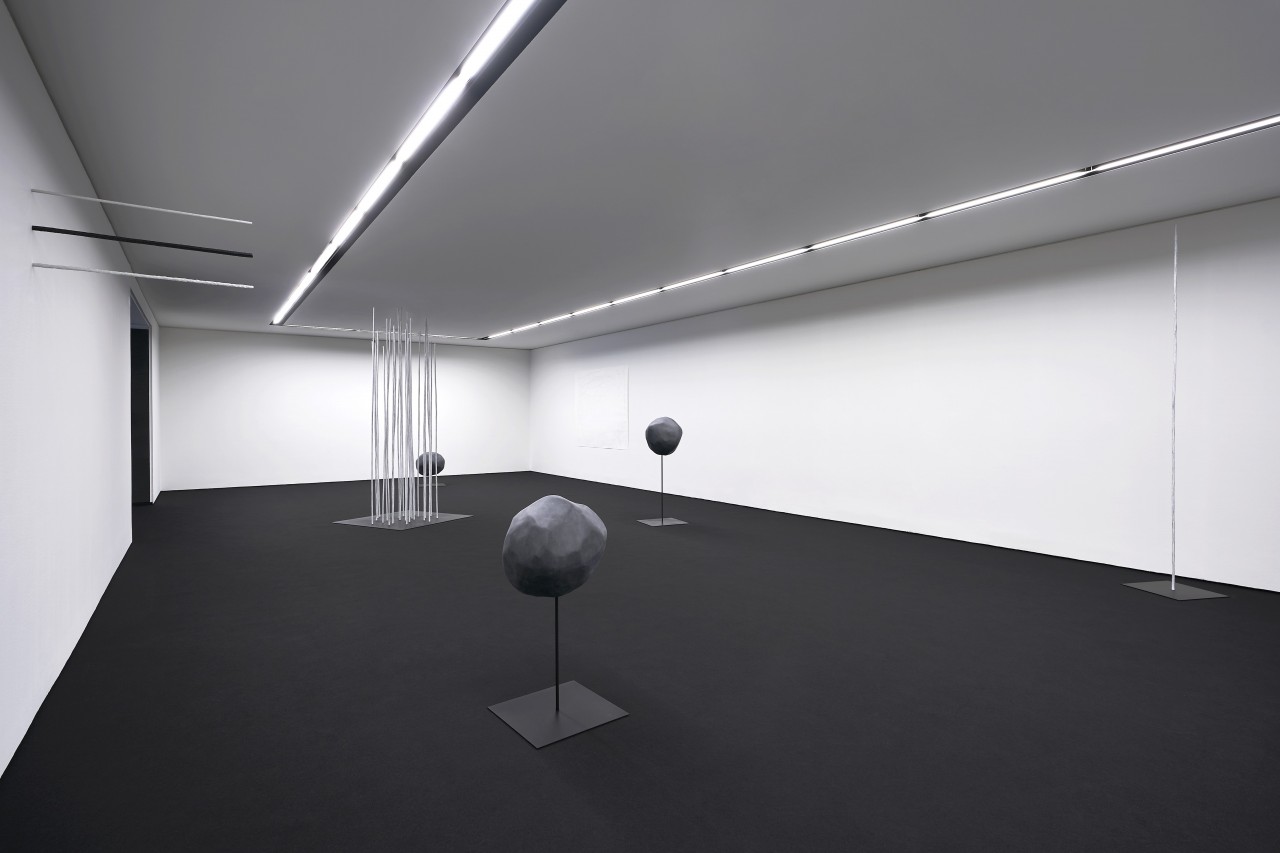
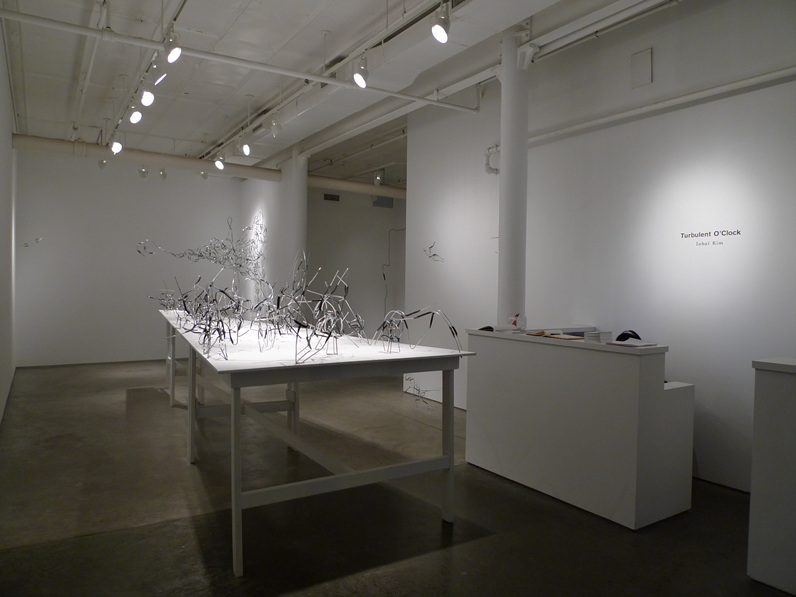
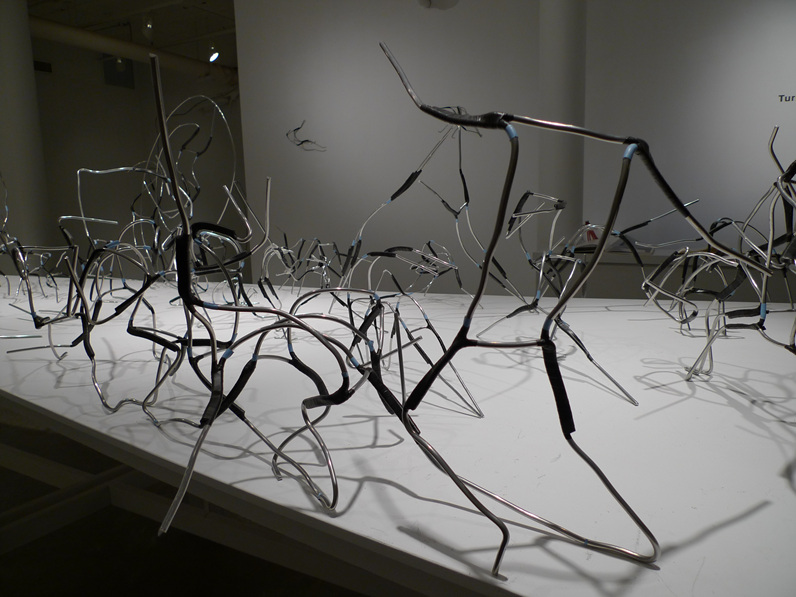
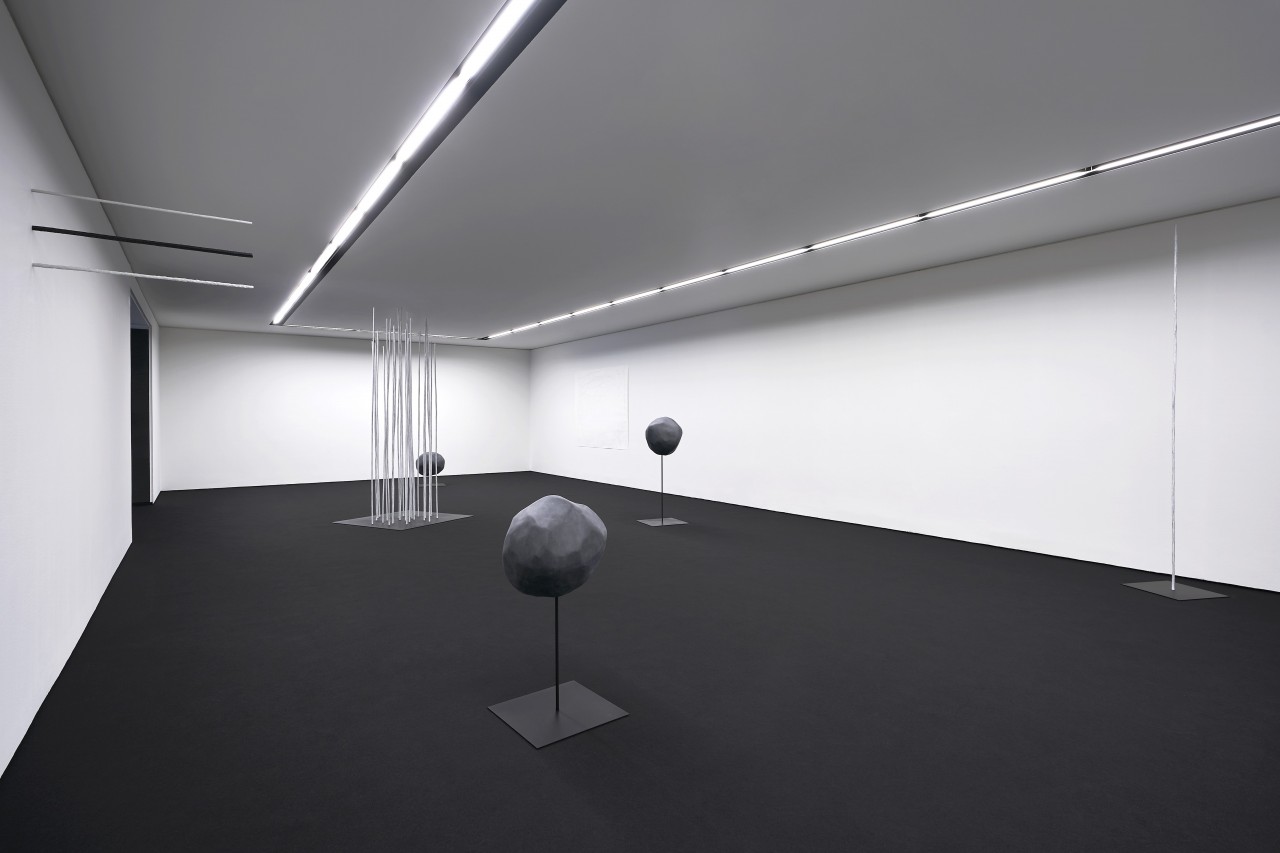
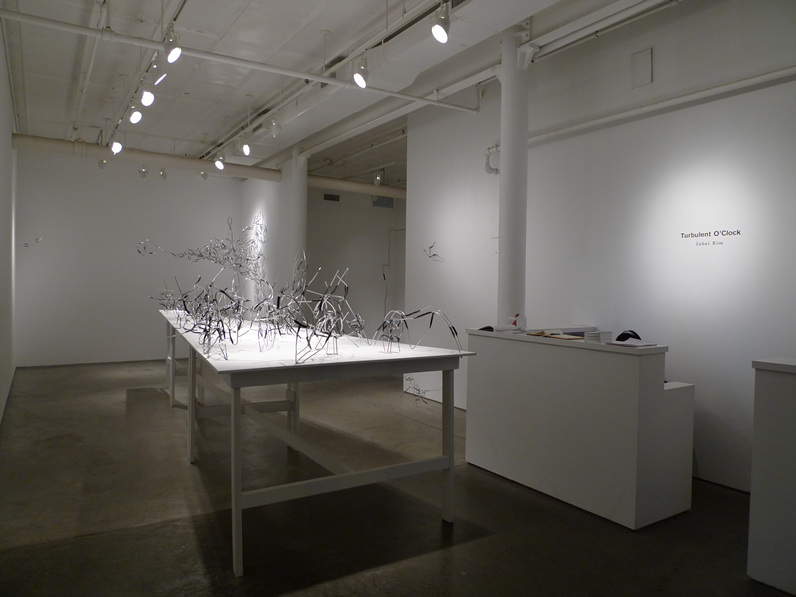
In 《Turbulent O’Clock》 (2010), the mass that had previously constituted the human body was drastically reduced to aluminum rods. Kim translated successive bodily movements such as turning, throwing, and stretching into slender linear structures, unfolding bodily movement and time within space. Aluminum rods allowed him to capture momentary actions more immediately than the process of building volume with plaster, and sculpture consequently came to resemble drawing extended into space. Here, the line is not simply an outline.
It is a material that compresses the direction, speed, and duration of bodily movement, as well as a spatial structure whose elements overlap and separate as the viewer changes position. The process of translating a two-dimensional drawing into three-dimensional form and subsequently reducing volume back into line recurs throughout Kim’s practice, becoming an important means of exploring the relationship between sculpture and drawing.
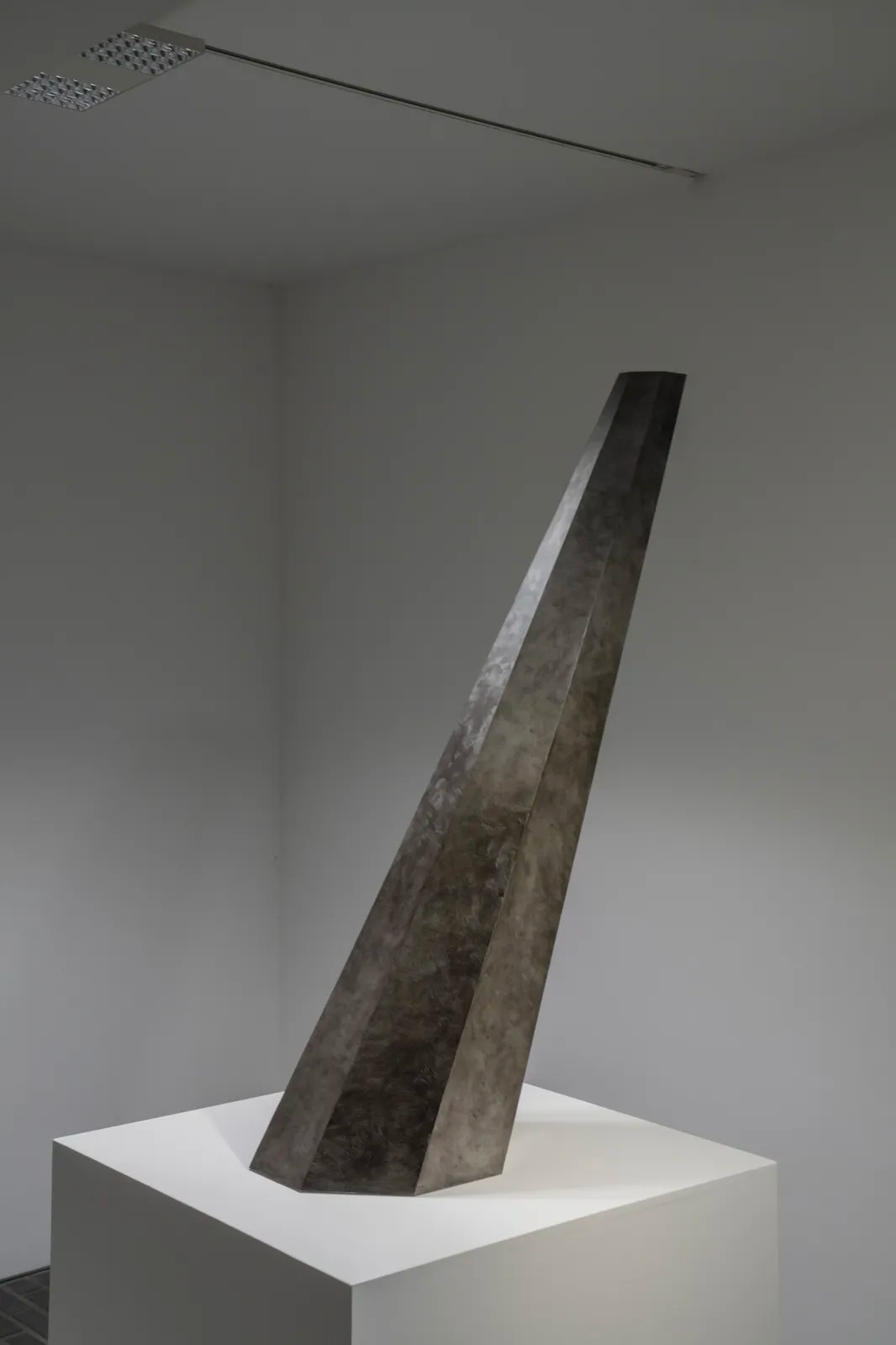
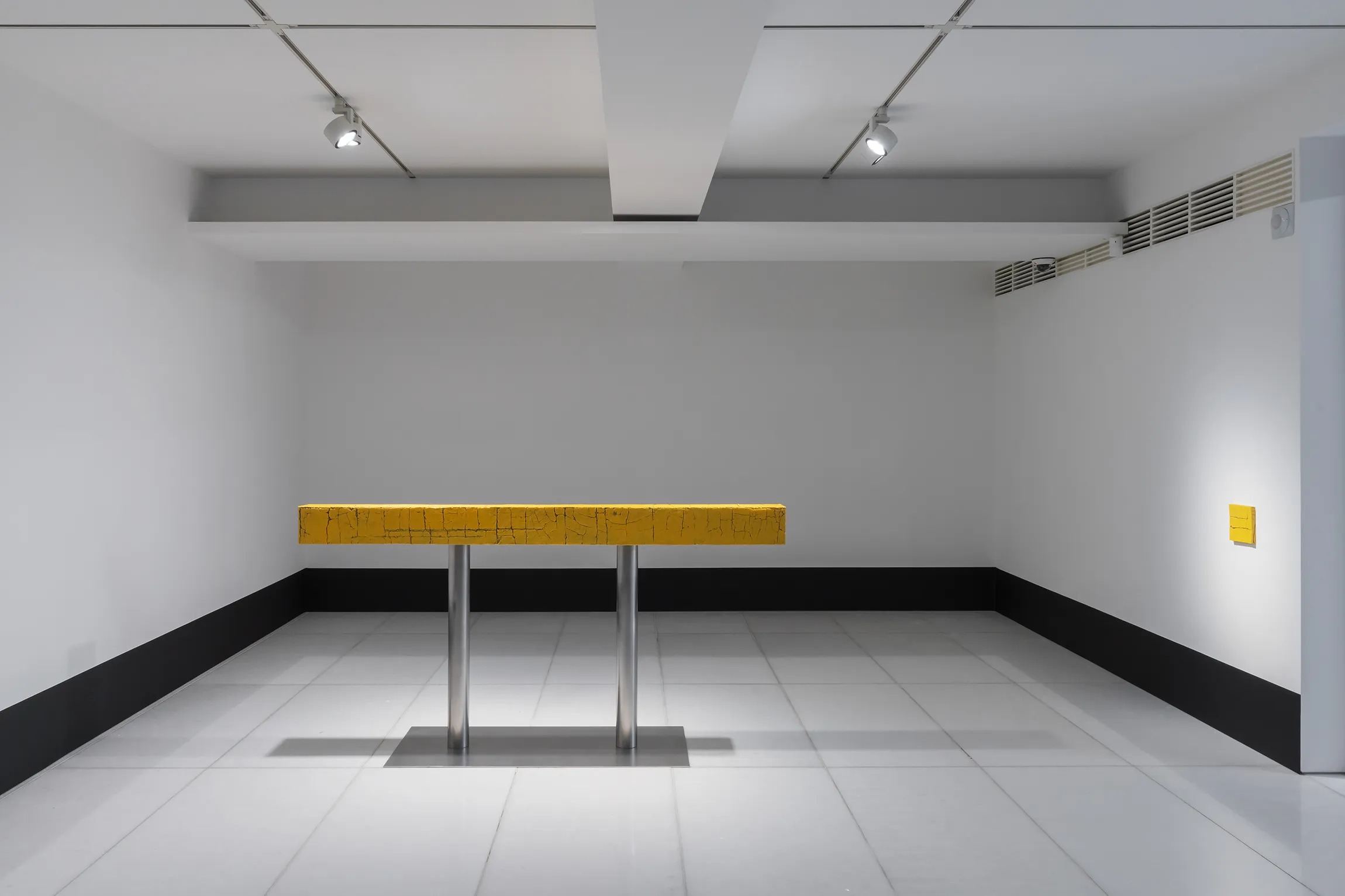
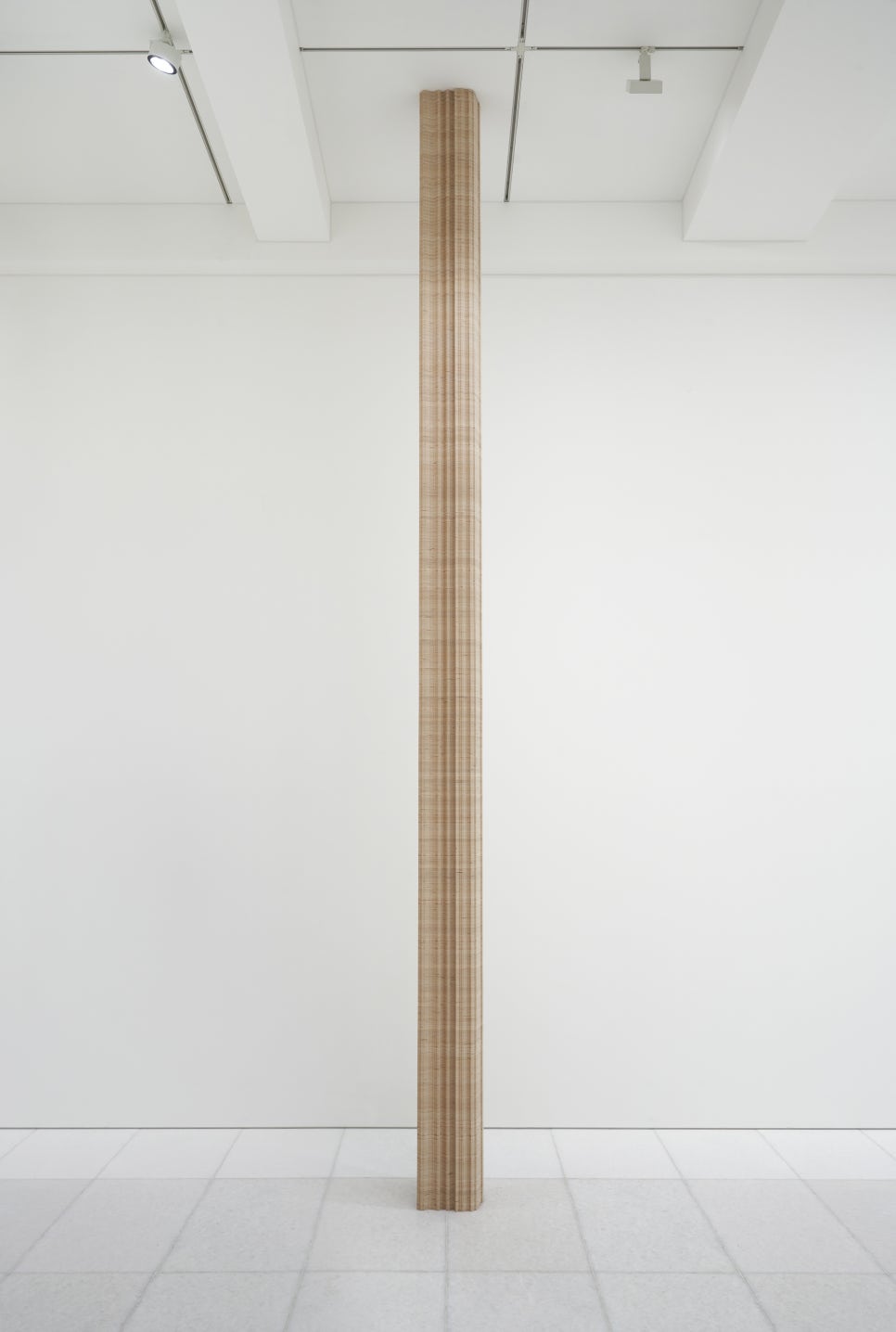
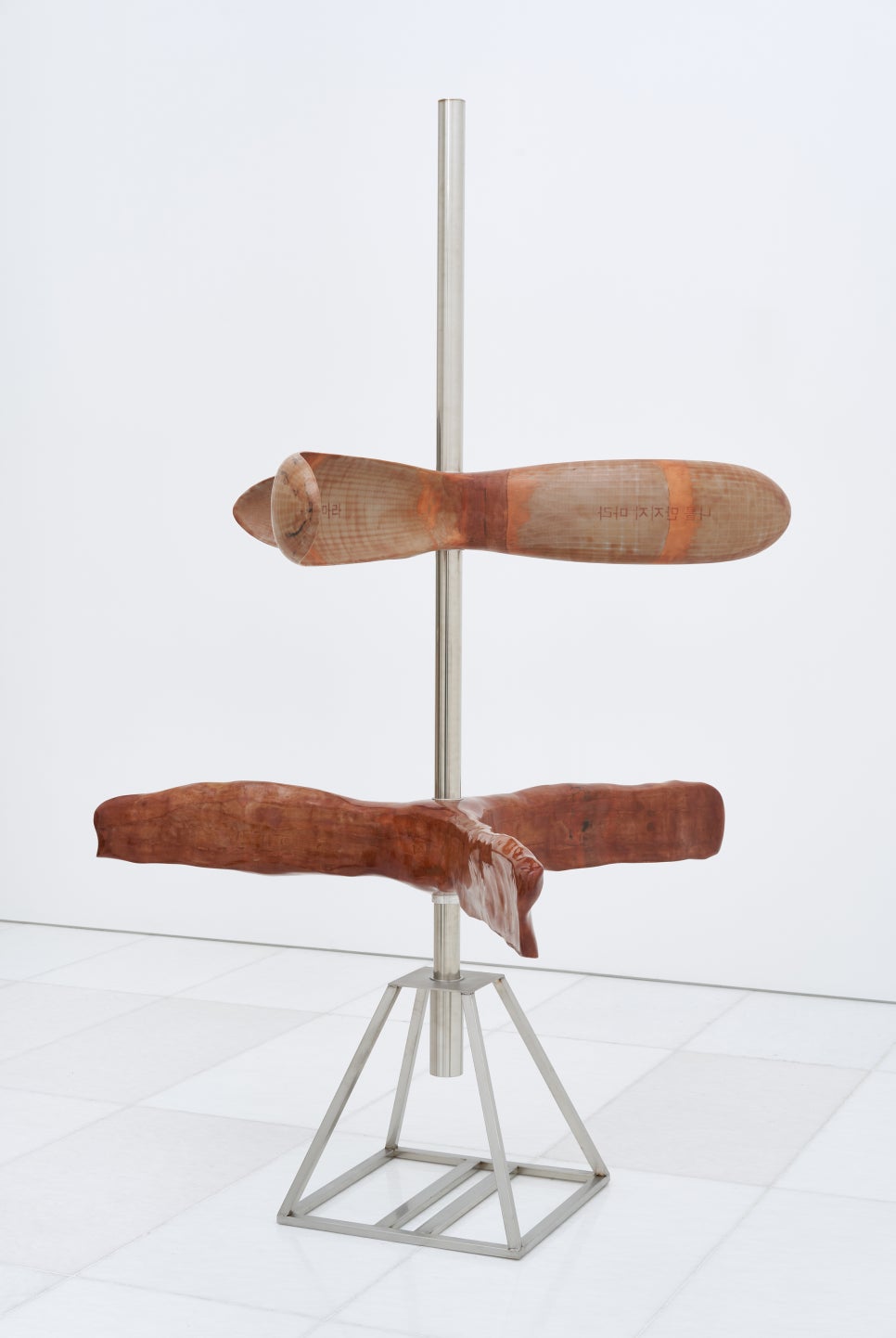
In 《Do you remember love》 (2020), line, scale, distance, and tactility intersect to produce increasingly complex formal structures. In Line That Wants to be a Line and Play within the Play, Kim overlaps, separates, enlarges, and transforms lines, creating conditions in which similar forms are perceived differently according to their position and orientation. Constant Distance is a 3D-printed reduction derived from Triptych: Size, Movement, Count, allowing viewers to hold a small mass in their hands while simultaneously looking at its larger counterpart.
The visual scale of the distant sculpture and the tactile scale of the object held in the hand interfere with one another. Drawing Made from a Distance, produced by attaching a pencil to the end of a long aluminum rod, likewise introduces physical distance into the process of making and leaves subtle deviations between the artist’s intention and the resulting line.
Although works from this period employ diverse materials and methods—including resin, aluminum, carbon fiber, urethane foam, and 3D printing—these materials are used primarily to regulate how the viewer’s eyes and body measure and perceive the work. Vertical and horizontal orientations, enlargement and reduction, proximity and distance function not as separate formal devices but as means of turning perceptual uncertainty into a physical experience.
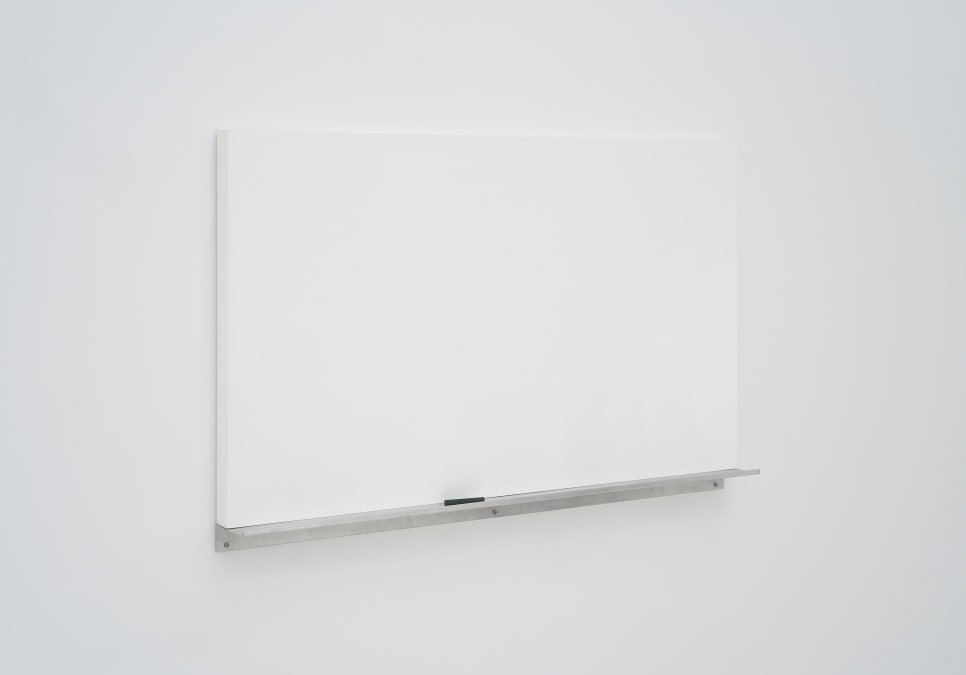
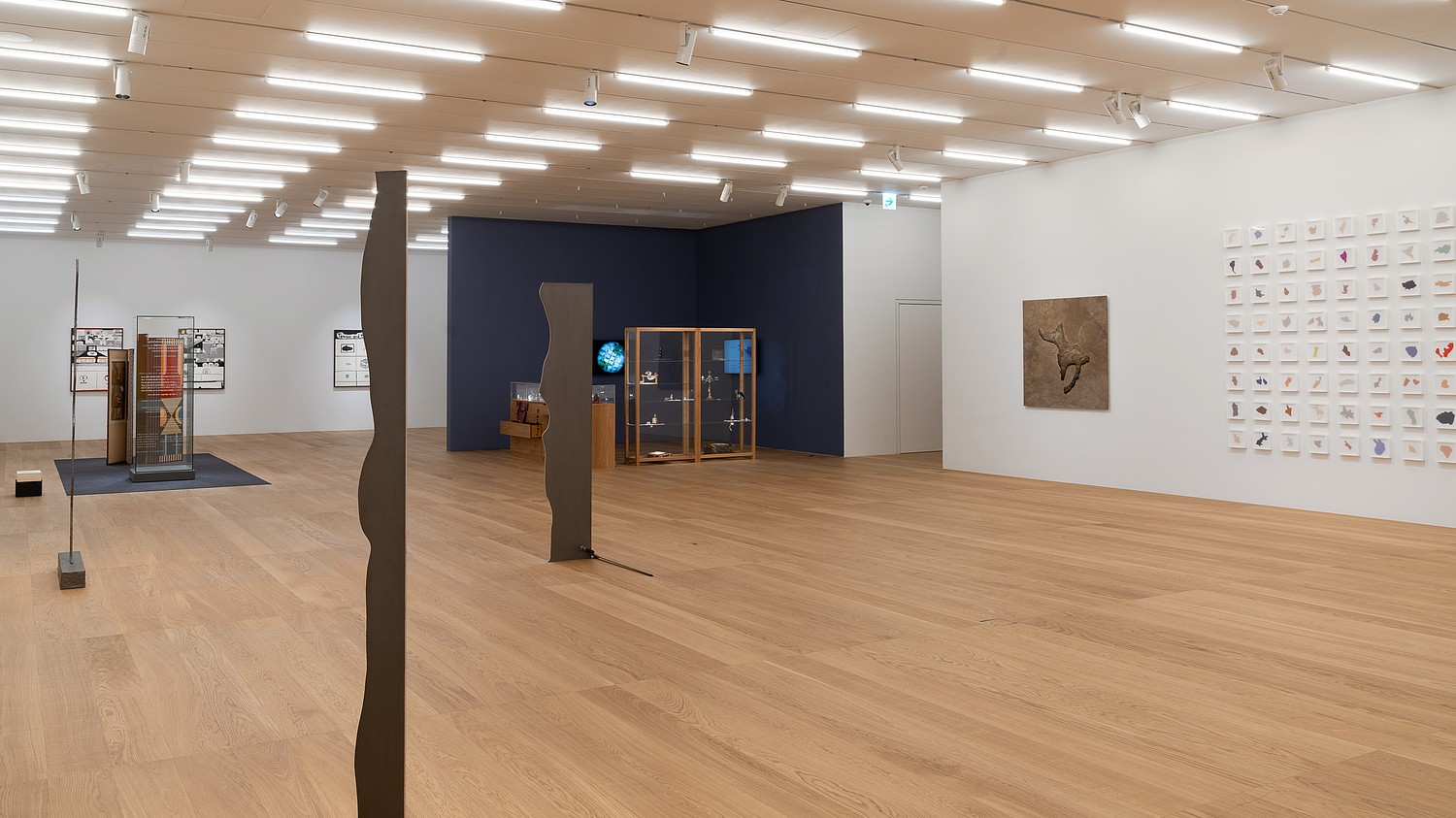
From 2024 onward, methods of production and the conditions under which works are made become increasingly explicit components of Kim’s practice. In 《Seeing What Is Not There》, he transfers traces of the ceiling and floor onto other wall surfaces, draws from a distance at which the result is difficult to verify with the naked eye, and produces molds from which the original model has been removed. Drawing, rubbing, molding, and video operate as distinct media while sharing an interest in recording spaces and objects that cannot be completely grasped through vision.
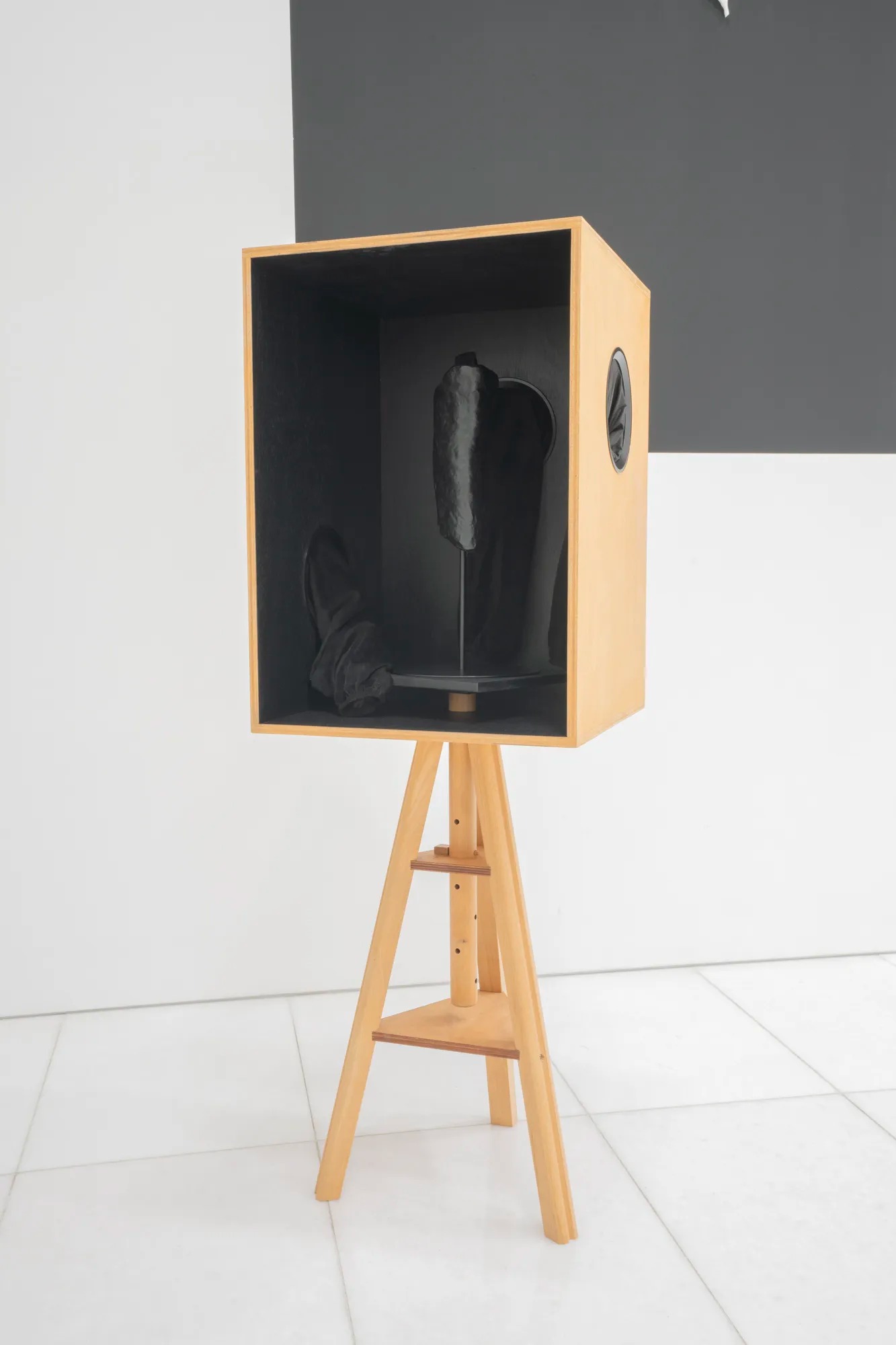
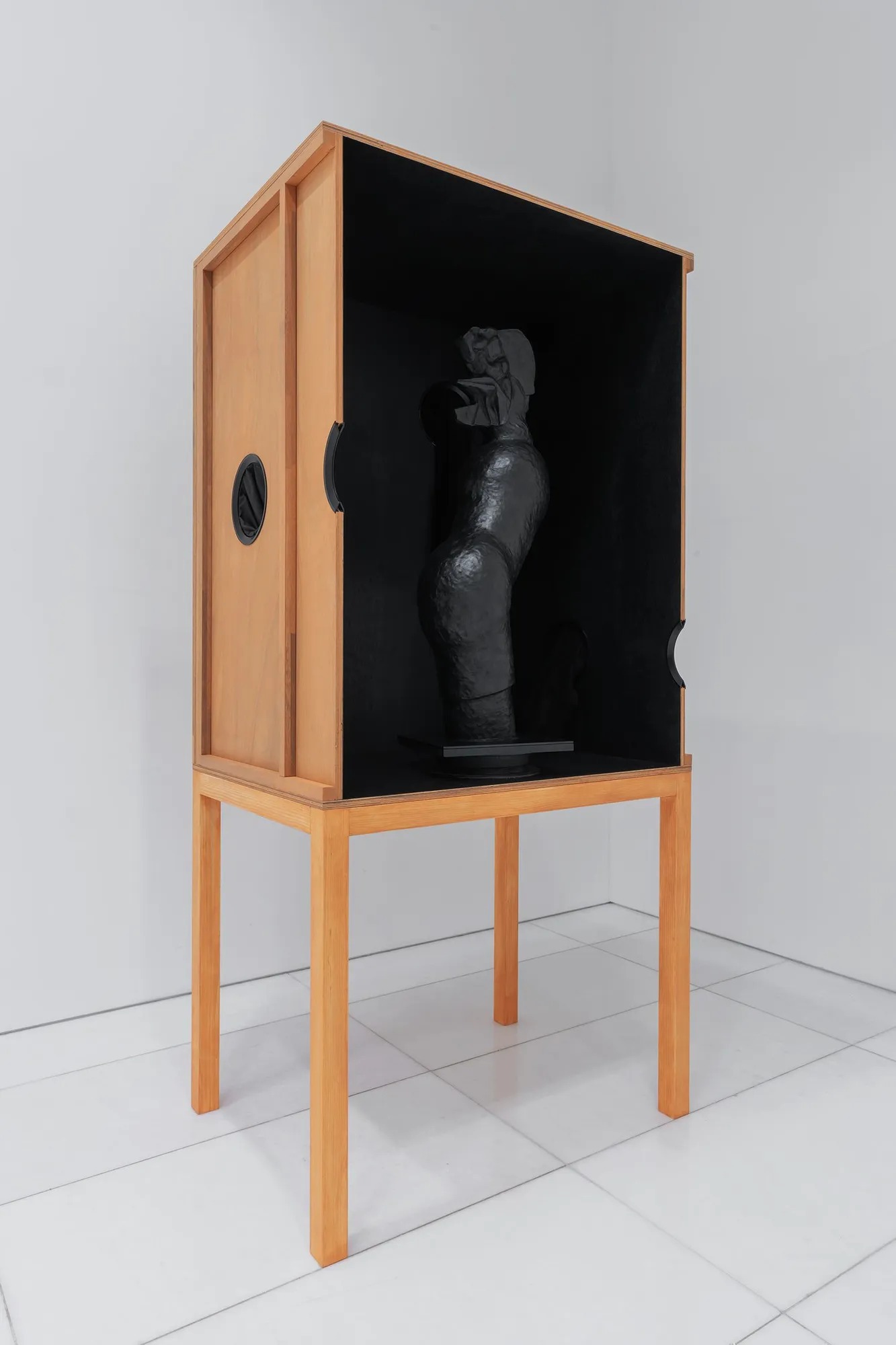
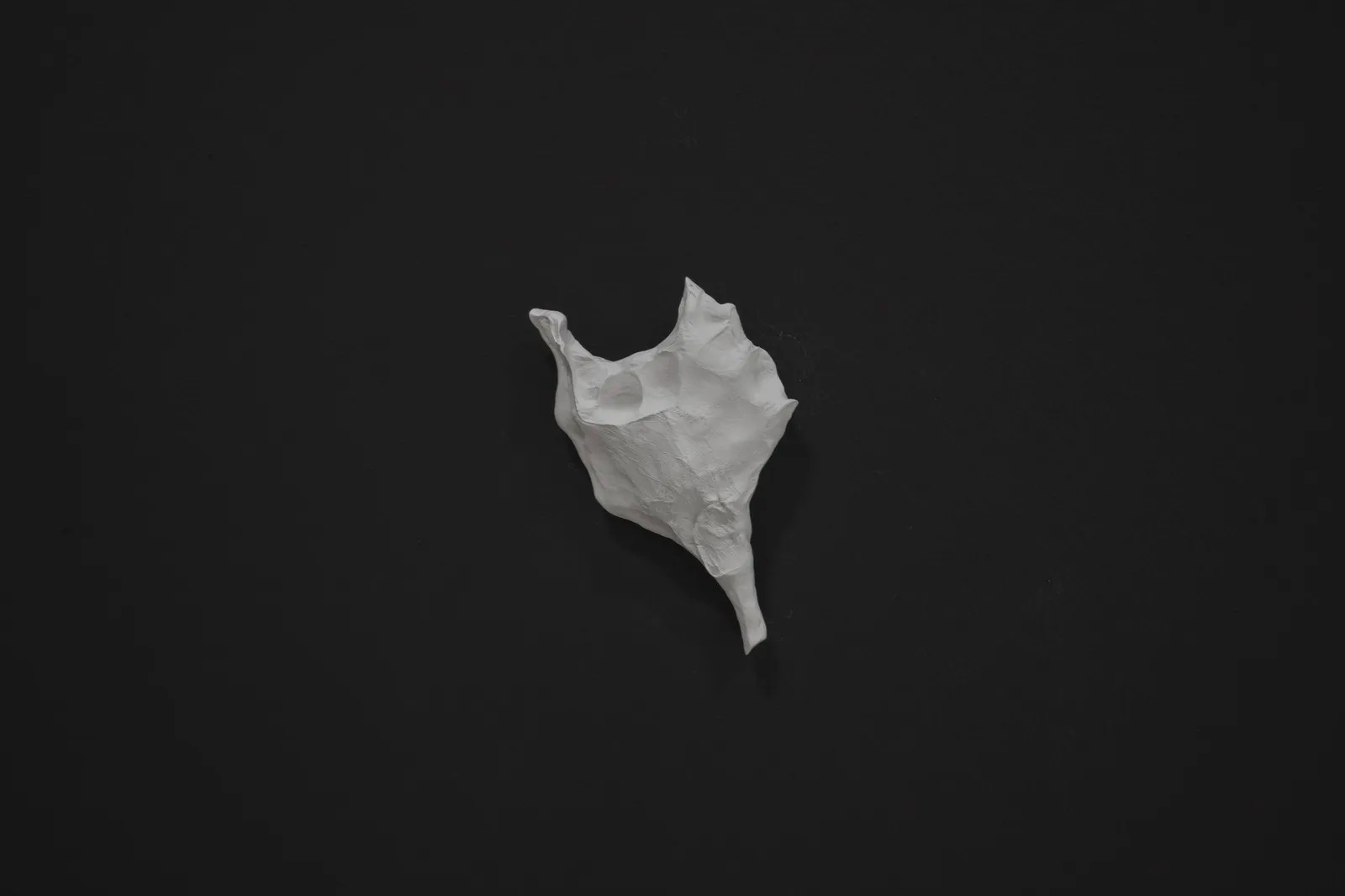
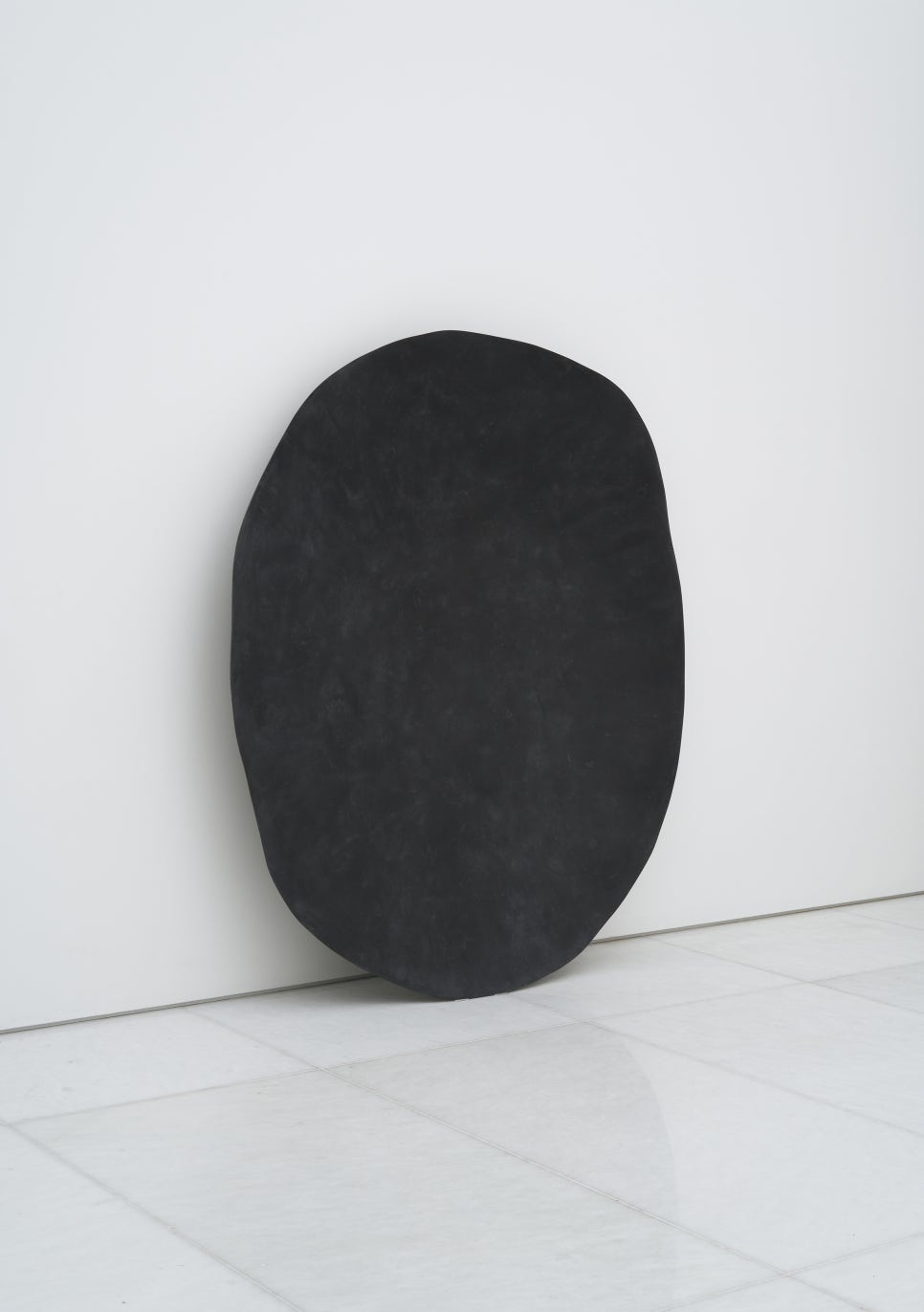
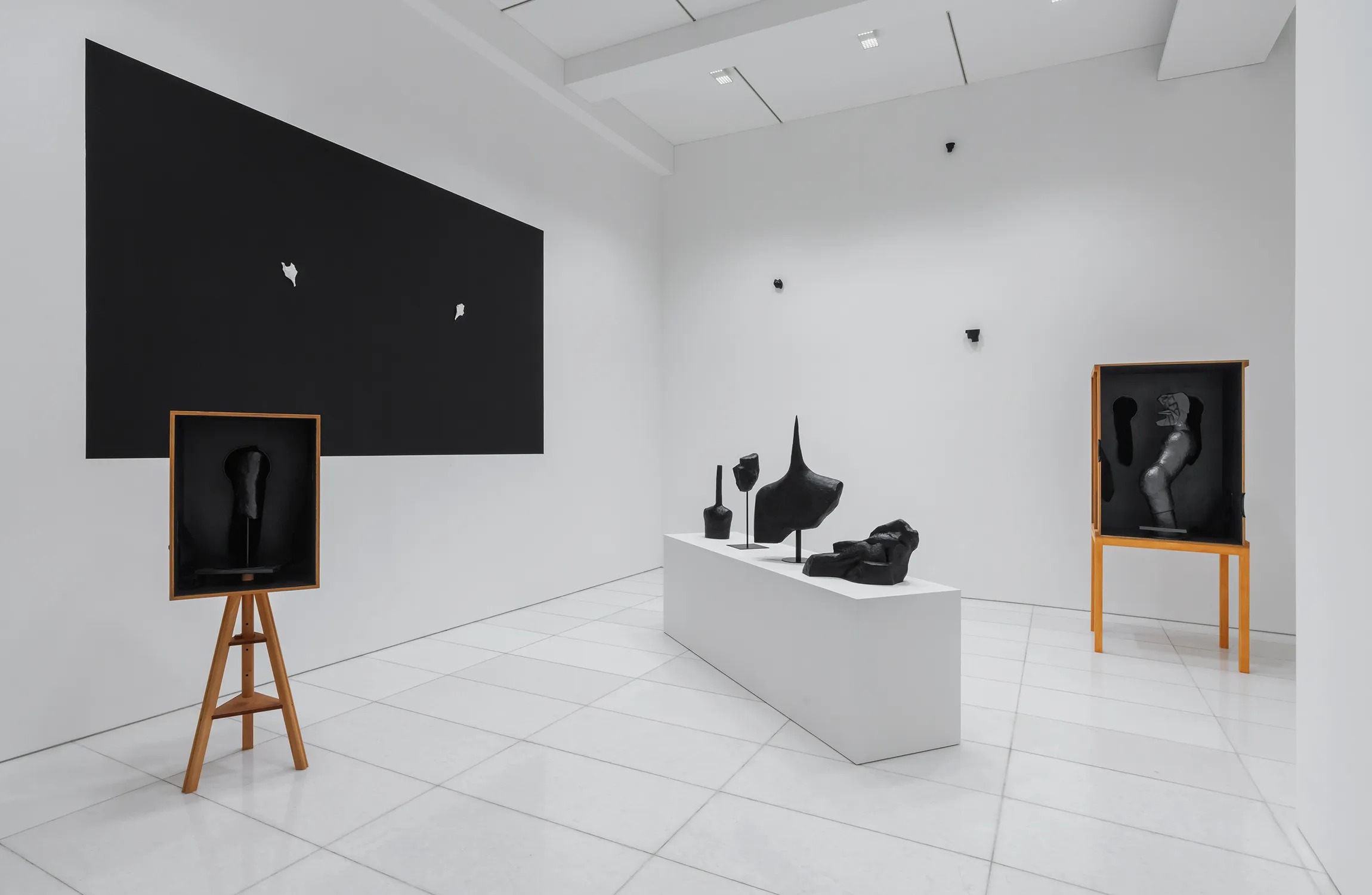
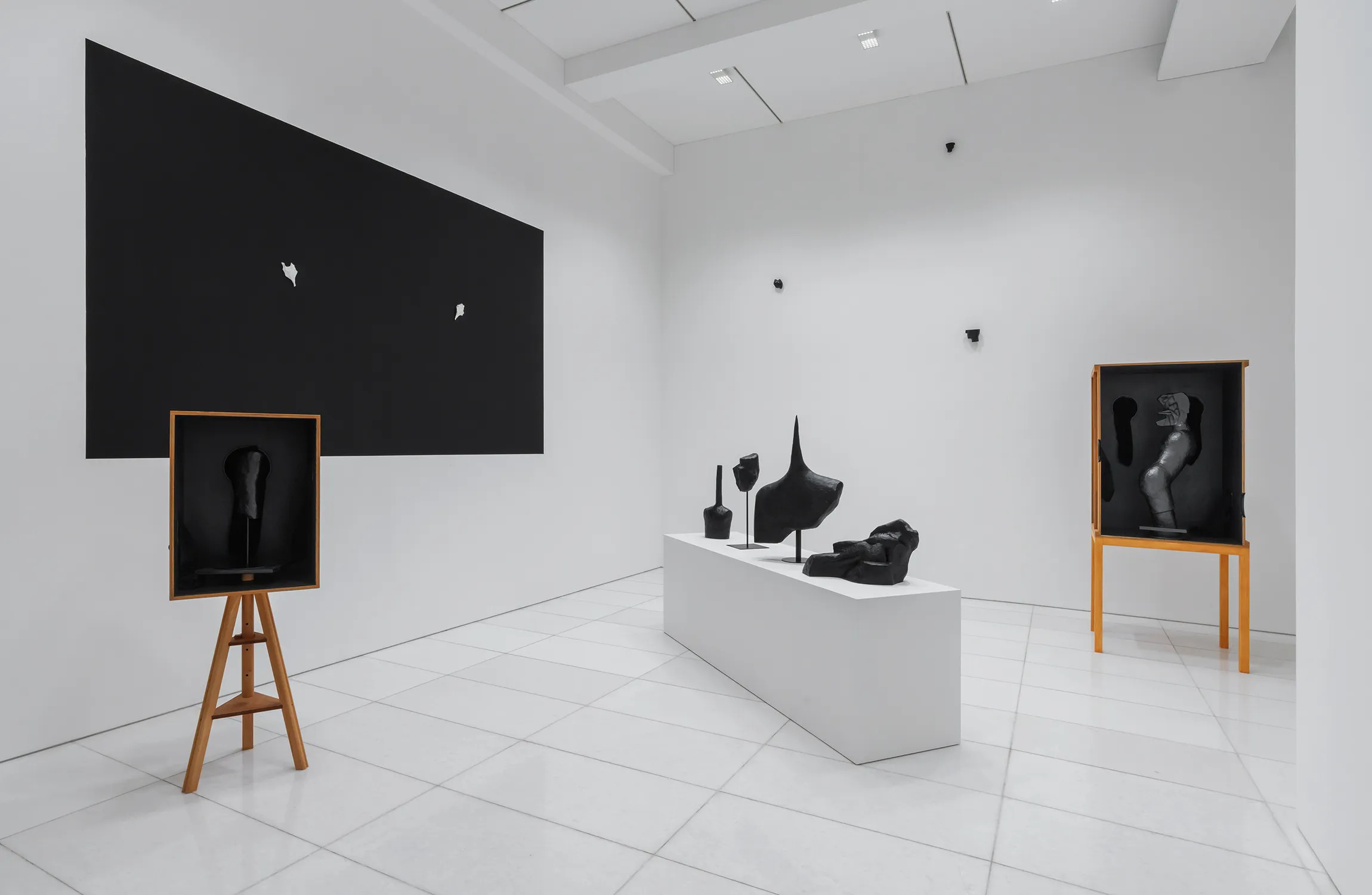
In 《A Man Asleep》 (2026), this experiment shifts more directly toward the act of making itself. Kim establishes the hypothetical condition of inserting his hands into a box whose interior cannot be seen and producing forms without visually checking or correcting them. The resistance and texture of the material against the fingertips, the movements of pressing and grasping, bodily memory, and touch consequently become decisive elements in shaping the form.
For Kim, a method of production is not exhausted as a technical procedure for obtaining a finished object. He first establishes conditions that restrict vision, increase or eliminate distance, remove the original model, or bring different senses into conflict, and then accepts the deviations and transformations generated under those conditions as part of the work.
His formal language has therefore expanded from figurative sculpture to line, drawing, installation, molding, video, and tactile experiments, while consistently treating the conditions through which form is produced and perceived as an integral part of the work’s content.