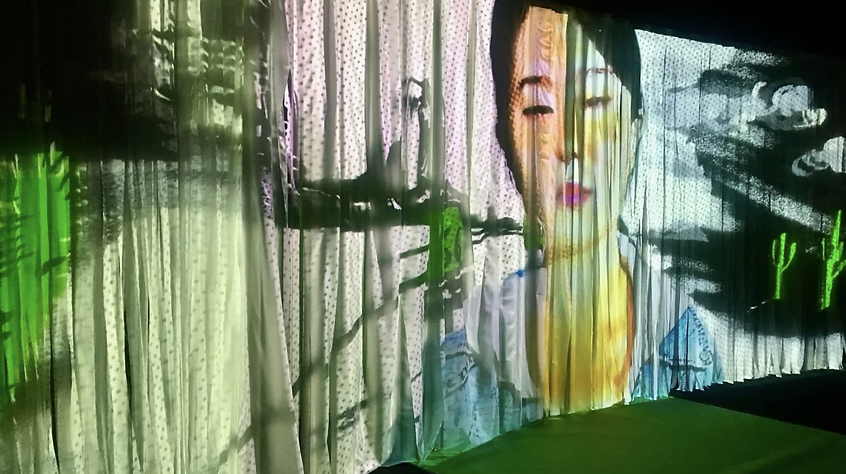
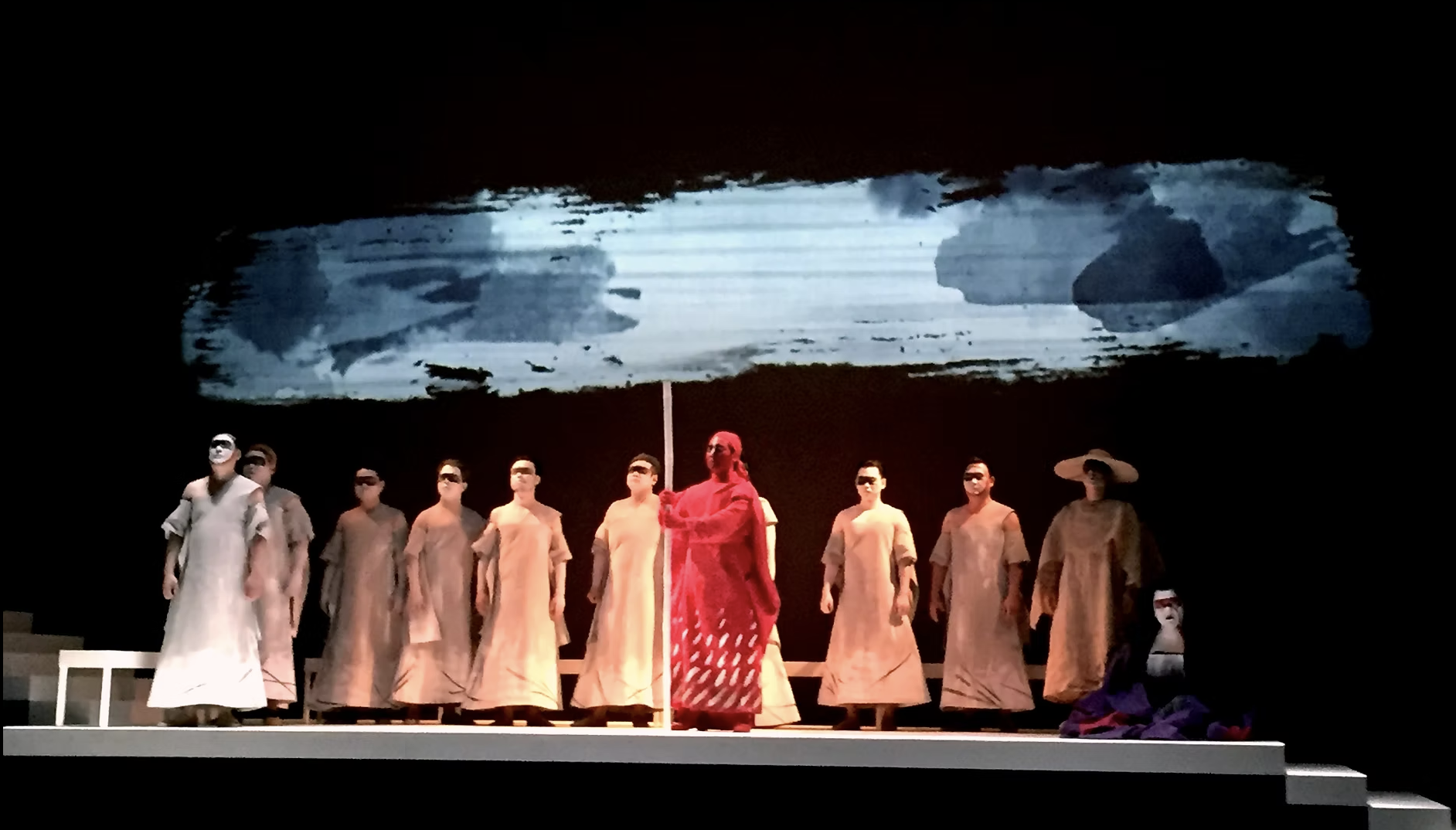
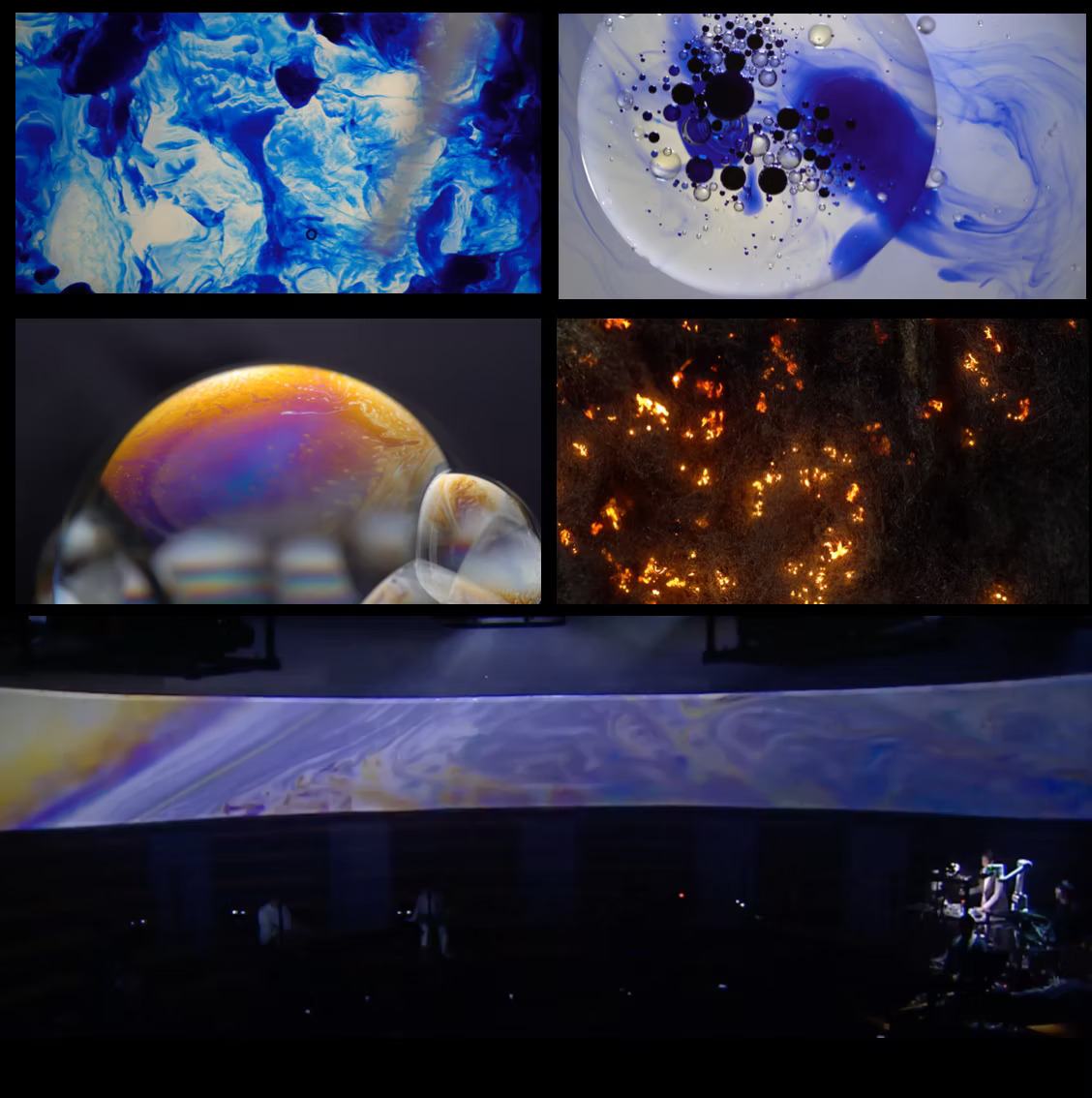
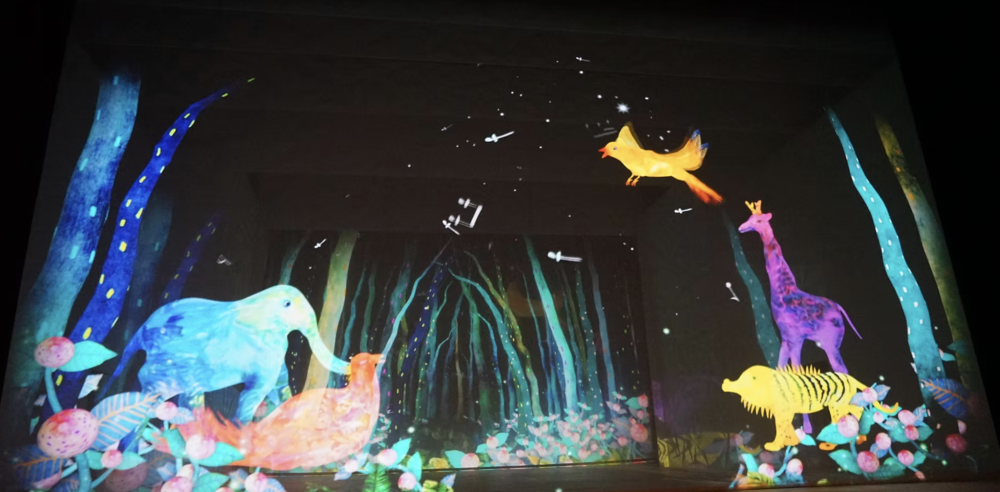
A defining aspect of Kim’s practice is the sustained connection
she has built between the cyclical, holistic worldview of Eastern philosophy
and digital technology. Nature is not positioned as something external to
humanity; humans, microorganisms, animals, water, data, and virtual beings are
placed within the same network of relationships.
Concepts such as the Five
Elements, yin and yang, and Daoist circulation first appeared as structures
through which she explored the body and interiority, and later expanded to
connect microscopic life with the cosmos, humans with nonhumans, and
contemporary ecological crises with speculative marine ecosystems. Eastern
thought therefore functions less as an aesthetic motif than as a conceptual
structure that has organized her practice over an extended period of time.
Another distinctive feature is that Kim does not use advanced
technologies simply to produce futuristic imagery. Telematic networks,
biometric data, AI, VR, AR, XR, the metaverse, and motion capture are all
employed as means of making “connection” perceptible and experiential.
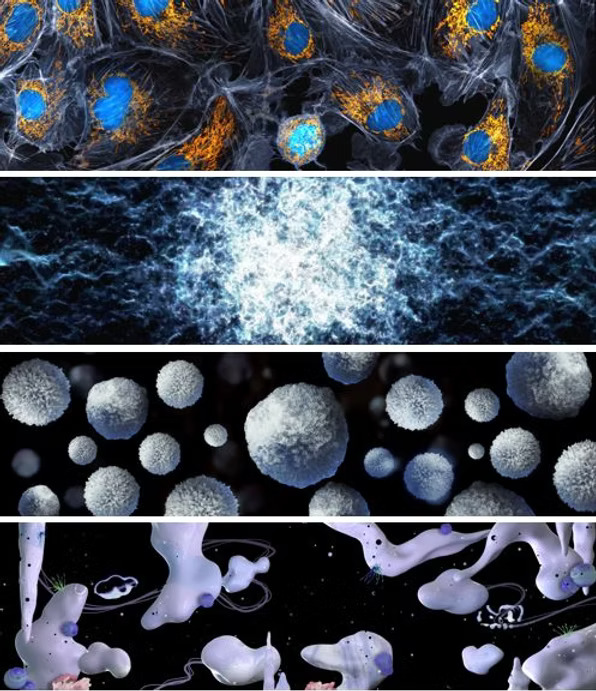
In
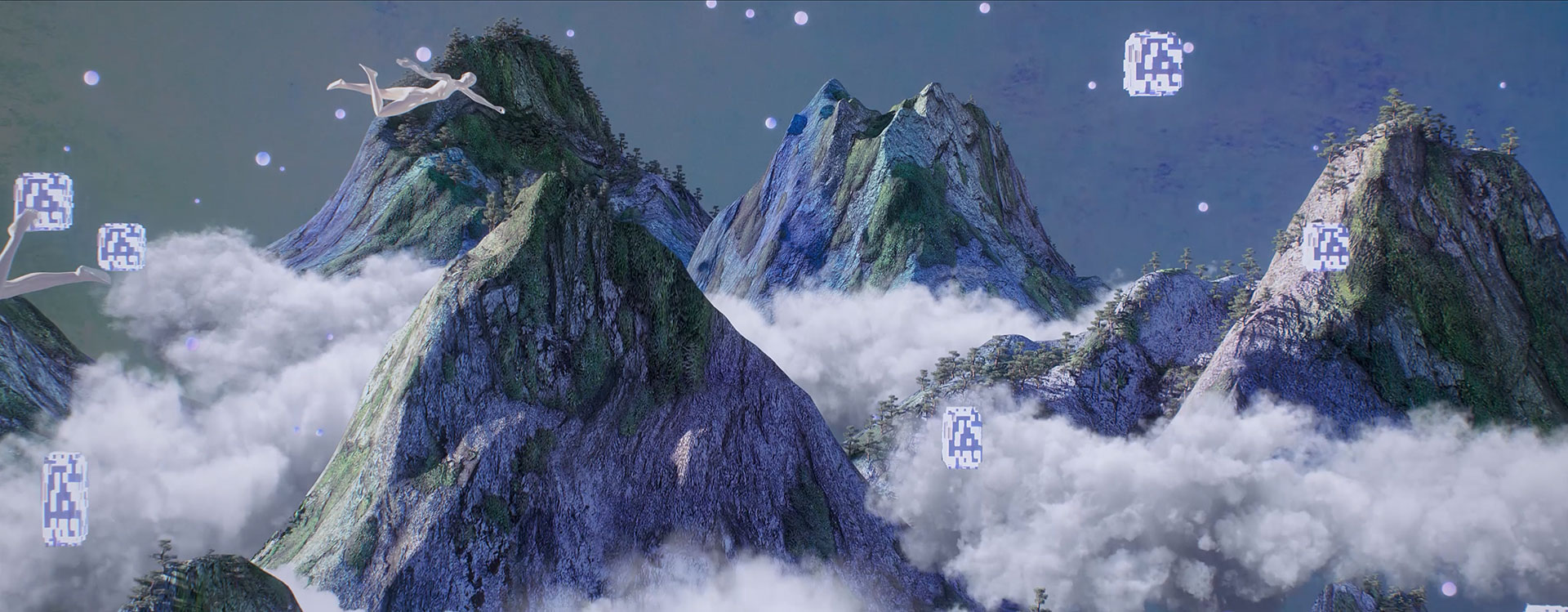
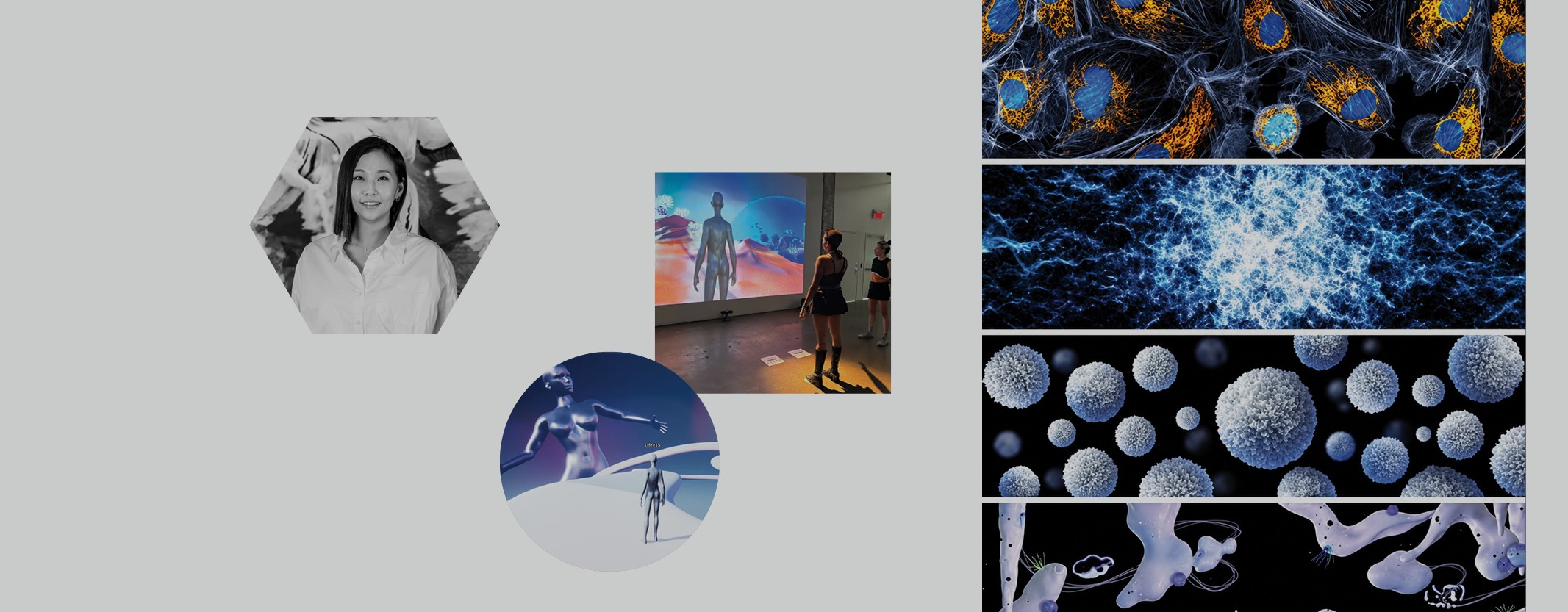
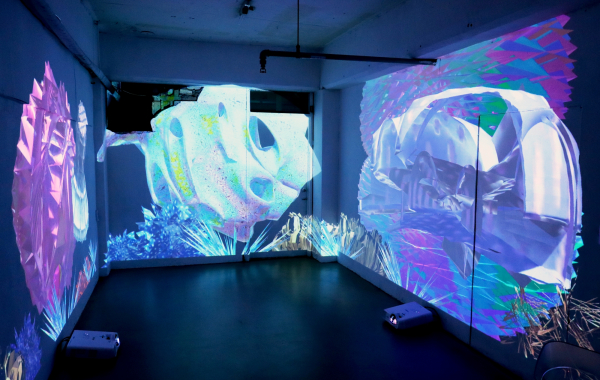
MICRO Cosmos, biometric information from geographically
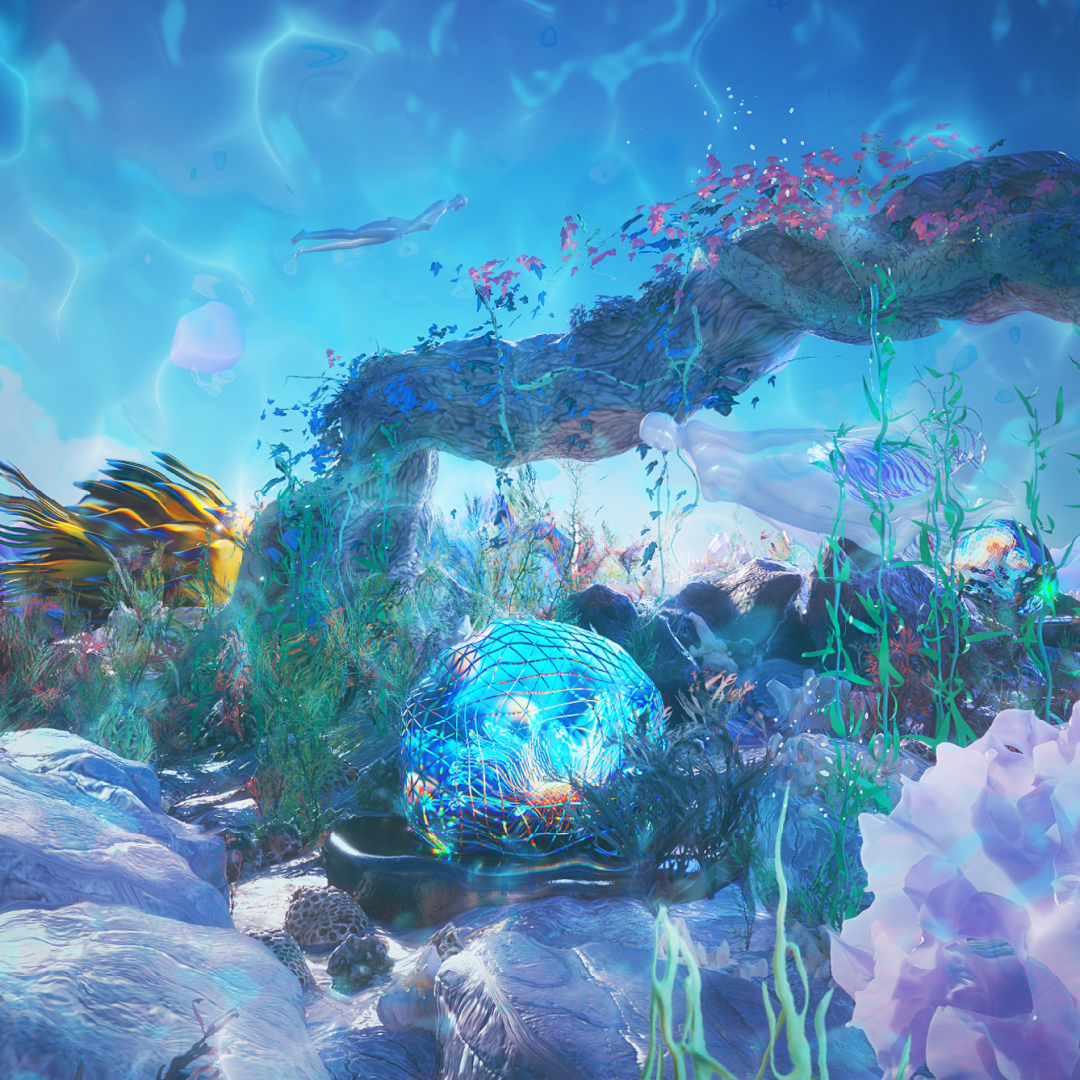
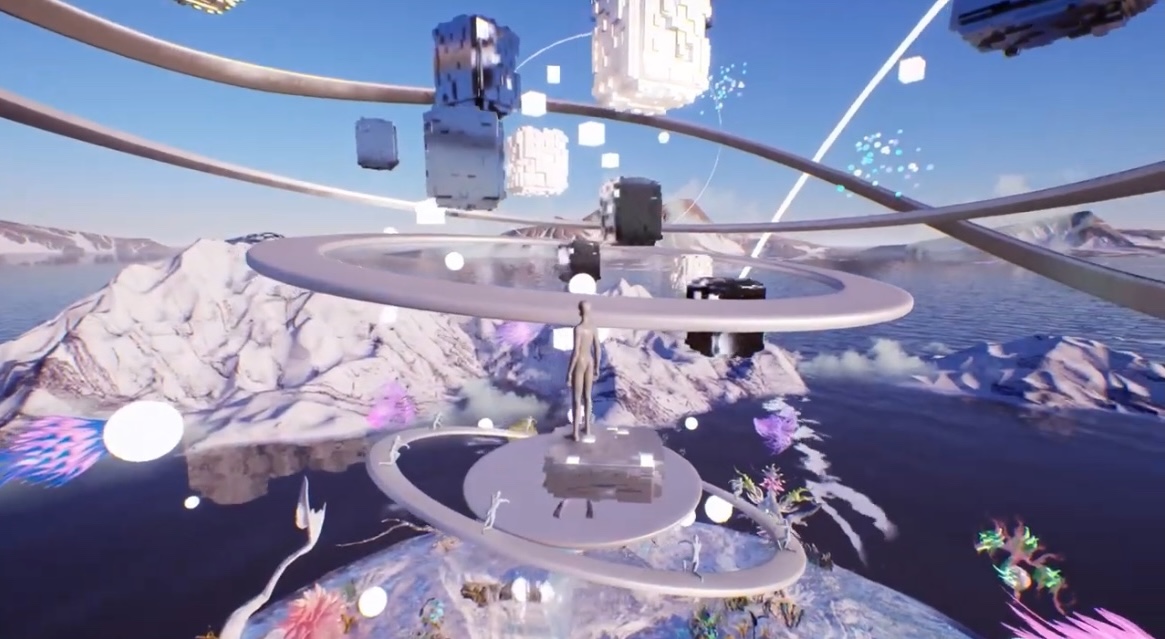
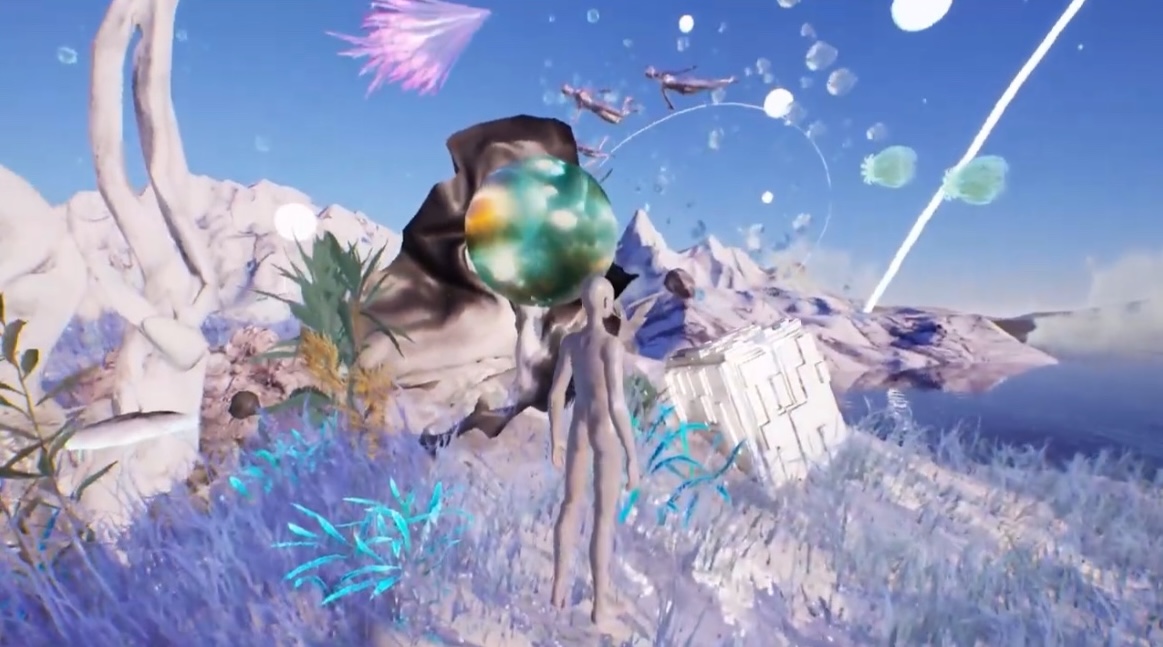
separated bodies converges within the same image; in Hybrid
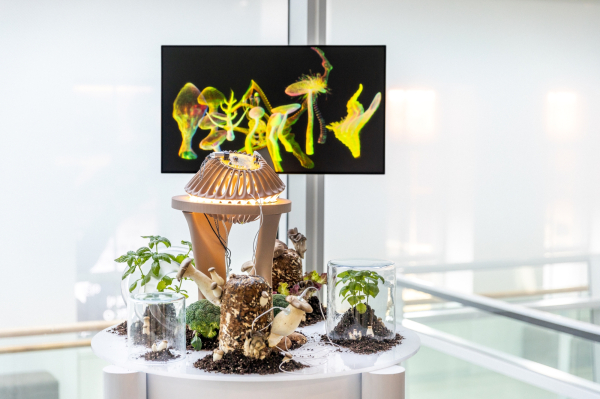
Nature, viewers and virtual organisms occupy a shared environment;
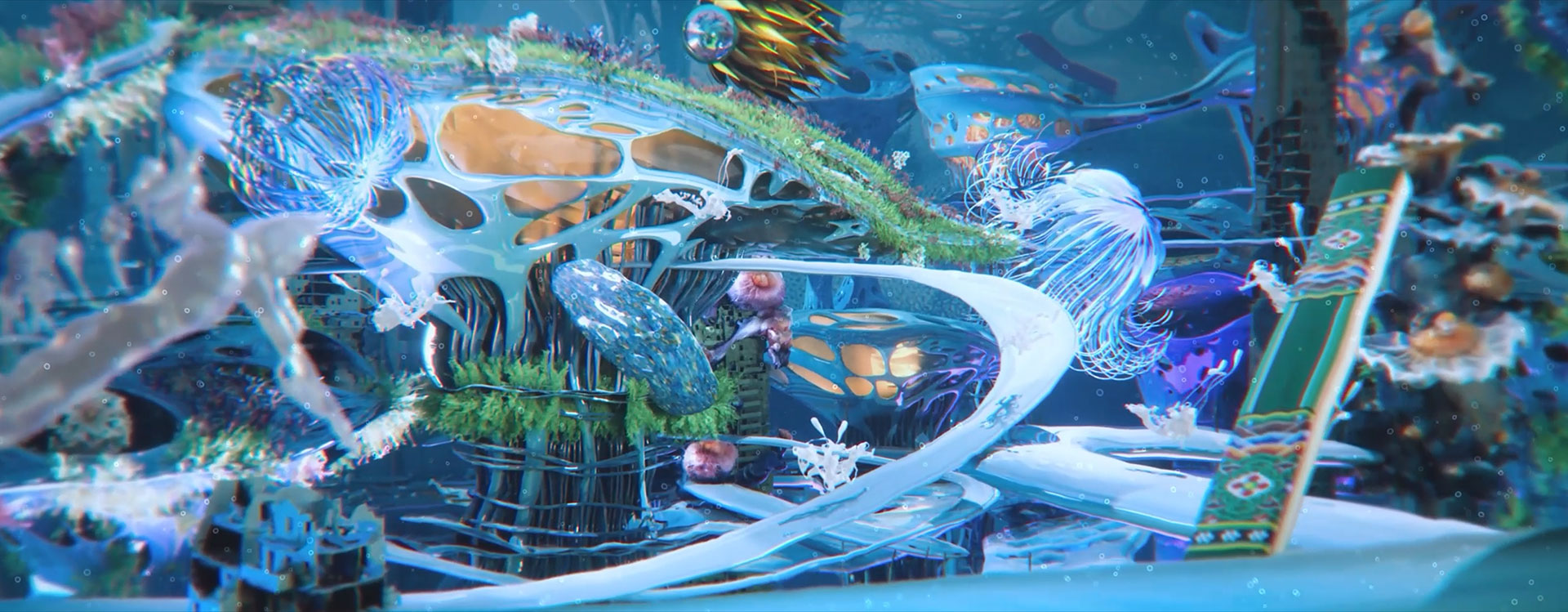
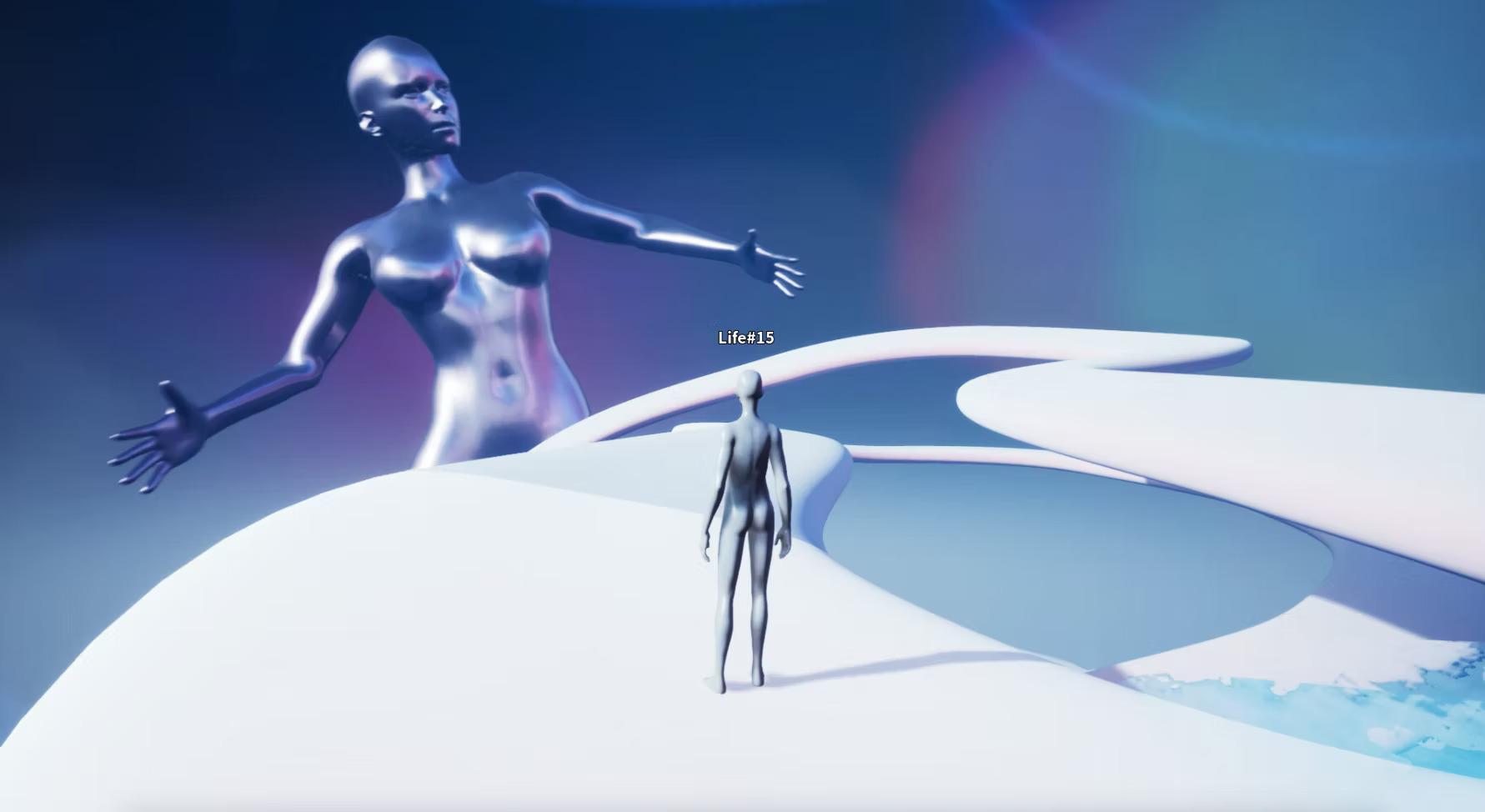
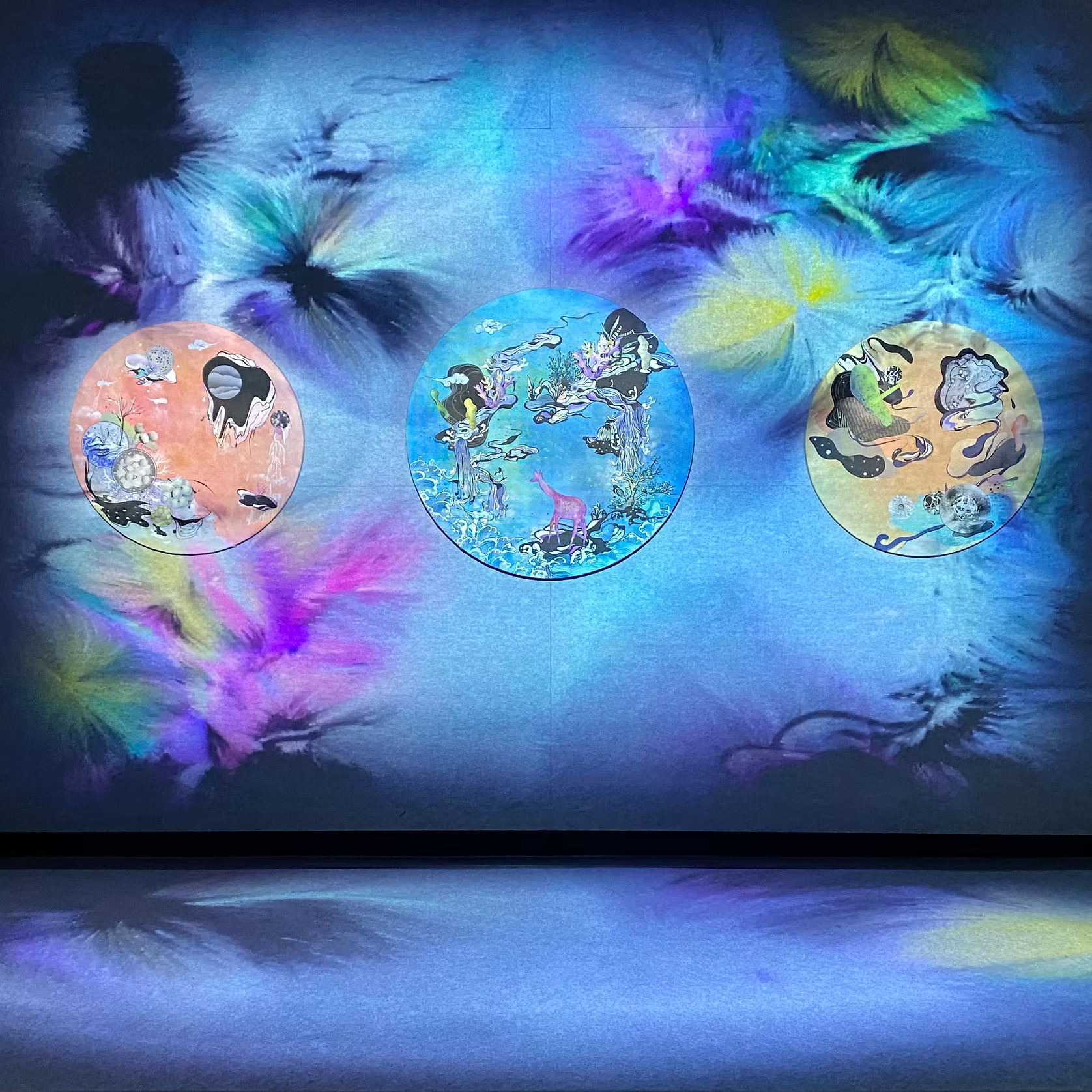
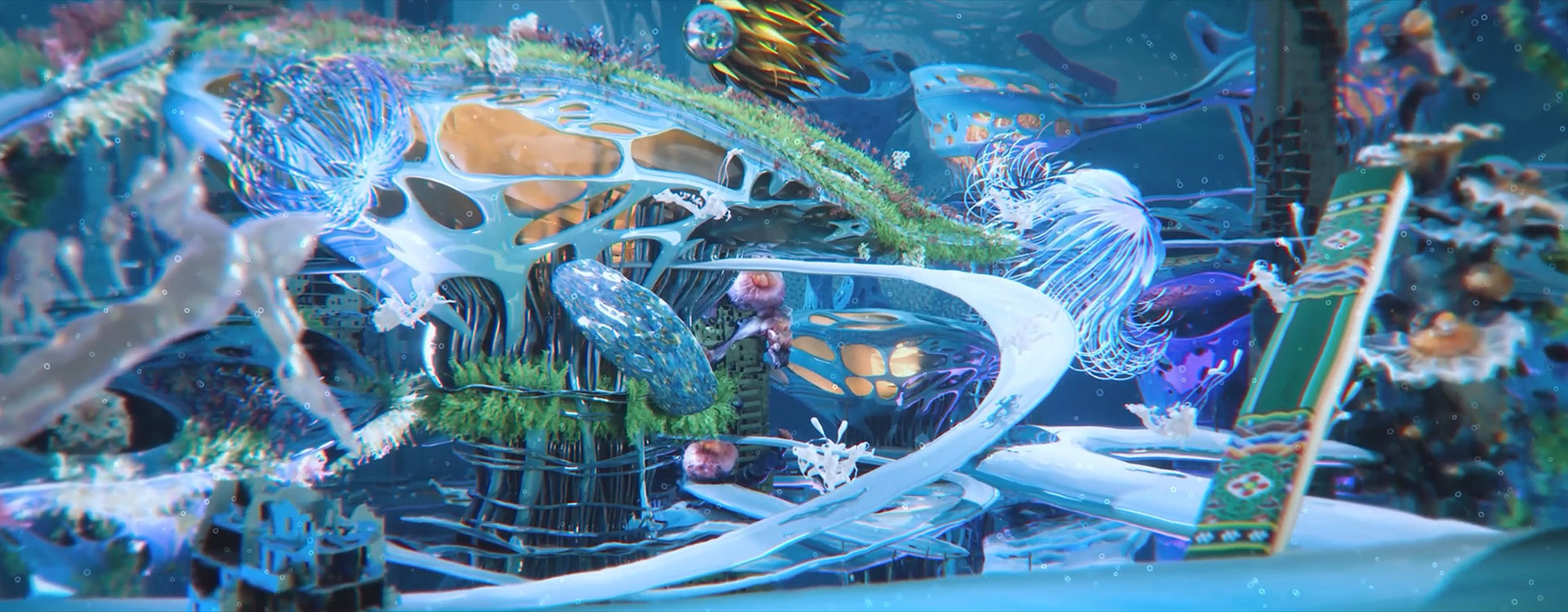
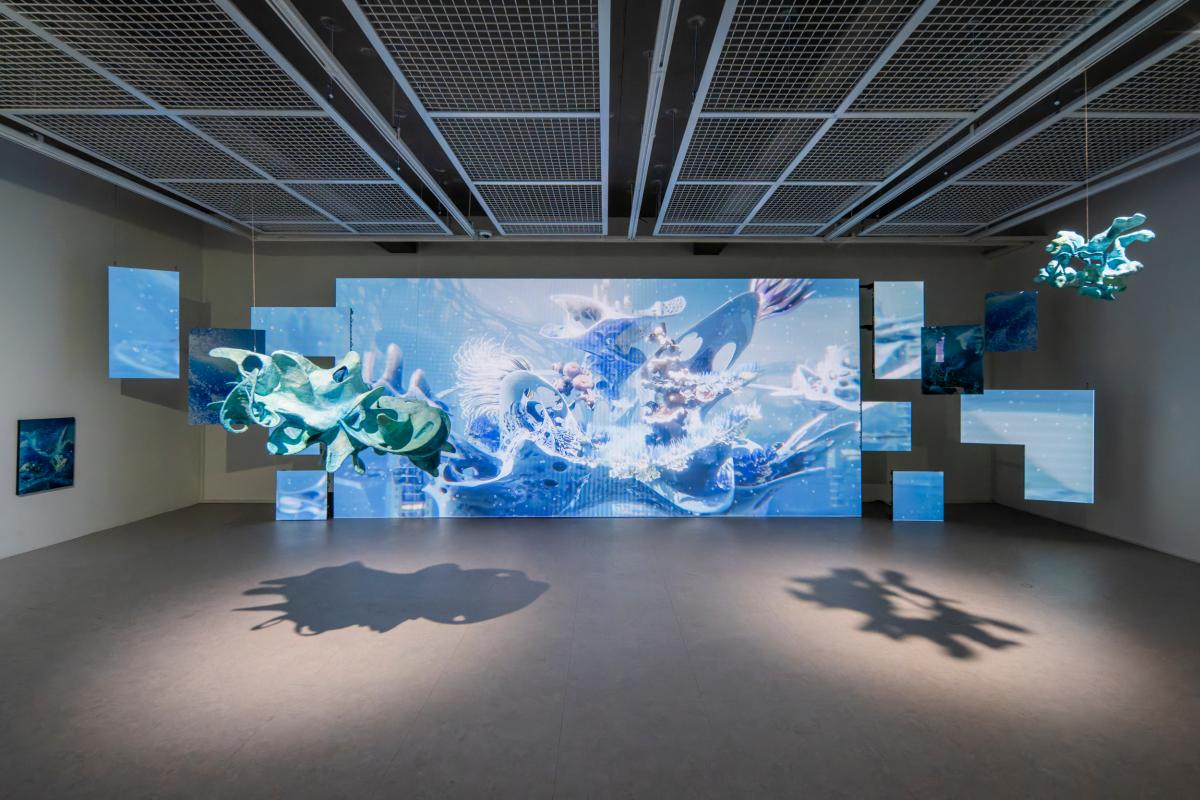
and in HAERA – Ocean Reborn, even the waste left by humanity
is reimagined as a condition from which new life can emerge.
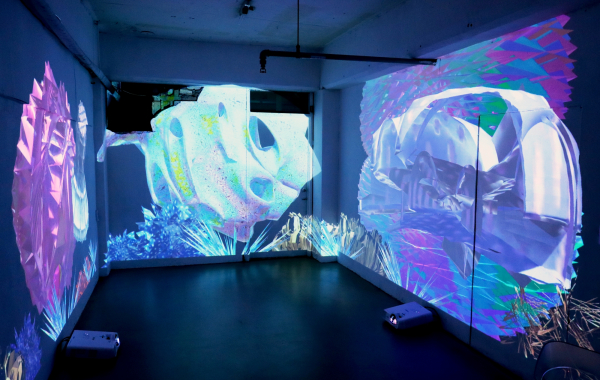
While immersive
media practices can often emphasize technological spectacle or the expansion of
virtual space itself, Kim combines these technologies with Eastern approaches
to nature, bodily experience, and ecological inquiry, using them to make
relationships physically and sensorially felt.
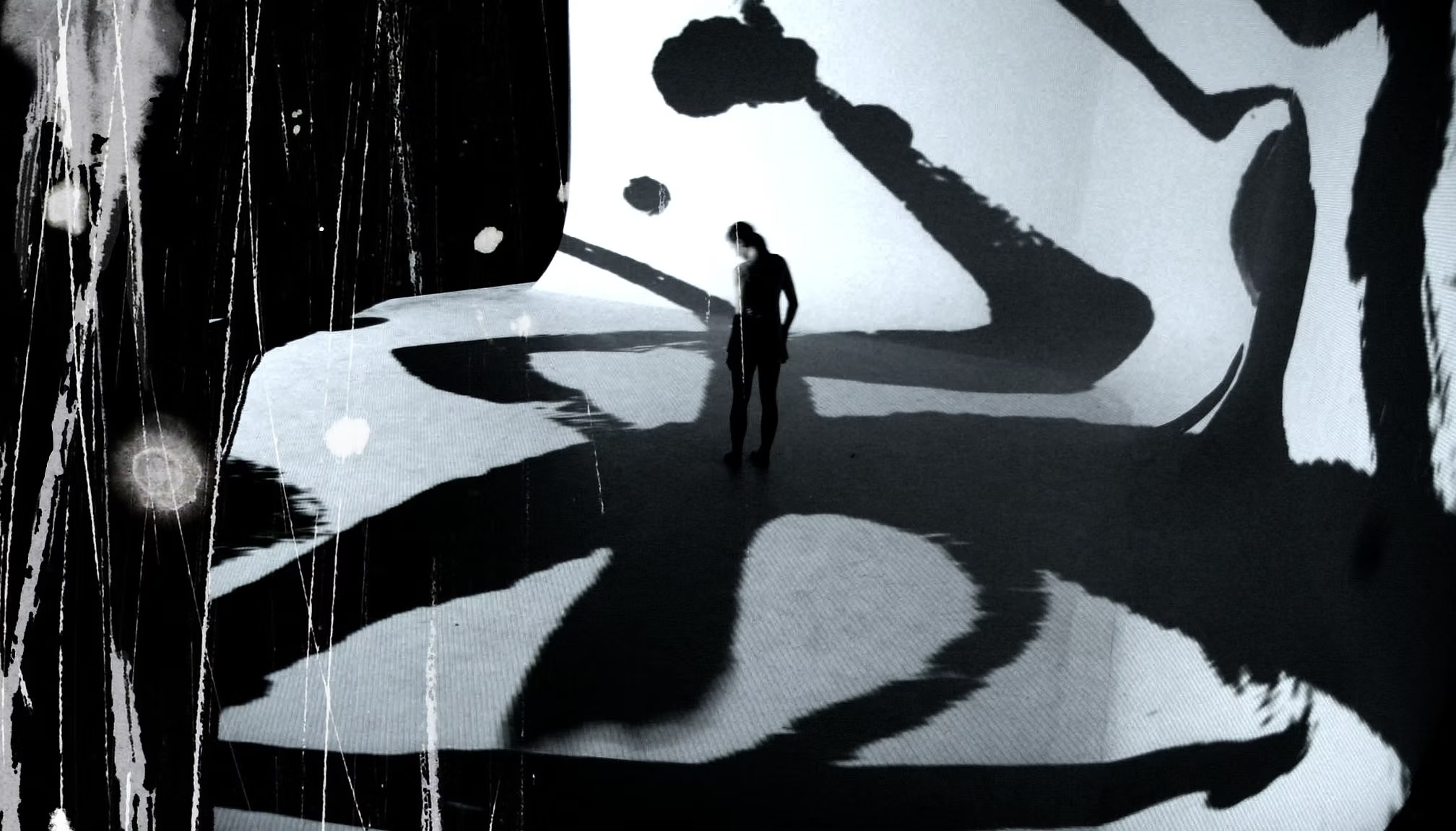
The development of her practice can itself be understood as a kind
of cycle. Beginning with the self, the shadow, and bodily movement, her work
expanded toward connections with others through networks, the circulation of
microscopic life and nature, and finally human-nonhuman ecosystems within the
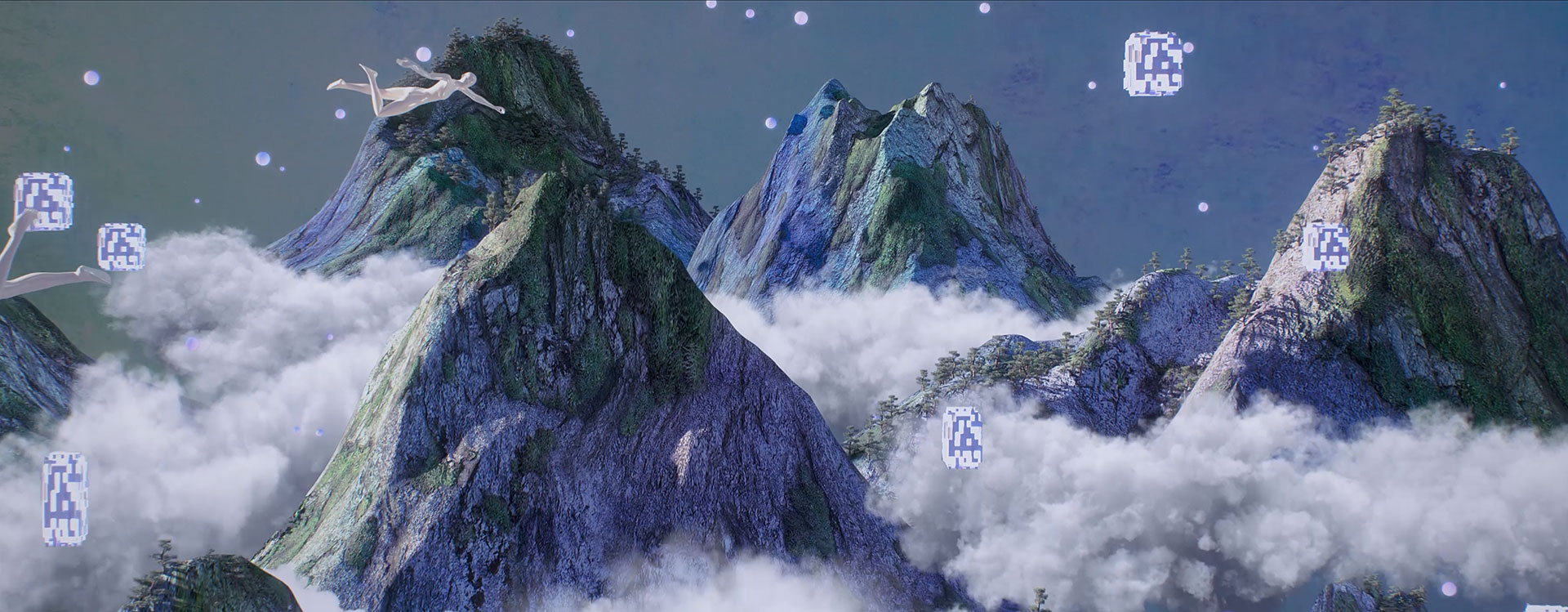
metaverse. More recently, these concerns have converged within the independent
world of “HAERA.”
Water has become an especially important thread connecting
these recent projects. It is simultaneously a cause of disaster and submersion
and a medium of life, healing, memory, and regeneration. This duality allows
the ocean of HAERA to function not simply as an apocalyptic landscape of
climate crisis but as a habitat in which different forms of life and new
relationships continue to emerge beyond the conditions of existing human
civilization.
Kim studied Oriental Painting and Industrial Design at Hongik
University before earning an MFA in Experimental Animation and Integrated Media
from the California Institute of the Arts. She is currently an Associate
Professor of Digital Arts at the Seoul Institute of the Arts, where she
continues both her research and artistic practice.
She also served as Korea
Director of CultureHub, leading a range of international collaborative
projects, and her work has been presented internationally at Times Square in
New York, La MaMa E.T.C., the Korean Cultural Center in Paris, the Society for
Arts and Technology in Montreal, the Prague Quadrennial, and NFC Lisbon, as
well as at KIAF, Art Center Nabi, Ulsan Art Museum, and Paradise Art Lab in
Korea.
She has continued to broaden the scope of her practice through projects
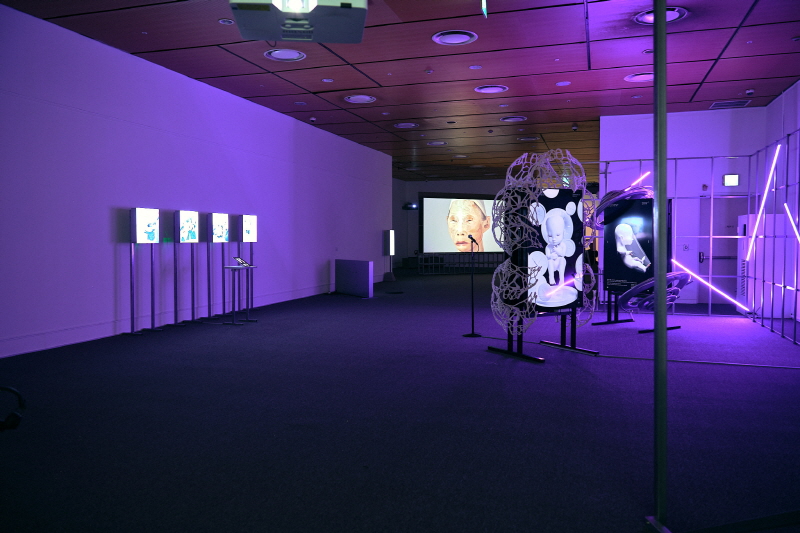
connecting online and offline environments, including 《Meta Platform: Generative Connections》(KF
Gallery, Seoul, 2026). Built on her long engagement with Eastern philosophy,
performance-based sensibility, and continually evolving technological media,
Kim’s practice remains open to further expansion as an evolving artistic
ecosystem connecting humans and nonhumans, the physical and the virtual, and
inherited ways of thinking with imagined ecological futures.