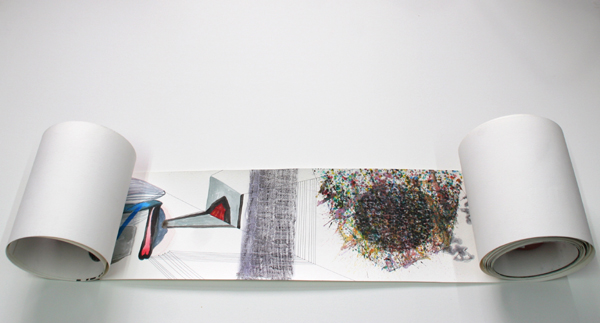
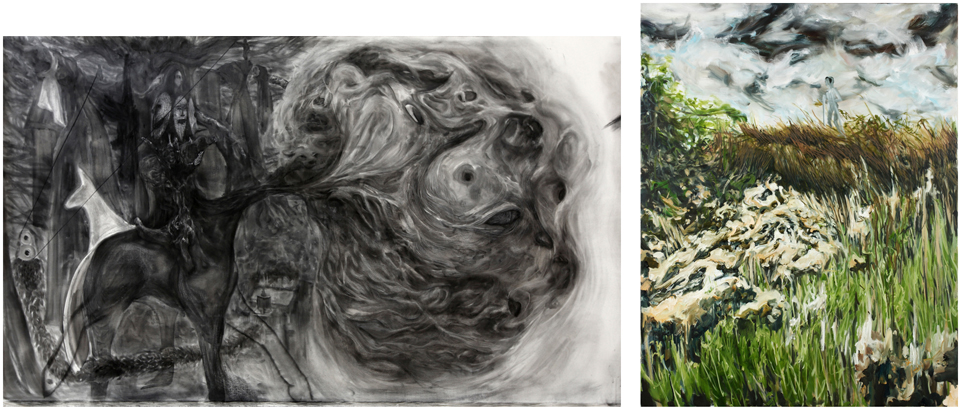
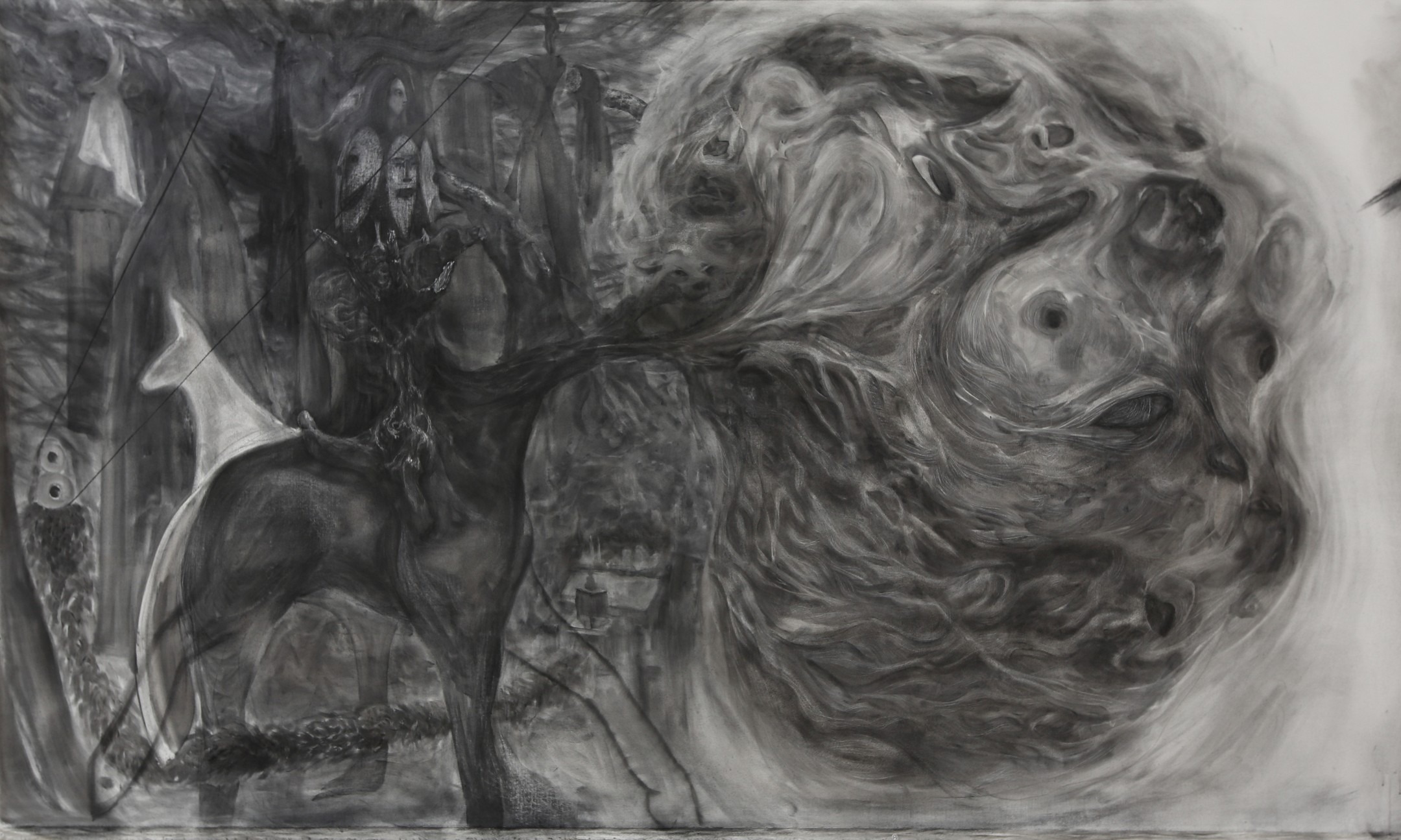
Beom Jinyong worked with drawing and acrylic in his early practice before adopting oil paint as his primary medium around 2013, while continuing to use pen and charcoal when necessary. In his early ‘Dream Diary Recording’ series, he visualized fragmented dream narratives by extending images and events across long sheets of paper or canvas.
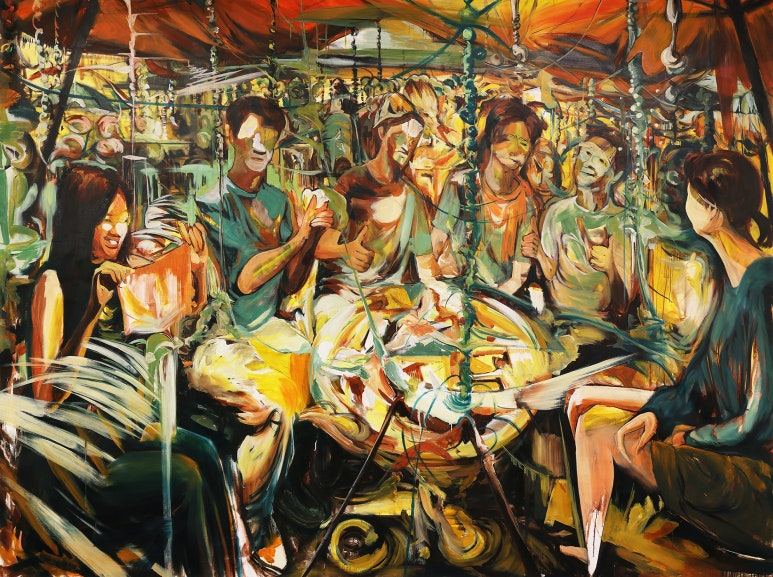
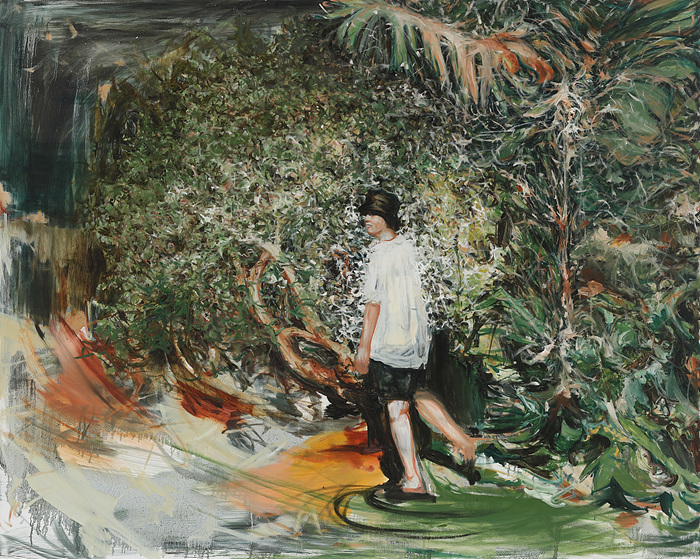
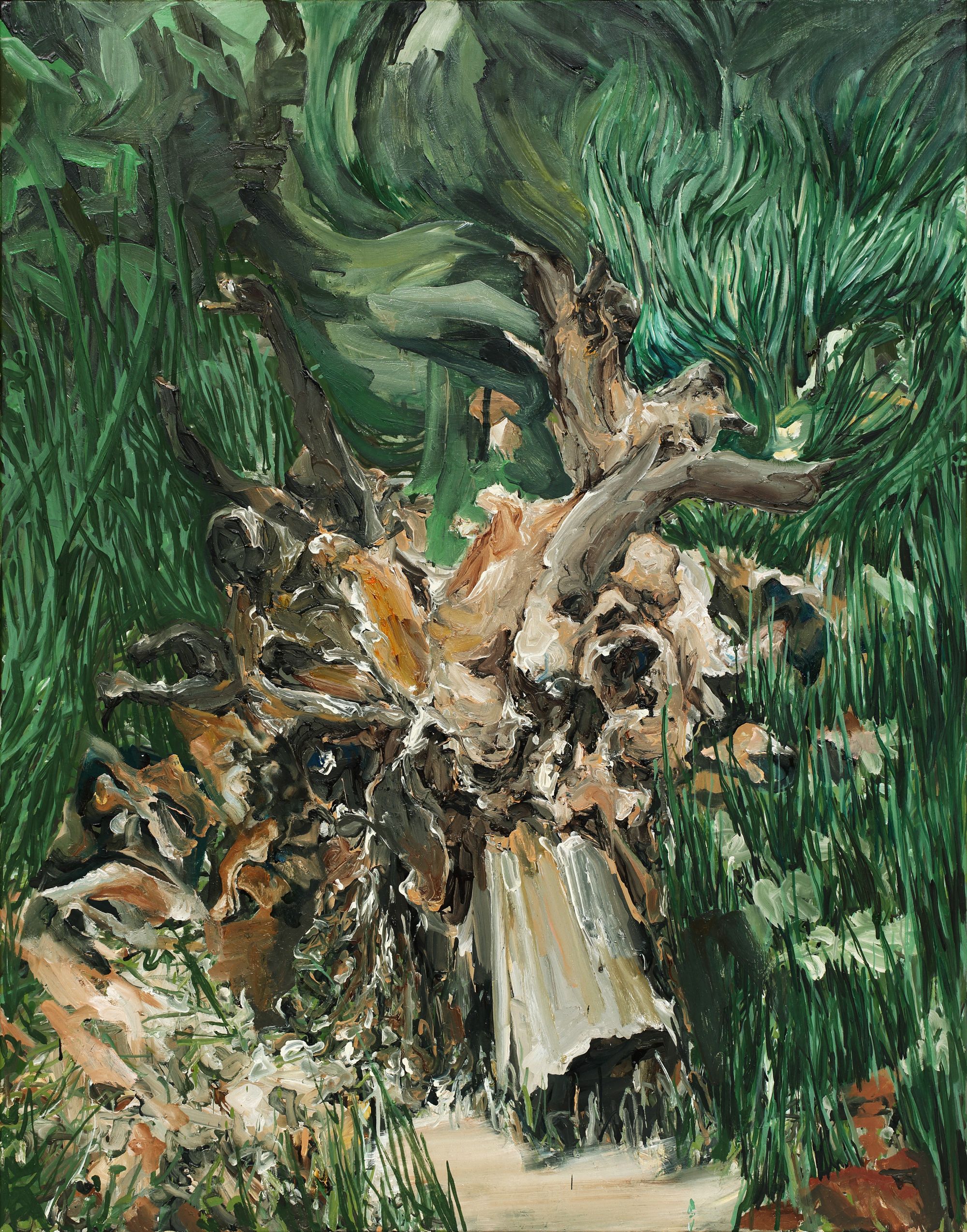
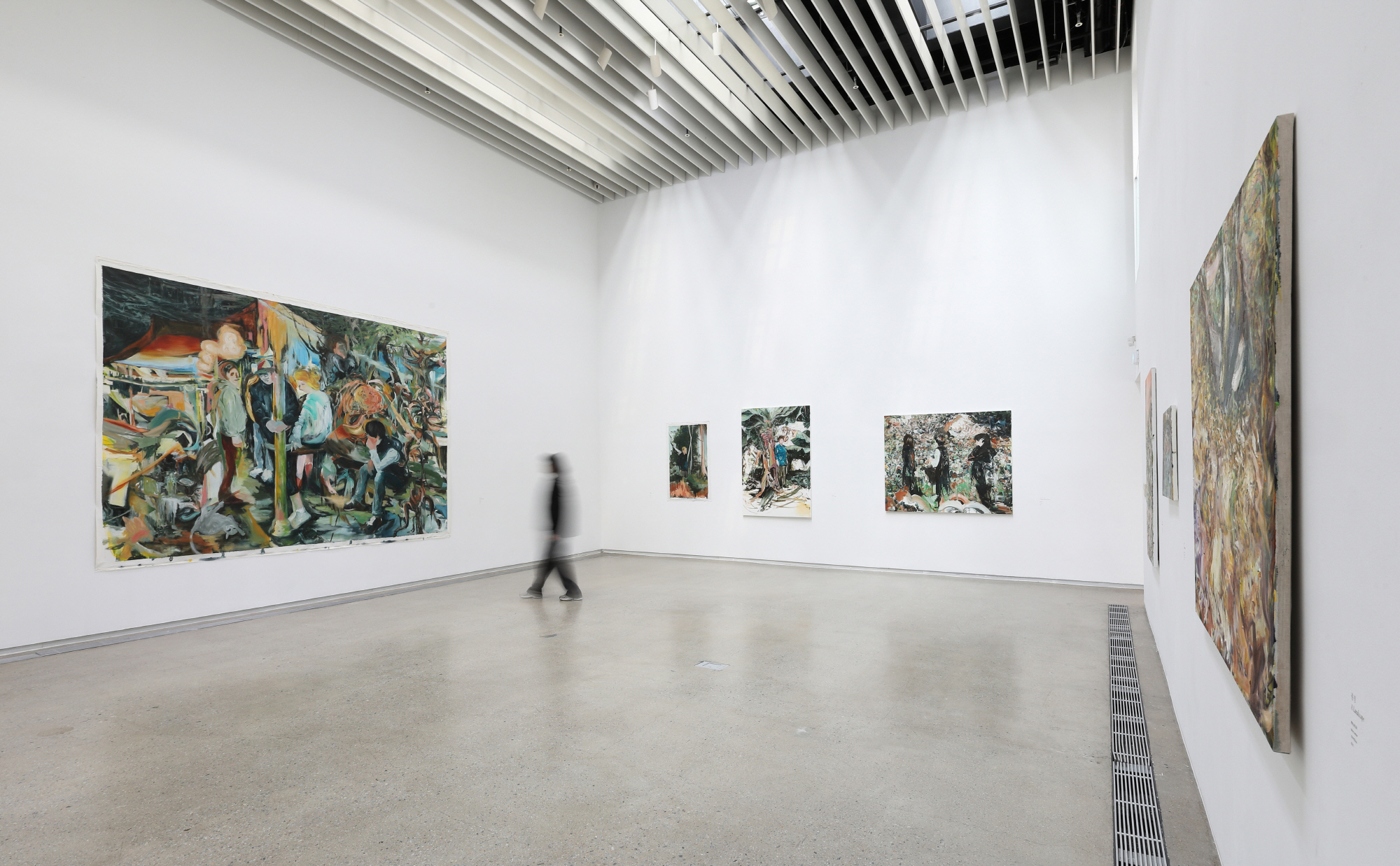
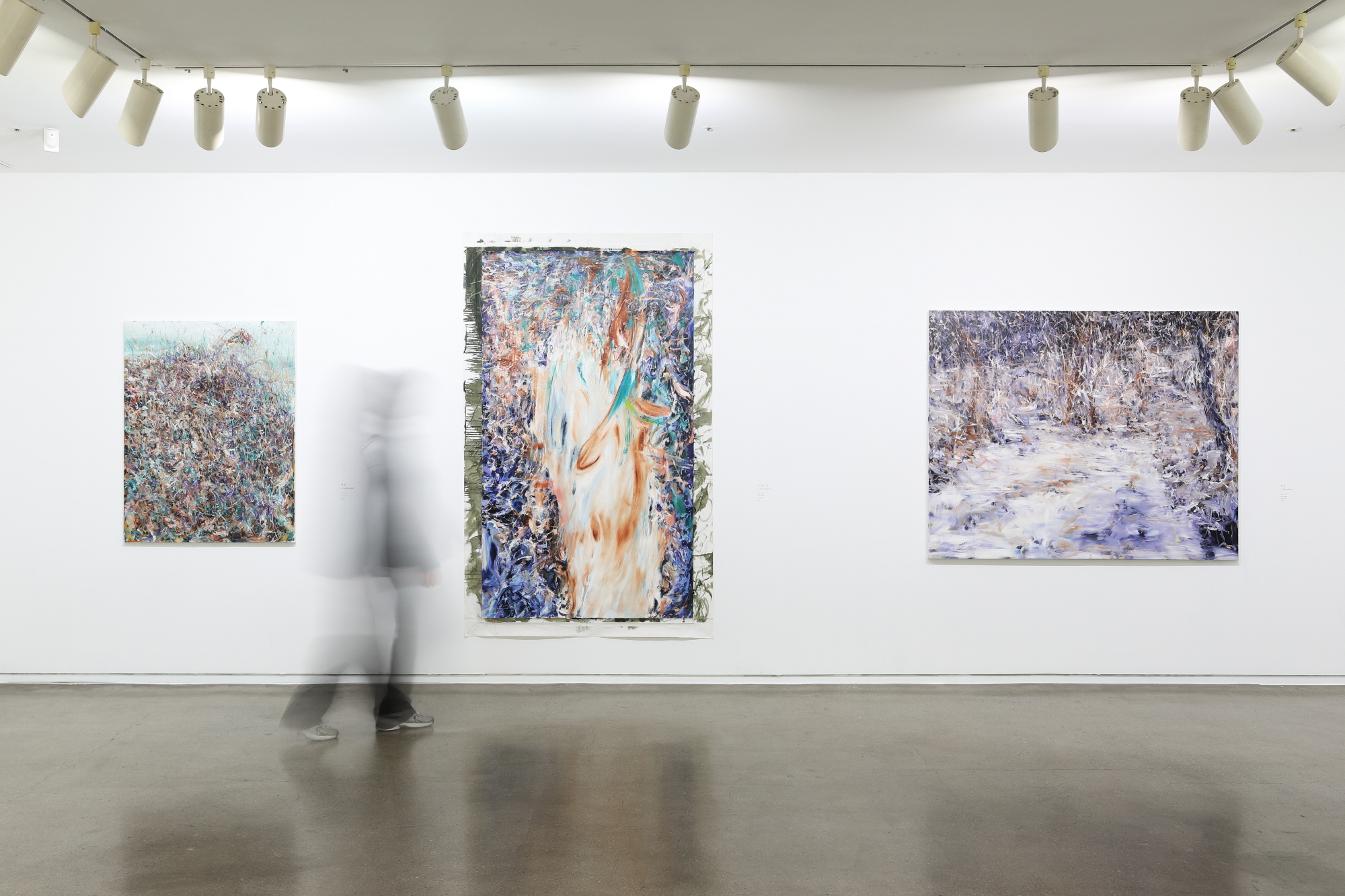
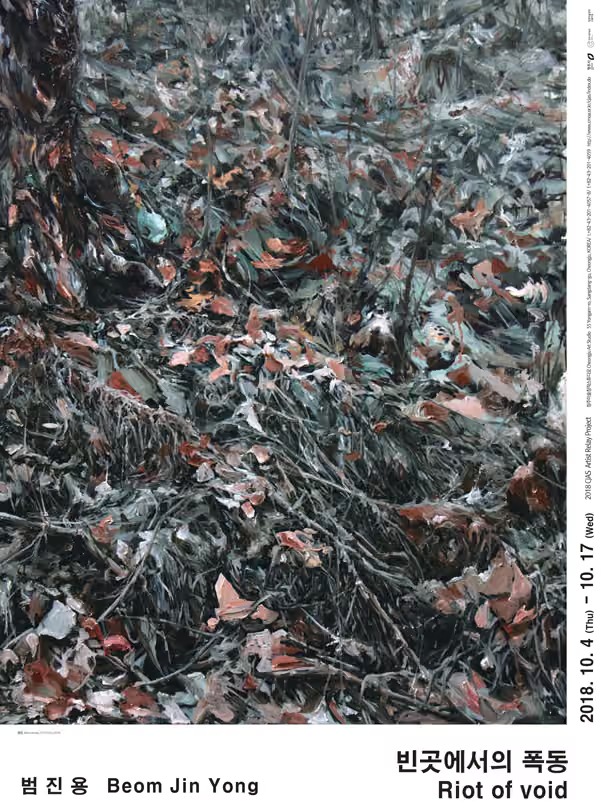
As the scale of his paintings gradually increased, this approach expanded into large-scale landscapes composed of multiple connected canvases. In his oil paintings, Beom mixes and drags paint directly across the surface, combining rapid strokes with finely detailed brushwork within the same composition.
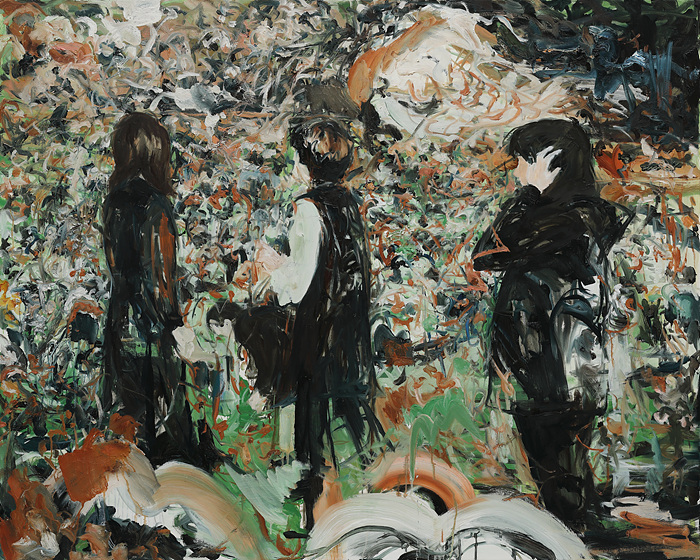
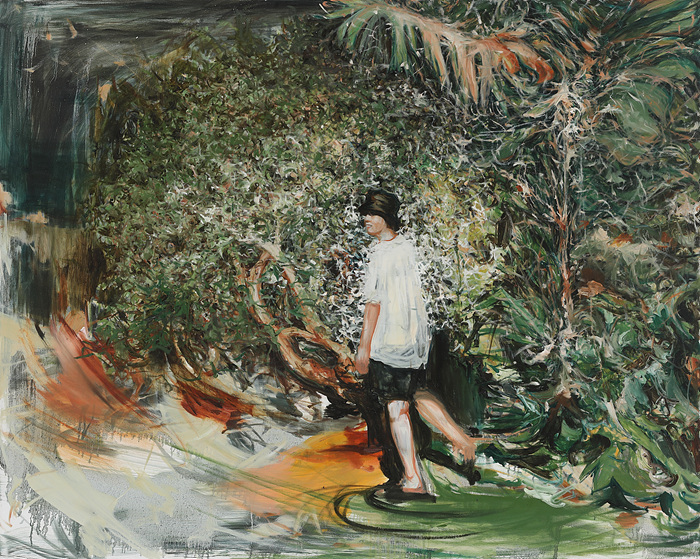
As the brush moves across the boundaries of objects, distinctions between figure and background, plant and space become loosened, while the movement of paint itself creates the rhythm of the image. Art critic Sung-Ho KIM has described these qualities as an “Expressionism of Neutrality,” in which restrained tonalities are combined with free and dynamic brushwork.
His works generally begin with photographs or images drawn from personal experience, yet preliminary sketches do not determine the finished result in advance. Beom begins by establishing approximate forms based on photographs, then adds lines and shapes that attract him during the painting process, adjusting colors and planes in response to the evolving flow of the composition.
Forms produced by chance, or areas that initially appear to be compositional mistakes, may remain if he feels that they work within the overall image. Improvisation and chance therefore play important roles, while the artist’s preferences and judgments continue to guide the final decisions. As a result, forms originating in photographs are progressively transformed through the act of painting, and the balance between representation and abstraction varies from work to work.
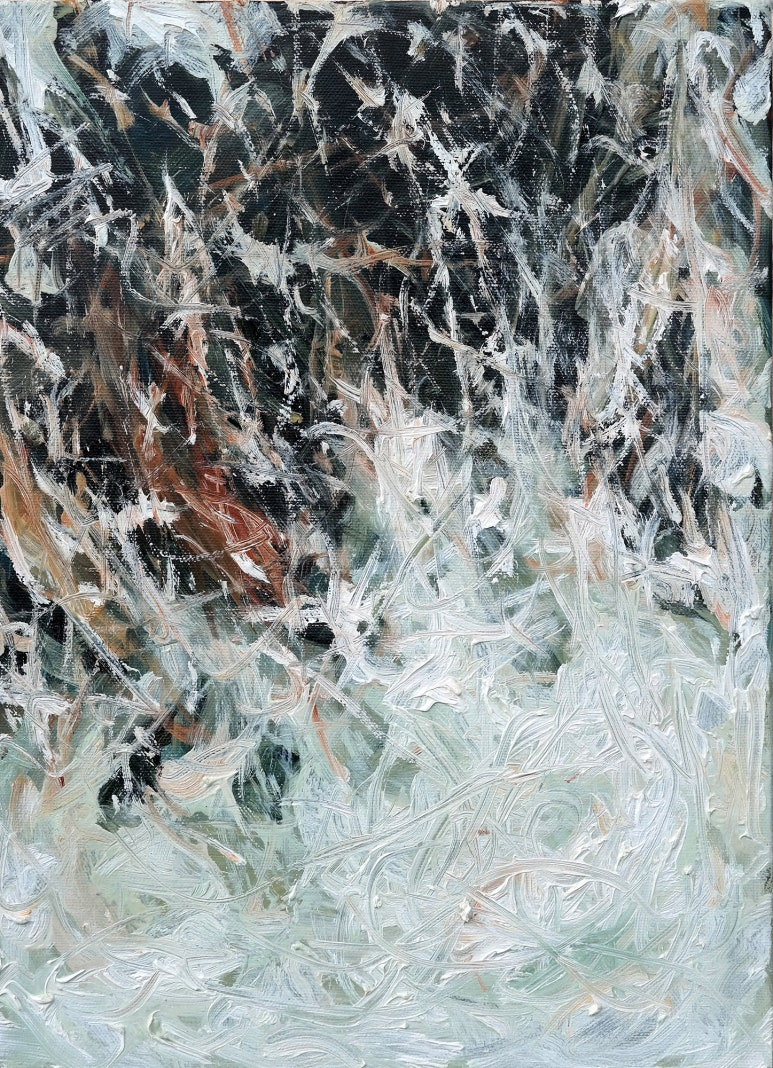
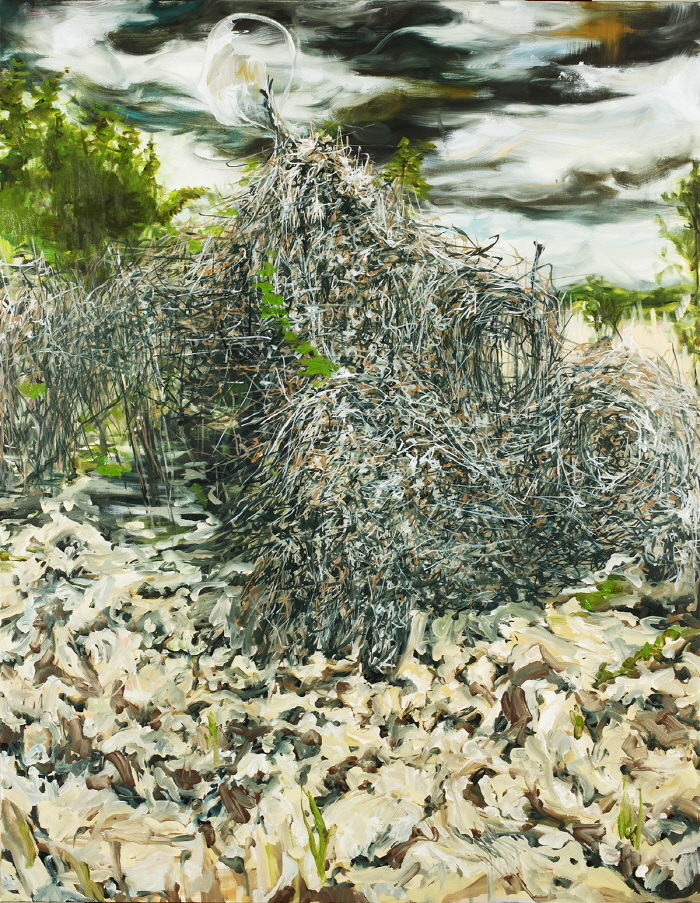
In his landscape paintings, this process is closely connected to the vitality of plants. Nameless grasses, forests, ponds, and snow-covered fields appear to tremble and spread through detailed yet strongly directional brushwork. In works such as Landscape and Snow Day, the specific forms of actual places remain recognizable, while densely repeated strokes, restrained tonalities, and thick layers of paint introduce the psychological tension and movement perceived by the artist.
Rather than fixing objects within clearly defined contours, the paintings emphasize the impression of vegetation and surrounding space mingling and shifting together, reorganizing observed landscapes through painterly sensation.
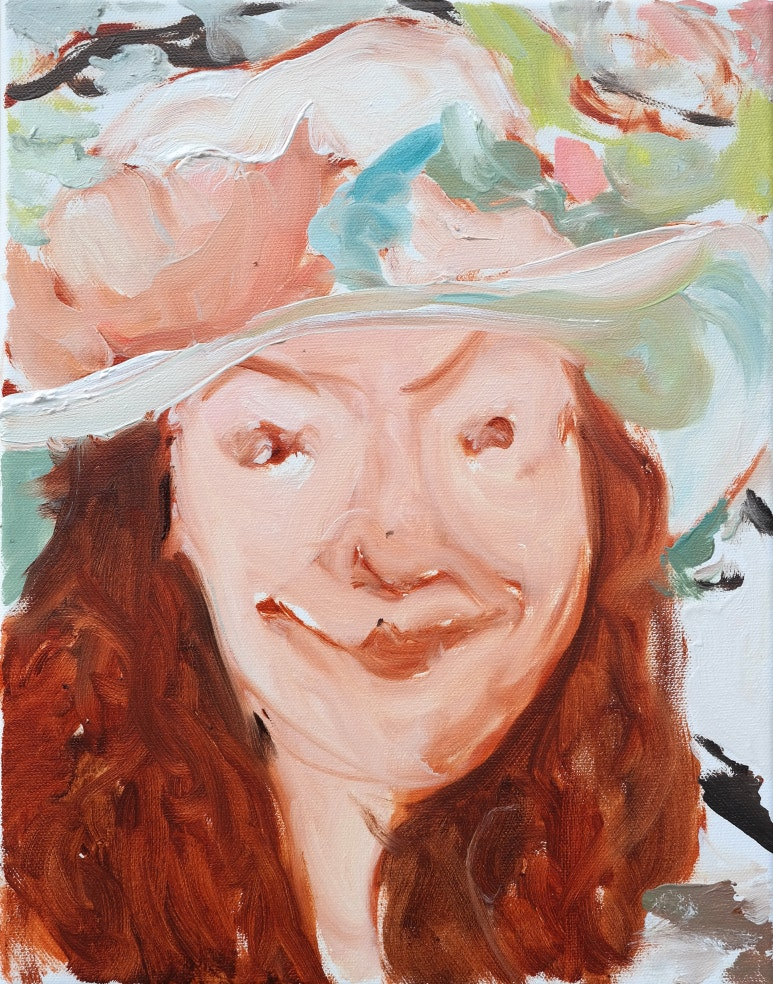
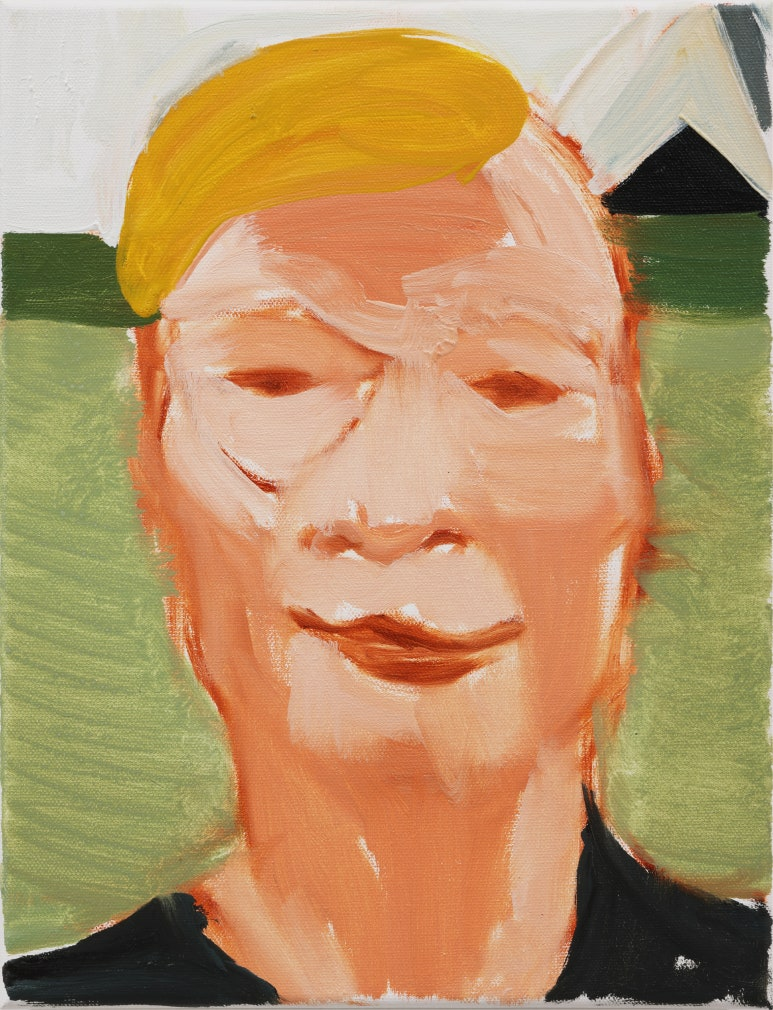
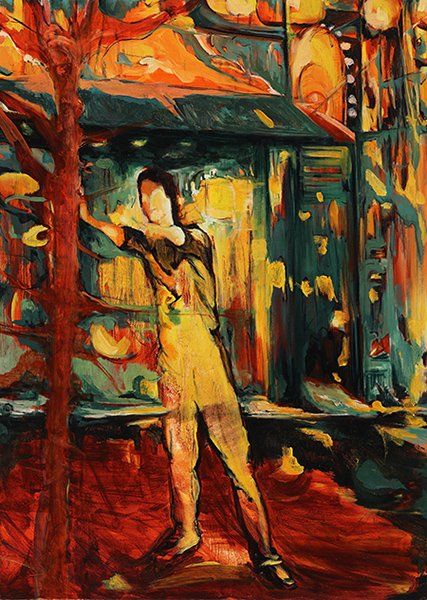
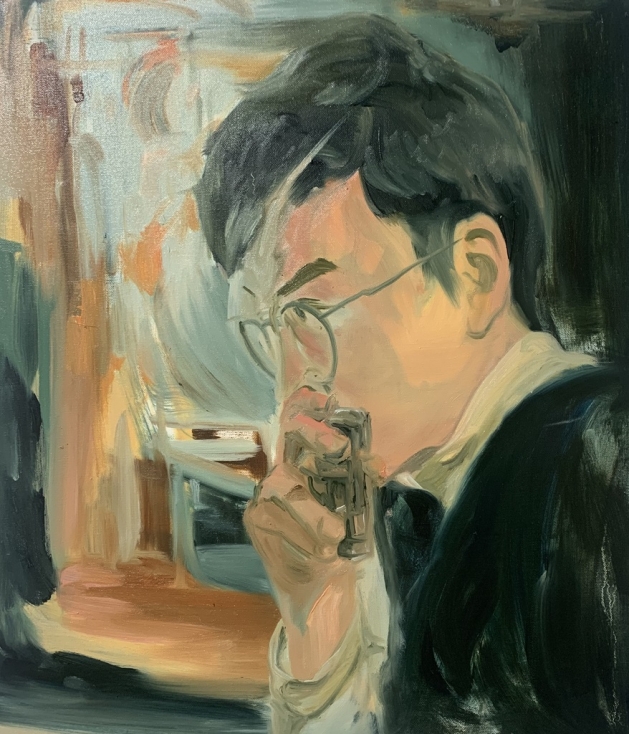
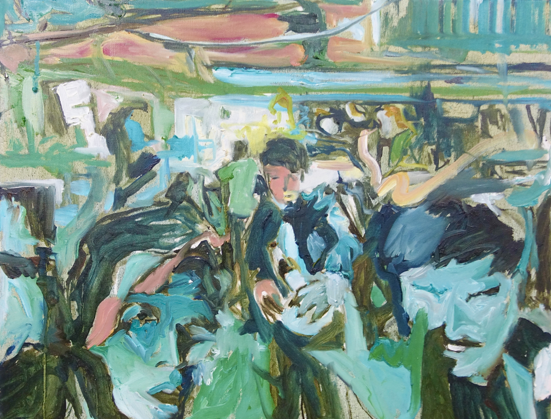
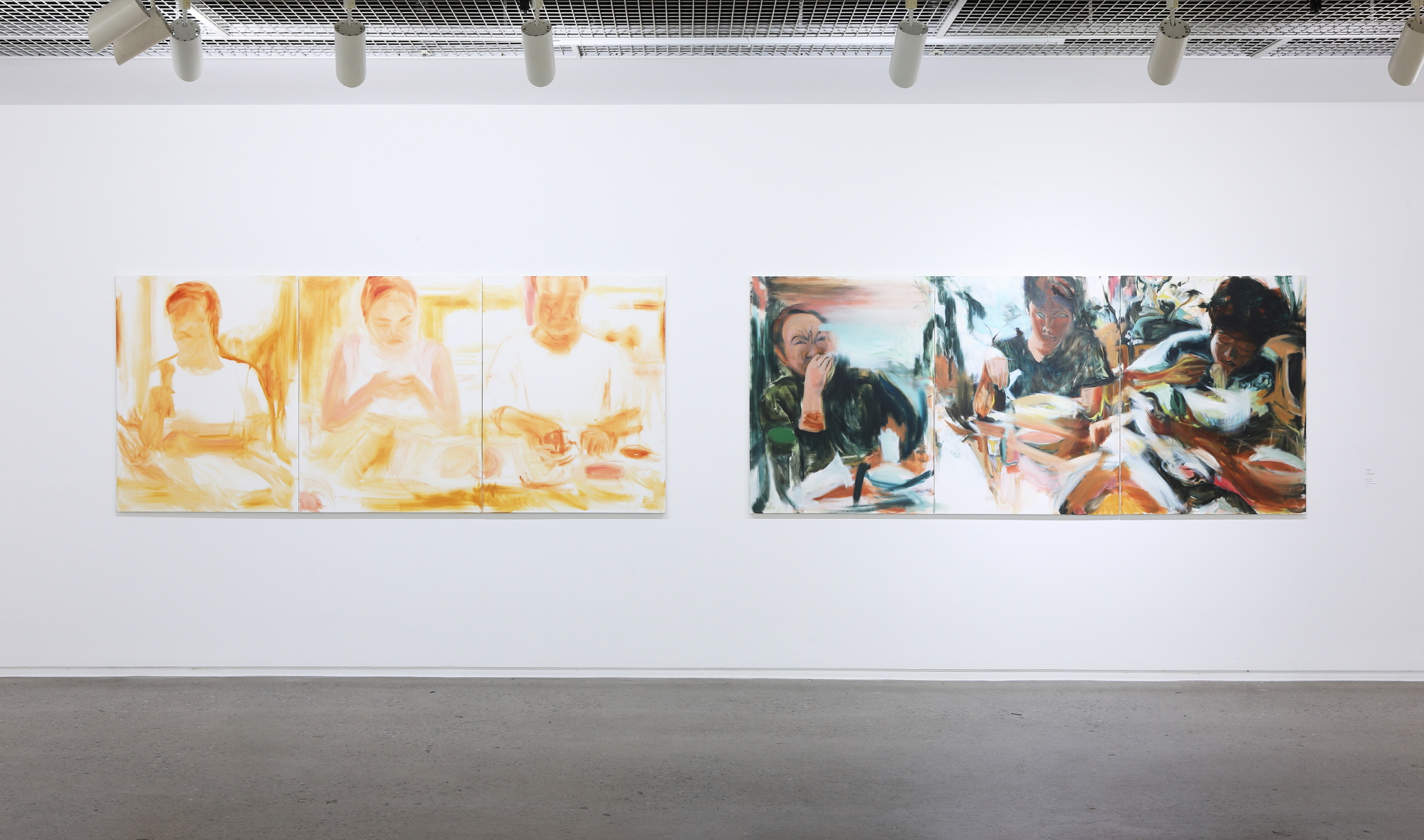
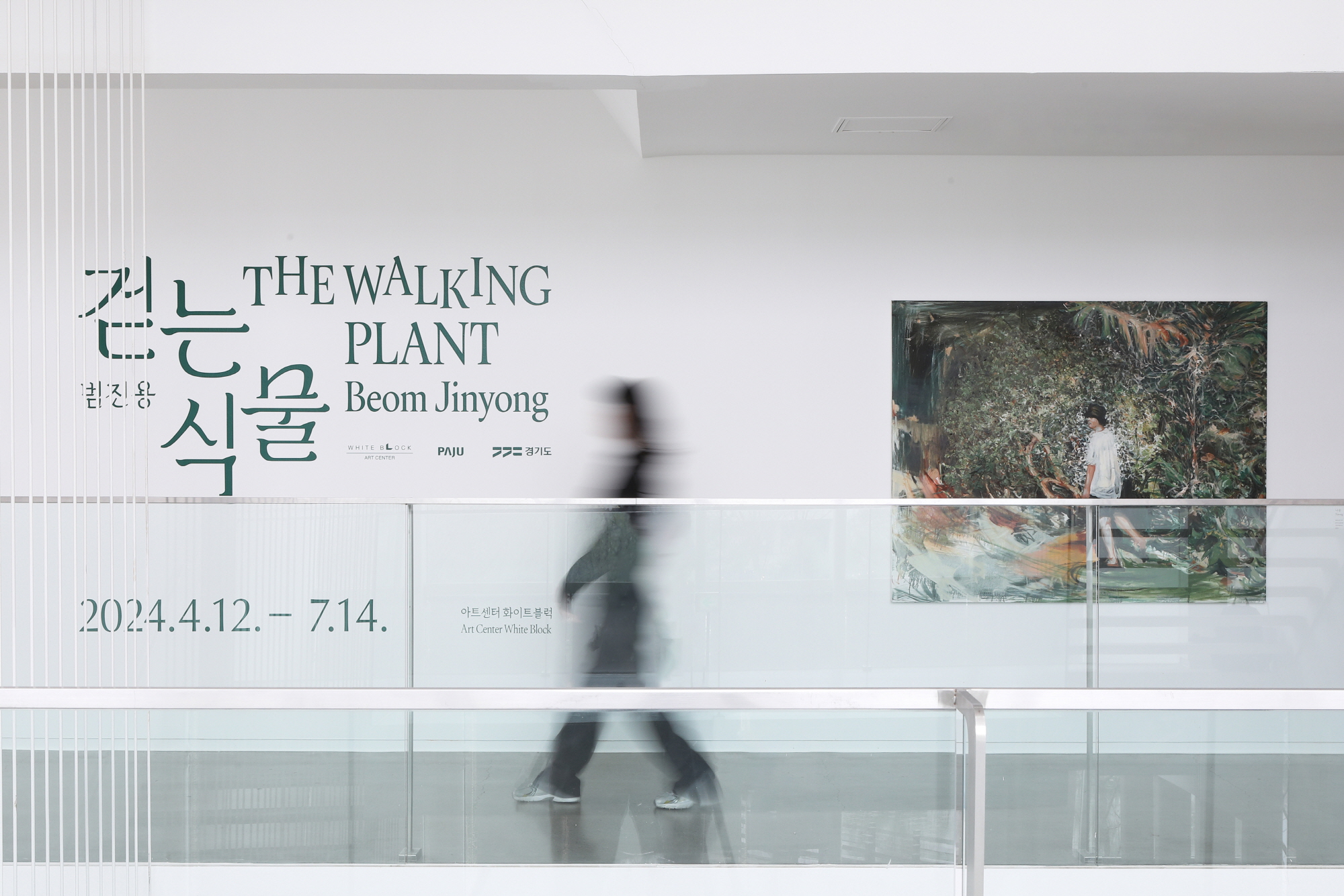
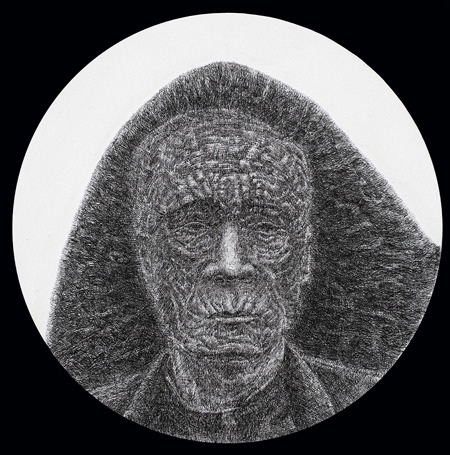
The relationship between representation and transformation continues in the figure paintings that have become increasingly prominent since 2019. In works such as A Flower Bed of Crows and Naong, figures merge into surrounding landscapes through rough brushwork, while details of faces and bodies are retained only to the degree necessary.
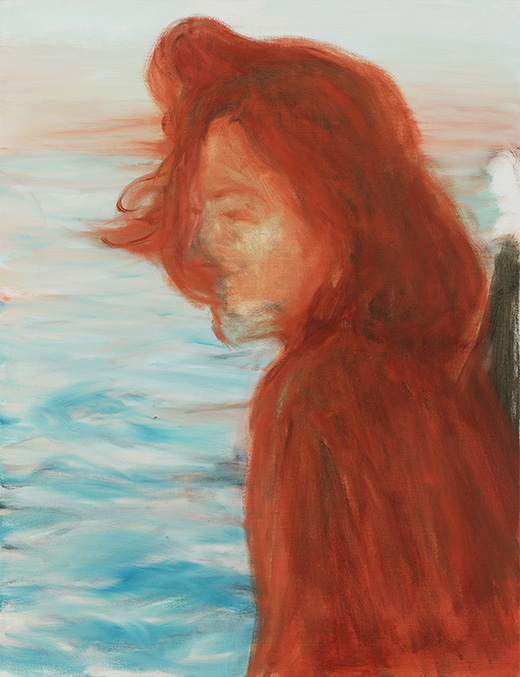
More recently, Beom has increasingly removed the landscape and focused directly on the figure, producing both paintings that preserve relatively recognizable forms and others in which line, color, and plane are handled more freely.
Since 2026, he has also shifted away from building faces through multiple layers of paint, instead experimenting with single brushstrokes and lighter surfaces. An important formal characteristic of his recent practice lies in determining anew, with each work, how much of the figure should remain and to what extent brushwork and color can take the place of representation.