Have you ever heard a folk tale in which a village guardian tree, once revered as a sacred dangsan tree, was cut down because it obstructed road development, only for the person who felled it and the villagers to suffer a series of inexplicable accidents afterward? Or perhaps a story in which the descendants of an unnamed geomancer, who damaged a spiritually charged rock by driving a chisel into it, suddenly went blind or fell ill, until the family line eventually died out?
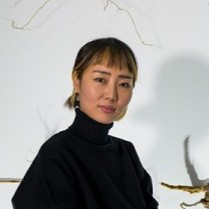
Jazoo Yang is interested in ancient beliefs that many people can intuitively relate to, as well as in primal and shamanistic ideas concerning humans and nature, translating them into painting, sound, installation, and other forms. Although specific folk tales and legends have been cited above, the artist does not focus on reproducing such individual narratives or giving visual form to their motifs.
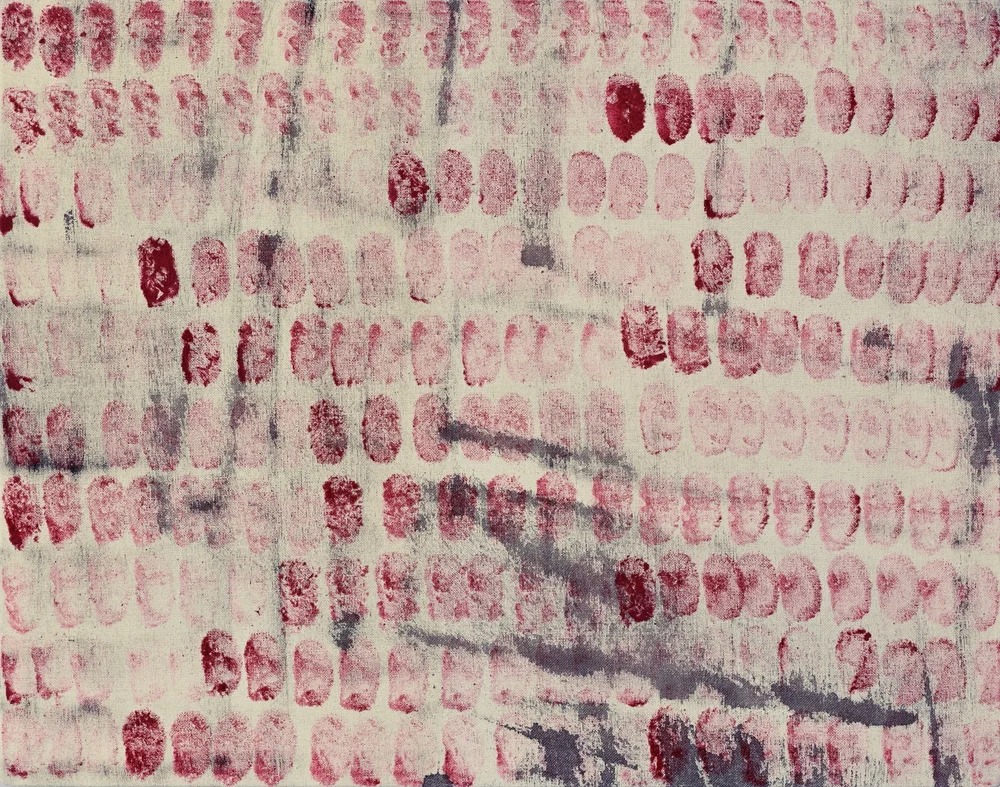
Instead, she approaches the spiritual interaction between humans and nature with awe and curiosity, treating her own body almost as an intermediary between the two and employing it as a central medium in her practice. Fingerprints, handprints, and other traces of her body appear prominently across her canvases and murals; more precisely, it would be appropriate to say that she constructs the very form of her works through these bodily traces.
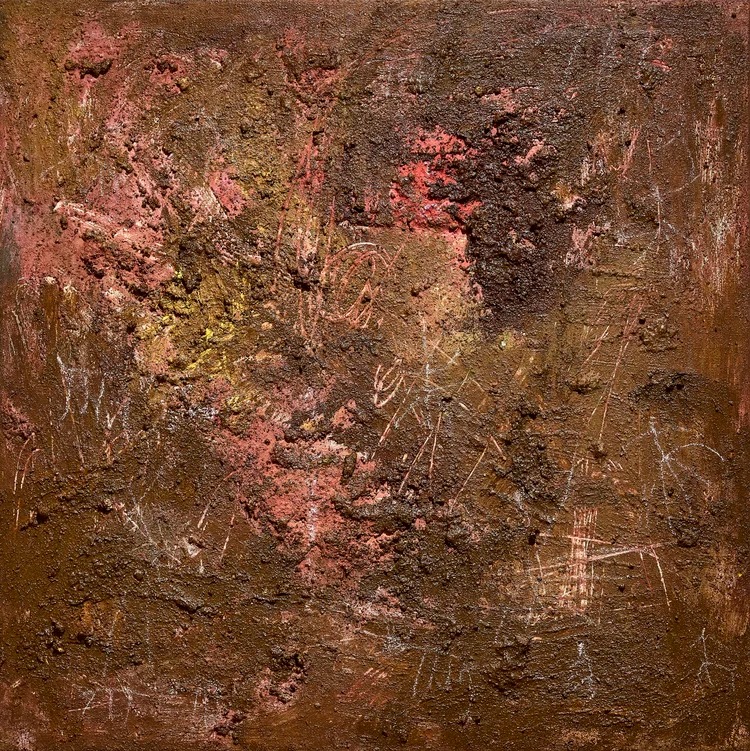
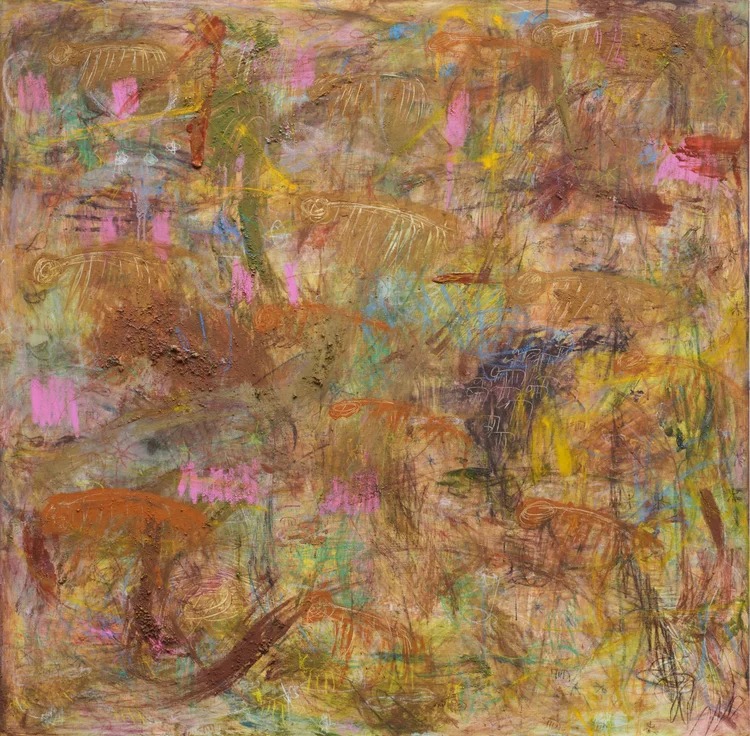
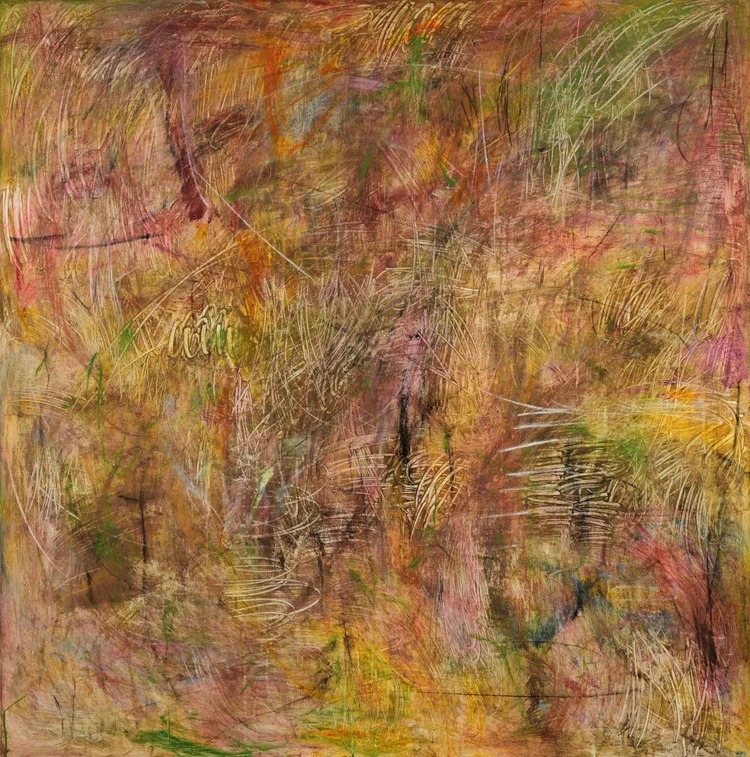
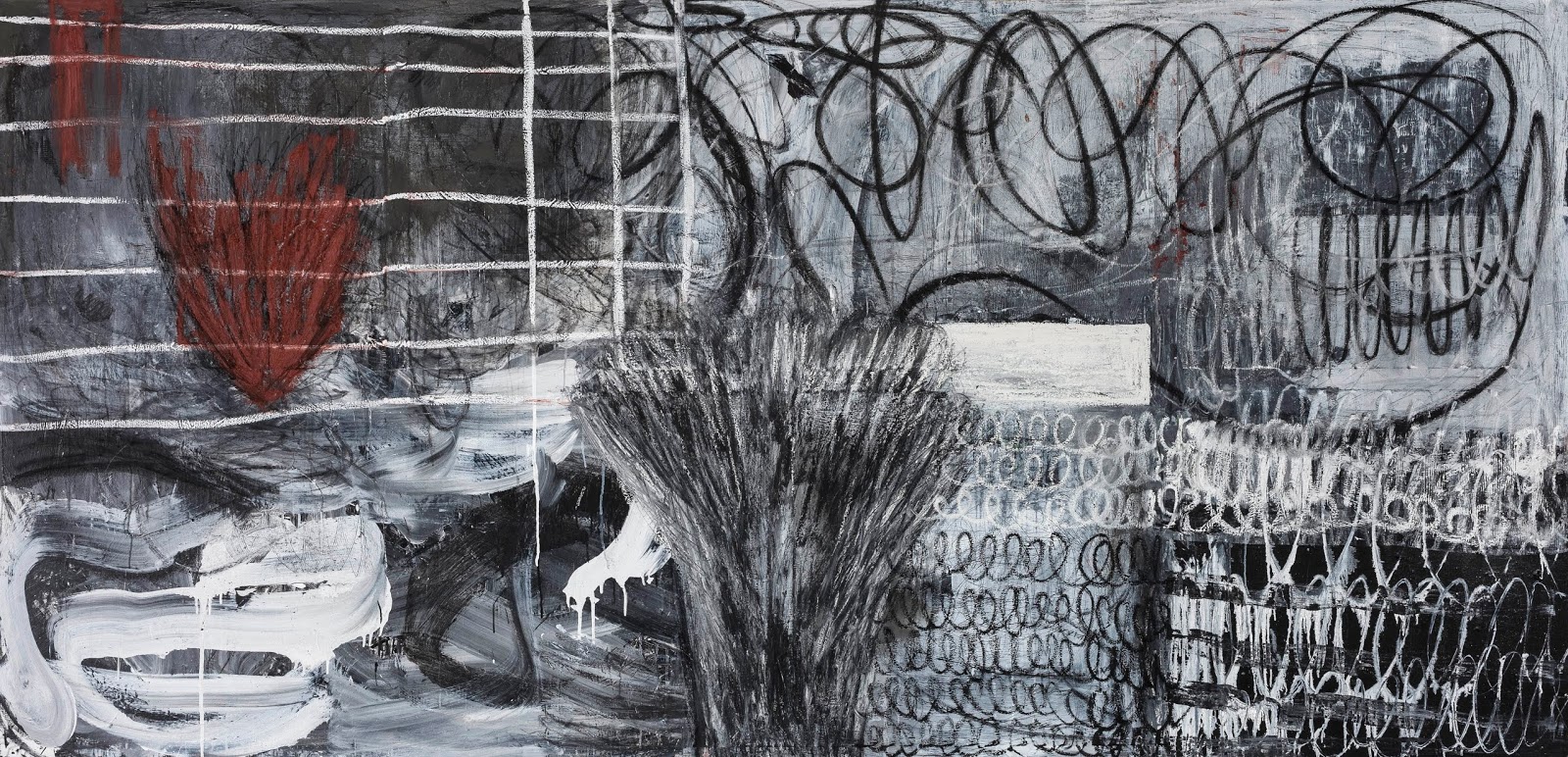
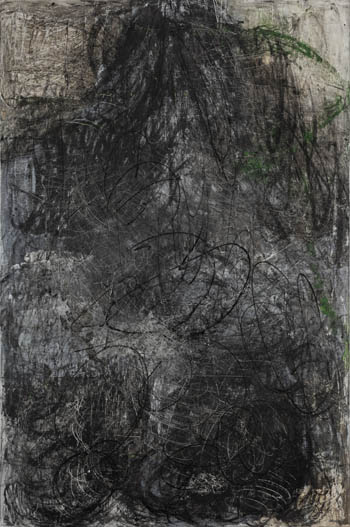
How, then, should we encounter Yang’s works, which seem to exude such ancient sensations? Neither excessively thick nor thin, her paintings expose raw forms that destabilize the distinction between figuration and abstraction, along with dots, lines, and planes created by applying pigments mixed with soil and then scraping or rubbing their surfaces. Amid the endlessly polished tendencies of contemporary art, the rough and pointed expressions she frequently employs may at first feel unfamiliar or difficult.
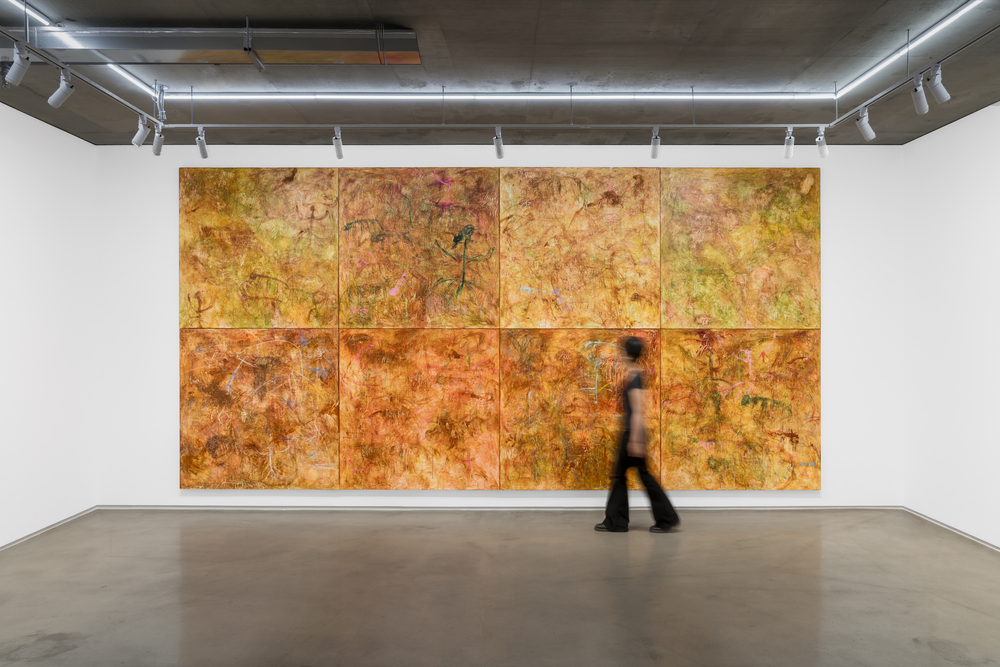
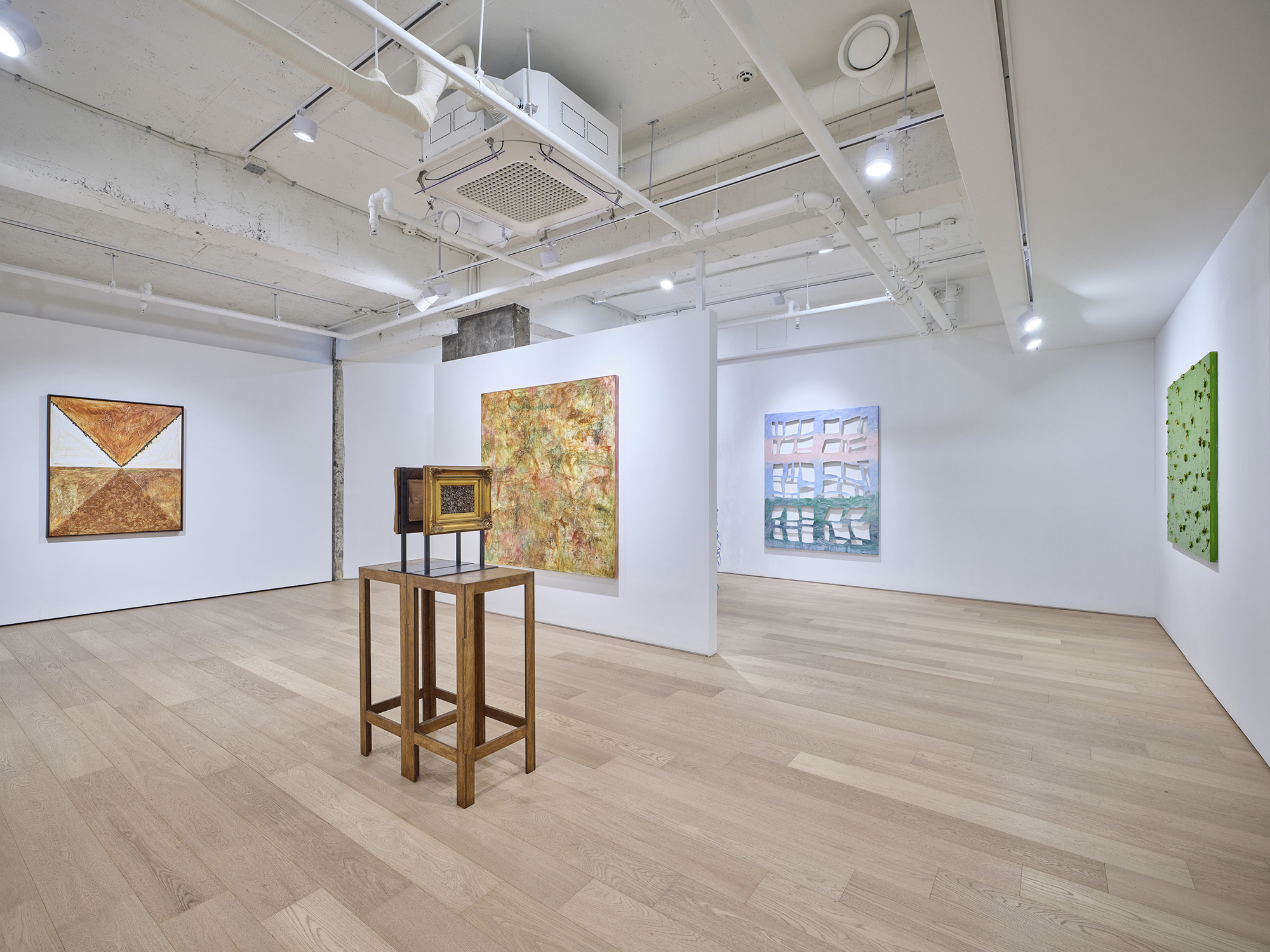
Fortunately for viewers who may find themselves perplexed, the works presented in the exhibition reveal that Yang remains acutely aware of the formal framework of visual art; equally important, the tactile, visual, auditory, and synesthetic senses she deploys so sensitively in the process of making are also essential to experiencing the works. In this solo exhibition, she invites viewers to summon and confront sensations from a distant past through the large-scale paintings and sound works of the 'Skin of Everything' series (2023–), the new 'Bulgasari' series (2026), and the 'Thorns' series (2020–).
Yang, who majored in ancient Korean history as an undergraduate, has an unusual background as an artist. She began making art independently in her thirties, without formal training. Her practice began when, driven by a vague desire to make large paintings, she purchased materials from an art supply store and simply began to paint. She started creating murals on the exterior walls of urban houses and buildings in the early 2000s, a period when redevelopment was taking place on a nationwide scale.
At the time, as a member of an Urban Art group, she sought out areas scheduled for redevelopment and engaged in street art, mural painting, and archival practices. In the process, she became captivated by the disappearance of old objects, houses, buildings, and even entire urban environments that bore the traces of time, as well as by the surrounding natural environments and the bonds she formed with people she encountered locally.
Houses imbued with the passage of time and history, functioning for residents almost like protected trees within the vast city, were disappearing without a trace; Yang approached these sites as though intervening with her own body in order to inscribe and remember what was being lost. Following a solo exhibition in Berlin around 2011, she continued working between Germany and Korea until 2023 and is currently based in Seoul.
What deserves particular emphasis is the lasting imprint left on the artist by these experiences and processes of making art outside institutional structures. Beyond her experience as a public artist, the private memories of touching local floors and walls, examining old objects, and conversing with people seem to function as an accumulation of sensations—a kind of reference archive—to which she returns when approaching the vast themes of humanity and nature.
Here, I would like to examine these experiences through the concepts of touch and voice. Touch and voice are terms that Yang herself emphasized when describing her practice as a whole, and they also allow us to break down more precisely what has so far been grouped together under the broader term “sensation.”
Both originate in or emerge from the individual body, and rather than possessing permanence, they tend to appear transparently and then gradually fade. They also influence one another, much like the repetitive sounds of scraping and tapping that flow through the PIBI Gallery exhibition space, intensifying the viewer’s tactile awareness.
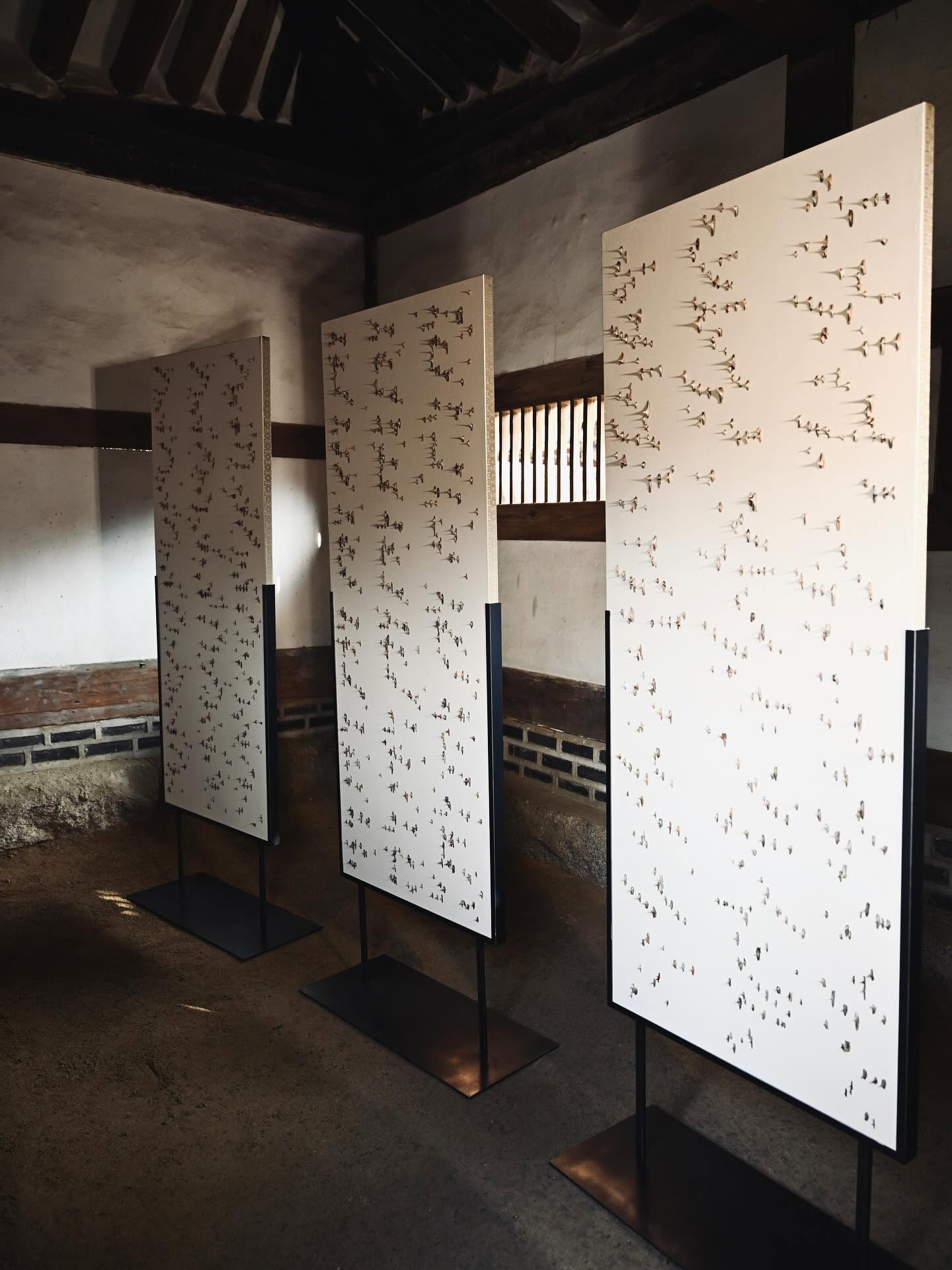
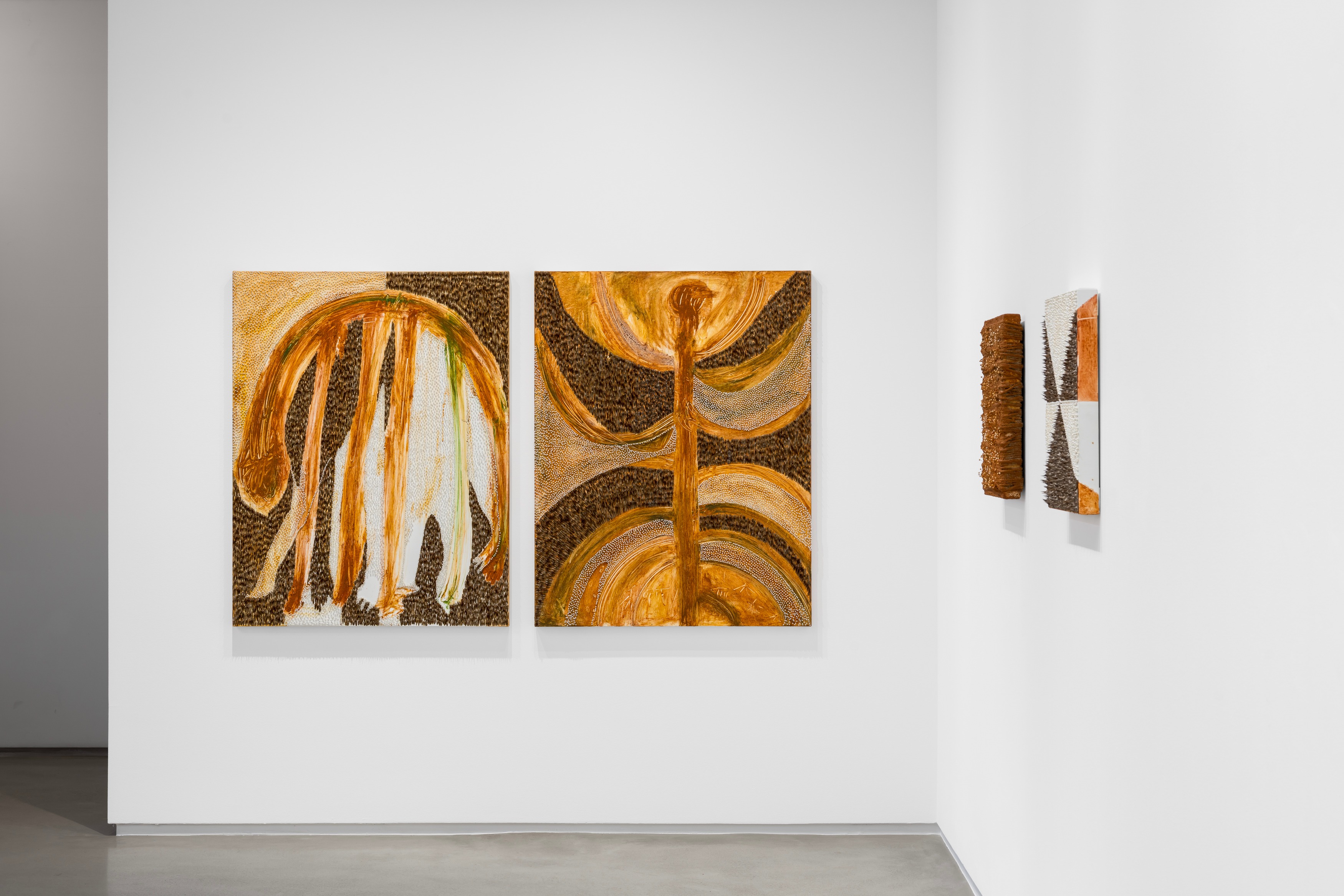
Touch is closely connected to the artist’s use of her hands: acts of gathering pigment into clumps, applying and attaching it to the surface, inserting, tying, and stamping, as well as the tactile images these actions in turn evoke. In generating such tactile sensations, Jazoo Yang primarily uses materials with coarse or clearly perceptible textures, such as soil, pearl-headed pins, and rope.
As these materials clump together, protrude unevenly, or conversely leave indentations, the sensations she seeks to evoke are rendered visible once again through tactile means. Voice, meanwhile—a term that might broadly encompass the sounds of humans, other living beings, and even the supernatural—is an immaterial element derived from the process of acquiring or producing touch, while at the same time functioning as a device that heightens tactile sensation.
The sound work in this exhibition, for example, uses as its source recordings of vibrations, resonance, and friction generated when the artist places her hands on an elastic canvas surface. Through sounds that seem almost to be produced by life moving deep within geological strata, Yang’s pictorial surface becomes a site that connects touch and voice, primordially intertwined somewhere between sensations of the distant past and present reality.
A representative body of work in which this surface is understood simultaneously as a support and as skin is the 'Skin of Everything' series. Consisting of roughly square works measuring around 150 cm, the series may at first glance resemble prehistoric cave paintings displayed in a museum or even children’s drawings.
Yang begins by expressing, through material and hand, sensations intuitively seized at the moment she confronts an empty surface; each element that emerges then influences the formation of the next. According to visual anthropologist Chihiro Minato (港千尋), the skin is a tactile sensory organ that envelops the entire body and—unlike the eyes—remains constantly open to the external world. In The Thinking Skin (2014), he discusses the highly developed tactile perception of Indigenous African communities, evoking senses that people living within urban civilization have lost.
Through the skin as an open body and a boundary, Yang likewise attempts to sense capacities that humans have unknowingly lost, as well as realms dismissed as superstition. In this sense, the artist has a fairly clear answer to questions such as what the totem-like forms on her surfaces are directed toward, or where their primordial colors and textures might lead the viewer.
Yang is also deeply interested in Korean folk tales and classical narratives of the kind mentioned at the beginning of this text. She explains that these stories not only allow us to retrace the customs and modes of thought embedded within them, but also reveal binary oppositions such as nature and culture, life and death, as discussed in anthropological structuralism.
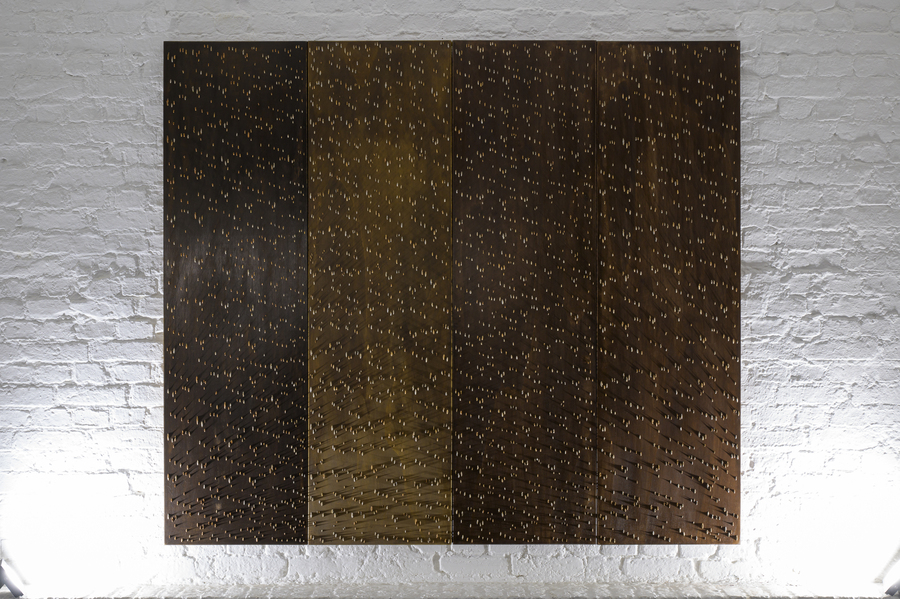
The new 'Bulgasari' series, presented in earnest for the first time in this exhibition, takes its motif from the Korean tale of Bulgasari (不可殺伊). Formally, the works are characterized by the intersection of forceful diagonal compositions and all-over structures, while their surfaces are distinguished by patterns produced through materials: densely packed Kalopanax thorns, pearl-headed pins driven inward like pangolin scales, and coils of rope.
In the tale, Bulgasari is born from a grain of cooked rice, grows by consuming metal, turns to ash when cast into fire, and then returns to life like the wind—an immortal and shape-shifting being. As in the 'Skin of Everything' series, rather than offering explicit clues to the narrative itself, the boldly drawn lines and the spaces between them, the interiors of divided planes, the gaps emerging between materials, and other forms of expression reflect the points at which Yang blends the philosophy and sensations she has drawn from the Bulgasari tale.
Like Claude Lévi-Strauss, who understood myth as the sum of variants without an original, the unscientific narratives Yang seeks to revisit—from sensations dating back millions of years, to tales from centuries ago, to folk stories only decades old—may appear to move across time and place without any fixed substance. Yet this does not mean that through her work she seeks simply to reaffirm the value of what preceded civilization, or to unconditionally endorse superstition or primitivism.
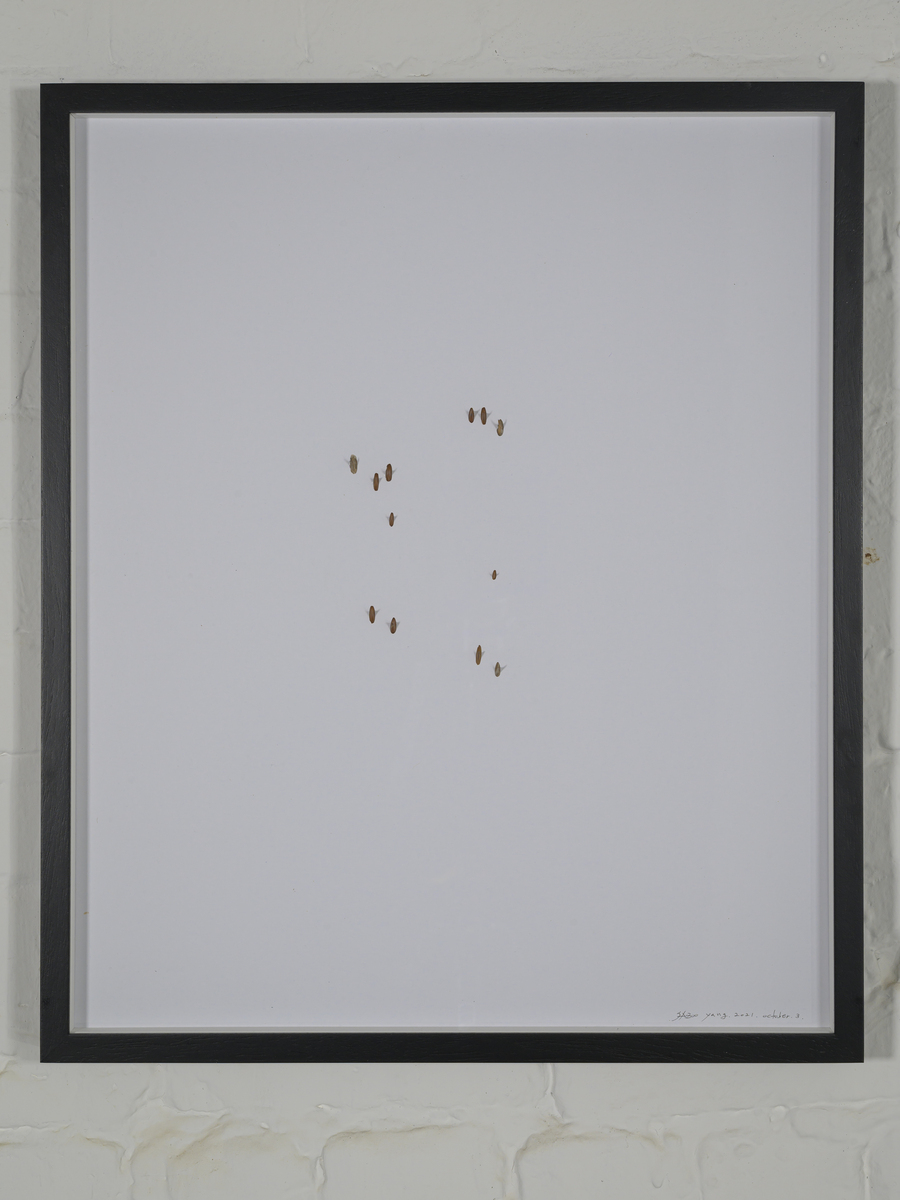
The countless traces across the surfaces of her canvases also constitute a visual language through which she attempts to feel her way toward what we once possessed but have since lost over the course of an immense span of time, and what still remains with us. In a related vein, a series in which she demarcates areas on found objects and densely affixes Kalopanax thorns actively demonstrates this artistic attitude.
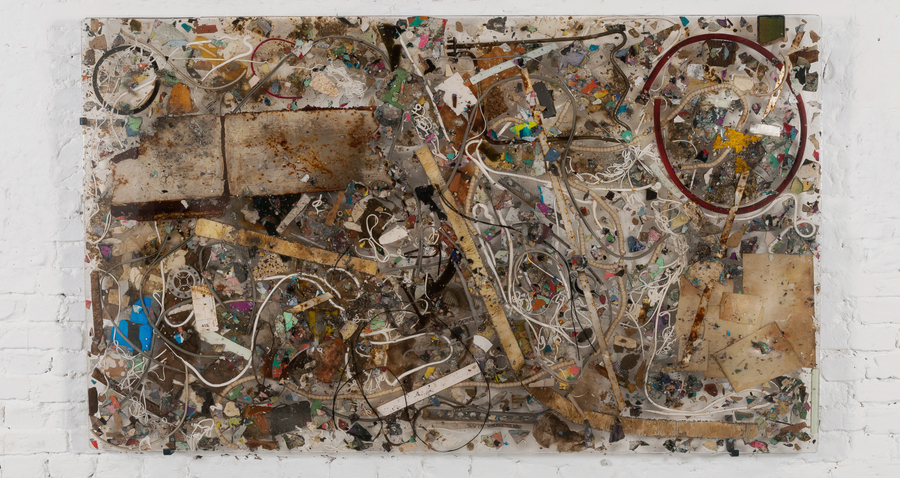
A box whose interior, intended to hold objects, bristles with thorns, or thorns occupying the smooth surface of a mirror, produce a surreal sensation by grafting unfamiliar material qualities onto readymades; their placement within the exhibition space further layers these works with art-historical modes of interpretation.
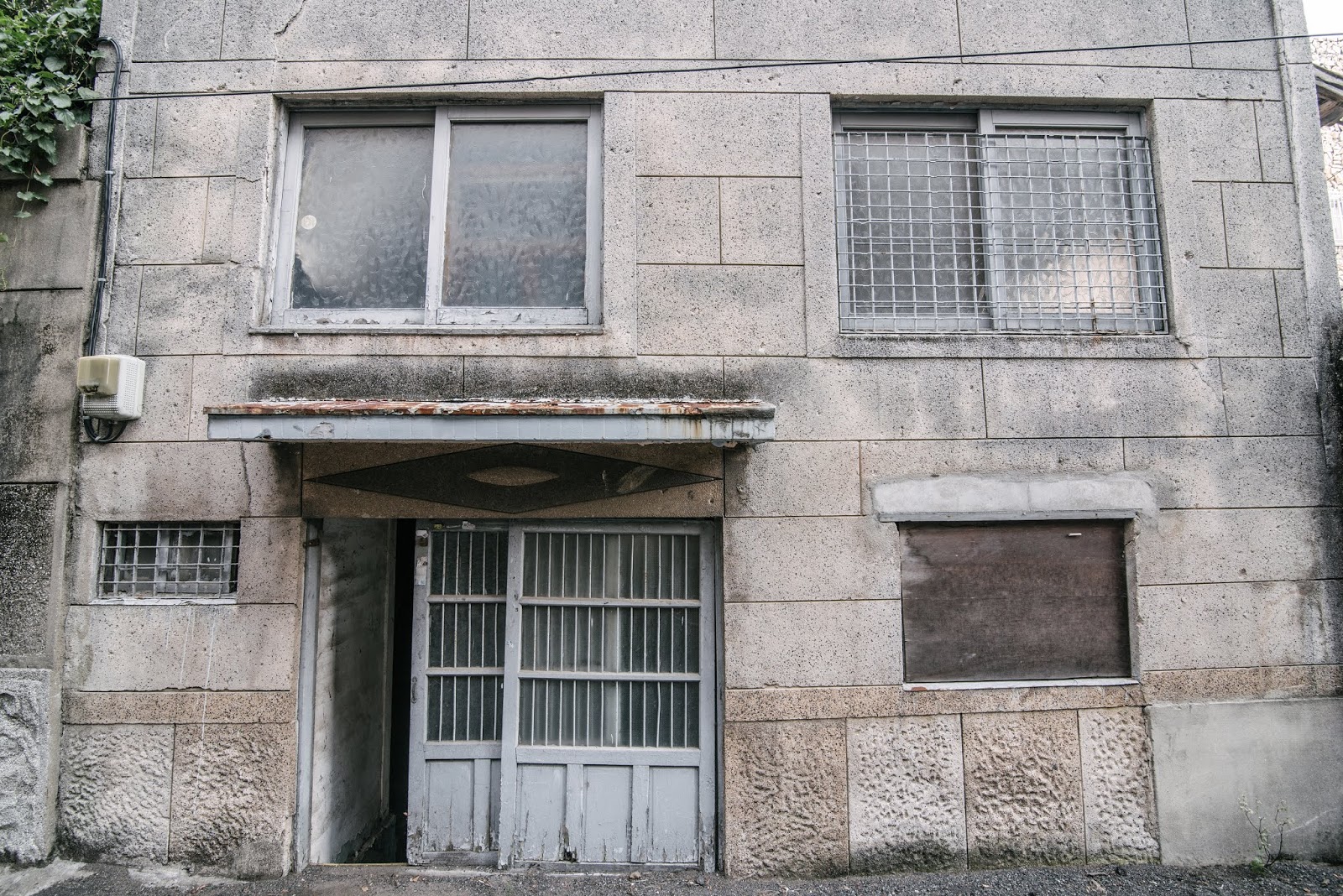
Why is it that the sight of Kalopanax thorns sharpened densely without gaps, or pearl-headed pins inserted in neat, concentrated clusters, recalls the image of Yang repeatedly visiting an isolated house in a seaside village in Busan and carefully stamping thousands of fingerprints day after day?
Whether inside or outside the studio, there is in the performative discipline of Yang’s practice—almost like an act of prayer or supplication—a particular care and diligence in touching and intervening in the things she encounters. This perhaps originates in reverence and respect for things that have endured long spans of time and acquired a vitality of their own.
Through such careful gestures, Yang listens to touch, voice, and all five senses, speaking of intuitive and primordial sensations she believes are stored in her fingertips, and of invisible things that language and science cannot explain. She does so through rough, mysterious, uneven surfaces, and by producing a multitude of nonverbal sounds. Perhaps now it is the viewer’s turn to discover the senses with which to listen and to see—carefully and diligently.