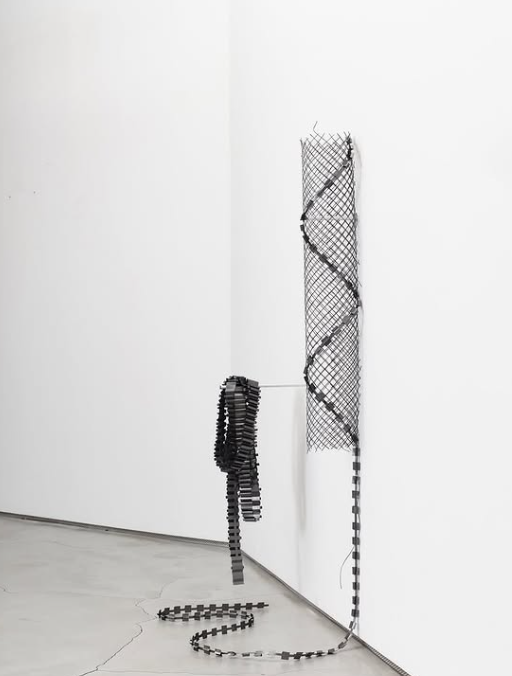
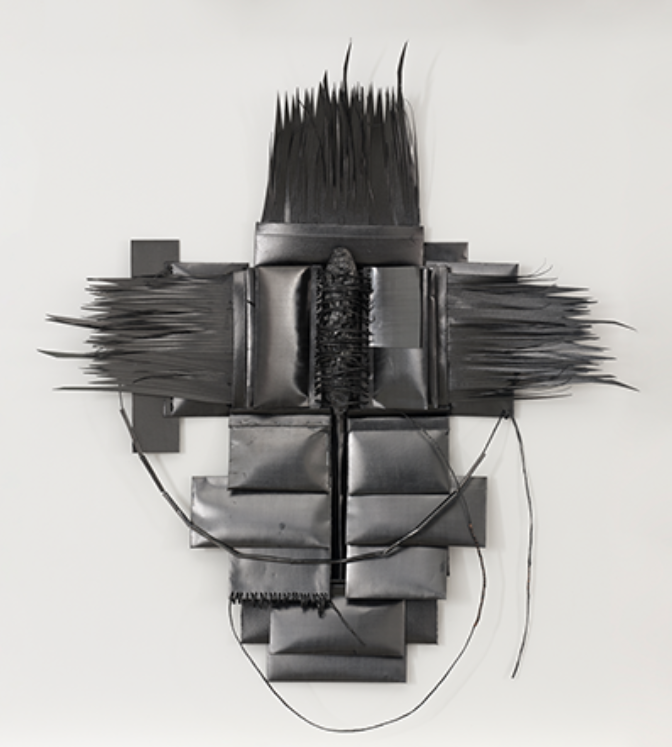
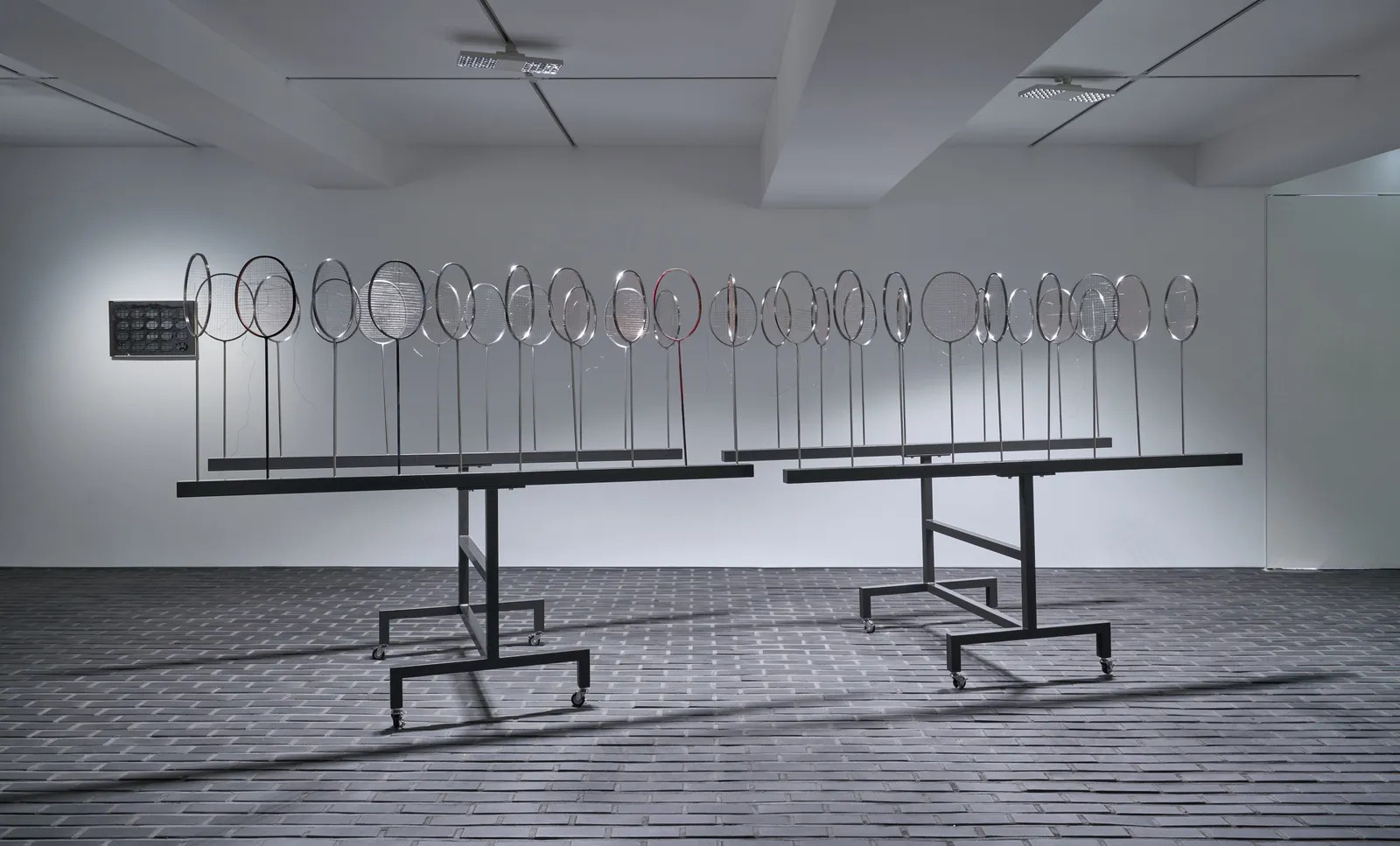
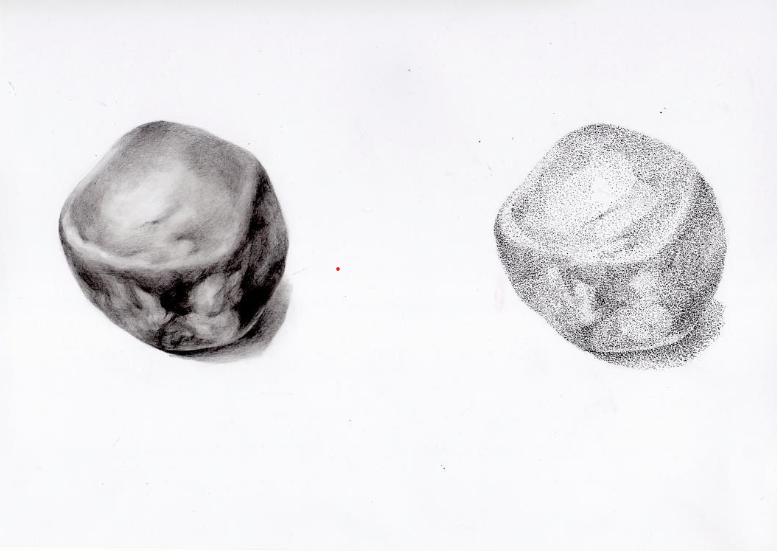
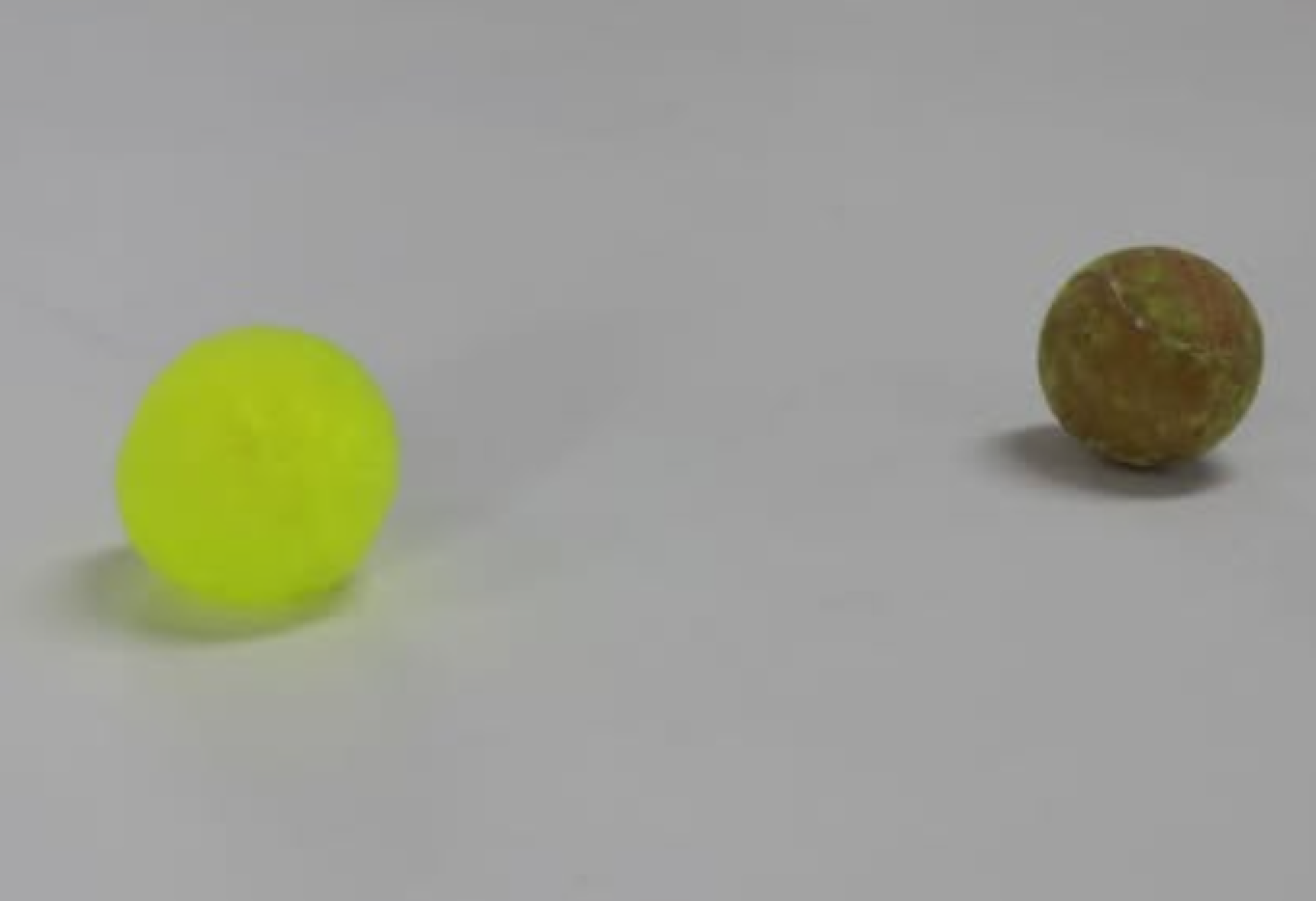
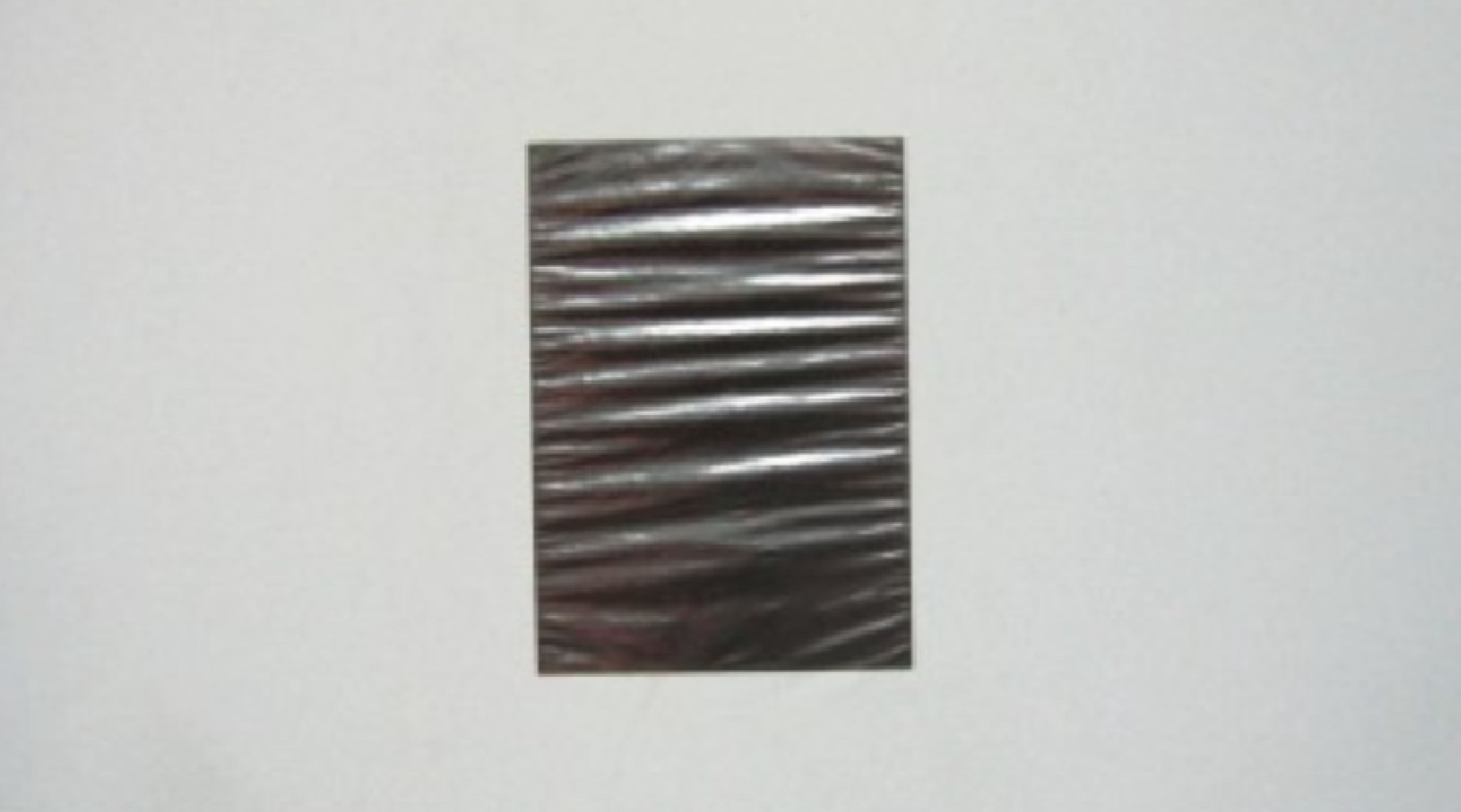
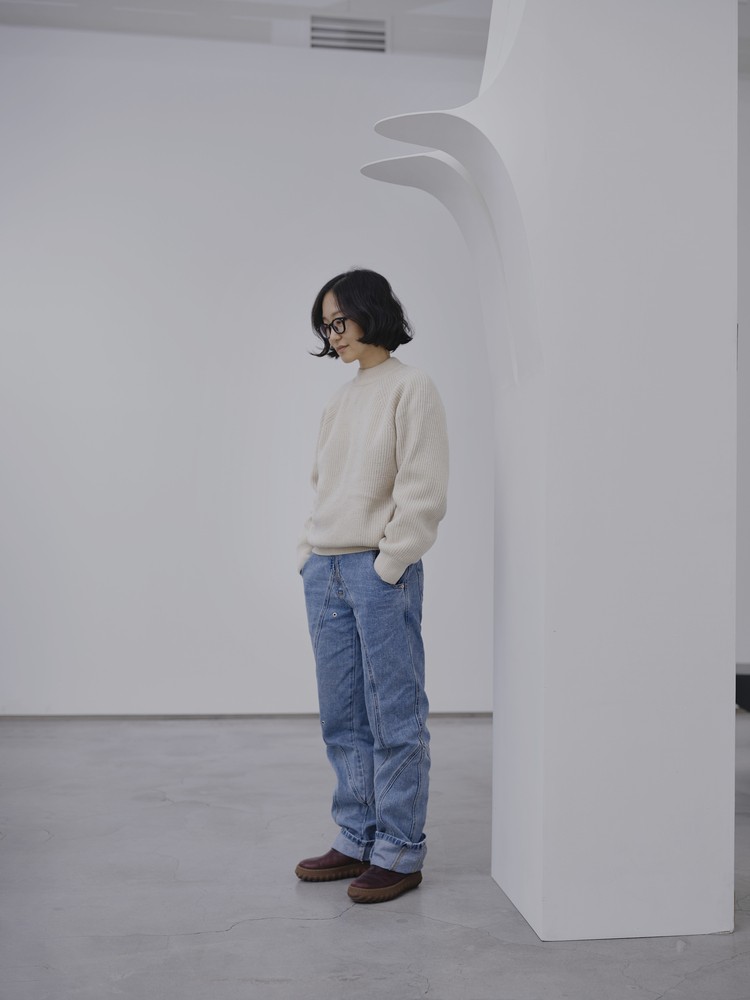
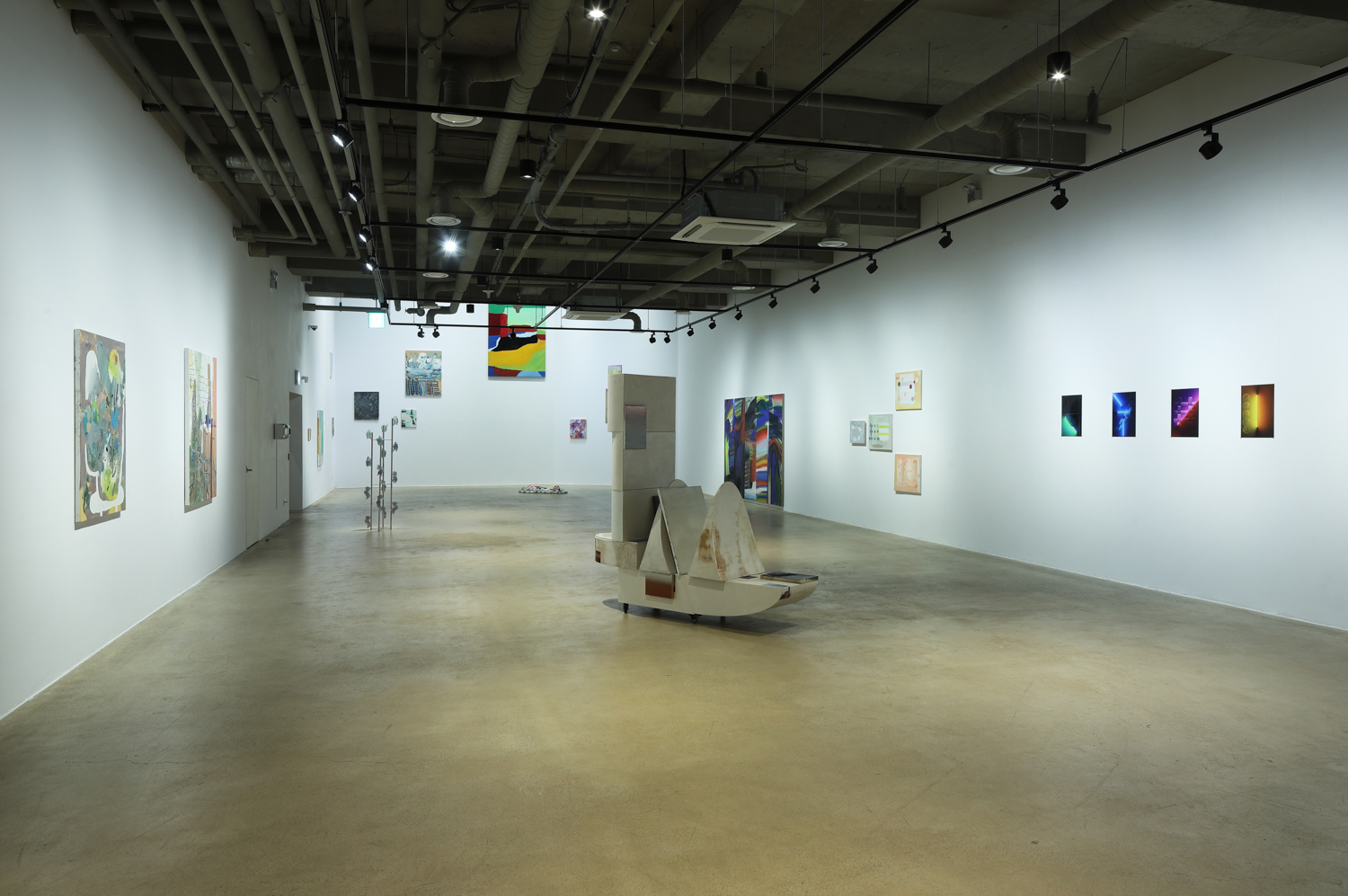
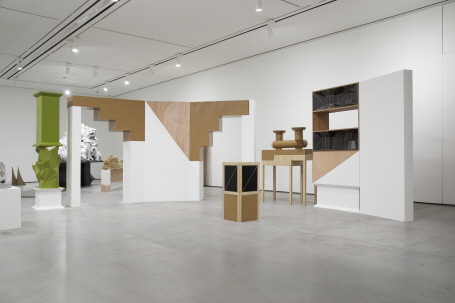
Hwang Sueyon’s practice begins with a bodily inquiry into what a material can become. In the early work A4 Drawing(2008), she repeatedly covered standardized A4 paper with pencil, altering its texture and weight. In Harder(2014-2016), she crumpled and hammered thin, lightweight aluminum foil into a solid mass, while in Heavier(2016), she solidified loose, scattering sand with adhesive to create a dense and weighty form.
For Hwang, materials are less a means of realizing a predetermined form than counterparts that respond in unexpected ways when subjected to sustained force and time. This is also why she has described her approach to her work as “biological.”
Rather than maintaining complete control over the making process, she observes the material’s vulnerability, resistance, and limits of transformation, allowing these conditions to determine when her intervention should stop. Her solo exhibition 《Spinning Egg》(Kumho Museum of Art, 2017) brought this approach into focus through sculptures made from paper, aluminum foil, sand, rubber bands, pastel, and other materials.
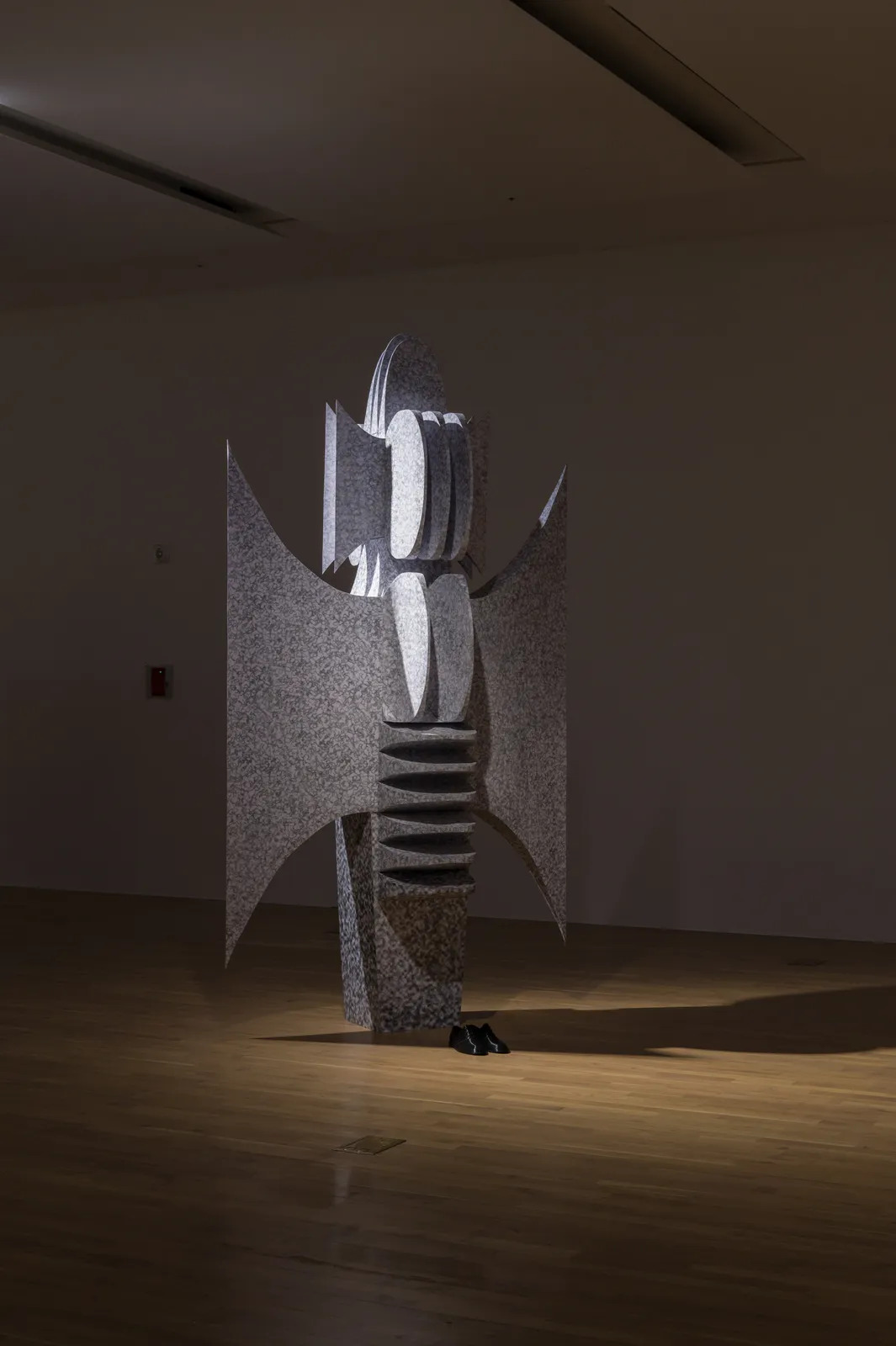
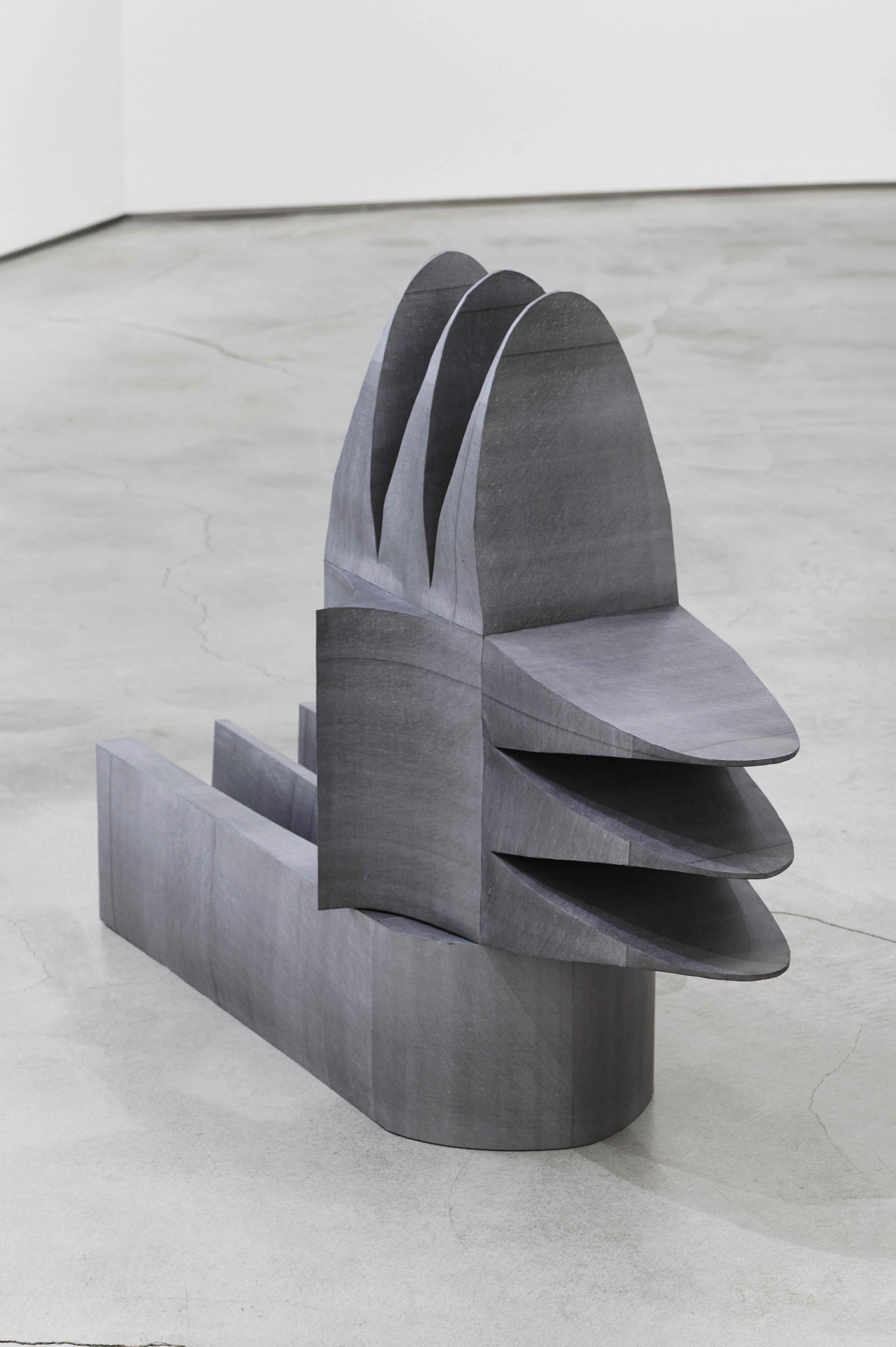
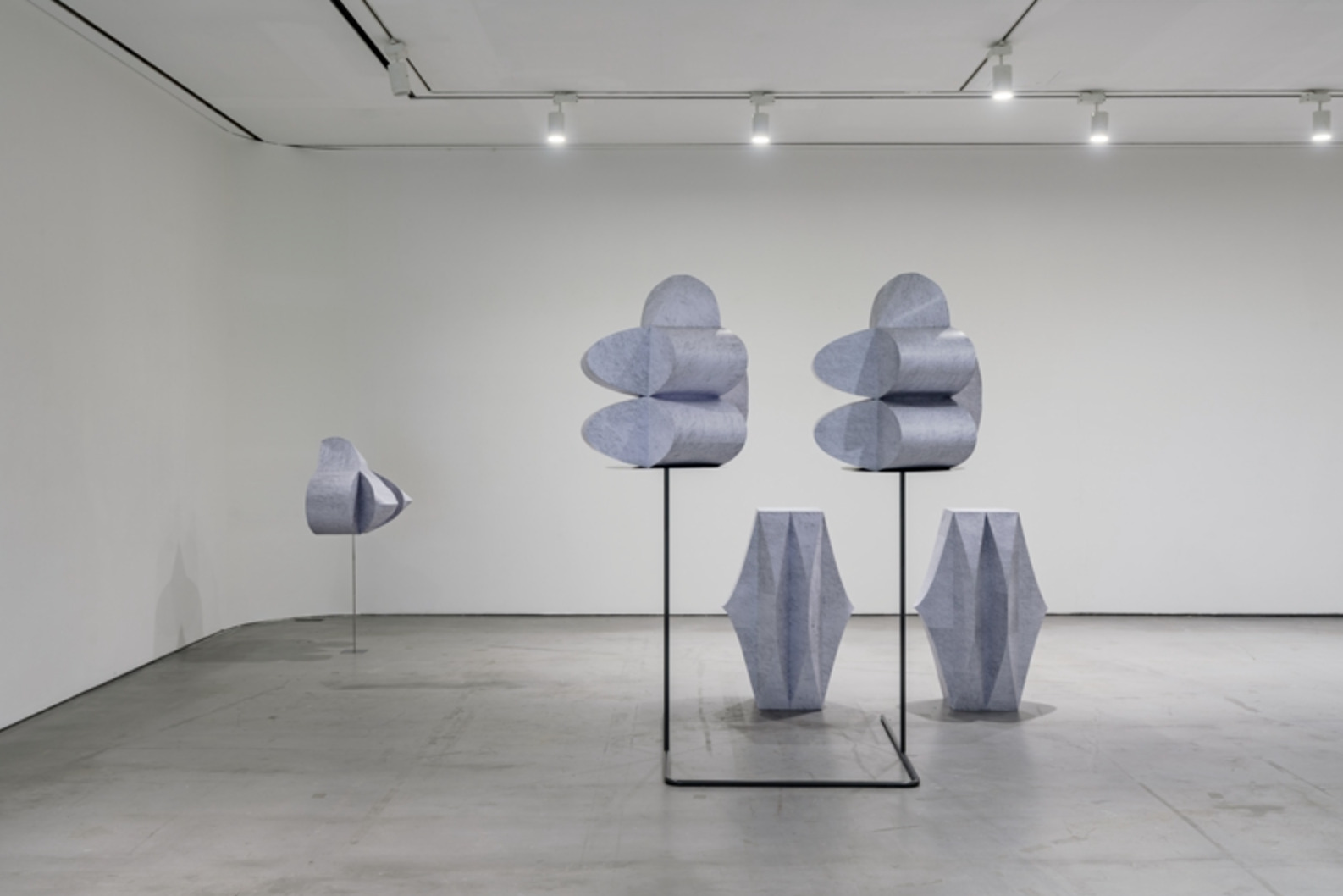
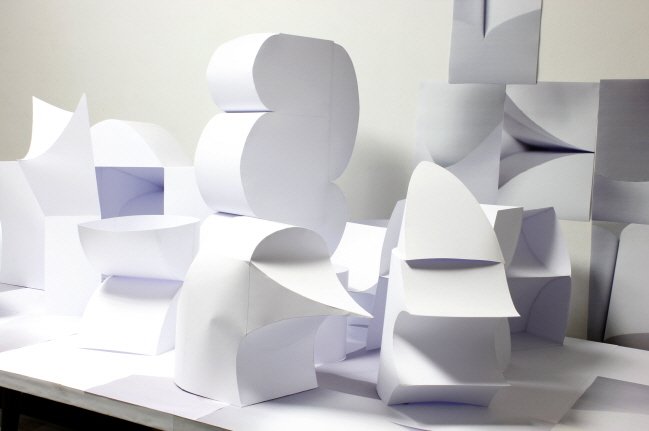
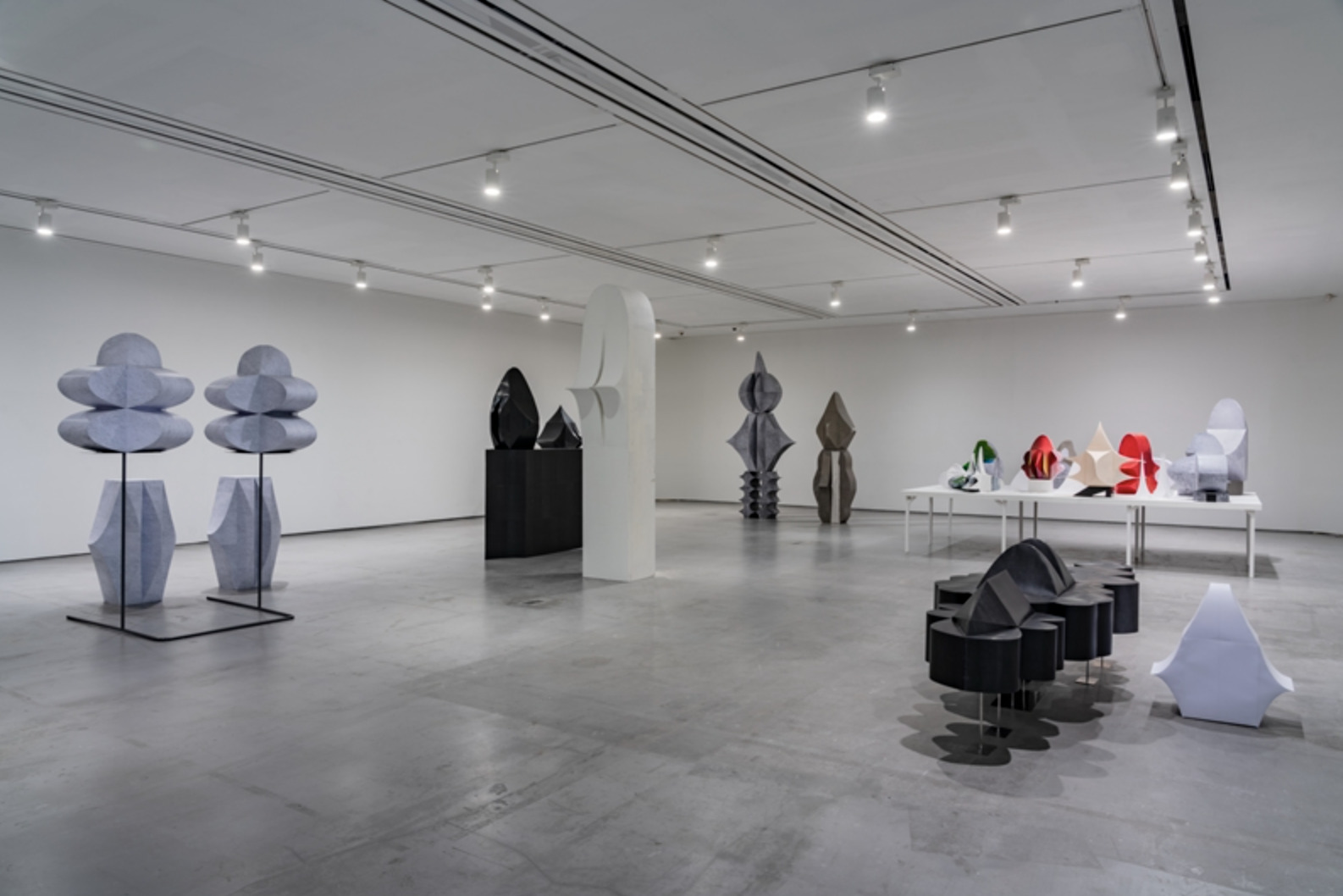
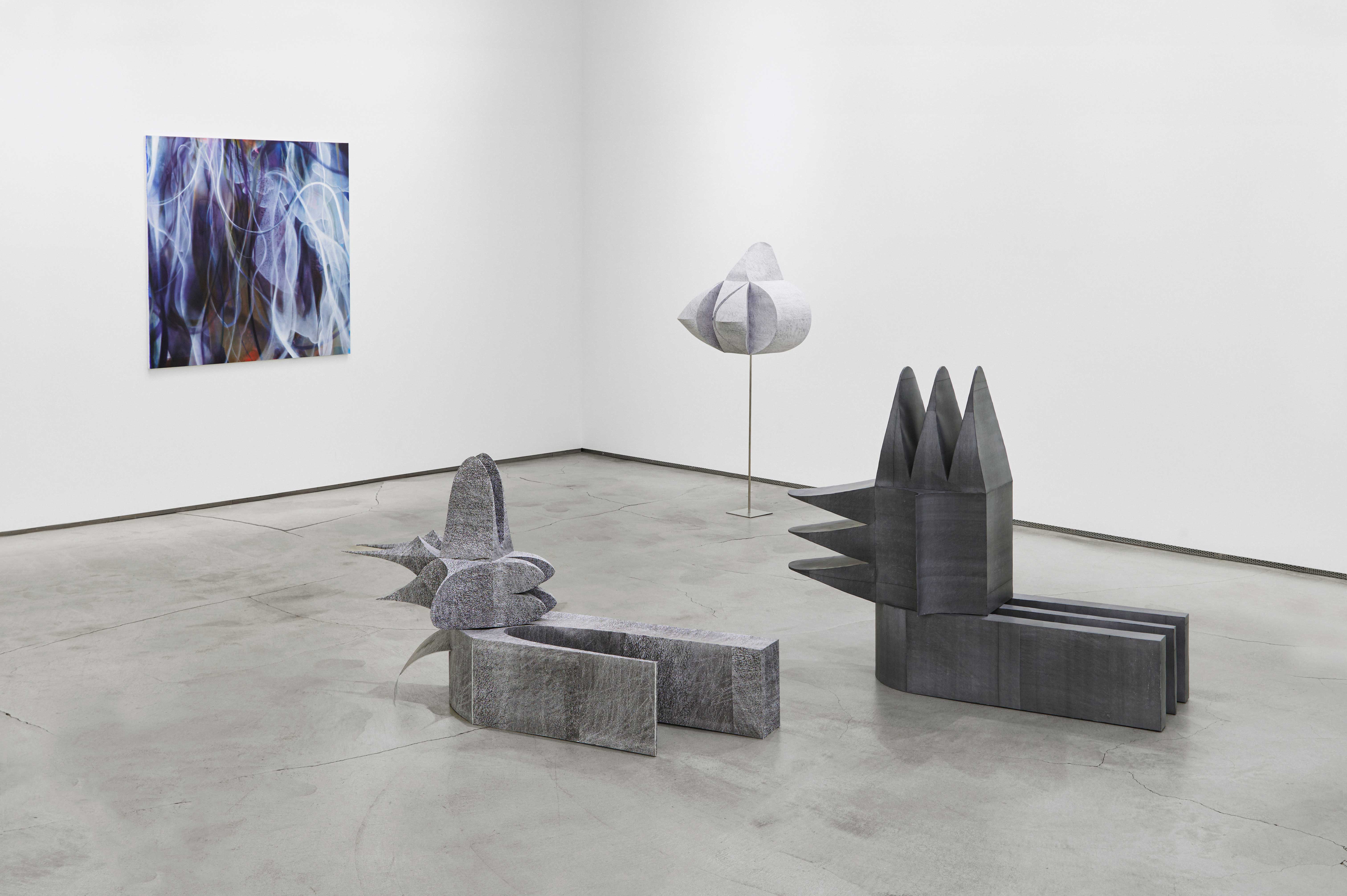
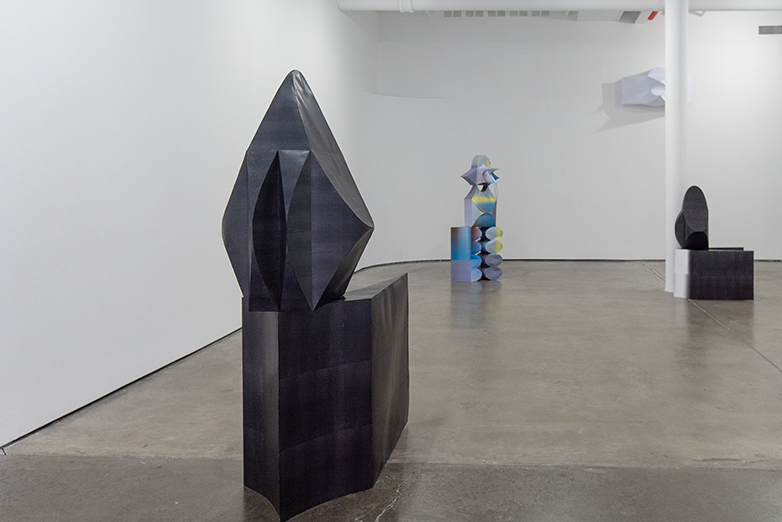
From around 2017, this concern developed into the ‘Paper Body’ works, bringing Hwang’s investigations of material into closer contact with the human body. Using curved pattern rulers designed for tailoring garments, she introduced bodily contours such as shoulders and armpits into her forms, cutting, folding, and joining paper to create hollow sculptures.
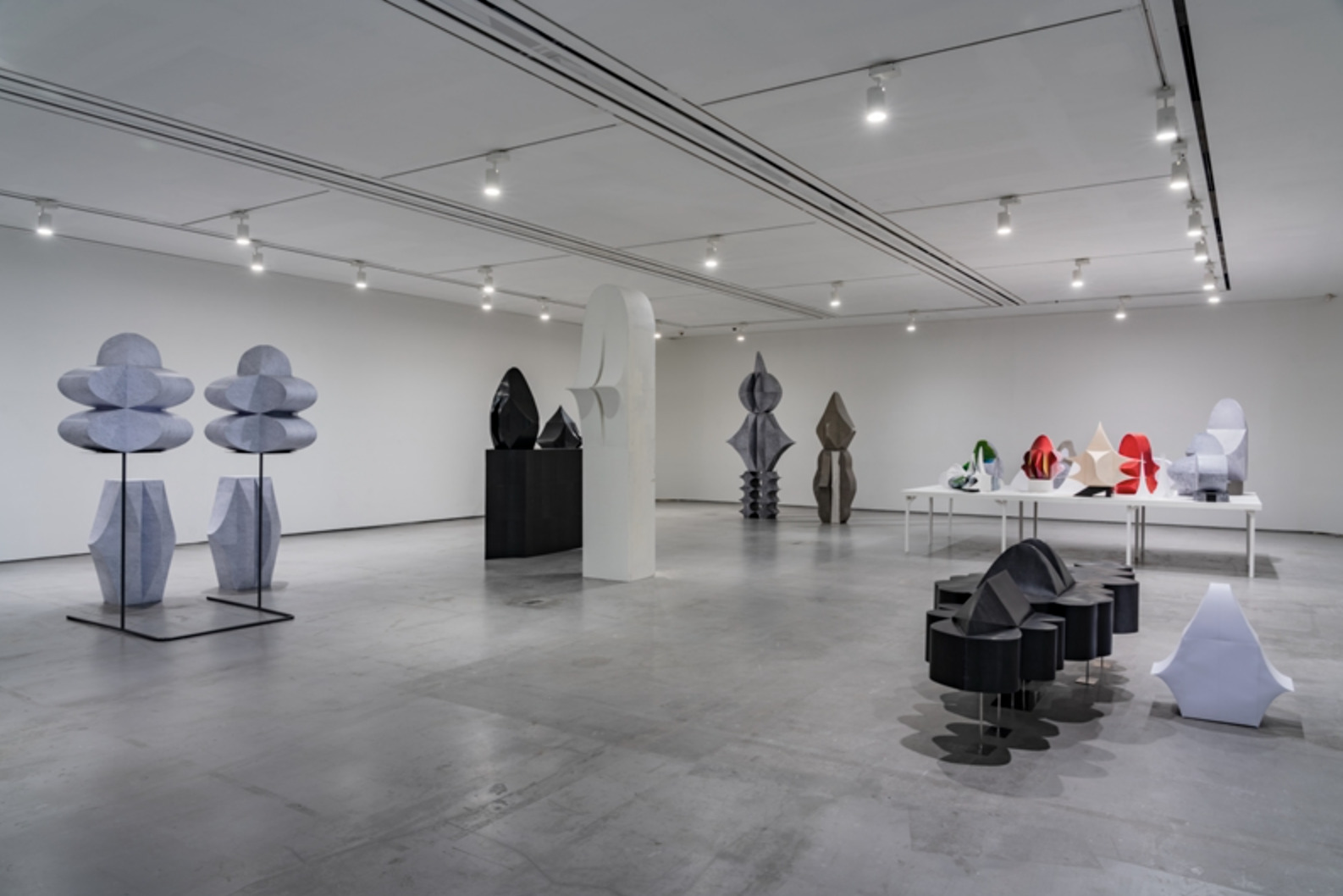
From Material table3. Paper Face, Paper Body(2016) to 《Humming Head》(DOOSAN Gallery, 2019), these forms began to appear less like material experiments and more like individual beings with distinct faces and bodies. Large and small, broad and slender, they resemble one another while remaining subtly different, with each repetition of a basic structure generating another variation.
What matters here is not the representation of a particular human or animal but the process through which one form gives rise to another. Hwang later reflected that what she had wanted was not so much a completed form as “a mechanism through which forms could emerge.” By accepting even the points at which the fragility of paper disrupts a planned structure, her sculptures have continued to occupy the space between strength and weakness, lightness and weight, completion and collapse.
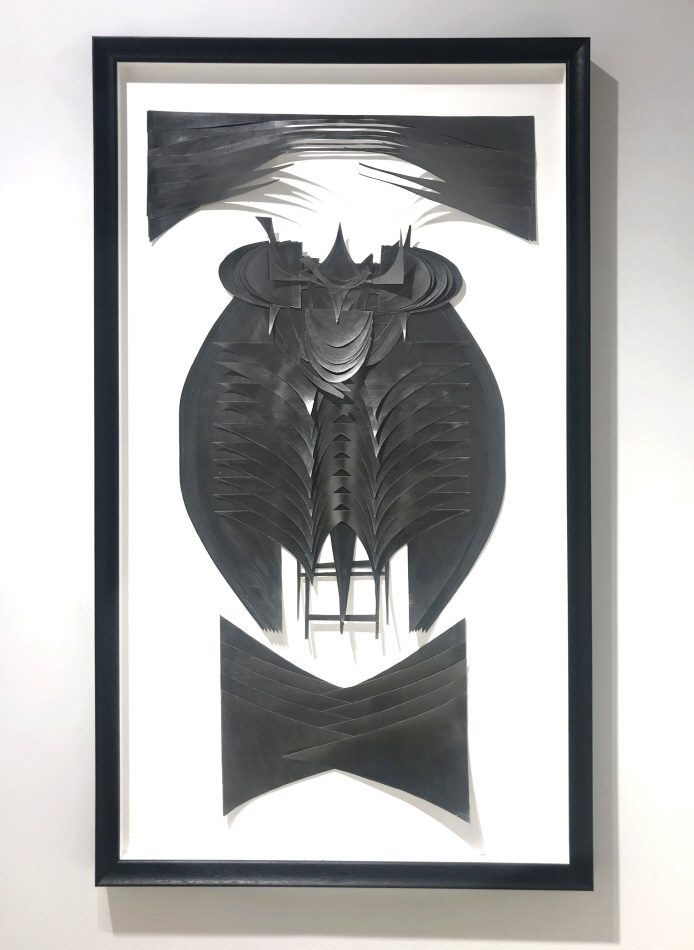
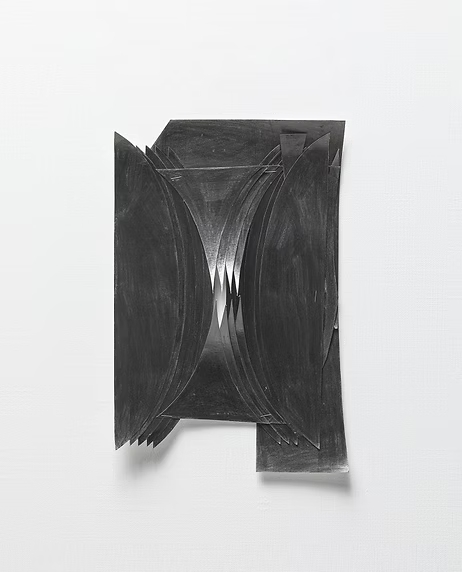
During the 2020s, these ‘bodies’ began to encompass more complex questions of emotion and relation. In the ‘Melting Point’ (2020-) series, the previously inflated paper sculptures return to flatness. In Melting Point(2020) and Melting Point(2021), three-dimensional forms appear to melt down into graphite drawings and layered paper collages, as if something has disappeared while leaving its residue behind.
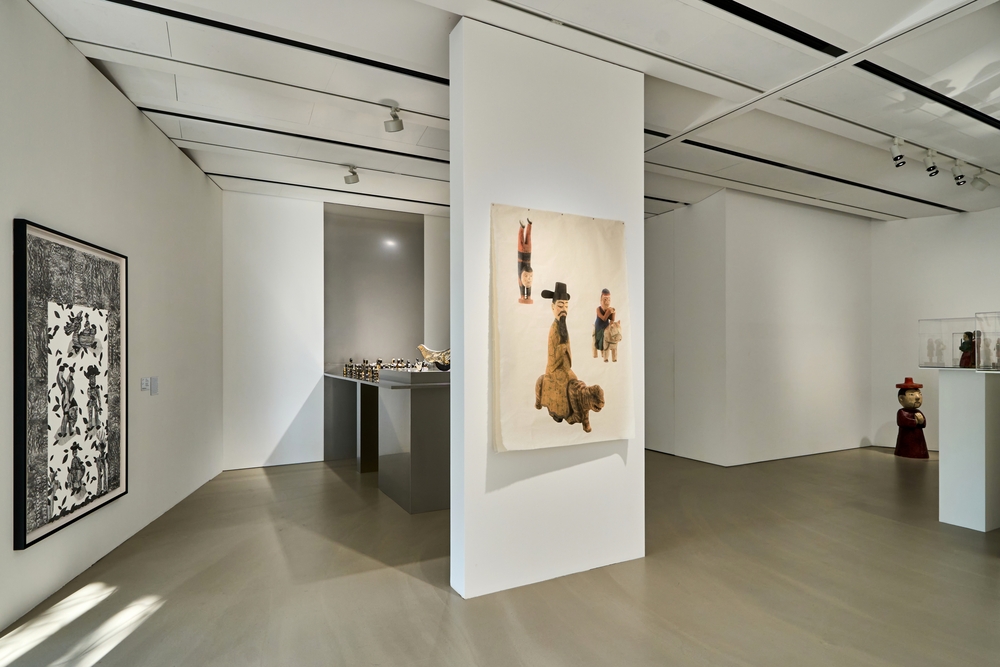
Later, in 《Sculptural Impulse》(Buk-Seoul Museum of Art, 2022), Effector(2022), Fisher 1, 2(2022), and Sofa Rat(2022), inspired by Pieter Bruegel’s The Parable of the Blind(1568), present bodies that interlock with one another and move as a connected mass. If the earlier paper bodies emphasized the emergence of individual entities, these works foreground bodies that depend on one another yet cannot easily separate. The very fact that thin, hollow paper stands against gravity and tension makes visible the vulnerability and endurance already contained within the body.
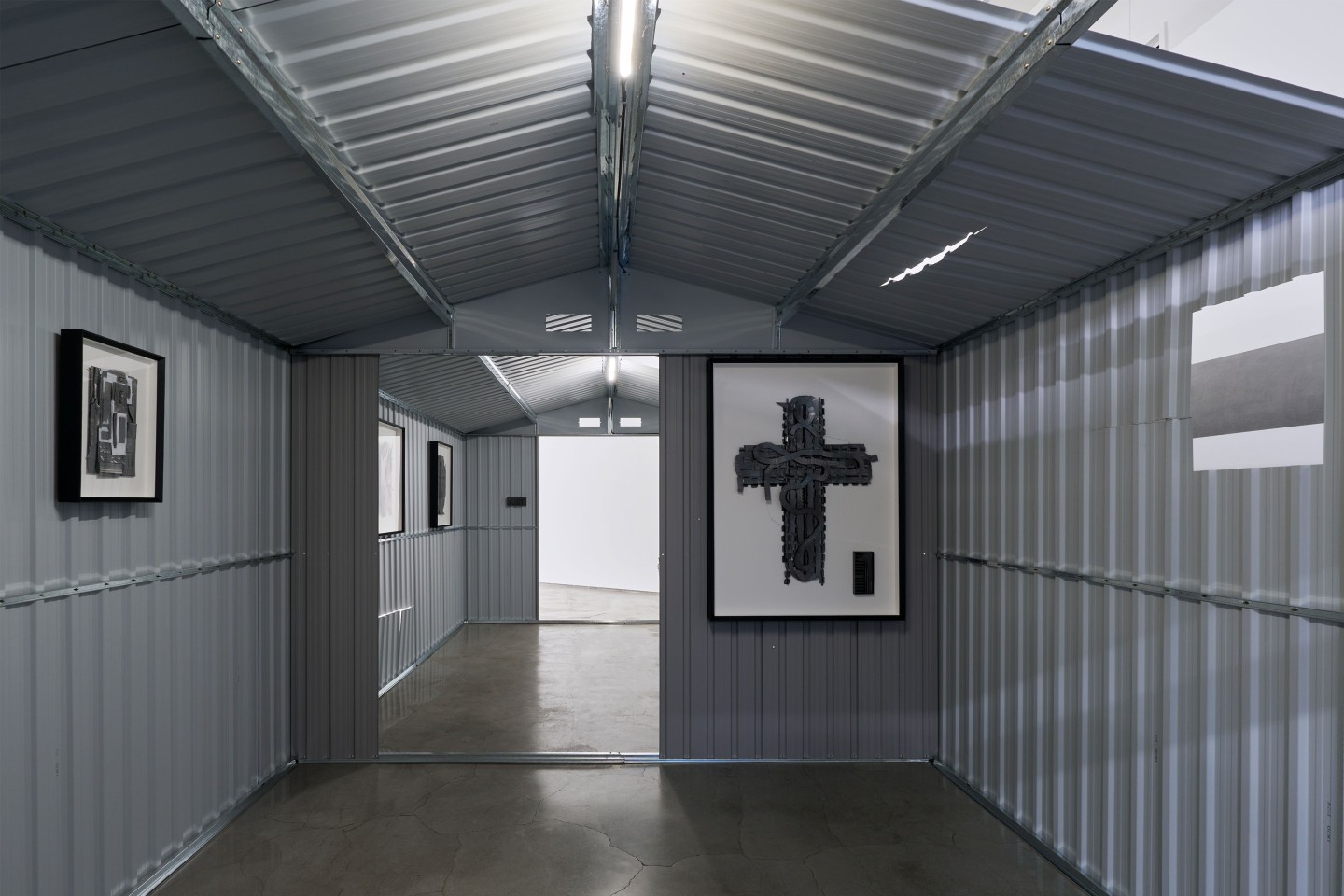
In more recent works, this vulnerability becomes more directly connected to social emotion. In the ‘Small and Sharp’ series presented in 《Pastel, Bullet, Beautiful Fingers》(G Gallery, 2024), Hwang repeatedly draws graphite across paper until it is nearly torn, thinking of vulnerable bodies exposed to violence.
The blackened sheets are cut into small fragments and layered into forms resembling kitchen knives, scalpels, forks, razors, and other familiar objects that might become weapons in an emergency. Fragile paper thus becomes both a form of mourning and an imagined means of self-protection. This emotional current continues in Bite me. never once wild.(2026), which begins with the desire to mourn victims while imagining art as something capable of returning violence to its source and protecting those who encounter it.
In 《Where We Are Mirrored》(Wooran Foundation, 2025), Hwang’s sand sculptures similarly address memory and mourning, giving material form to those who have been forgotten or left unprotected. What began as an examination of material vulnerability has gradually expanded into a question of how vulnerable beings might be remembered, protected, and represented.