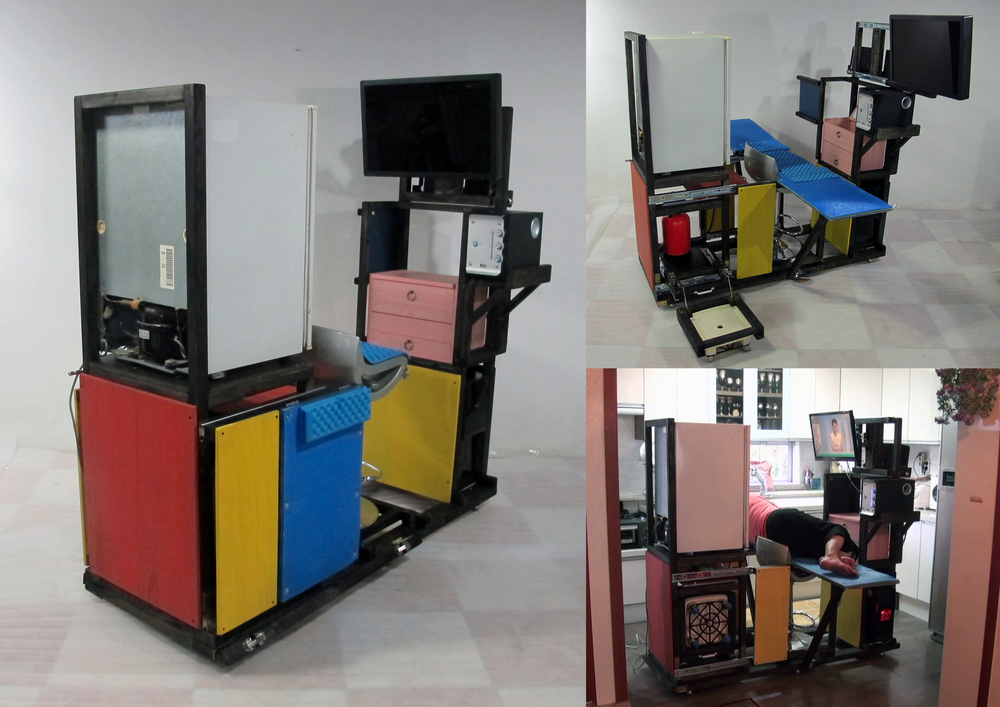
In Choi’s early practice, his formal method centered on placing preexisting objects into unfamiliar relationships without fundamentally dismantling them. All in one-indoor cleaners(2012) stacks wastebaskets, brooms, dustpans, and other cleaning tools into a structure reminiscent of Tatlin’s Monument to the Third International, while Mother’s multitasking device combines household appliances into a single apparatus.
What matters here is not creating a new form from scratch but relocating objects already designed for particular uses into a different structural logic. This approach blurs boundaries among design, furniture, everyday tools, and sculpture while encouraging viewers to recall the objects’ original functions. The sense of unfamiliarity in these works does not arise from exotic materials but from seeing highly familiar things where they do not seem to belong.
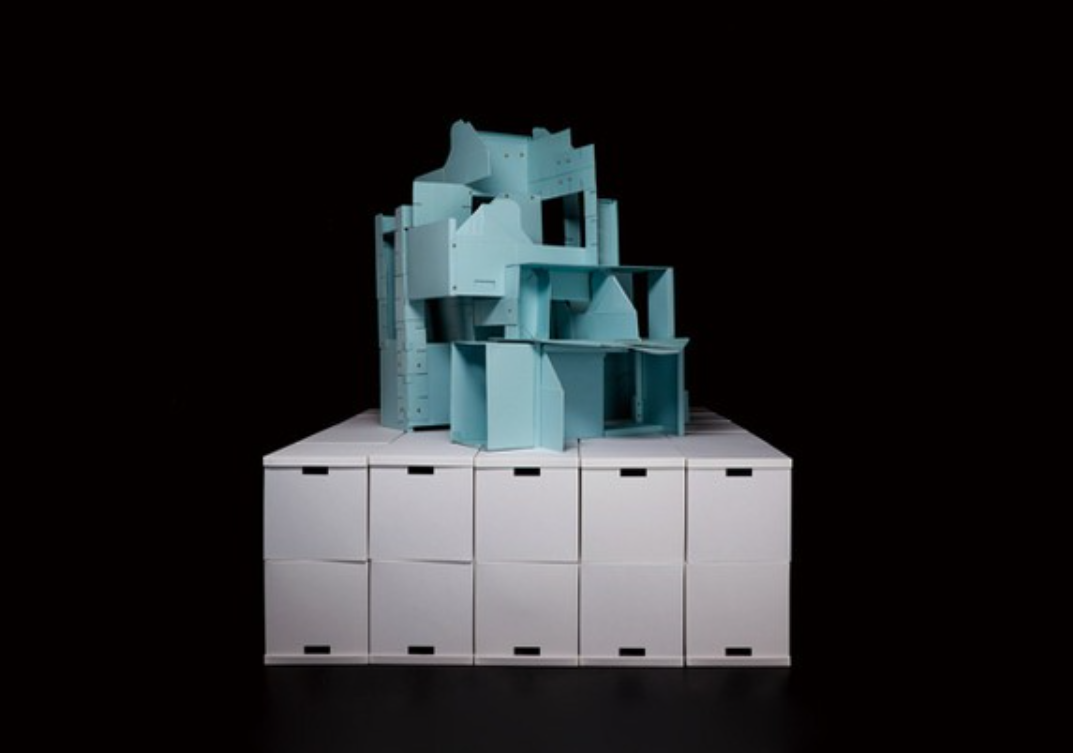
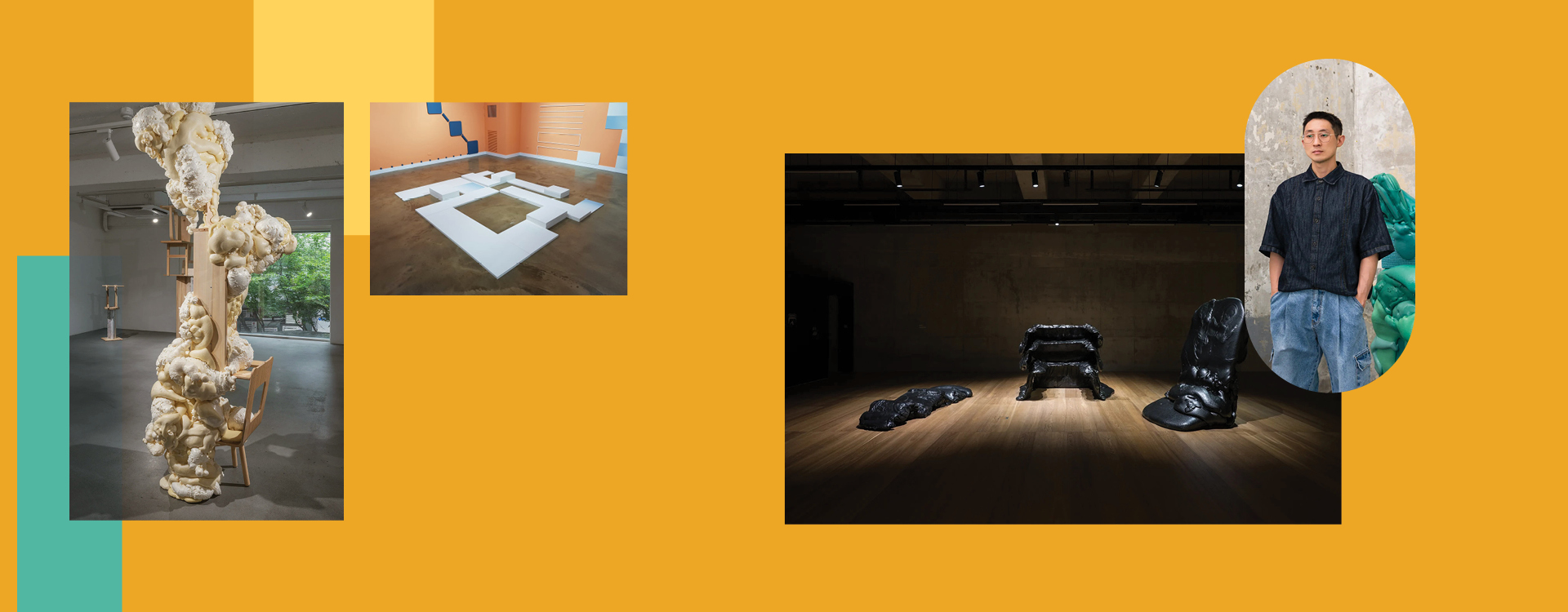
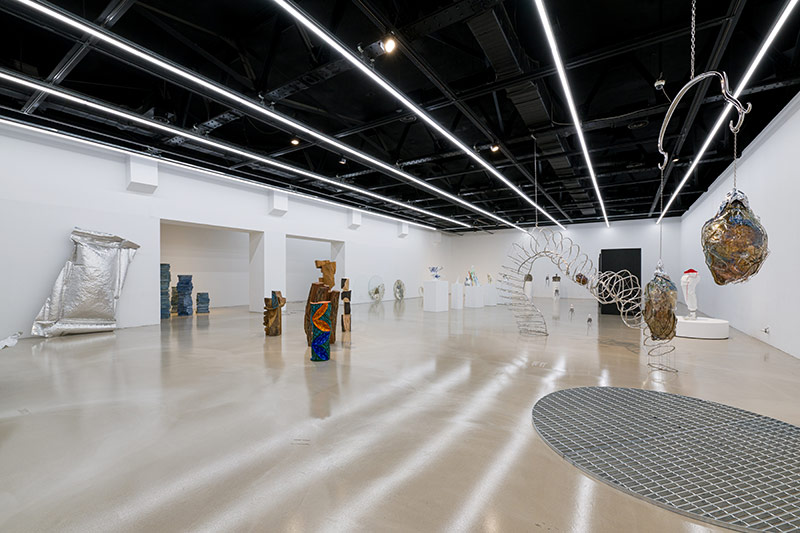
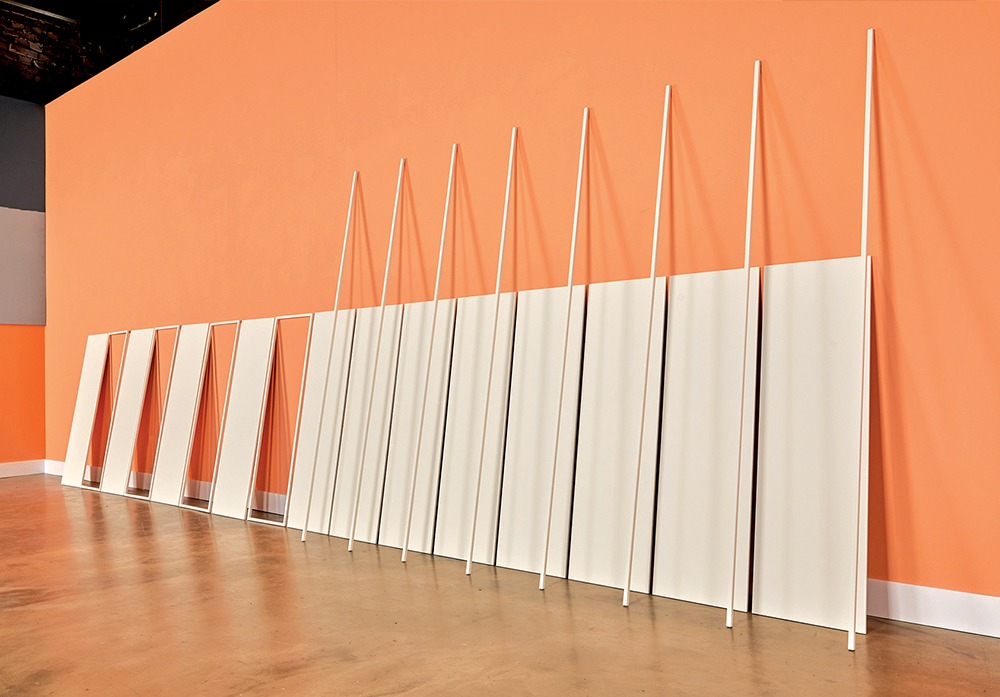
During the period when Choi worked extensively with DIY furniture, this method of assembly developed into a more systematic sculptural language. Works in 《Form Follows Form》 rearranged existing modules without cutting or physically altering them, producing states that were neither fully functional products nor entirely autonomous new sculptures.
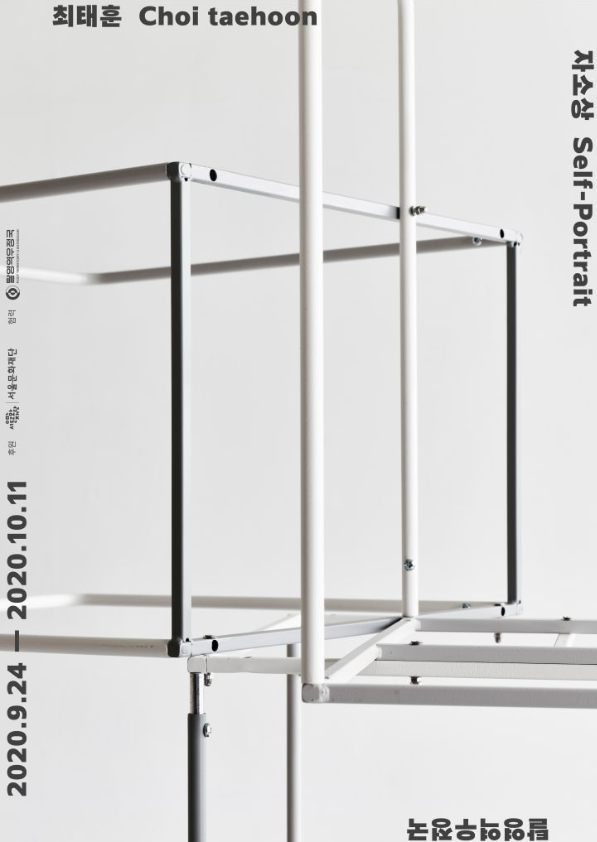
In 《South Korean Ensemble》, furniture encountered through a virtual application was reconstructed in physical space using only online information, while 《Self-Portrait》 connected algorithmically recommended units vertically and horizontally. During this period, Choi treated not only the physical object but also the ways in which it is distributed, consumed, represented, and perceived as part of sculptural form. Real objects, digital images, replicas, and exhibition spaces overlapped, bringing questions of originals, copies, and mediated experience directly into his practice.
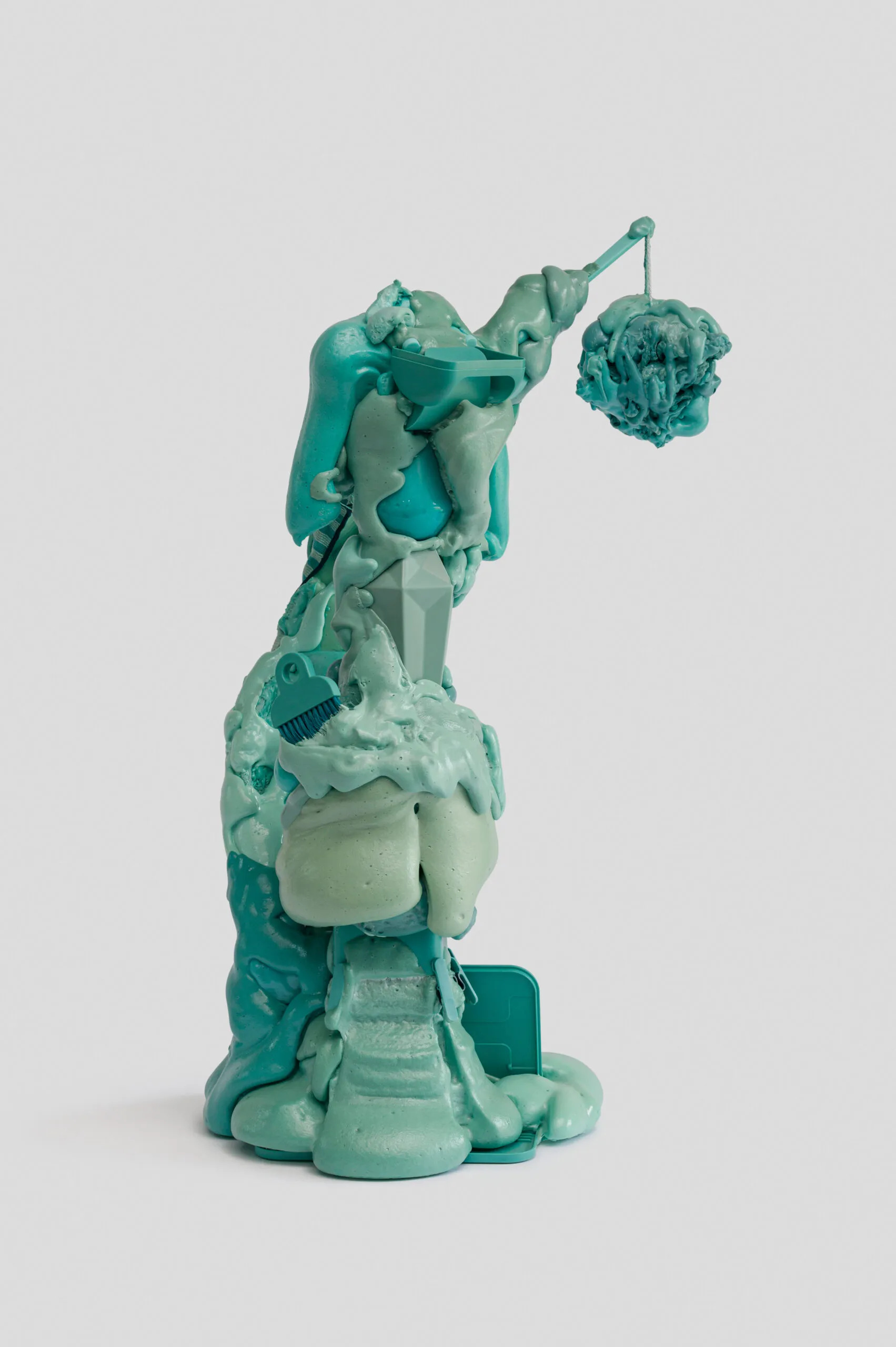
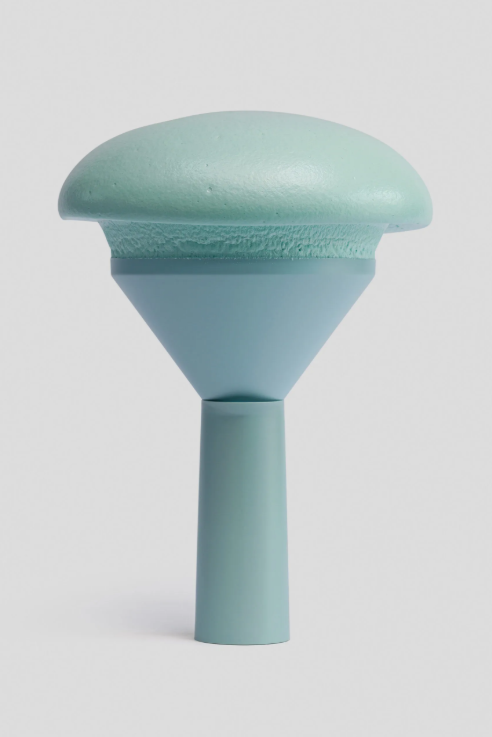
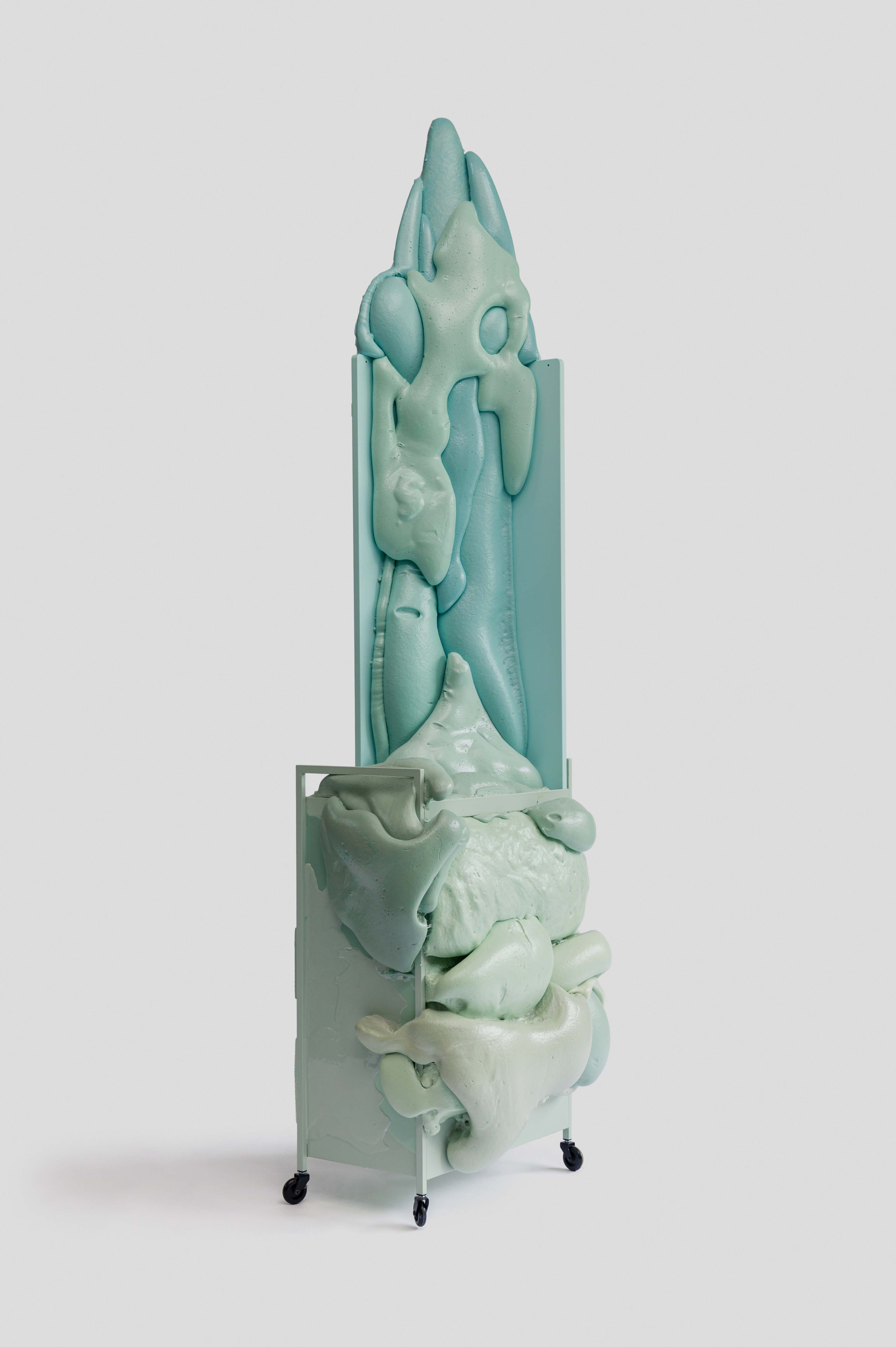
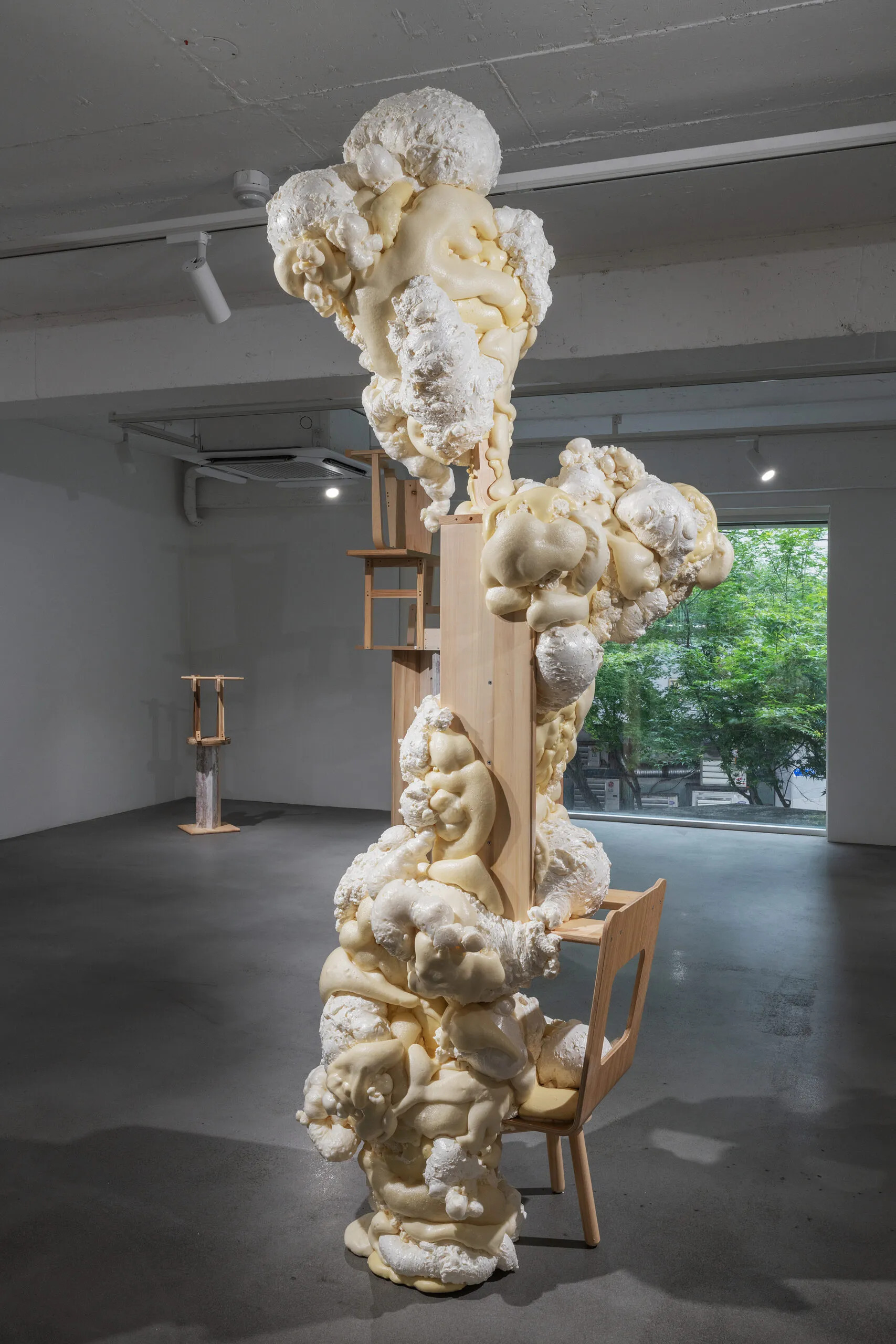
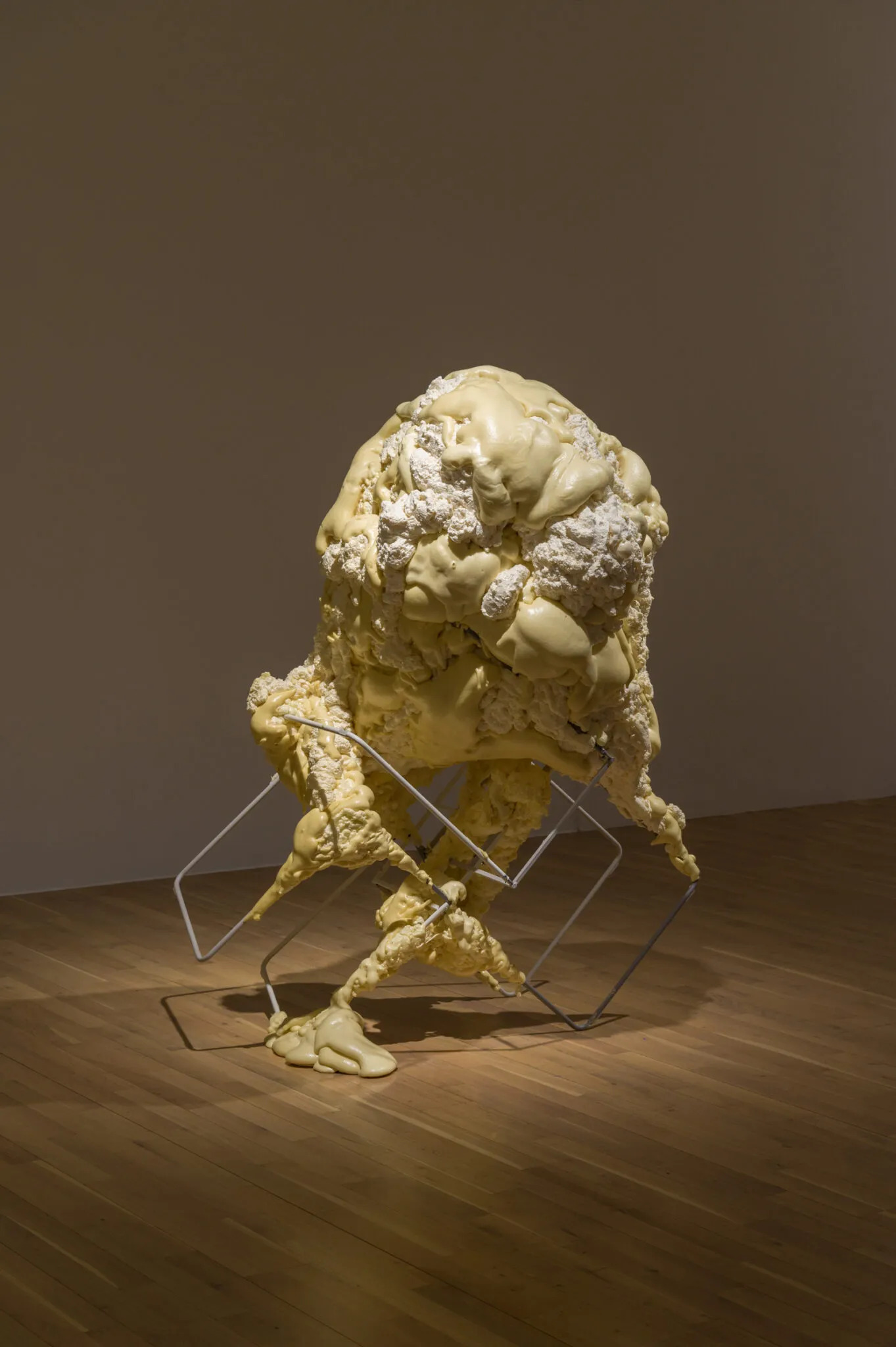
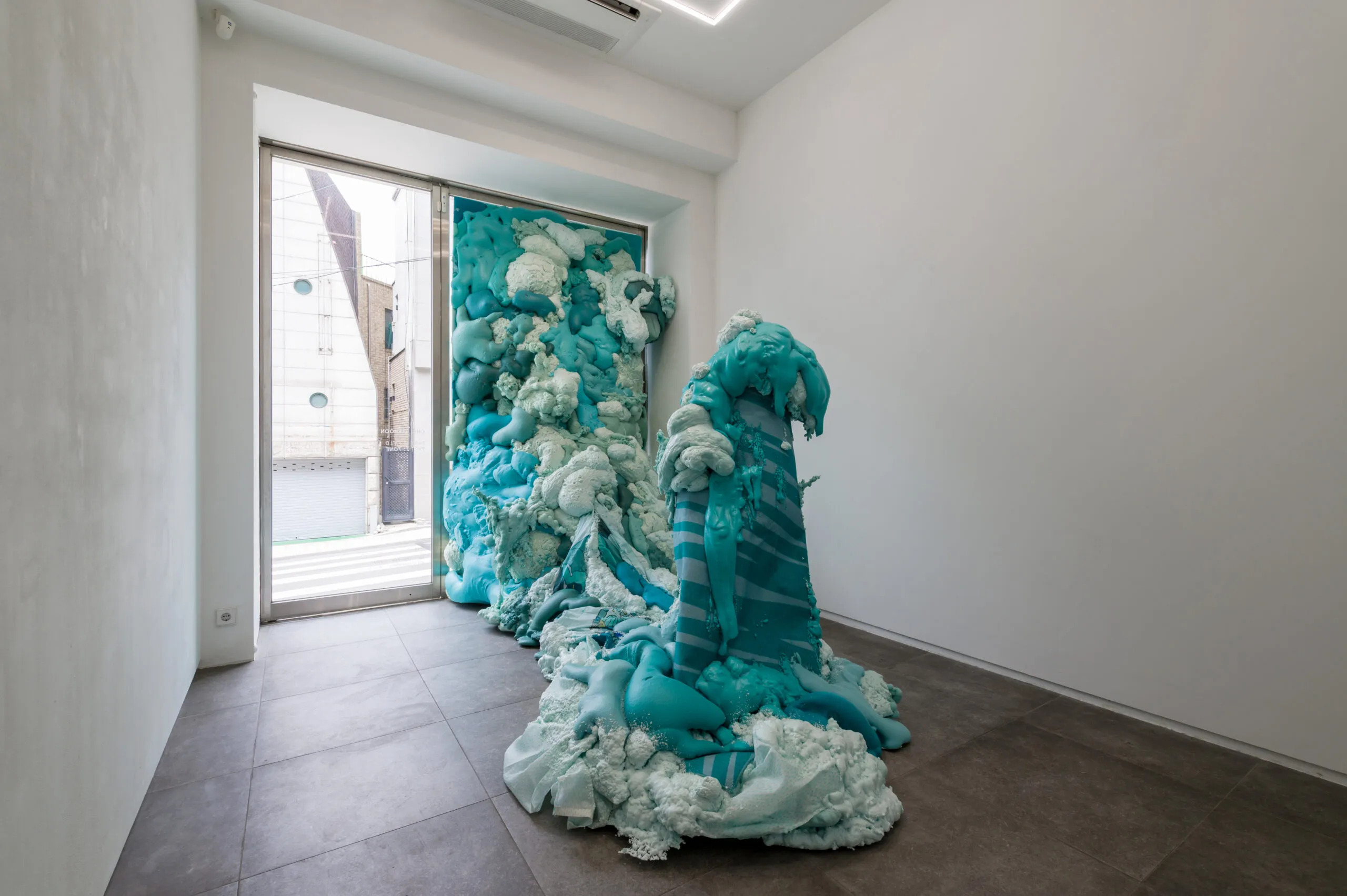
With the ‘SAL’ series, assembly is joined by a more explicit sense of modeling. In SAL-Wood Type 2(2022), SAL-Tone 3(2023), and SAL-Tone 8(2023), unrelated objects such as wall shelves, stools, drinking glasses, cutlery, clothespins, lampshades, and thermoses are bound together through expanding urethane foam and begin to resemble parts of a single body.
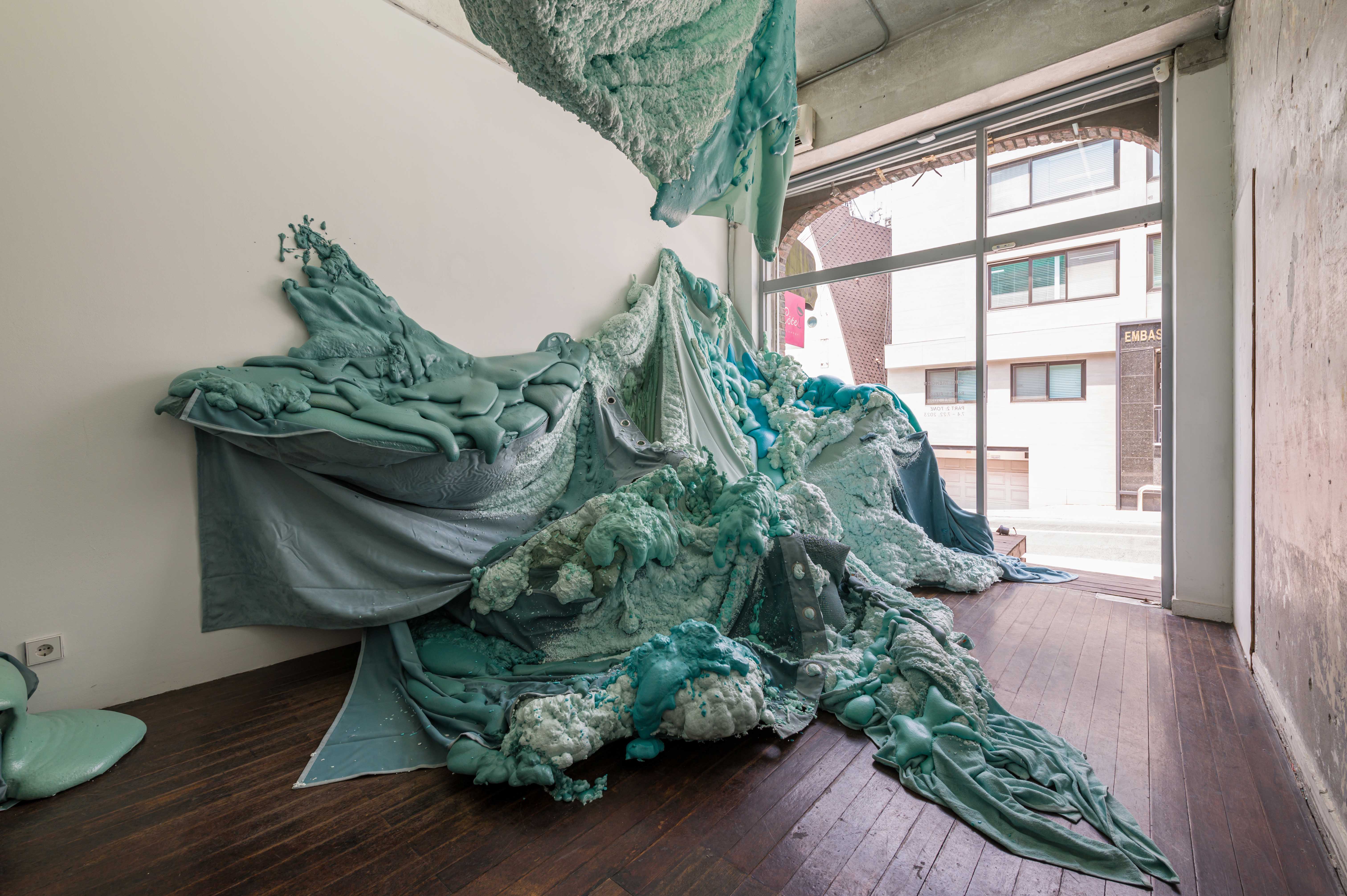
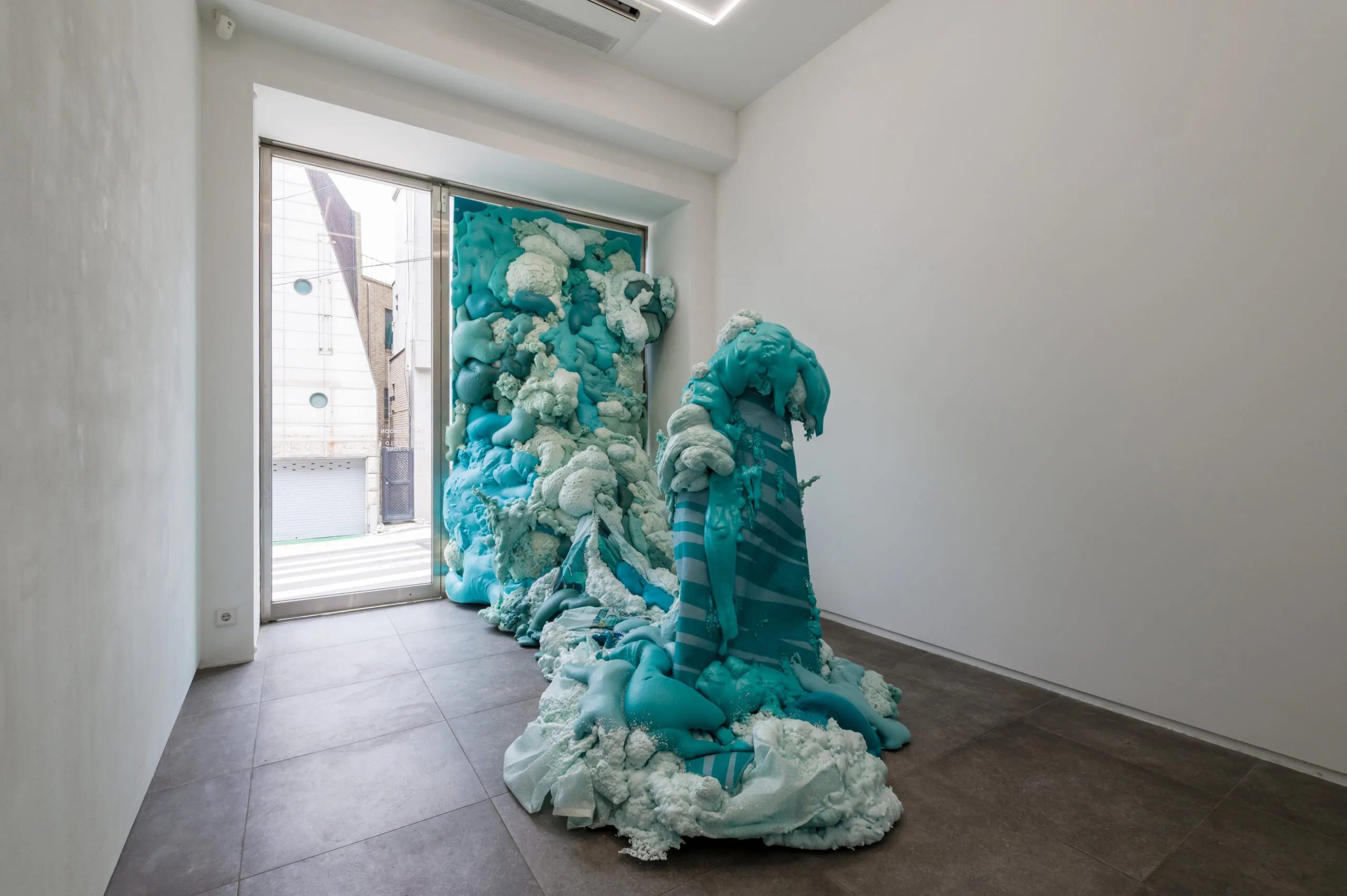
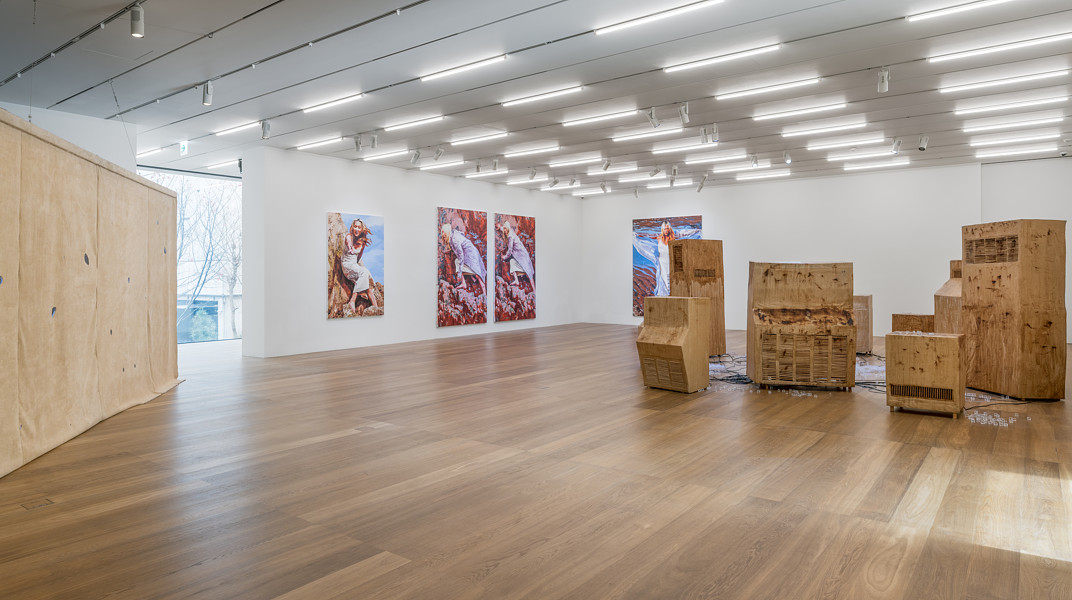
The foam functions simultaneously as an adhesive and as mass, expanding and hardening at a speed the artist cannot fully control. In 《TONE》(P21, 2023), rather than grouping objects from the same product family, Choi assembled things with entirely different functions according to looser affinities such as color and texture, forming what he calls ‘alternative families.’ In 《FIELD》(P21, 2023), this principle expanded from individual objects to architectural scale.
Treating the P1 and P2 gallery spaces as the armature of a traditional modeled sculpture, Choi attached urethane foam and fabric throughout the galleries until the exhibition space itself became an enormous body. The viewer no longer simply looks at a sculpture but moves between its interior and exterior.
Yet Choi’s formal language is not fixed around urethane foam alone. White Reef(2023), made during the Gapado Artist-in-Residence program, was produced by taking impressions of rocks surrounding the island in thin Korean paper and installing these shell-like forms inside a glass-walled space. From outside the building, viewers could see the concave interior of the sculpture; from within, they encountered the exterior surface derived from the rocks.
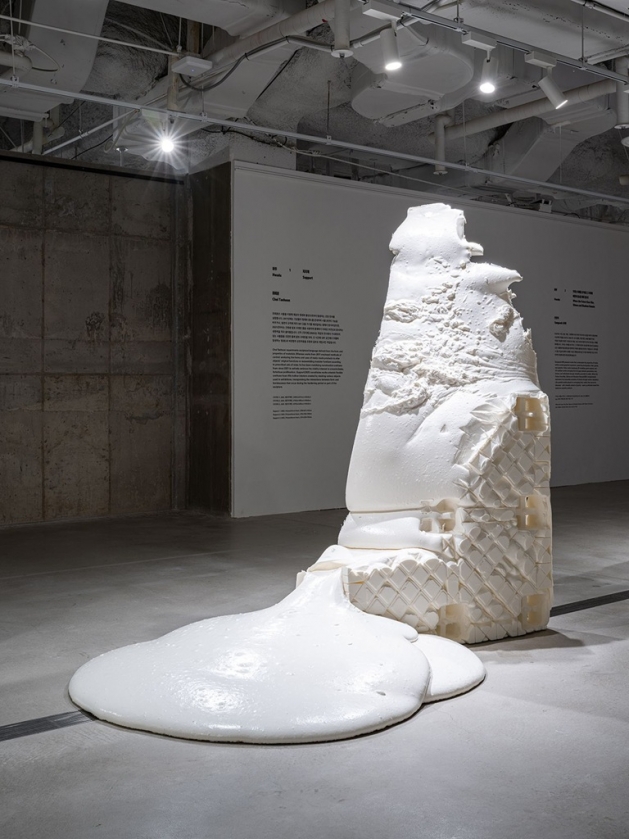
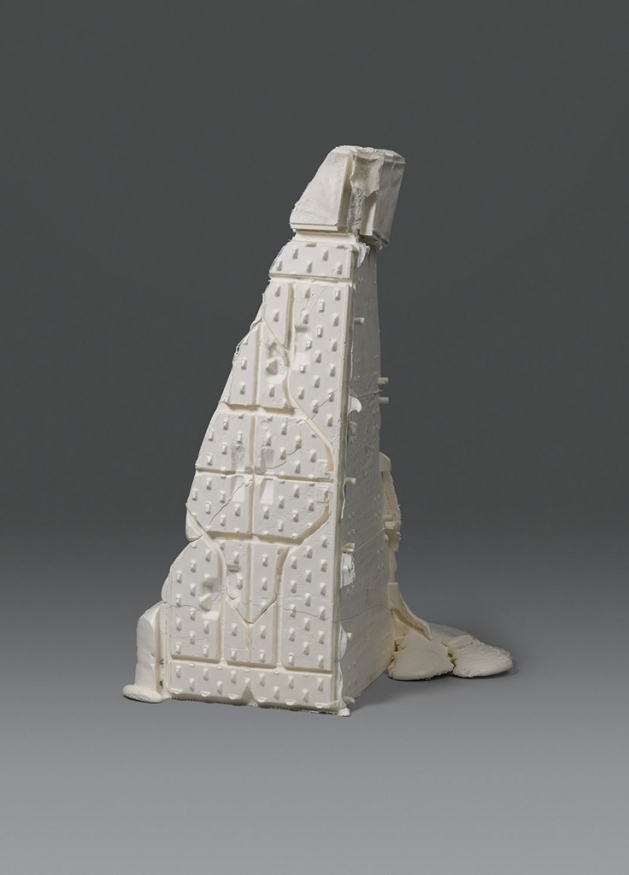
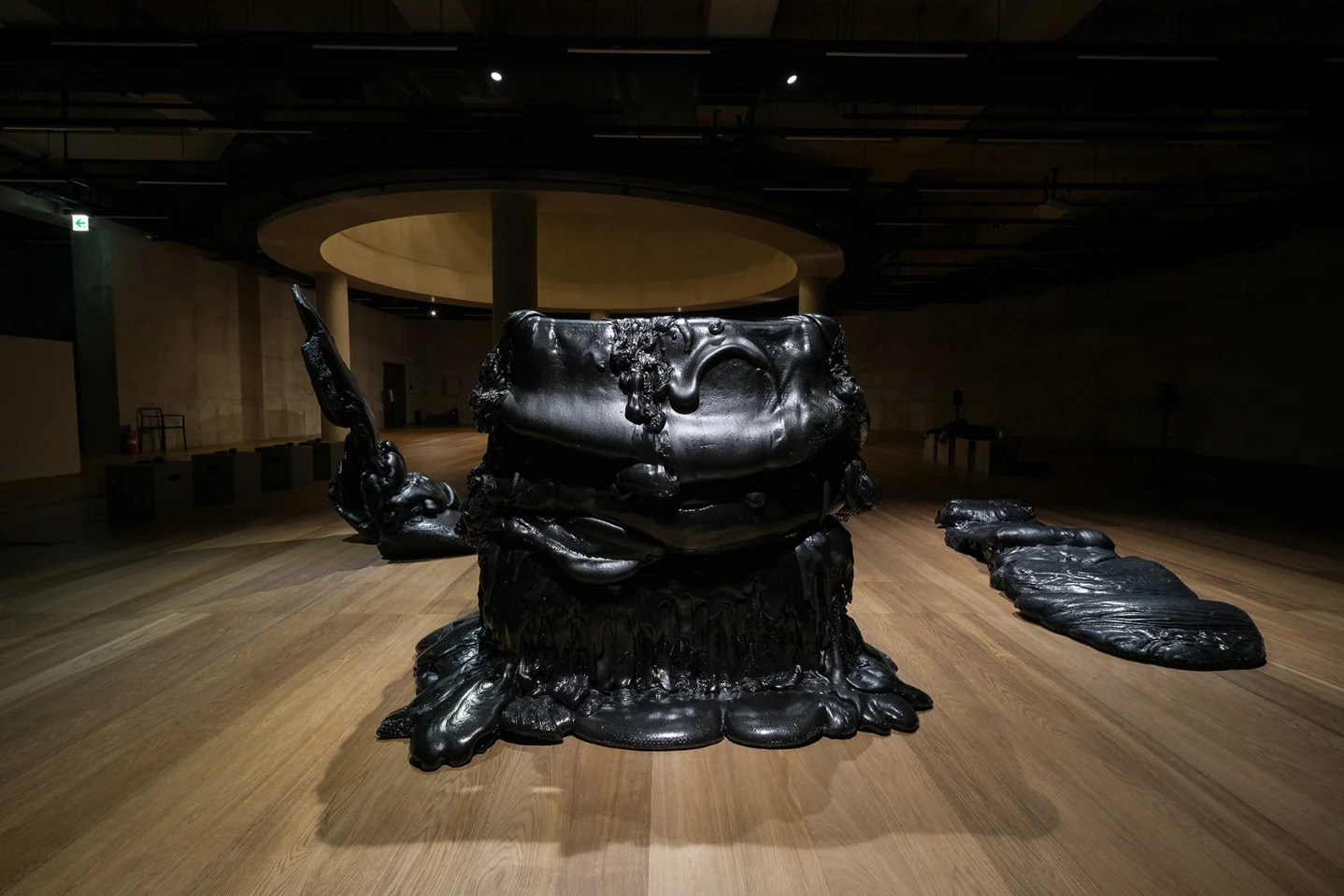
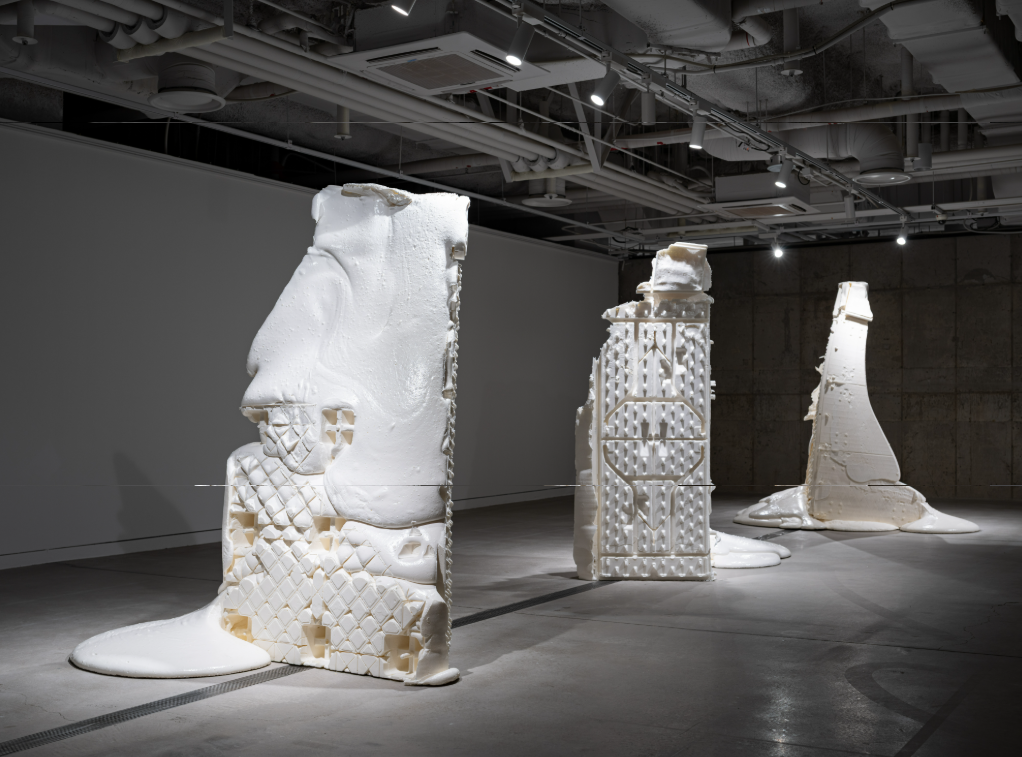
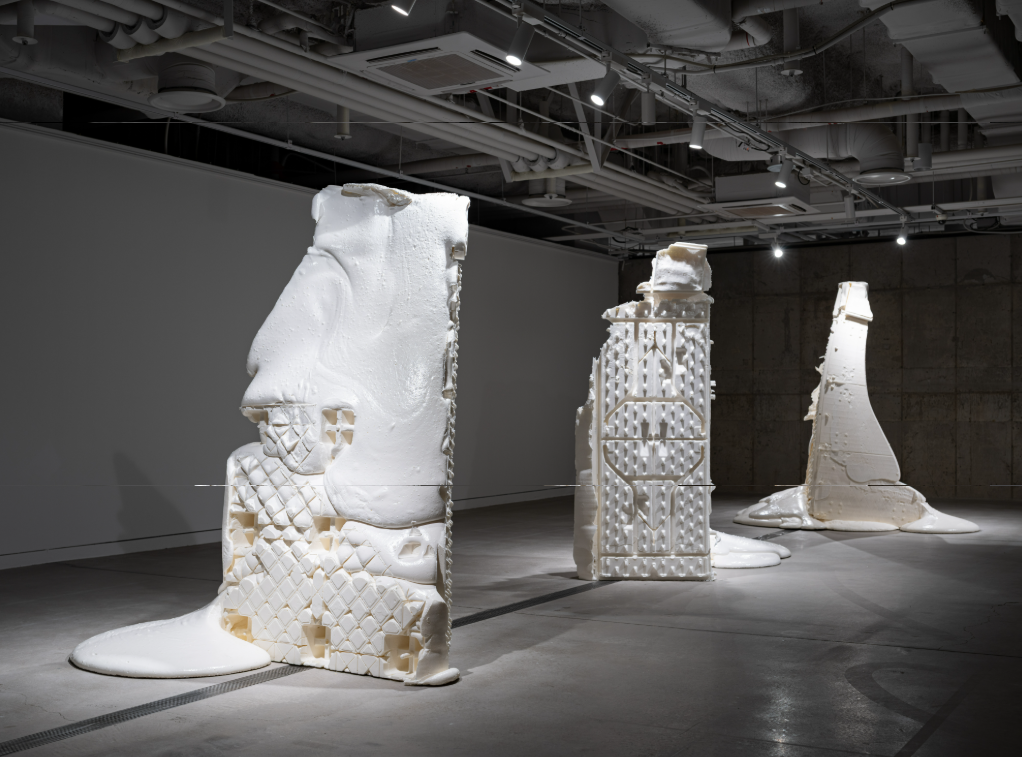
Here, solid mass gives way to surface, emptiness, light, and environmental change. In the later ‘Support’ series, Choi returns to liquid flexible urethane, but the method differs fundamentally from the additive process of the ‘SAL’ works. Rather than attaching material onto an existing object, he pours urethane into spaces between objects and removes those objects after curing.
The practice therefore shifts from building up form to preserving the traces of what has disappeared. Even when the same material recurs, Choi continually alters the way it operates. Material functions less as a fixed stylistic signature than as a means of reconsidering how sculpture is structured.