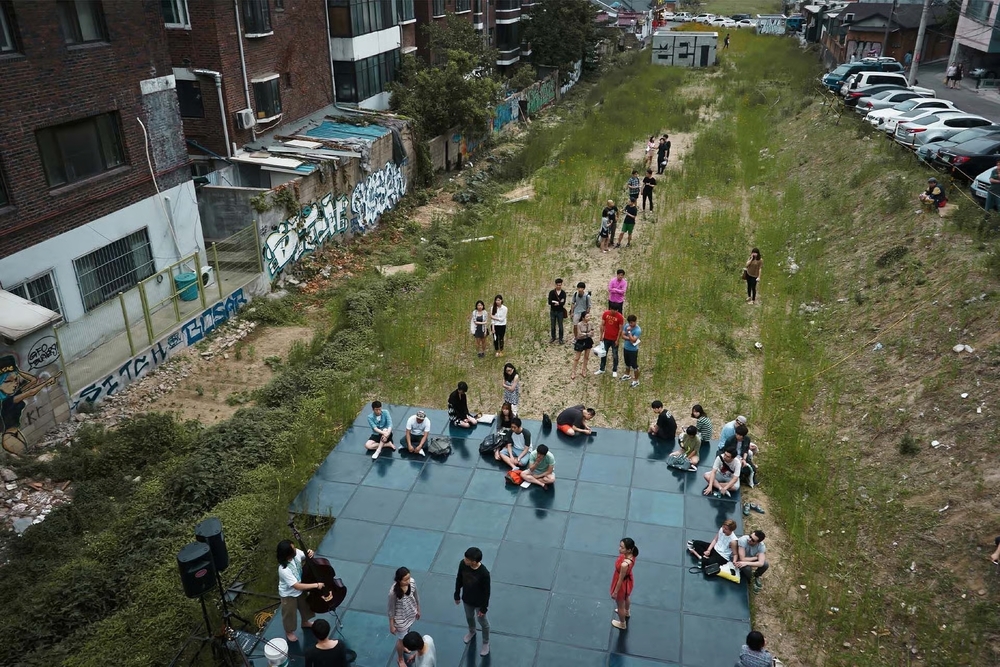
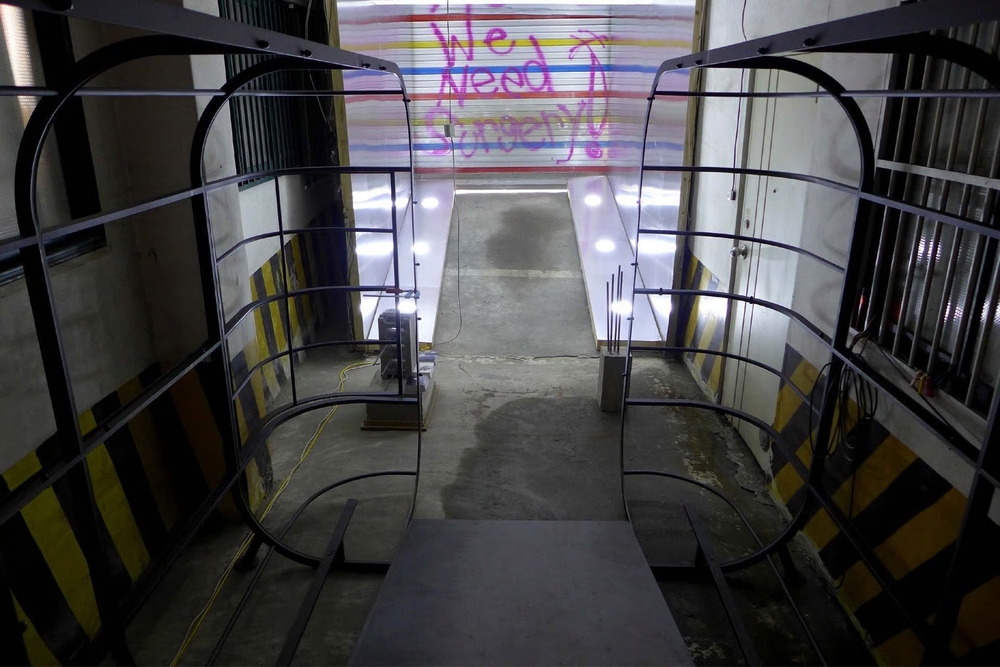
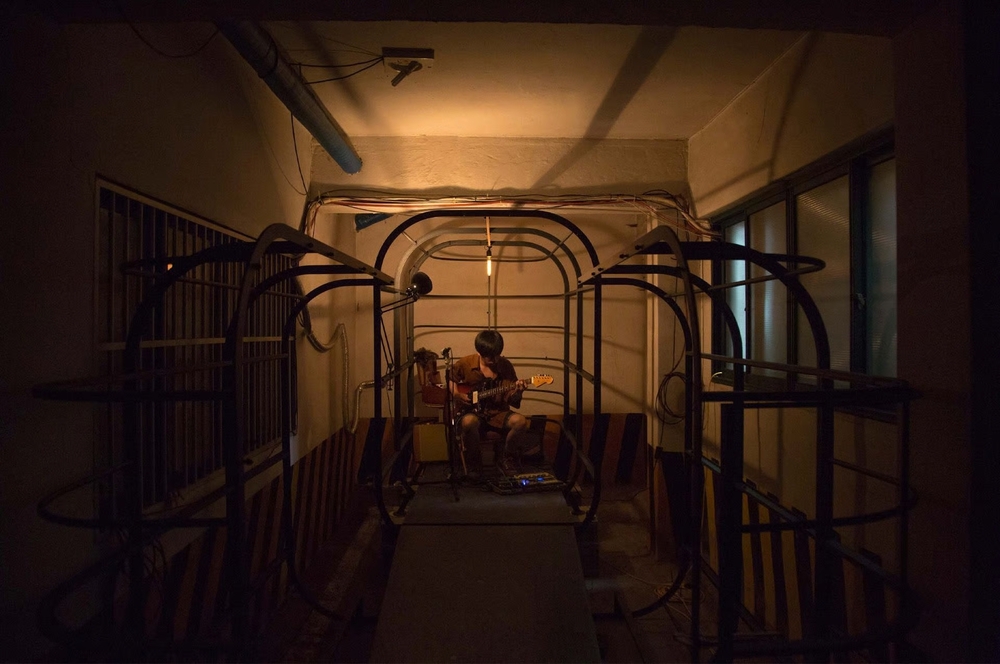
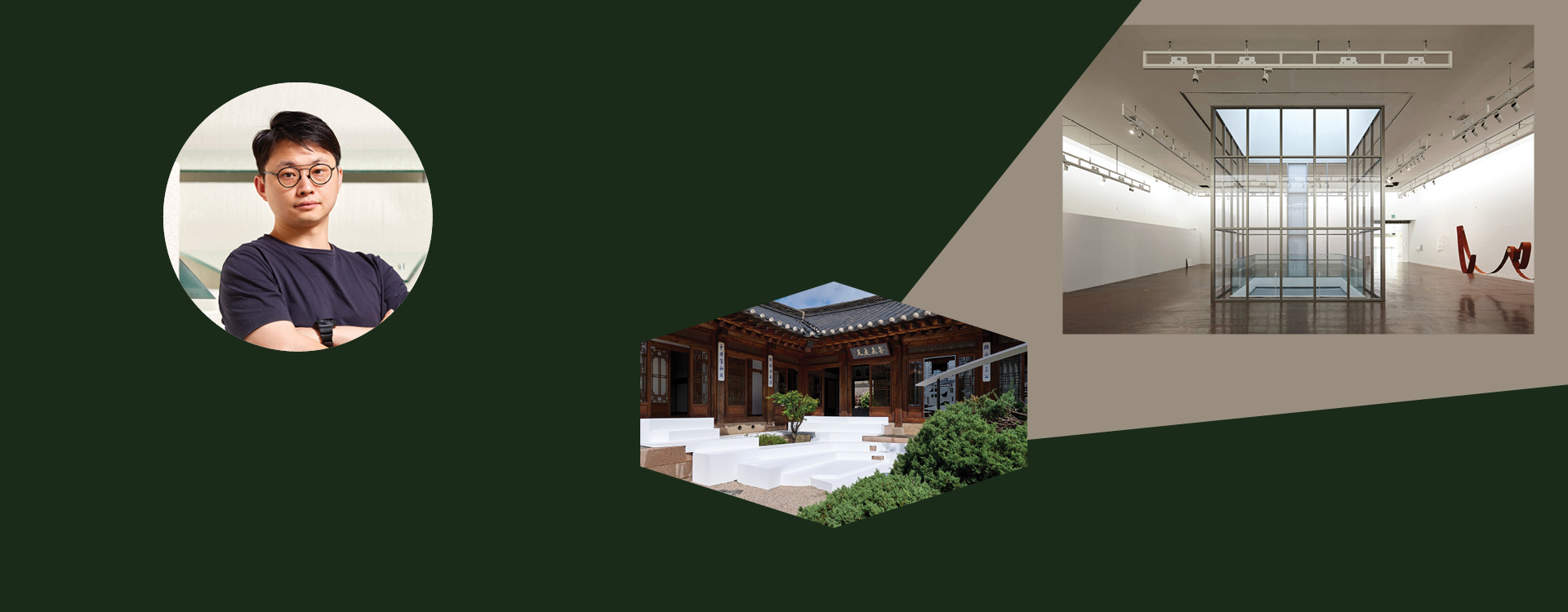
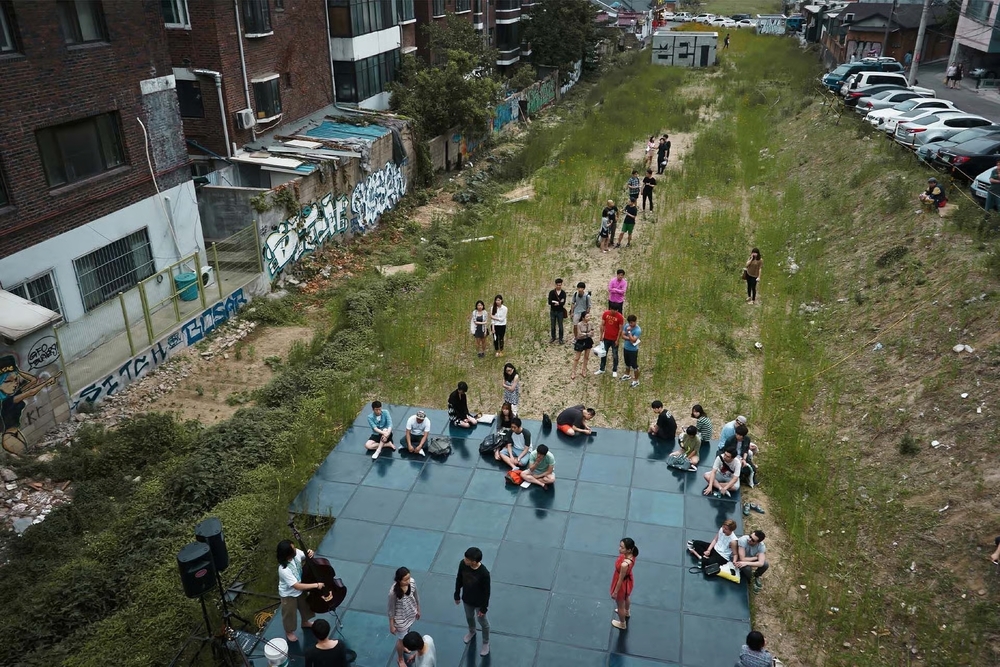
Kim Donghee’s practice begins with an understanding of space not as an empty backdrop, but as a structure in which people, objects, institutions, programs, time, and movement overlap and operate together. In his first solo exhibition 《House of Dispersed Layers》(Mapo-gu, 2014), he sought out overlooked or abandoned urban sites—including a disused railway site beneath a bridge, an apartment rest area, an emergency exit, and a parking lot—and temporarily transformed them into platforms for exhibitions and performances.
In works such as House of Dispersed Layers_Garage(2014), space functioned less as a completed artwork than as a ‘support’ upon which other artists and audiences could enter and generate events. His operation of temporary platforms such as ‘Opera Coast,’ ‘West Warehouse,’ ‘23rd Floor,’ and ‘Ashiba Vision’ between 2015 and 2016 developed from the same approach.
Rather than owning spaces or permanently transforming them, Kim temporarily opened up new possibilities by projecting different uses and relationships onto them for a limited period. From this early stage, space, platform, and collaboration became inseparable foundations of his practice.
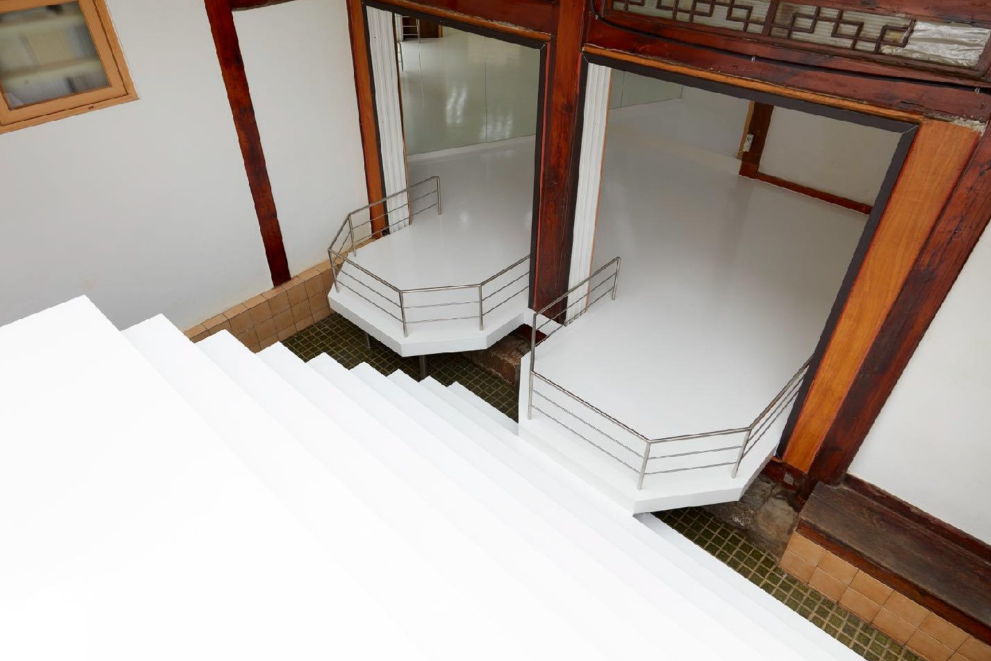
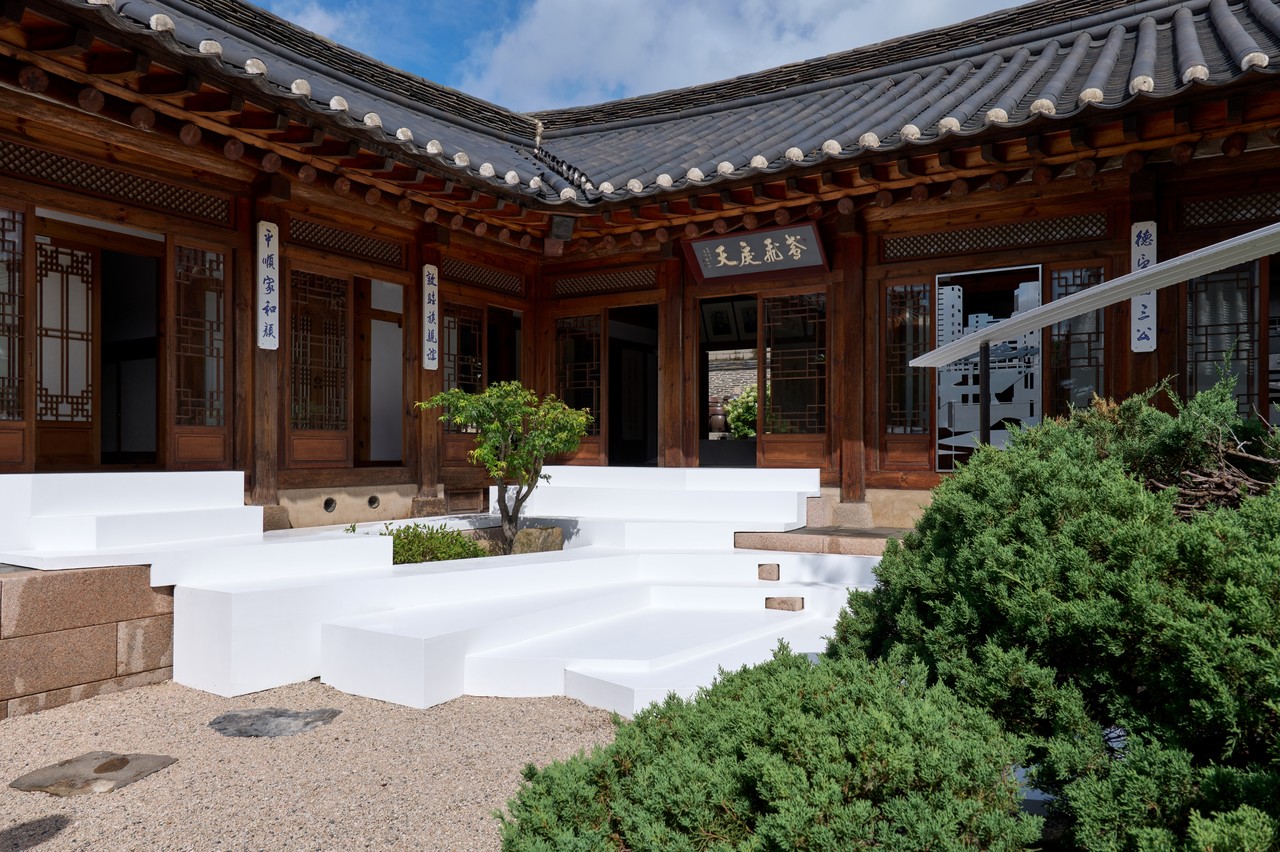
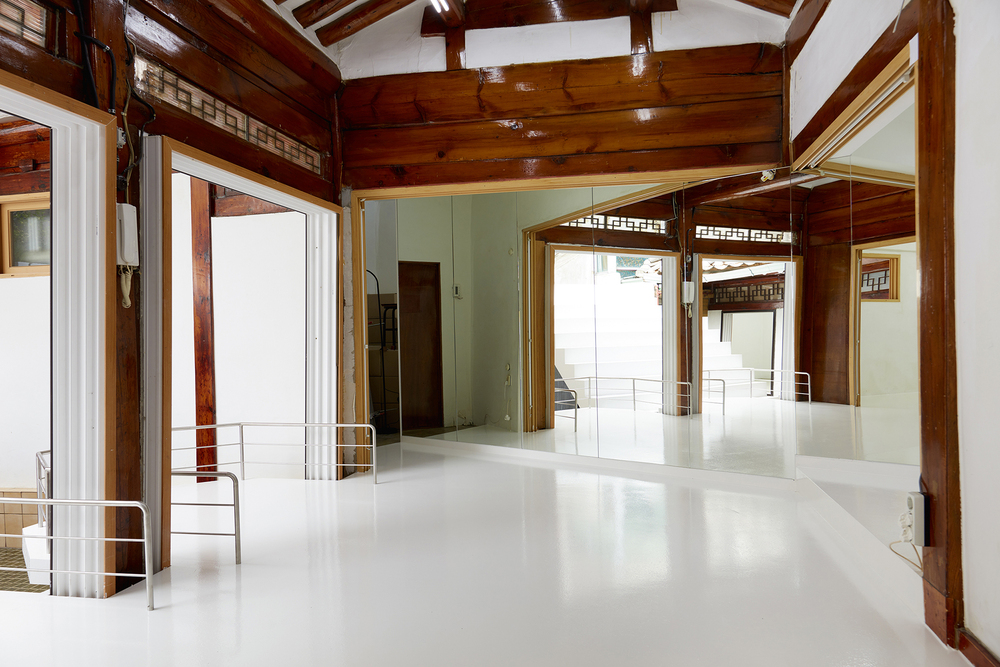
With 《3 Volumes》(Audio Visual Pavilion, 2017), his attention gradually shifted from operating places toward formally analyzing the structures of space itself. At Audio Visual Pavilion, a traditional hanok converted into an exhibition venue, Kim added new elements such as walls, stairs, balconies, mirrors, passageways, and window frames, inviting viewers to experience the space by walking, pausing, climbing, and looking through it.
Rather than erasing the existing site and constructing something entirely new, he overlaid another layer onto the structures and traces already present. The concept of ‘support’ in Kim’s work also extends beyond physical structures. It includes the time required to coordinate, manage, and operate collaborators’ works and to shape the viewer’s experience.
This is why he moves fluidly among the roles of installation artist, spatial designer, curator, technician, operator, and viewer. Space in his practice is therefore not a fixed form but a temporary condition in which different roles and events converge.
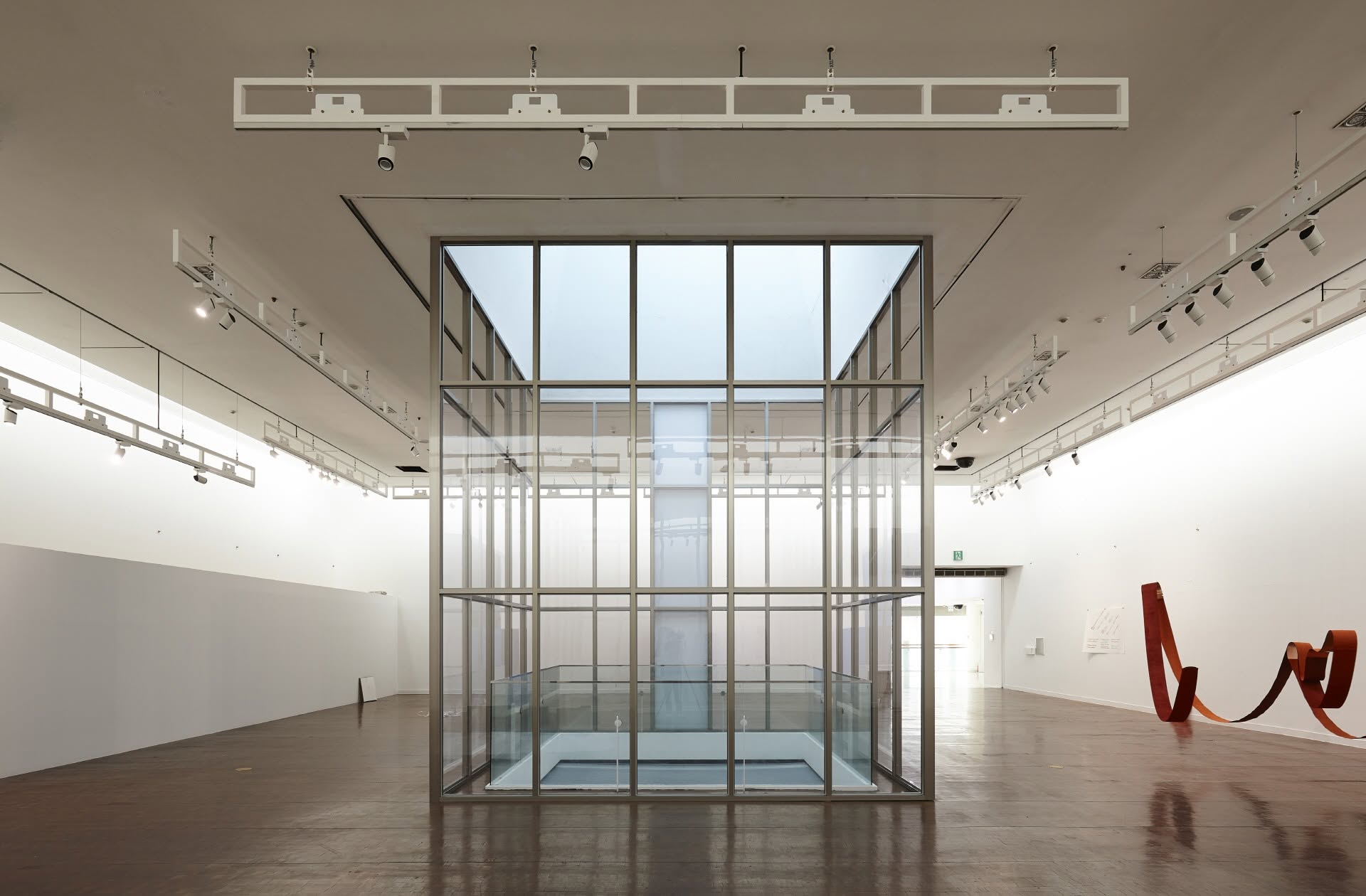
During the 2020s, these questions expanded into increasingly precise arrangements of viewers’ sightlines and movement. In the ‘Sequence Type’(2020) series, Kim constructed new spatial sequences from existing architectural elements such as windows, clerestories, and passageways, allowing viewers to encounter particular scenes in succession.
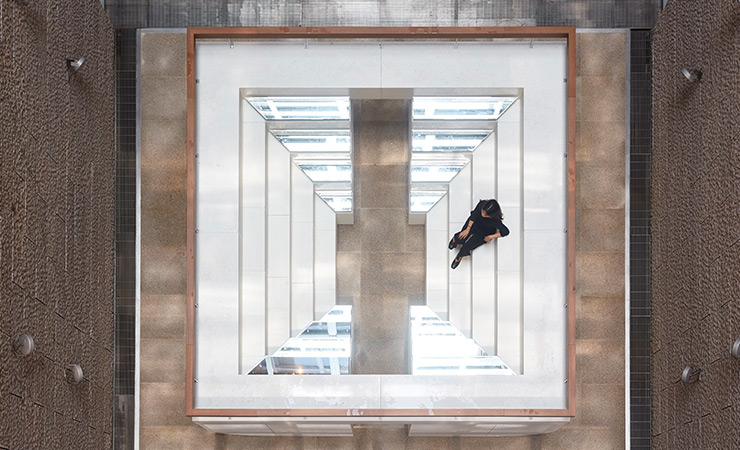
Sequence Type: 1(2020) offset the positions of three windows and a grid structure so that viewers could selectively frame different exterior landscapes, while Sequence Type: 3, presented in 《Elsewhere》(Atelier Hermès, 2020), guided viewers from the gallery interior through the courtyard, into and onto the structure, and finally toward a view of the sky.
Kim repeatedly simulates circulation and viewpoints before construction, yet he also incorporates scenes newly discovered on site, along with changing light, seasons, and weather. This combination of precise planning and openness to environmental contingency has become an important foundation of his later work.
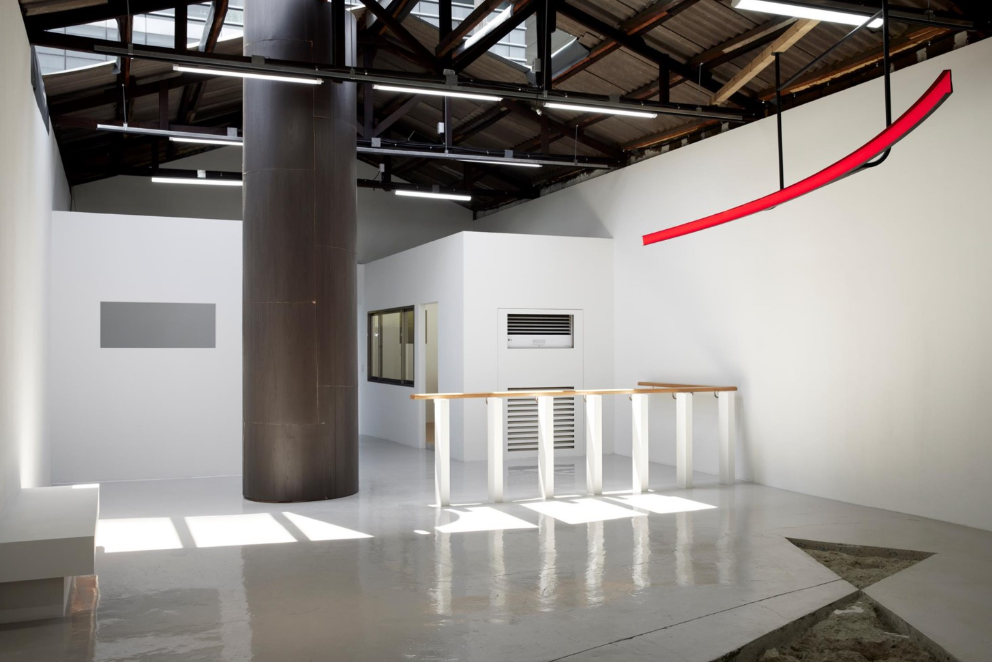
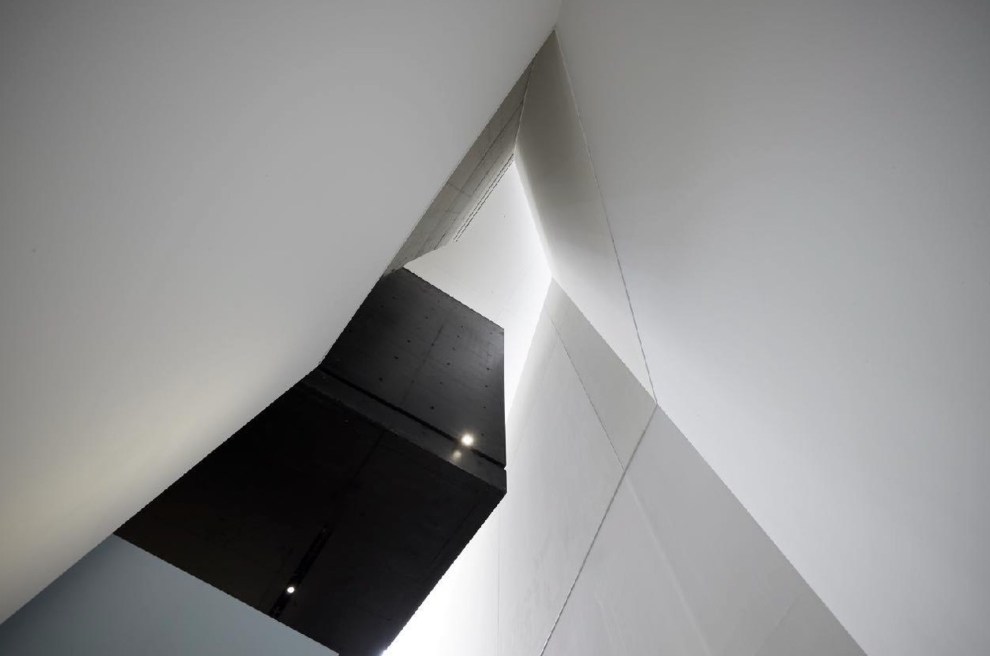
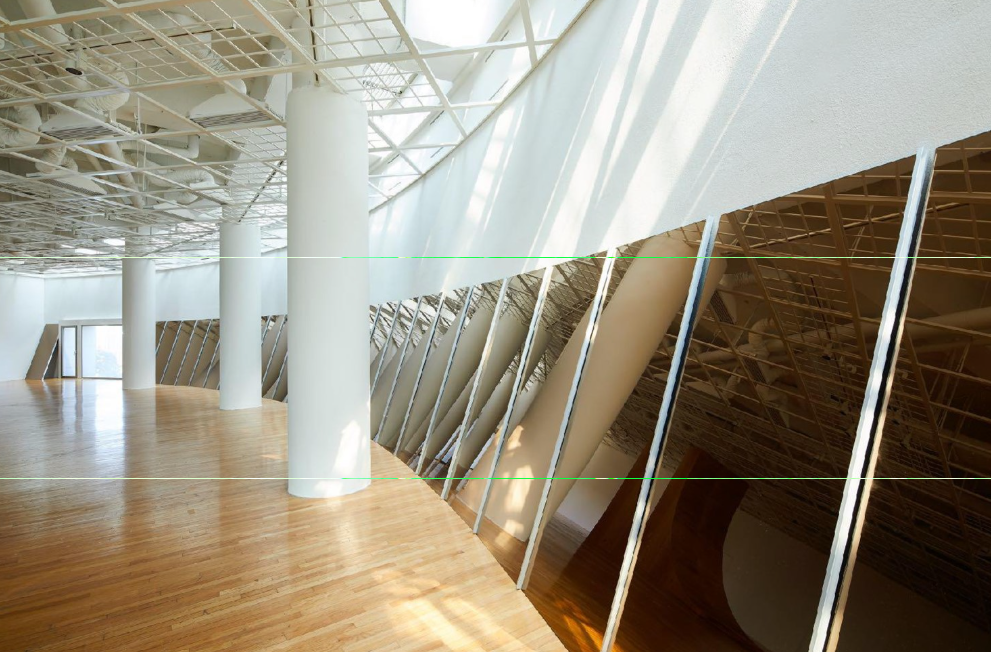
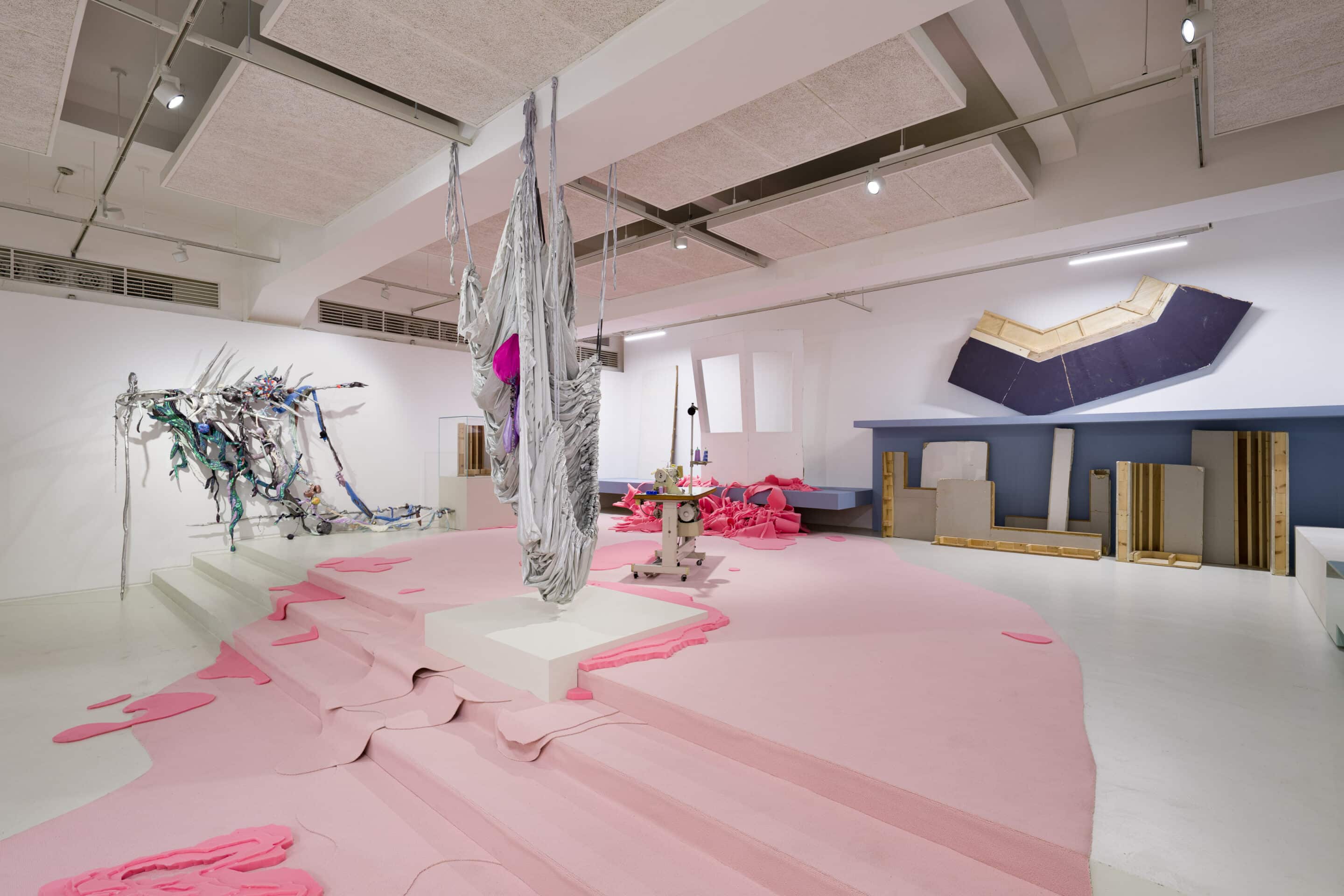
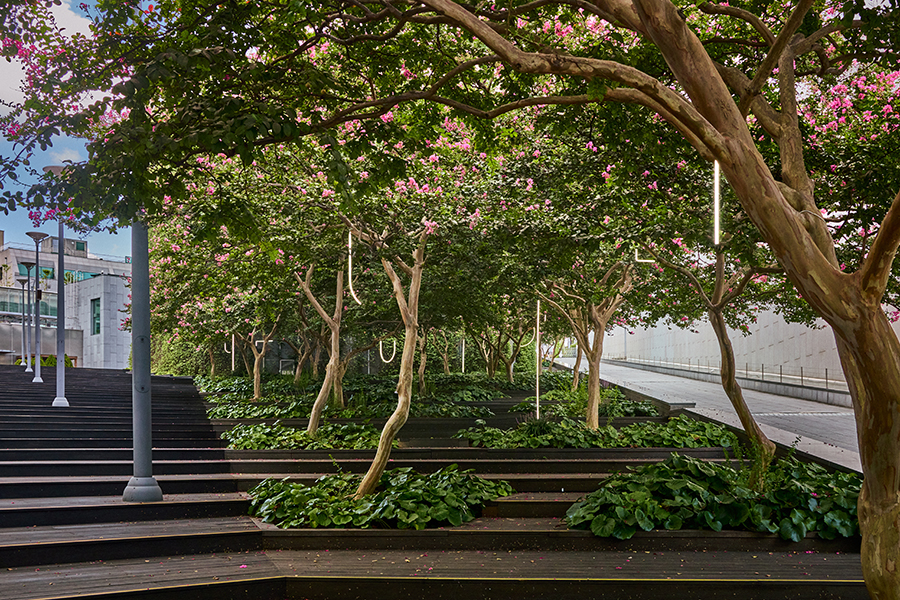
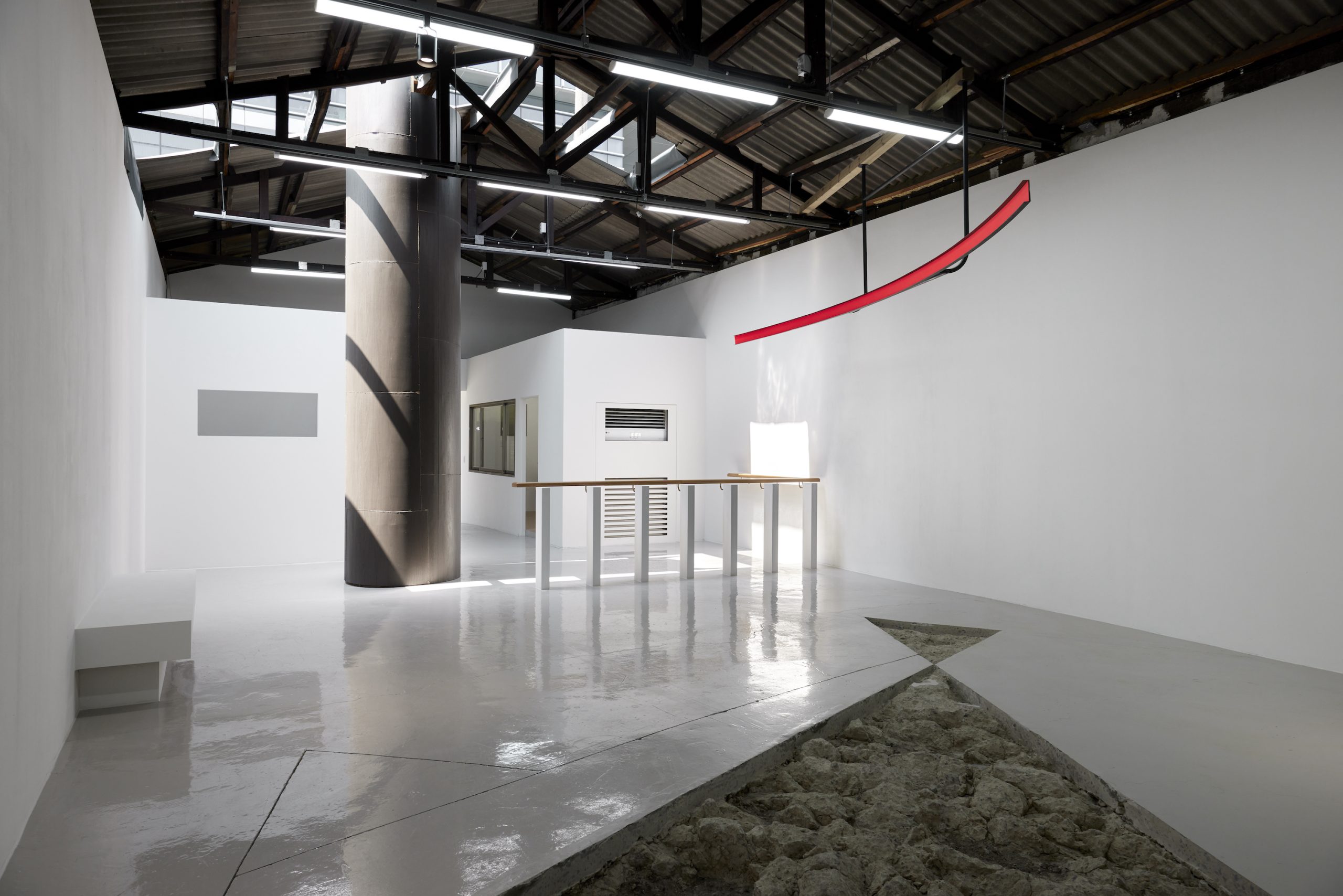
More recently, the layers that constitute space have begun to move across different locations and periods of time. Reverse Mountain(2022) incorporated the previously concealed ceiling, black architectural structures, temporary walls, natural light, blinds, online information, and viewers’ movement at Leeum Museum of Art, allowing the existing exhibition architecture to be perceived anew.
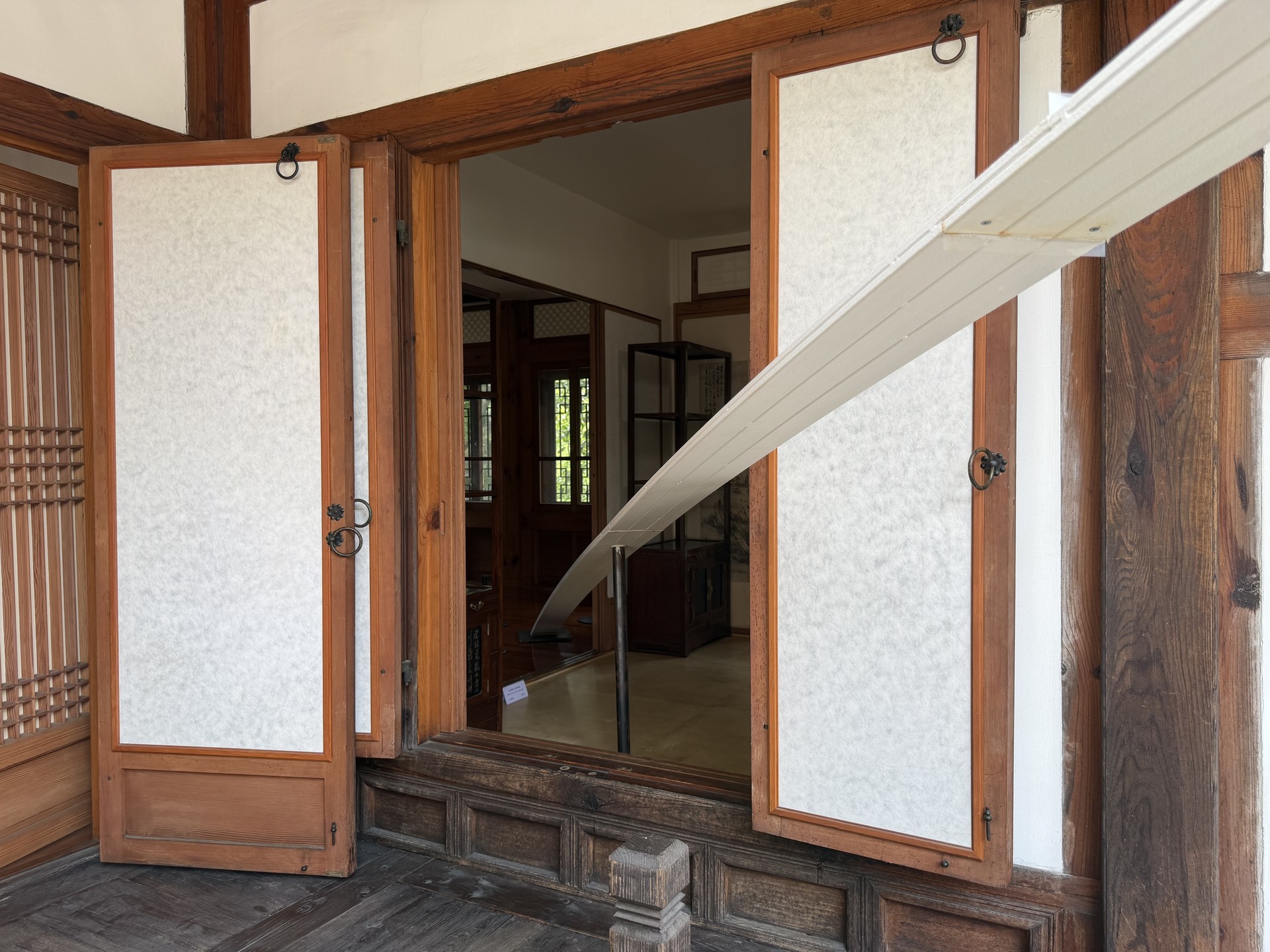
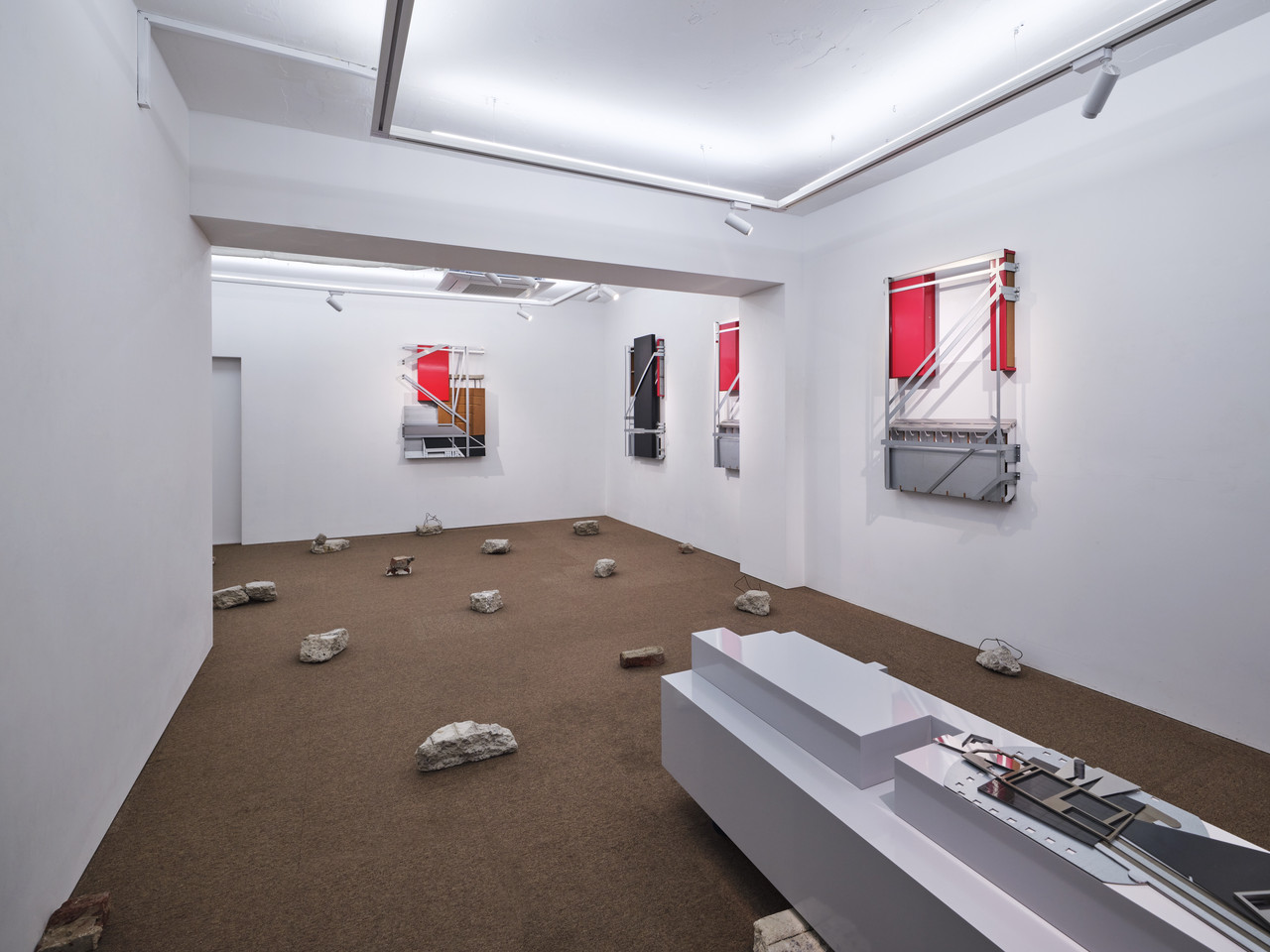
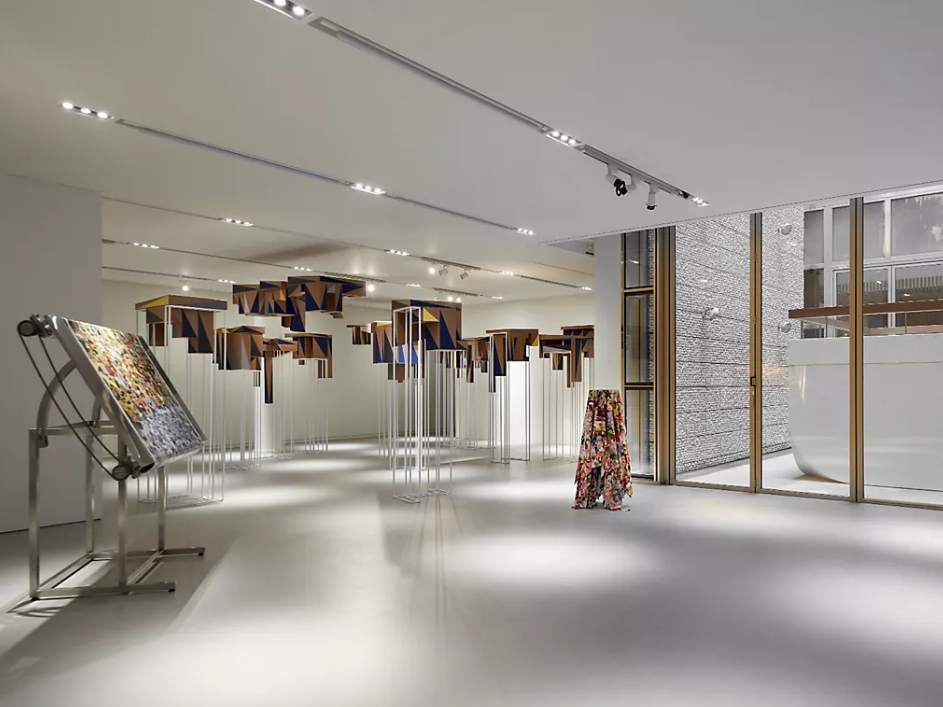
In the ‘Portable Storage’(2022) series, fragments of Hall 1 were removed and transplanted into another exhibition venue. In 《Hide Edges》(YPC Space, 2025), Kim overlaid the digital drawing of his earlier work Dockings(2024) with the architecture of a new exhibition site, exploring how different places might meet within a single visual field. This development becomes particularly clear in 《A House, Arrived Again》(House of Woonkyung, 2026).
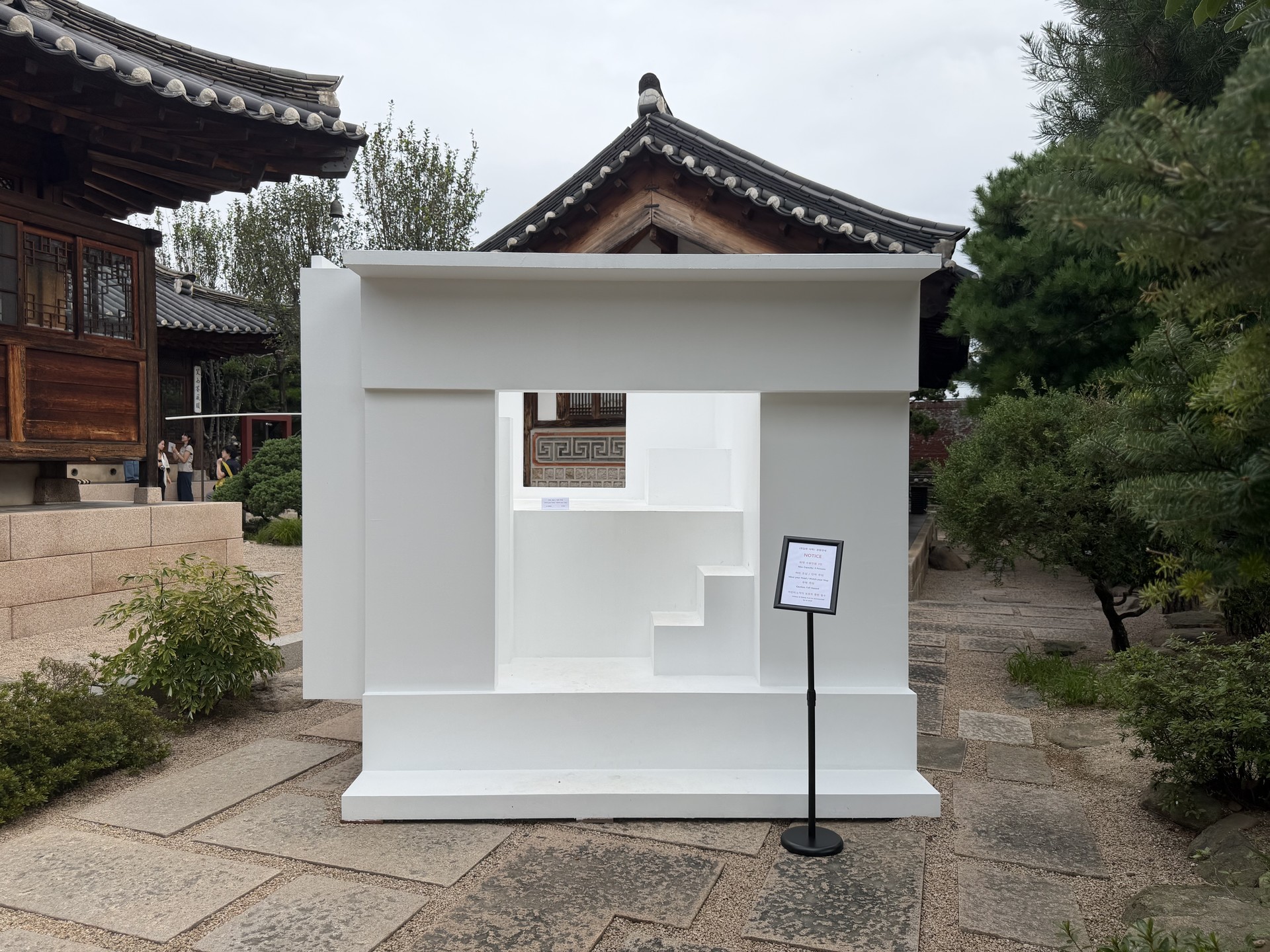
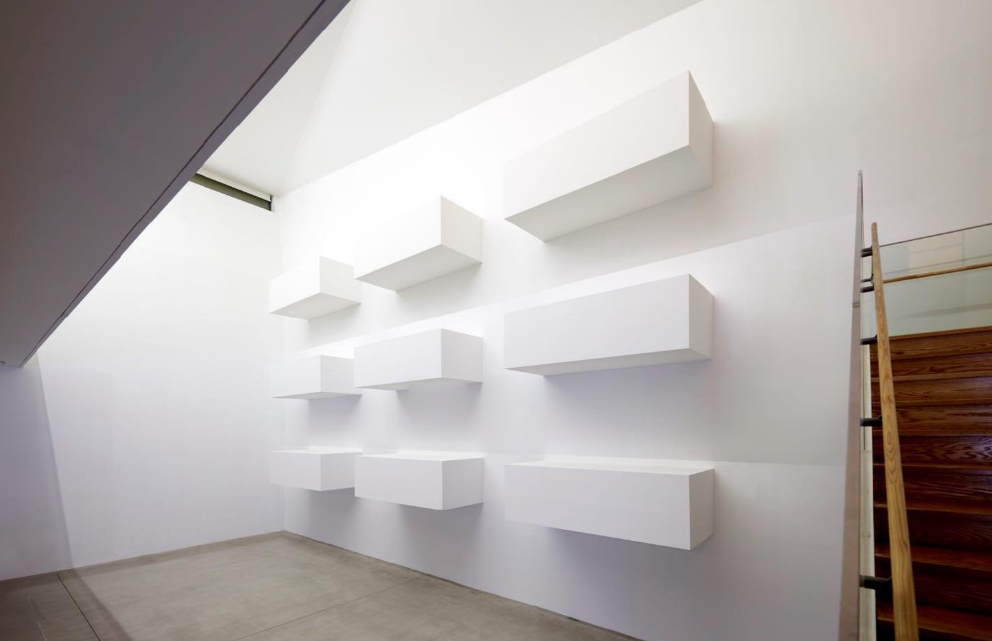
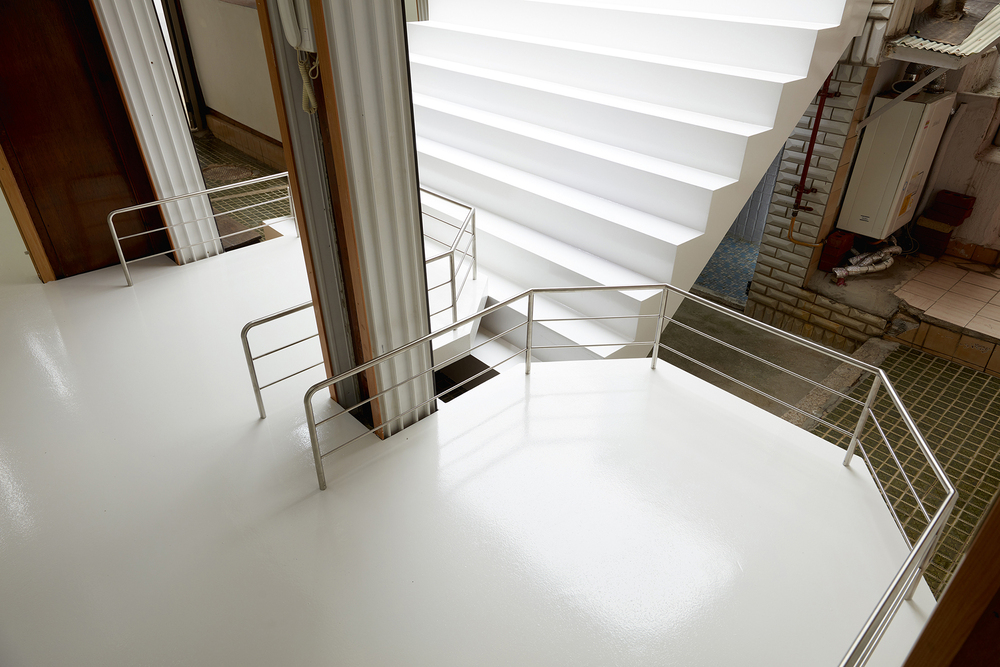
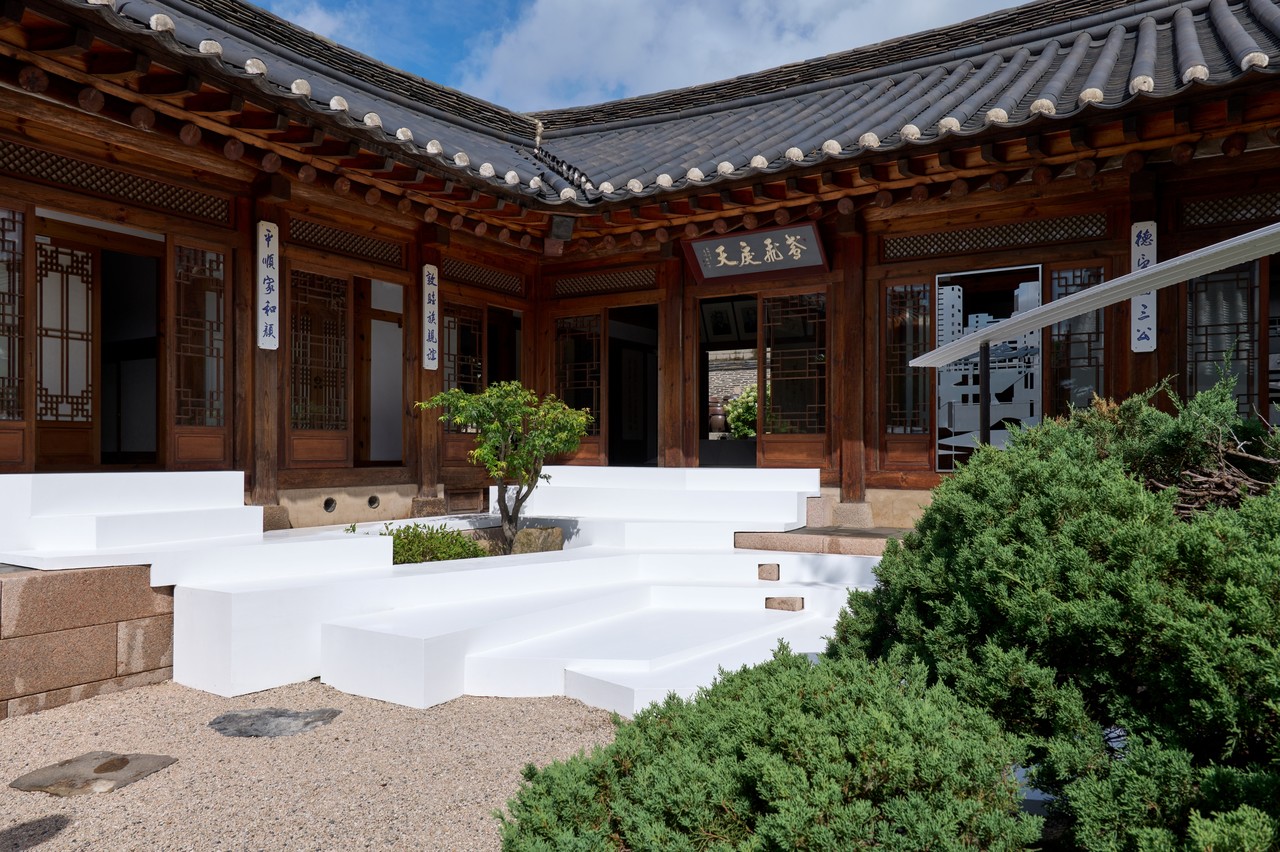
Works including White Staircase 1, 2(2026), Excavation for a Six-Part Circle(2026), and Inverted Attic(2026) reconnect the topography and architecture of the historic house with past sounds and present viewpoints. Space now extends beyond the physical conditions of a single site, becoming a field where earlier works and memories can arrive again in different places and times and enter into new relationships.