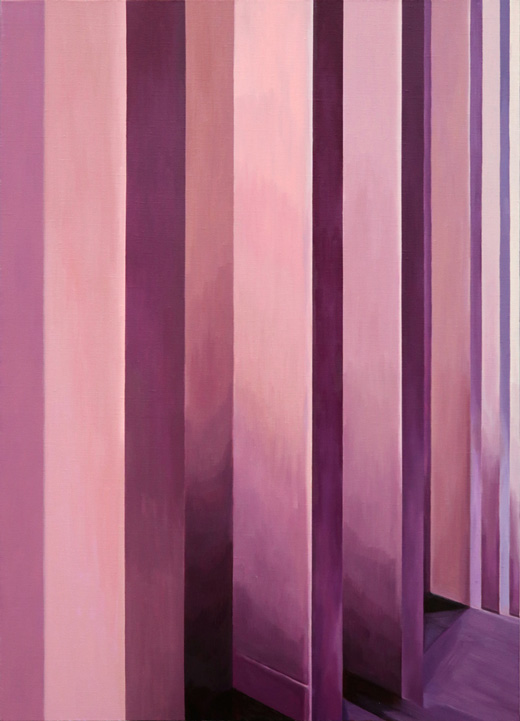
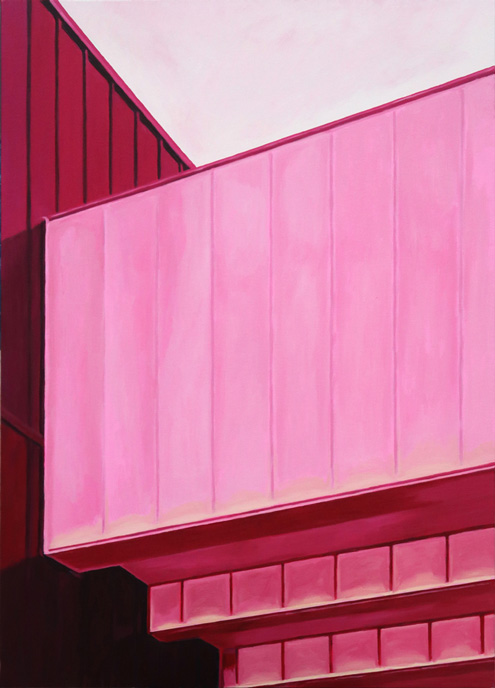
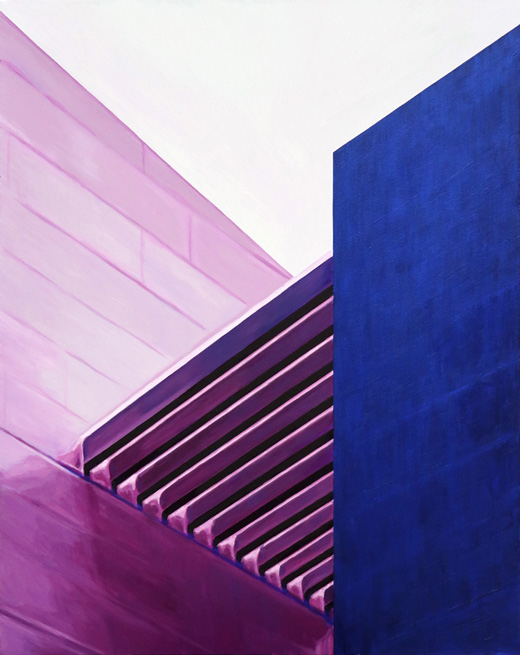
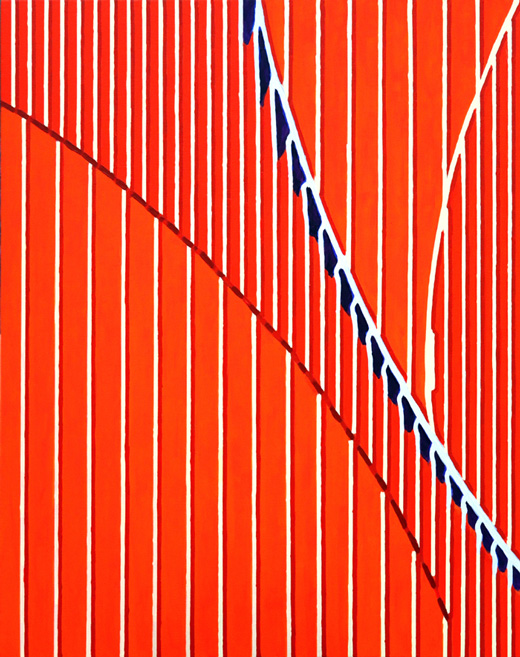
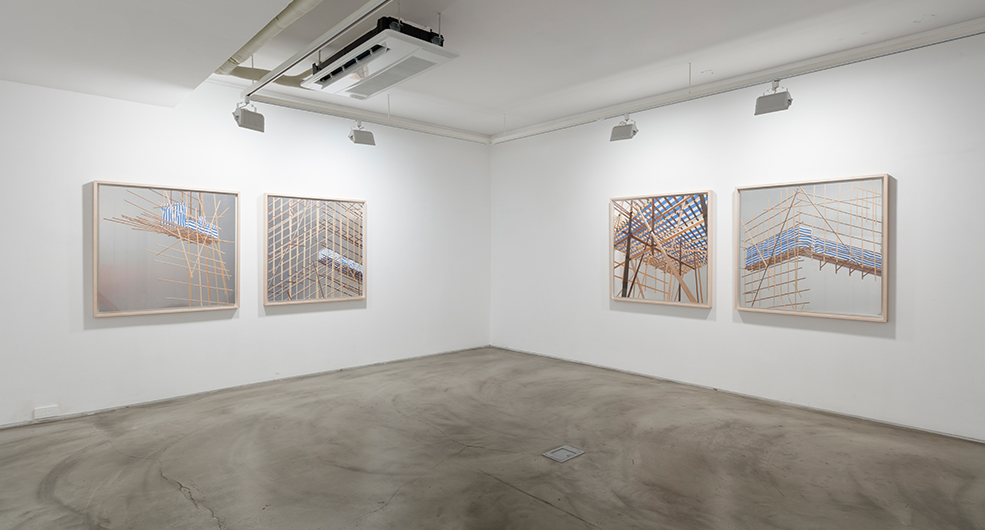
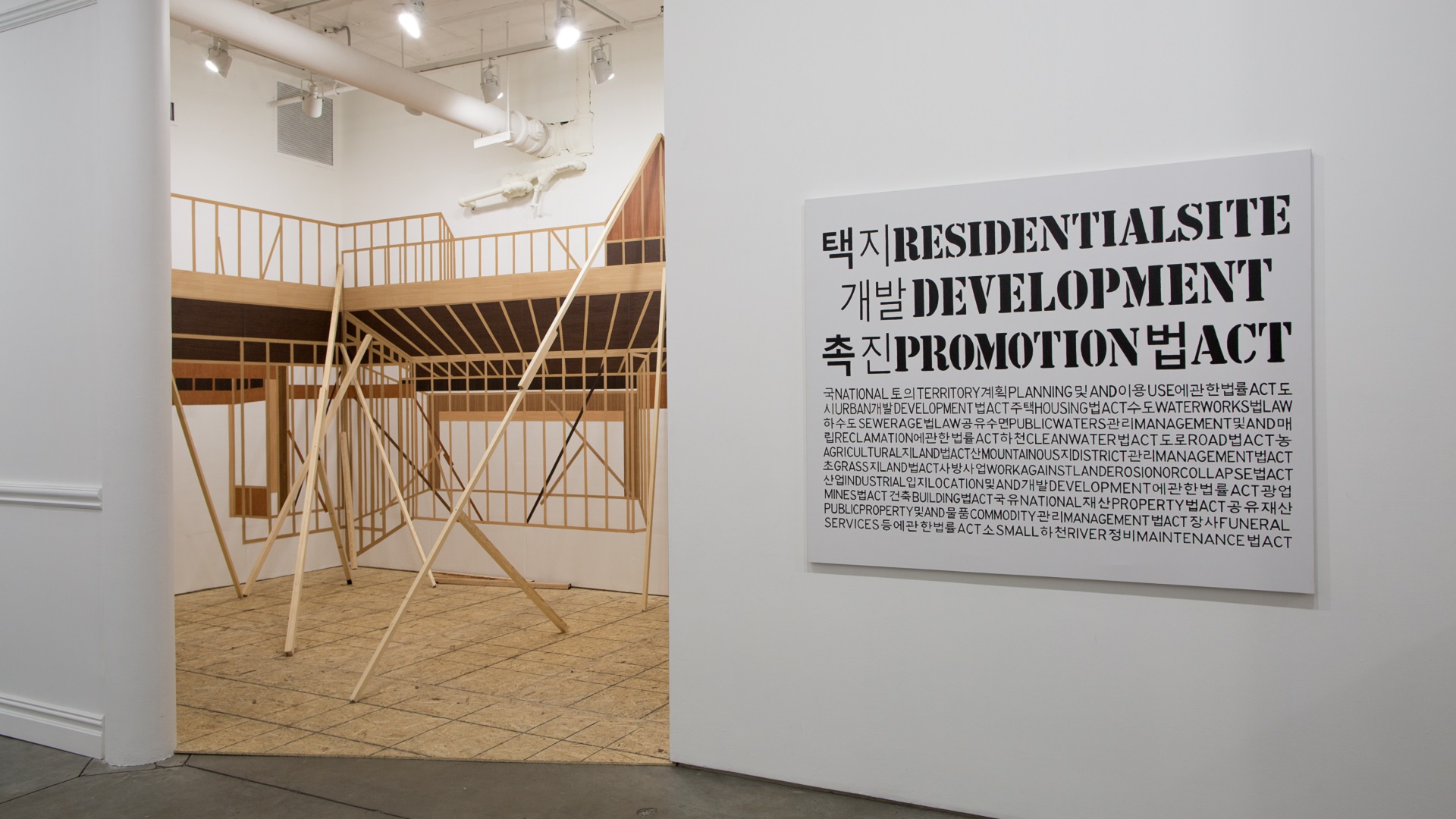
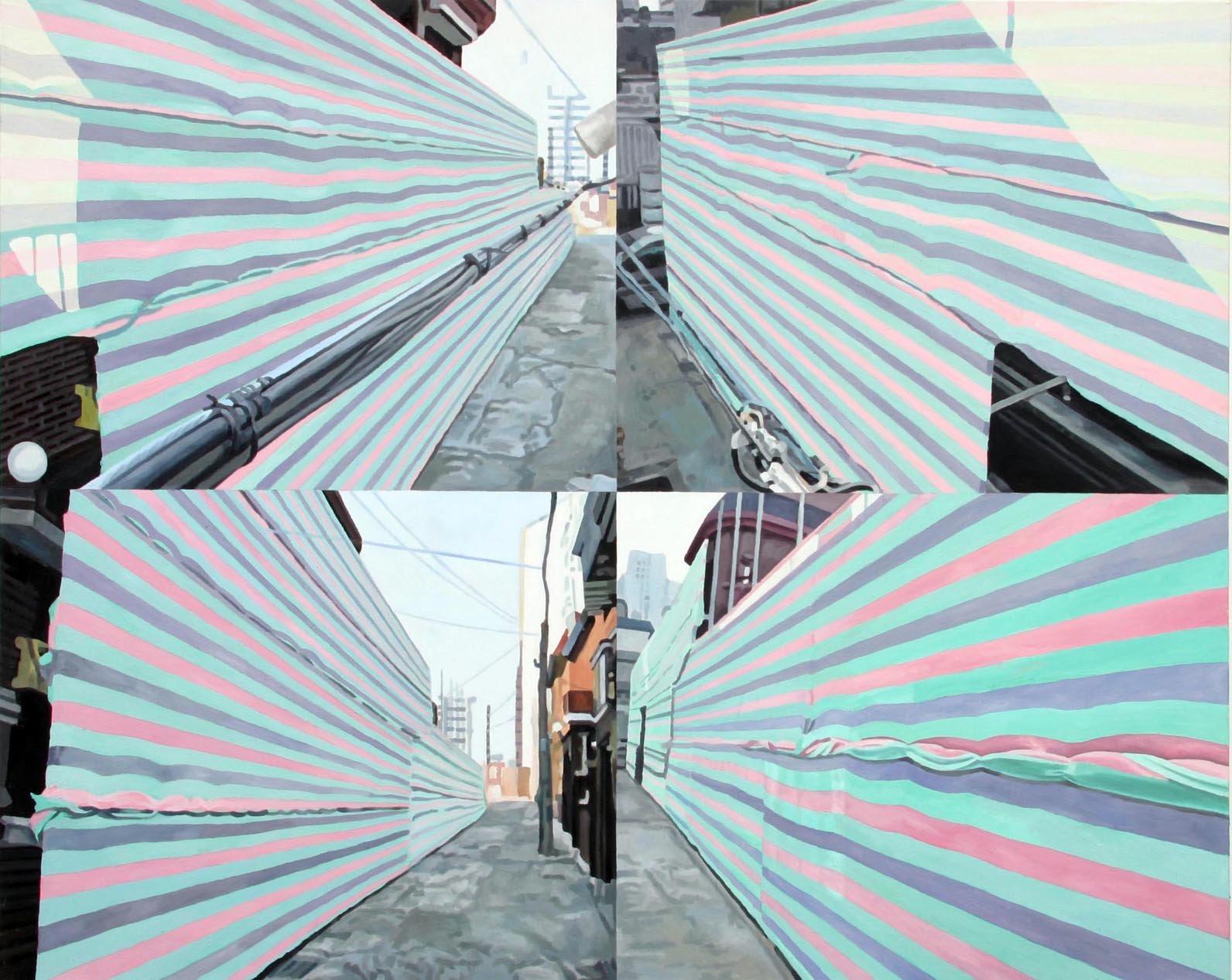
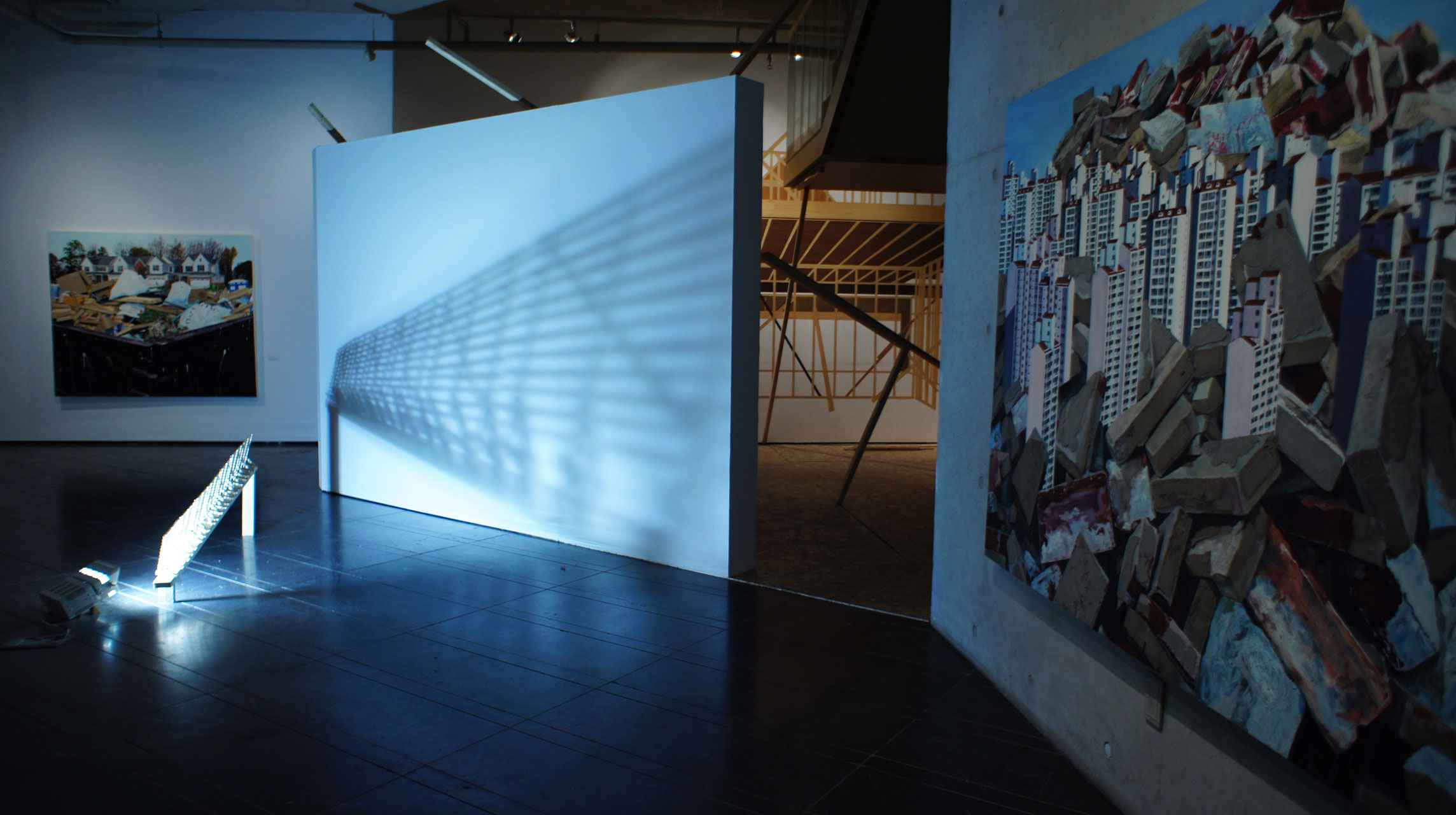
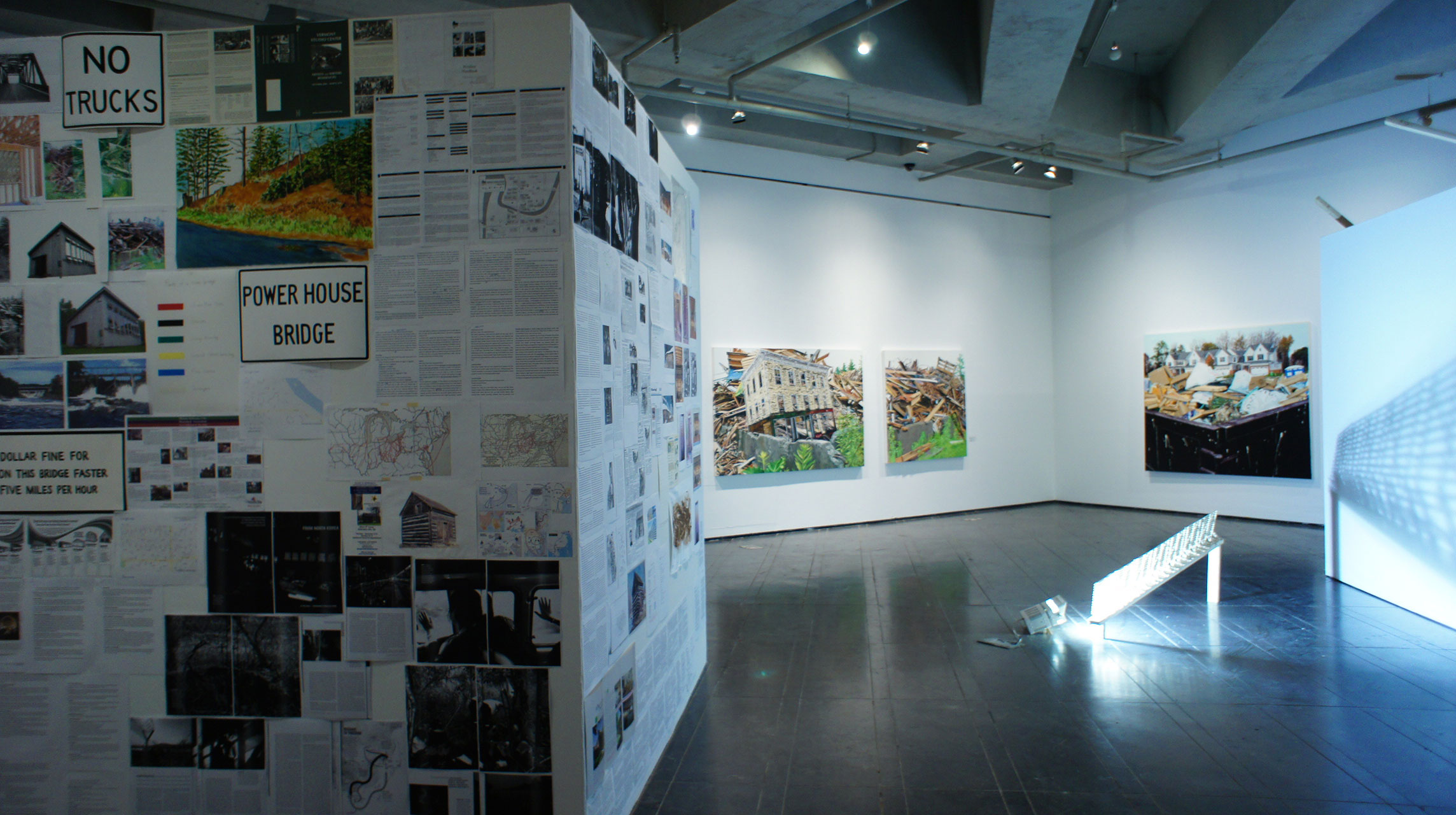
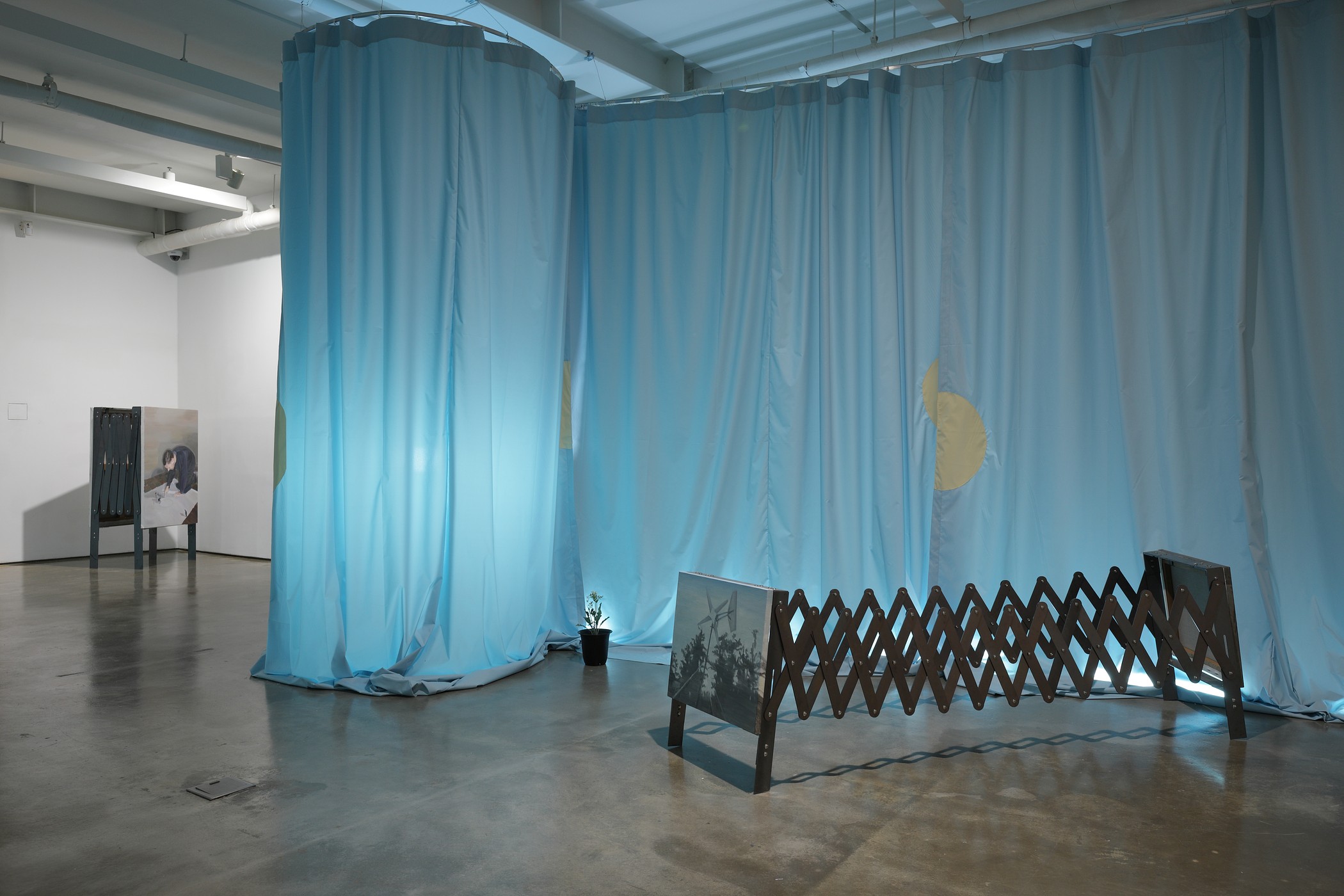
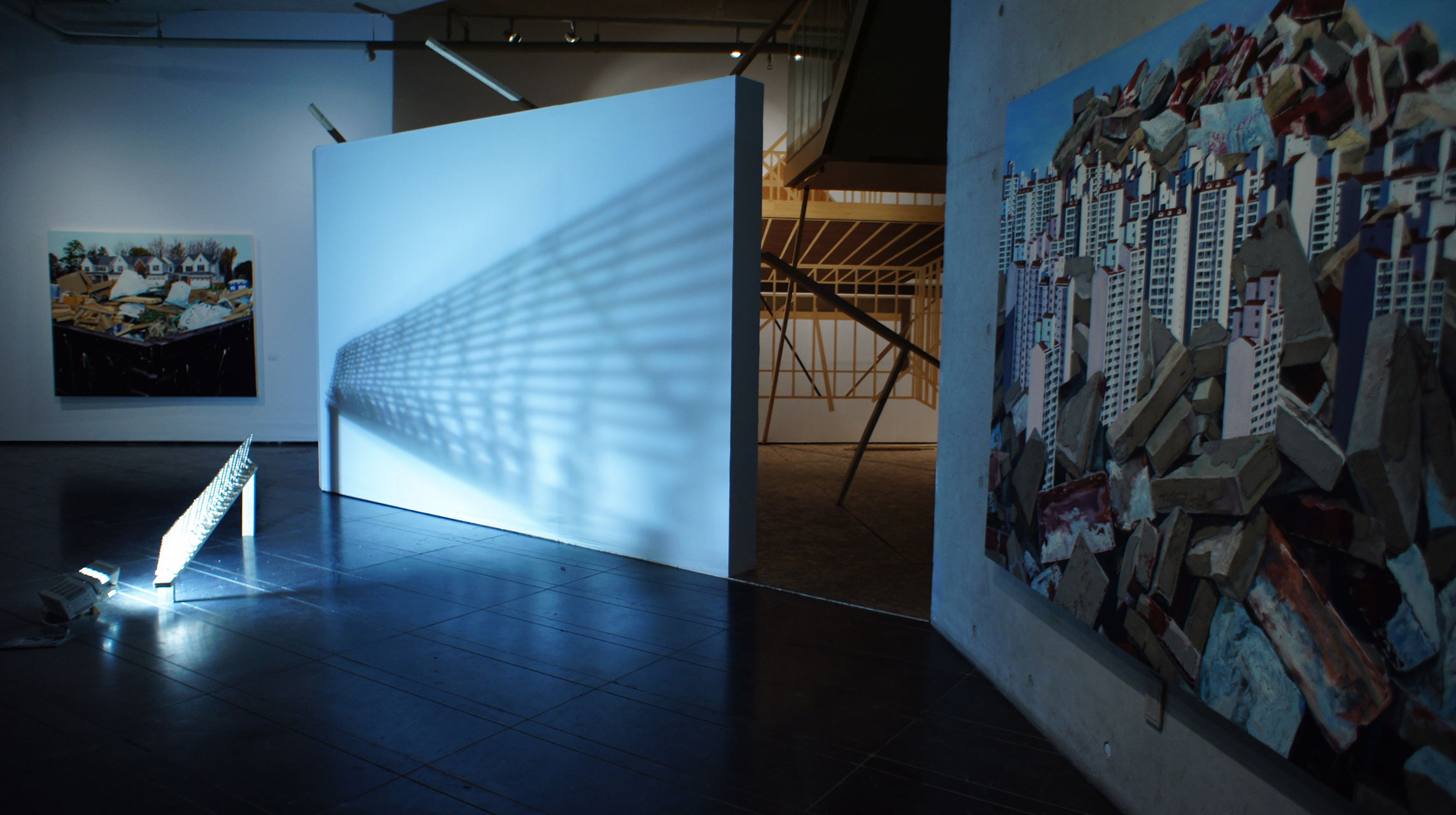
Ji Eun Kim begins with the outward appearance of the city and traces the laws, institutions, development policies, and flows of capital that have produced it. A representative example is her first solo exhibition, 《Law-Full Landscape》, in 2005, and the ‘'Rainbow Rice Cake Project’ series, which grew out of her discovery that the dust-control screens commonly seen at construction sites were installations prescribed by the Clean Air Conservation Act.
Sound barriers, road markings, utility poles, and the forms and locations of buildings that we pass without much thought all bear the concrete imprint of rules established by society. Kim investigates these traces, connecting the visible landscape with the systems operating behind it. From the outset, her practice has asked who shapes the environments we inhabit, for what purposes, and according to what logic. At the same time, she has remained attentive to the fact that even seemingly rigid laws and institutions are human constructions and therefore contain the possibility of change.
Studying in the United States and participating in residency programs in different regions expanded this concern into a comparative investigation of cities and residential environments. In 《Planned Obsolescence》 and 《Hermit Crab-ism》, Kim combined her own experiences of mobility with American suburban housing, the decline of Detroit, and architectural environments rapidly replaced according to cycles of development and consumption.
During this period, researching the history, housing forms, and processes through which communities were shaped in each place where she stayed became an important part of her working method. Although these regions differed in appearance, she identified recurring structures in mass-produced houses, large-scale apartment complexes, suburban expansion, and redevelopment.
Her practice thus came to examine both the distinctive qualities of individual places and the conditions shared by contemporary cities. Architecture, in her work, functions as a record through which ways of life and collective desires can be read even in the absence of human figures.
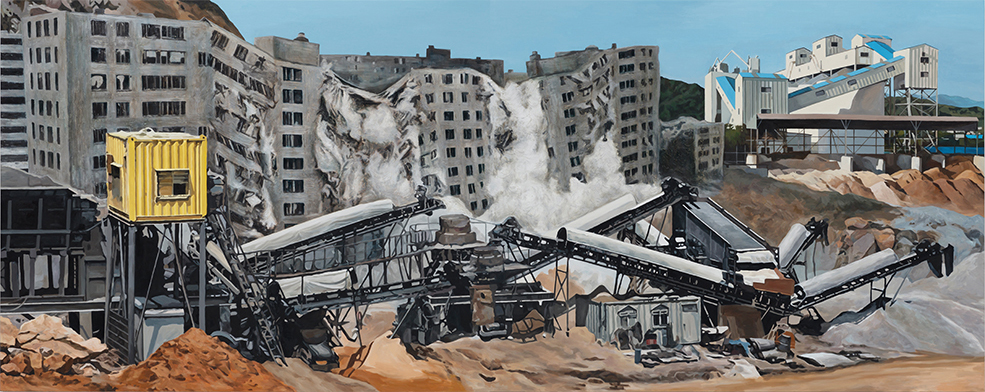
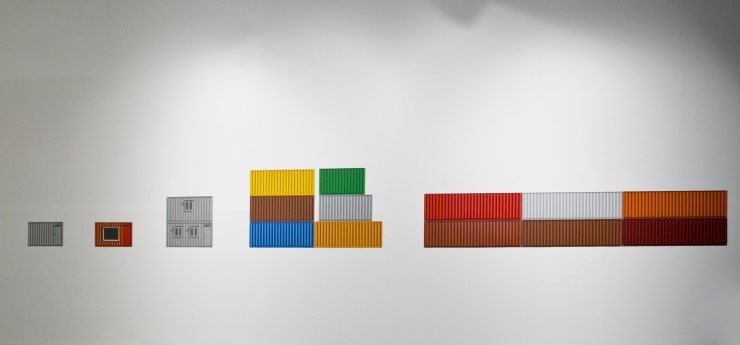
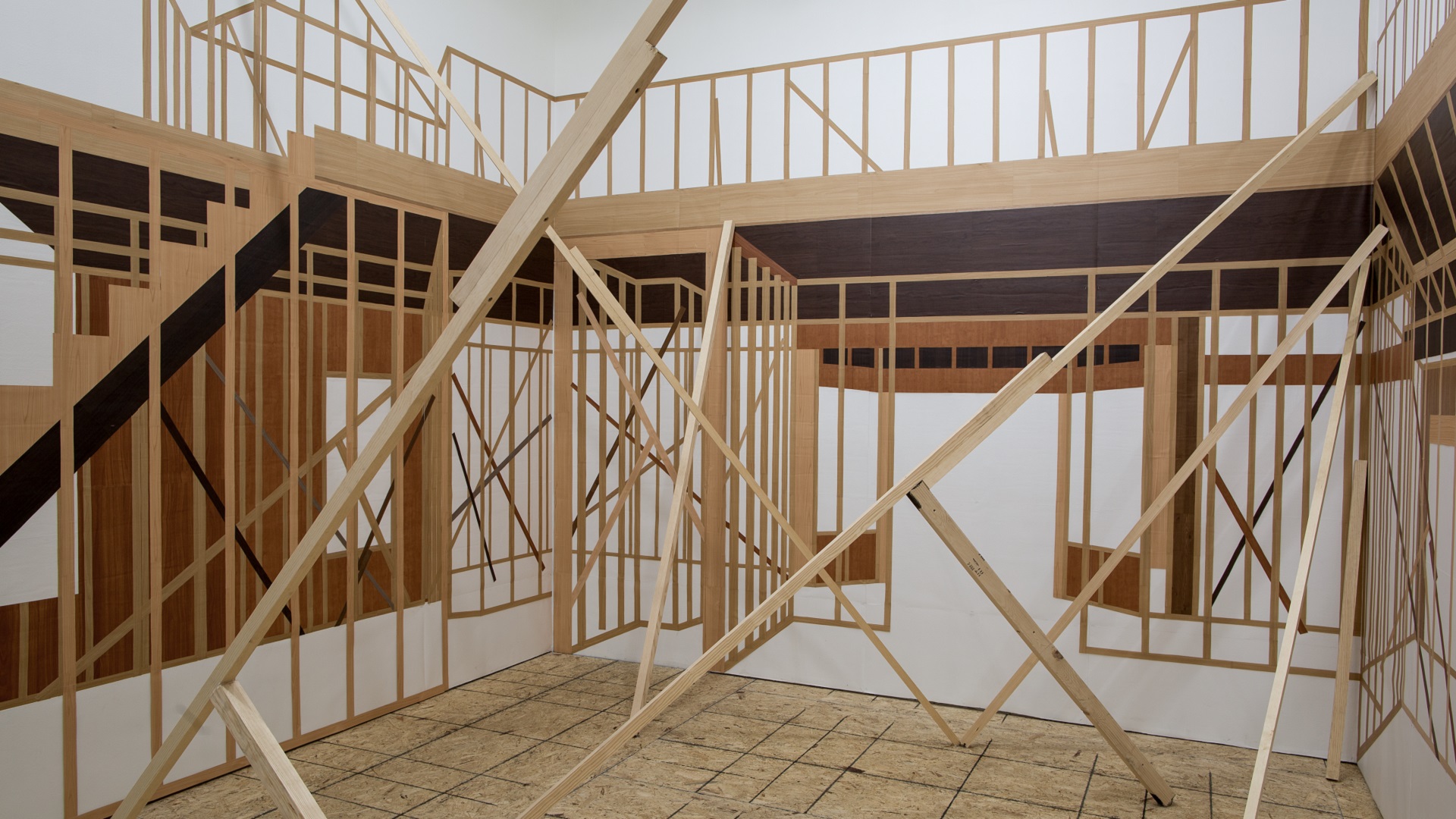
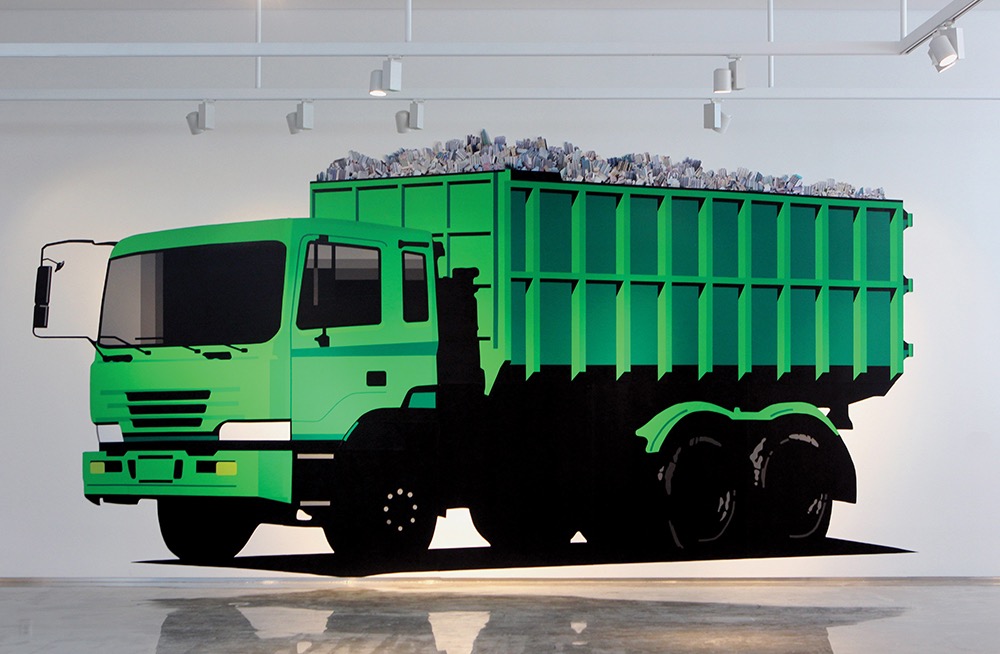
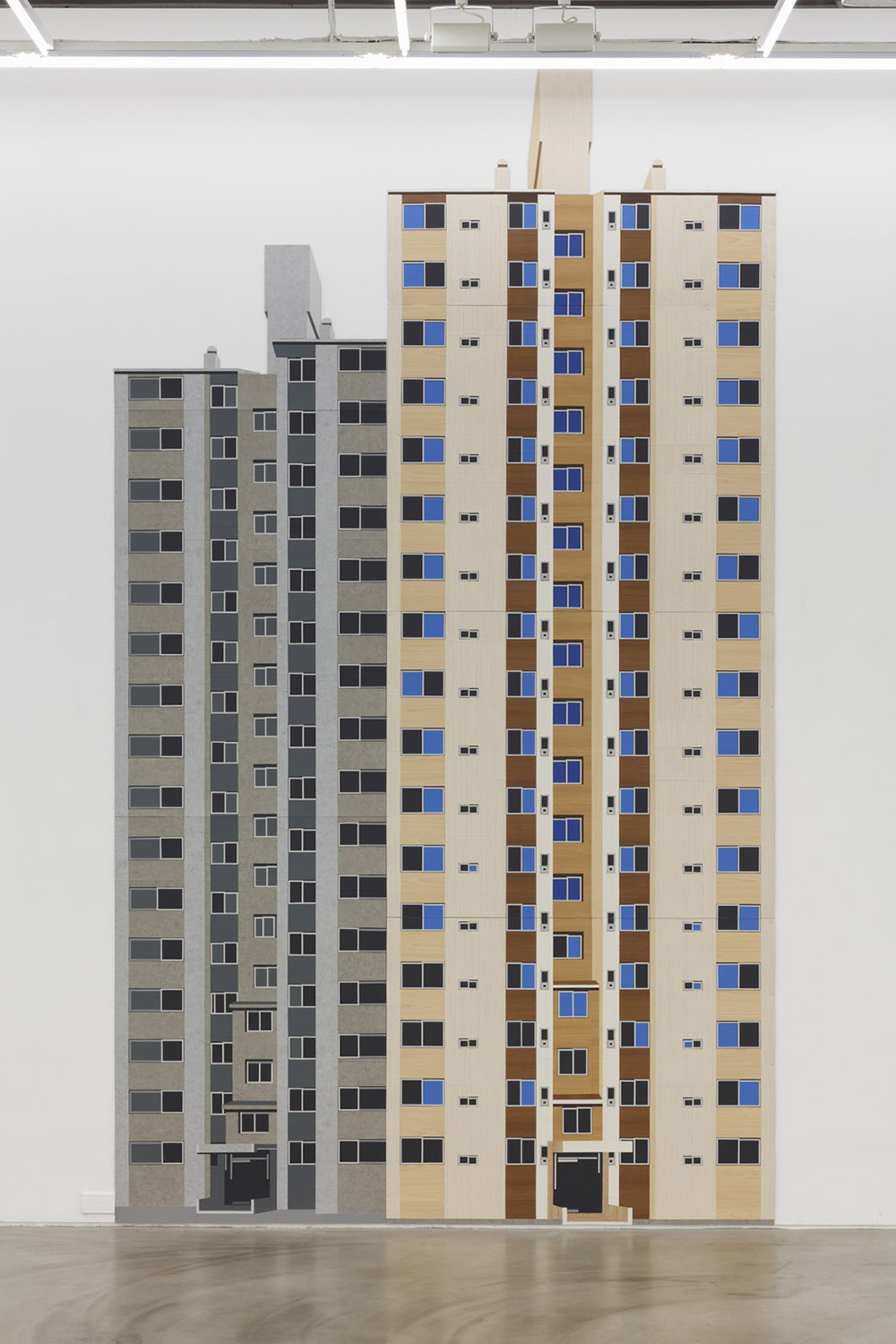
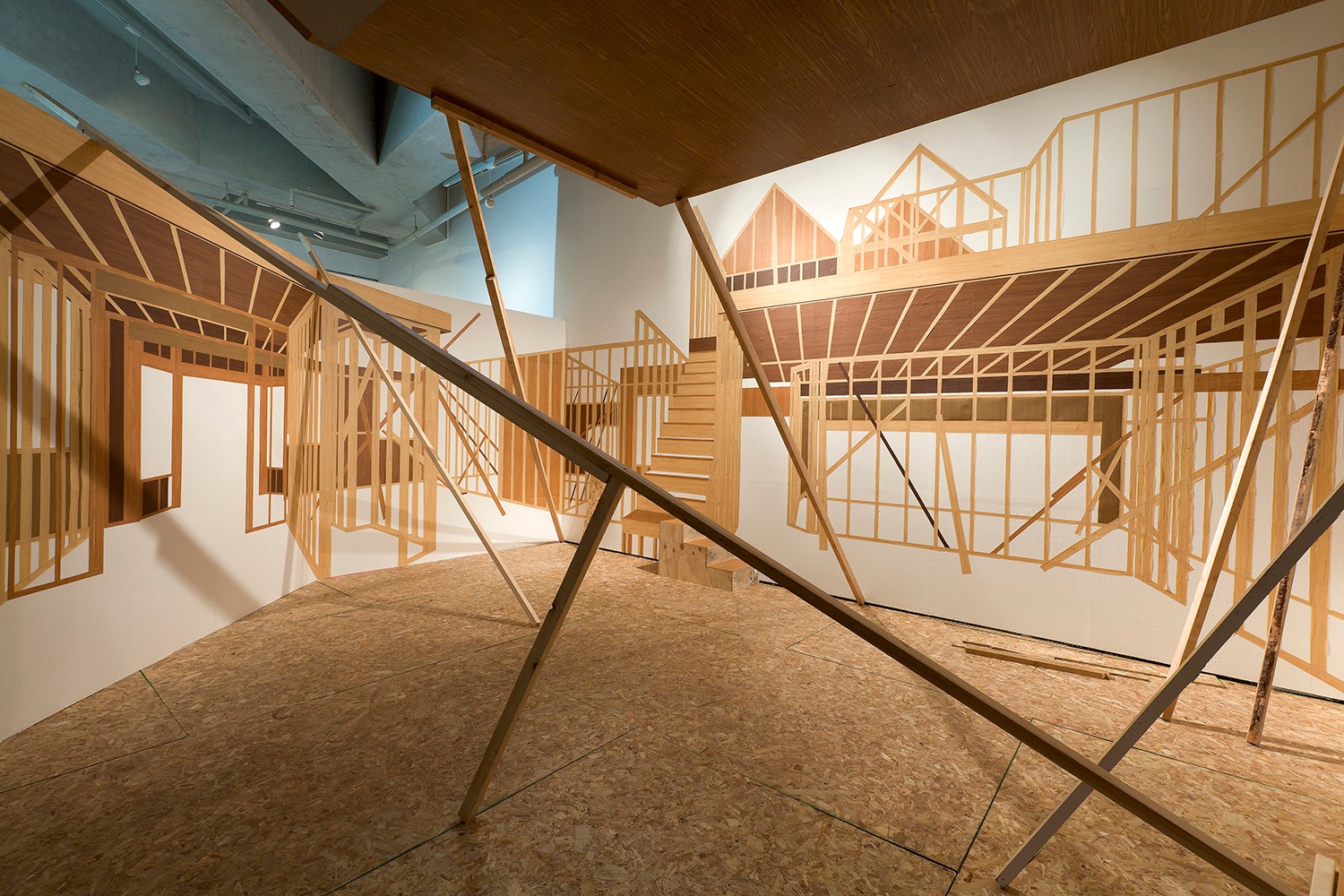
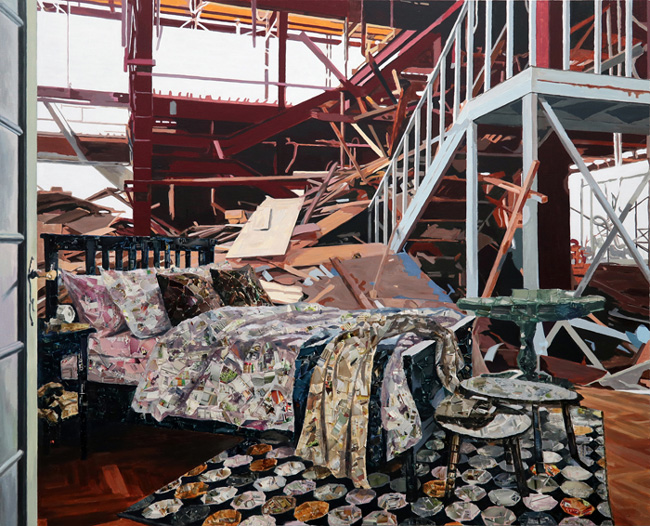
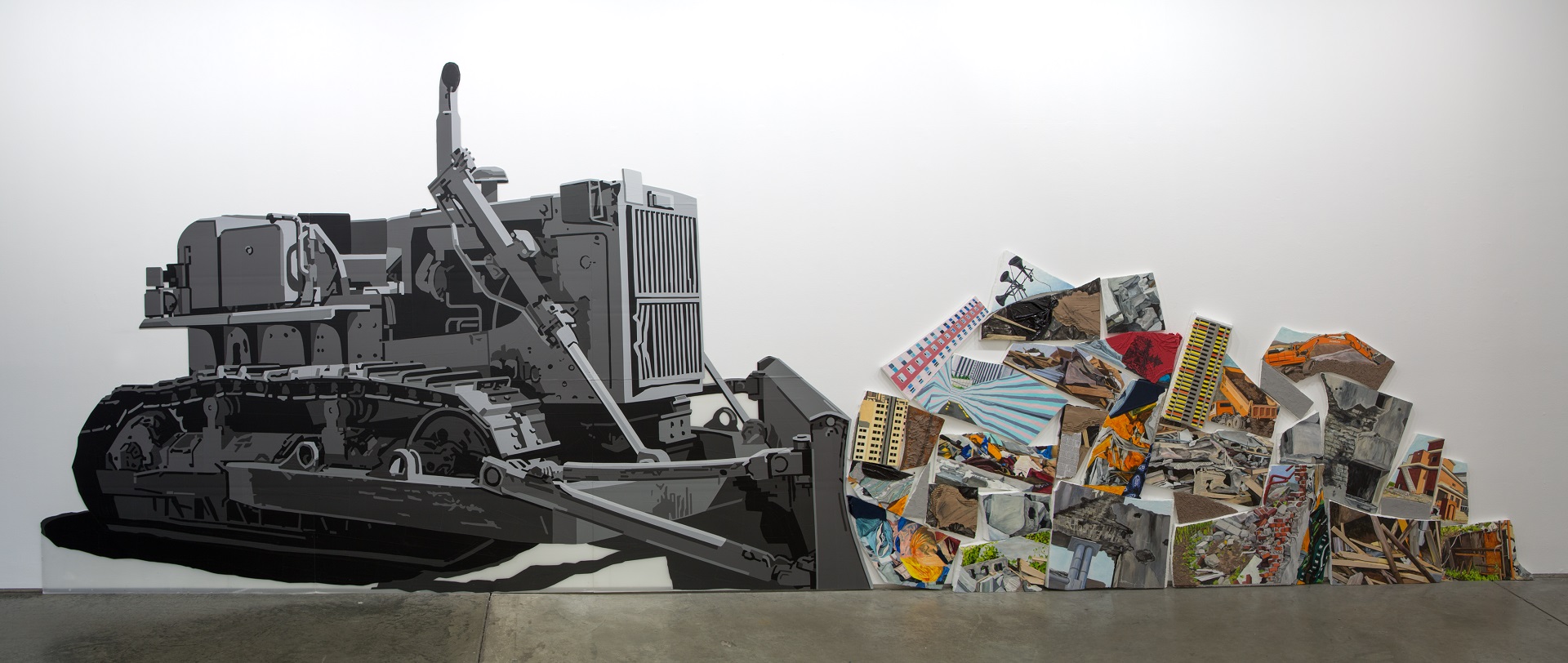
From the mid-2010s onward, Kim’s attention increasingly turned toward the landscapes of development and demolition in Korea, with particular emphasis on concrete architecture and the question of land. High-rise apartment blocks, temporary structures, construction sites, containers, and rooftops appear as visual evidence of compressed modernization and real-estate-driven development.
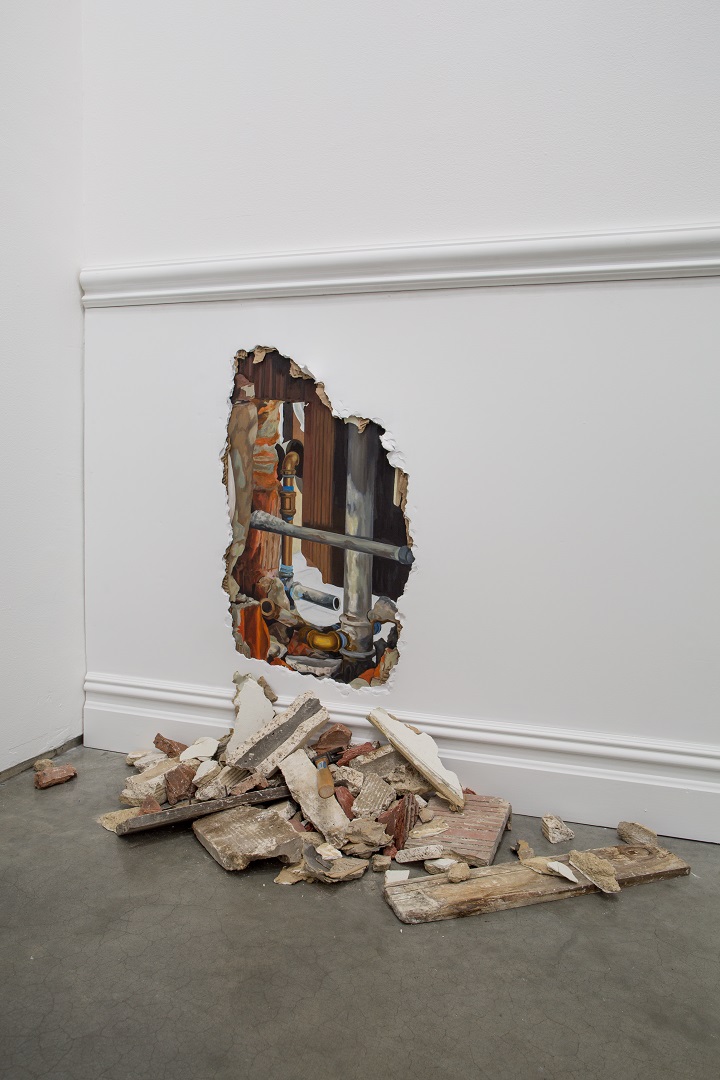
For Kim, the city is never fixed; it exists in a continuous cycle of construction and disappearance. The possibility that a building erected today may soon be demolished lends her work a persistent sense of temporality, while development produces not only new residential environments but also ruins, displacement, and unstable forms of life.
Her research into the city therefore extends to the ways economic efficiency and the logic of development reshape patterns of living, sensory experience, and memories of place. Reading the rise and fall of concrete architecture through the history of Korea’s compressed modernization has become one of the defining concerns of this period.
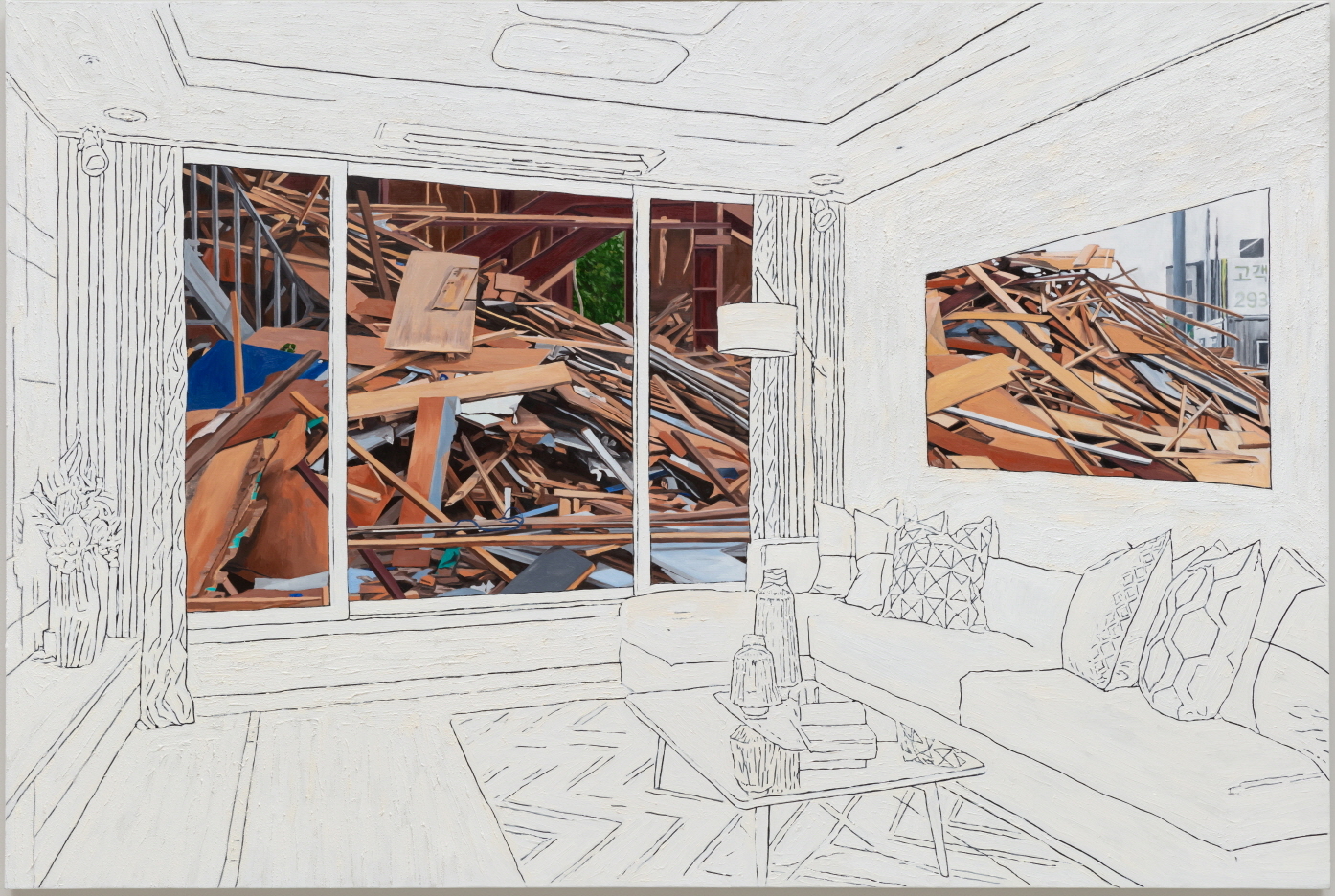
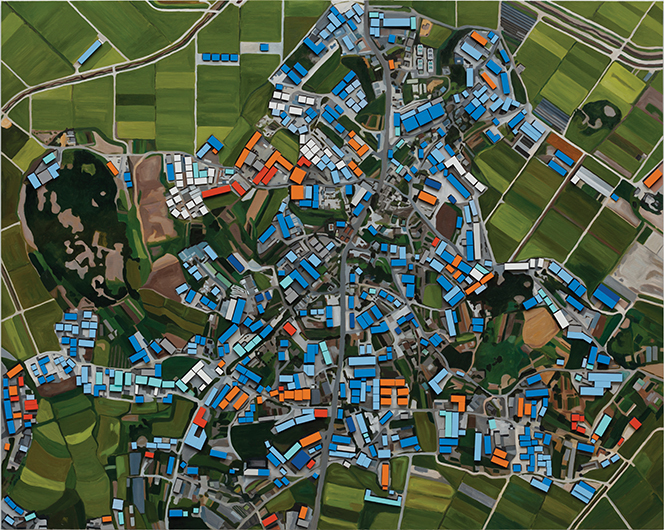
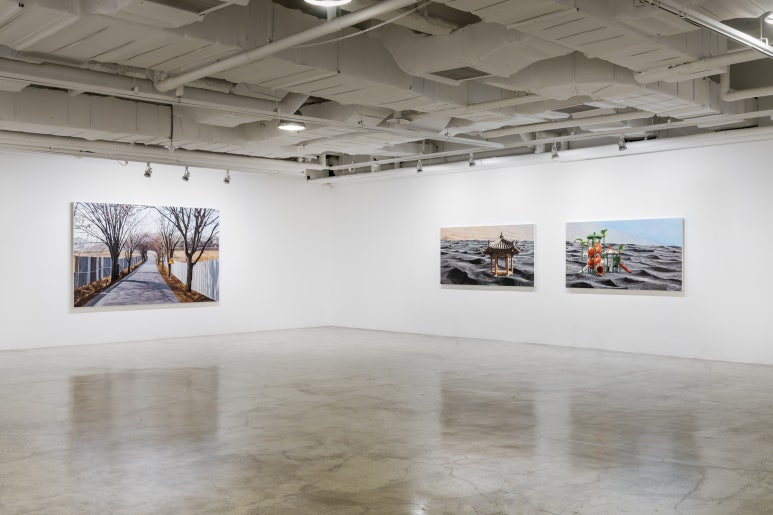
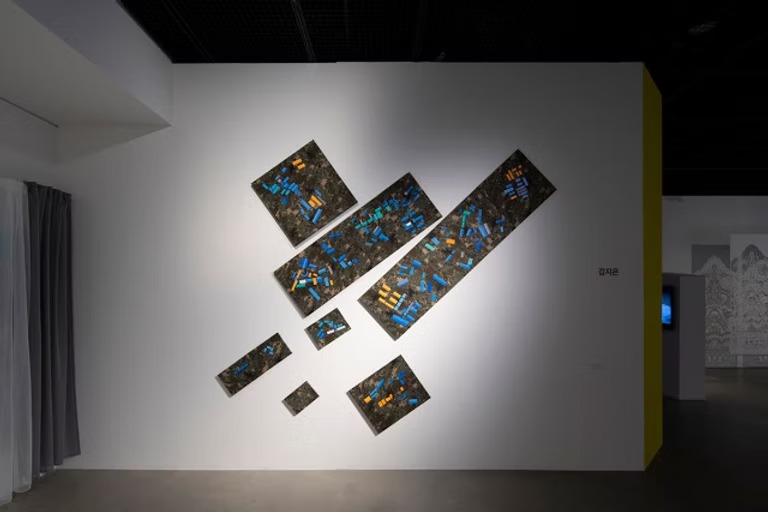
Her more recent work centered on the Bongdam housing development district in Hwaseong brings these concerns even closer to everyday life, extending her inquiry from the “institutionalized landscape” toward the “institutionalized everyday.” In 《Mars N District/Earth》, Kim examines new towns, apartment complexes, model homes, IKEA showrooms, land-use plans, and floor plans as environments organized through function and commodity logic, where a sense of place is increasingly diminished.
The concepts of “Korean-style suburbia” and “non-place” allow her to consider how development policy, capital, and individual desires for housing converge to shape contemporary living environments. Street-view imagery, satellite photographs, and images transmitted by Mars rovers further introduce the contemporary experience of space in which physical locations and mediated images overlap.
The question that has persisted from the beginning of her practice remains intact: what forces produce the everyday landscapes we take for granted, and how do individuals live within them? Kim’s distinctive artistic identity lies in her sustained effort to begin with familiar urban surfaces and make visible the institutional structures, desires, and historical conditions concealed behind them.