Kang’s
practice brings together photography, sculpture, installation, sound, light,
and movement, yet at its center is always the way materials respond to time and
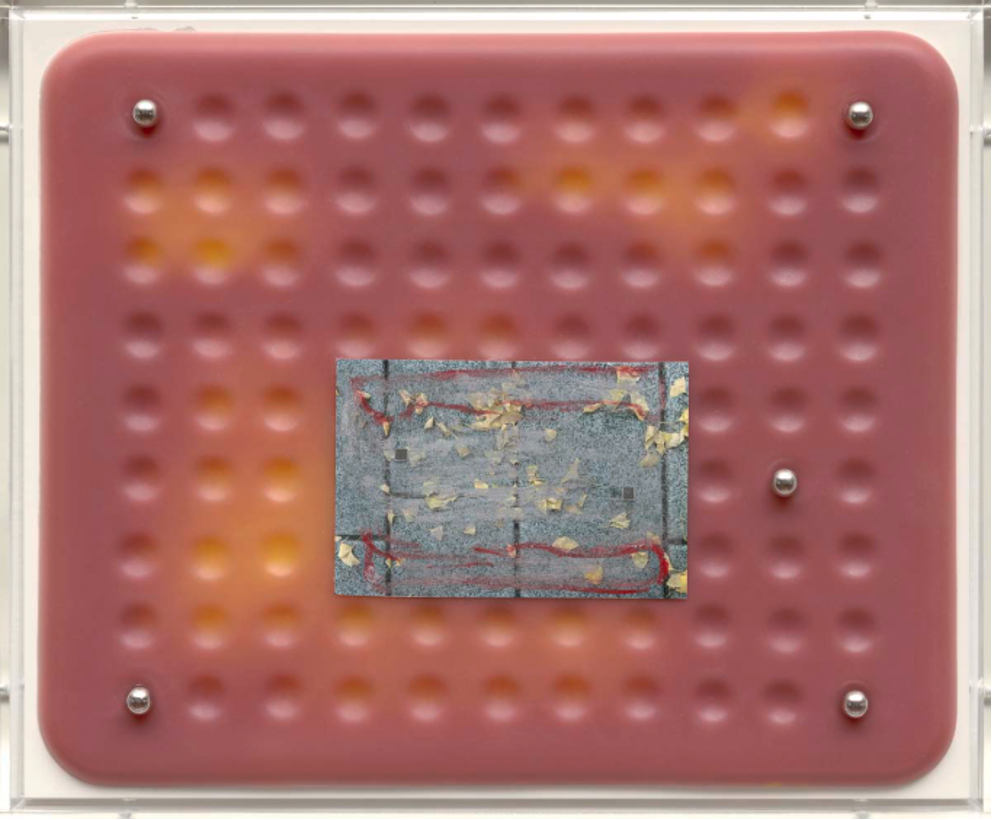
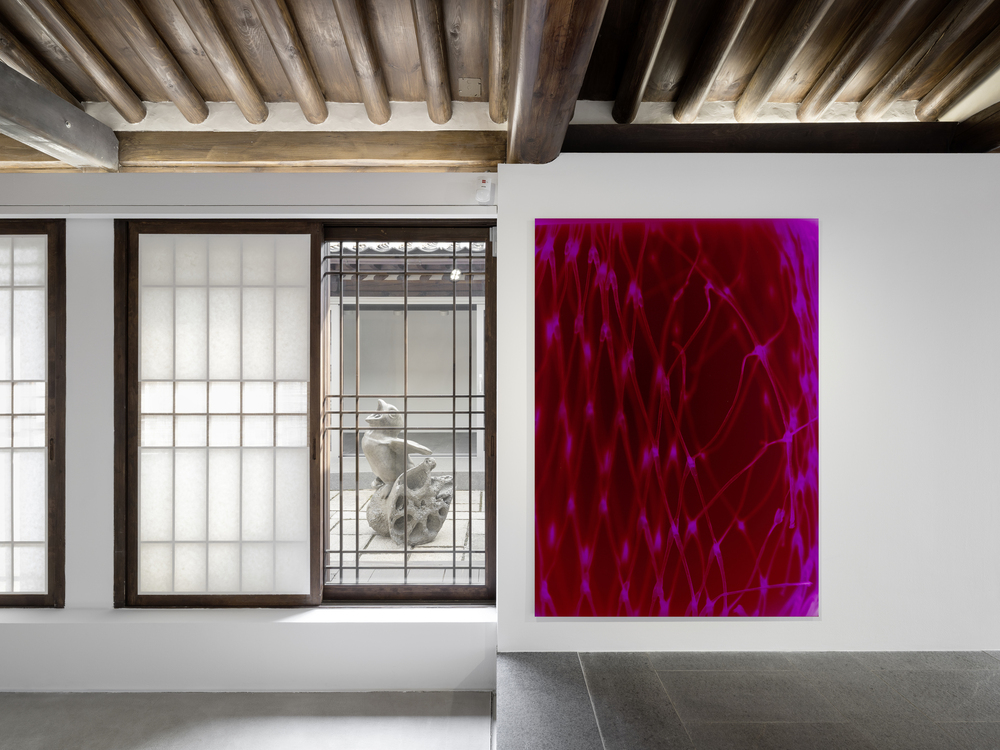
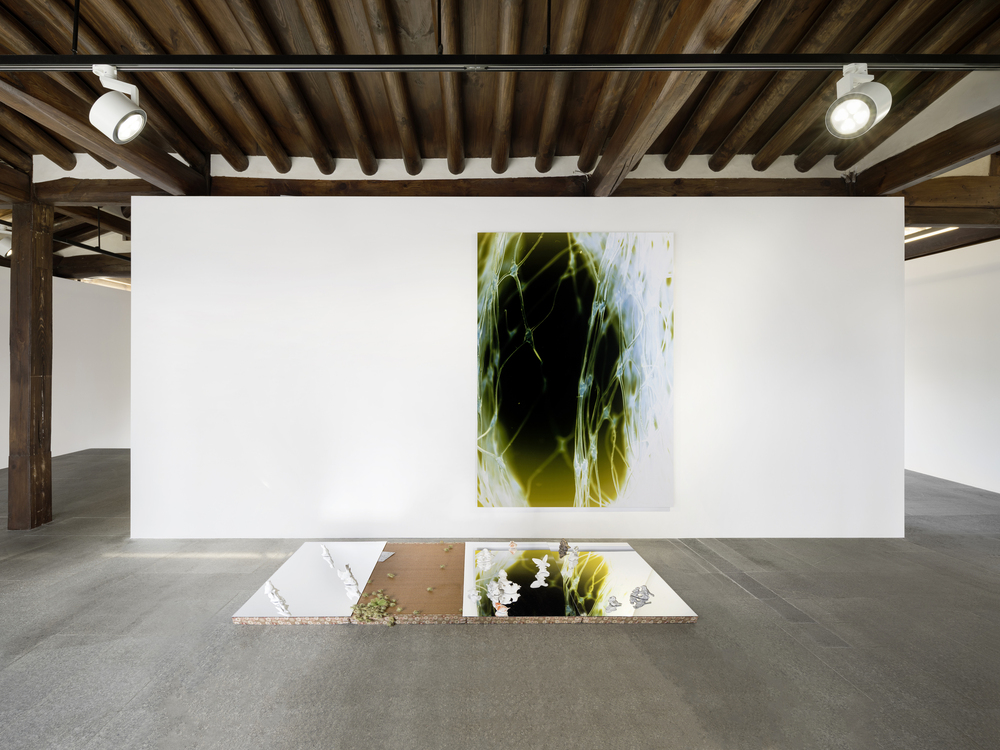
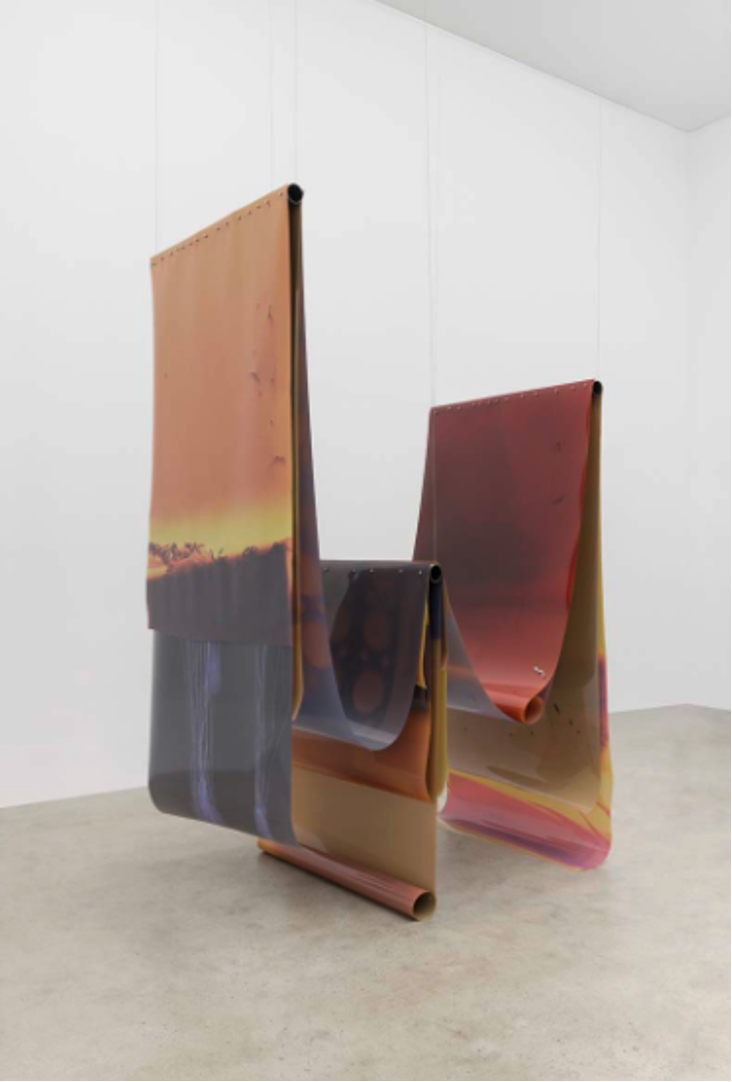
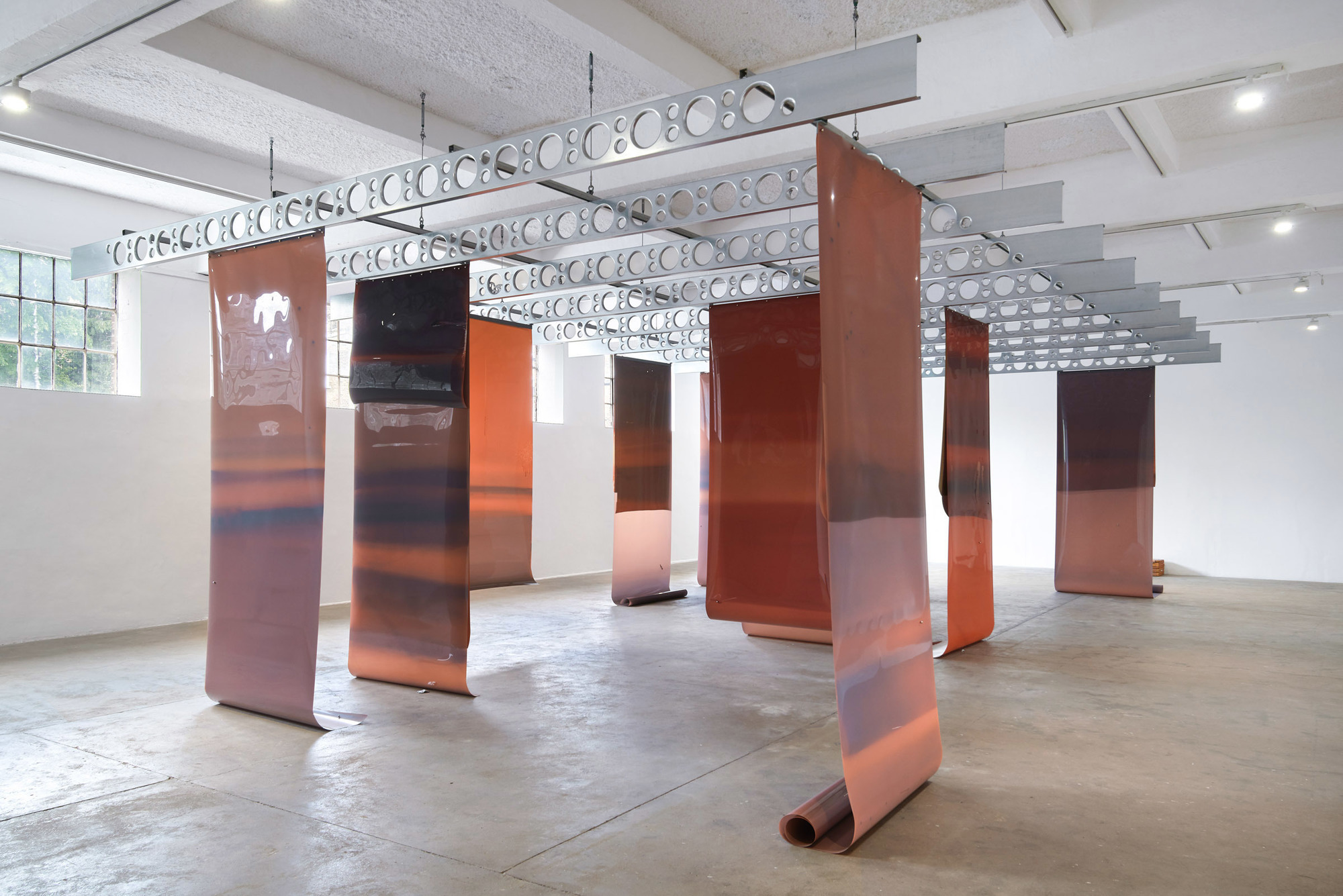
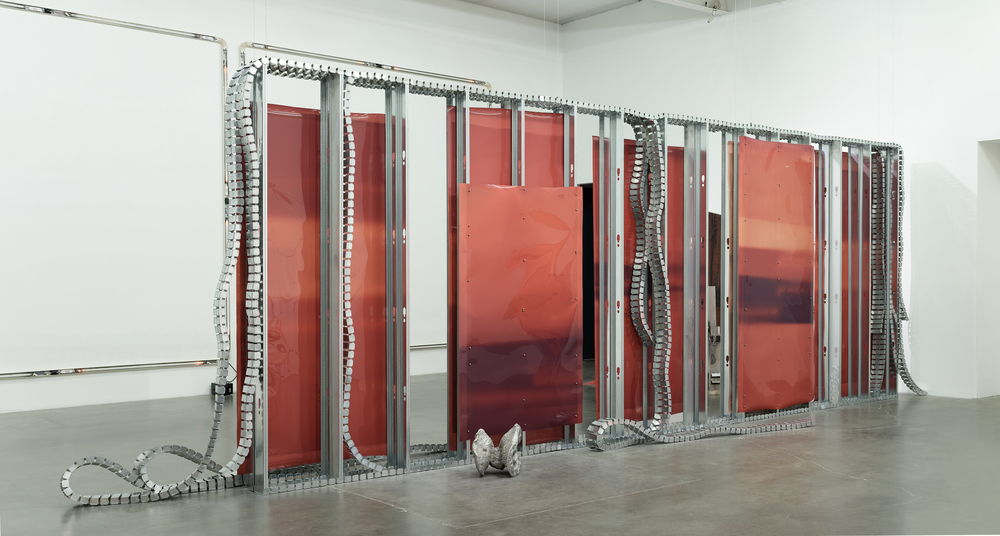
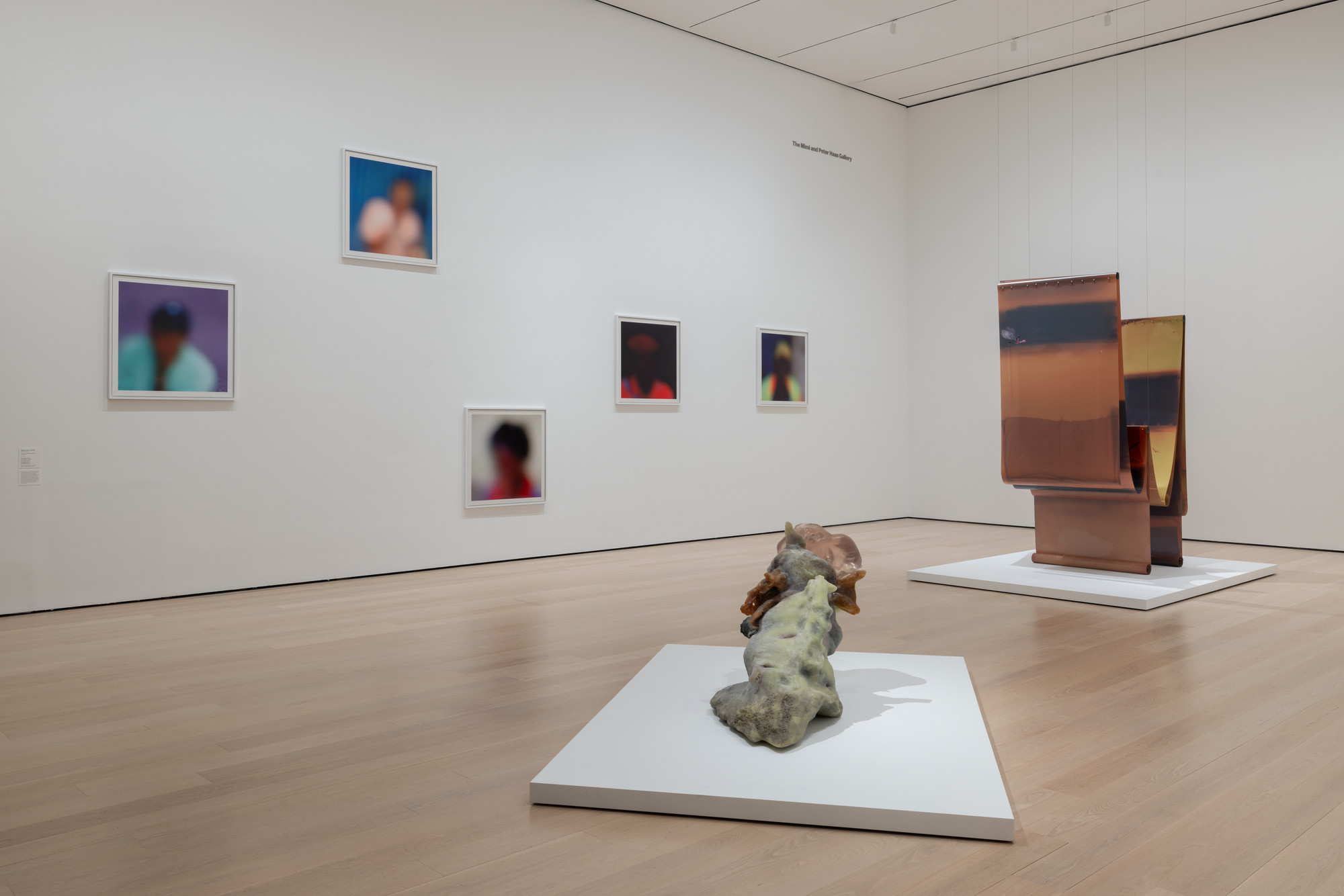
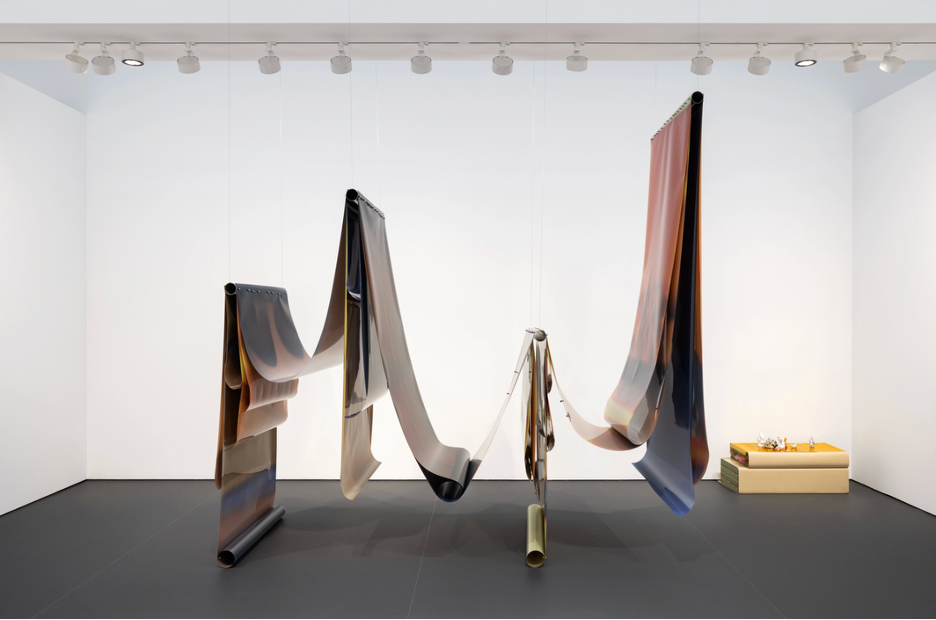
environment. She repeatedly uses unfixed photographic film and light-sensitive
paper, exposing them to light, humidity, water, insects, dust, and
architectural conditions. She calls this process “tanning.”
In this process,
film does not preserve a clear image; instead, it absorbs its surroundings,
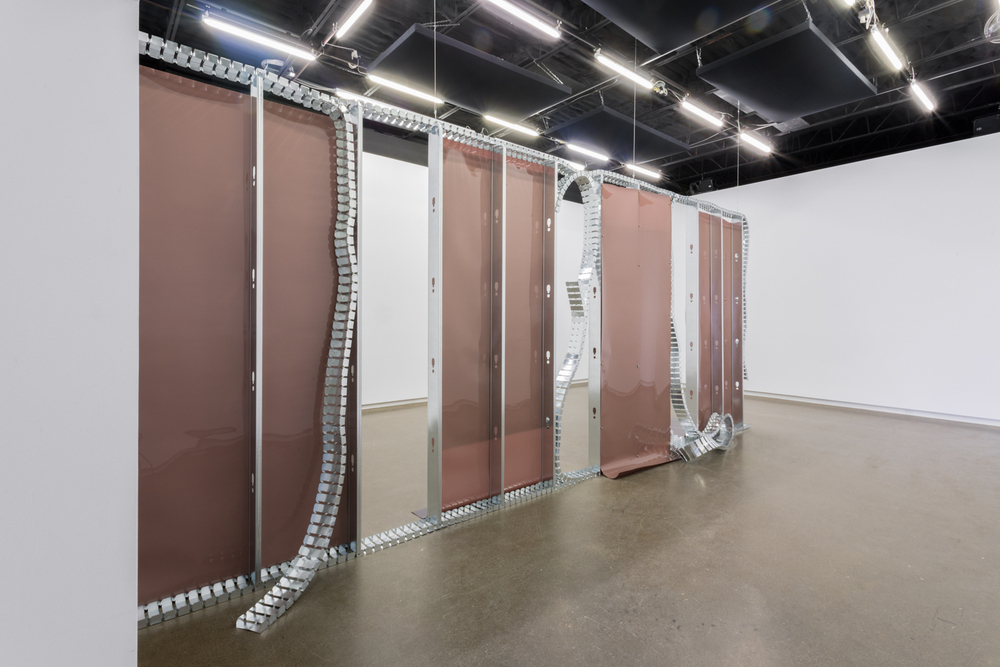
changes color, and accumulates traces on its surface. In A Body
Knots, Great Shuttle, In
Cascades, and Molt (Woodridge-New
York-Seoul-)(2024-2026), film functions not as an image captured by a
camera, but as a bodily surface that continues to transform through contact
with its environment.
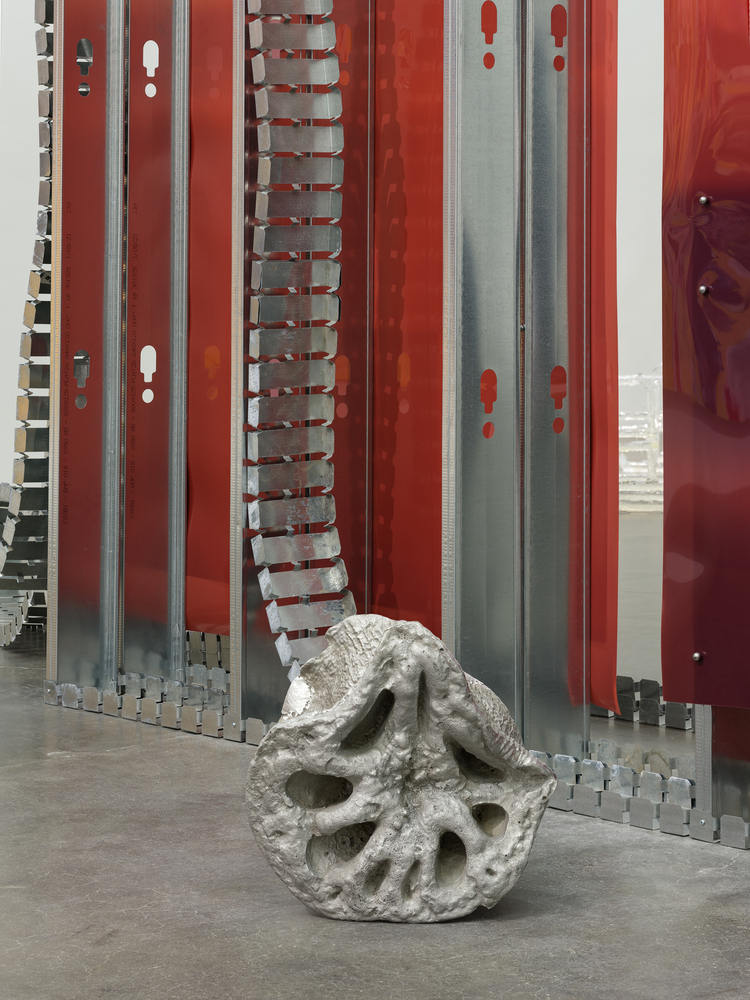
Kang does
not simply reproduce the forms of objects; she translates their cultural memory
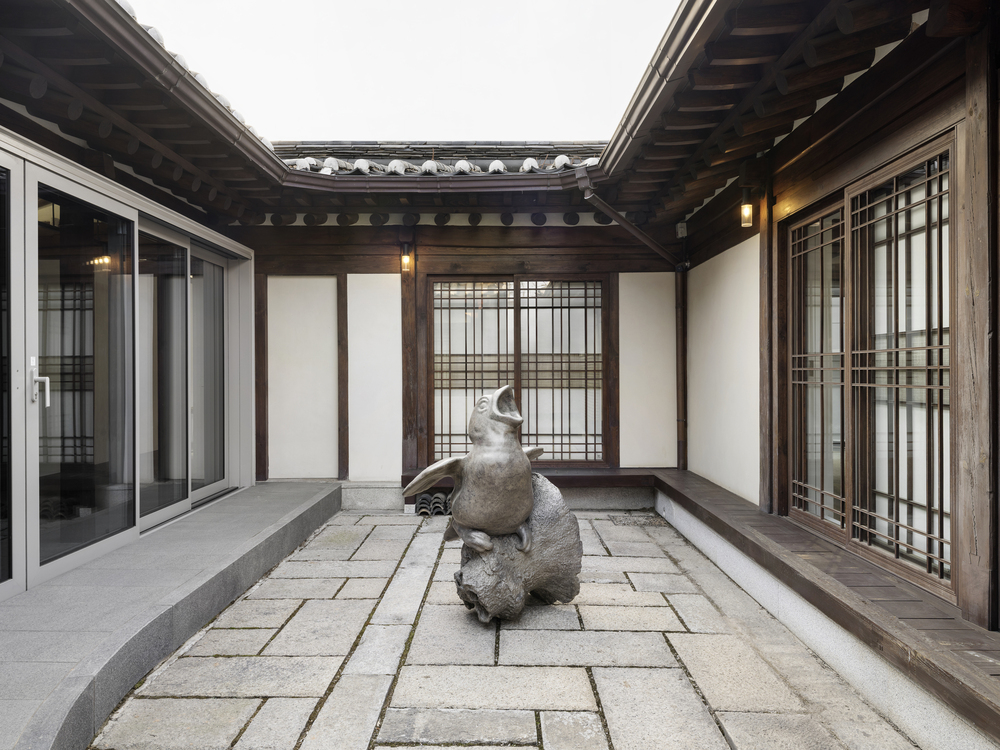
and bodily meaning into sculptural language. Lotus roots, anchovies, kelp
knots, perilla leaves, cabbage leaves, yellow croaker fish, baby birds, and
rats appear throughout her works in materials such as cast aluminum, bronze,
plaster, glass, and ceramic.
These forms evoke food and sustenance, family
history and migration, internal organs, and ecological relations at the same
time. Root, for example, reveals how the holes in a lotus
root turn emptiness into a condition for life, while Tract XXXI(2025)
uses cast brass-bronze kelp knots suspended from nylon string to suggest
seaweed, nets, and entanglement. In Tract XIX (You are
already) and Tract XX (You are already II)(both
2025), anchovies, lotus root slices, and kelp knots hang from steamers
reminiscent of gongs, suggesting how stories might be transmitted like
vibrations from one body to another.
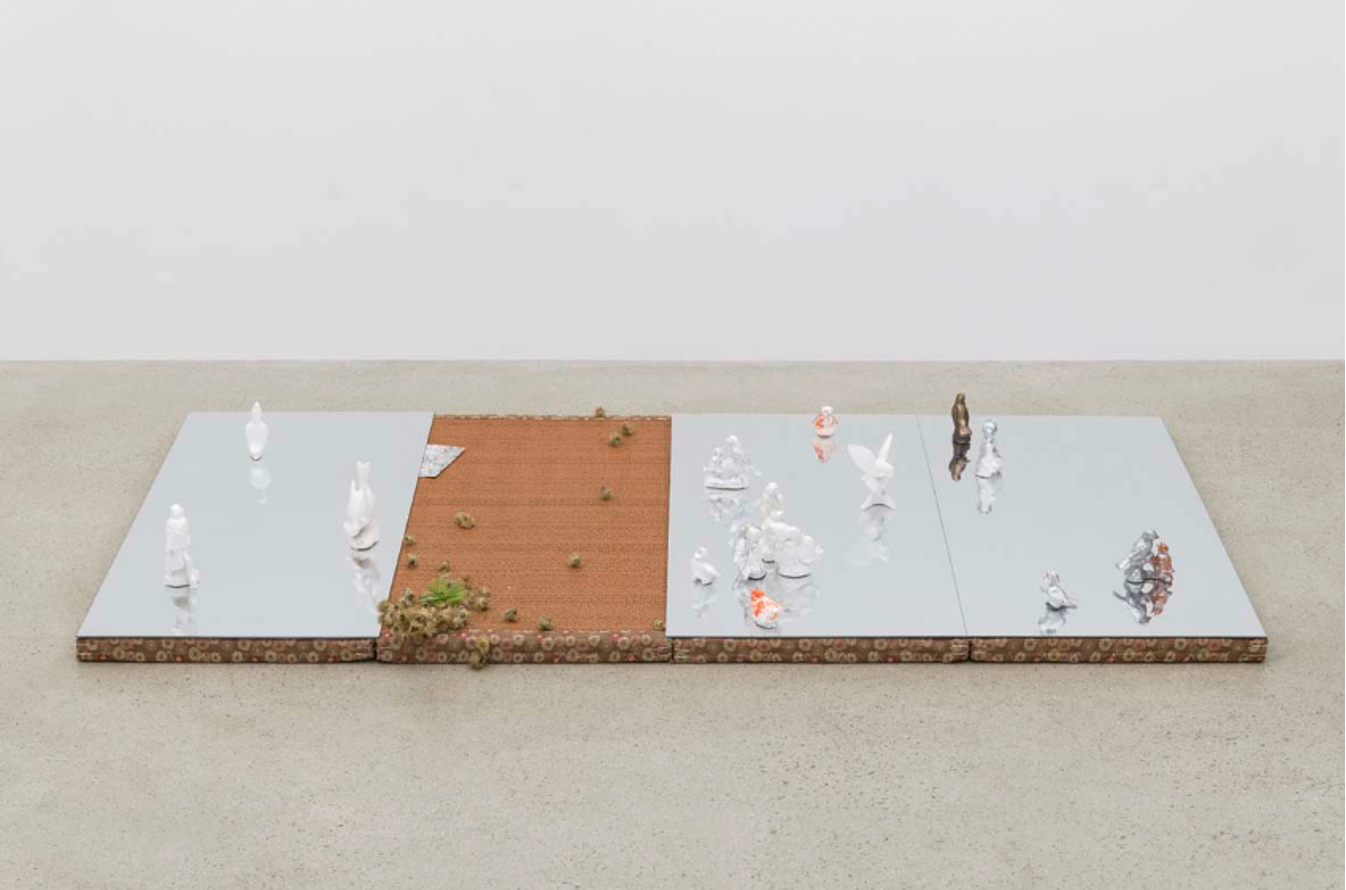
Tatami is
another important formal and conceptual material in Kang’s work. In the
‘Receiver Transmitter’ series, tatami becomes both a floor structure that
evokes bodies lying down, resting, dreaming, or dying, and a site where
memories and objects are hidden within folds. Receiver Transmitter
(Born Inside Death II)(2025) combines tatami mat, mirrored acrylic,
cast plaster, cast aluminum, ink, photographs, and burrs, showing through an
arrangement of objects how the body holds traces of time.
In 《Borne》(Esther Schipper, Berlin, 2025), cast
aluminum perilla leaves, bottles of spirits, photographs, and baby bird
sculptures are placed on and around tatami, unfolding sensations of birth and
death, care and loss, inheritance and transformation like a horizontal body.
Kang also
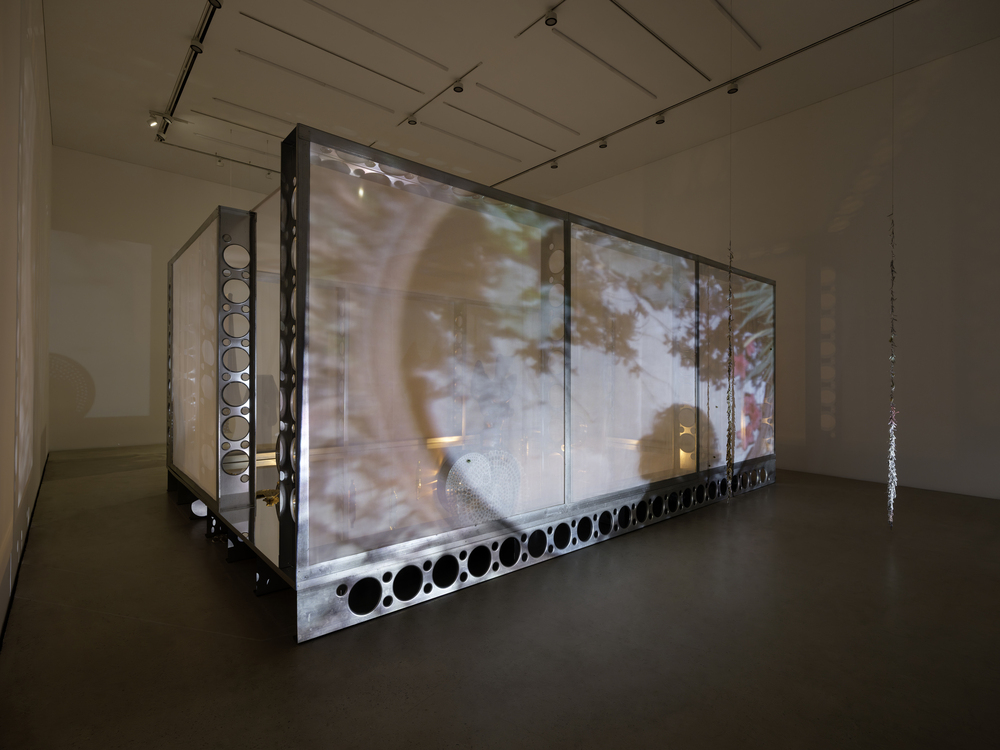
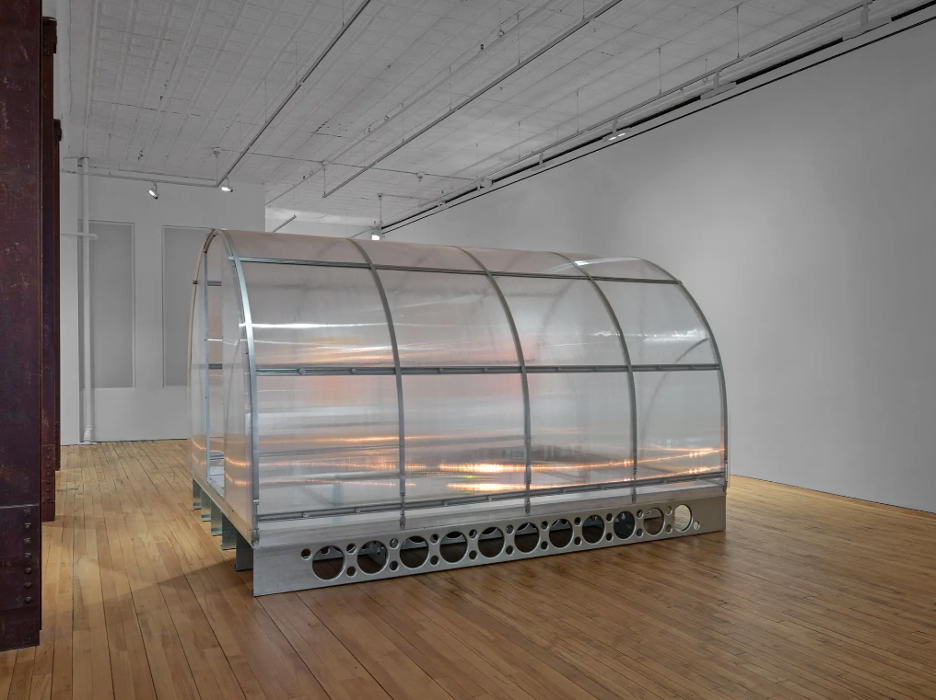
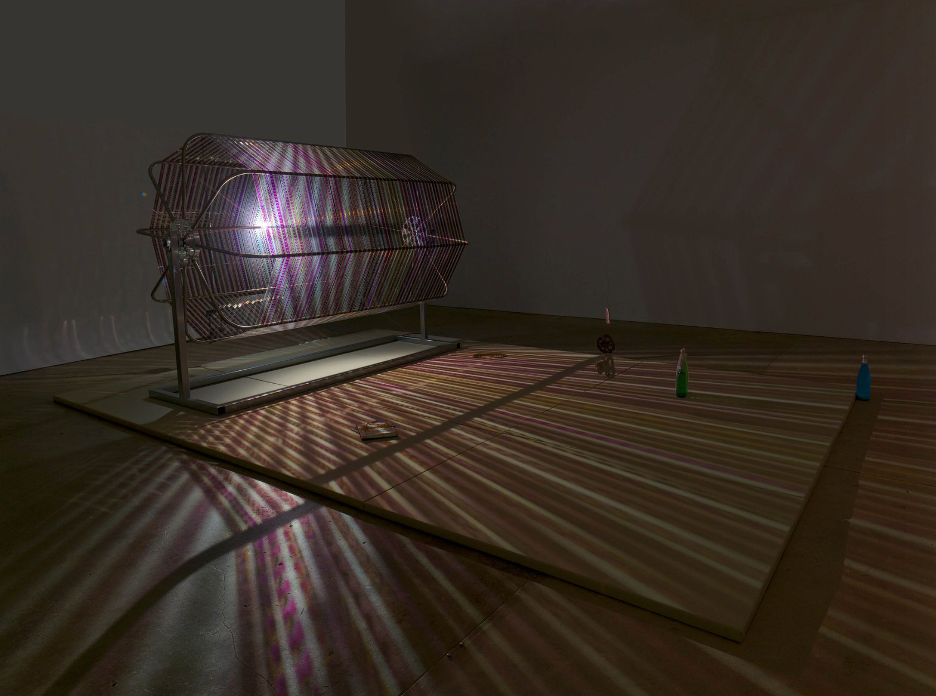
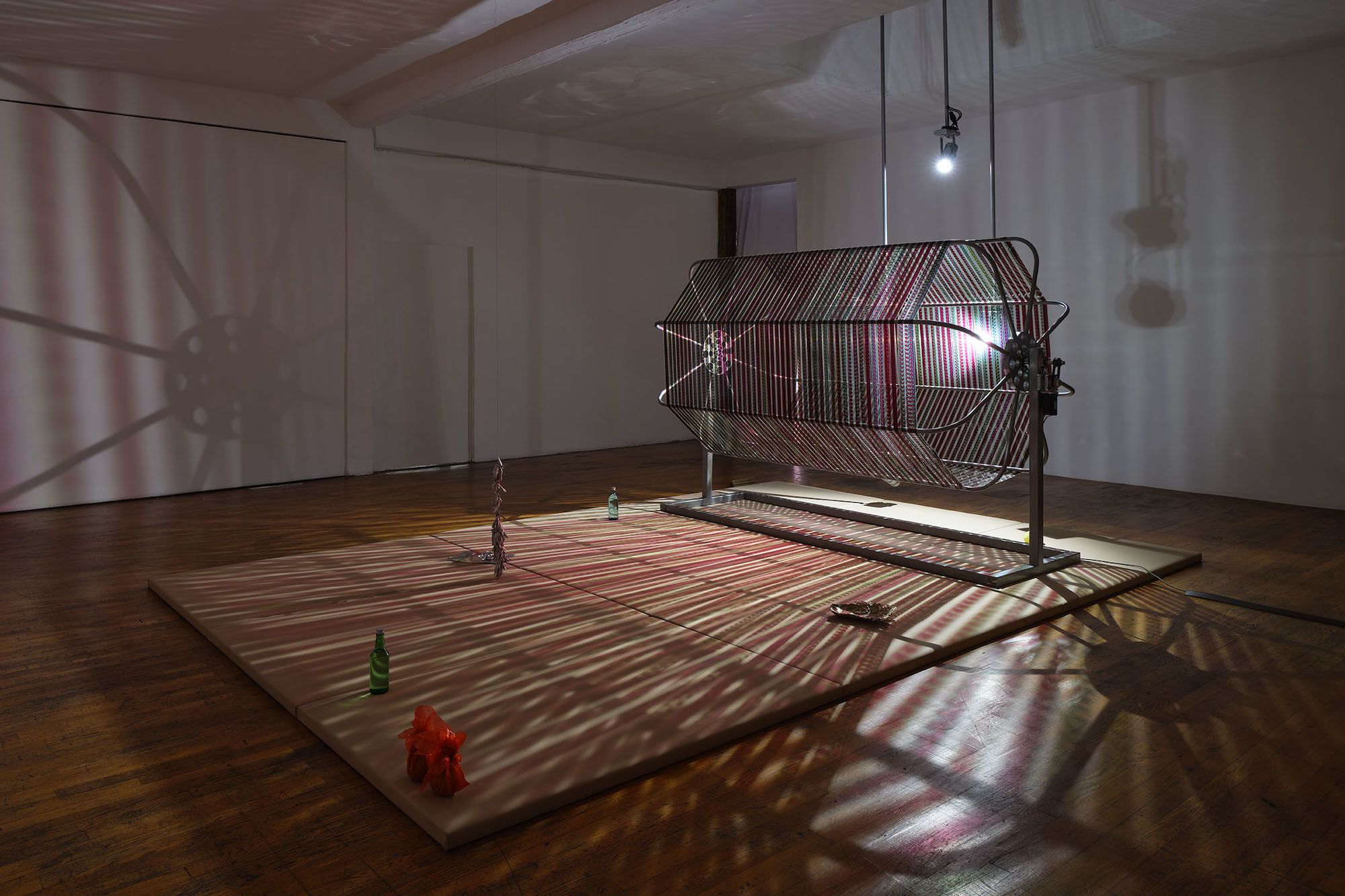
uses literature and translation as structures for her work. In 《Azaleas》(Commonwealth and Council, Los
Angeles, 2024), Azaleas(2024) is a kinetic installation
inspired by a rotary film dryer, combining 35mm film, a rotating drum, lights,
wind chimes, and sound. The work is based on Kim Sowol’s poem “Azaleas” and
poems by Kim Hyesoon, but Kang does not attempt to transfer their meanings
directly.
Instead, she accepts the compression, loss, and slippage that occur
in translation as part of the work’s rhythm. She calls this process
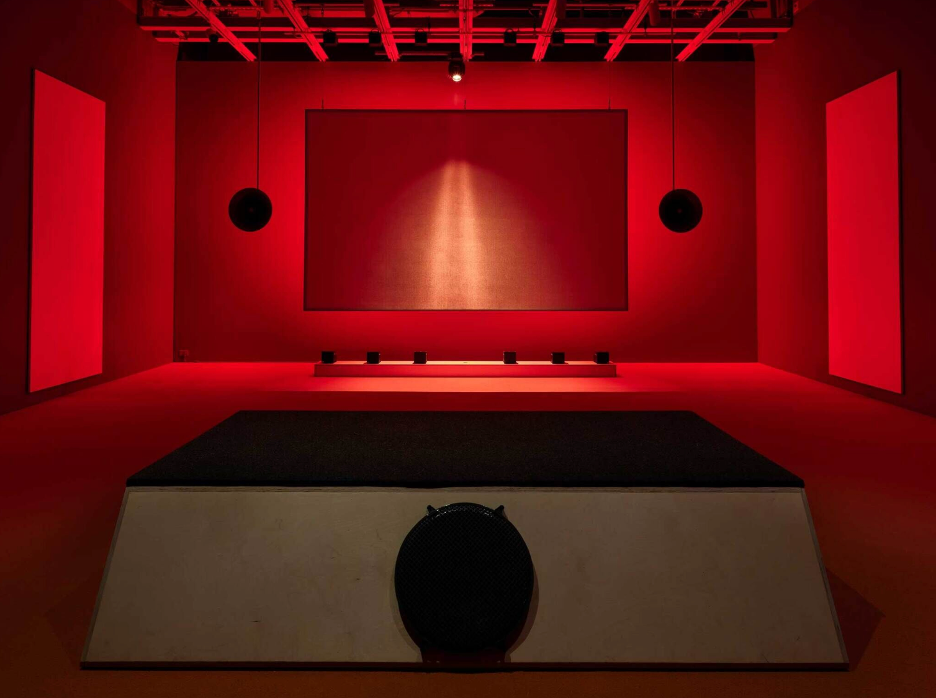
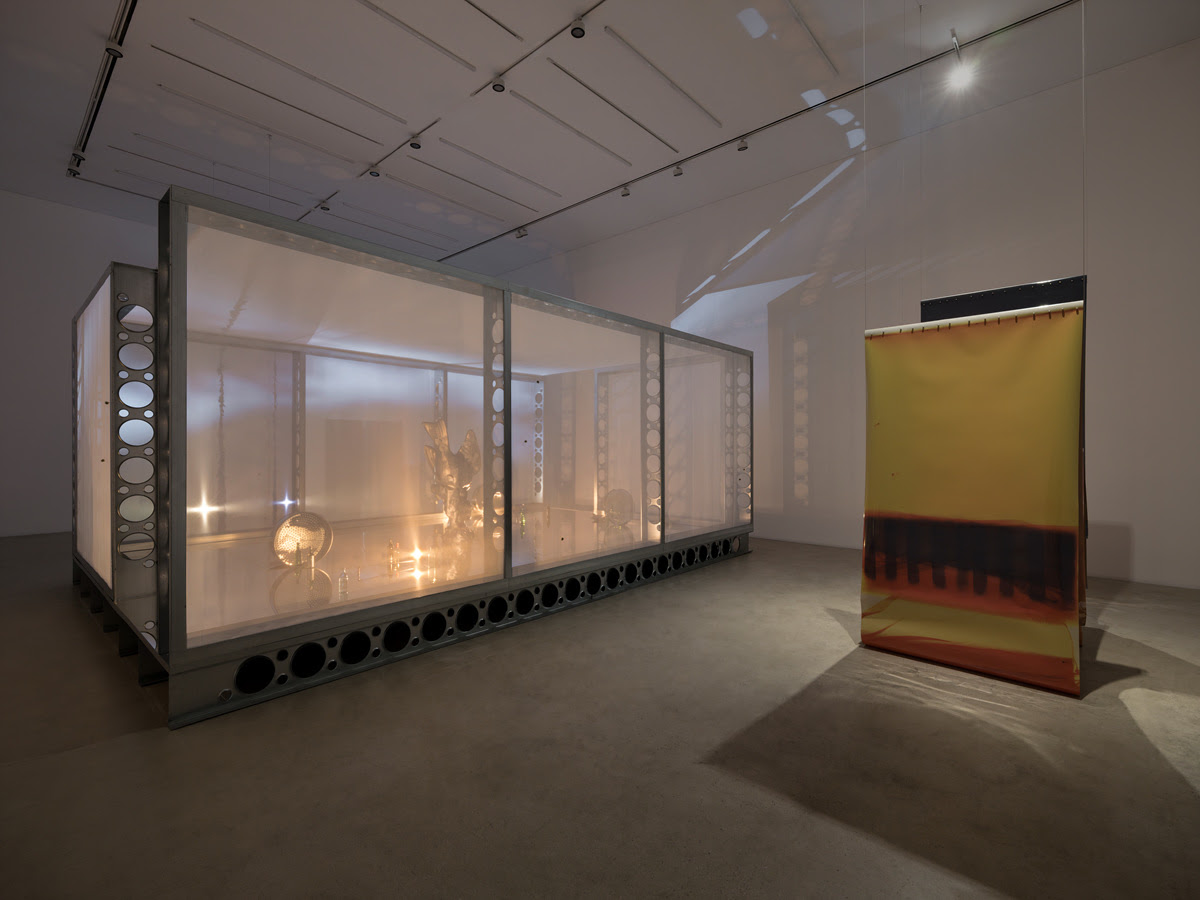
“translation-regurgitation.” In 《I hear the hollow boom
of time》(Frye Art Museum Seattle, Seattle, 2026), this
structure expands further, with a film installation and a new iteration of
Azaleas presented across a bright gallery and a dark
gallery, creating a space in which body and memory, poetry and sound,
photography and sculpture translate one another.