Migration
to humanity is a way of life continued on down from the dawn of existence, and
an indispensible means for its self-modernization. Humanity’s ancestors,
originating from Eastern Africa many ages ago, crisscrossed continents and
sailed the oceans to spread out all over the world. This journey, initially
begun in search of something, now transcends Earth in its scope and marks as
its goal another planet across outer space.
Humankind has migrated for various
reasons. We have left our homelands to escape fatal threats posed by famines,
natural disasters, war or massacres, etc.; and have crossed borders for
political, economic and religious reasons. Of course there would be plenty of
reasons of various kinds, but what is important is that in such voluntary
migration, the individual’s wish for a better life makes the greatest impact.
People changed where they live in hopes of accessing better education or
gaining more desirable employment, to live together with loved ones such as
family or a lover, or to be surrounded by a more comfortable natural
environment, i.e., to live as better selves tomorrow. One thing to note,
however, is that it would hardly be believable to argue true migration is made
possible, leading to better lives for those involved, through one’s independent
decision-making and simple physical displacement alone, as mentioned above.
The
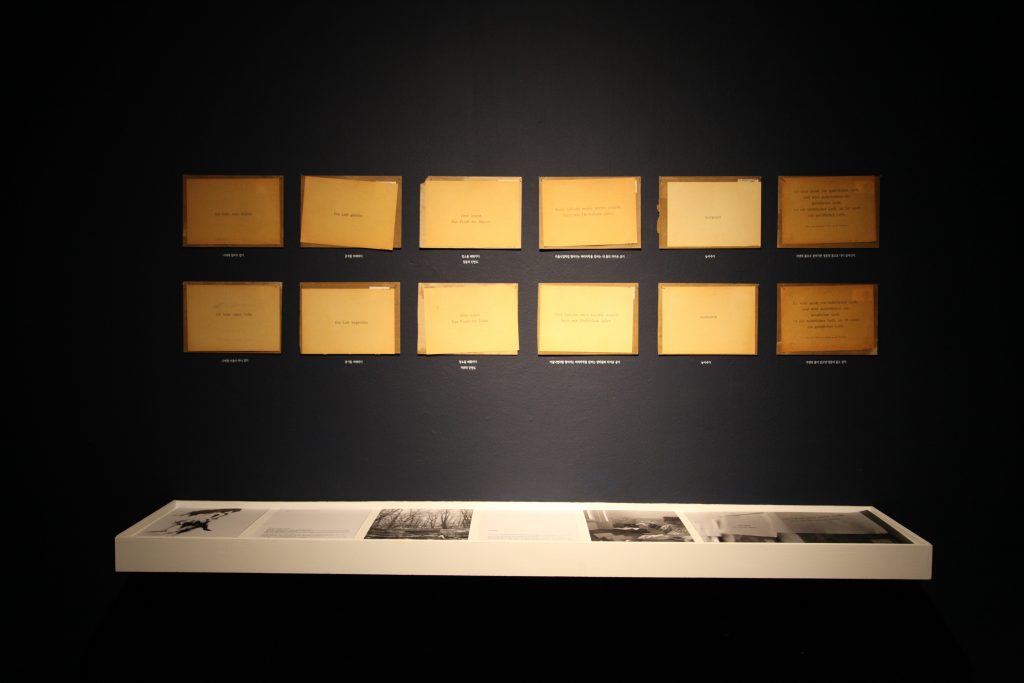
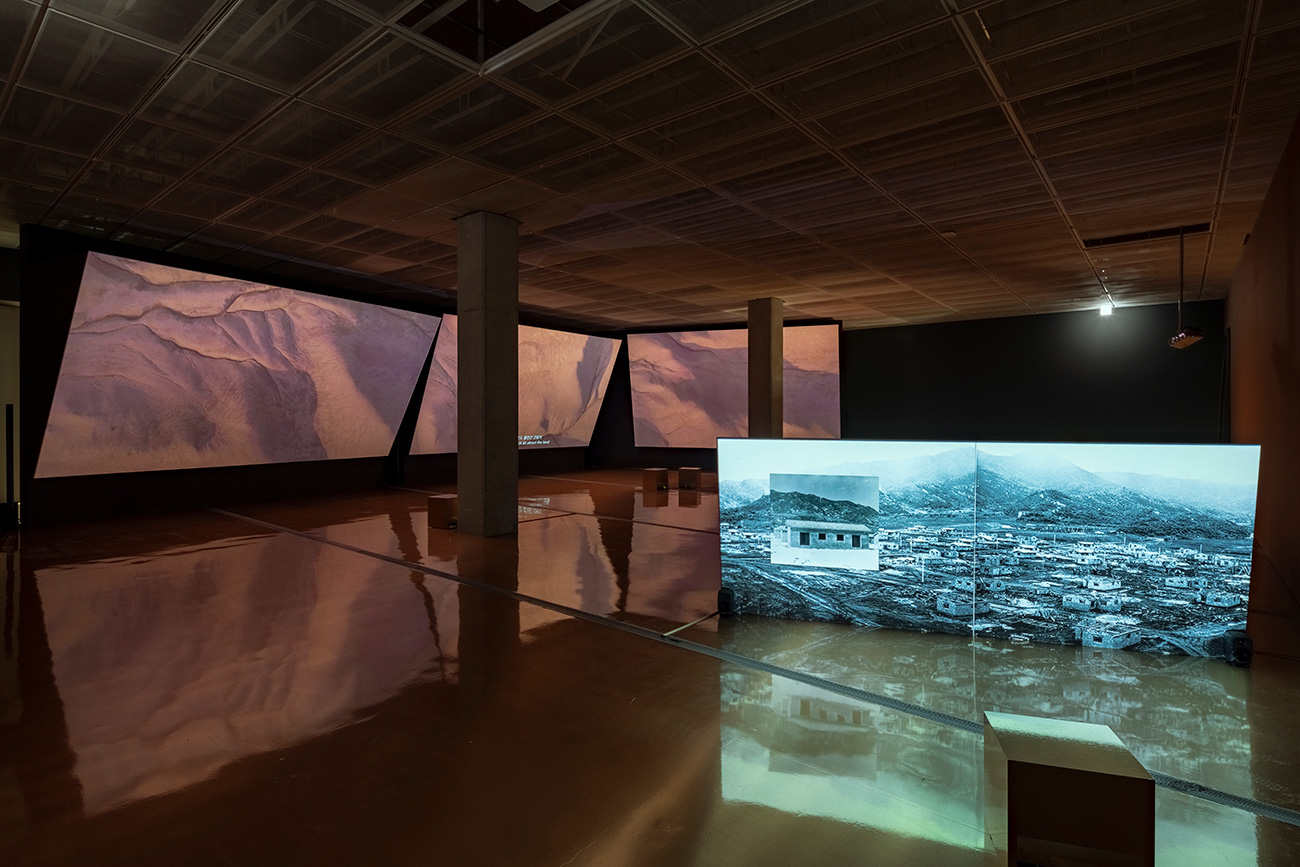
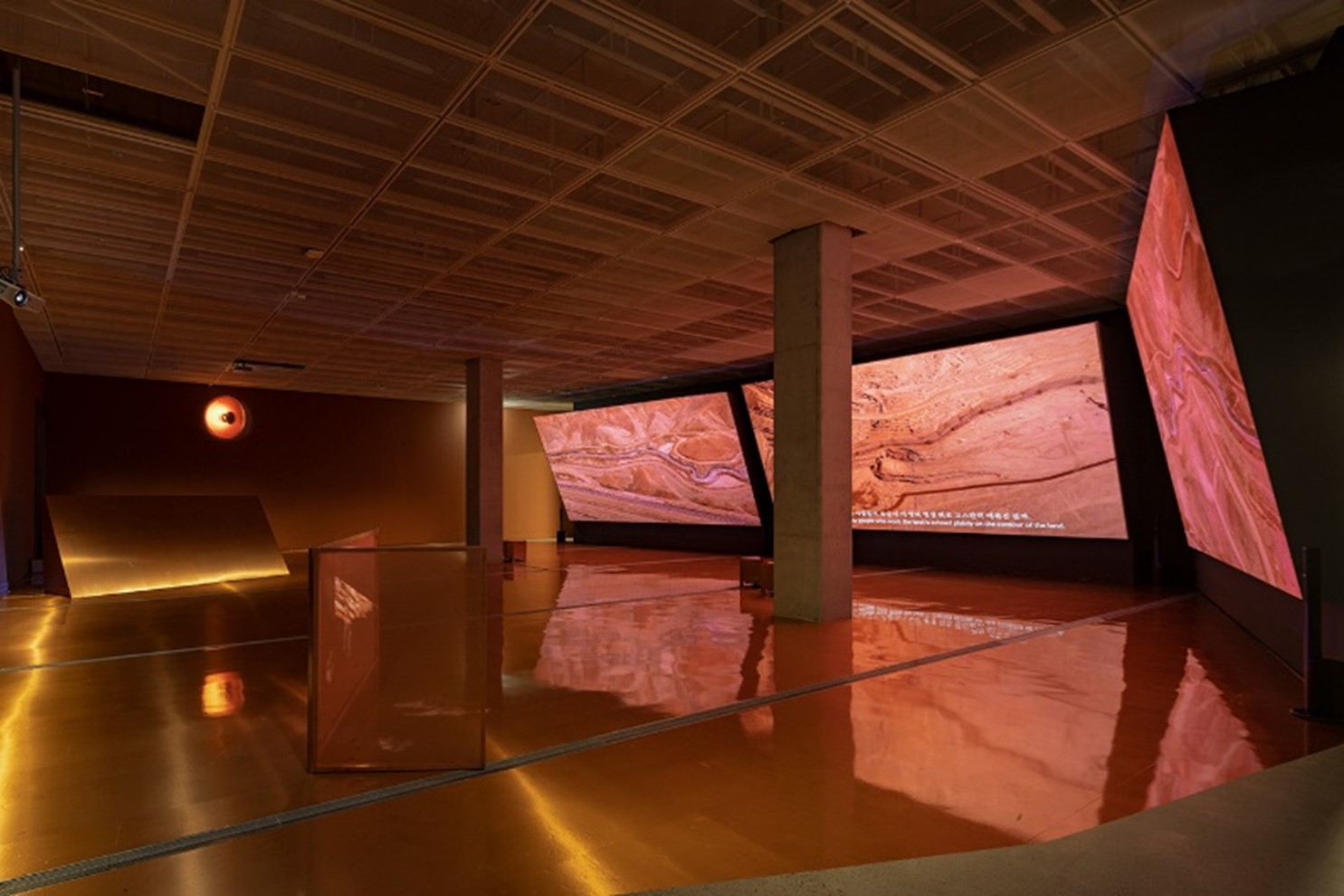
artist, Chan Sook Choi is a migrant. Her current project, The Promised Land, is
based on her experience as an emigrant of many years in Germany. This
exhibition constitutes the first part of the project, and consists of contents
related to “spiritual immigration.” The artist has engaged in profound
meditation regarding her own identity while living in Germany for the past
decade.
The influence of the artist’s position of emigrant and outsider was
considerable for herself and others in the process of Choi’s struggles to
achieve an independent artistic world and outlook. Life as an emigrant, in
fact, inevitably entails serial collision. This is because an emigrant must
substitute the contents of her rigid heart with elements of an alien way of
life which she must then understand. Few would find it easy to accept what
comes their way thus.
Meanwhile,
what are the actual appearances of immigrants we commonly run into? They enjoy
life in their new homelands, while also retaining their former ways as well. In
may cases, the only thing that appears to have changed is their address, with
their lifestyles echoing how they lived before. In some cases, the opposite is
true. Some voluntarily seek change and security from where they are, forgoing
any physical migration, through mental relocation.
These people assume new
subjectivities through changes in their attitudes toward, or ways of, life in
situations where they find it impossible to escape constraints of reality, such
as those imposed by the institution, force or economic circumstances. Their
lives demonstrate features distinct from those of their fellow countrymen or
organization members, and these individuals continue leading their unique
lives. The concept of emigration thus can be divided into the two aspects of
physical emigration and mental, or inner emigration. In this exhibition, the
artist attempts various and witty experiments directed at the gap in between
these two, posing a question about the fundamental motivation of emigration.
Humankind’s
mobility has been greatly enhanced by industrialization and scientific
discoveries, and its expansion in scale and improvements in terms of speed
continue to accelerate. One country had produced affordable and durable
automobiles for the popularization of what used to be enjoyed exclusively by
the wealthy, by policy, in the past. Thanks to the success of this policy,
which called for “one automobile for every family,” the automobile manufacturer
involved still manufactures cars for the entire world, after decades.
The
company’s name, which means “the people’s car” in German, is Volkswagen. The
company’s headquarters are located in Wolfsburg, Germany, and, interestingly,
Volkswagen has created a kind of theme park with its campus and adjacent
manufacturing plant. Named Autostadt, for “Auto,” meaning “the automobile” and
“Statdt,” for “city,” it includes an assembly plant, museum and customer
service center.
Volkswagen patrons visiting this mecca of cutting-edge
technology are able to experience the company’s history for themselves, watch
their purchases being assembled right in front of their eyes and even drive
their new Volkswagens straight out of the manufacturing plant. As if to
demonstrate the pinnacle of humanity’s transportation technology, this giant
theme park approaches the public flaunting its perfectness. This appears
intended for presenting something vehicles can achieve beyond merely affording
convenient transportation to their users.
However, improvements in transportation technology seemingly have little to do
with relocations of the mental essence, i.e., spiritual emigration, for all the
smoothness and speed with which they can achieve physical relocating of the
human body. As mentioned above, physical migration in fact does not necessarily
accompany spiritual emigration. Further, since spiritual migration is something
voluntarily carried out within the subject’s mind, it seems even less relevant
to technological improvements.
However,
science and human beings present possibilities for spiritual emigration through
technology by devising optogenetics. The term, optogenetics combines “opto,”
meaning “light,” with “genetics.” As its name suggests, optogenetics is
technology concerned with controlling human brain activity using light and
genetic engineering. Neurons of the brain exchange information through electric
signals. Differences in the electric pressure surrounding these neurons form
electric currents stimulating each neuron, and the neurons activated by these
currents operate by delivering chemical signals to neighboring neurons.
If one
can control the movements of these neurons, that person could also manipulate
the neurological circuitry of the human brain. Based on this idea, scientists
have become able to control neurological circuits by activating or deactivating
neurons using light after transplanting into them plant-extracted protein
responsive to light. This technology has not yet been tested on humans due to
safety concerns, but experiments on rats have succeeded in manipulating memory
by stimulating neurons responsible for certain kinds of memory after implanting
optical fibers in the rats’ brains.
The
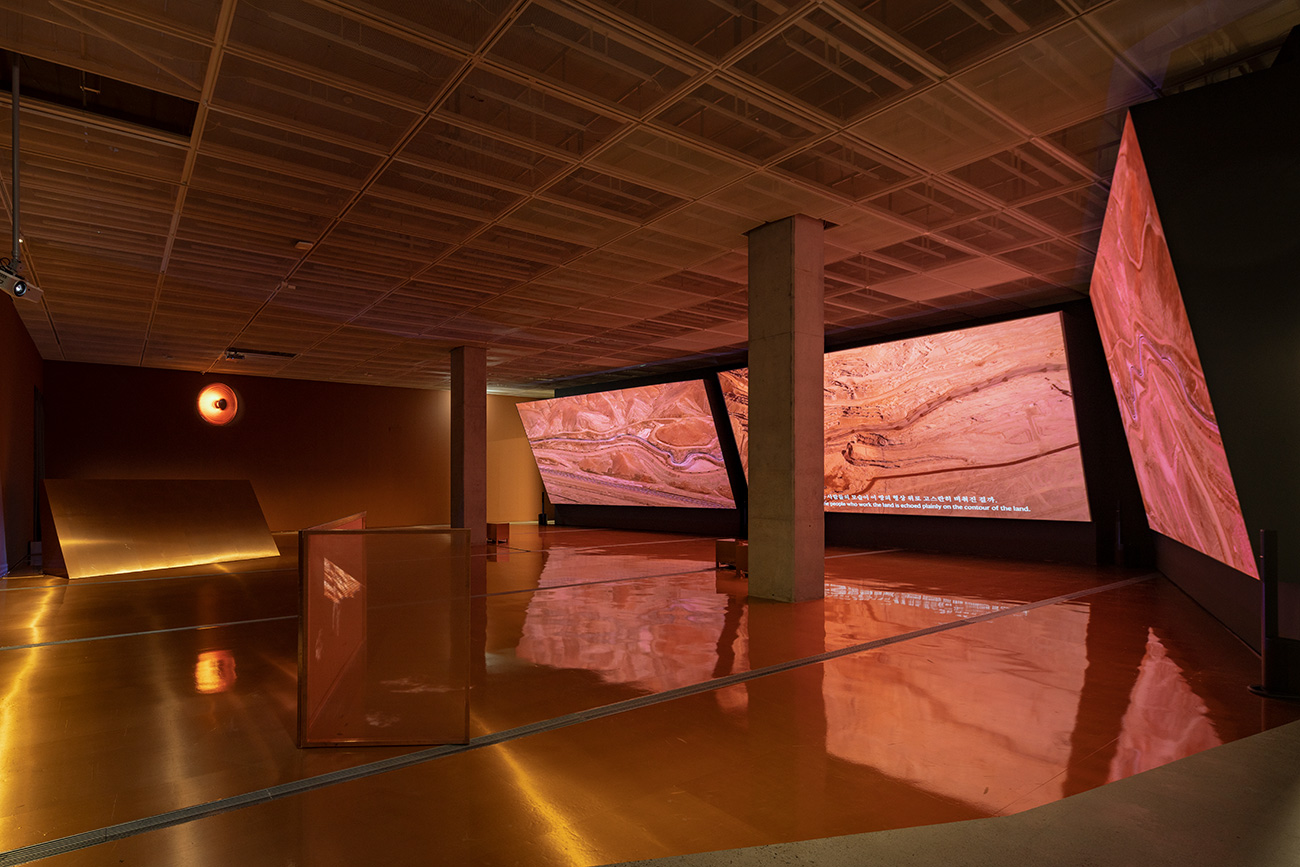
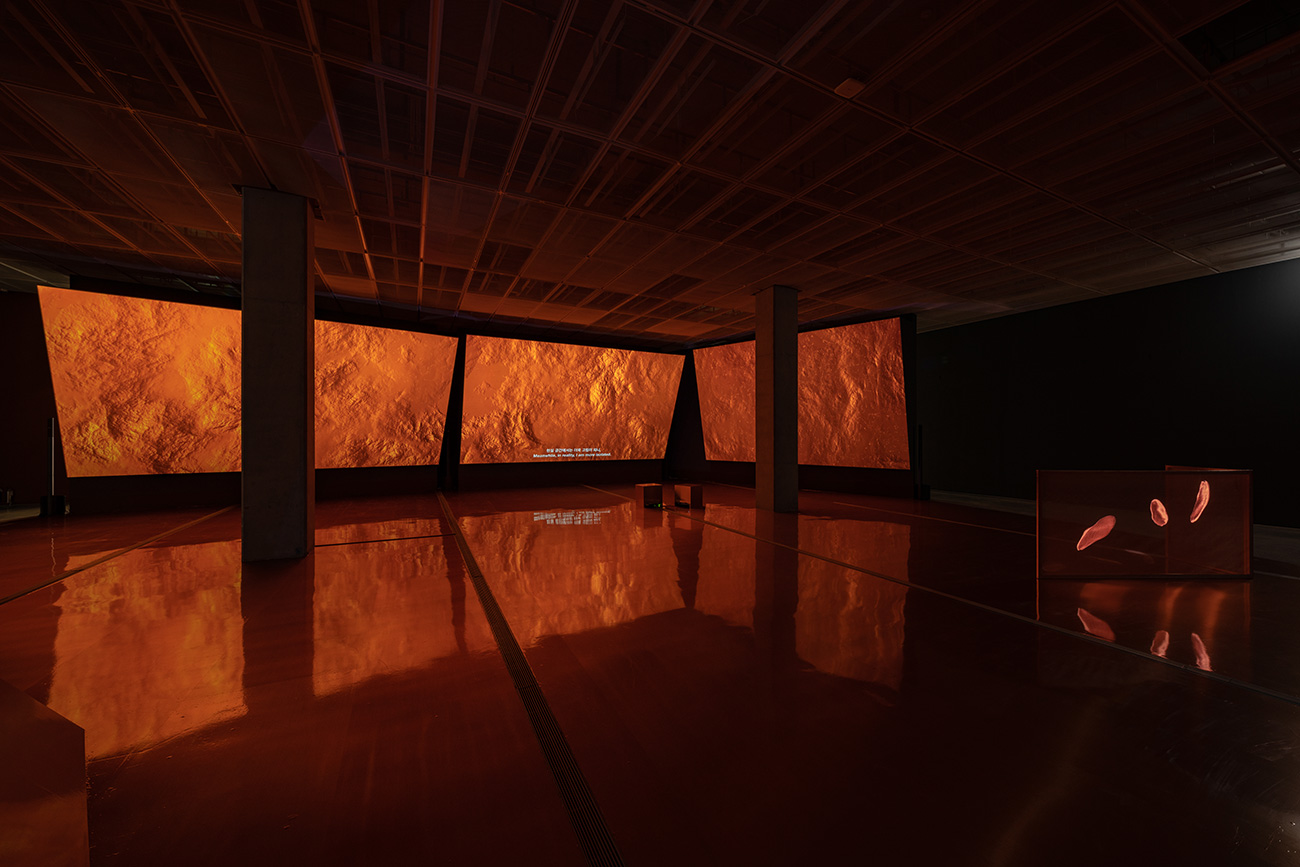
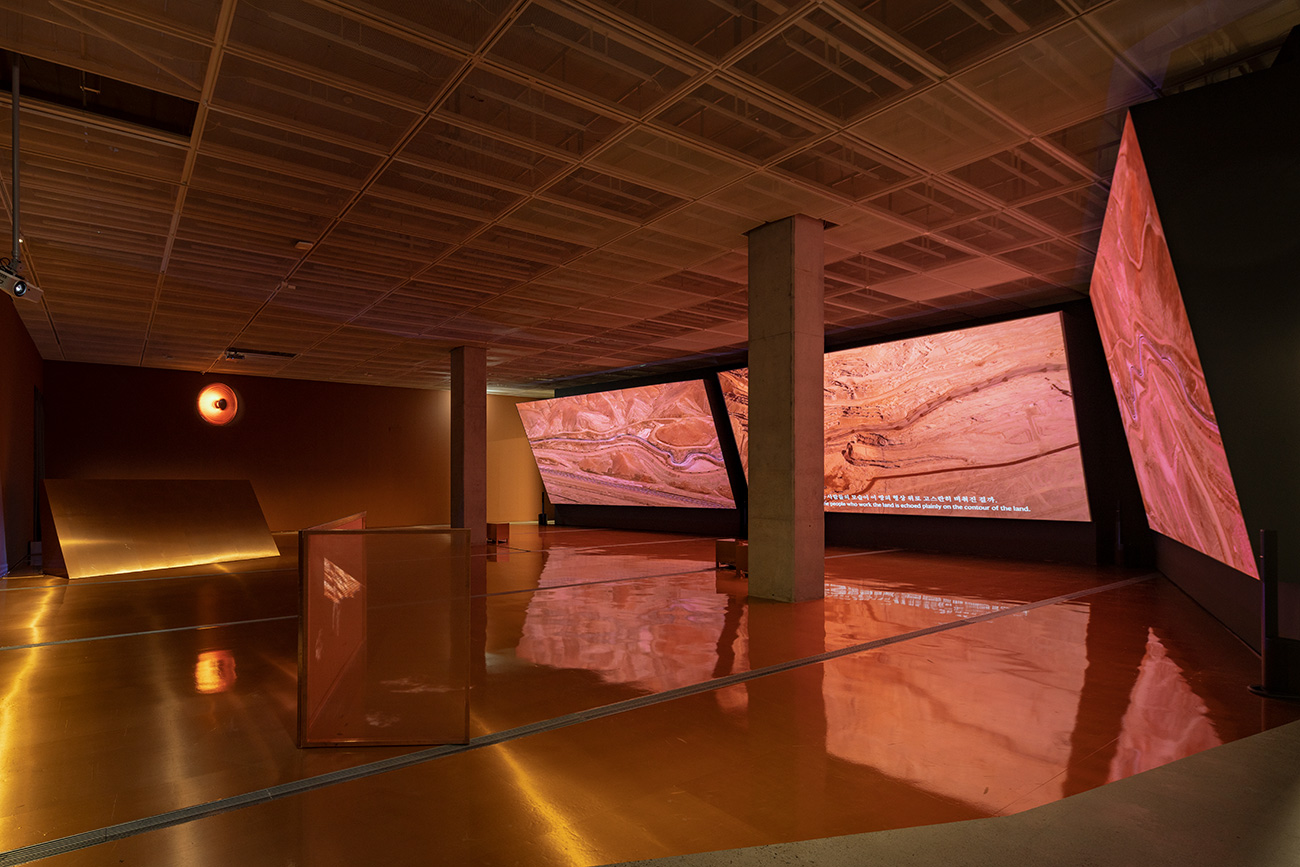
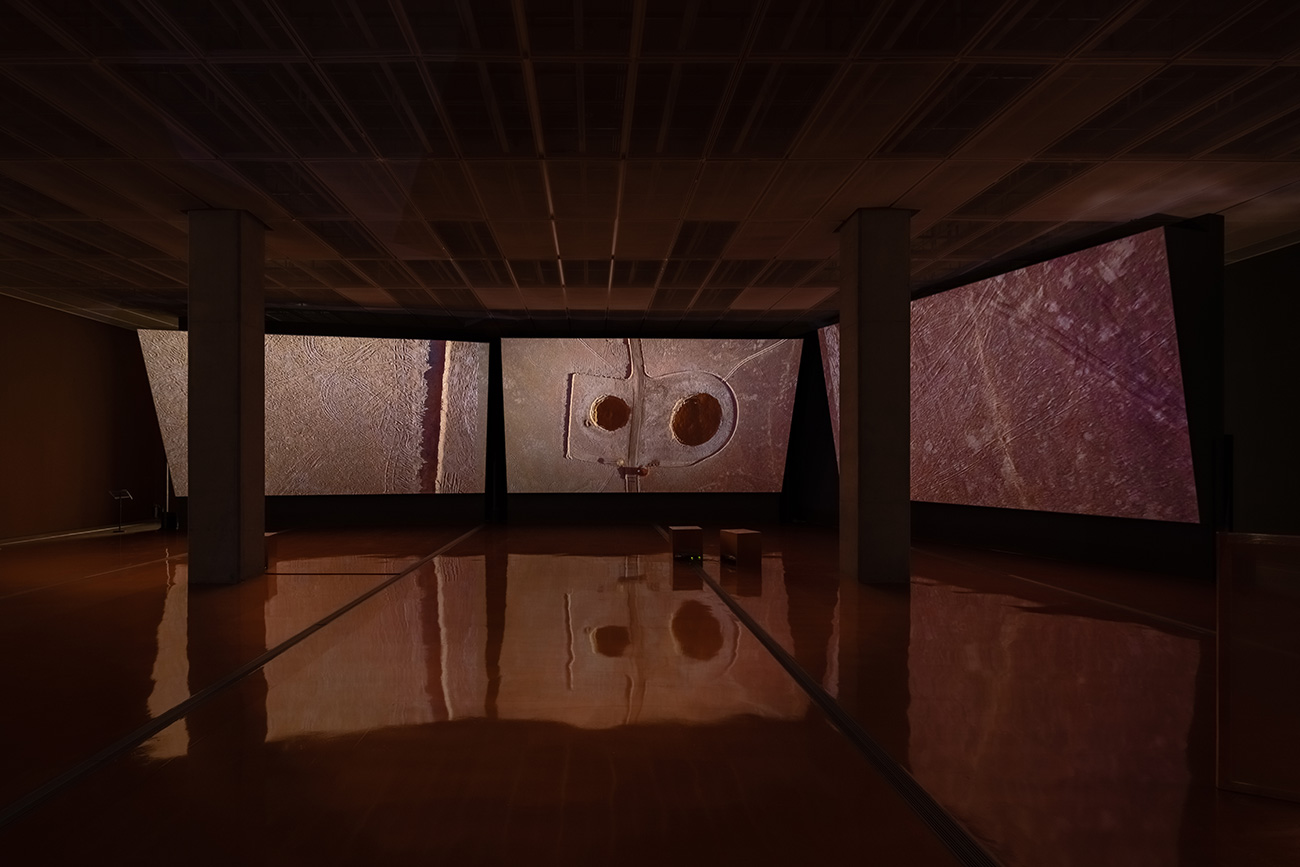
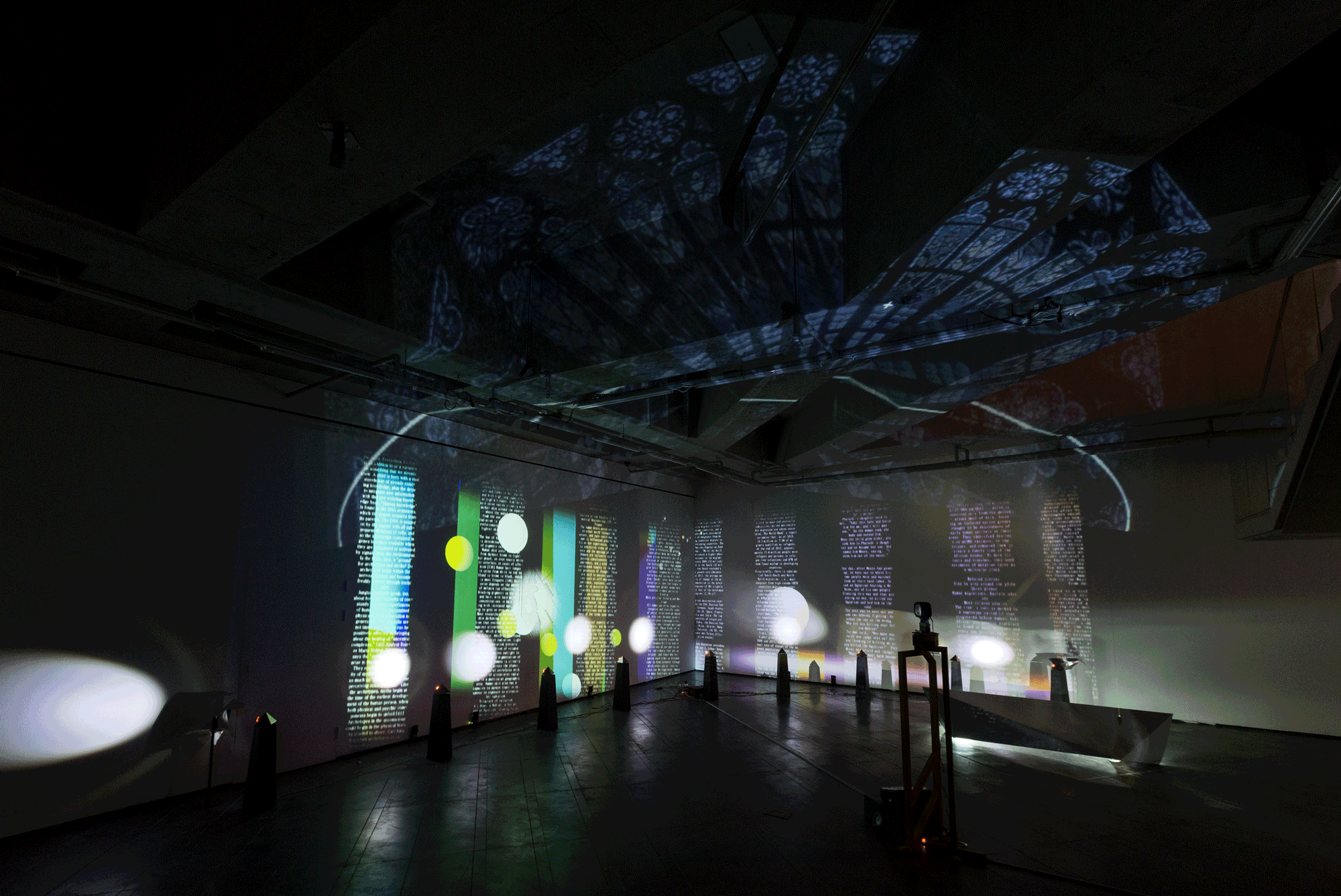
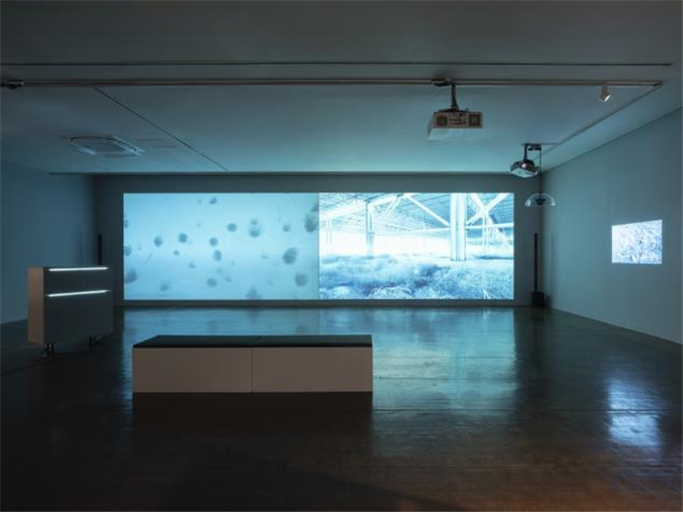
artist constructs the image program, Opto-rhodopsin1) in the exhibition space
by creating work about Autostadt, a symbol of advanced transportation
technologies, and the futuristic technology of optogenetics. The exhibition
arranges for visitors to follow the instructions given by an Autostadt tour
guide, which plays every fifteen minutes. Visitors find themselves face to face
with an object overlapping lighting images depicting daily life in the
exhibition room.
However, moving lighting causes the light images to soon
disappear, and viewers find themselves staring at the remaining geometric
structure. Meanwhile, the tour guide’s voice explains Autostadt’s advanced
system and marketing strategy, and the purposes, motivation and effects, etc.
of Volkswagen’s technologies. In such fashion, appearances of two technologies,
one symbolizing physical mobility and the other spiritual roaming, ceaselessly
collide to present viewers with a somewhat confusing situation.
This appears
intended to remind us of the inconvenient situations the aforementioned
migrants, whether they be physical emigrants or mental ones, would likely
encounter. This confusion intensifies along with the collision as the gallery
tour continues, and each form slowly becomes magnified to an extreme. The light
images depicting the ordinary transform into elaborate, structural images, and
the lighting erasing them, too intensifies. The tour guide’s words, also, grow
firmer. This phenomenon, gradually peaking, soon concludes and visitors are
left to dwell for a moment in an empty space.
Anyone
could personally experience the division created by the two concepts of
physical and mental emigration, but no conclusion appears easily achievable. Is
the artist trying to find a point at which these two concepts approach one
another to combine into one mass? Rather, perhaps the artist’s promised land is
a place acknowledging the coexistence of the two concepts while endlessly
seeking their harmony in the process.
---
Opto-rhodopsins
is a compound noun formed by “opto,” meaning “light,” and “rhodopsins.”
referring to a pigment protein sensing light on the human retina, and is in
essence a virtual device with which one could transplant memories through the
electric stimulation of light corpuscles entering the eye. This is a kind of
image program, repeatedly demonstrating a process in which light (a dominant
light source) erases other light (a weaker light source). The technology of
memory transplantation, where memory is considered inseparable from our
identities, inspires inquiries into the destination of mental emigration, which
thus far had only been considered a state of movement.
Text by Doosung
MOON, Alternative Space LOOP, Curator