Trained in
sculpture, Kim Jung Eun has never treated the map solely as a flat image, but
has continuously expanded it into questions of materiality and space. In her
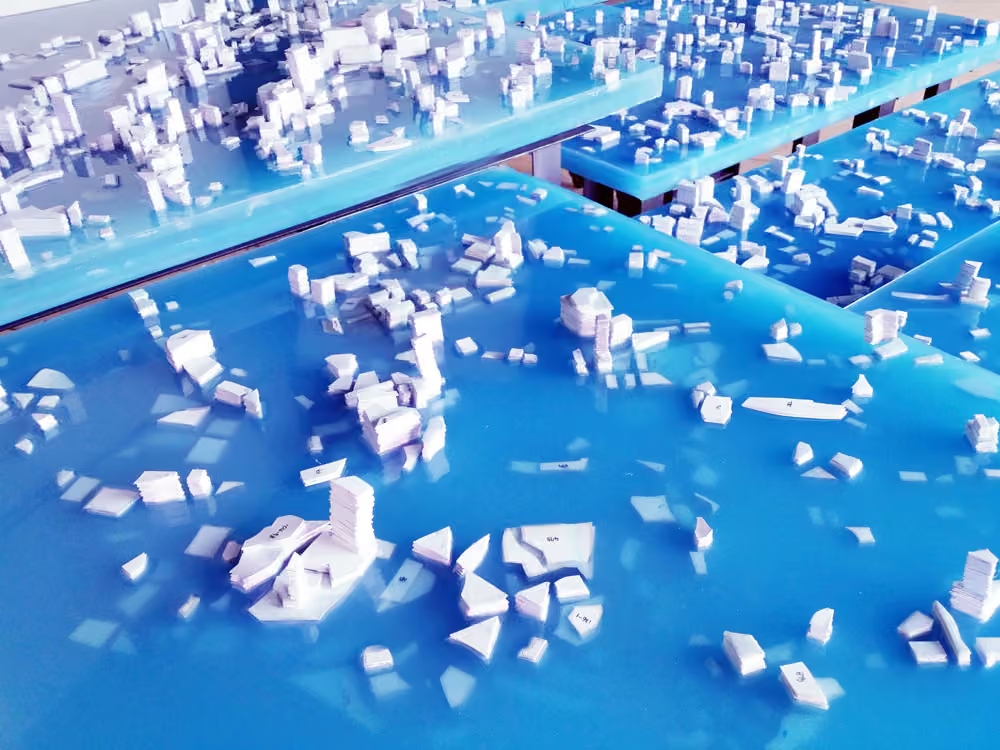
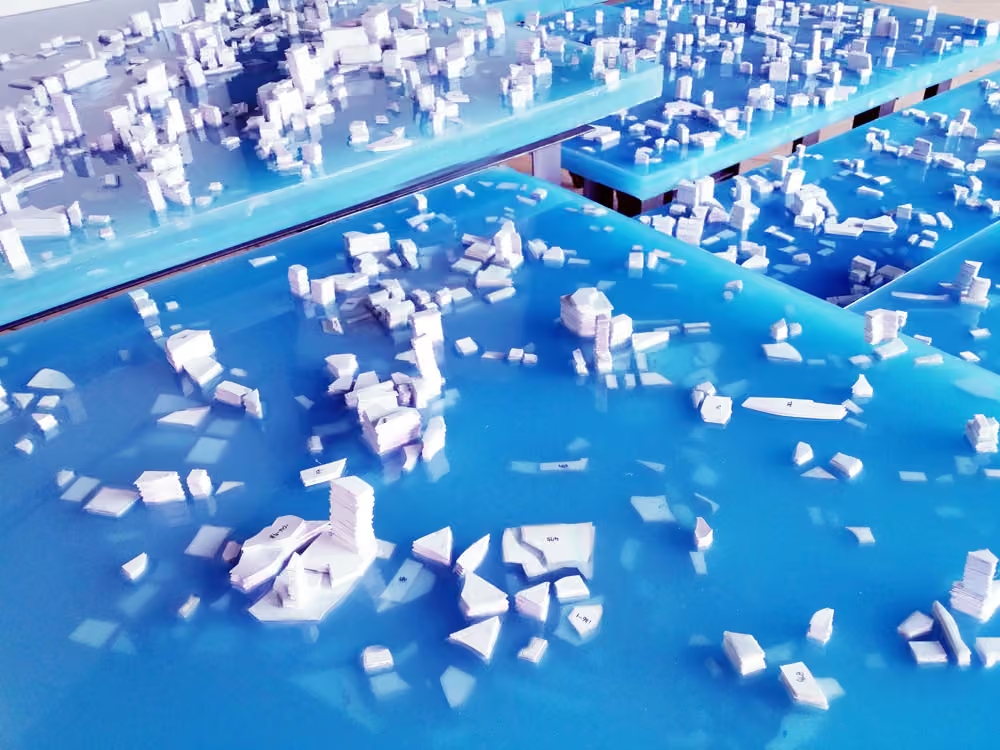
early works, she used atlases, graph paper, tracing paper, pencil drawing,
epoxy, and light boxes, cutting, layering, and stacking them while retaining
the numerical values and forms of existing maps.
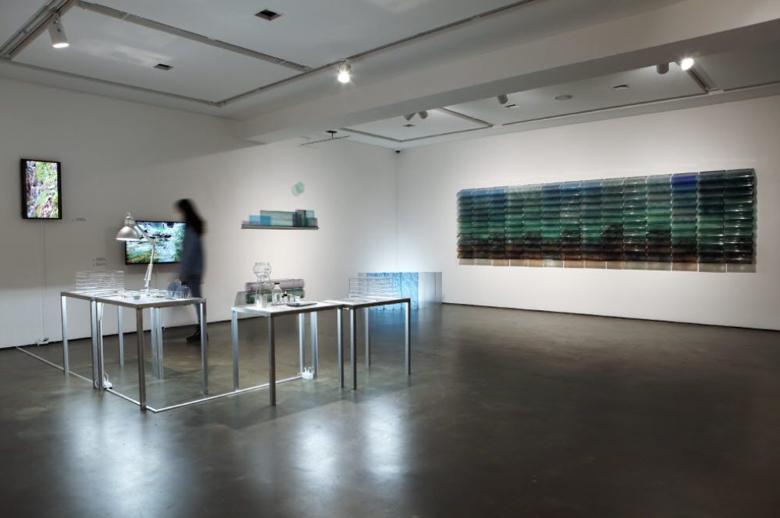
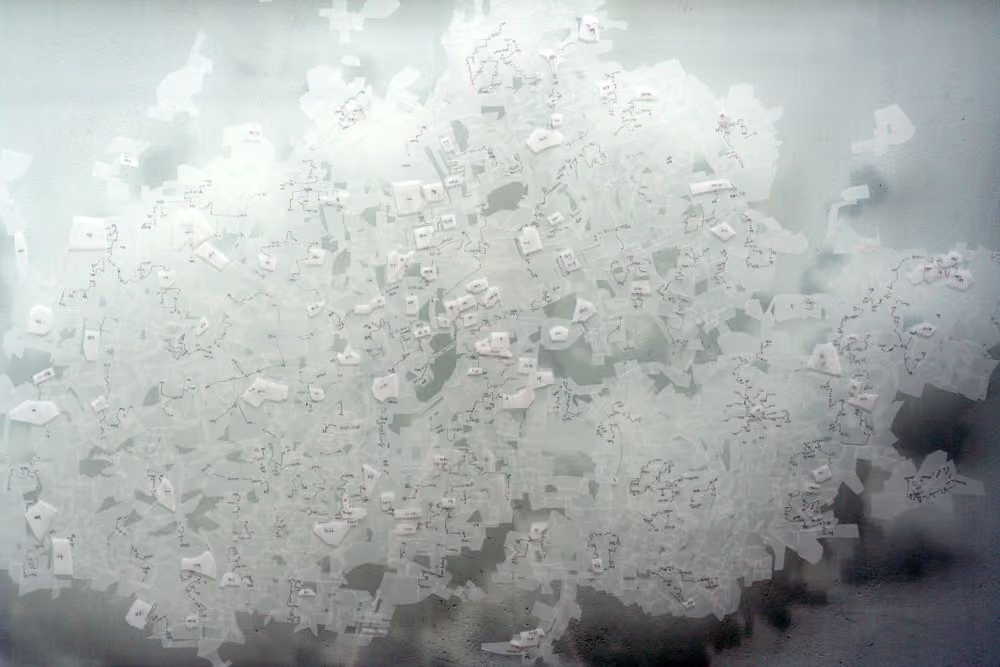
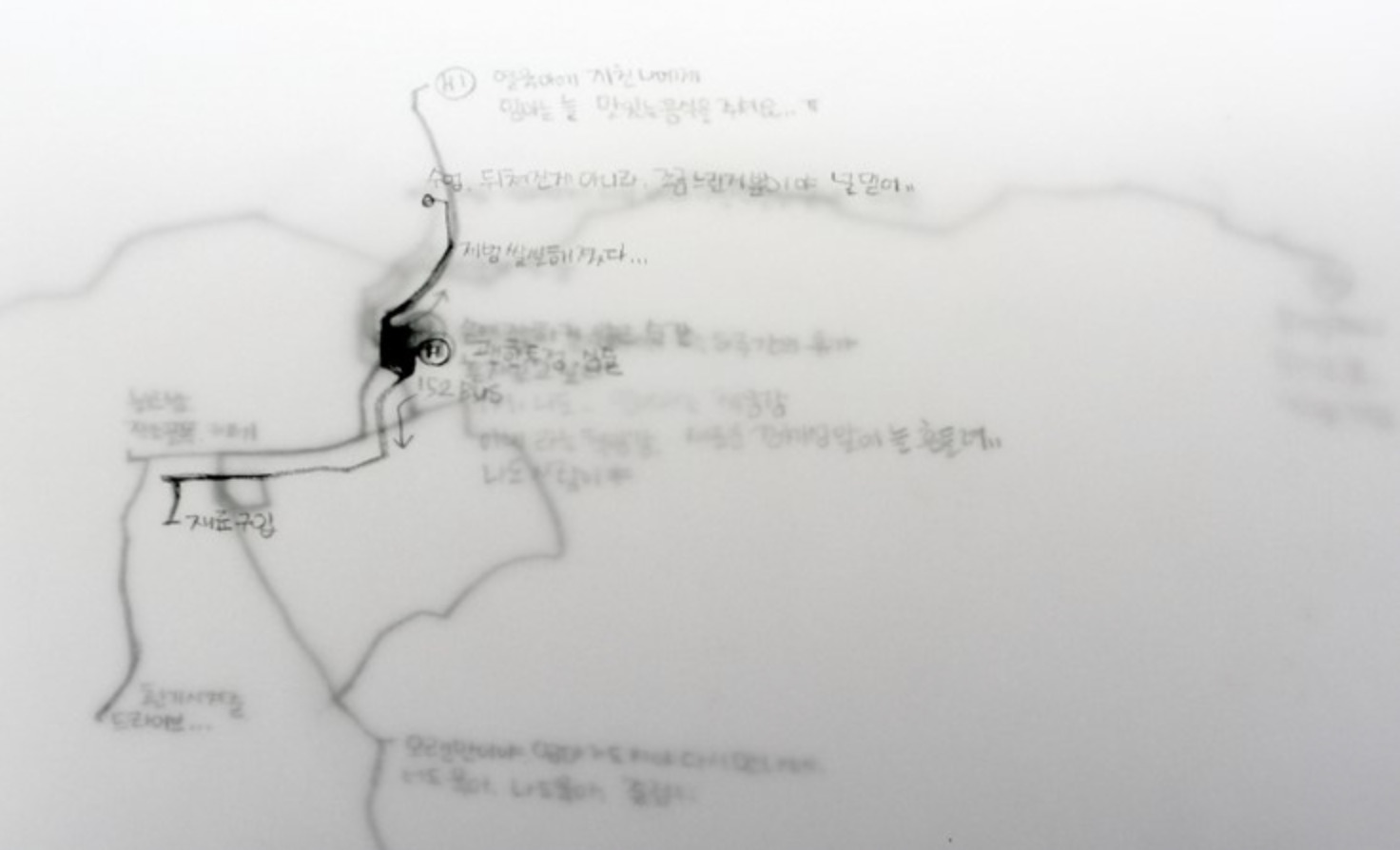
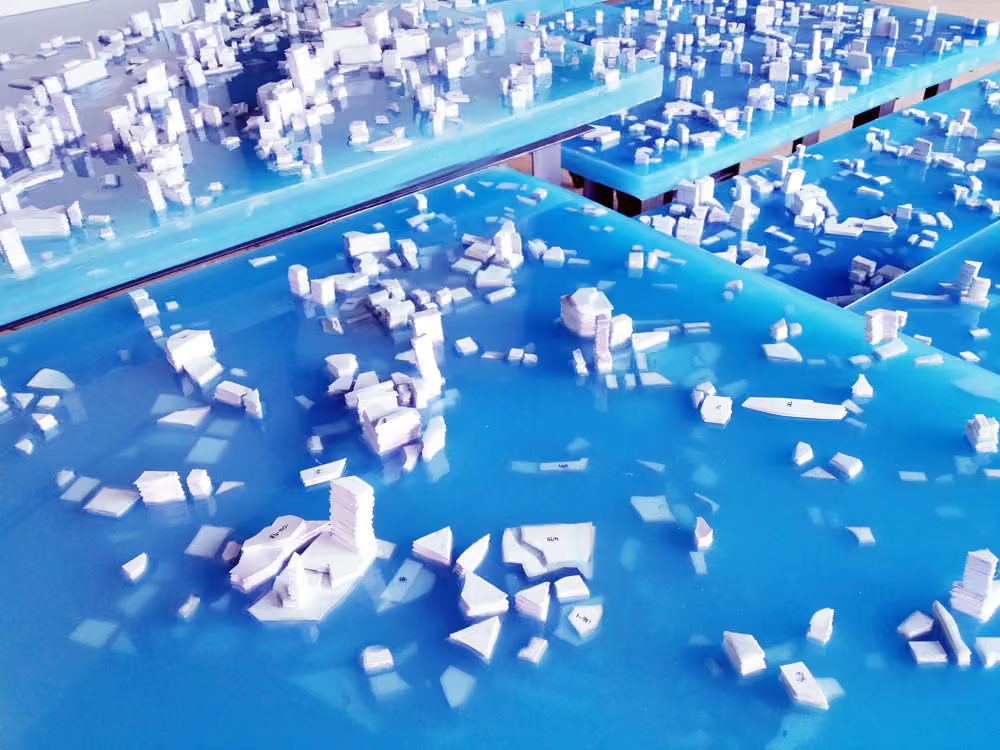
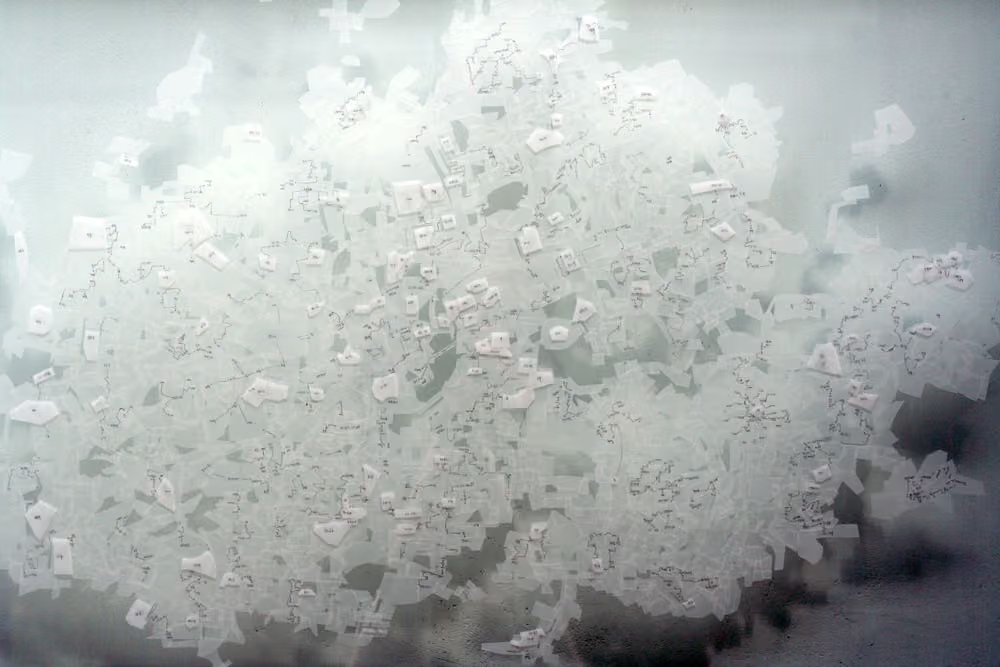
In Floating Place;
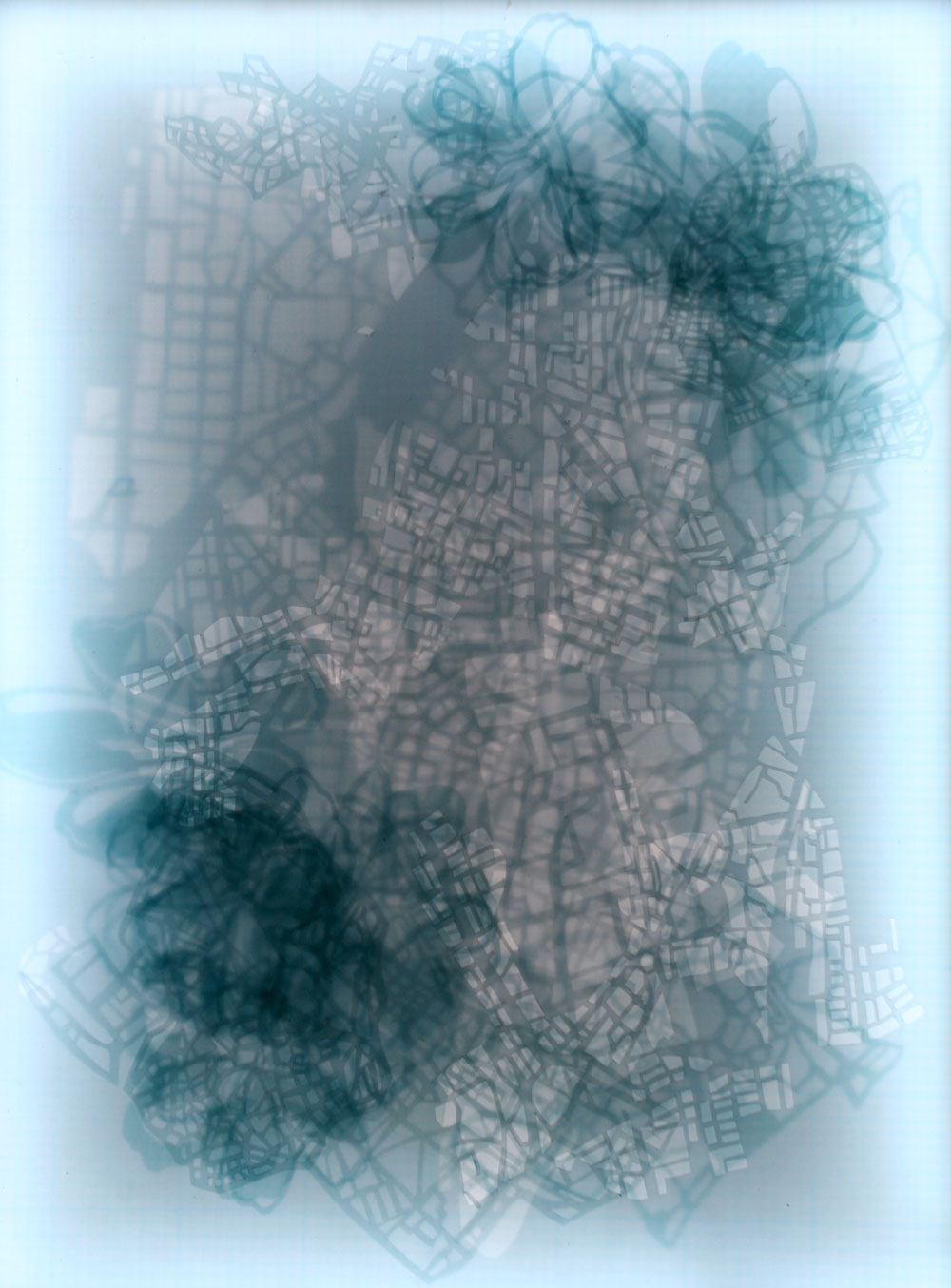
mapping(2015) and Flowers Map 1(2015), multiple
layers of translucent tracing paper visualize how memories associated with a
particular place overlap, blur, and are reconstructed from the perspective of
the present. One of the key formal characteristics of this early period is the
way she introduces personal sensation while preserving the exact proportions
and coordinates of the map itself, refusing to privilege either objectivity or
subjectivity.
In the
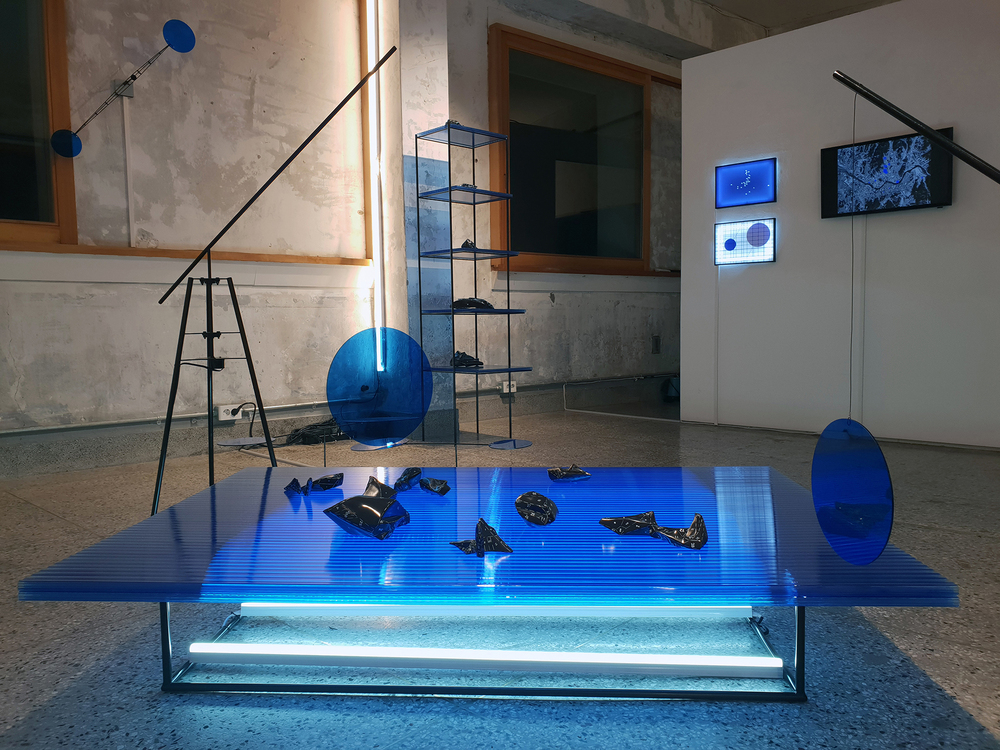
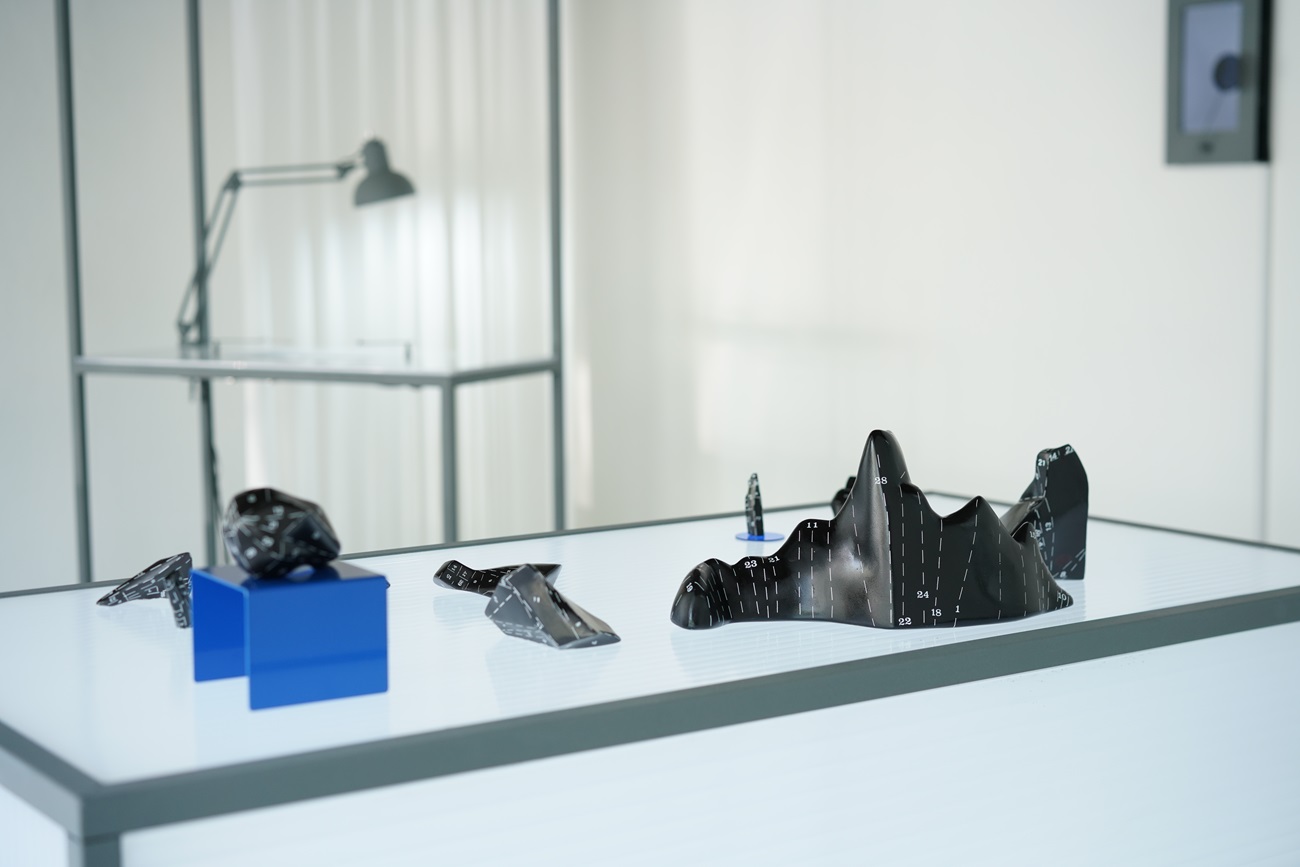
‘BLUE DOT’ series, records of movement are transformed into more abstract
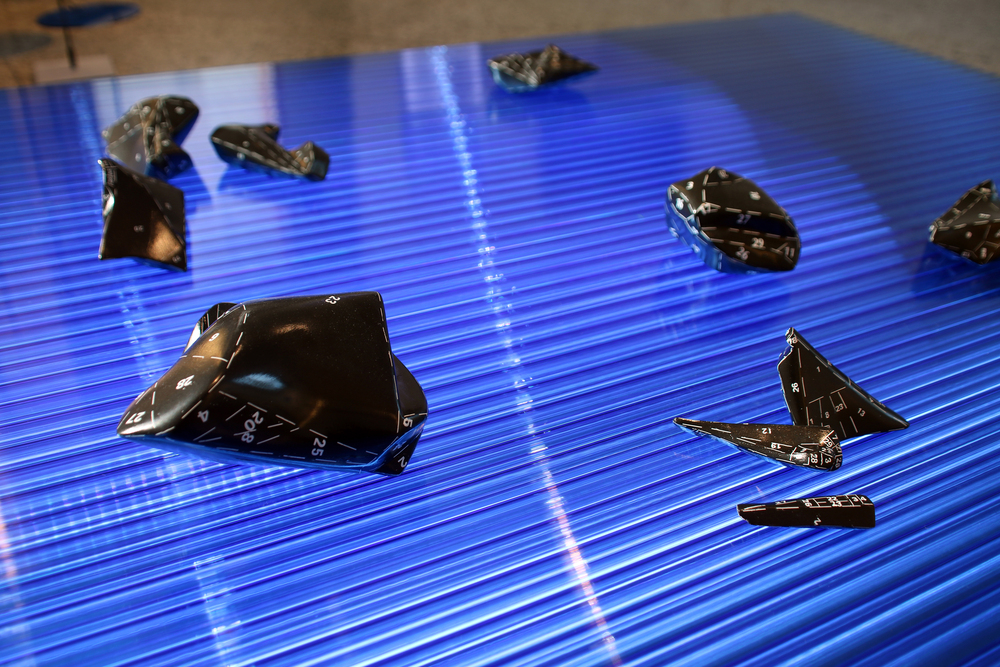
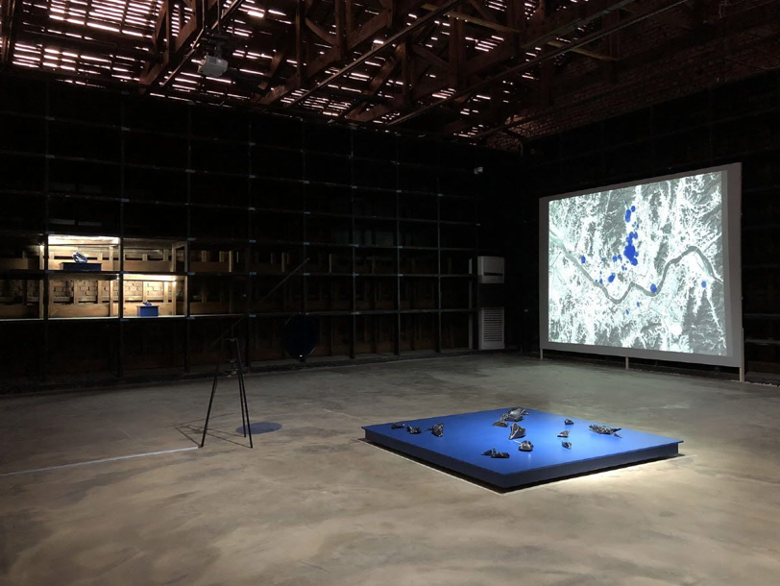
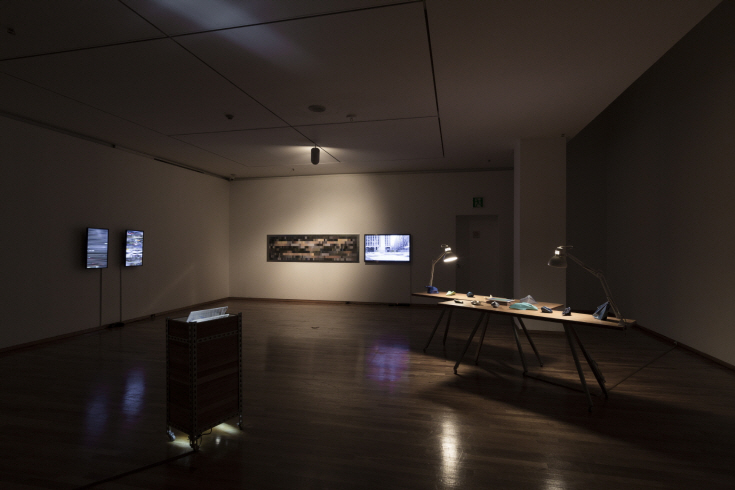
sculptures and kinetic installations. In 《BLUE DOT :37’35’02.8”N 127”01’21.6”E》(SeMA
Storage, 2018), approximately three years of movement records are converted
into one three-dimensional form for each month, while movement data collected
through satellite tracking appears as blue circles of varying size and
intensity.
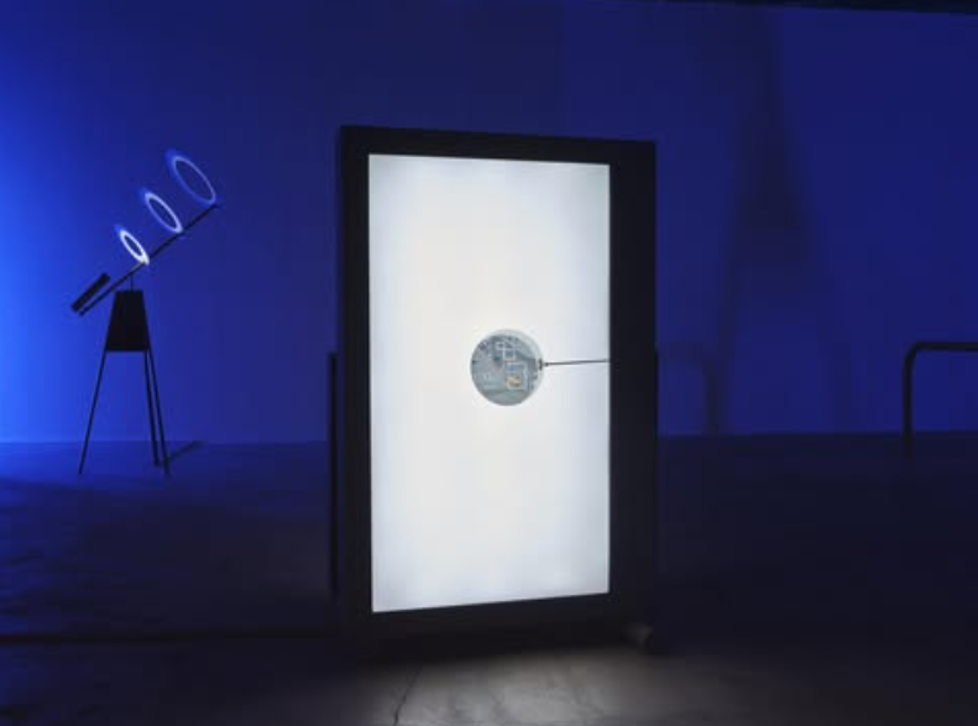
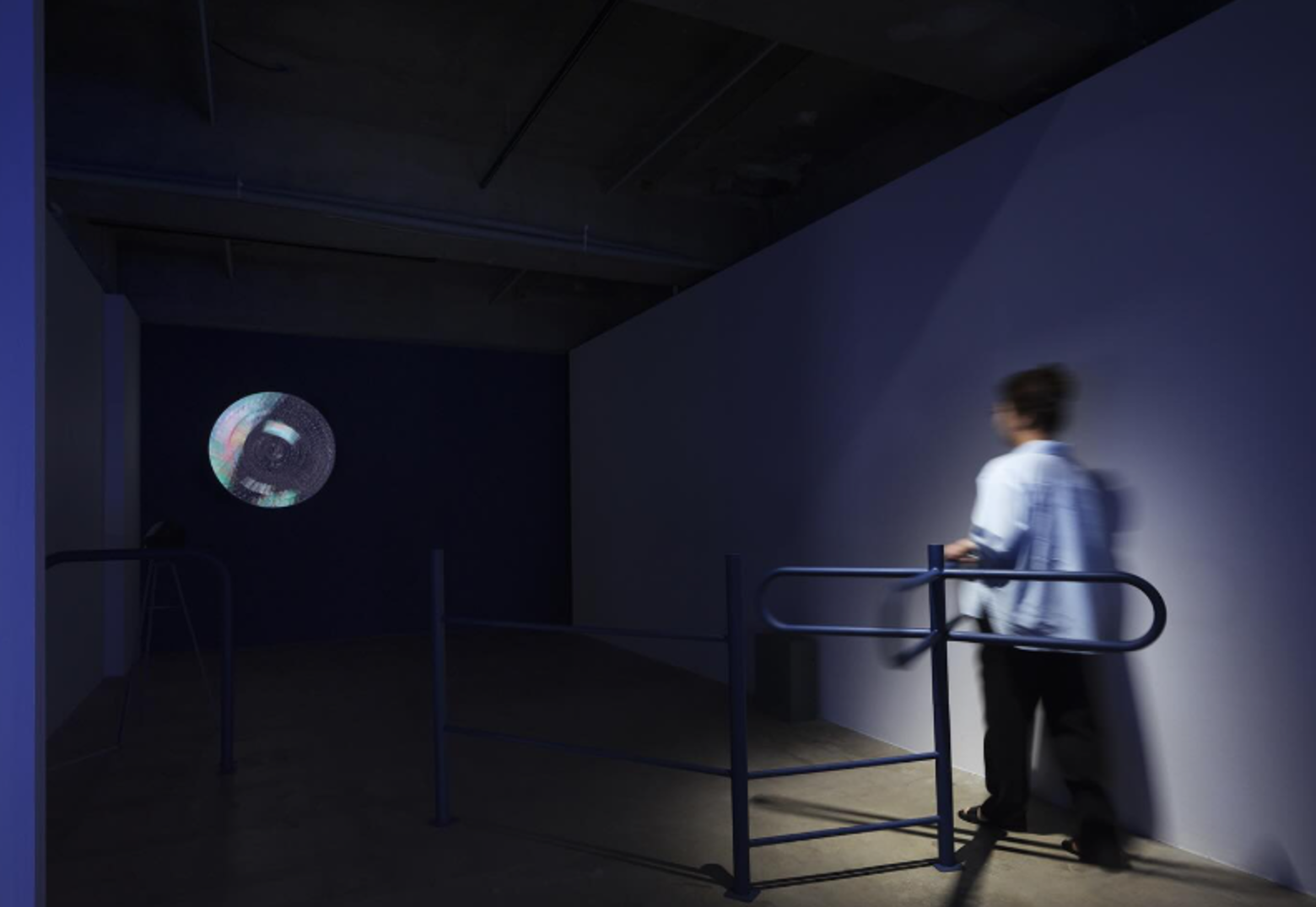
In 《BLUE DOT 36”》(onground2,
2018), video, sound, and moving structures are integrated throughout the space,
making the temporality of recorded movement more explicit. Here, the map is no
longer flat information to be read visually, but becomes a spatial device that
moves, rotates, produces sound, and alters the viewer’s circulation.
Information about the city is translated into sculptural structures after
passing through the artist’s body and memory.
From 2020
onward, objects and sounds encountered in the actual city increasingly entered
the work as primary materials. In the ‘Intersection Map Project’, Kim walked
along vanished waterways and collected natural and artificial objects,
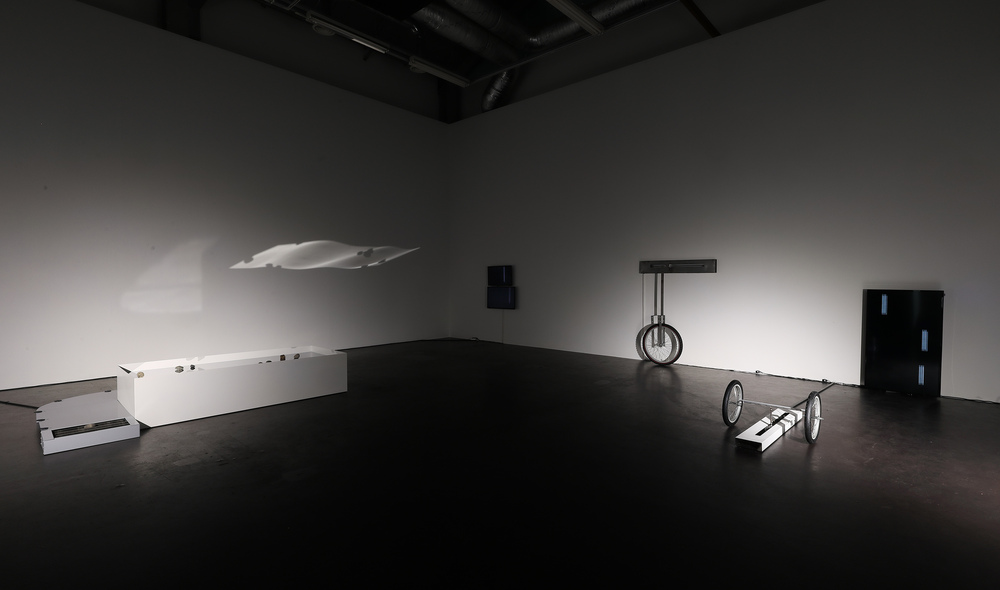
accumulating layers of time within a single installation. In 《Dorr dorrrr》, stones, rails, movement, and
friction sounds are brought together.
Her observation that a motionless object
can briefly acquire movement at the moment it comes into contact with her
reveals how she understands “movement.” Movement is no longer simply the
passage of the human body through space, but expands into a relational event in
which objects, environments, and forces affect one another. From this period
onward, sound and motion become additional cartographic languages for recording
the traces of the city.
More
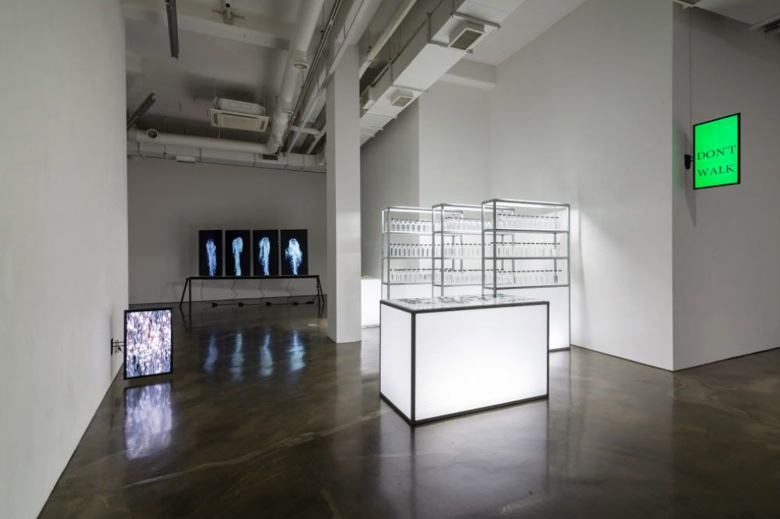
recently, technological media such as kinetic sculpture, video, motors, LED
lights, polarizing film, and CCTV algorithms have become increasingly
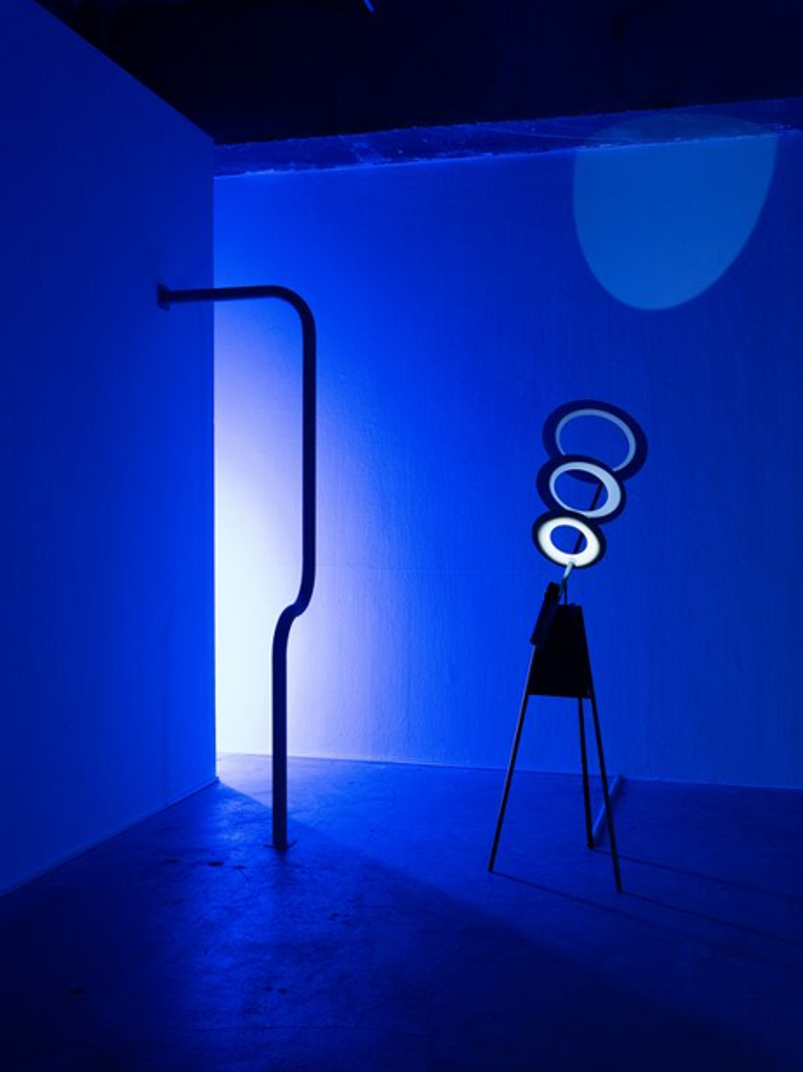
prominent. Tracer III(2025) combines a steel structure, LED
flashlight, and motor to create movements of vision and light within space,
while Drift Circuit adopts the external form of surveillance
technology while causing its function of accurate tracking to fail.
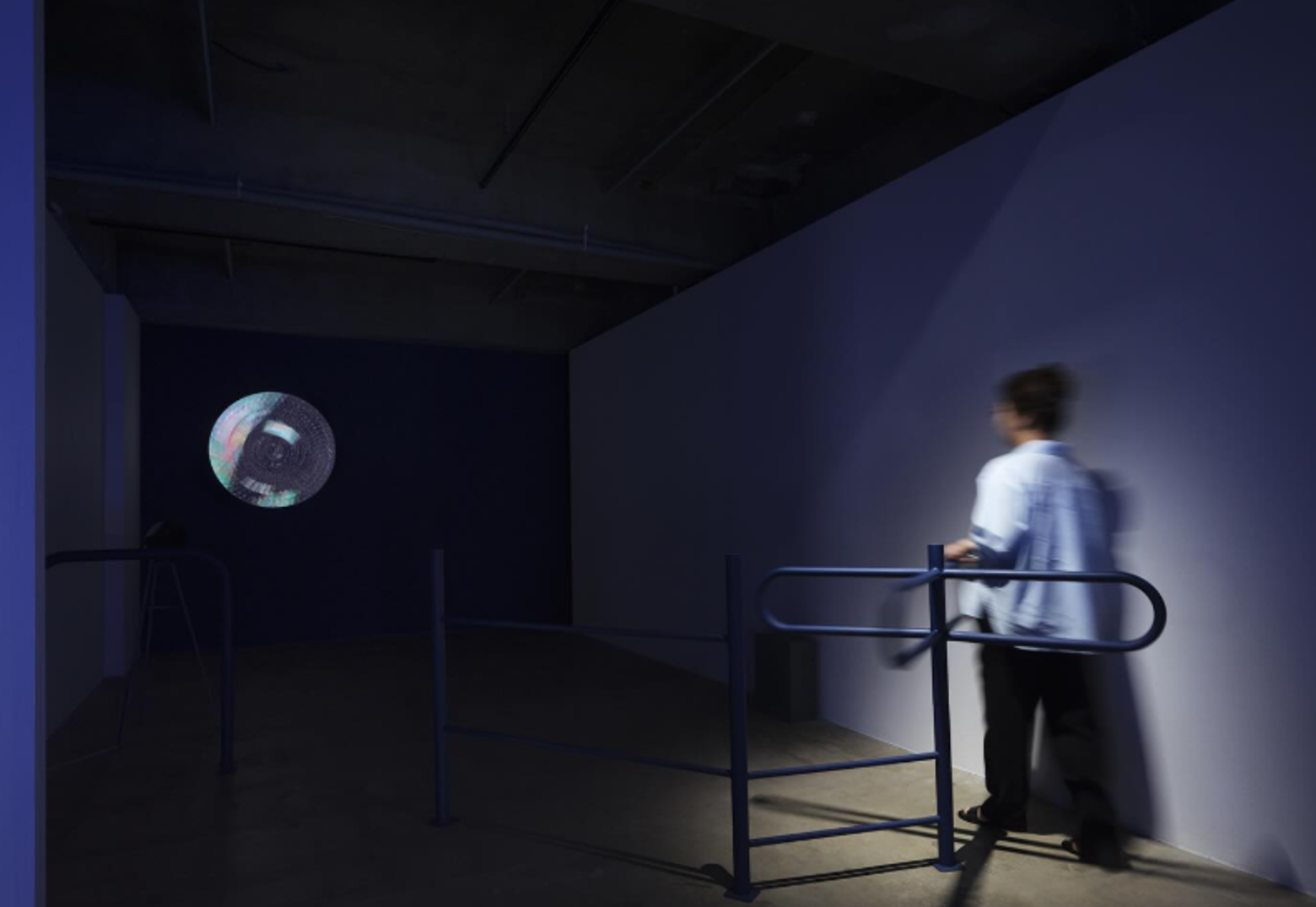
The overlap
of moving sculpture and map imagery that appeared in 《prototype overlay mapping》(Keep in Touch,
2024) develops in 《Spin-Spot》
into an environment connecting the circulation of the exhibition space with
wind, light, and rotating screens. As the viewer’s actions of following,
leaving, or returning to a prescribed route also become part of the work, Kim’s
mapping expands from drawing lines on maps toward designing movement within
actual space.