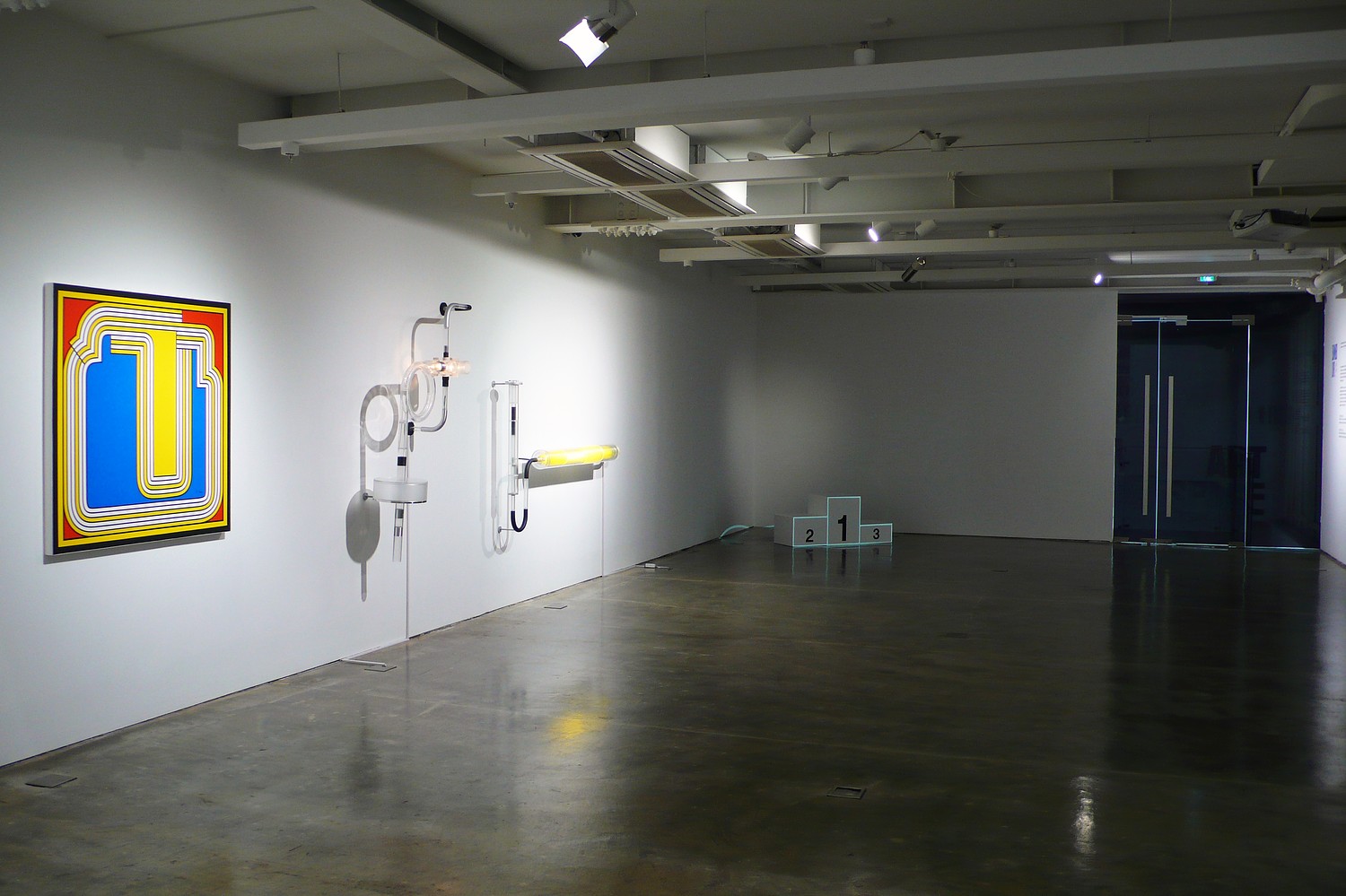
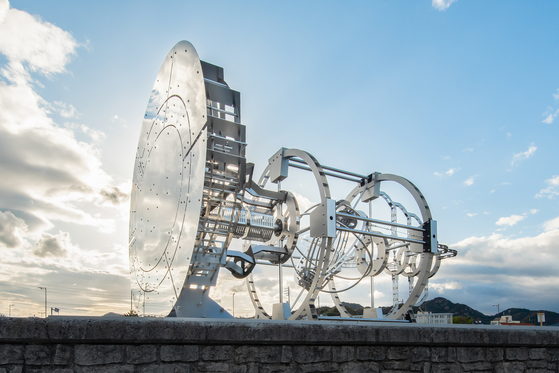
Boo Jihyun’s practice began with printmaking and has gradually expanded into installation and spatial staging. In her early work, she depicted fishing boats and seascapes through etching, later transferring images of boats directly onto the surfaces of fishing lamps and thereby moving two-dimensional imagery onto three-dimensional objects.
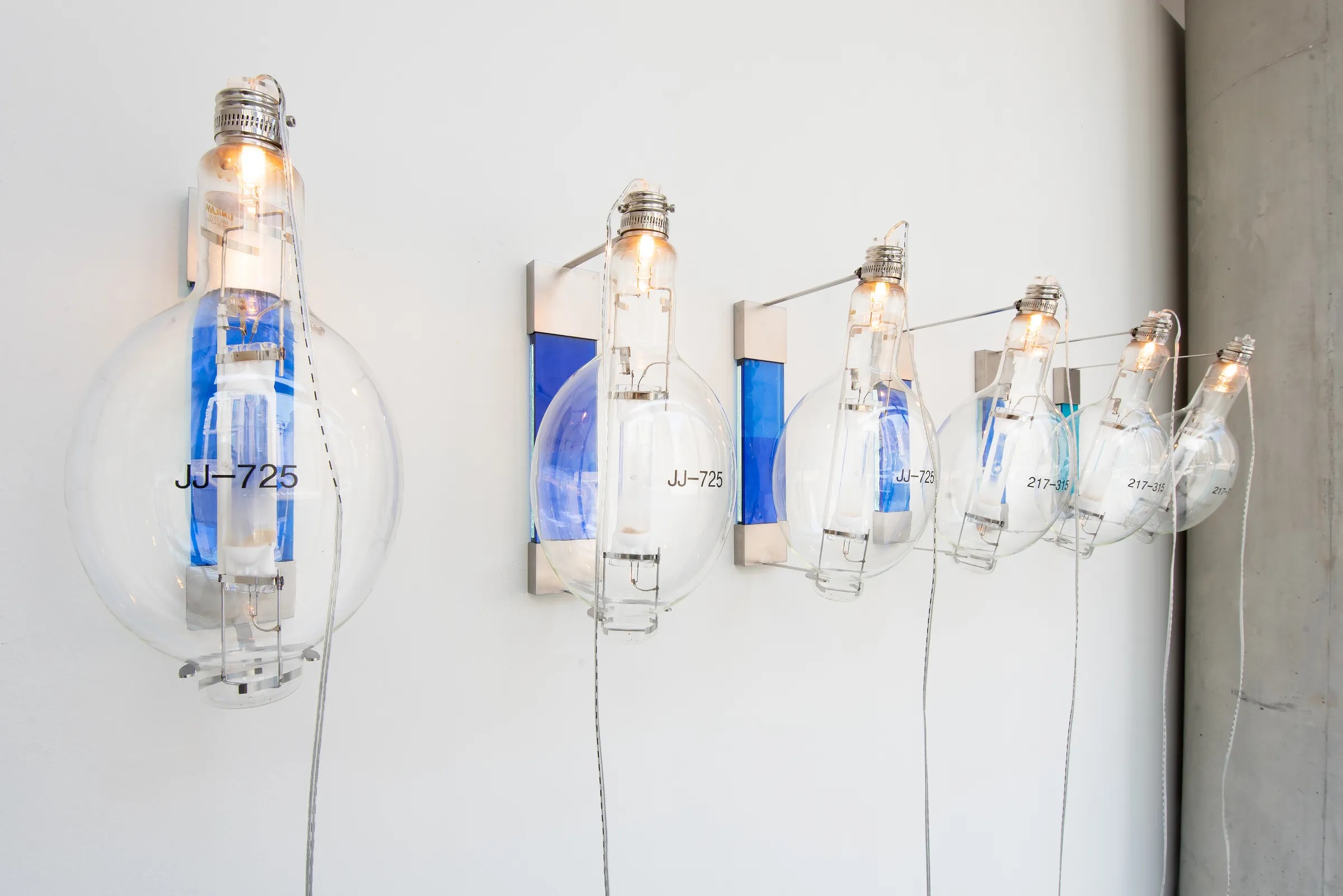
The fishing lamps she used around 2007 still bore individually editioned images of fishing boats, clearly revealing the connection between printmaking-based thinking and installation.
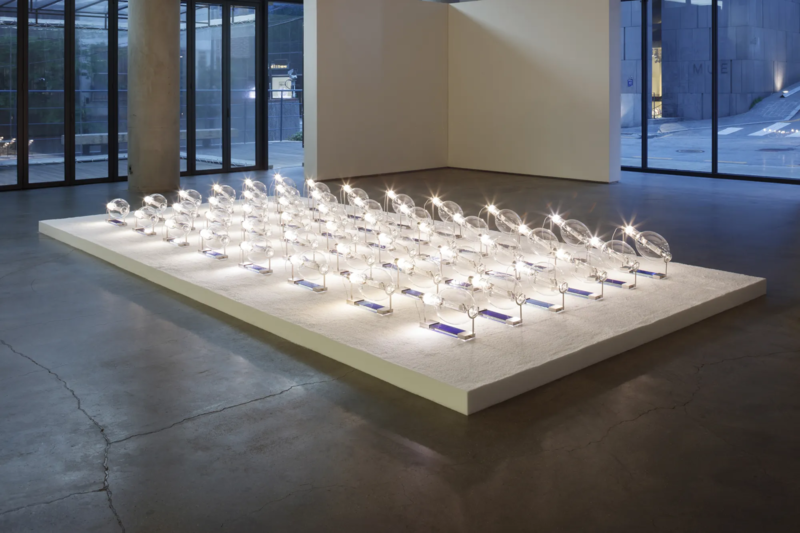
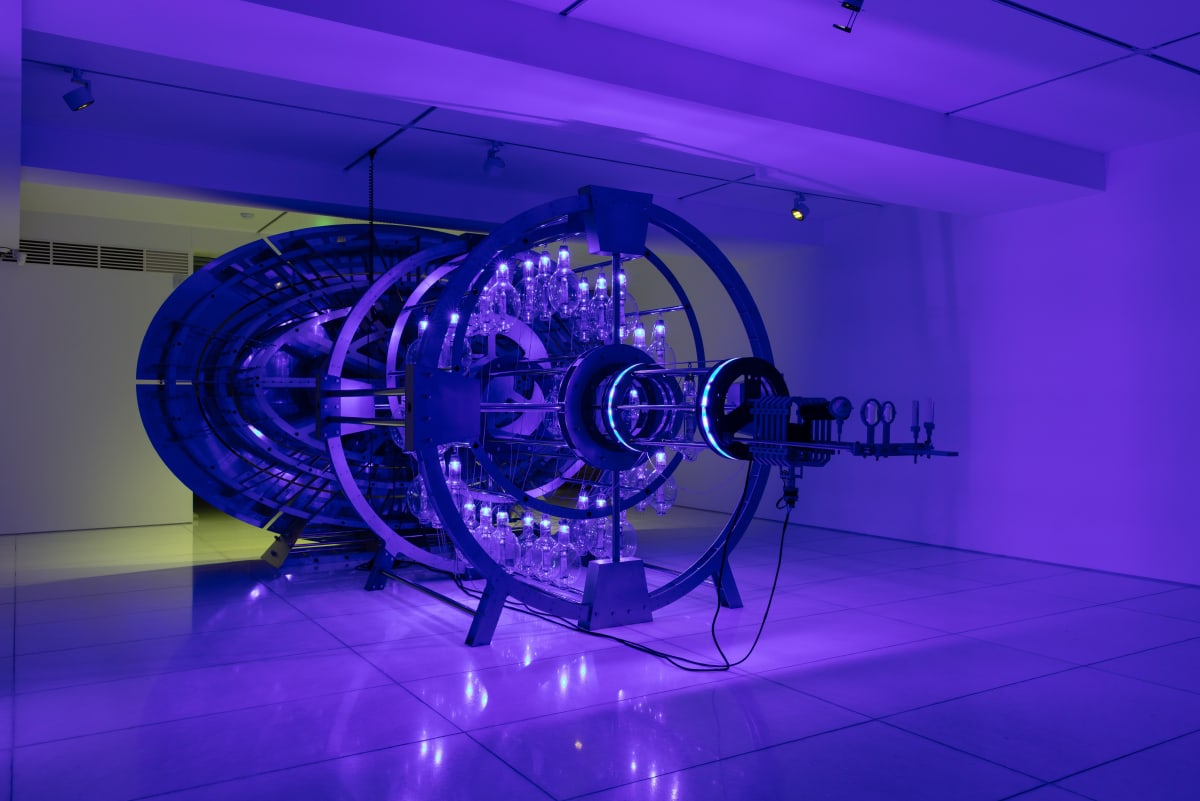
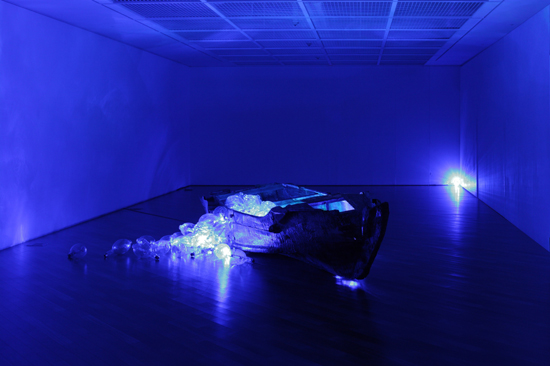
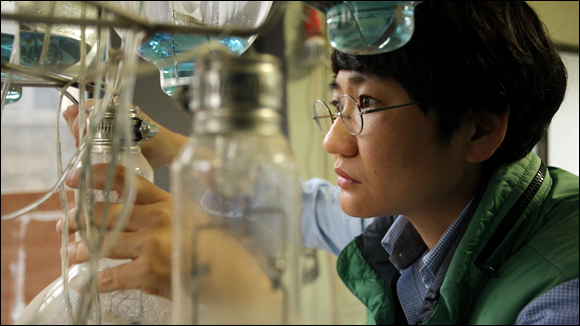
She subsequently shifted her focus toward the materiality and form of discarded fishing lamps themselves, developing installations that encompass entire exhibition spaces through combinations of light, mirrors, wire, abandoned boats, salt, water, and sound.
Her description of the fishing lamp as a “three-dimensional print in an expanded sense” likewise reflects the relationship she perceived between the reproducibility of printmaking and the serial production of industrial objects.
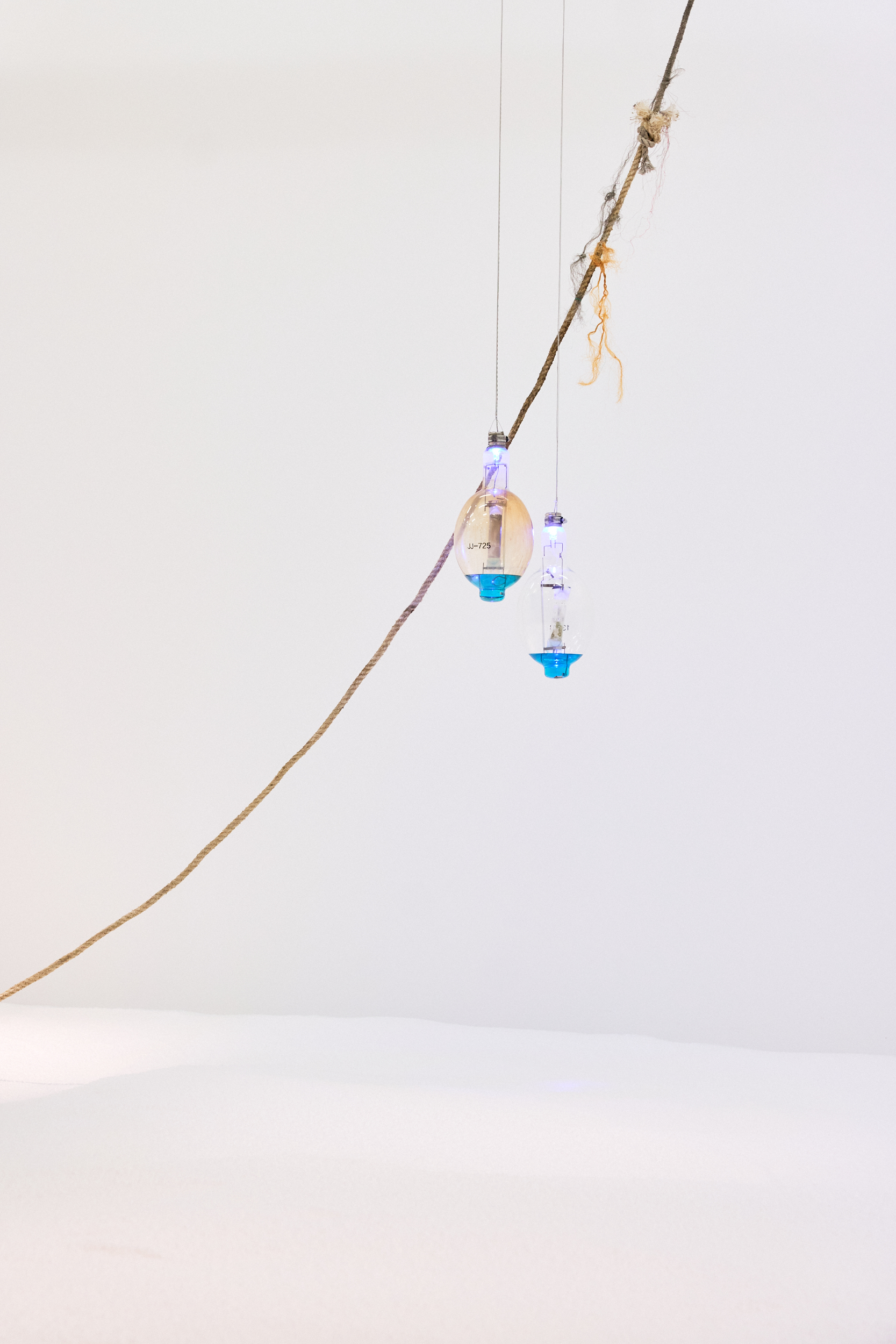
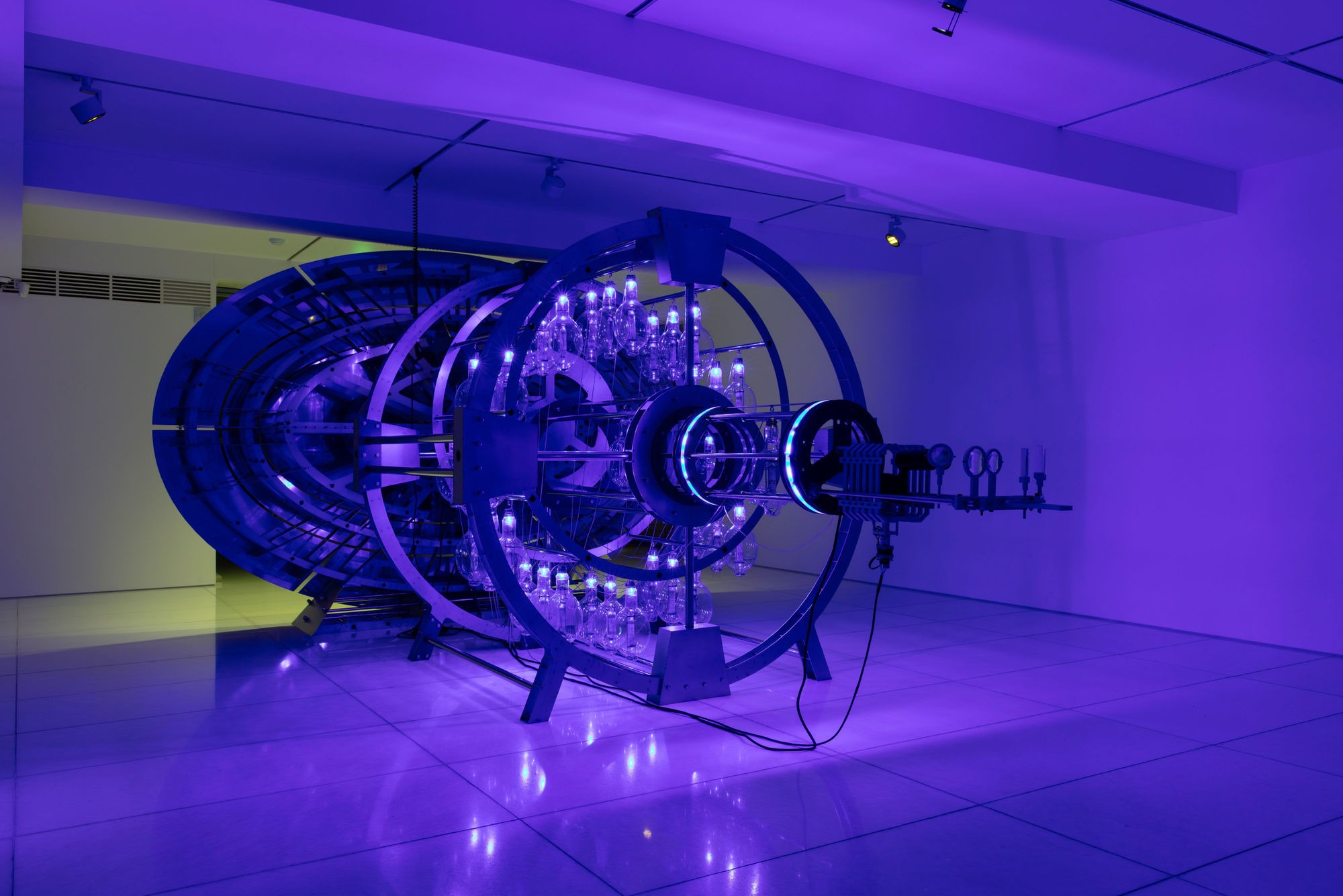
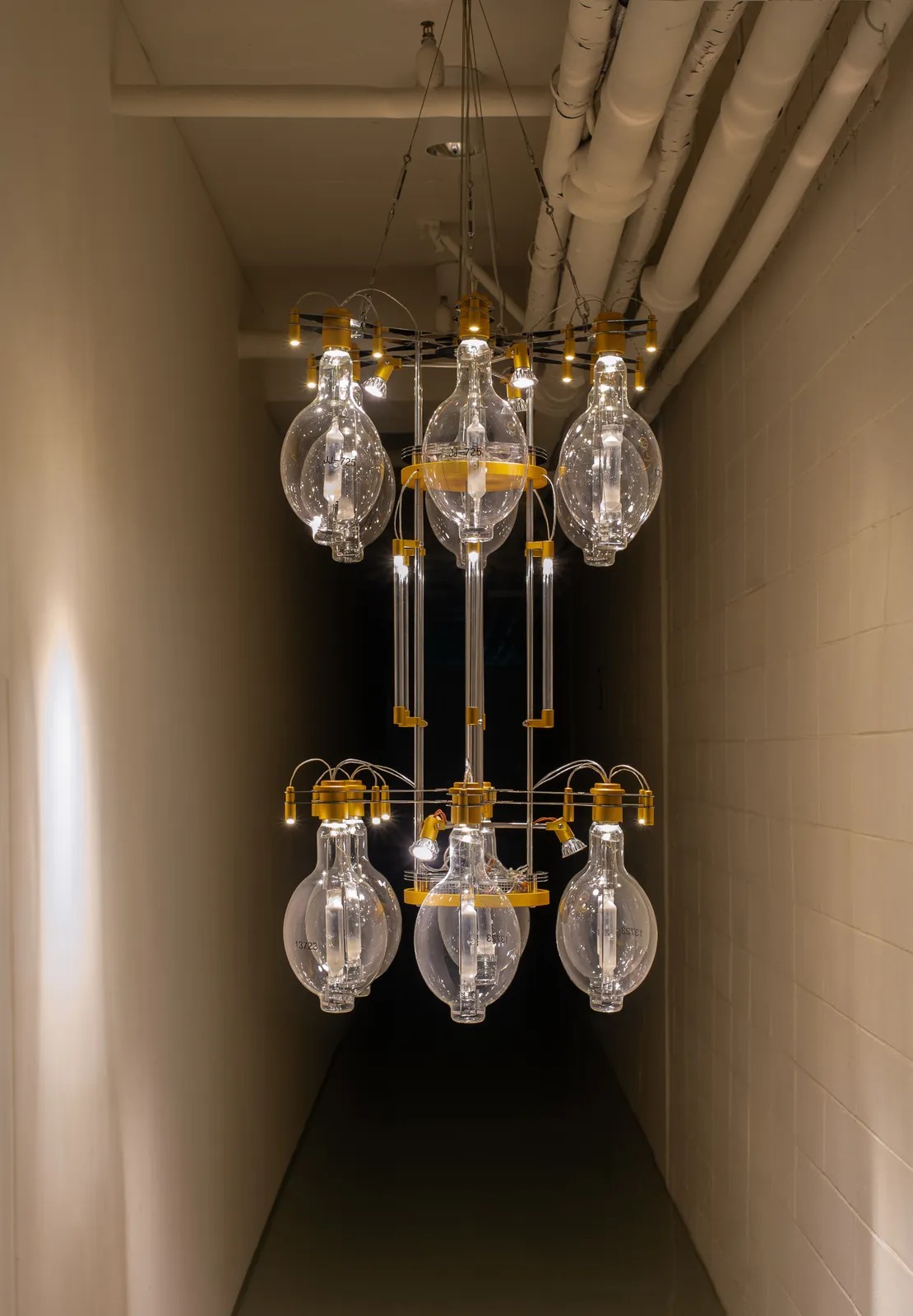
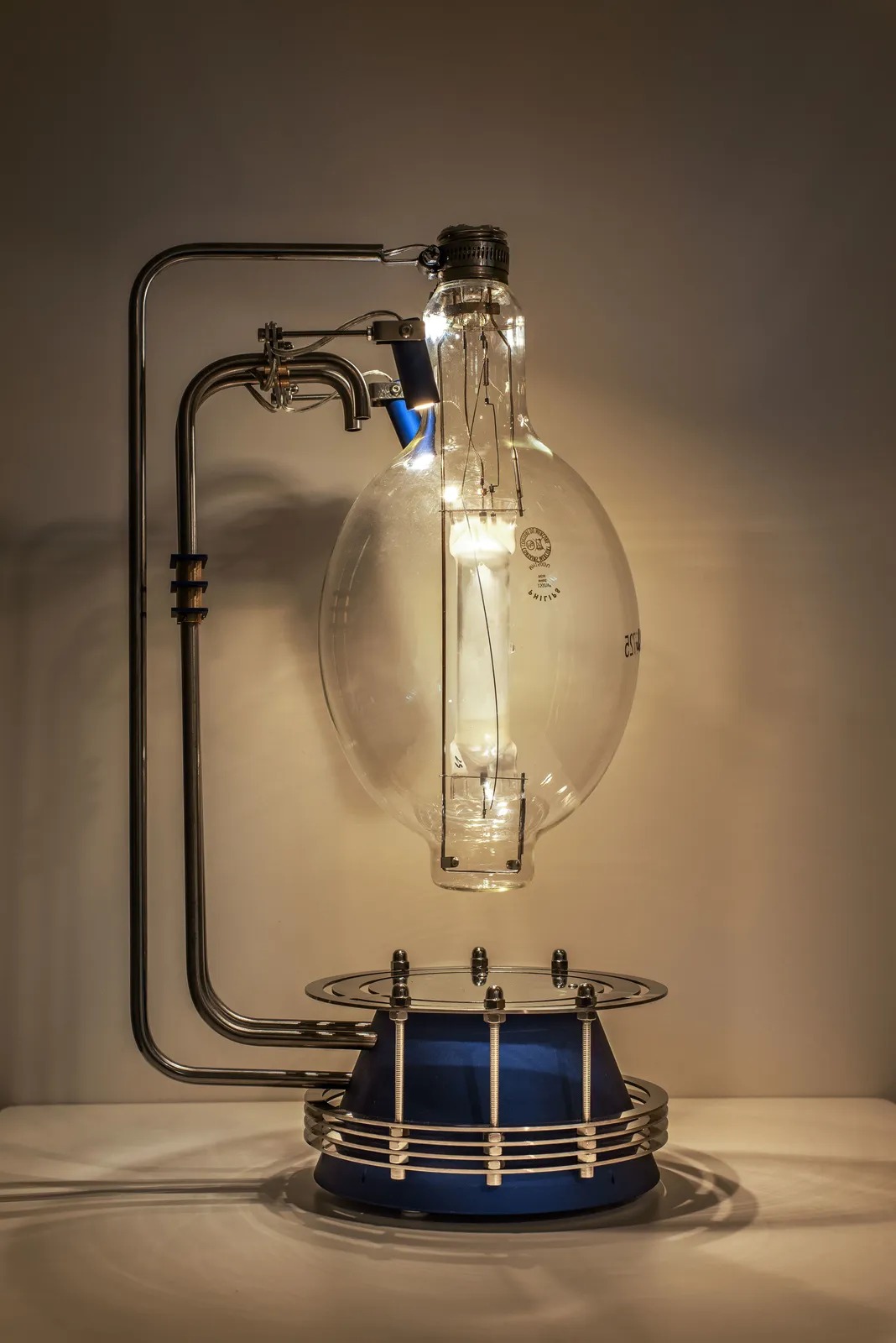
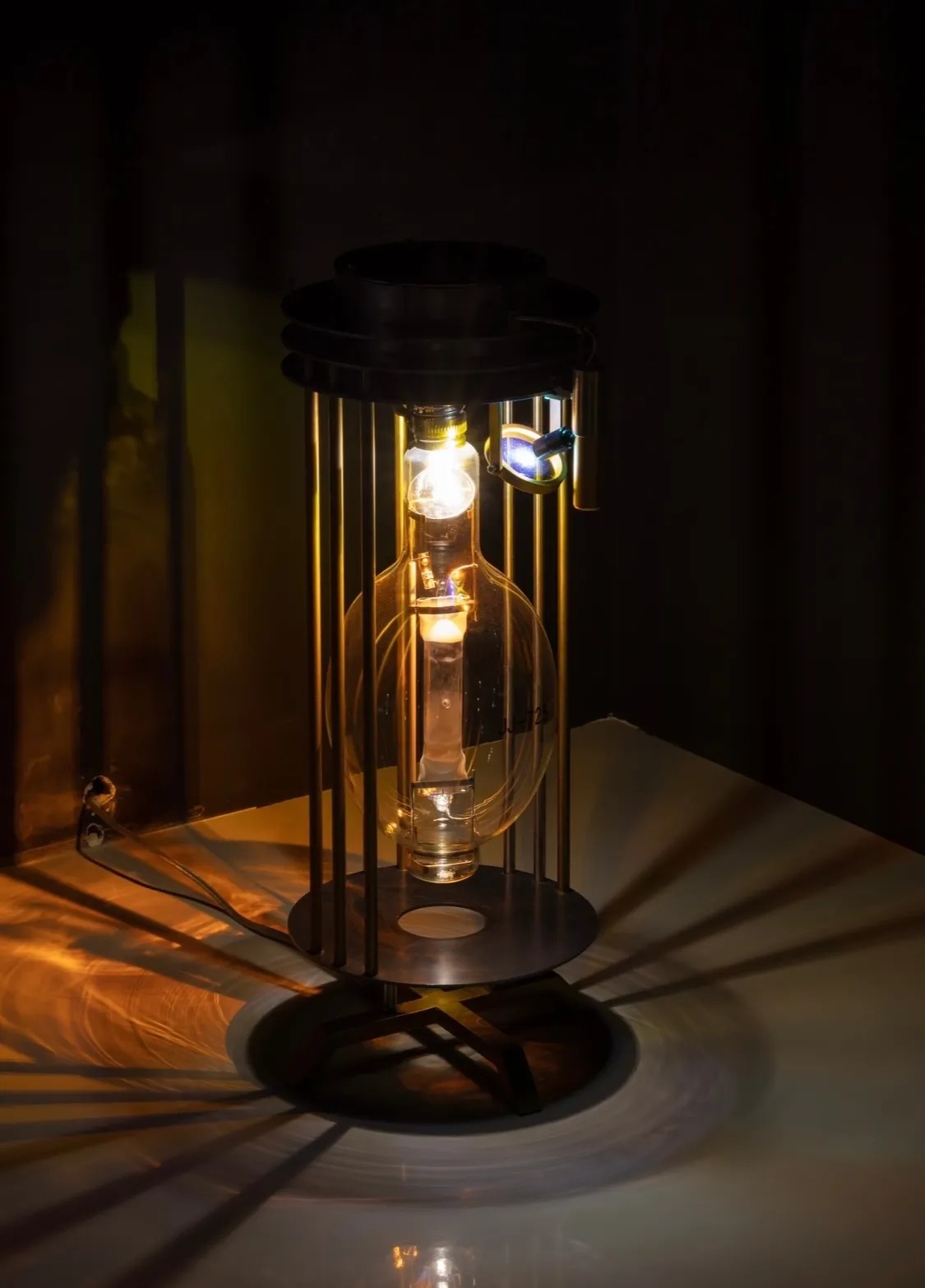
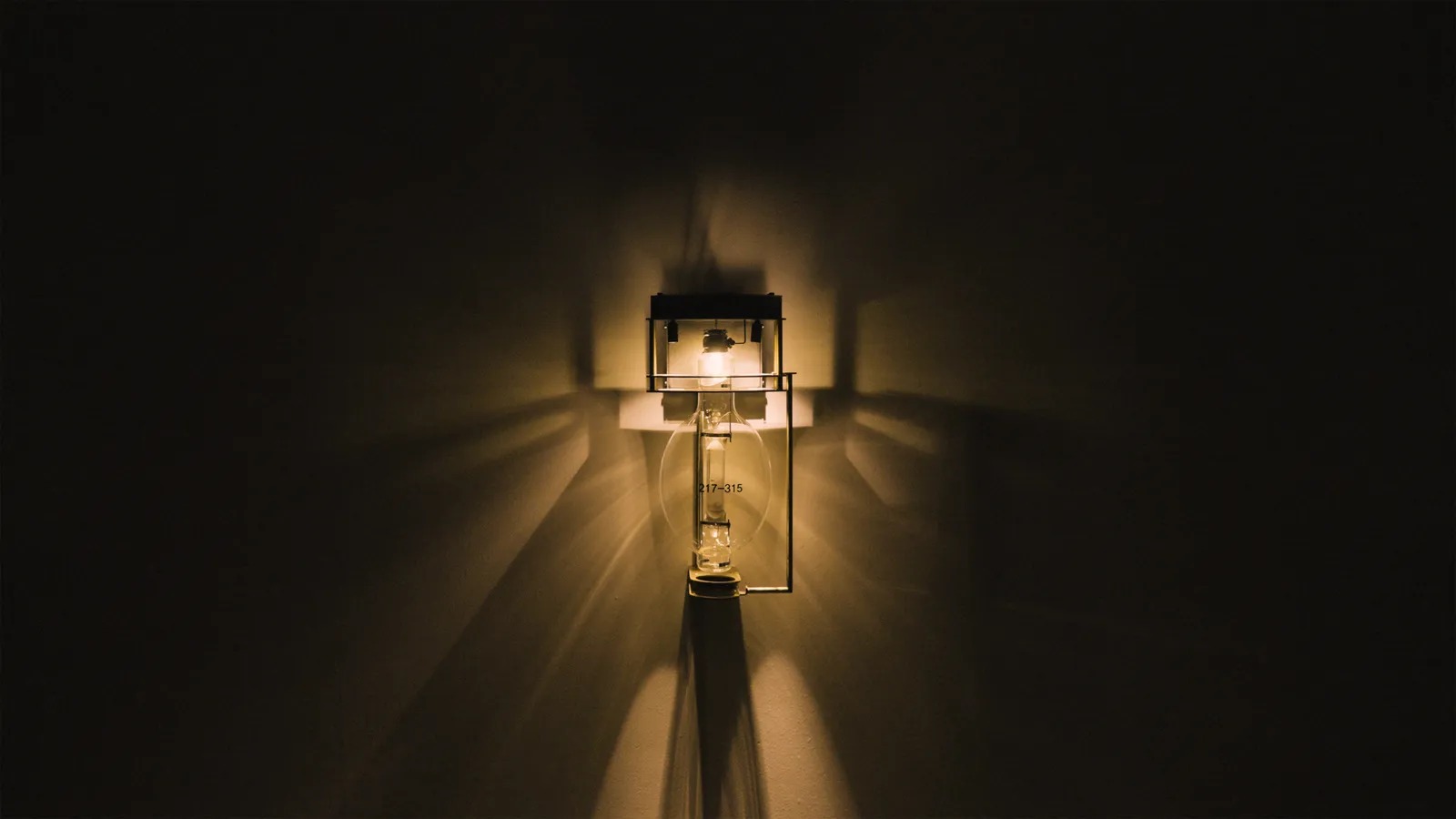
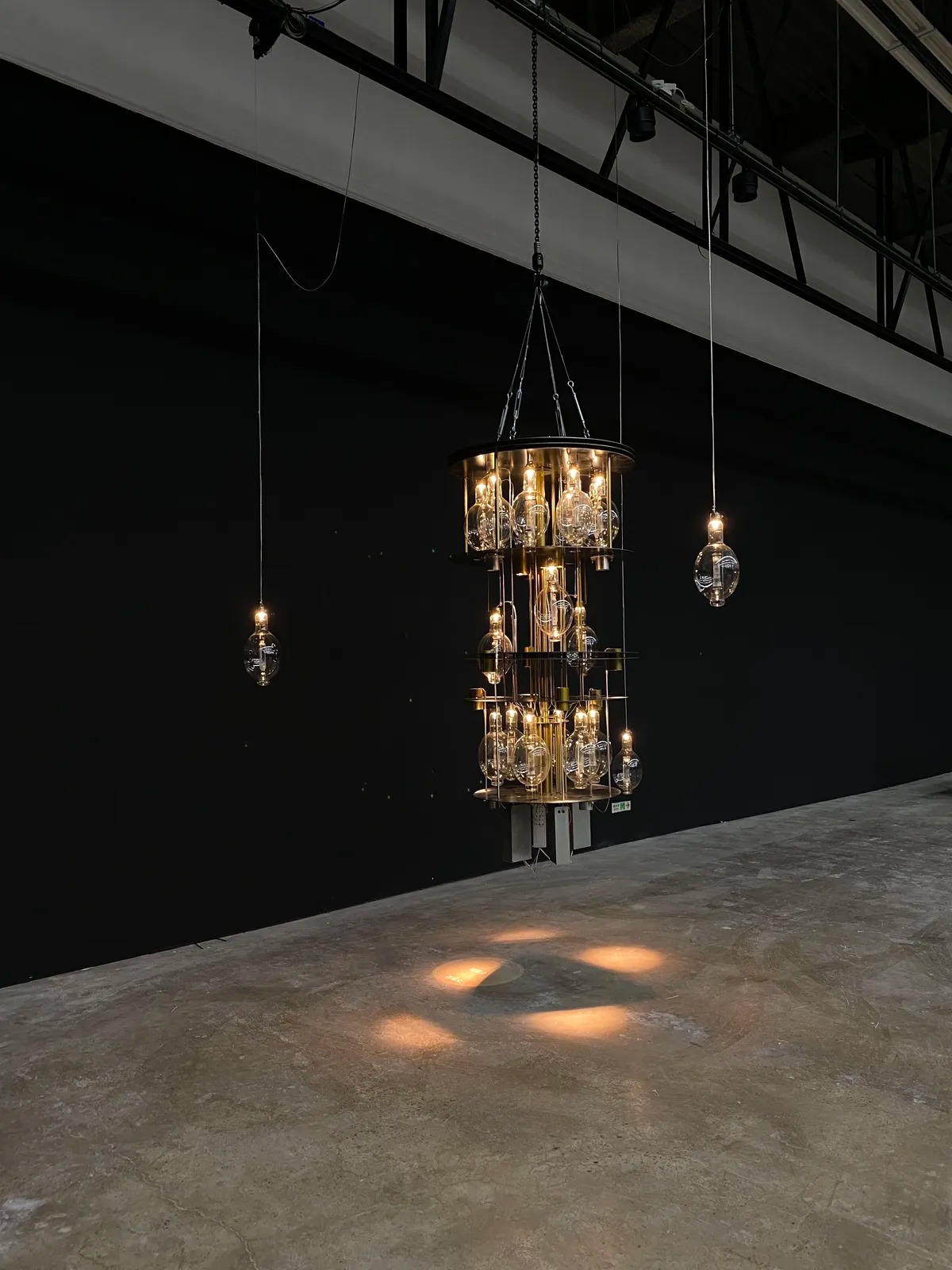
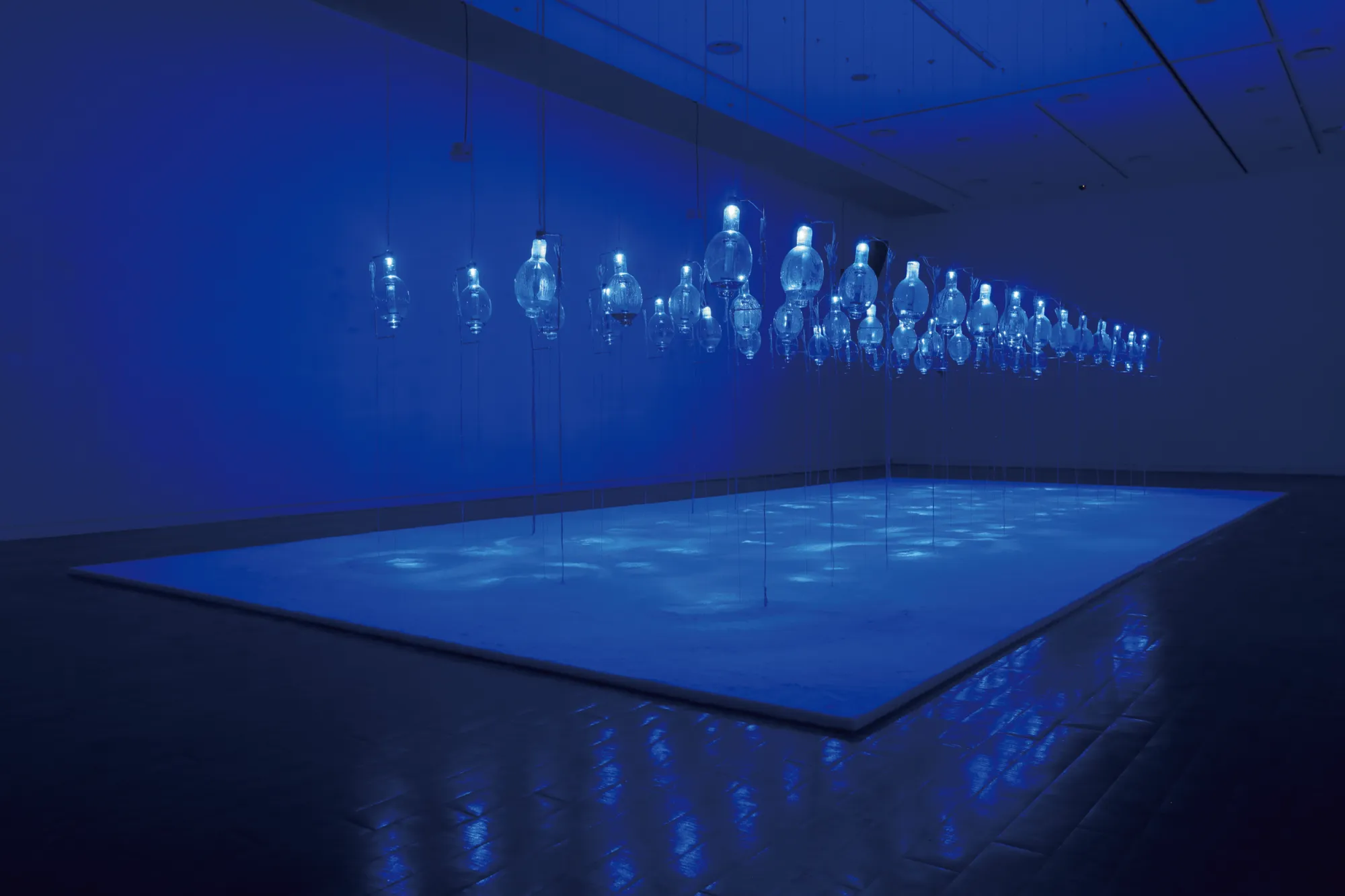
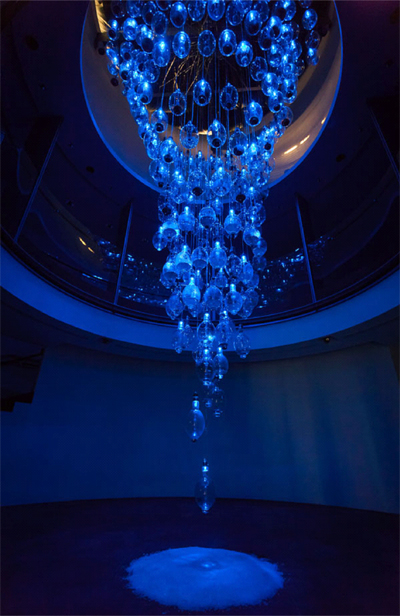
Discarded fishing lamps have remained the most persistent and central medium in Boo’s practice. By inserting LEDs into lamps that have reached the end of their functional life, illuminating them externally, or arranging mirrors to generate effects of reflection and multiplication, she gives renewed visual vitality to objects that have lost their original function.
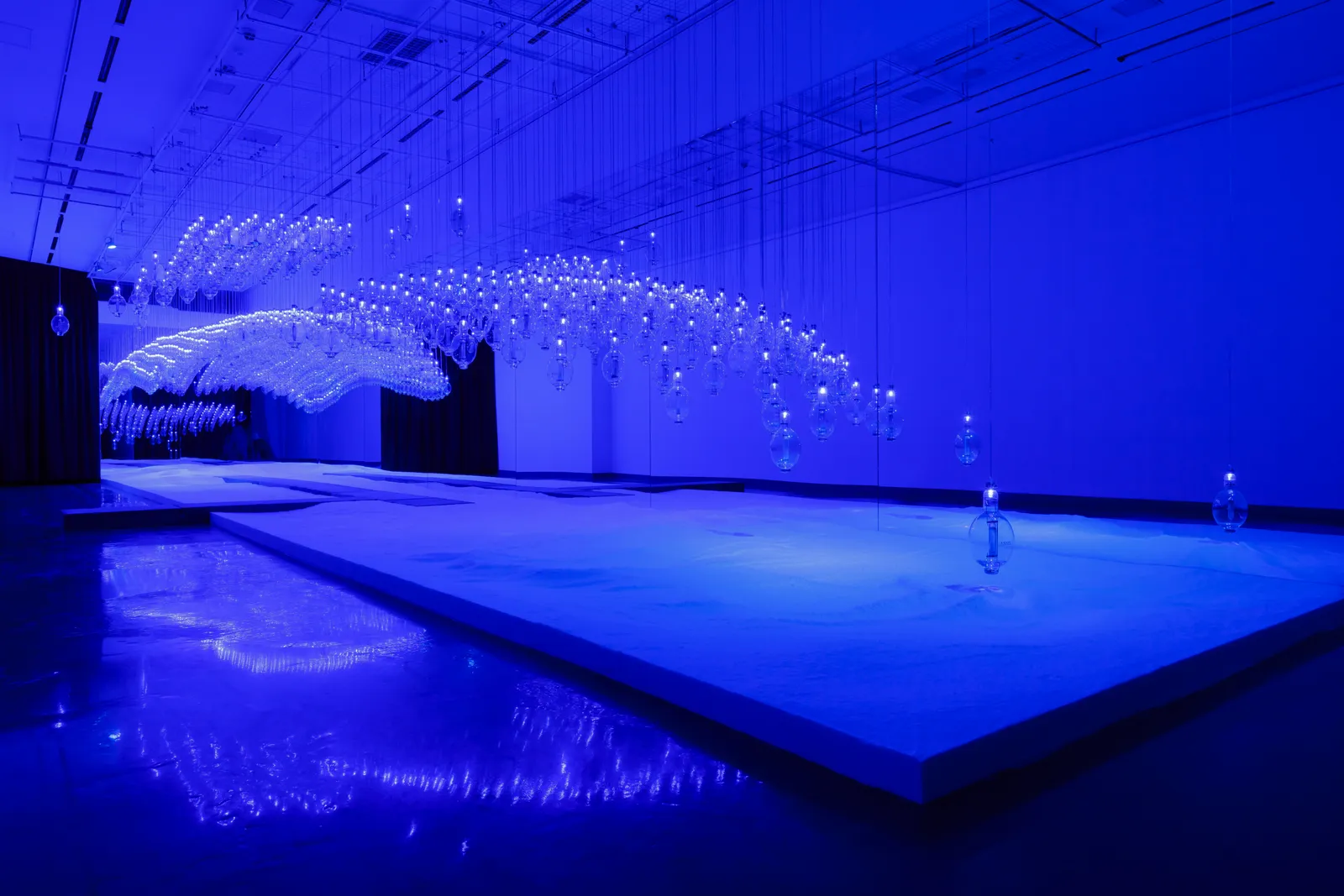
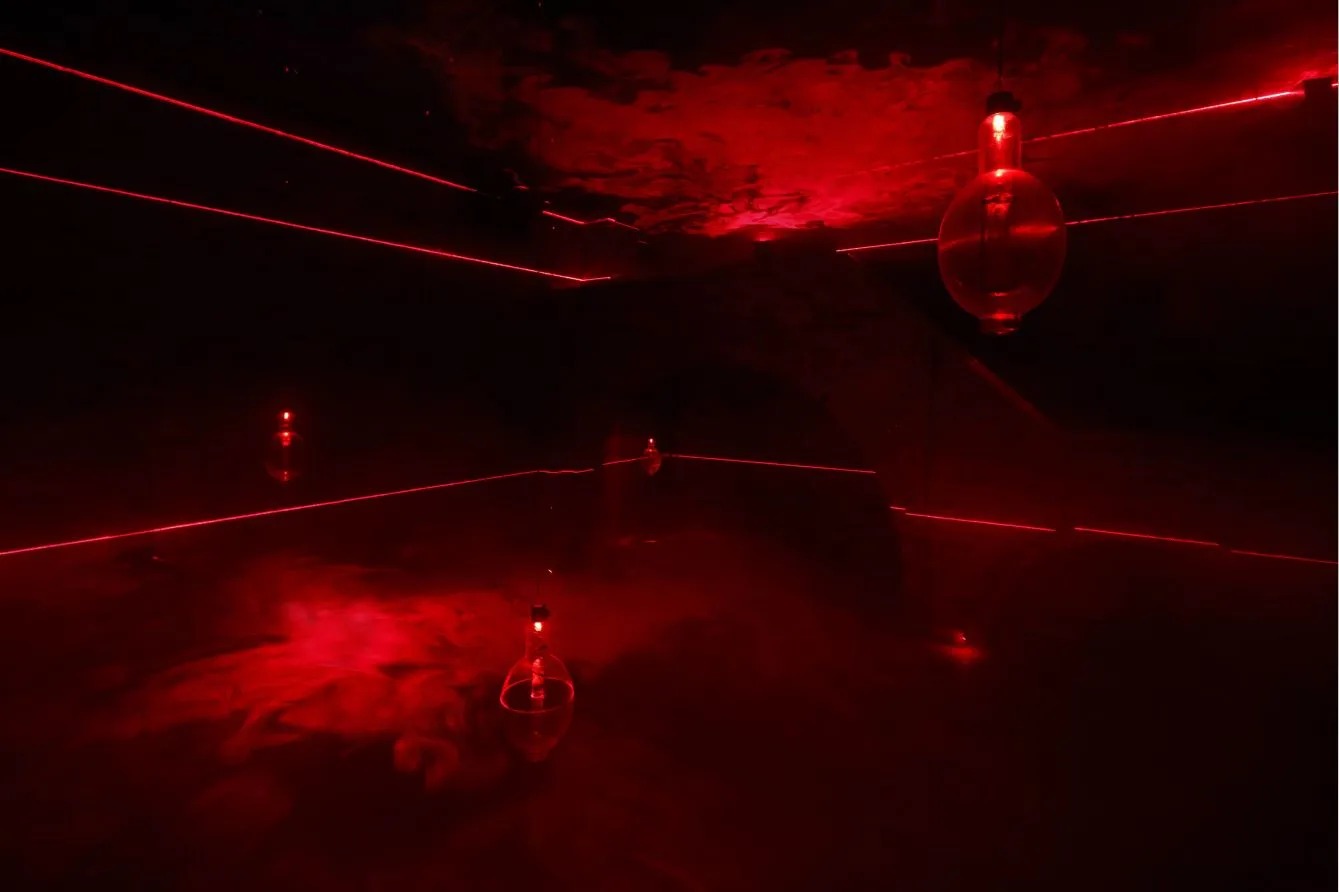
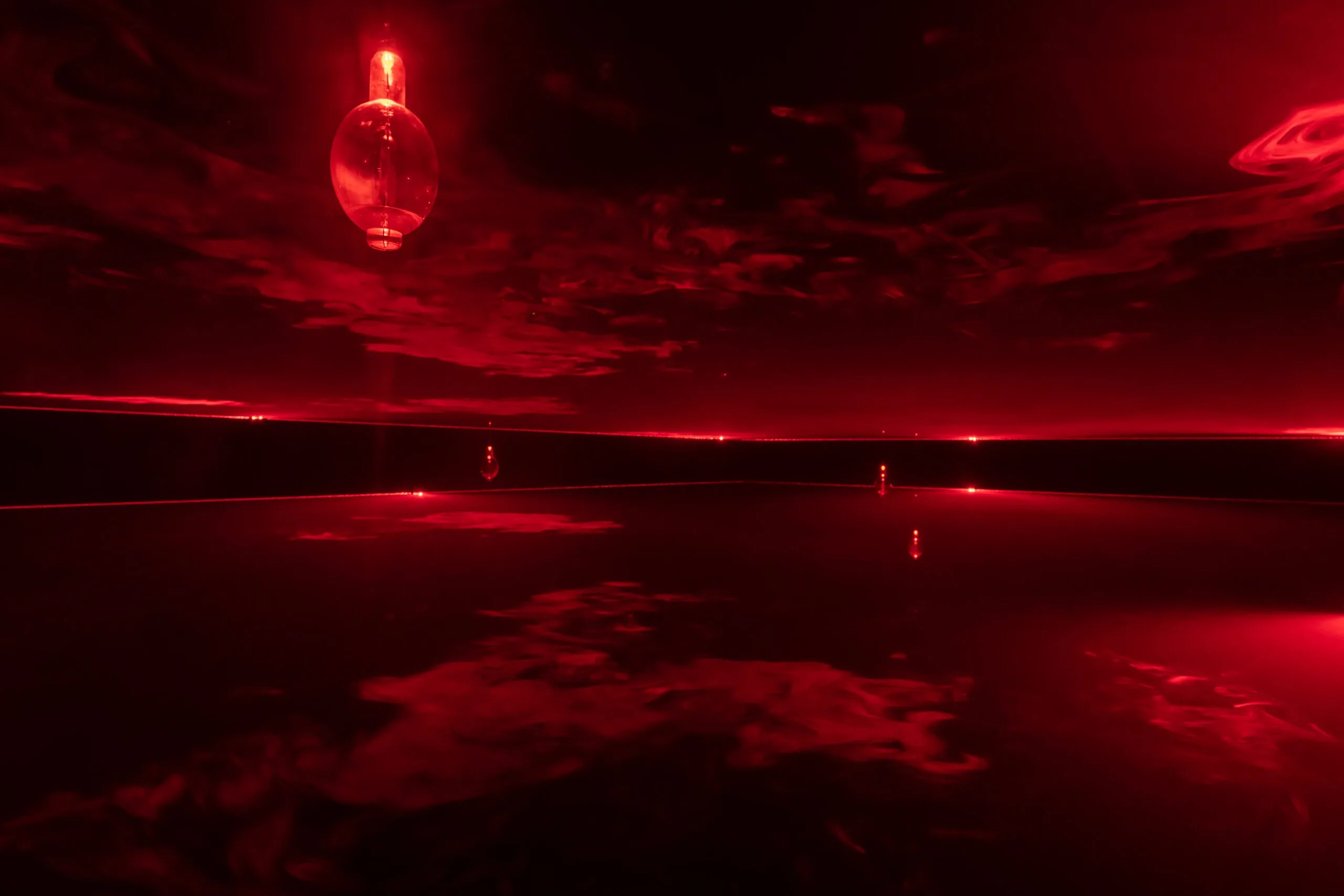
What matters here is not only the individual illuminated object, but also the surrounding environment it creates. Light passing through or reflecting off transparent glass surfaces, shadows cast onto walls, repeated images in mirrors, and color diffused through fog interact to form a sensory space distinct from the actual exhibition venue.
From a distance, the installation appears as a refined and dreamlike landscape, while closer inspection reveals the cracks, rust, and scorch marks of discarded objects, allowing the viewer to perceive both the beauty of the work and the time accumulated within its materials.
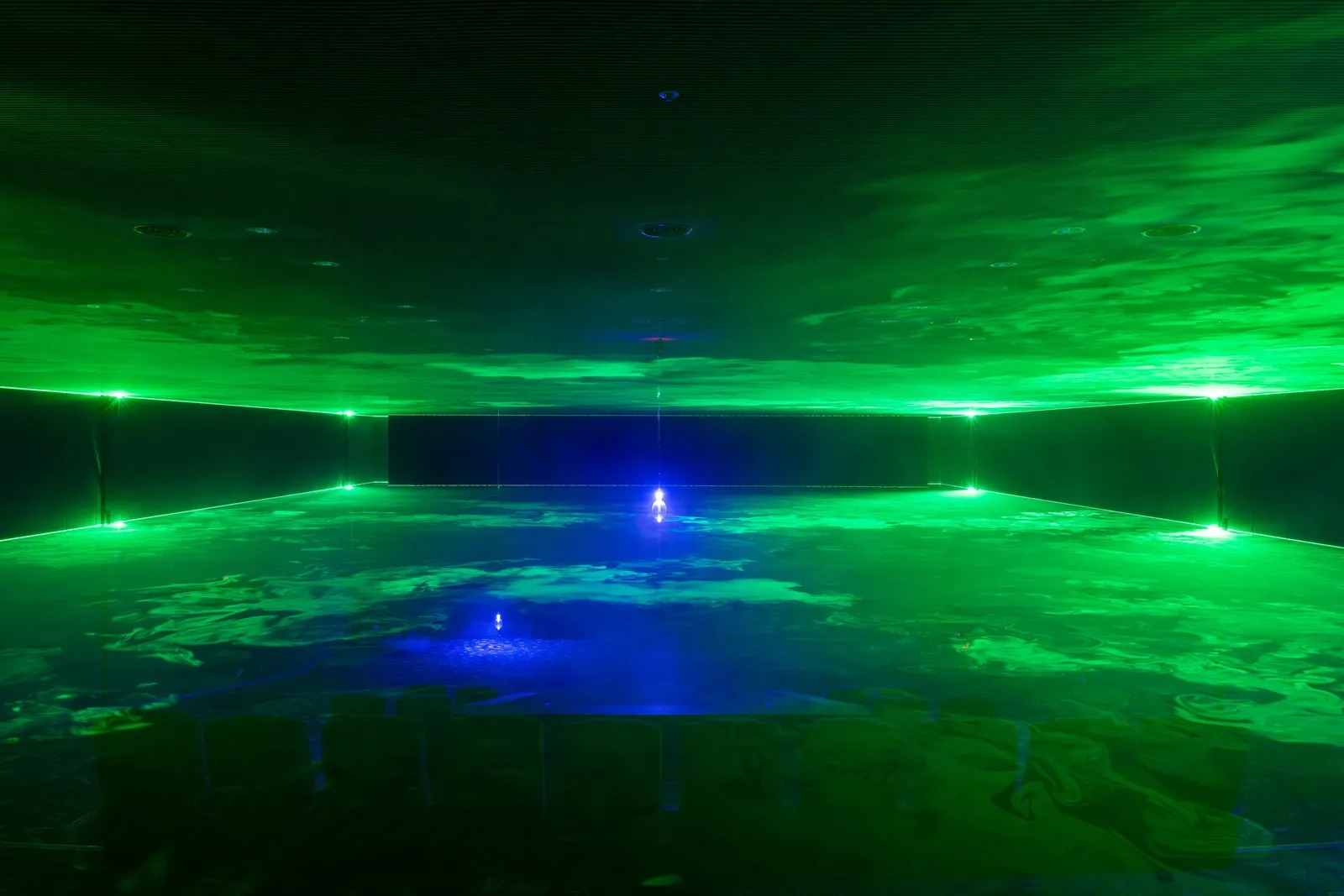
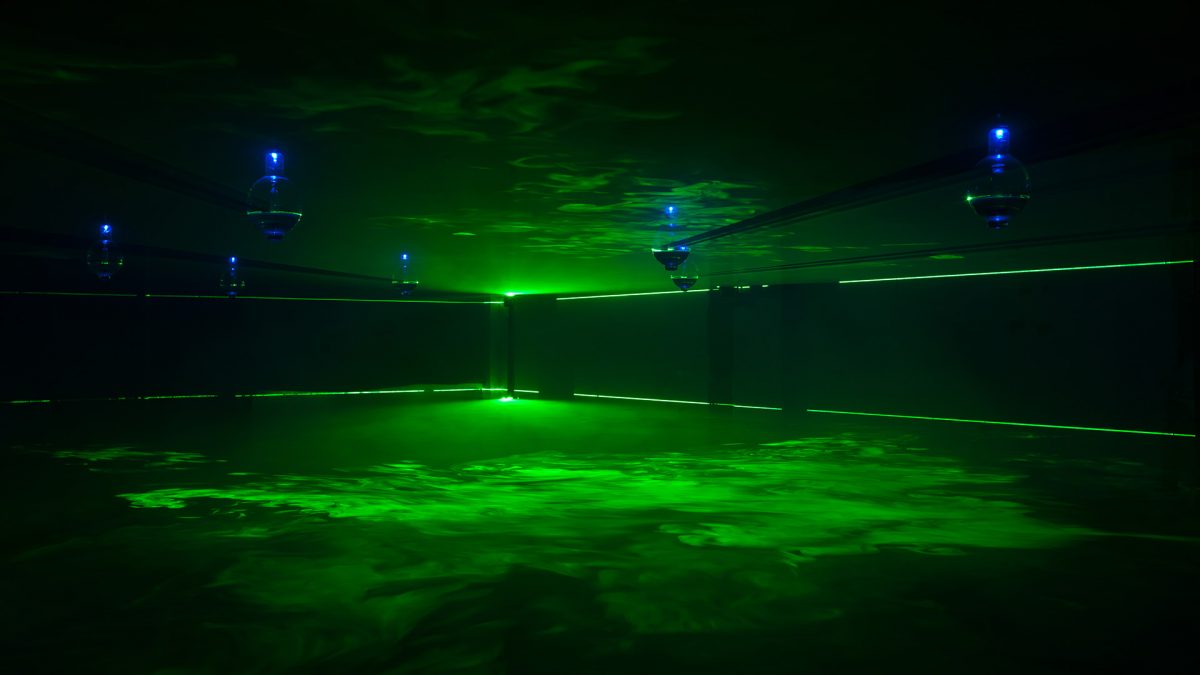
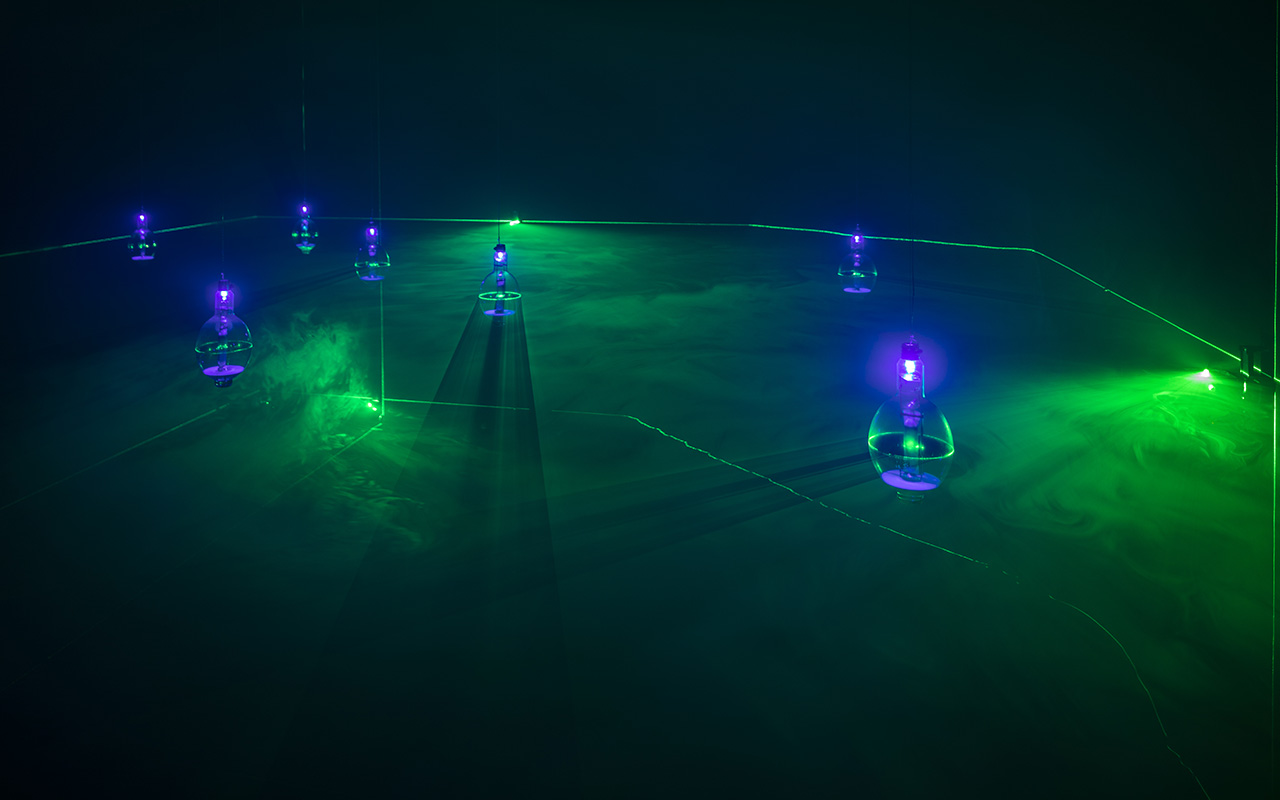
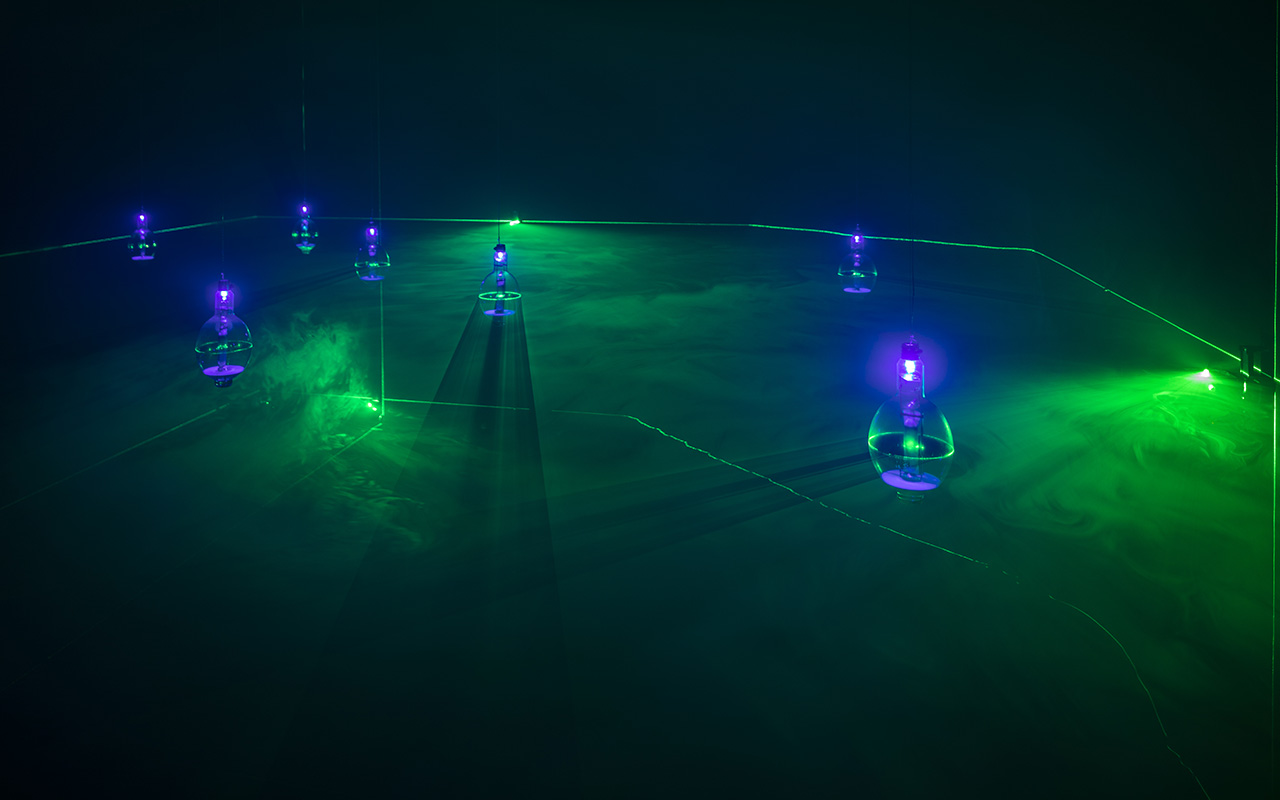
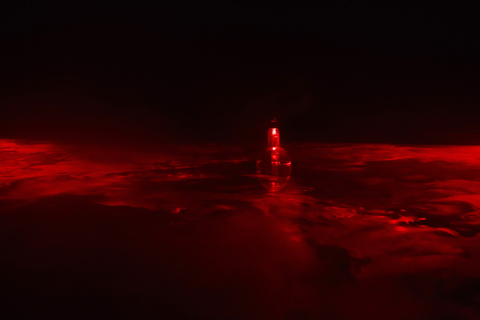
In works using lasers and fog, light itself becomes an even more direct sculptural material. The rectilinear laser produces lines in darkness, and multiple beams intersect to form planes and geometric structures that divide the space. When fog is introduced, the normally invisible paths of light become perceptible like material membranes, while their forms continuously shift with the movement of suspended particles.
Through this method, the artist superimposes virtual structures onto actual architectural space, readjusting the viewer’s field of vision and bodily perception.
In environments where fog spreads like sea mist and blue light, green or red lasers, and sounds of waves and wind come together, viewers may feel as though they have entered an underwater space, outer space, or an unfamiliar landscape. The act of looking at the work thus becomes a process of physically passing through and experiencing space.
This mode of installation changes fluidly according to the conditions of each site. In a white cube, Boo can precisely control light and darkness to construct a self-contained environment, while in sites such as the abandoned brick factory in Yeoncheon, she incorporates collapsed walls and roofs, natural light, and even trees and plants growing inside the building as elements of the work.
Changes in light intensity and surrounding conditions over the course of the day also alter the appearance of the installation, making the work closer to an ongoing process of adjustment on site than to a fixed result.
In this way, Boo has treated the entire spatial environment as the form of the work, extending beyond the arrangement of objects and lighting to include architecture, light, sound, the natural environment, and the movement of viewers.
Her formal interest, which began with the multiplicity and repetition of printmaking, has developed through the arrangement and reflection of discarded fishing lamps, the proliferation of light, and installations where actual and virtual spaces intersect, forming a distinctive visual language.