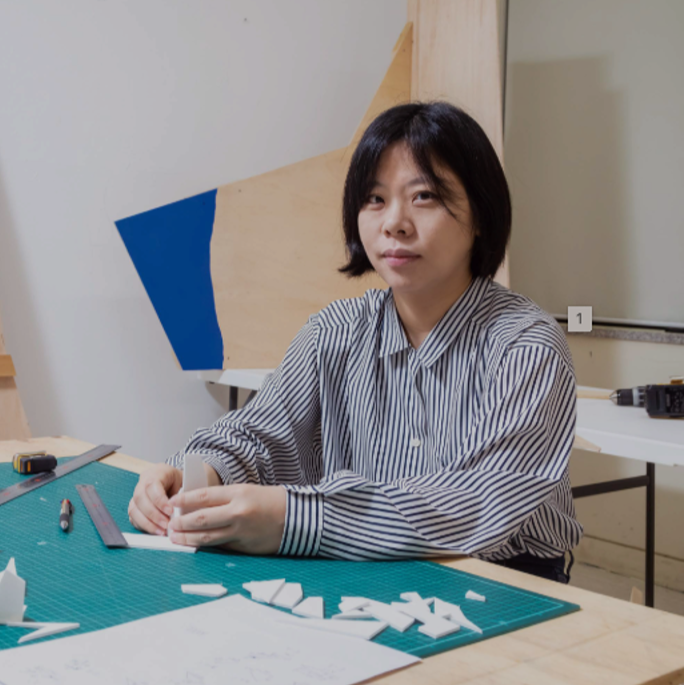
Ye-eun Min
approaches the “home” not as a fixed place of residence, but as a structure in
which time and memory, language and relation, materiality and thought become
entangled. Rather than clearly dividing inside and outside, interior and
exterior, private and public, she focuses on how these boundaries are reversed,
blurred, and reconfigured.
Her personal experience of moving between France and
Korea runs through her practice as a concern with migration, cultural
intersection, hybridity, and what she calls “mixed-blood thinking.” For Min,
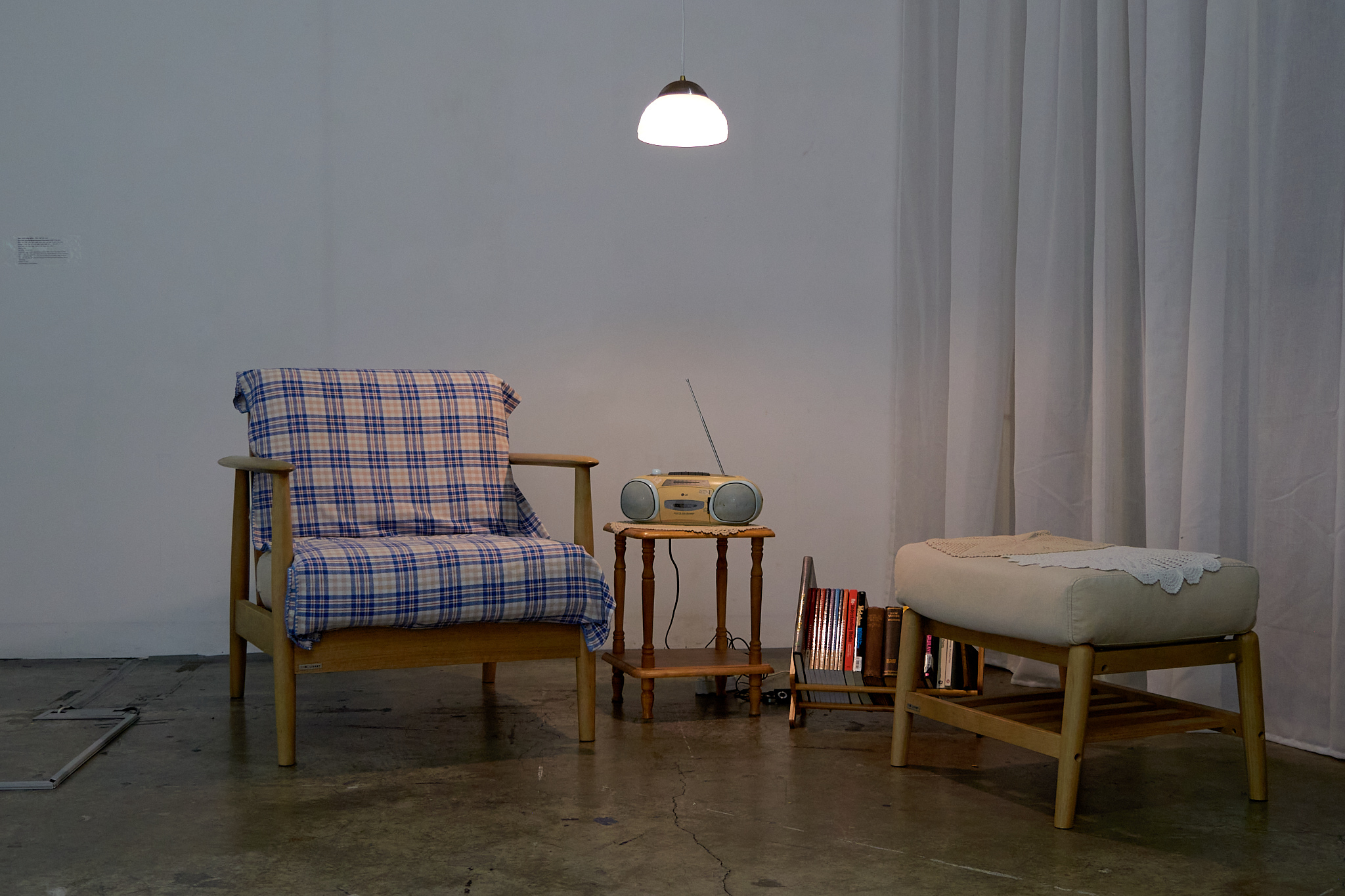
furniture, lights, wallpaper, clocks, tiles, curtains, urns, and old intercoms
are not simply domestic objects; they are mediums that carry someone’s time,
habits, traces of use, and clues to identity.
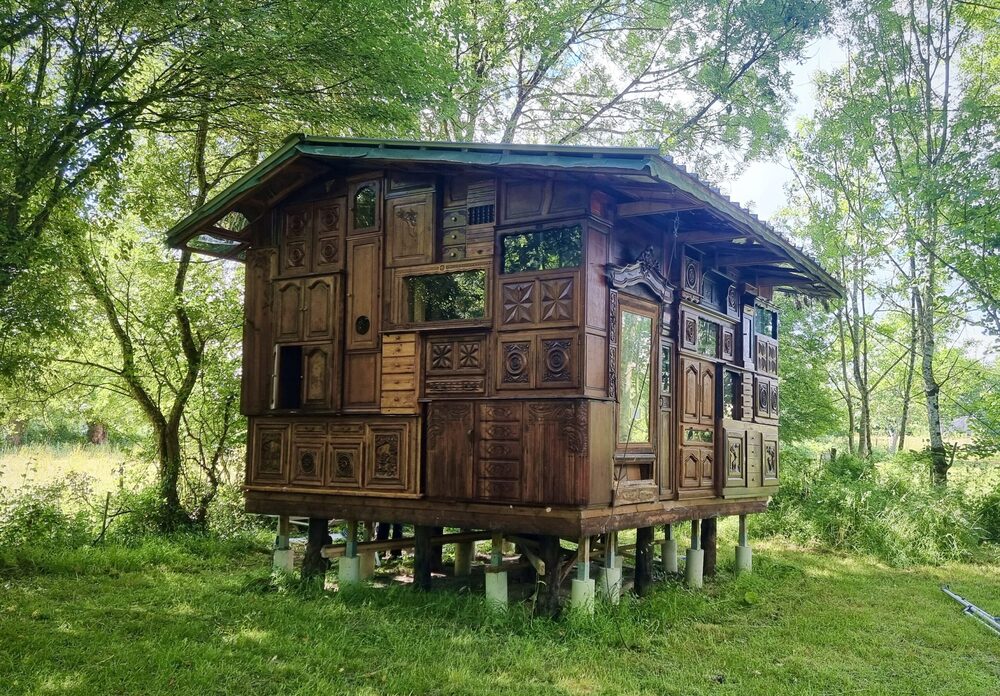
Min’s
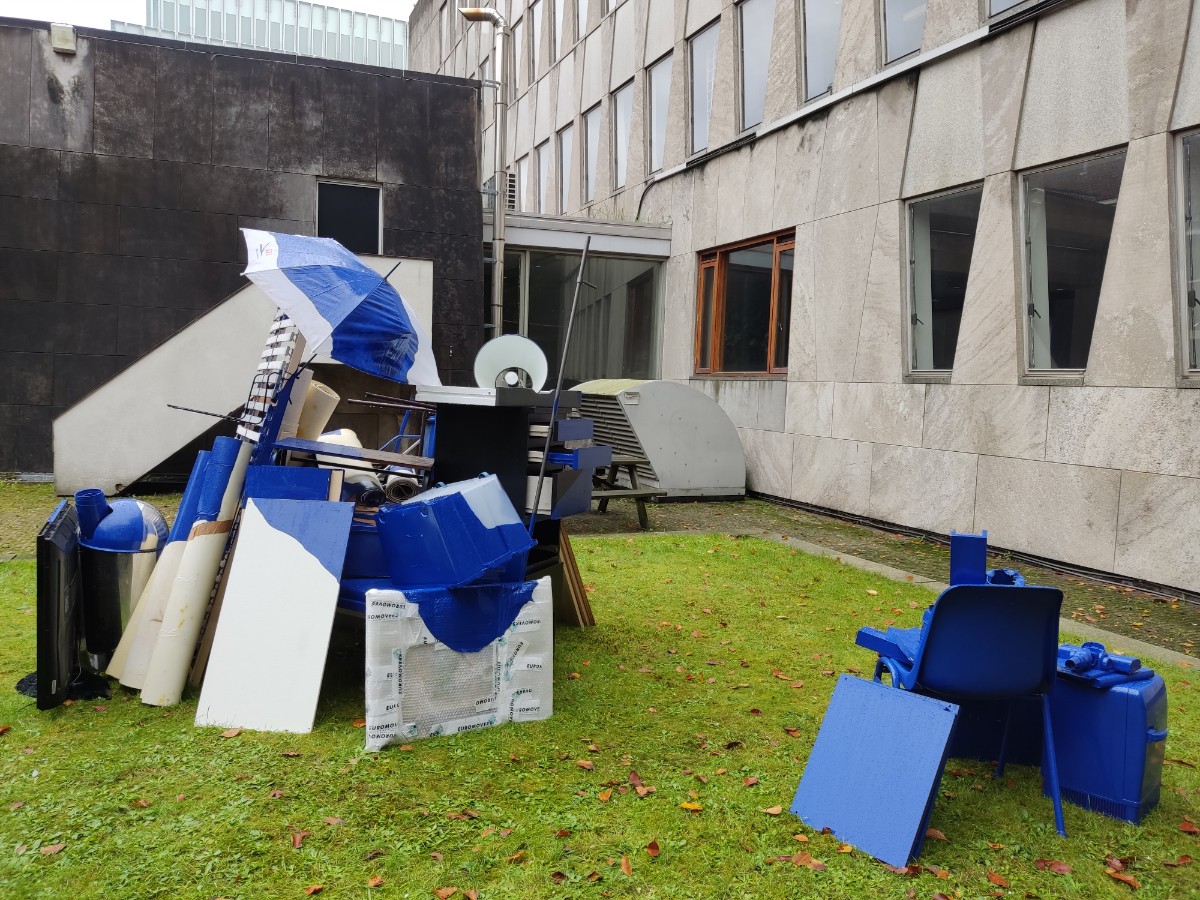
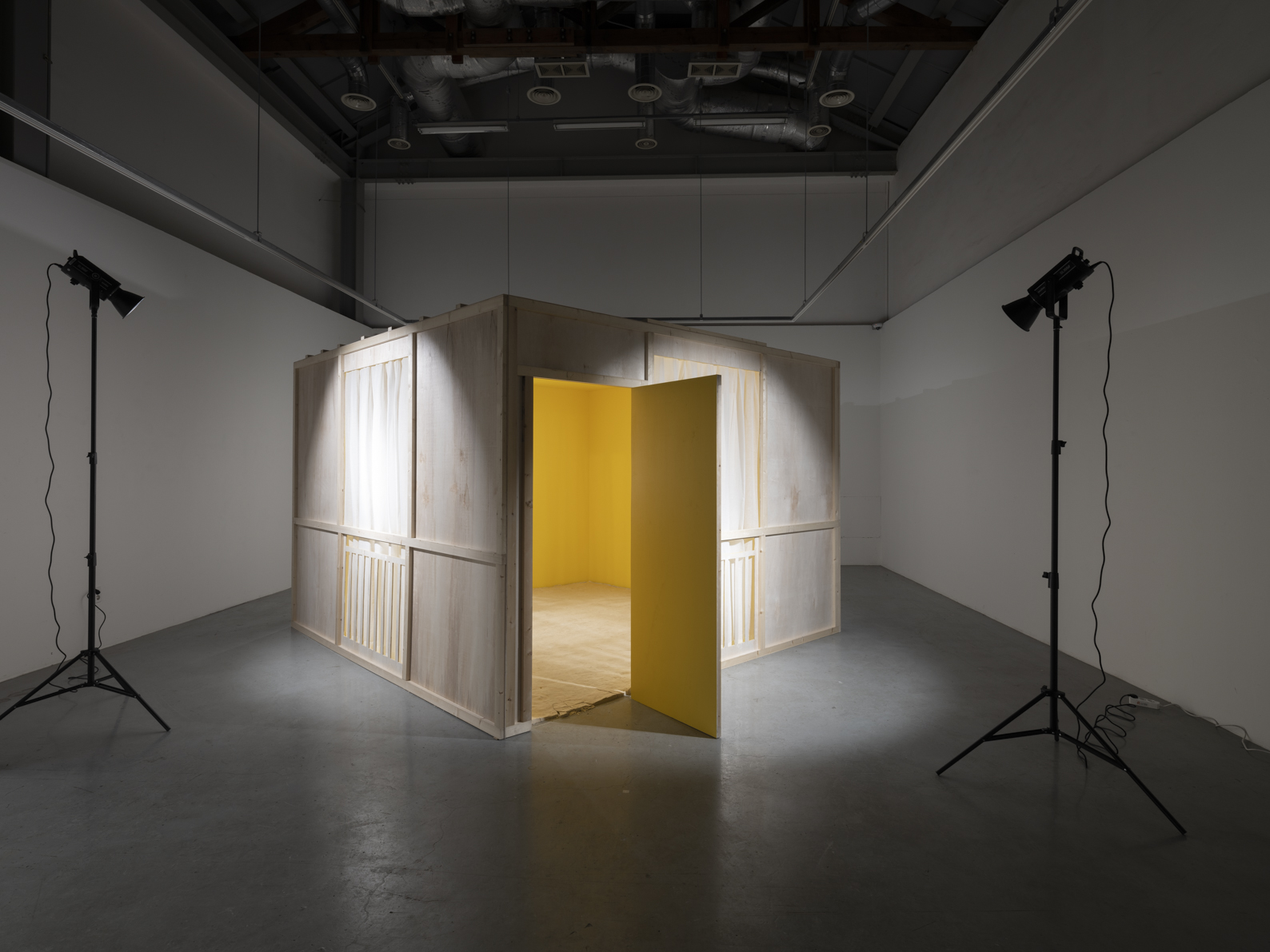
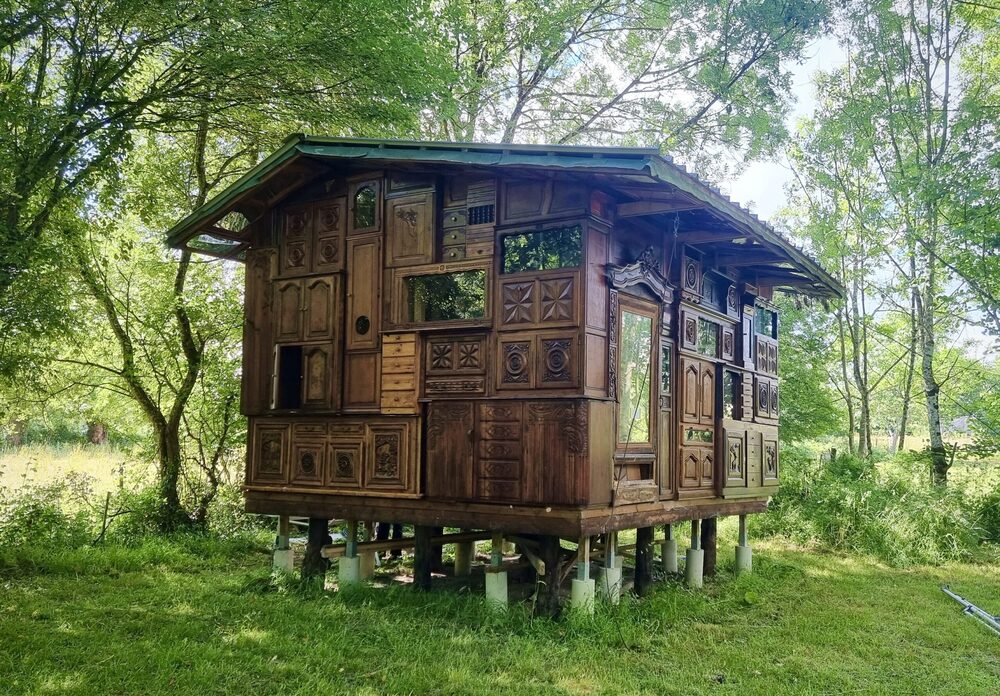
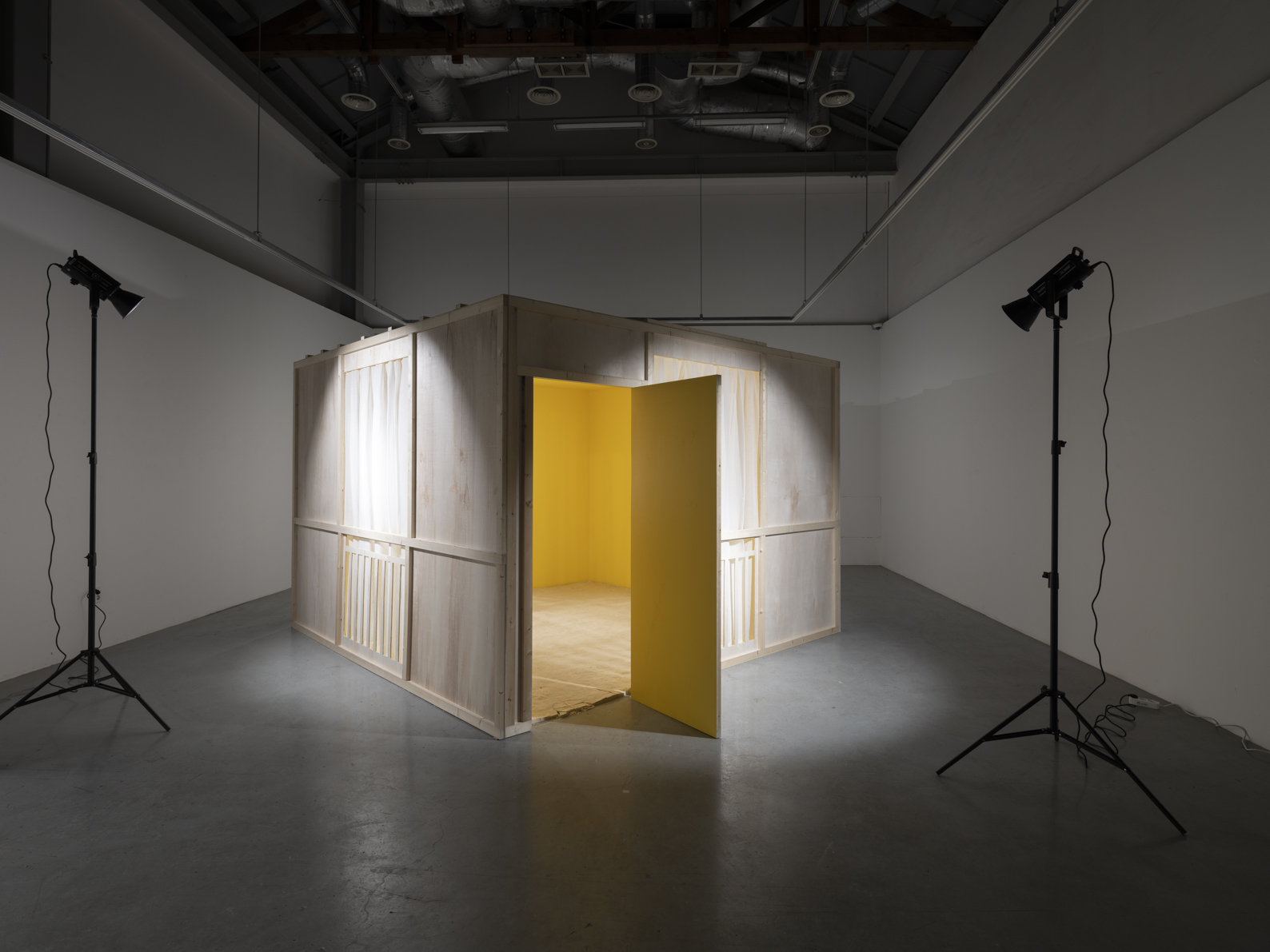
full-scale exploration of the “home” begins with Furniture
House(2013–). Initiated in Brittany, France, this project constructs
an inhabitable hut by using secondhand furniture as its walls. Furniture that
would normally belong inside the house becomes the exterior wall, so that the
interior turns outward and the exterior begins to function like an interior.
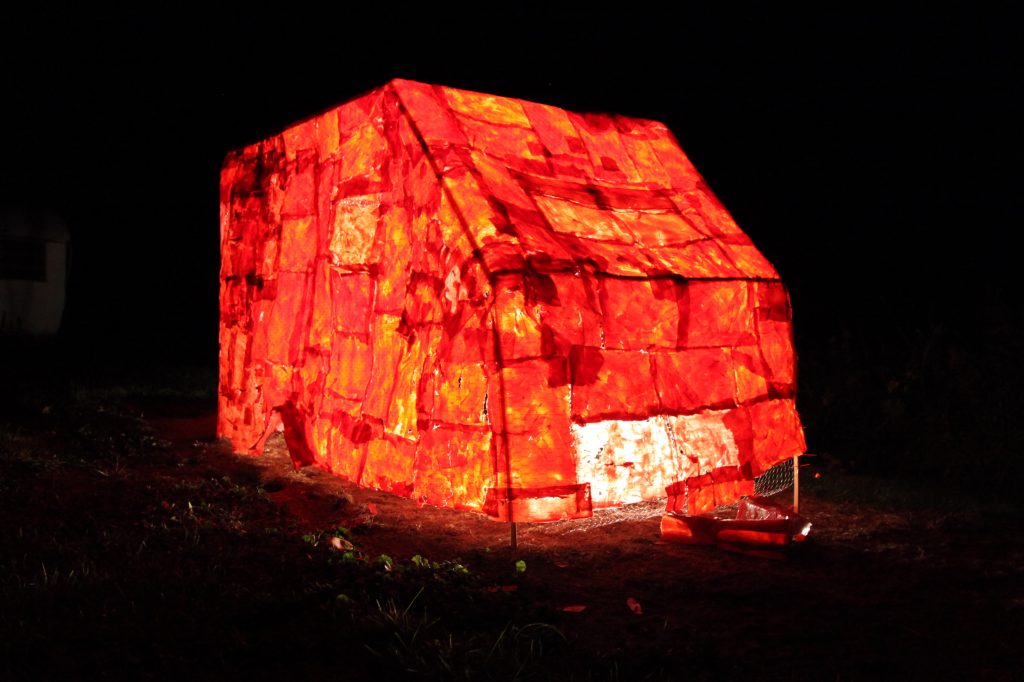
Caravan(2015) shifts this idea of home toward mobility and
temporariness.
Based on the trace of the caravan where the artist stayed during
the Triangle Artists’ Workshop in New York, the work was made with wax, chicken
wire, and wood. It changes according to temperature and sunlight, showing that
home and identity are not fixed, but continue to shift and reform in relation
to time and environment.
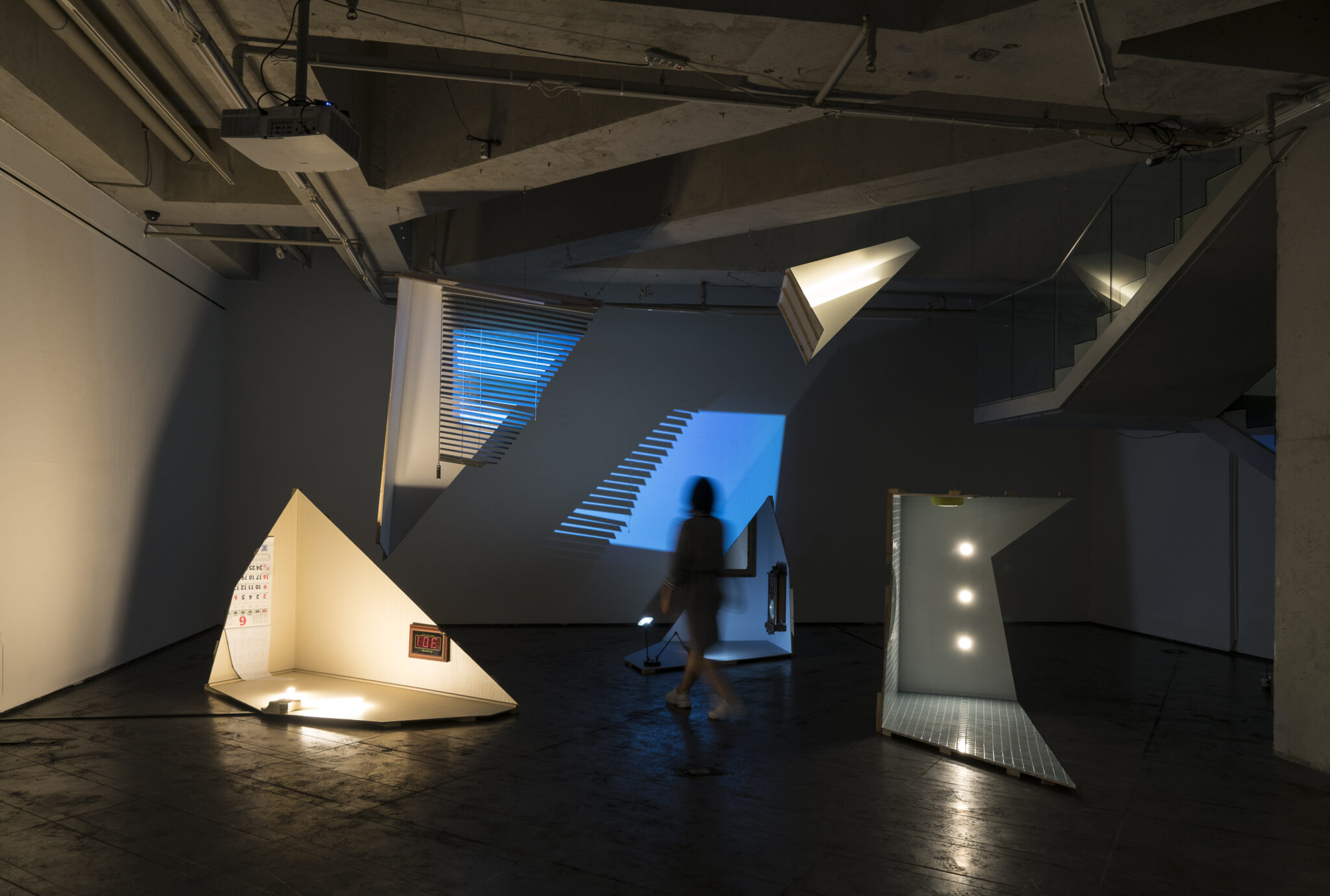
Since
2019, Min has expanded the idea of home by cutting, fragmenting, and
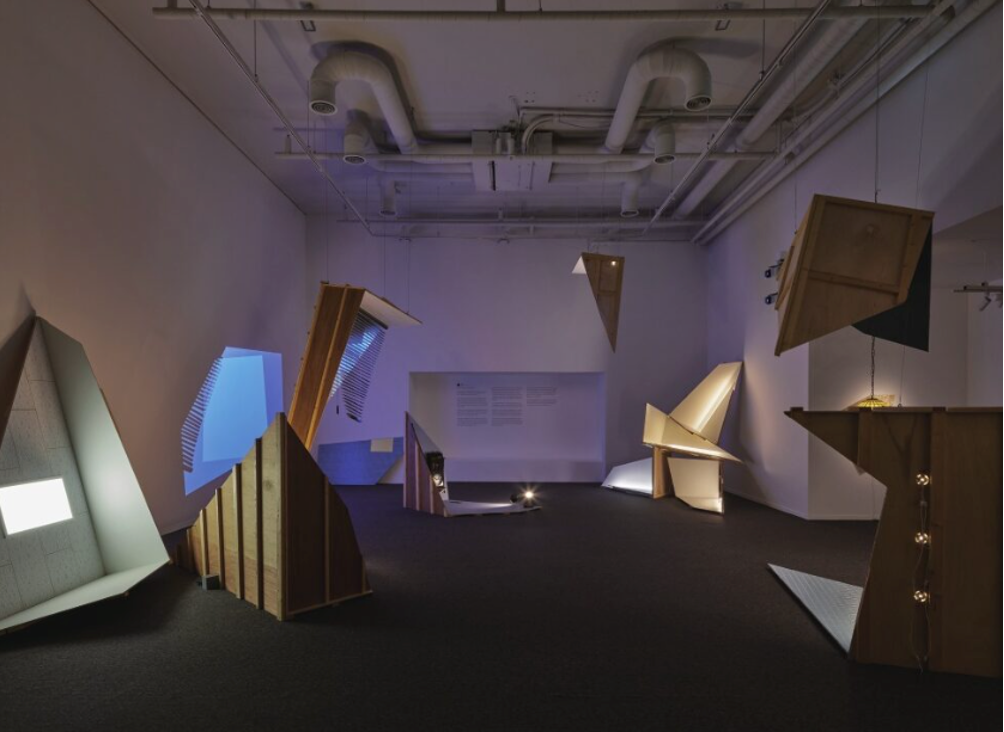
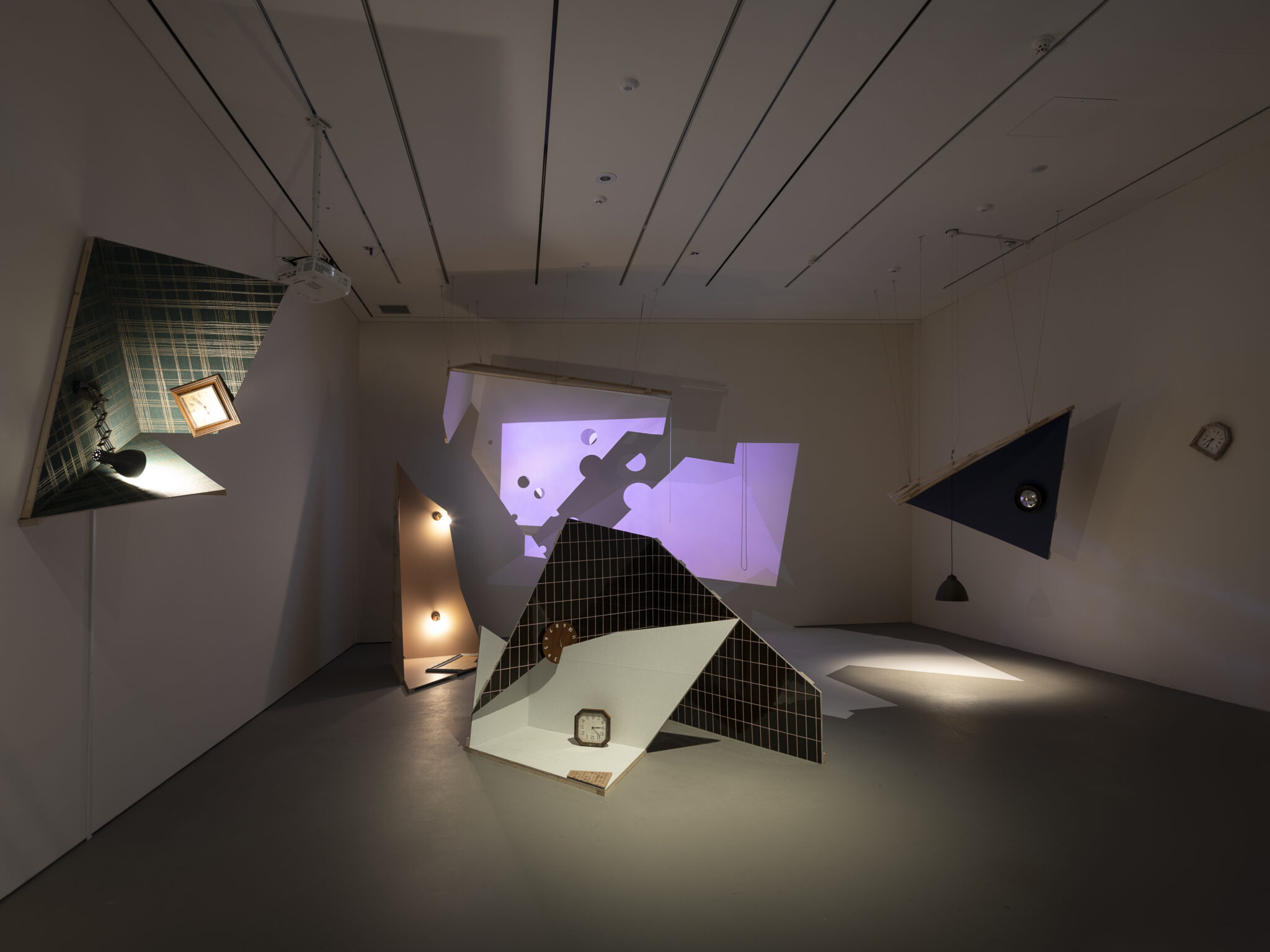
rearranging it, rather than presenting it as a complete structure. In 《Unpredictable invisibility》(Alternative
Space LOOP, Seoul, 2019),
Lavihamahamahyunchuchuhappyj33atomausepponssugizetteblackbyungddoungkkeong…(2019)
cuts a rectangular structure, conceived as a house, into six fragments,
installs them on the ceiling of the exhibition space, and fills them with
objects collected from various people.
The title is composed of the online IDs
used by the previous owners of those objects. Through this process, the artist
creates a shared space where the times and memories of anonymous others, rather
than those of a single person, are mixed together. Works from the same
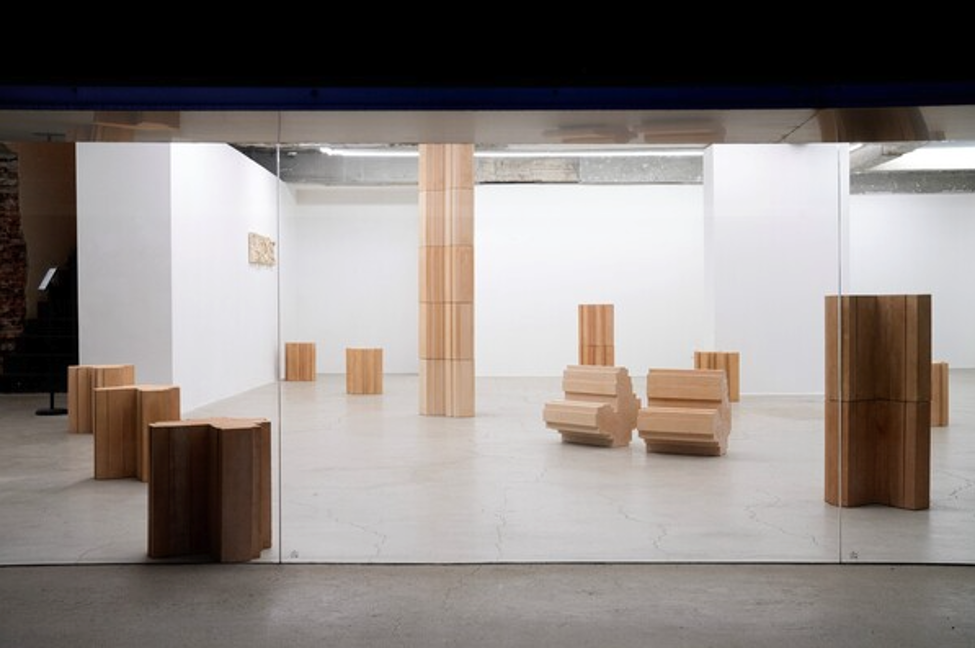
exhibition, such as Sahk(Lunar Conjunction)(2019),
Trans-migration(2019), and Single
Slit(2019), also address relationships between matter and time, the
visible and invisible, through celestial alignment, death and mourning, and the
moment when ground furniture dust disperses.
Min’s
later work expands from the home toward questions of language, memory, and the
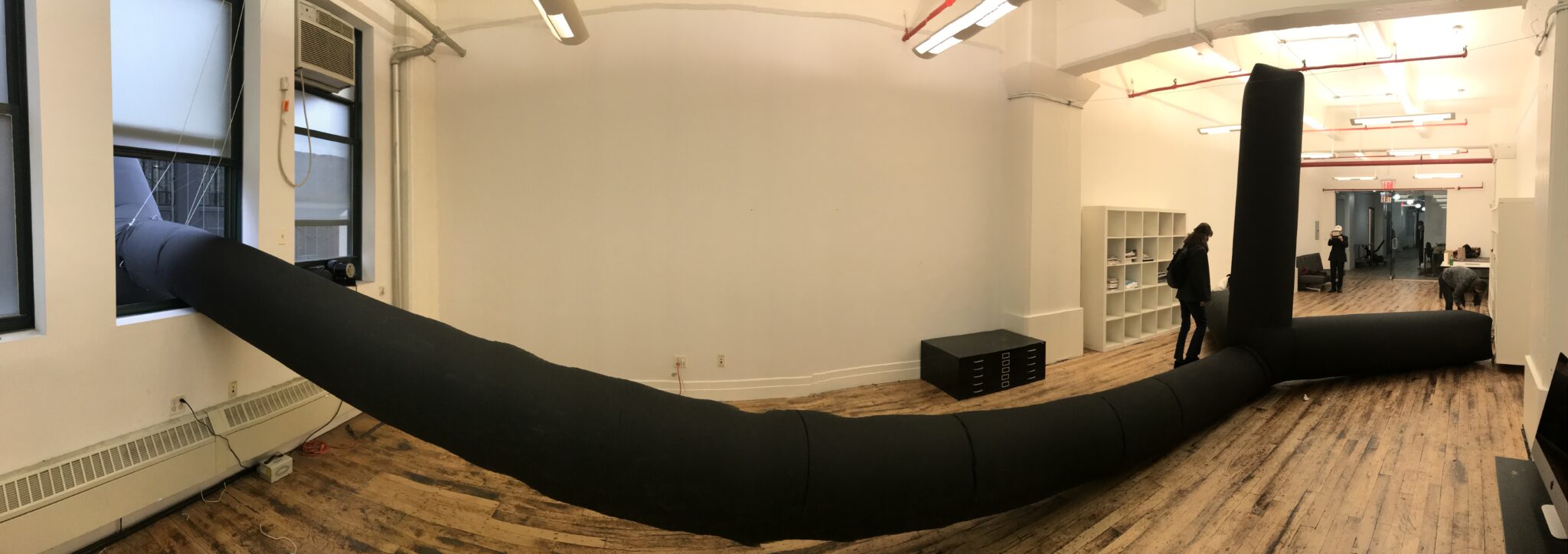
perception of reality. Because Not Everything Is
Apparent(2020) connects the inside and outside of the exhibition
space through a single line, layering another reality onto the existing one
through a structure that can be seen but not touched or fully known.
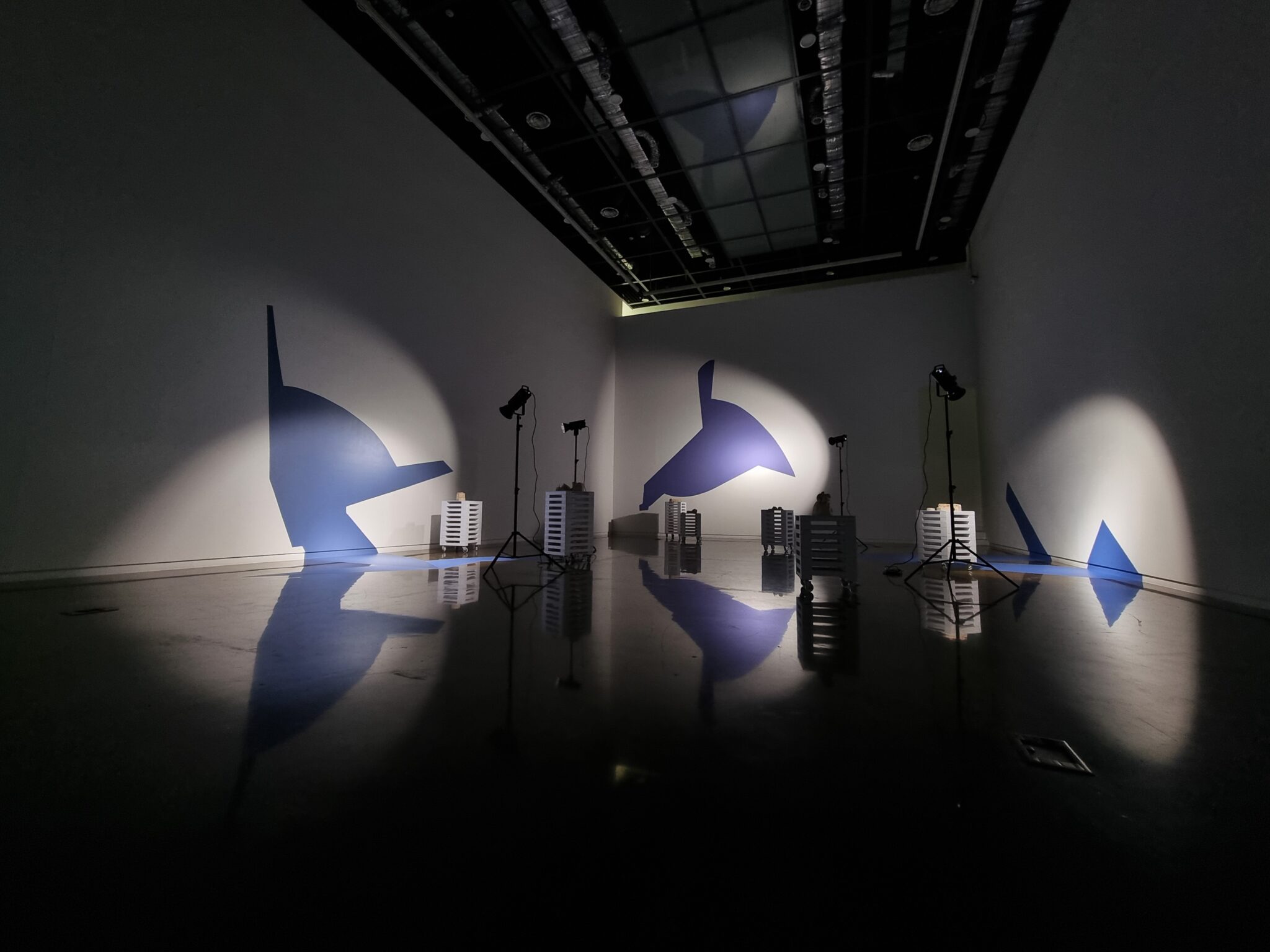
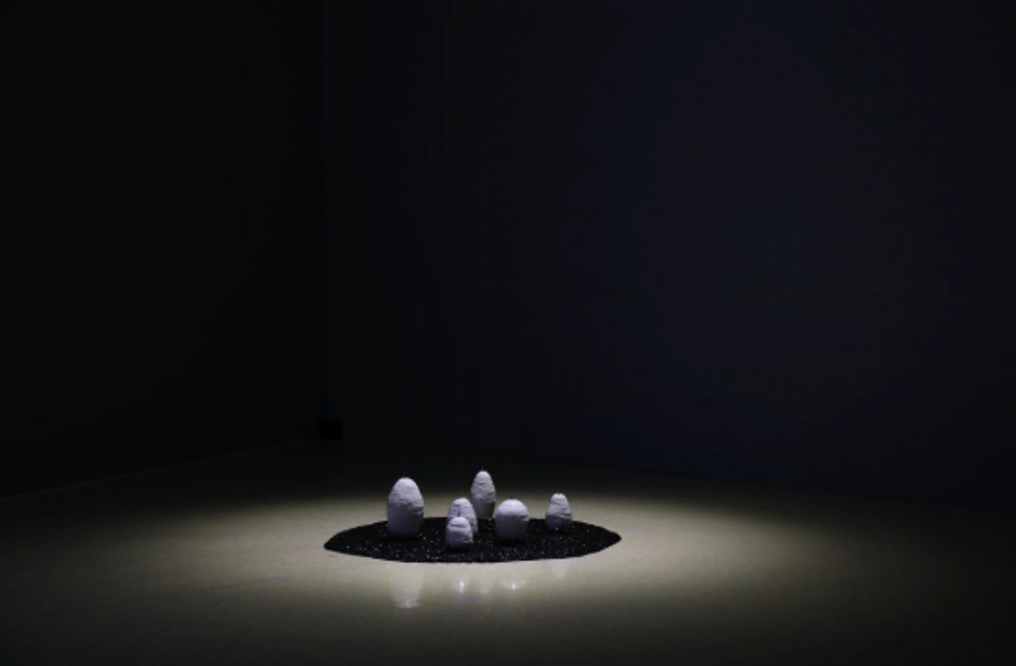
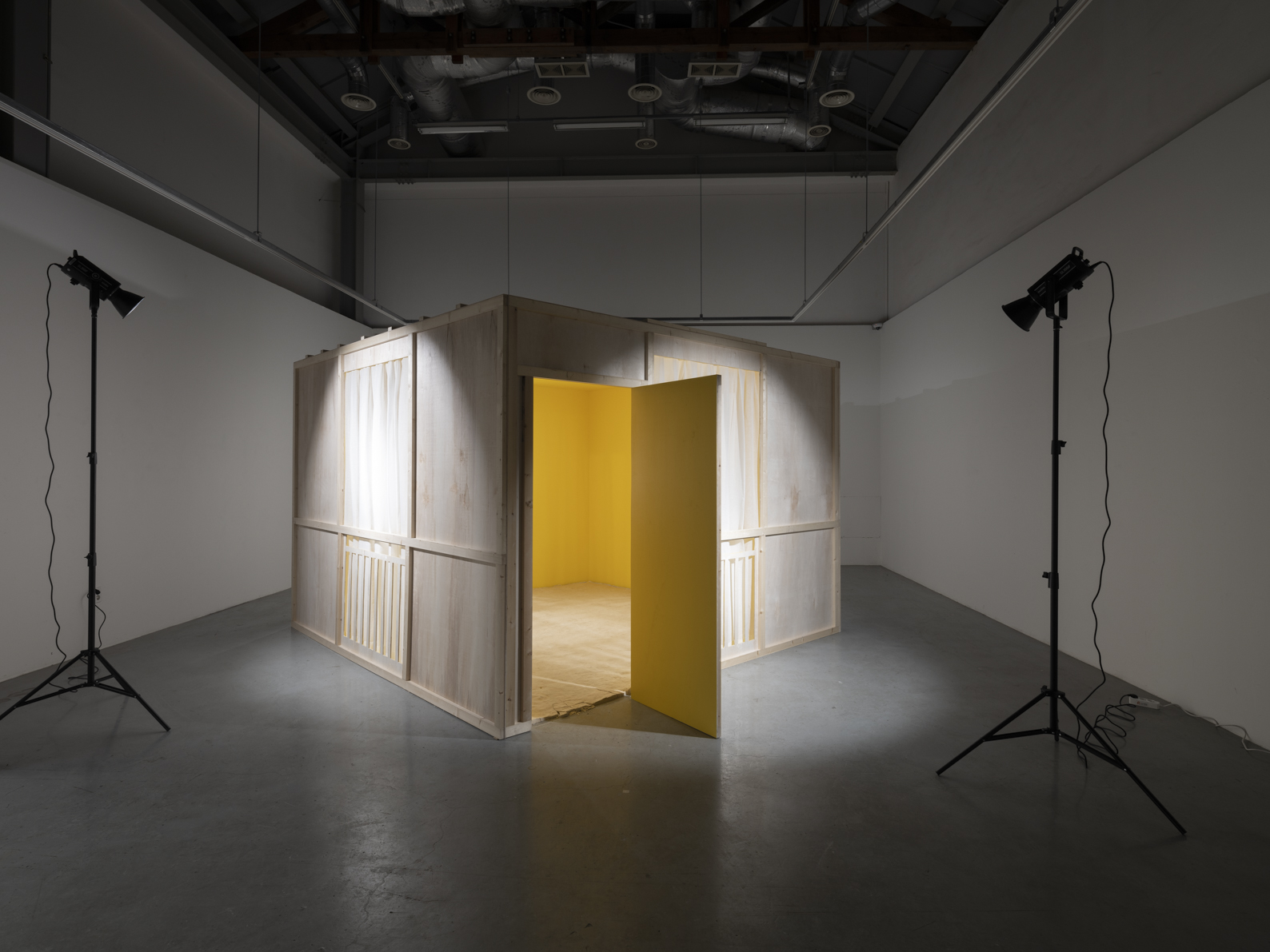
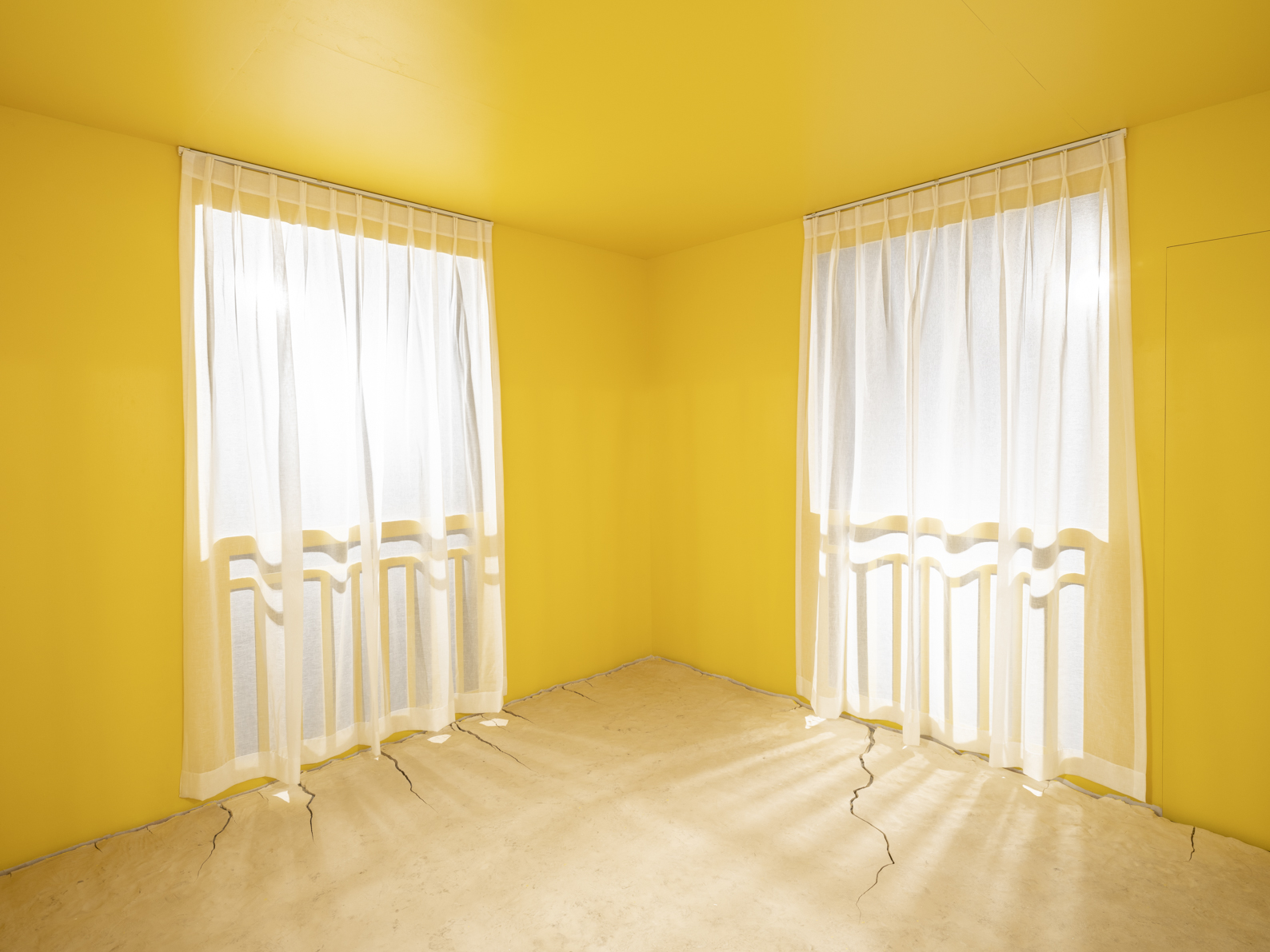
《Cannot Be Conveyed in Words》(Incheon Art
Platform, Incheon, 2021) uses light, windows, curtains, clay, and shadows to
construct a situation in which four different times and spaces meet in one
place, presenting an experience between the virtual and the real that cannot be
fully explained in words.
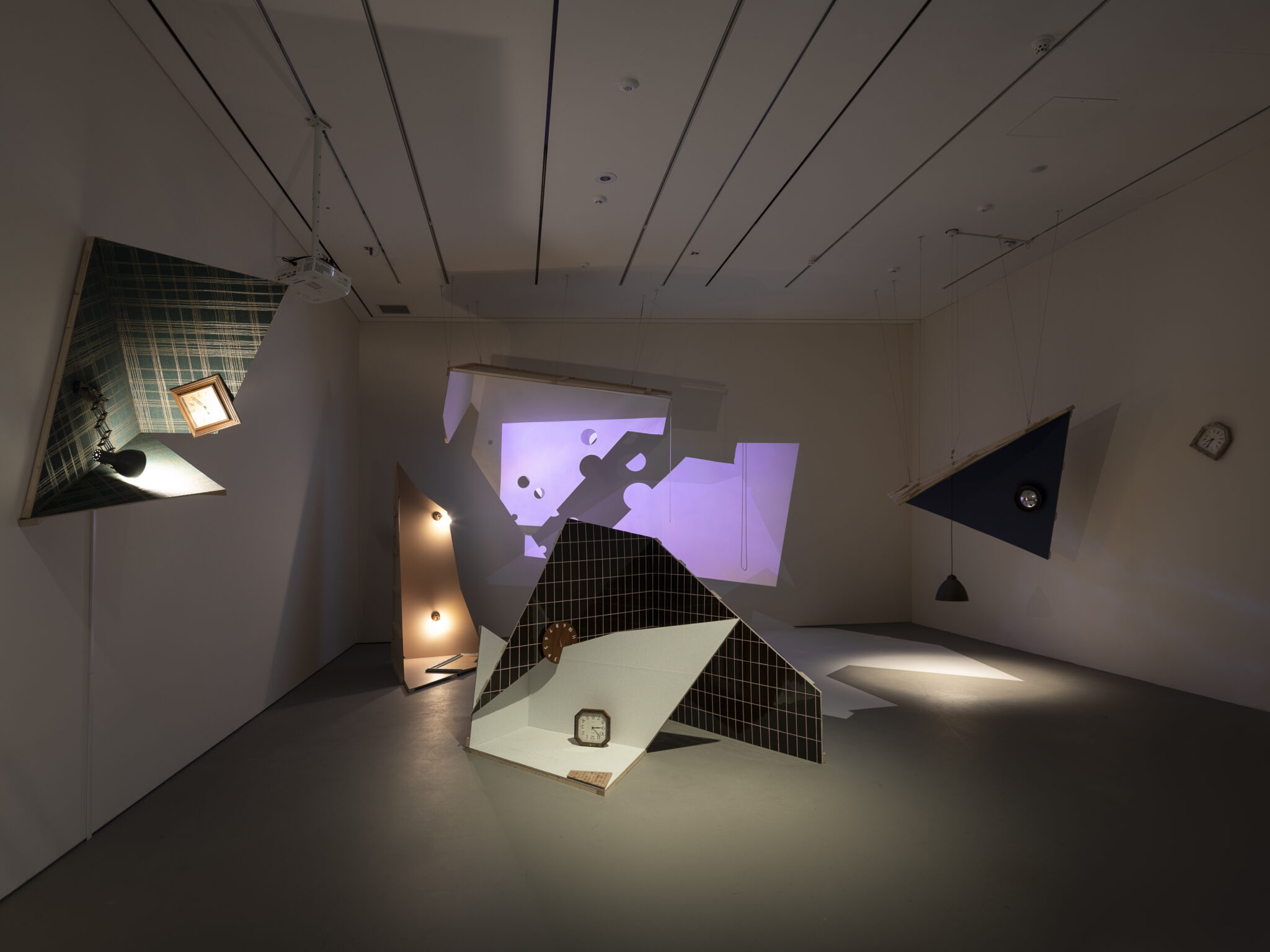
Peillacasanstmartinsurousthanampipriacivrysurseinesene…(2022)
intersects multiple timelines through objects collected from different places
and time devices that refer to the rotational principles of planets.
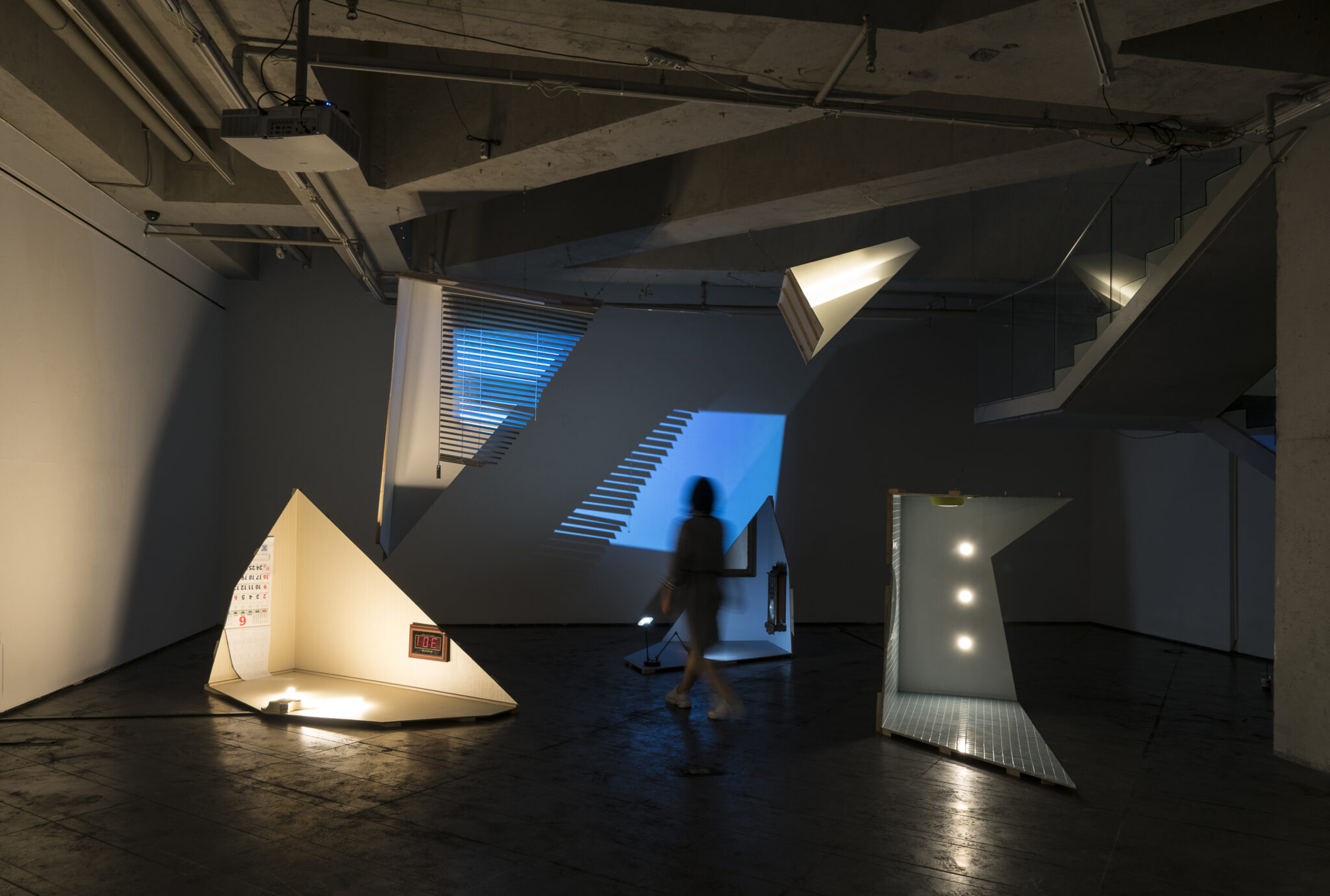
When Memories Assume Particular Forms(2024) and
Temporary States(2024) dismantle and recombine parts of
previous works, spatializing the way memory is formed through omission, error,
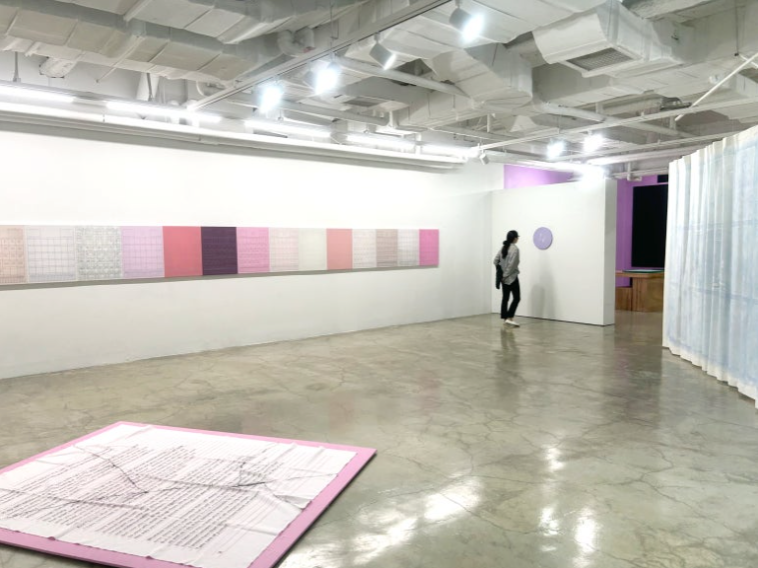
repetition, and reconstruction. In 《A Mass That Won’t
Mix》(Dorossy Salon, Seoul, 2023), the artist addresses
the point where the universality of language collides with the specificity of
individual thought, visualizing the limits of what is lost or generalized once
something is expressed in words.