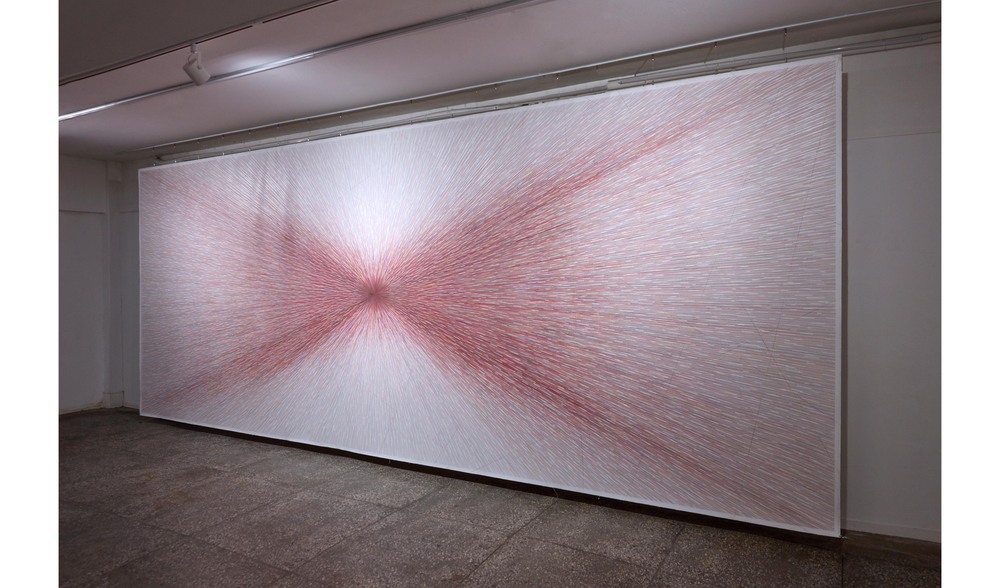
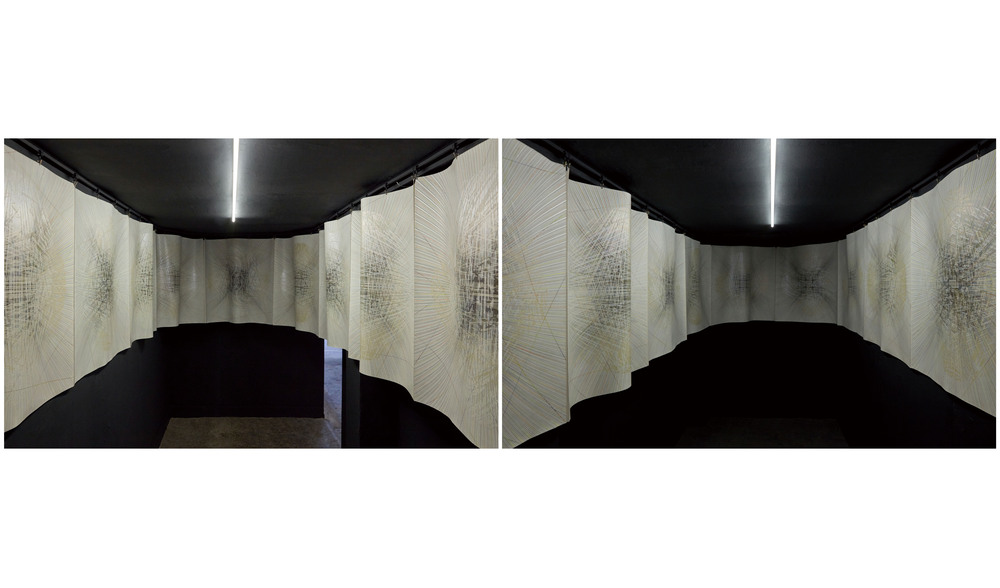
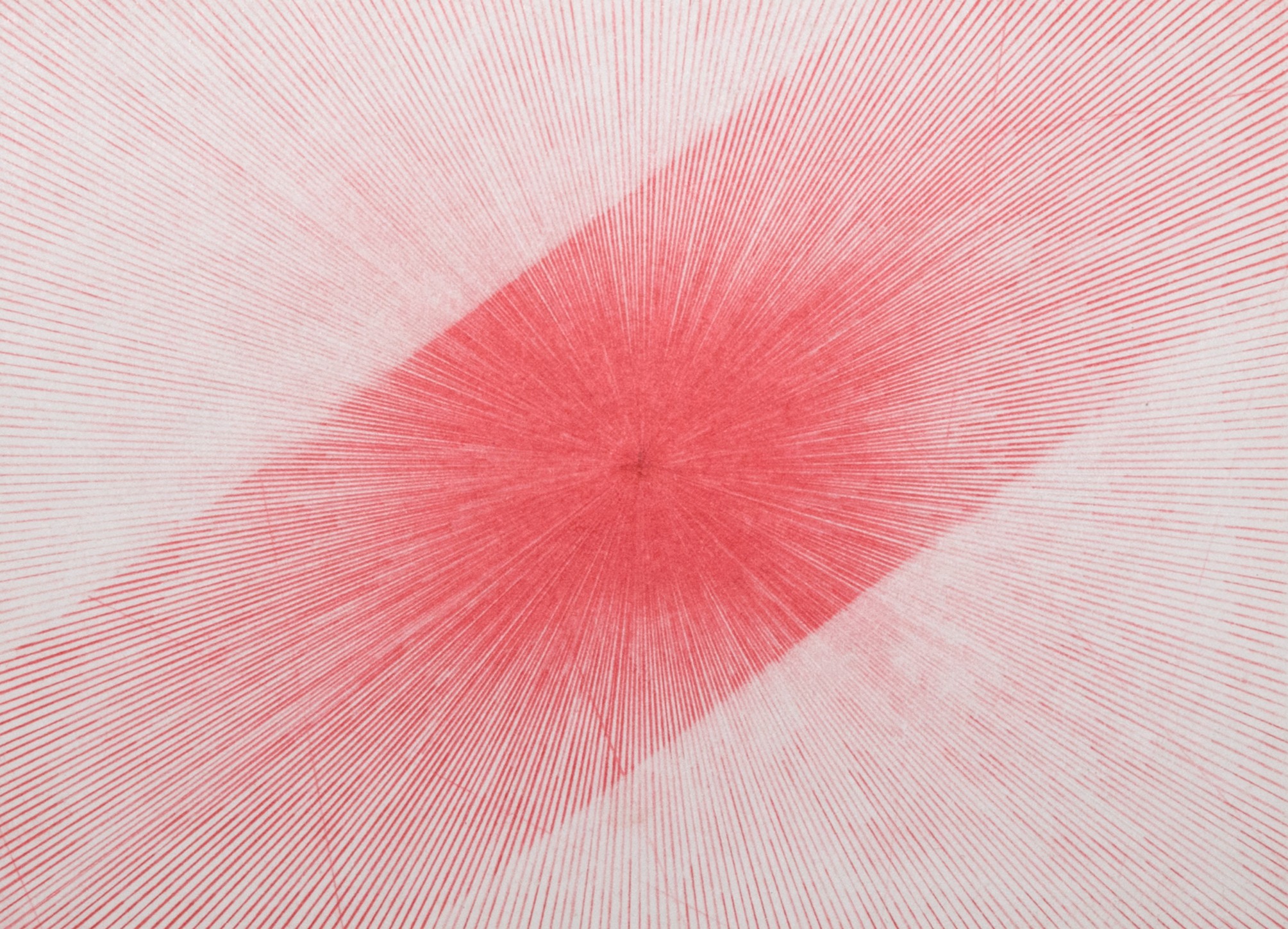
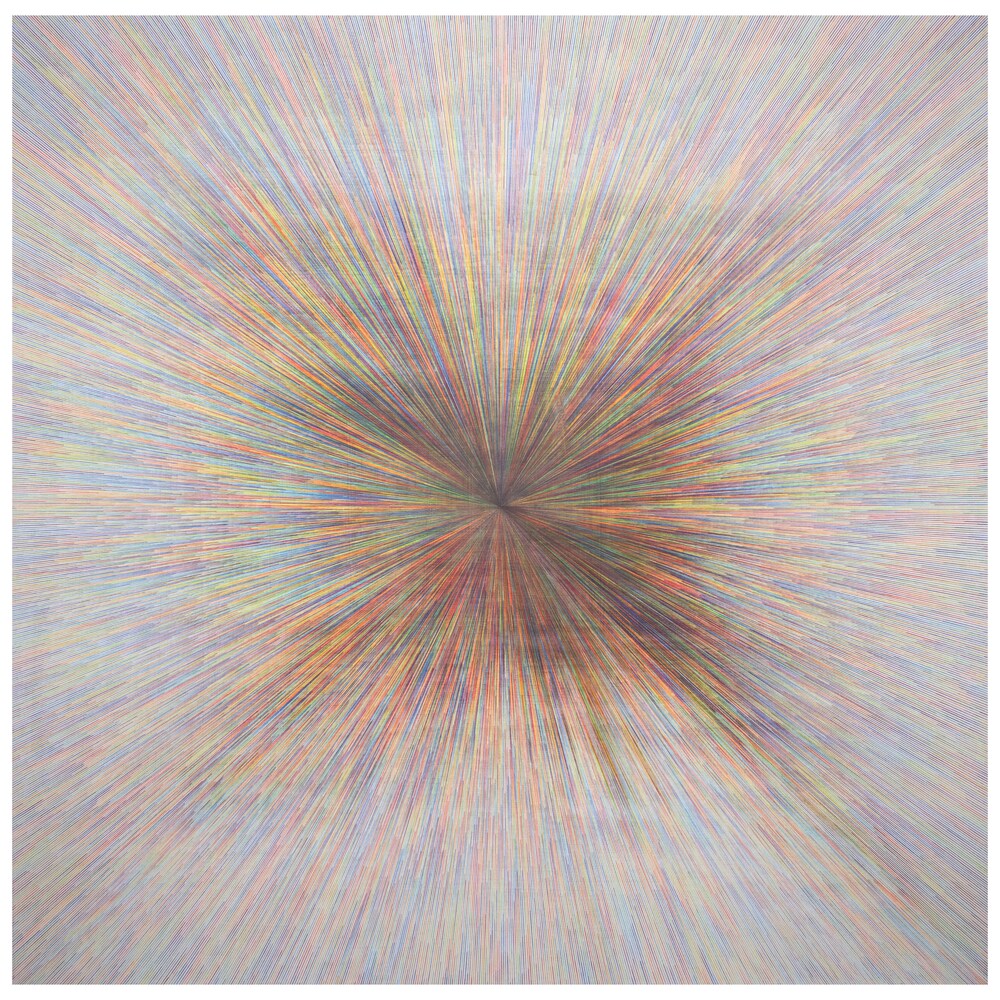
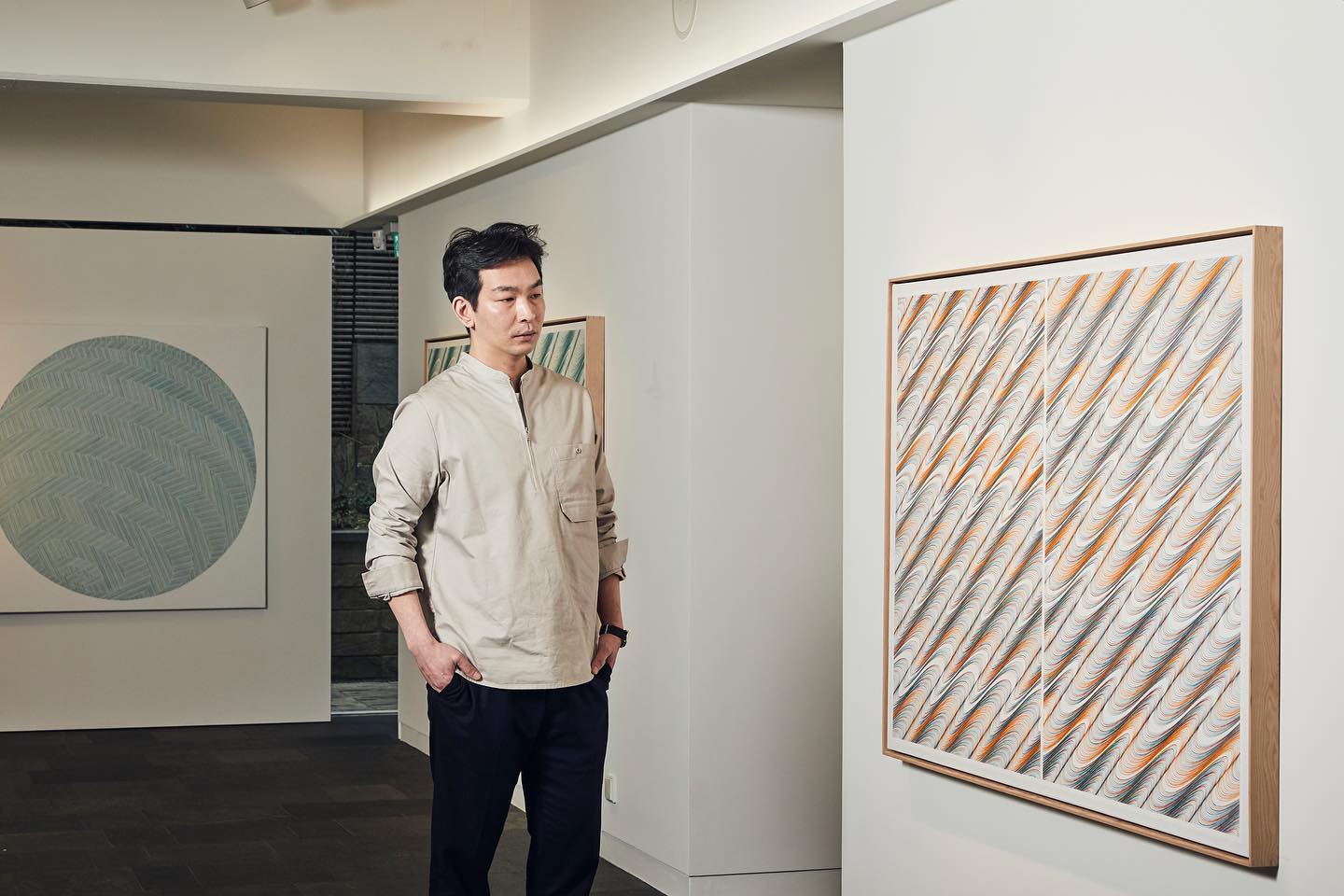
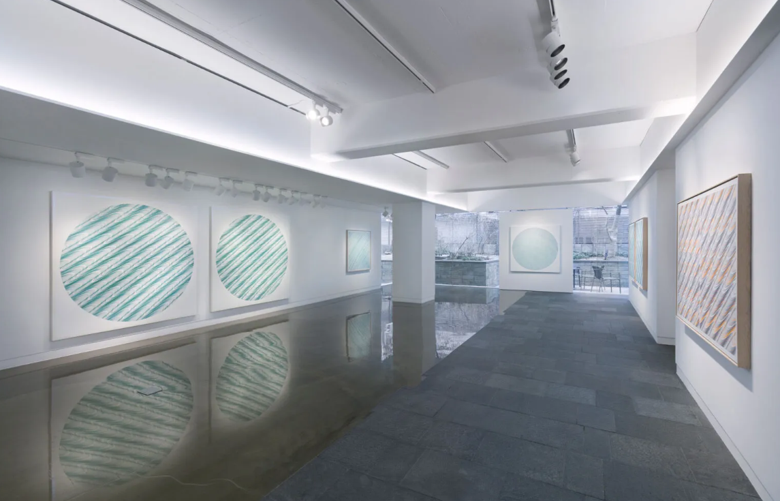
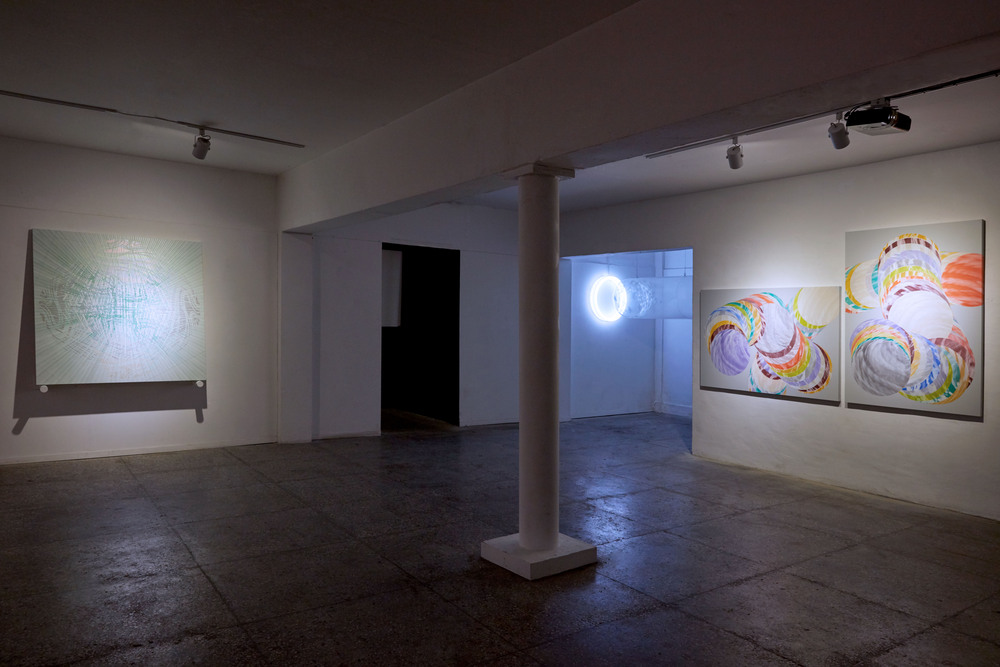
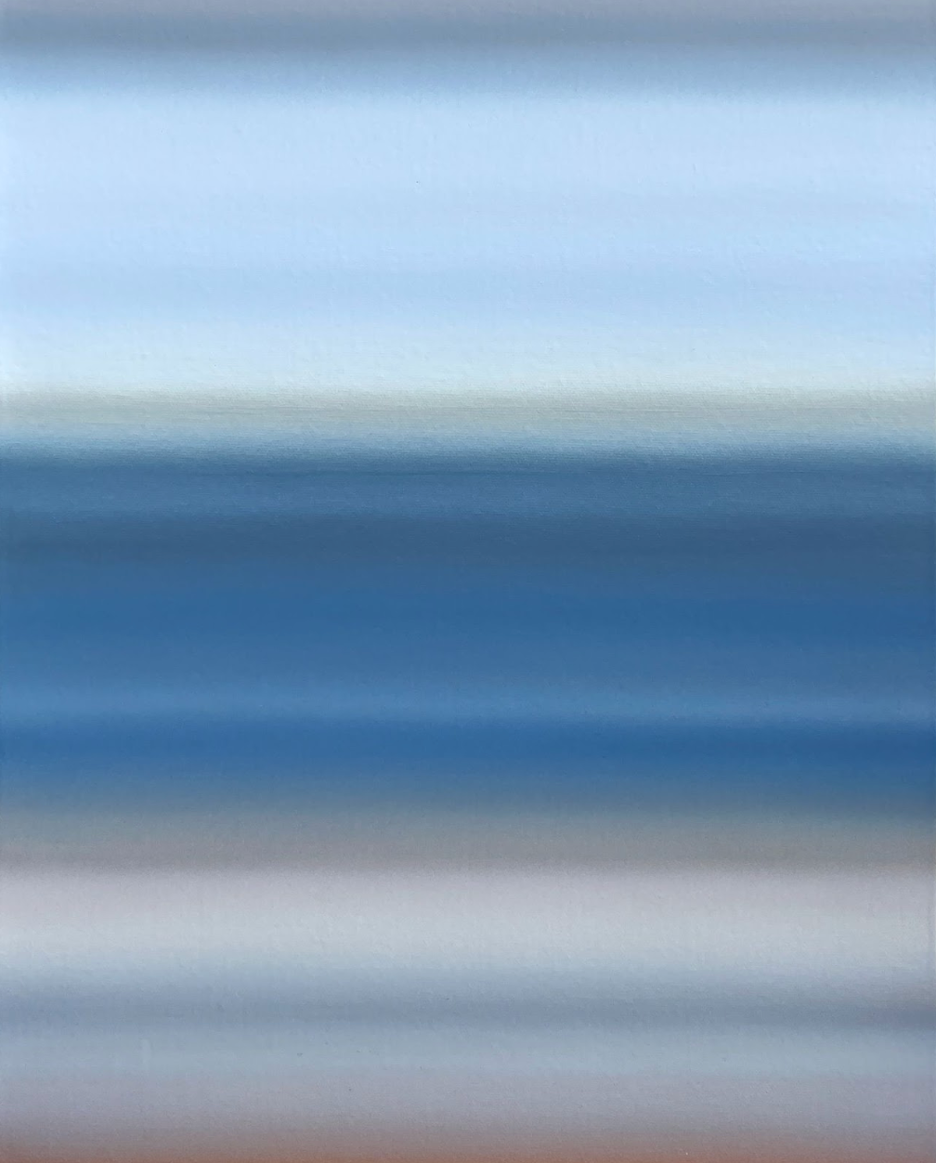
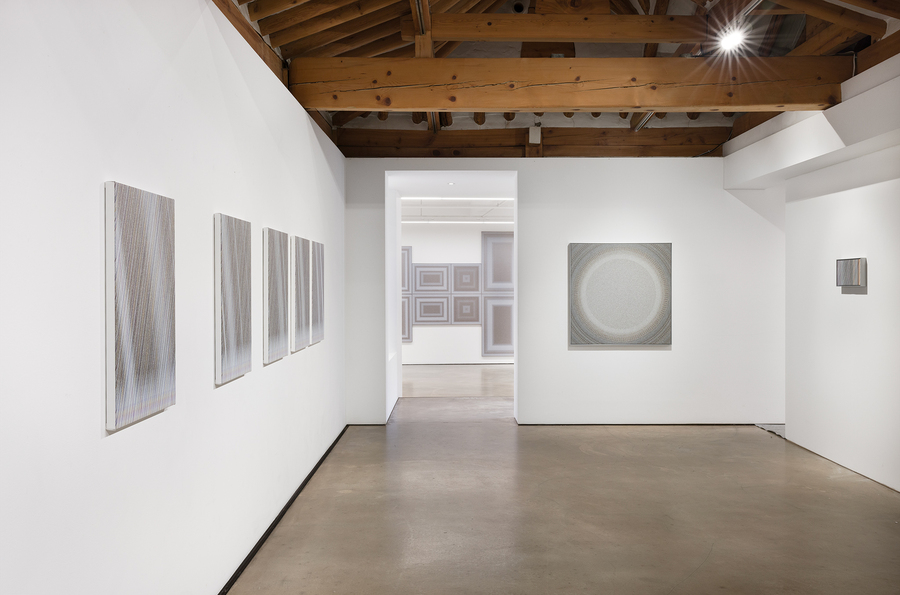
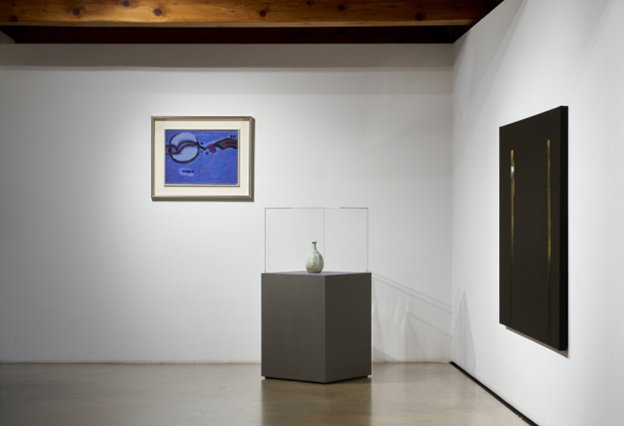
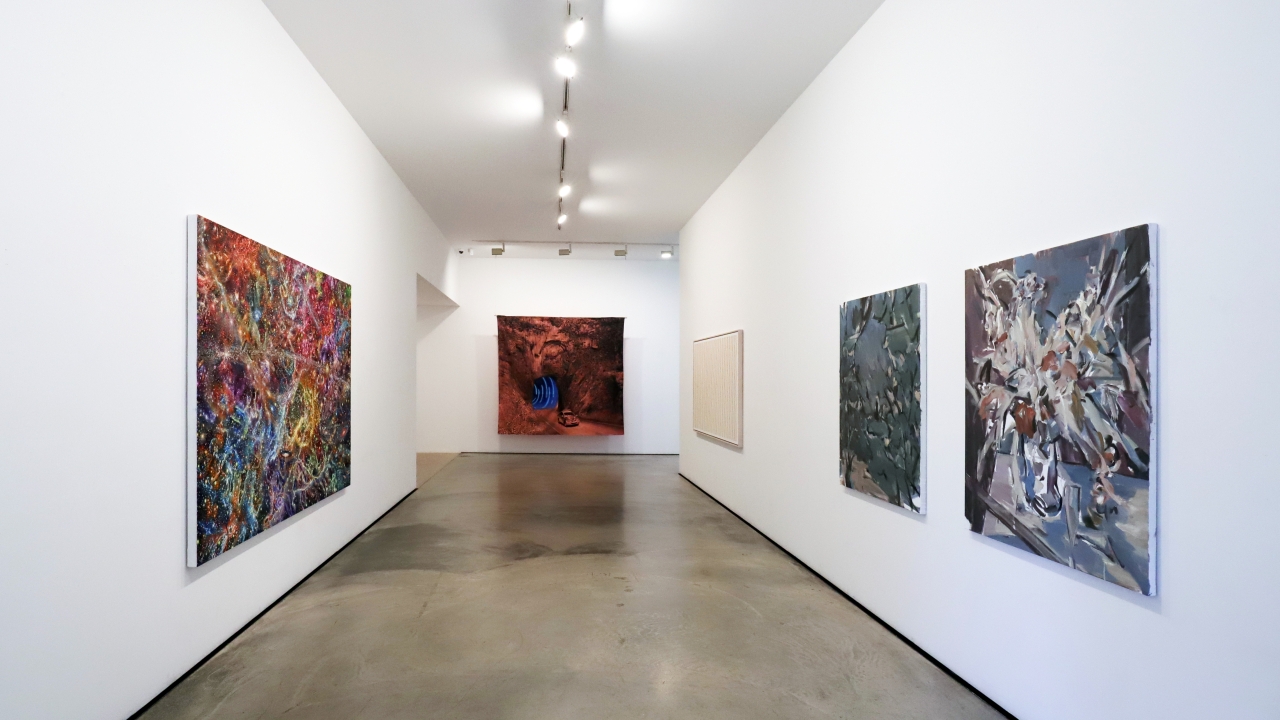
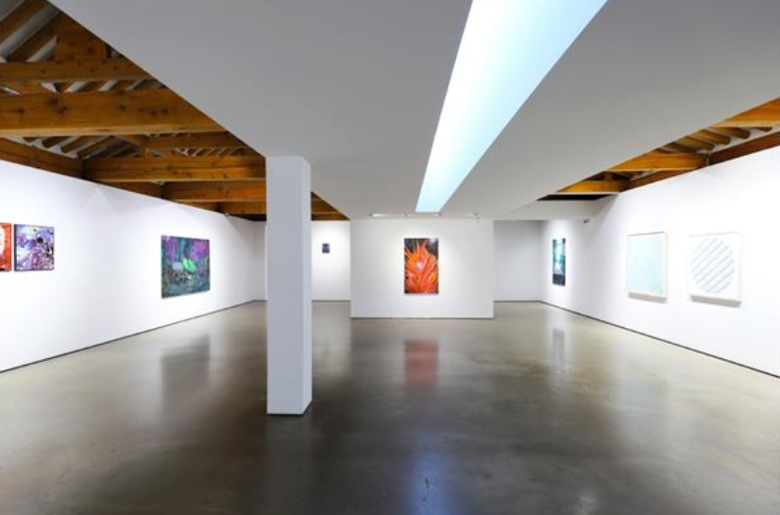
While viewing artist Ji Geun Uk’s solo exhibition 《Gap of Afterimage》(2021), one question came to mind. How does he resolve things when he loses his way or faces mistakes during the working process? Since I was not distant from the artist, I was able to hear the answer immediately: “Start again from the beginning.”
As someone who reaches a result by encountering various variables after the starting point, I found his answer interesting for a certain reason. A passage from the science fiction story “Story of Your Life”(Ted Chiang) intuitively came to mind. In the story, there are explanations about the path of light traveling between a starting point and an endpoint, and about the will of light itself.
To me, this story came across as a story about a painter who breaks through the possibilities of each moment. I pictured two people in my mind: one who connects two points with a straight line, and another who reaches the result by drawing a path in the shape of an s or w. The clue for the exhibition was formed through conversations shared over the course of a year after reading the story together—conversations about language, painting, will and result, and determinate or indeterminate paths between a starting point and an endpoint.
In that process, from the comparative and opposing terms revealed between the two artists, another question also came to the surface: is the relationship between artist and work inevitable? As each artist enters a period of redefining their own practice, what kind of hyperbola concerning solidarity and escape might these conversations trace?
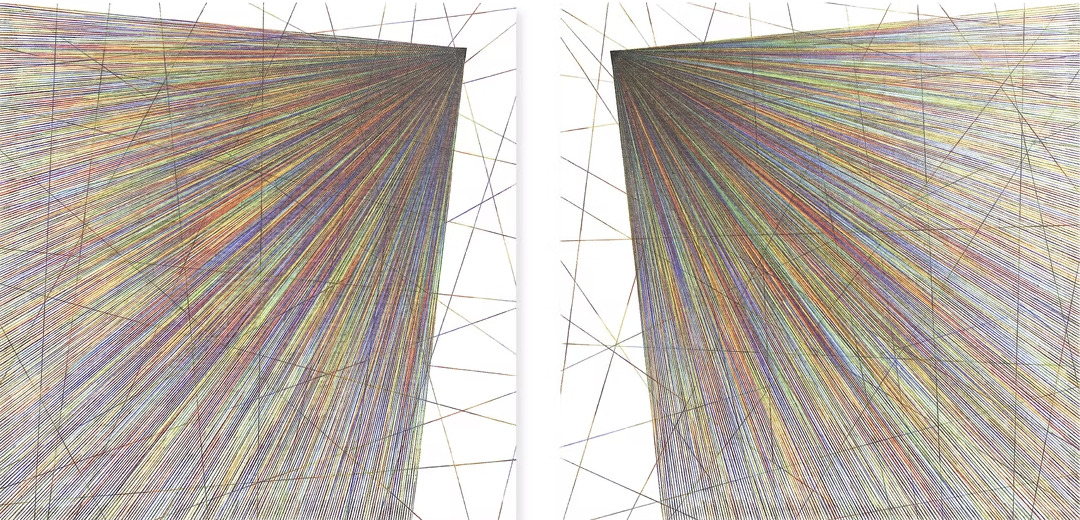
The starting point of the exhibition was Park Seok Min’s question: if the path from the beginning to the completion of a work is clearly determined in advance, to what extent can other options encountered in the process be allowed? In fact, his own work had been tracing a trajectory in which the causal order became increasingly clear, and the line segments in his paintings were also adapting to the shortest route toward the target point.
Around the time he recognized that the work was converging too strongly toward a linear orbit, Park Seok Min shared thoughts on the path of light, will, and results. Although the two artists’ works have entirely different qualities, they share a similar painterly sentiment in that both begin from an interest in what lies behind phenomena.
The idea of the Lagrange point came to mind because I thought a more total resonance could be achieved through the form of juxtaposition. A Lagrange point refers to a specific point, or more precisely a specific orbit, between two celestial bodies in outer space. At this point, objects such as satellites are granted a kind of freedom from the gravity of the celestial bodies and can form their own orbits.
The two artists imagined a picture in which they maintain an appropriate distance and balance, approaching one another while preserving their own independence. I hope that the process of small agreements and collaboration may become a practical methodology that accepts unexpected paths, variables, and forms, and approaches current questions.
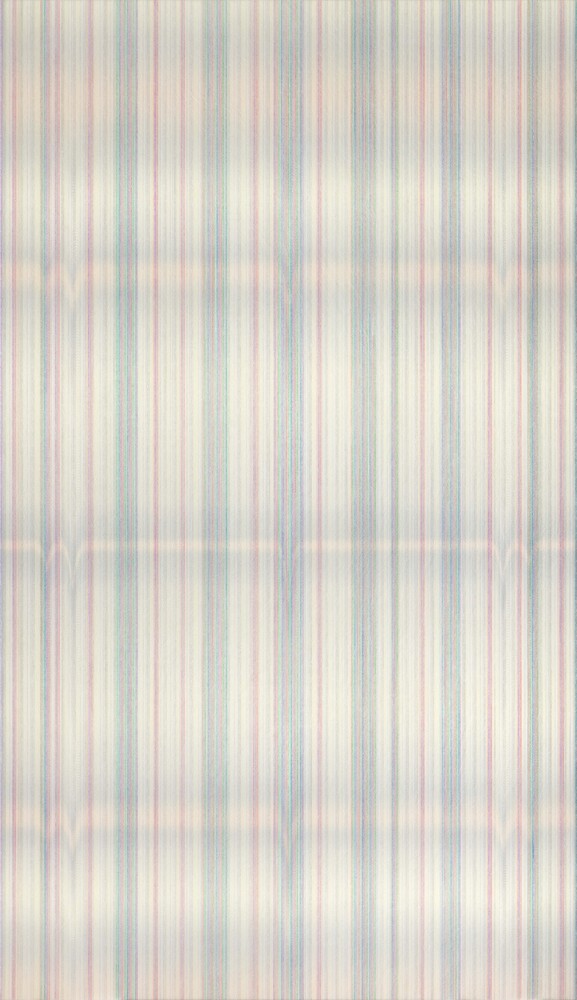
I have been working on projects that propose a form of “looking” toward thought in order to approach the unknown object called the “present.” This is an attitude that sets up a kind of immaterial curtain between painting and viewer, seeking to discover new possibilities for painting that connect the inside and outside of the world.
Recently, I have focused on a series of works that deal with objects that create dissonance with the sentiment of painting and generate the viewer’s movement. This is a methodology for visualizing the point of contact between painterly events, each moving at different speeds, and an uncontrolled unconscious.
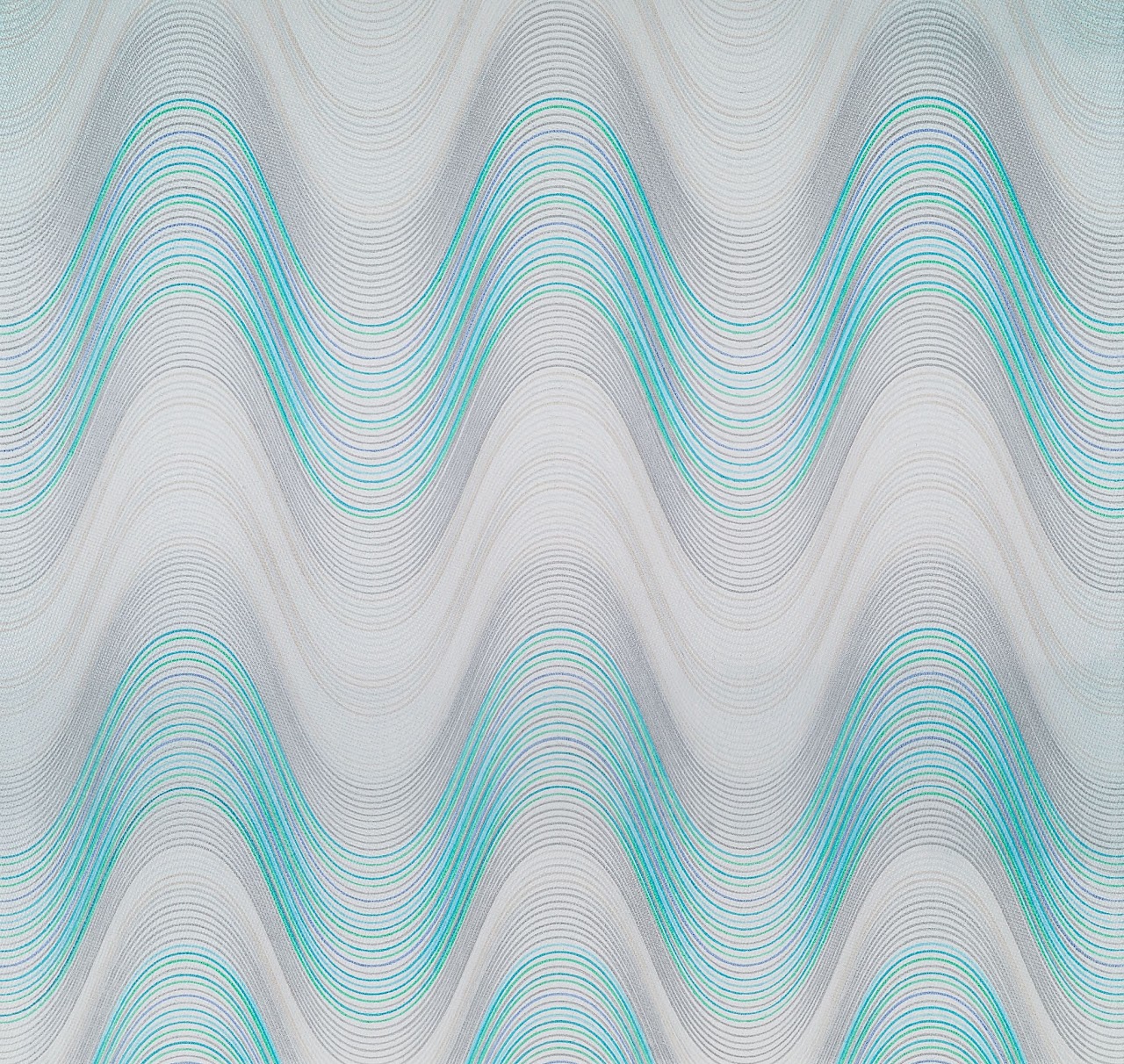
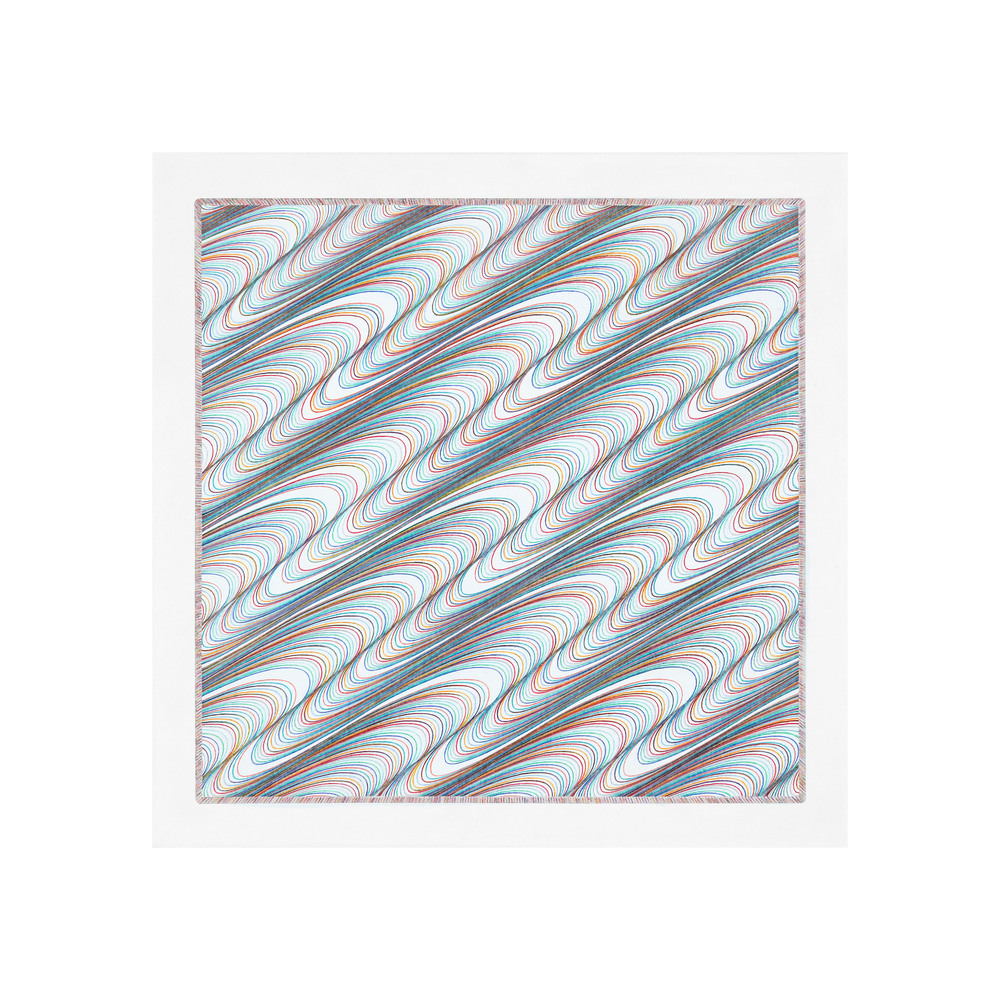
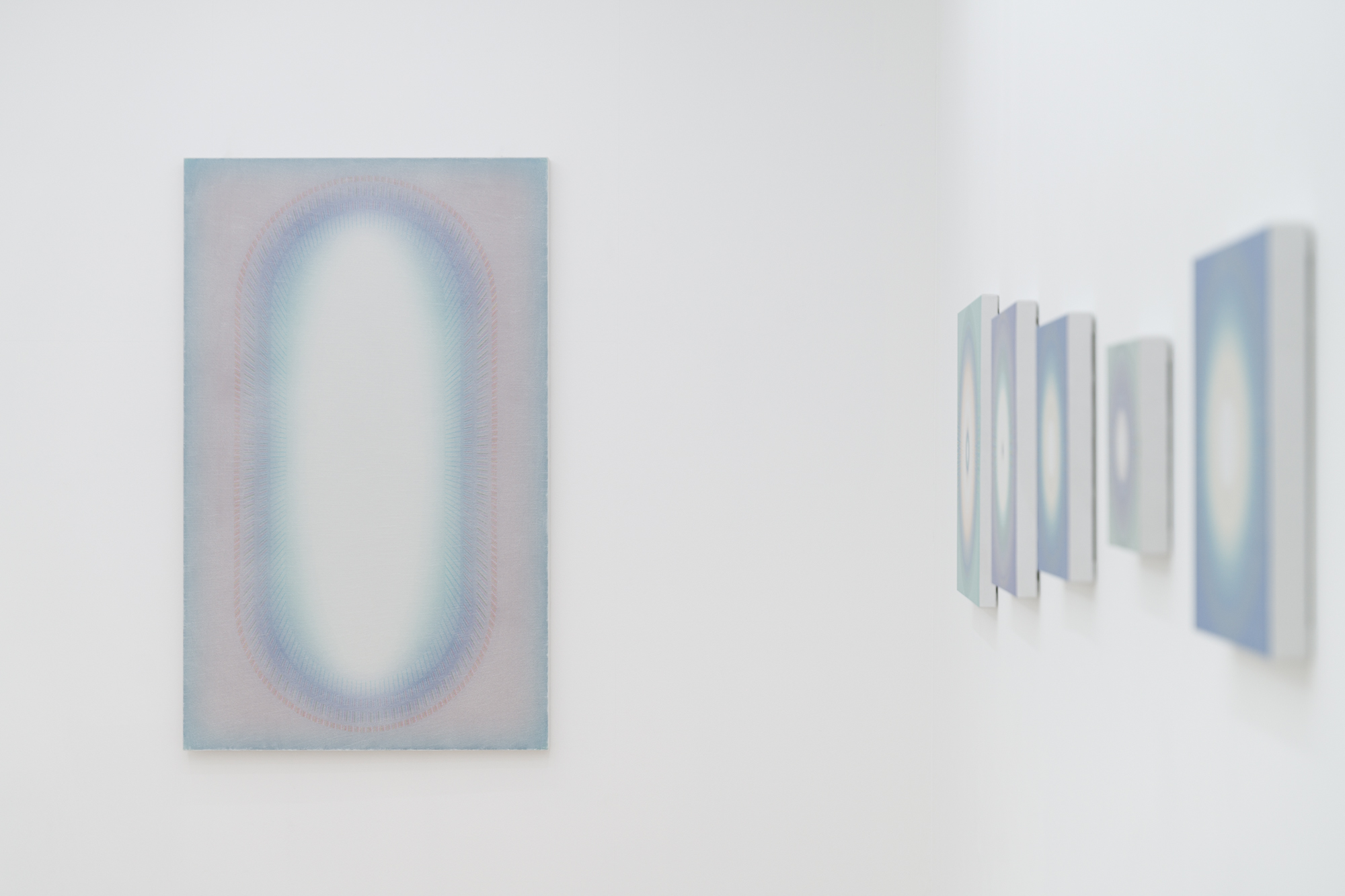
Even as the need to redefine art continues to accelerate, painting is still regarded as the only means of coming into contact with things that are invisible. The world of vaporized experience I deal with in my work is located at the opposite point from the non-experiential universe that can be found in Ji Geun Uk’s picture plane. Yet a clear similarity can be found in the fact that both seek to expand retinal issues that arise between gaze and object.
In this exhibition, we considered together how to transform the passage toward an invisible world into the dynamic context of the exhibition and exhibition space. I hope that the conditions of looking indicated by stains less than one millimeter thick may converge into contemporary questions concerning mental and physical attitudes.
I often imagined small forces of resistance that are difficult to sense intuitively, like the grip strength needed to pick up a grain of sand and crumble it. Just as the body’s sensory receptors naturally allow one to know, even with eyes closed, where one has extended one’s arm or from which direction the wind is blowing, this imagination led to a painterly will to materialize an image without an object as though it had always existed with a specific outer contour.
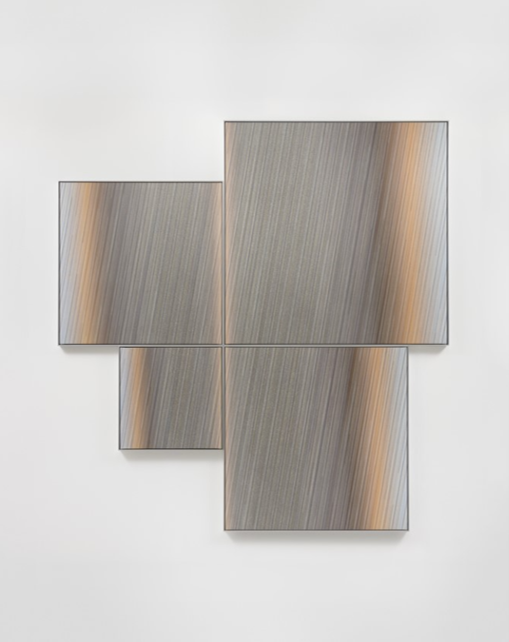
The works in this exhibition were conceived as standing once again at the starting point of that will, while placing variability along the path toward the destination. The areas of planes that form volume beneath the strokes act as devices that dislocate the arrangement of lines connected to the initial will, while also forming a connection between Park Seok Min’s particulate materiality and edges.
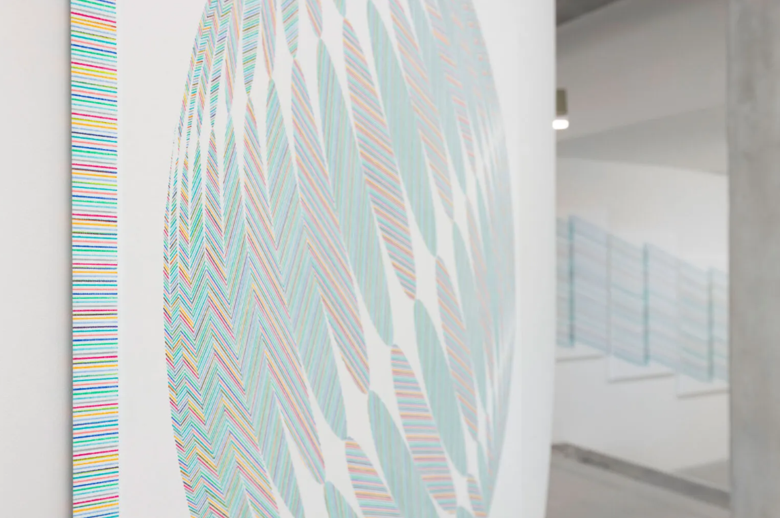
They are also a world of points occupying an intermediate state between a zero base and a macroscopic surface. Since they still perform a formal function in which the clarity of form becomes pronounced at close range, they head toward the opposite point from Park Seok Min’s dissolved world. Yet because they are placed in the same time and space, their visual inevitability seems likely to become even clearer.
In addition to a shared orientation toward light, immaterial, and dynamic images, we discussed how to simultaneously reveal differences such as line/plane, inside/outside, and experience/non-experience. As a result, we agreed to minimize formal distinctions such as size and composition while presenting an appropriate distance through which each artist’s work could be best revealed.
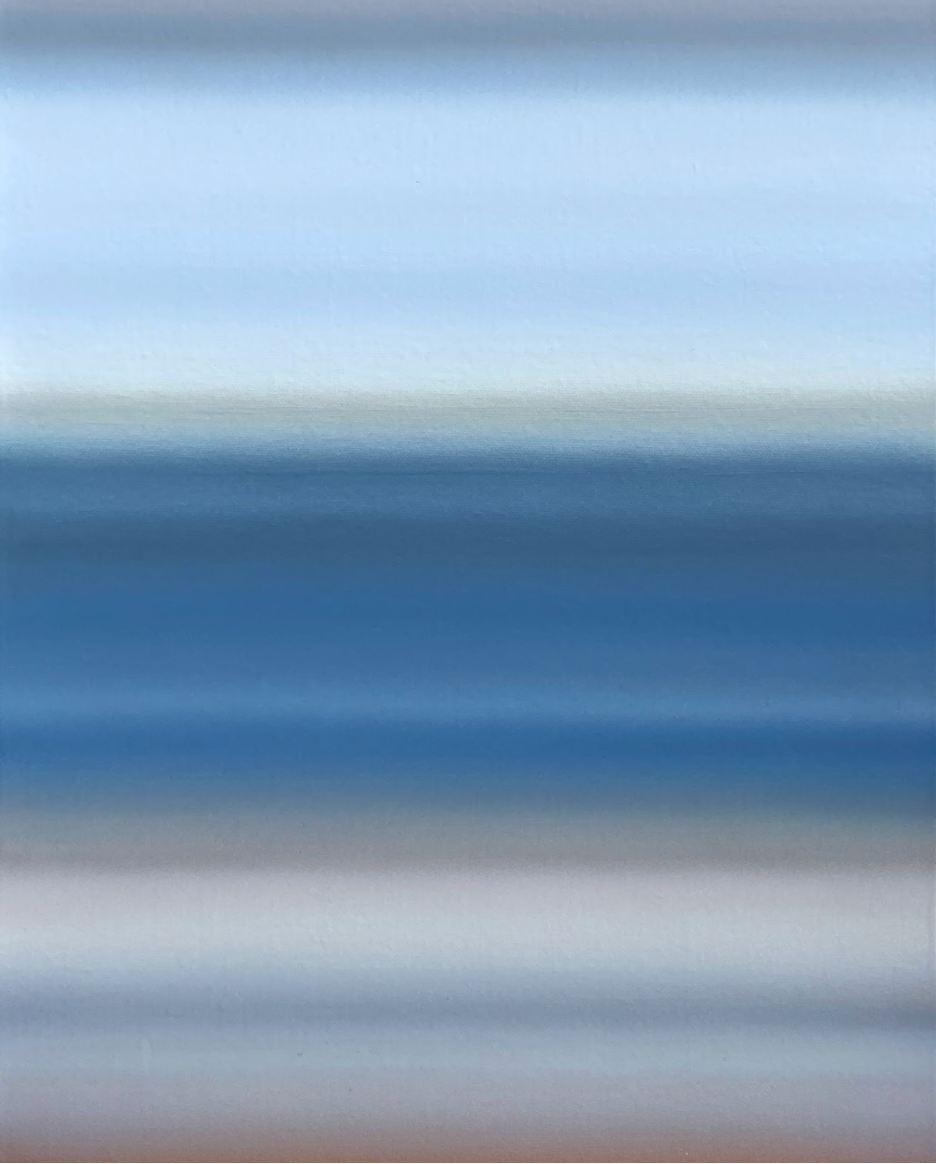
We wanted to transplant into the entire exhibition space the image, drawn from the referenced novel, of “the path along which light passes through the surface of water.” We agreed to set the glass structure at the front of the exhibition space as a vertically converted water surface, and to organize the space so that the fleeting moment of light’s movement could be sensed through the parallel paintings of the two artists.
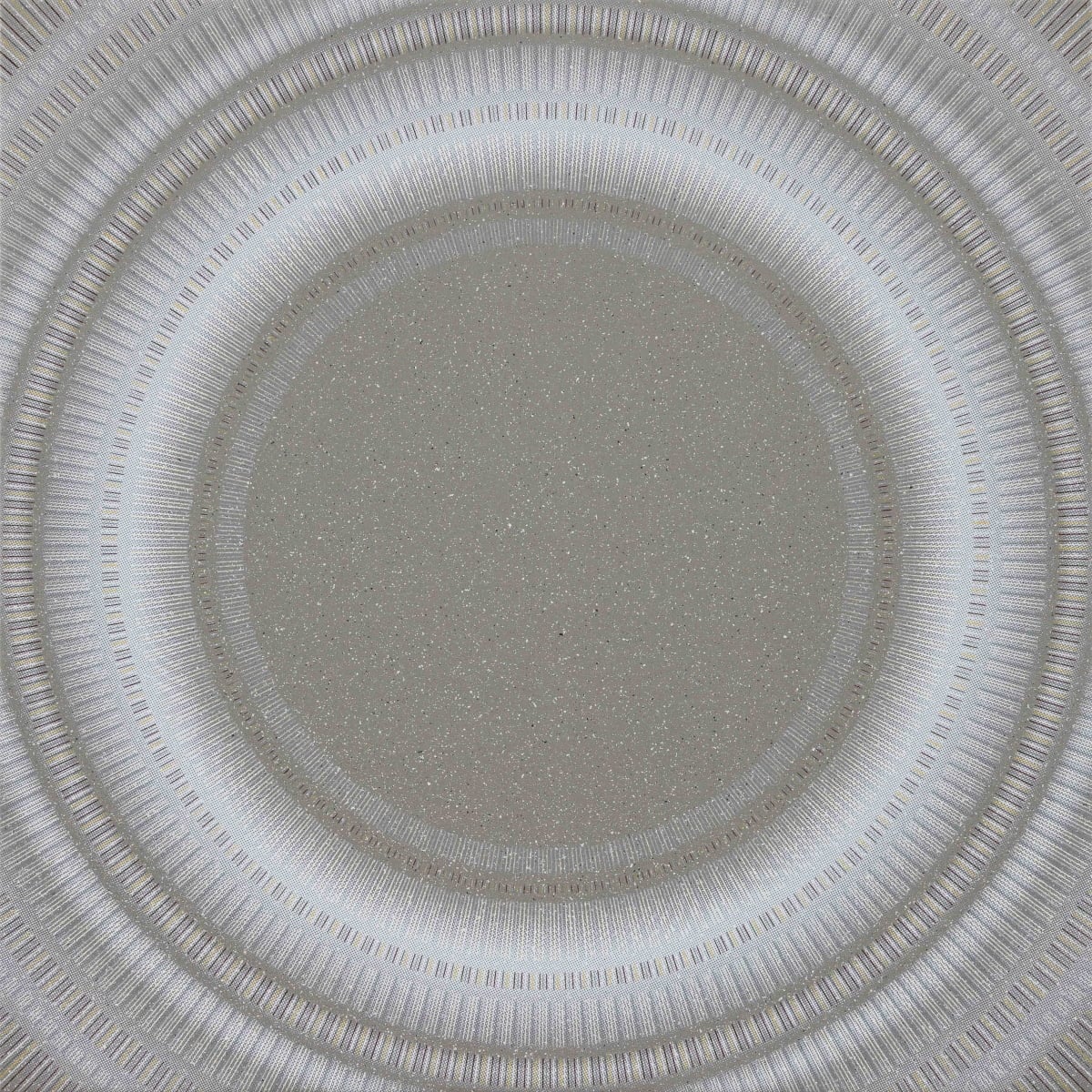
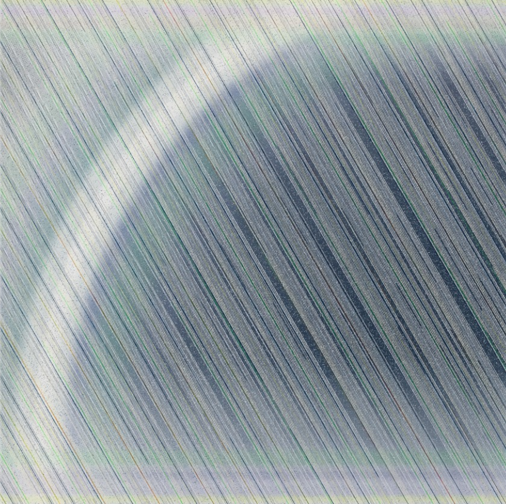
The main idea in both the collaborative and individual works was to set up the structure of the frames so that the paintings would share each other’s edges. Ji Geun Uk’s works become clearer the closer one approaches them, while my own works become clearer the farther one moves away.
By aligning the cross section passed through by the blade of a hypothetical massive form with the straight and curved edges, and using this as a reference point, we judged that the dynamic energy through which each artist’s work becomes visible in opposite directions could be amplified.
Just as actual conversation takes place in order for an event to become truth, the works of the two artists draw out a denotative dialogue in their respective languages of different forms. In the context of a “variable path,” the exhibition space is in the state of variable particles whose elemental properties may change according to a catalyst—in other words, a state before becoming anything. We wanted loose air to circulate, but excluded any method that would make the difference in temperature converge toward a median value.
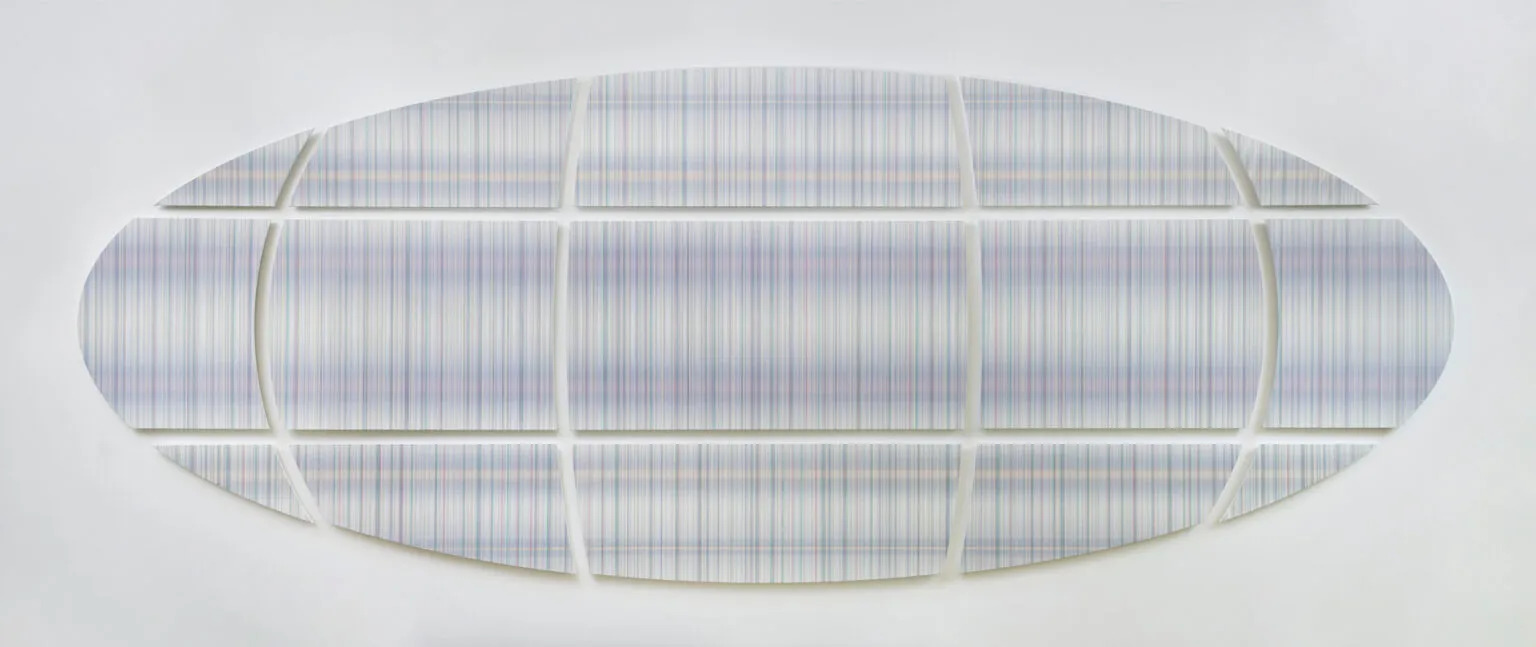
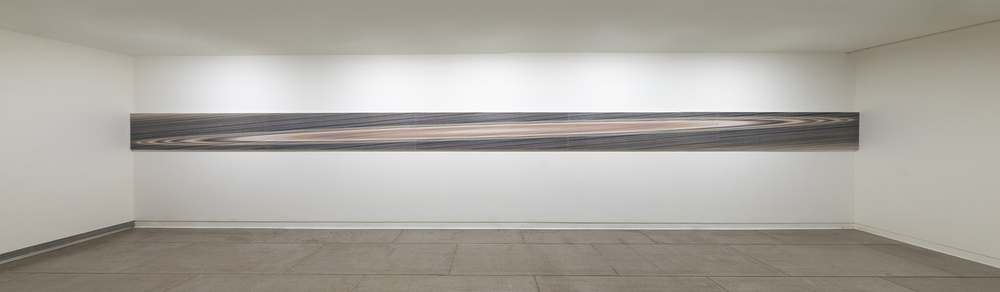
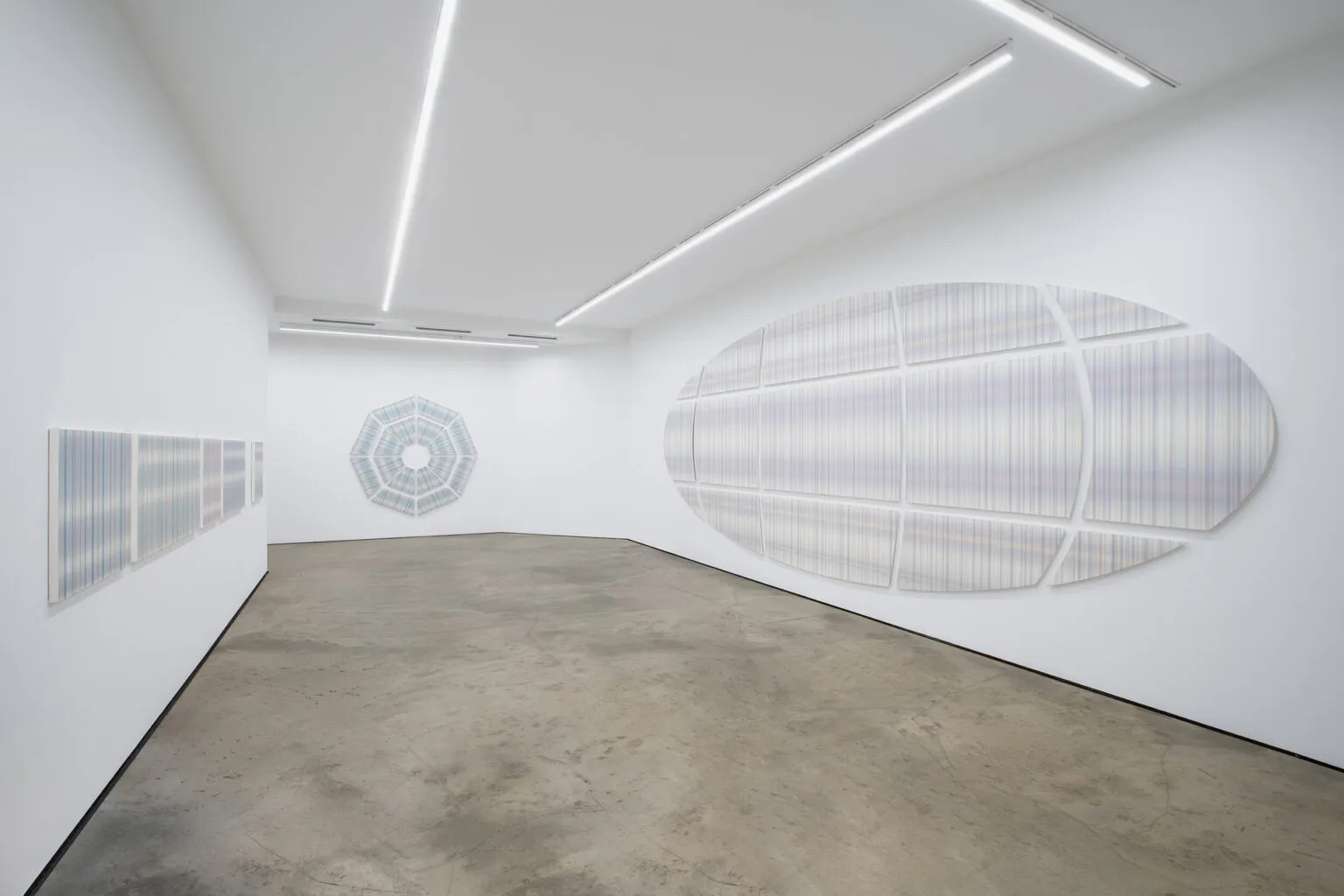
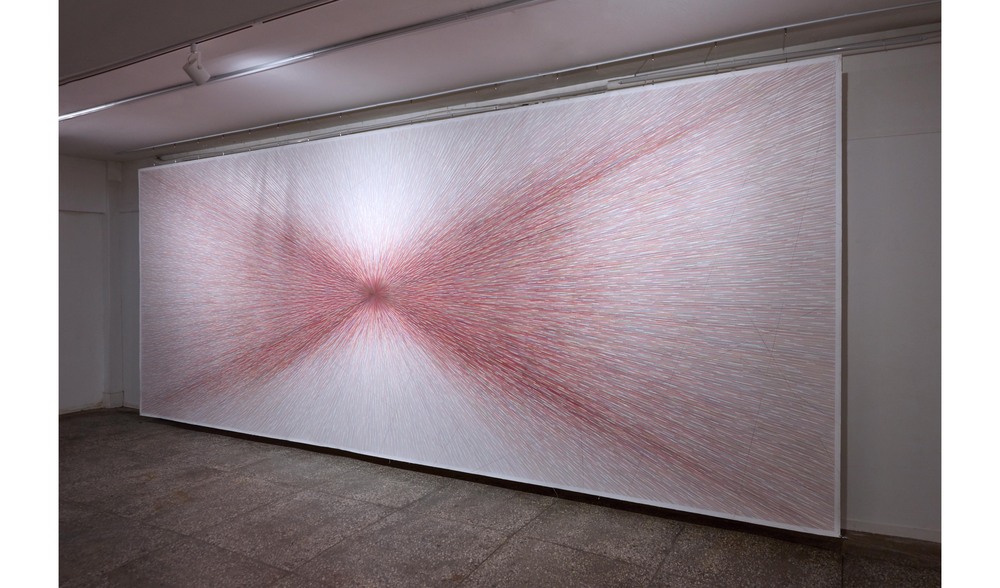
At the same time, like the sensation suggested by a Lagrange point, we sought to maintain an appropriate balance that does not lean toward either side, while allowing the focus to blur from certain viewpoints and draw in temporal gaps. The collaborative work that appears at the very end of this event, sharing the edge of an oval, was something agreed upon from the earliest stage of the exhibition composition, together with the setting of the water surface.
The oval that appears at the end of the horizontal progression is a form intended to maximize a dynamic mental image. Unlike the individual works, we discussed in advance that it would take a radial shape so that the sensation of speed moving from inside to outside, or from outside to inside, would precede the viewer’s experience.