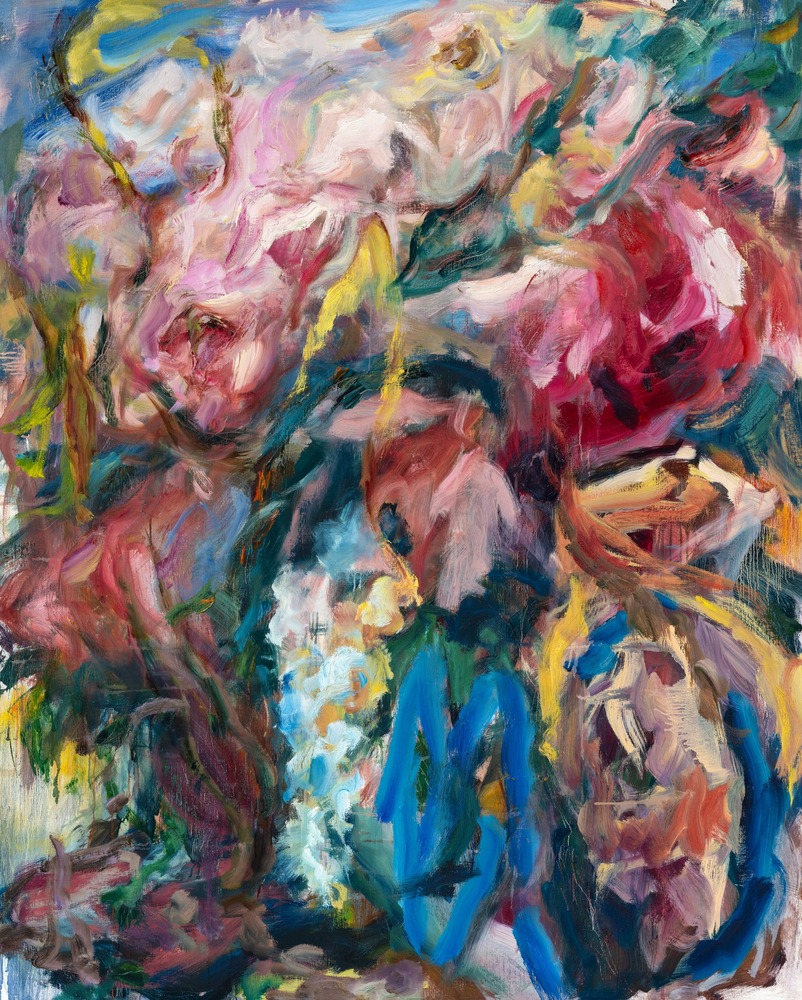
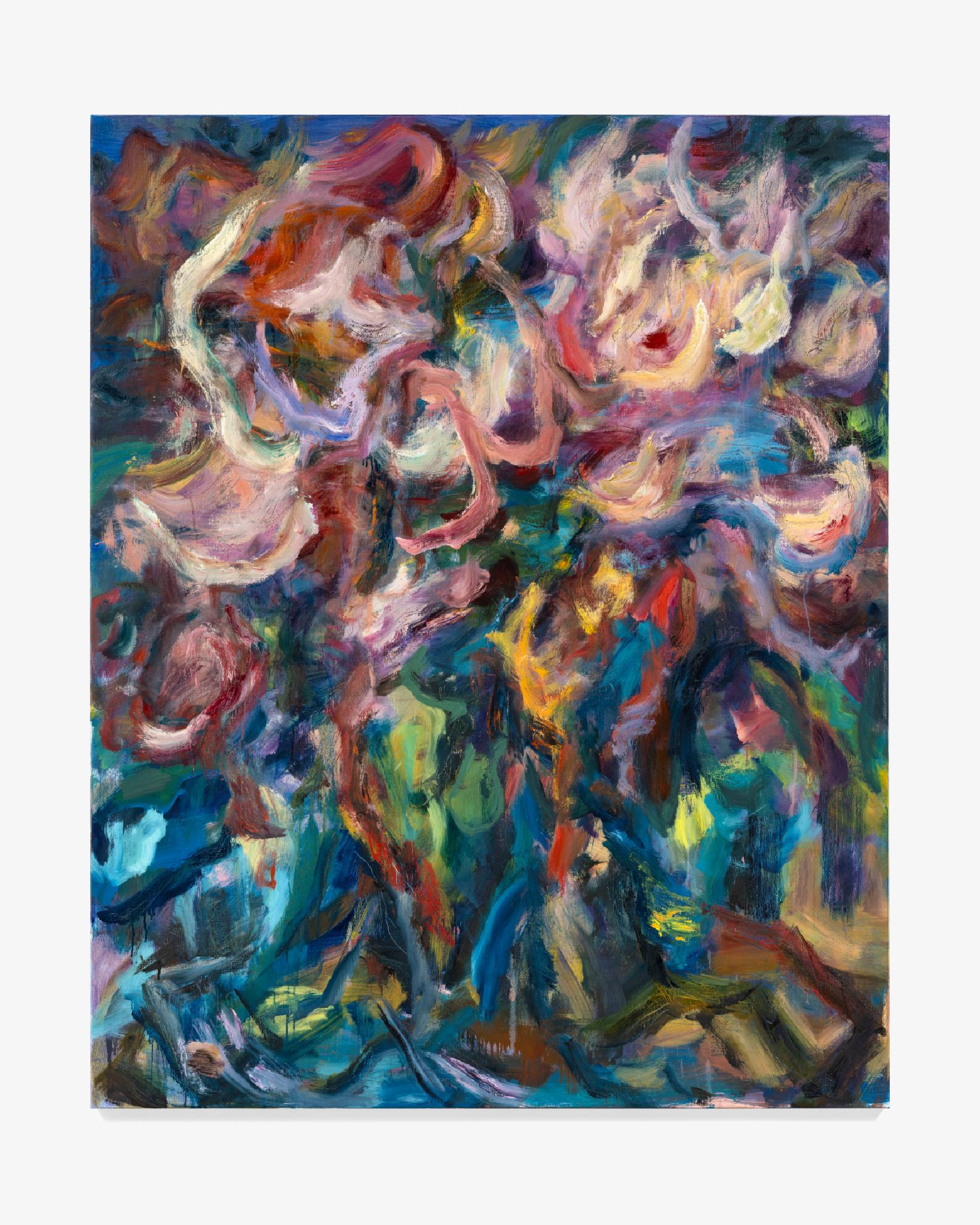
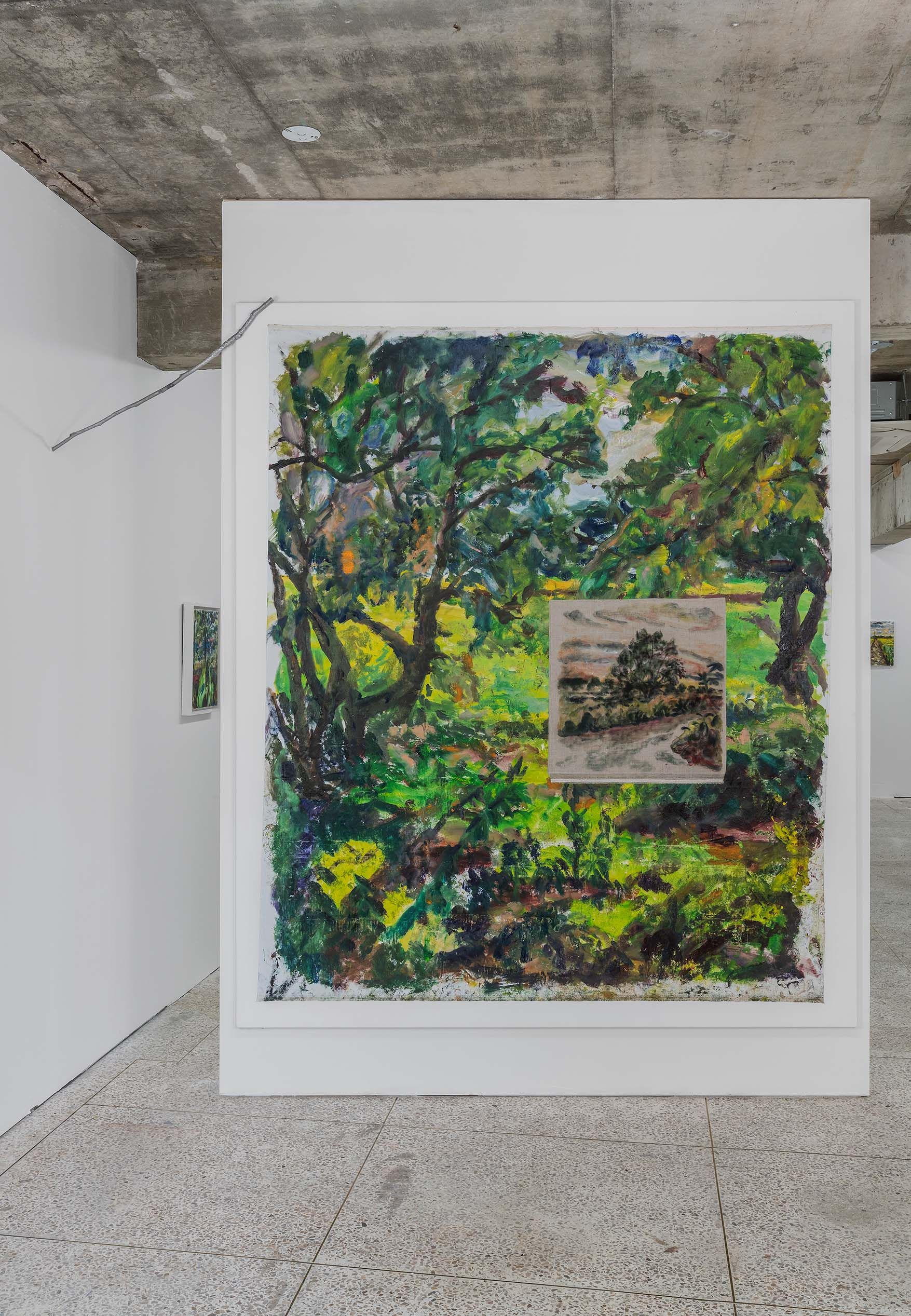
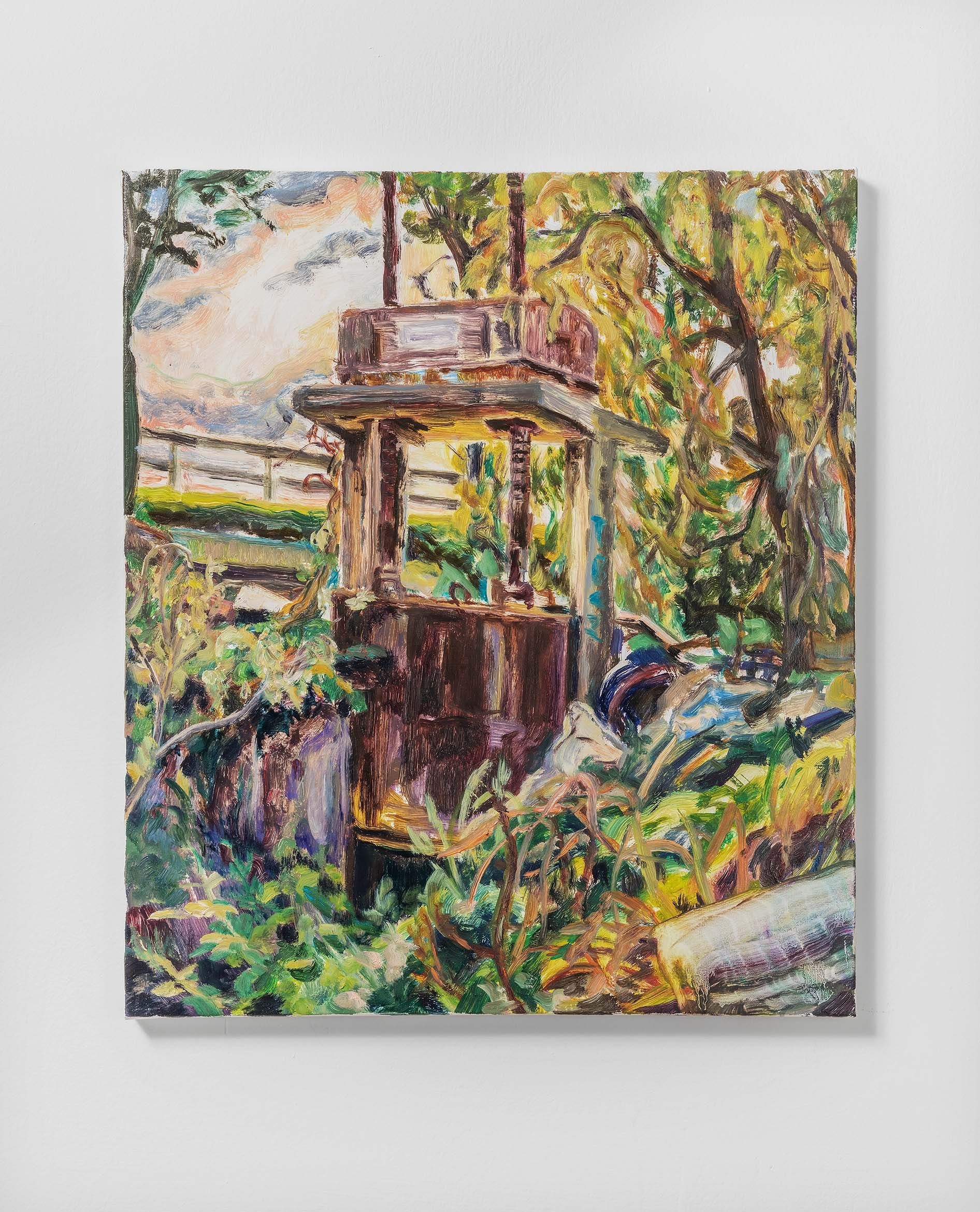
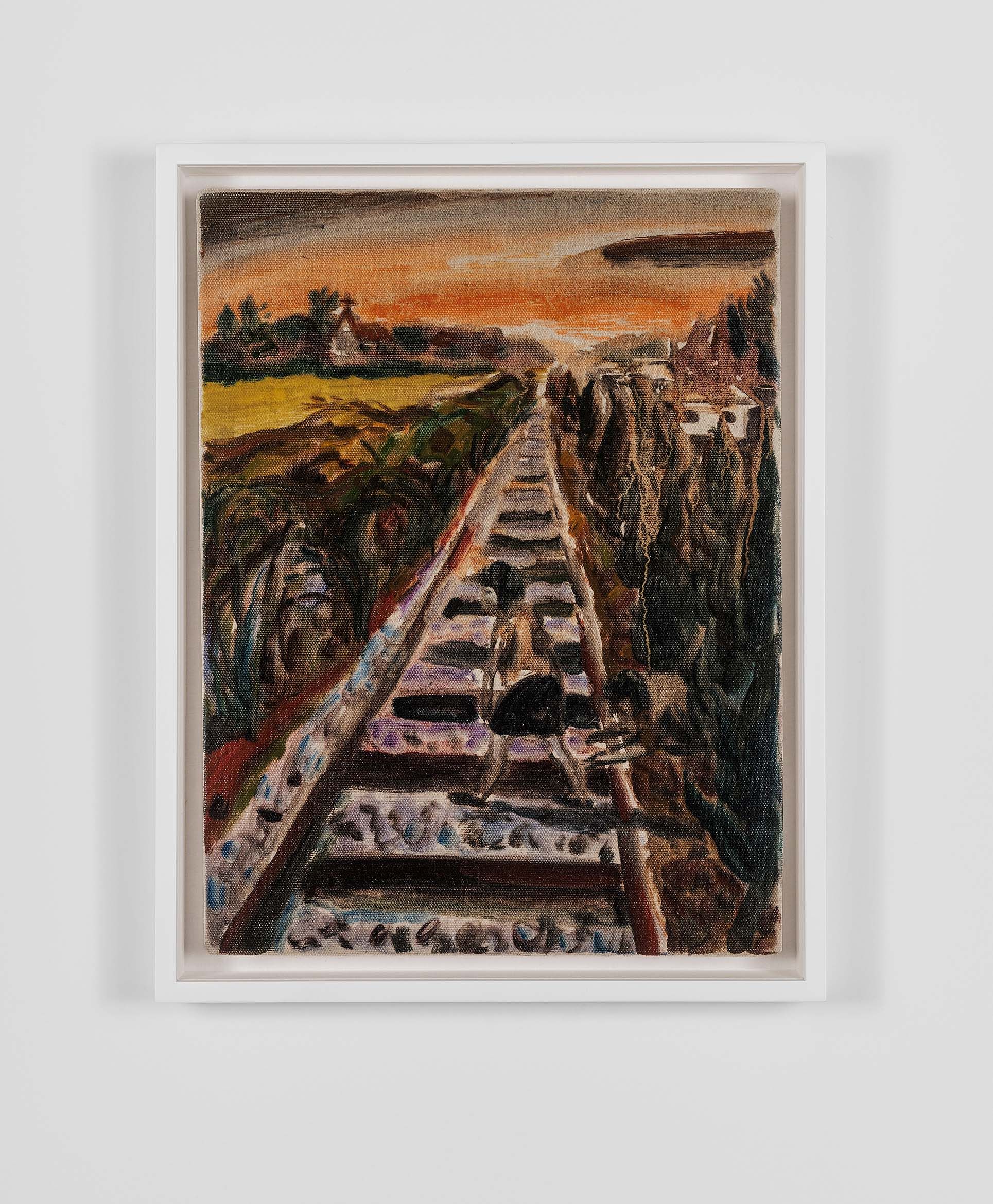
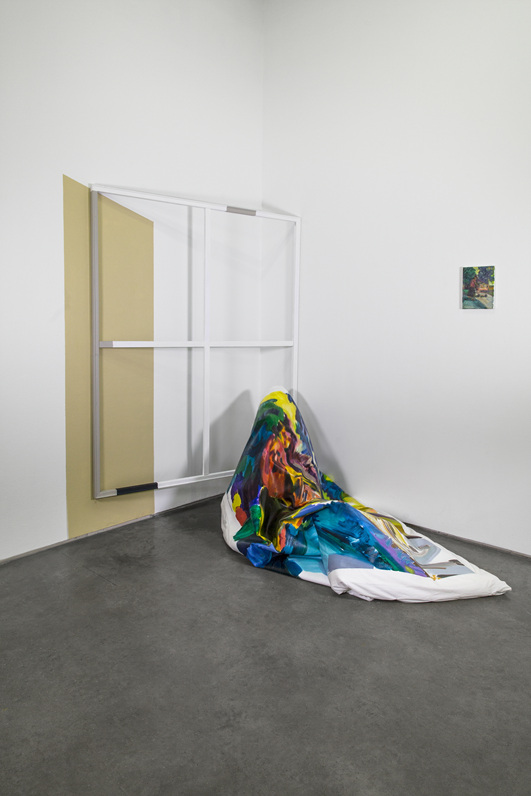
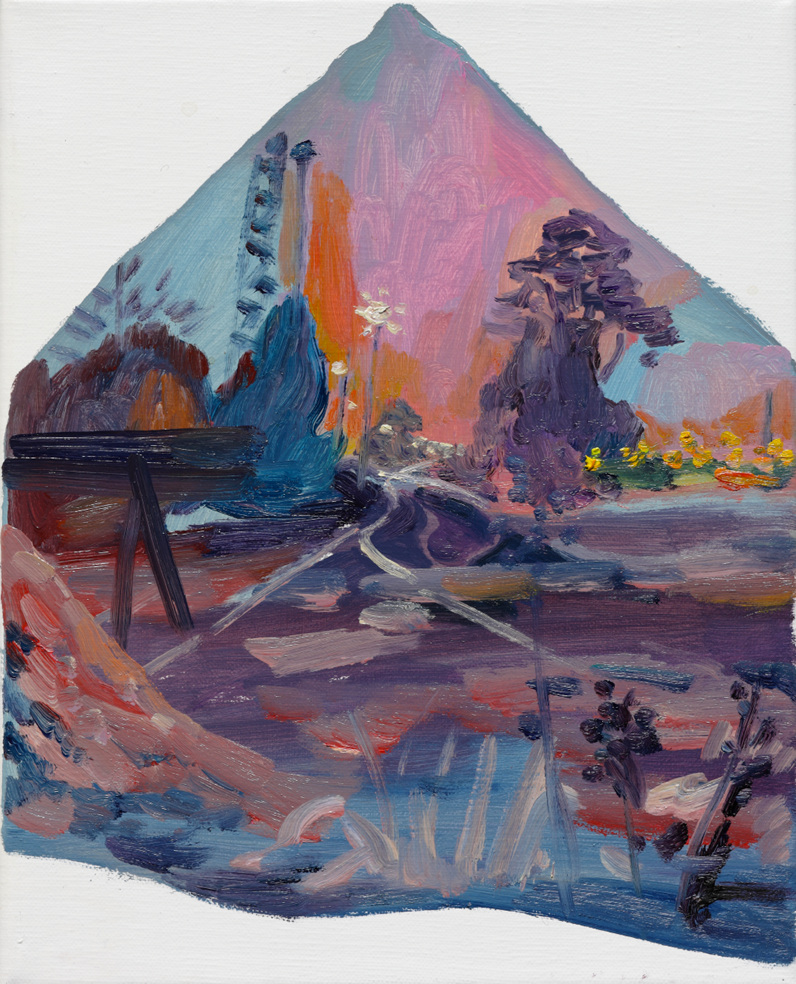
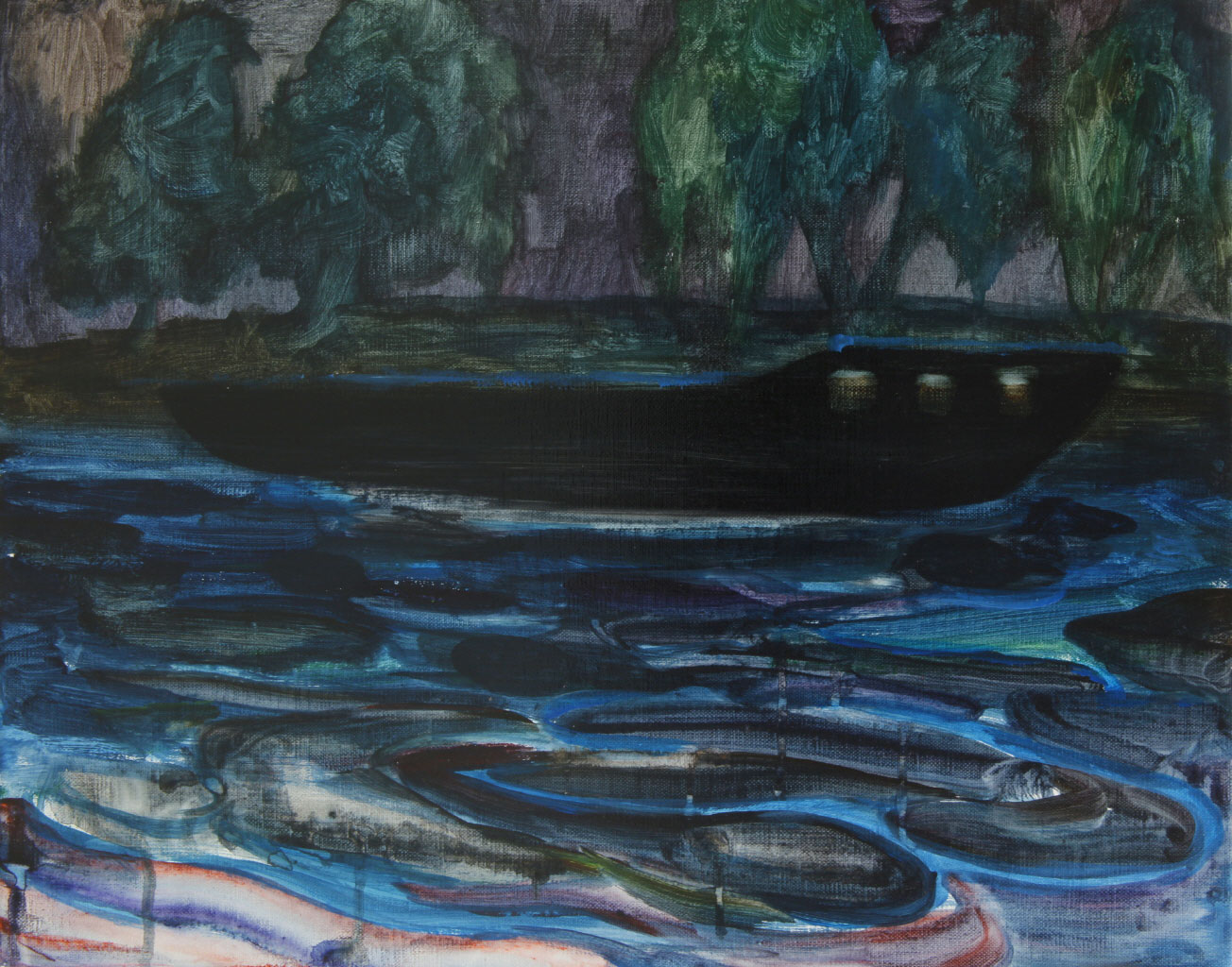
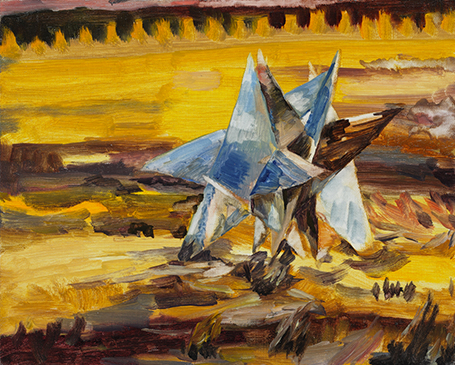
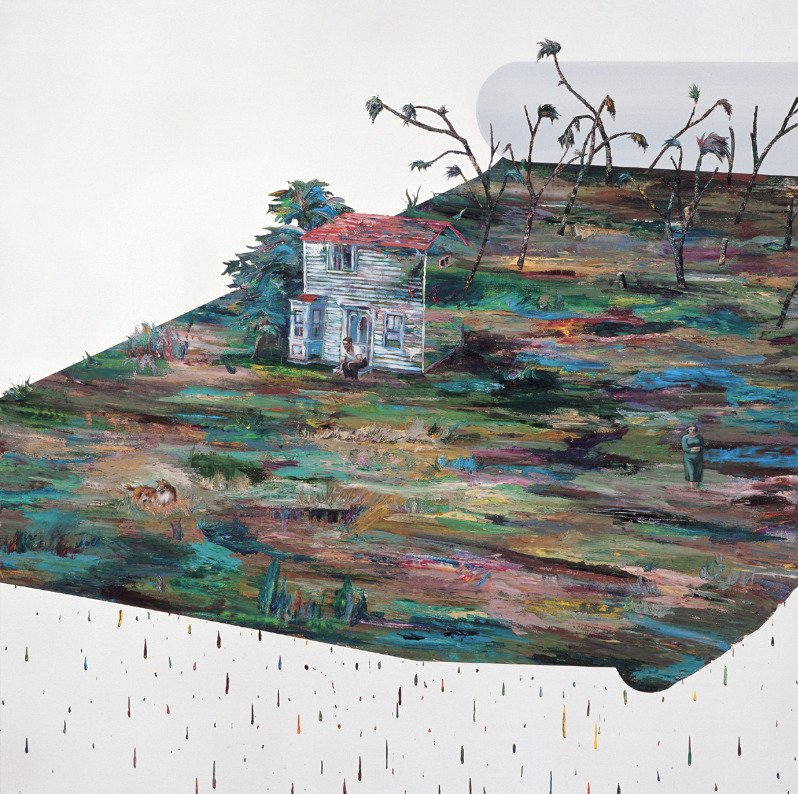
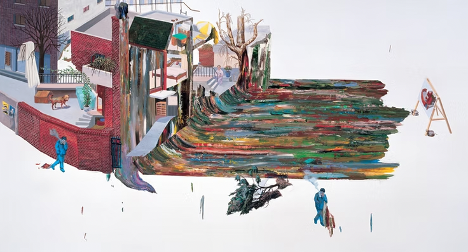
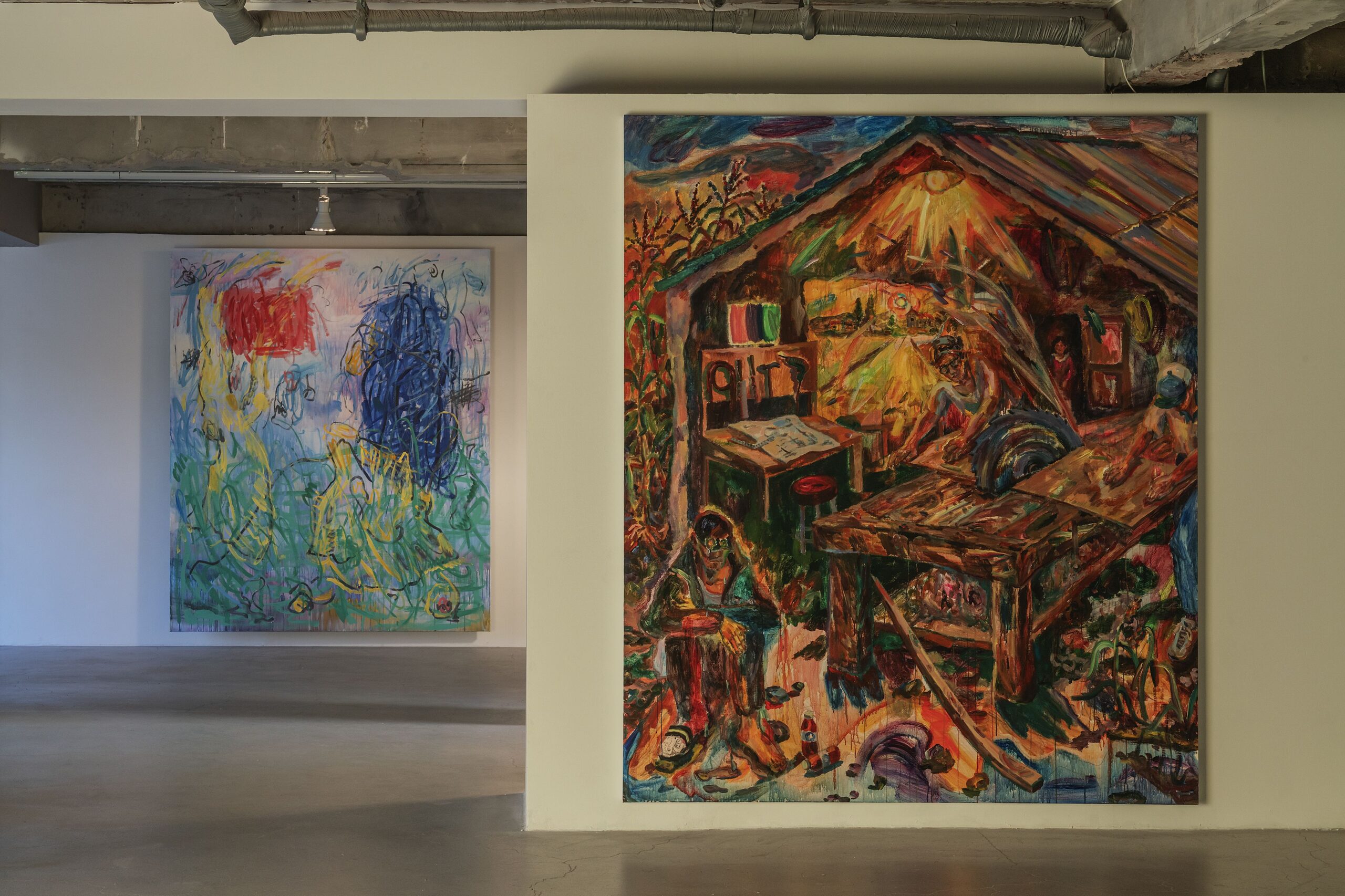
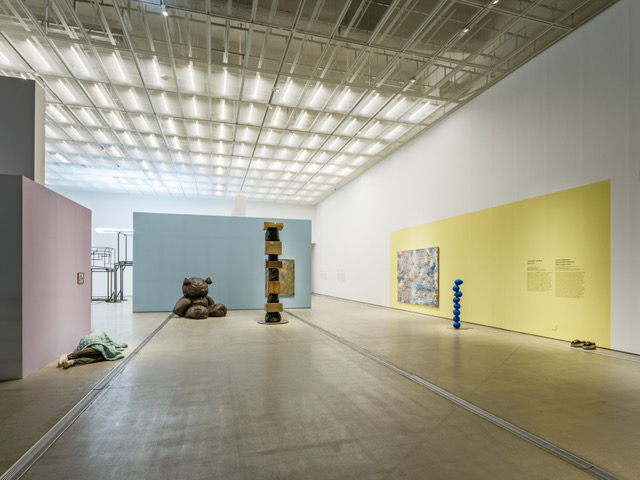
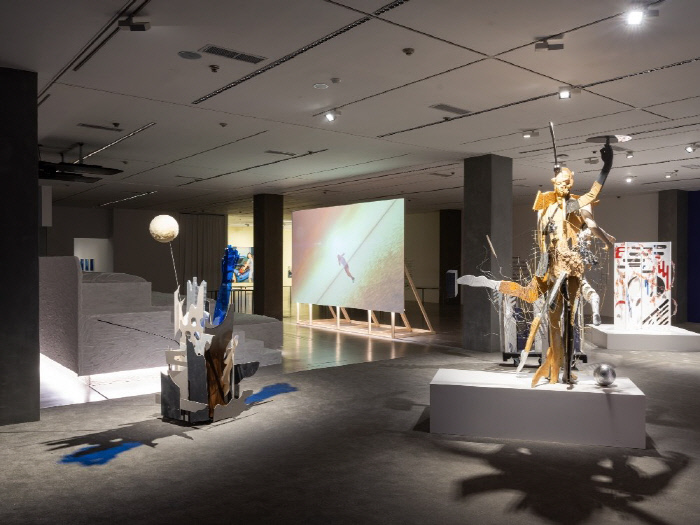
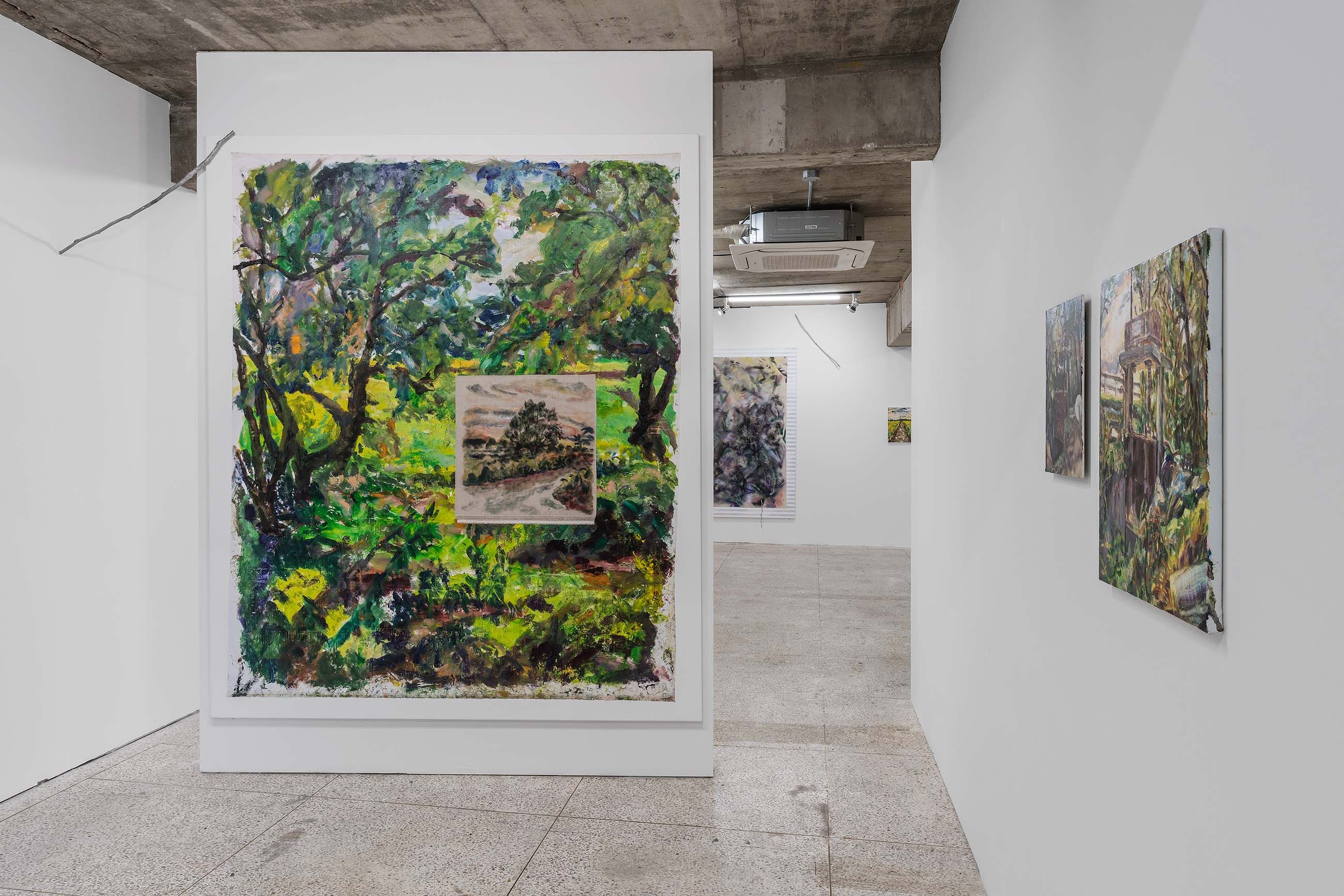
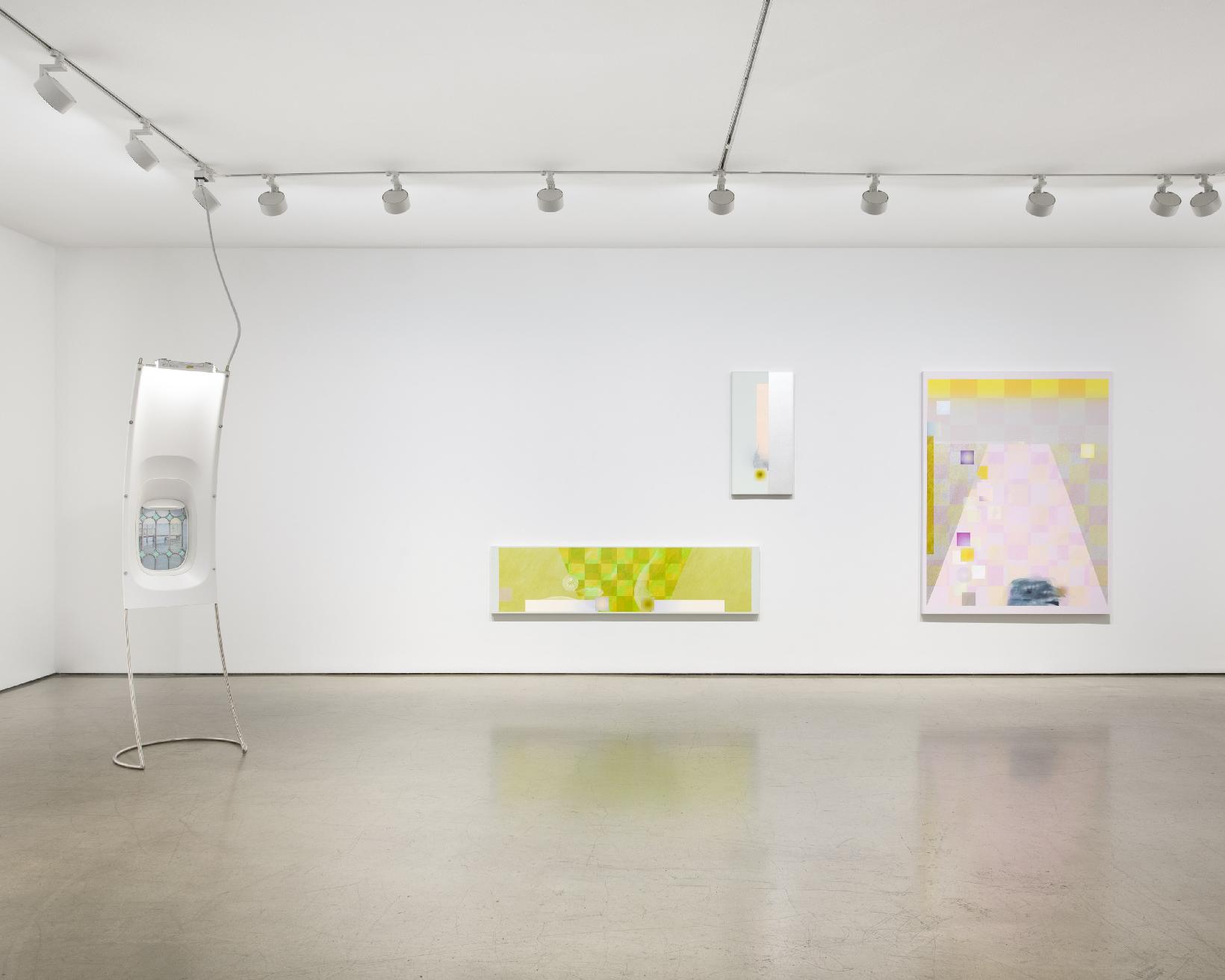
Installation view of 《L. Practice》 (Museumhead, 2022) © Museumhead

Hyein Lee checks the weather. For an artist who has long painted outdoors, the weather often becomes an object of devotion. The weather was an indicator that determined the place, time, and condition of painting: whether she could pull the cart containing her tools, whether she could spread cloth on the ground, whether she could make brushstrokes or spray paint. It was almost everything about the painting.

The light, temperature, and humidity of that day accompanied the artist’s breathing and bodily movements, and determined the condition of everything visible, including the form and color of the painting.

And the weather cannot be checked. The weather of the day cannot be fully grasped through the mischievous symbols of the forecast that provide information such as temperature, wind direction, wind speed, and precipitation. On one clear day, it may be difficult to withstand the pouring sunlight, while on another day everything appears vividly.

A path through a rice field is so soft even on a dry day that one’s feet sink deeply into it, and even on a day when she goes out after seeing an apparently fine sky, she often encounters a shower and trudges back. The moments of constantly changing weather have neither a fixed direction nor a pattern. They are diverse yet similar, momentary yet continuous.

Installation view of 《L. Practice》 (Museumhead, 2022) © Museumhead

Unpredictability returns the weather to something extremely personal and experiential. Depending on one’s mood, even a clear sky may feel endlessly heavy and gloomy; there are days when the noise of cars passing along the road sounds unusually irritable, and days when she returns having heard nothing at all, only painting continuously.

The weather often makes one perceive something completely unrelated to it with extreme sensitivity. In this way, the weather, which can never be exhausted or become boring, tells us how painting can be both comprehensive and, at the same time, absurd.

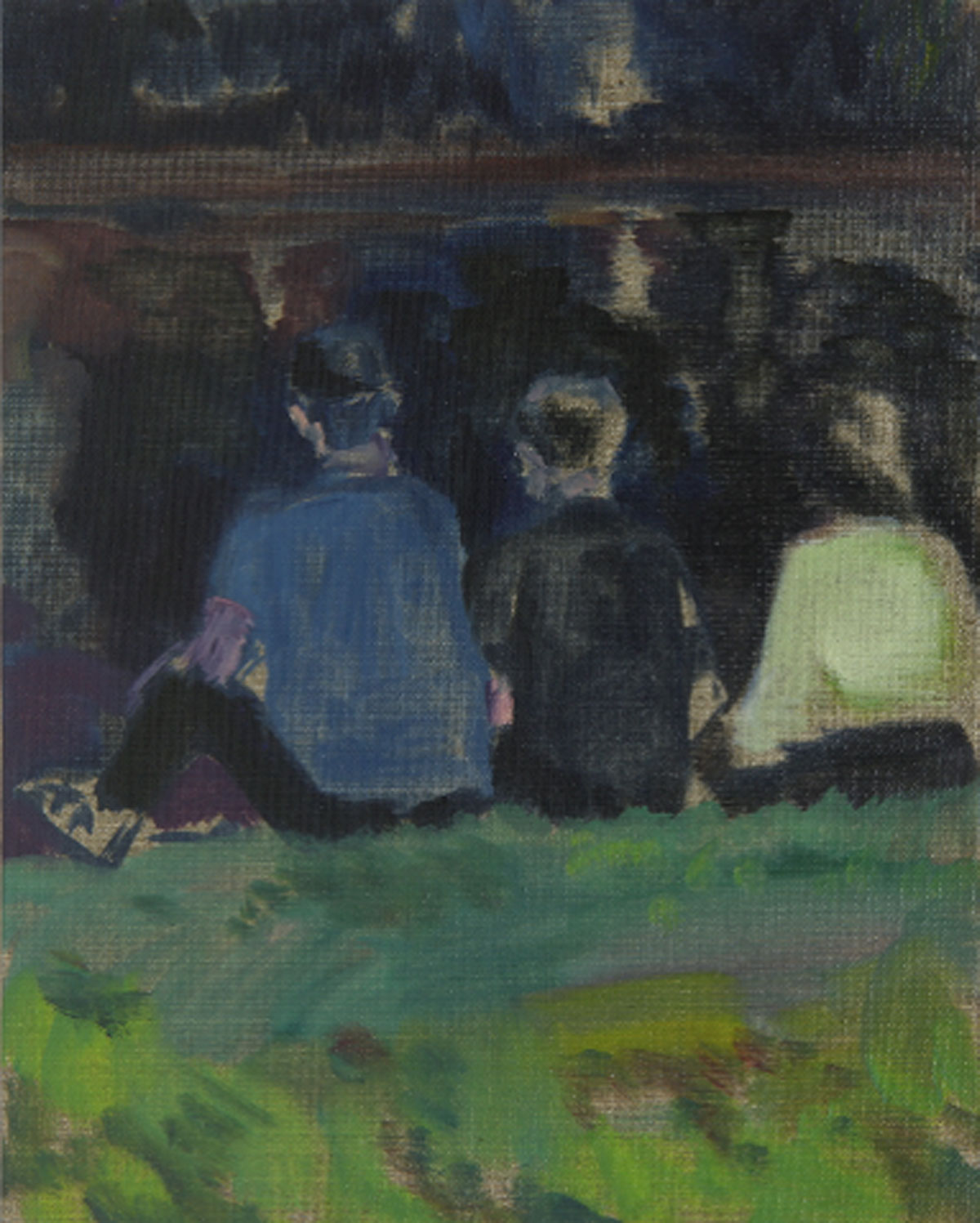
For this reason, Hyein Lee may be following the weather. The artist clearly goes outdoors, to a specific place, in order to paint, but she does not reproduce the landscape before her eyes. The artist, who knows better than anyone that the representation of an object is an impossible plan, may have gone there in order to face the invisible things that push through the gaps in the landscape, as if experiencing the weather.

Her work is not the execution of a fixed procedure, but the acceptance and application of variables and confusion, or resistance to them, and the painted landscape is the result of focusing not on the indication of a specific place, but on personal experience, emotion, and memory.

In the day and place inside the painting, thoughts and memories that transcend fixed time and space coexist, such as a place the artist once visited in the past or a person she happened to pass by. The place in the picture plane where the visible and the invisible are mixed certainly exists, but it is not absolute. It responds to, competes with, and recalls specific places and situations.

Installation view of 《L. Practice》 (Museumhead, 2022) © Museumhead

Then where can we say the place the artist found is? If that place in the painting is closer not to a physical location but to somewhere within the individual’s inner world, how can the concept of plein-air painting, which has explained the artist’s work, be reconsidered? In this solo exhibition 《L. Practice》(Museumhead, 2022), the artist stops going outdoors.

Instead, through devices that transform outdoor environments into a kind of data, she partially automates the experience of being outdoors itself and tries to focus on the personal thoughts that naturally arise.

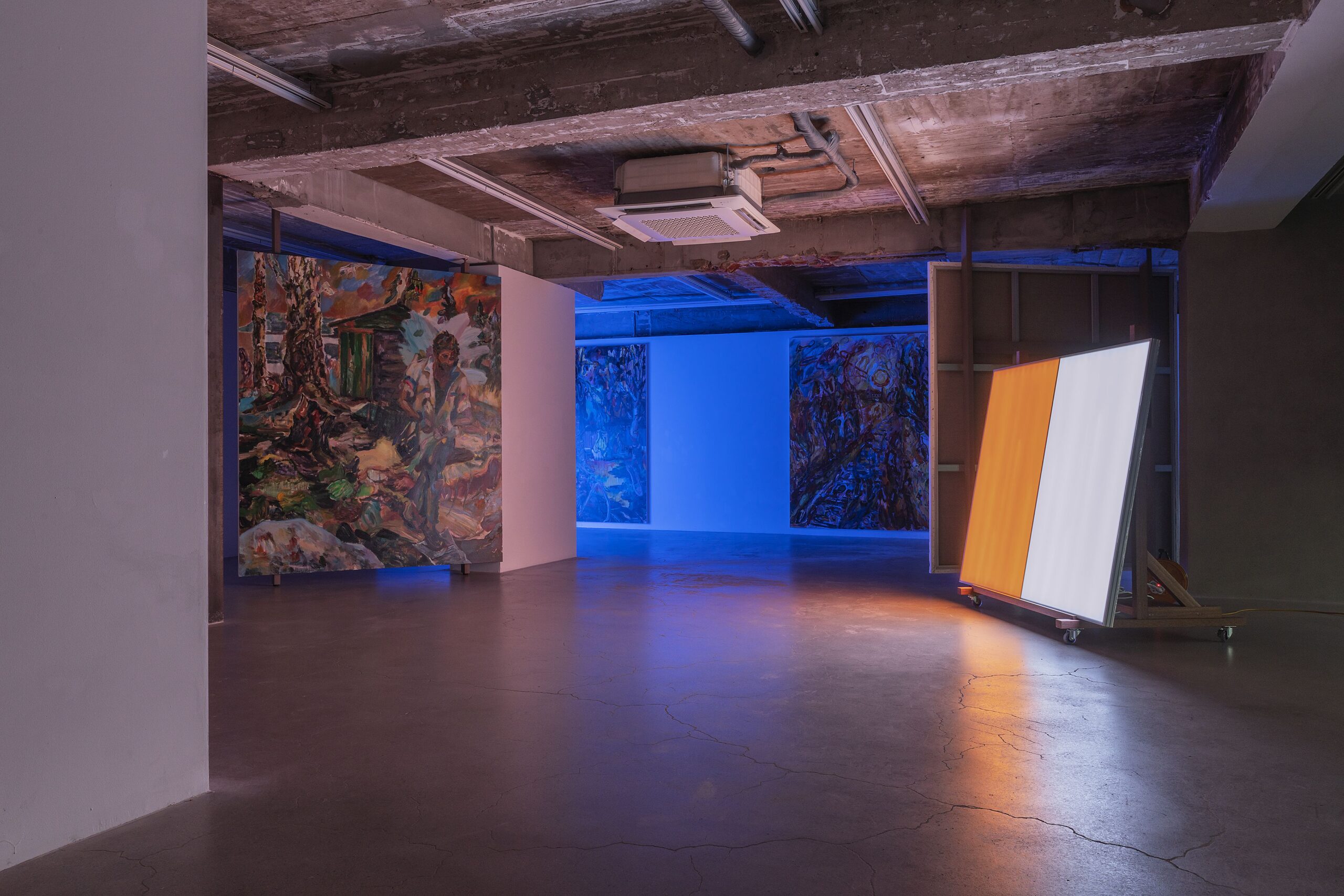
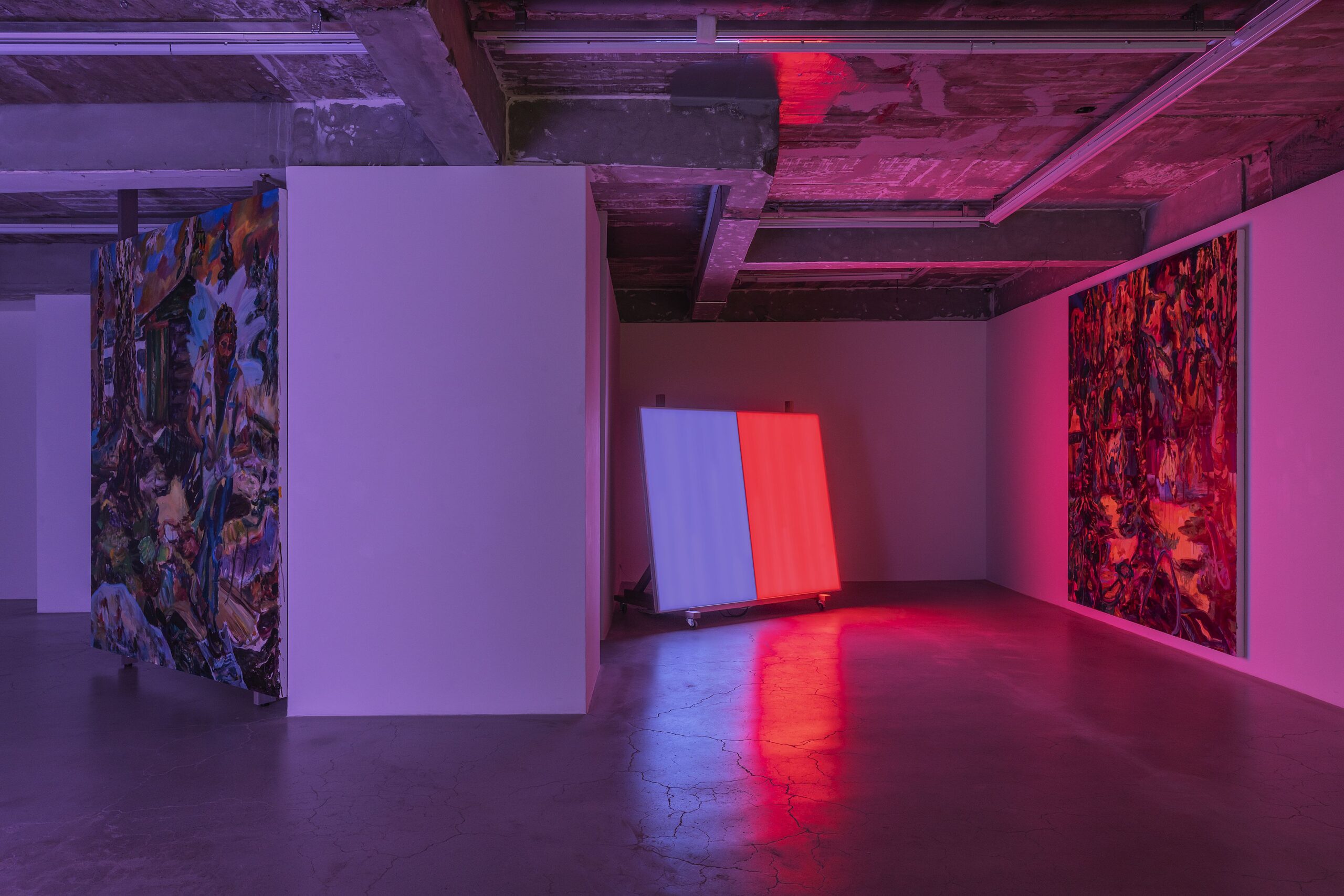
For example, in order to express the weather(clear, cloudy, rain, snow) as a sequence of color and time, the artist installs an LED lighting device that converts weather data from a specific region, generated by entering latitude and longitude, into RGB color. She then recognizes this as a virtual outdoor environment and proceeds with her work.

In the same context, she also conceives of a clay platform that becomes the actual site of painting and resembles the tactile sensation of the ground underfoot, as well as a drum set that converts the movements of the body there into sound and performs them. In other words, by virtually experiencing light, sound, touch, and other conditions of outdoor work within an indoor space, she seeks to bring to the foreground the invisible landscapes that derive and split from them.

What does the artist’s absurd attempt to replace unpredictable experience with simplified devices say? This artificial field of experience, which forms the premise of this solo exhibition, seems to set not only the environment of painting but also the act of painting itself as a kind of automatic program.

As explained above, in the artist’s work, where the visible landscape and the invisible personal landscape are mixed, the plan and will of painting tend to become invalid. Painting is naturally unsettled not by the surroundings but by the individual, not by the external but by internal sensations.

The devices devised by the artist ask whether her painting, although it has until now proceeded within specific environments and situations, was in fact an extremely natural, even automatic, occurrence that was not greatly influenced by external factors.

Installation view of 《L. Practice》 (Museumhead, 2022) © Museumhead

In fact, even within a mechanized environment, or rather in a state where what might be called an environment is almost absent, the artist recalls scenes and memories that transcend fixed places and times, just as before, and carries out painting accordingly. In the studio rather than outdoors, she unhesitatingly paints the various discords that arise between inside and outside.

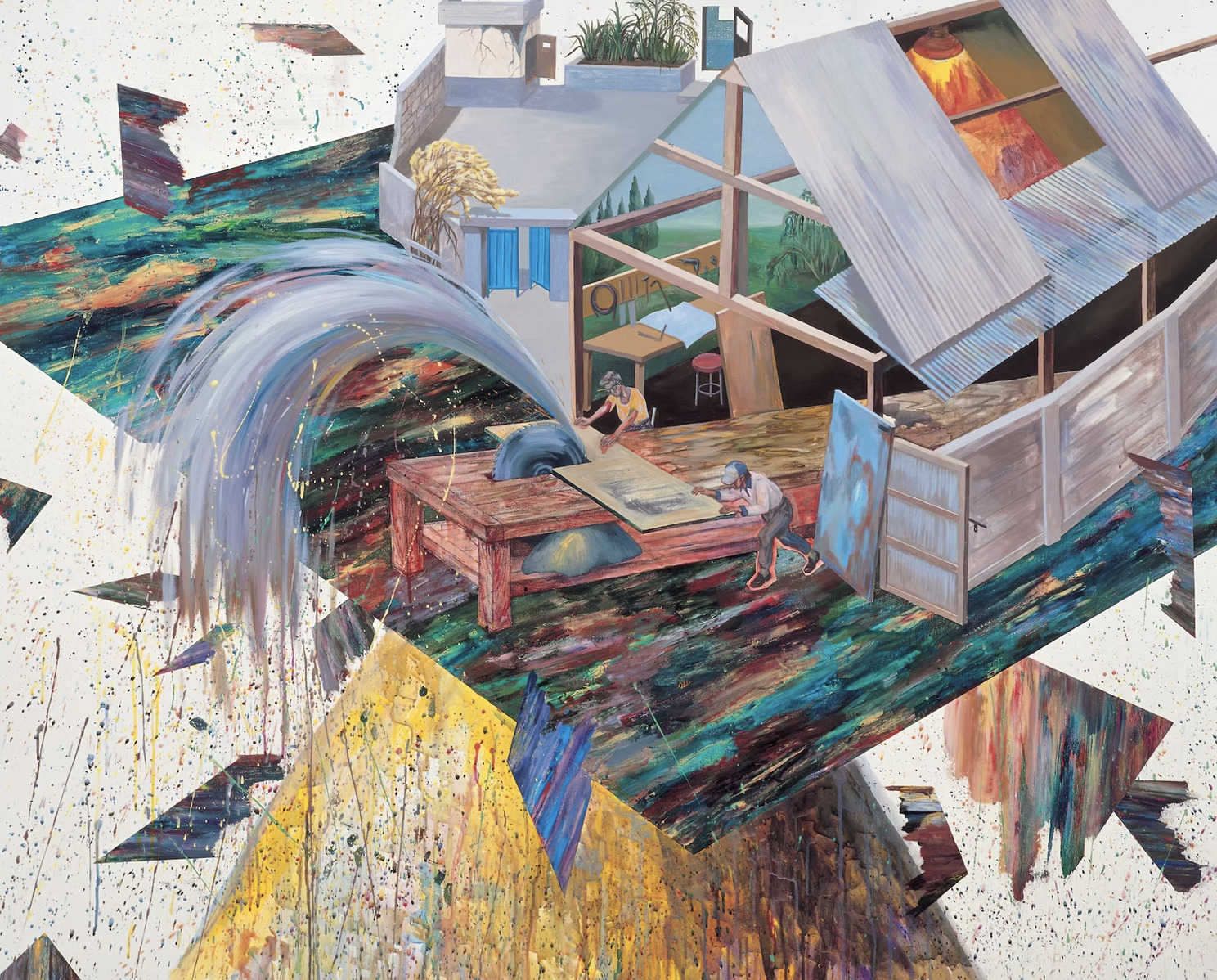
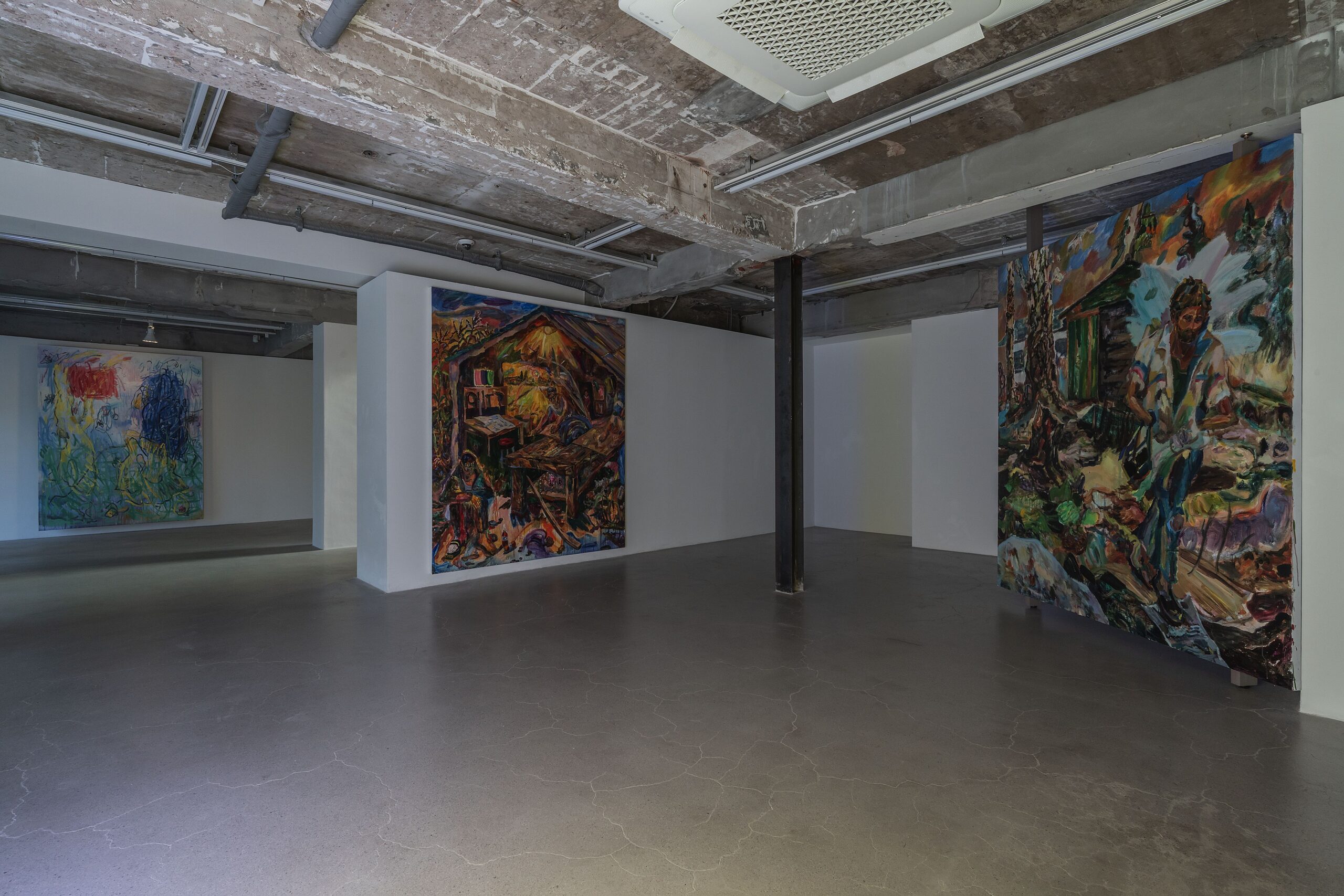
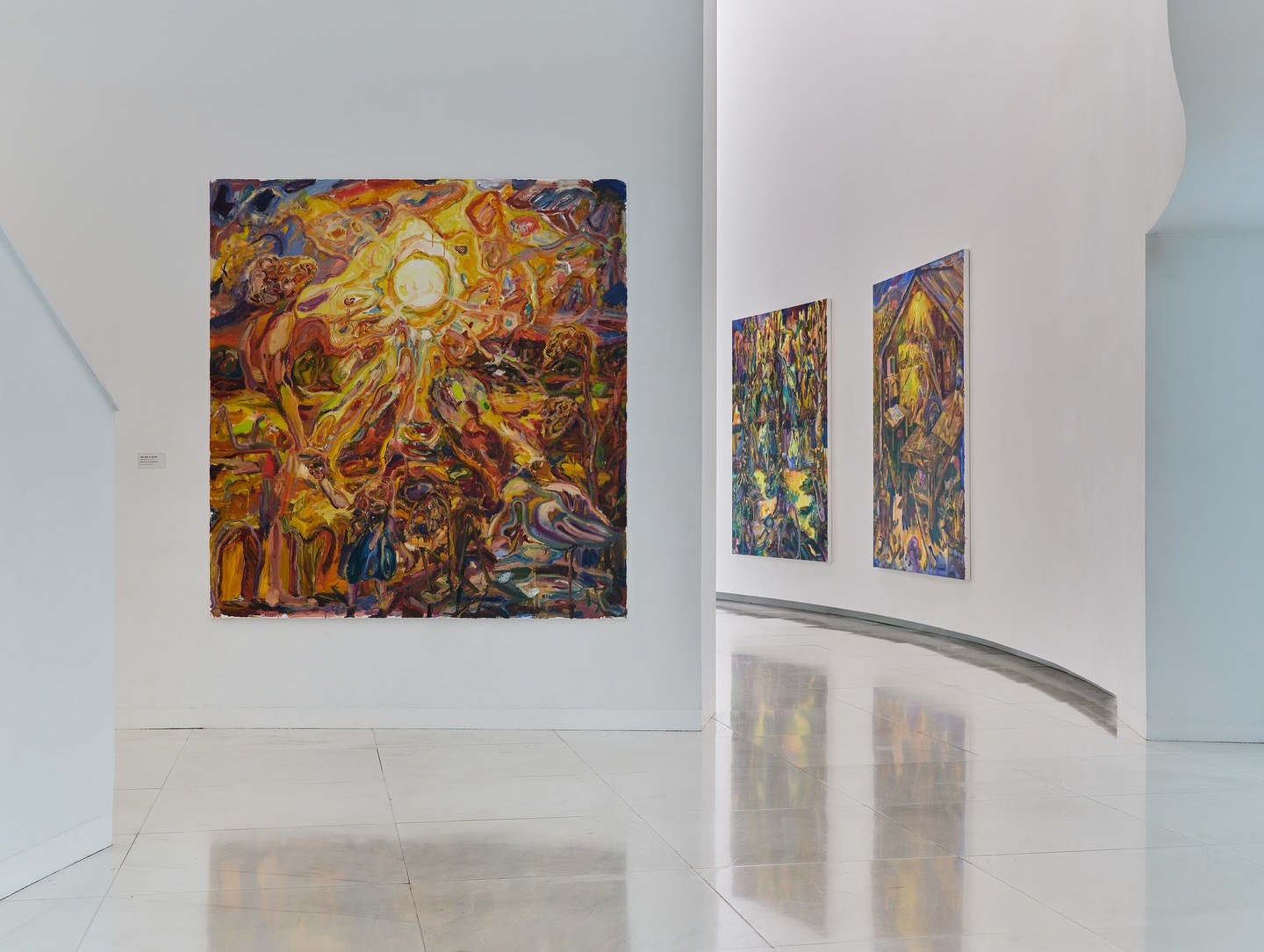
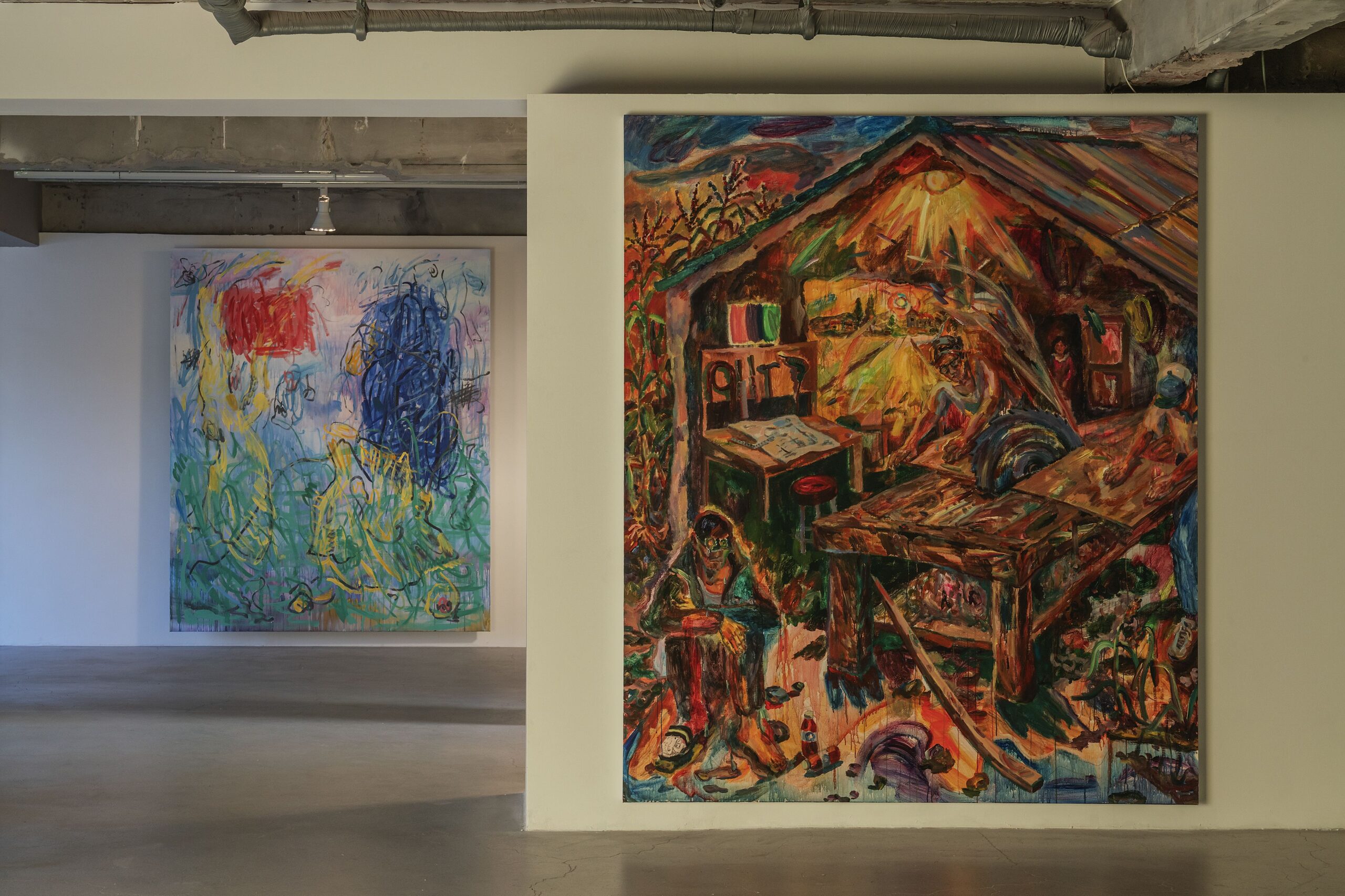
For example, The Man Living in Ruins_Mergenthalerring Small Garden Area, Cloudy(2022), included in the exhibition, is painted while recalling the ruins of a redevelopment area the artist visited while living in Germany ten years ago, and a man she passed in front of them. Also, The Carpenter’s Time(2022) revisits her grandfather’s carpentry workshop, which remains as a childhood memory and can be considered a major theme of her 2008 solo exhibition 《A Cold World》.

This work partially resembles the artist’s 2008 work The Carpenter’s Time. In addition, the works in the exhibition summon places that do not easily leave memory, such as the landscape with aspen trees that used to be visible from the artist’s house but disappeared with the arrival of the train, and the railroad tracks of Neunggok.

Works such as The Man Looking at the Floor(2022) and The Last Painting(2022) semi-automatically reveal a certain presence and atmosphere, or its imprint and trace, through brushstrokes of movement and speed. The landscapes painted in this way, the figures within them, and the painting that is not subsumed into concrete forms approach us less as images representing specific objects than as memories and constructs of existence accumulated within the individual over a very long time.

The program set by the exhibition clearly seems to execute a “repeated return” to something. From the beginning of her practice, the artist has attempted to “return” somewhere. The place she checked the weather for and diligently sought out may have been not a constantly changing present, but the memory of a disappeared place. “Can I return to that place and begin again?”, “Can I still feel and recognize what I felt then?”(Artist’s note, 2010), “What if I painted the field paintings from ten years ago once again in the same place?”(Artist’s note, 2020).

This repeated wish to return led to various methodological experiments, such as bringing back and repainting parts of past works in her 2018 solo exhibition 《Sync》. The program of this solo exhibition 《L. Practice》(Museumhead, 2022) can likewise be seen not as an attempt to convert and acquire the environment and experience of a specific time and space as convenient signs, but as an attempt to once again reveal and confirm something that still remains within the self across repeated time.

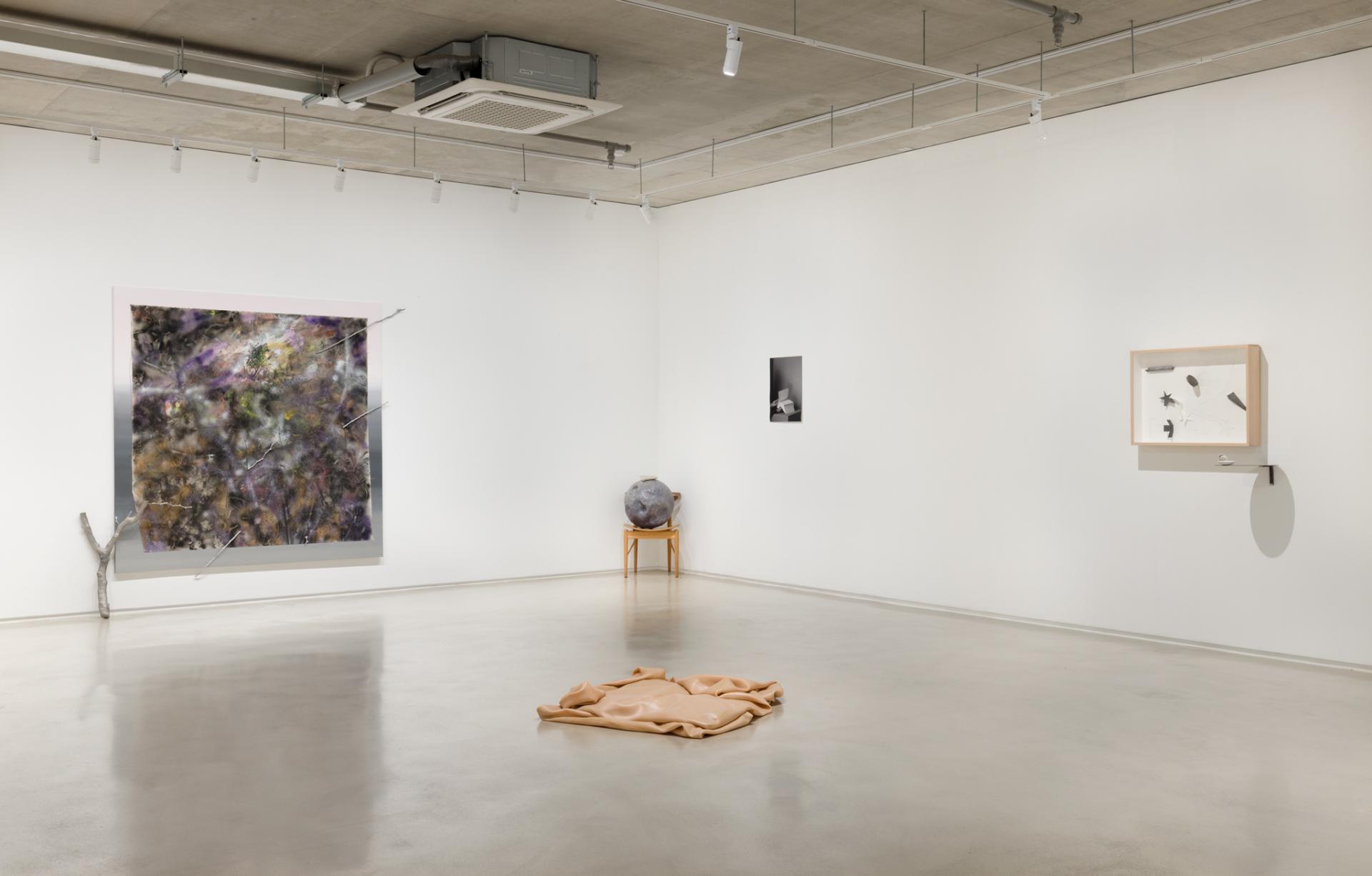
《L. Practice》(Museumhead, 2022) intersects painting and automatic programs. The traces of several tools and devices placed in the exhibition space along with the paintings, including LED lights, ironically invite us to imagine not a perfectly reproduced place, but its reverse side: personal experience and memory, and the qualities of a deeper place.

The exhibition says that painting is ultimately more closely involved not with external factors but with something embodied within oneself. In this way, the lights of the exhibition space, changing from moment to moment, become a screen that illuminates painting as an automated occurrence, into which countless moments have penetrated and accumulated.

And the letter “L,” which becomes the title of all these practices, points to many things such as place and emotion, painting and memory, yet remains an abstract sign that cannot be fully deciphered. Will the past-tense sentence that this exhibition will write, “Hyein Lee checked the weather,” announce that the artist has come to foreground her discord with specific objects/nature/figures and focus on the world within herself?

Will this experiment in automatically occurring painting overturn the concept of plein-air painting that has explained Hyein Lee’s work until now, and begin in earnest to explore the realms of autonomy and abstraction? How will Hyein Lee pass through and later look back on this here and now, which may become a point of divergence in the history of her painting?

Curation/Text: Kwon Hyukgyu

References