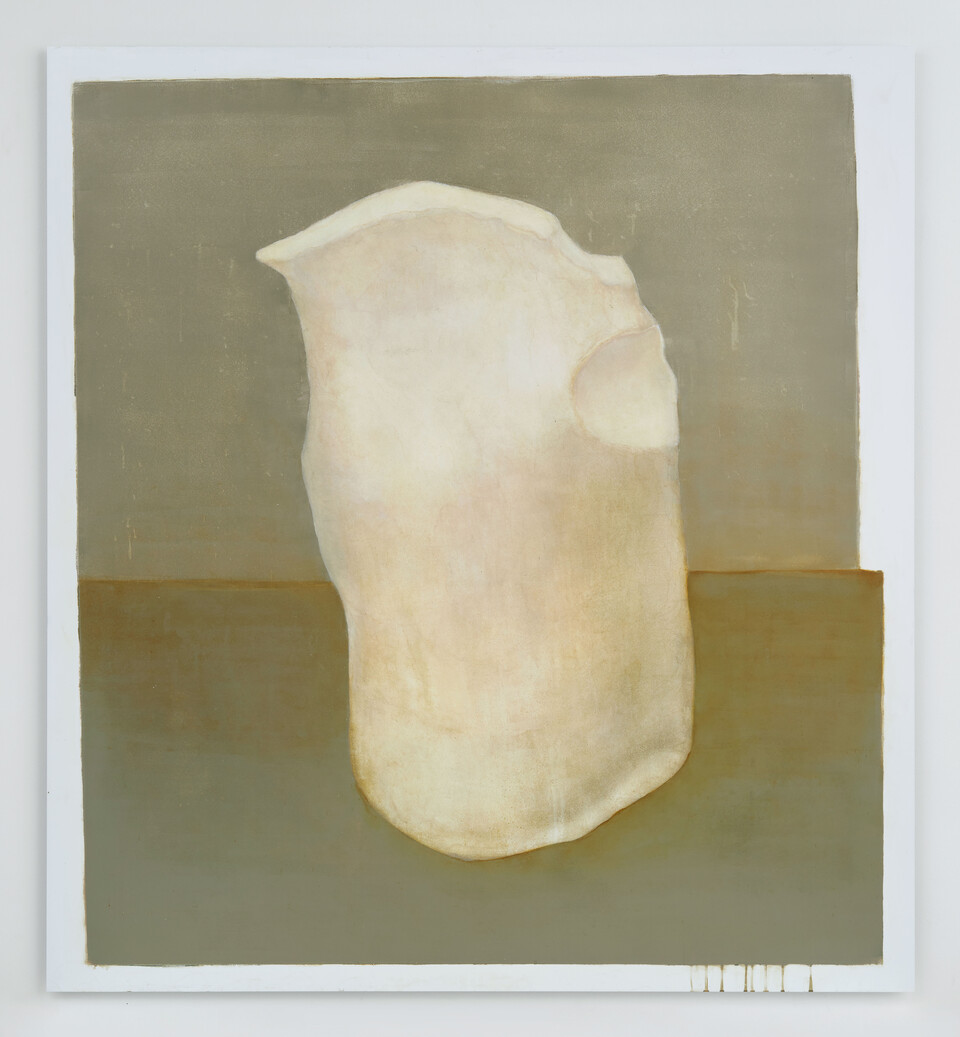
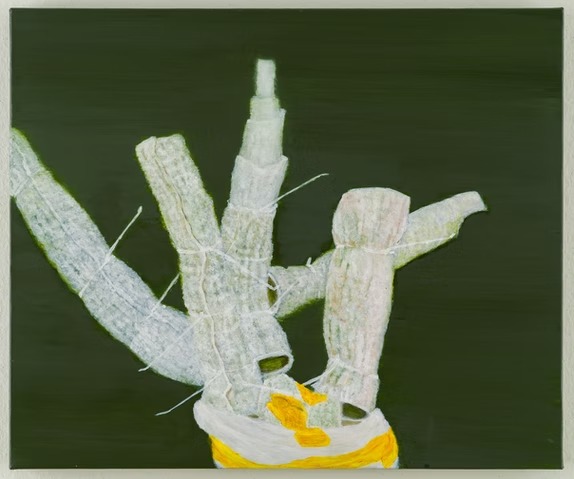
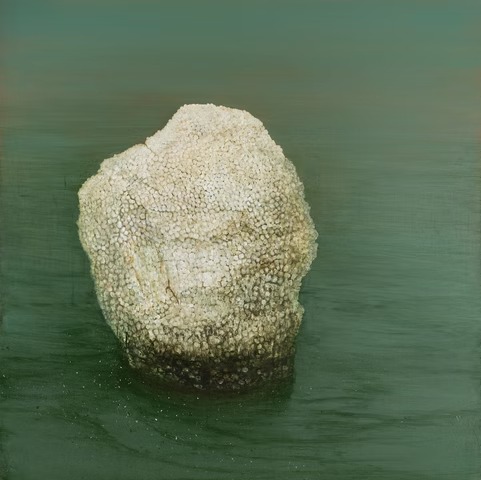
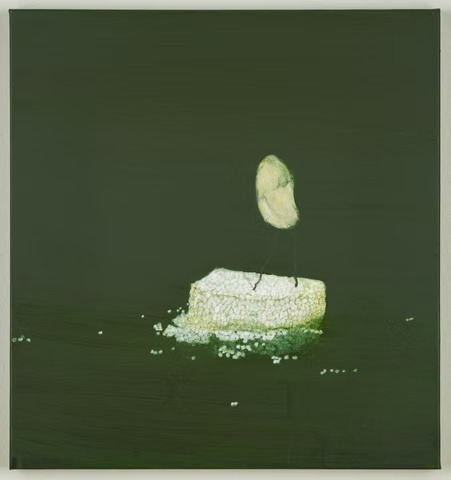
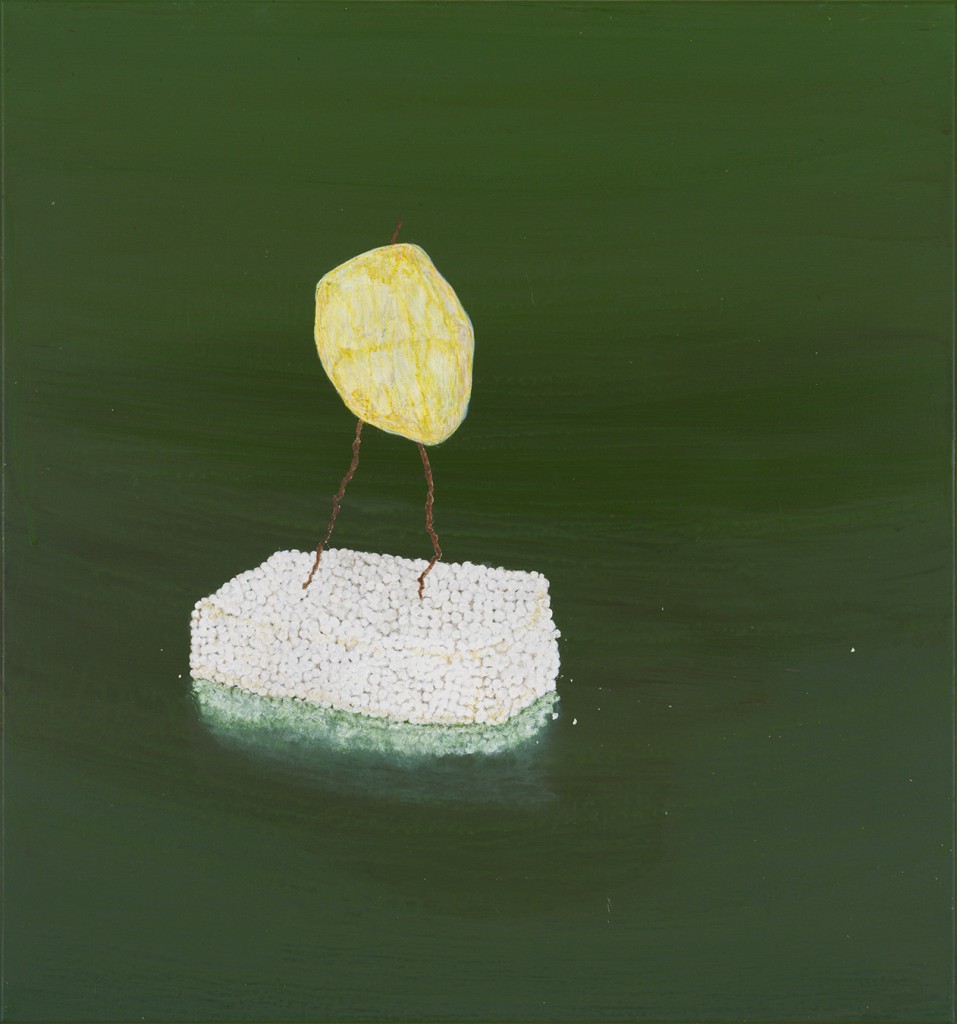
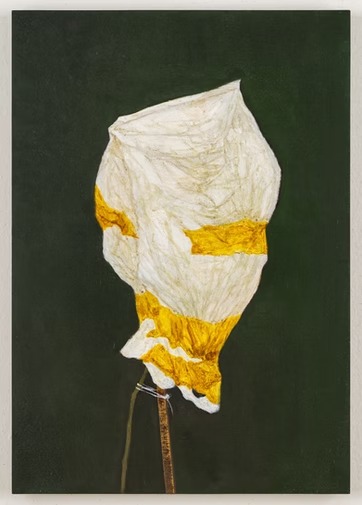
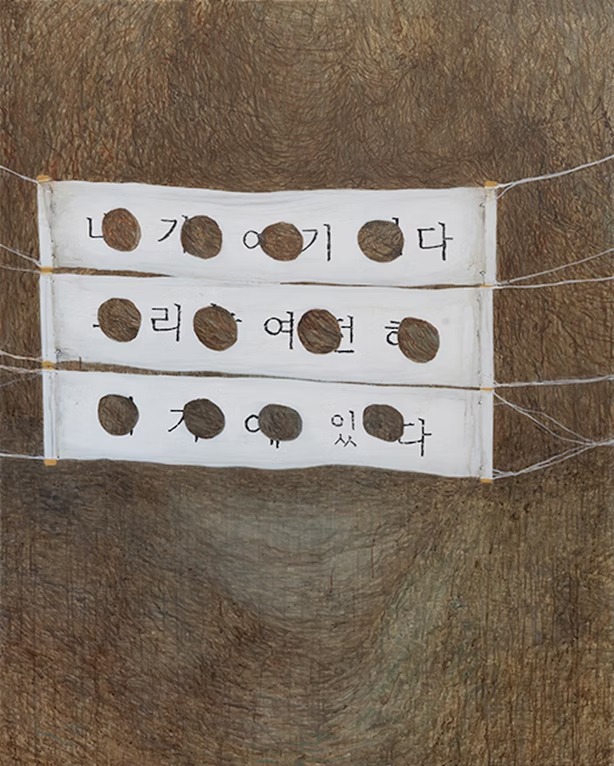
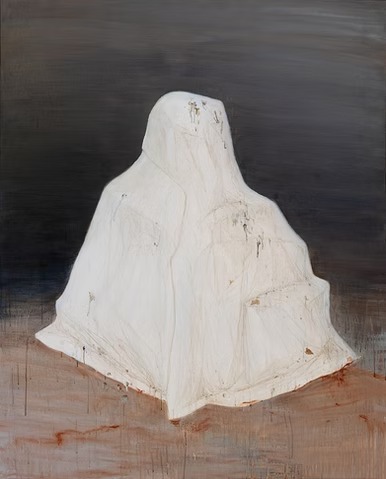
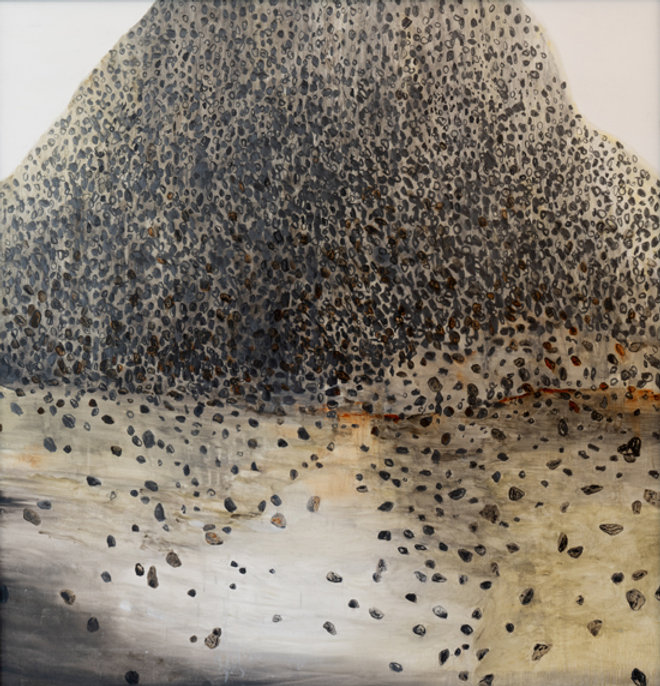
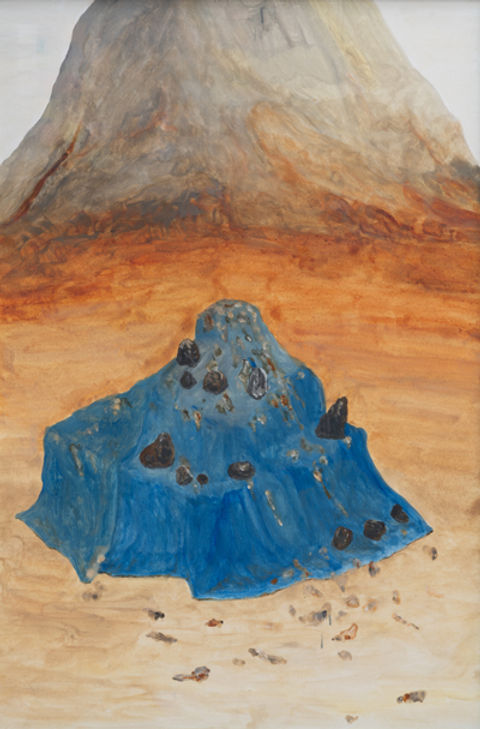
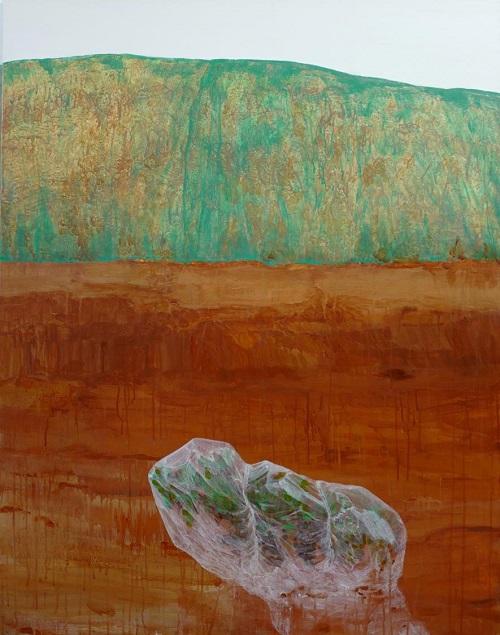
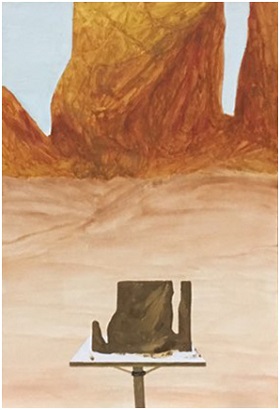
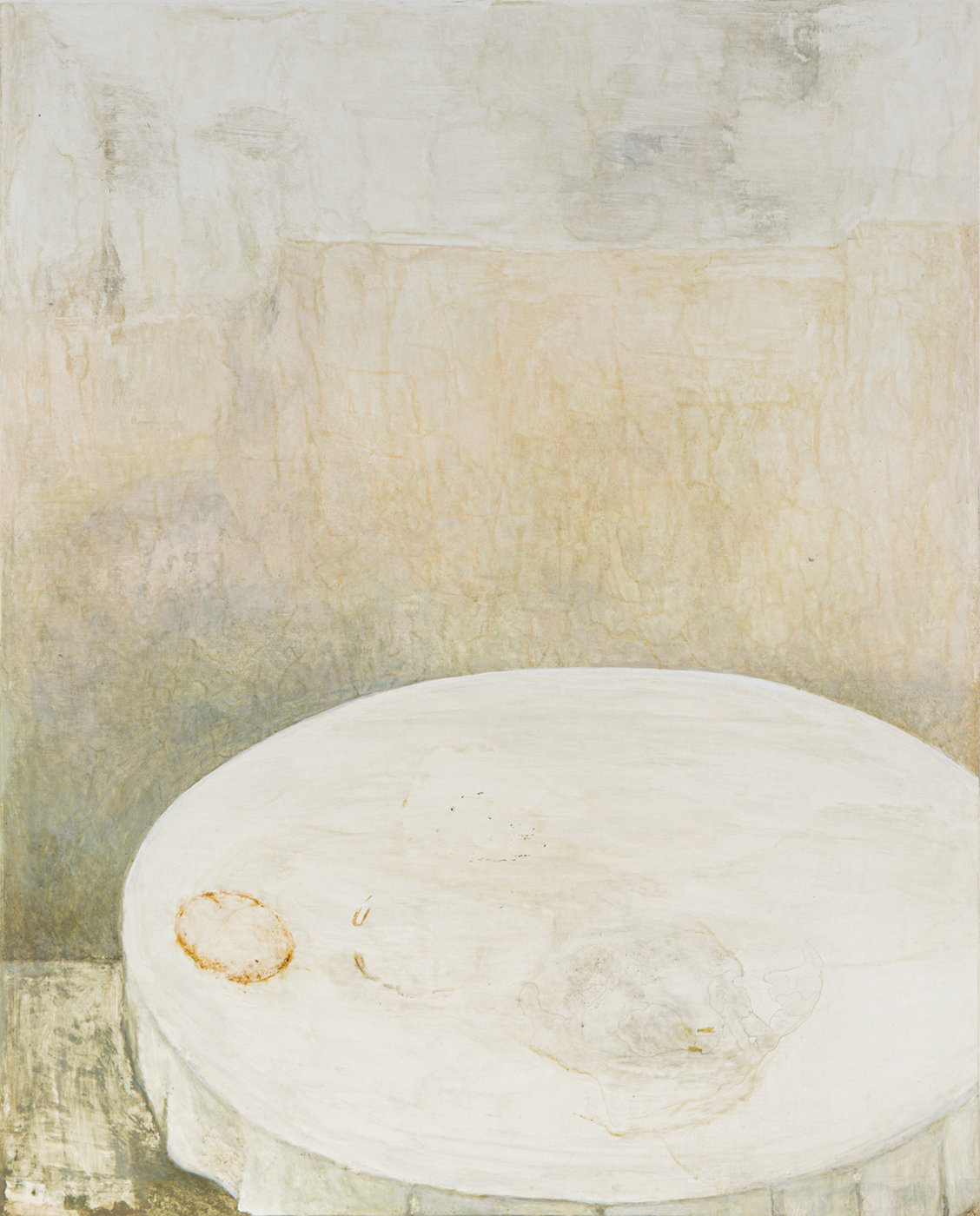
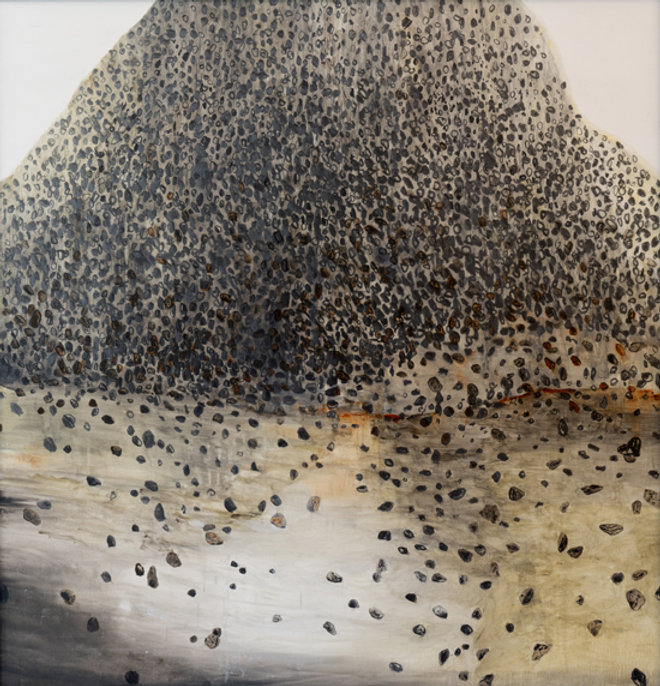
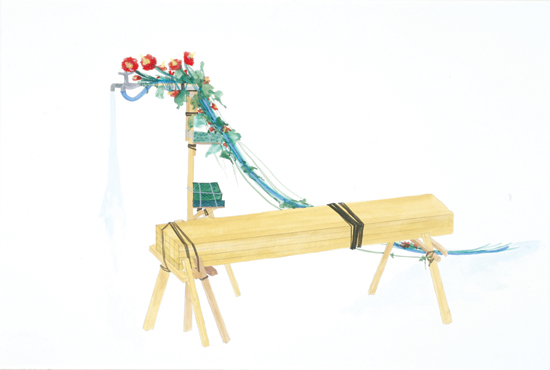
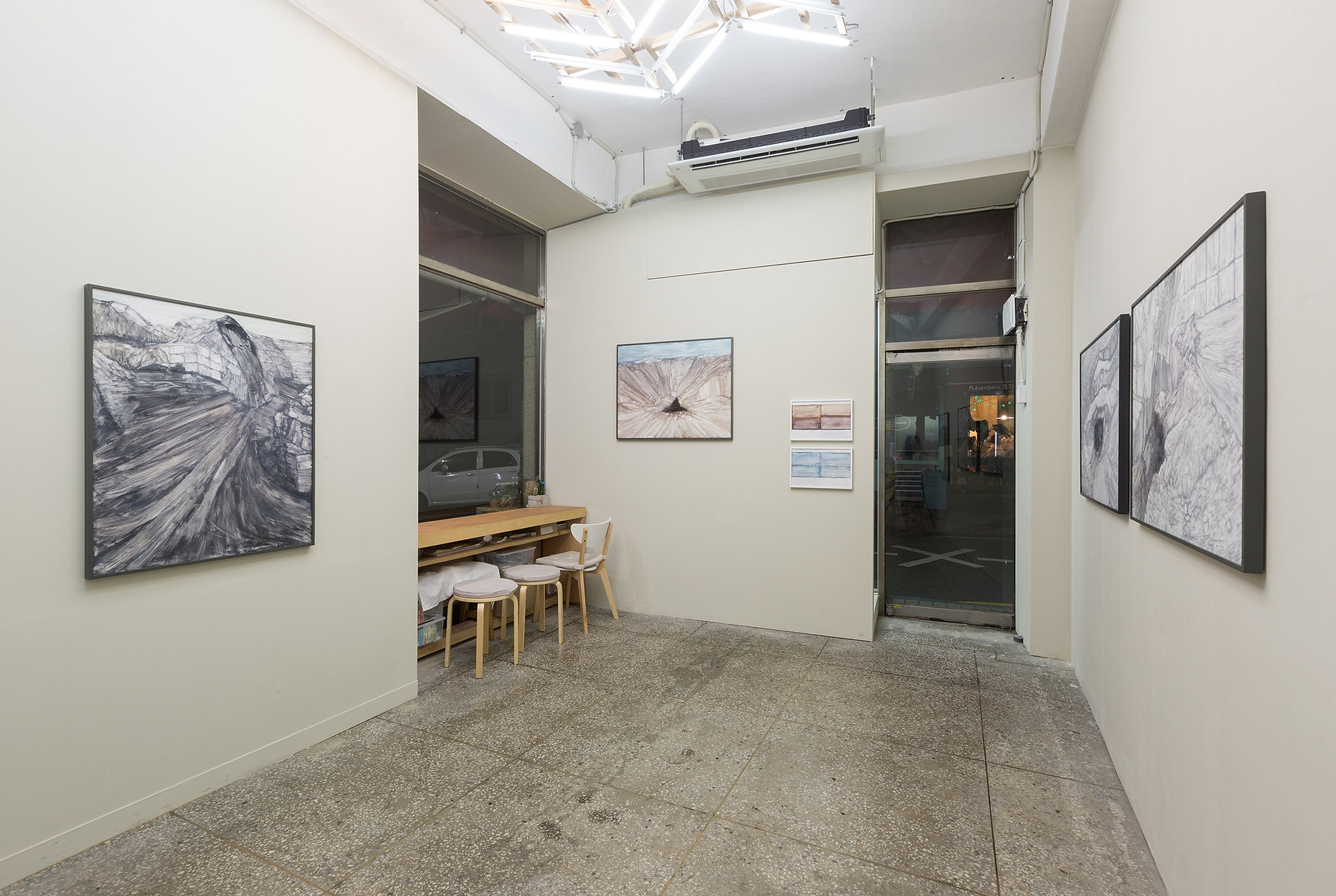
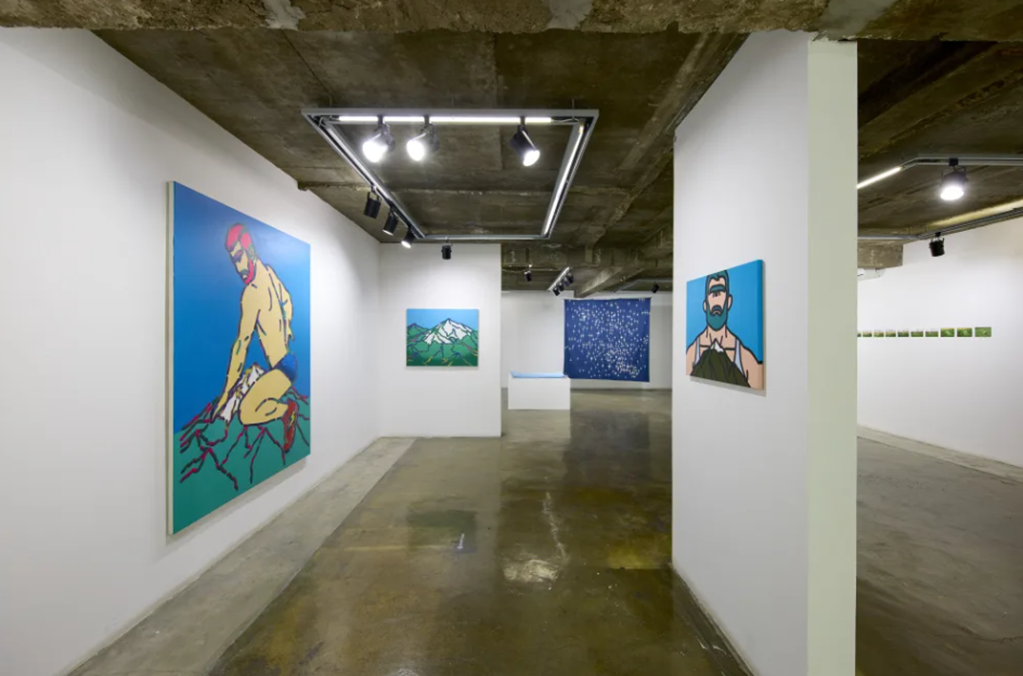
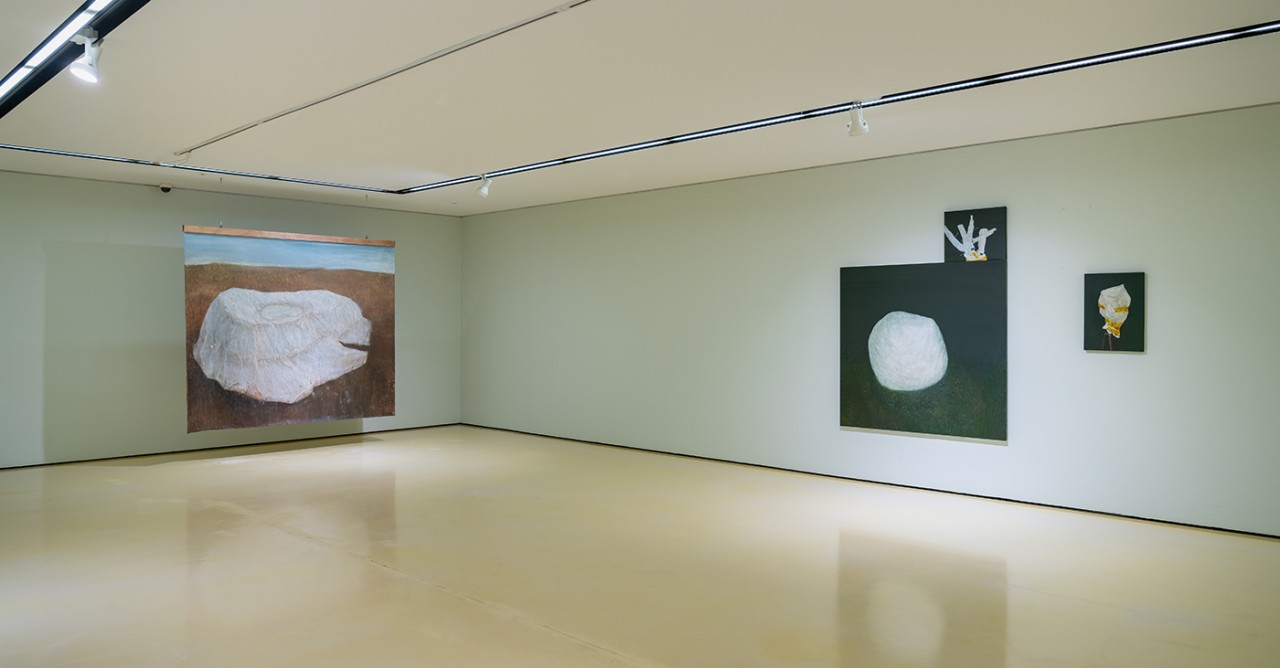
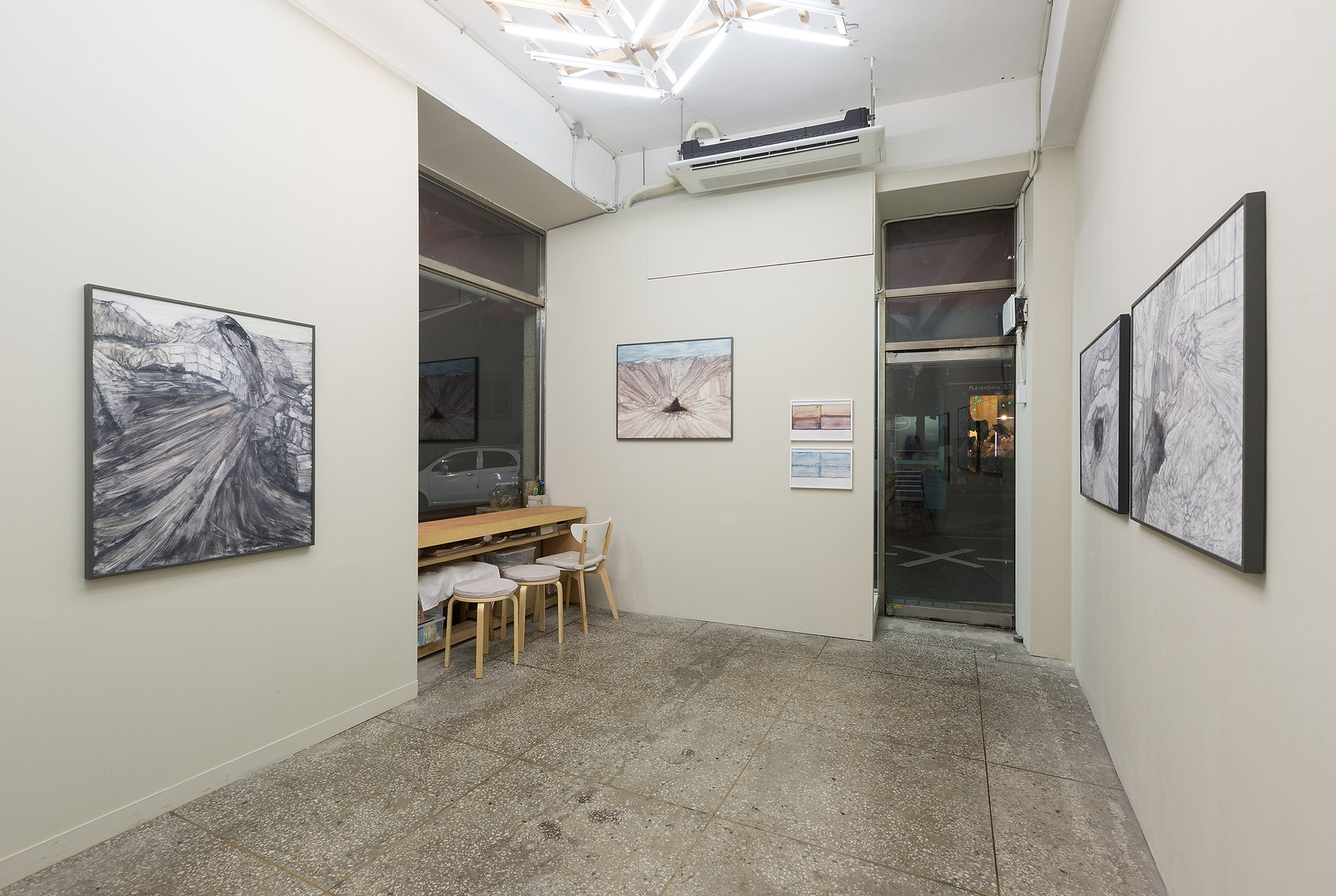
Installation view of 《The Weight of the Skin》 © Hapjungjigu

About this time last year, just as the sweltering heat of summer was beginning, I visited Leehaiminsun’s studio in Seongsan-dong. Pale landscapes were emerging across white canvases, rendered with delicate strokes of light blue. Pushing her previous works into one corner of the room, the artist was absorbed in dissolving photographs with chemical solutions.
Using the ink extracted from those dissolved images, she painstakingly repainted the vanished landscapes onto canvas. Wearing a respirator and enduring the pungent smell of the chemicals, she devoted herself to erasing photographs. It seemed incomprehensible—almost impossible without being possessed by something.
Why erase an existing landscape only to struggle so intensely to bring it back? It had been two months since the ferry disaster. Anger, mourning, and the heavy air of a life rendered powerless hung over everything. A year later, I returned to her studio. The floor was still covered with stacks of magazines and piles of erased photographic images.

Instead of paint, the studio was filled with landscapes made from ink extracted from dissolved photographs. Had Leehaiminsun always been so unwaveringly committed to a single medium? Although she has primarily worked in drawing and painting, she has consistently ventured into unexpected territories throughout her practice.

Moving playfully across drawing, painting, printmaking, installation, video, and photography, she has explored the organic relationship between nature and the artificial. More recently, she presented an installation in which found tree branches were supported by disposable wooden chopsticks. Was this another of those detours?

Yet the intensity of her immersion suggested something far more serious than one of the experimental excursions that had occasionally surfaced between her major works.

This was not the first time Leehaiminsun had worked with ink extracted from dissolved photographs. Several years earlier, in a group exhibition, she presented drawings in which photographs of buildings clipped from magazines were dissolved into rocky mountains. These photographic drawings, which she began making in 2007, became the point of departure for the new works in this exhibition.

The earlier drawings primarily featured images of high-rise buildings from magazines. Some included photographs of stone Buddhas, yet all of these monuments to human desire dissolved into masses of rock, as though returning to their original state. Monumental vertical structures, painstakingly constructed, reverted to mere boulders—as if revealing themselves to have been nothing more than futile illusions.

These strange landscapes, where artificial structures and natural forms become indistinguishable, possess a curious familiarity. Throughout her practice, Leehaiminsun has continually sought to affirm the reciprocal relationship between nature and the built environment, negotiating a balance in which the two might coexist.

It is perhaps for this reason that the appearance of barren rocky mountains within the city feels strangely unsurprising. They resemble nothing less than the melted skin of civilization. 

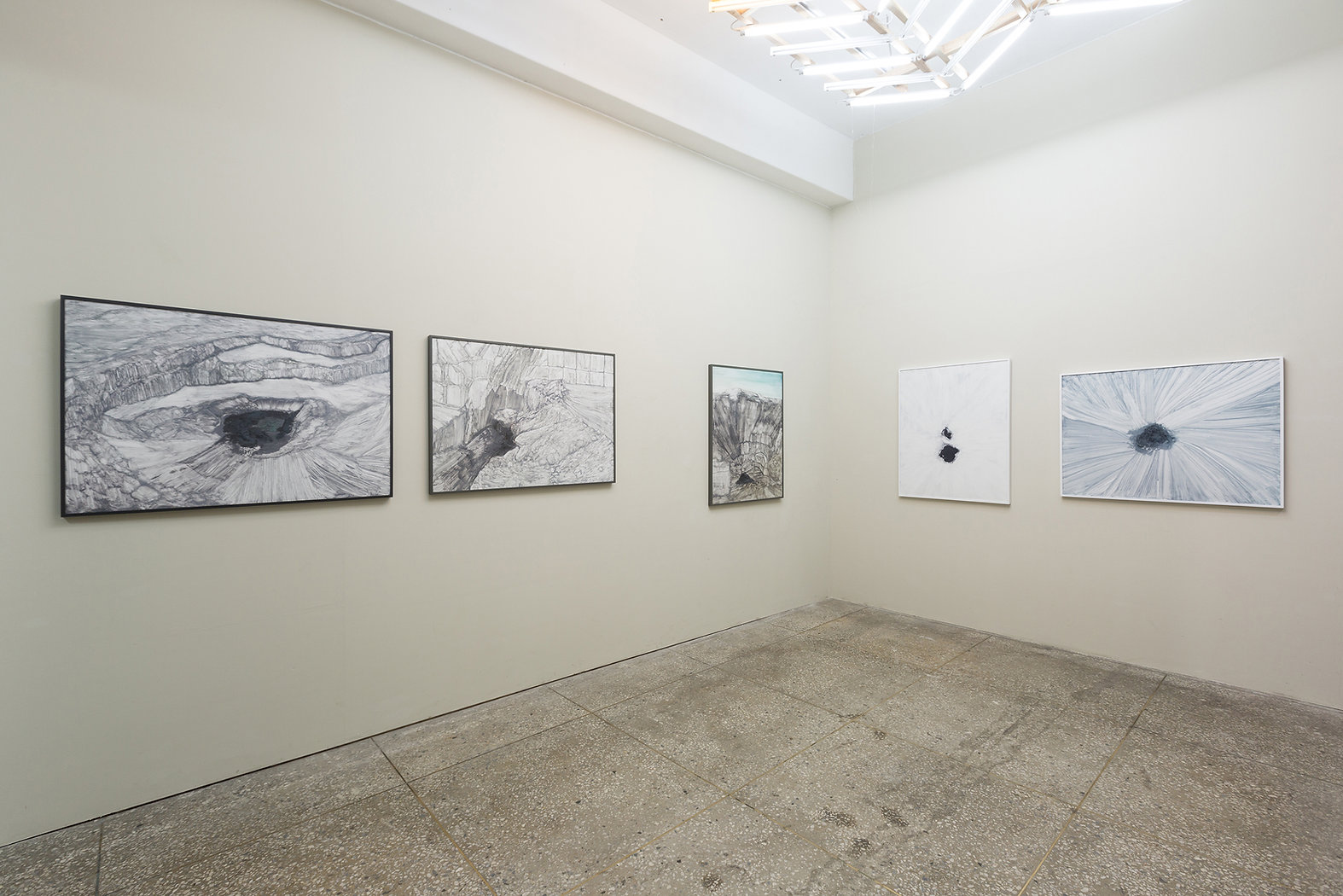
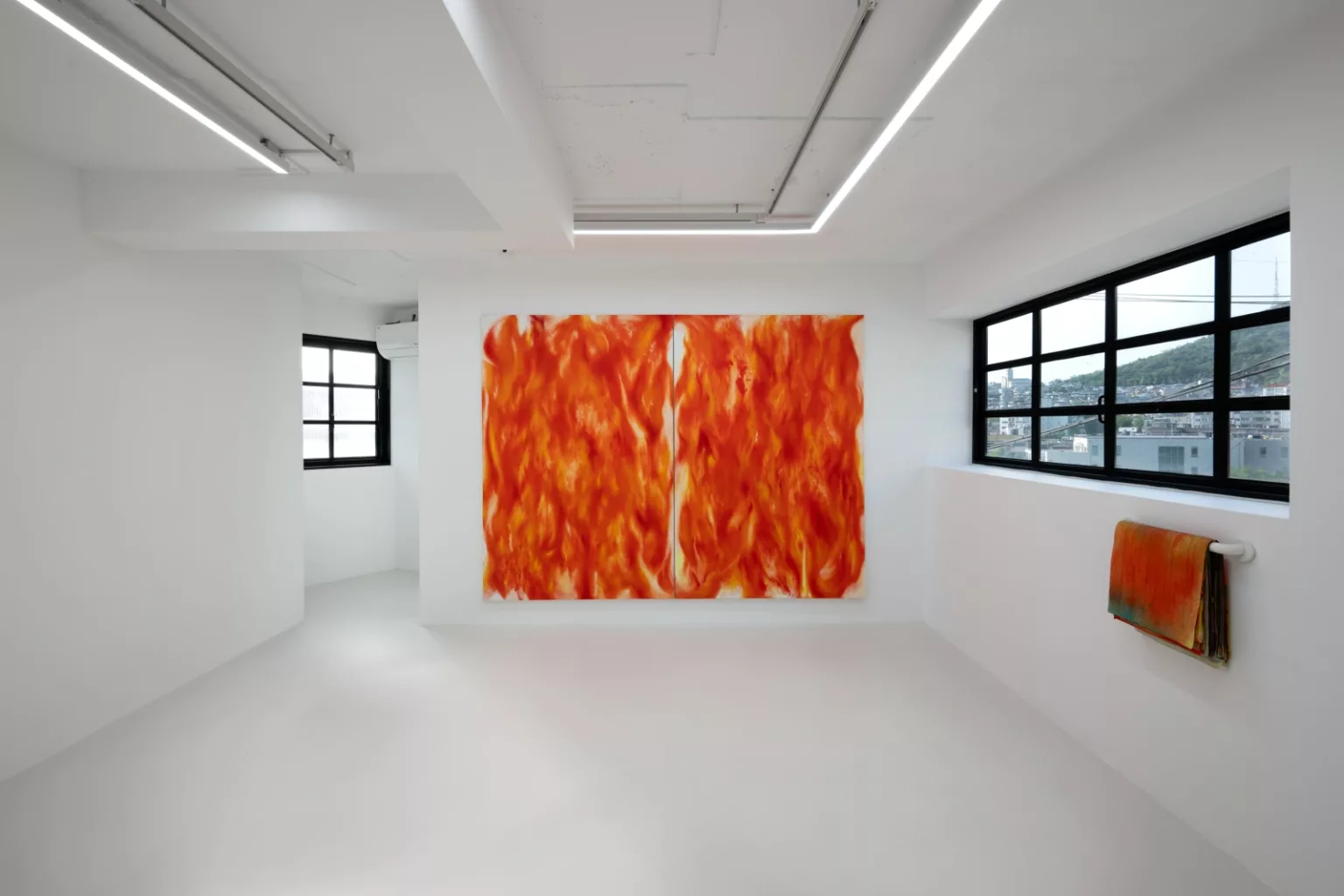
Installation view of 《The Weight of the Skin》 © Hapjungjigu

The expression “dissolving photographs” is one that Leehaiminsun herself uses. Rather than erasing the ink, what matters is the act of dissolving it and painting with it. I find myself continually preoccupied by this dissolved ink. It is neither completely erased nor entirely gone, but suspended in an intermediate state, on the verge of becoming something else.

The verb “to dissolve” ordinarily describes the transformation of a solid into a liquid. In the artist’s process, chemical agents intervene, while the pressure and movement of her hand carefully regulate the transformation. She does not simply allow the ink to dissolve until the image disappears. Instead, she takes the dissolved ink and, through the speed and pressure of her brushstrokes, struggles to revive what has vanished.

Throughout her practice, disparate materials and conditions have repeatedly come together to form a single body or landscape. Rather than one dominating the other, their individual properties are acknowledged and allowed to coexist. As the image is transformed into ink, it simultaneously becomes material.

In this process, a continual shift takes place: the image becomes material, and the material once again becomes image. The brush mediates this transition, negotiating the tension between the two. These paintings emerged only after an uncompromising struggle with materiality—a struggle in which even a single brushstroke could never be entirely controlled.

For Leehaiminsun, to paint is, at the same time, to erase. The act of erasure runs throughout her entire artistic practice. Beyond photographic images, the seemingly incidental experiments with objects, video, and installation all emerged through this process of erasing. In 2006, she produced drawings made by erasing with an eraser.

There were works in which photographs of the night sky were erased to reveal fireworks, leaflets that were erased and transformed into abstract images out of a desire to cancel an exhibition, and even an unpublished series of plaster-cast drawings from 2005 that belongs to the same trajectory.

In these works, photographs of celebrities clipped from magazines were erased and redrawn so that they resembled the plaster casts used in entrance examination drawing classes. Her 2005 video work Anchovy Landscape, which first brought her wider recognition, is likewise a landscape composed of traces left behind after disappearance.

As anchovies boiled in water, the evaporation of the liquid left behind the residue of broth, forming a landscape painting. The image was created by the essence of the anchovies themselves—the materiality of the broth became image. This trajectory reaches back even further, to her first solo exhibition in 2004.

There she presented Disappearing Painting (2001–2004), a work in which the oil contained in pig-feed paper gradually absorbed and faded the ballpoint-pen drawing made upon it.

From the ballpoint drawings absorbed and erased by oil, to the landscape traces left by anchovy broth, the drawings created by erasing images with an eraser, and the recent drawings painted with ink dissolved from photographs—these seemingly peripheral experiments that she has pursued whenever the opportunity arose over the course of more than a decade have finally converged.

Life seems to move only forward, yet at every moment it encounters the past. Carried along by the cyclical current of time, the artist ultimately meets the self she has sustained by continually dissolving and transforming it.

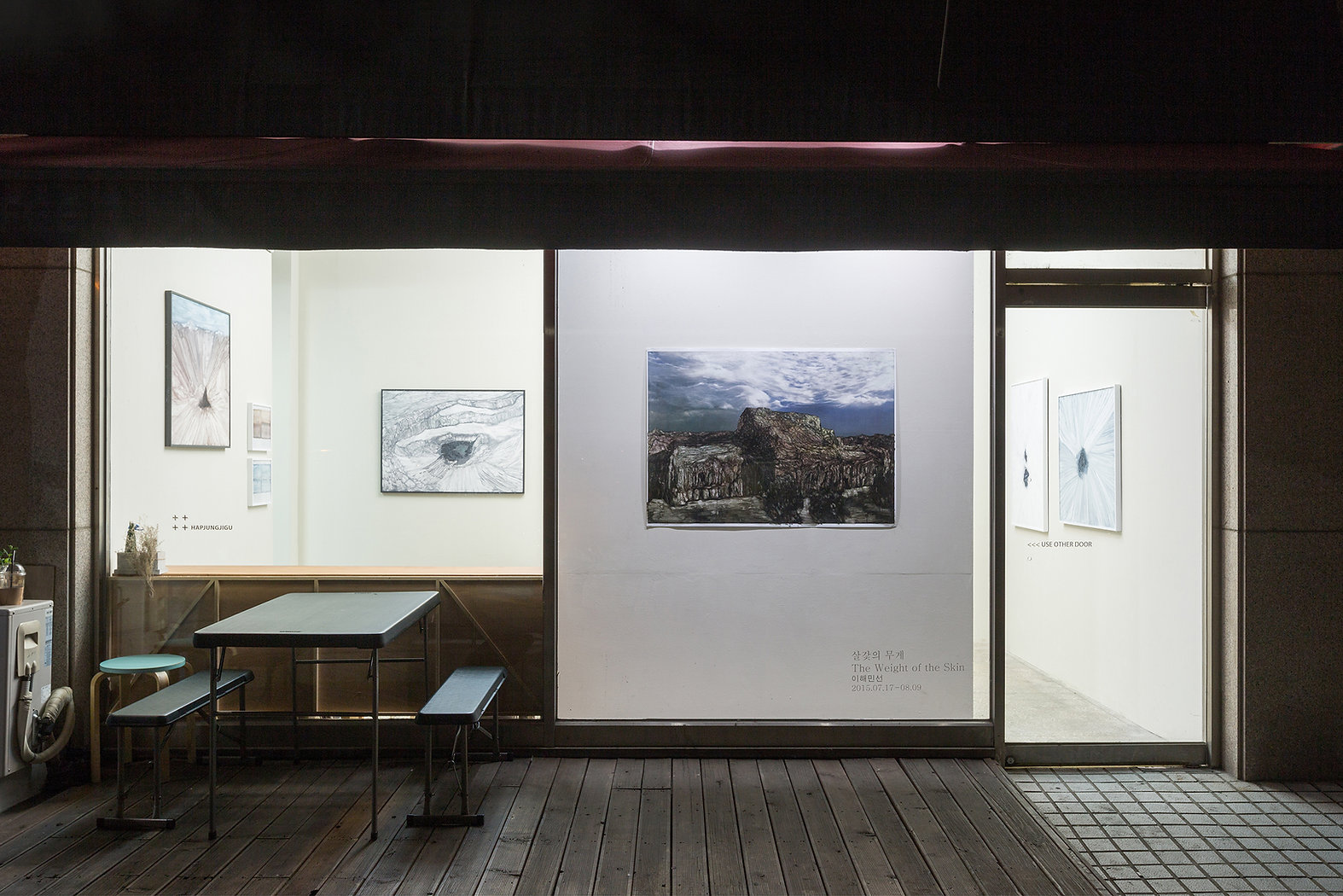
Installation view of 《The Weight of the Skin》 © Hapjungjigu

“On the expressway leading from Gangnam Station in Seoul to the outskirts of Gyeonggi Province, the glittering buildings gradually strip away their layers, revealing the naked bodies of construction sites. As the city gives way to the outskirts, mounds of earth begin to appear. Passing a botanical garden, a stone yard, and other scattered facilities, mysterious machines emerge half-buried in the soil across the barren landscape.

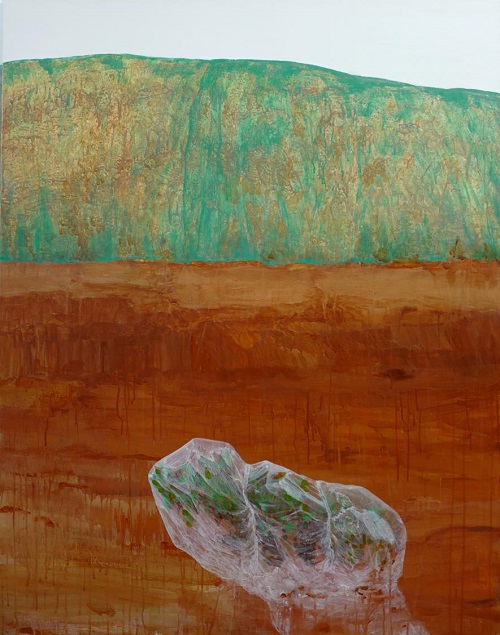
Just as the bus leaves the highway and pulls into a stop, the exposed cross-section of a quarried mountain suddenly comes into view. It feels as though the buildings seen at the beginning have been dismantled, their innards abruptly laid bare.”

(From an interview with the artist)

From buildings to construction sites, then to abandoned transitional zones, and finally to quarries—this sequence of landscapes follows the view outside the bus window that Leehaiminsun has observed for more than two decades. The constructed image of the city gradually collapses under her gaze. As she describes it, the landscape reveals its flesh and its interior.

The skin and exposed core of these observed landscapes are faithfully embedded in her process of painting with ink dissolved from photographs. Her act of painting, having penetrated the skin of the image, persistently enters into its materiality, as though reaching the very interior of the image itself.

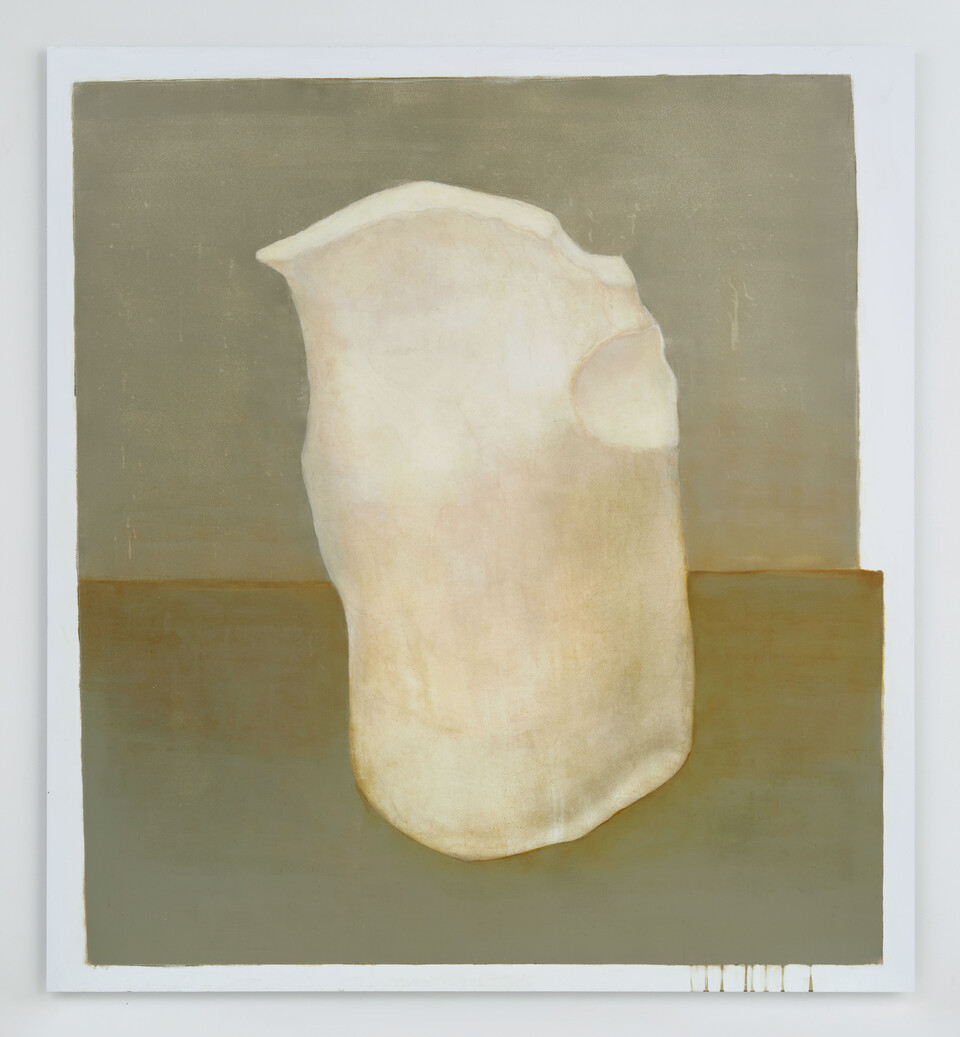
Gathering the ink extracted through this process of dissolution, the artist ultimately shapes it into a single mass of material. Dissolved images cling together and harden over time, becoming a pure, unified form. In painting rocks, she arrives at the creation of an actual stone-like mass.

Within this process of painting, the life and death of objects—indeed, of existence itself—unfold. Gaze, image, photograph, painting, materiality, and object all become entangled within the continual disintegration and regeneration of the image's surface. “Made, I made the image.” Samuel Beckett’s words come to mind. Beckett perceived images at the fleeting moment when language dissolved into nothingness.

Perhaps this is akin to what Leehaiminsun describes as “the sensation of simultaneously damaging and collecting an image.” Through painting, she discovers the energy of regeneration within the very process of disappearance. From images dissolved into brushstrokes emerges, with quiet certainty, a solid boulder—or a heap of stones.

This mass of ink ultimately encounters the quarried landscape glimpsed through the window of an intercity bus. At the very instant an image begins to disappear, Leehaiminsun’s painting begins. She faithfully inscribes into her brushwork the inner tension generated by the disintegration of the image’s surface. From the immense energy of dissolution, suspended between life and death, she discovers the cyclical nature of existence.

The life and death of the image tumble together within this continuous cycle, and only when they have exhausted themselves does the true painting finally emerge. Having passed through this cycle, has her painting at last been released from the weight of the image’s skin? Across the dissolved quarry landscape, the force of her brushstrokes gathers with renewed conviction.

References