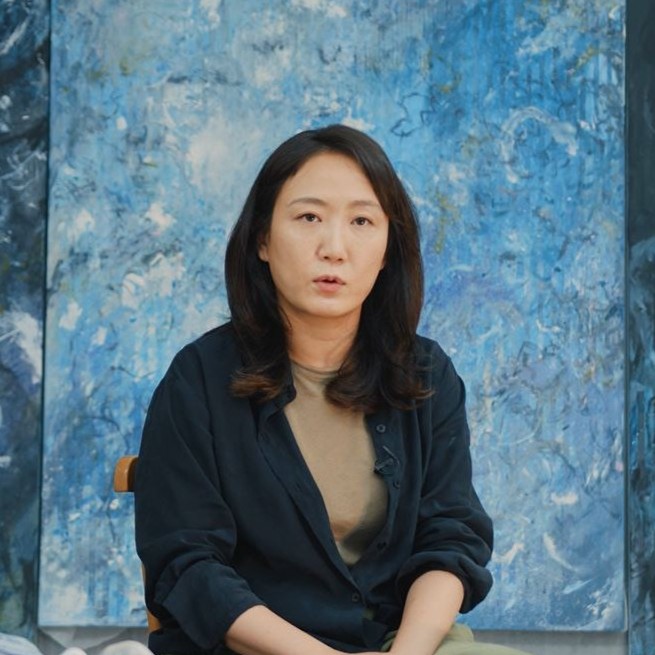
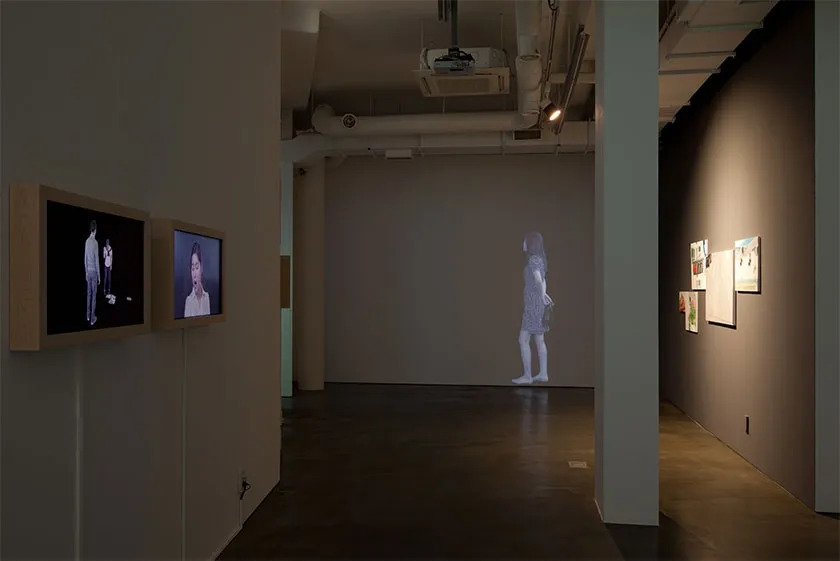
I must confess that it was only after visiting Leeje's studio and listening to the story of her twenty years as a painter that I arrived at the thought that her entire body of work is, above all else, an ongoing act of mourning—a lifelong practice of grieving loss. This realization gently illuminated why a painter of remarkable technical ability continually oscillates between settling within and departing from the territory of her own established style.
As is well known, the classic formula of loss and mourning goes something like this: the lost object leaves within us a wound that can neither be repaired nor restored. We willingly allow ourselves to be transformed according to the shape of that wound.
If this is so, then perhaps the painter's pursuit—not of mastery understood as completion and perfection, but of voluntary loss, amateuristic excitement, and the pleasures of experimentation—reflects a long-standing identification with the lost object itself. Though not always, the collapse of distance between oneself and the other who places the subject at risk is also the minimal condition for the emergence of ethics.
From the death of close friends, to the redevelopment of her hometown, to the succession of social disasters—and deaths—that have unfolded almost routinely in Korean society over the past decade and more, trauma and the melancholy that follows form the underlying ground upon which Leeje's paintings are built.
Seen from this perspective, her paintings are not expressions of sentimental melancholy but rather archives that capture, preserve, and carry the affect of collective loss. Through the indirect route of painting, she unmistakably speaks of all these deaths. During my visit to her studio, we talked about funerals, and about the countless deaths we had witnessed directly and indirectly over the past decade.
Pinned to the studio wall was a low-resolution image that looked as though it had been captured from an Instagram Reel. It showed villagers burying the body of a red sea turtle that had washed ashore on a beach near Pohang. "In the video, one villager dug a deep hole in the sand, buried the turtle, carefully removed large stones, and covered it with soft sand.
The turtle's head was placed facing the sea. Mr. Hwang explained, 'People say the head should face the ocean so that the soul may return to the sea. It means that even in death, it should find its way back to the water.'" To speak merely of respect for life would be trite.
Yet the question of how we might mourn together—and bury together—the lives that are ground down, discarded rather than grieved, beneath the accelerating expansion of capital, lives not unlike our own, remains both painful and profoundly lonely. Naturally, mourning continues after death, as do the world and life itself. But how?
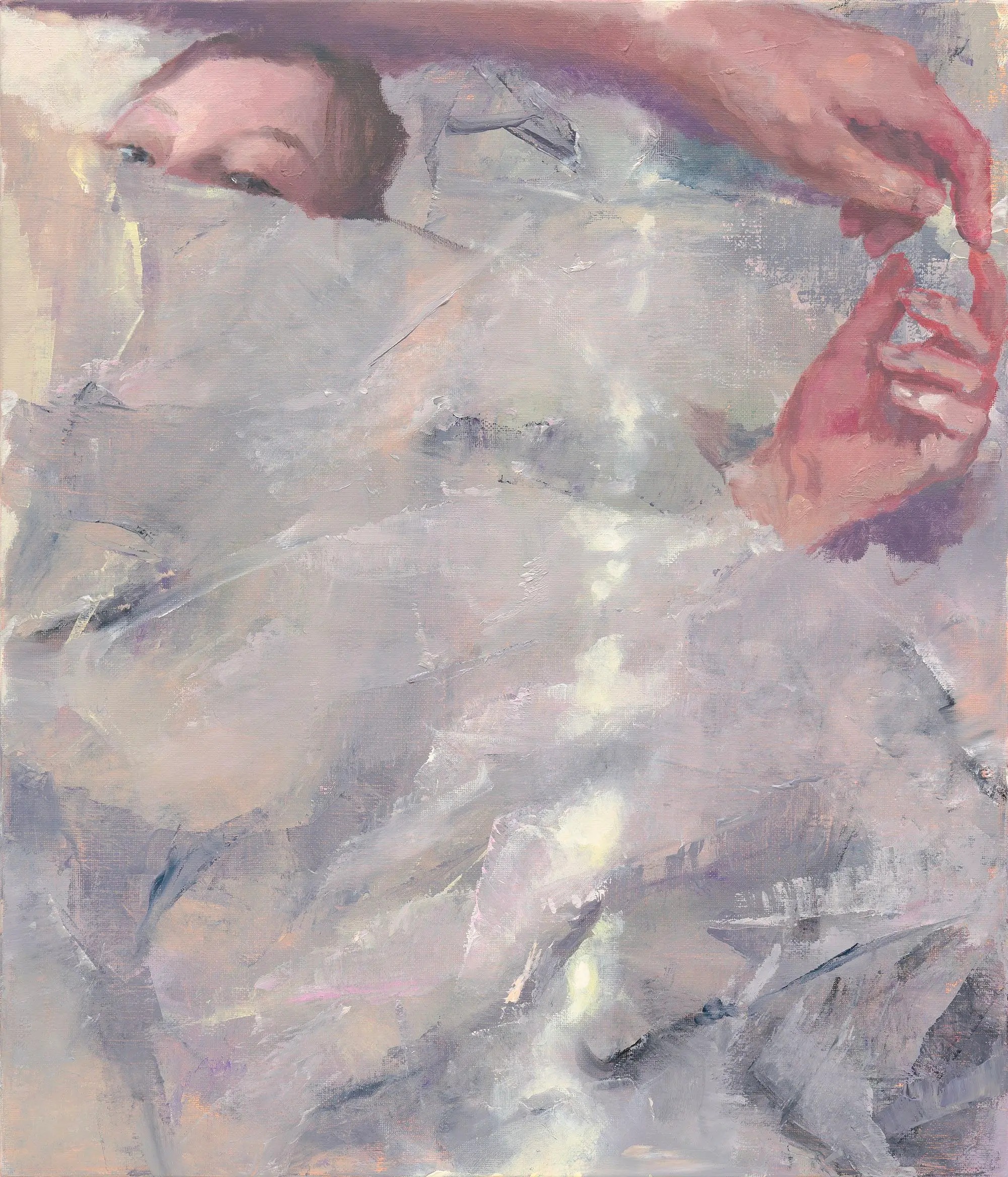
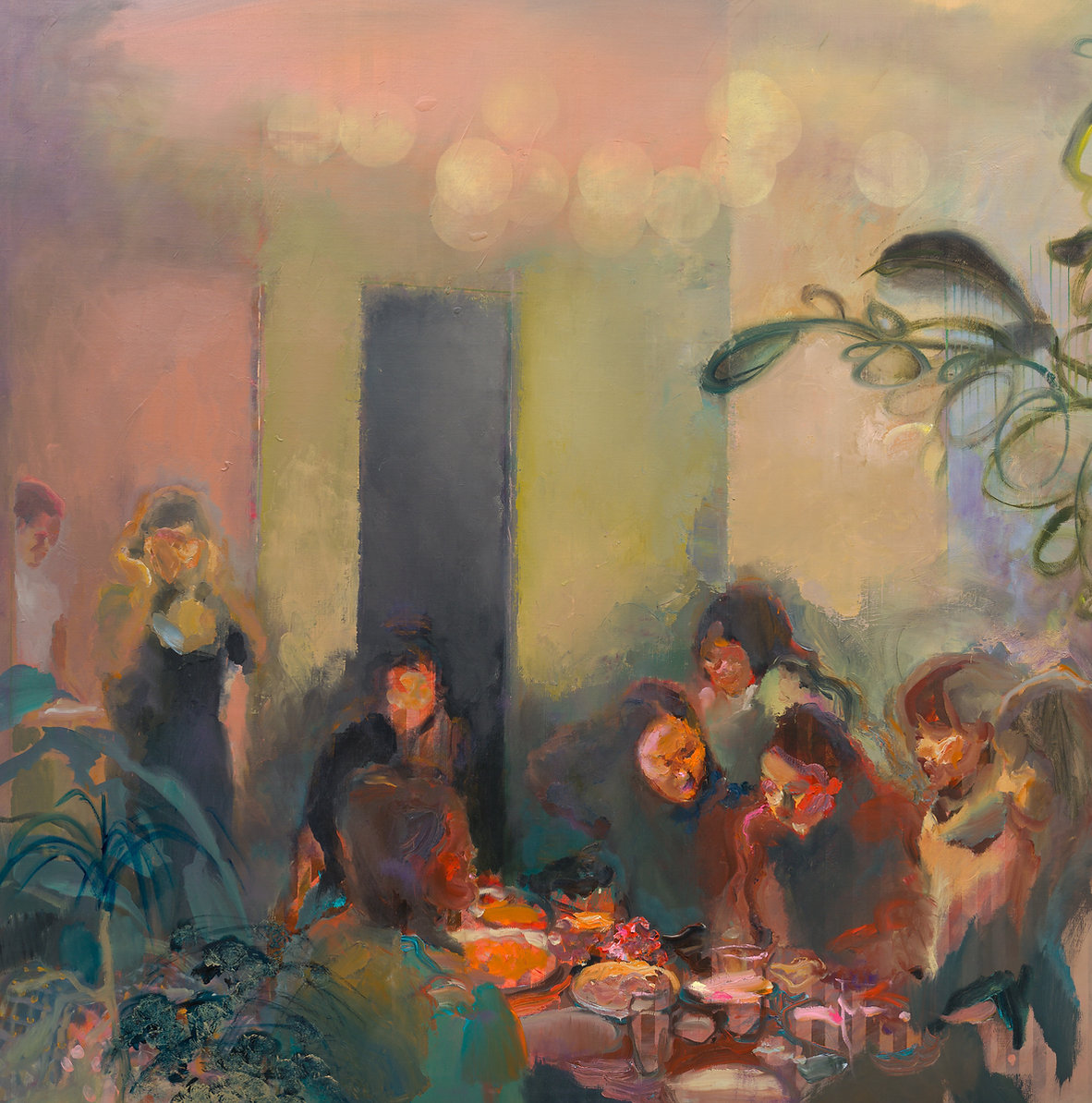
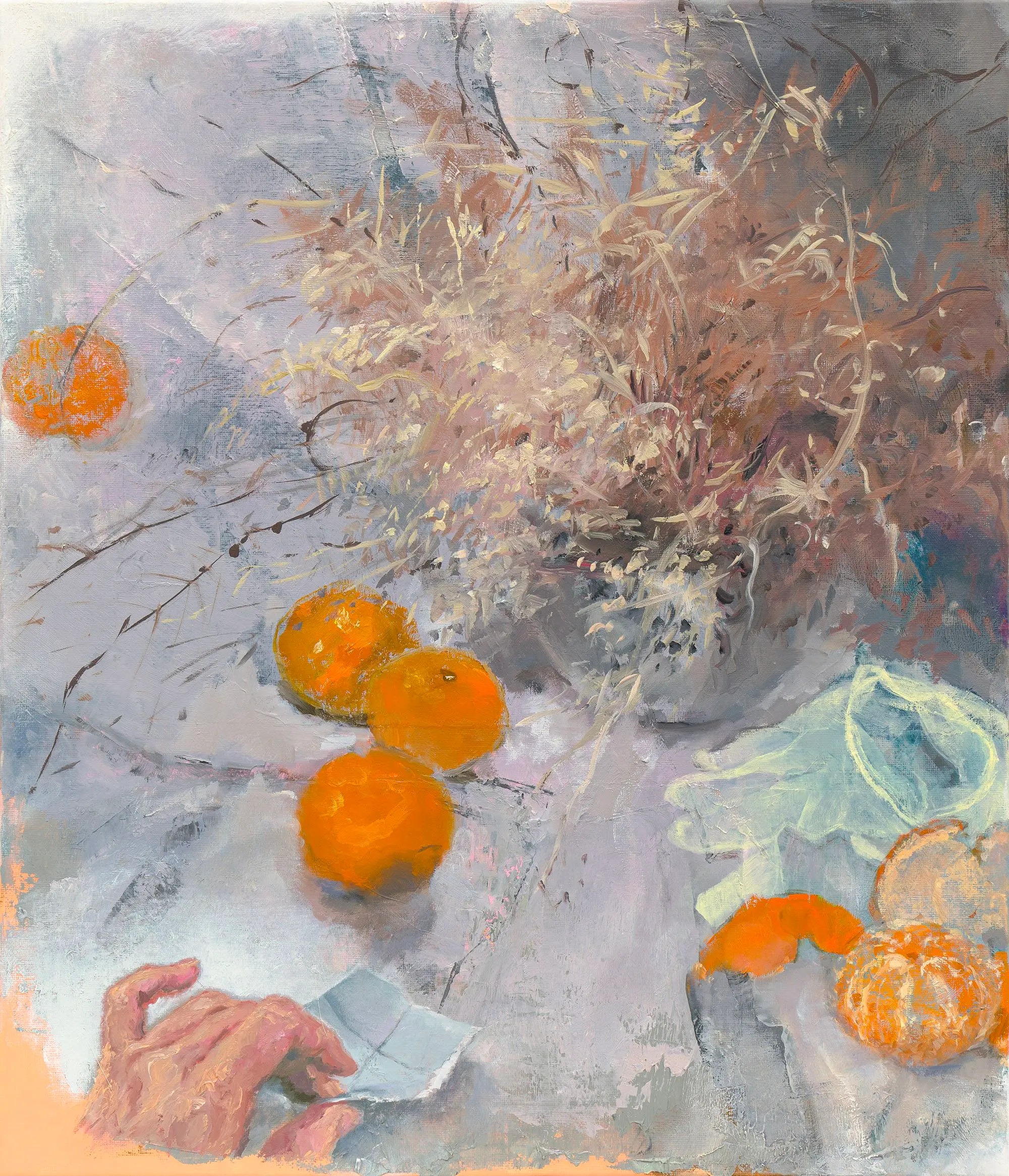
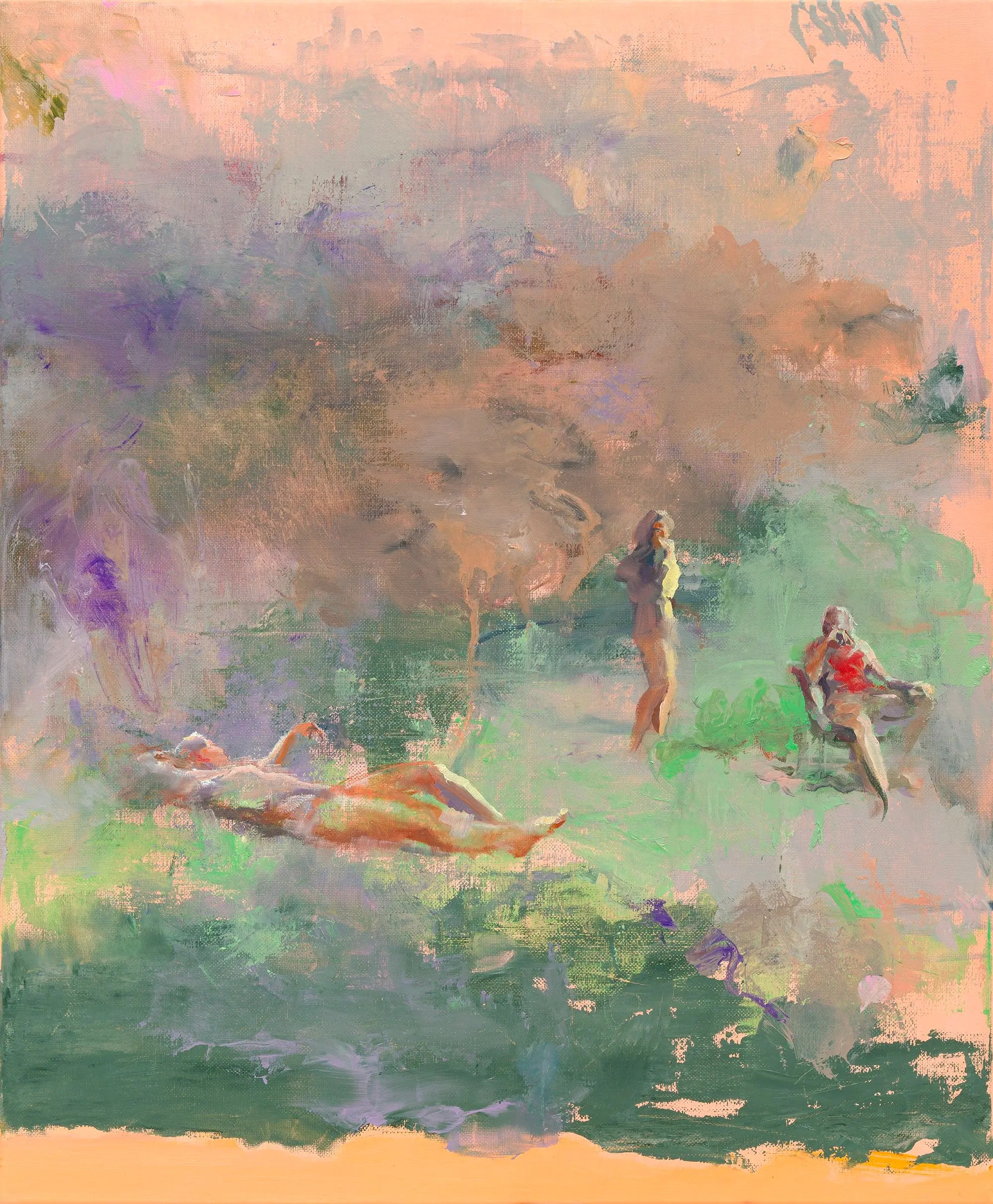
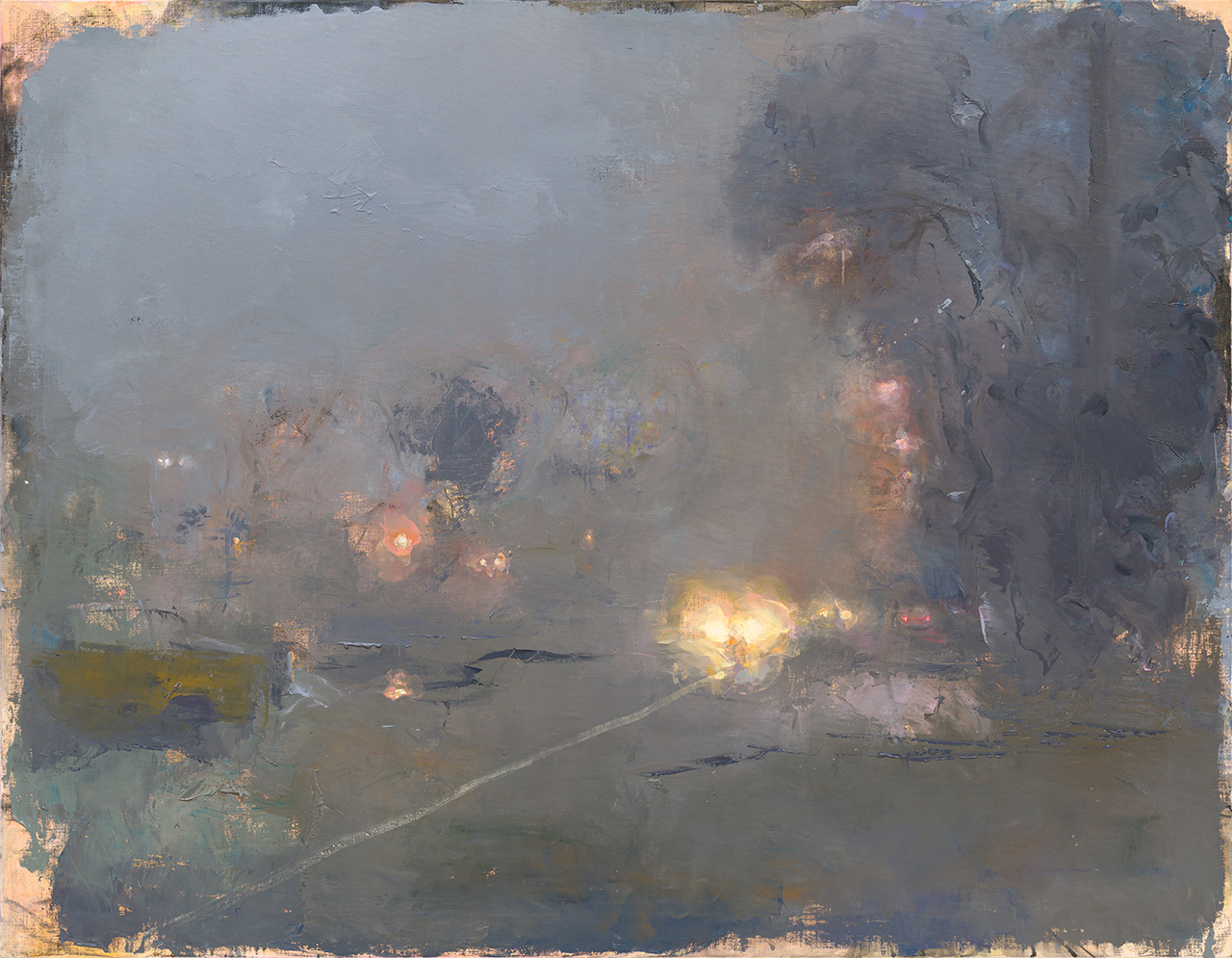
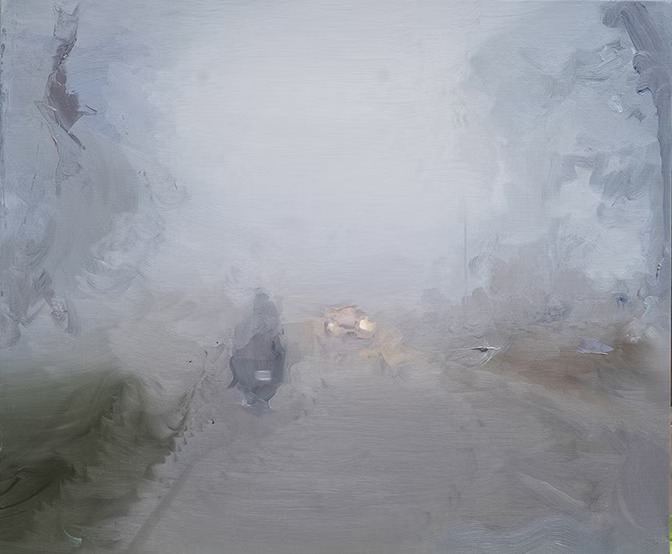
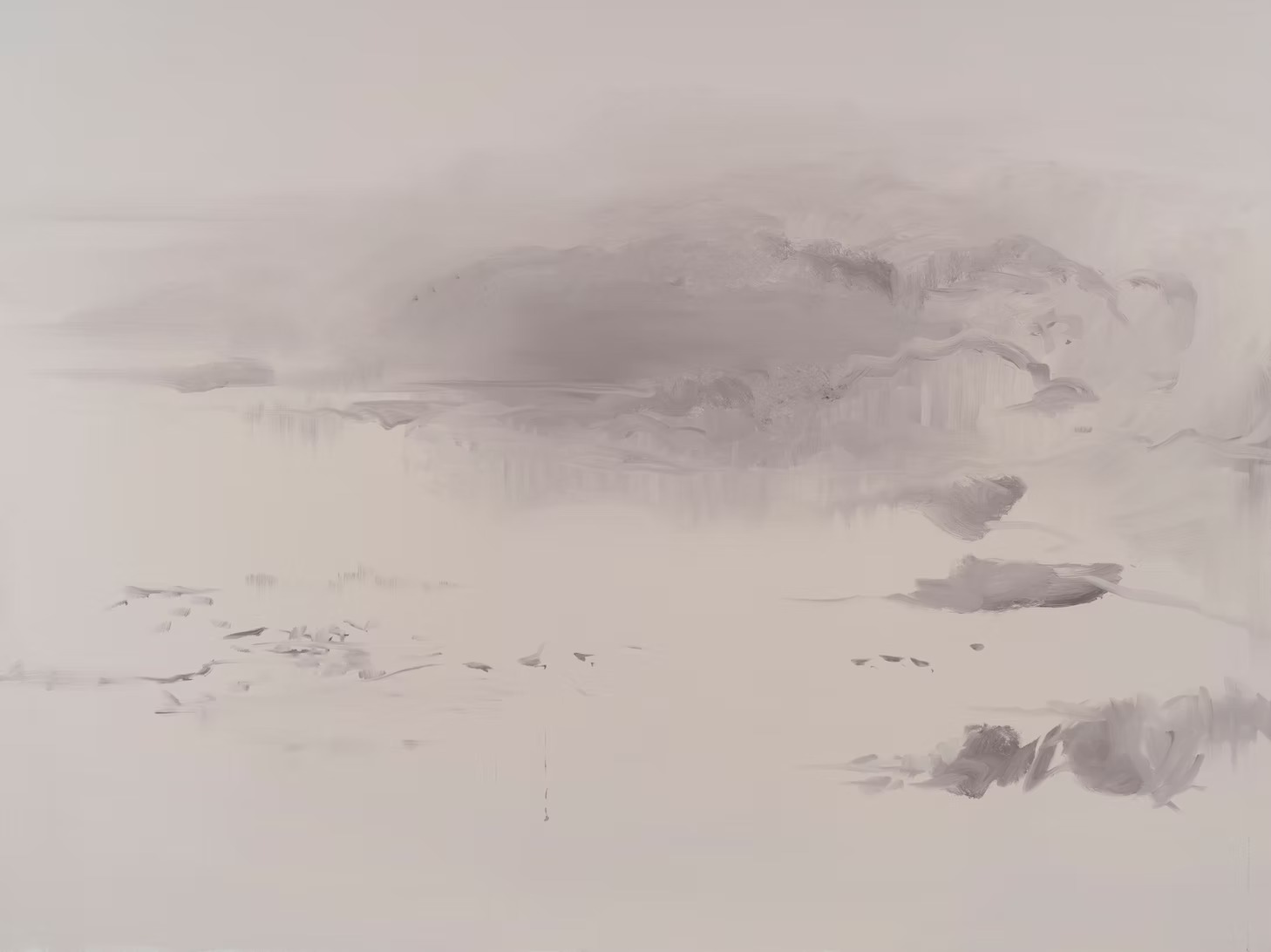
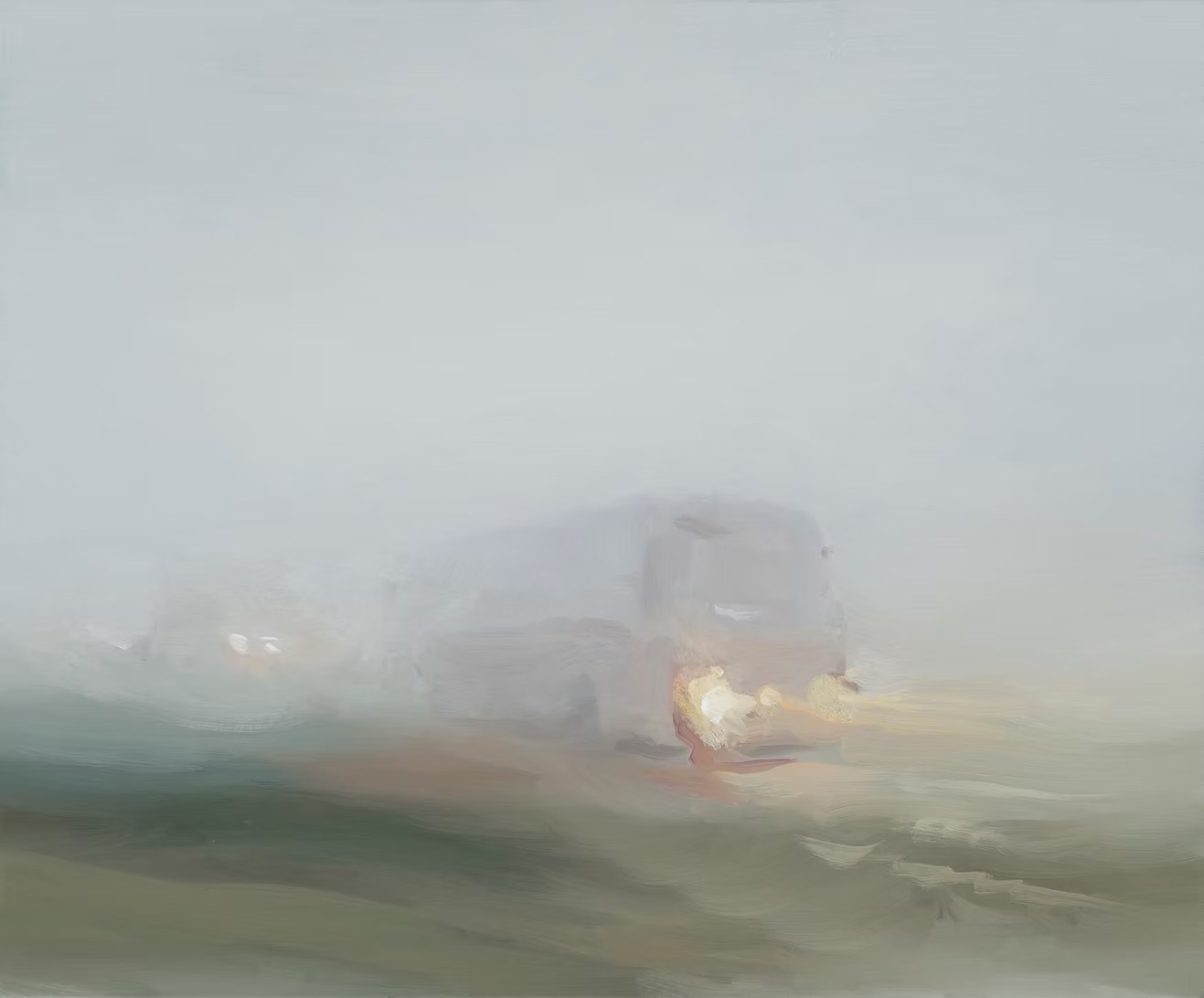
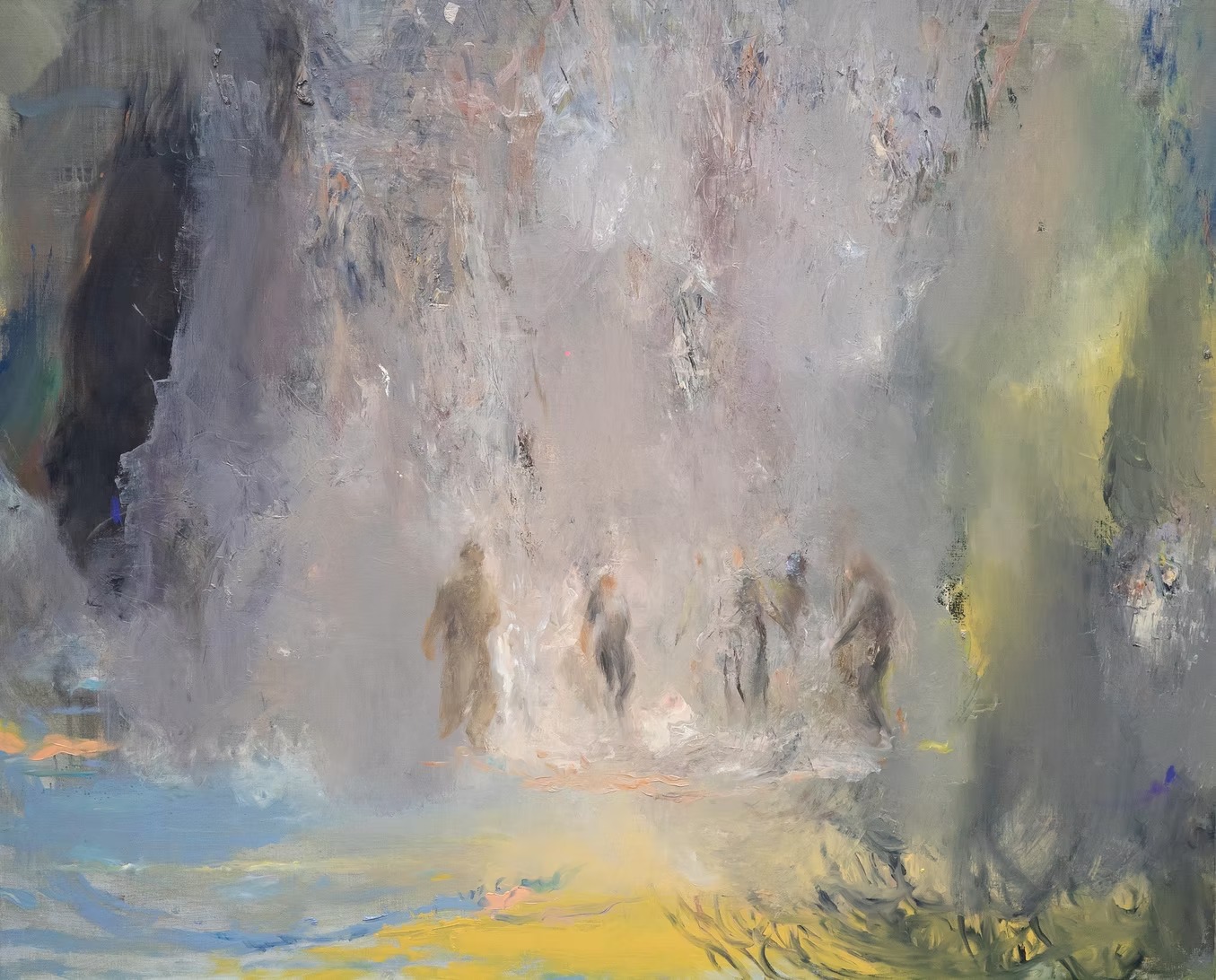
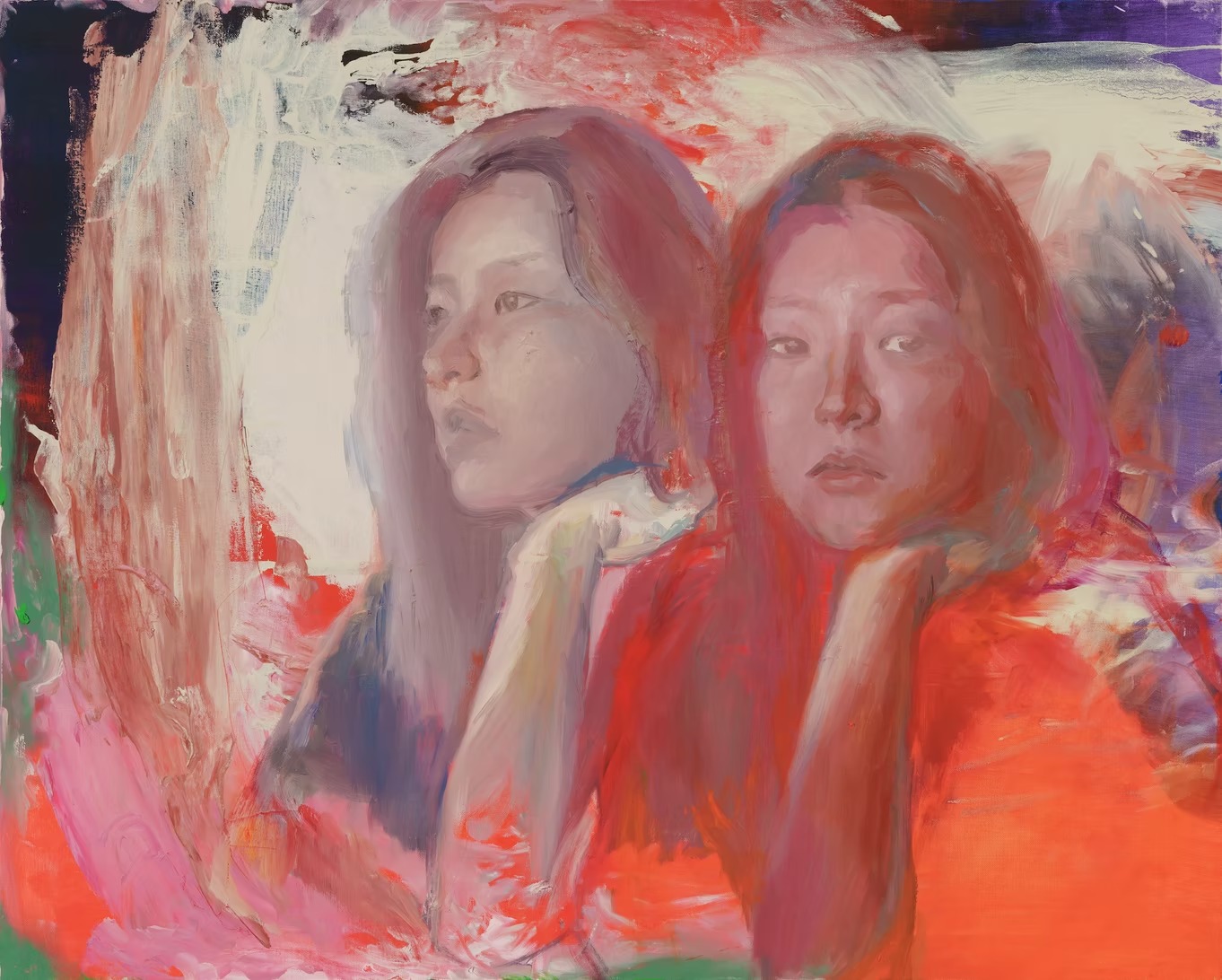
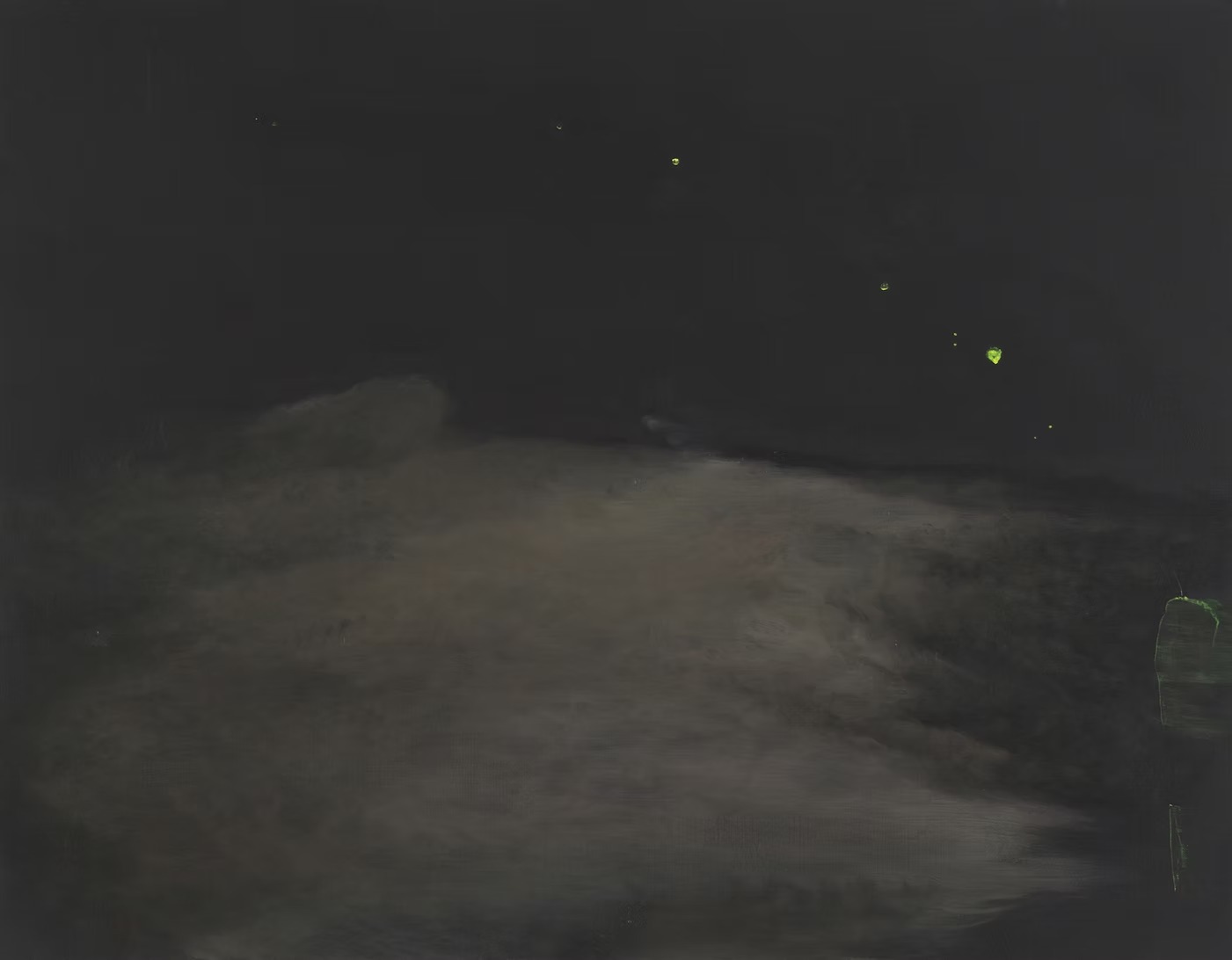
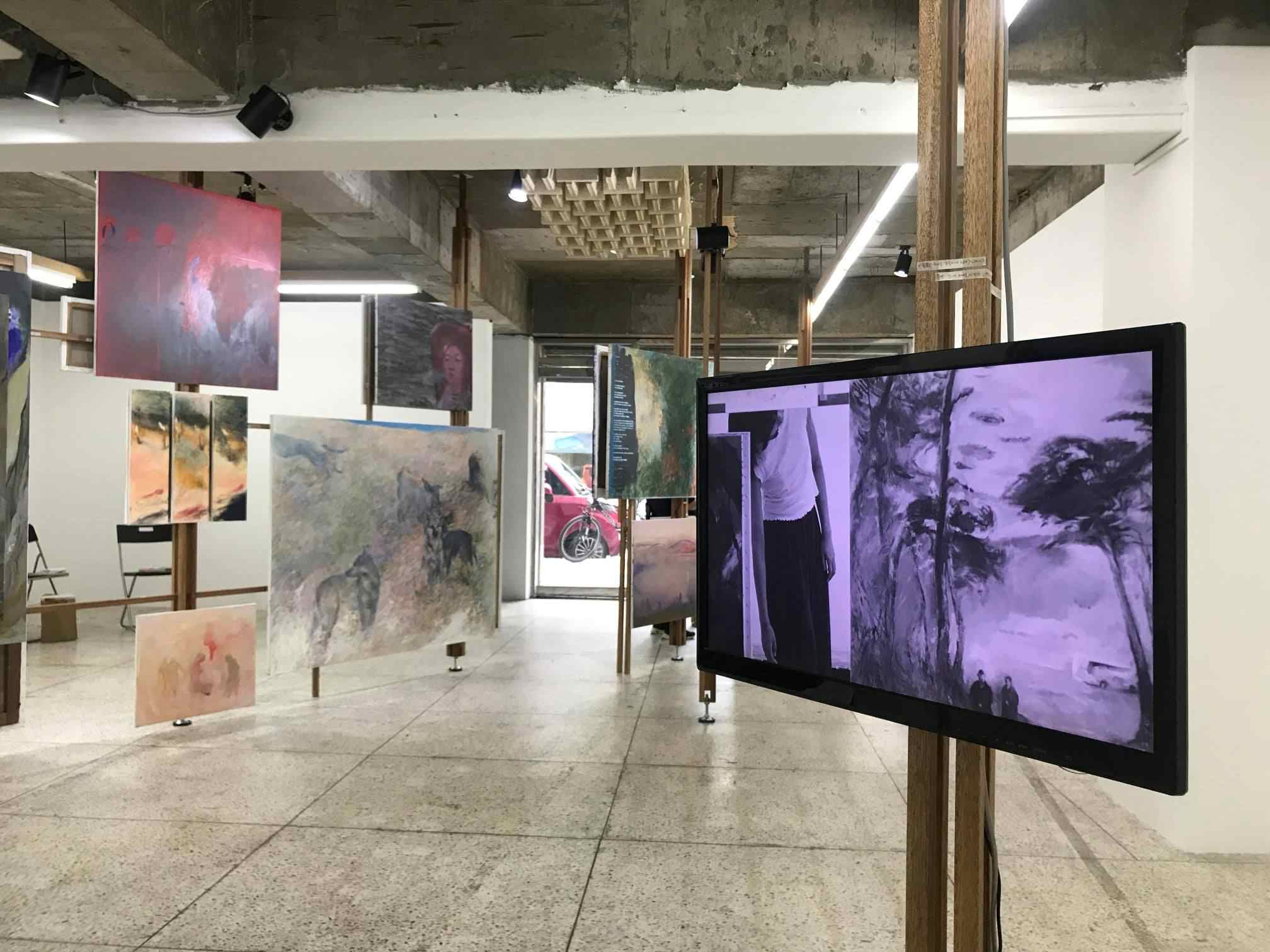
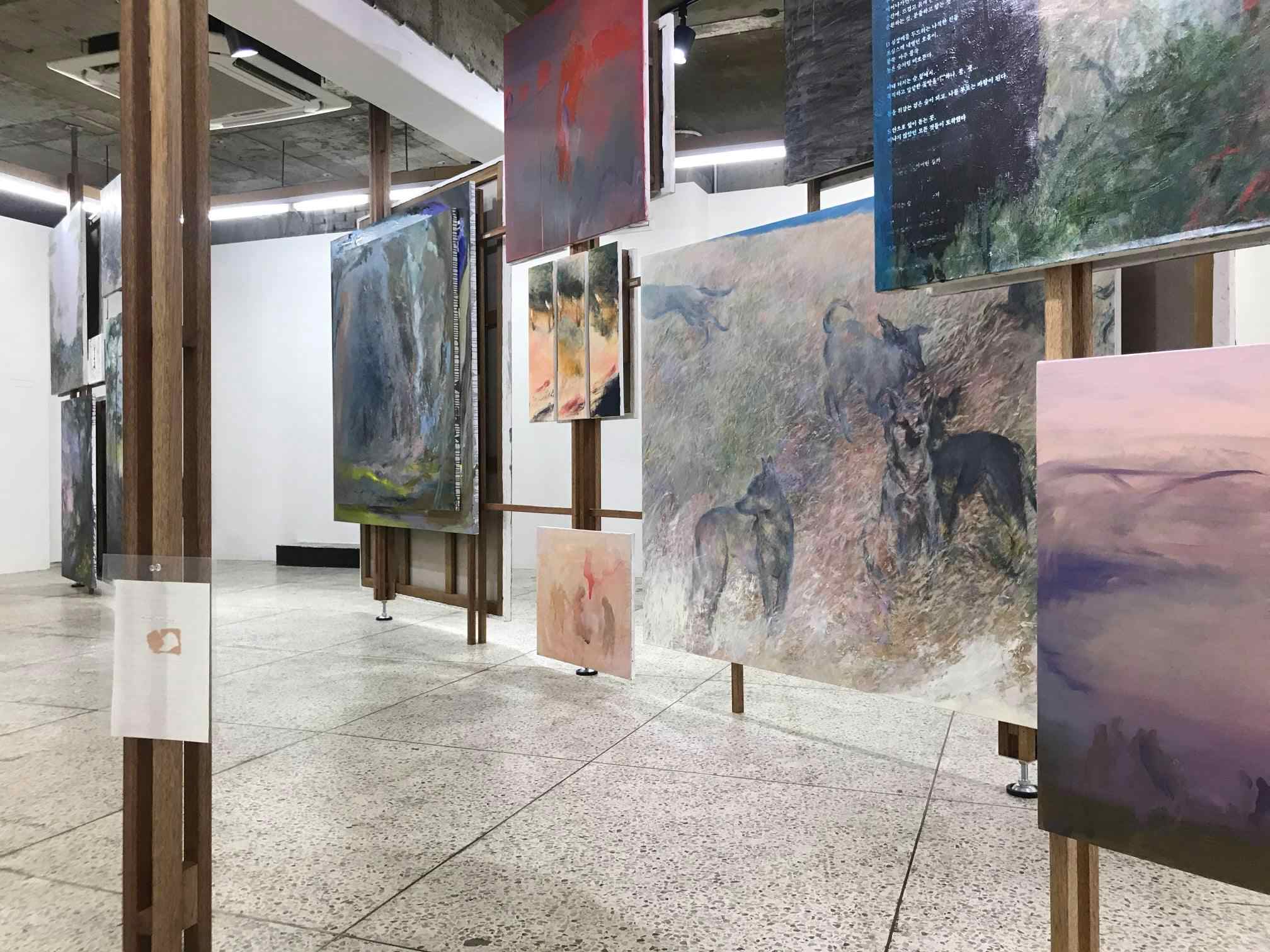
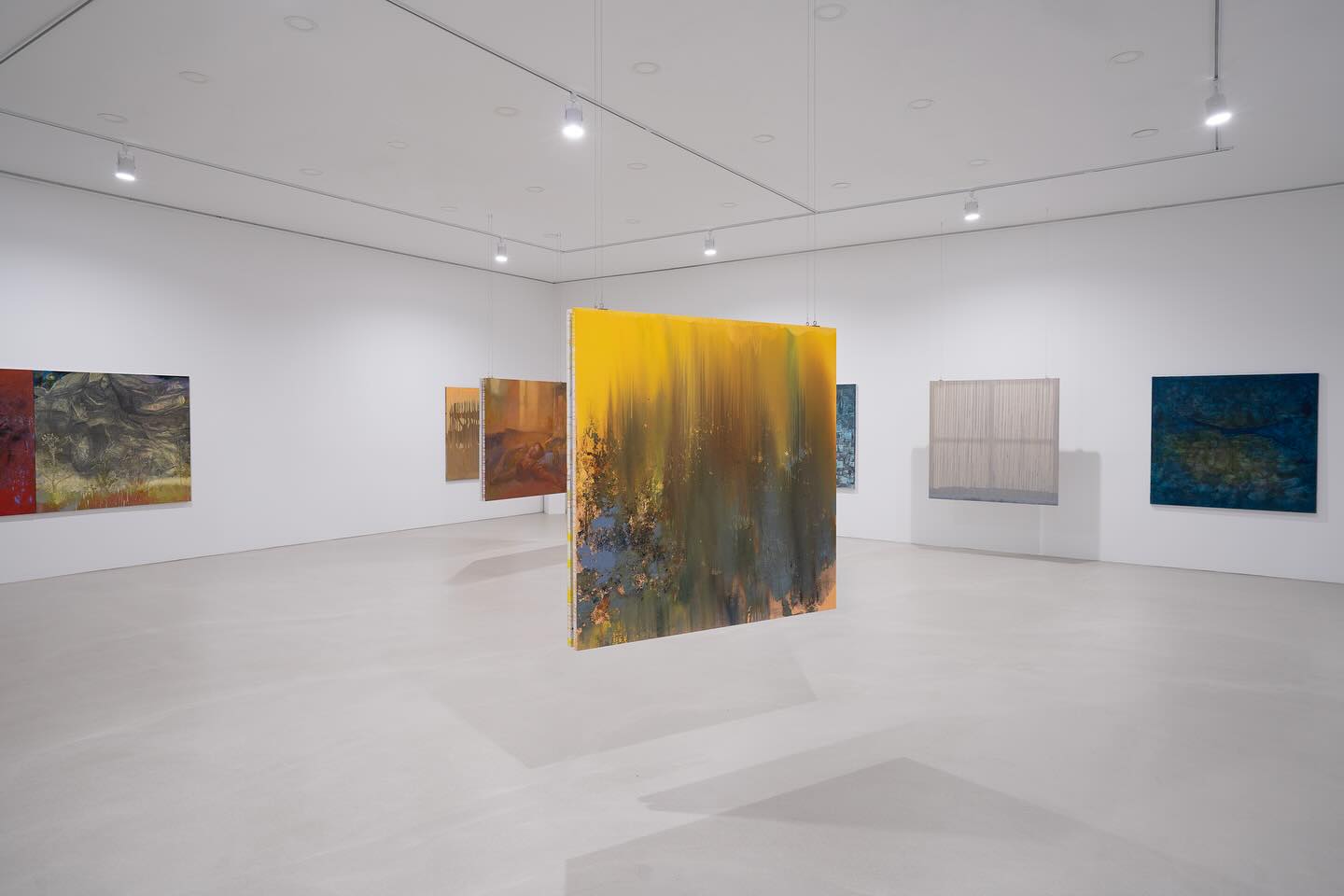
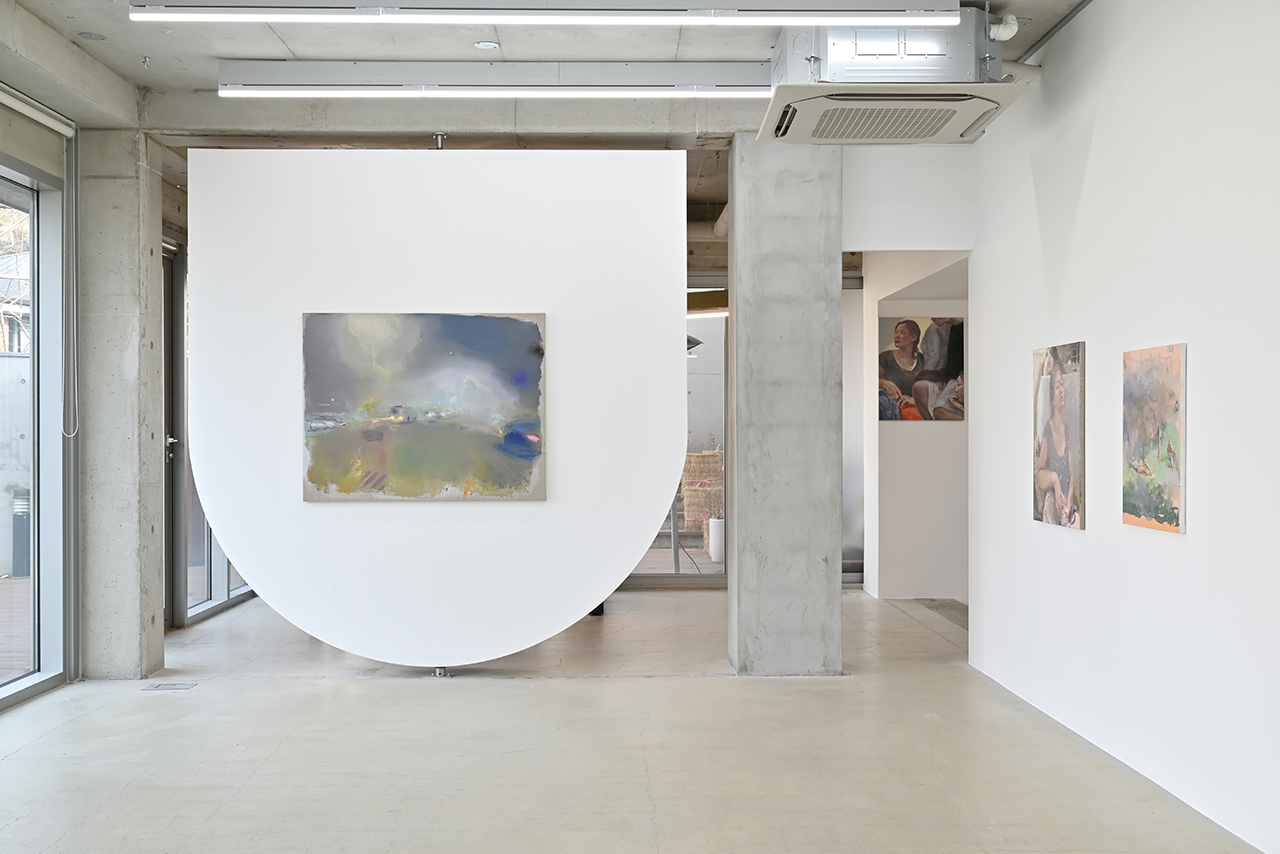
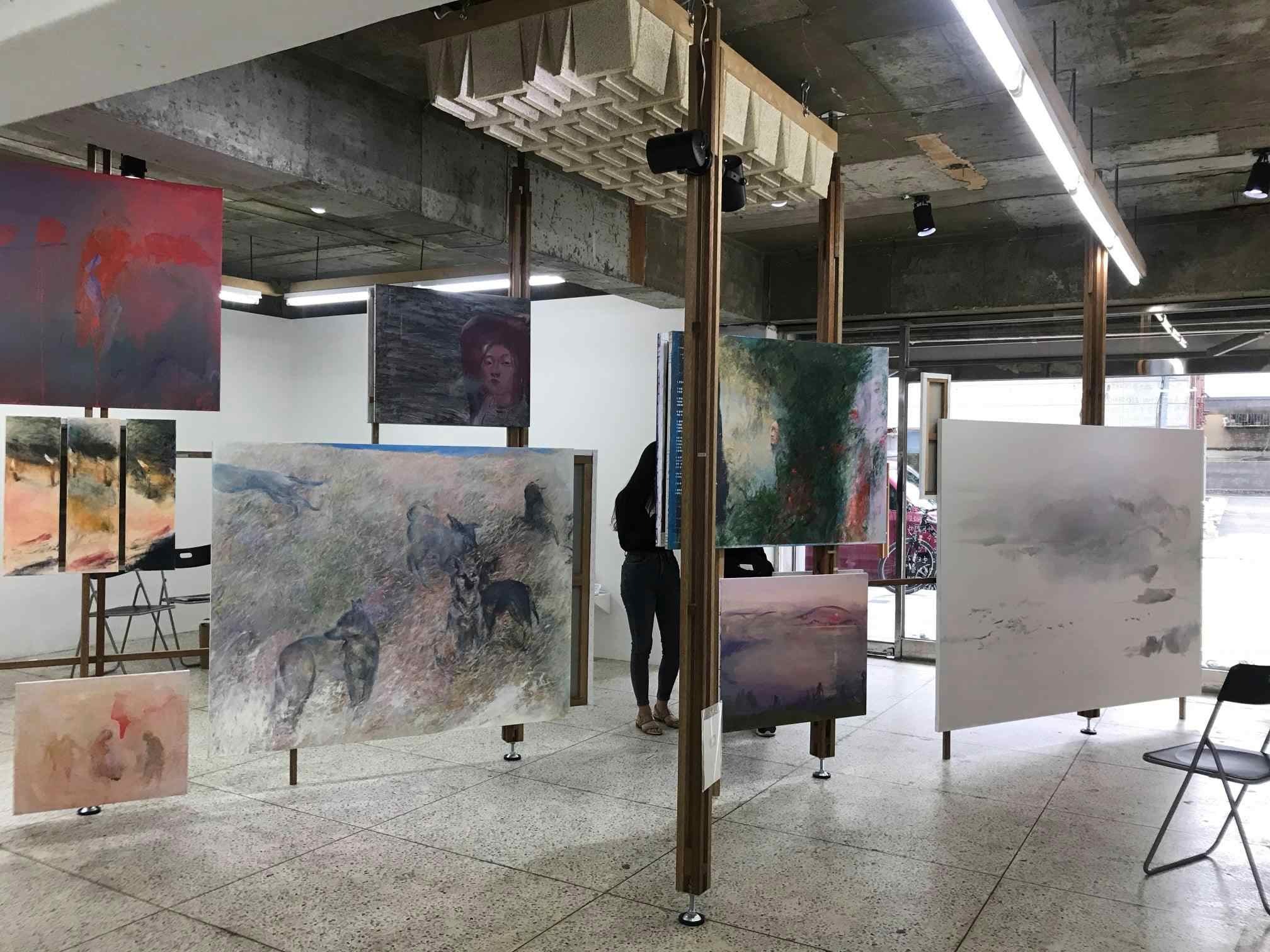
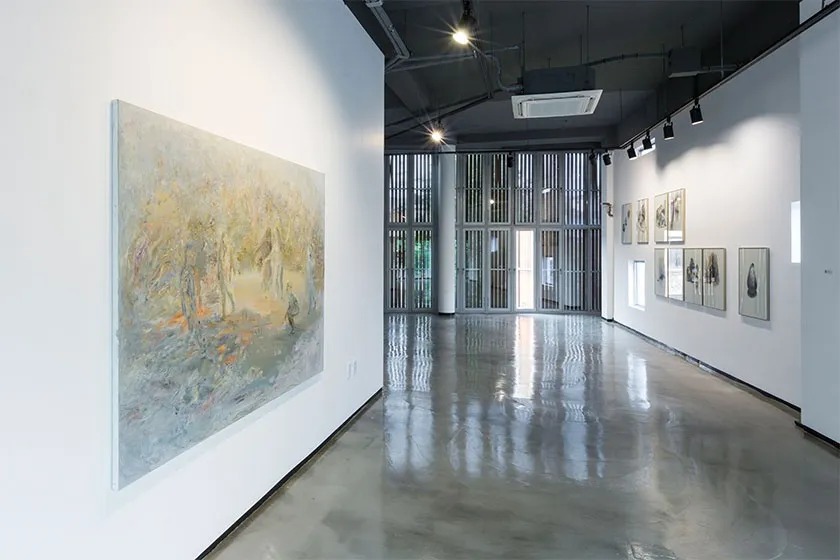
It seems to me that this is precisely where Leeje's interest lies. Painting is one possible answer to that question. With this perspective in mind, let us consider the series 'The World Goes On'. Although grouped together as a series, the works appear less like variations on a single theme than as an intermittent chain of images that share little in terms of subject matter beyond their uniform size.
The familiar art historical categories of abstraction and figuration, so often invoked in discussions of Leeje's paintings, initially seem to offer a stable point of entry into this seemingly disorderly (!) accumulation of images. Unfortunately, this soon proves to be a misunderstanding. Each painting follows the same working process: a foundational layer is established before successive event-like or improvisational elements are added to the surface.
Consequently, any classification based solely on the presence or absence of recognizable representation fails to recognize that the actual difference between these works lies primarily in their stage of development. In other words, the categories of abstraction and figuration are almost entirely useless when approaching this series.
Moreover, because figurative and abstract elements coexist within individual paintings, each image resembles a dream in which fact (memory) and imagination intermingle freely, producing fictional and fantastical scenes. Faces and places appear only to vanish again like afterimages. As with all dreams, upon waking only atmosphere, texture, and feeling remain scattered around the pillow.
Leeje's series grasps these remnants, fragments, and residues of absence through the dialectical and repetitive movement of painting and erasure, opening a passage toward what has often been called her "dirty gray"—an intermediate realm. Perhaps this "intermediate realm," which best encapsulates Leeje's overall artistic practice, resembles the Tibetan Buddhist concept of the bardo: an abstract, utopian space that preserves the bodily, tactile, and material energies of affect that resist complete translation into language or meaning.
It is also a space in which judgment is suspended from the outset, rendering binary systems of classification inoperative—a place of retreat and refuge that chooses incompletion and indeterminacy. The ambiguity of this "gray zone," where "[the subject's] activity and [the other's demand for] passivity collide and intertwine," constitutes the very core of the painterliness toward which Leeje's series aspires.
The term "painterly" generally refers to images rich in tactile textures, color, and descriptive qualities. Yet, from another perspective, it has often functioned as a pejorative, implying that a work may only be pseudo-painting rather than "true" painting. Precisely for this reason, however, a flexible, mutable, and expansive experience of painting offers both the viewer—and perhaps above all the artist herself—a truth that exists at the affective, intuitive, and bodily level: discovering life within painting and, conversely, painting within life.
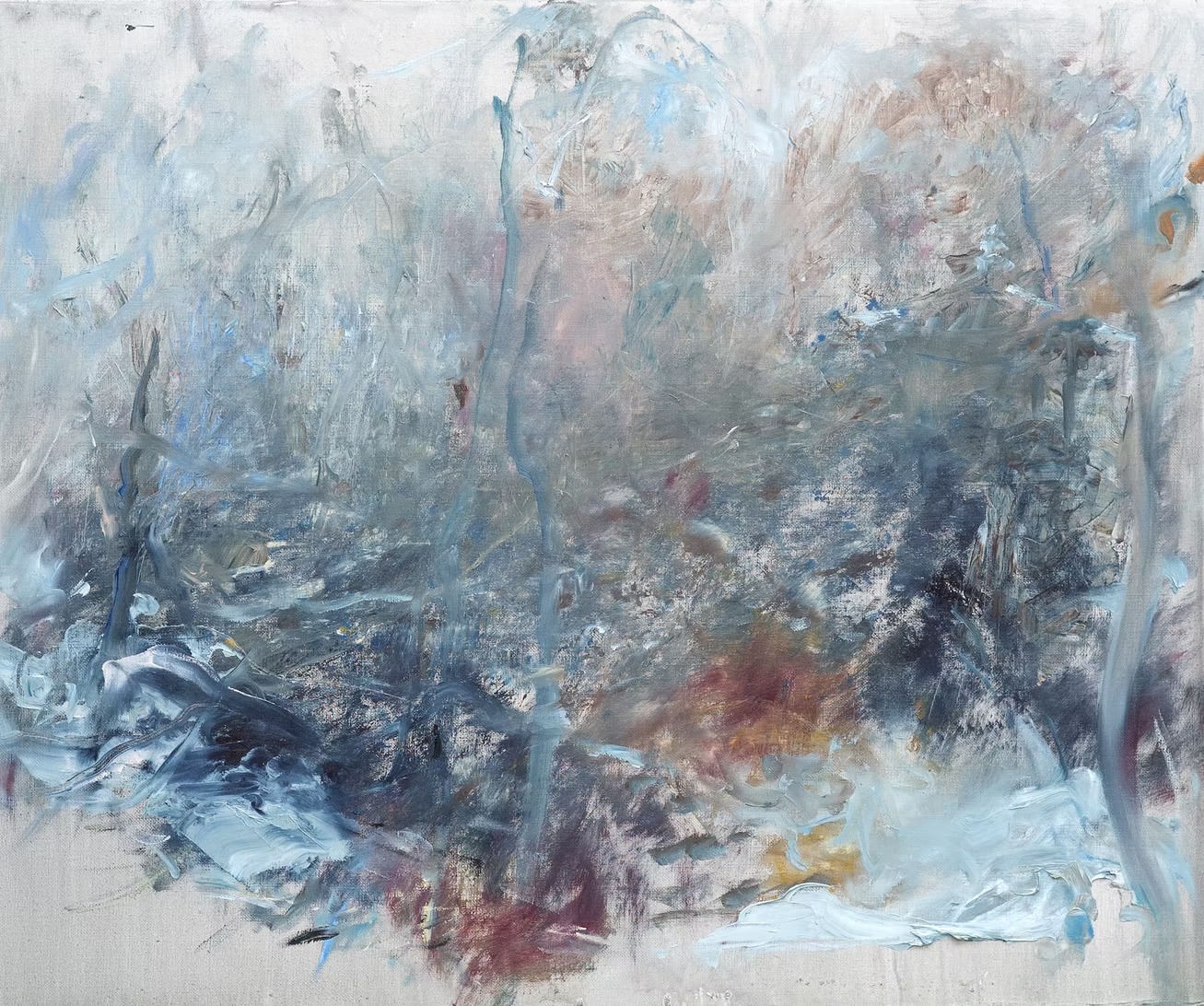
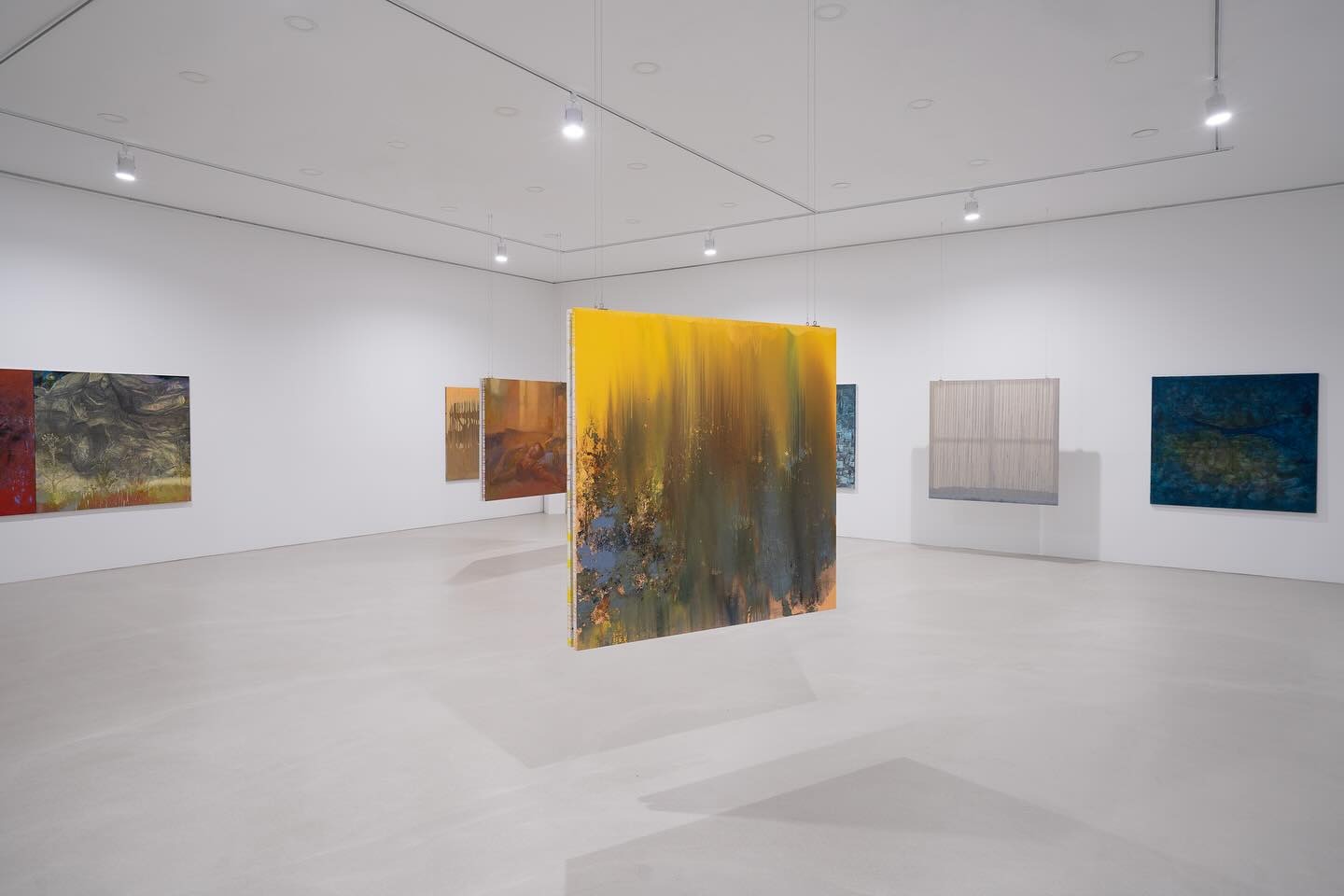
It is a moment of raw, humble, almost amateur encounter that the polished "real" painting displayed in a sleek frame against the pristine backdrop of the white cube can scarcely provide. Although it cannot be explored at length here, the series also contains images that appear so characteristically abstract that they might more appropriately be called "paintings" rather than "pictures."
The movements generated accidentally, improvisationally, and contingently through the interaction of paint, canvas, gravity, time, and space resemble both an appropriation—or parody—of abstract painting and the recorded traces of an improvised jam session created by the individual elements themselves. These quasi-abstract experiments provide rhythmic intervals of contentlessness throughout the series.
If painterliness suggests the intermediary space, passage, or medium between everyday life and art that Leeje's paintings generate, then the format of the series itself communicates much the same idea. Unified by their square format, the works resemble a casually assembled Instagram feed filled with personal screenshots, memes, and captured moments.
As we know, a screenshot is a distinctly digital act: extracting a particular image from a larger visual field or isolating a still image from a continuous sequence. I am unsure how such a comparison might sound when applied to an artist who still fully embodies the traditional figure of the painter, someone for whom the title remains entirely appropriate.
To invoke a technology capable of infinitely reproducing a screen—indeed, for some generations, not even the "real world" itself—with a simple click may seem odd. Yet screenshots undeniably function today as a practical medium through which visual experiences once owned only in the first person become "equally" shareable. In this sense, they realize a decidedly low-resolution form of democracy.
Consider the endless KakaoTalk conversations submitted as "attached evidence." However noble the public interest may be, the screenshot reduces secrecy—that absolute other—to little more than information awaiting a Like (or Dislike), flattening distinctions and carrying out the same sabotage against every secret by eliminating difference.
Yet, aside from such diligent documentation, the screenshot possesses another side. It preserves and records those accidental, glitch-like, almost magical moments of contact and connection encountered online. We remember—like patients suffering from dementia—that this was once the true reason we went on the internet only through certain "old famous screenshots."
Naturally, we ourselves are never the protagonists of those images. Nevertheless, by circulating these temporary moments of internet intimacy as image files—a kind of currency—we discover our own individual meanings from within them, much as we establish personal relationships with films. The gentle freedom afforded by mediated experience through screenshots makes it possible, just as literature fundamentally does, to exchange the positions of "you" and "I."
We encounter a similar experience in Leeje's series. The visual, sensory, and affective layers that compose the world she has "captured" are softly spread across the screen of the canvas. The absence of concrete events, forms, or information instead functions as a gap, a silence, an opening that stimulates the viewer's own memories, experiences, and imagination. In this way, painting willingly transforms itself into a means through which life, mourning, and the world may continue.
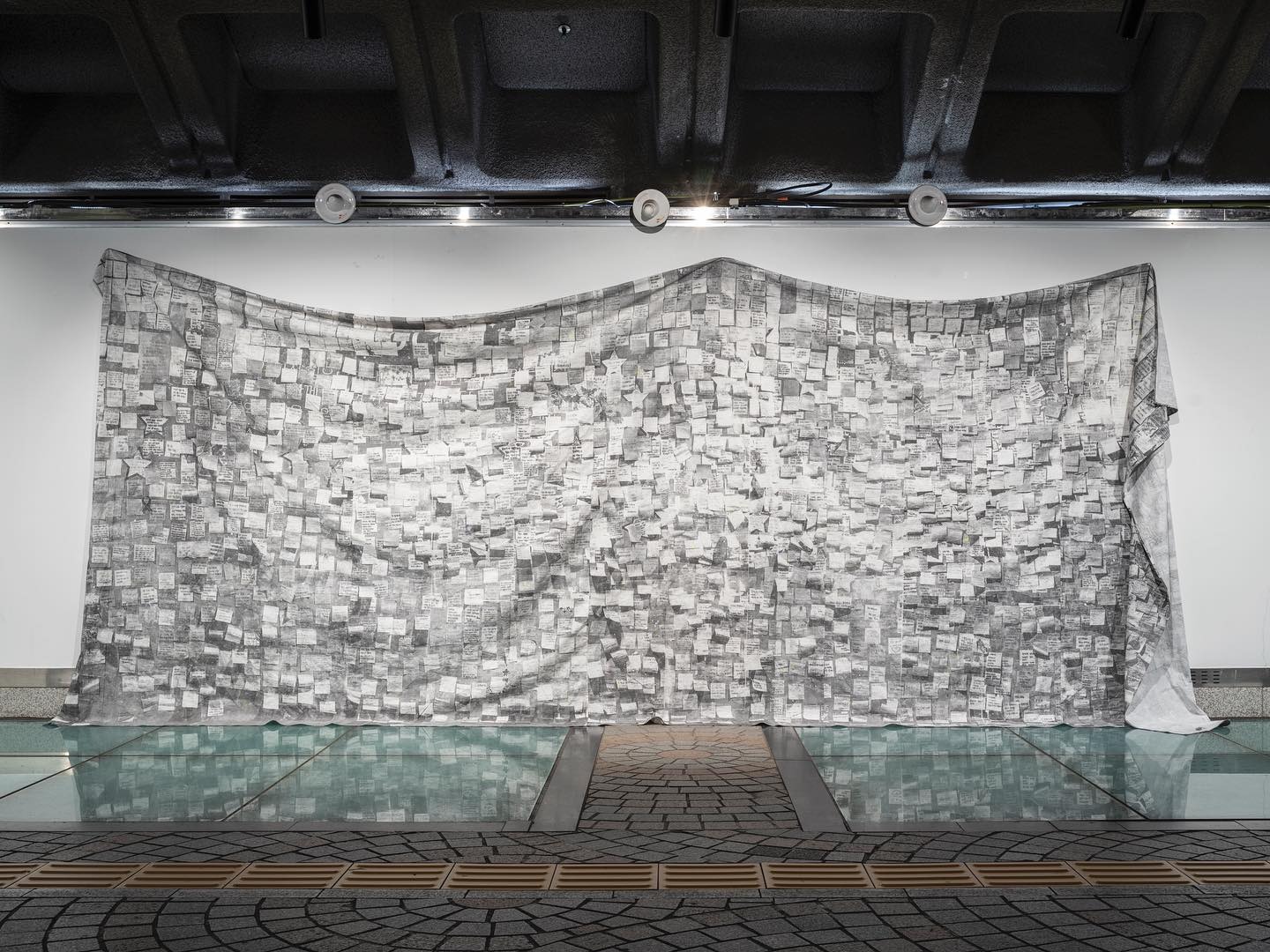
Finally, a brief remark on the square format itself. The square naturally recalls the Instagram feed, yet, as in The World Goes On: River, it also evokes the size of the Post-it notes commonly found at public memorial sites. Read in this context, the series invites viewers to practice seeing the square as a format of everyday mourning. It is, unmistakably, painterliness itself resisting the affectless equality of the Instagram feed.