HITE
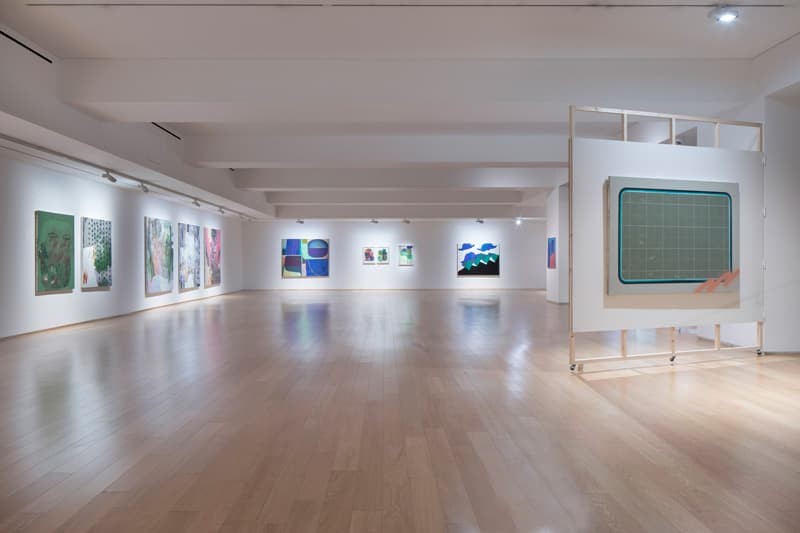
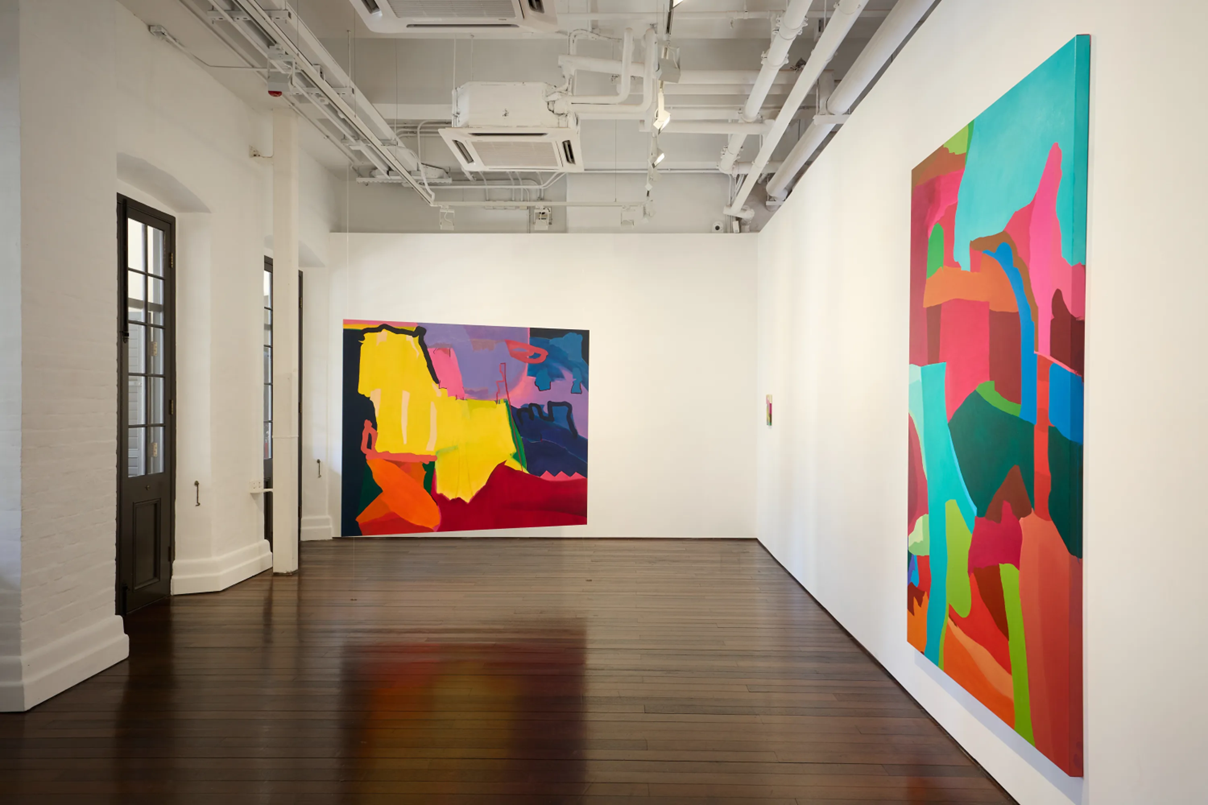
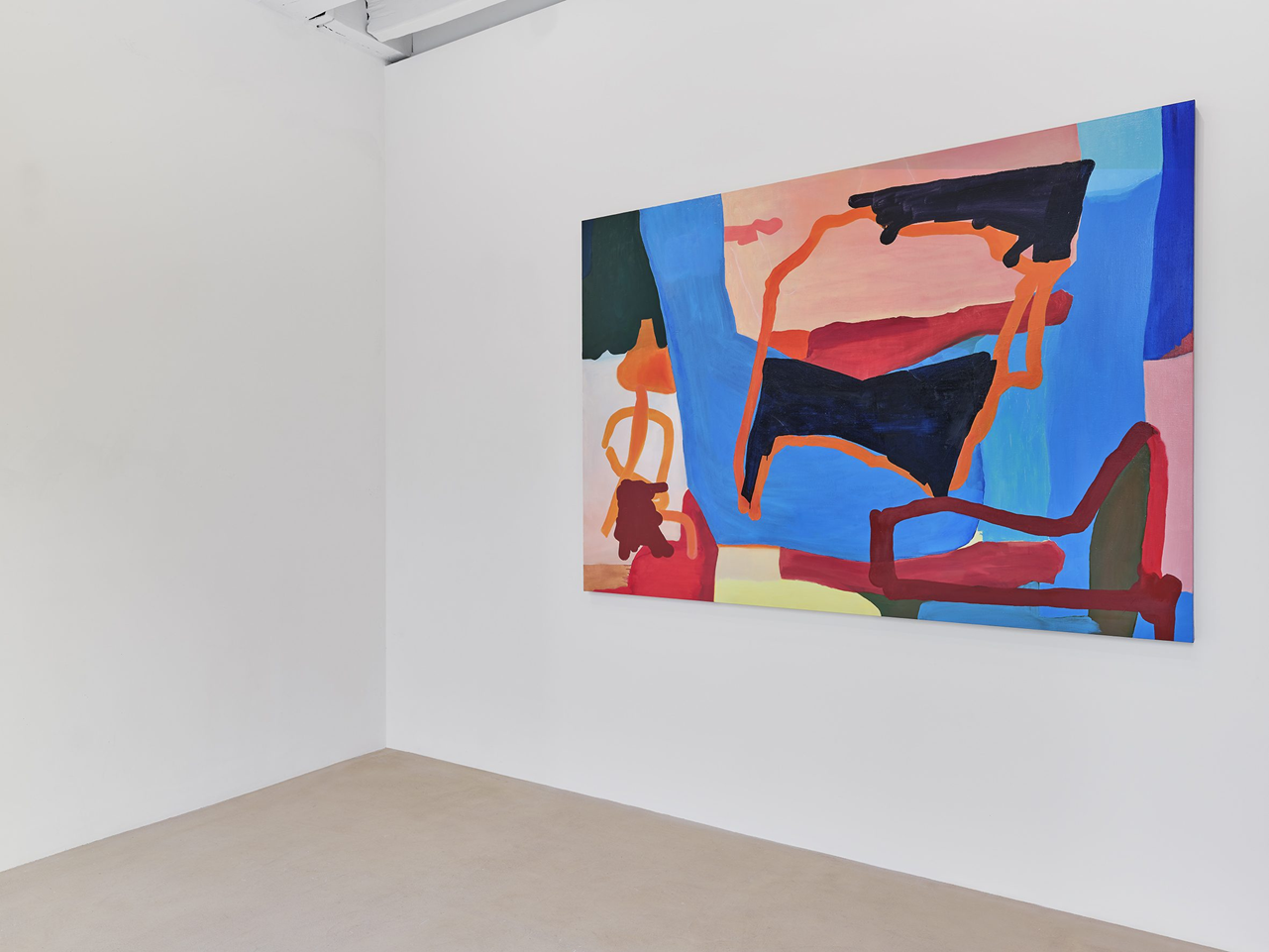
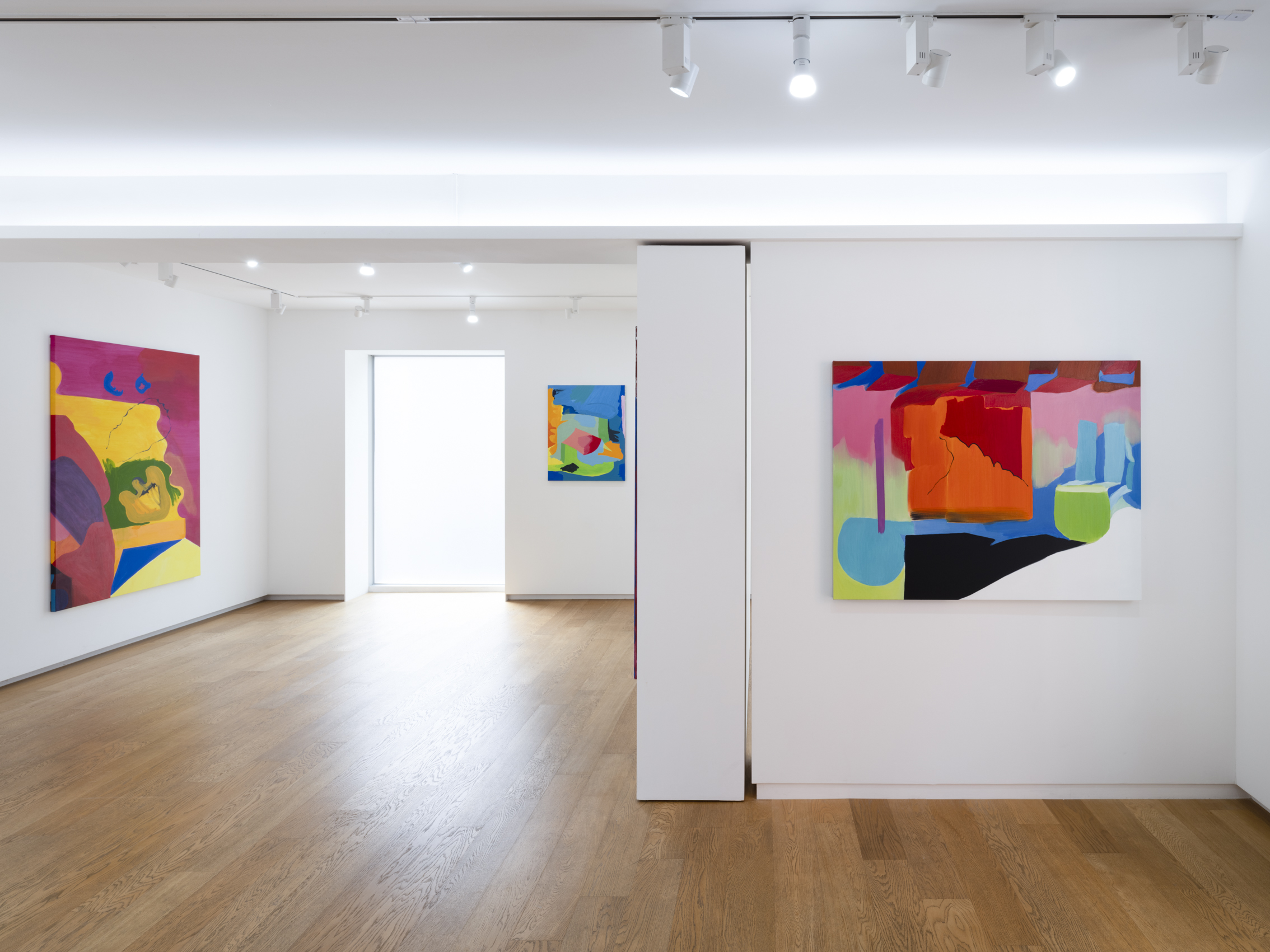
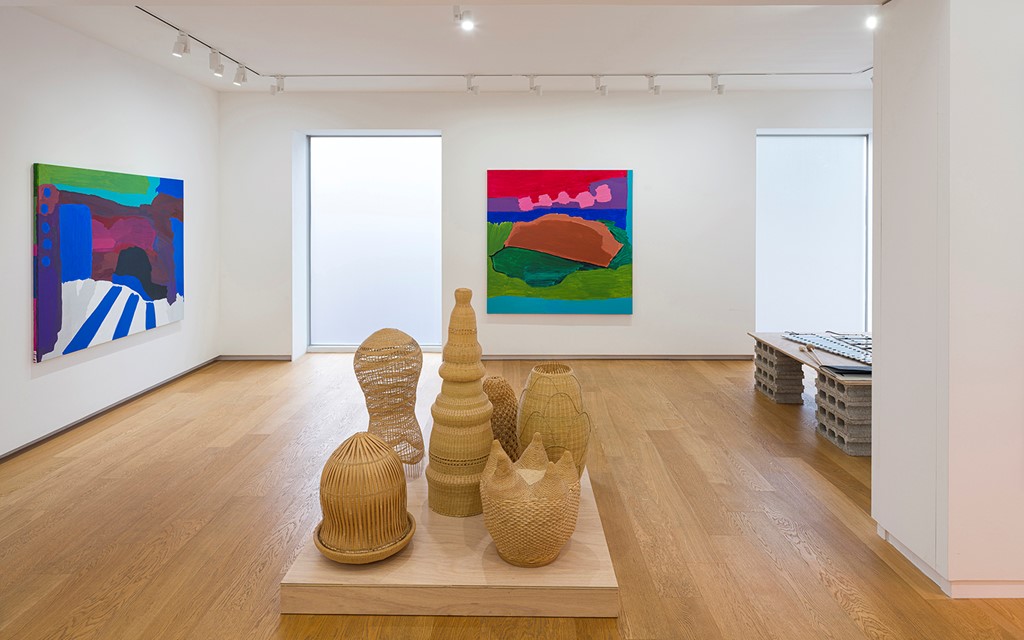
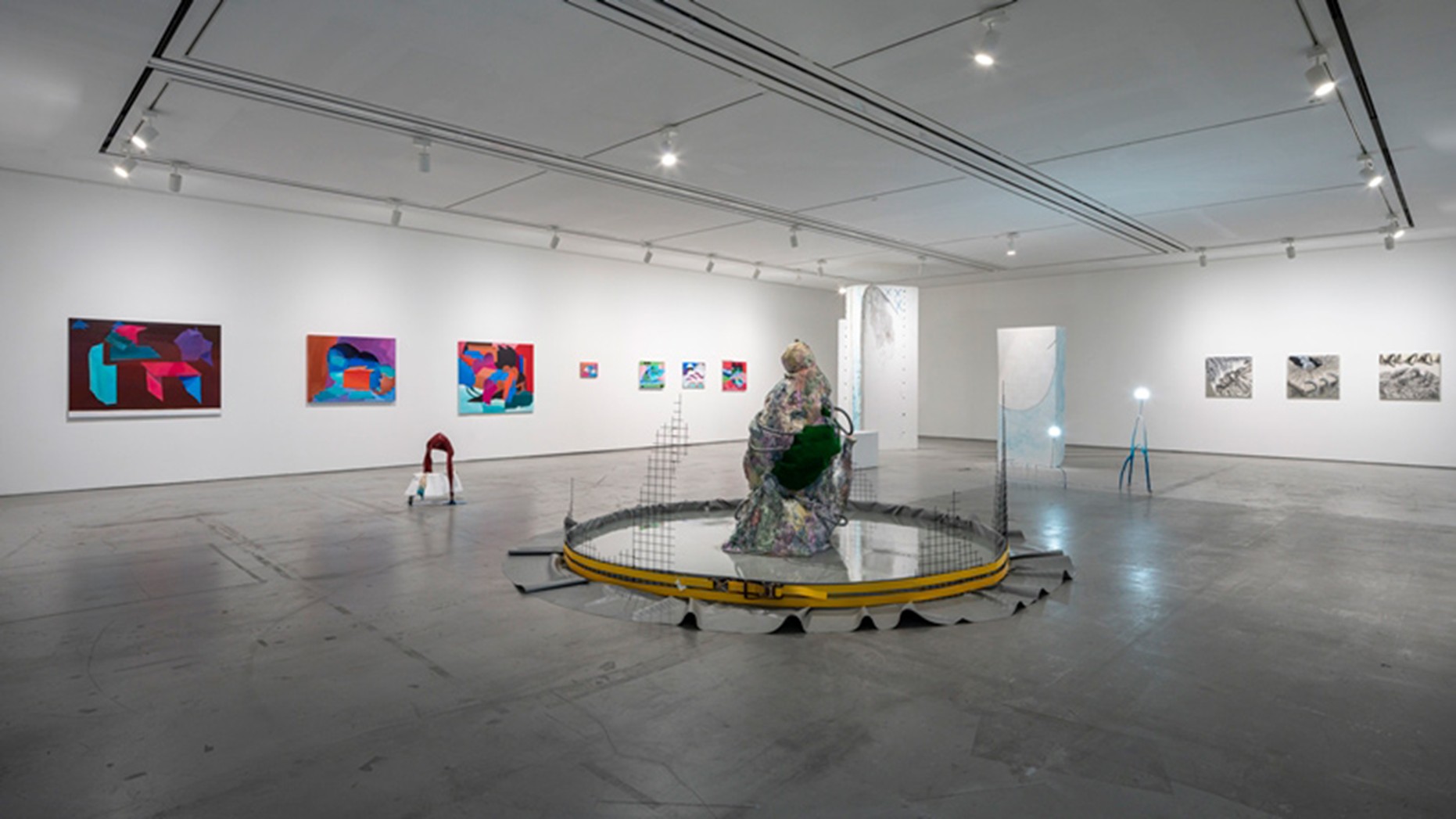
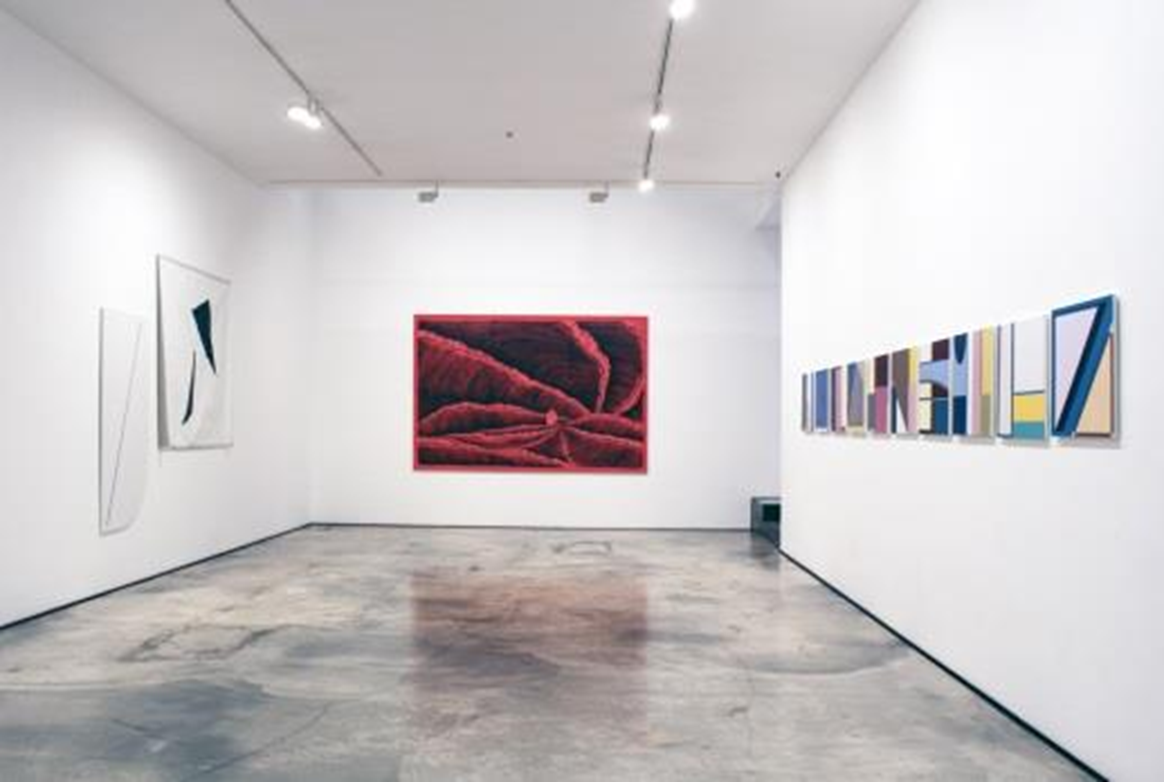
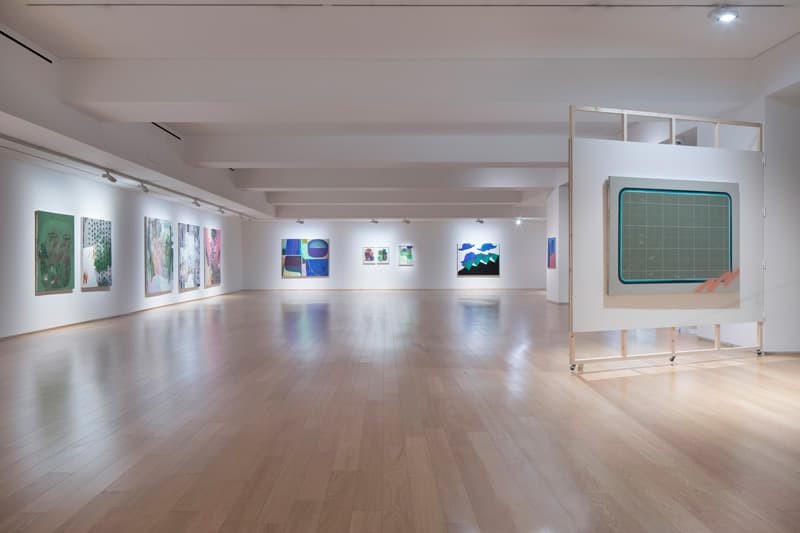
Collection presents 《Allover》 as the autumn exhibition program 2018. The exhibition deals
with the condition of contemporary painting as well as the questions on how we
experience it, proposing to highlight the observation itself of painting. The
generations of eleven selected artists including Hejum Bä, Heemin Chung,
Yeo-Ran Je, Hana Kim, Meeyoung Kim, Mirae Kim, Jiyoon Koo, Fanhee Lee,
Seungchan Lee, Hyungji Park and Nakhee Sung range from their 20s to 50s and
present a true variety of their standpoints: some have already firmly
established their visual language, while some cherish the diversity of
experimental painting and others have just started the pursuit of developing
their own language.
Their time and art historical situation or point of start
as they began painting may differ, yet it is undeniable that they manifest the
present and contemporary aspect of painting in one way or another. They
construct images by means of the methods which each of them pursued or
established. Here, it is indispensable to consider the material element such as
the material support or color of the painting along with the image itself.
Below are the brief introductions to each artist.
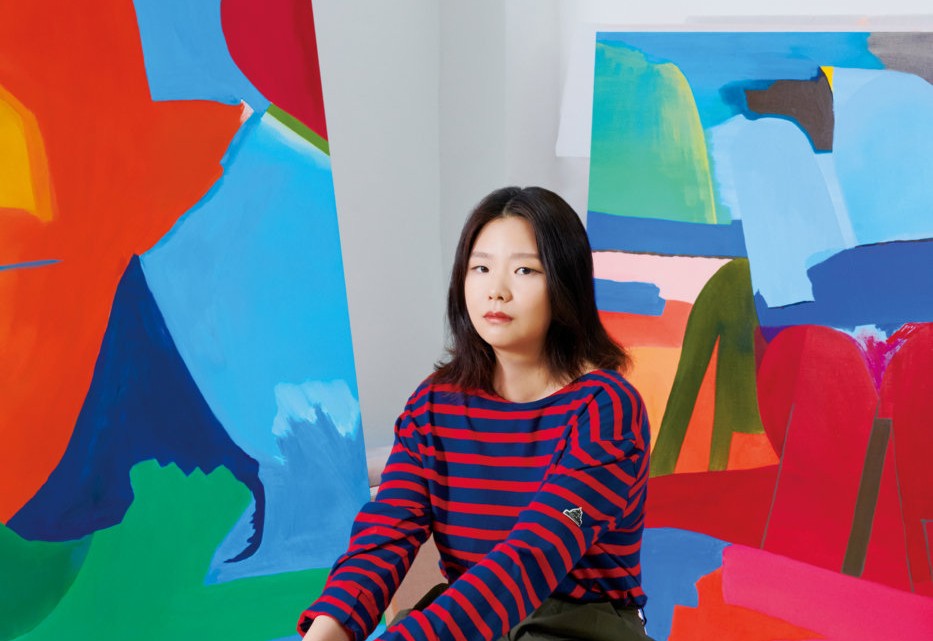
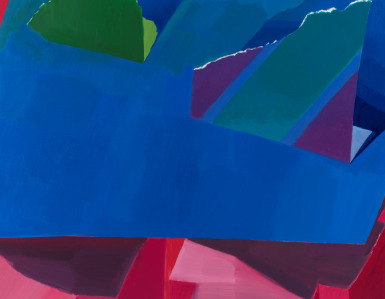
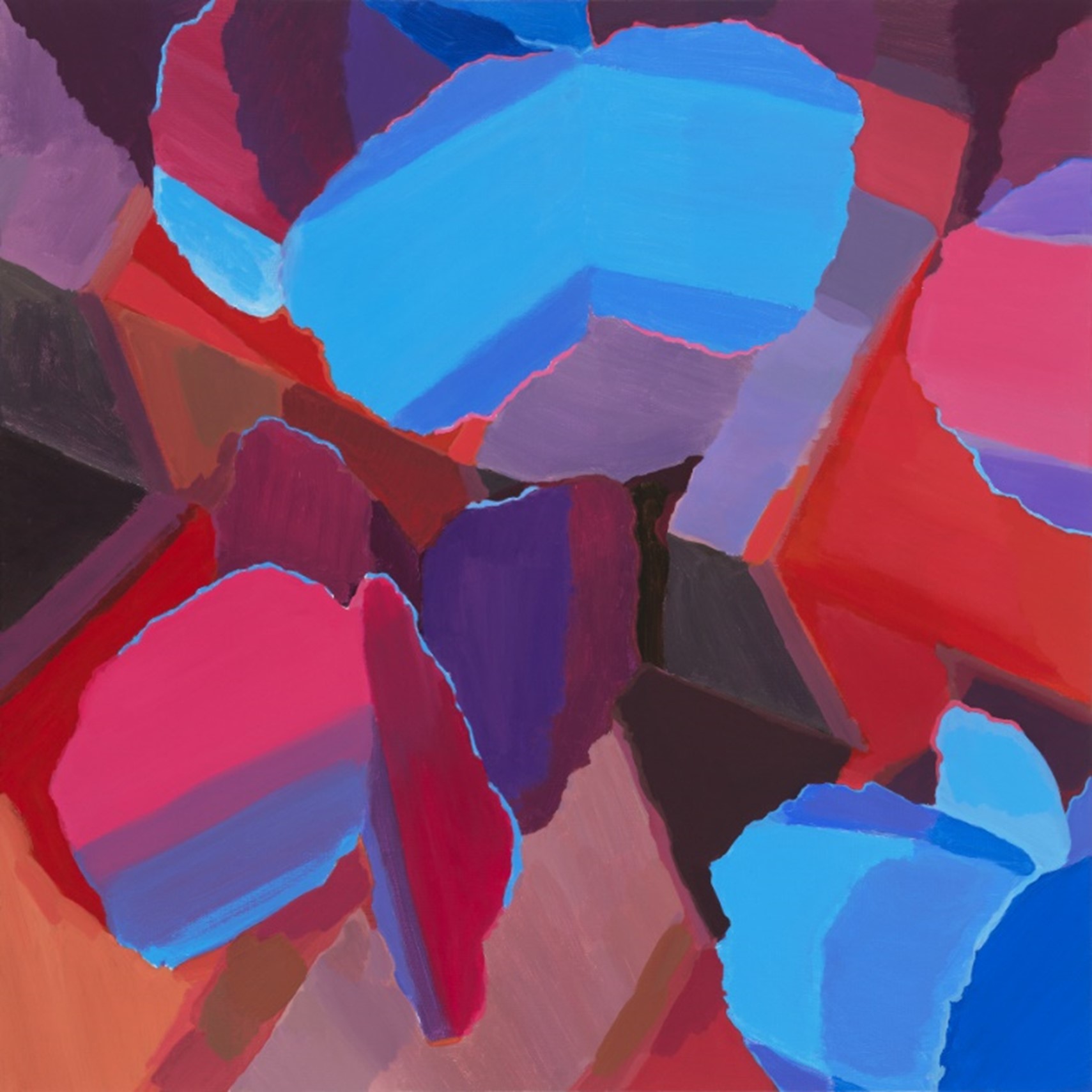
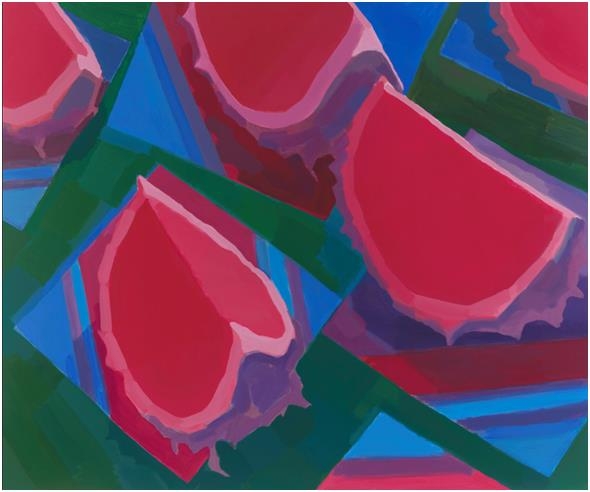
Hejum Bä’s works
are composed of color surfaces that are structured on canvas. Bä employs
intense yet clear colors spread audaciously over the picture plane, whereas for
the works on canvas presented in this exhibition she took colored papers
and their folding and ripping varieties as inspiration. Fundamentally, this
process was triggered by her reoccurring thoughts around painting. Also her
acrylic drawings on paper are results of the process of giving color and
material, thus, the physicality of painting, to the images that occurred to the
artist’s mind. To Bä, painting is an outcome as well as a structure produced by
the chain of thoughts.
Heemin Chung reckons
that a single non-transparent image cannot deliver properly what she senses.
She utilizes different materialities such as acrylic, oil and modeling paste:
the benefit of acrylic is that its lightweight materiality applies clearly onto
canvas or paper, which can suggest a great contrast to the usage of oil.
Recently, her experiment has started not to be confined to the flat surface of
the two-dimensionality and shows a strong impulse to cover the surface of
two-dimensional or three-dimensional objects with expressive elements. Chung
attempts to reinterpret Frank Stella’s past realizations of abstract textures
in the space as the contemporary term of ‘non-adhesive template,’ and expand
painting to a spatial narrative.
So
far, Yeo-Ran Je’s paintings have developed under the same title
of Usquam Nusquam. Her work began with the
investigation of picture plane based on which the artist pushes and pulls the
color with a squeegee over the lying canvas. In compare to the brush, squeegee
is a tool that is harder to be controlled by the artist’s physicality and
constantly creates accidental elements on the surface. This act lets the artist
face with the dimension of the uncontrollable. It is the repetition of these
processes what leads to the completion of her pieces.
Hana Kim has
continuously challenged the accomplishment of the texture on the picture plane.
For this, she took the textured surfaces such as glaciers, bedspreads and
plywood as direct references for her painting. Often she spilled color onto
canvas put on floor and left it to naturally create puddles and dry along the
folds of the canvas. For works without predefined references, Kim delves into
the composition and layering of pigments as well as the differing surface of
canvas according to the lighting condition. Her works are staged so that these
explorations become visually perceivable and palpable.
Through
her paintings, Meeyoung Kim expresses her sentiments captured
momentarily in her everyday life, rendered into her typically soggy texture
covering the entire surface of the canvas. This effect is created by rapid
brush strokes applying one color layer after another, before the former stroke
gets barely dry. At the same time, Kim differs the thickness of brushes and
strokes for each work achieving a dynamic sense of movement realized on the
picture plane.
Mirae Kim presents
graphic paintings that take not only canvas but also wood panels as support.
Recently, she’s been focusing on composing geometric forms on hard wood panels with
no tension, while experimenting the depth on the side that this hard material
of support can reach. In the end, the paintings obtain quite thick support that
will extrude visibly form the wall. In contrast, the images are painted as
slick as possible, smoothing out the surface of the support. In terms of color
selection, Kim refers to standard color charts such as Panton’s.
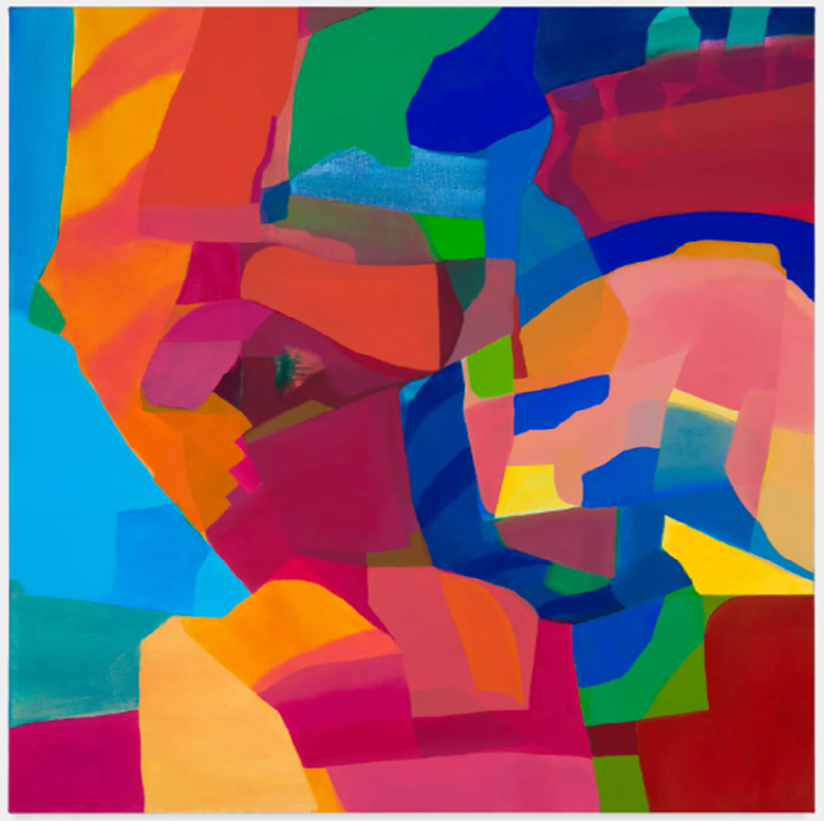
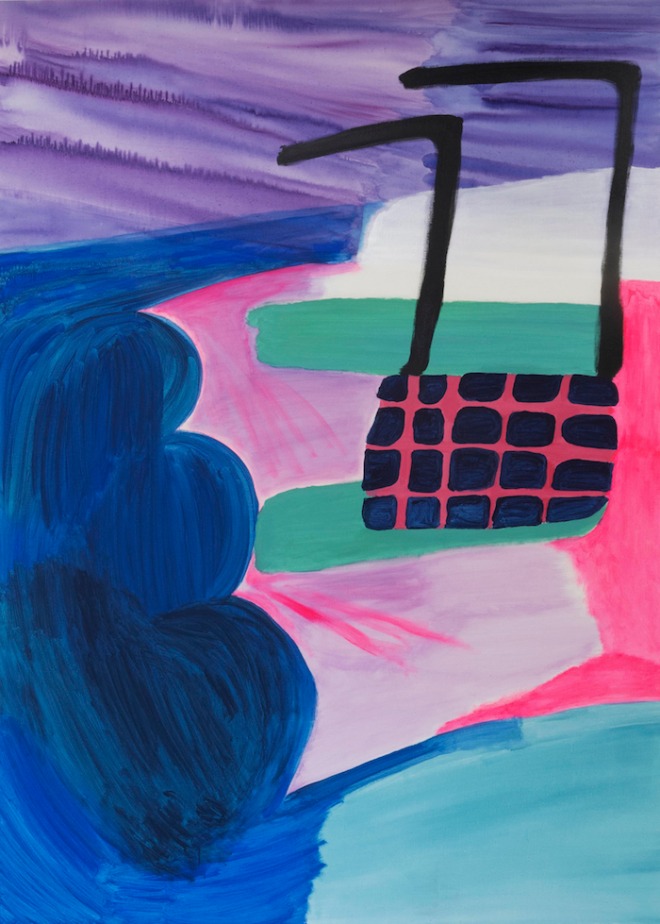
Jiyoon Koo focuses
on the individual senses and psychology that one bears in the construction and
deconstruction of landscape continuously repeated in our urban life nowadays,
to transfer them onto her painted canvas. Through the repetition of applying
and scratching color to and from her canvas, her brush strokes create the
traces that could be interpreted as imageries of sleepless cities.
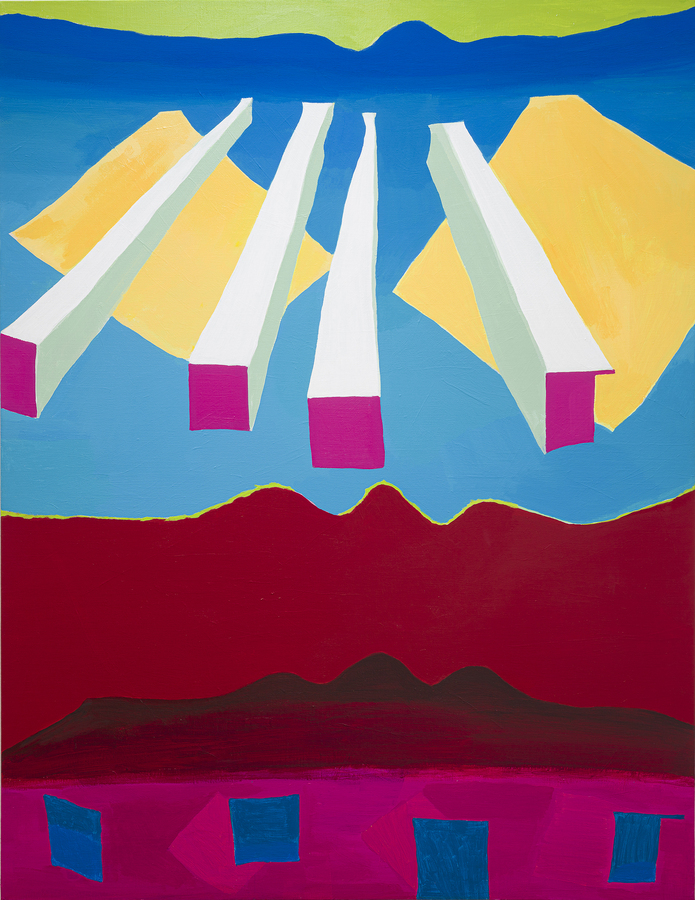
Fanhee Lee’s
painting presents thoroughly controlled picture plane on canvas. Lee produced a
series of paintings in different sizes, taking isosceles triangles as a motif
depicted in a strictly frontal and bilaterally symmetrical way. Prior to
starting to paint, he entitled each canvas and proceeded with working on them
according to the given titles. Instead of relying on the arbitrariness of brush
strokes, he controlled the properties of his material such as pencil, oil and
alkyd to the maximum level, even including the cracks of the surface on canvas.
As a result, his picture plane almost resembles a relief at times.
Seungchan Lee repeatedly
prints on canvas digital images collected from the Internet or attempts to
re-process those images by applying layers of pigments onto them. The digital
files Lee collected originally represented recognizable images, yet as the
plotter ink applies over and over, the images turn into an almost black
surface. Even when the colors are kept, the shapes would turn into undetectable
smudges of ink layers. Through this process, the picture plane will keep its
original thickness of the canvas, as if dyed by pigments thinly adhering onto
it. Accidental effects such as brush stroke cannot be created, since the
plotter prints only horizontal or vertical lines. Hereupon, the artist introduces
varying factors by cutting or layering printed canvas.
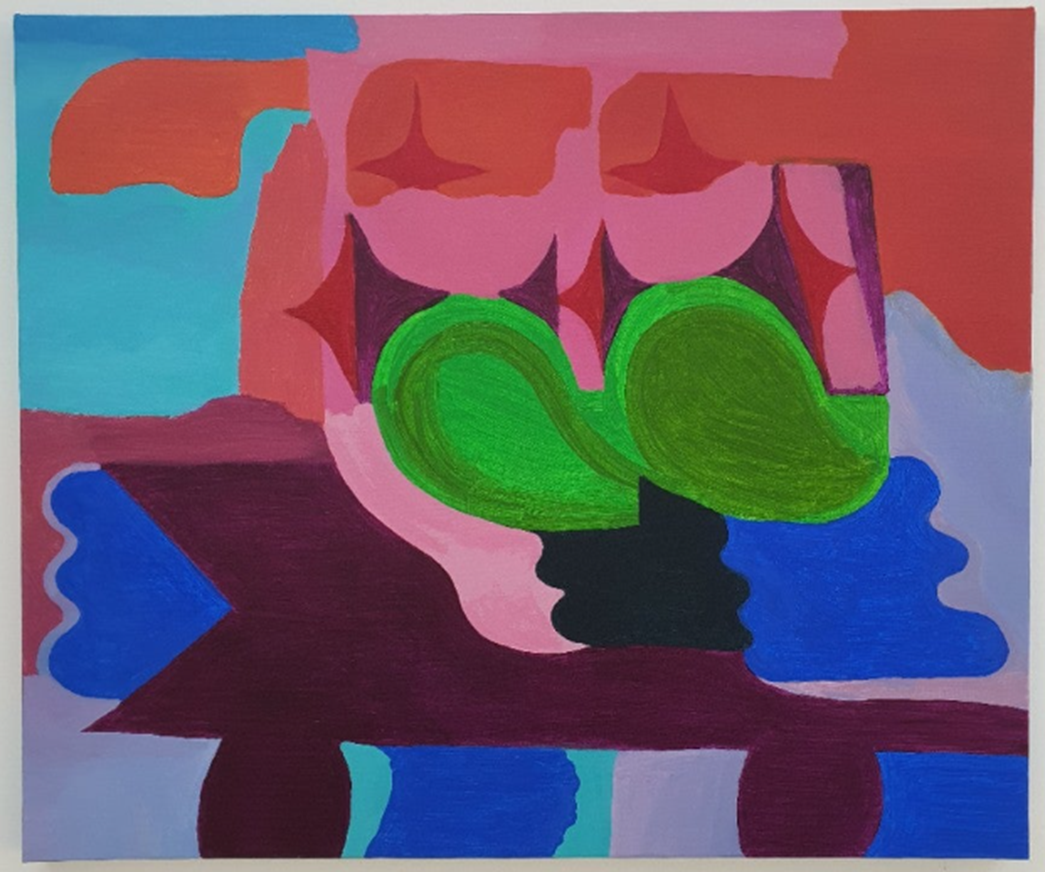
Hyungji Park perceives
her painting as results from the accumulation of events that occurred during
the process of repeating and making decisions. These decisions in painting are
made in chain, and the failures and byproducts in the process are not resulted
from unproductive consume of time but constitute motivations for continuation
and present richness to the painting. She transforms images captured from
mundane things of everyday into painterly gestures: while repeating to layer,
fail, erase, cover and repaint, her canvas becomes a surface of irregular and
“homely” painting.
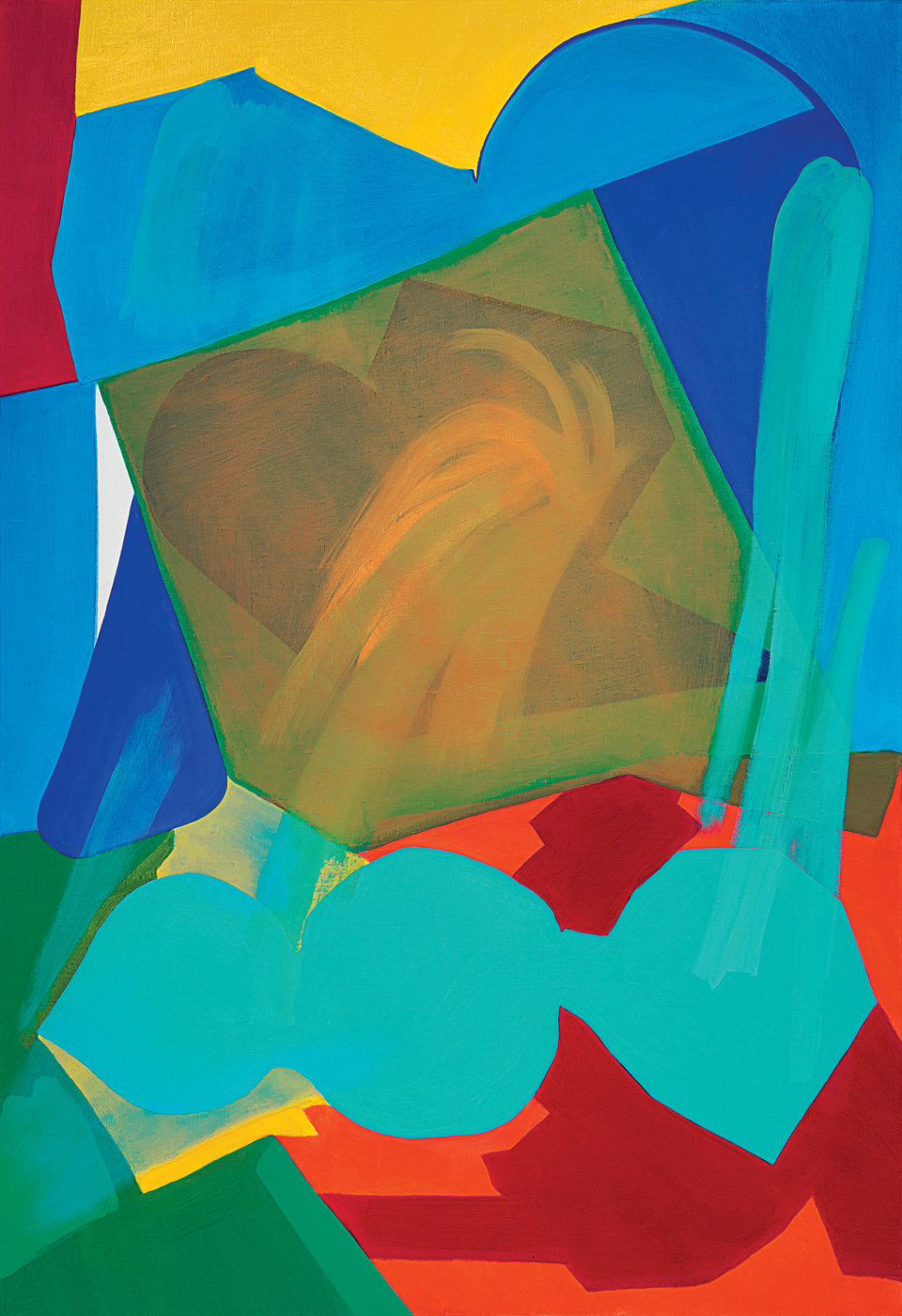
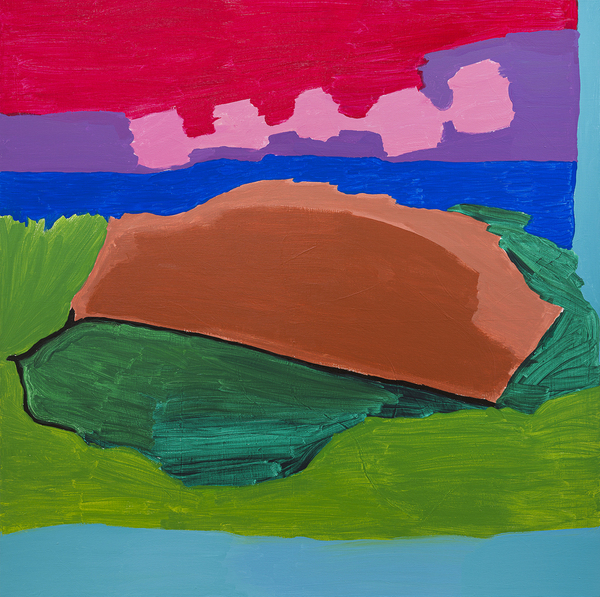
Nakhee Sung arranges
principal visual elements such as points, lines and planes using acrylic in her
idiosyncratic way. These elements appear in different layers adjacent or
overlapping on the picture plane. They are extracted as motifs for her work
through re-highlighting what had been regarded as secondary elements in her
previous paintings. As Sung proceeds spending a long time observing her work,
the composition gains the sense of balance. While the drawings on paper
experiment with the lightness and simplicity of overlapping color planes, the
works on canvas change to a more solid presentation with structured
composition.
The
exhibition title of Allover refers to a rather outdated term that
Clement Greenberg asserted many times. In The Crisis of the Easel
Picture (1948), Greenberg commented on the symptoms and the multiple and
simultaneous appearance of all-over in the early 20th century
and described it to be “decentralized, polyphonic picture that relies on a
surface knit together of identical or closely similar elements which repeat
themselves without marked variation from one edge of the picture to the other.”
Drawing a comparison to Schönberg, Greenberg saw of all-over painters to render
every element and every area of the picture equivalent in accent and emphasis
just as the composer made every element, every sound in the composition of
equal importance. The painters weaved their work into a tight mesh whose scheme
of unity was recapitulated at every meshing point. To Greenberg, the
dissolution of the pictorial into sheer texture, into apparently sheer
sensation, into an accumulation of repetitions, seemed to speak for and answer
something profound in the sensibility of his era.
Thus, he continued, “the
all-over may answer the feeling that all hierarchical distinctions have been,
literally, exhausted and invalidated; that no area or order of experience is
intrinsically superior, on any final scale of values, to any other area or
order of experience.”[1] His verbose explanation could still sound
somewhat valid in introducing the painted works in this exhibition.
The visual
elements on the picture plane that many of the paintings of the participating
artists present are equivalent, where the application of colors is not to be
sectionalized into the center and the edges and tend to be rendered into a
single surface sheer at every point. Of course, projecting Greenberg’s point as
it is inevitably leads to recent debates around Zombie Formalism criticized for
its revival of discarded aesthetics of Greenberg. Even though the artists
of 《Allover》 are not
practicing Greenberg’s tradition – as much as they are not in need to – there
are certain points of encounter for their thoughts.
The
curatorial approach of the exhibition also aims to question whether the
attraction to certain tendencies in painting derived from my innate motivations
or external influences, such as the curiosity for more recent vogue. It would
be impossible to explain a curatorial motivation through a single factor, yet
the current exhibition does display some South Korean and international trends
in the making of a painting show.
Admittedly, it is true we cannot be free from
confronting what tends to be frequently shown, regardless of the tiredness or
fascination that the simultaneity of repeating timelines might provide.
Recently, many domestic and international institutions dealt with the condition
of contemporary painting and among their exhibitions some claimed to focus on
contemporary abstract painting, while some on contemporaneity than abstraction.
Some were derided to resurrect abstract expressionism.
Since 《Allover》 refers to these approaches
directly and indirectly, it could be said that it (at least partially) reflects
my attraction to contemporary (abstract) painting. However, the attribute of
“(abstract)” will require more time of investigation and thus, I wish to
diminish the usage of the term for this exhibition. In fact, during the process
of making 《Allover》, I
struggled not only with the term of all-over but also with
formless,[2] non-narrative, atemporality,[3] etc., that had been
suggested by subjects in the art history or foresightful intellectuals, for
defining the fundaments of this exhibition.
After all, the view of the
diversity of the pictures in front of my eyes made it more complicated to
establish a common statement for the range of works and it felt too ruthless to
label them with the term of “abstraction.” The actual contemporary aspect
inescapably manifested in the exhibition as well as the exhibited works would
be, thus, the state of complex entanglement where different references cannot
be merged into a single influence.
On
the other hand, the exhibition aspires to emphasize that paintings need to be
seen in real. Our notion of painting is mostly configured by printed copies or
digital data instead of actual views at exhibitions. Yet the materiality of
painting can never be understood without being perceived in real. An undeniable
fact is that still in the 21st century, painting goes on indeed
not only as image but also as material. Therefore, instead of viewing after
having acknowledged the stipulations that had been proposed through art history
and other references, the actual viewing could be prioritized and lead us to
the understanding of art history and references.
Artist: Jiyoon Koo, Mirae Kim, Meeyoung Kim, Hana Kim, Hyungji Park, Hejum Bä, Nakhee Sung, Seungchan Lee, Fanhee Lee, Heemin Chung, Yeo-Ran Je
1)
Clement Greenberg, “The Crisis of Easel Picture,” Art and Culture:
Critical Essays (Boston: Beacon Press, 1989), 154-157.
2)
Reinterpreting Bataille’s idea of informe, the term formless was the title
of the exhibition as well as the publication by Rosalind Krauss and Yve-Alain
Bois, curated for Centre Pompidou in 1997. Rosalind E. Krauss and Yve-Alain
Bois, Formless: A User’s Guide (Cambridge, MA: MIT Press, 1997).
3)
William Gibson, “Talk for Book EXPO, New York (May 2010),” Distrust That
Particular Flavor (New York: Penguin Books, 2012), kindle edition, 41.