Is it possible to make visible the invisible condition of silence? This question suddenly came to mind as I entered the basement gallery of 《A Profound_Fire, Ice and the Silence》, where dim lighting and a faint humming sound drifted through the space. Yet despite this question of manifestation, the exhibition unexpectedly reminded me of childhood visits to amusement parks, where I ran hand in hand with friends.
This is not to suggest that the exhibition space or the works themselves resemble amusement parks or rides, nor that they share any formal similarity. On the contrary, the exhibition—with its paintings evoking dystopian ruins and piles of shells heaped like tombs in one corner of the gallery—was permeated by an eerie chill.
Yet the space also possessed a subtle warmth that made it impossible to describe as merely cold. Not only temperatures but also what could be seen and heard maintained a dual sensory condition: tranquil yet unsettling, comforting yet incapable of allowing one to fully relax.
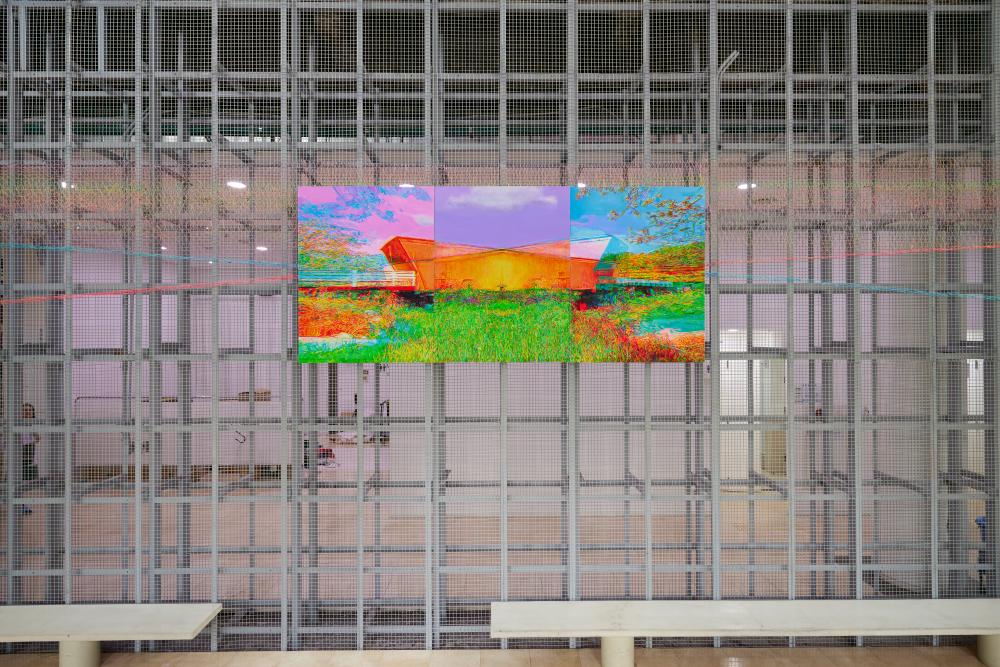
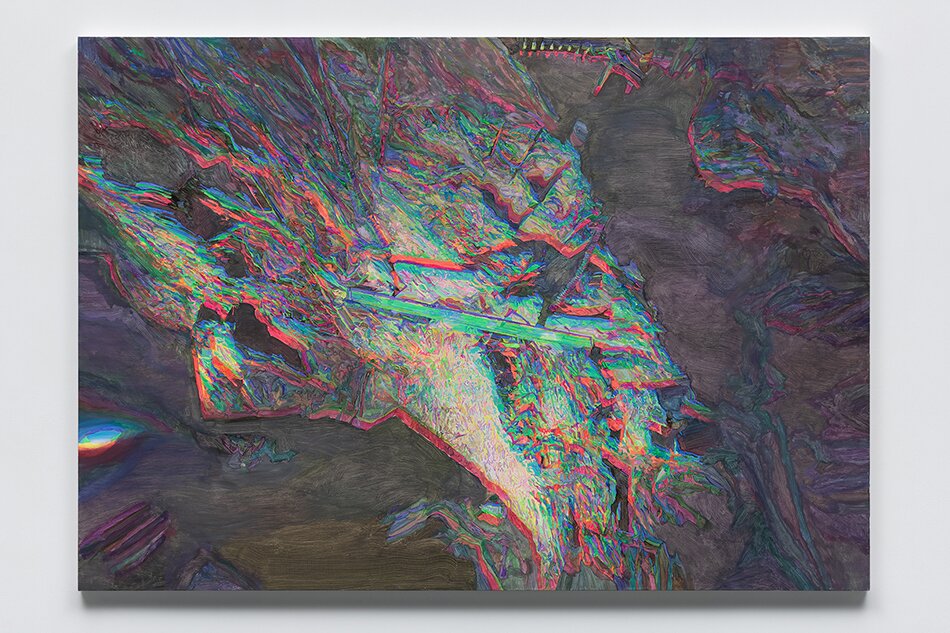
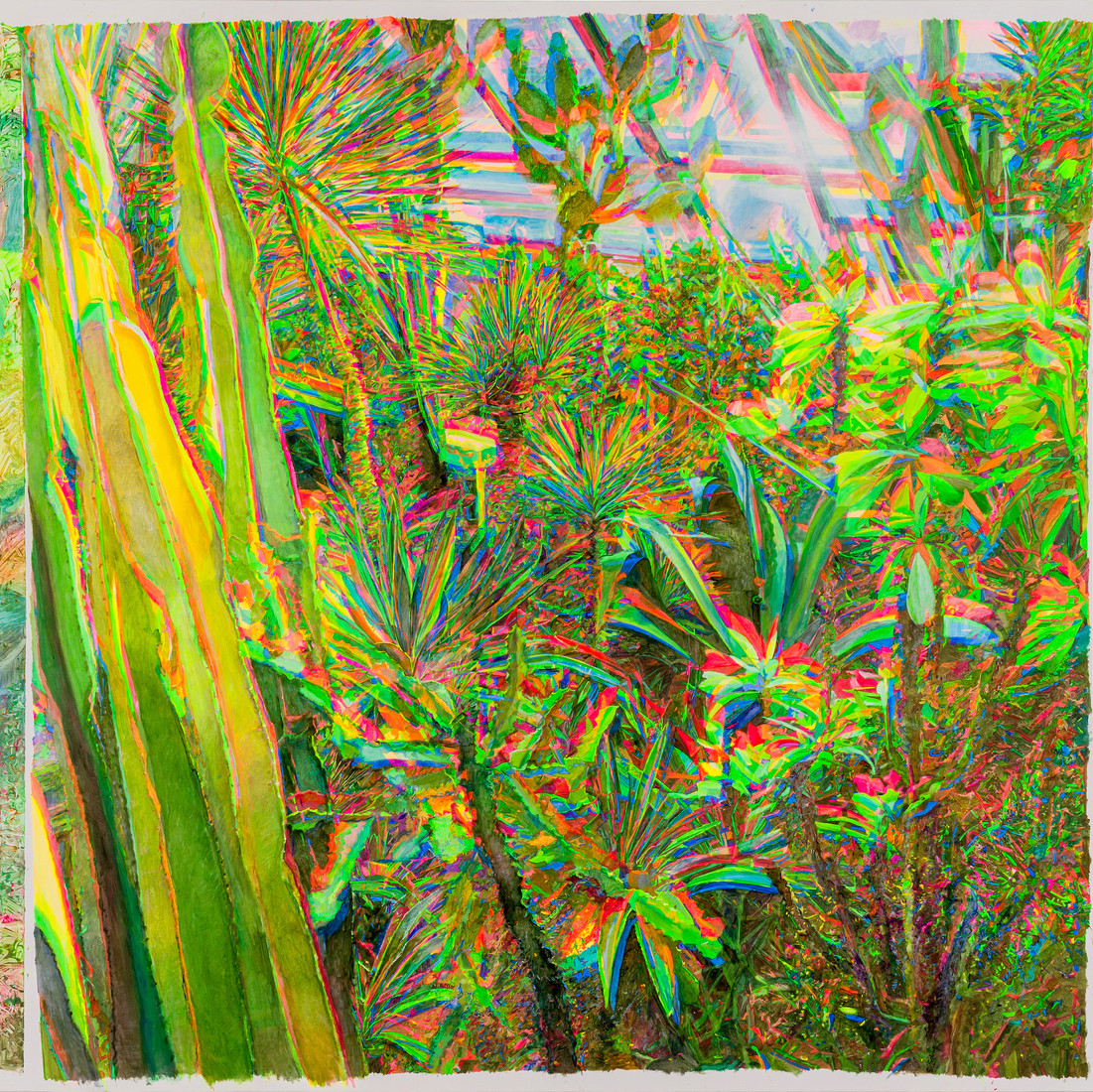
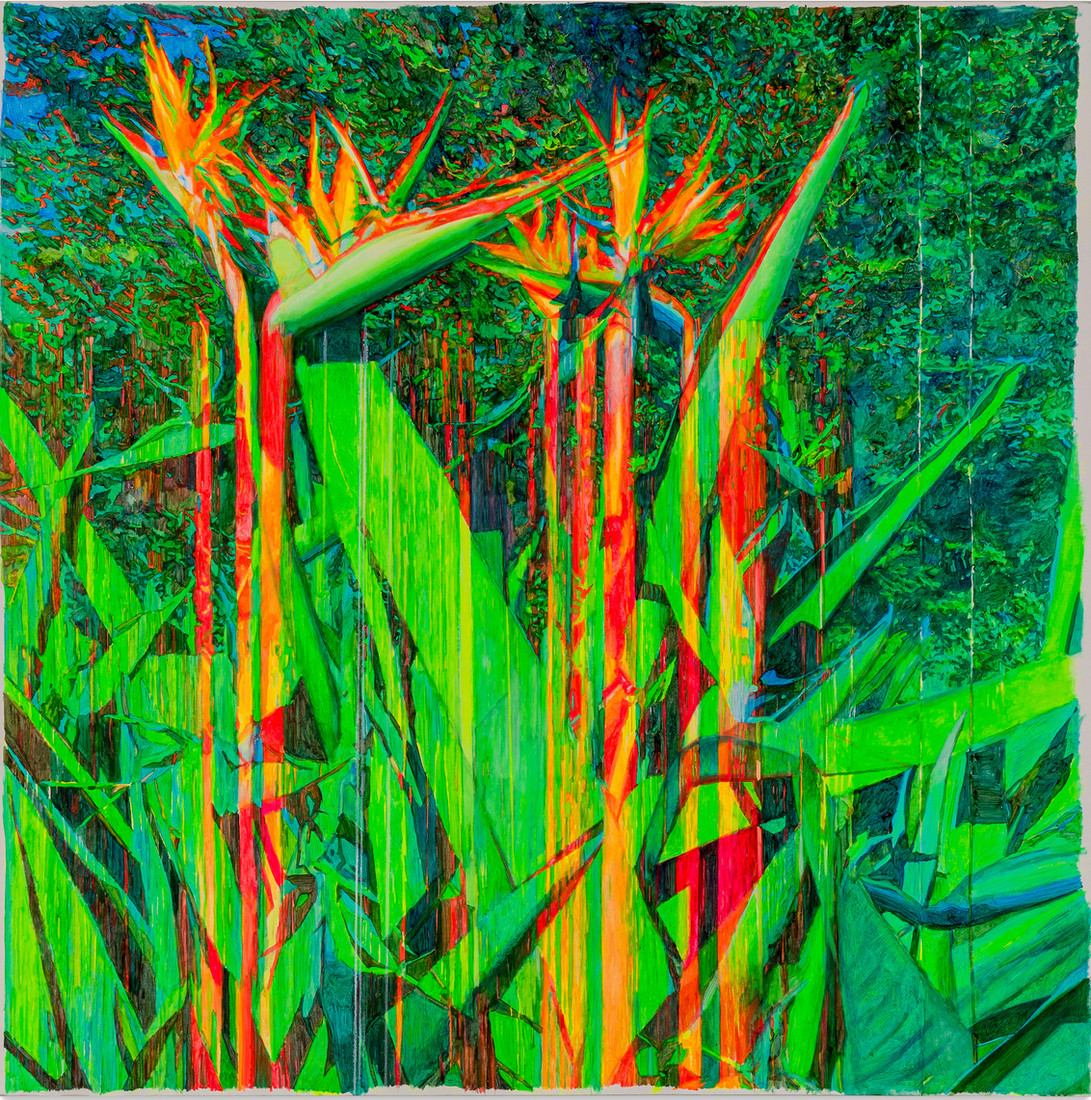
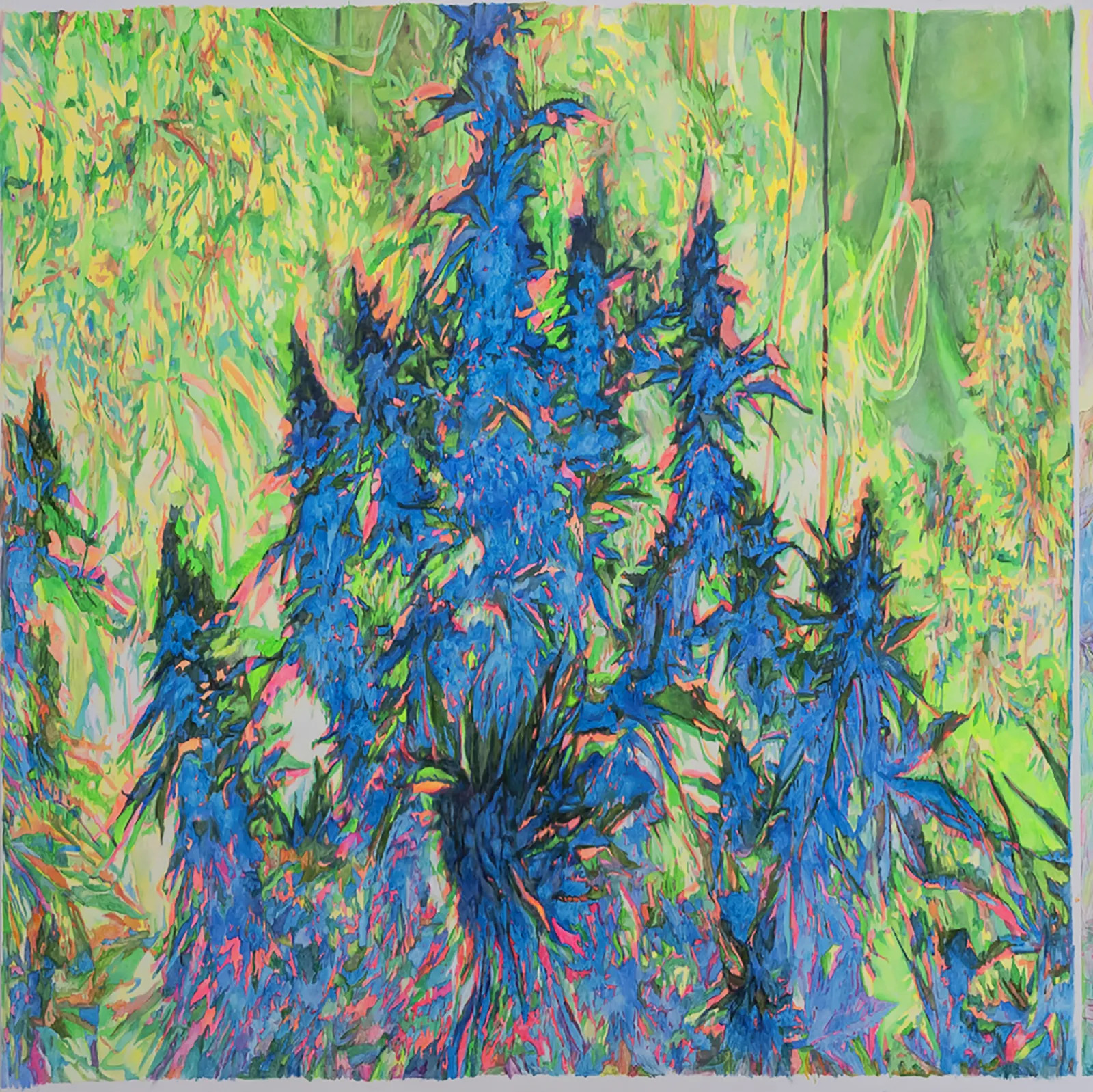
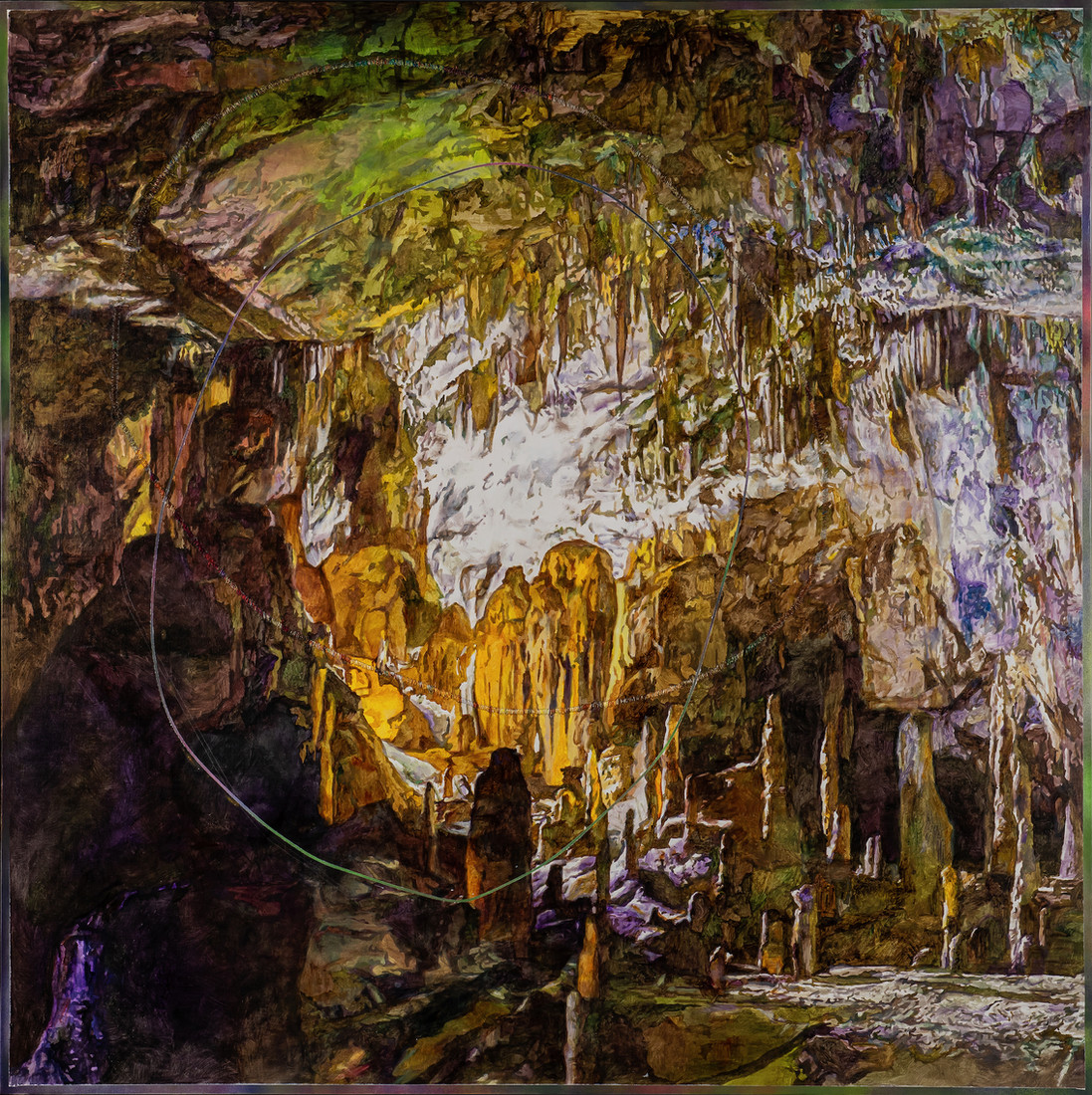
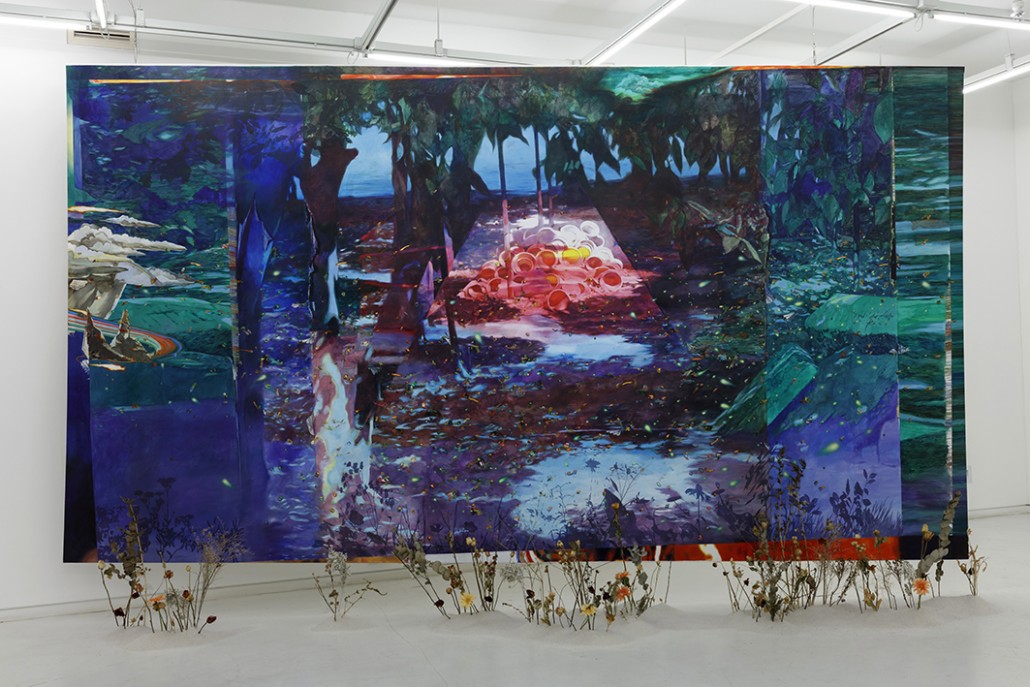
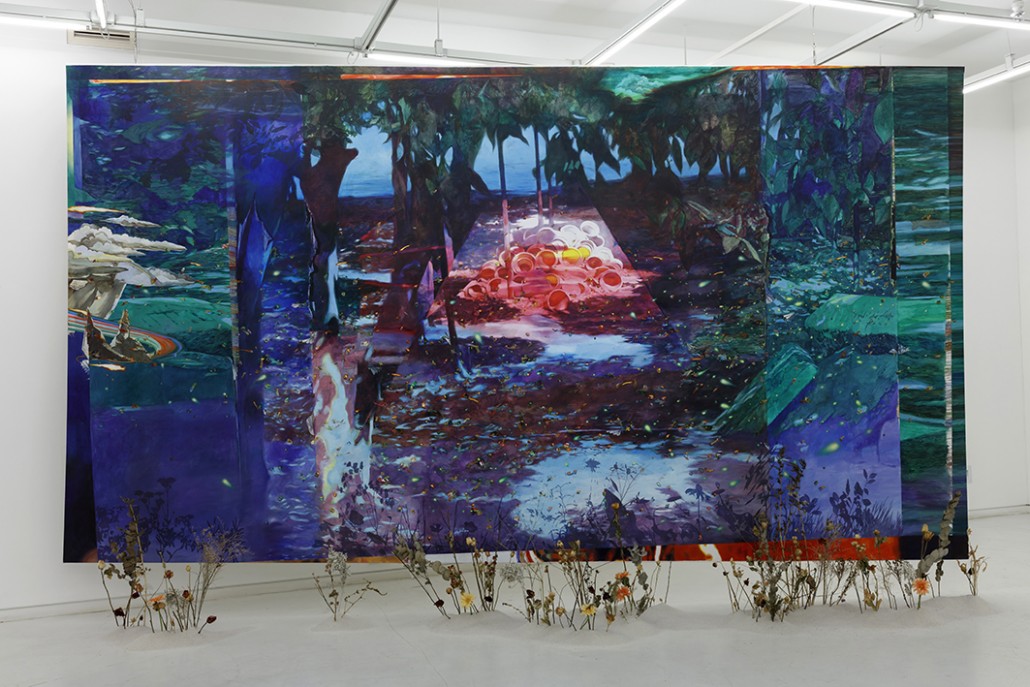
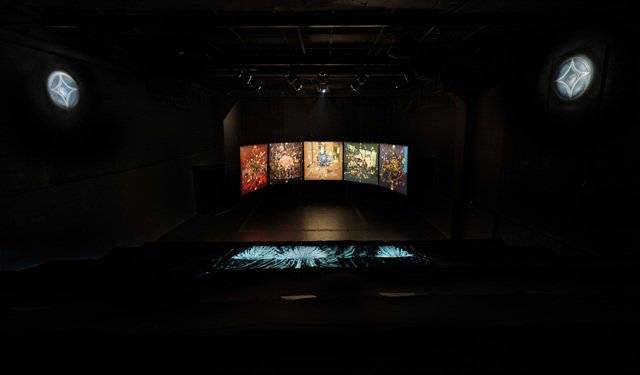
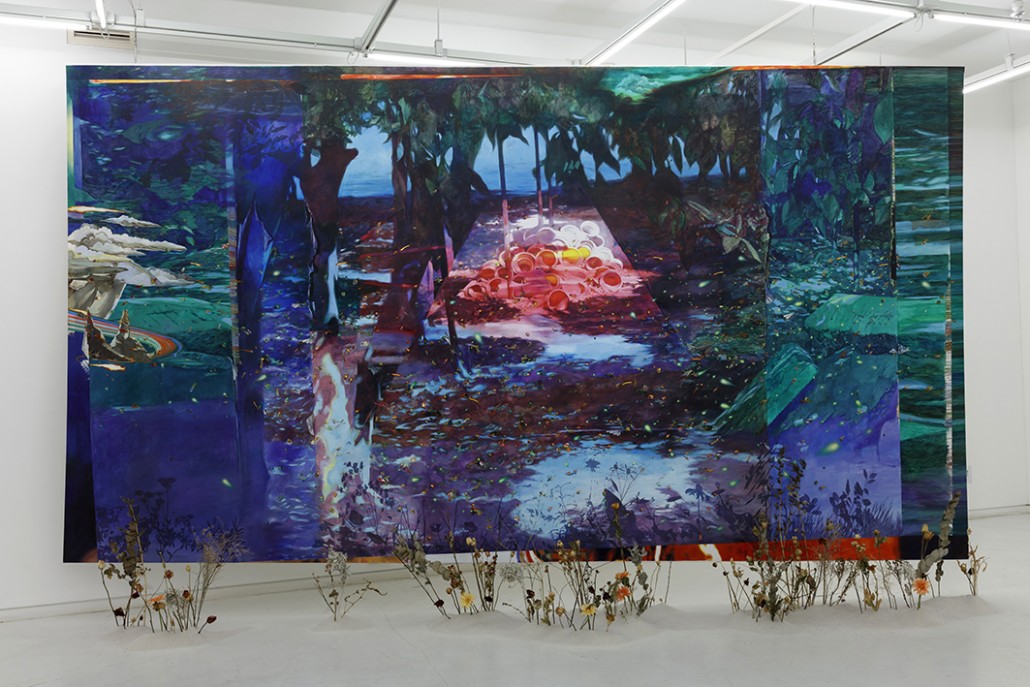
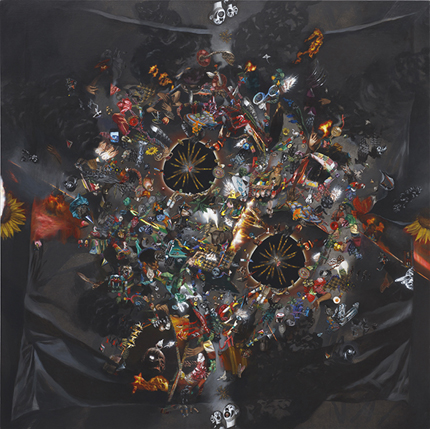
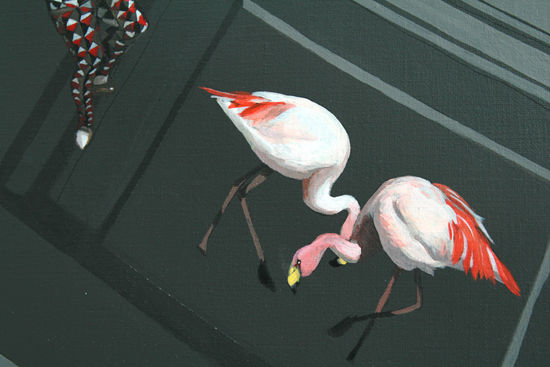
Upon entering the exhibition, one’s gaze is first drawn to the optical stimulation of Fire, Ice and the Silence_Narcissus (2018), suspended at the center of the gallery and composed of innumerable points of light. Yet one soon finds it difficult to remain there. Before long, one turns toward Fire, Ice and the Silence (2018), a ruin-like scene that occupies an entire wall.
Standing before it, almost hypnotized, one begins to notice flickering firefly-like forms moving across the canvas, uncertain whether they are afterimages produced by the “assault of light” from the previous work or elements actually present within this painting. Nor is that all. The dried flowers and grasses planted before the canvas create uncertainty as to whether they are real or artificial, and when one discovers that their shadows have been “painted” onto the picture surface, there is a palpable sense of having been deceived.
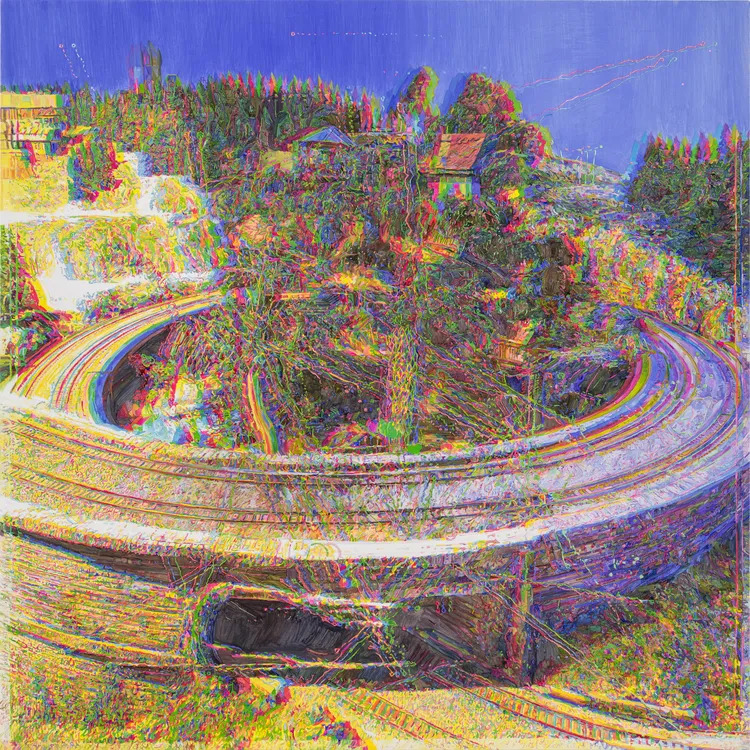
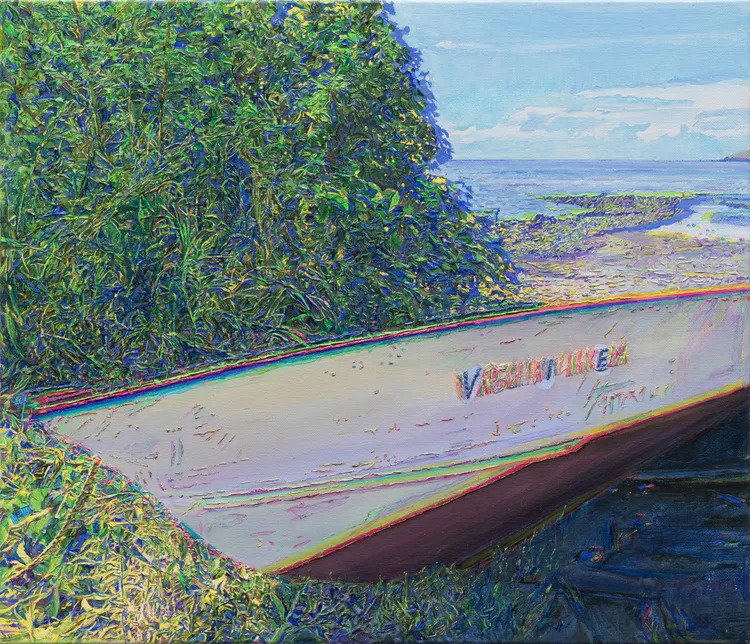
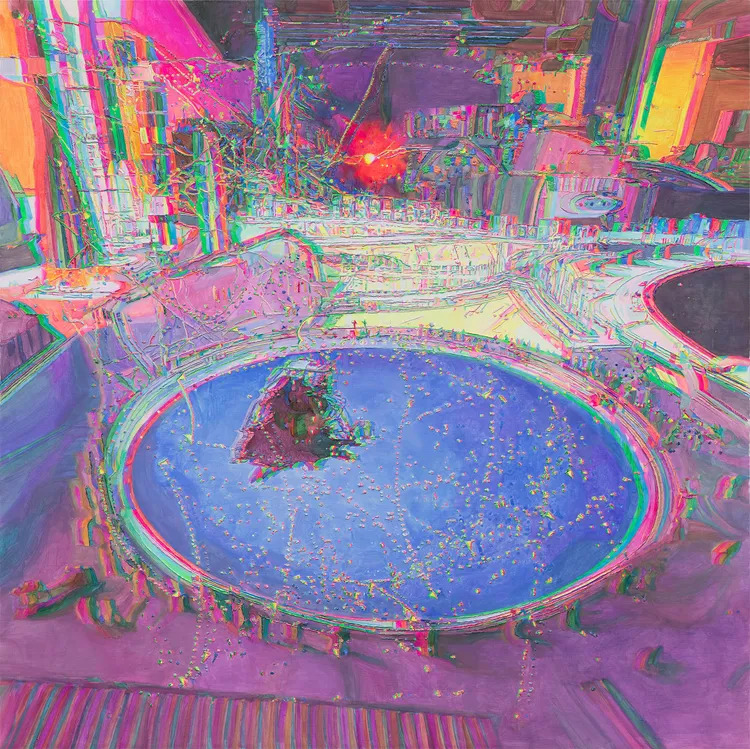
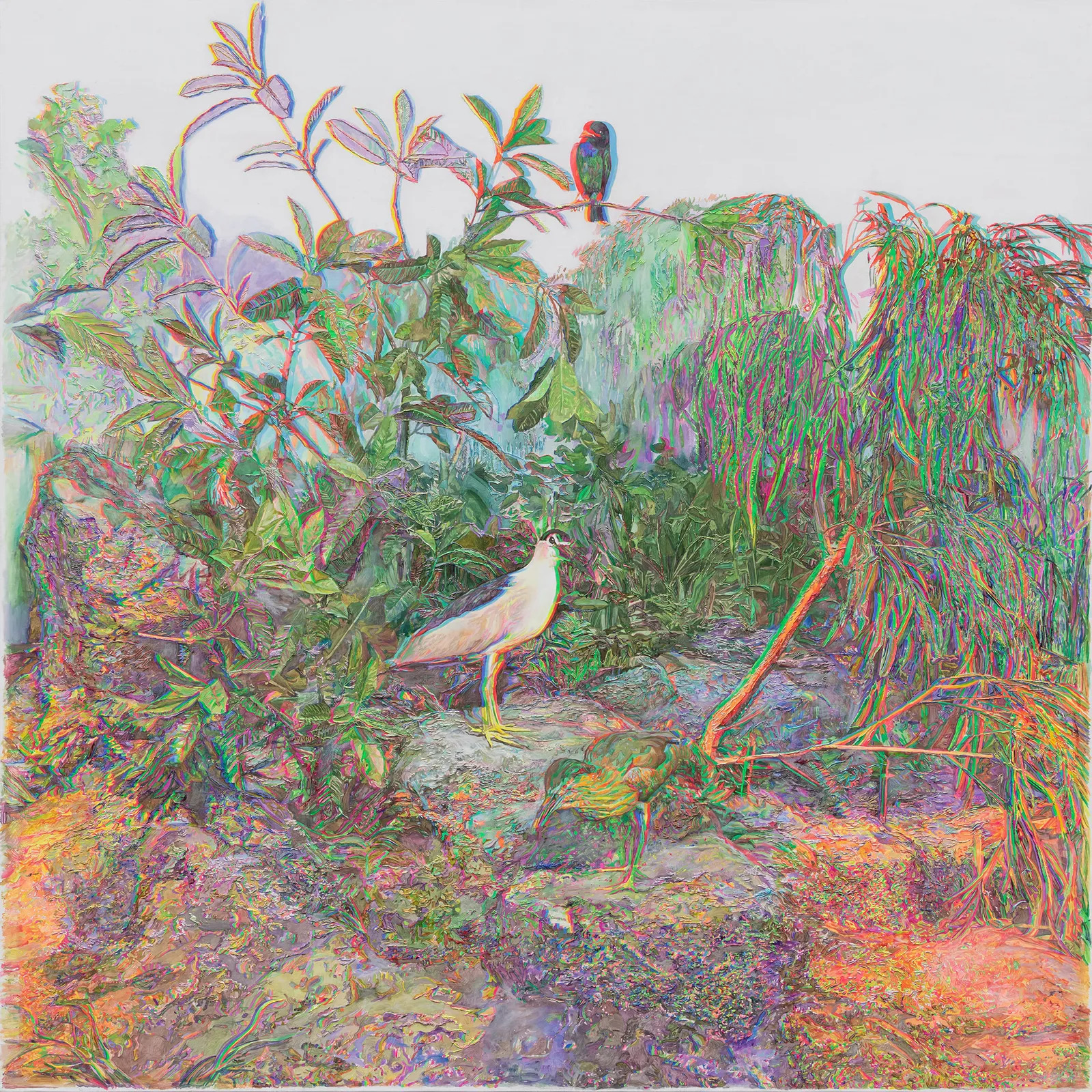
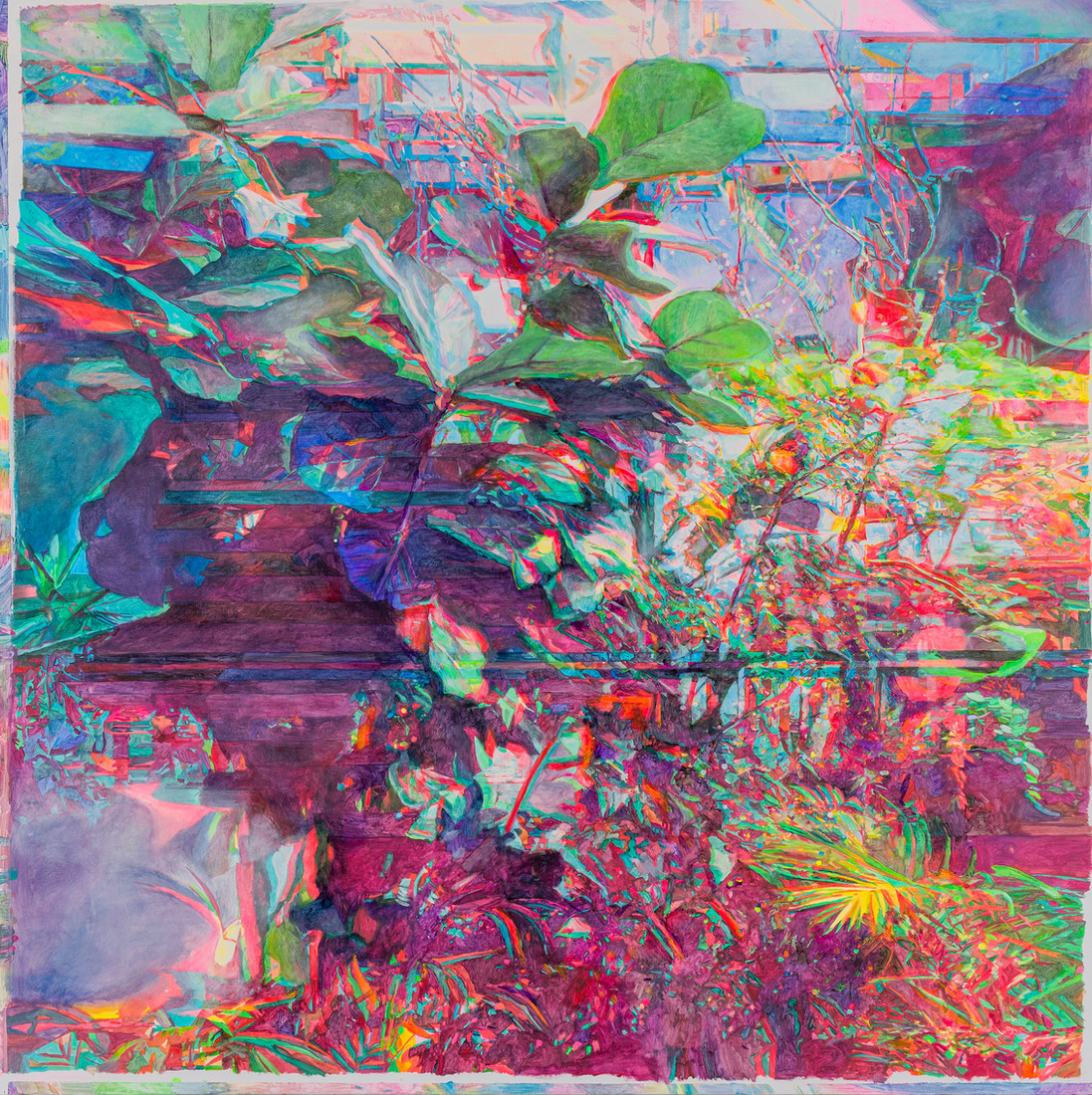
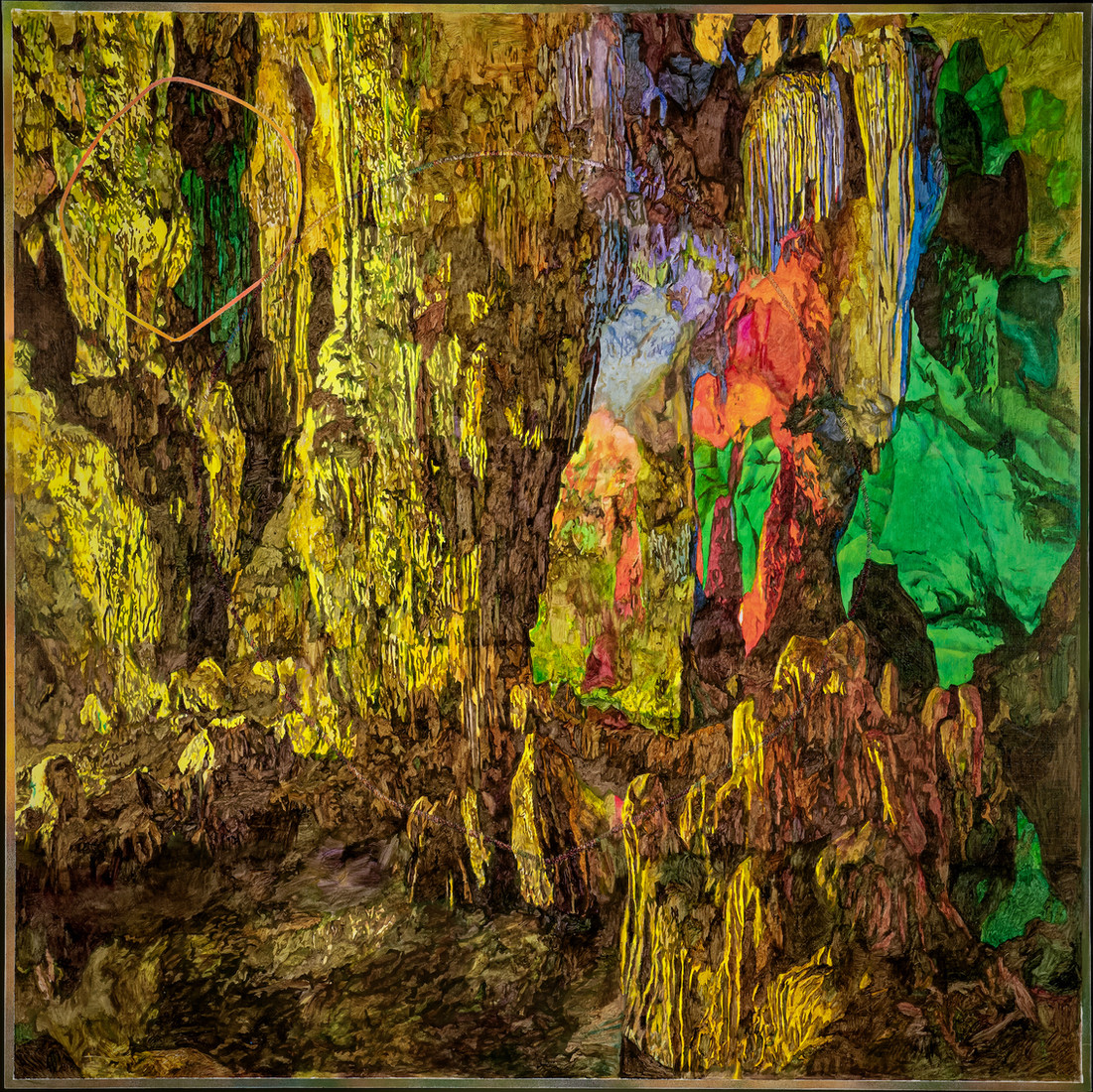
The ruinous imagery, with its overwhelming silence, and the small embroidered forms stitched with sparkling threads through the artist’s distinctive painterly method continuously stimulate the eye, causing it to wander restlessly across the surface.
Nor is the experience limited to vision. As one moves through the gallery, sounds resonating overhead begin to stimulate the ear. At first they resemble gentle waves or birdsong, creating a sense of calm. Yet suddenly, without warning, harsh metallic sounds and percussive strikes emerge from somewhere, causing one’s ears and shoulders to tense.
These sounds emanate not only from the four corners of the exhibition space but also from the mound of shells placed to one side. Consequently, the origin and endpoint of the sounds become difficult to locate. This sensory stimulation reaches a heightened intensity in . (2018).
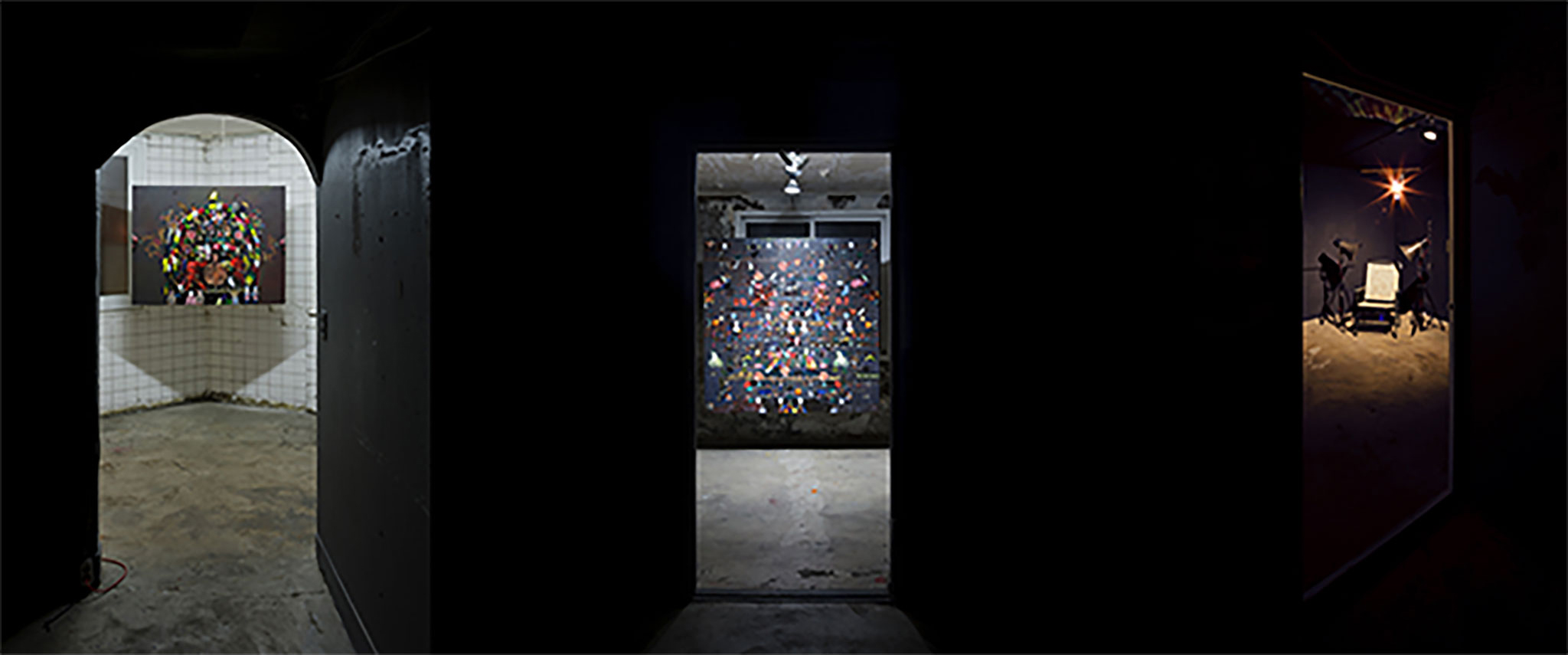
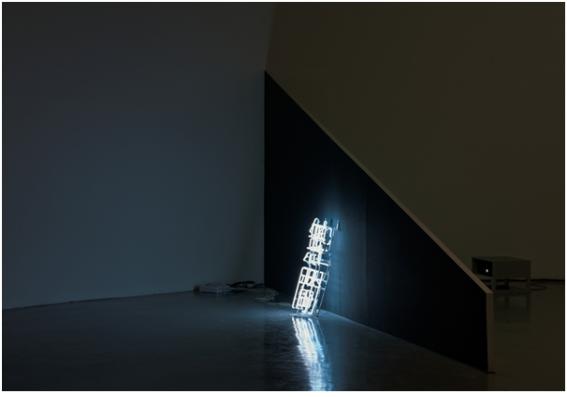
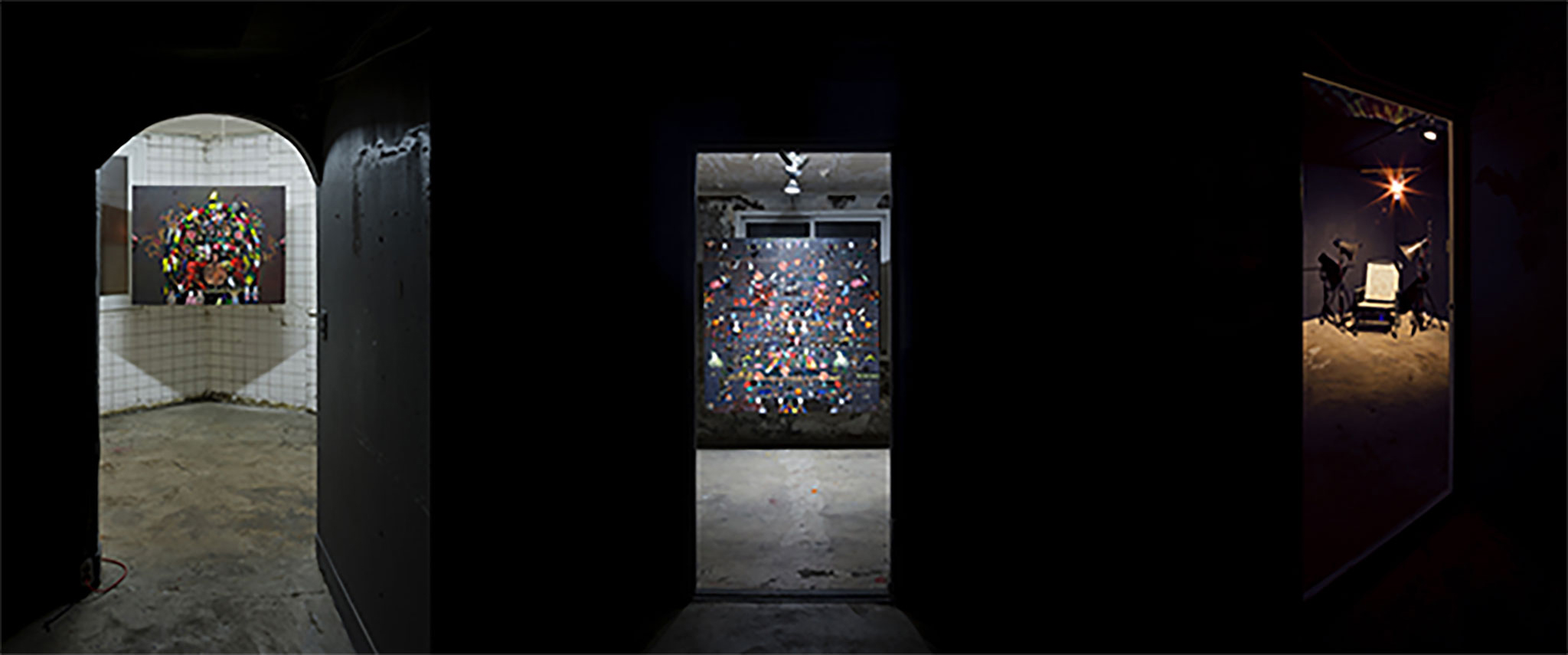
The work places viewers inside a small chamber illuminated equally by green and orange light, where they are made to listen through headphones to repetitive metallic hammering that emerges after prolonged silence. The piece produces a continual oscillation between tension and release, engaging both vision and hearing in a cyclical experience.
It is ultimately space itself that brings this multilayered sensory experience of sight and sound to its climax. Upon entering the exhibition, it is difficult to immediately discern where one wall ends and another begins. Every work is intentionally installed askew, never parallel to the walls. This is true vertically as well as horizontally.
Following vision and hearing, the exhibition unsettles one’s sense of spatial orientation, creating a sustained state of sensory stimulation in which no perception can come fully to rest. Leaving the exhibition, I felt as though I had spent hours exhausting myself at an amusement park.
The tension of climbing a roller coaster’s incline and the exhilaration of its descent; the anticipation of entering a haunted house, unsure of what might emerge yet unable to stop moving forward; the fragmented spaces of an amusement park where one could easily lose one’s way without a map—all of these sensations continuously stimulated my visual, auditory, and spatial senses, preventing any moment of repose.
To stimulate multiple senses through painting is no simple task. The sensory experience of painting is not limited to vision alone. In 《A Profound_Fire, Ice and the Silence》, painting is not only something to be seen; it is also something that can be heard and even something that invites touch. In this sense, the sensory experience generated by painting is not fundamentally different from the sensory experience of an amusement park.
As the exhibition’s title suggests, Choi Soo Jung’s solo exhibition was an exhibition in which invisible sensations became manifest. That manifestation possessed a multilayered sensory dimension, simultaneously revealing the darkness of hyeon (玄, the mysterious and obscure) and the dazzling brilliance of hyeon (炫, radiance and spectacle), both brought into appearance through the act of hyeonhyeon (顯現, manifestation).