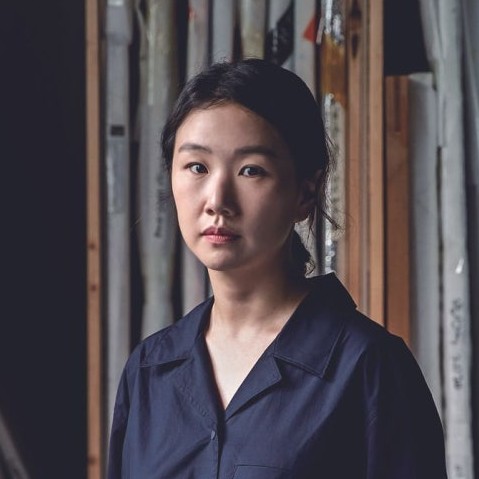
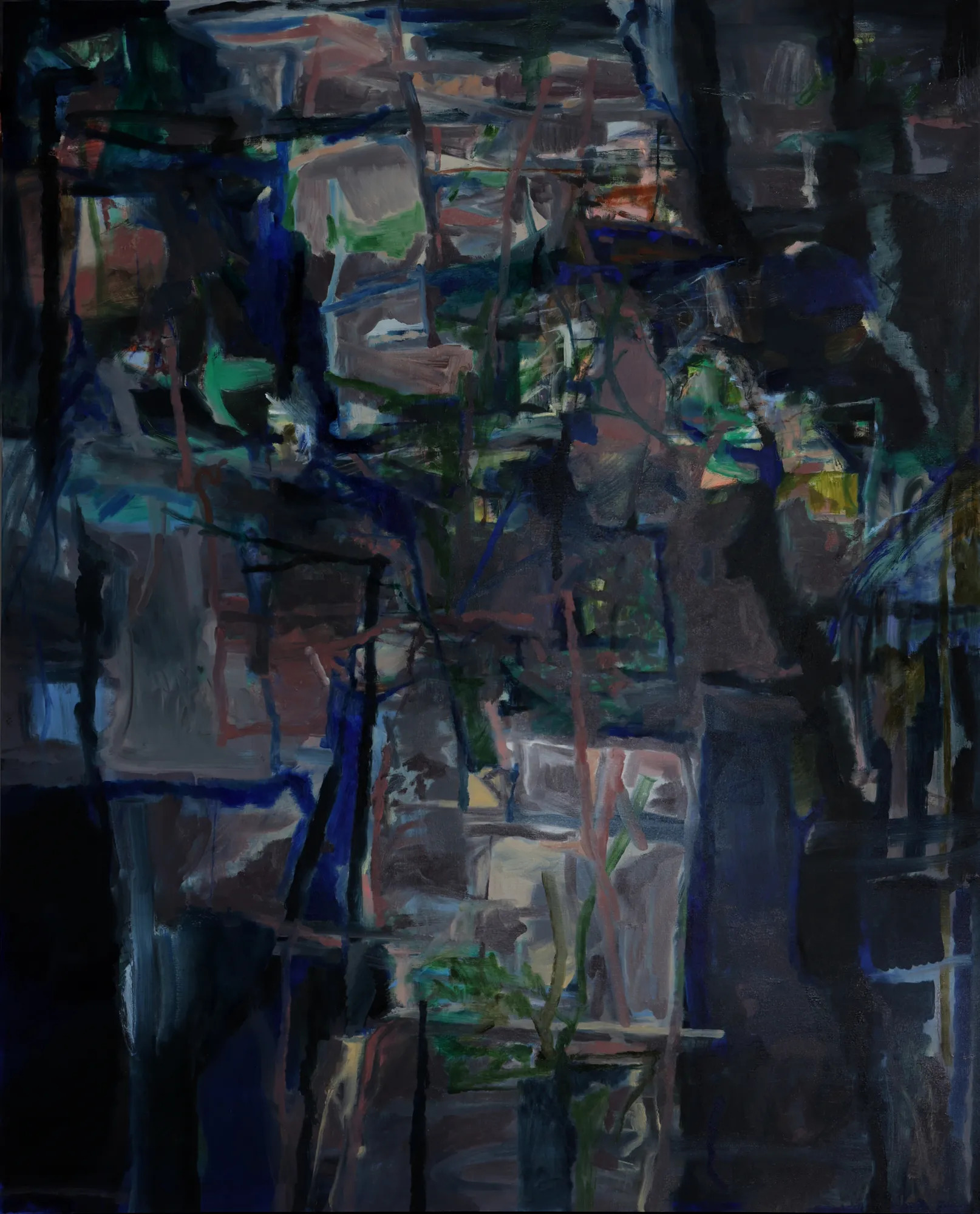
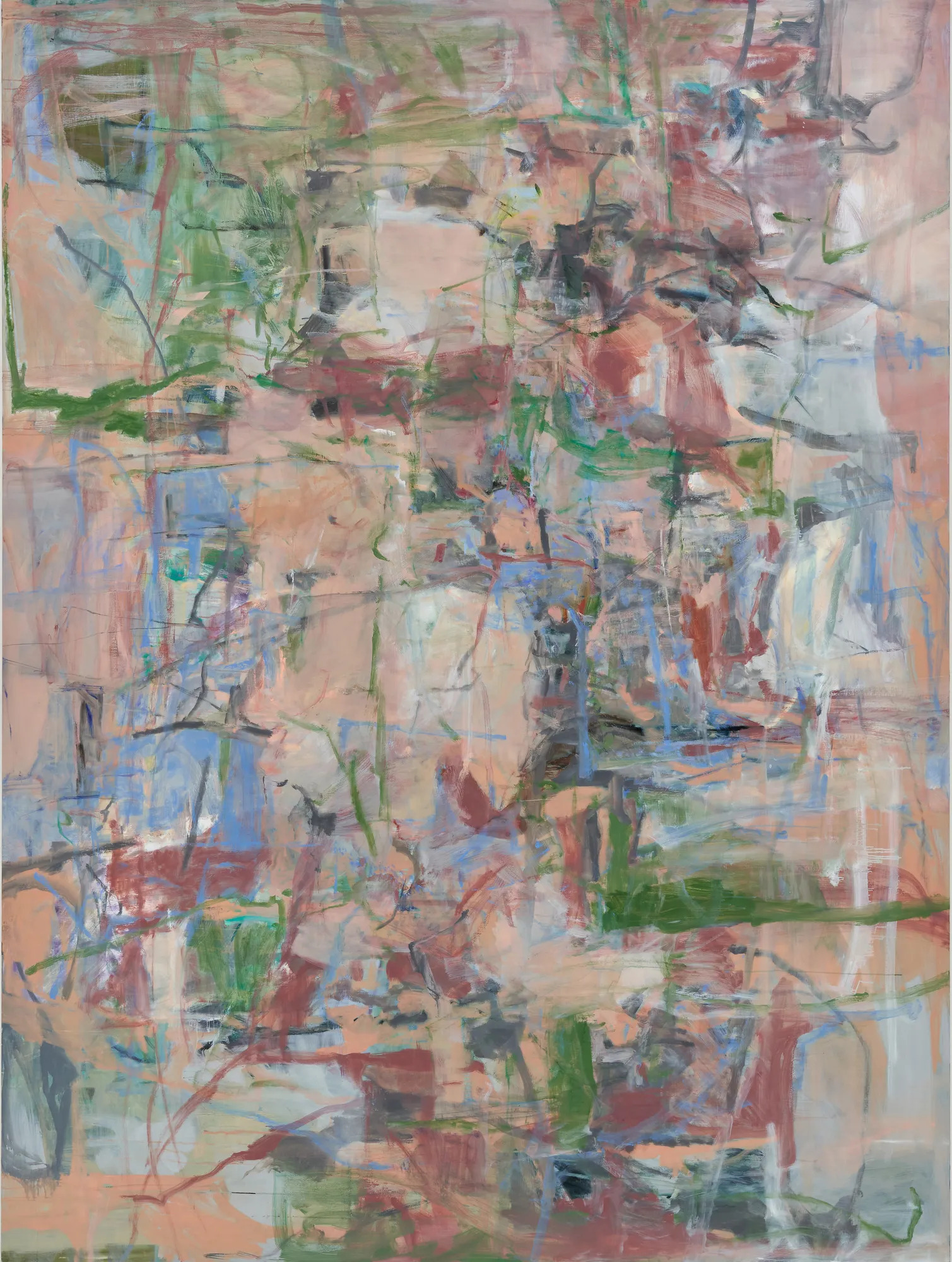
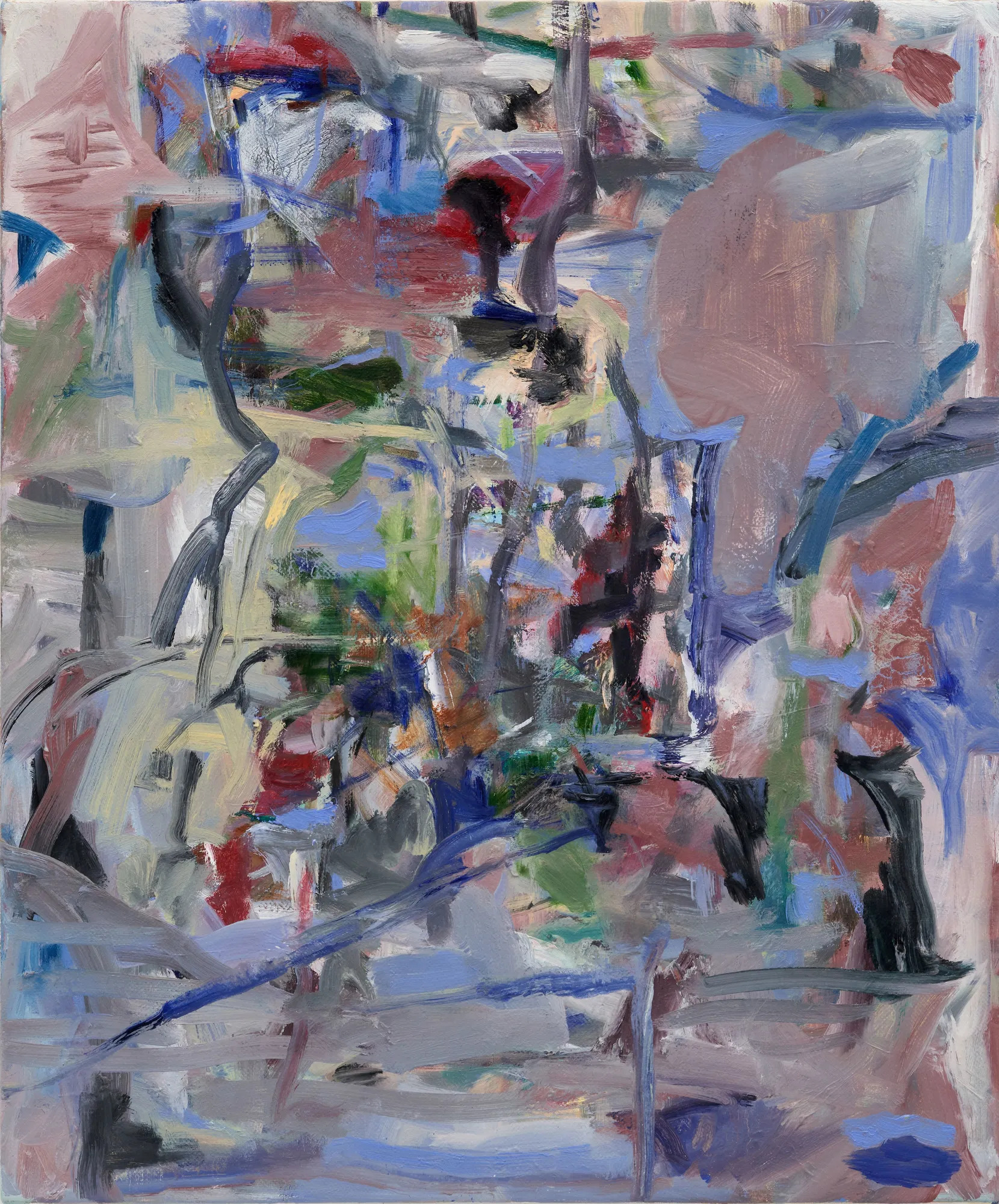
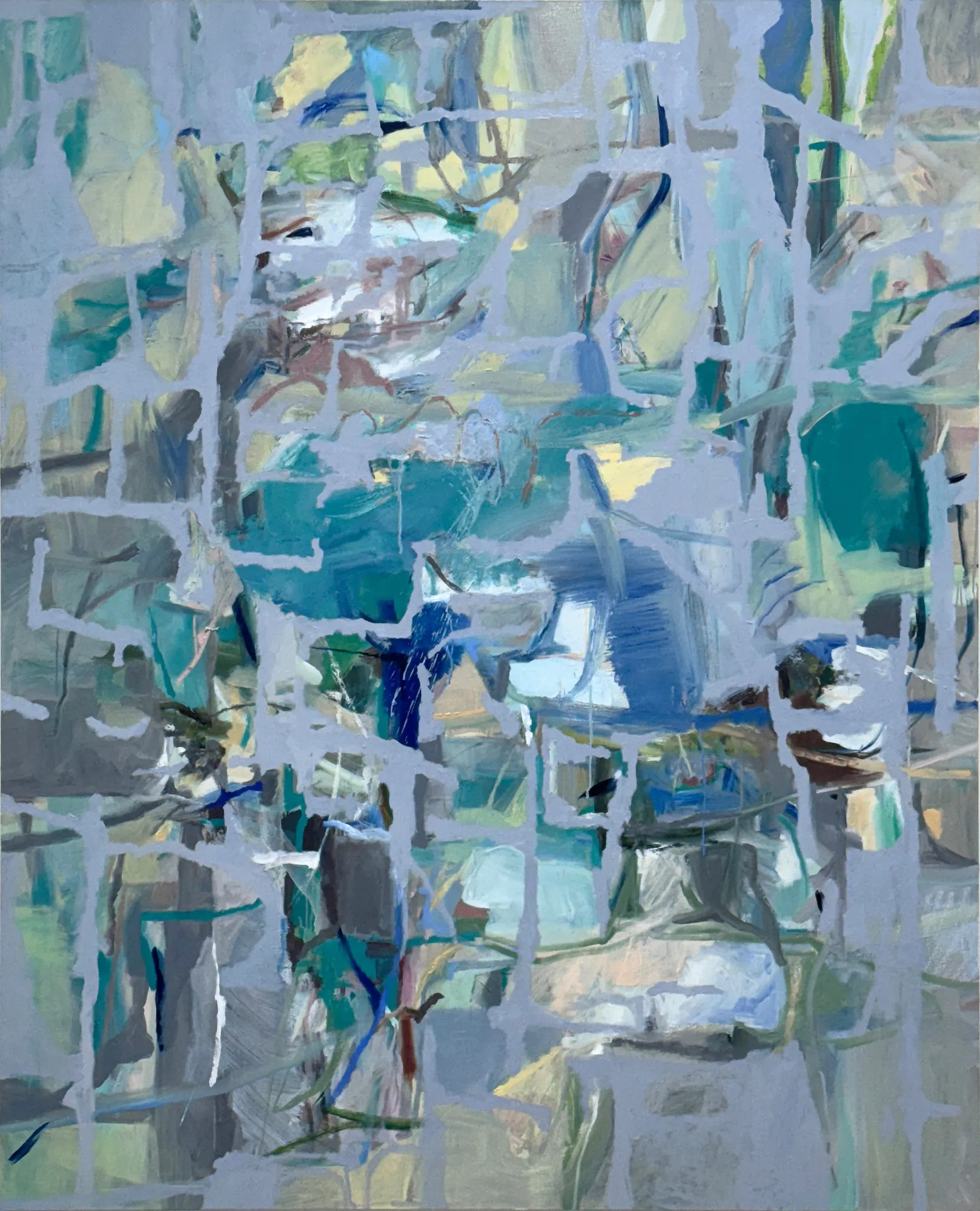
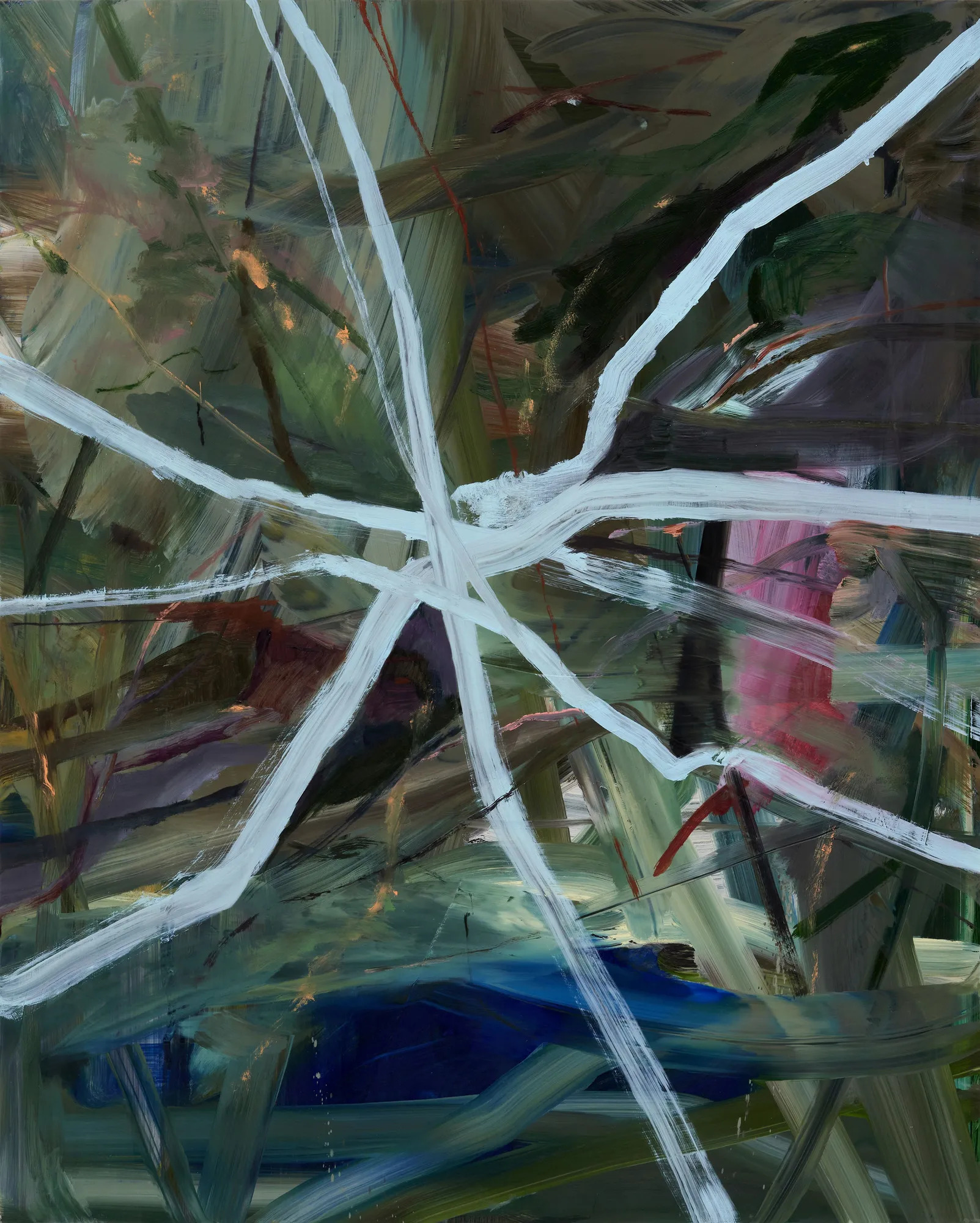
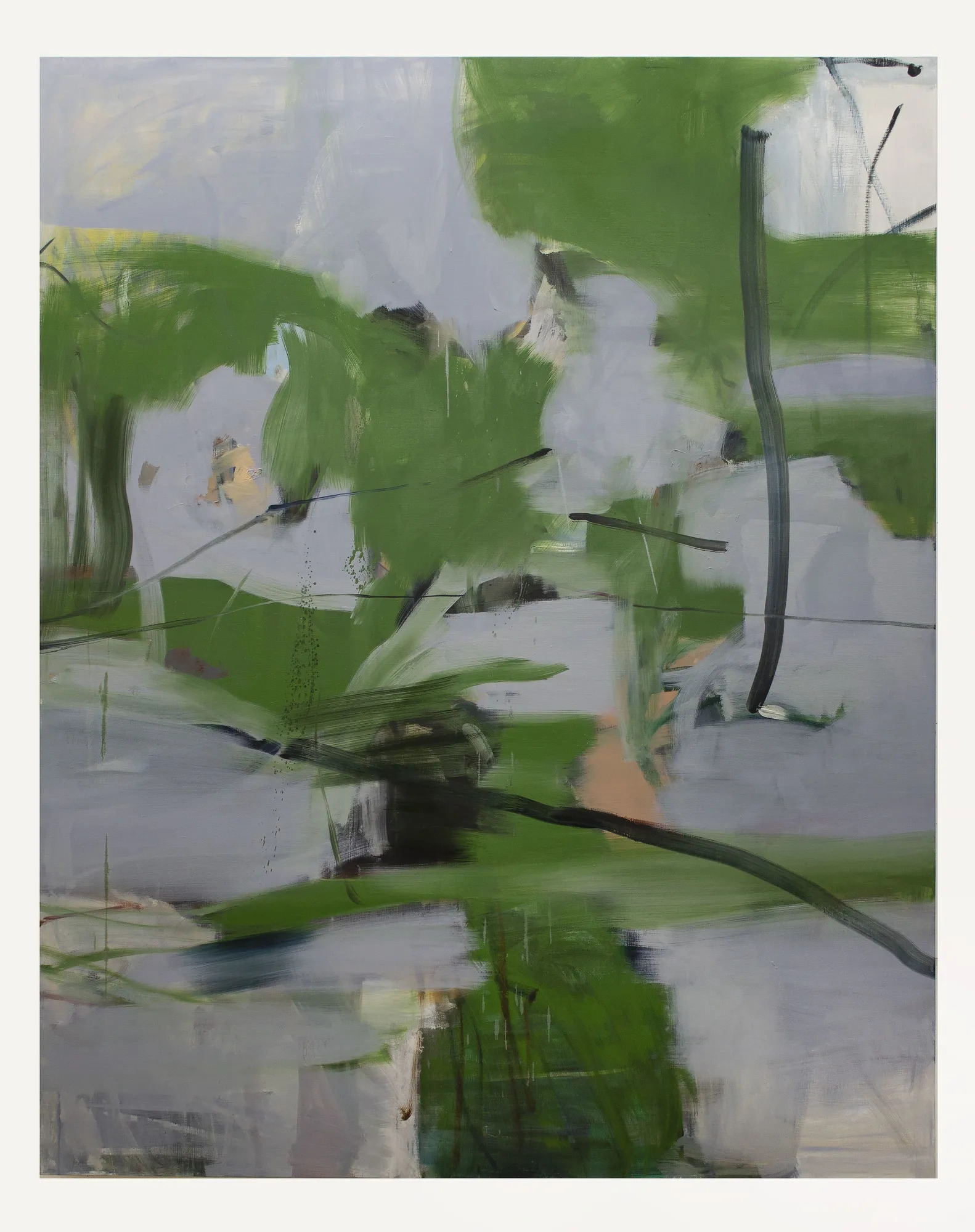
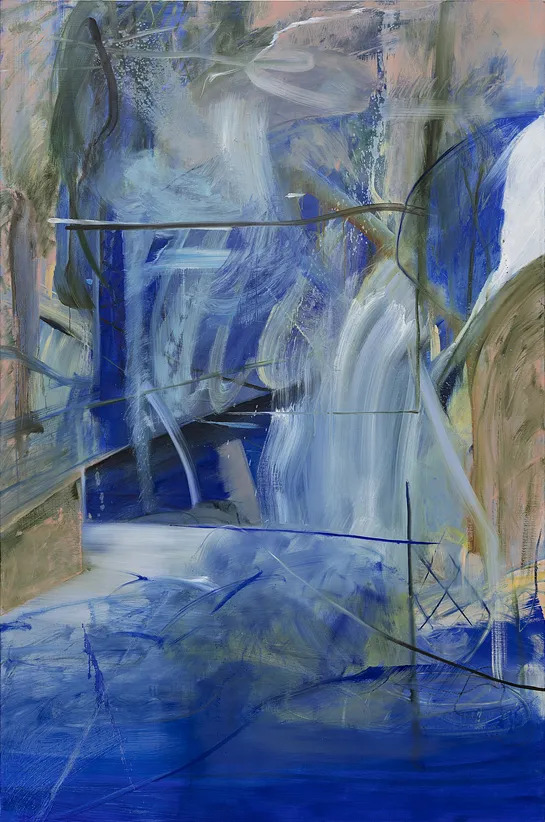
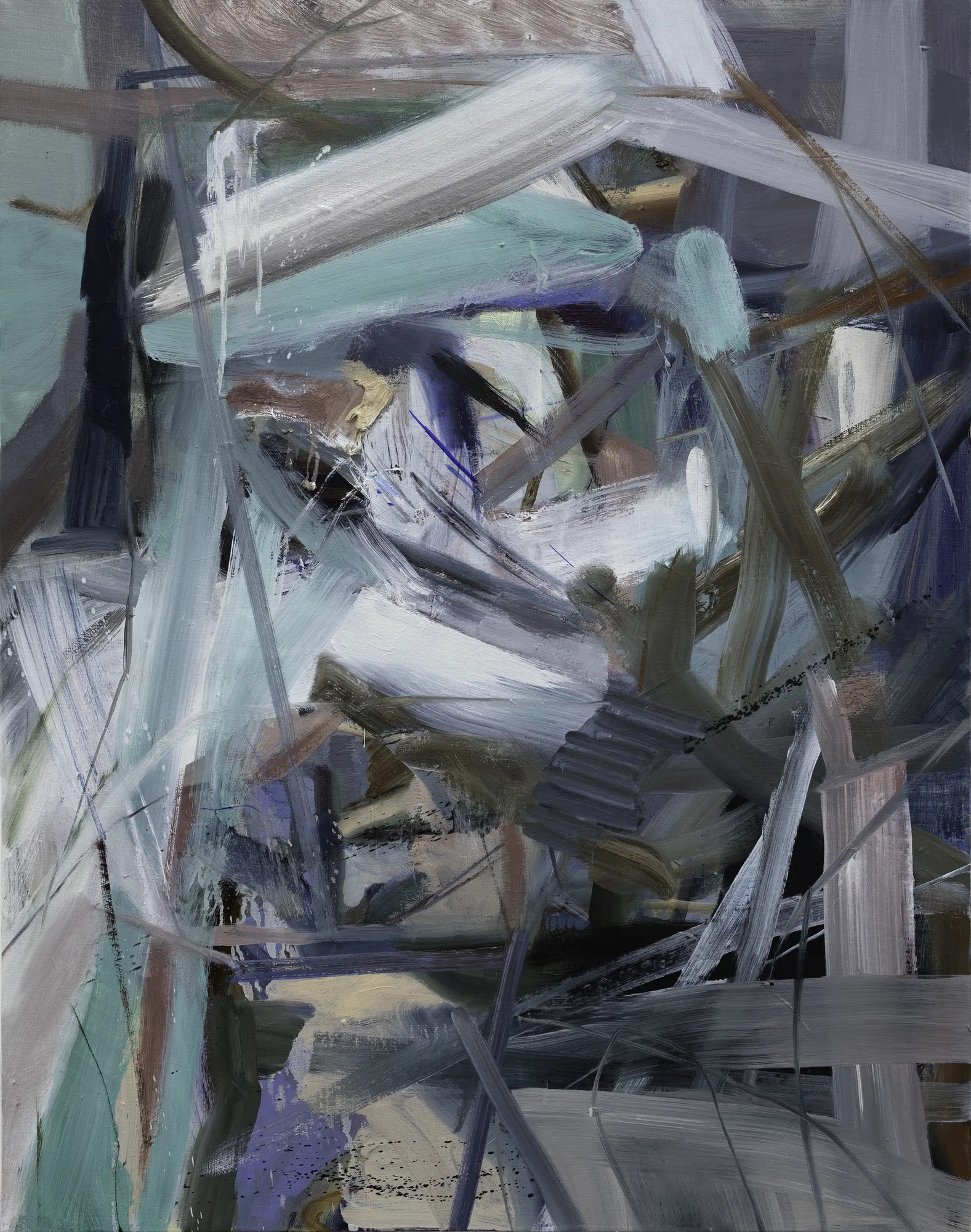
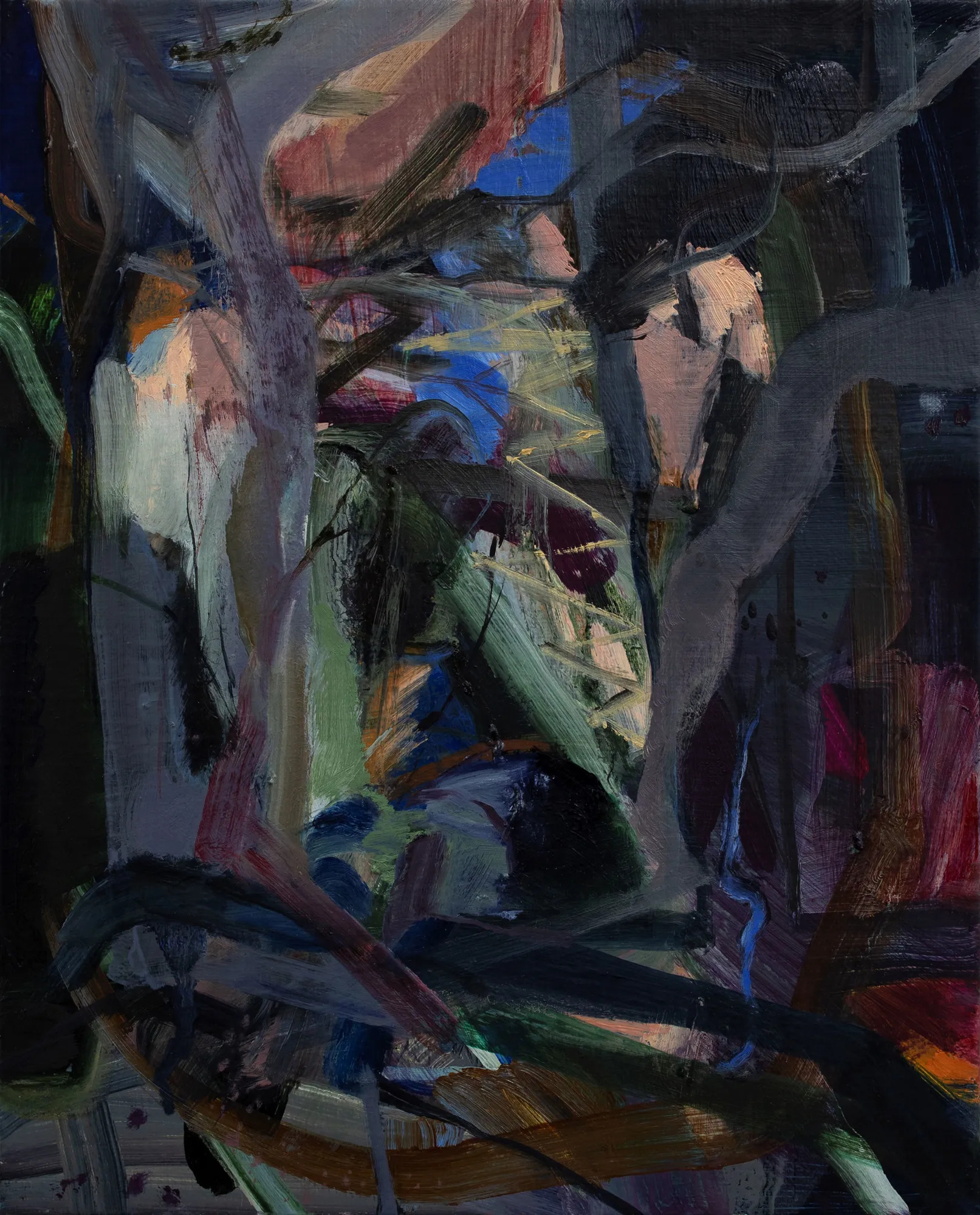
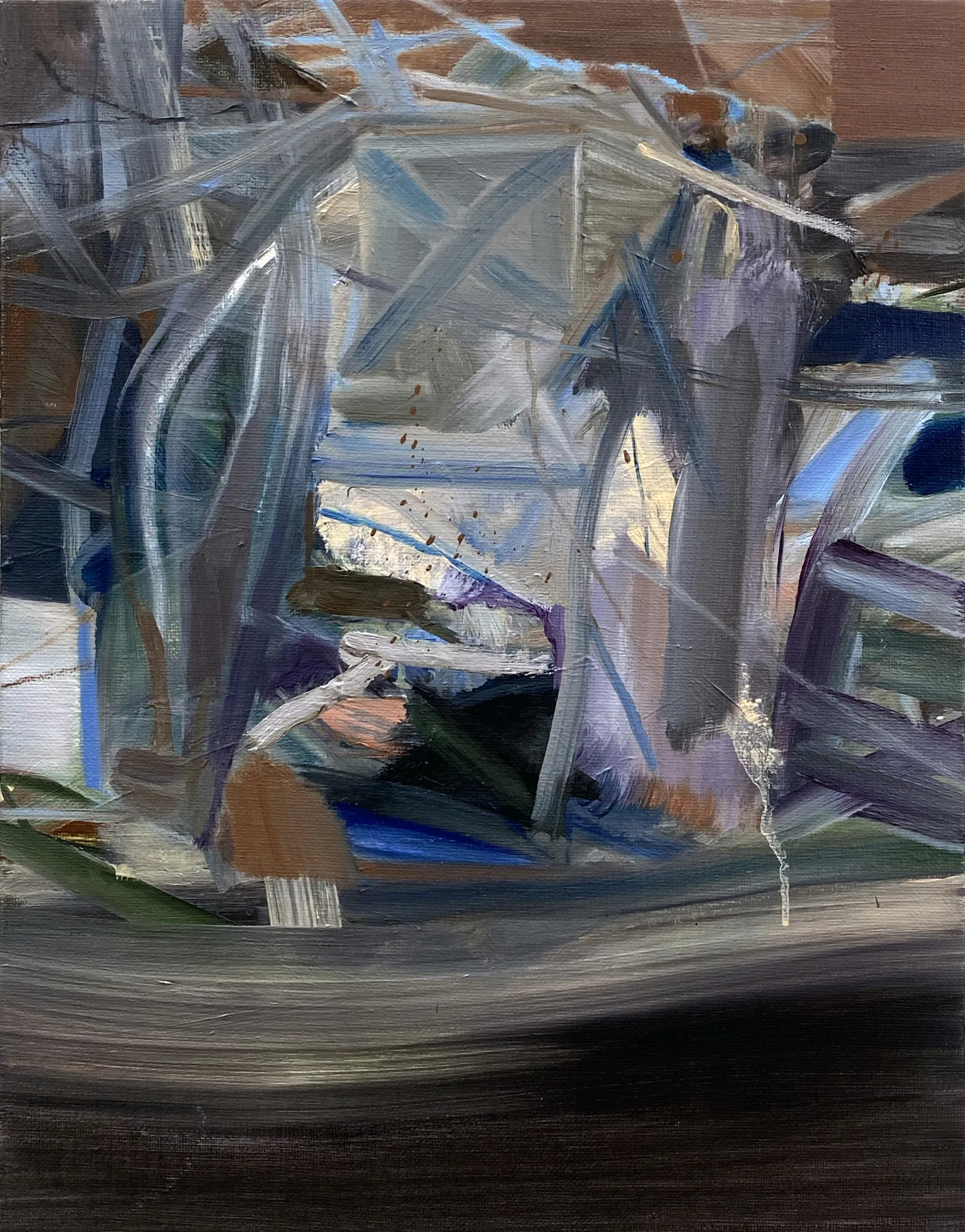
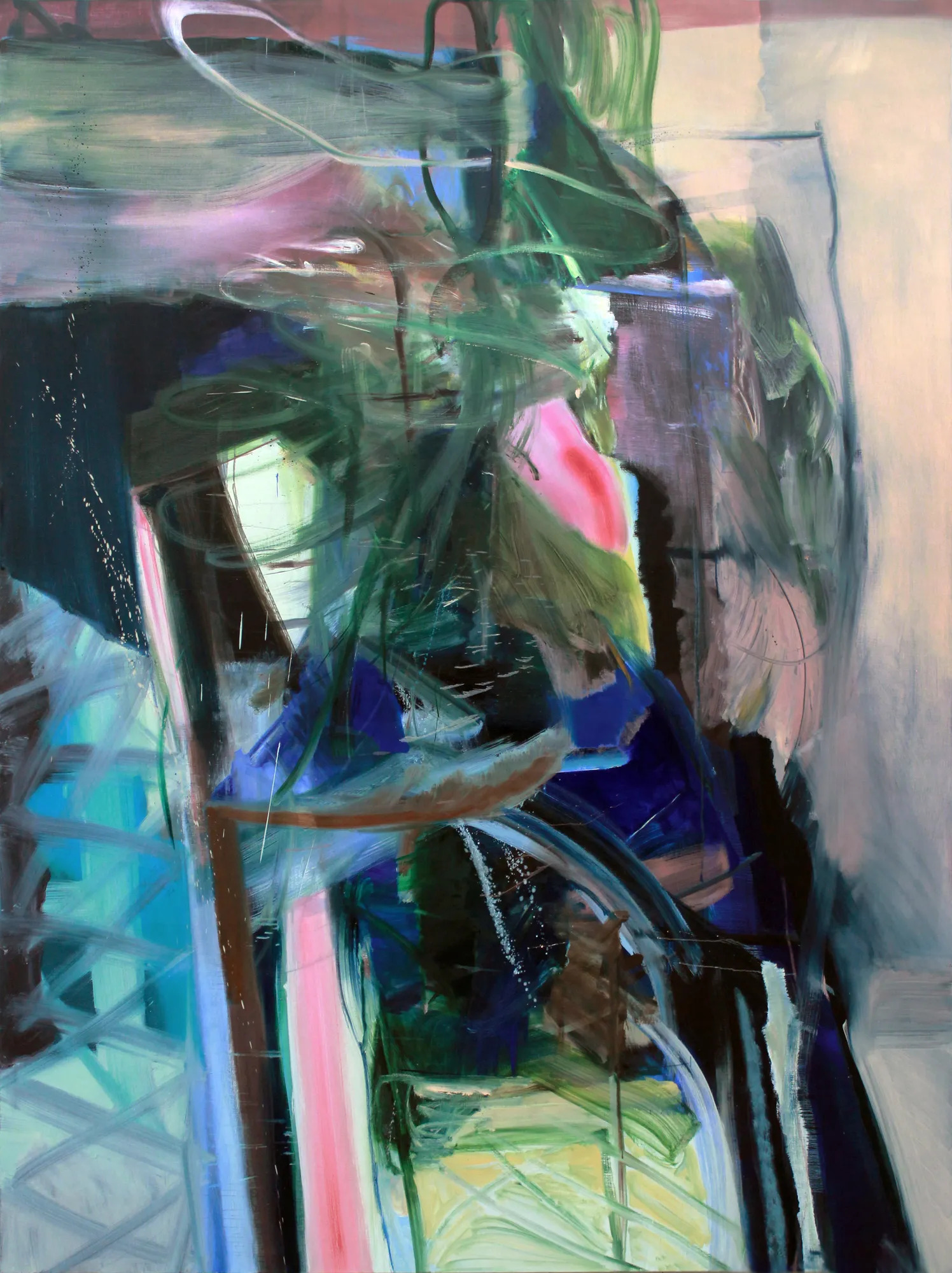
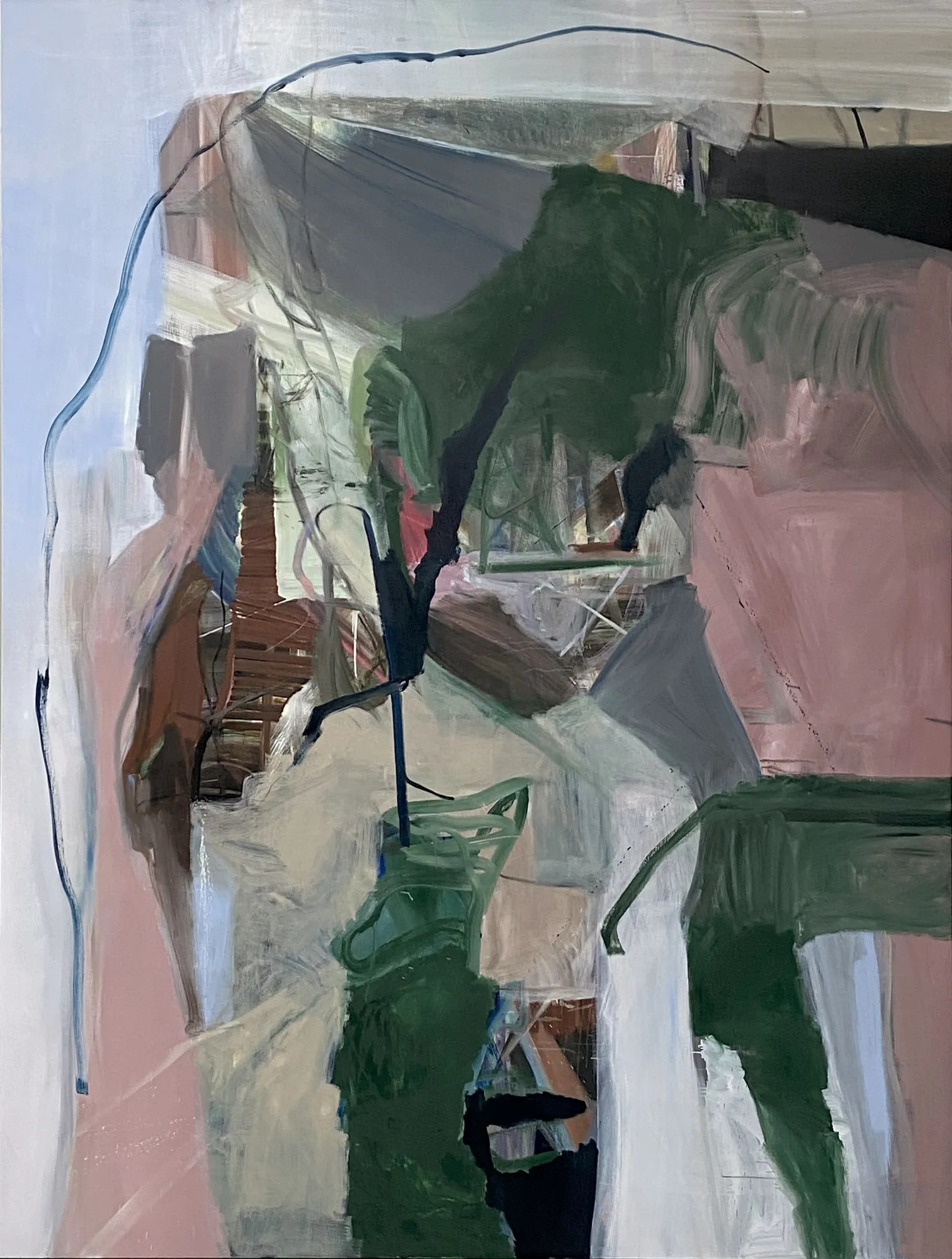
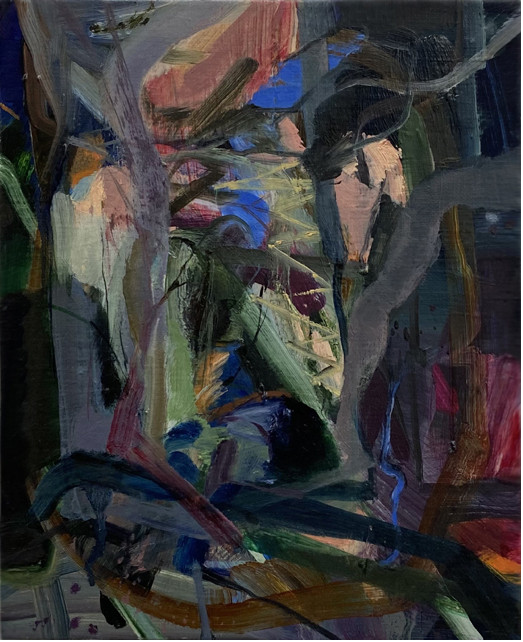
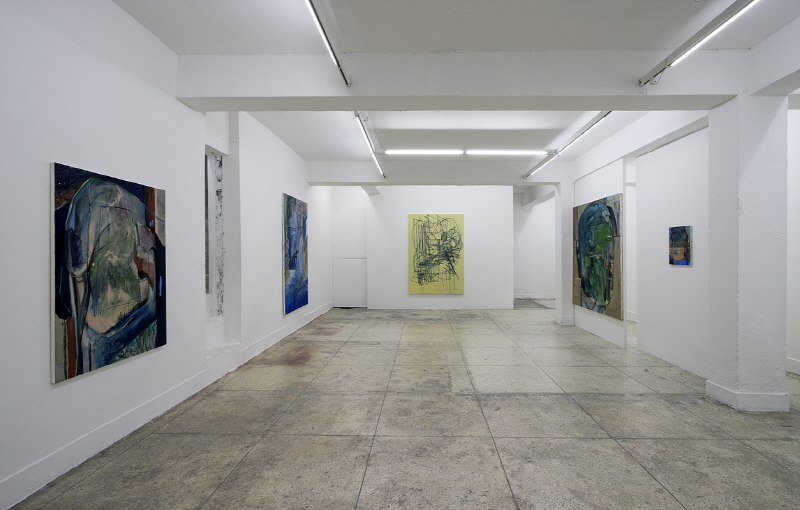
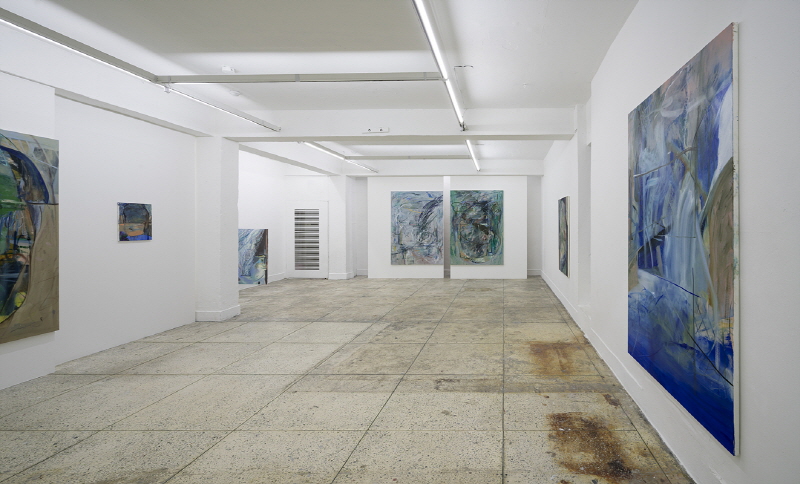
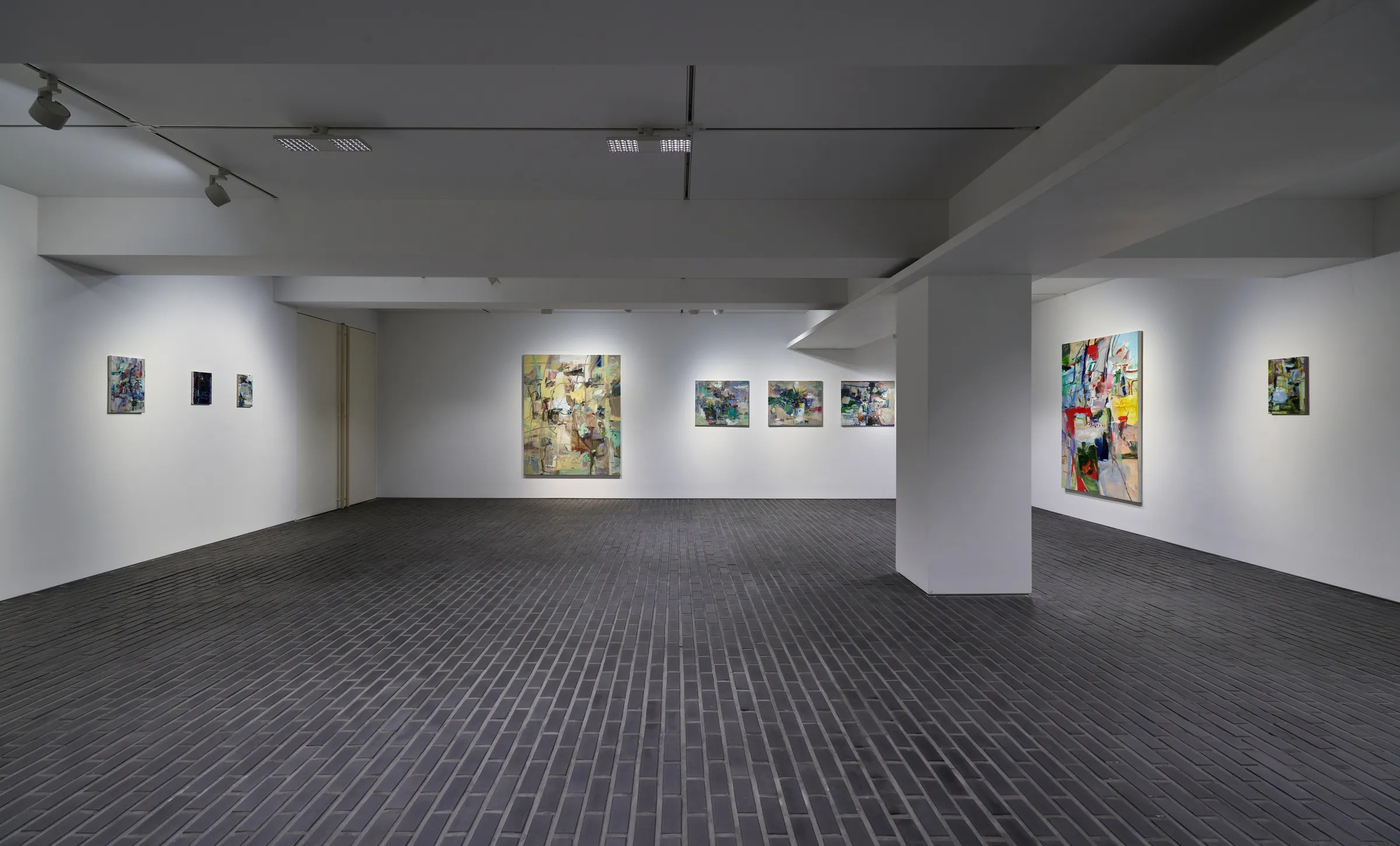
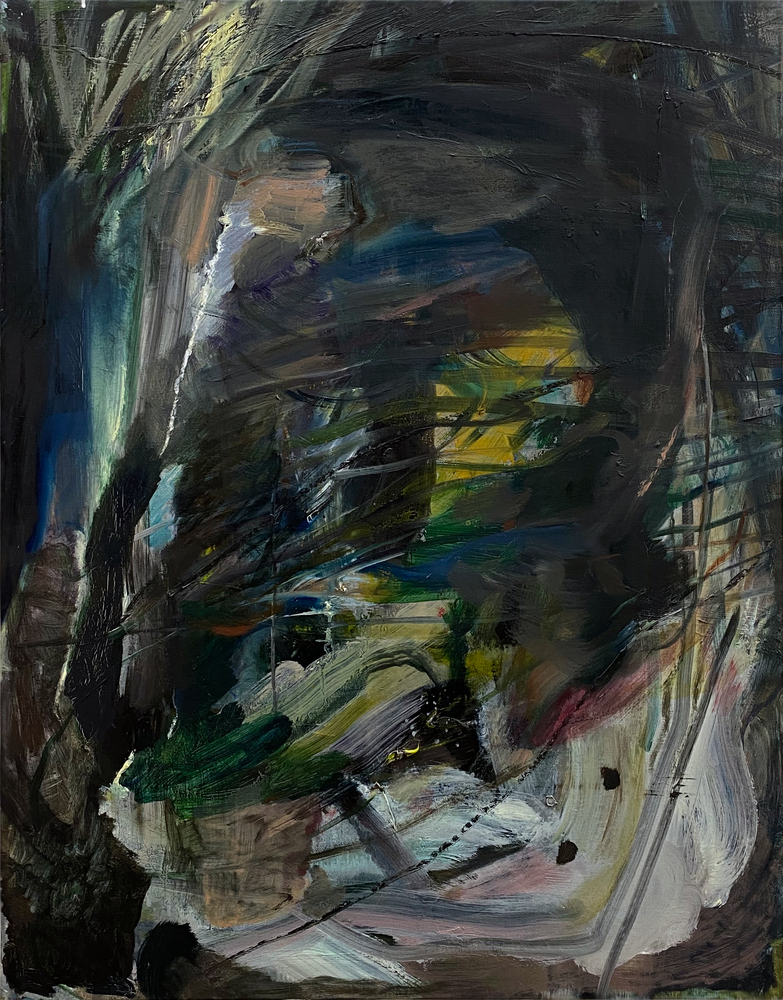
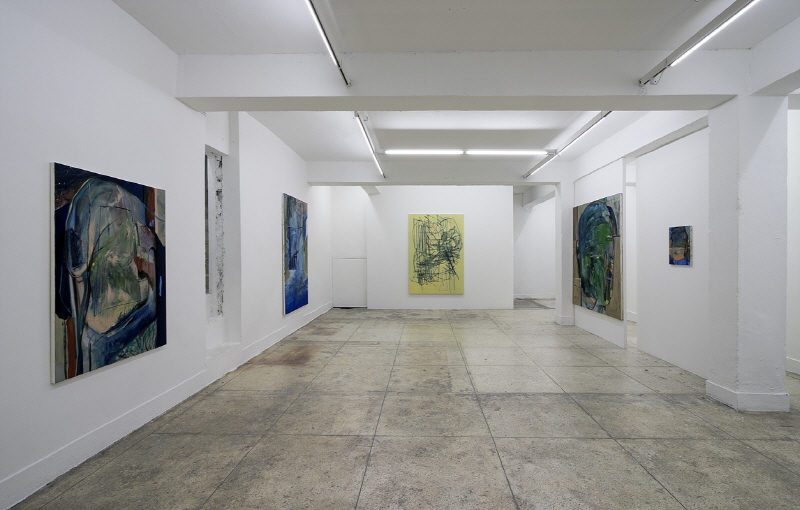
Koo Jiyoon’s paintings emerge through a process of continual construction and dismantling. She generates images by repeatedly layering paint onto the canvas, scraping it away, covering it over, and painting again. This working method evokes the atmosphere of an urban construction site, and the process of making itself mirrors the cyclical structure of the city. Rather than progressing linearly toward a fixed image, her paintings are formed through the accumulation of traces left by overlapping acts of creation and erasure.
Rather than depicting cities or construction sites directly, Koo focuses on the invisible elements she encounters within them, such as noise, vibration, pressure, and anxiety. Color, line, form, and materiality function not as representational devices but as visual languages through which sensation and energy are conveyed. Juxtapositions and contrasts of predominantly gray tones, together with brushstrokes that collide and intertwine, evoke the complex emotional atmosphere embedded within urban environments.
Drawing also occupies an important place in the artist’s practice. Through drawing, Koo accumulates records of sensations, memories, and observations gathered from everyday life, while actively embracing the disjunctions and contingencies that arise when these impressions are translated into painting. As invisible psychological states and sensory experiences are transformed into visual images through this process of translation, the artist discovers increasingly open possibilities within the language of painting.
In Koo’s recent works, forms resembling faces, tongues, fingernails, and trees appear intermittently throughout the canvas, yet they do not function as clearly defined representational subjects. Rather than depicting specific objects, the artist leaves behind condensed traces of observation, memory, and sensation, sustaining a productive tension between figuration and abstraction.
These organic forms remain in a state of continual emergence and dissolution, opening the work to multiple interpretations. Through this approach, Koo’s paintings reveal a distinctive structure in which urban landscapes, psychological experiences, and ecological sensibilities overlap and intersect within a single pictorial space.