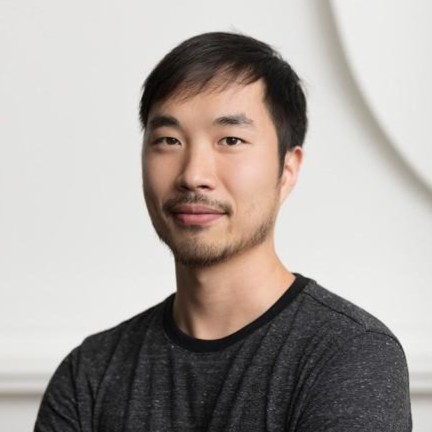
Woojung
Hoh’s work begins from a way of sensing the uncertainty of reality, and has
gradually expanded toward an exploration of the relationships between
“existence” and “non-existence,” foreground and background, and part and whole.
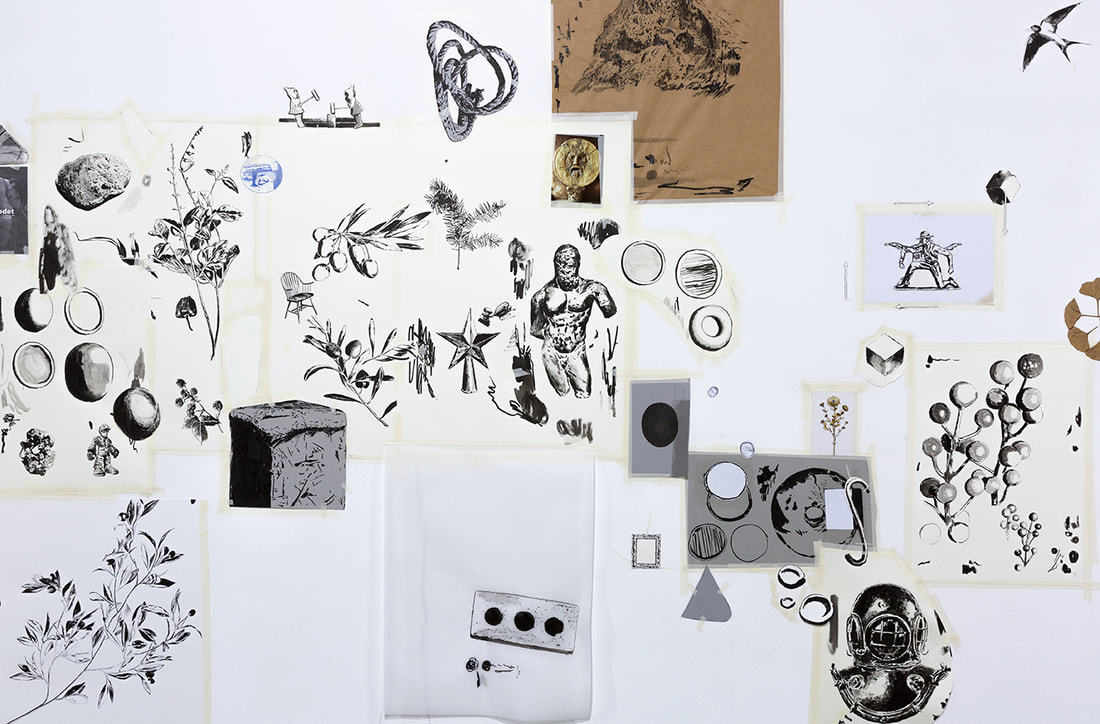
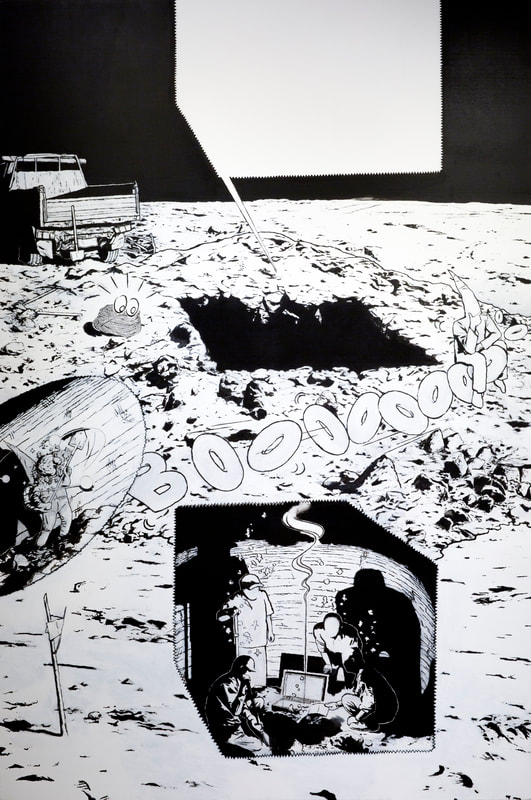
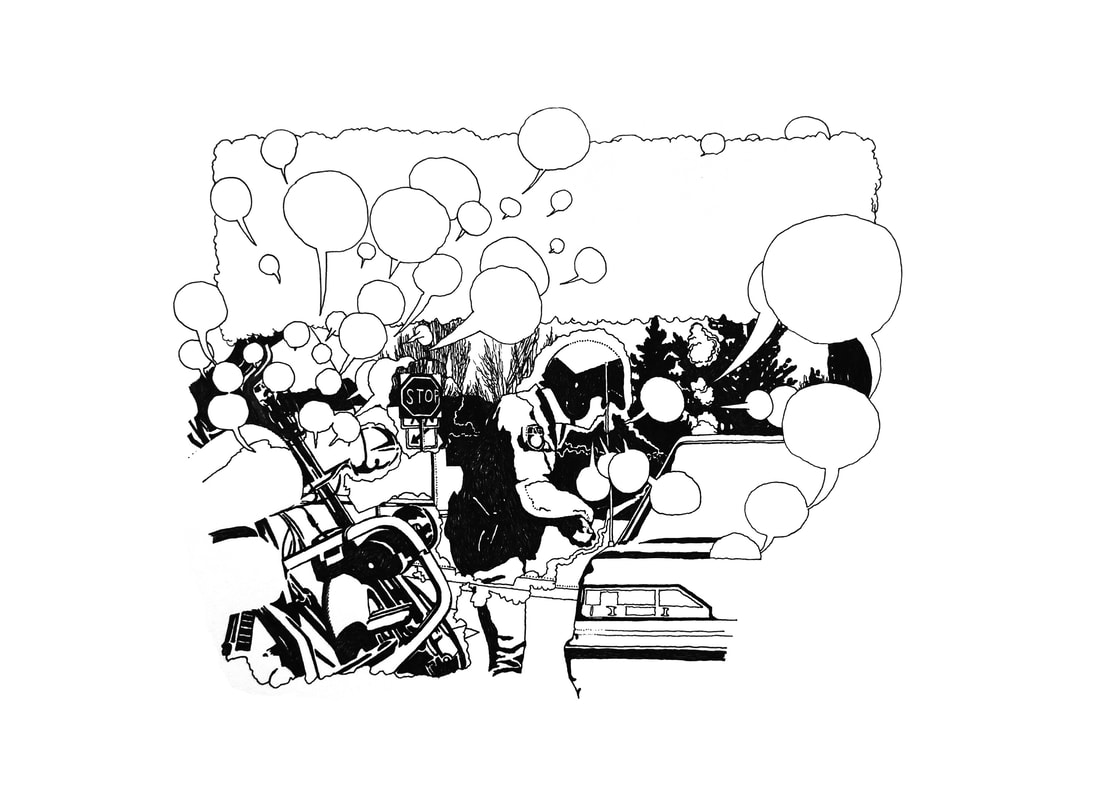
In his early works, the artist dealt with emotions such as cynicism, distrust,
anxiety, and fear that permeate society through drawing, painting, collage, and
cartoon-like images.
The picture planes of this period begin from concrete
events or objects, but rather than explaining them through direct narratives,
they construct unstable situations by juxtaposing different objects and signs.
Later, in Tower of Notion(2017) and the ‘Tower of
Notion’ series, the artist began to more fully reveal a sense of balance and
imbalance through structures reminiscent of seesaws or scales.
Here, balance is
not a stable state, but closer to a state of tension barely maintained through
invisible relationships between different objects and geometric forms.
Around the
time of his 2018 solo exhibition 《Spiritual Attitude》(Gallery Chosun, 2018),
Hoh’s work moved toward a more restrained structure of abstraction.
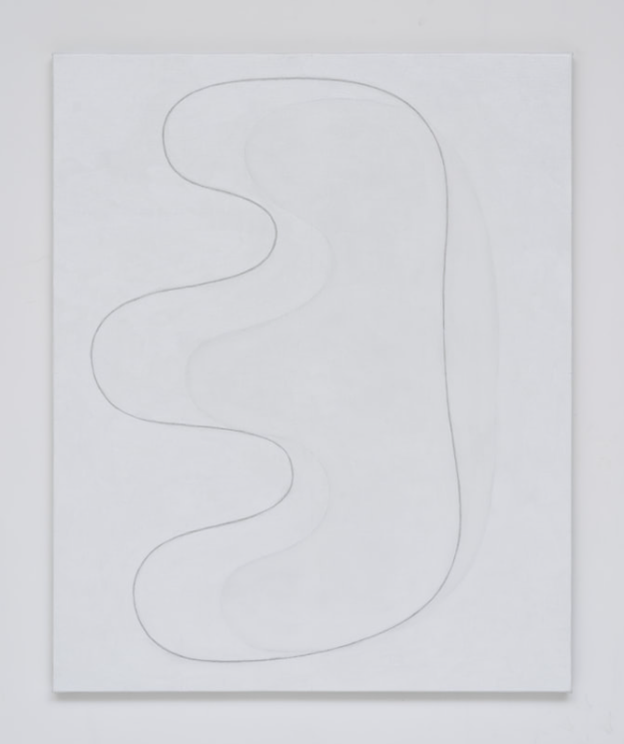
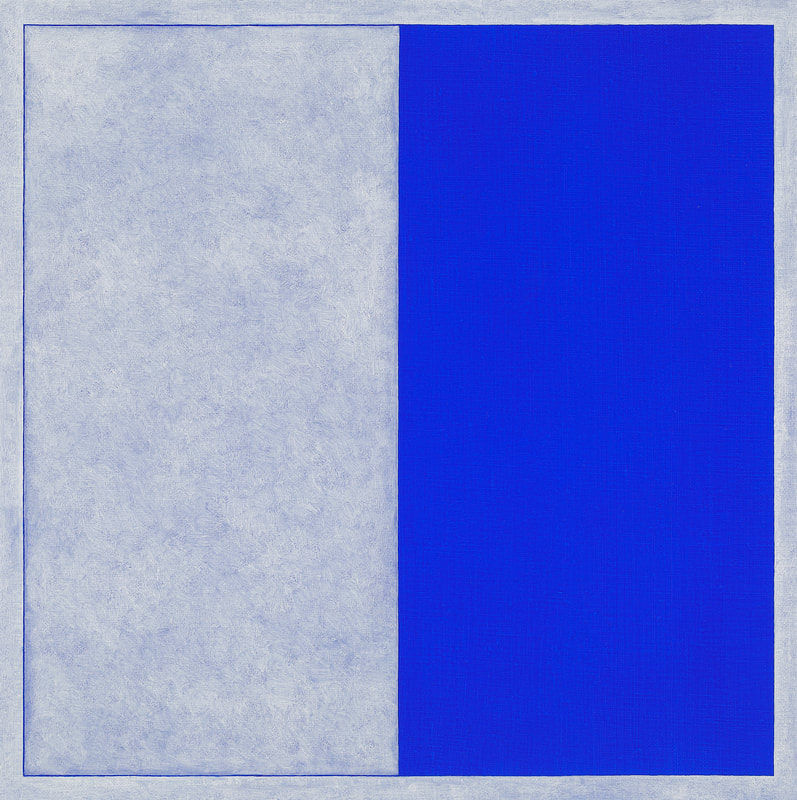
In Hard to See(2018) and Like My Scale
and Your Scale Cannot Be the Same(2018), the concrete forms of
objects gradually disappear, leaving lines, incomplete forms, and seemingly
empty backgrounds on the picture plane.
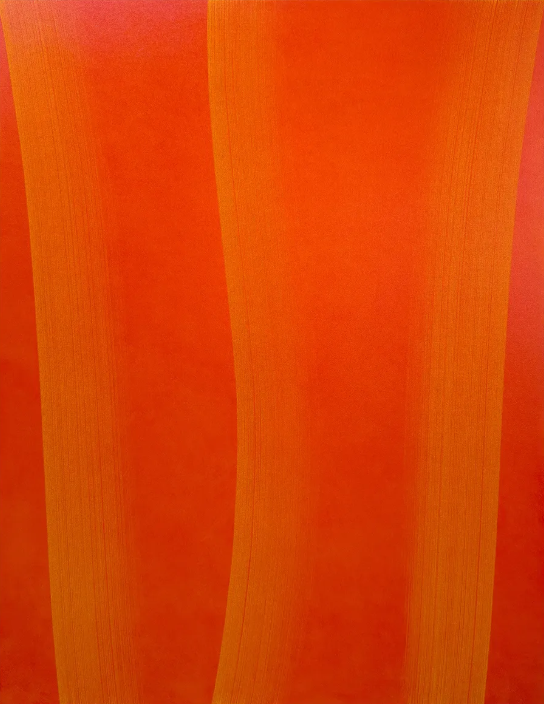
The artist presents surfaces of
possibility in which viewers can find balance in their own ways, asking what is
visible and what is not, and what kinds of forms can be said to actually exist.
In this process, the “hidden side” is not simply a concealed reverse side, but
becomes a sensory and perceptual condition revealed through relationships that
cannot be clearly divided, such as light and shadow, foreground and background,
and individual and whole.
Around
2019, Hoh began to focus on the unfamiliarity created by the states of objects
or combinations of conceptual words, treating anxiety and void as more abstract
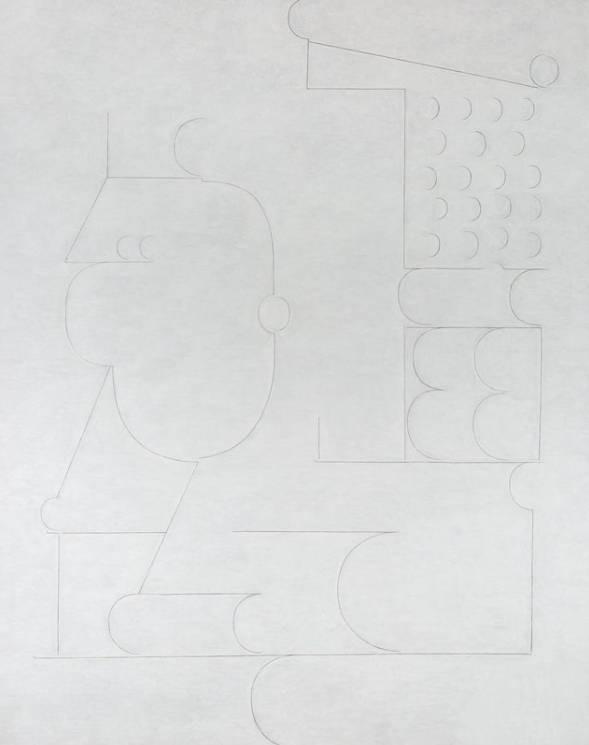
forms of uncertainty. In works such as Imagination Builds the
House(2019), Air in a
Tire(2019), A and B(2019),
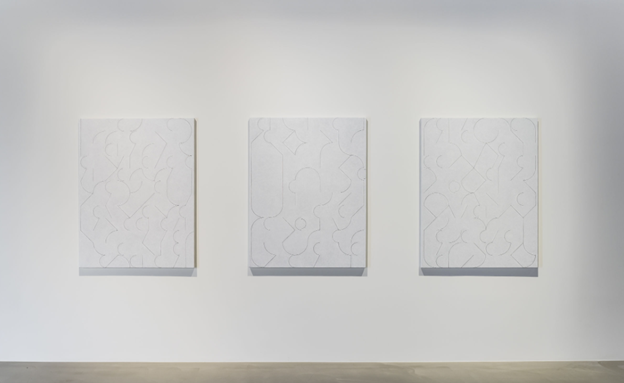
and Sasangsanggak 2(2019), heterogeneous lines, curves,
and geometric forms restrain or bind one another within the picture plane, creating
a precarious structure.
The solo exhibition 《Line, Curve, A Colorful Gesture》(Gallery
Baton, 2019) shows a shift away from a space with a previous “center of
gravity” toward a space in which lines and curves float without direction,
gathering and dispersing as needed. This shows that the artist’s interest,
which began from specific social emotions, has moved toward the infinite
aspects and possibilities generated by uncertainty itself.
In his
work after 2020, this question becomes more clearly an exploration of
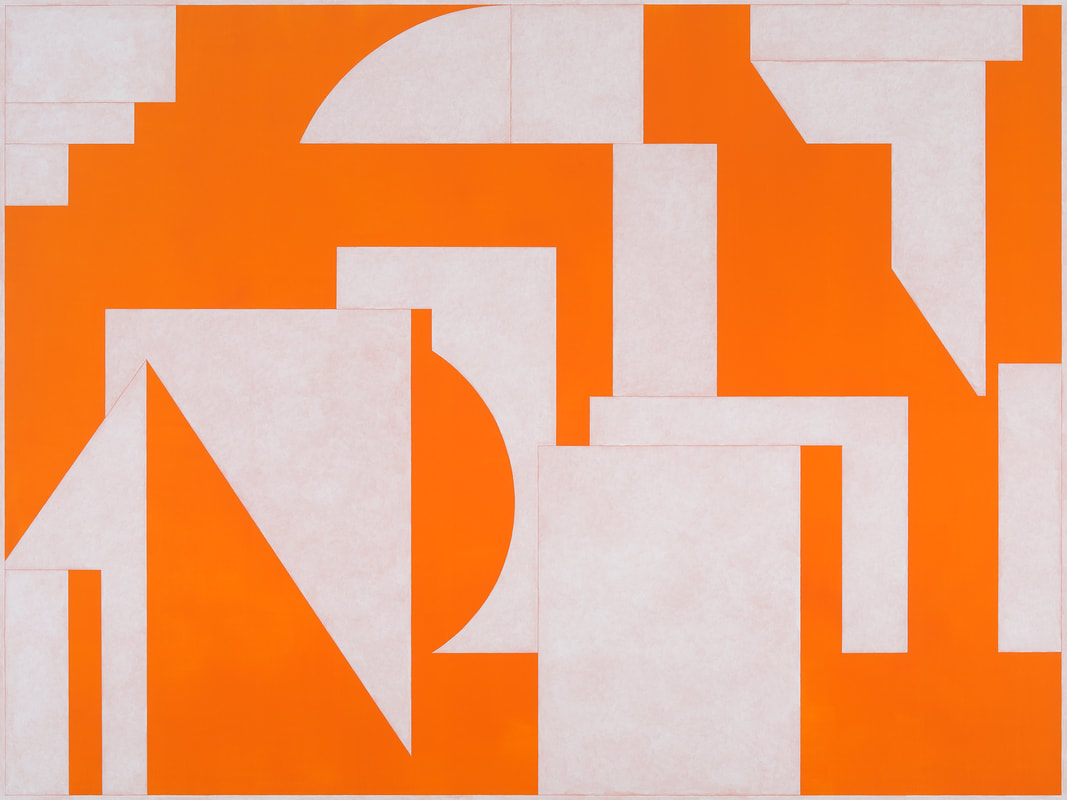
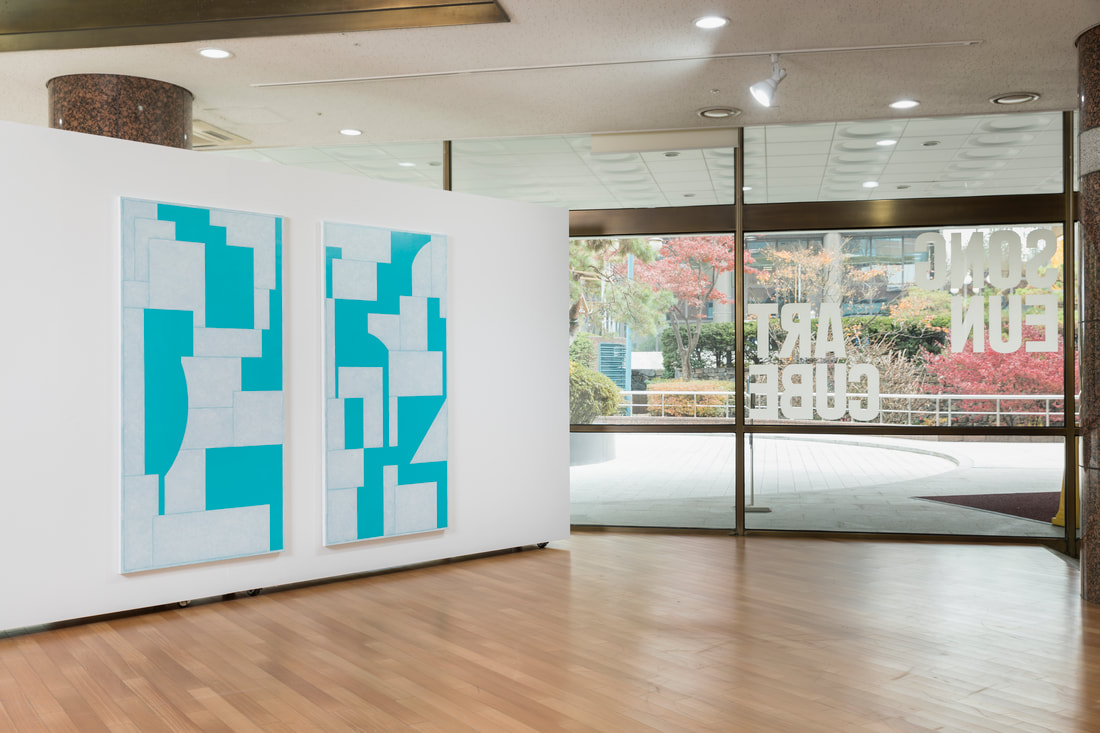
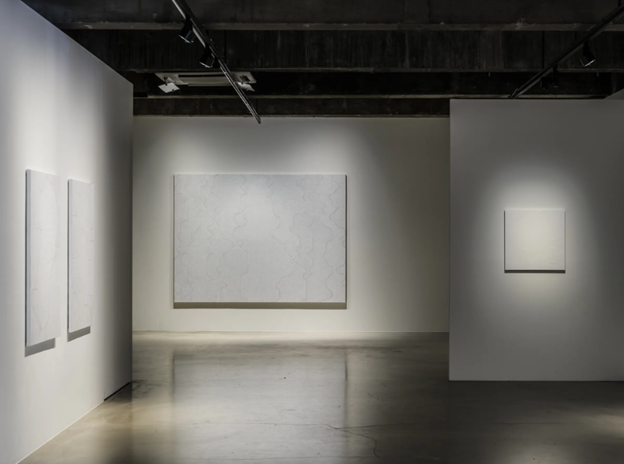
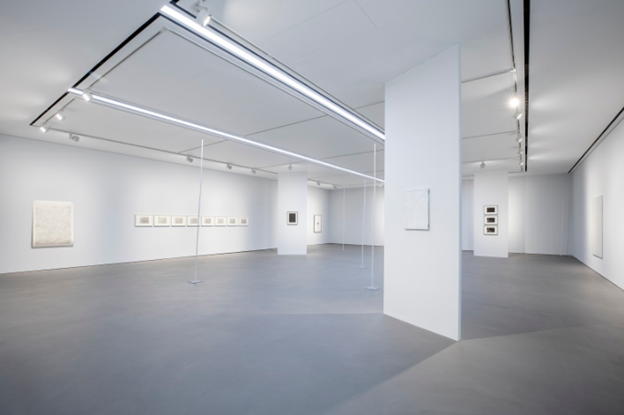
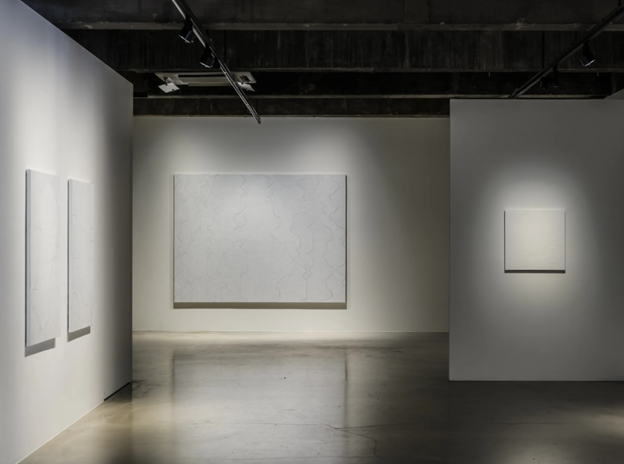
“existence.” In 《Shade Left
Behind》(SONGEUN Art Cube, 2020), Hoh reverses the
relationship between white empty space and background, subject and object,
asking what viewers perceive first and what they understand as the background.
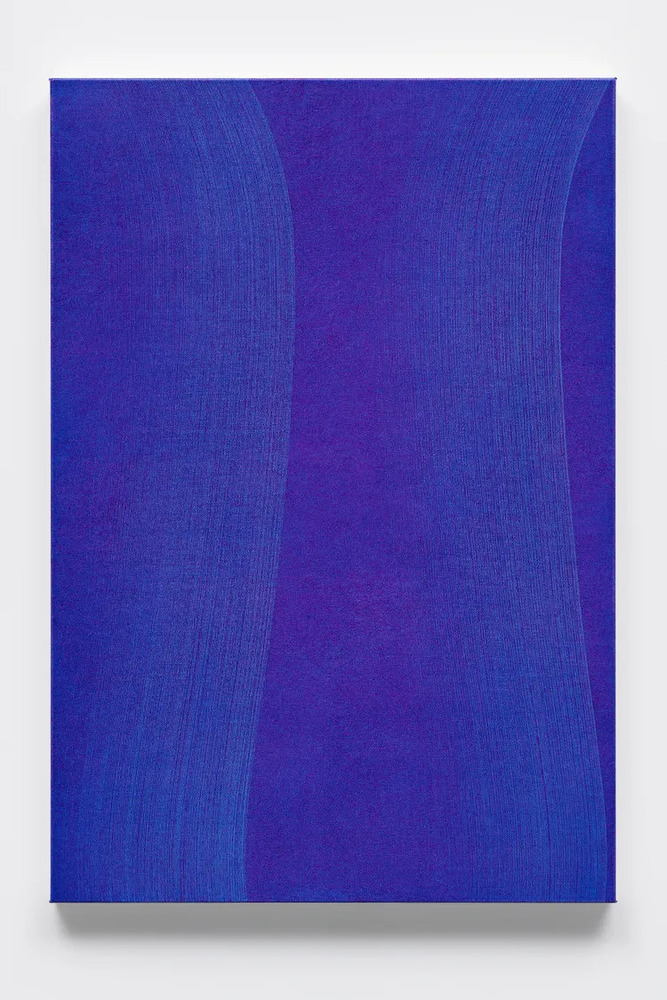
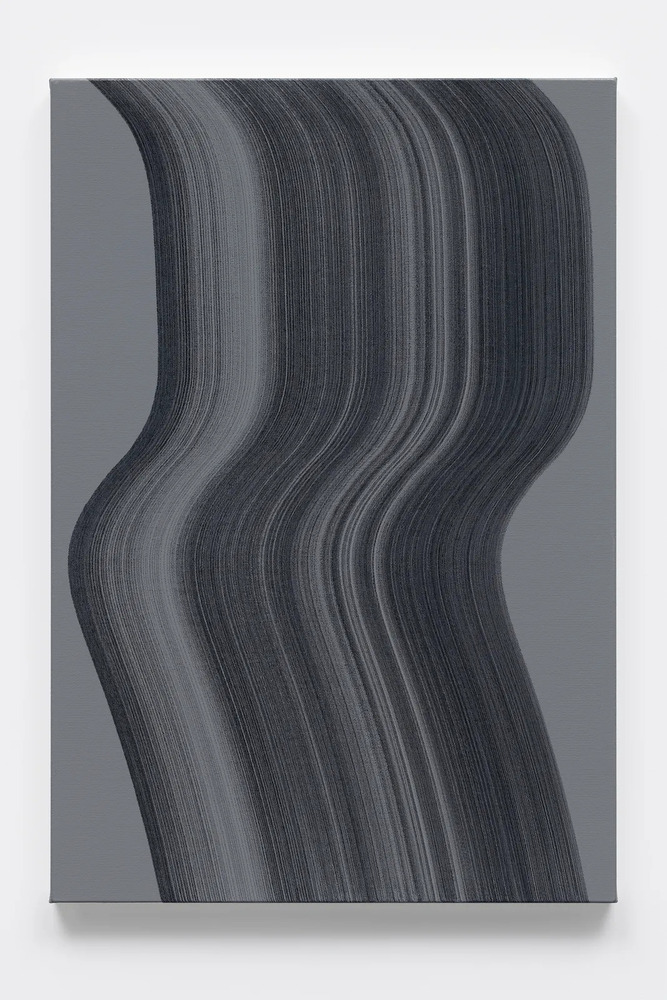
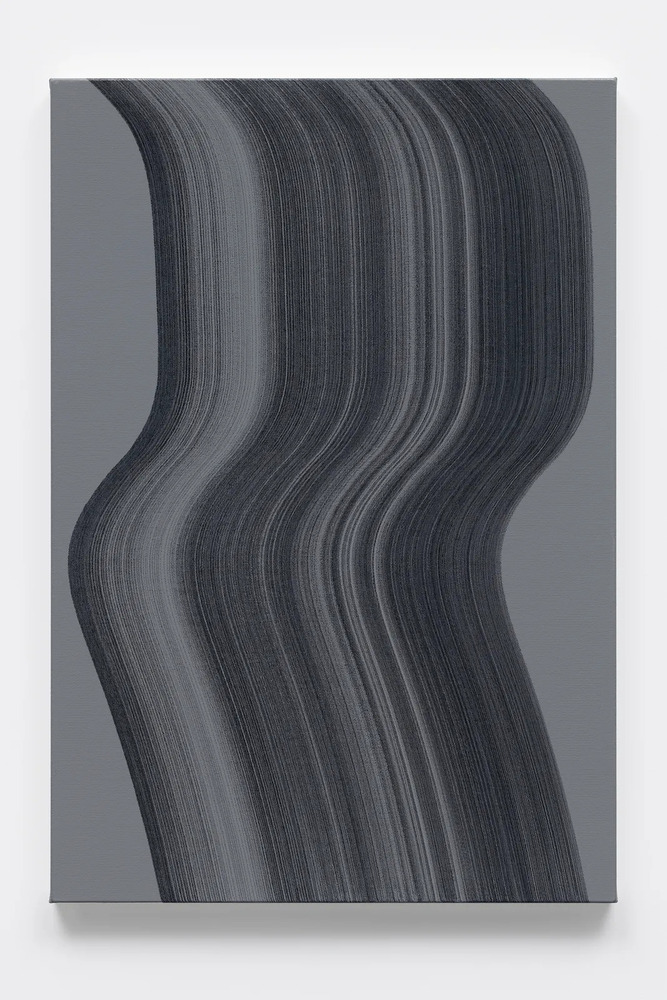
In works such as Awakening From Far Away(2)(2020)
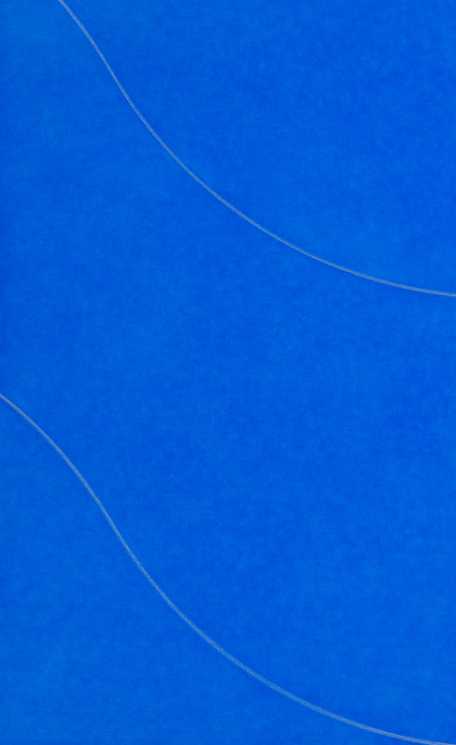
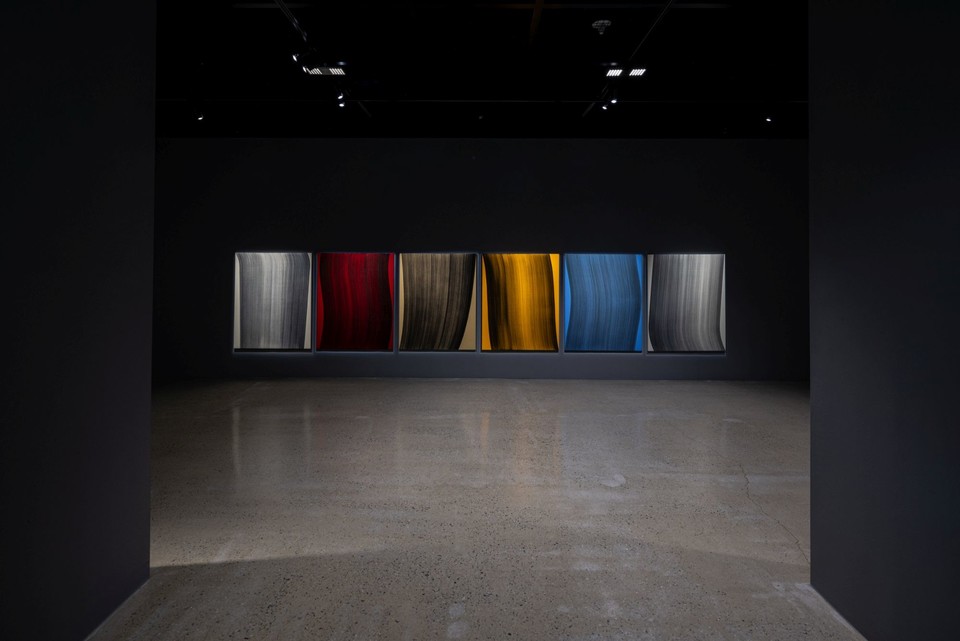
and Air Stratum(1)(2020), lines and planes are not
simply abstract elements, but devices that make viewers infer an invisible
whole through visible cross sections.
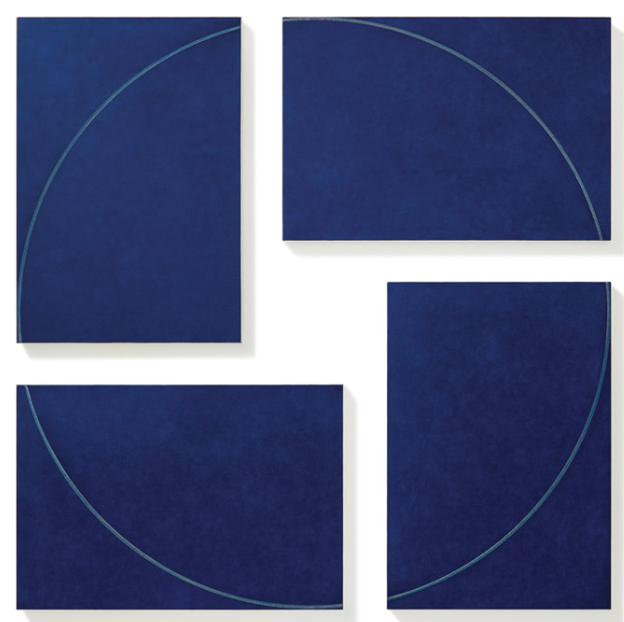
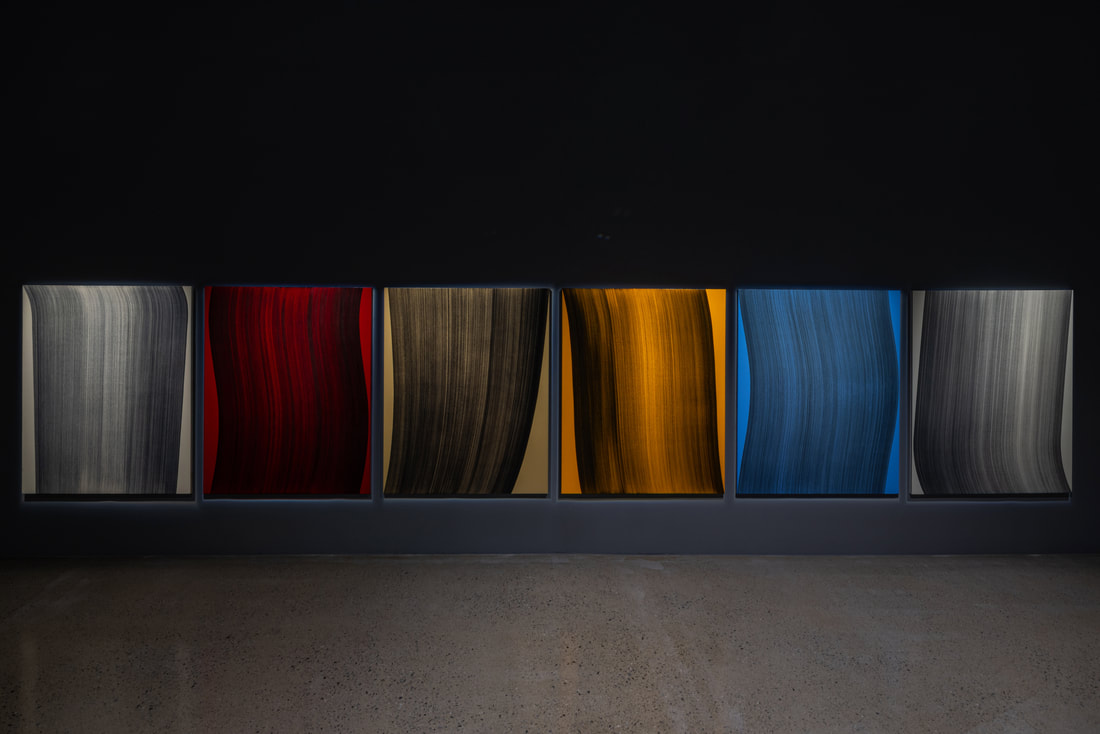
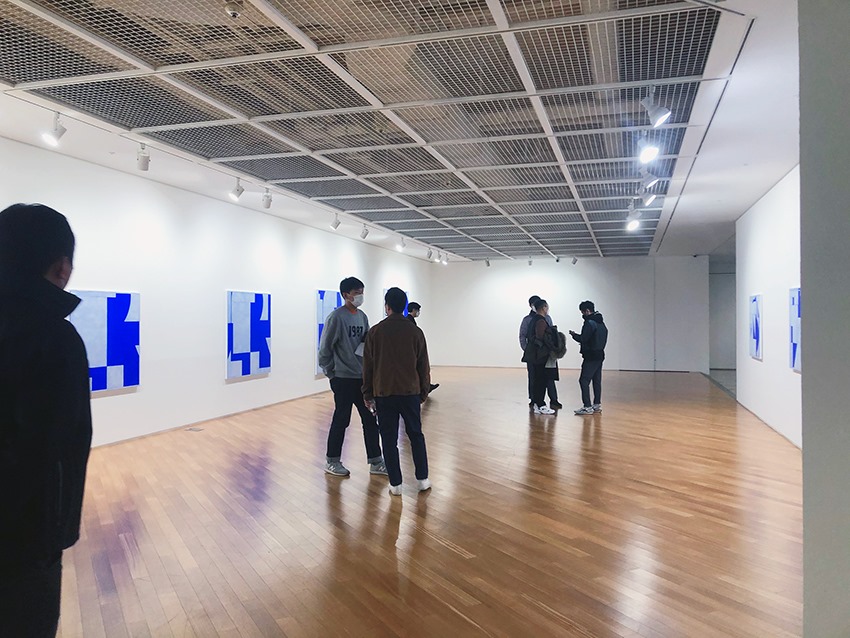
Later, through 《Beyond
the Line》(Kumho Museum of Art, 2022), 《Panorama》(Daejeon Museum of Art Open
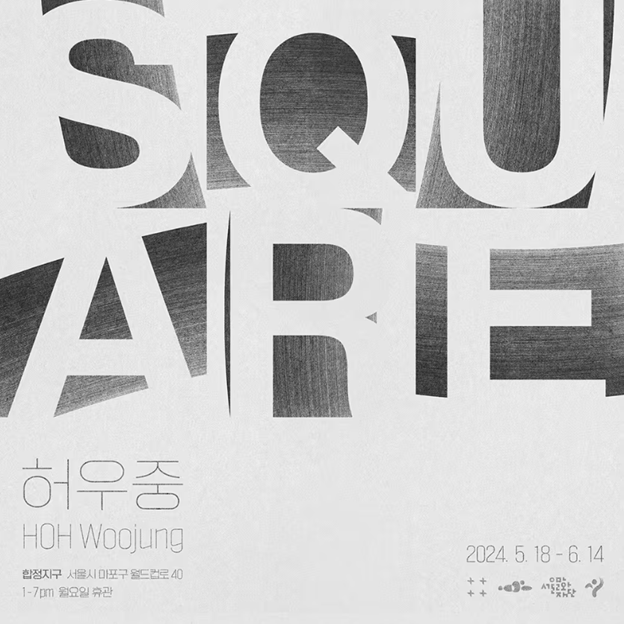
Storage, 2024), and 《Square》(Hapjungjigu,
2024), the artist explores how a single form or line does not remain only
within the picture plane, but expands through space, support, and the viewer’s
perception.